
The term ‘false nine‘ has become really popular in football since Pep Guardiola put Lionel Messi in that role during their time at Barcelona.
The idea of making Messi receive the ball between the lines, sometimes unmarked, and allowing him to create spaces for the wide forwards to run into works very well.
That way of using Messi as a number nine (or a centre-forward) who dropped deep to receive the ball, control it and decide the direction of the attack in the final third, made Barcelona unstoppable.
This role has become pretty common in football.
Cesc Fàbregas played it for Spain at Euro 2012, and Roberto Firmino is often seen as one of the best at it for Liverpool when Jürgen Klopp is managing the team.
Firmino’s approach was pretty similar: He dropped deep, tried to link up with the midfield, and created spaces for Sadio Mané and Mohamed Salah to move into.
The unselfishness that helped Liverpool to glory.
Today, the role is not as popular in football as it once was.
This is because the conversation about the number nine is now centred on tall, physical players who are more conservative and are often referred to as monsters in the box, such as Erling Haaland, Alexander Isak, or Viktor Gyökeres.
But it’s not a thing of the past, is it?
In the top four European leagues, there are still teams that use this role.
Take Daniel Sinani at St. Pauli, for example.
Total Football Analysis was fortunate enough to have a conversation with Sinani about how to play as a false nine and what the coach expects when instructing a player to fill that role.
Danel Sinani: From Bench Warmer To False Nine Starter
Danel Sinani wasn’t Alexander Blessin‘s first choice to be a centre-forward for St. Pauli until the beginning of March; Johannes Eggestein was the previous centre-forward.
Sinani’s role on the team was pretty minor.
He mostly came off the bench or played for a few minutes when some of the regular starters got injured.
From the beginning of the season in August to the winter break in December, he started only two games, and in both, he played as a wide forward.
Things started to change when Eggestein wasn’t performing consistently.
He’s also well-known on the team as a centre-forward who has smart movement, and he’s good at holding the ball.
He can drop deep to create space or link up play with the midfielder, and he was one of the key players in St. Pauli’s promotion to the Bundesliga under Fabian Hürzeler last season.
But Blessin needs to step up his game.
Eggestein’s not really hitting the mark as a centre-forward, either because he’s not scoring enough or dangerous enough as a threat in the final third.
Furthermore, as a facilitator in a false nine role, he’s not creative enough.
And here’s Sinani—since the game against Wolfsburg in early March, he’s started every game for St. Pauli.
Up until last weekend’s game against Bayer Leverkusen, he’d started six games in a row as centre-forward with the false nine role.

Danel Sinani Heatmap 2024/2025
Sinani knows how to be a professional: He is patient when his time has not yet come, but consistently demonstrates the quality he possesses in every training session to convince the coach that he can contribute to the team.
“For me, it was just to be patient and to be there when the team needed it.
Now my time is coming, I try to give my best for the team and try to keep our target,“ he said.
How Sinani Becomes A Creativity Machine For St. Pauli As A False Nine
Then he got Blessin to talk about him, saying that when he has the ball, Sinani is one of the most creative players St. Pauli have on the pitch.
The numbers speak for themselves.
Sinani currently leads the team in key passes per 90 minutes and is second in expected assists (xA) per 90 minutes.
Among St. Pauli players who have played at least 300 minutes, he leads the team in shot-creating actions from live passes, set pieces, and shots—and he did it by being a false nine.
This is how it works.
St. Pauli usually play in a 3-4-3 formation, and Sinani is the centre-forward, but as a false nine, he’s not the kind of player who stays in the box and waits for the ball to come to him.
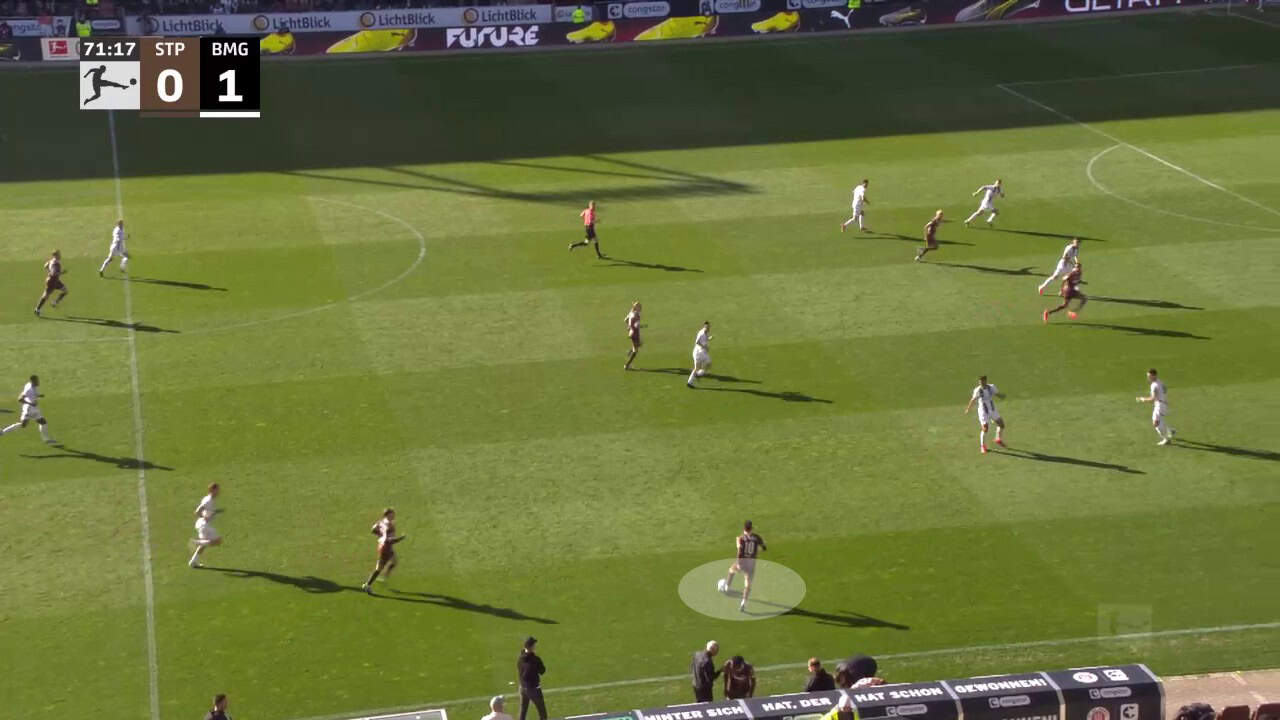
Instead, he often drops back to receive the ball in order to link up.
The idea is to overload the midfield area so that St. Pauli can continue to push the ball forward or pass it around to keep possession.
This is a good idea as St. Pauli only play with two central midfielders.
By dropping back, Sinani also allows the wide forwards to run into the centre or half-spaces in the final third.
His movement can also create a dilemma for the opposing defenders, as they must decide whether to follow Sinani or not.
If they follow Sinani, it means that he creates disorganisation in his defensive line and also creates space that St. Pauli can exploit.

If he stays in the line, Sinani will be the free man between the lines to receive the ball.
This will also benefit St. Pauli, as they will have the open man as a target option.
The False Nine Is About Clever Movement That Can Create Opportunities For Teammates
“False nine is the system we are trying to play to overload the midfield a little bit and try to keep Morgan [Guilavogui] and Noah [Weißhaupt] in the depth to create space,“ Sinani said about his role.
“So for me, it’s important if I drop to create space in behind.
If they don’t follow, I can get the ball and try to perform,“ he added.
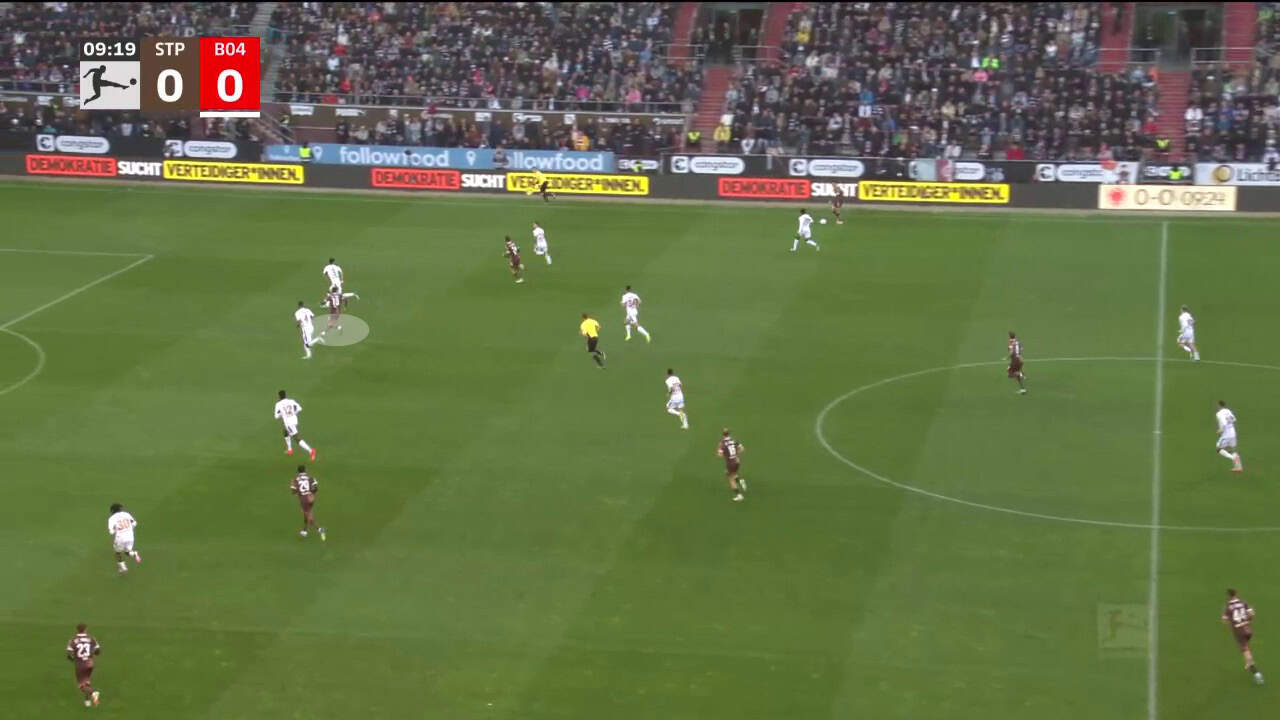
Let’s look at some examples.
At this moment, instead of continuing his run into the penalty area to receive the ball, Sinani chooses to drop and be a passing option, receiving the ball without being marked by the opposition defenders.
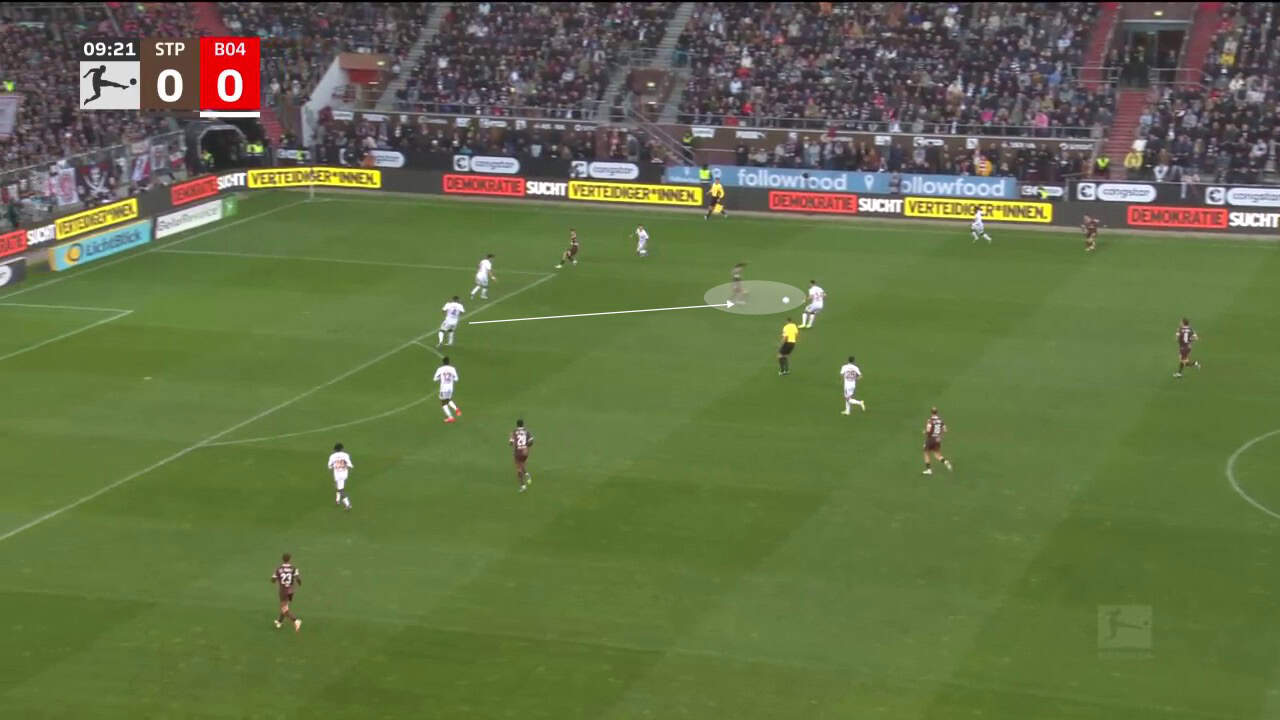
Or, in this situation, he slowed down his run to create a body in the central area, knowing it was empty, and was able to receive the ball unimpeded.
He eventually passed it to his teammate, who was running into space.
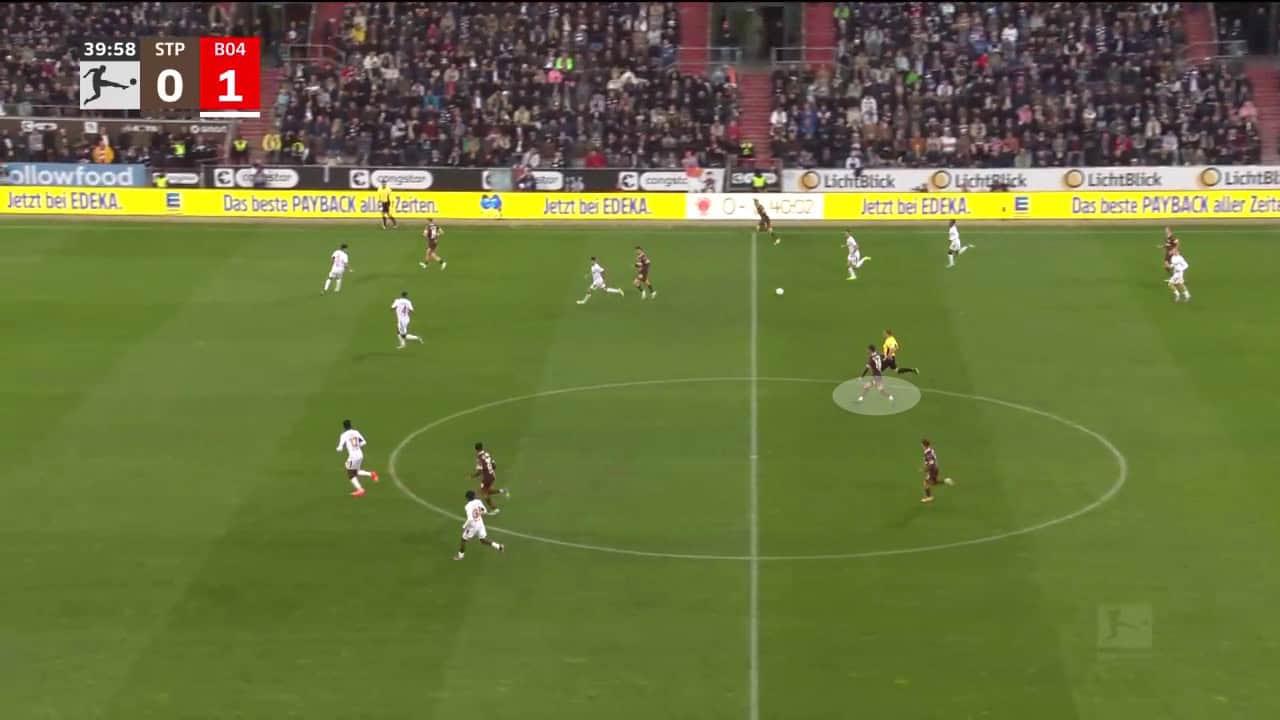
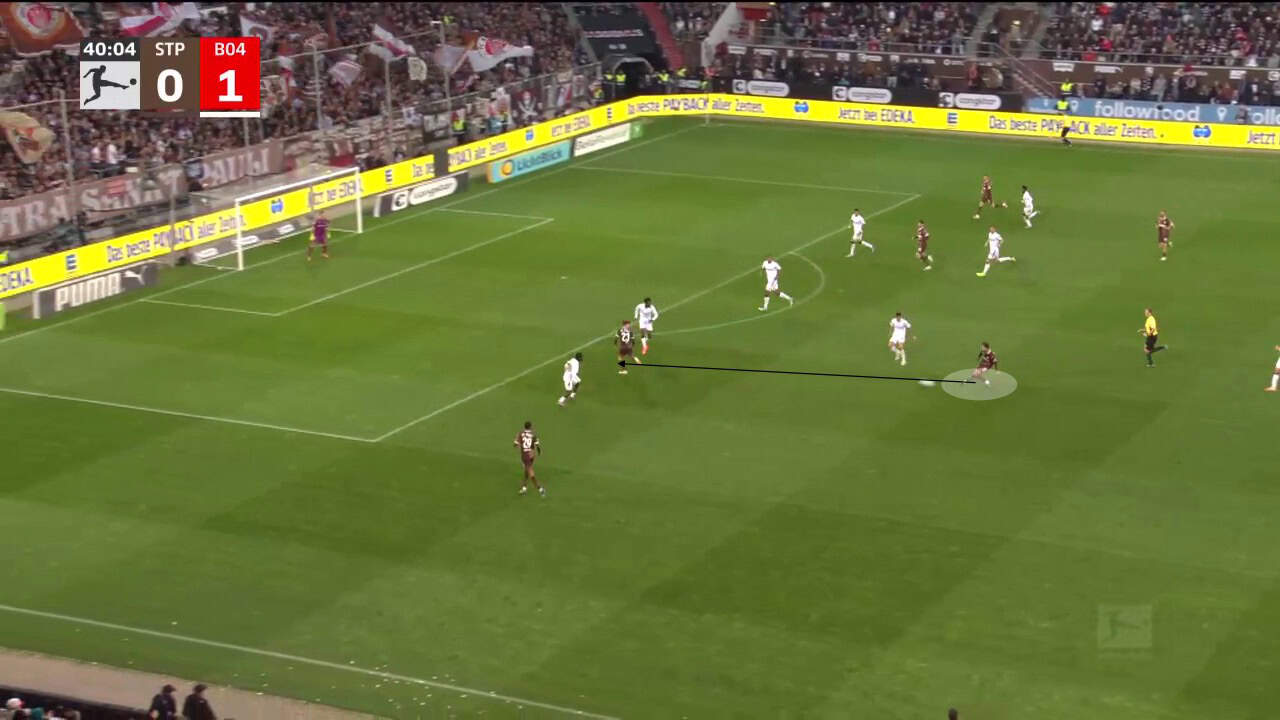
Sinani can go anywhere he wants: To the flank, to drop into his team’s half, he can be anywhere in the half-spaces.
The coach allows him to do that because it’s the key to playing as a false nine.
With regard to freedom from his coach, Sinani said: “It is that I appreciate about it—I have freedom to move in the spaces, and I think I have a good feeling about where to be on the field.“
Vision & Creativity: The Most Important Things A False Nine Must Have
Sinani also talked about the attributes that a player needs to have if they want to play as a false nine.
Because to play as a false nine, you have to play two different tasks in one: Firstly, as a centre-forward who can also be a target and press forward out-of-possession.
Secondly, as a playmaker who can create or set up chances for his teammates.
“I like to get the ball, to make a play, to play like a playmaker, and I think I have good vision.“
“I can use my teammates well in the space, and in depth.
If the manager said this, then we have to agree on it,“ he added.
St. Pauli Have Become More Dangerous Since Sinani Has Played As A False Nine
Indeed, St. Pauli became more dangerous when Sinani is playing.
When he is on the pitch, St. Pauli average a +10 xG difference, while the other players in the squad who played at least 500 minutes average a minus.
St. Pauli have also lost just one of their last six games, and it was against Bayern Munich.
They have drawn against Bayer Leverkusen, Wolfsburg and Borussia Mönchengladbach.
It’s no secret that one reason for this is Blessin’s decision to play Sinani as a false nine, and how the player is thriving in this system.
After the game against Leverkusen, Blessin also praised Sinani for doing his homework.
“We talked about the missing part of his game—holding up the ball, coming toward it, not losing it easily.
He did that really well, combining it with his technical ability,“ Blessin said.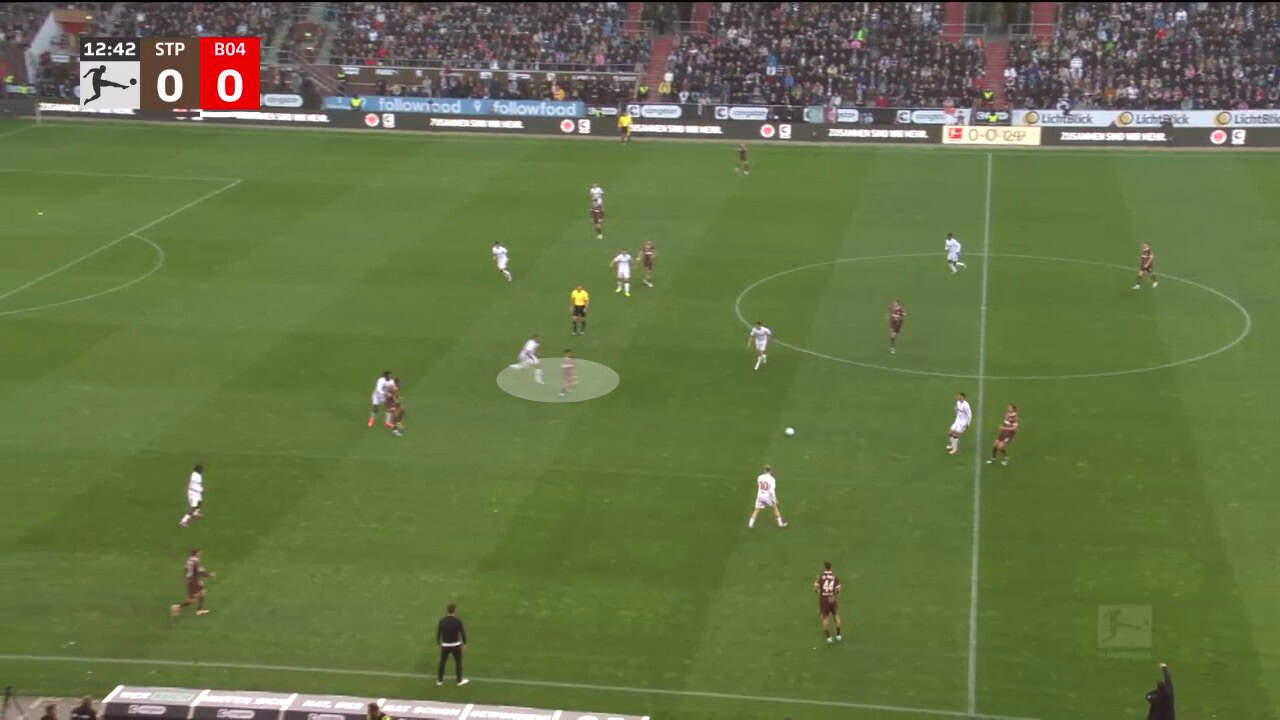
Conclusion
Playing as a false nine is a tough job because you have to do the centre-forward task and the playmaker task.
As Danel Sinani said, it’s about vision and creativity—that’s why not every player can do it.
Playing as a false nine also requires trust because the player has to move all over the place, and he can cause chaos not only for the opposition but also for his own team.
That’s why it’s so important to have a good understanding of the player’s positioning.
But if everything clicks, especially if your striker is creative enough and your wide forward is really dangerous, then this role is worth using.
Just look at St. Pauli—before they had the centre-forward issue, they weren’t not really dangerous and scored many goals, but since Blessin found Sinani to fill the role, they’ve become a better team and have been doing really well in the Bundesliga.
