
Spanish striker Gorka Guruzeta is enjoying the best form of his career with Athletic Bilbao this season, having become a key component of the team’s attacking system in La Liga.
His role is no longer limited to the penalty area; he has transformed into a player who dictates the tempo of the entire final third.
His development stems from a clear sense of confidence in his abilities and the greater tactical responsibilities he has been given, particularly in linking play and leading the attacking press.
His goal tally of 13 reflects his consistency in front of the net.
However, his contribution to the build-up play and chance creation is also significant.
He has become the first point of contact between midfield and attack, making Bilbao less reliant on individual efforts and more organised in their attacks on goal.
In this Gorka Guruzeta scout report, we will define his profile and role in Ernesto Valverde‘s tactics.
Gorka Guruzeta Tactical Role
One of the main reasons for Gorka Guruzeta’s success this season is his intelligent off-the-ball movement, especially in the half-spaces and between the centre-backs.
He doesn’t rely on top speed, but rather on perfect timing for his runs, often dropping a step back to draw the defender away before launching a surprise attack into the space behind the defensive line.
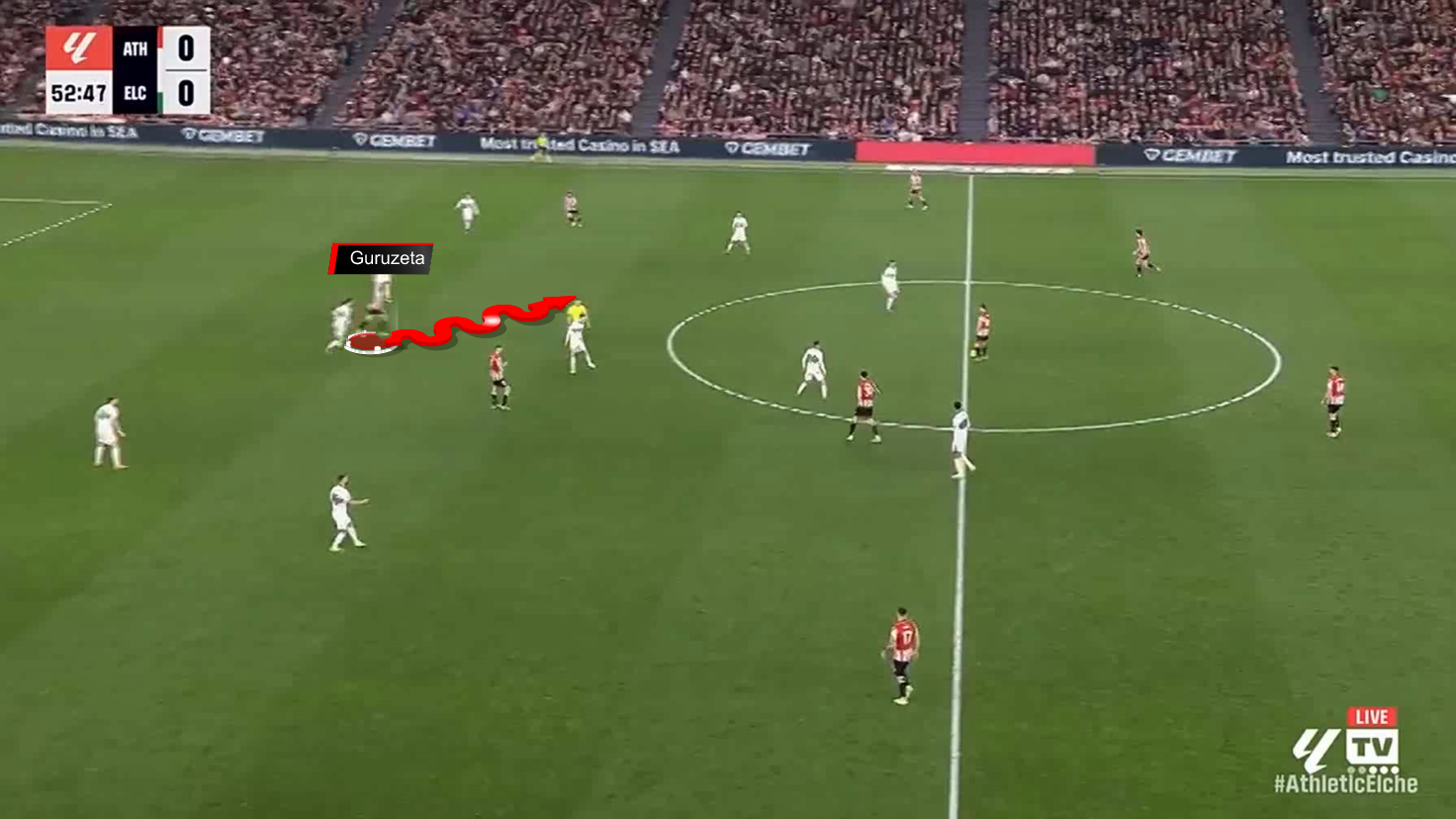
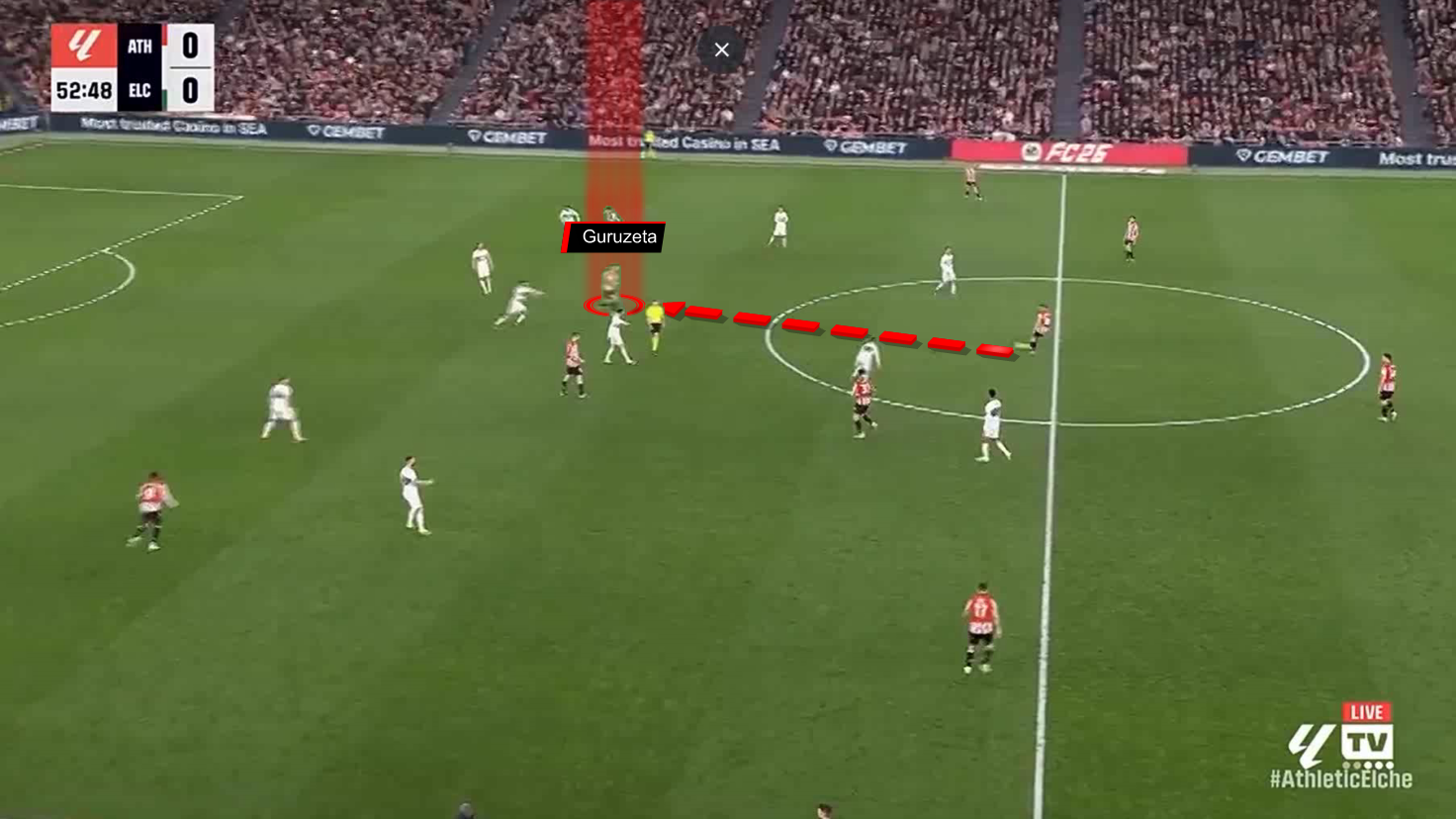
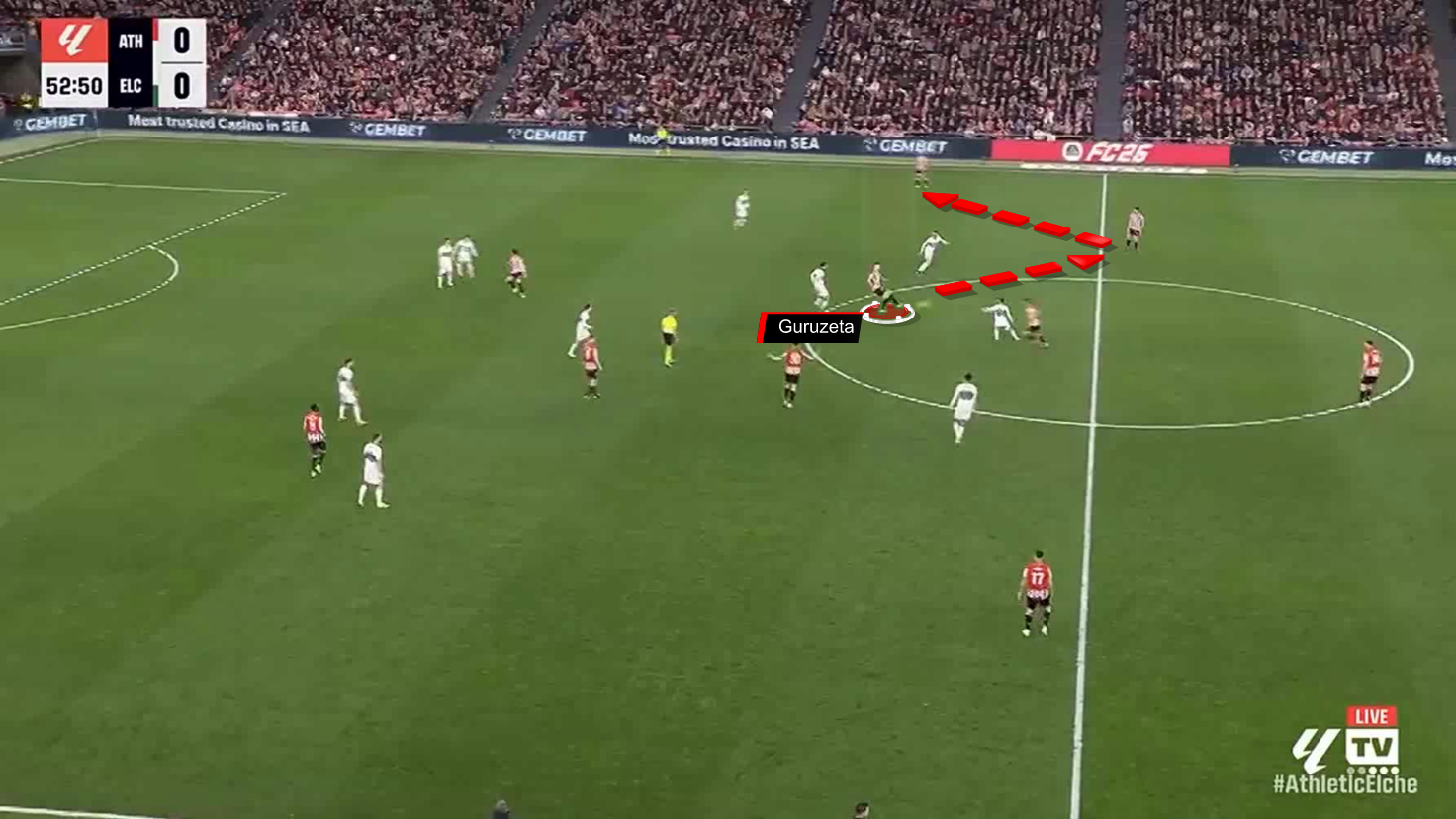 Against Elche, it was clear how Guruzeta was dropping between the defensive and midfield lines to pull one of the defensive centre-backs out of position, which opened up space for the wingers to enter the centre.
This behaviour gives Athletic Bilbao’s wings more room to penetrate deeper, creating numerical superiority in the final third.
His lateral movements inside the penalty area make it difficult to mark him man-to-man, especially against teams that defend with a high line.
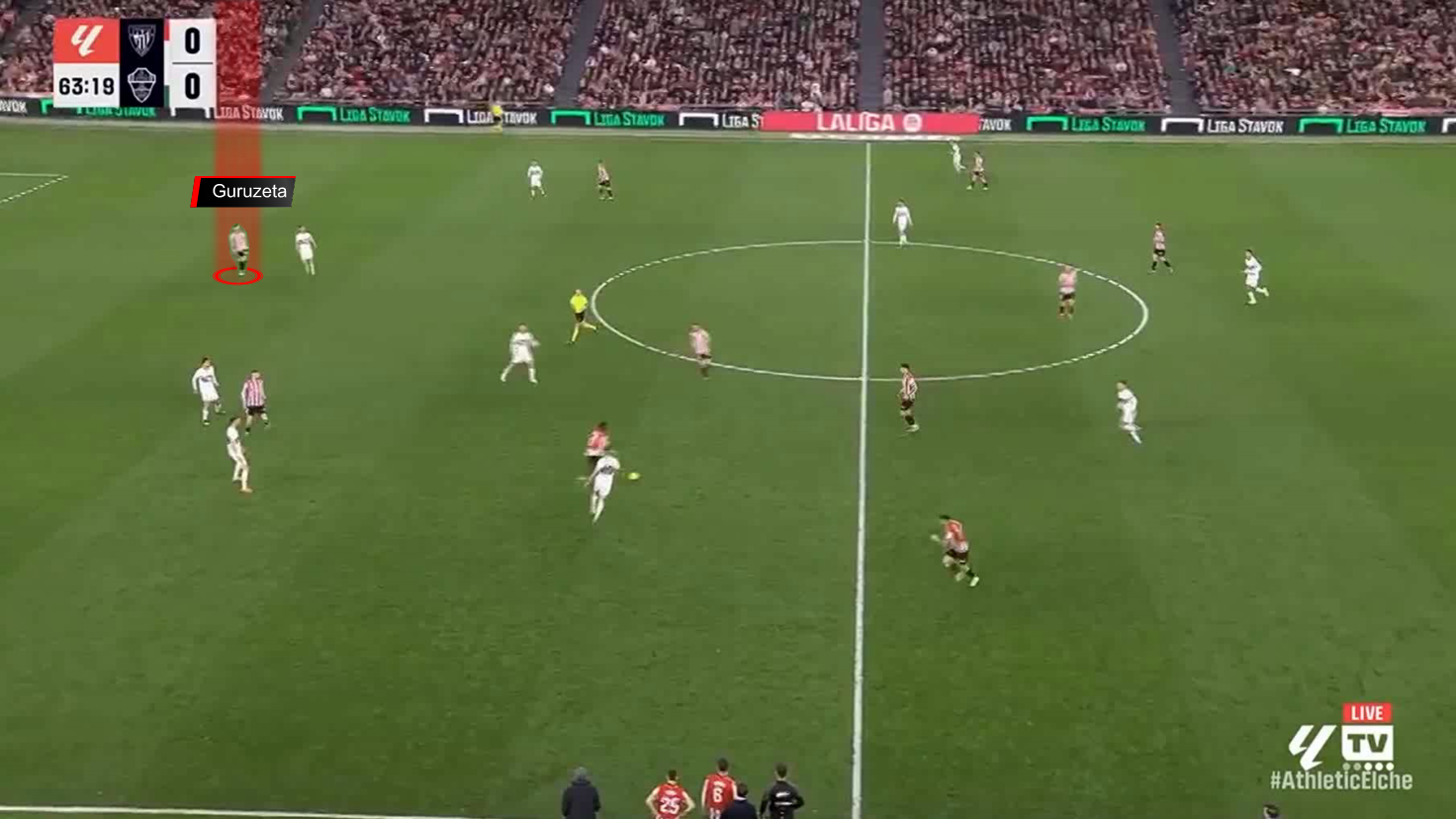
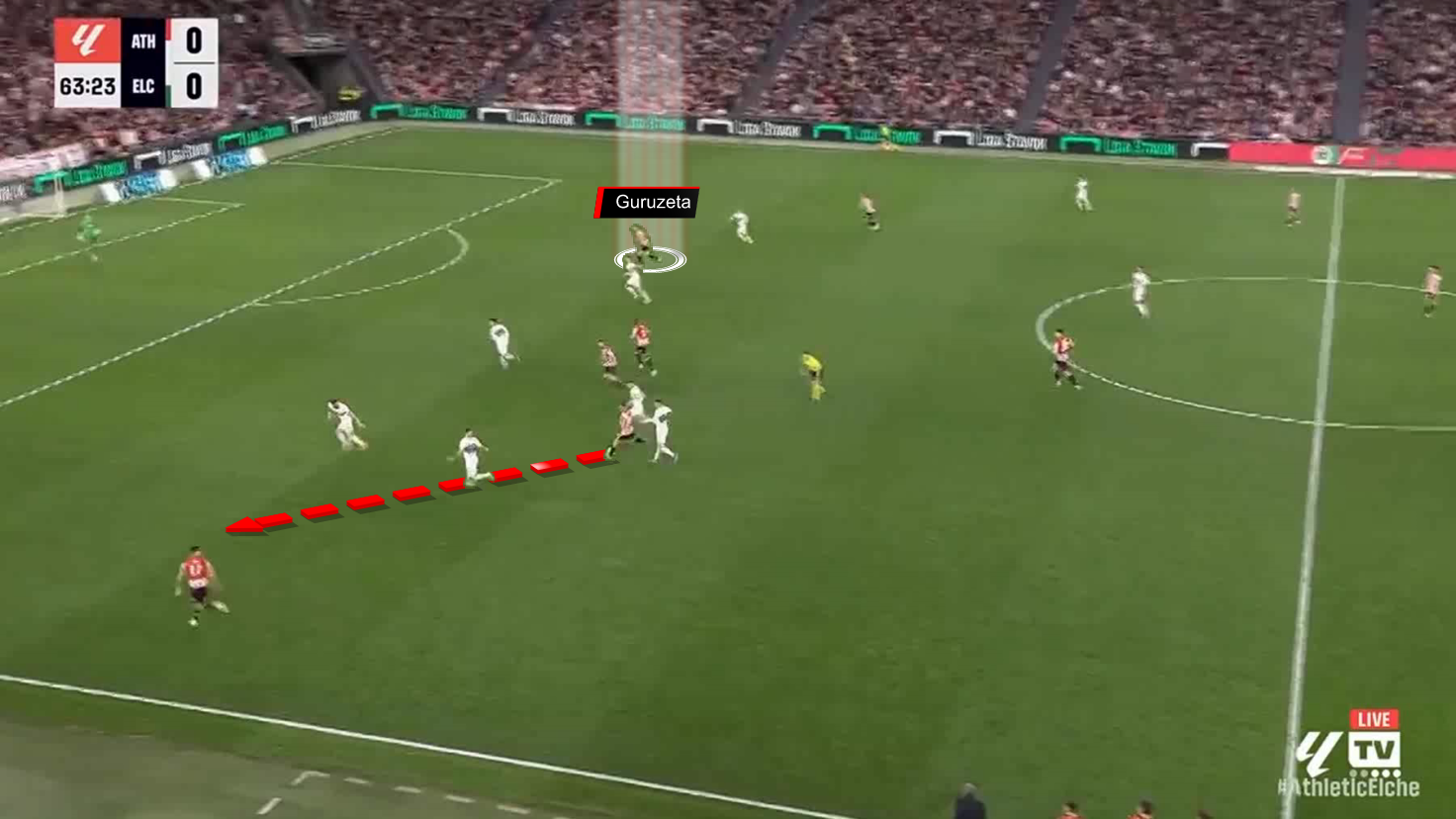
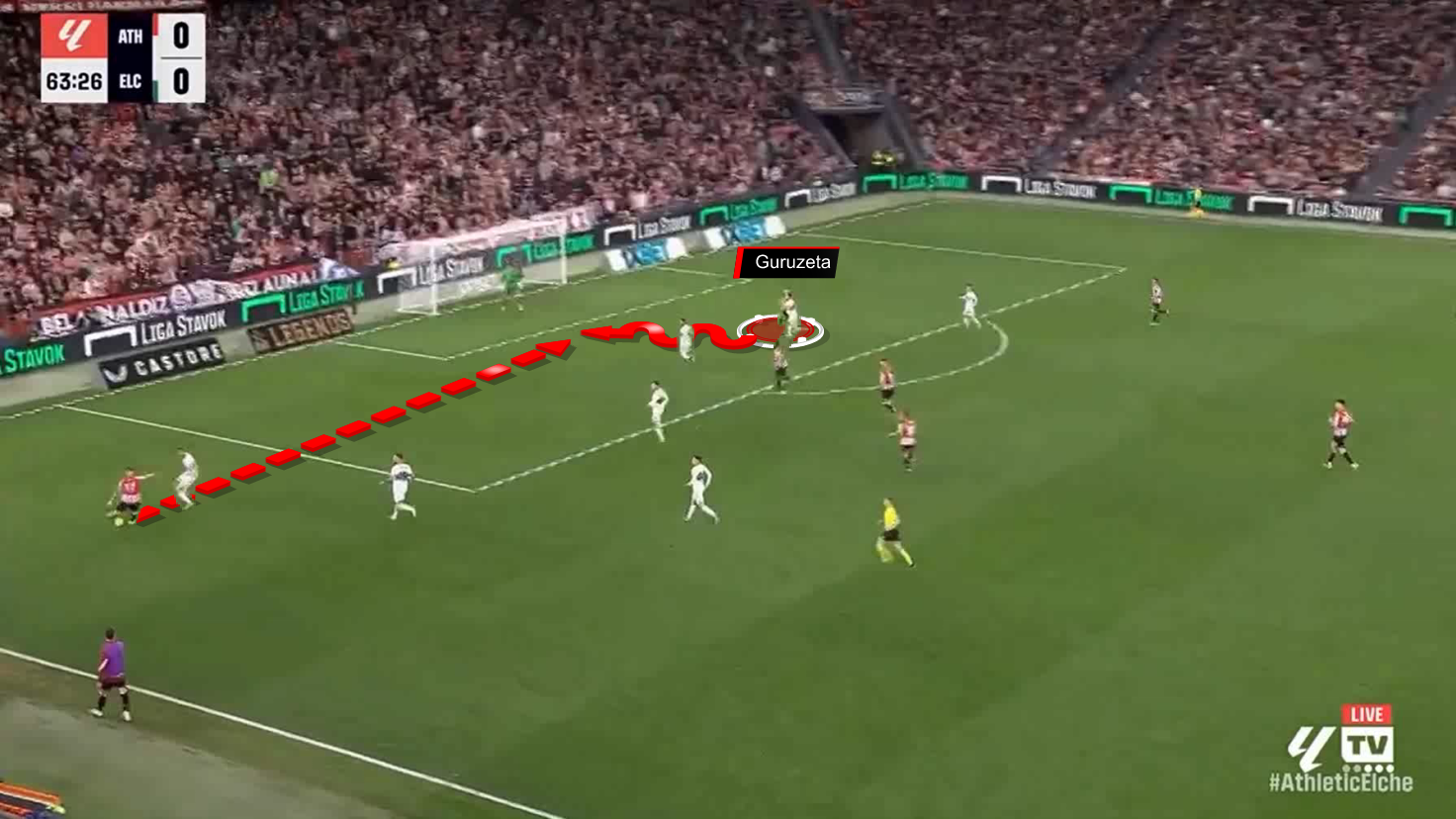
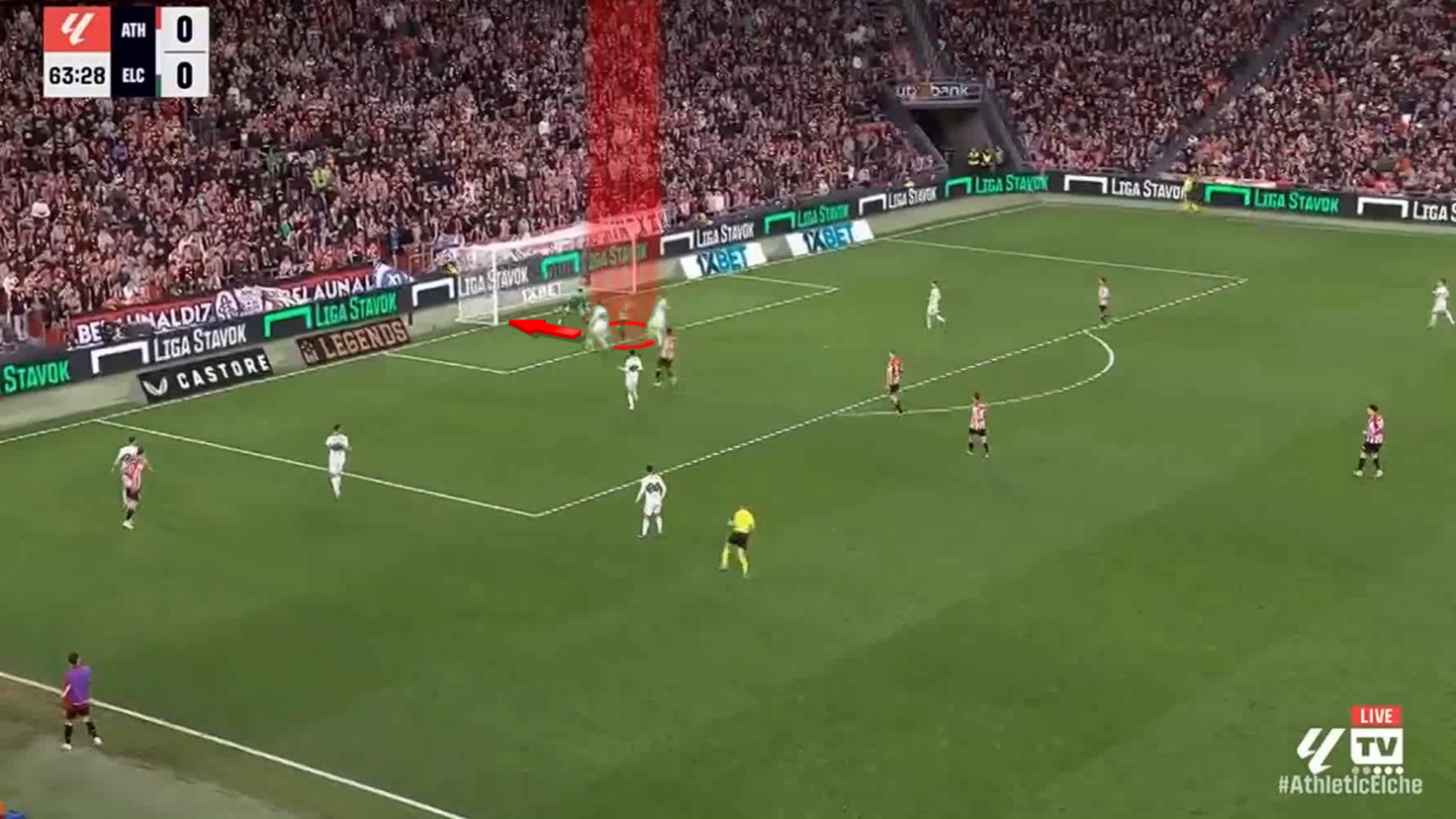 Here we see his goal against Elche, his movement from the start of the attack on the blind side, and then his diagonal movement inside the penalty area between the near post and the penalty spot.
He also demonstrates a high level of awareness in the timing of his entry into the penalty area, as he is half a second behind the defenders, giving him a clean receiving area away from direct contact.
Gorka Guruzeta Link-Up player
Gorka Guruzeta’s role isn’t limited to finishing attacks; he’s become a crucial element in the second phase of build-up play.
He often receives the ball with his back to the goal, acting as a pivot point that allows the team to advance.
His ability to pass with one or two touches minimises lapses in concentration and helps the team transition quickly through phases of attack.
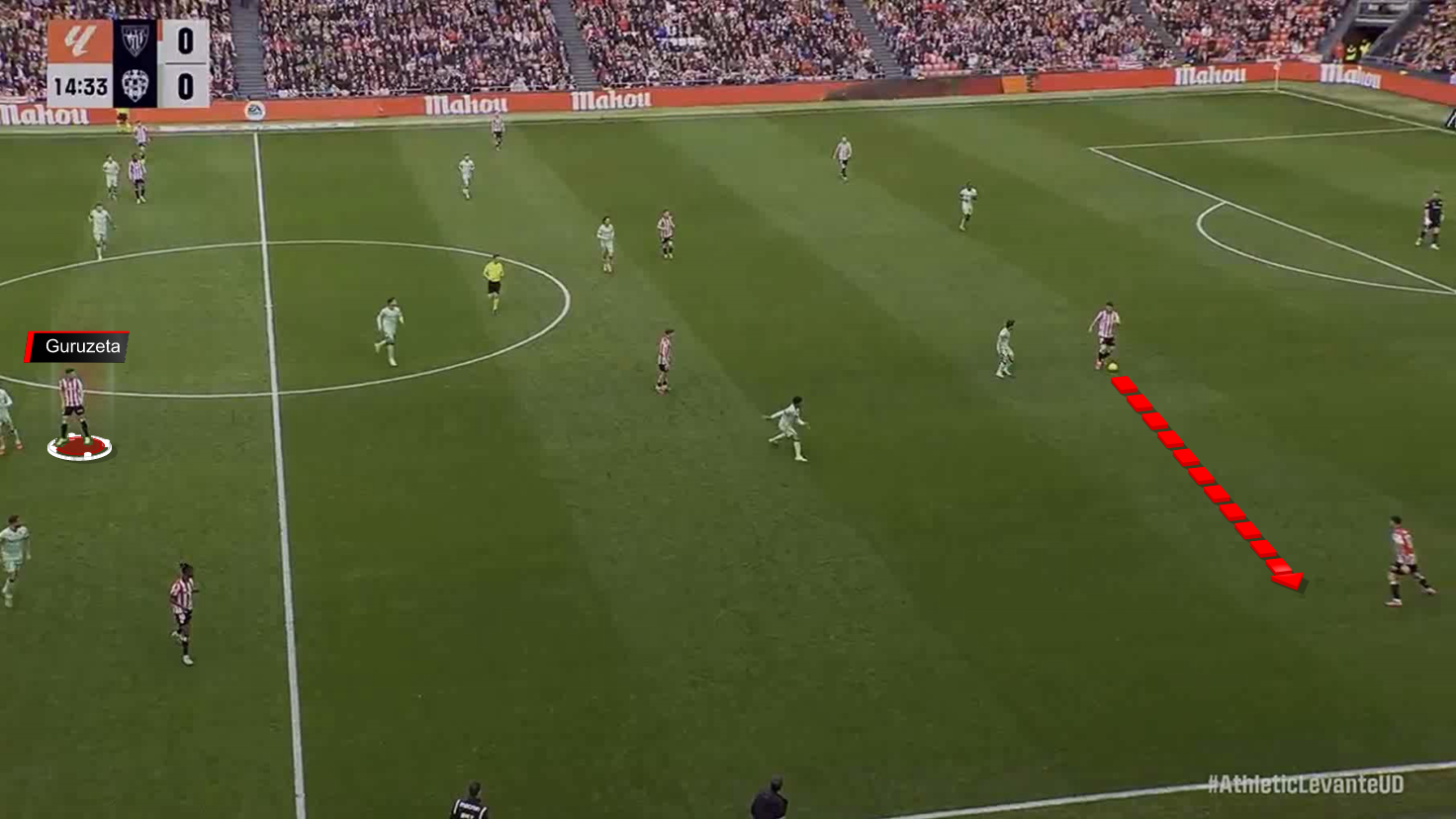
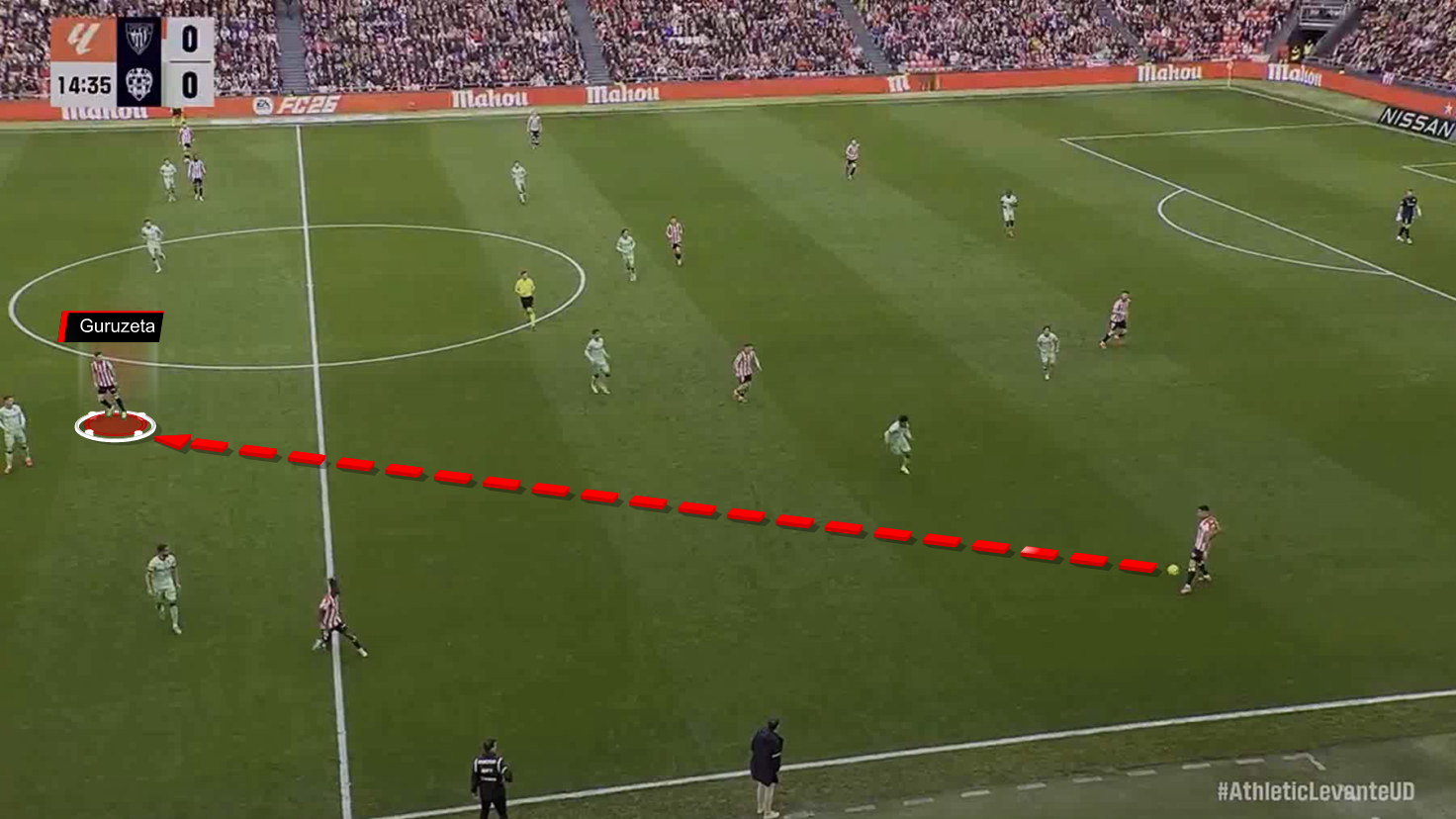
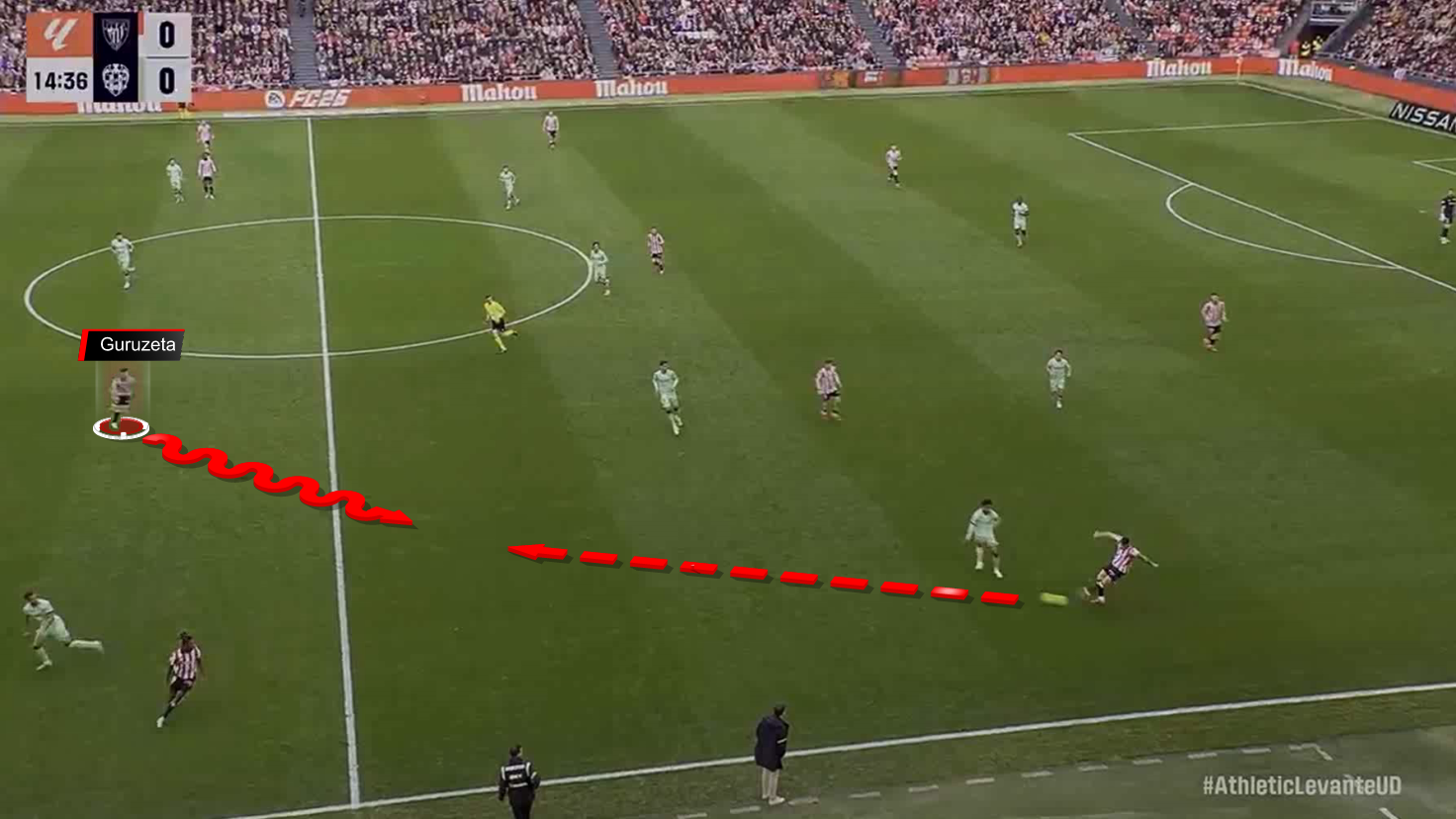
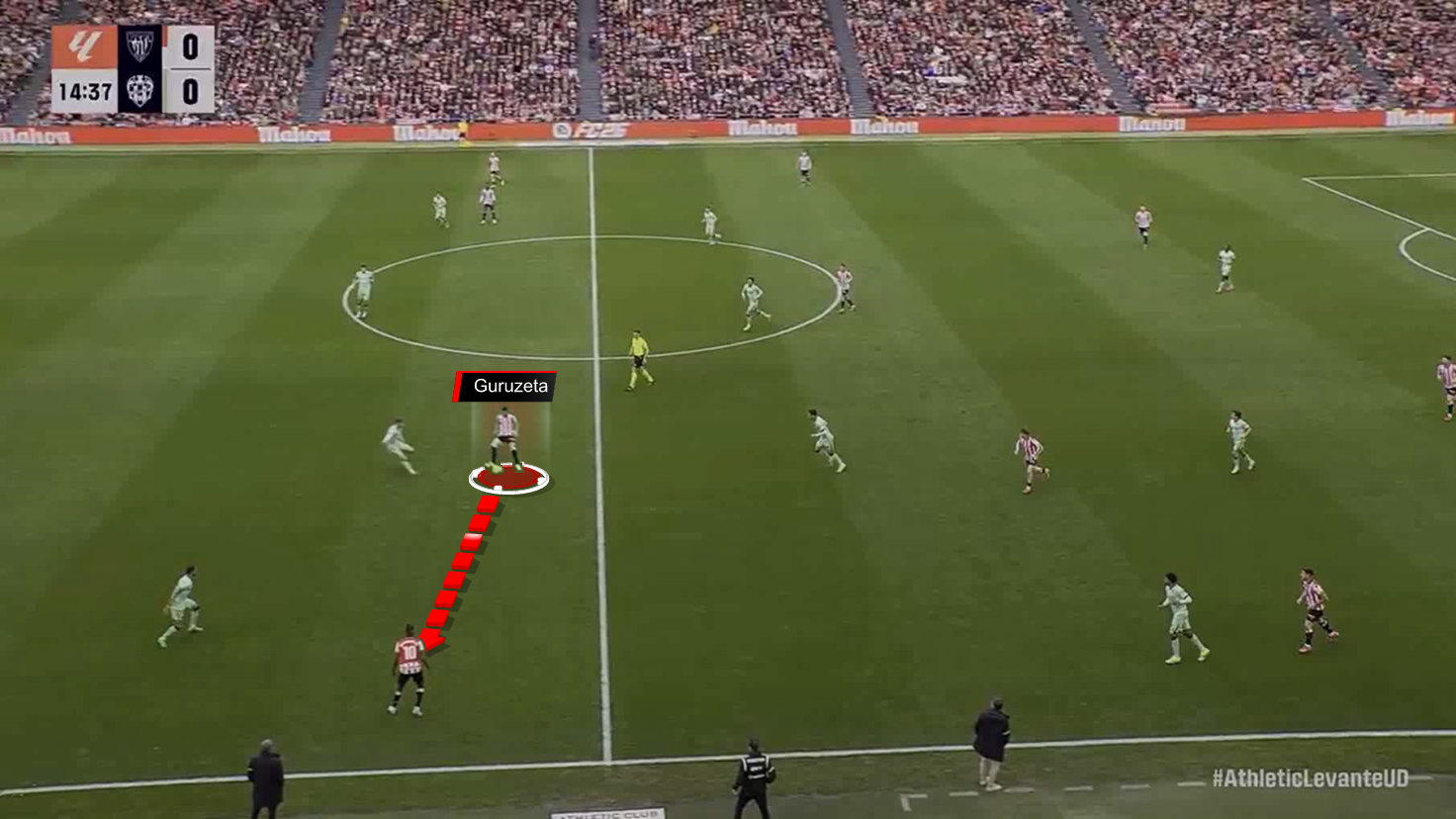 Here, against Levante, we can see him adjusting his body position to match the ball carrier’s movements.
Initially, he prepares to run behind the defence, then, when he goes to the left-back, he drops back and links up.
His ability to pass with one or two touches reduces loss of rhythm and helps the team transition quickly from build-up to attack.
This role is more akin to a link-up striker than a traditional box striker, as he helps to hold off defenders and open up passing angles for the advanced midfielders.
Gorka Guruzeta Positioning & Final Third
Gorka Guruzeta’s improved goalscoring ability stemmed more from better positioning than technical skill.
He now attacks the near post more frequently and reads crosses early, giving him a half-second advantage over defenders.
He also displays remarkable composure in front of the goal.
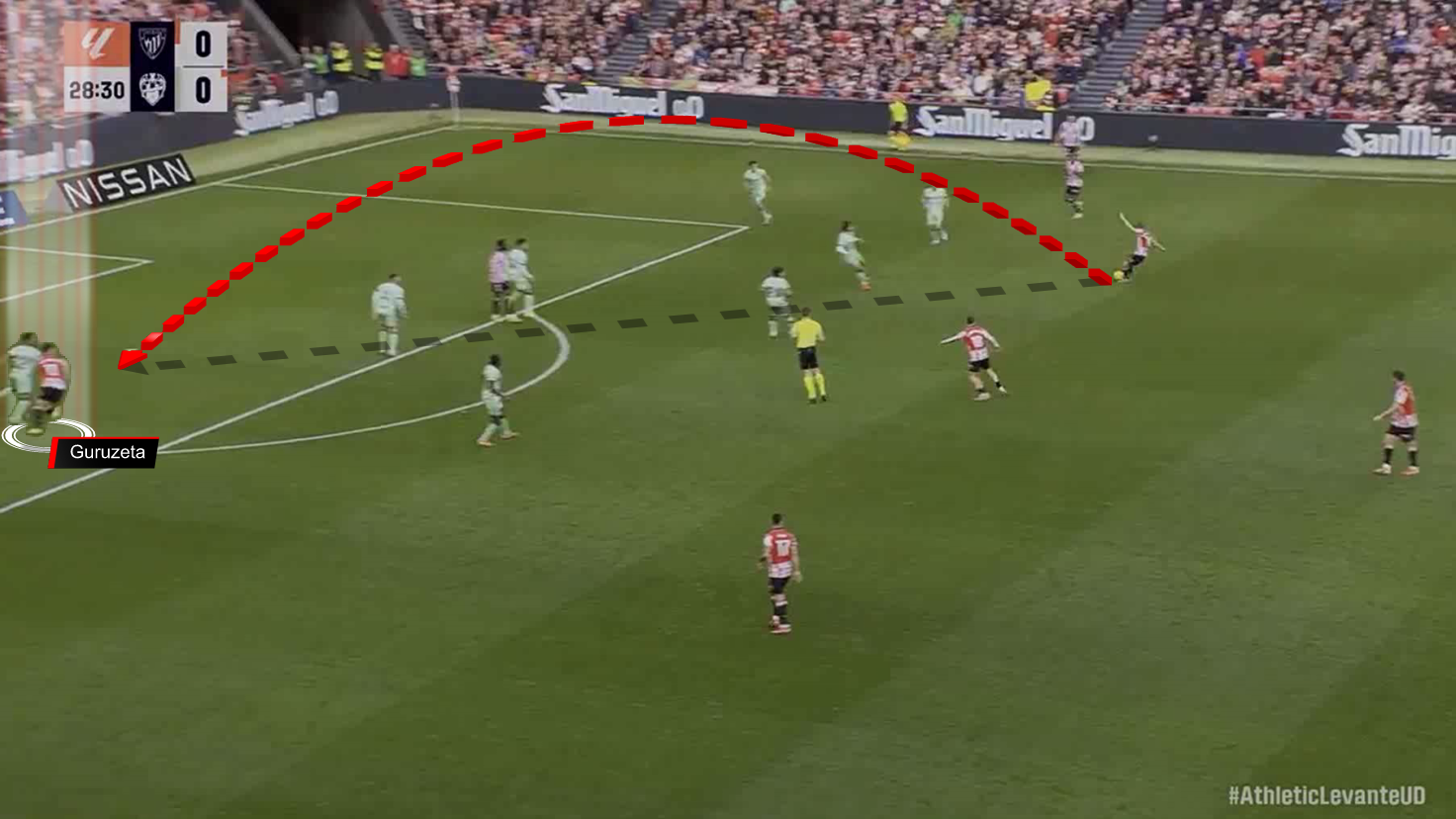
 One of his most notable improvements this season has been his effectiveness with crosses, especially aerial balls into the penalty area.
While he isn’t a striker who relies solely on physical dominance, his timing and angle of attack are what truly set him apart.
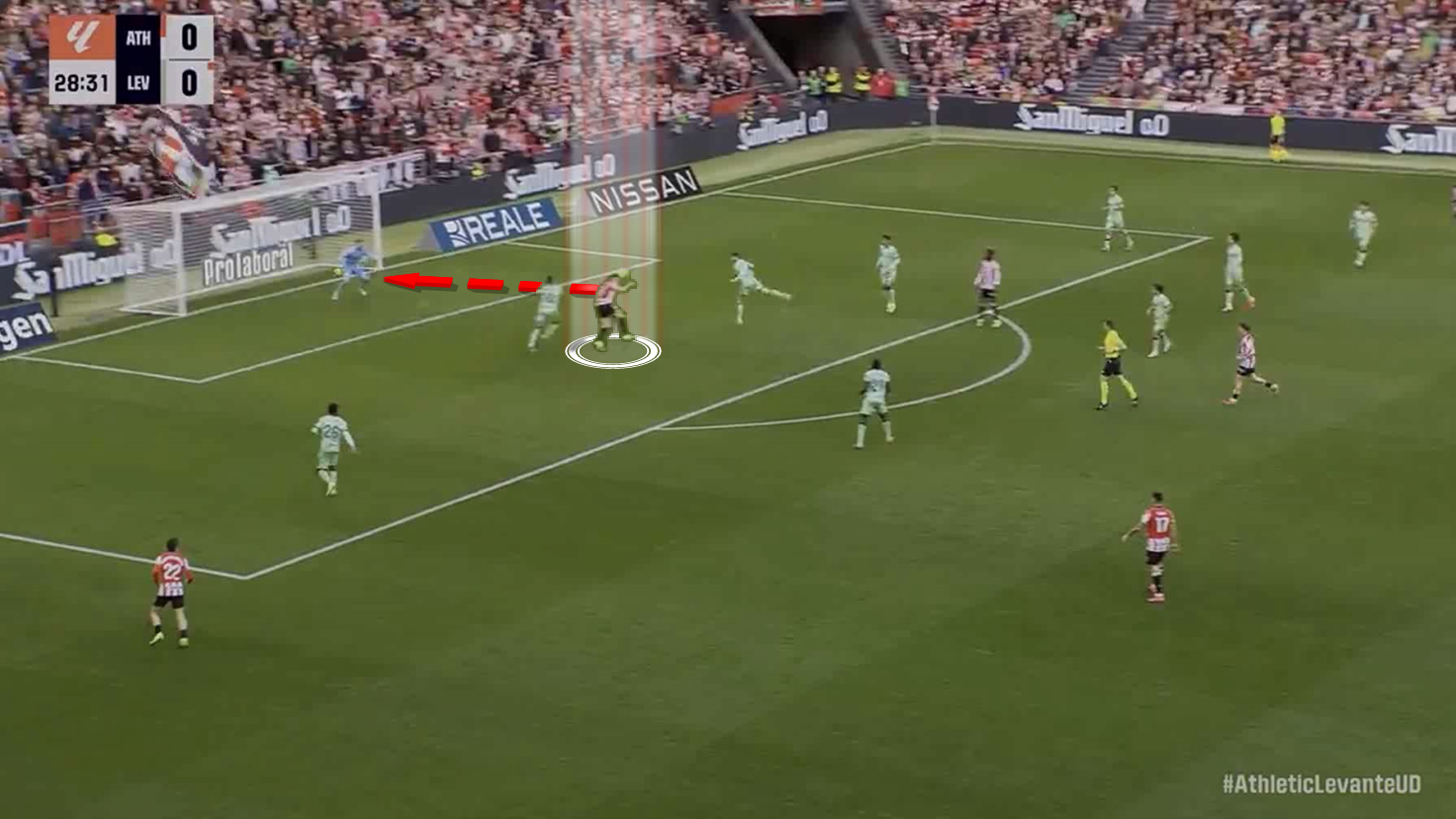
In this goal against Levante, his run wasn’t a direct drive towards the centre of the goal.
Instead, he started with a backward step to avoid the centre-back’s marking, then sprinted diagonally towards the near post just as the cross was being delivered.
This short movement created half a meter of space for him, which is enough at this level to secure the goal.
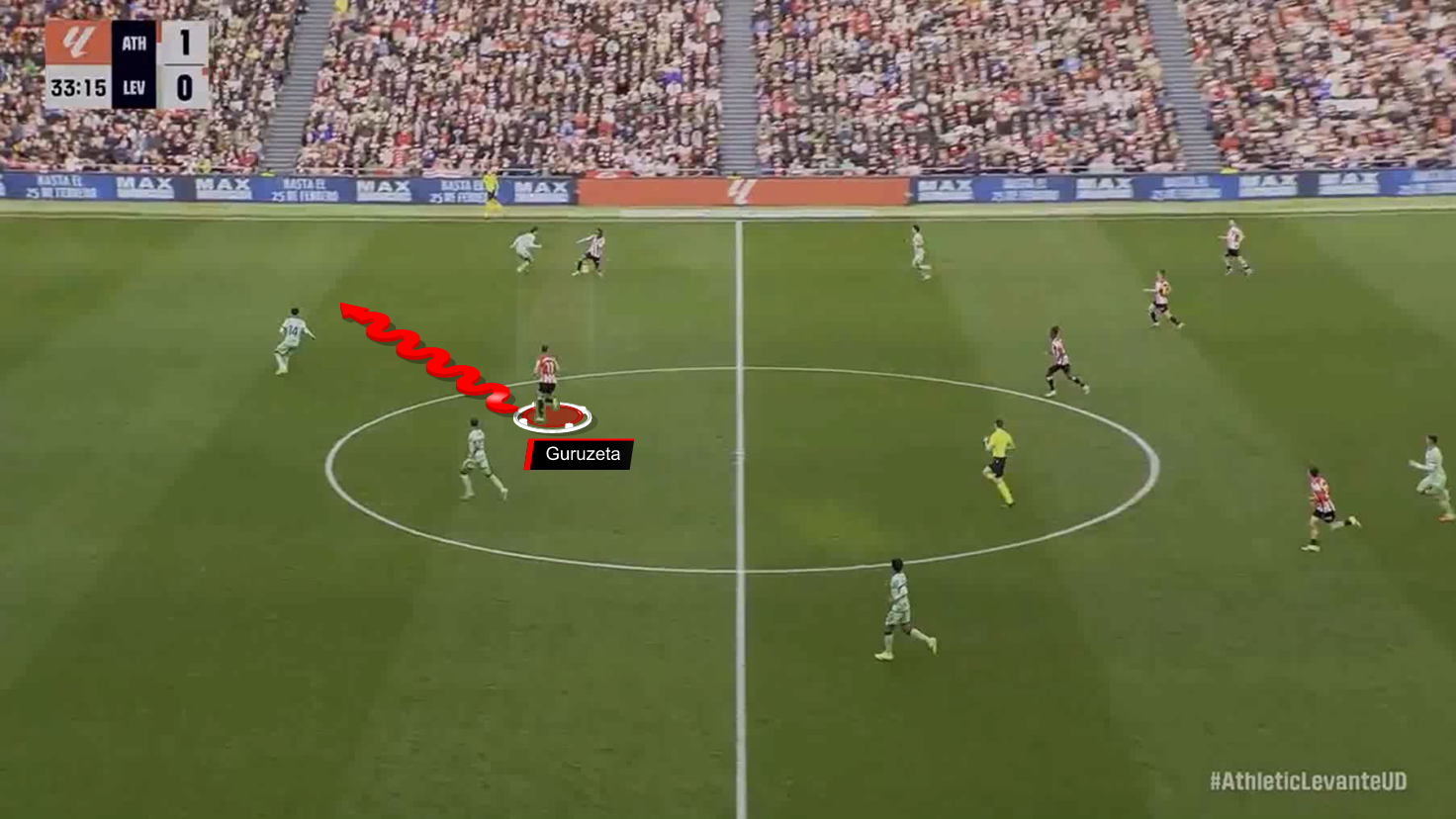
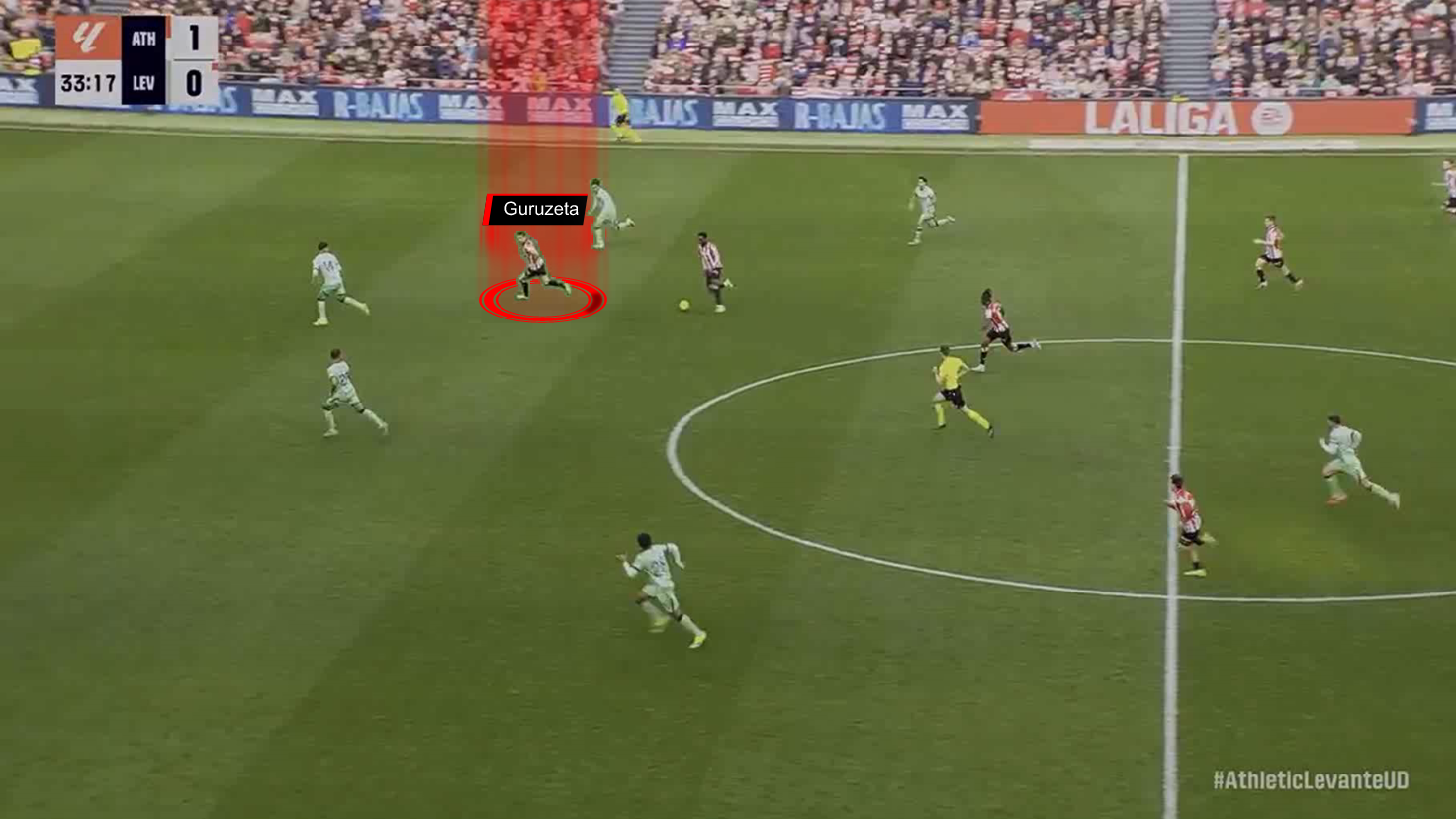
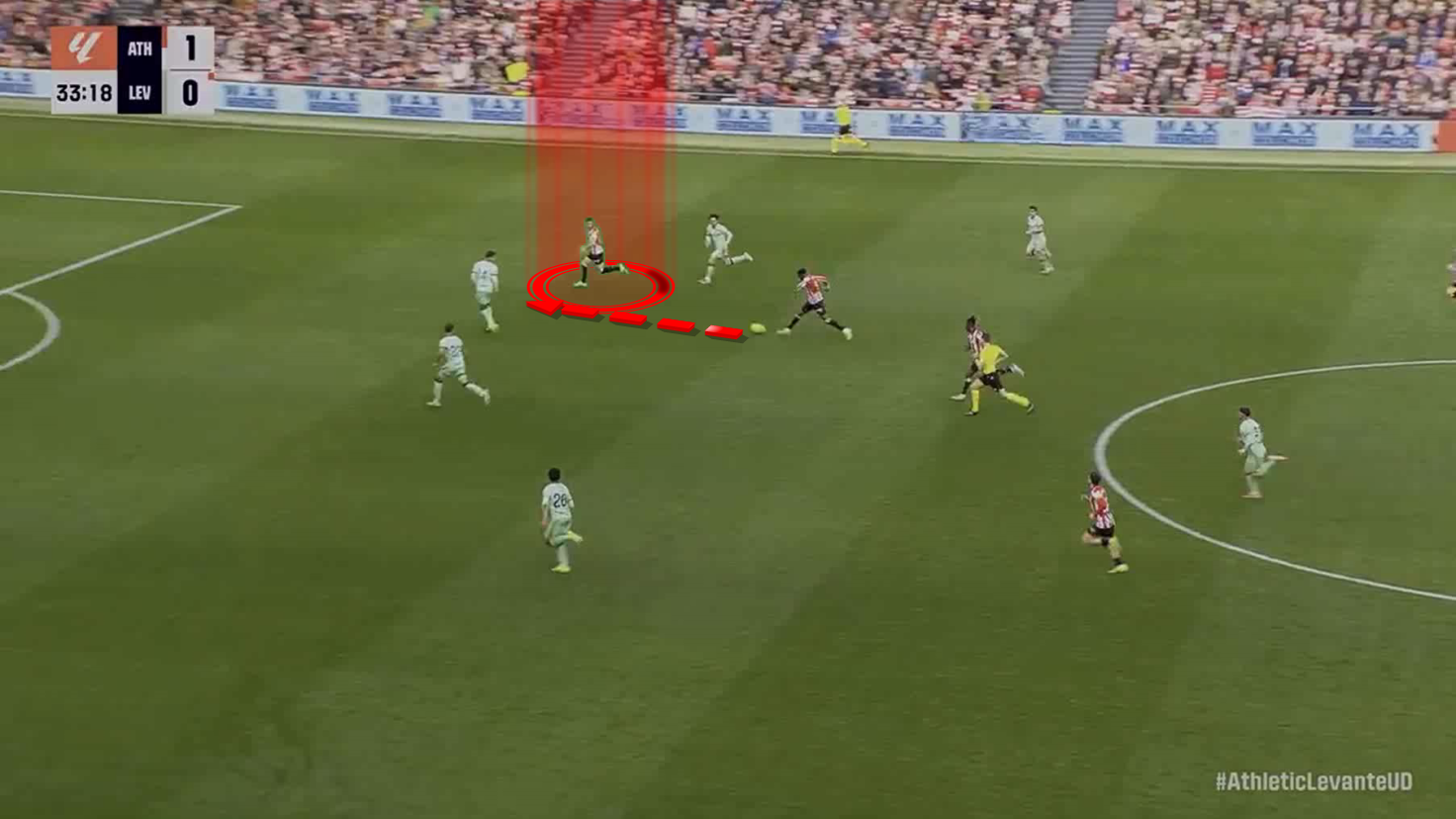
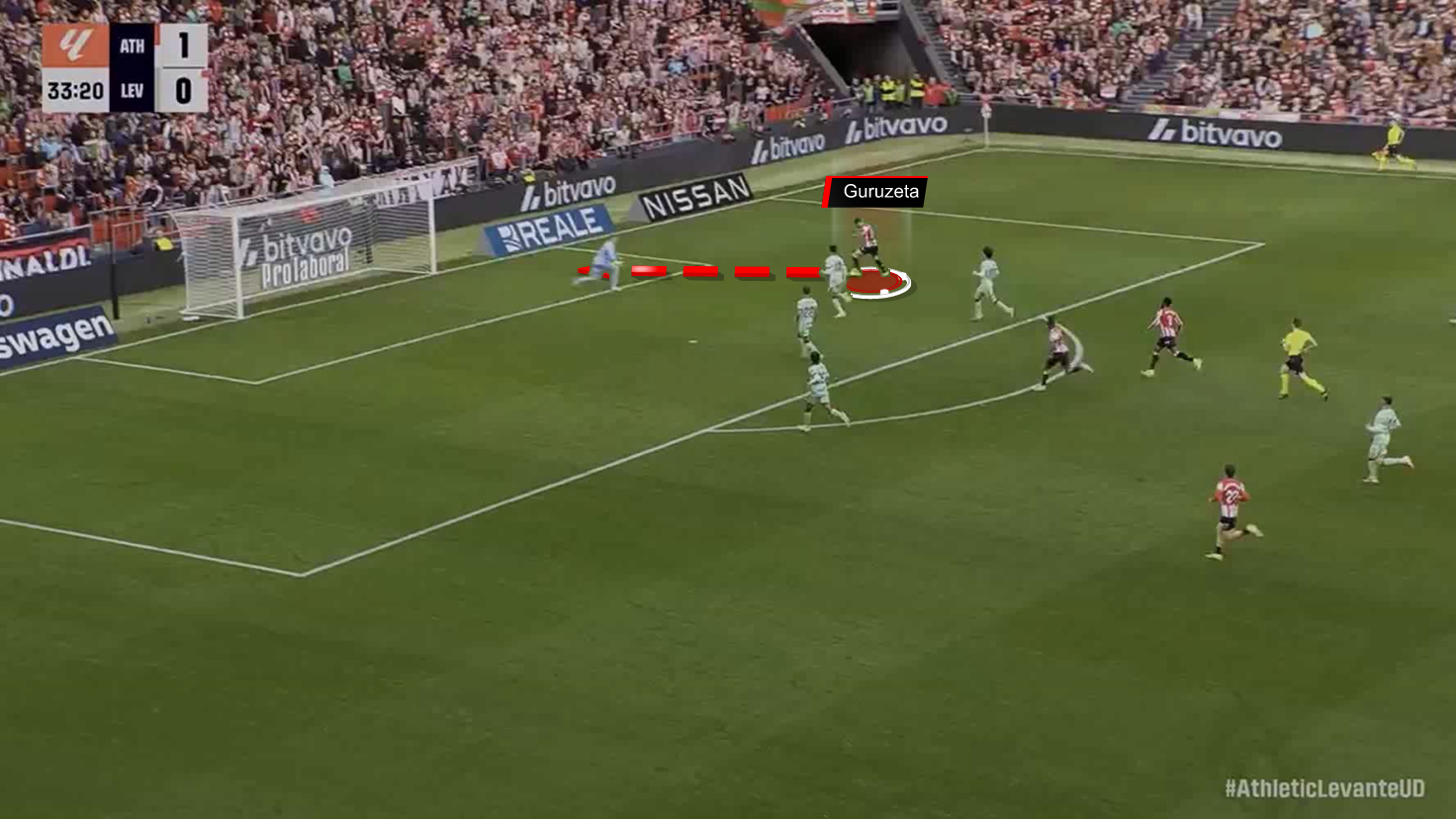 Again against Levante, in a swift attacking transition, we see his characteristics: his diagonal movement, creating space and then demanding a pass.
He controlled the ball with two touches, receiving it and then quickly shooting from inside the box.
Most of his goals came from a few touches in the penalty area, which is remarkable.
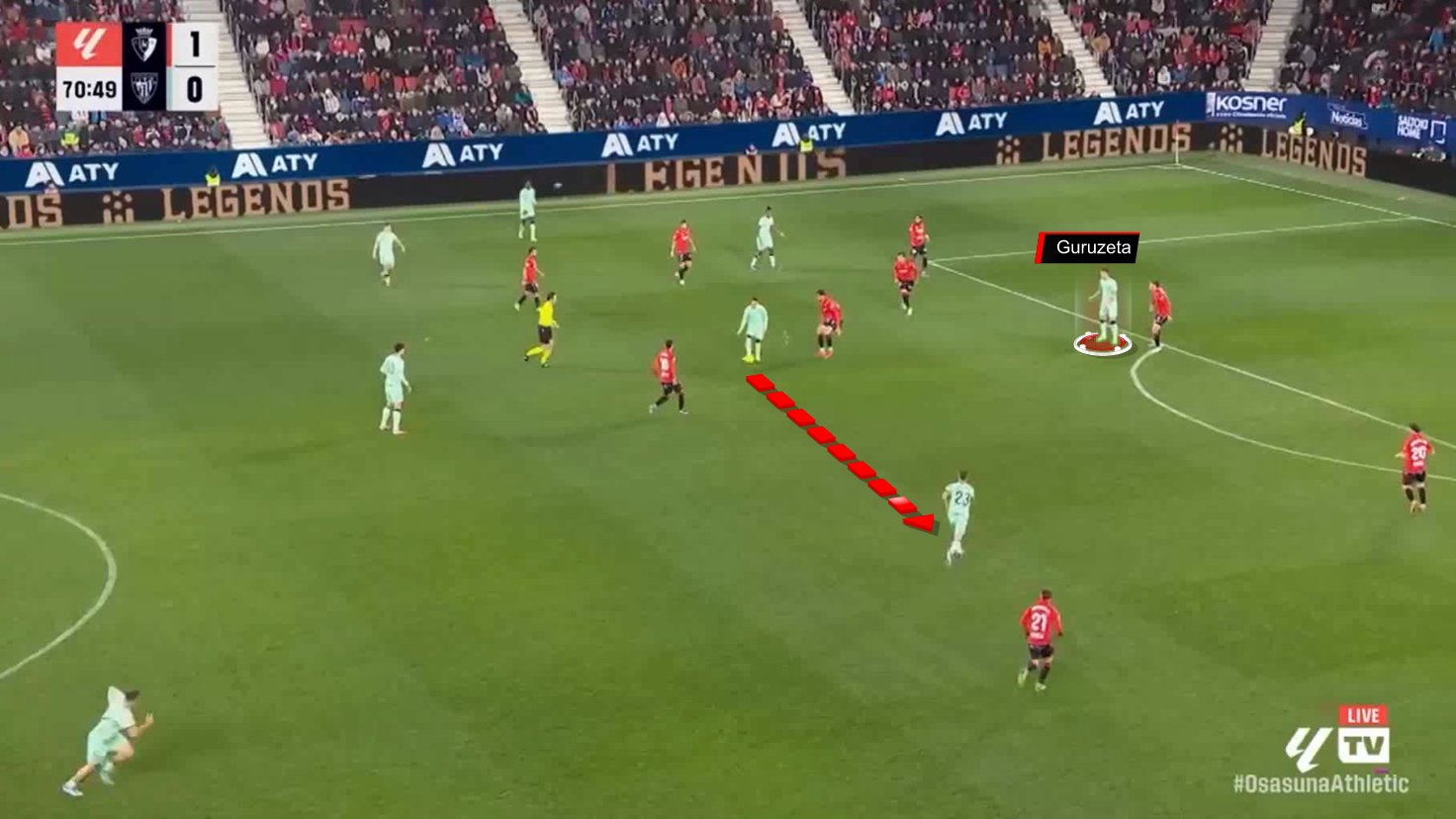
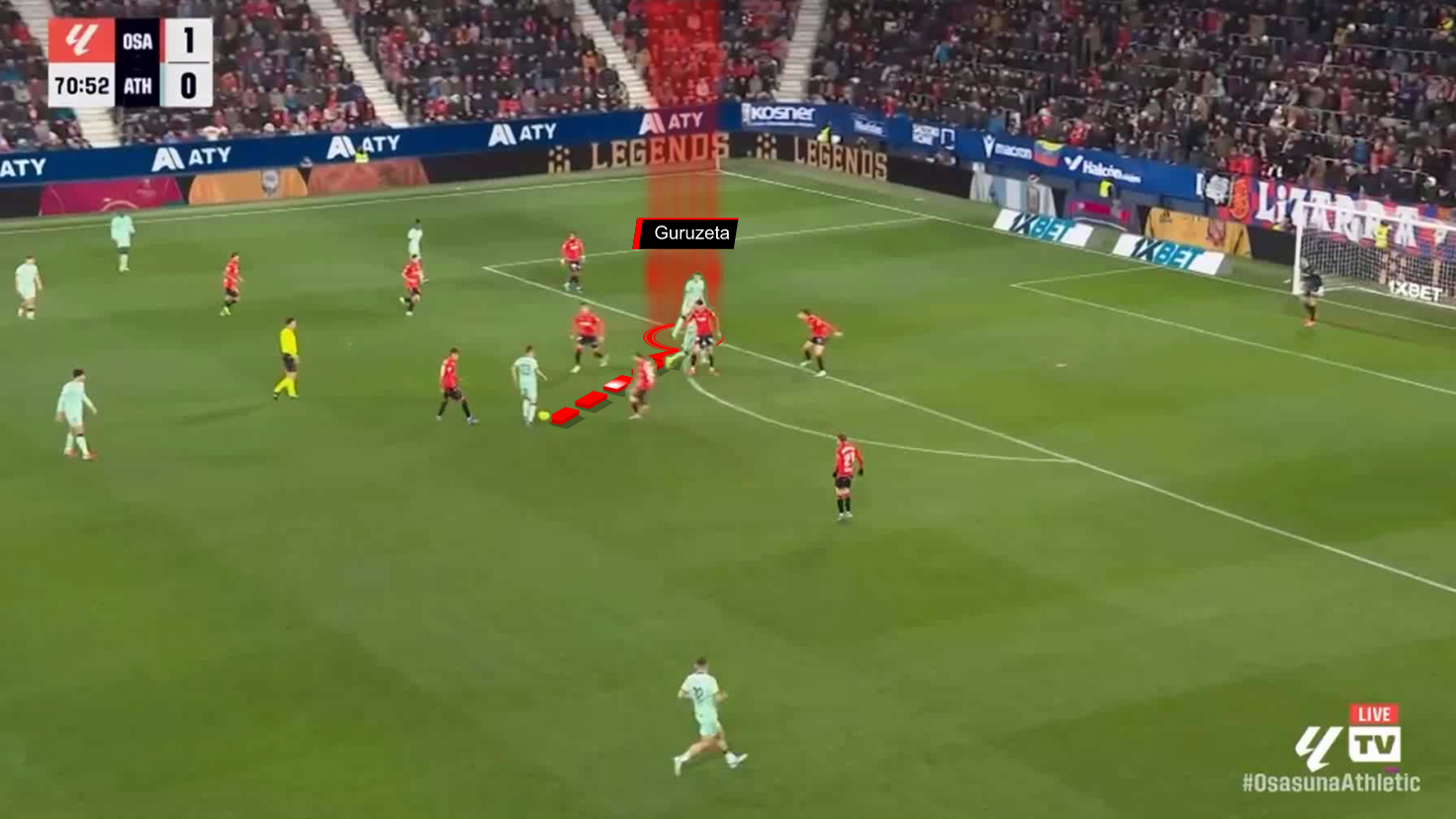
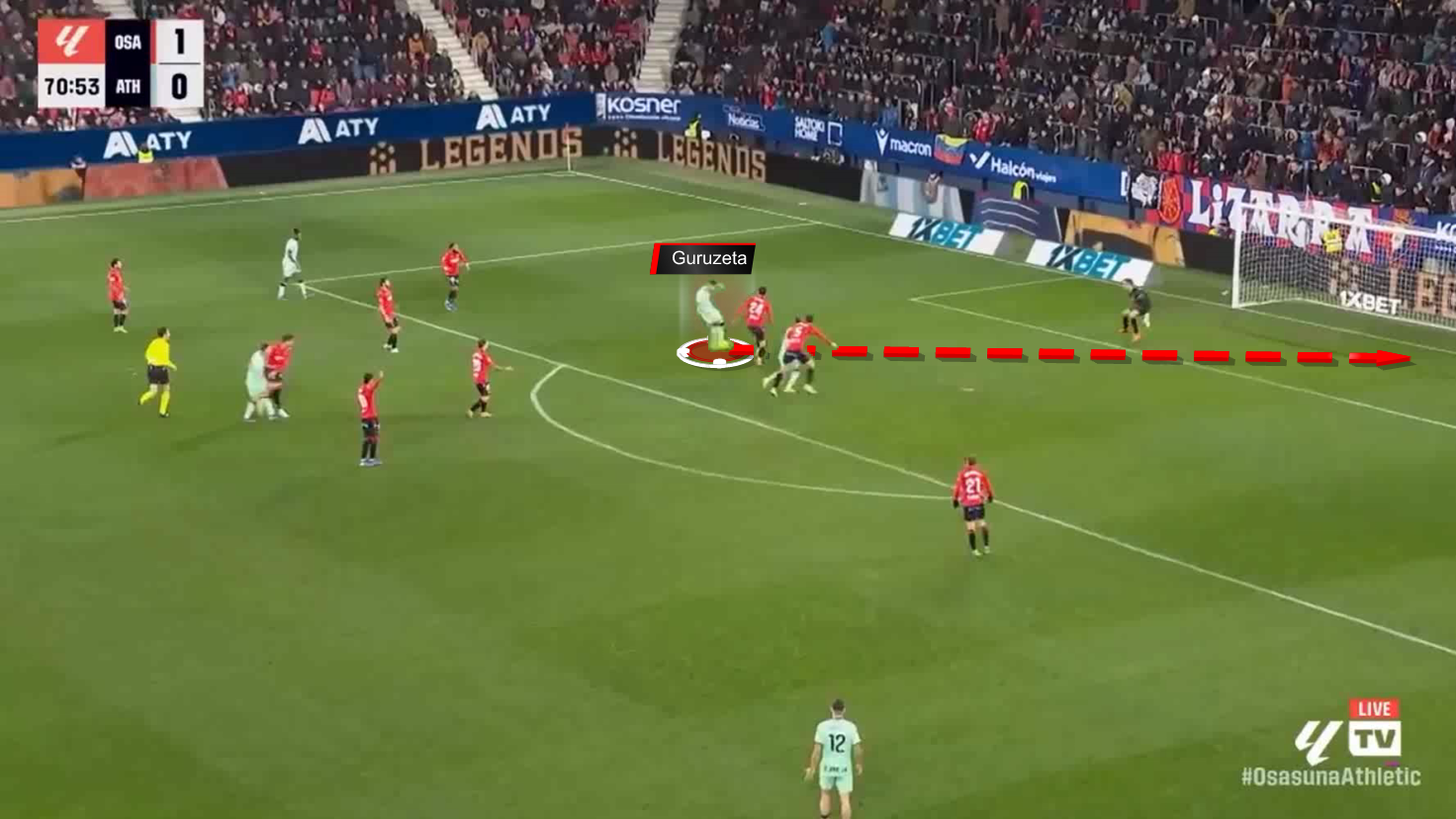 Here, against Osasuna, Gorka Guruzeta anticipates a diagonal pass and adjusts his body to receive the ball on his far foot.
Then, with his second touch, he calmly shoots.
He became calmer in the final third, preferring to vary the angle of his shot rather than relying on power, which increased his conversion rate.
He is also good at stepping back and linking up; seeing that there is no pressure, he decides to spin the ball.
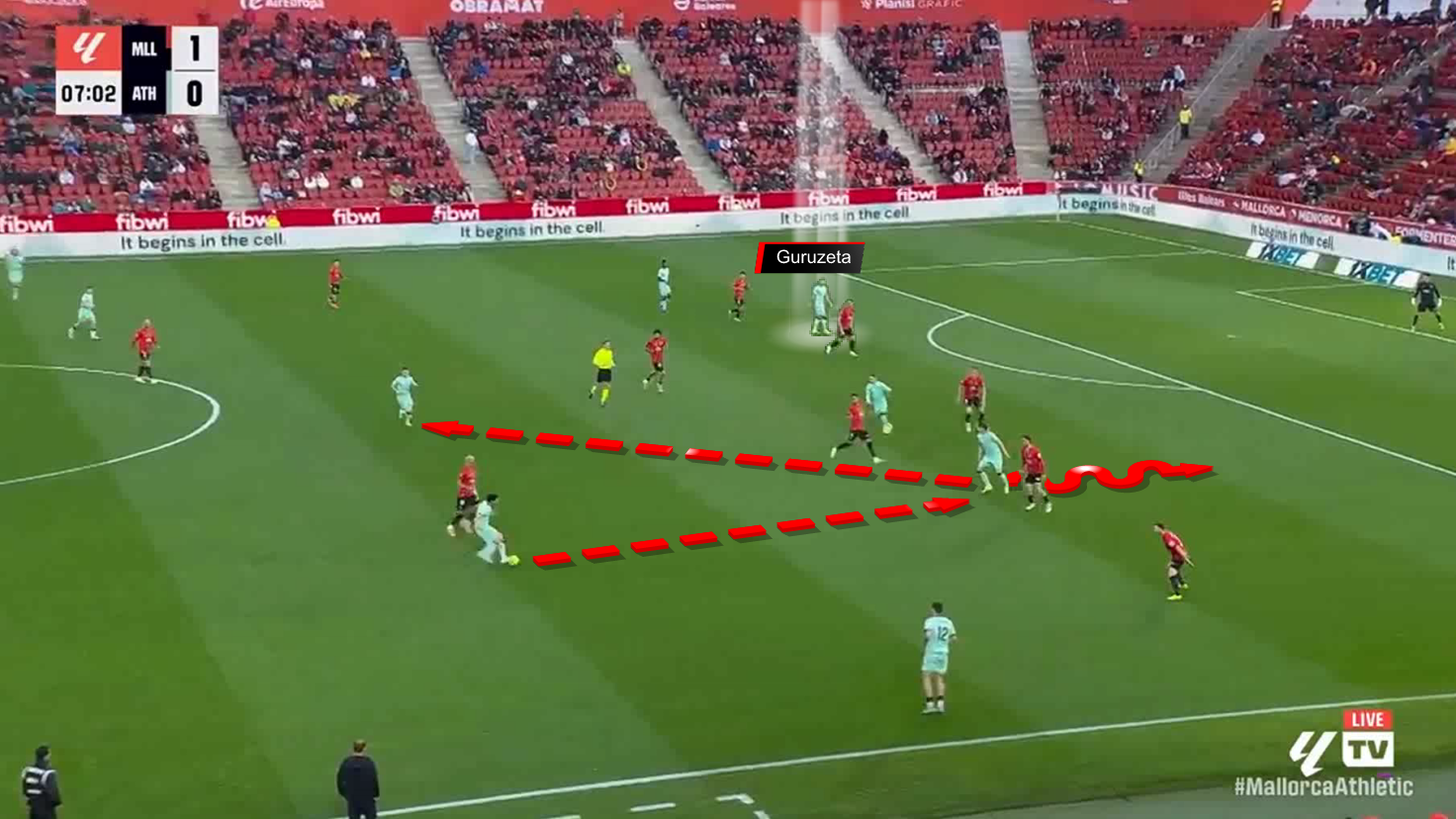
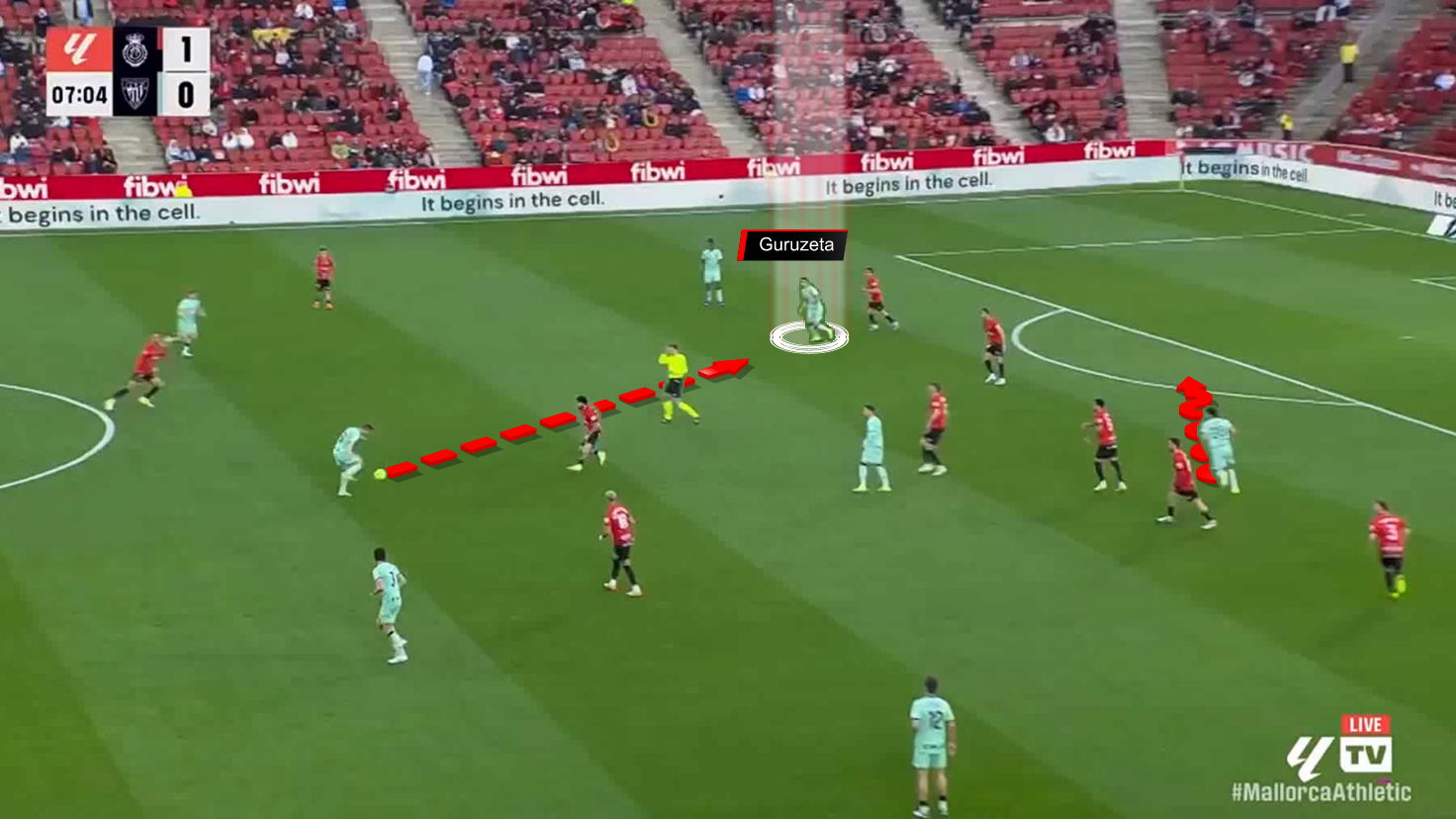
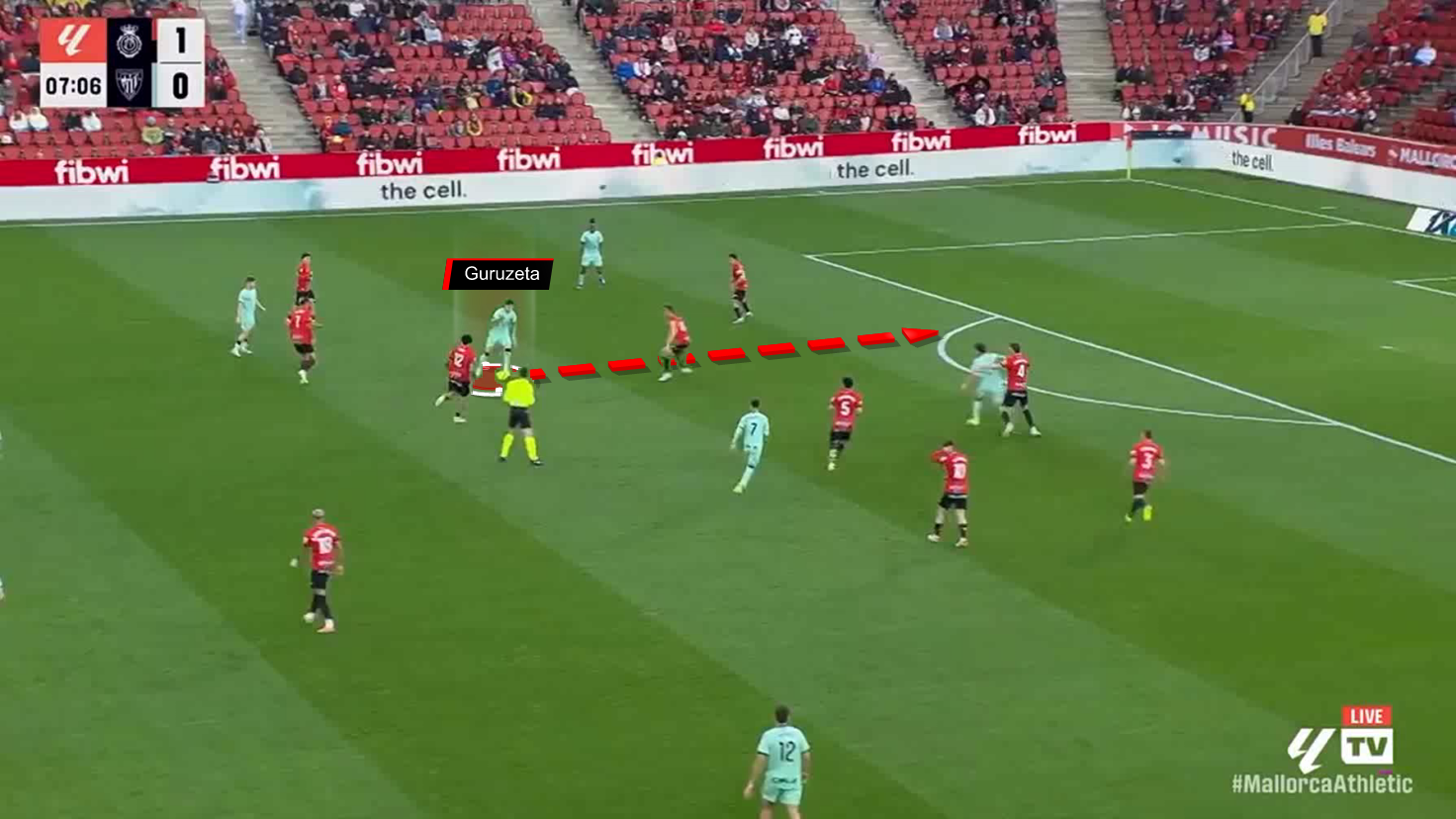 Here in the Real Mallorca match, Gorka Guruzeta dropped back, received the ball, turned, and linked up with the right winger.
This led to the equalising goal.
This improvement reflects mental maturity more than technical development; he now understands when to attack and when to wait for the ball.
Gorka Guruzeta Pressure & Defensive Role
Within Athletic Bilbao’s philosophy of physical aggression, Gorka Guruzeta plays a crucial role in pressing high up the pitch.
He initiates the pressing by targeting the angle of the defender’s pass, not just chasing him, forcing the opponent into long balls and quickly losing possession.
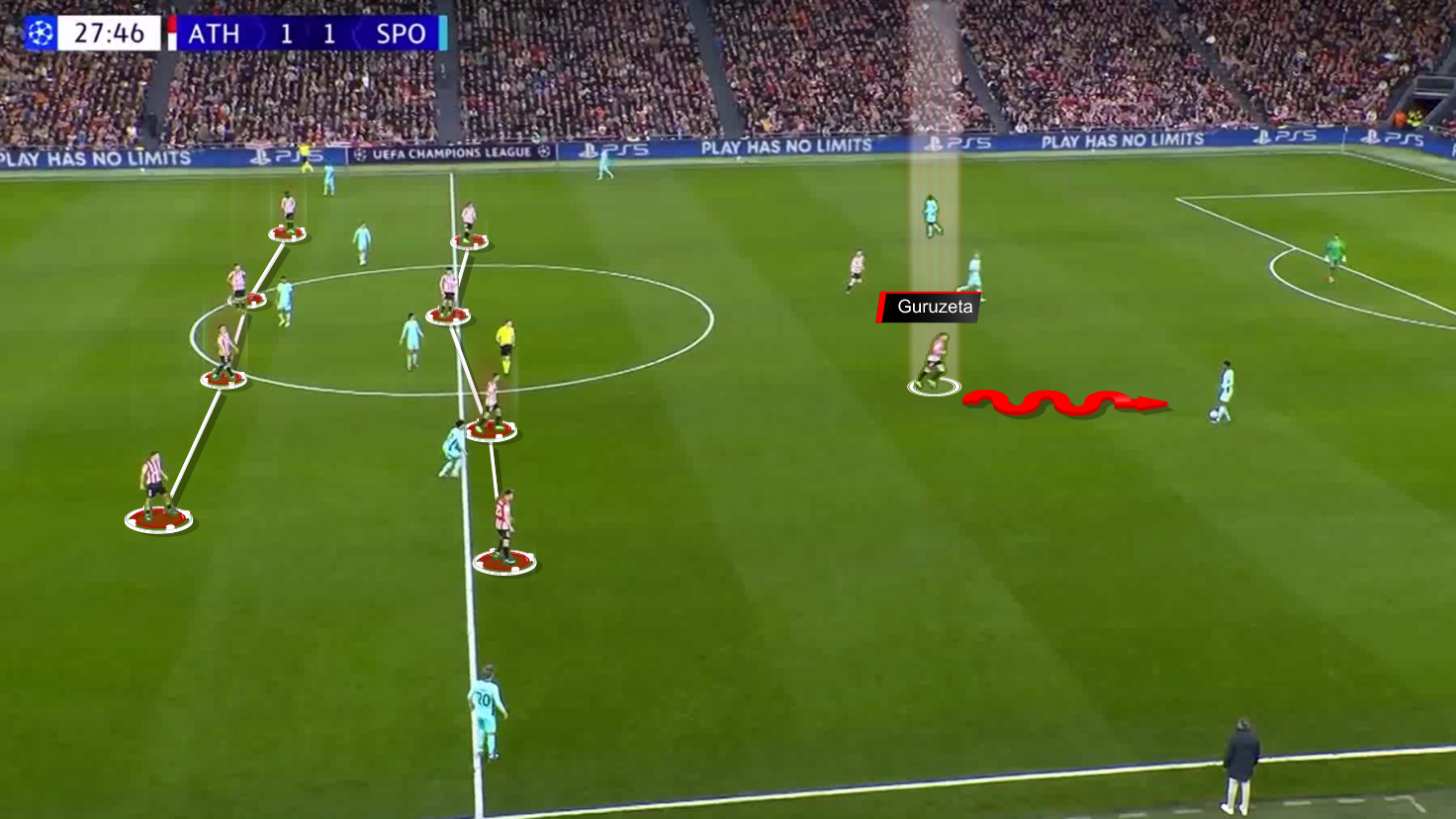
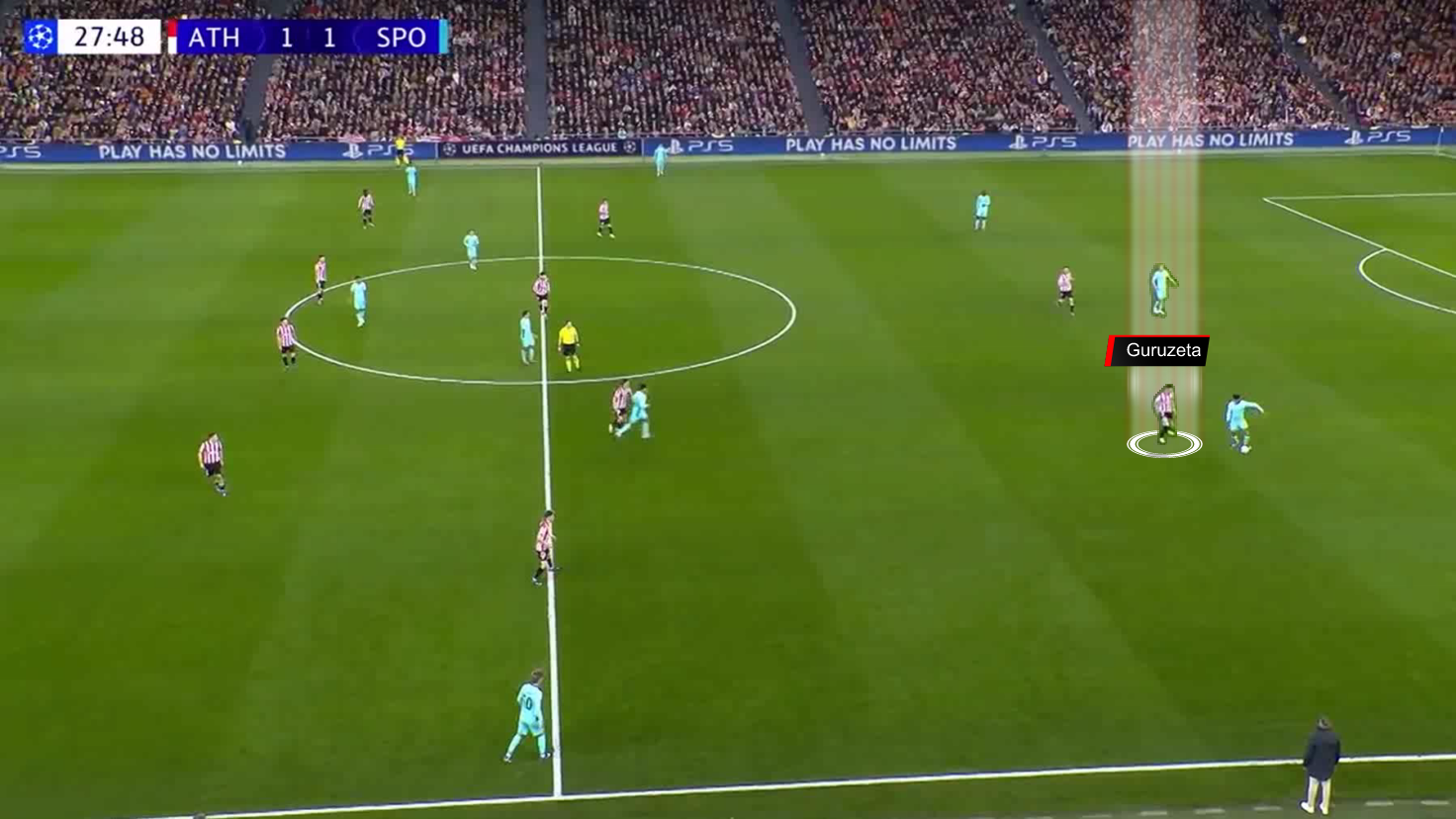
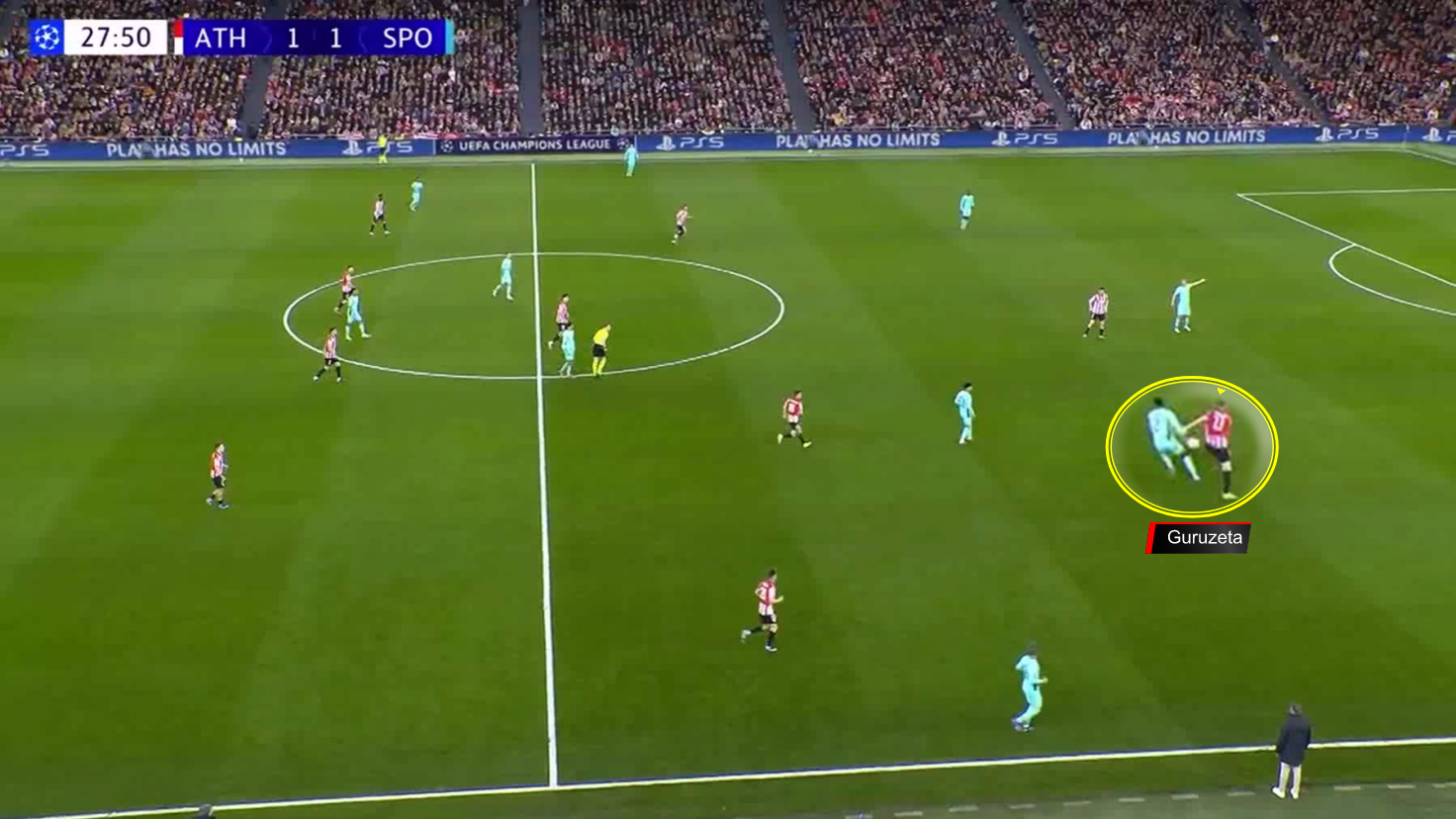
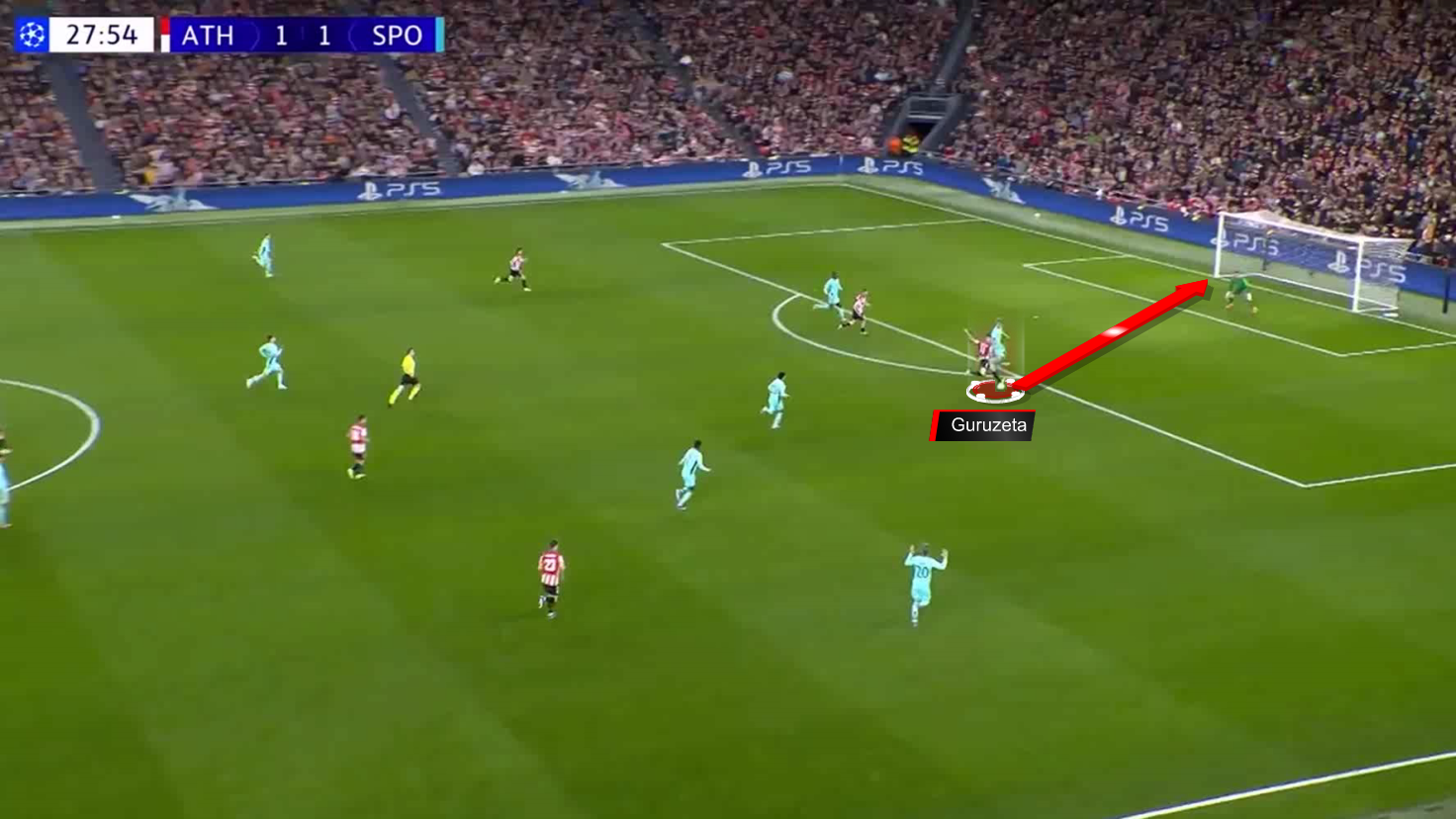
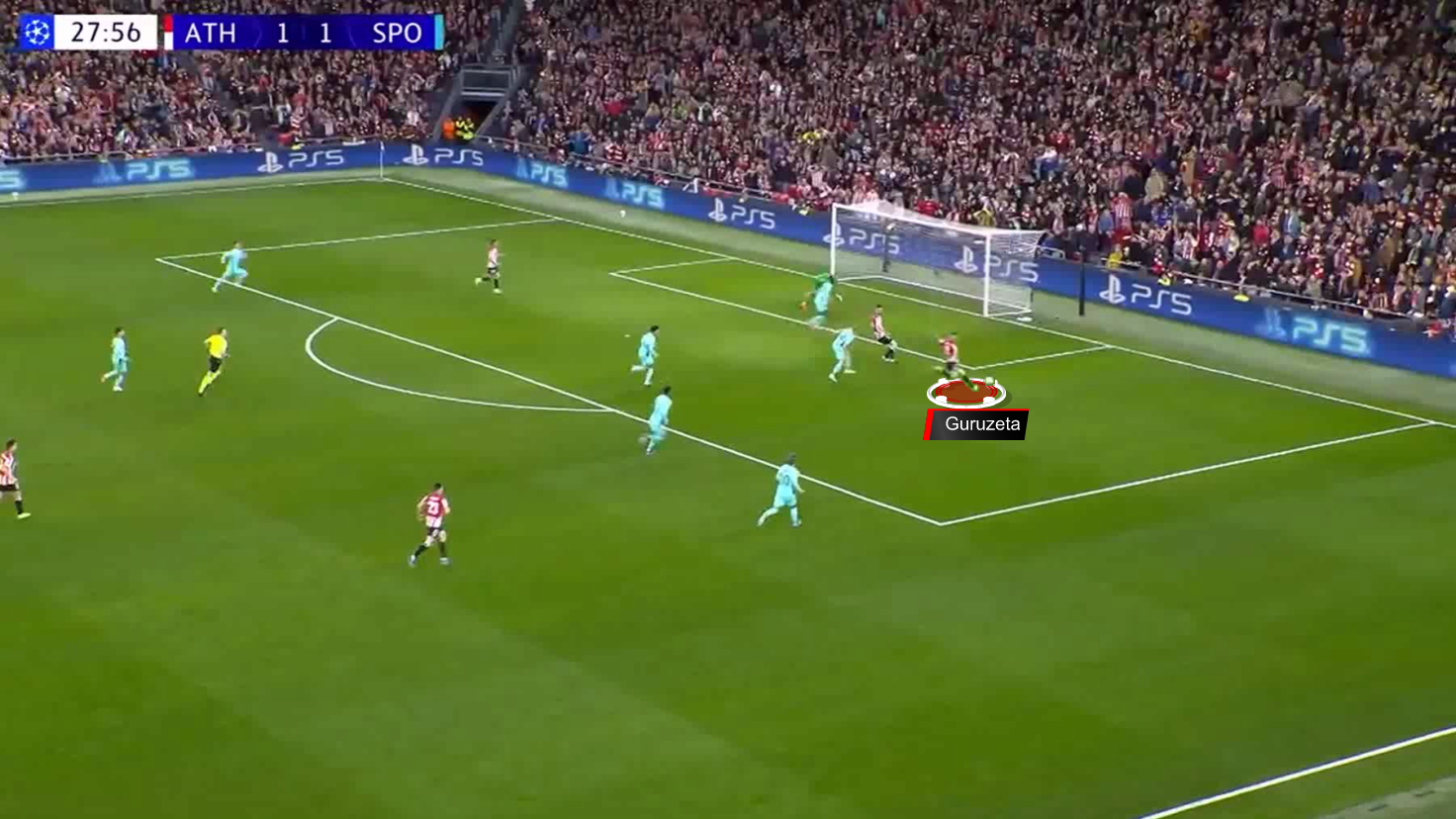 In the match against Sporting Lisbon, the team plays in a 4-4-2 formation, and he is one of the two attacking players.
He moves to the left centre of defence, attempting to apply pressure towards the touchline, which forces the defender to turn with the ball.
He capitalises on this timing, decides to press, and then goes towards the goal, scoring after following up on his own shot.
His defensive contribution reduces the distance between the lines. It helps the team regain possession in advanced areas, a key factor in increasing the number of attacking opportunities without a long build-up.
Gorka Guruzeta Tactical Limitations
Despite Gorka Guruzeta’s impressive season with Athletic Bilbao, reaching the stage of a “complete striker” requires adding some finer details that distinguish a good striker from a decisive striker at a higher level.
He increased his creative contribution.
His role as a link-up striker evolved, but he could improve his final pass after dropping between the lines.
When receiving the ball between midfield and defence, he has a good angle of vision, but sometimes he opts for the safe option.
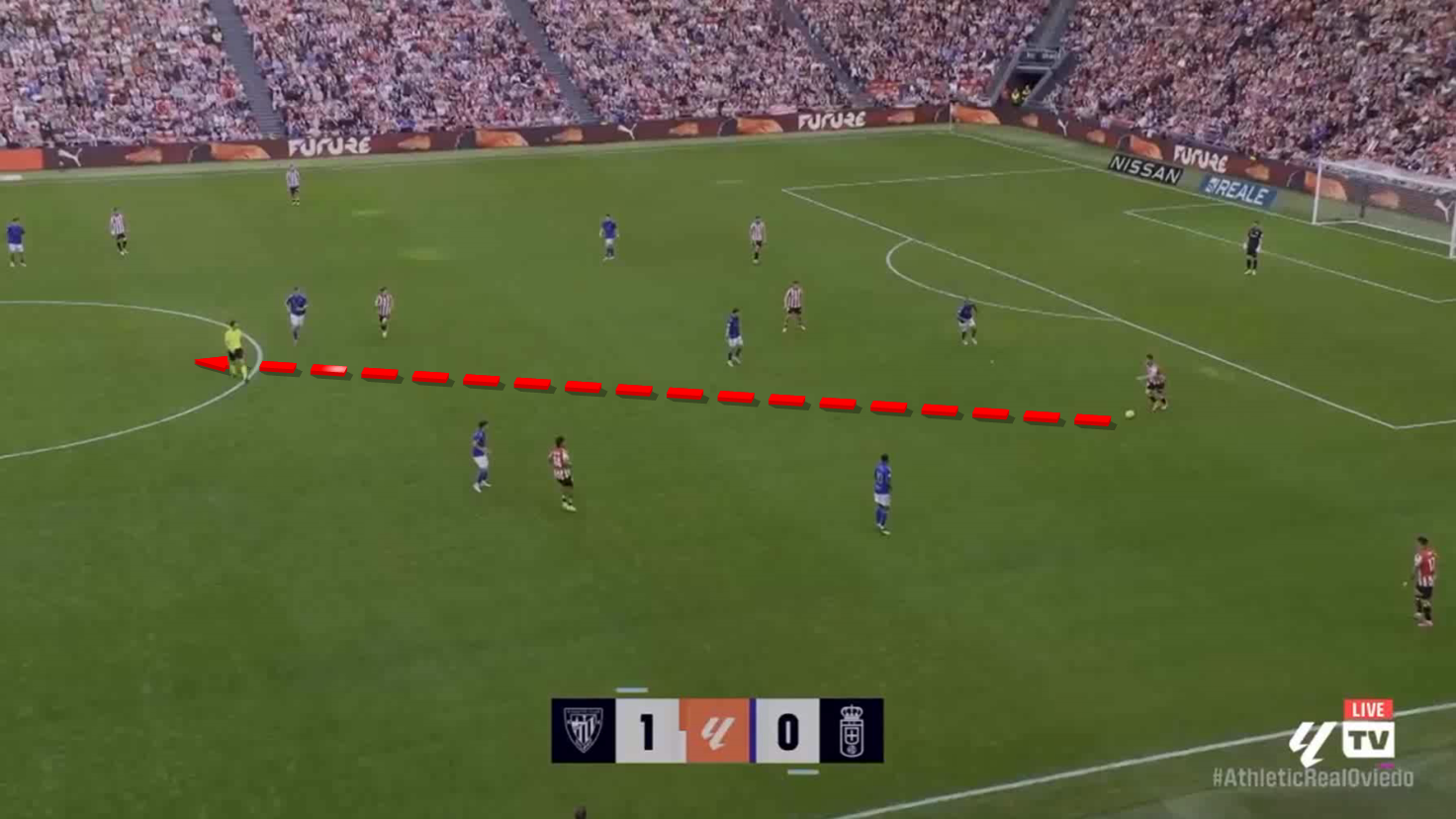
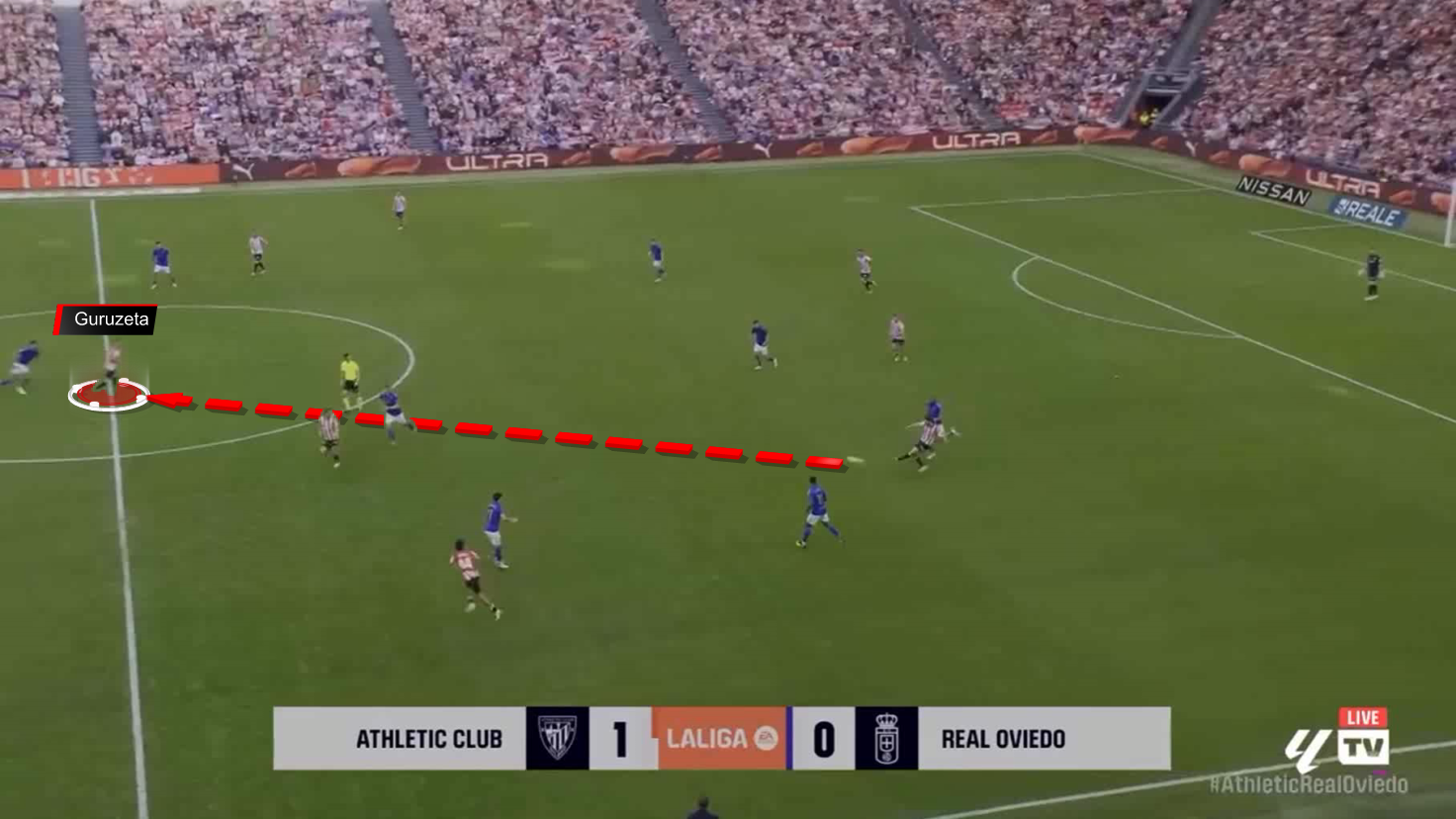
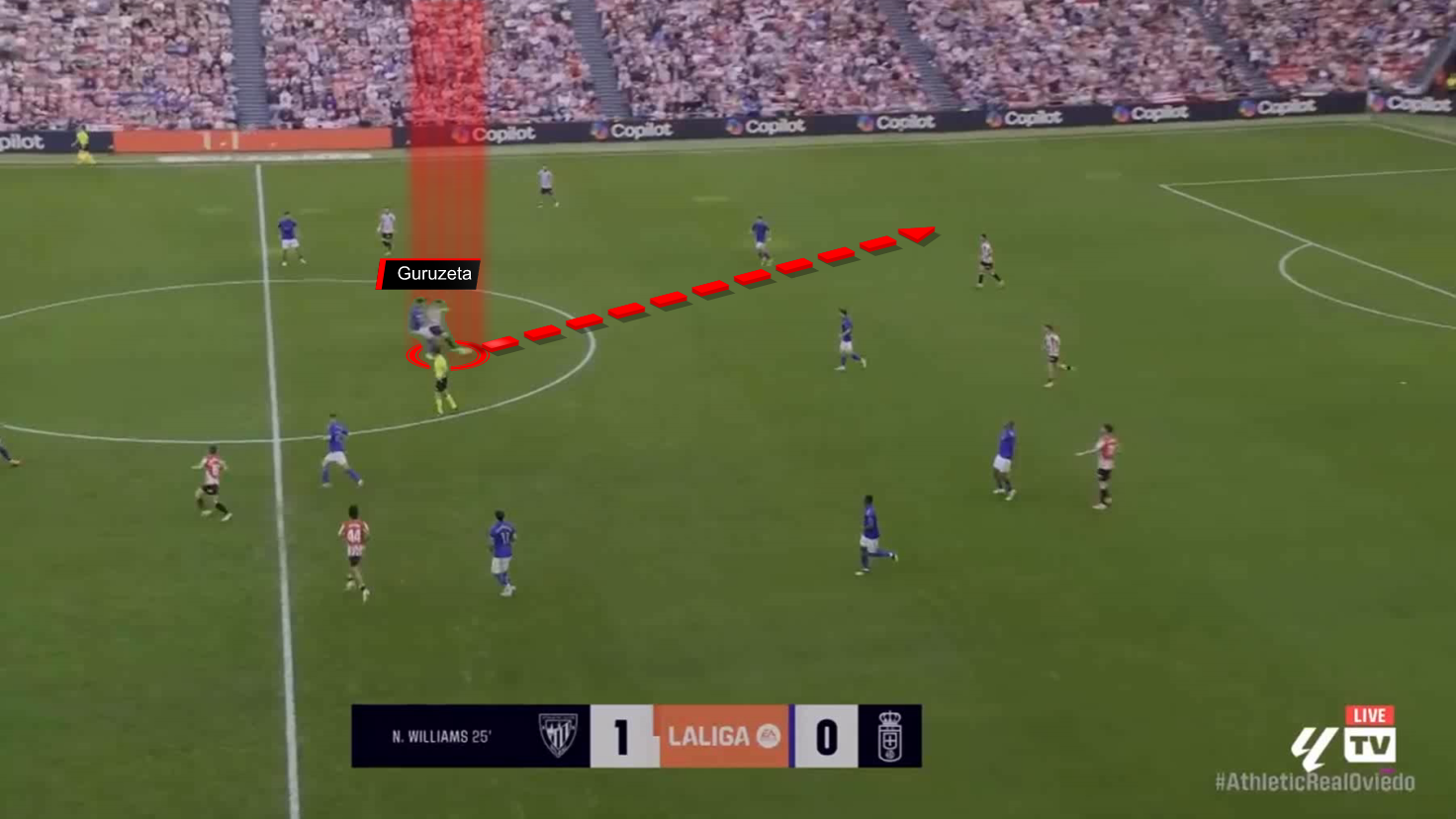 Here, against Real Oviedo, he drops deep between the lines and, instead of turning and playing the ball to the right flank, where a numerical advantage would have been created, he opts for a back pass, which leads to inaccurate passes.
He chose to play a one-touch pass backwards, which led to several poor passes by the team.
Increasing boldness in vertical balls will make him not just a finisher of attacks, but a creator of direct numerical superiority.
Conclusion
What Gorka Guruzeta has offered this season is not just a rise in goals, but a complete functional transformation in his role as a striker at Bilbao.
He has become a player who links up play, presses, creates space, and then finishes attacks at the right moment.
This version reflects the modern concept of a striker who serves the system before numbers, which explains the team’s consistent attacking performance throughout the season.
