
Amid the current tactical shift, the classic striker model appears to have largely given way to the “hybrid” striker model.
At Osasuna, Ante Budimir continues to prove that organised simplicity can be more decisive than excessive complexity.
At 34, the Croatian striker doesn’t rely on speed or physical explosiveness.
He isn’t the most frequent toucher of the ball, nor the most involved in build-up play.
Yet he has scored 11 goals in 22 league appearances this season, directly contributing nearly 10 crucial points to his team.
This Ante Budimir scout report analyses Budimir‘s tactical role and physical impact, his finishing style, his defensive contribution, and the limits of his influence within the Osasuna system, to understand how a traditional striker can still decide matches in a constantly changing football environment.
Ante Budimir Tactical Role & Physical Impact
In Osasuna’s system, Ante Budimir isn’t judged by his number of touches, but by his influence on the flow of the attack before it even begins.
He’s not a striker who moves around the box a lot, nor does he constantly drop between the lines to create plays.
His role is more defined and focused: a central pivot who allows the team to advance vertically with the fewest possible passes.
Osasuna are a direct team by nature.
When they win back possession, they don’t look for long passes, but for a quick attacking move.
This is where Ante Budimir’s value shines.
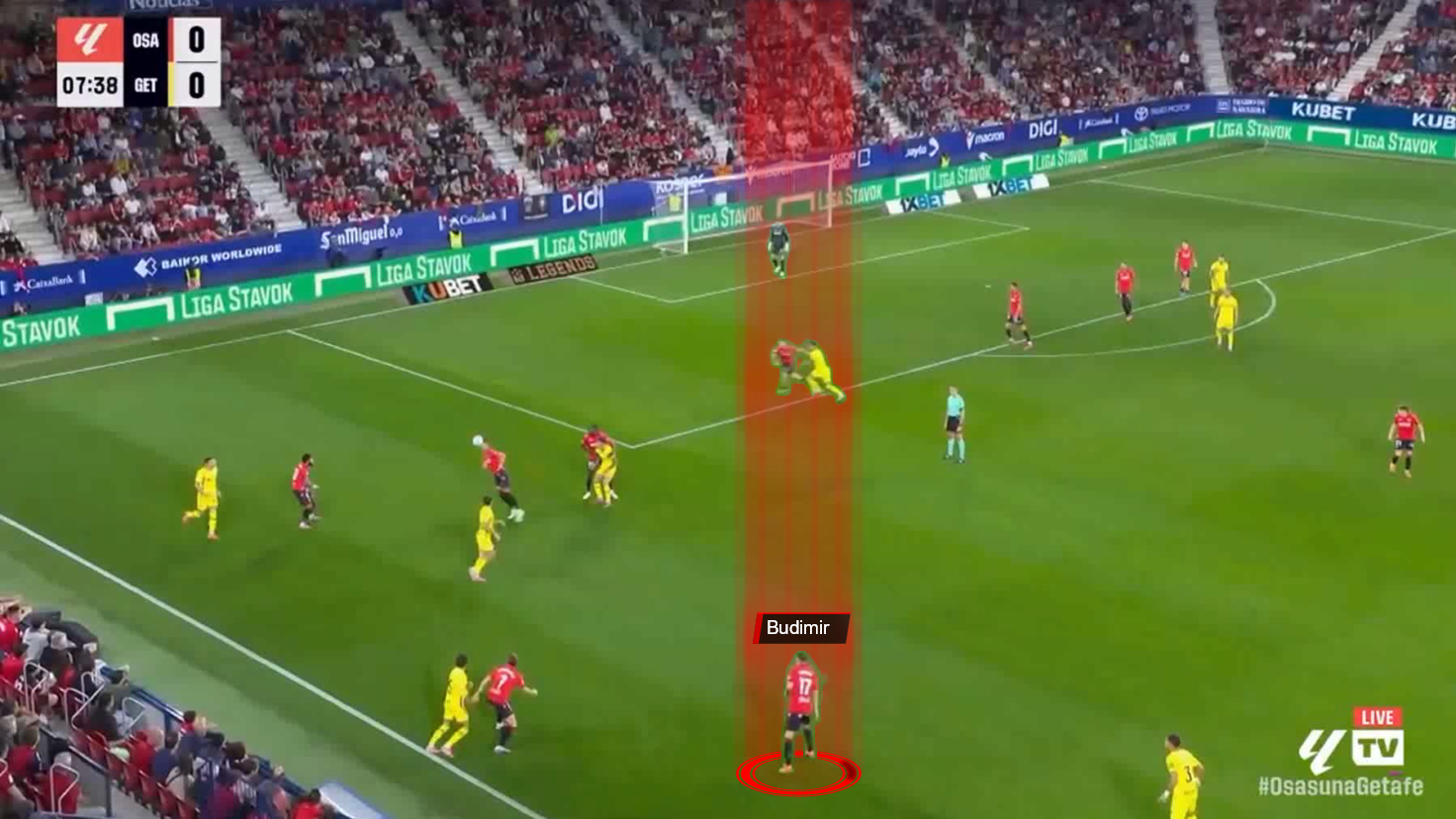
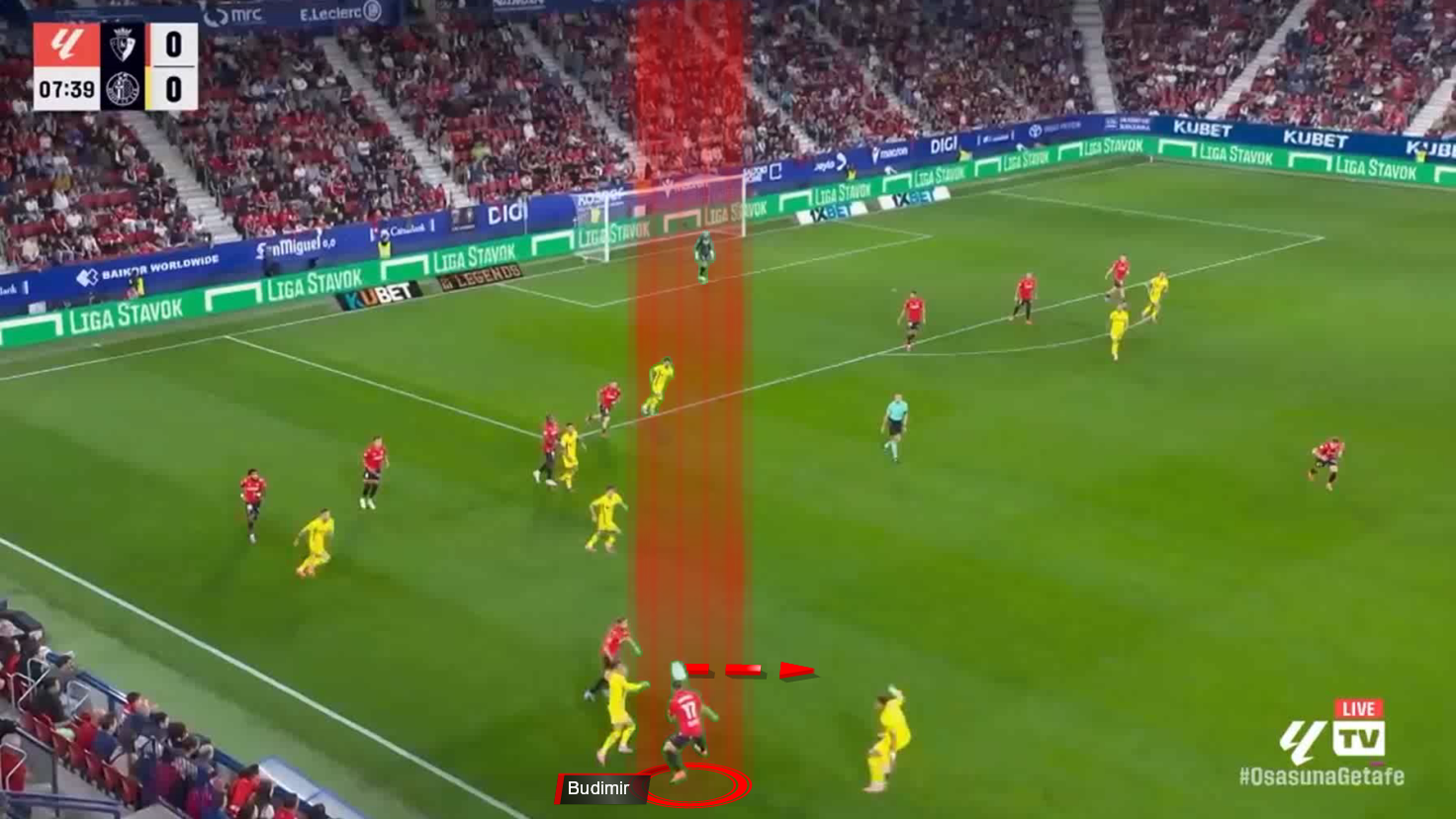
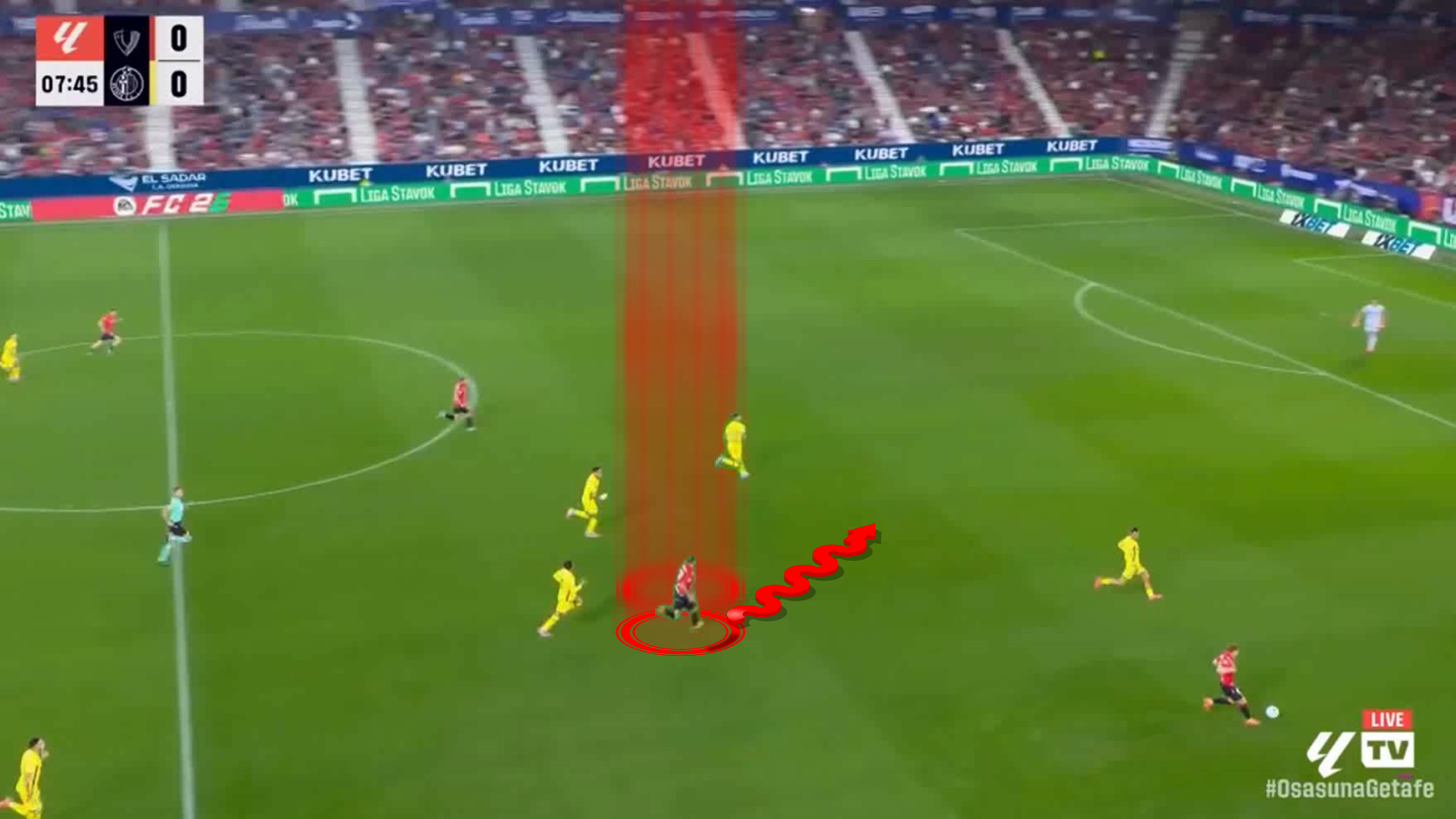 Here, against Getafe, we can see Ante Budimir’s potential to help the team relieve pressure and execute a quick counterattack by dropping back and playing a header into the space behind the defender marking him.
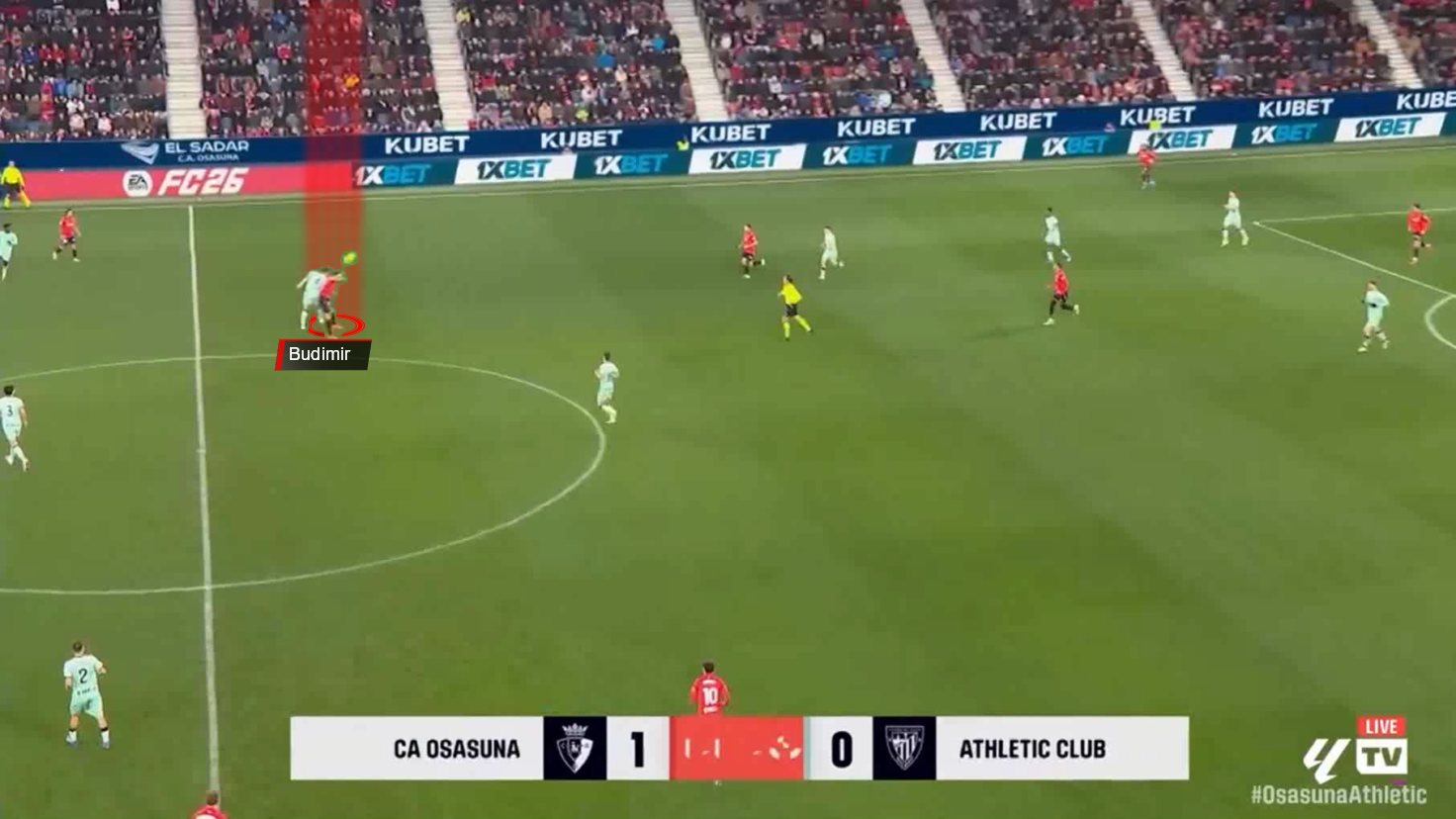
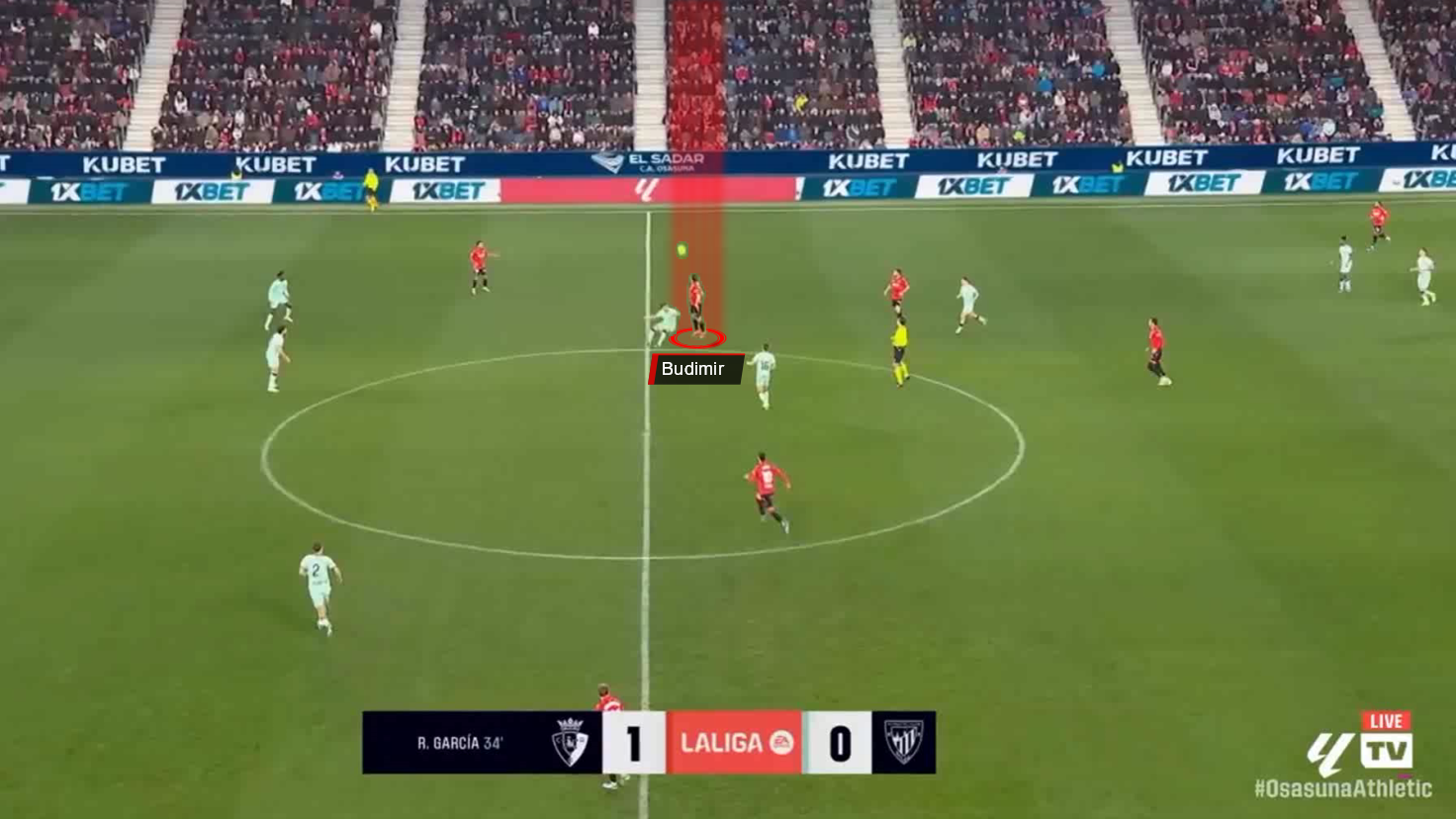
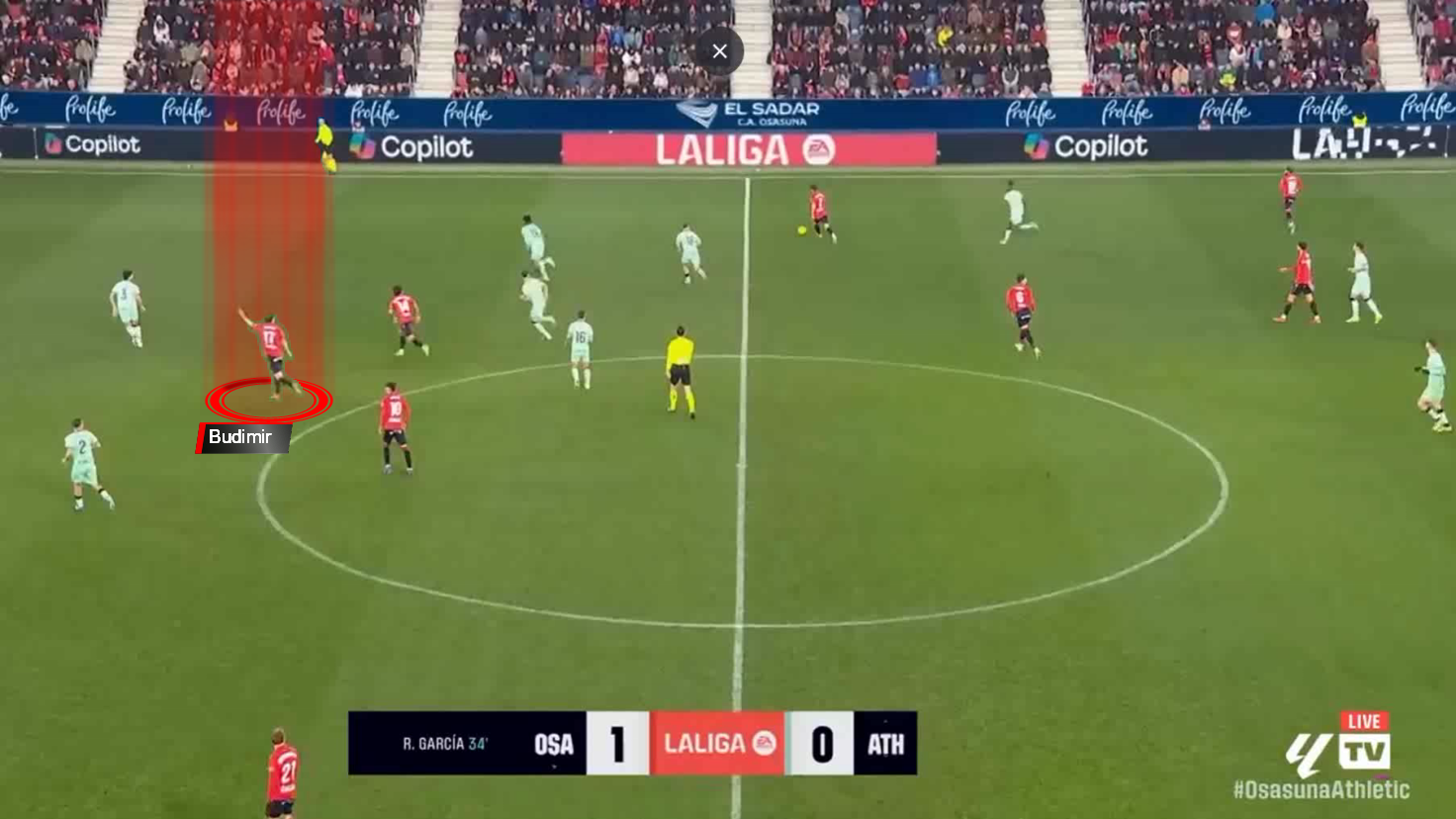
Here, against Athletic Bilbao, Osasuna won the aerial duel twice in the same attack, then launched a new attack.
His central positioning forced the two centre-backs to stay deep.
This created more space for the full-back to push forward.
His mere presence commands constant defensive respect.
He doesn’t constantly demand the ball, but he forces the defence to keep a constant eye on him.
Ante Budimir Finishing Style
Ante Budimir’s finishing style reflects the mentality of a striker who understands that the moment is more important than the movement and that the decision precedes the touch.
He is not the type of striker who needs two or three touches to control the ball, nor does he rely on individual dribbling prowess inside the penalty area.
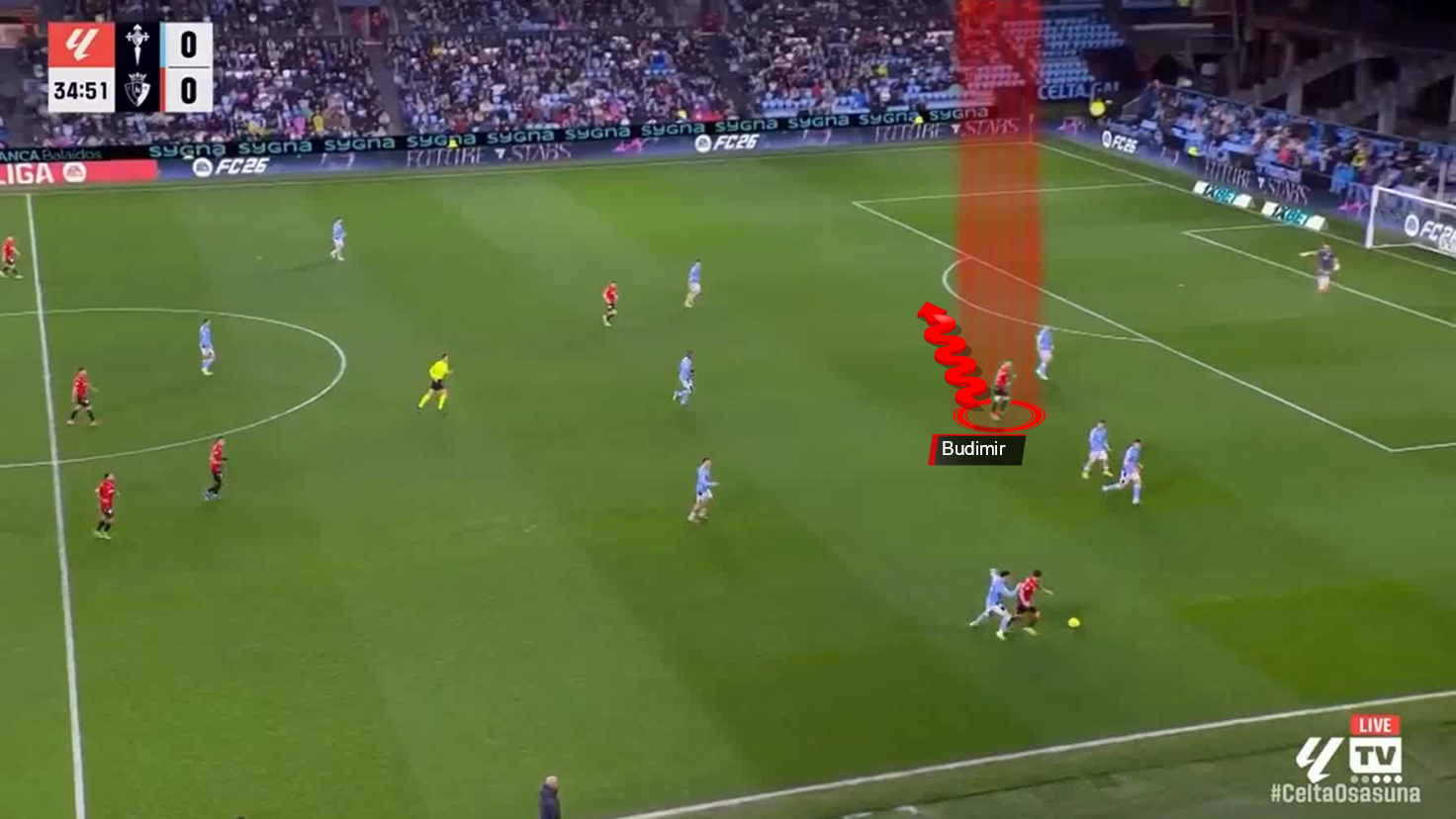
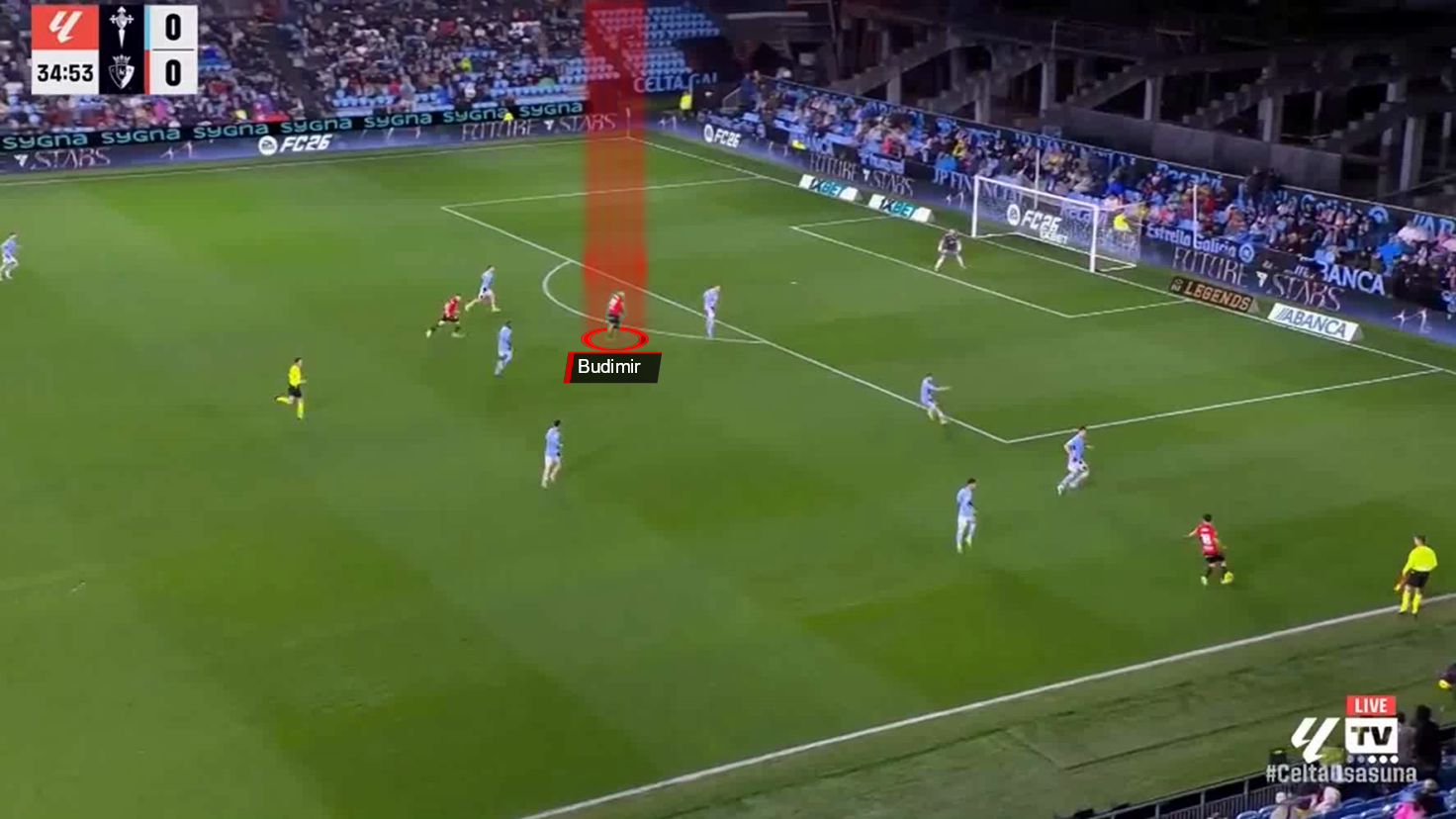
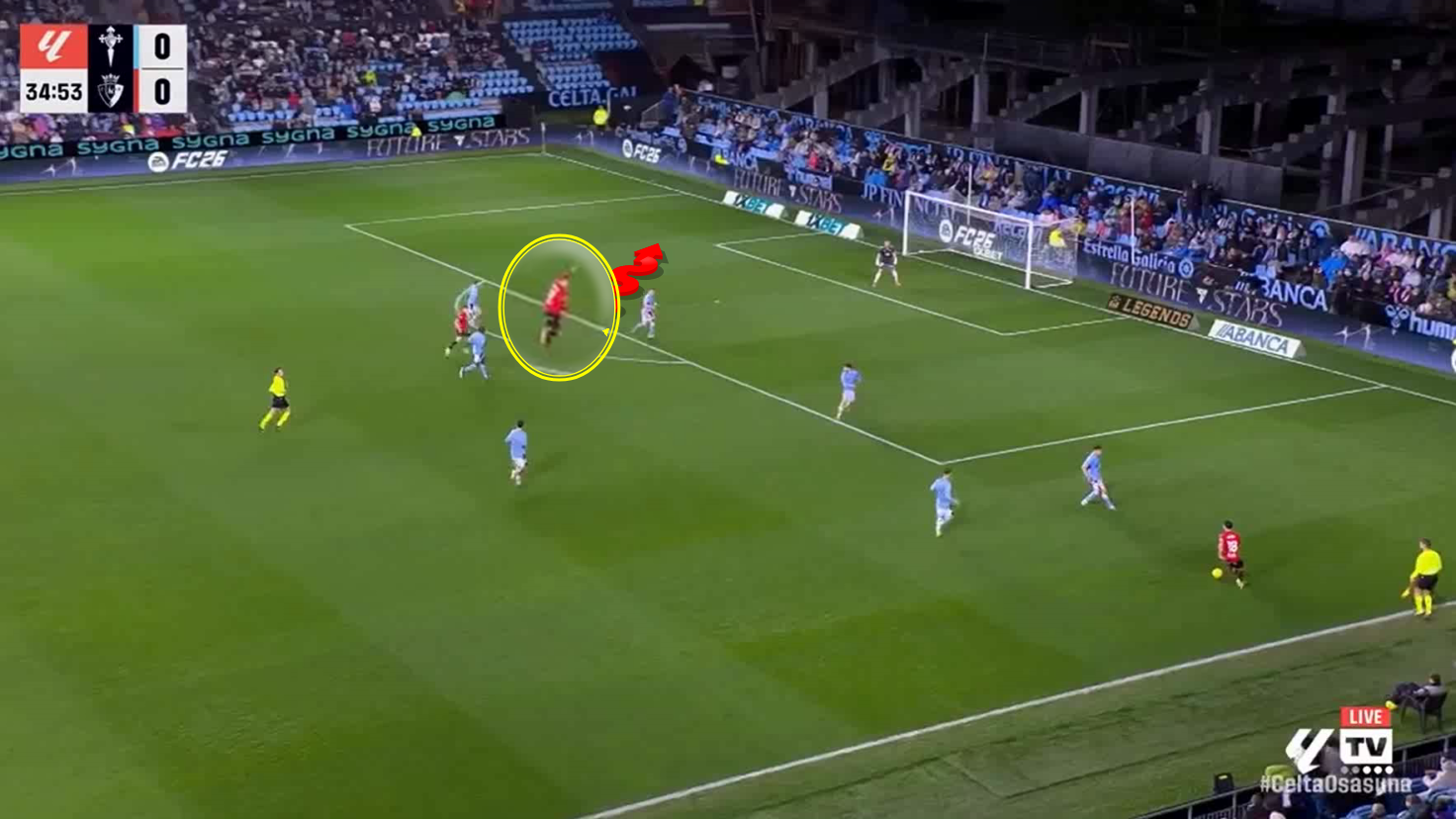
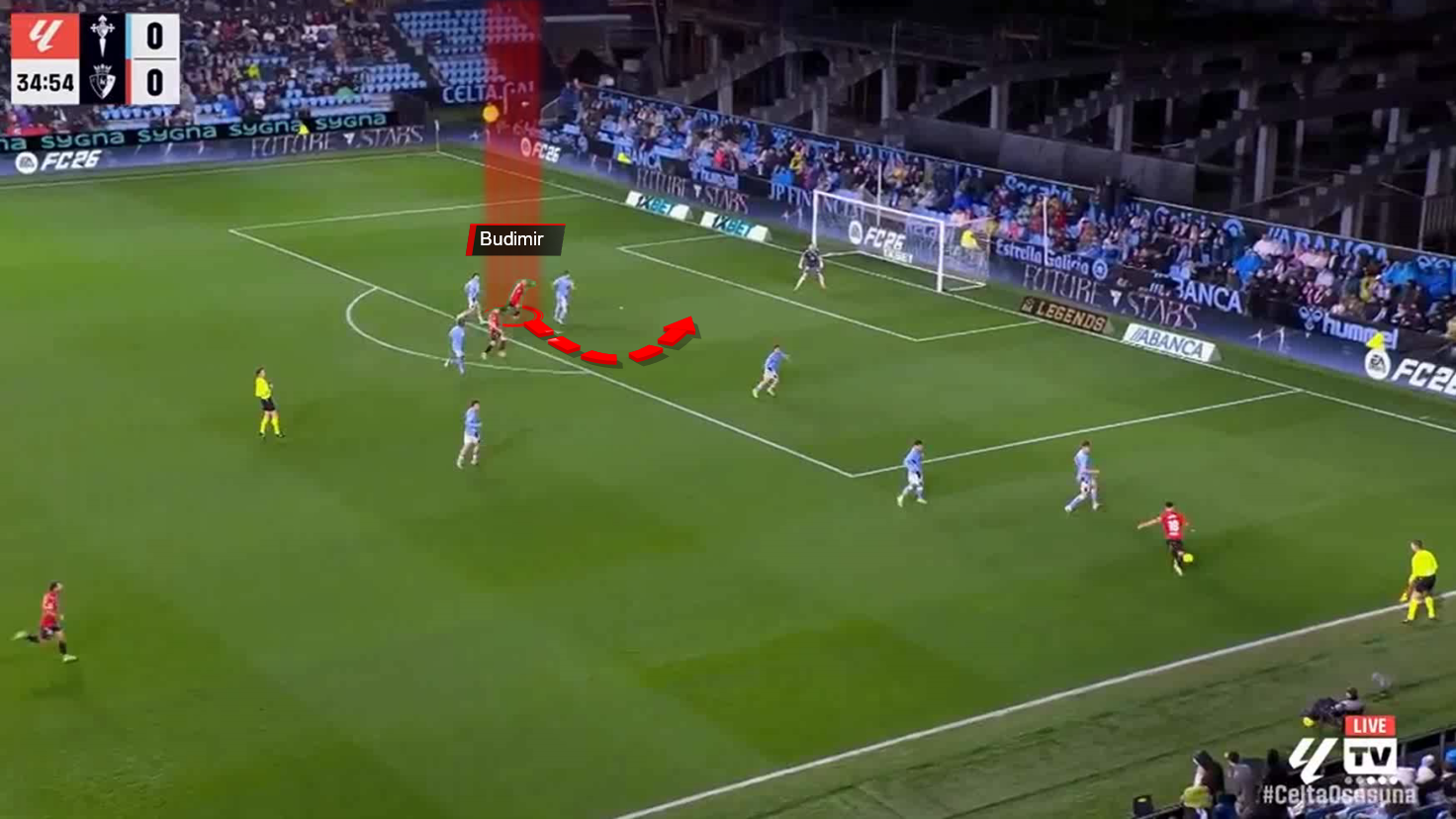
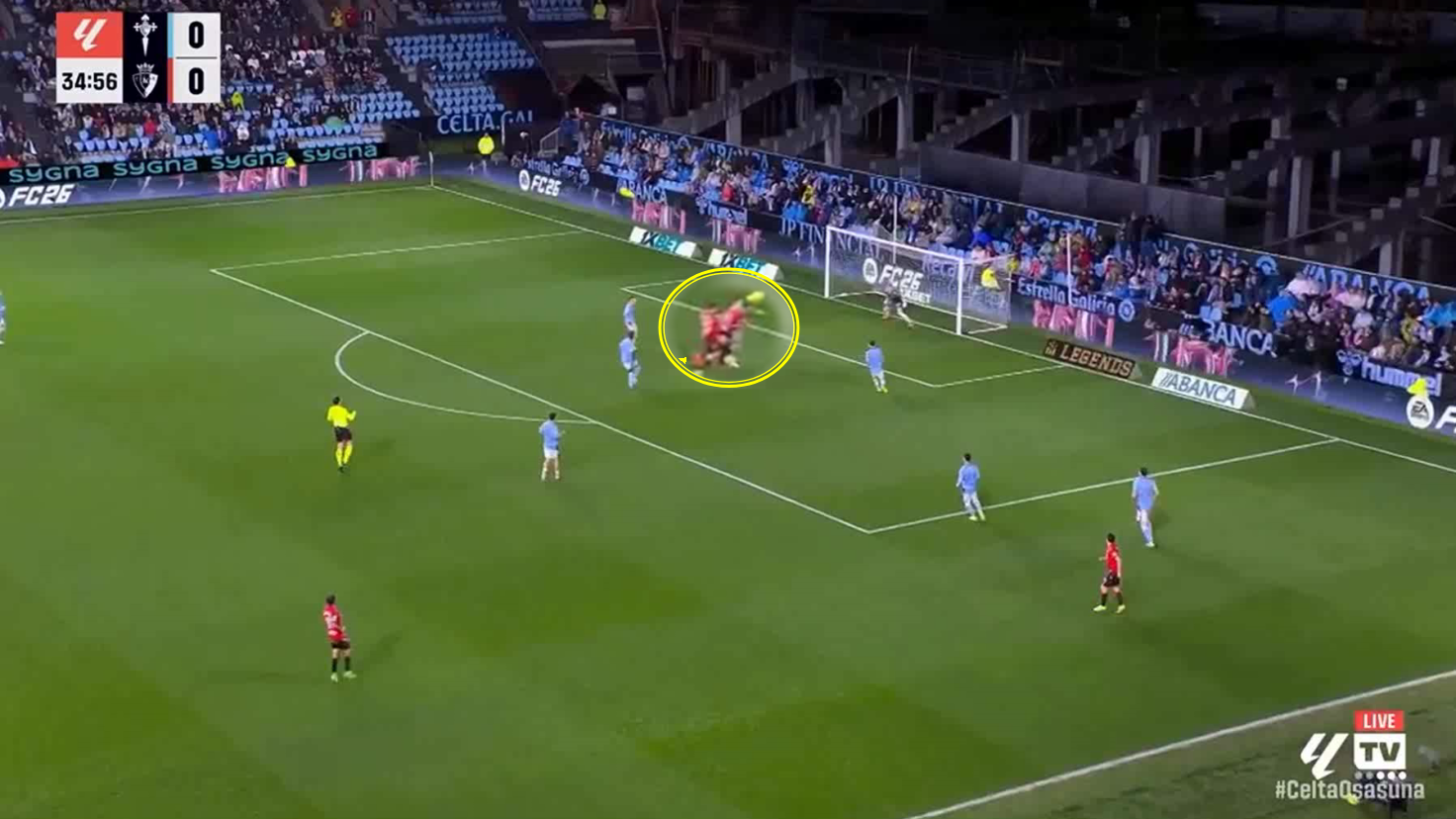 Here in the goal against Celta Vigo, it’s not just about the finishing quality.
Watch from the start, from the moment he sees the ball on the wing, he decides to go diagonally towards the far post.
Then he runs across the front, and here we see intelligent movement and excellent heading ability.
What distinguishes him is his pre-arrangement of his body before the ball arrives: his body angle, the position of his supporting foot, and the distance between him and the defender are all set before he receives the ball.
Therefore, many of his goals appear simple on the surface, but they are in fact the result of an early reading of the trajectory of the cross or shot.
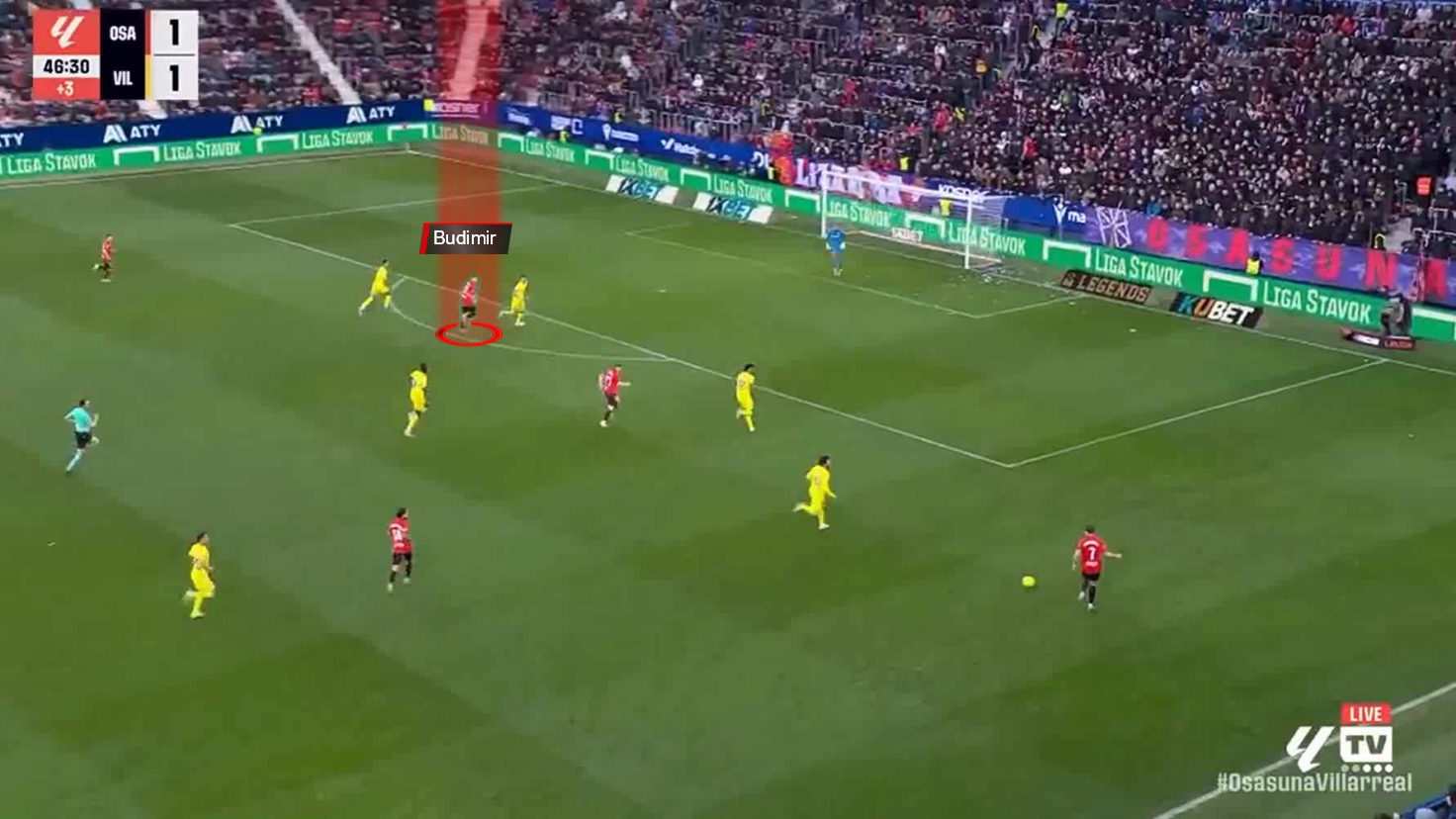
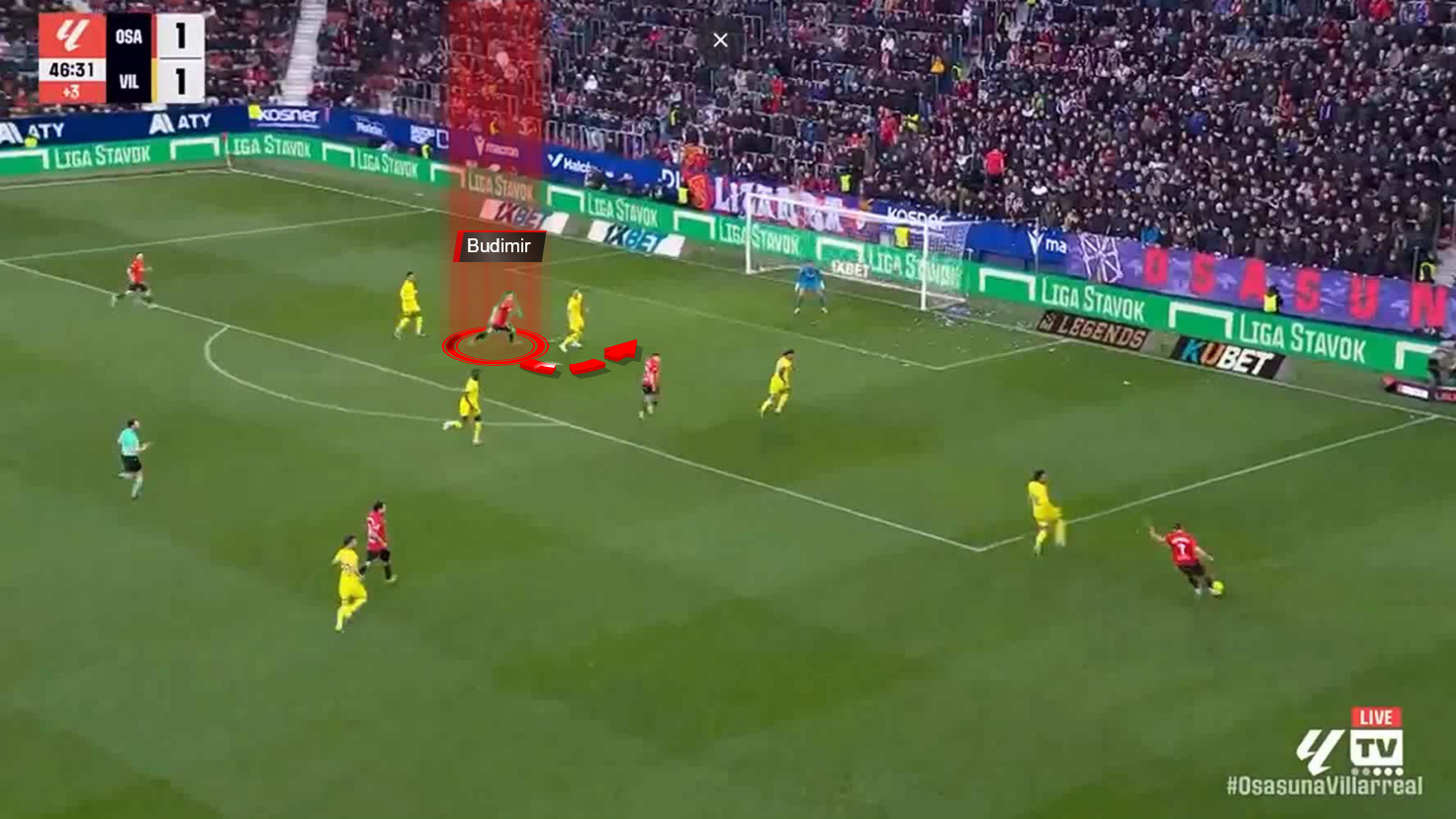
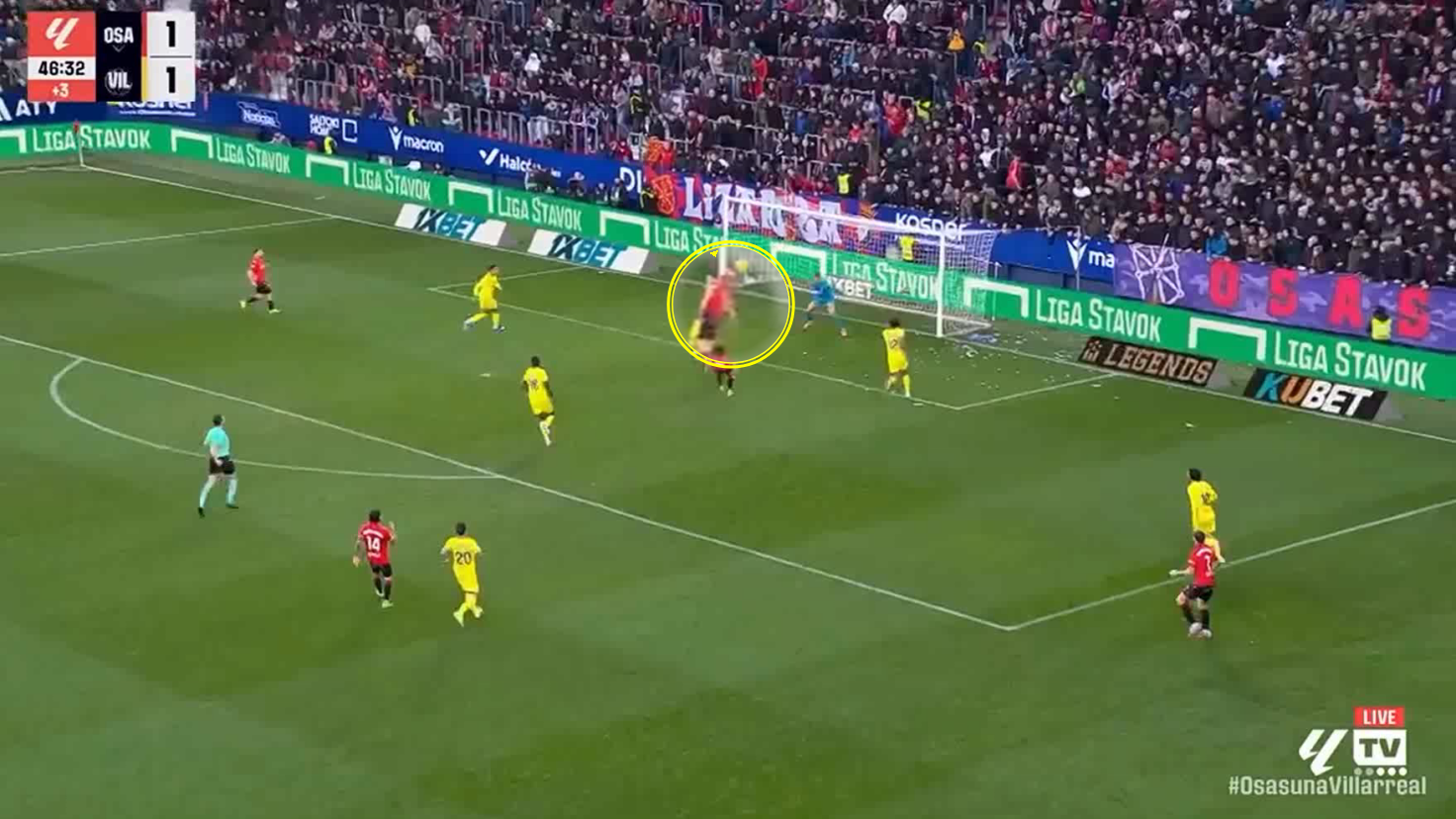
Against Villarreal, the same pattern occurred: Ante Budimir lacked a clear physical advantage and didn’t jump significantly higher than the defender.
But his timing was perfect.
He took off the moment the defender started to land, not at the moment of the jump.
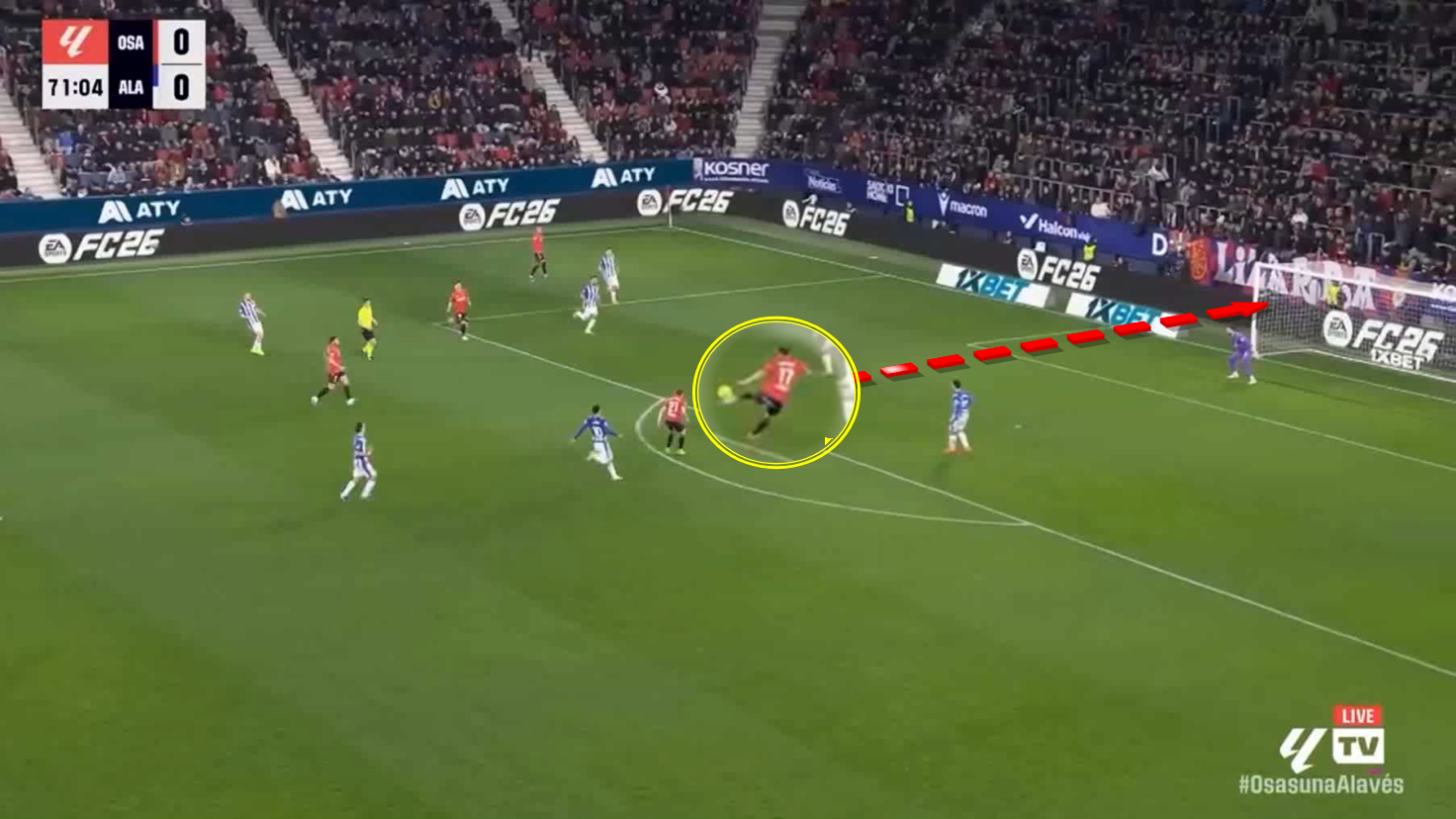 The cross wasn’t perfectly level in height, but it was within his reach.
Ante Budimir didn’t need to set up the ball.
His body angle was perfectly positioned before it arrived, allowing him to direct it directly towards the goal.
Ante Budimir’s finishing is based on one principle: the decision before the touch.
He’s a striker who doesn’t take many shots; instead, he chooses the moment with the highest probability of scoring.
His positioning inside the penalty area is always preceded by physical and mental preparation that allows him to finish with a single touch, whether with his foot or his head.
He doesn’t rely on superior skill or complex solutions, but on timing, reading the ball’s trajectory, and understanding the defenders’ movements.
Ante Budimir Contribution In Defensive Phase & Pressing
Although Ante Budimir’s primary role is finishing attacks, his contribution in the defensive phase reveals a more tactically disciplined striker than an impulsive presser.
Osasuna doesn’t rely on constant high pressing, but rather on directing build-up play towards the flanks and limiting the opponent’s vertical options.
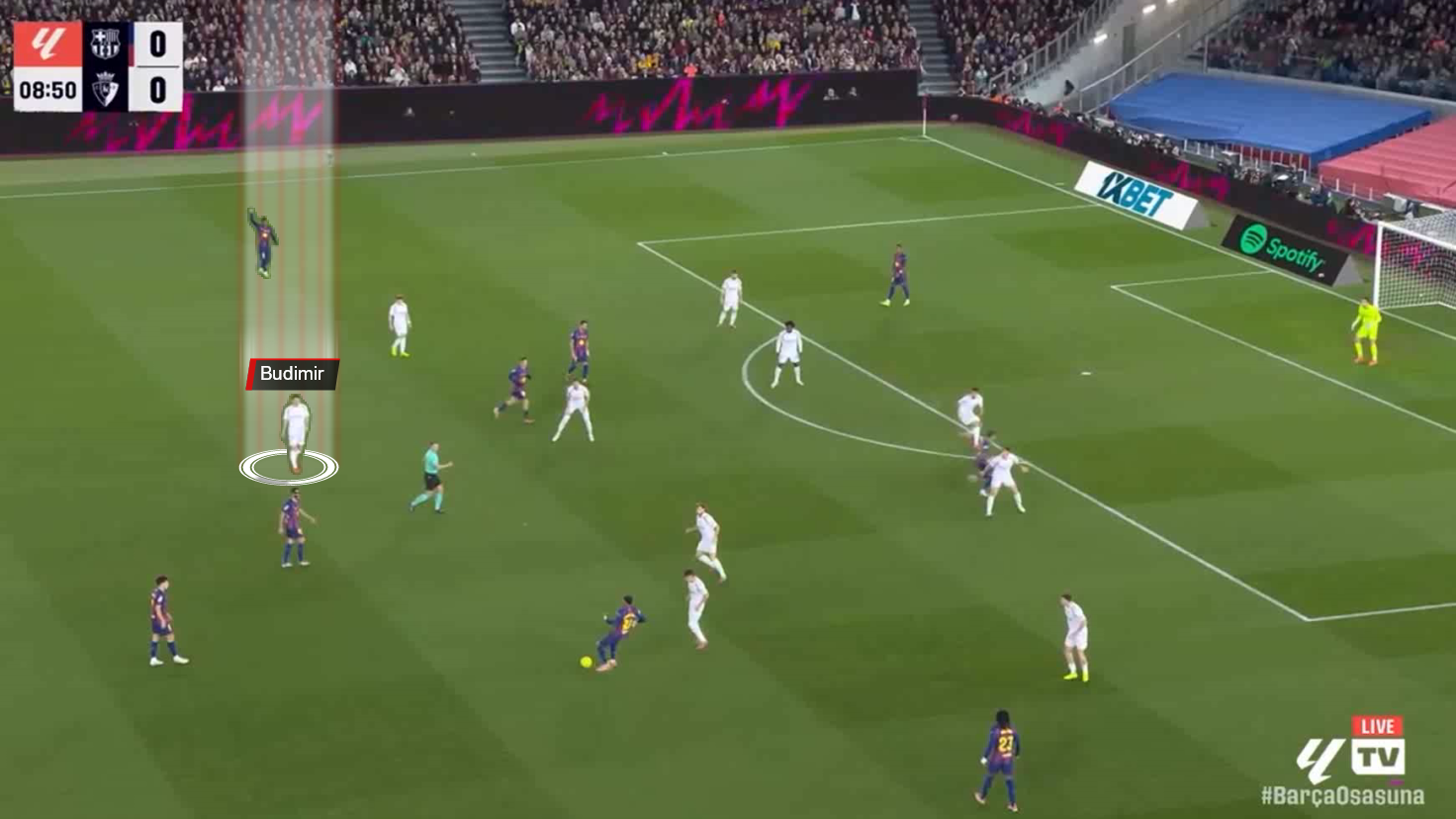
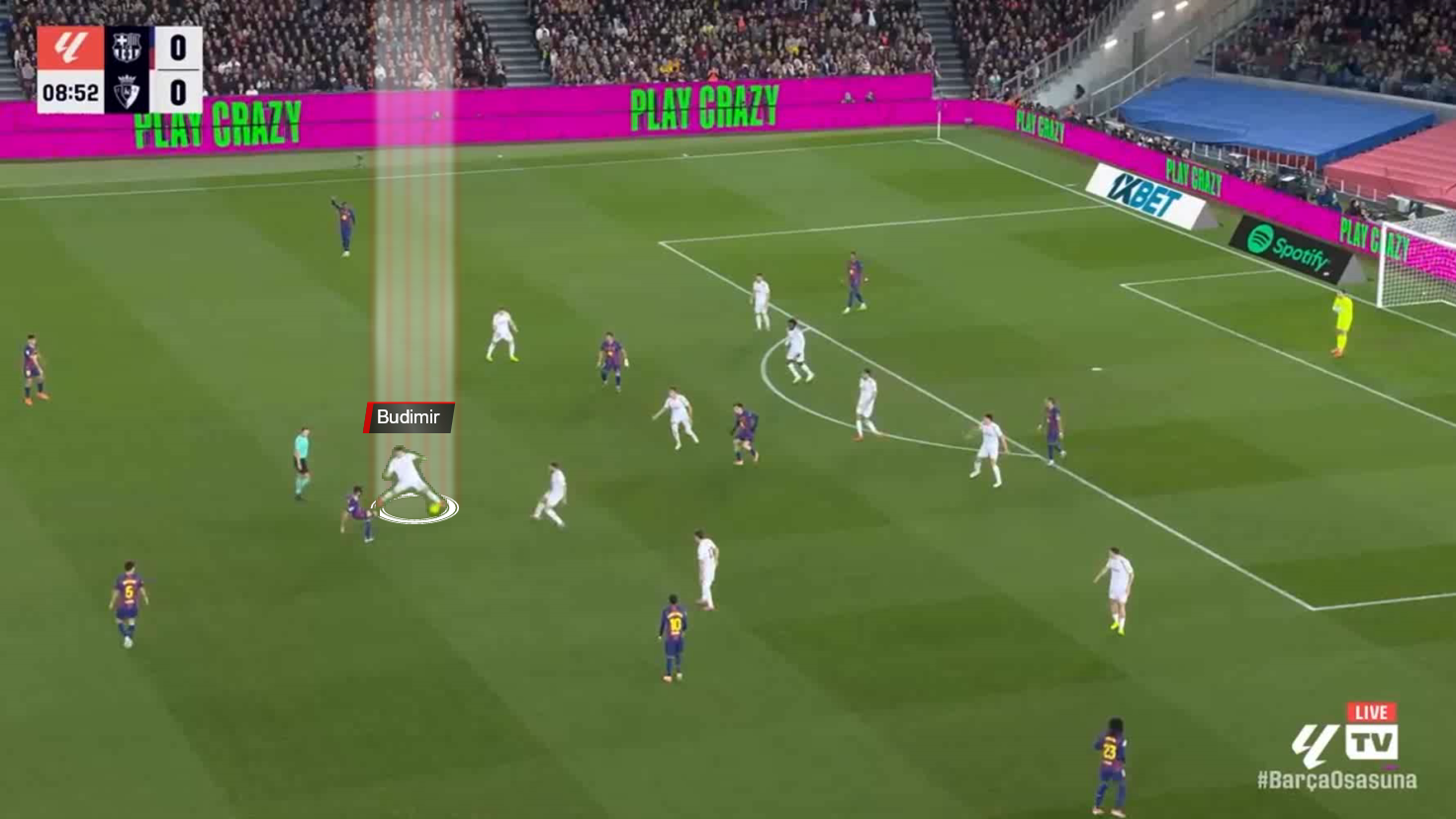
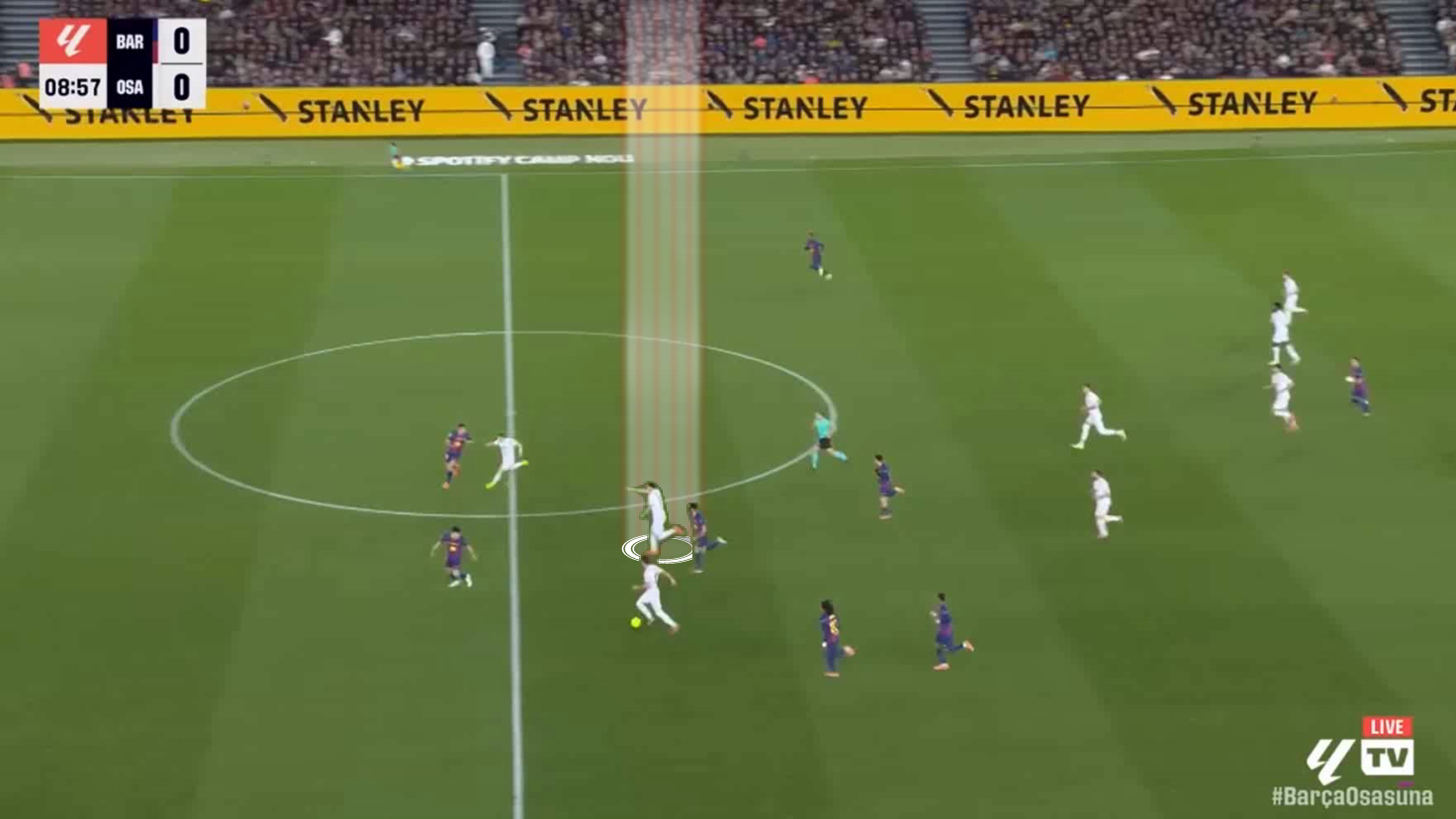
Here, against Barcelona, he stands far from the player expected to receive the pass.
And from reading the vertical pass in the final third, he intercepts the ball.
Then Ante Budimir prepares and executes a vertical run during a well-organised counterattack for his team.
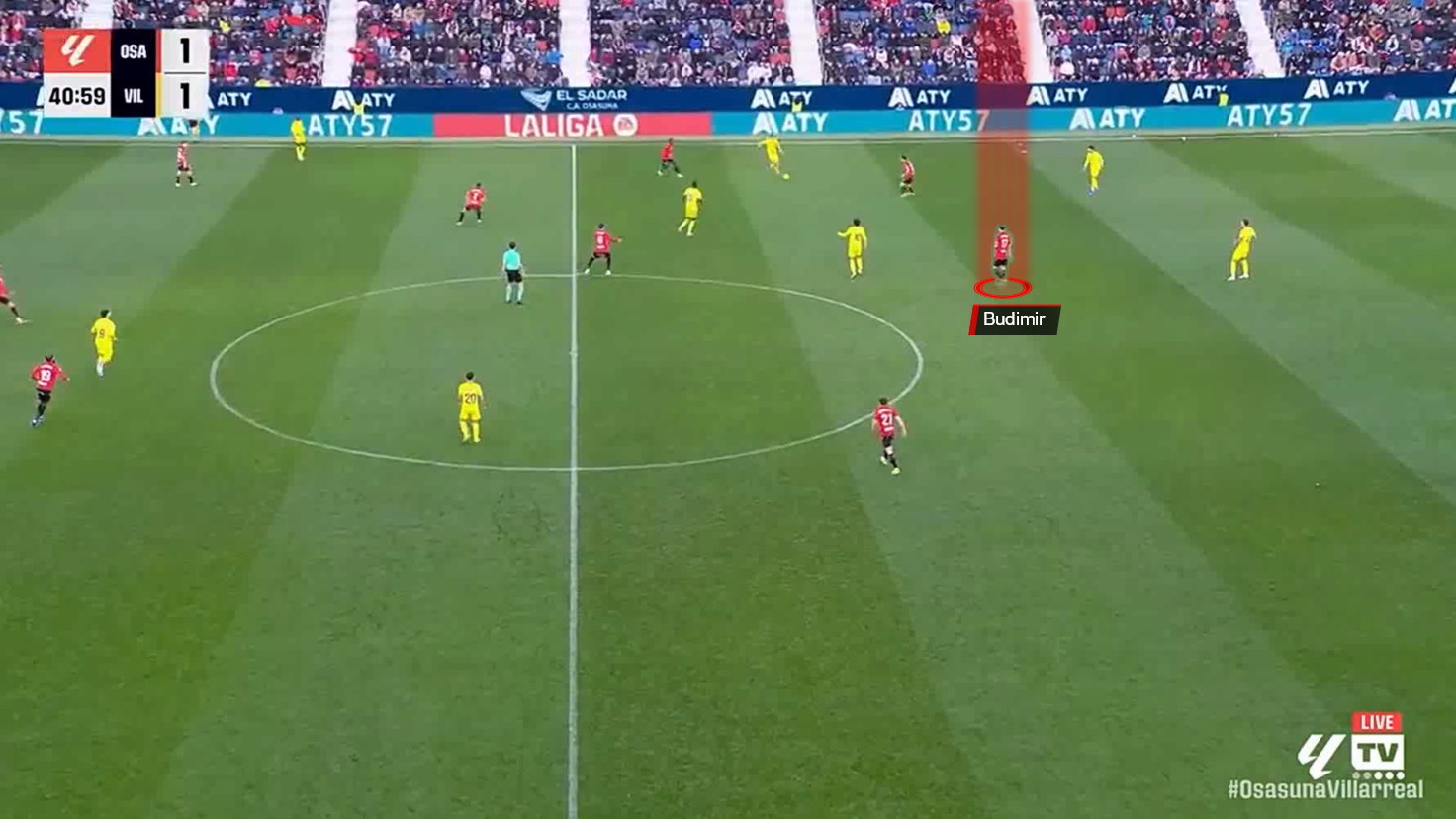
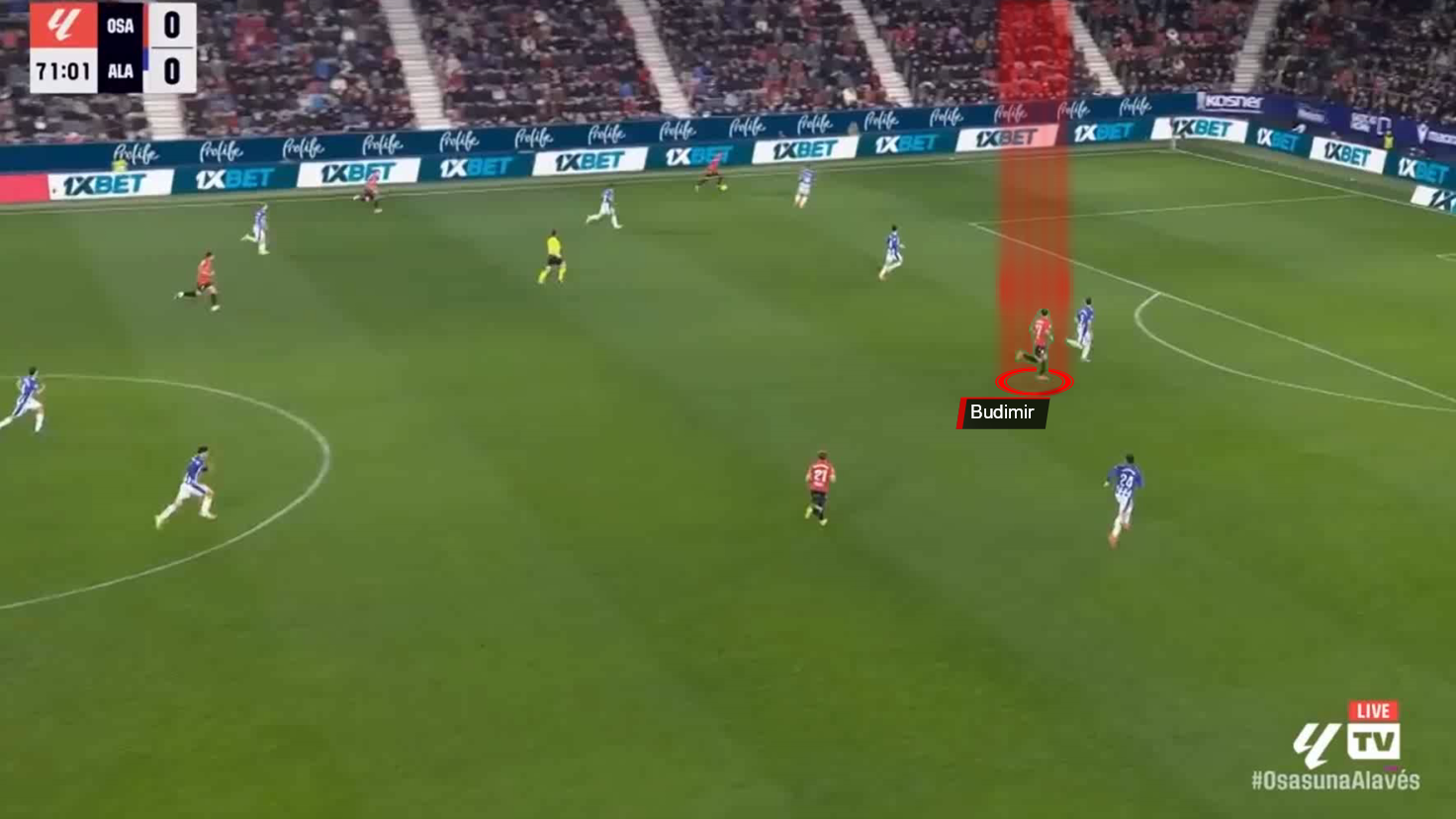
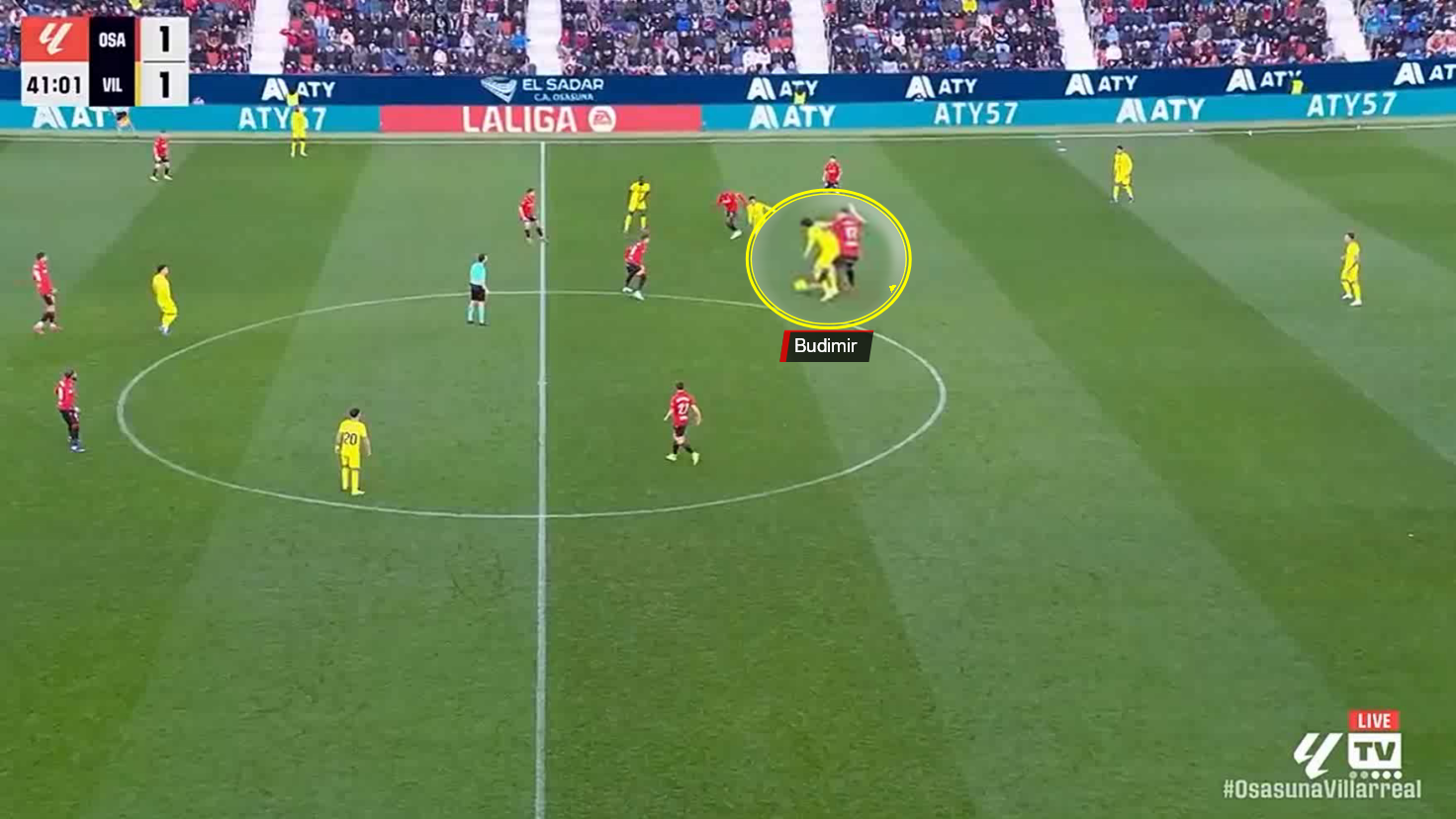 Here, against Villarreal, even after breaking through the first line of pressure while searching for the midfielder, Ante Budimir drops back to press and win back possession.
He did make a mistake, but he disrupted the opponent’s attacking rhythm.
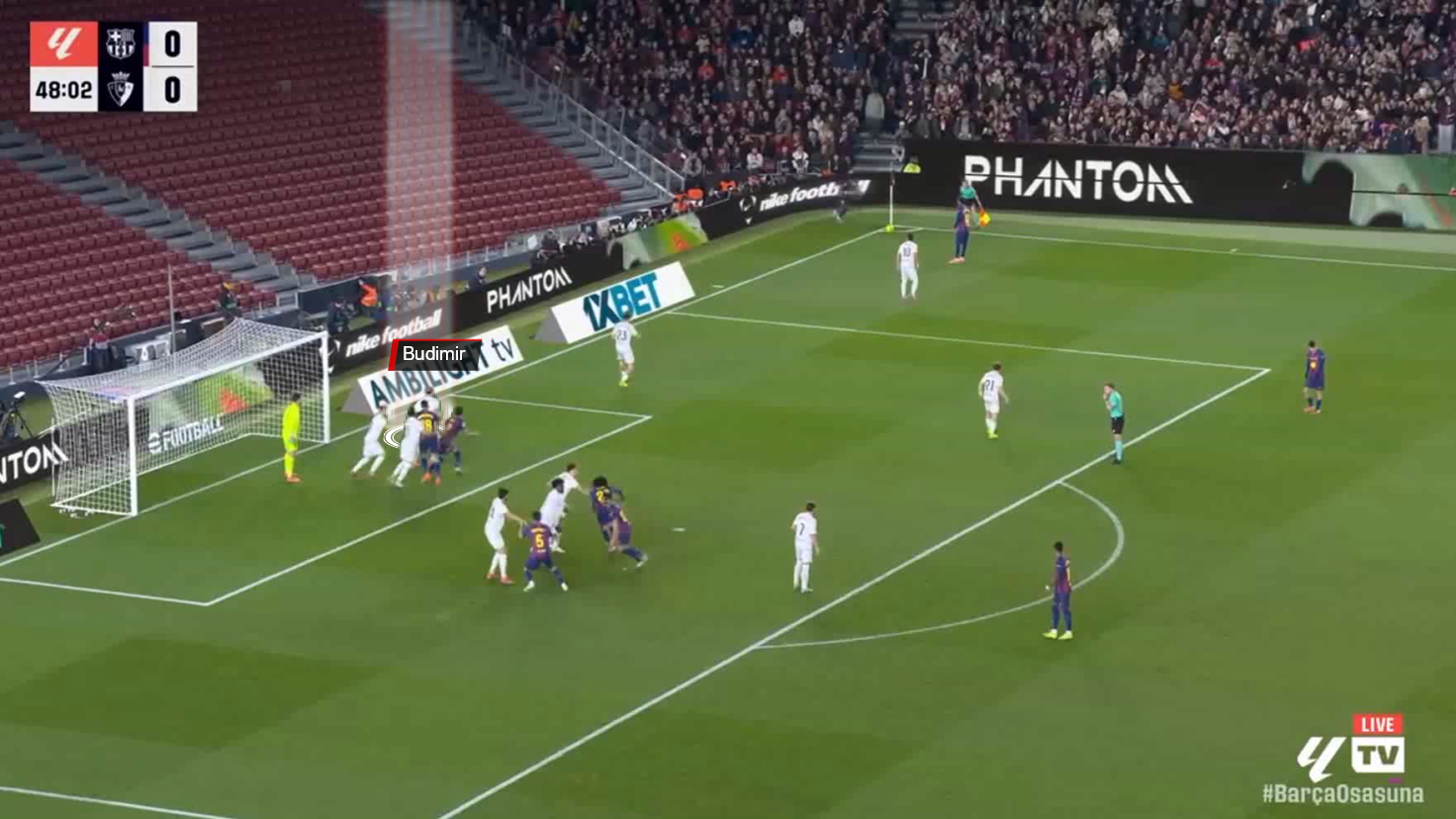
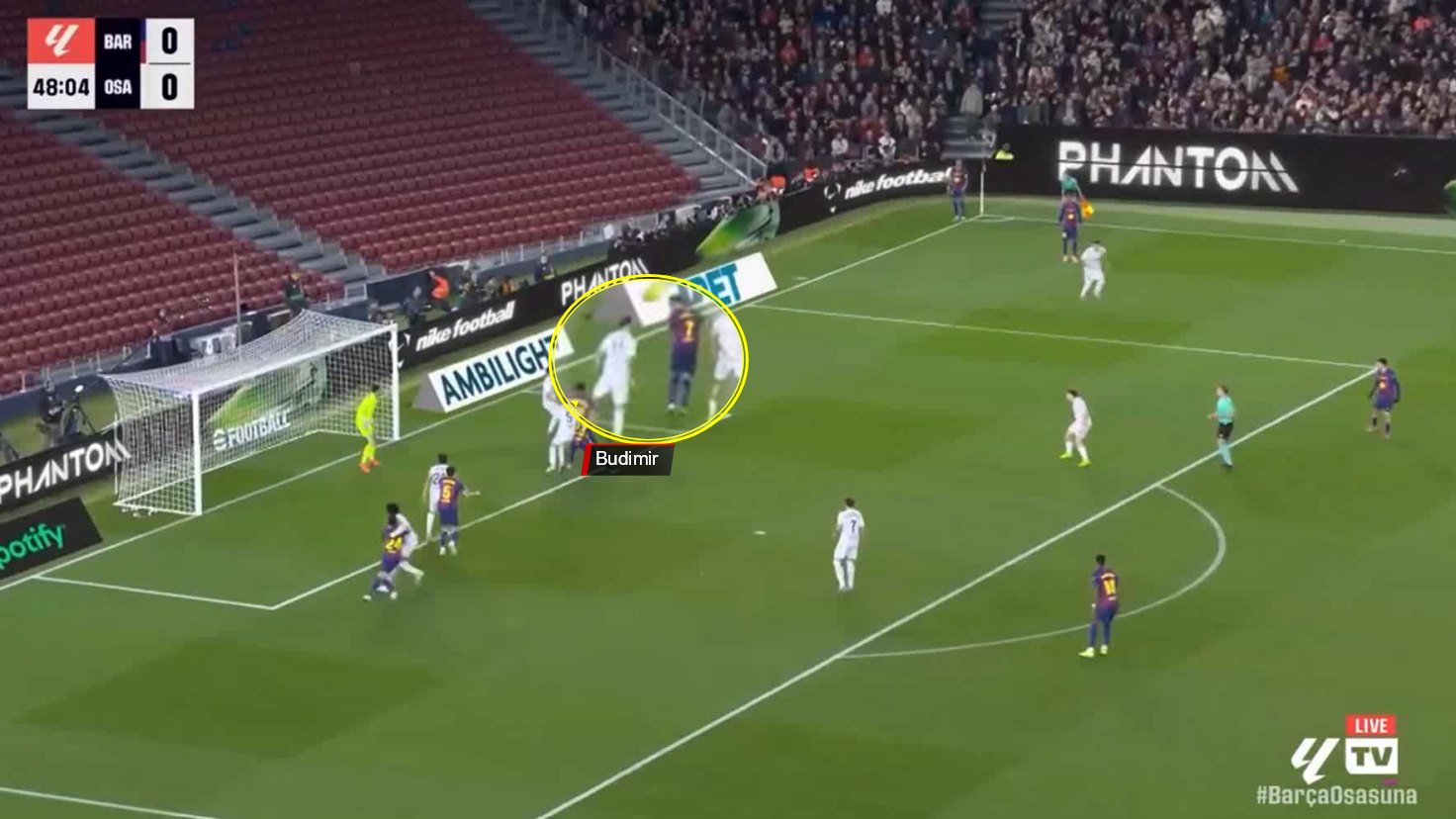
Budimir contributes to defending set-pieces, utilising his aerial strength inside his team’s penalty area.
In several matches this season, he has dropped deep to help clear crosses.
Overall, Budimir’s defensive contribution isn’t based on high pressing or speed, but rather on intelligent playmaking, choosing the right moment to attack, and discipline within the defensive block.
He doesn’t press more than others, but he presses when pressing is effective.
Ante Budimir Tactical Limitations
Despite his significant effectiveness within the Osasuna system, Ante Budimir’s impact remains tied to a specific tactical context, which imposes certain clear limitations on him, namely his limited contribution between the lines.
In matches against opponents who defend with a low, organised block, it becomes difficult for him to create numerical superiority outside the penalty area.
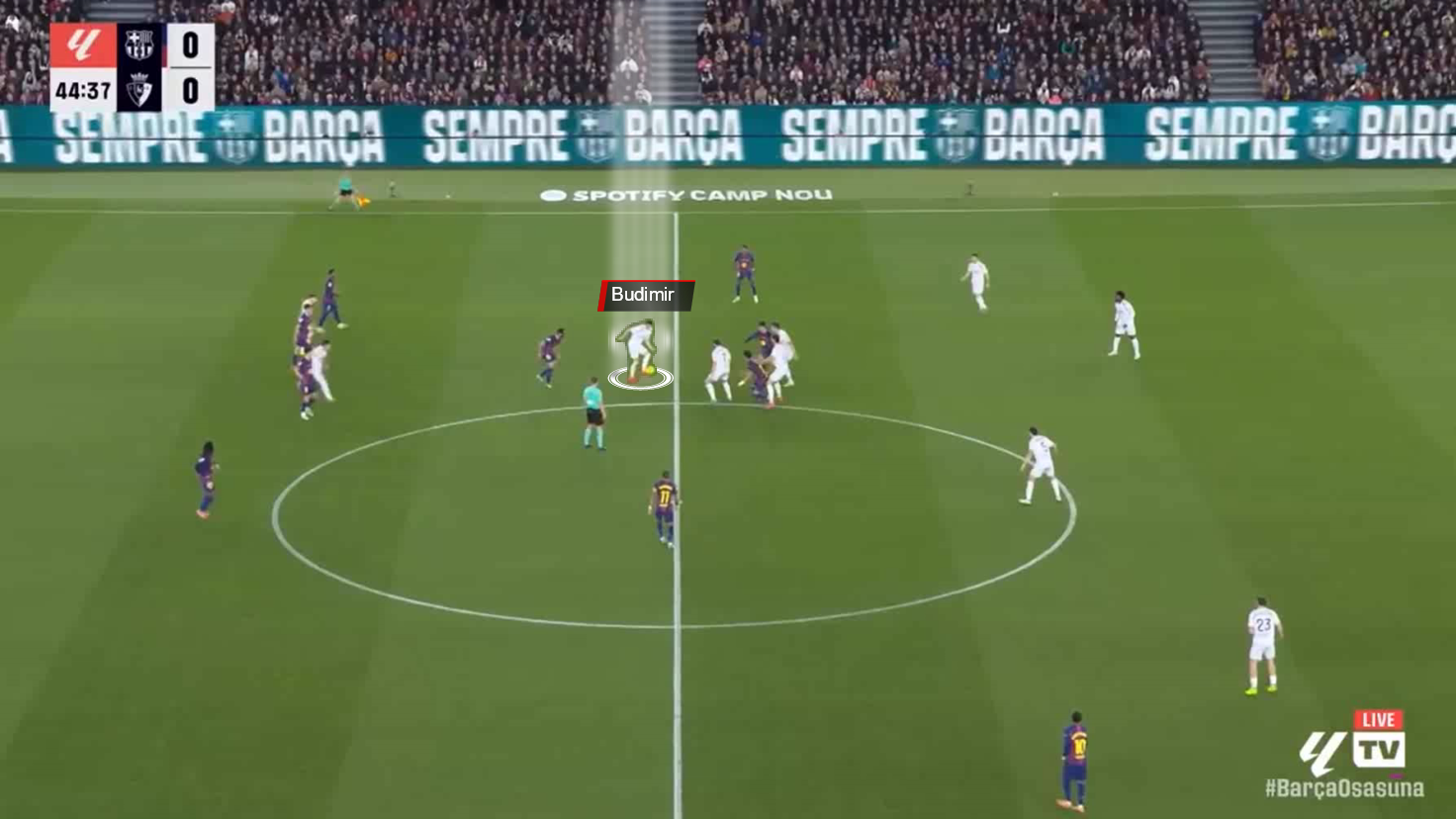
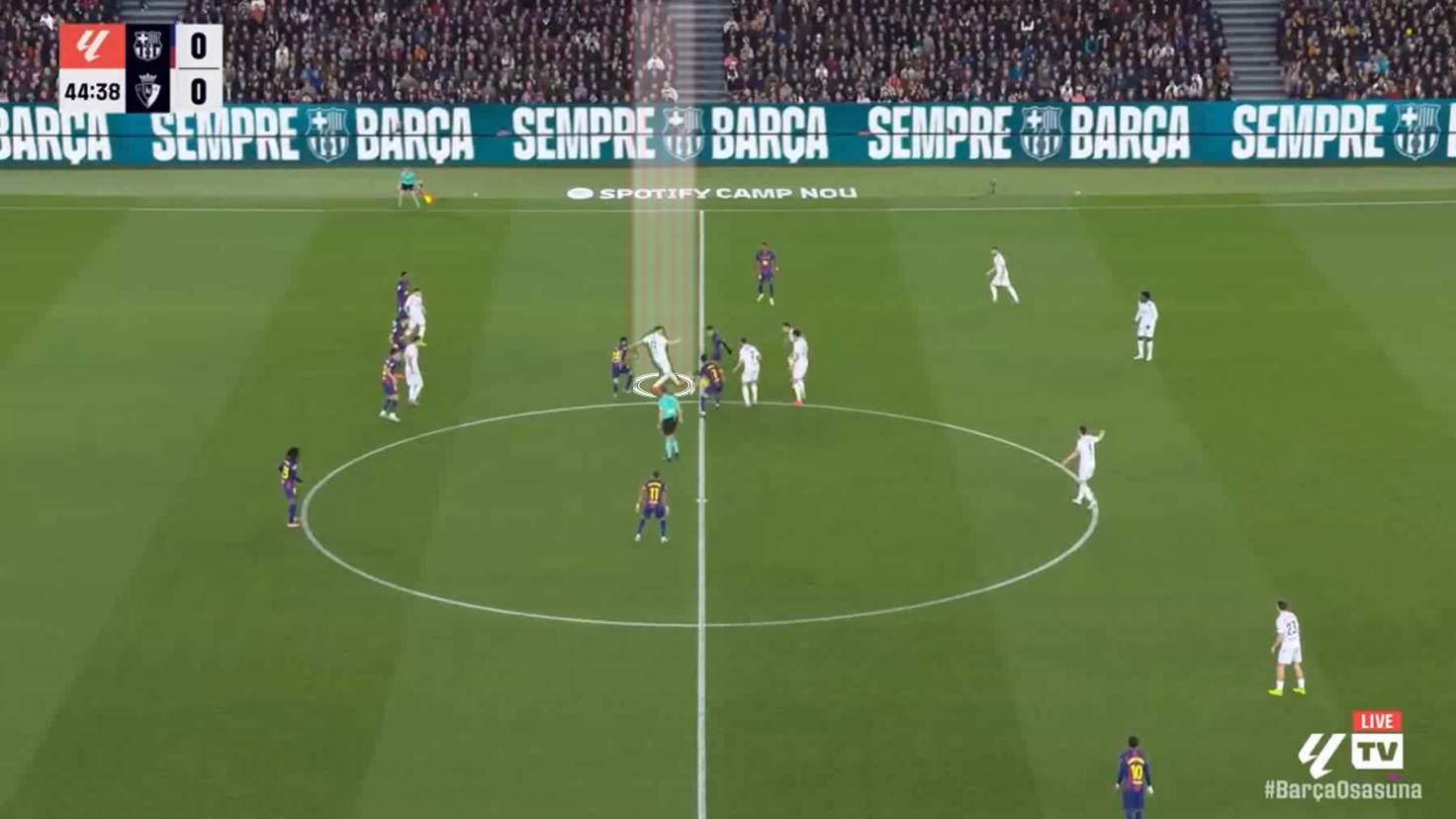
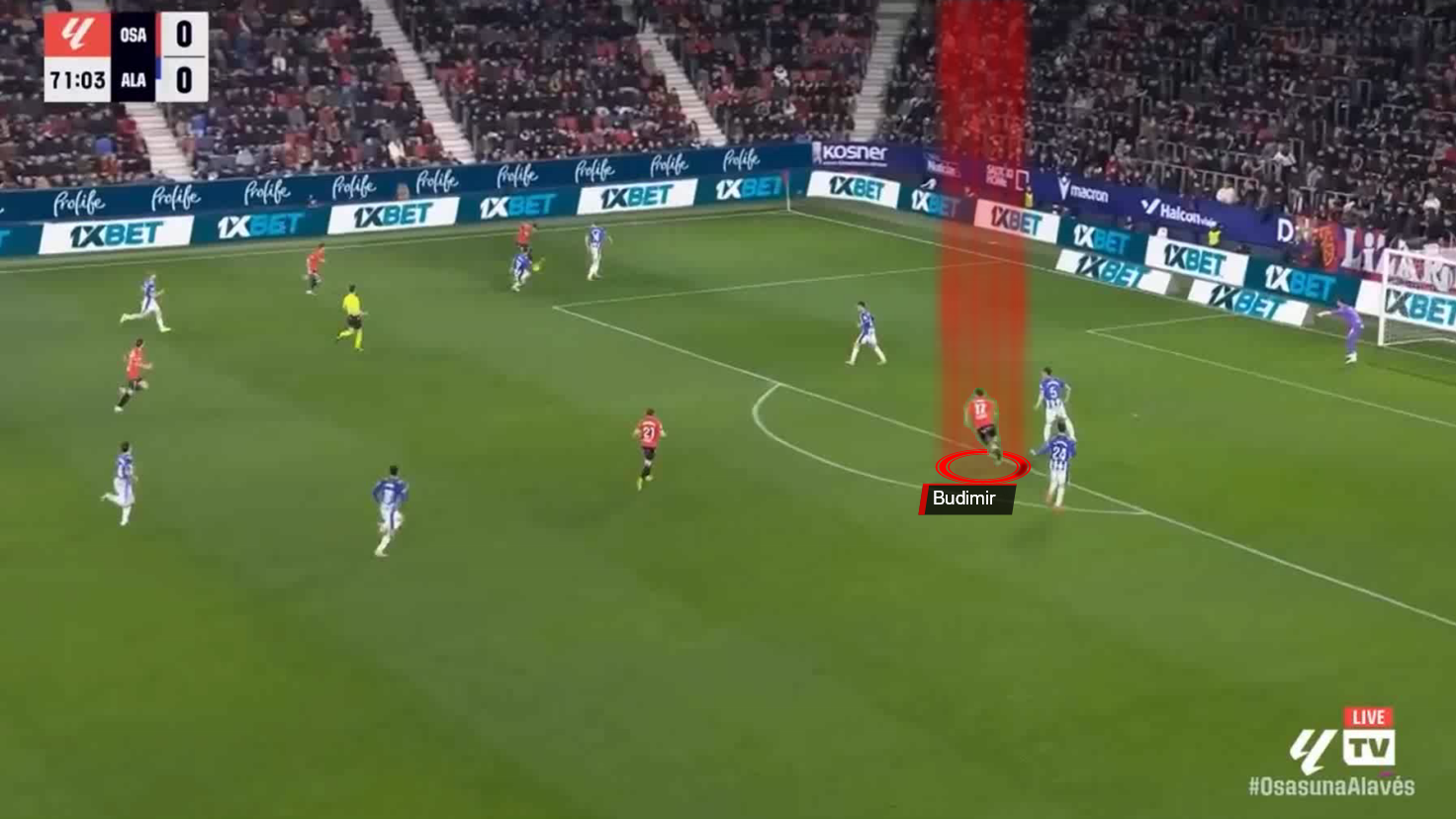
Here we see the limitations of his ability to drop deep and assist in linking the lines, causing the team to lose possession.
This isolated him from the preparation phase.
The team needed a player who could link up play in the centre, but his nature as a box striker limited his involvement outside the penalty area.
In another context, during rapid open transitions, he lacks the speed to lead the attack over long distances on his own.
Conclusion
Ante Budimir in the 2025/2026 season is not just a striker who scored 11 goals in 22 matches, but a clear tactical model within a specific system.
His value is not measured by the number of his touches, nor his size in the build-up play, but by his impact on the shape of the attack and the decisive moment.
He is a pivotal player who streamlines the game, stabilises the defence, wins duels, and transforms well-organised crosses into effective goals.
His finishing style relies more on timing and discipline than on showboating, and his defensive contribution reflects an understanding of his role within the team structure.
However, his limitations are tied to his primary role; he is a box striker par excellence, excelling when the ball reaches his area, and his impact diminishes when he is asked to perform duties outside of that role.
Budimir is not redefining the striker position, but rather asserting that the classic No. 9 can still make a difference, if placed in the right tactical context.
