
Diogo Jota arrived at Anfield last summer from fellow Premier League club Wolves for £45 million.
Jota’s career is an interesting one.
He started off at Pacos De Ferreira, where he was impressive.
Subsequently, he got a move to Atletico Madrid, where he never made an appearance.
He had two loan moves, firstly with Porto and then Wolves, where he later made his deal permanent.
His move to Merseyside came as a shock to Liverpool fans, with some questioning whether he was of the calibre required to play for Liverpool.
Last season, Jota made 19 appearances and scored nine goals in all competitions.
He slowly started to learn the Klopp system and settle at Liverpool.
This season, he has really hit the ground running, with nine league goals in 16 appearances and a goal in the UEFA Champions League.
Jota has benefited from Roberto Firmino’s injuries this season and has taken the chance with both hands.
Jota is the second-highest league goalscorer, just behind Mohamed Salah.
Salah has taken some of the attention away from Diogo Jota’s brilliant season as he becomes one of the best attackers in Europe.
The Liverpool front three has been one of the best units in football in recent years, and finding a way into it was always going to be difficult.
This scout report and tactical analysis aim to unpick the reasoning behind Jota’s ability to do so.
Diogo Jota Positioning
So far this season, Jota has mainly featured through the middle for Liverpool.
However, he is tactically versatile and is comfortable playing anywhere in that Liverpool front three.
This is shown by his heat map this season, with his body of play being in two areas, centrally as a striker and as an inside forward on the left-hand side.
Liverpool also tends to move Salah centrally and Jota out to the left, depending on the opposition.

Despite featuring across the front line, the bulk of Jota’s goal-scoring has come when he plays through the middle.
He thrives off crosses into the box, which we will look at in a moment.
This is reinforced by looking at Jota’s shot map, which shows the majority of Jota’s shots and goals are taken within the width of the goal and centrally.

Diogo Jota Goal scoring / Attacking crosses
Jota has had an impressive start to the season, scoring nine league goals and one in the Champions League.
This is from an XG of 8.03, which is the third-highest in the league behind Salah and Mane.
This is in addition to having the 2nd highest Expected goals + expected assists of 10.15 and the highest XG + XA per 90 this season.
As you can see from the above shot map of Diogo Jota, he takes the majority of his shots in the central area between the goalposts, which is something all good strikers tend to do.
The majority of these chances and shots come from crosses or pullbacks.
With Trent Alexander-Arnold and Andy Robertson in the team and with the way Liverpool plays, crosses in the box are going to be aplenty, and Jota’s movement and ability to attack have played a significant role in his goal-scoring this season.
The first example of Jota’s ability to score crosses came against Atletico Madrid in the Champions League.
Salah is on the ball on the right-hand side, Henderson is making an overlapping run, and Jota is in the box anticipating the cross.
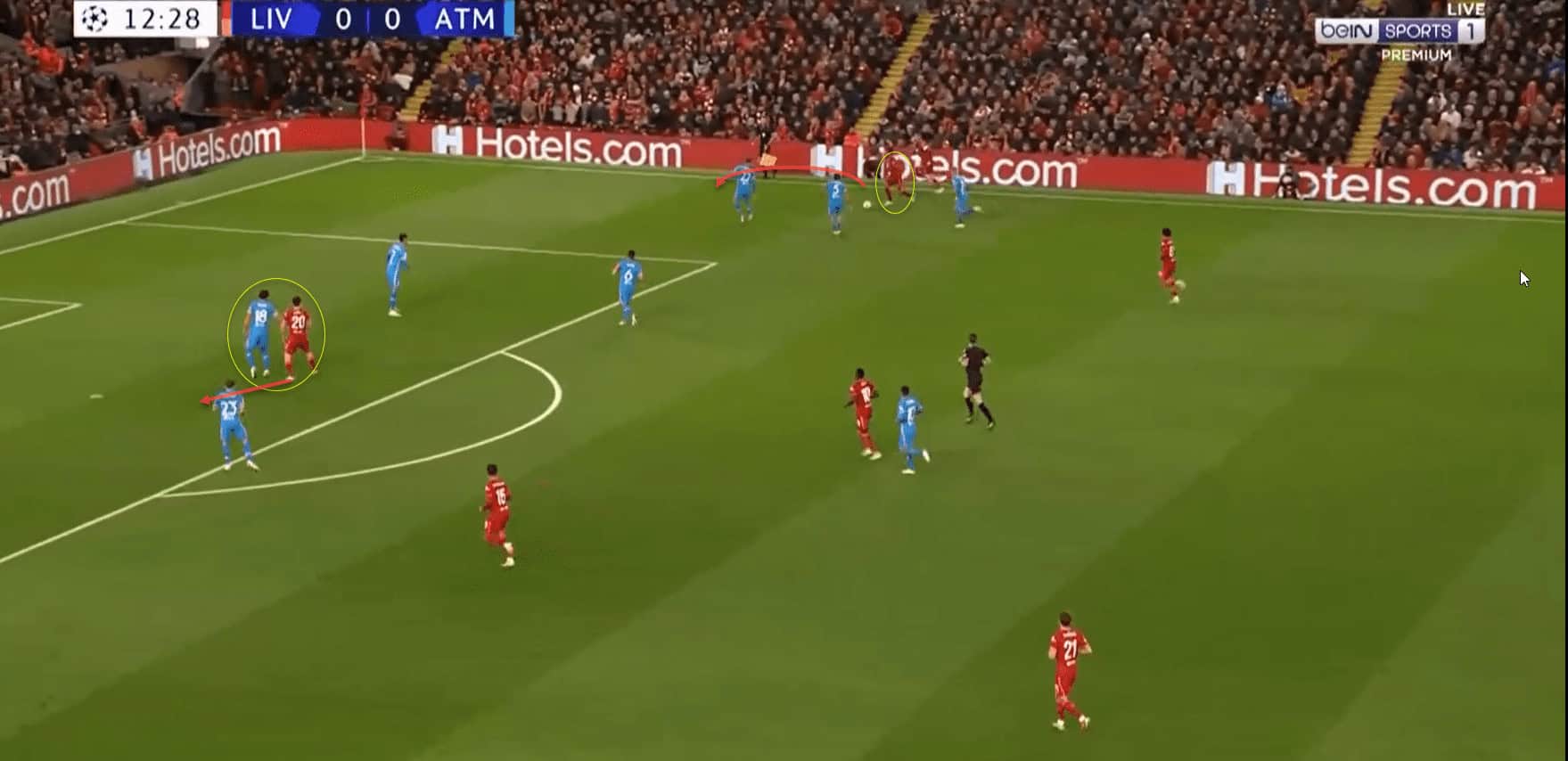
As the ball is played to Jordan Henderson he checks back and plays the ball to Trent Alexander-Arnold.
At this point in the box, you can see Jota just checking his shoulder.
This is key, as Jota then drops slightly into a small pocket of space between Trippier and Felipe.
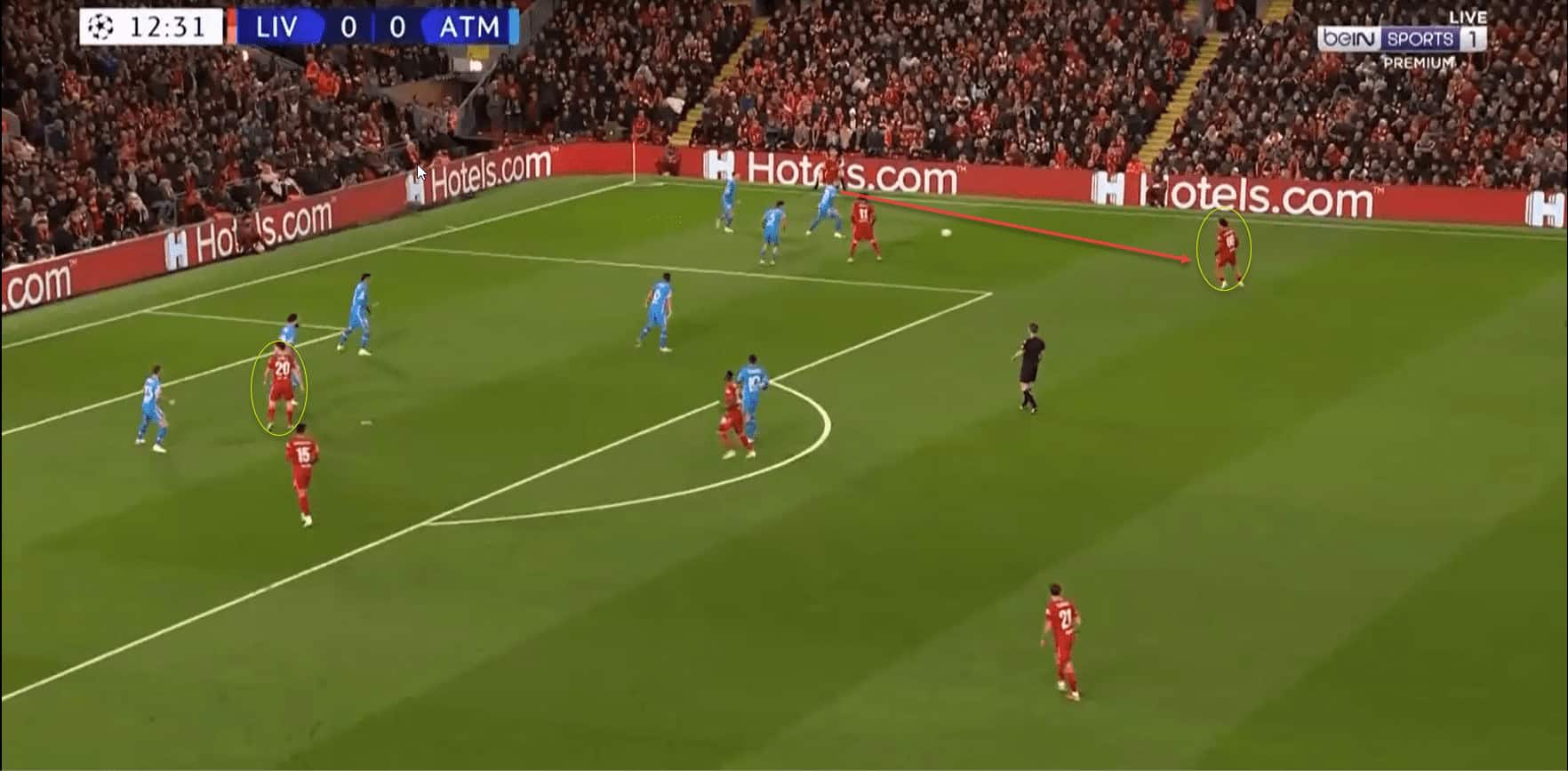
As the cross approaches, Jota maintains this pocket of space and is ready to attack it.
With Alexander-Arnold‘s ability, Jota doesn’t need to be in a big pocket of space due to his crossing ability.
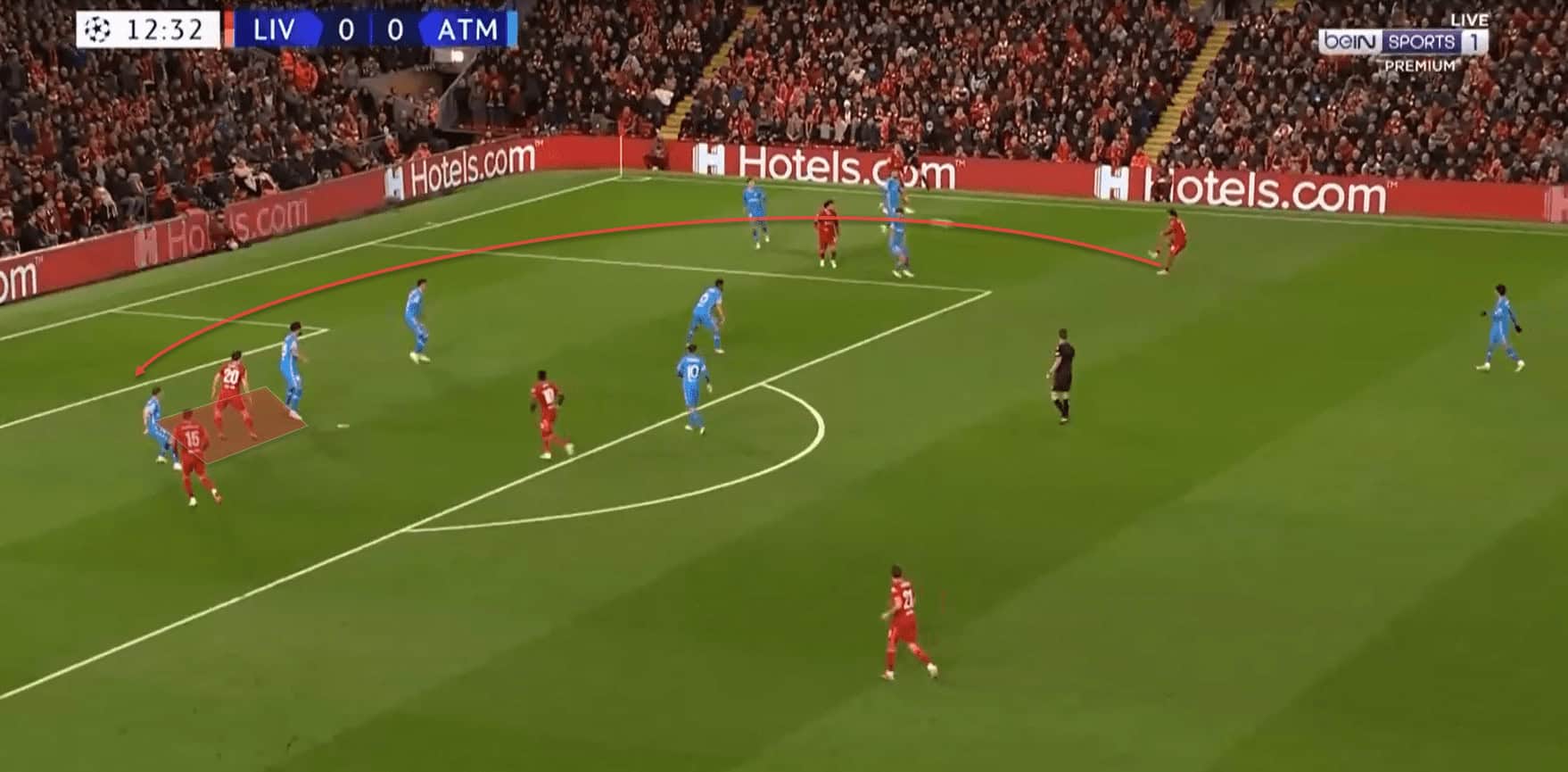
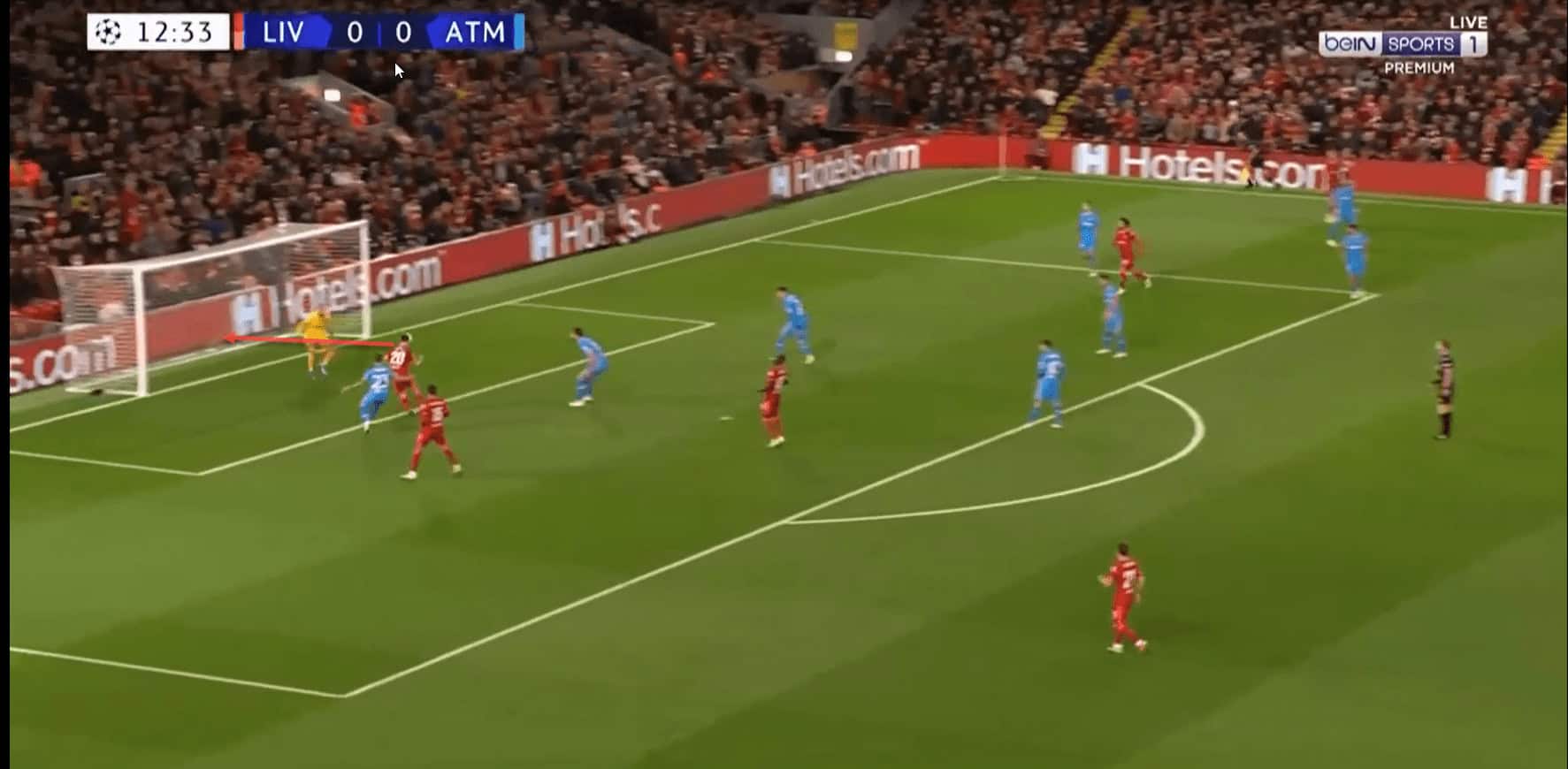
Jota times his run well and nods home from the edge of the six-yard box.
Although the cross is excellent, the ability to find the little pocket of space and the combination of the well-timed run makes this goal.
This isn’t the only time Jota has scored off a cross.
He can score with both his head and feet, but the next example is another example of him scoring with his head.
This time, it was early in the season against Brentford.
Liverpool has turned the ball over and is on the counterattack.
Salah has the ball on the right-hand side, and you can see Jota making a run into the space between the right-sided Centre back and the wingback, who is out of position
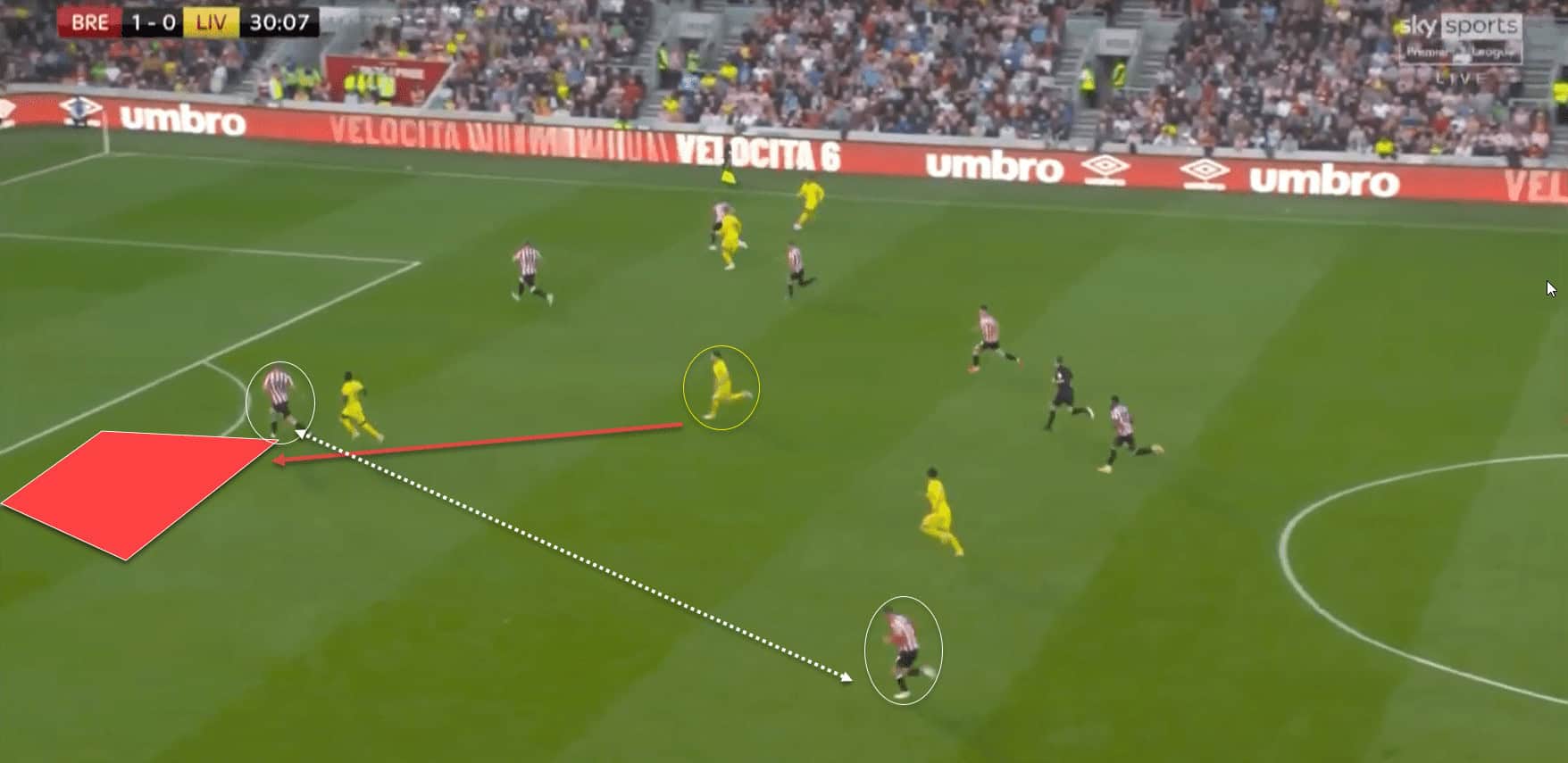
Salah plays the ball to Henderson, who has made an underlapping run for Salah.
Jota finds himself in that pocket of space again, as shown below.
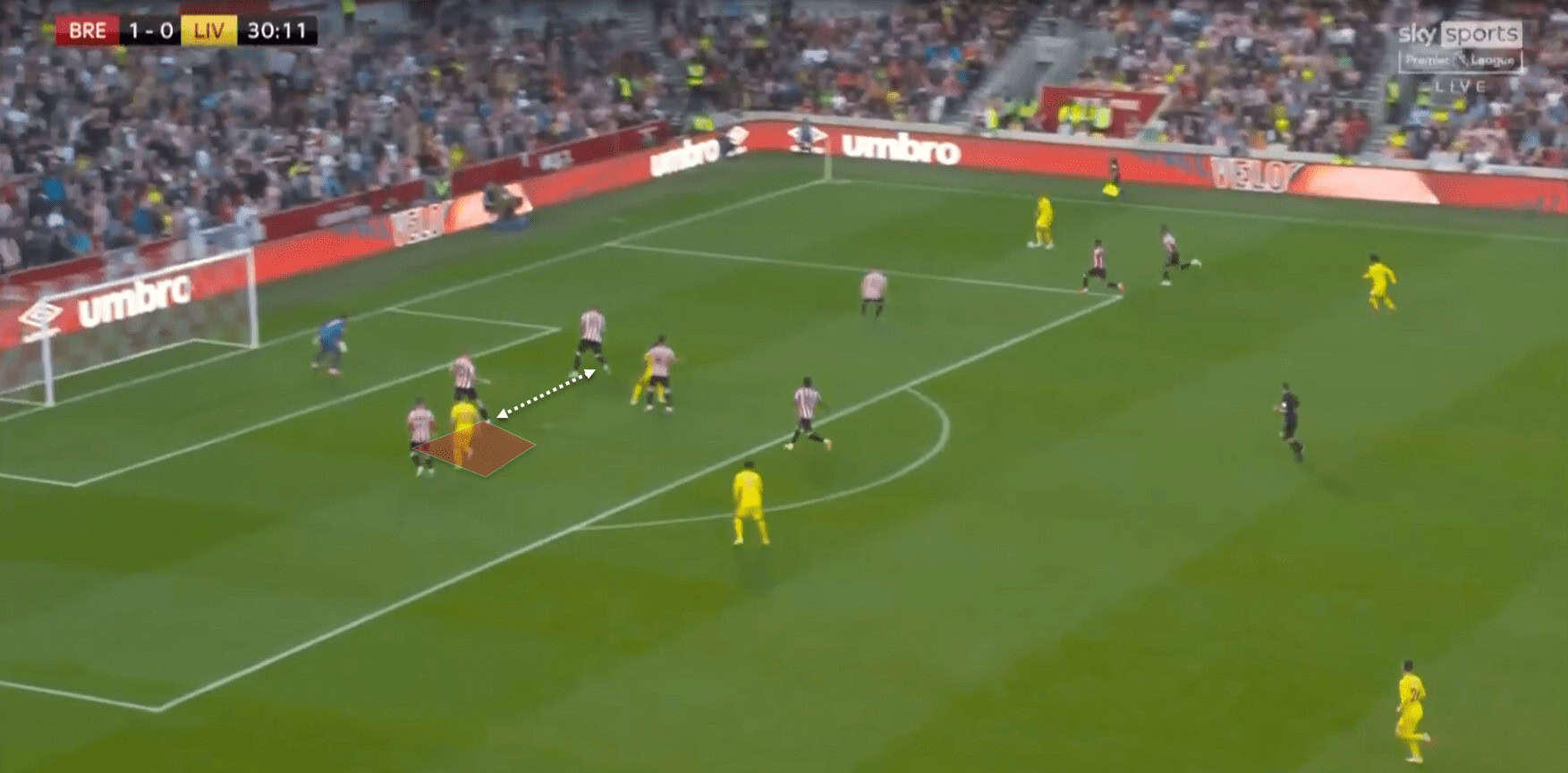
As Henderson’s ball comes in, he brilliantly places it in the space for Jota, who rises and heads home to give Liverpool the equalizer.
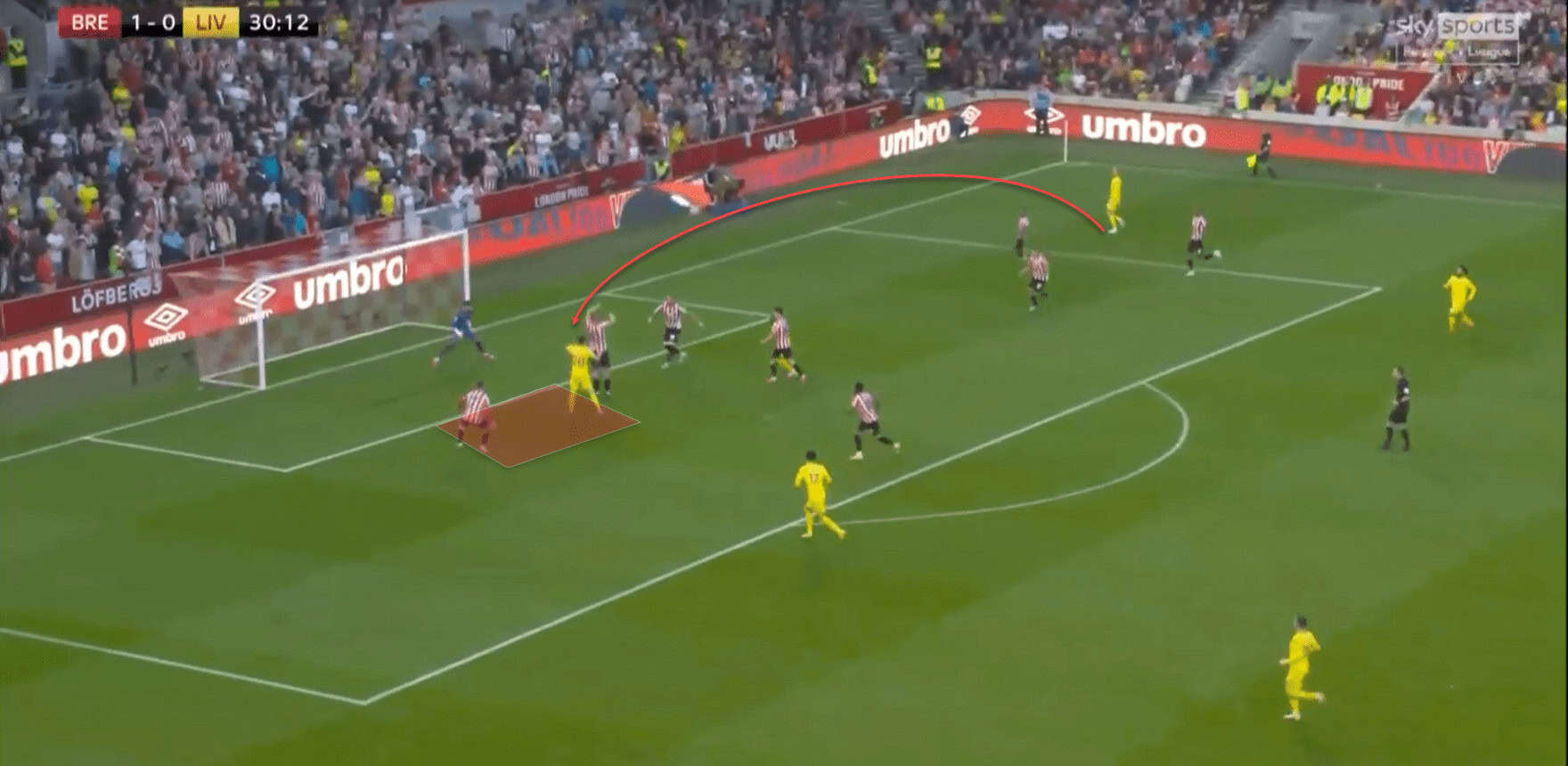
The cross is again brilliant, but the key is Jota’s ability to find that pocket.
The finish is also very impressive.
Both examples hopefully show Jota’s intelligence in identifying the space within the defensive line and then executing well-timed runs and finishes.
Diogo Jota Dropping off
The central striker in the Liverpool front three has been Roberto Firmino for many years.
He was often referred to as a false 9 as he would often drop into a deeper pocket to help in the build-up and facilitate runs for Salah and Mane.
Although Jota does this slightly differently, he does still drop off and display effective hold-up.
This motion of dropping deeper to get on the ball is shown perfectly against Jota’s former club, Wolves.
Wolves are sat deep with two mid-low blocks.
Jota drops between the two blocks into a position you would associate with a number 10.
Now, Jota has an abundance of space to work with as Matip plays a ball between the lines.

As Jota receives the ball and turns, he has a few passing options.
Both Salah and Mane have made runs from outside to in, but at the top of the diagram, you can see Robertson, who has held his width and, too, provides a passing option for Jota.
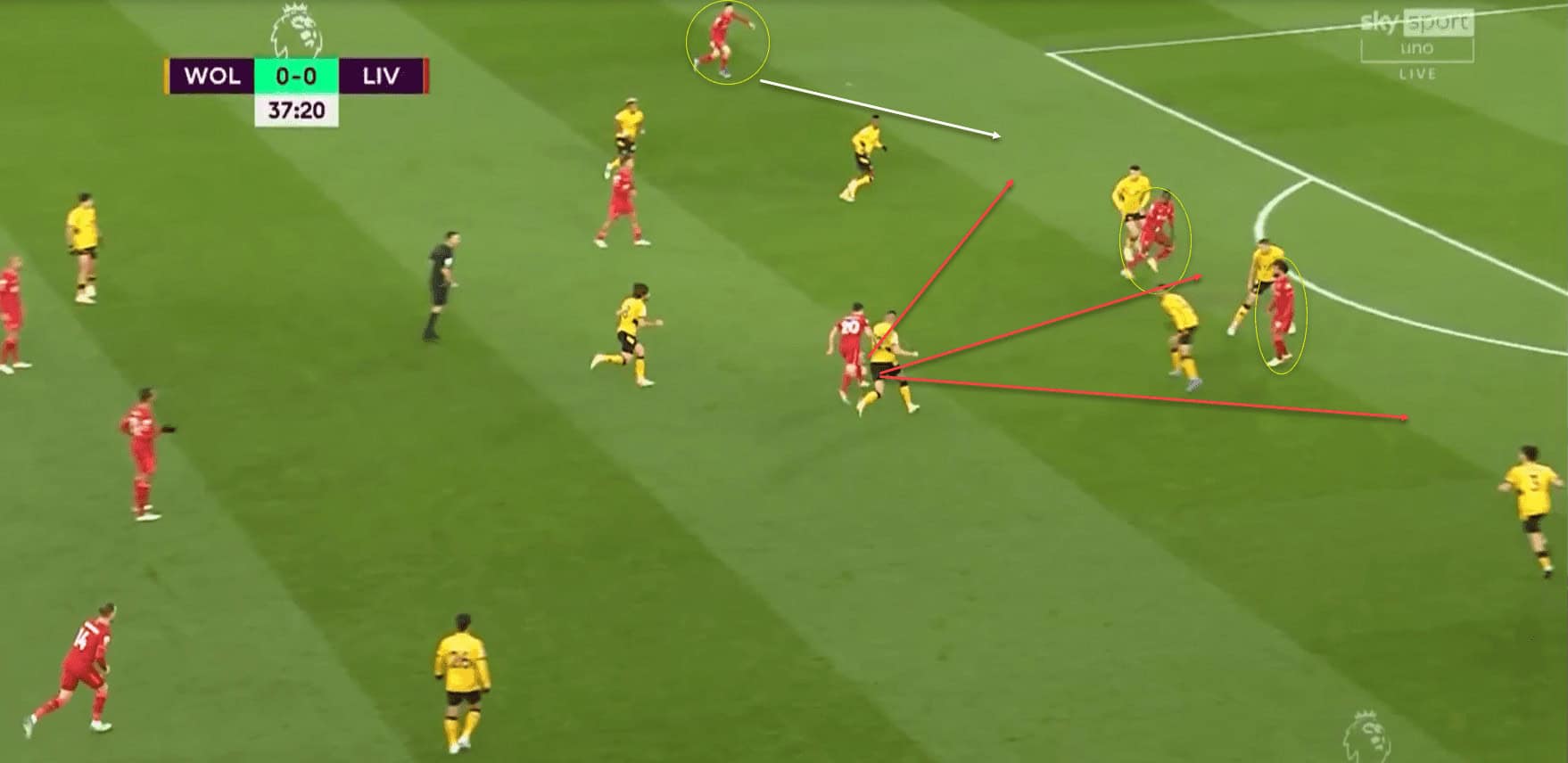
Jota takes another touch and then plays a well-weighted pass to Robertson, who gets into the highlighted space and plays a ball across the face, forcing Saiss into an exceptional challenge to deny Liverpool a goal.
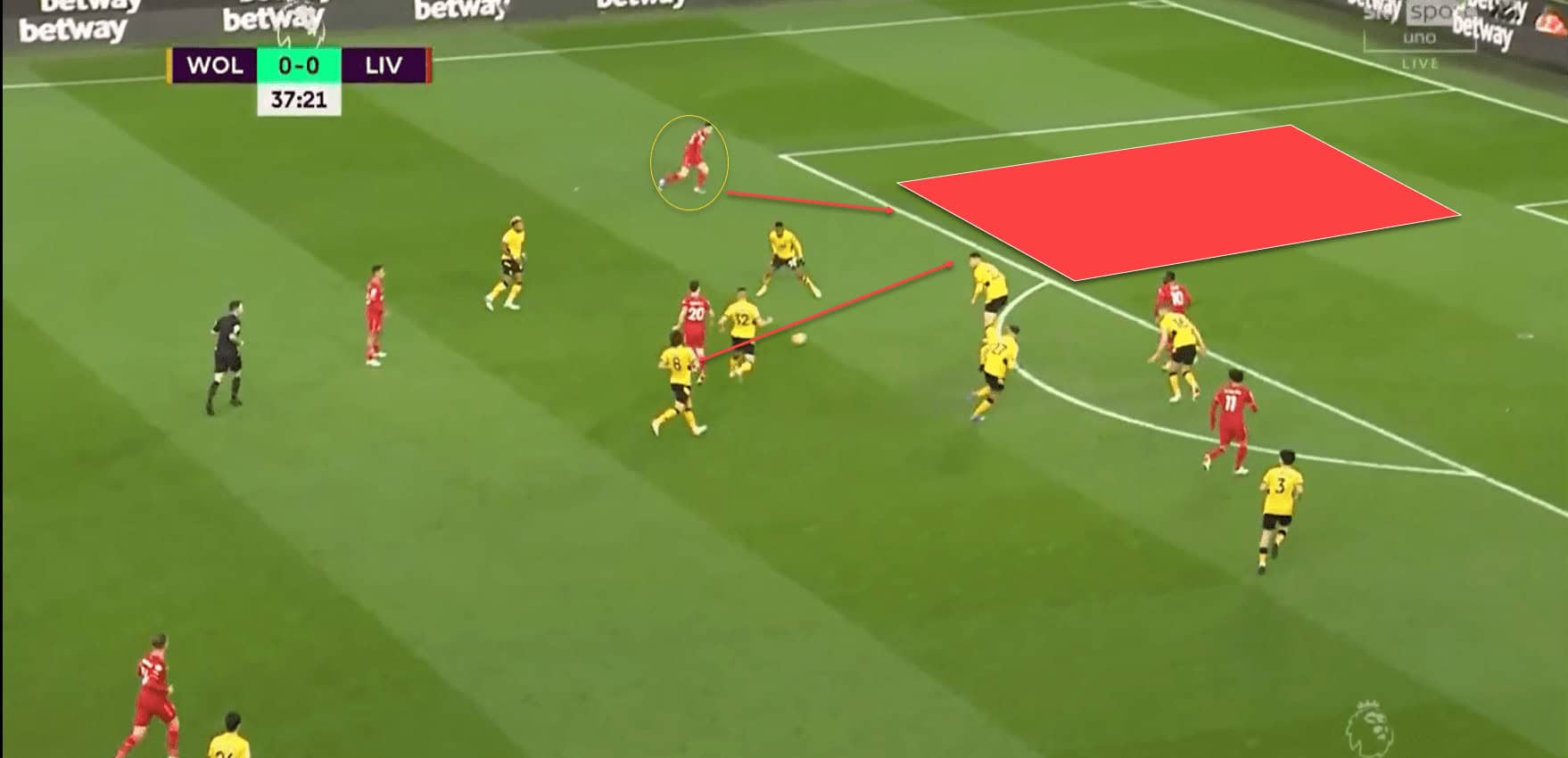
This is a perfect example to analyse some of Liverpool’s tactics in their attacking play, such as Jota dropping off the run from the inside forwards and the high fullbacks.
It also emphasizes the importance of Jota dropping into that pocket to get on the ball, draw attention to him, and allow the runs inside.
Diogo Jota Link-up Play
This point links into the one above, with good hold up play, comes good link-up play.
To play in this Liverpool front three, you must be able to link up and supply the likes of Mane and Salah.
This is something Jota has been able to do this season effectively.
We saw this in the previous example, but on that occasion, Jota linked up with Robertson.
The following example comes from Liverpool’s game Vs Arsenal.
The move starts with Alisson playing a diagonal ball out to Tsimikas, who heads towards Jota.
Jota drops into the highlighted space between the two Arsenal blocks.
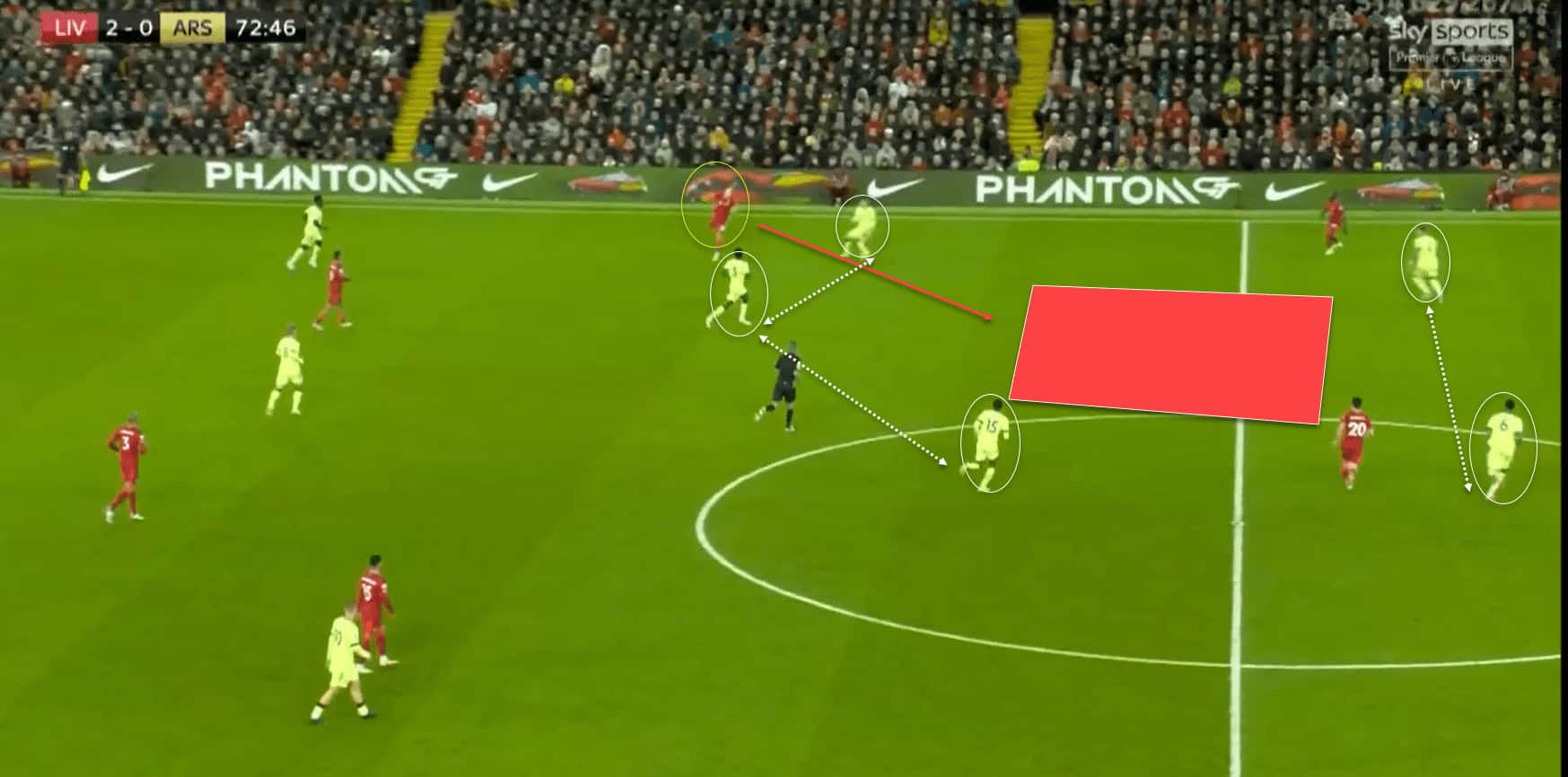
As he makes this run, Gabriel is dragged out to mark him, leaving a space for Liverpool to exploit.
They do this through an excellent header from Jota, who flicks it into the highlighted space.
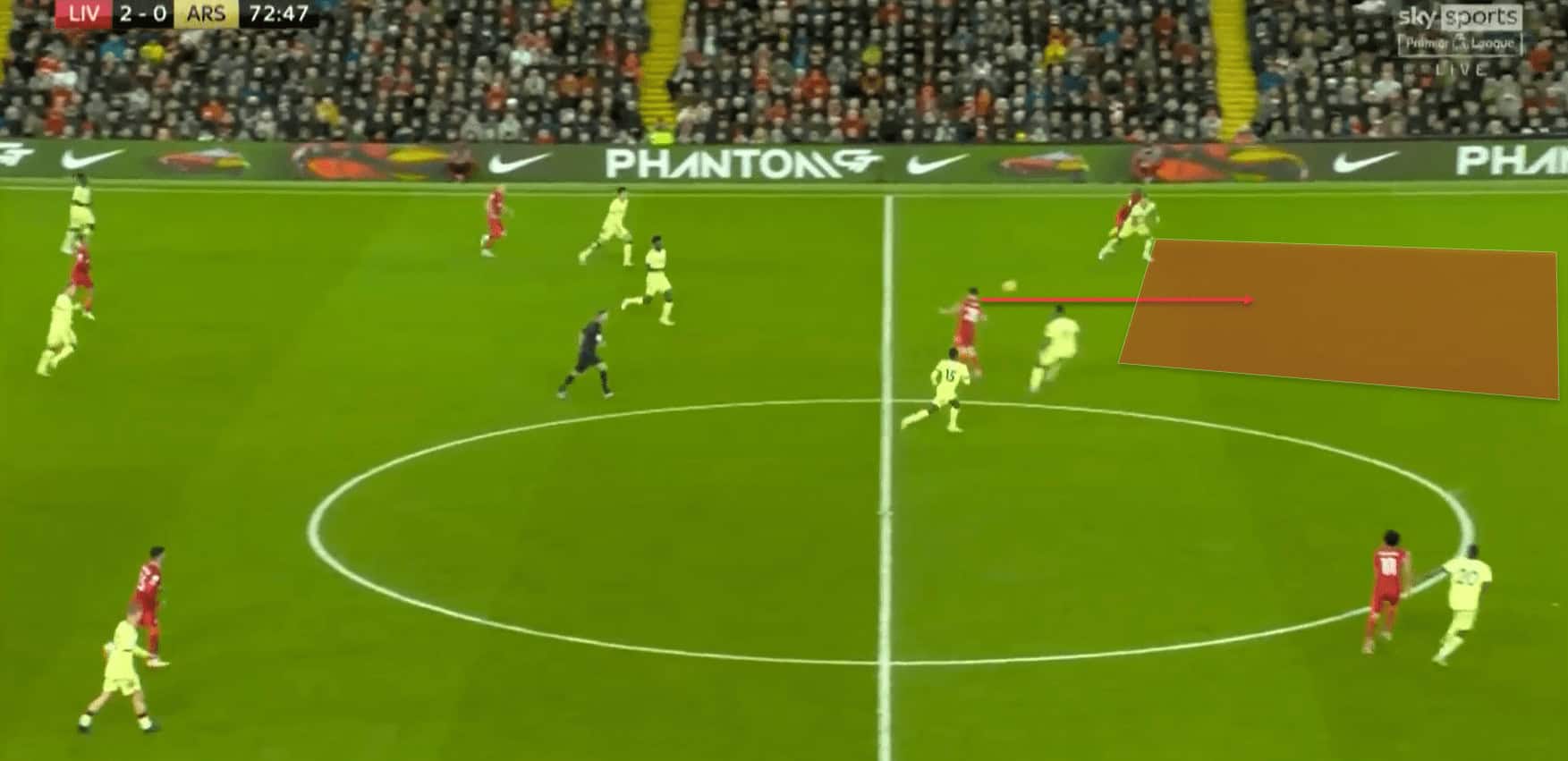
Mane manages to beat Ben White to the ball and carry it into the box before squaring it to Salah who taps home to score one of the team goals of the season.
This shows a combination of the dropping off to facilitate runs from Mane and Salah, creating space within the defensive line for them to execute, and Jota’s intelligence and quality to execute such a difficult header perfectly.
Summary
This analysis should show that Jota has become an integral cog in the Liverpool machine this season, not just for his goalscoring but also for his contribution in the buildup phases, as this scout report hopefully demonstrates.
Jota is becoming, if not already, one of Europe’s elite attackers, and I expect him to play a vital role in Liverpool’s success this season and in the future of this Liverpool team as Salah, Mane, and Firmino age.
