
Anis Hadj Moussa (176cm/5’9”, 68kg/149lbs) is one of the most exciting up-and-coming left-footed right wingers in Europe today.
The Algeria international may well be his country’s natural successor to Riyad Mahrez on the right-hand side, with Hadj Moussa having come off the bench to replace the national team captain, Mahrez, for the final 30 minutes in each of their last three 2026 FIFA World Cup Qualification matches.
At club level, Anis Hadj Moussa currently plies his trade for Feyenoord in the Eredivisie under Robin van Persie tactics, but may well be destined for a higher level of club competition in the not-so-distant future, with Olympique de Marseille and Tottenham Hotspur having previously been linked with a move.
Another club that’s been linked with the 23-year-old winger by the media in the past is Liverpool, currently under the tutelage of ex-Feyenoord boss Arne Slot.
Hadj Moussa joined Feyenoord right as Slot was on his way out, so he never played under the Premier League-winning coach.
However, with Mohamed Salah and Arne Slot’s relationship deteriorating in a very public fashion, could ‘the next Riyad Mahrez’ be a potential successor to ‘the Egyptian King’ on Liverpool’s right flank?
This Anis Hadj Moussa scout report provides some insight into Anis Hadj Moussa style of play and why his name is likely to be one we’ll hear a lot more of in the coming years.
Anis Hadj Moussa Stats
Robin van Persie has typically alternated fairly equally between a 4-2-3-1 and 4-3-3 formation at Feyenoord this term.
Regardless of shape, Anis Hadj Moussa will occupy the right-wing position.
Anis Hadj Moussa’s heat map for the 2025/2026 campaign is shown in Figure 1, and this image clearly illustrates how the Algeria international loves to start wide and cut inside, whether that’s by carrying the ball into central positions or drifting centrally off the ball.
Anis Hadj Moussa Heat Map 2025/2026

Anis Hadj Moussa profiles as a fairly well-rounded attacking inside forward with explosiveness and goalscoring at the forefront of his game and playmaking a secondary skill.
Anis Hadj Moussa Pizza Chart 2025/2026

Anis Hadj Moussa’s pizza chart for the 2025/2026 campaign in Figure 2 assigns percentile ranks to key attacking, possession, and defending metrics, comparing Anis Hadj Moussa’s performance with that of other right wingers from leagues of similar quality to the Eredivisie.
As alluded to previously, Hadj Moussa’s attacking performance is where he truly stands out.
When Hadj Moussa receives in the final third, you can typically expect dribbles and shots next, with Hadj Moussa making a relatively high volume of both.
On top of that, Hadj Moussa generates a large volume of goal contributions and expected goal contributions, highlighting that he can turn his dribbles and shots into real value for his team.
Anis Hadj Moussa ranks above average for progressive passes and dangerous passes, indicating that he can link play and provide for teammates, though he does so less than pure playmakers.
The numbers fall off a bit more for pass volume and accuracy; however, this is a symptom of Hadj Moussa’s direct attacking style.
Hadj Moussa’s defensive numbers are generally below average, though his defensive duel success rate is solid.
This is an area where there’s significant room for realistic improvement if required.
Anis Hadj Moussa Dribbling
Anis Hadj Moussa is no stranger to solo efforts.
At times, he can be a little too individualistic, passing up decent passing opportunities in favour of going alone.
However, a certain level of selfishness is quite a common trait among great attackers, and Hadj Moussa’s goal contribution numbers support his tendencies quite strongly.
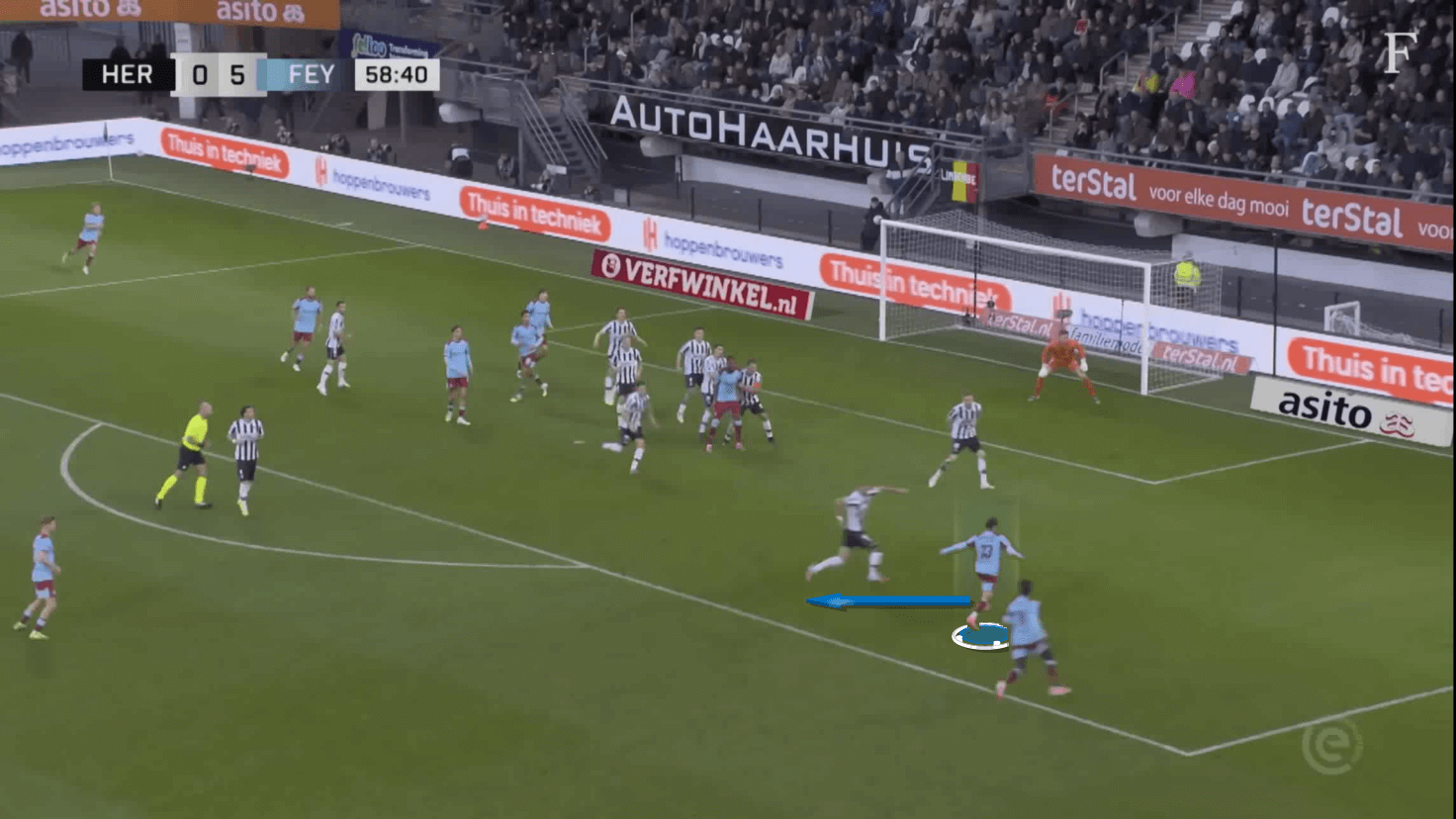
Figures 3 and 4 share an example of Anis Hadj Moussa’s quick feet, agility, and balance, which he’ll frequently use to dance through the opposition defence, even in tight spaces, and carve out chances.
Initially lining up a play on his weaker right foot above, Hadj Moussa pulls the ball back onto his stronger left foot.
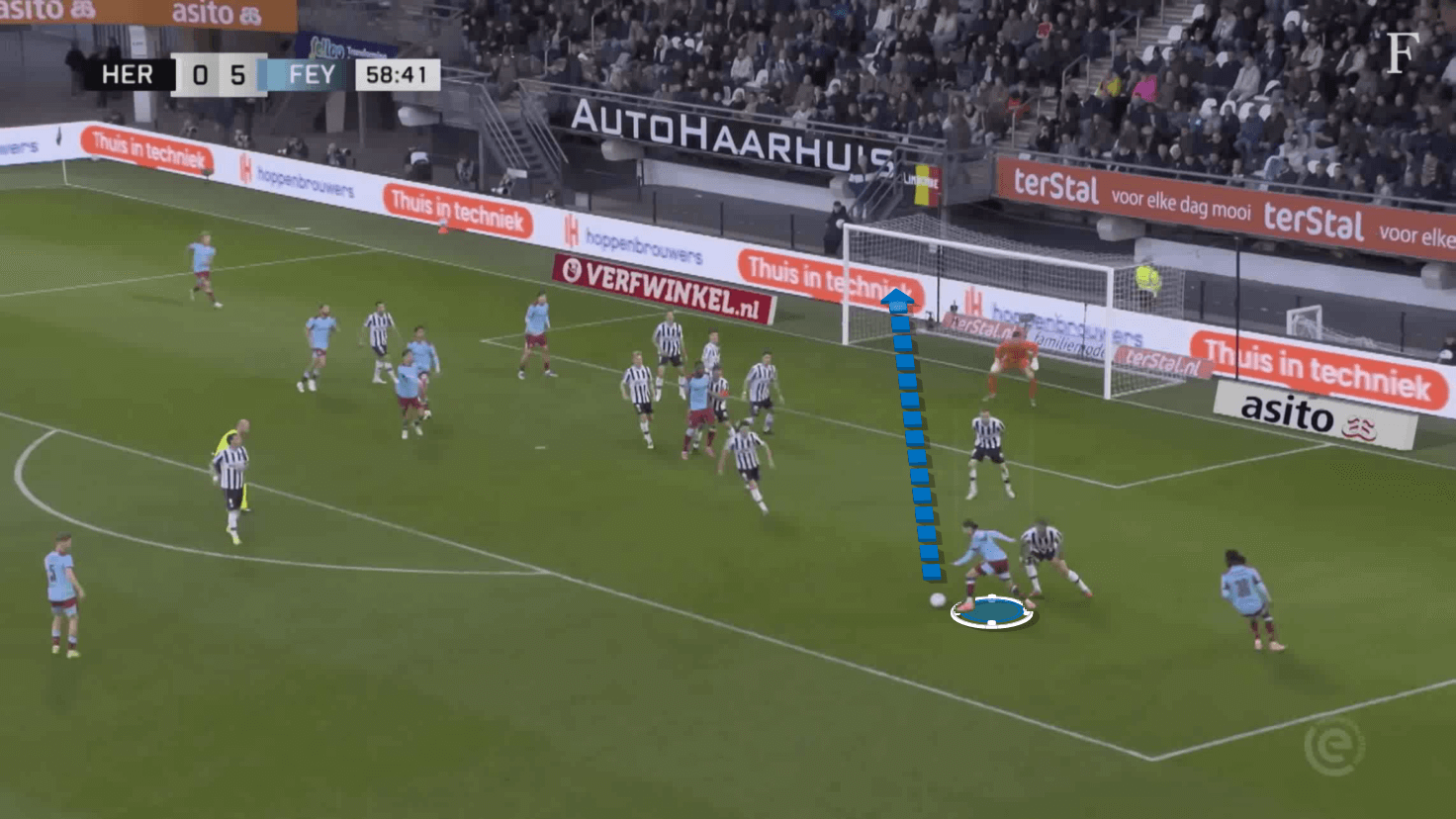
Maneuvering his way past the defender, a shooting opportunity appears for the wide attacker.
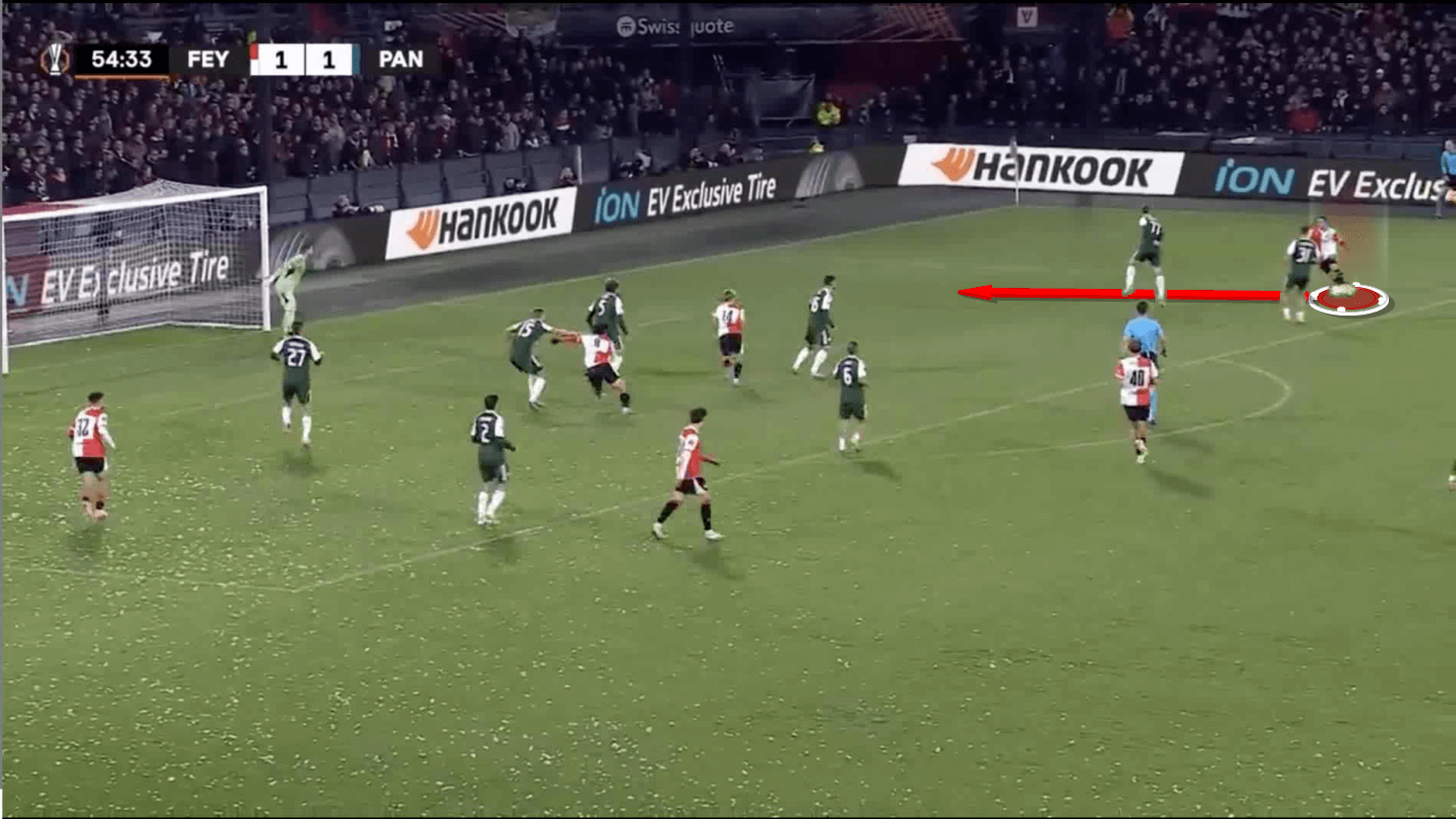
Figures 5 and 6 provide another example of Anis Hadj Moussa’s ability to dance through the opposing defence, this time in the UEFA Europa League versus Panathinaikos.
Initially lining up an in-swinging cross on his left foot, Hadj Moussa takes the ball in his stride towards the byline.
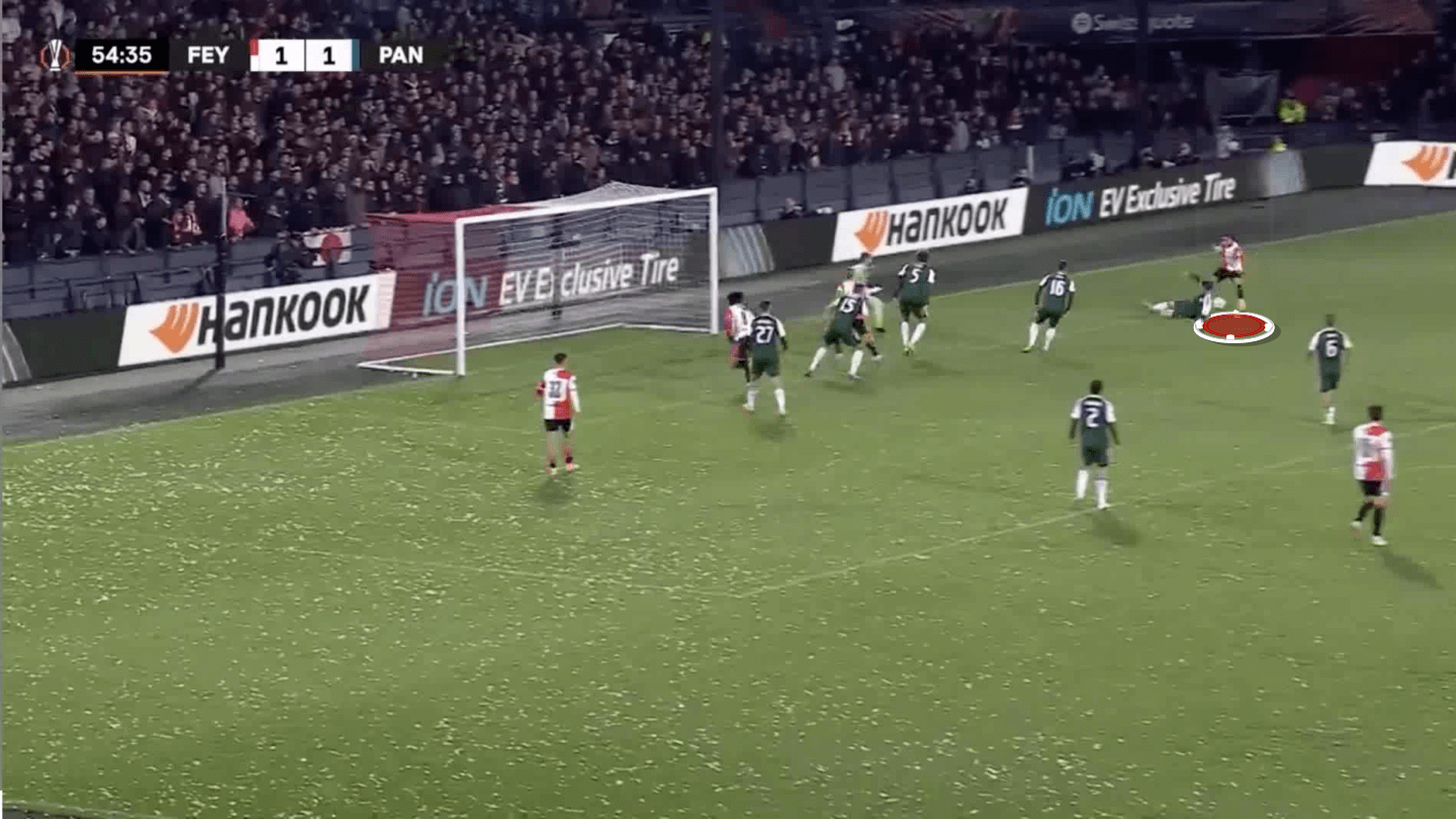
Hadj Moussa then pulls the ball back onto his left again, breezing past the tackling defender and opening up an excellent opportunity for a shot or cross inside the penalty area.
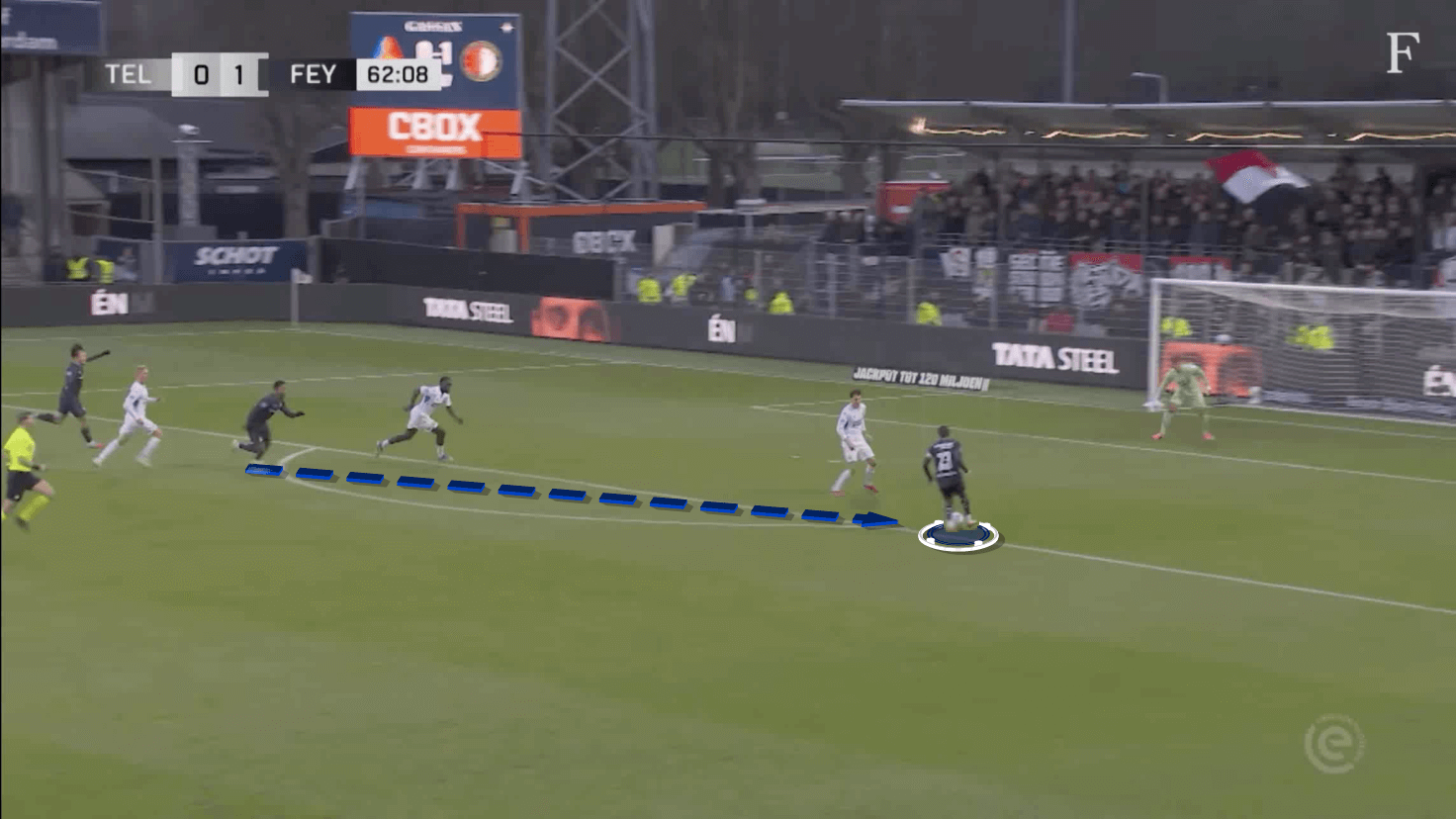
Anis Hadj Moussa’s impressive acceleration, combined with his balance and agility, helps him pull off these twists and turns past defenders in tight areas.
We see another example of Hadj Moussa opening up a shooting opportunity by quickly cutting onto his stronger left foot inside the box in Figures 7 and 8.
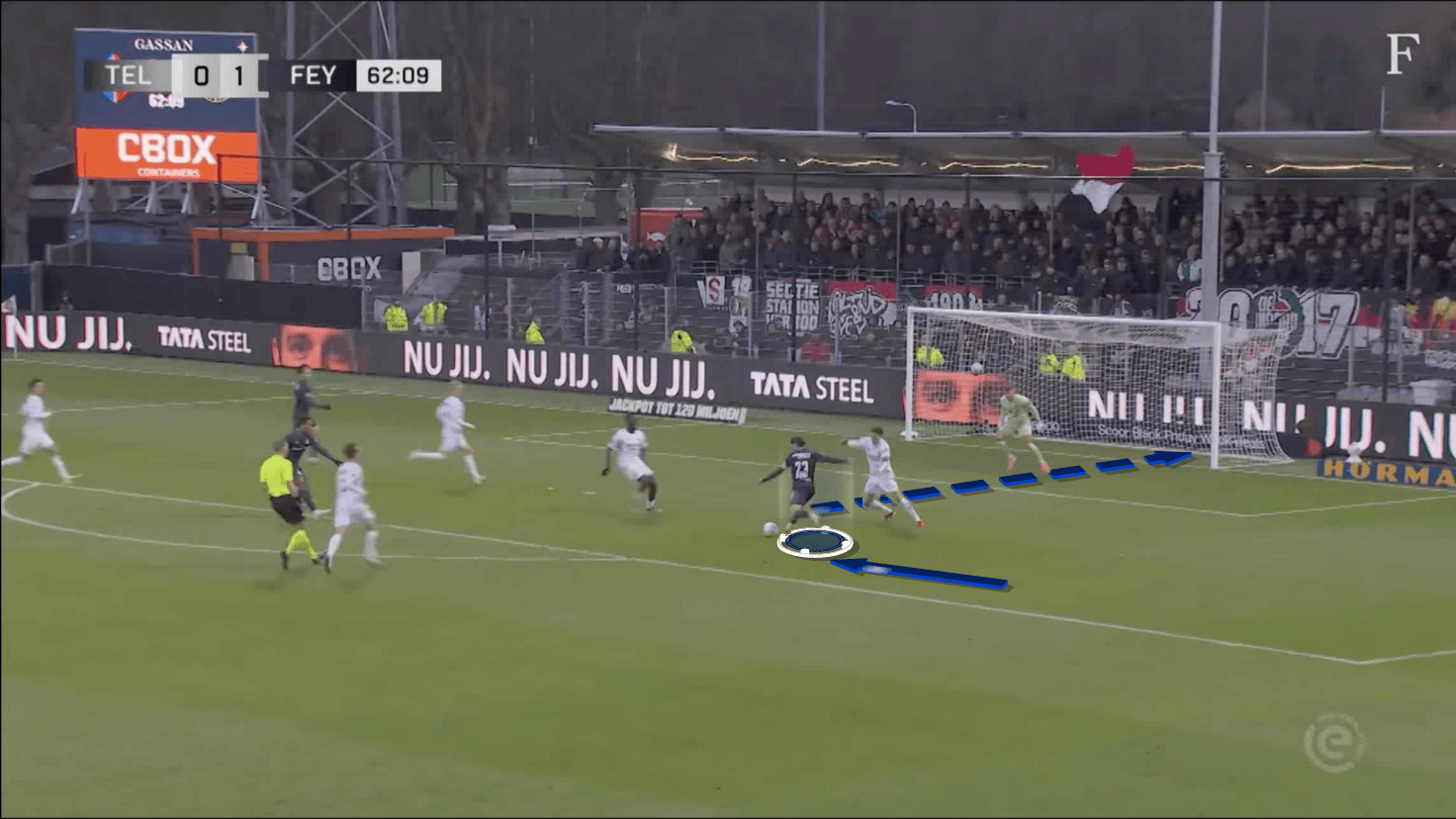
Anis Hadj Moussa’s shooting can be a bit unpredictable as he’s just as happy to pull the ball towards the near post as he is to try and curl it in at the far post.
In Figure 8, he targets the near post with his shot, which catches the goalkeeper off guard.
Anis Hadj Moussa Playmaking
While creative passing comes secondary for Anis Hadj Moussa, the inside forward does possess quality vision and passing technique to take advantage of opportunities to slice the opposing defence open, which he could make even greater use of.
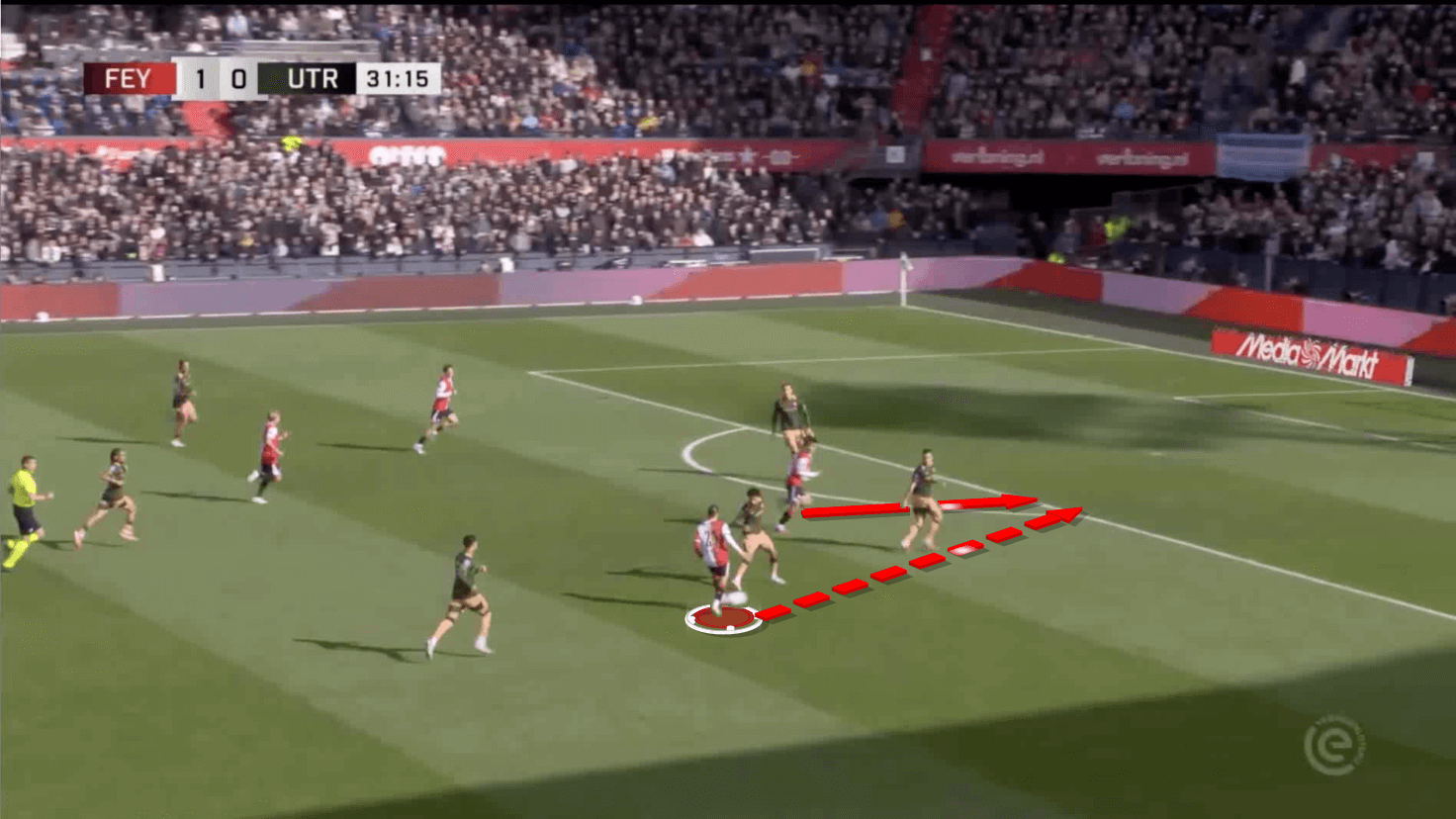
In Figure 9, Hadj Moussa spots an inviting run from his teammate going in behind the opposing defence.
The wide attacker weighs his pass well as he tries to set up his teammate in a 1-v-1 with the goalkeeper.
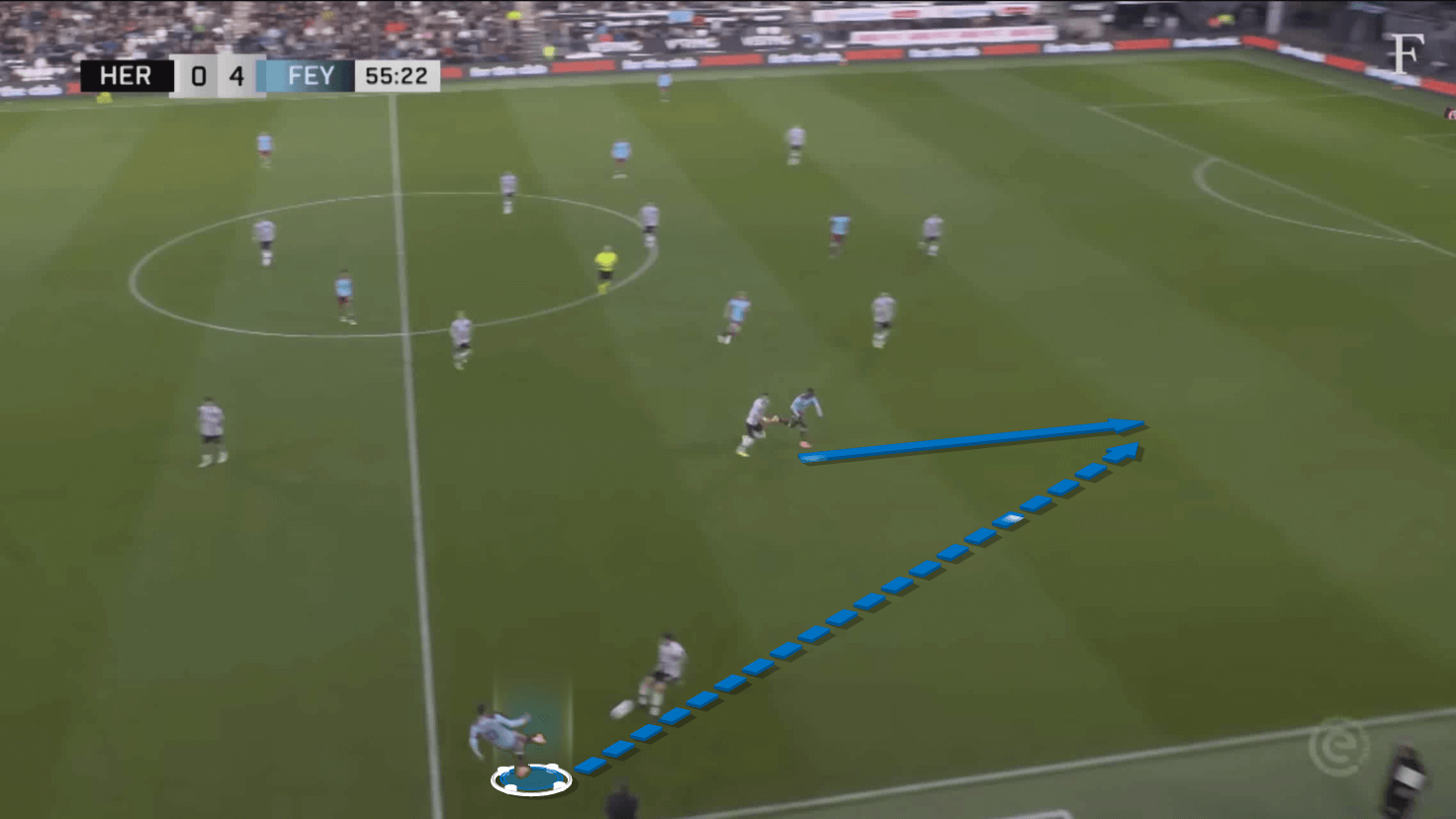
Anis Hadj Moussa’s passing and vision are especially useful when he receives the ball in deeper positions.
Hadj Moussa won’t shy away from opportunities to carry the ball forward into space from deep if the chance arises.
In the case of Figure 10, however, the winger is closed down fast and, as was the case with Figure 9, an inviting run in behind the defender closing him down is made, spotted, and taken advantage of.
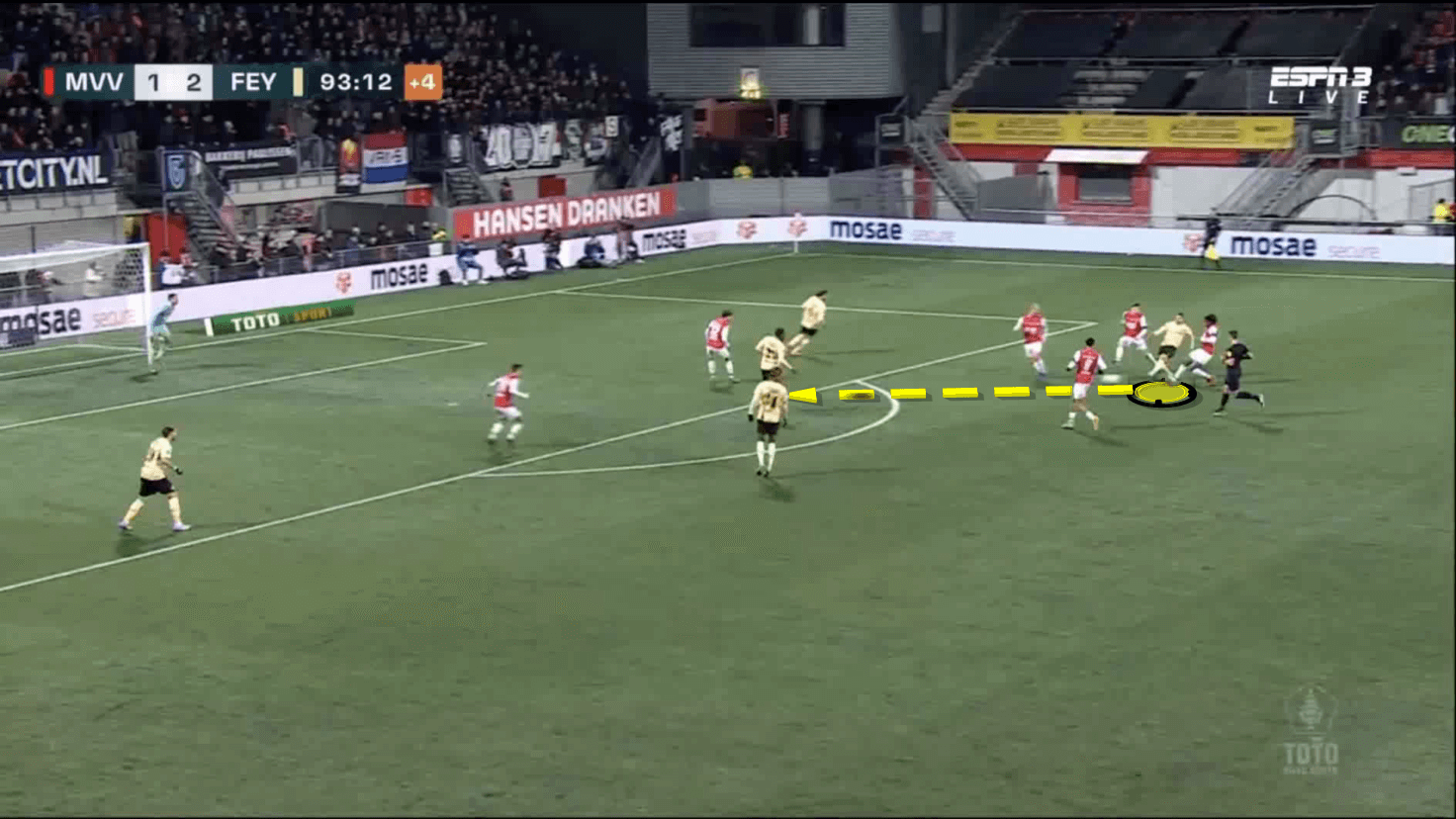
Here, in the following example, we can see how Hadj Moussa’s ‘gravity’ has drawn several defenders to him.
This creates space for teammates in the final third around Hadj Moussa.
The winger’s dribbling quality enables him to open up a passing lane, which his vision and passing ability can then avail of to set a teammate up for a great chance centrally.
While Hadj Moussa can be a bit individualistic at times, there’s potential for elite chance creation if developed in the right way.
Hadj Moussa must be reminded to get his head up and look for teammates in good positions when his presence and dribbling create opportunities, which his passing ability can leverage to make him a more well-rounded playmaker.
The ability is very clearly there.
A Direct Attacking Threat Who Thrives In Transition
Anis Hadj Moussa’s dribbling ability in tight spaces and passing quality can make him quite an effective option in possession-based systems.
This is the kind of system in which Hadj Moussa is currently operating under Robin van Persie tactics at Feyenoord.
Van Persie’s side have retained an average of 54.3% possession in the Dutch top-flight this term, giving them the fourth-highest possession average in the league.
However, he stood out to me during my research for his direct nature, pace, number of accelerations, and potential in more transitional systems, which would align quite well with what Liverpool would’ve wanted from Mohamed Salah for much of the time he’s been at the club.
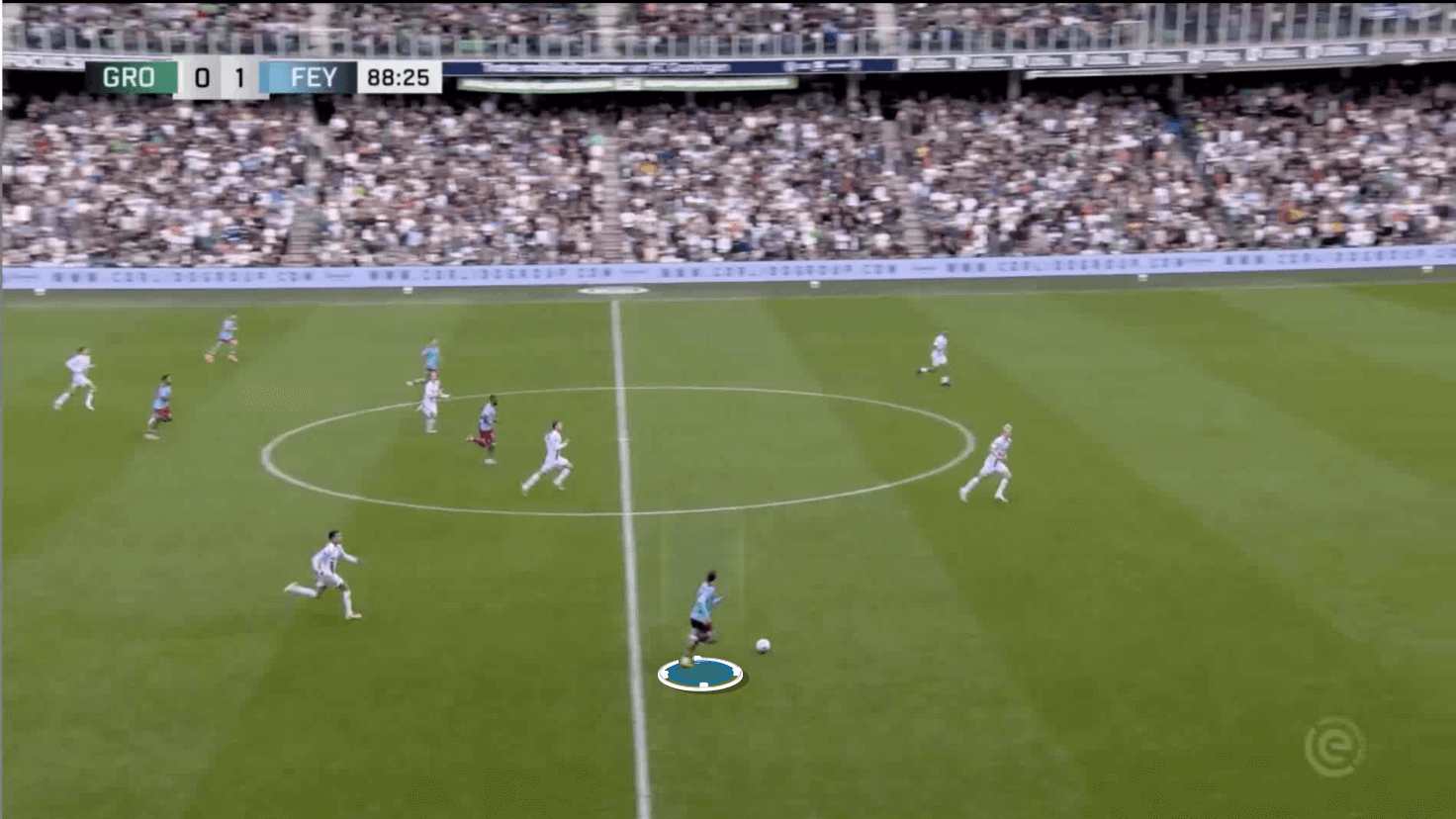
If given space to attack in behind the opposing backline, Anis Hadj Moussa will get his head up and look to utilise his sheer pace and ability to control the ball while moving at speed to punish the opponent for leaving that space open for him.
In that sense, Hadj Moussa can be a highly valuable weapon for more transitional teams, thanks to his direct attacking nature and the physical and technical attributes in his locker.
Conclusion
Anis Hadj Moussa is one of the most interesting relatively young wingers in Europe at the moment, who may get a chance to showcase his quality on the international stage at the Africa Cup of Nations, further boosting his profile and putting himself in the shop window for potential suitors in January or, indeed, the 2026 summer transfer window.
International tournaments tend to raise transfer prices.
While Riyad Mahrez still typically starts for Algeria on the right, the stage is set at both the AFCON and the 2026 FIFA World Cup for Anis Hadj Moussa to stake his claim to that right-wing position in the Algerian national team.
Currently valued at €20m by Transfermarkt, Anis Hadj Moussa has performed well at club level so far this season, building on a solid 2024/2025 campaign.
The winger’s trajectory looks encouraging, and a move to a top-five league looks to be well on the cards in the not-so-distant future, provided Hadj Moussa keeps his head down, continues honing his skills, including those areas where weaknesses remain, and keeps building those goal contribution numbers.
Technically, he’s an entertaining player to watch with the ball at his feet and, crucially, he’s able to turn dribbles into output at a relatively high frequency, making him one of the best attacking assets outside of Europe’s top-five leagues at the moment.
