
After ending Manchester City’s Premier League title-winning streak by finishing as EPL Champions in the 2024/2025 season, Liverpool will look to strengthen their squad for the upcoming season.
Winning the league title in his debut season was a milestone for Arne Slot; however, the champions fell short in the UEFA Champions League and Carabao Cup Final.
Making a Round of 16 exit at the hands of Paris Saint-Germain on penalties highlighted their inability to finish in crucial moments.
After bolstering their defence and midfield through the signings of Jeremie Frimpong and Florian Wirtz from Bayer Leverkusen and Milos Kerkez from Bournemouth, Slot’s side have their eyes set on the striker position.
The two candidates in hot contention are Newcastle United’s Alexander Isak and Eintracht Frankfurt’s Hugo Ekitike.
With no final word yet from either club, Liverpool are simultaneously approaching both.
While an Alexander Isak transfer or a Hugo Ekitike transfer to Anfield would significantly strengthen LFC for the upcoming 2025/2026 English Premier League season, the question is which player is the best fit for Arne Slot tactics?
In this Alexander Isak scout report and Hugo Ekitike player analysis, we will compare Isak and Ekitike, examine their playing styles, and determine which player would be a better fit for the current Reds squad.
How Do Liverpool Strikers Play?
In the 2024/2025 season, Liverpool deployed multiple players in the striker position, namely Luis Díaz, Darwin Núñez, Cody Gakpo, and the late Diogo Jota.
Let us take a look at how the striker position was interpreted under Arne Slot coaching style.
Liverpool Strikers In The Attacking Phase
The Liverpool attacking line is comprised of distinct personalities, so each player interprets the striker position a bit differently.
However, common trends include the striker linking play in Zone 14, dropping deep to assist with progression, peeling wide to create overloads, and making runs into the space behind.
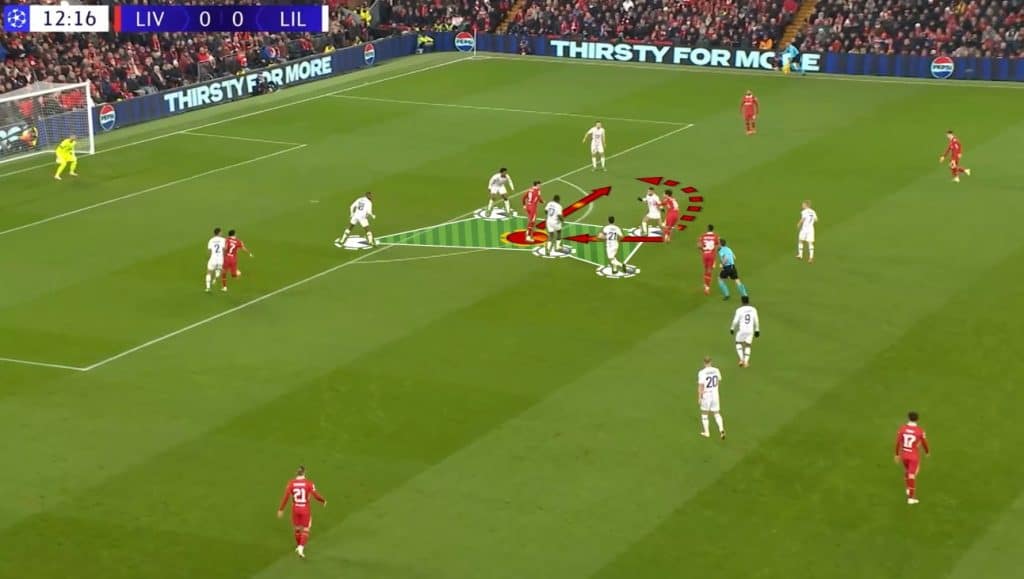
Here, we can see Darwin Núñez linking play in zone 14.
Although it is a tight area, the striker creates a yard of space for himself to play a return pass to his teammate.
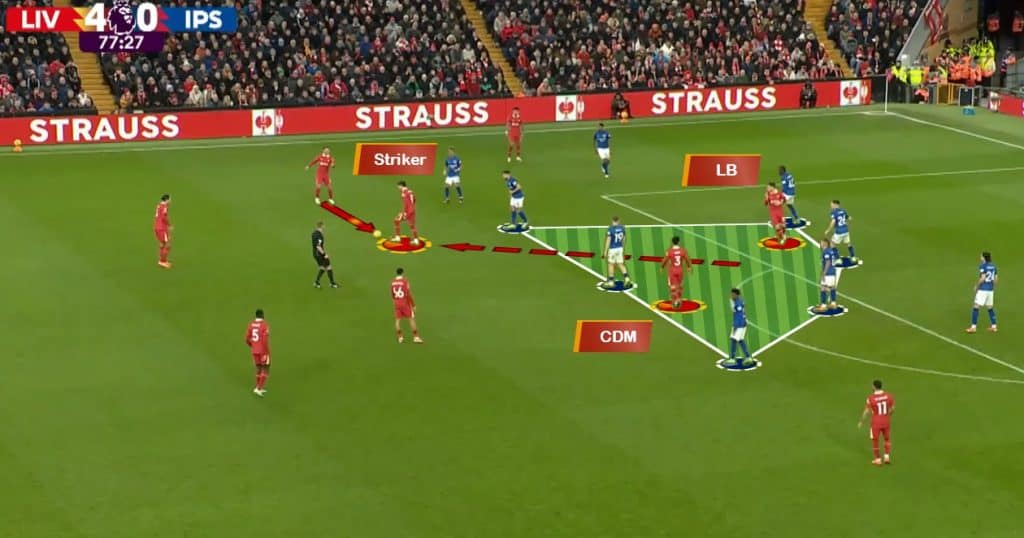
The striker also drops out of the central zone to create overloads in certain situations.
When he steps out, other players can occupy the space left behind.
In this case, Núñez steps wide to get involved in the play.
Here, Andrew Robertson (left-back) and Wataru Endō (defensive midfielder) occupy the space inside the opponent’s structure.
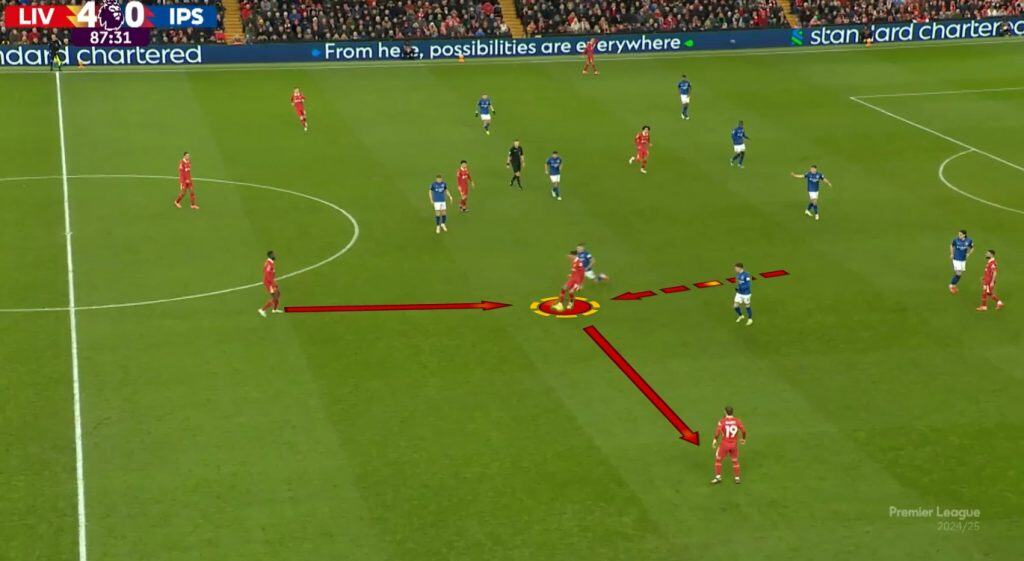
It is also common to see the Liverpool striker dropping into the midfield third to offer support in progression.
Here, Núñez drops deep to receive from his centre-back and plays it to the wide area.
Liverpool Strikers In Attacking Transition
Liverpool are a dynamic team that create a significant number of their chances from transition.
This requires their attacking players, especially the striker, to make runs behind the opponent’s backline.
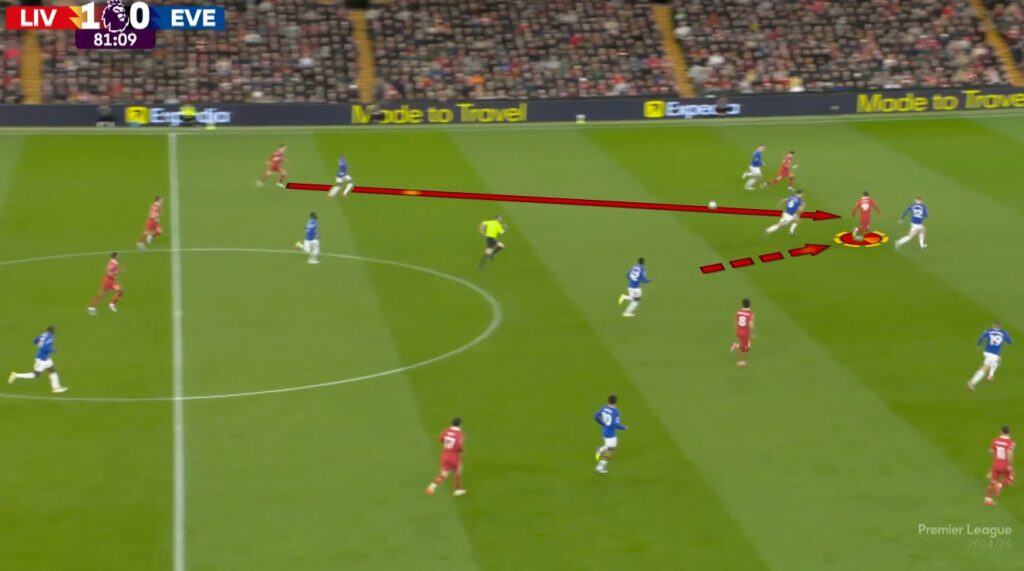
In this image, Robertson finds Núñez, who is making a run in behind, with a through pass.
These moments highlight Liverpool’s versatility in attack.
They create chances not only through possession but also through positive transitions.
Liverpool Strikers In The Defensive Phase
The Premier League champions press high up the pitch.
Therefore, they need their strikers to lead the line by being the first one to press.
This helps them win possession in the attacking third on several occasions, which automatically speeds up their chances of attempts on target.
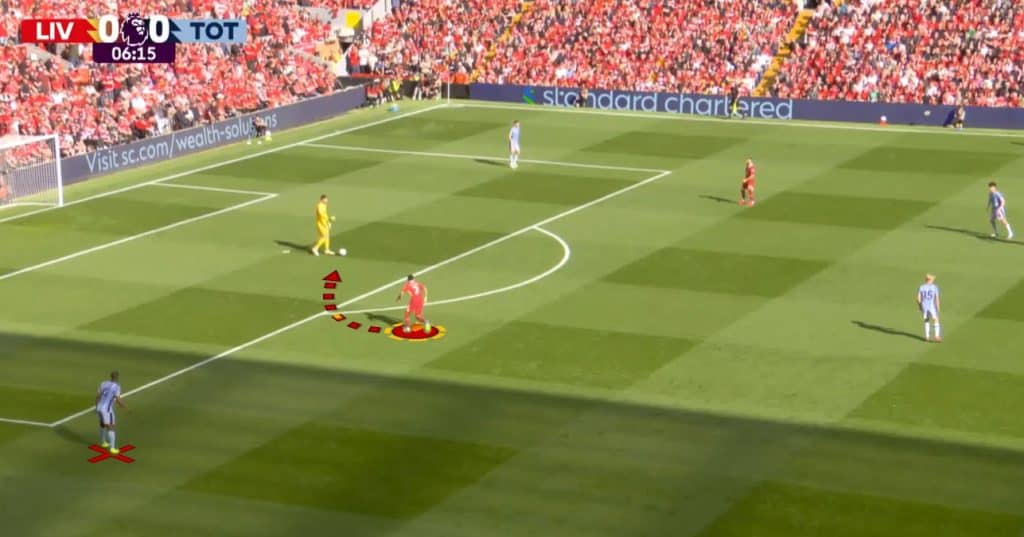
Here, Luis Díaz is deployed as a striker.
He makes a curved pressing run to press the opponent’s goalkeeper, so he cannot play it to the right side.
The objective in these situations is to force the opponents to one side and squeeze them in the wide area, thereby winning the ball back before launching a counterattack.
Alexander Isak Scouting Report & Style Of Play
Alexander Isak style of play is that of a dynamic poacher who likes to get on the end of passing moves by either making runs in behind or making a quick burst of pace to get onto the end of a cross.
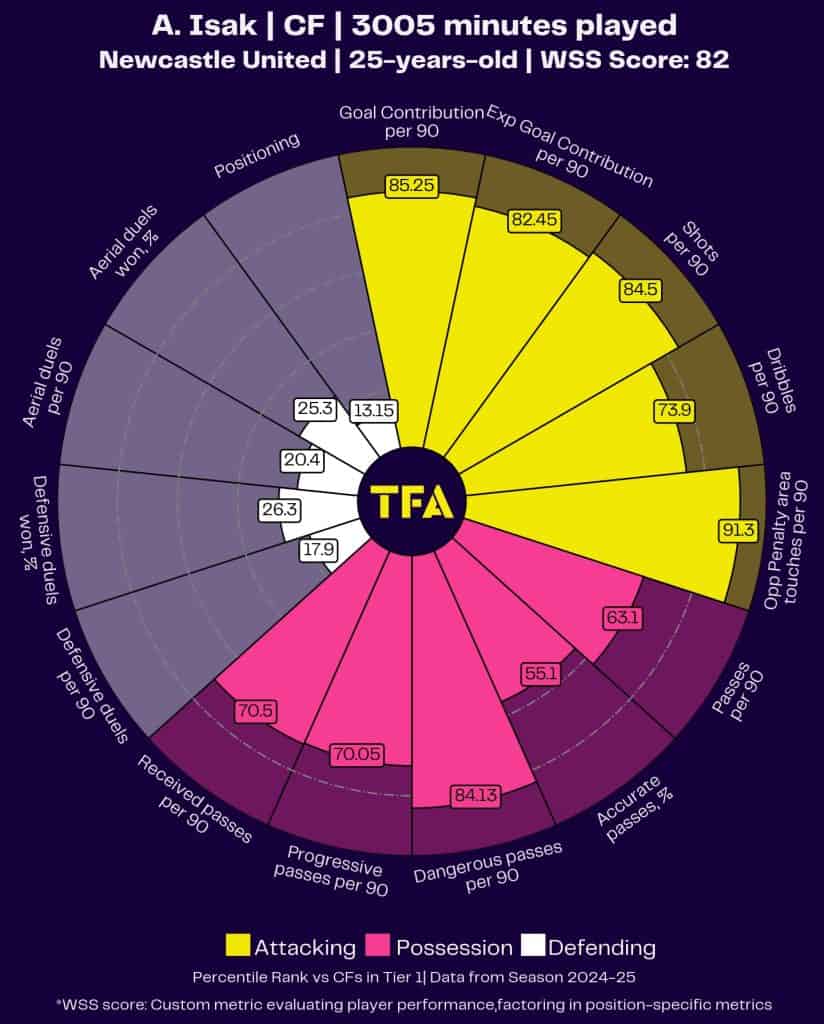
Let’s examine how he could set up tactically at Liverpool.
Alexander Isak In The Attacking Phase
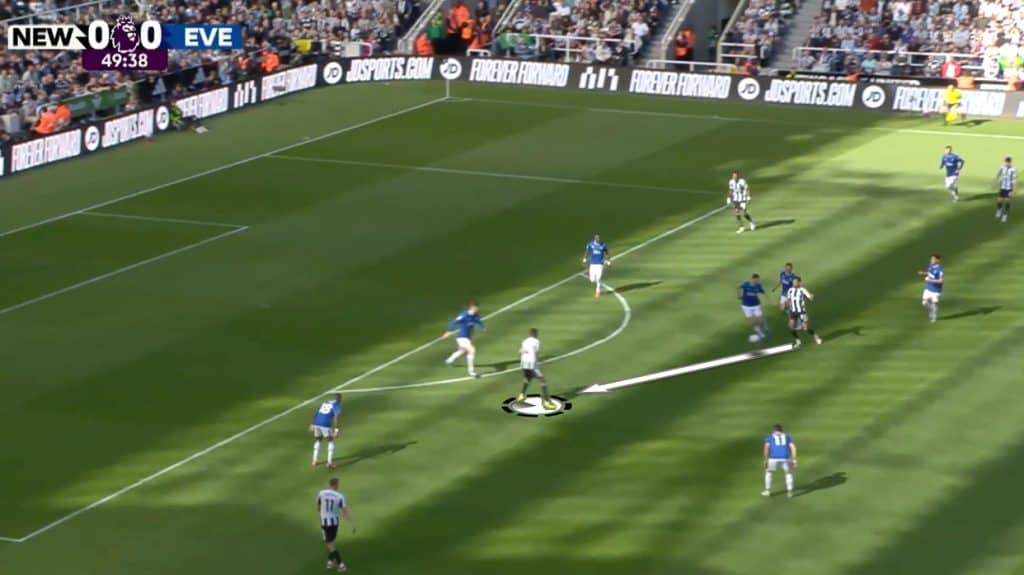
A player like Isak can expect link-up play in zone 14.
In the image above, the Swede creates space for himself to receive a pass from his teammate right in front of the opponent’s centre-back.
In a situation like this, the defender is likely to step up and leave some space behind.
This can be exploited by willing runners from midfield.
Liverpool have plenty of these runners in players like Florian Wirtz, Dominik Szoboszlai, and Ryan Gravenberch.
Meanwhile, their attacking players, such as Mohamed Salah and Cody Gakpo, are also known to make runs a bit more centrally in such situations.
Isak would not only play the role of a finisher, but would also contribute by releasing his teammates.
Isak can also be seen dropping to the midfield third to help out with vertical options.
This is not just limited to the central zone – he can be seen in the wide zone in the midfield third as well.
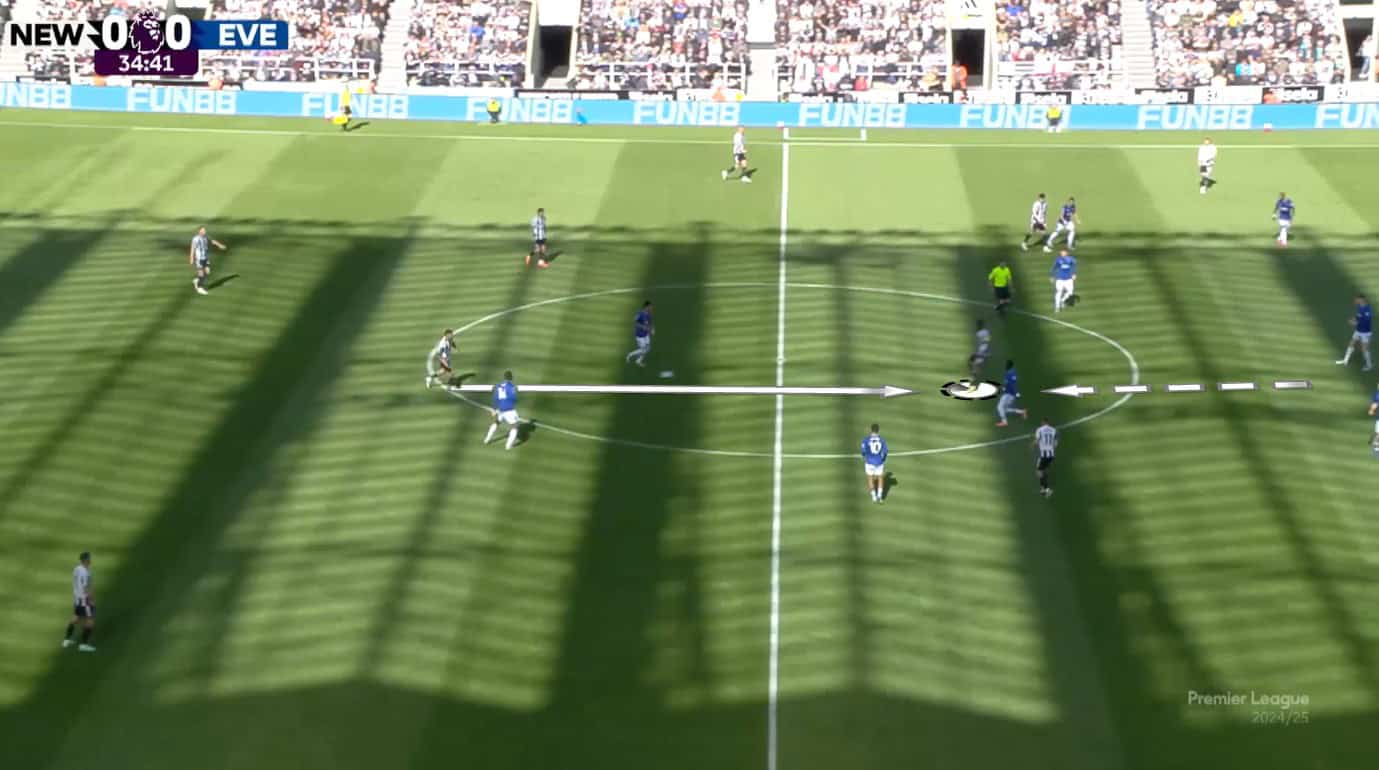
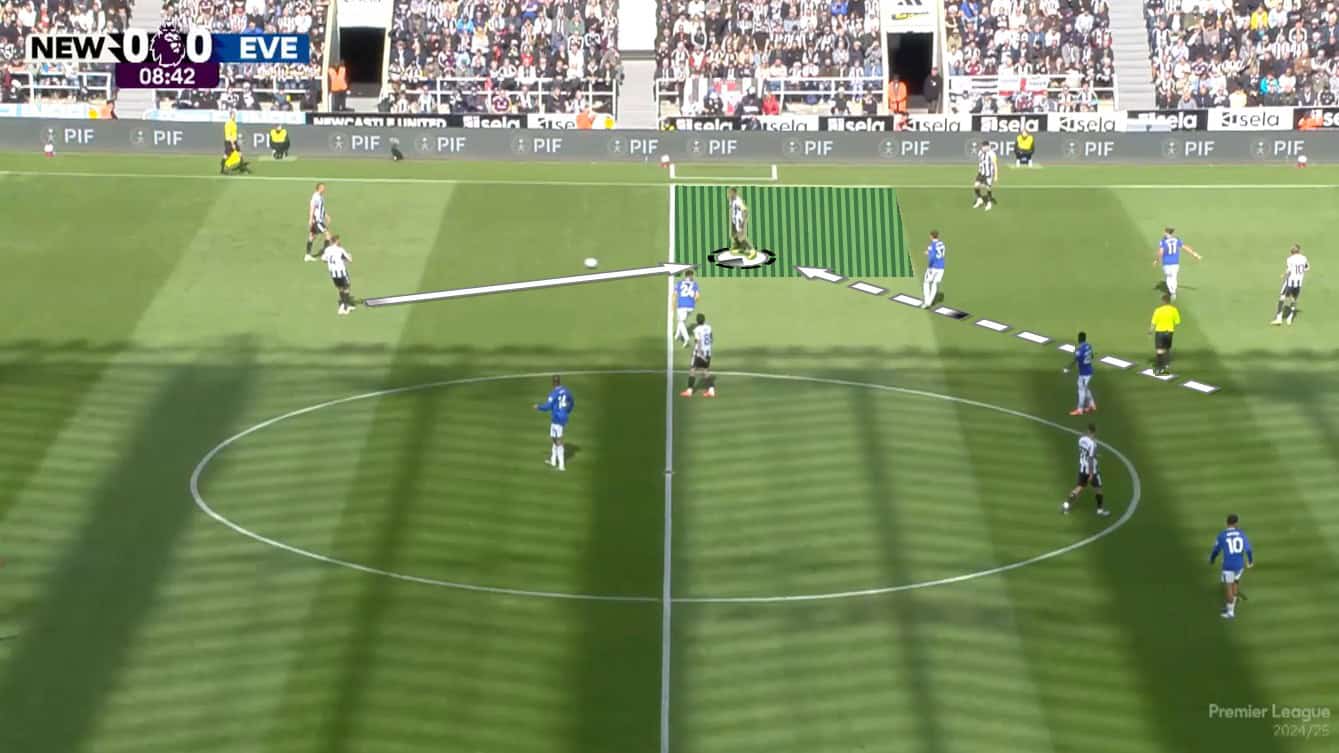 The above images show examples of him dropping into the midfield third (centrally and wide) to receive progressive passes.
In situations like these, he tends to lay it off to a teammate in a better position or facing the play, thereby setting his teammate up to play forward.
The Swedish striker is also adept at understanding spaces.
He will peel out wide to create space in the central zone and the half-spaces.
In the video above, he identifies the space opening out wide and moves at the right time to receive in that area.
This drags two opponent defenders out of position, and a big space opens up centrally.
Liverpool runners from midfield can exploit this.
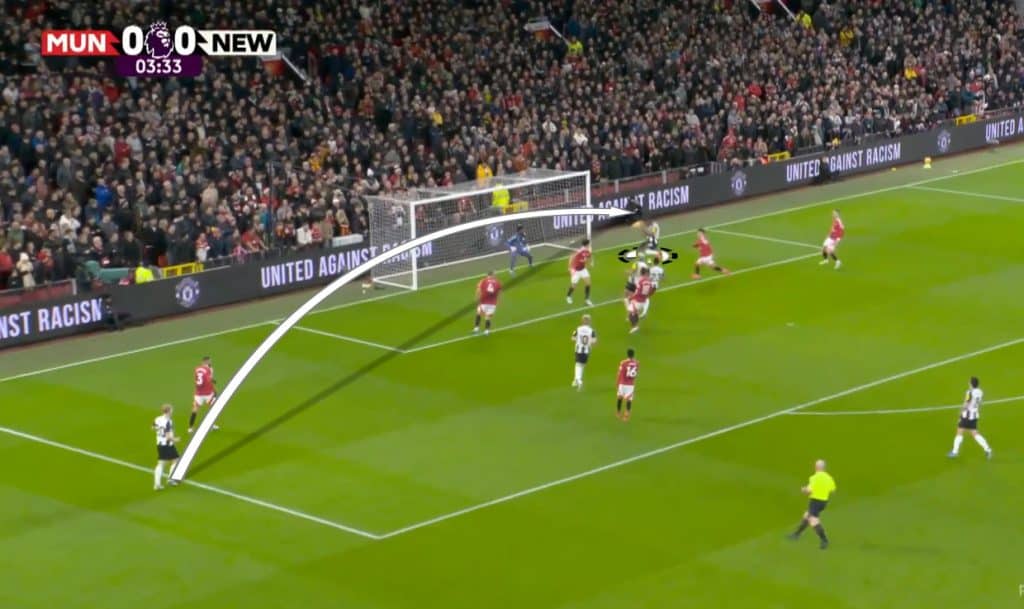
Isak is a striker who is consistent at meeting crosses with back-post runs.
Blind-side movements like the one shown above help him lose his marker and get a free header on several occasions.
By the time he leaps for the header, it is far too late for his direct opponent to intervene.
Alexander Isak In Attacking Transition
Isak showcases poacher instinct.
His willingness to make bursts in behind to receive through passes helps him get into several 1v1 scenarios against the goalkeeper.
Here, the Magpies are starting a counterattack.
Isak sees the opportunity to exploit the space in-behind.
He makes a run on the near-side defender’s blind side to get on the ball.
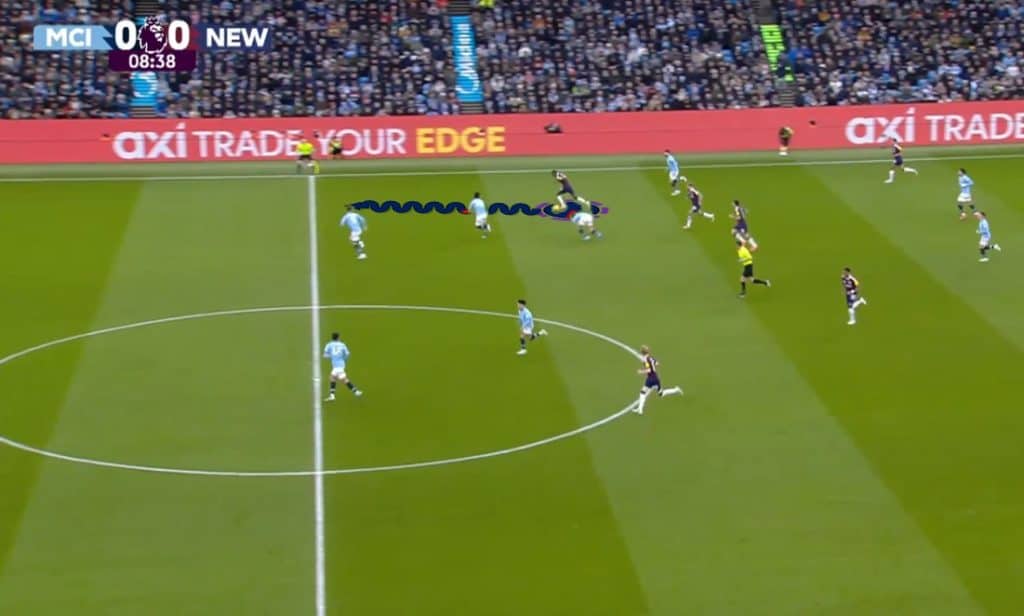
During positive transition, Isak can also be seen picking the ball up and driving forward.
In this situation, Manchester City get dispossessed in midfield.
Isak is in the right position to get on the ball; he cuts outside and exploits the space in the wide zone.
Alexander Isak In The Defensive Phase
Isak can be seen leading his line by initiating the press frequently at Newcastle.
This helps his team put constant pressure on the opponent, thereby forcing either long balls or turnovers.
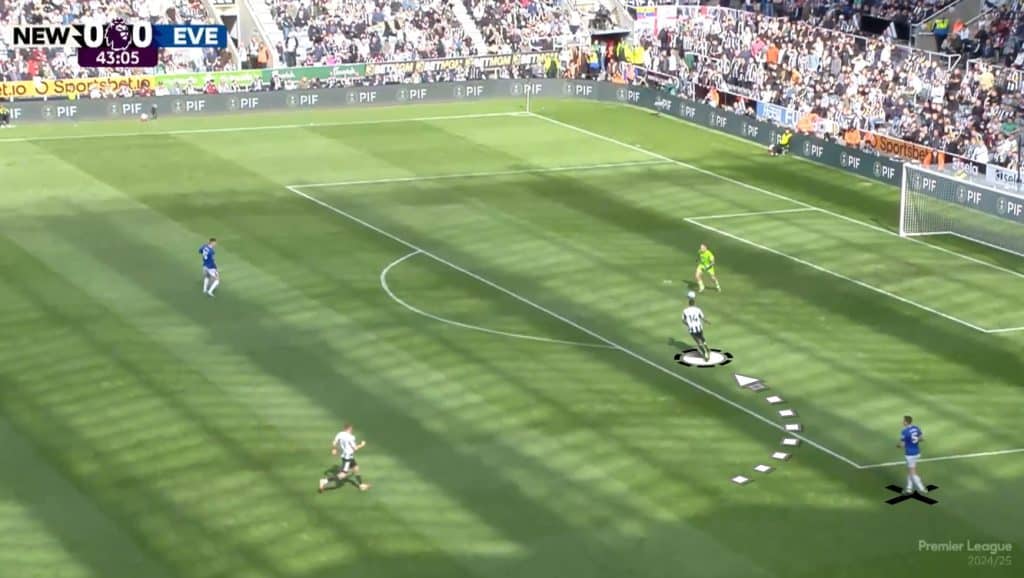
In this image, the Swede is pressing the opponent goalkeeper.
A noteworthy aspect is that he makes a curved run to cut off the pass to one of the defenders.
This forced the opponent to play to one side or go long.
This is something similar to what Liverpool need from their striker.
They tend to squeeze the opponents to one side and win the ball in those wide areas.
Hugo Ekitike Scouting Report & Style Of Play
Eintracht Frankfurt’s Hugo Ekitike style of play is highly dynamic and is a fluid attacker who brings a lot of intensity to the game with his on-ball actions.
He is excellent at proactively making runs in behind, perfectly suited for a team that generates a significant number of its chances through transitions.
The Frenchman has variation to his game, as he also helps out by dropping very deep in build-up.
Let’s take a look at the tactical features of his gameplay and how he would fit in at Liverpool.
Hugo Ekitike In Attacking Moments
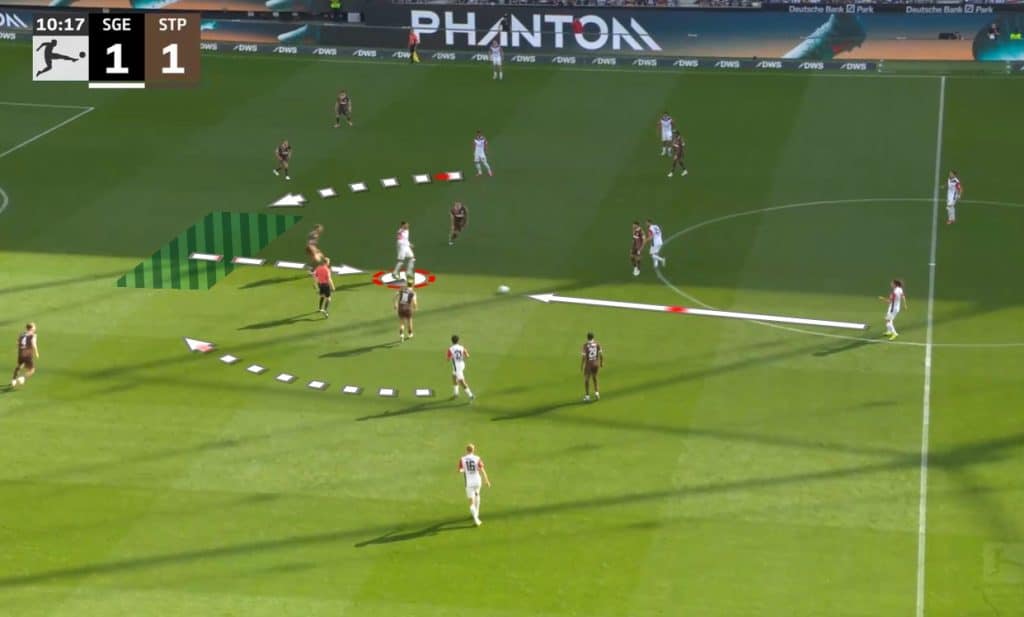
The Frenchman often drops deep to receive on his feet.
This helps other attackers make more vertical runs into the space he leaves behind, very similar to Isak.
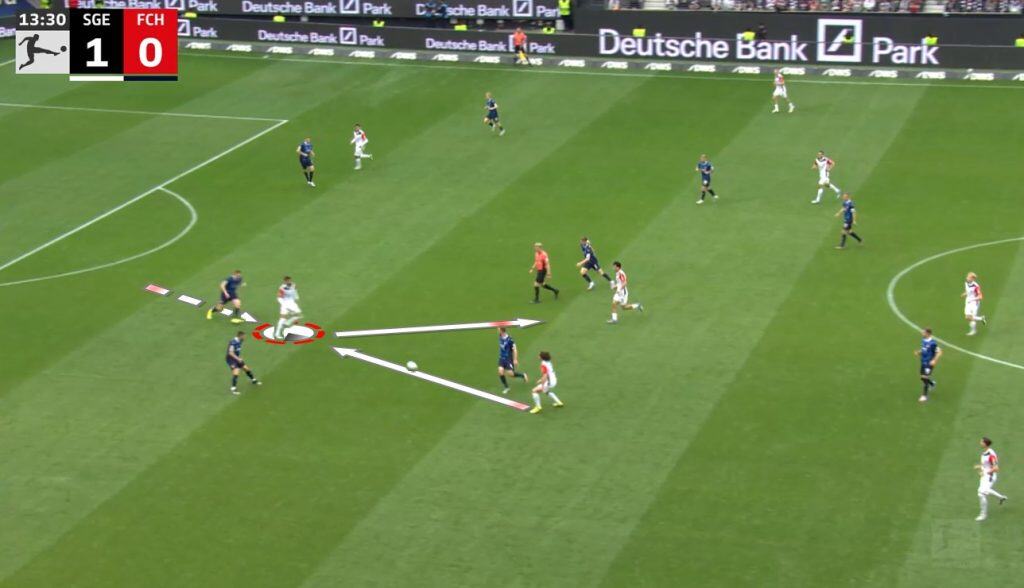
In the examples above, Ekitike drops into the midfield third to receive.
The opposing centre-back follows him into midfield, which opens a huge space behind him for runners to exploit.
While that happens, the Frenchman utilises these situations by getting involved in combination play.
He is often the link player who receives the ball and lays it off to another teammate.
Ekitike can also be very commonly seen peeling wide for Frankfurt.
His fluid movements and positioning enable his side to attack with greater unpredictability.
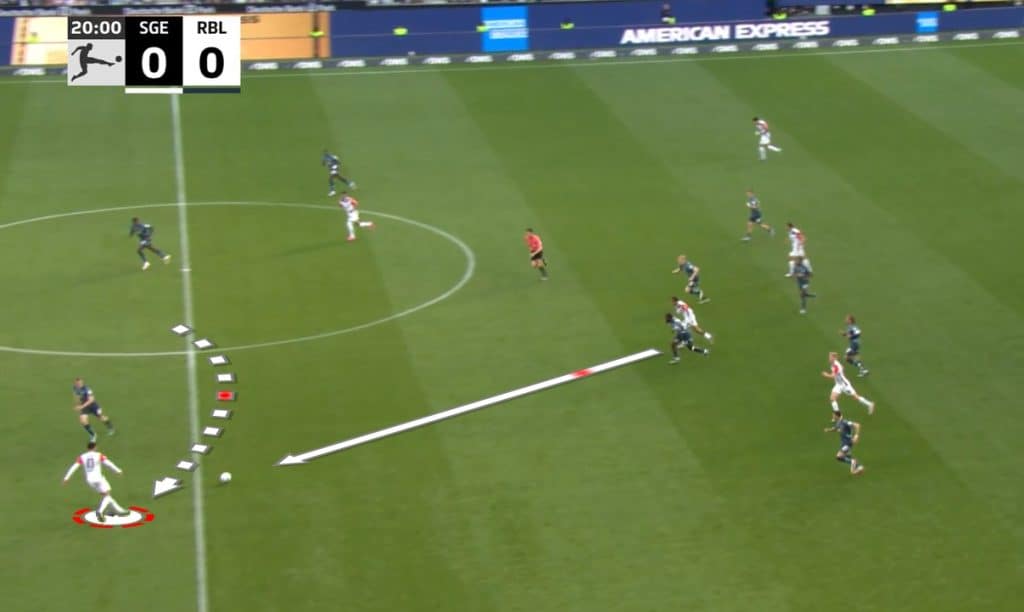
Here, we can see the Frenchman drifting wide to receive.
Ekitike’s involvement in the attacking third also includes him crashing the box to get onto the end of crosses.
Similar to Isak, he was seen connecting with crosses on the far post.
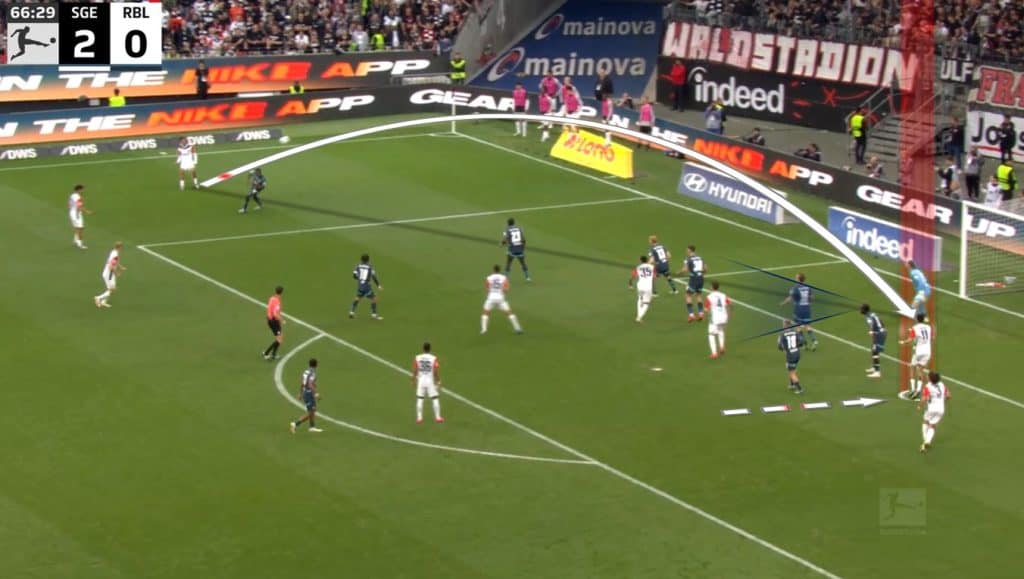
Here is an example of Ekitike making a blindside run to lose his marker for a header at the far post.
While all the defenders are looking at the ball, the young Frenchman positions himself out of sight of the opponents.
This skill will be significant if Slot signs him.
With crosses coming from Frimpong and Kerkez, the striker will need to adjust his position accordingly.
Hugo Ekitike During Attacking Transition
Ekitike is more suited to transition than Isak.
His average position is relatively deeper, and he is known to make more runs into the space behind the opposition defenders.
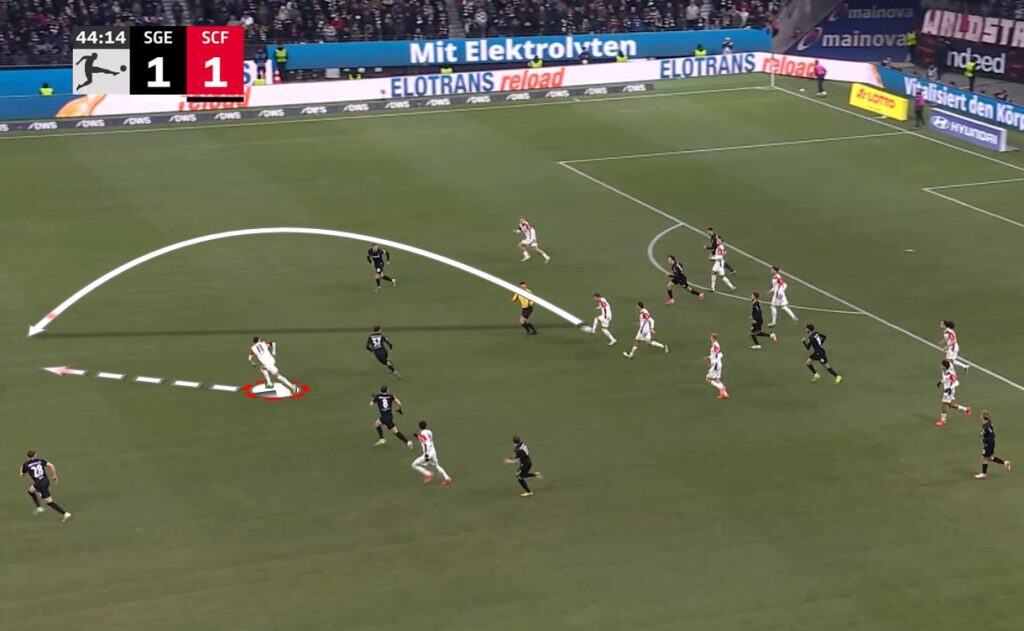
Here, Frankfurt wins back possession and is in a good position to launch a counterattack.
The Frenchman identifies the opportunity to exploit the space in behind and starts the run early to meet the through pass.
Having a striker like this injects a lot of pace into a team’s attack.
It will be resourceful for Liverpool as, alongside Salah, Slot would be getting his hands on another speedster, who can share the load of making those forward runs.
Apart from the runs, Ekitike is also an expert at carrying the ball with high intensity.
This video is a suitable example to show how much he influences his side in positive transition.
He picks up the ball, takes the touch away from pressure, and drives into space.
As he is entering the final third, the players around him are all closing him down.
This leaves enough space for his fellow attackers to drive into.
He lays it off to his teammate in an ample amount of space.
Ekitike also tends to cut inside from the wide zone in the final third to get a shot away.
The Frenchman is not afraid to shoot from outside the box.
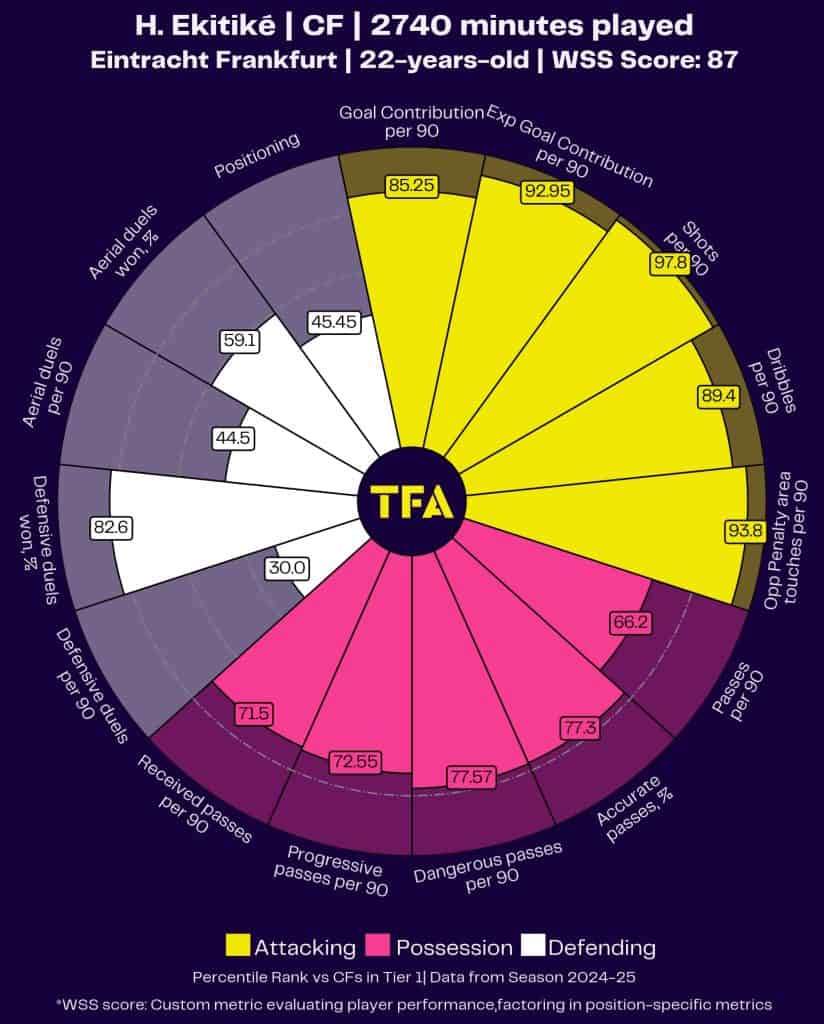
With 4.04 shots per 90, the Frenchman is clearly proficient at putting himself into good shooting positions.
Here is a moment of Ekitike driving the ball from the wide zone during positive transition, where he cuts inside to shoot.
Hugo Ekitike In The Defensive Phase
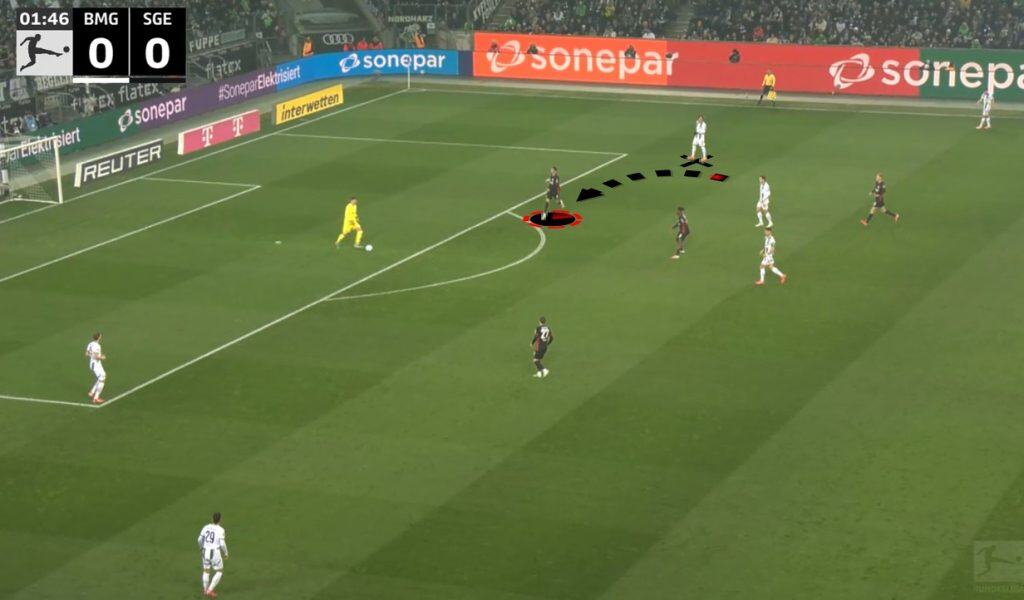
Unsurprisingly, Hugo Ekitike presses high to help his team defensively.
He is an energetic attacker who contributes in all phases of play.
In this example, Frankfurt are pressing high.
The young striker curves his pressing run to cut off the left side for the goalkeeper.
We can see how the Frankfurt players are positioned centrally.
This entails that the opponents must either play to their right or play long.
This is where Liverpool can thrive with Ekitike’s assistance.
Alexander Isak Vs Hugo Ekitike Stats
The above analysis highlights similarities between Isak and Ekitike in terms of their operational approaches.
The decision to block one side while pressing high, dropping deep to help with progression, making runs in behind, and carrying the ball into space are all traits that will benefit Arne Slot.
In this section, we will examine data to understand the notable differences between the two candidates.
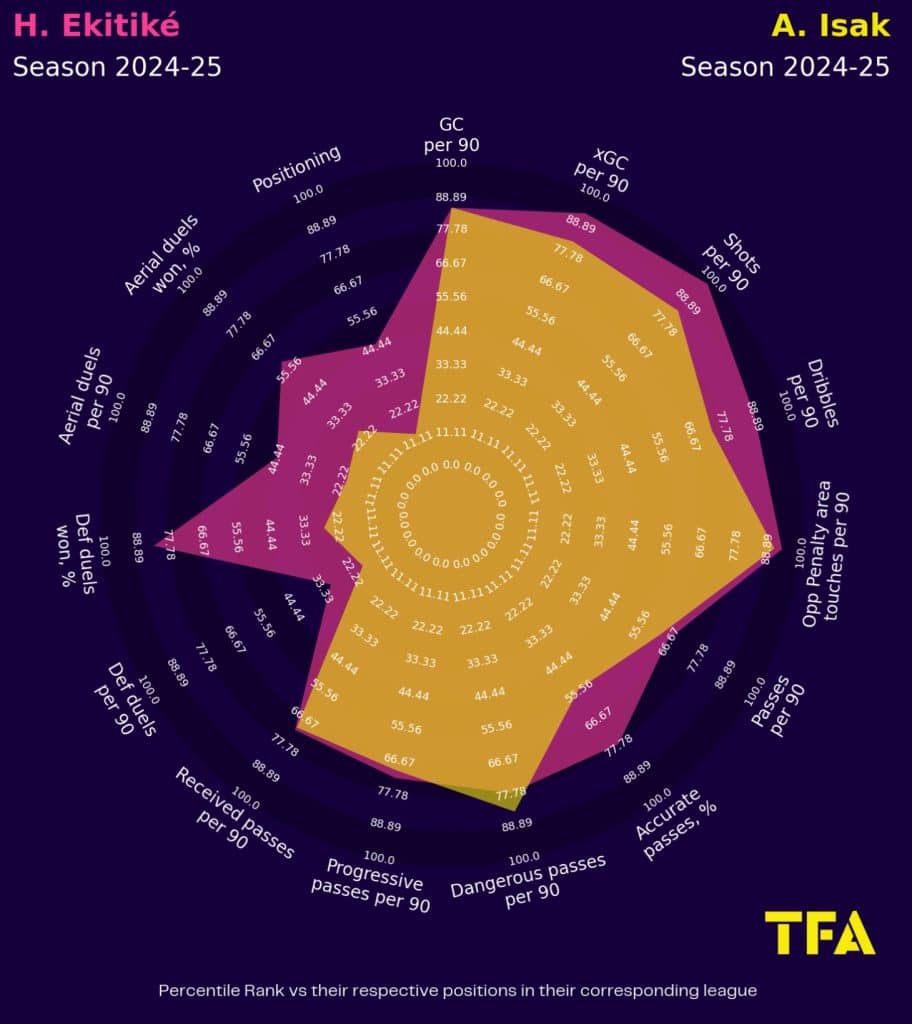
The chart above displays that both strikers possess some similarities in terms of attacking traits.
However, there are some notable differences within.
Goal Contributions
Alexander Isak scored 27 goals in all competitions last season, averaging 102.1 minutes per goal.
Ekitike found the net 22 times for Frankfurt, averaging 153.3 minutes per goal.
This highlights Isak’s involvement and presence in the final third, especially in goalscoring positions.
Isak averaged 2.48 shots per 90, whereas Ekitike had 2.96 shots.
In terms of assists, Ekitike doubled Isak’s output by providing 12 times.
Most of his creativity stemmed from a deeper starting position, as he carried the ball to set up his teammates.
Progressive Actions
The Frenchman had a slightly higher number of accurate passes per game (77%) compared to the Swede’s 75.3%.
This suggests that Isak attempted more progressive passes from higher positions.
He played 2.87 progressive passes per 90, which is higher than 1.86 by the Frenchman.
Ekitike’s influence in progression was more through his progressive carries (3.27 per 90), which is considerably higher than Isak’s (2.71 per 90).
Isak’s influence came in the form of attacking third, especially in zone 14, through link-up play.
Ekitike’s numbers for progressive carries also indicate that he usually picked up the ball deeper than Isak.
Isak created 2.0 big chances per 90 minutes, whereas the figure was 0.42 for Ekitike.
This is consistent with the information that Isak had a higher average position, which means he was more involved in final third actions.
Ekitike had a higher frequency of dribbles, with 1.6 per 90, while Isak averaged around 1.2 per 90.
This statistic is influenced by the Frenchman’s actions of dropping deeper, getting more involved in play, and cutting inside to shoot.
Final Third Involvement
Ekitike had 7.2 touches in the opponent’s penalty box per 90 minutes, compared to Isak’s 6.26 times.
This suggests more fluid movement from Ekitike, as he received in different areas of the pitch.
The same goes for the attacking third.
The Frenchman received in wide areas, half-spaces, and central spaces with his fluid movement, which is slightly higher than the Swede.
Isak was also involved in the play; however, his touches were focused more centrally.
Ekitike received 0.24 progressive passes per 90, compared to Isak’s 0.14.
This further attests to more movement from the Frankfurt striker and Isak’s higher average position.
The Frenchman dropped deeper to get more involvement.
Most of the progressive passes received by Isak were in the attacking third.
Defensive Actions
Ekitike had 0.56 tackles and 0.35 interceptions compared to Isak’s 0.39 tackles and 0.1 interceptions per 90.
The Frenchman had a significantly higher success rate for duels (48%) compared to Isak (35%).
Although Isak was active in terms of pressing, he was more focused on the intensity of the press and positioning.
Meanwhile, Ekitike covered more ground with anticipation from slightly deeper positions.
Isak’s defensive actions were more concentrated in the attacking third.
The Swede had 19.6 high-intensity pressing actions per 90 for Newcastle.
Meanwhile, the number for Ekitike was 15.3.
Conclusion
Alexander Isak is a clinical poacher who focuses most of his actions in and around the penalty area.
His goals, creating big chances, making progressive passes, and taking high-pressing actions in the final third aptly reflect that.
If Liverpool sign Isak, his ability to link play in zone 14 will be key.
The Sweden International will also be one of the key goal-scorers alongside Mohamed Salah.
Hugo Ekitike is more dynamic and fluid in comparison.
His radius of action is larger as he drops relatively deeper.
This is reflected in his average shots per game, progressive ball carries, progressive passes received, dribbles per 90 minutes, assists, shots per 90 minutes, duels won, interceptions, and tackles.
If Liverpool sign Ekitike, he would function more as a false-nine, allowing players like Salah, Wirtz, and Gakpo to occupy more advanced and goal-scoring positions.
Isak is more refined as a striker and can be relied upon to score goals.
Meanwhile, Ekitike is rawer and more energetic, and can be moulded according to Liverpool’s requirements.
Either way, an Alexander Isak transfer or a Hugo Ekitike transfer to Anfield will significantly benefit Arne Slot for the 2025/2025 English Premier League season.
