
They say that there are some things in life that are certainties. These include death, taxes and the fact that Nigeria will draw Argentina in the group stage of the World Cup, this is the case once again for the fifth time in sixth appearances for the Super Eagles but this time they come into the tournament with hopes of reaching the knockout stages.
The other opponents for Nigeria in Russia this summer will be Croatia and Iceland with a sense that there will be a three-way fight for a team to come second behind Argentina.
In previous World Cup tournaments, we have seen Nigeria make headlines more for what happened off the pitch than for their performances on it. Disagreements between players or even sometimes between players and officials have distracted the squad at a time when they should have been purely focused on their performances.
With a relatively young squad, this time around there is a sense of togetherness and unity that could well make them difficult opponents during the tournament.
Squad
Coach – Gernot Rohr
The German coach is perhaps best known in Europe for leading French side Bordeaux to the UEFA cup final in 1996. You may well have expected that to lead to more prolonged success in Europe but instead, the German moved across to Europe and spent time as coach of nations like Gabon, Niger and Burkina Faso before finally being appointed as head coach of Nigeria in 2016.
He has a settled tactical approach with Nigeria likely to play in a 4-2-3-1 structure with the freedom given to the three players behind the forward. The two holding midfielders are more disciplined giving Nigeria a solid defensive structure.
Goalkeepers
Daniel Akpeyi, Francis Uzoho, Ikechukwu Ezenwa
Defenders
William Ekong, Leon Balogun, Kenneth Omeruo, Bryan Idowu, Chidozie Awaziem, Abdullahi Shehu, Elderson Echiejile, Tyronne Ebuehi
Midfielders
John Mikel Obi, Ogenyi Onazi, John Ogu, Wilfred Ndidi, Oghenekaro Etebo, Joel Obi, Alex Iwobi, Victor Moses
Forwards
Odion Ighalo, Ahmed Musa, Kelechi Iheanacho, Simeon Nwankwo
Tactics

The midfield block for Nigeria is one of the keys to their defensive structure. With two players keeping in close contact they effectively look to prevent the opposition from playing into the central areas of the final third or from playing through balls in central areas that their forwards can chase.
The two will generally remain relatively static in the centre of the field but if the opposition manages to create overloads in wide areas then expect to see the strong sided midfielder (ball side) move across to deal with the threat.
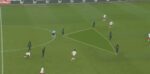
This time we can see the attacking phase that Nigeria are again relatively narrow in their structure as they look to play in the central areas. The two wide attacking midfielders are comfortable playing out in the wide areas or coming into the half spaces and Nigeria will look to build their attacking phase through quick combinations into the final third.
They have pace throughout the side and with the creativity and passing ability of the likes of Alex Iwobi they carry a genuine threat going forwards.

Here again, you can see how narrow the Nigerians sit in their shape. The three attacking midfielders sit behind the lone striker but once again they sit narrow protecting the centre of the field. The two deeper midfielders are also closely connected to the attacking players in central areas.
Key Player
Alex Iwobi
The Arsenal attacking midfielder has really come of age over the last 12 months in a Nigeria shirt. He is a key player in the attacking phase for the national team with his ability to play anywhere in the line of three behind the main striker, linking play and even weighing in with goals of his own.
Expect to see Iwobi start from the left-hand side before moving inside into central areas where he can be at his most effective.
With Arsenal having appointed Unai Emery as their coach for the season there is a sense that Iwobi will have a lot to prove to ensure that he is part of the new coaches plans going forwards. A strong showing in the World Cup will go a long way to impressing.
Young Player to Watch
Wilfred Ndidi
The Leicester City midfielder is only 21 but already he is attracting covetous glances from the bigger sides in the English Premier League.
Physically powerful and capable of playing in either penalty area Ndidi will be the player that provides the connection between midfield and attack for the Nigerians. He reads the game extremely well and uses positioning and angles to make the game seem much easier than it is.
Wildcard
Kelechi Iheanacho
The young forward burst on the scene the season before the last with his performances as a striker for Manchester City before making the move to Leicester City prior to the season just gone. A number nine at club level we could see Iheanacho line up either as the lone striker or as one of the three attacking midfielders in behind the striker.
He struggled in front of goal at club level but a strong showing in Russia could well provide the impetus for the striker going forward.
If you enjoyed this preview then check out the others on the site already Argentina Croatia Iceland
