
The 3rd game week of the 2021-22 Serie A saw long-standing rivals Napoli host Juventus at the Diego Maradona stadium.
Both teams have started a new era, with Napoli moving on from Gattuso to hire ex-Inter Milan coach Luciano Spalletti, and Juventus sacking club legend Pirlo to bring back ex-manager Massimiliano Allegri, while also selling Cristiano Ronaldo to Manchester United just before the deadline day.
While Napoli have started in decent fashion, notching up two wins in two games, Juventus have struggled to get going, remaining winless and suffering a shock defeat to Empoli last time out.
This tactical analysis discusses the tactics deployed by both managers and Napoli’s second-half comeback to clinch three points against their rivals.
Let’s begin the analysis.
Napoli Vs Juventus Lineups
Napoli made three changes to the lineup that beat Genoa as Spalletti gave a debut to his latest signing A. Zambo Anguissa, while also bringing in Osimhen and Ospina in place of Hirving Lozano and Alex Meret.

Juventus, on the other hand, made seven changes to the lineup and lost to Empoli, with only Szczesny, Bonucci, McKennie, and Rabiot retaining their places, as the likes of Danilo and Dybala were absent due to a late finish to the international break for South American players.
Juventus exposed Napoli’s disorganised press in the first half
Napoli’s formation in the first half was an outright 4-1-4-1 with Ruiz playing the lone pivot while Anguissa and Elmas went forward to put pressure on the Juventus midfielders. The forwards would cover the half-spaces while looking to pressure the full-backs if the ball went out to them.
This was a majorly pressing trap designed to win the ball in the flanks as Napoli looked to use the touchline to good effect. But there were cracks or flaws in their pressing that led to problems, and Juventus pounced on them in the first half.
The main flaw was the manipulation of Napoli CMs’ positioning by their Juventus counterparts.
We can see both Elmas and Anguissa pressing McKennie and Rabiot, and both Juventus players have used an open body angle that forces the Napoli players to press even higher, opening a passing lane for Locatelli to play a ball forward to Kulusevski.
The Swedish midfielder can now receive the ball in a half-turn and has acres of space to run into in between the lines, as Morata has pinned the entire defence back by providing the depth.
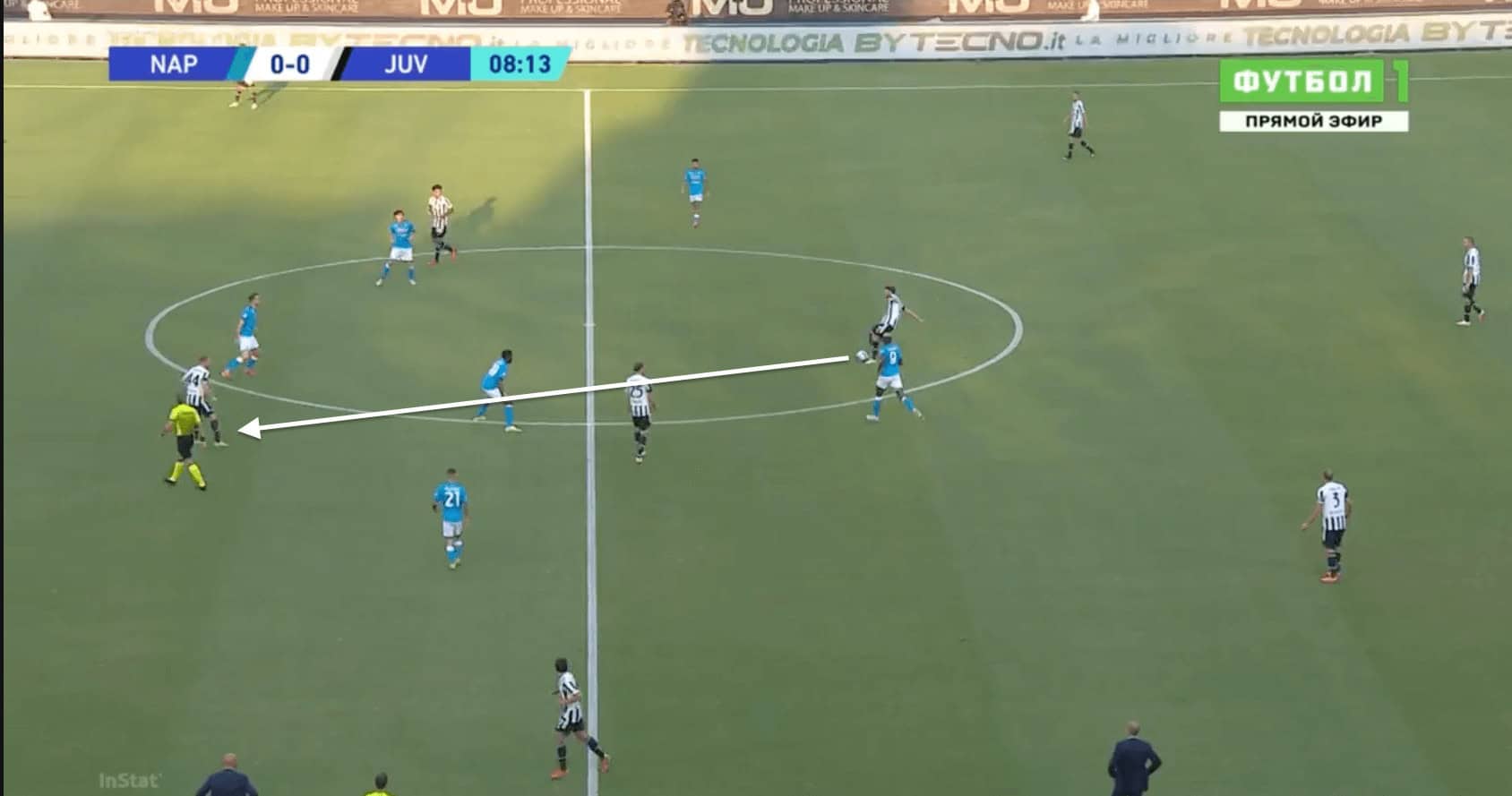
The presence of Kulusevski in between the lines gave Napoli a lot of issues to deal with, as he constantly kept dropping into the space, and Ruiz wasn’t able to effectively cover him due to the constant lateral shifting by the Old Lady.
We can see another example below of him receiving the ball in between the lines.
We can see that Ruiz had to shift across the pitch to cover for him now as McKennie on the other side’s half-space had caught his attention.
This 2v1 overload of a DM can be a major concern for any side and Juventus looked to capitalise on that.
This was even more impactful for Juventus when Morata dropped deep and dragged defenders with him.
This allowed Kulusevski to make runs into space and attack the final line.
We can see an example of that in the image below, where Morata has dropped deep and he has attracted Koulibalu to follow him thus opening a space in behind for the likes of Kulusevski to run into.

The trade-off had to be made, as sometimes Napoli midfielders would prefer to sit deep and cover the spaces behind and not give any of them to the Juventus forwards in between the lines.
This meant that, effectively, the likes of Locatelli and Rabiot could drop deep without any pressure on them.
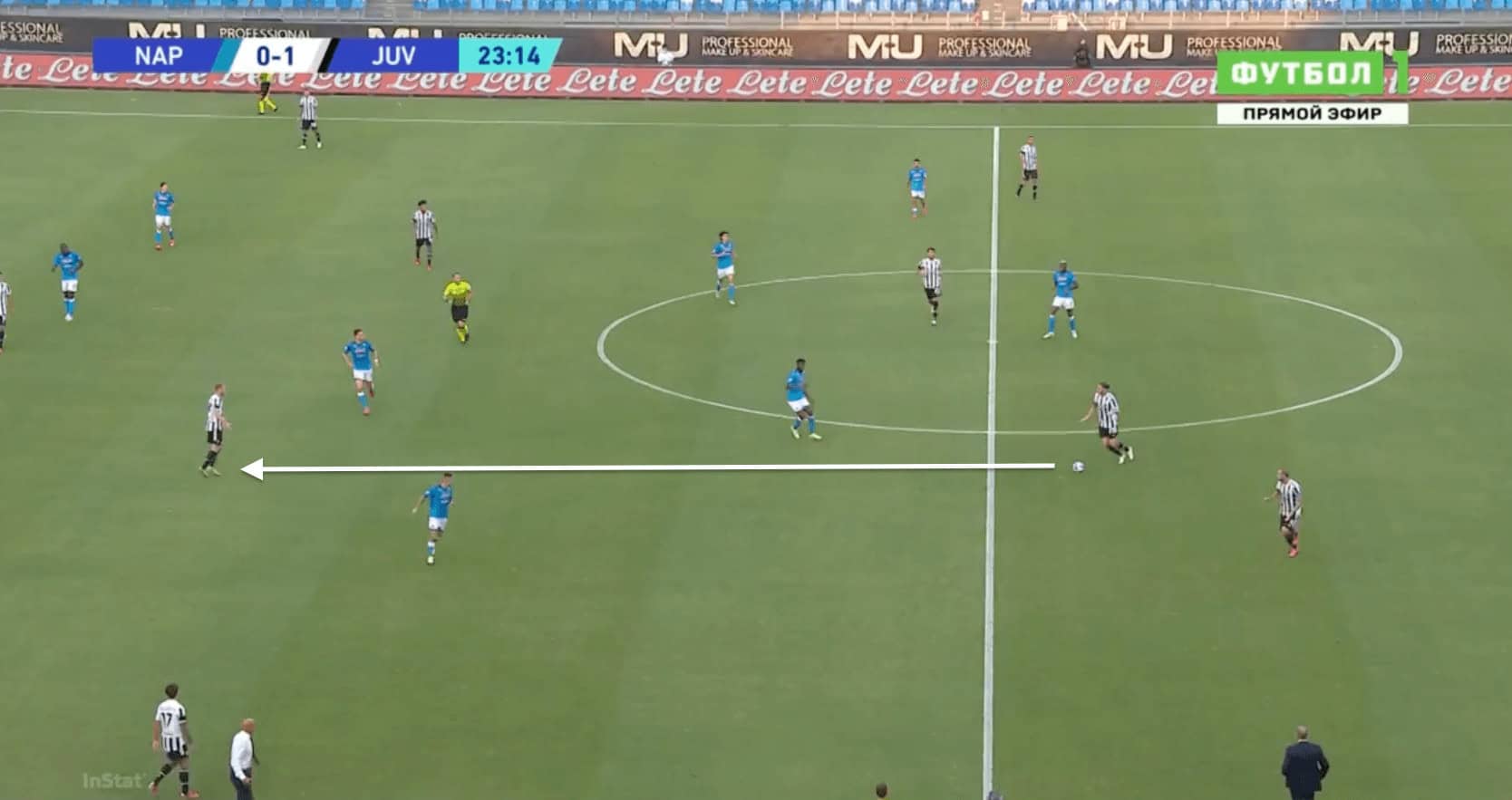
Also, sometimes the Napoli players’ pressing angles weren’t up to scratch, which allowed the Old Lady CBs to easily access the CM with a straight pass, which is probably the most important thing teams in the defensive phase try to avoid these days.
We can see an example of that in the image below: Napoli press up the pitch, and the Napoli RWF prioritizes body positioning to cover the full-back, which opens a simple passing lane for Locatelli to play to Bonucci.
These situations can cause serious issues for any team, as a progressive pass into the central regions to a technically superior player is highly valuable for the possession team.
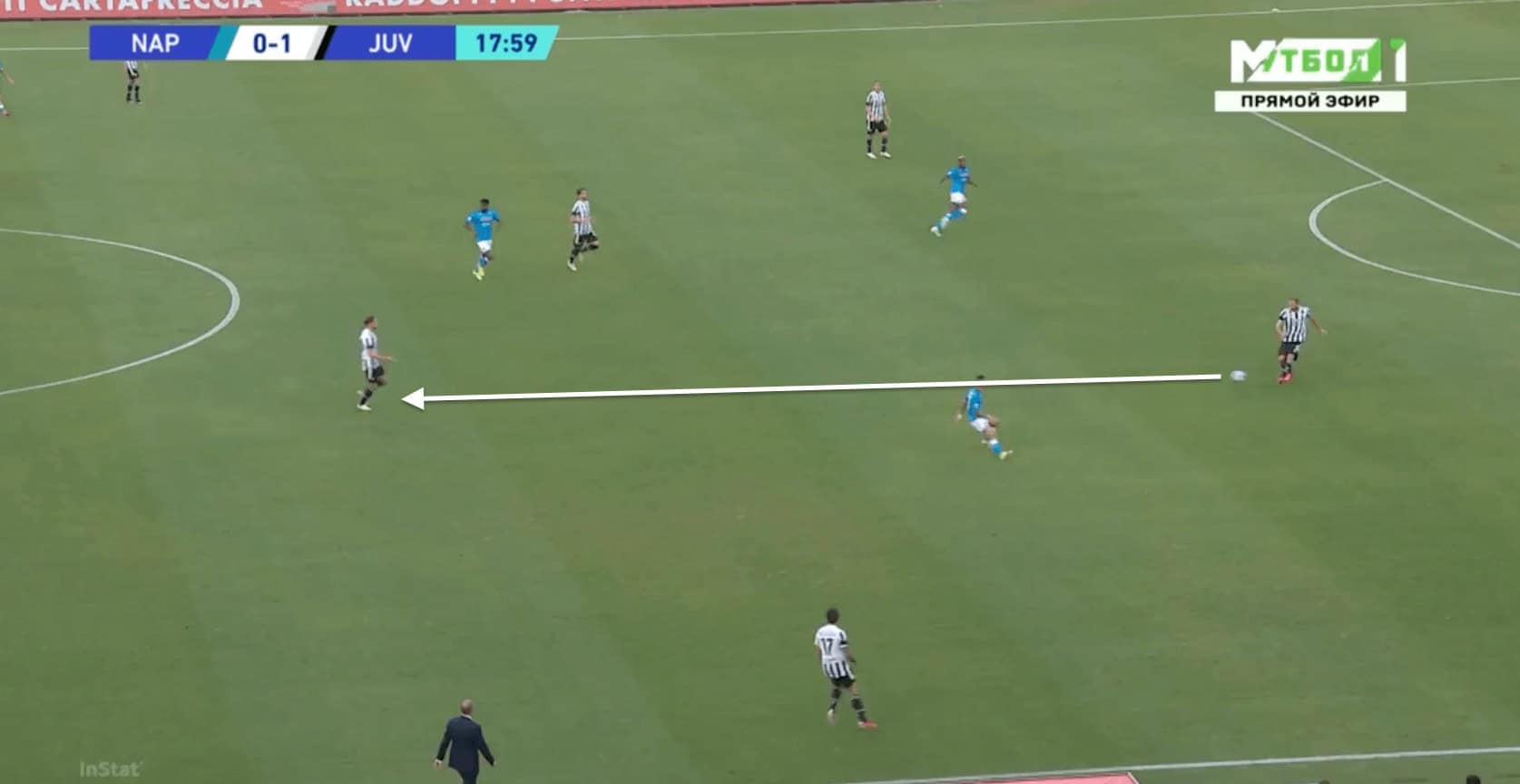
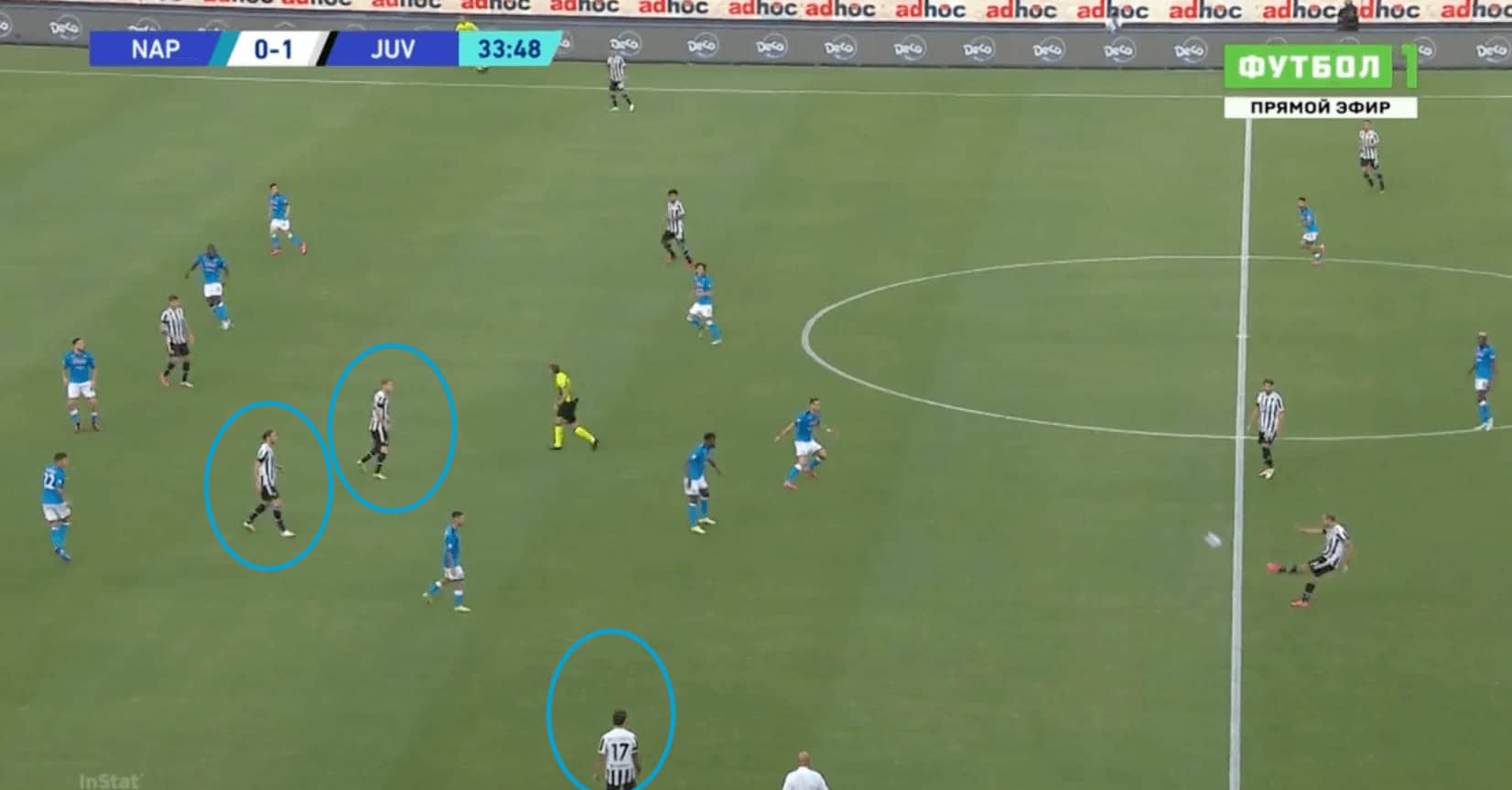
When Napoli decided to cover the central areas, Juventus were quick to switch the ball to the flanks and use their width to create danger.
We can see an example of Napoli in a low-block looking to cover the central areas, while Juventus has decided to shift the ball wide to use the flanks as a means of progression.
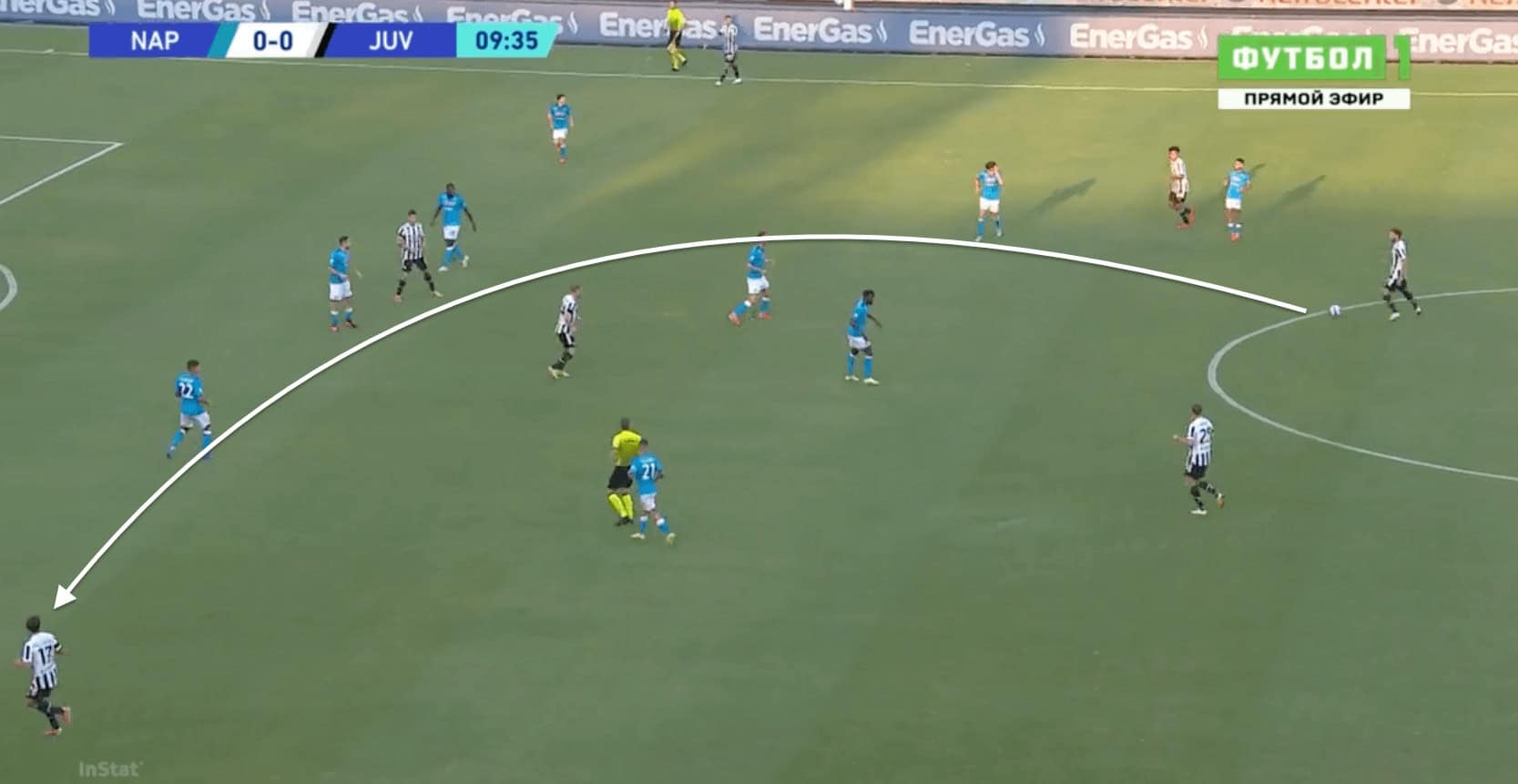
Juventus would often overload one flank and underload the other before switching the ball to the opposite flank.
This is primarily used by the majority of the teams today to open gaps in defences.
Napoli’s struggles with their positional play
Apart from struggling defensively, Napoli were also unable to sustain a lot of possession and convert them into quality chances in the final third.
There seemed to be a major disconnect among the players, with a lack of proper communication in positional play.
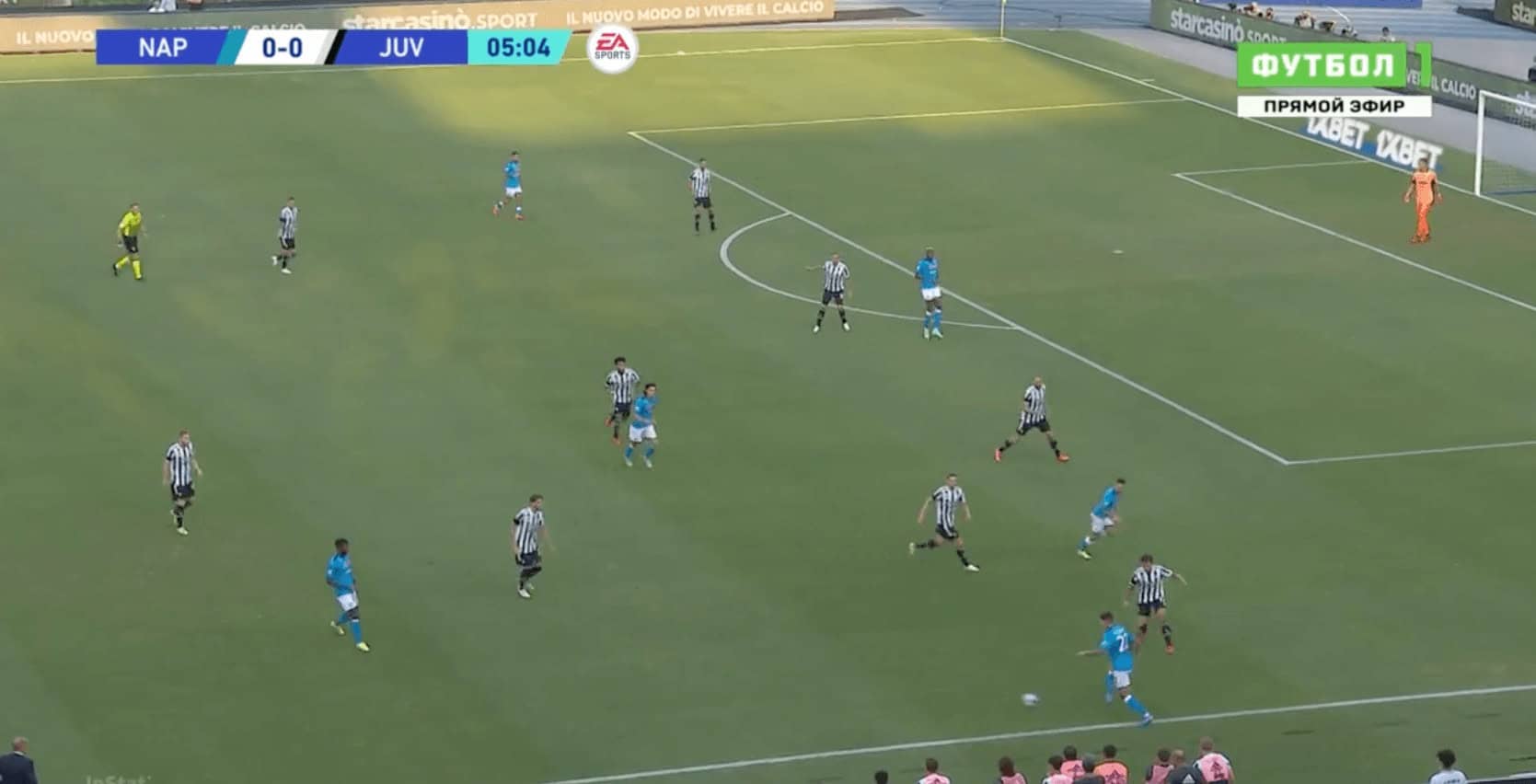
Juventus defended in a 4-4-2 against the Napoli 2-3-5 formation, where the RB would invert inside, while Rui would look to provide the width higher up the pitch.
We can see a Juventus midfielder lining up four at the centre, which leads to the ball being played out wide to the Napoli LB.

The Juventus players did well to deflect the ball to the flank, where they would look to regain it by pressing intensely.
We can see that in the image below as Napoli are being forced wide by Juventus.
Although a player makes good movement into the half-space, he is being effectively tracked by the Juventus player.
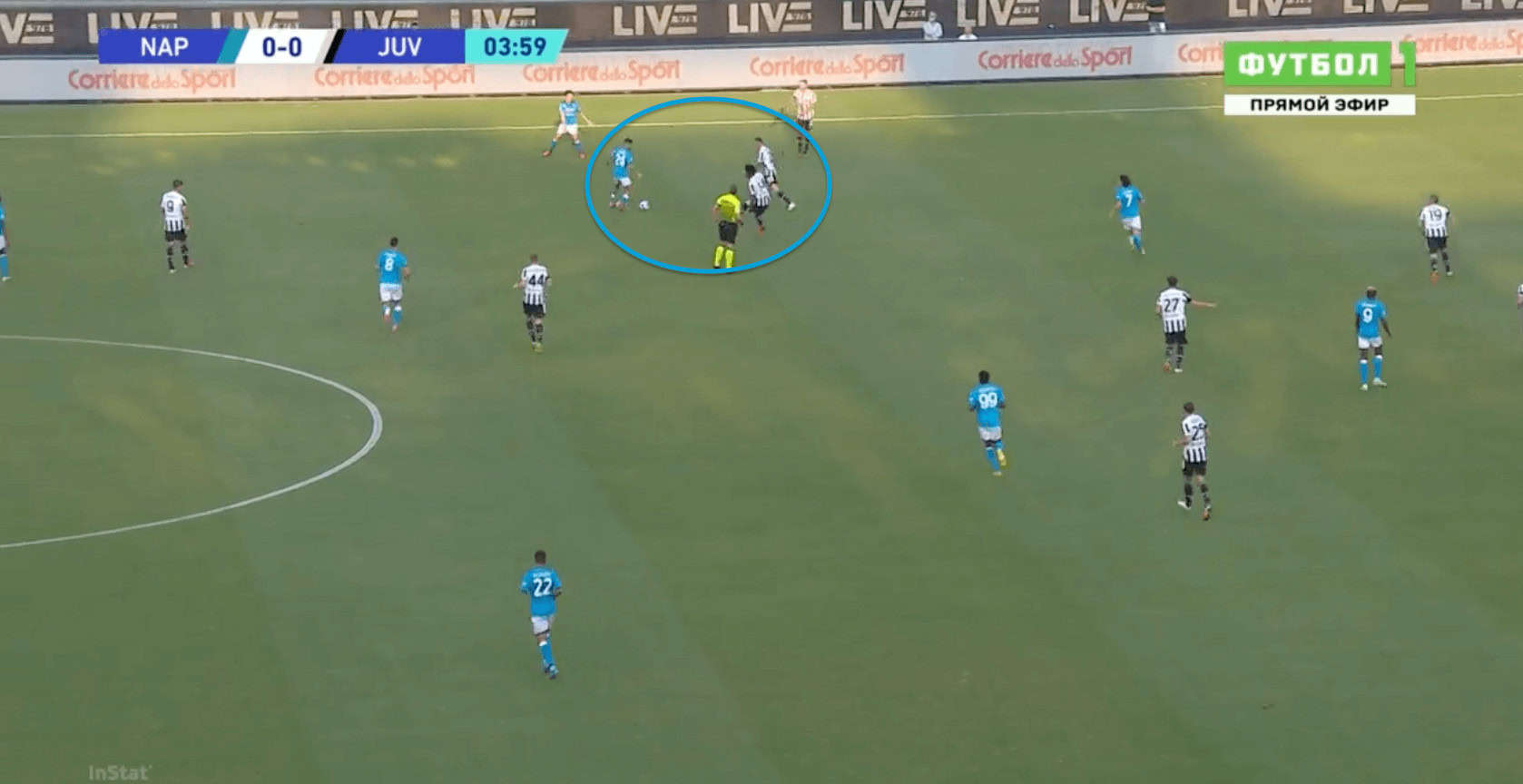
The major thing Napoli lacked was runners into the half-spaces or players consistently attacking the spaces behind Juventus’ defence.
They had a couple of moments like this in the image below, where Elmas made a very good run into the space, as Insigne dropping deep caused the dragging of defenders from their position.
But even in this situation, Elmas didn’t play the ball he needed as Juventus players pressed well to cover the spaces around.
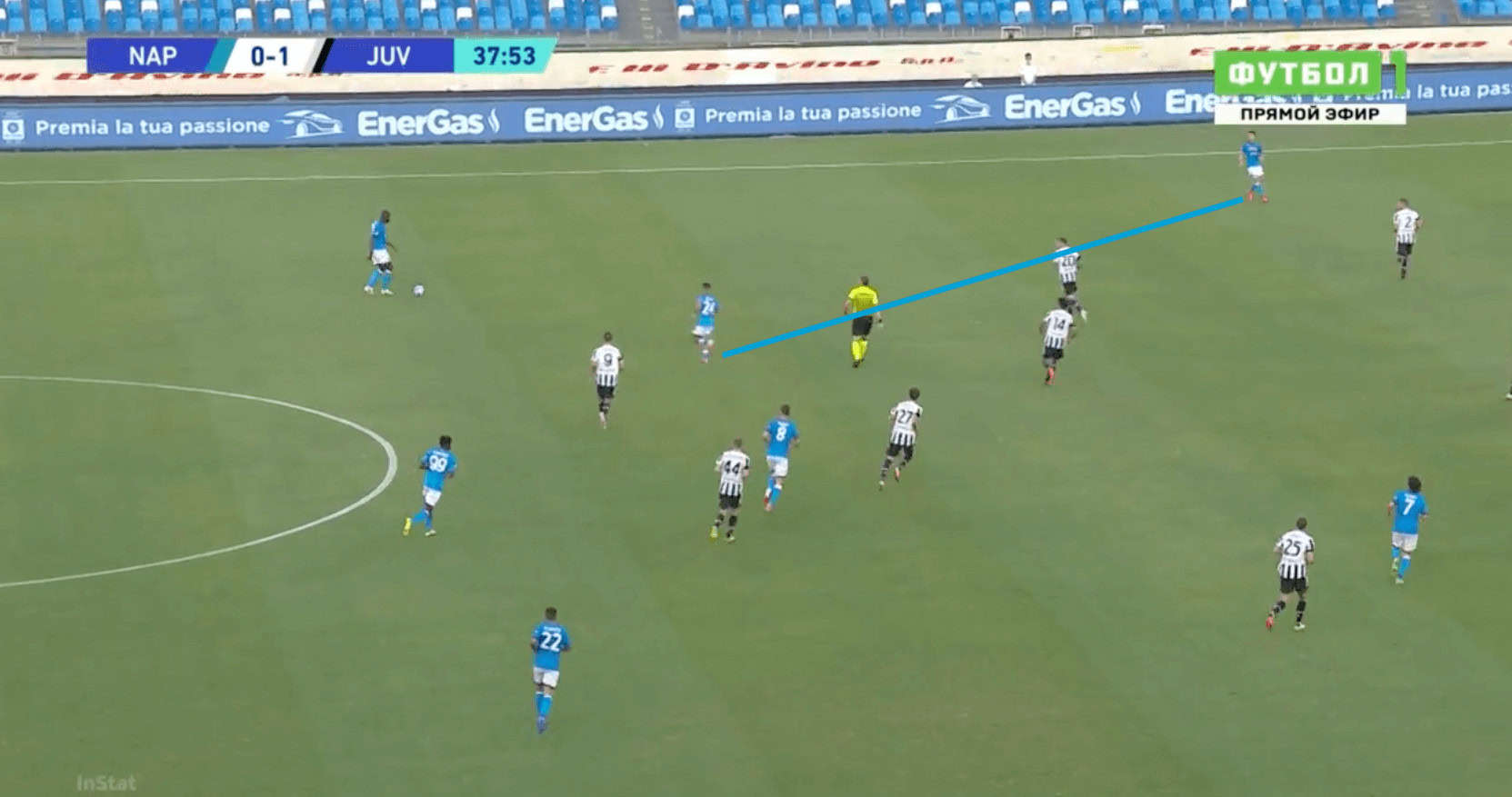
Often, there would be a disconnect between the full-back and wingers of Napoli, as either of them would drop way off from one another, which would mean there would be less possibility of interchanges among them.
This would eventually result in their possession being stale and a back pass being played.
In this example, we can see the distance between Insigne and Rui, and when Rui receives the ball, Insigne is too far to make a run and distract the defenders from Rui.
This means that Rui will soon be in an overloaded situation and will have to be passive to retain possession.
Spalletti’s changes ensure second-half comeback
Spalletti had to make some minor adjustments, and he did exactly that by changing Napoli’s system from a 4-1-4-1 into a 4-2-3-1 as Ounas came onto the pitch to replace Elmas, and Anguissa moved deeper into the double pivot.
This gave Napoli extra solidarity while defending against the likes of Kulusevski and Morata dropping.
In contrast, Ounas’ presence and constant movement on the right side caused Juventus significant problems.
We can see in the image below that Anguissa is now deeper and can dictate the play from there, where his strength lies, while Ounas has dropped deep to show himself for a pass in the half-space.
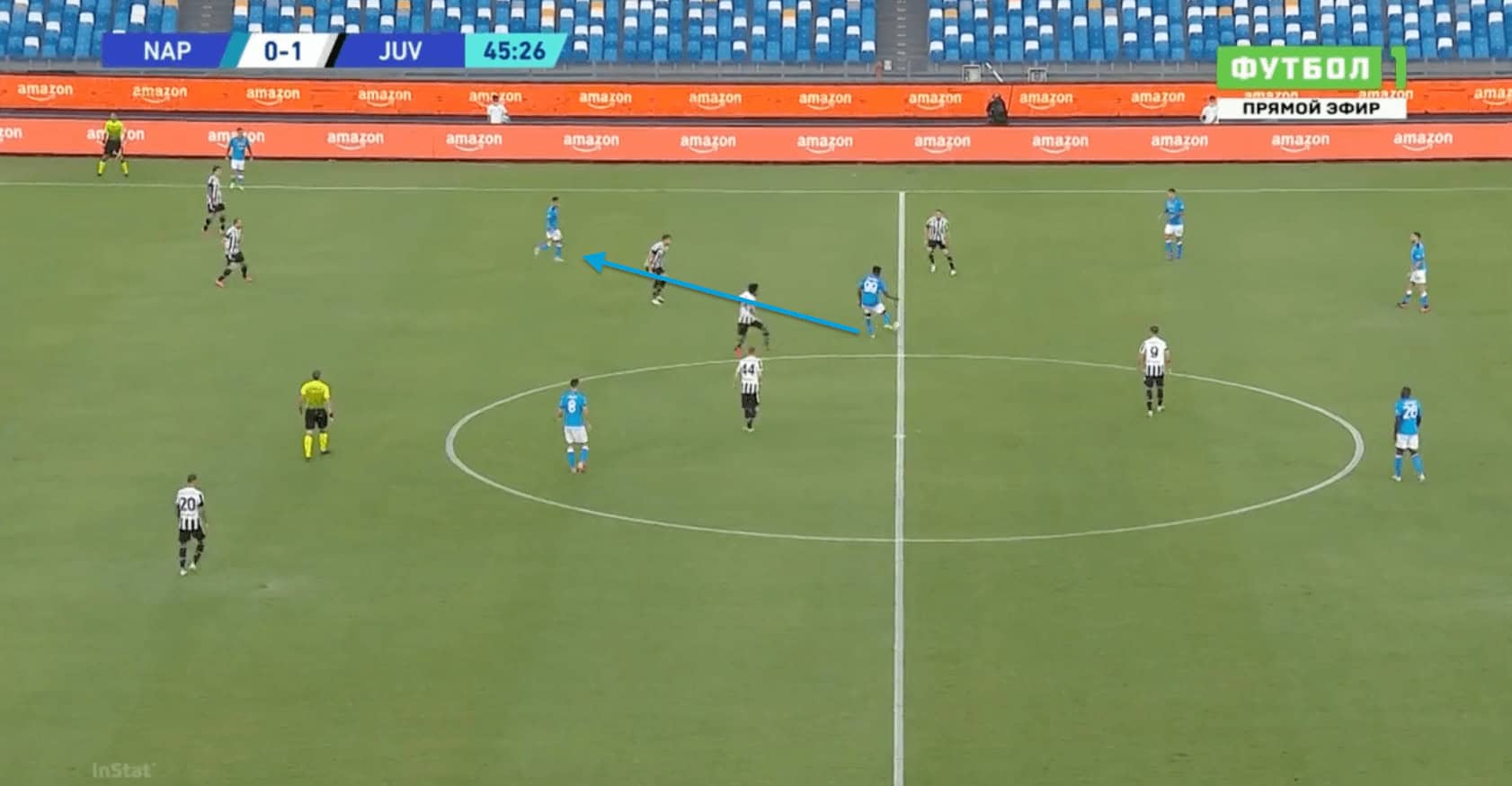
We can see Ounas making a run into the space left by the LB as he follows Politano deep.
Ounas’ intelligence, mobility and awareness were on full display in the second half as Napoli used his presence to good effect to unlock passing lanes and the Juventus defence.
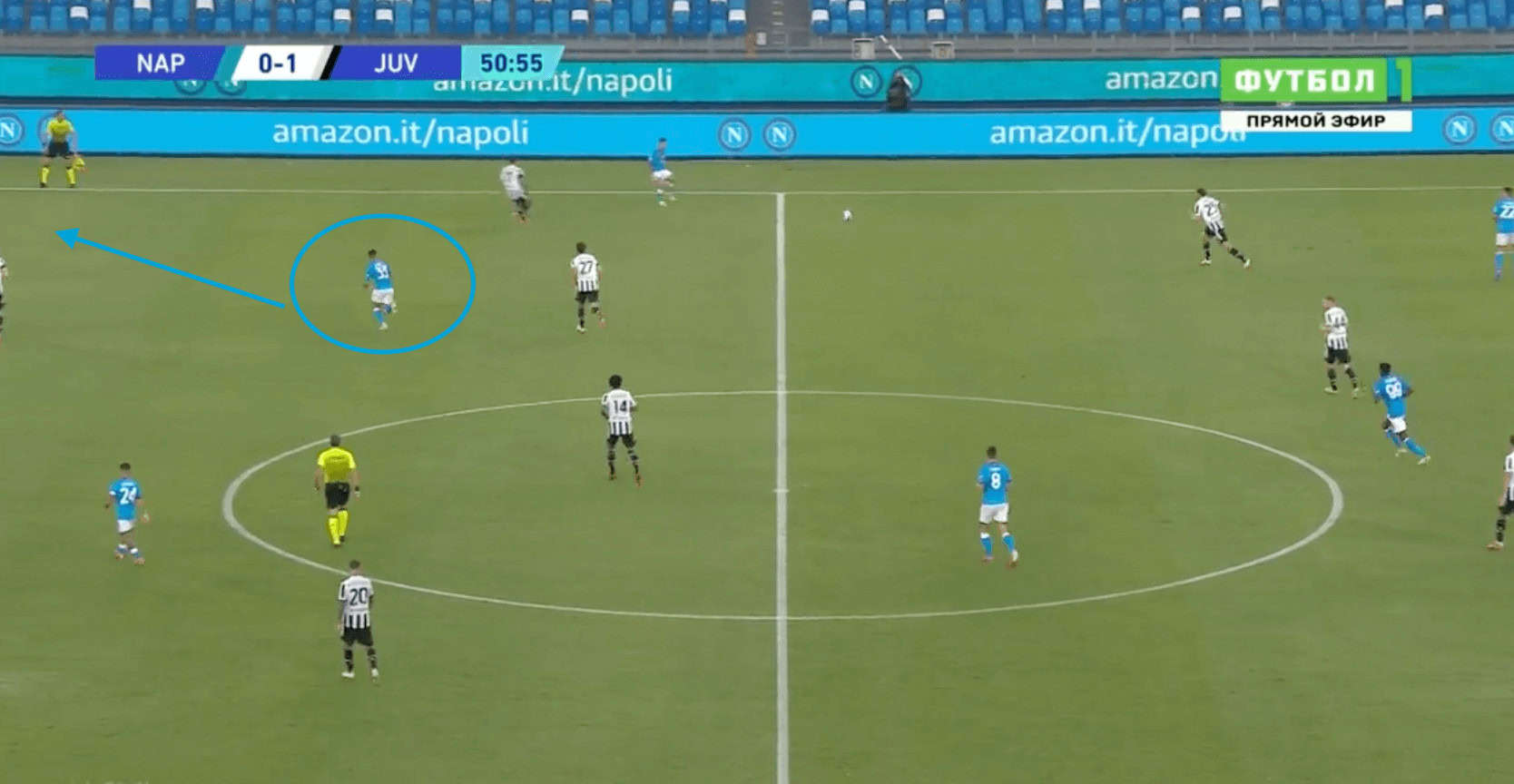
We can see the double pivot now staying central, and this means that they have covered the space behind (Zone-14), and Juventus now have to move towards the wide areas to unlock the Napoli defence.
Hence, the likes of Kulusevski were no longer as influential as they had been, and this led to Napoli being in control without the ball.
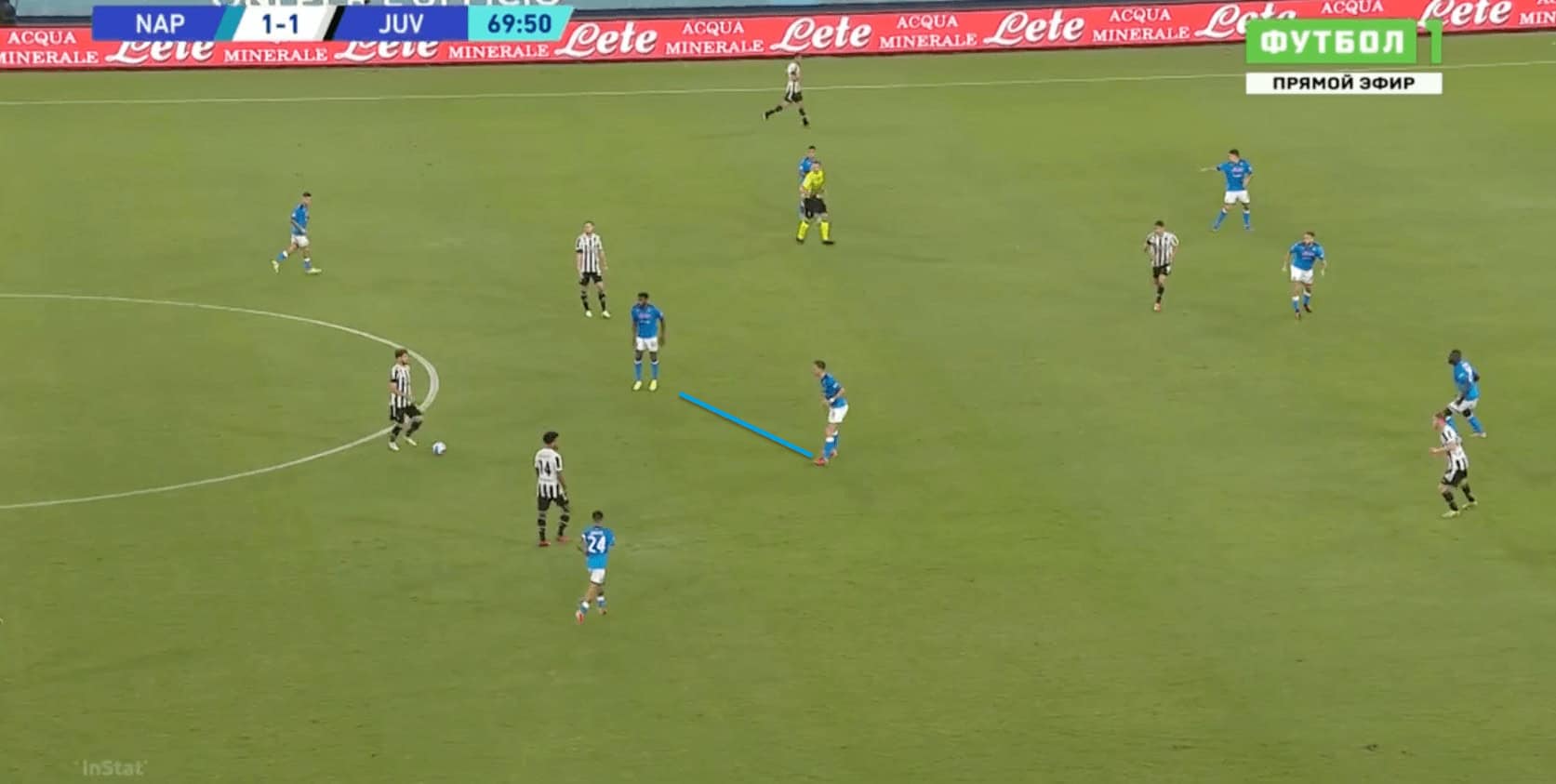
Another advantage for Napoli came in the form of Juventus shifting to a 3-5-2 structure.
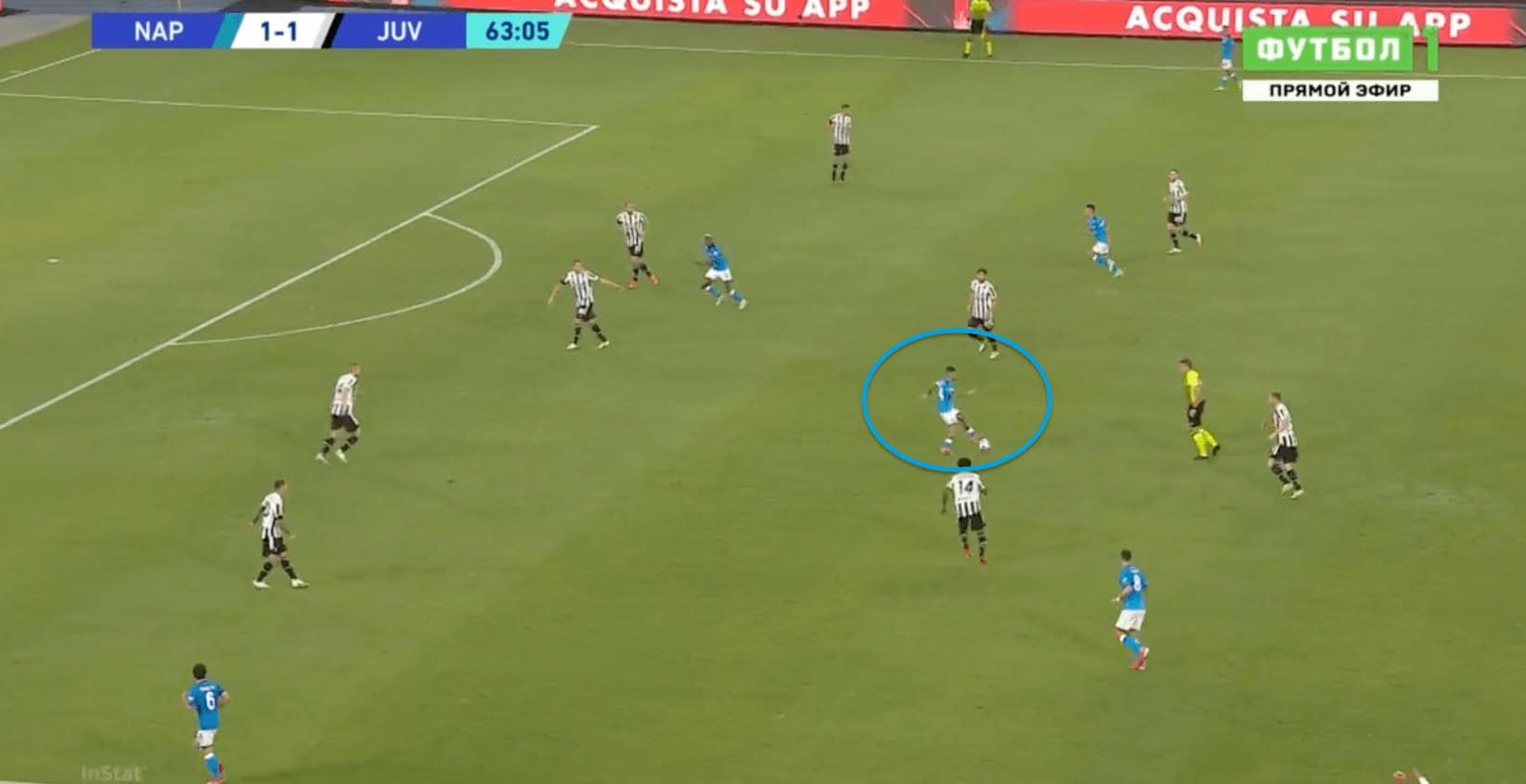
This was particularly done to improve their structure in the build-up, but it compromised their defensive stability as the likes of Insigne were able to drop deep in the half-space and collect the ball without a player pressing him.
In a 4-4-2, one of the wide midfielders would press him, or even the CM would keep tabs on him.
Here in a 3-5-2, when the onus was on the CB to follow him, he couldn’t, as that would leave spaces behind, leading to this imbalance in favour of Napoli later.
Conclusion
The win takes Napoli to the top of the table, extending their winning start to the season under Spalletti.
Juventus, on the other hand, seems to be in huge concern after remaining winless in all three of their games and hasn’t started their post-Ronaldo era very well.
Allegri would like his team to bounce back immediately against Malmö, with games against AC Milan and Chelsea coming in the next two weeks.
