
After an exciting Saturday evening with many interesting results, the Premier League continued with the return of Sunday football. The day also witnessed one of the must-watch clashes of the first matchday as Chelsea travelled to Manchester United’s Old Trafford.
The Reds entered this new season with the hope of improving their results from last season. A busy summer with them participating in the International Champions Cup and new homegrown signings such as Harry Maguire and Aaron Wan-Bissaka. Ole Gunnar Solskjær’s side would want to start off their campaign with a positive start and their match against Chelsea was a great chance.
On the other side, the London-based club were facing a transfer embargo but still managed to introduce some new faces. Club legend Frank Lampard returned to Stamford Bridge to fill in their managerial spot after a decent season with Derby County. The signing of Christian Pulisic was made in January and a permanent move for Mateo Kovačić went through and bolstered the squad for their expectation of qualifying for the Champions League.
Things didn’t go their way in the match, though. After a positive start inside the first half and threatening David de Gea on several occasions, Kurt Zouma conceded a penalty and it was converted by Marcus Rashford. The second half saw a big step up for Man United as Rashford doubled his tally and two goals from Anthony Martial and new signing Daniel James sealed a 4-0 win for Solskjær’s side.
This tactical analysis will provide an analysis of Manchester United’s dominant win over Chelsea. Meanwhile, using statistics, we will point out what went wrong with Lampard’s tactics over Solskjær’s tactics.
Lineups
For the first match of the season, Solskjær filled his 4-2-3-1 with the strongest players that he could have. The loss of Eric Bailly would surely hurt the side but it allowed Harry Maguire to make his first start for Man United. Paul Pogba returned on time as he paired up as central midfielders alongside Scott McTominay. With Romelu Lukaku having completed his transfer to Inter Milan, the Norwegian manager chose Anthony Martial to lead the line.

Chelsea’s style of play
During the first half, Chelsea adapted an active state when it comes to pressing Man United. With Abraham dropping deep, they formed a 4-2-4 formation as they entered the opposition’s half. The striker line usually put pressure on Victor Lindelöf and Maguire when they had the ball. They immediately closed down possible passing options and prevented those two from making penetrative passes.
Meanwhile, Jorginho and Kovačić provided supports below them. They were tasked to follow Pogba and McTominay and stopped them from coming deep to pick up the ball. Also, if the centre-backs decided to make a direct pass, they must intercept it and signal the teammates around for a counter-attack.
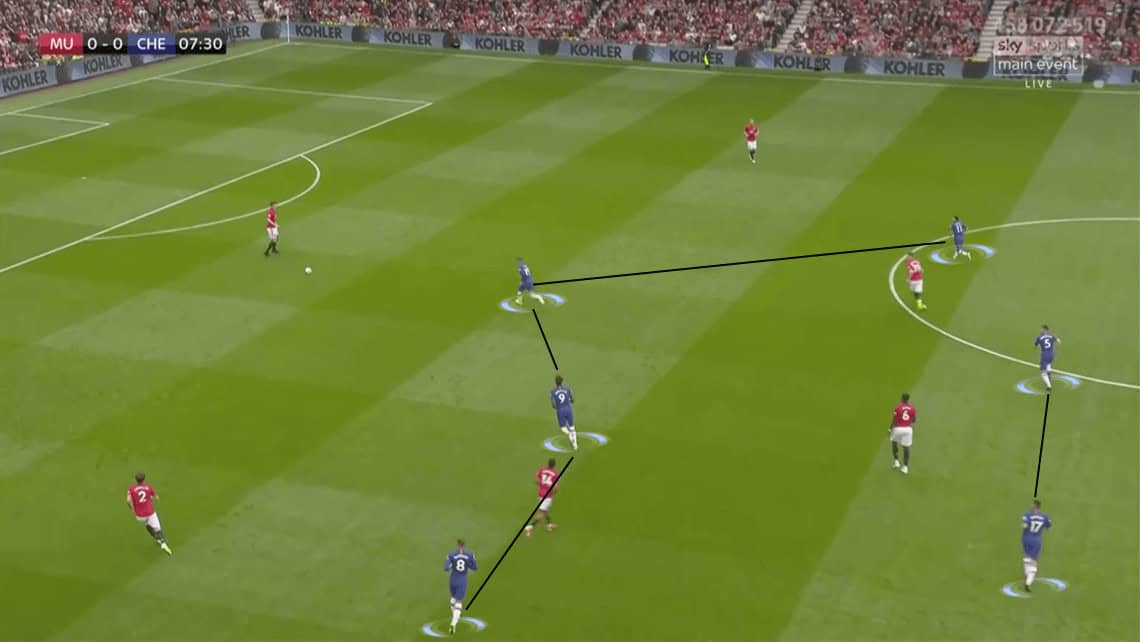
This formation allowed the Chelsea players to match Man United’s four-man build-up and also prevented the full-backs from joining in. Barkley and Pedro usually kept Wan-Bissaka and Luke Shaw in their sight, closed them down whenever Maguire or Lindelöf turned towards the full-back.
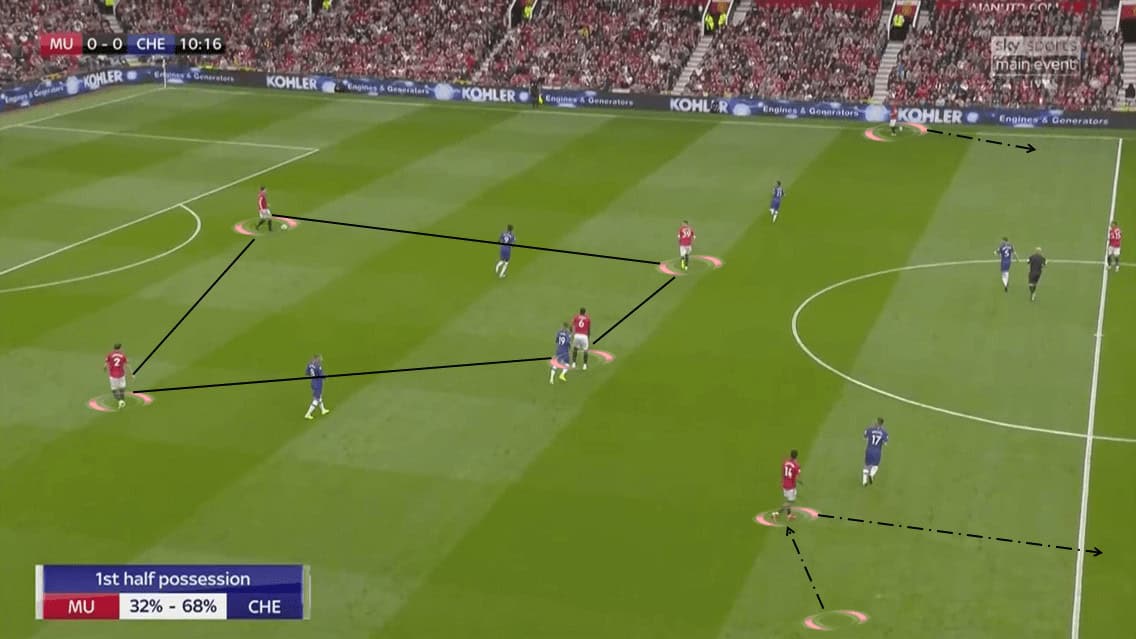
It worked efficiently during the first minutes, as Man United were struggling during the build-up but when the first half almost came to the close, they figured out how to counter it. Whenever two attacking midfielders put pressure on the centre-backs, either Pogba or McTominay dropped deep and created a passing triangle among them.
Although Man United’s central midfielder might drag along Abraham, he would create another passing option and allow the ball to be circulated more easily. When one picked up the ball, the other two scanned for potential receivers high up the pitch. Then they asked for the ball and transferred it to their teammate. This allowed the home side to escape the pressure area while still controlling possession.
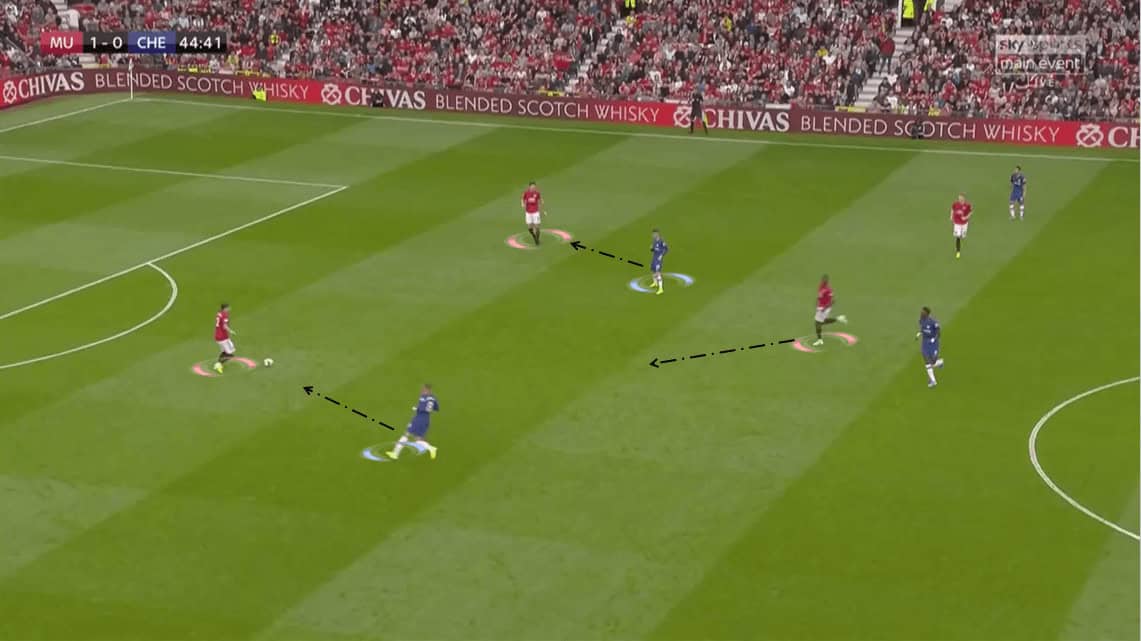
When the opposition entered their half with the ball, Chelsea players usually tackled the ball with an aggressive attitude. Their aim was to recover possession immediately and stay away from fouls that could lead to cards or dangerous free-kicks. Although they were required to hold their position and deal with Man United’s pace, the defenders could also step out of the line and attempt to win the ball back.
This left a major problem, though. As Jorginho and Kovačić were still retreating, the defensive line now matched the numbers of Man United’s attackers. If one decided to step out, it means his teammate had to cover that space up. But since they were still following their marker, that option was not viable. Man United could use their overlapping wing-backs to create numerical superiority and capitalise that space using the movements inside the half-spaces from the three attacking midfielders.
Statistically speaking, most of Chelsea’s defensive duels occurred inside their defensive third and the middle third. As mentioned, since their press was bypassed, they couldn’t register many duels inside Man United’s half. And when the opposition’s team were on the attack, the defenders had to do more work when Jorginho and Kovačić recovered from their positions.
One of the players that really stood out in this subject was César Azpilicueta, who had a very decent game on the right-hand side. Combined with the pressure that was created by his Spanish teammate, Pedro Rodríguez, upfront, he was able to reach a higher accuracy rate with his defensive duels (73% of his fifteen duels were a success).

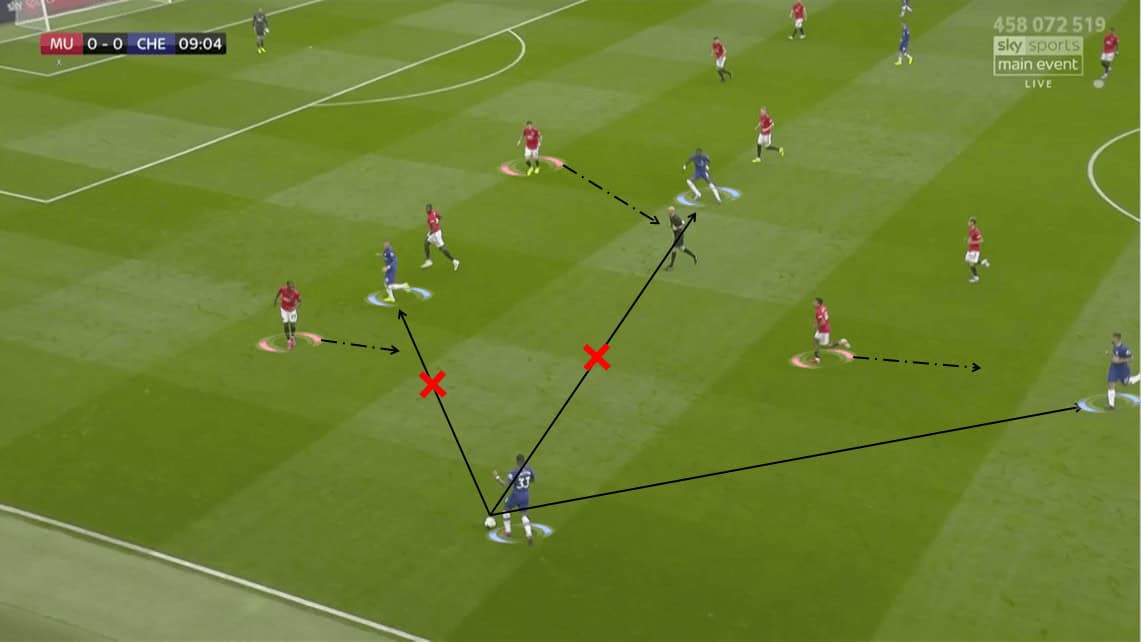
But when the Italian wing-back dribbled the ball up the field, he couldn’t find many passing options. In the shot below, three of his teammates were positioned near him while Barkley and Abraham were looking for a penetrative pass. Since Wan-Bissaka and Maguire kept both of them in sight, any passes coming towards them would be intercepted. He had to choose the option of a backpass to Jorginho, who was also being closed down by Jesse Lingard.
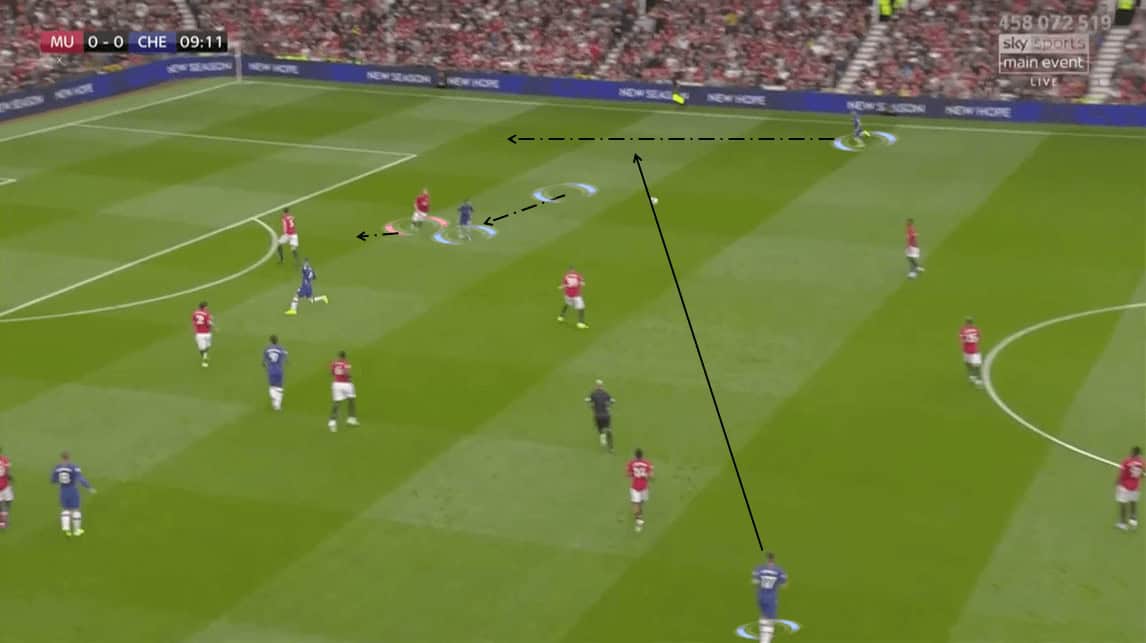
There was another option that was capitalised by Chelsea during the game. Based on the movements from both wingers, Pedro and Barkley cut inside and dragged along Man United’s wing-backs. This created spaces on both flanks for Azpilicueta and Emerson to overlap into.
Kovačić and Jorginho would pick them out with a long pass and help them reach the 16-yard box quicker. At the same time, the attackers who positioned on the shoulders of Man United’s defenders sprinted towards the box for a tap-in. They had a few chances which came from similar situations, but a bit of luck was still the thing that they needed. Also, some of Azpilicueta’s crosses went right across de Gea’s goal but couldn’t find their destination.
The expected goals graph showed why they couldn’t come close to a goal. Almost half of their chances were coming from outside the box, meant the rate of it becoming a goal weren’t very high. They also had some chances that happened near de Gea’s goal inside the second half. But besides Pedro’s opportunity in the 89’ minute (number 16), only a few of them were rated above 0.1 in xG.
In total, Chelsea’s xG in the game was 1.12, meant that they must have scored a goal. Still, a good performance from de Gea denied the opportunity for the attackers to open their account.

Manchester United’s style of play
Man United entered the match with a more conservative state but were still able to play high tempo football. Without the ball, they defended with a clear 4-2-3-1 formation. Rashford usually stayed high and closed down the ball-carrier as he attempted to win the ball back.
Below him, three attacking midfielders formed the second line of their structure and their responsibility was to support Rashford in marking Chelsea’s defence. They would close down possible passing options, surround the ball-carrier and tackle the ball if it came towards them.
The defenders and two central midfielders stayed compact in front of their box and formed the last line of defence. Pogba and McTominay tried to limit spaces in between and prevented Chelsea’s attacking midfielders from working inside of it. Meanwhile, four defenders screened the box and alerted to any possible passes to drag the whole structure down.
By dragging every player to the half and regrouping before Chelsea could circulate the ball up the field, they have had the superiority in numbers. They were also able to fill in every possible space and shift the structure along with the ball.
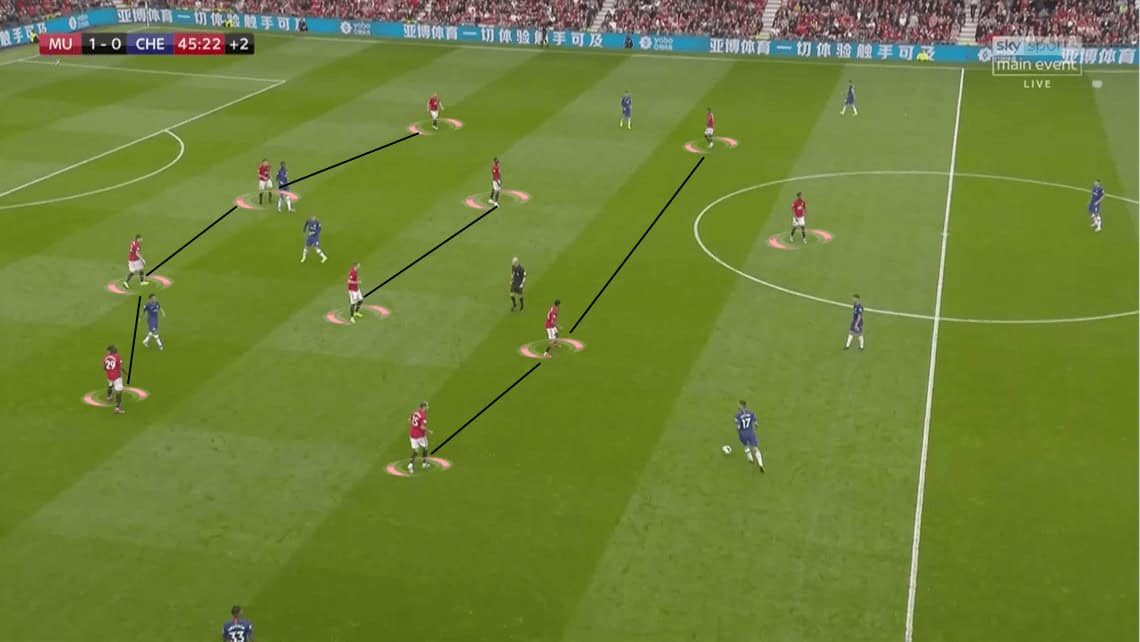
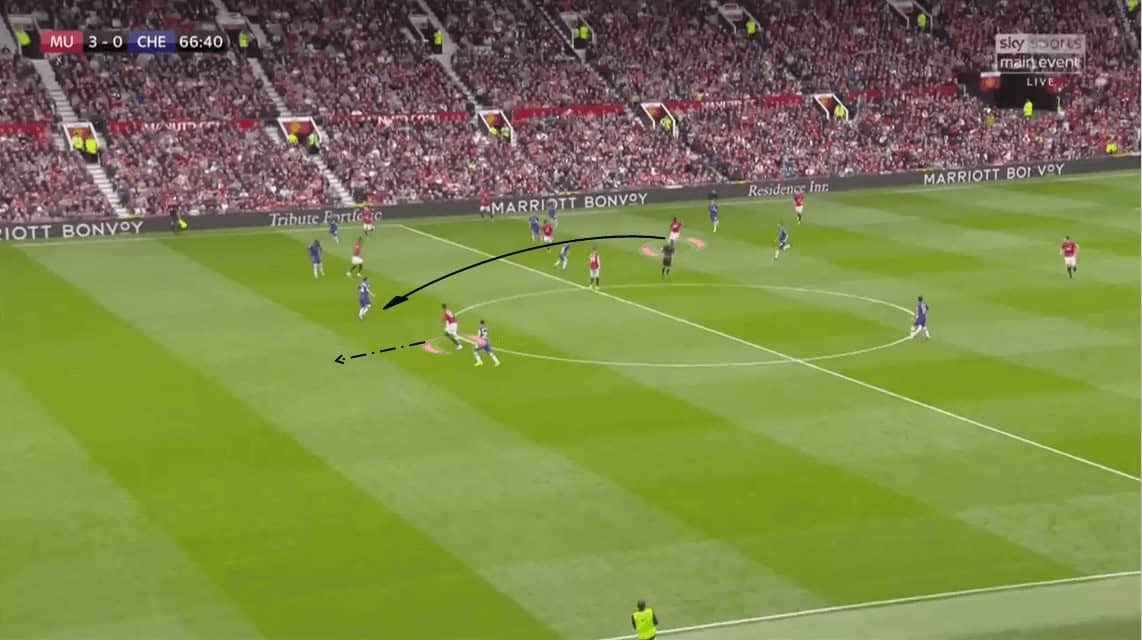
High up the pitch, the four attacking players adapted a very aggressive press that heavily relied on pace and positioning. When Lampard’s side built from the back, Rashford would position inside the build-up shape with the aim of intercepting passes in between the players.
Three attacking midfielders created a wall behind the shape to prevent the ball from circulating outside. Also, they could capitalise on heavy touches and recover possession for a dangerous chance. In the shot below, they performed their pressing strategy in which they put pressure on Zouma and Jorginho. These two misunderstood each other and forced a misplaced pass to Martial, who came close to the opening goal.
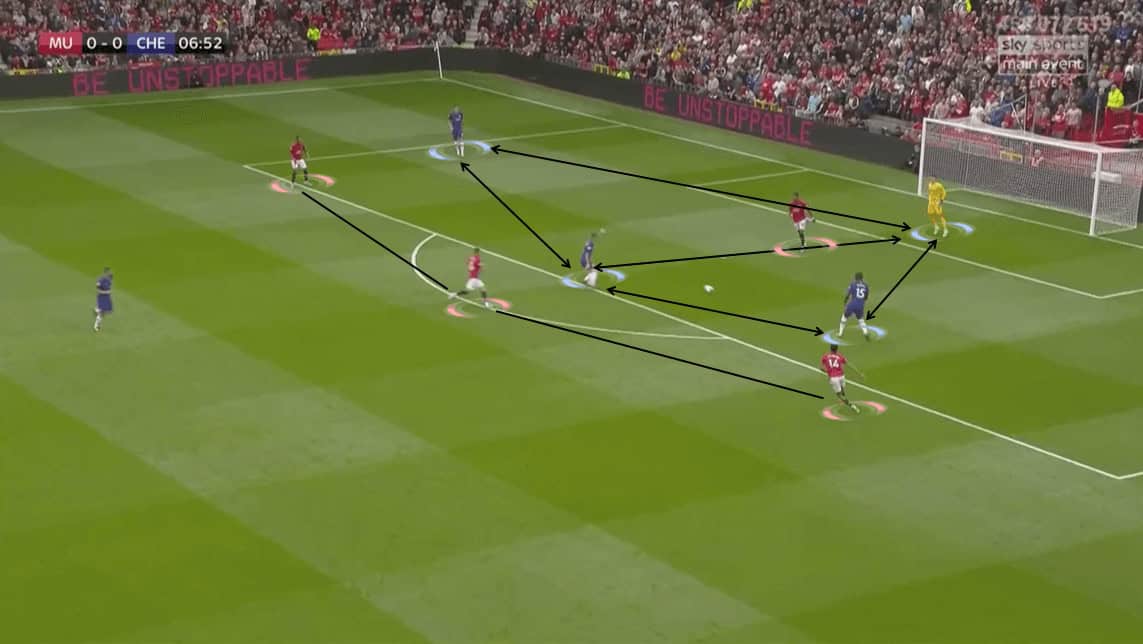
This group of players were also very quick in creating overloads inside Chelsea’s half. With their man-oriented press, they were able to swarm an area and immediately overloaded it. Usually, Rashford approached the ball-carrier first and signalled for supports from Andreas Pereira and Lingard.
When they approached the box, they closed down the potential options and filled in any spaces that could lead to penetrative passes. Pogba and McTominay could also join the press if one of Chelsea’s defenders attempted to come short and offered to bring the ball out.
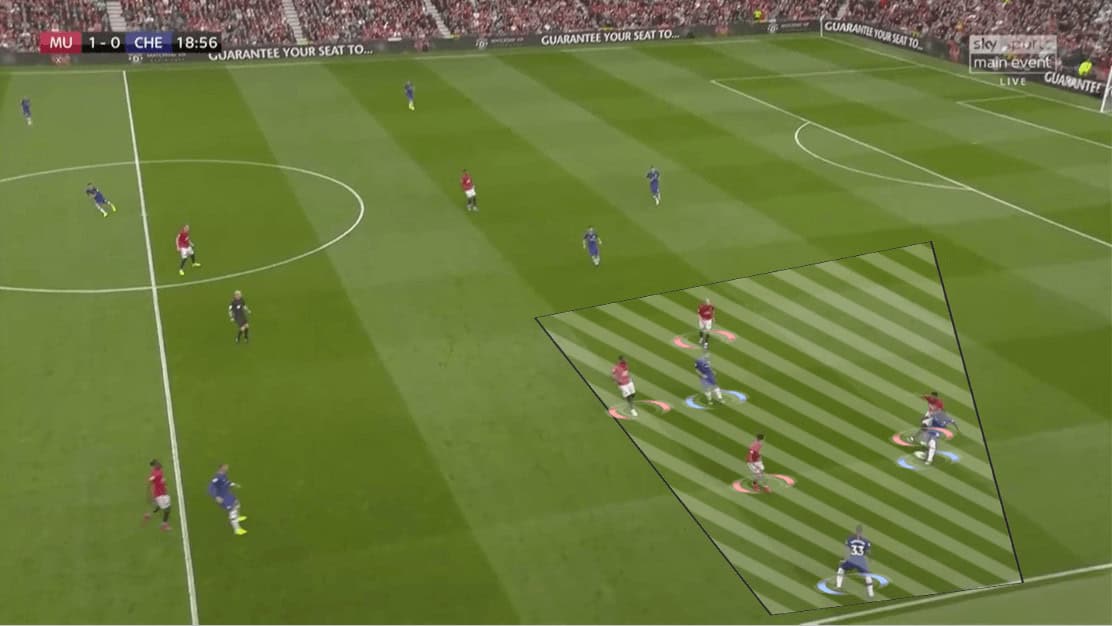
As good as they were in both pressing and defending the box, their strategy didn’t show a high-efficiency rate. On several occasions, the opposition’s players were able to pass the ball out and start an attack. This left a number of Man United players who couldn’t retreat into their half to form the original structure.
When in possession, they had the tendency of building attacks from the back. As mentioned about the importance of Pogba and McTominay’s movements and positioning in their build-up, it’s also worth looking at how other players played their role. Both wing-backs usually positioned a bit higher up the pitch, specifically inside the middle third.
They filled in the spaces that the wingers left behind when they moved into the half-spaces. At the same time, it also created potential triangles on both flanks when two central midfielders joined the attack.
Another thing that worth mentioning was how Martial and Rashford constantly switched positions with each other. At times, Martial moved into the left-winger spot and Rashford led the line. These two are extremely quick players and could dribble with the ball at their feet. They had the license to do so because Solskjær felt they could both contribute to the team’s play and provide the goals at the same time.
The positioning of Man United players helped them created quick attacking transitions. After the build-up, it only took them seconds to get the ball into Chelsea’s half and enter the final third. There, they used quick and short combinations between the attacking players to bypass the pressure and reached Kepa’s goal. Martial and James’ goals were perfect examples of this style of play.
Meanwhile, Rashford’s second goal came from an exquisite pass from Pogba and the positioning of the young English striker. He sat on the shoulders of Chelsea’s defence and noticed a huge gap between Andreas Christensen and Azpilicueta. After picking up the ball from the French midfielder, he sprinted towards the goal and beat Kepa with ease.
On the shots graph, their chances were rated very high too. Four goals that they scored in this game have a total xG rating of 1.74, that’s more than half of their total rating (2.57). We have seen how they built their attacks that relied on quickness and intelligent positioning. And it’s no surprise that they could have five of their shots on goal.

Conclusion
It was a very interesting match between two club legends on the tactical perspective. Chelsea had a very decent performance in the first half and came close on scoring not under two occasions. Their defence was not bad as they managed to limit Man United’s attacking threat during the first minutes. But they only lacked a bit of luck in converting their chances into goals.
For Solskjær and his side, they have had a very good game as everything went as planned. They were quick in attacking transitions and created overloads on the field. The signings also made a very impressive debut with the two defenders remaining solid and the winger had his first goal for the club. This is the match that they should build their foundation on for the season ahead and in their quest to fulfil the fans’ expectations.

If you love tactical analysis, then you’ll love the digital magazines from totalfootballanalysis.com – a guaranteed 100+ pages of pure tactical analysis covering topics from the Premier League, Serie A, La Liga, Bundesliga and many, many more. Buy your copy of the August issue for just ₤4.99 here, or even better sign up for a ₤50 annual membership (12 monthly issues plus the annual review) right here.
