
At nearly the halfway point of the 2023 Argentine Primera División season, San Lorenzo find themselves in second, just six points behind the league leaders River Plate, managed by the former Man City and Bayern Munich defender Martín Demichelis, who have accrued 41 points after the first 18 games.
The club located in the Buedo District of Buenos Aries have a rich history, winning the championship 15 times, with its most recent title in 2013, and achieving continental success in the Copa Libertadores the year after.
Although the last decade has seen peaks and troughs in the side’s ability to challenge at the top of the table, this is a common theme embodied by most teams across the division. The key element that has led to the side’s success this season is their defensive record with the team only conceding seven goals so far this season, the lowest in the division.
With the midway point of the season approaching, this scout report will look to provide a tactical analysis of why San Lorenzo’s defence has been as impregnable as it has been, not only from the perspective of their tactics but from the actions and behaviours of the players.
Fundamentals of defence
Before continuing any further, it is important to briefly address some key aspects of the defensive phase of the game in order to fully explain why San Lorenzo’s tactics and actions in defence have been effective.
Defence is where the team element of the game can be seen the most, with all players having to engage in coordinated actions that lead to situations that prevent opposition chances and give the team opportunities to win back possession. As has been widely stated before, players use the position of the ball, their teammates, the opposition and space as reference points in order to coordinate their actions and movements. Ideally, these four elements, alongside a side’s defensive structure, can be used in order to remain compact near the ball, which provides opportunities for players to be able to support each other and provide cover for each others pressing actions. As a result of this, defence is about adapting to different risks that the opposition may look to exploit. These are not new ideas but are important to address, nonetheless.
San Lorenzo’s structure in defence
San Lorenzo look to defend in a 5-4-1 formation which can change to a 5-2-3 at times. Within this structure, the side does not look to engage the opposition high up the field but look to drop back to the halfway line. This can be seen in the image below.

The striker of the side, Andrés Vomberger, looks to press opposition centre-backs in possession, pressing them at an angle which prevents the centre-backs from changing the side of attack. From these positions, the midfielder in the second line is tasked with protecting the centre and looking to prevent passes directly to opposition players positioned centrally behind the first and second defensive lines.

As previously stated, one of the most important elements in defending is adapting to the most dangerous risks posed by the opposition at a given time. This is something that the second line of San Lorenzo’s defensive line does very well. The double pivot of Augústin Martegani, the former Premier League and La Liga midfielder Carlos Sánchez and the wingers initially orient their positions to the opposition midfielders in their vicinity. However, an aspect that Ruben Insúa appears to have worked on with his side on the training ground, is assessing whether the opposition player they have oriented their position towards is the most significant risk to the team at that given point in time.
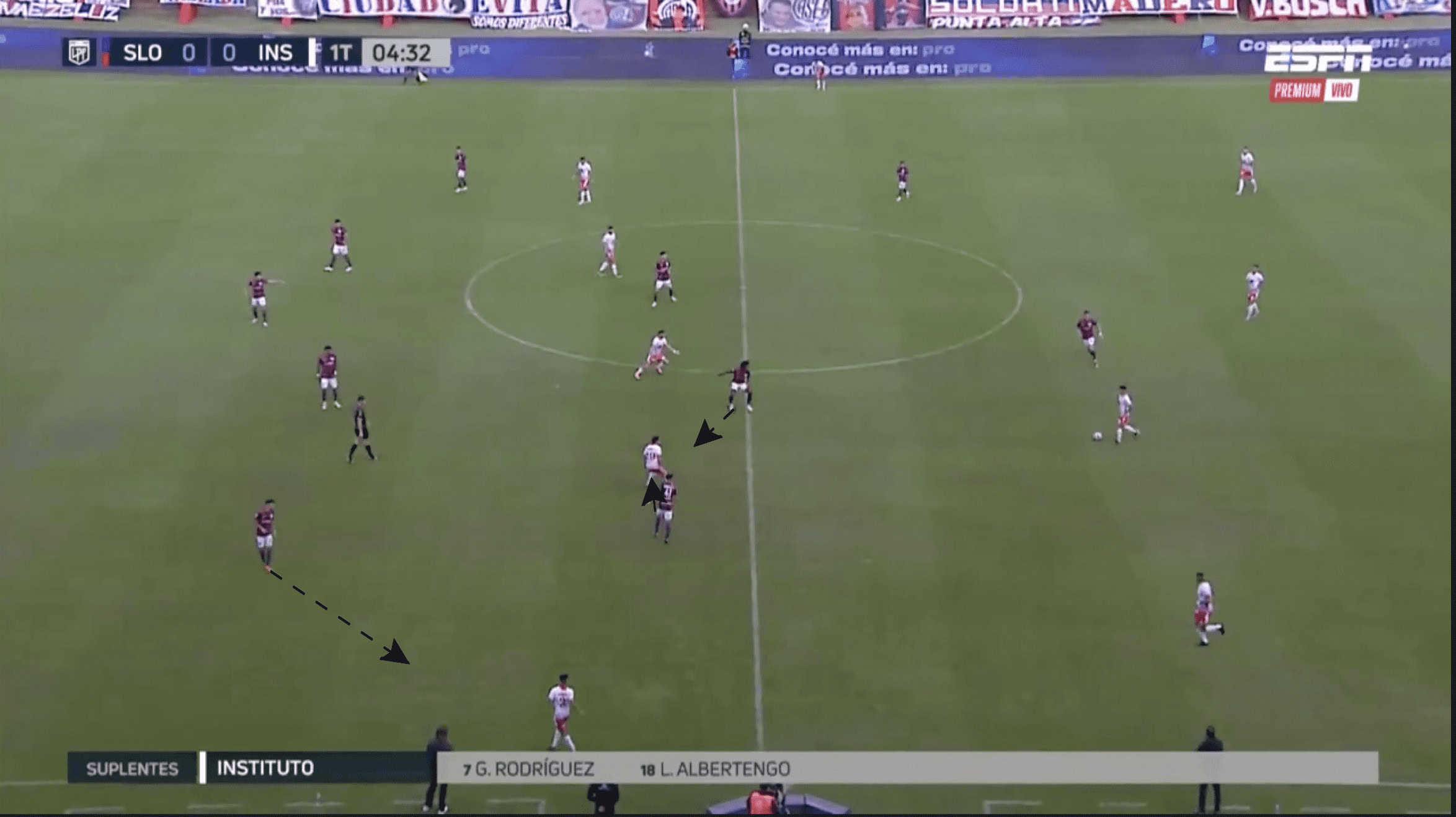
An example of this can be seen below with Sánchez adjusting his position to prevent a direct pass to the player behind him. Prior to this action, with the ball further up the pitch, Sánchez would look over his shoulder several times in order to locate the position of the opposition and make decisions in regard to his own positioning based on the position of his opponent. Additionally, the right winger, Iván Ezequiel Leguizamón, can also be seen scanning his surroundings in the image below.
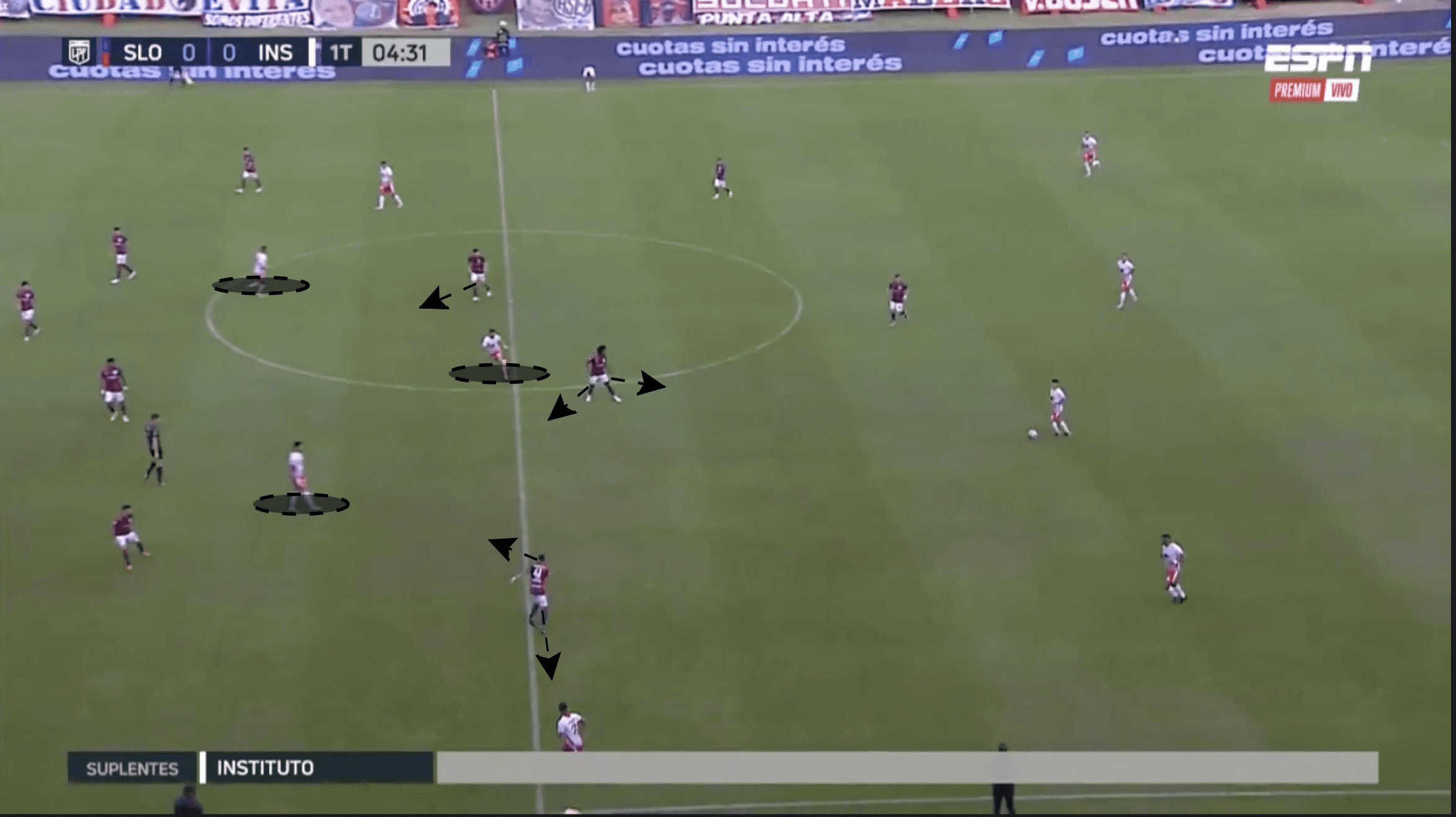
Originally orienting his position to the opposition left-back, once Leguizamón is aware of the space between him and Sánchez and the passing lane that is created, he begins to move centrally in order to reduce the space for the potential pass to the opponent. Sánchez would also look to do the same with the midfielder, doing so in a manner that would still prevent a pass to the player behind him.
Although difficult to see in still images, another aspect that the players in the side excel at is their ability to pick up on cues (such as the body position of the ball carrier) which they also use to inform their decisions on who is the most important to cover.
San Lorenzo’s prevention of passes into central areas is made more effective through the involvement of the centre-backs in their backline. A common issue for teams that use unstaggered defensive structures is that opposition players are able to find space between the lines and receive the ball unopposed.
As stated earlier, the players in the second line look to prevent passes into the space behind them but solely relying on this has its limitations. This is because the players in the second line could be overloaded, resulting in them having to try and cover more than one pass behind them at a time. How San Lorenzo look to mitigate this risk is through the involvement of their centre-backs, who look to step out of the back line and cover opposition players positioned between the lines. This can be seen in the example below, with Rafael Pérez stepping out of the backline in order to cover the opposition player.
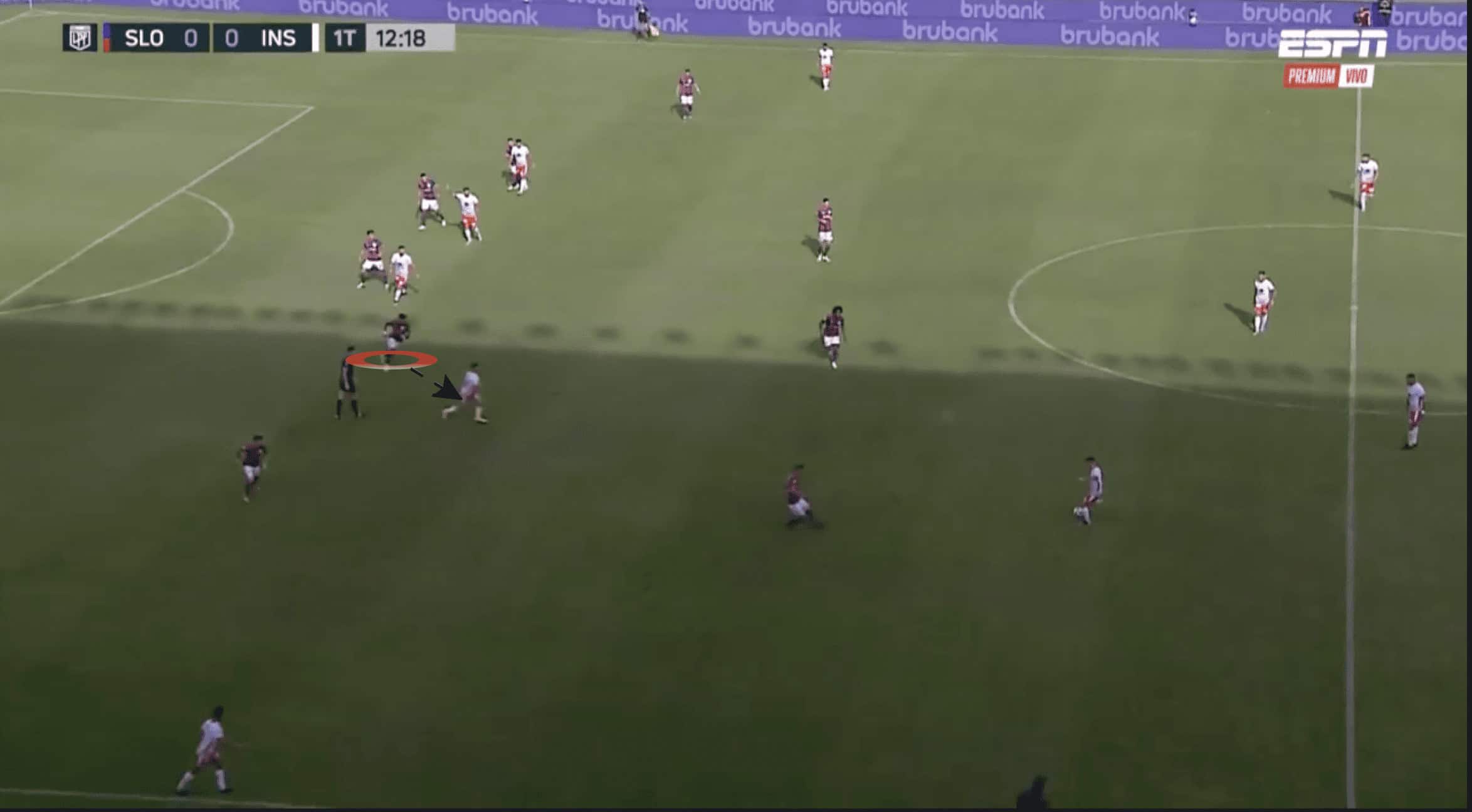
As a result of his actions, the pass to the opposition player from the ball carrier’s perspective becomes less appealing. Additionally, once the ball is out wide, Pérez is in a position which allows him to have quick access to the player if a pass is played.
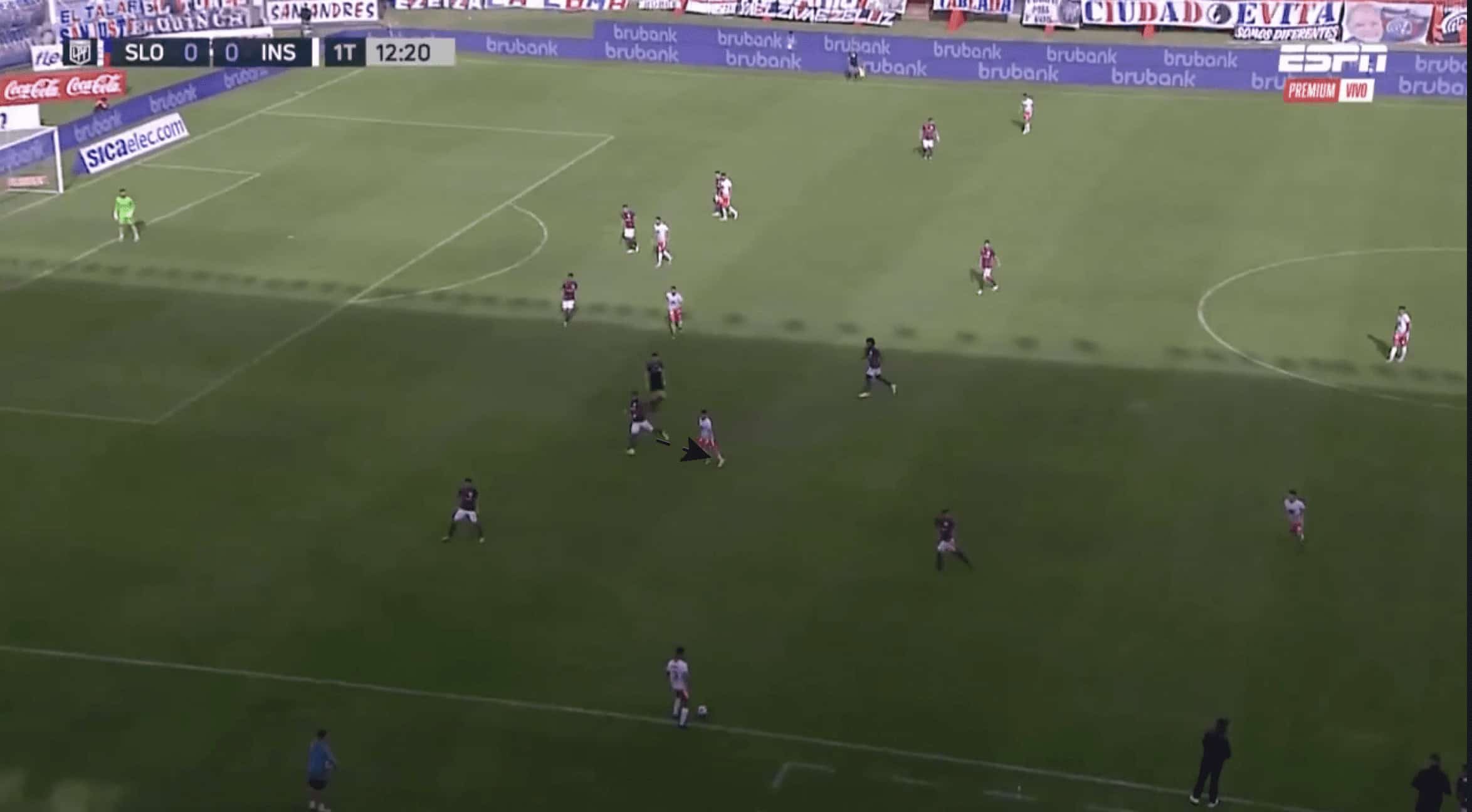
Another example of the use of the backline can be seen in the images below. Within these scenarios, if a pass is played to the player between the lines, the centre-backs look to challenge for the ball as soon as the opposition player takes one touch.
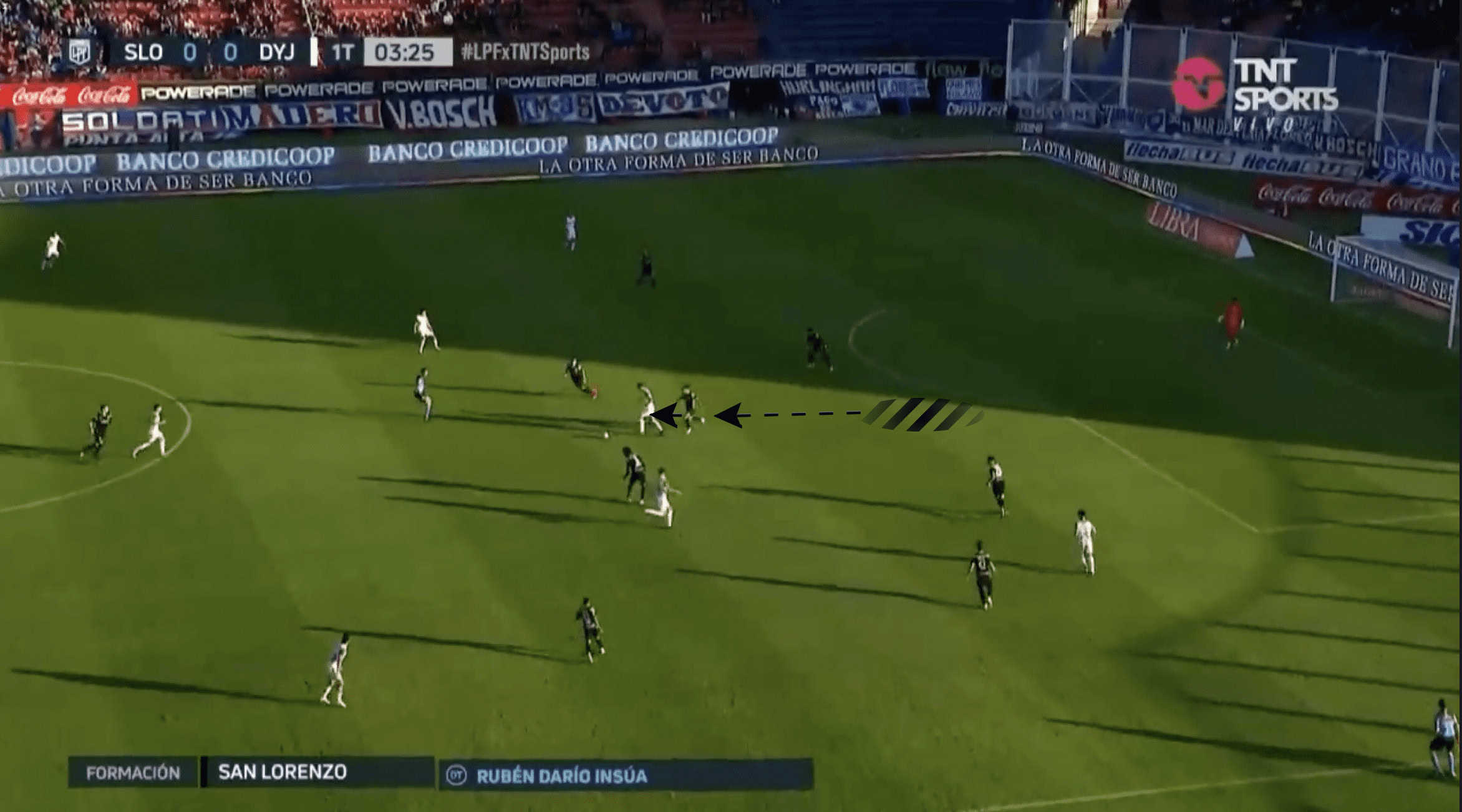
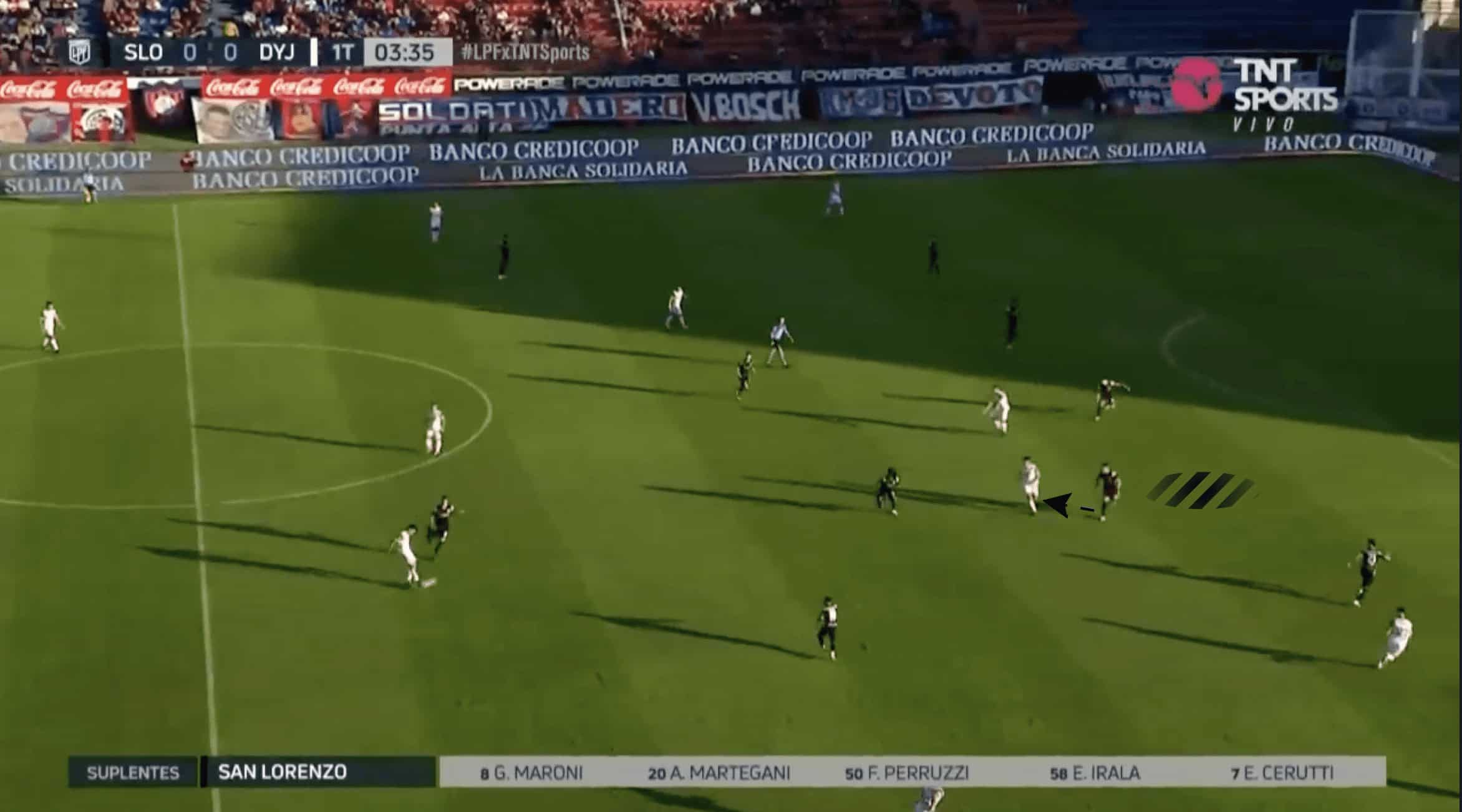
This highlights an additional aspect of the defensive phase, which is centred around the division of defensive responsibilities. It is extremely important that the players in a side have as few defensive responsibilities as necessary. This may sound odd at first but as stated earlier, defending is about adapting to the biggest risks that a team faces. Within this, an aspect that allows for some risks to be more minimal than others is the support that a player has from their teammates around them. As a result, players can cover spaces and opposition players more effectively as they are responsible for smaller areas of space and fewer opposition players.
Defending in wide areas
The main purpose of San Lorenzo’s tactics in defence is to make it difficult for opposition players to receive the ball in the centre of the pitch. Passes to players in this area trigger pressing actions from players in the third and second lines of defence, with all of these actions looking to direct the opposition towards the wide areas.
The image below provides an example of this, with the left winger, Nahuel Barrios, originally tucking in towards the centre before a pass is played out wide. Barrios would then look to press the player receiving the ball on the touchline.
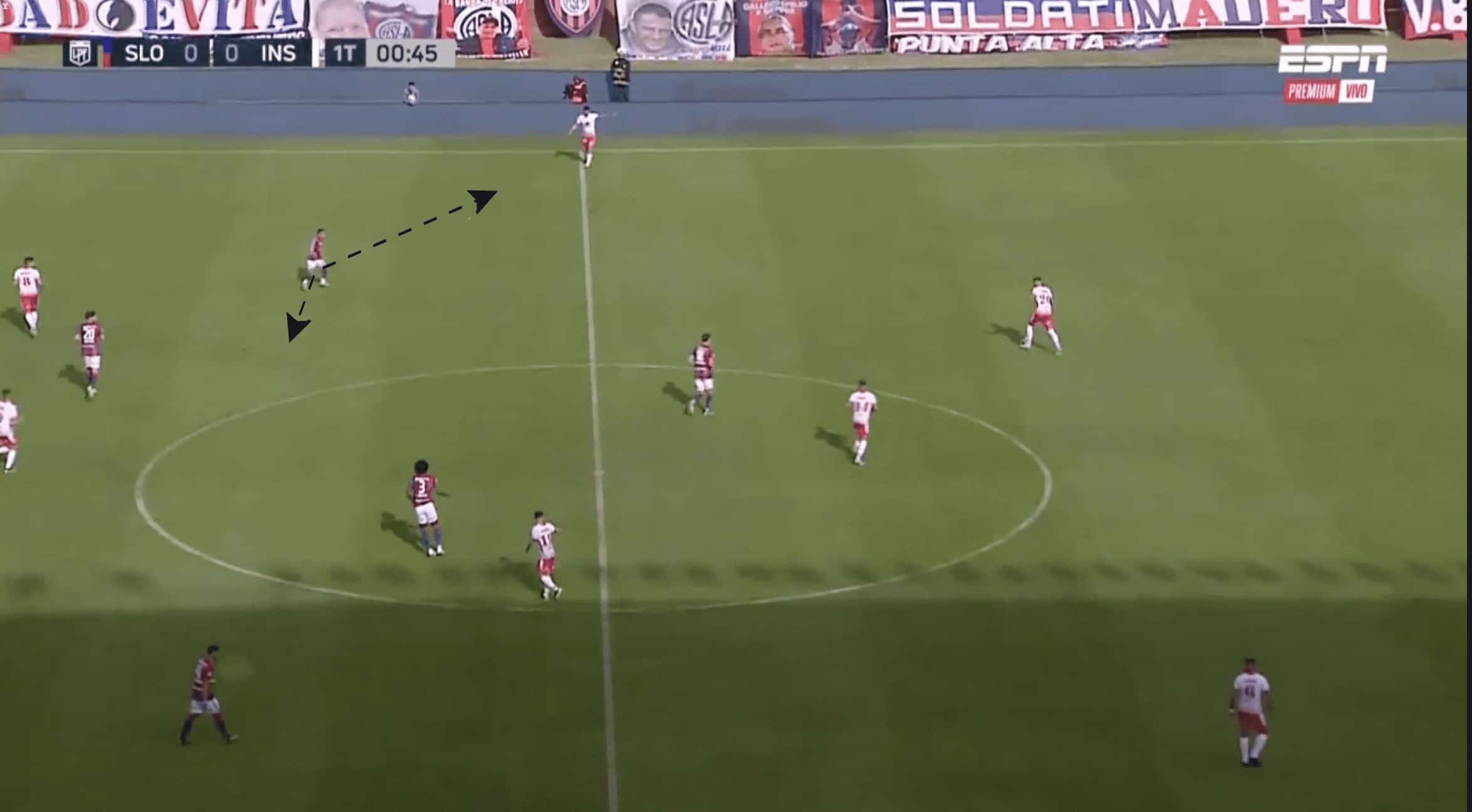
From these positions, San Lorenzo look to aggressively apply pressure to passes down the touchline or into the centre, with opposition players rarely being able to take more than one touch before being challenged for the ball.
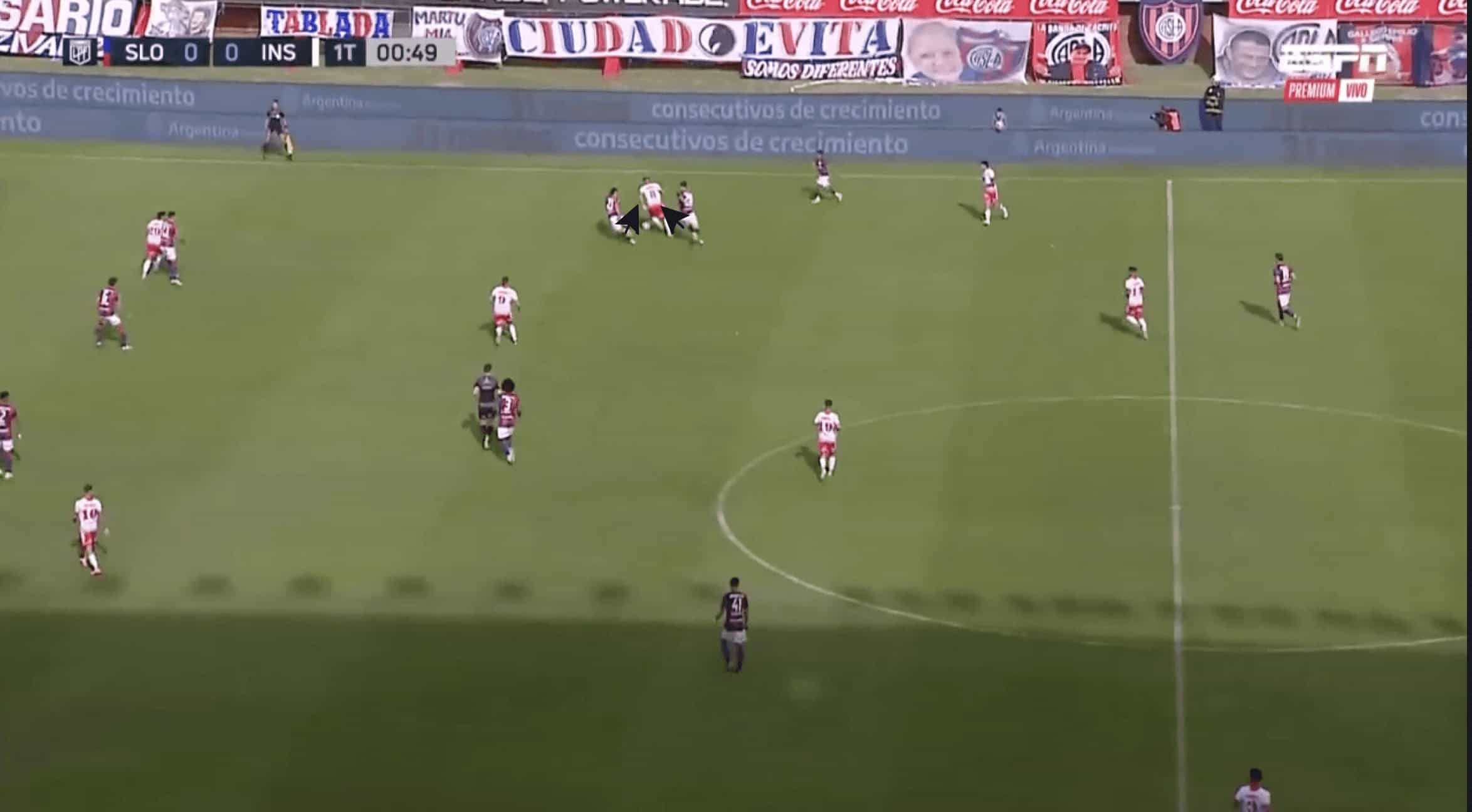
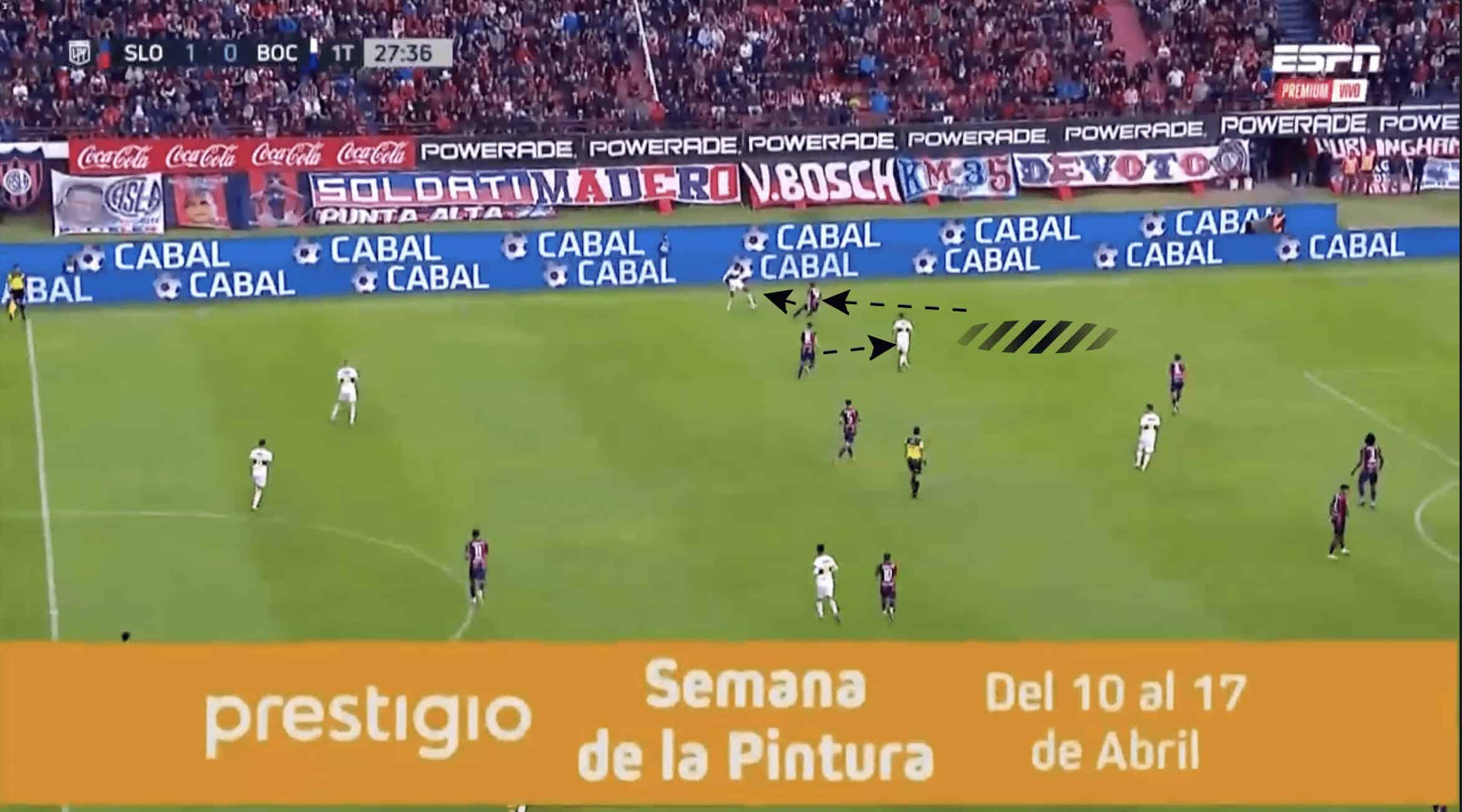
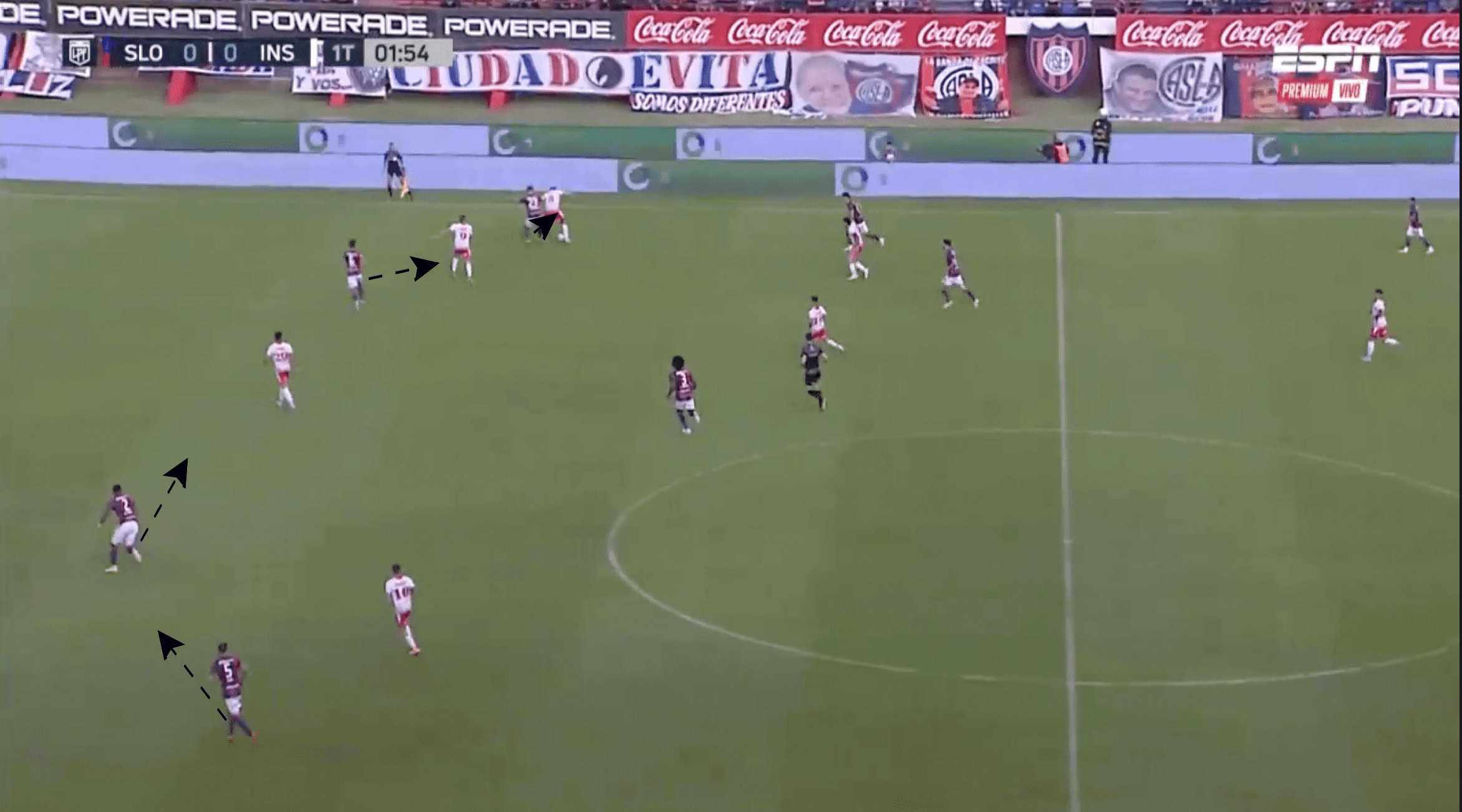
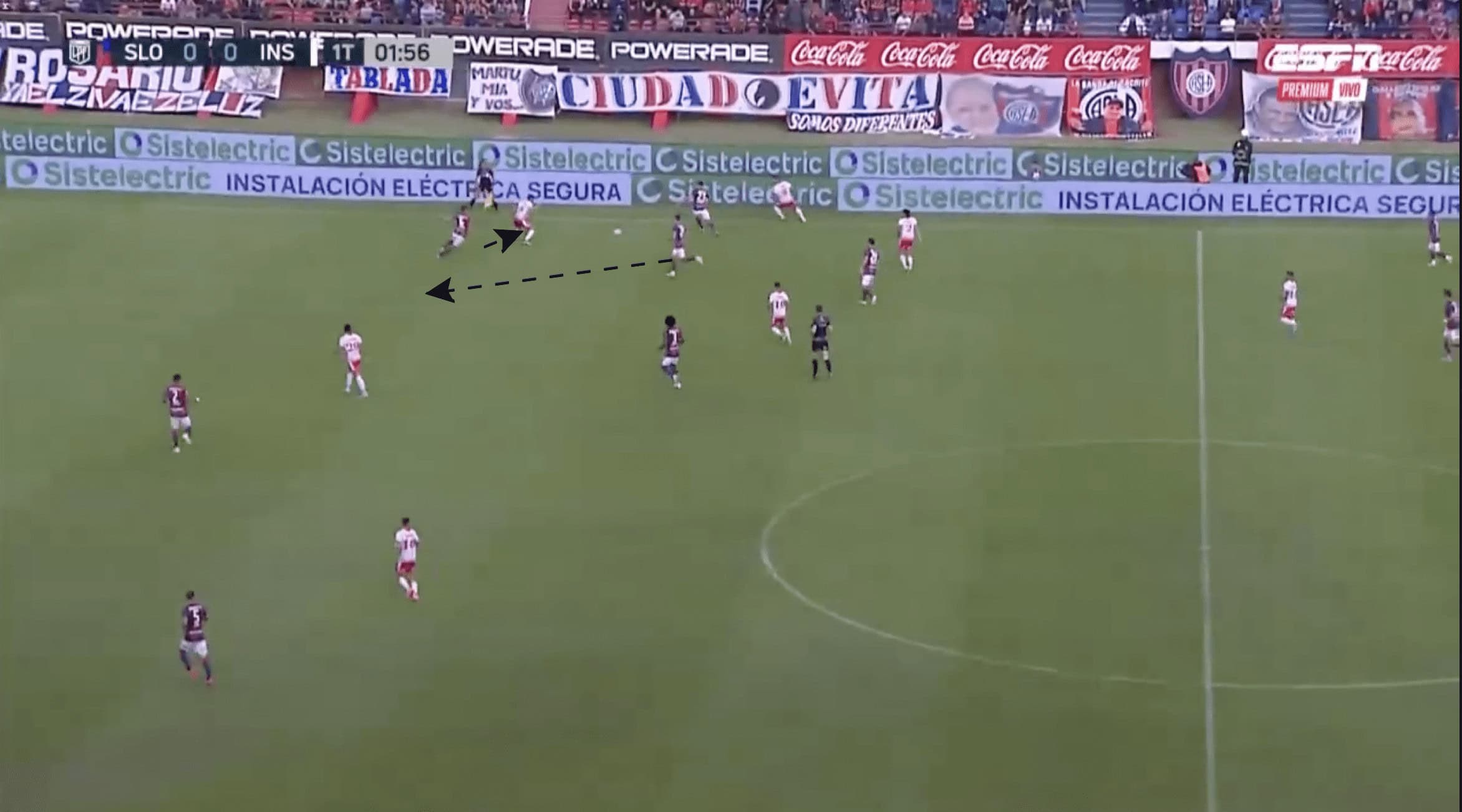
Once again, an additional element of their press in wide areas is the involvement of the back line. The last defensive line will shift across in order for one of them to be able to challenge for the ball extremely quickly in the wide areas. While this occurs, their teammates who are further up the field will look to drop into the defensive line in order to cover the pressing action of the centre-back.
This can be seen in the example below, where Gastón Alan Hernández, the centre-back, shifts across to press the ball carrier and Malcolm Braida, the wing-back, who previously engaged in a similar action further up the pitch, drops back into the defensive line.
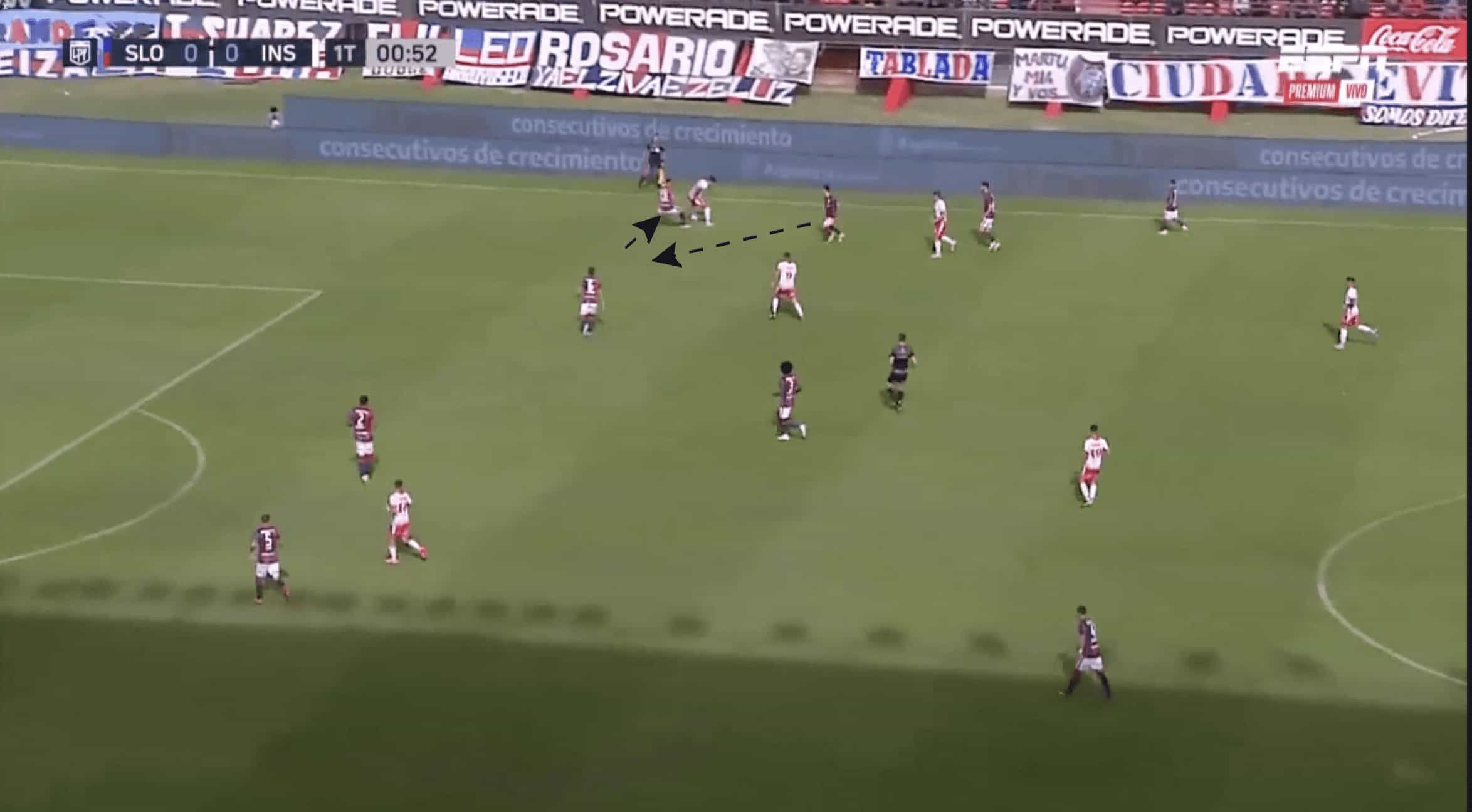
More examples of this can be seen in the images below.
Conclusion
With more than half of the season still remaining, it is still slightly early to firmly state that San Lorenzo are clear title contenders. However, through their defensive tactics as well as principles, it is notable that San Lorenzo have the defensive foundation to do this.
Although their xGA states that the side at this stage of the season should have conceded closer to 15 goals this season, this would still have them on average conceding less than a goal a game so far.
This analysis has looked to provide a detailed explanation as to why San Lorenzo’s defence has put them in a strong position at the top of the table.
