
25 February 2016, Manchester United were hosting FC Midtjylland in the Europa League. Manchester United manager at the time, Louis van Gaal, picked Anthony Martial as his starting centre-forward for the game. Unfortunately, the Frenchman went out injured in the warm-up and an academy graduate was chosen as the replacement. This then-relatively-unknown boy later scored twice in the game and started to pull the attention towards him. Just three days after, he made a brace against Arsenal on his Premier League debut.
The academy graduate goes by the name of Marcus Rashford. His brilliant performances continue and since August 2018 he inherited the Red Devils’ number 10 shirt. The bearers of the legendary number include Zlatan Ibrahimović, Ruud van Nistelrooy, and United all-time top-scorer Wayne Rooney. Without further ado, this tactical analysis will inform you about Rashford’s impact at United this season.
Player profile
Rashford started his senior career as a centre-forward. In his inaugural season, the Englishman scored eight goals and made two assists in just 1,415 minutes of football. However, Jose Mourinho played him in various positions when he arrived at Old Trafford four years ago. The Portuguese deployed Rashford as a target man as well as on both flanks in 2016/17.
The season after, Rashford played most of his games as a left-winger. The left flank has become his playing field ever since, even when Ole Gunnar Solskjær took over the helm from Mourinho. Solskjaer has played Rashford in 31 games this campaign with 23 matches as a left-winger. In those games, the 22-year-old has netted 19 times and made five assists. This makes him United’s current best goal contributor in 2019/20. For a fact, he hasn’t played a minute since mid-January due to a back injury. Such performance underlines his importance for Solskjær’s tactics this season.
Works in the half-space
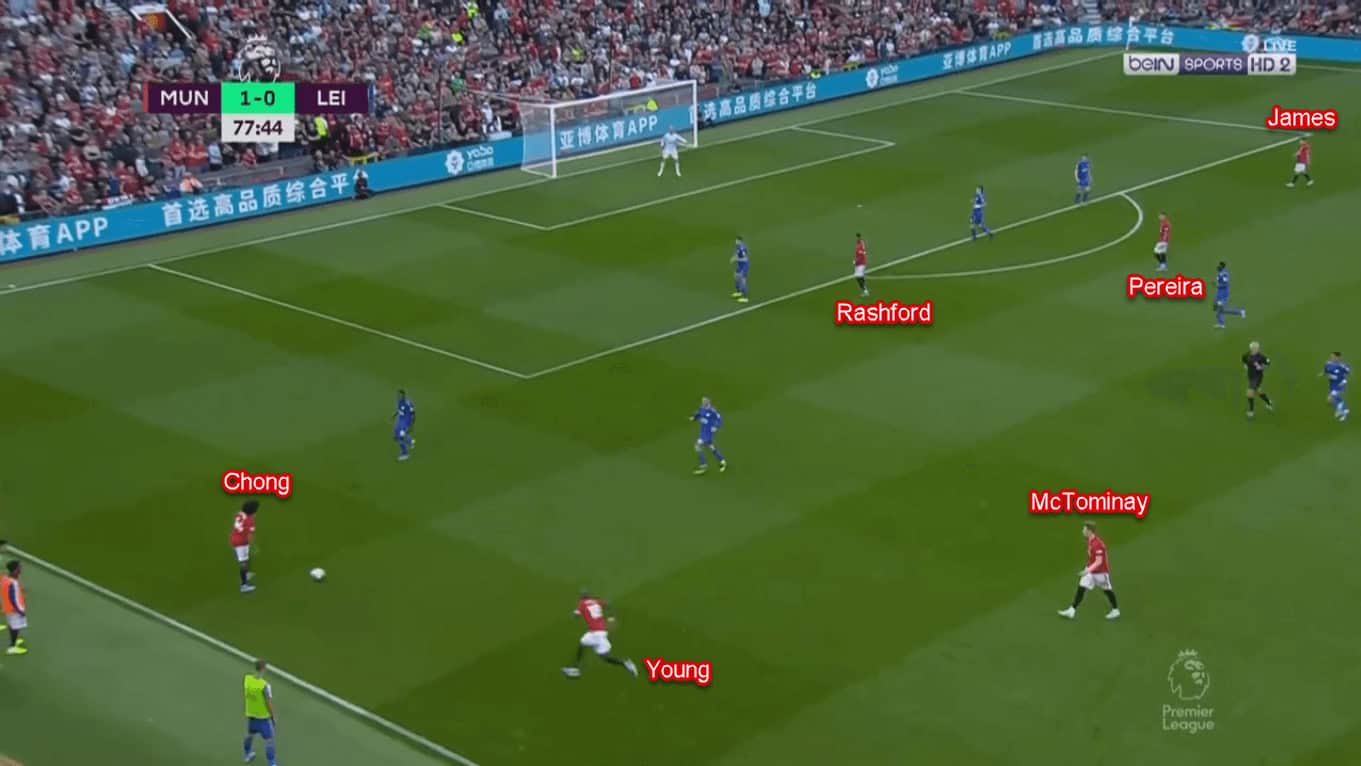
Solskjær tends to pick the 4–2–3–1 as his preferred formation. Offensively, he would tuck Rashford inside to play in the half-space. In the process, this allows United’s left-back to bomb forward and provide width. The full-back then can be served with a diagonal pass before going into the final third.

When United try to attack through the flanks, Rashford would come into the box to offer himself as one of the potential cross receivers. The Englishman would arrive at the far-post when the ball comes from the right flank. In the process, he would try to attack the gap between the defenders. Such a run enables him to attack from the centre-back’s blind-spot.

Another variation of Rashford’s approach in the final third is by using short combinations. He would do this — especially on the left flank — either by combining with the attacking midfielder or with the striker.
Sometimes, he would also rotate positions with the centre-forward, particularly Martial. It’s because he and Martial share relatively similar abilities and can play in both positions.
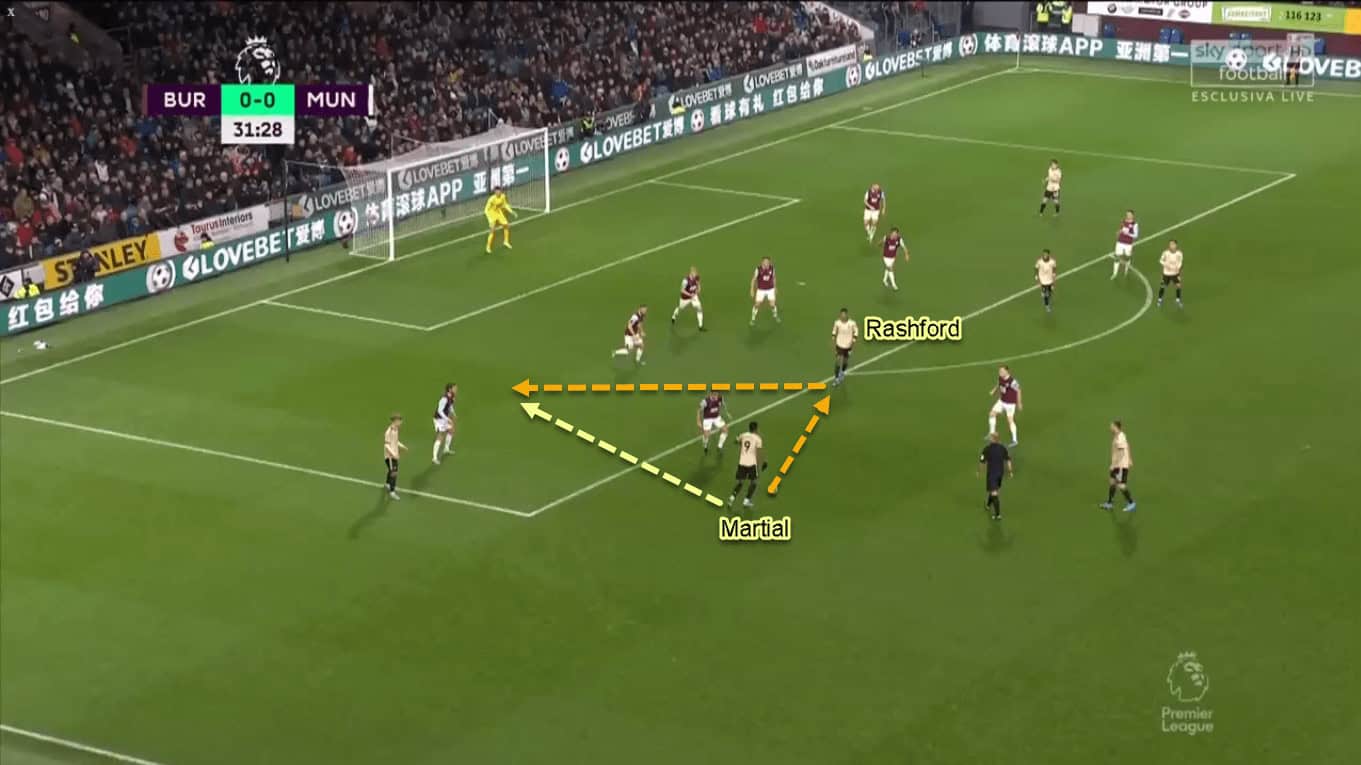
As a centre-forward, Rashford is tasked to stay central and pin the backline. By doing this he allows United’s attacking midfielder to roam the space in between the lines. Not only that, but he can also offer himself as a lay-off option for his teammate in that area.
However, he would also drop in that area to help his team continue their attack, especially when the attacking midfielder is drifting wide.
Sharpshooter
This part of the analysis will take a look at one of the Englishman’s most lethal weapon in his armoury – his superb shooting ability. He often uses a knuckle-ball to make a goal-scoring attempt, especially inside the half-space. The particular technique is chosen because of its swerving and dipping nature, making his shots more unpredictable for the goalkeeper.
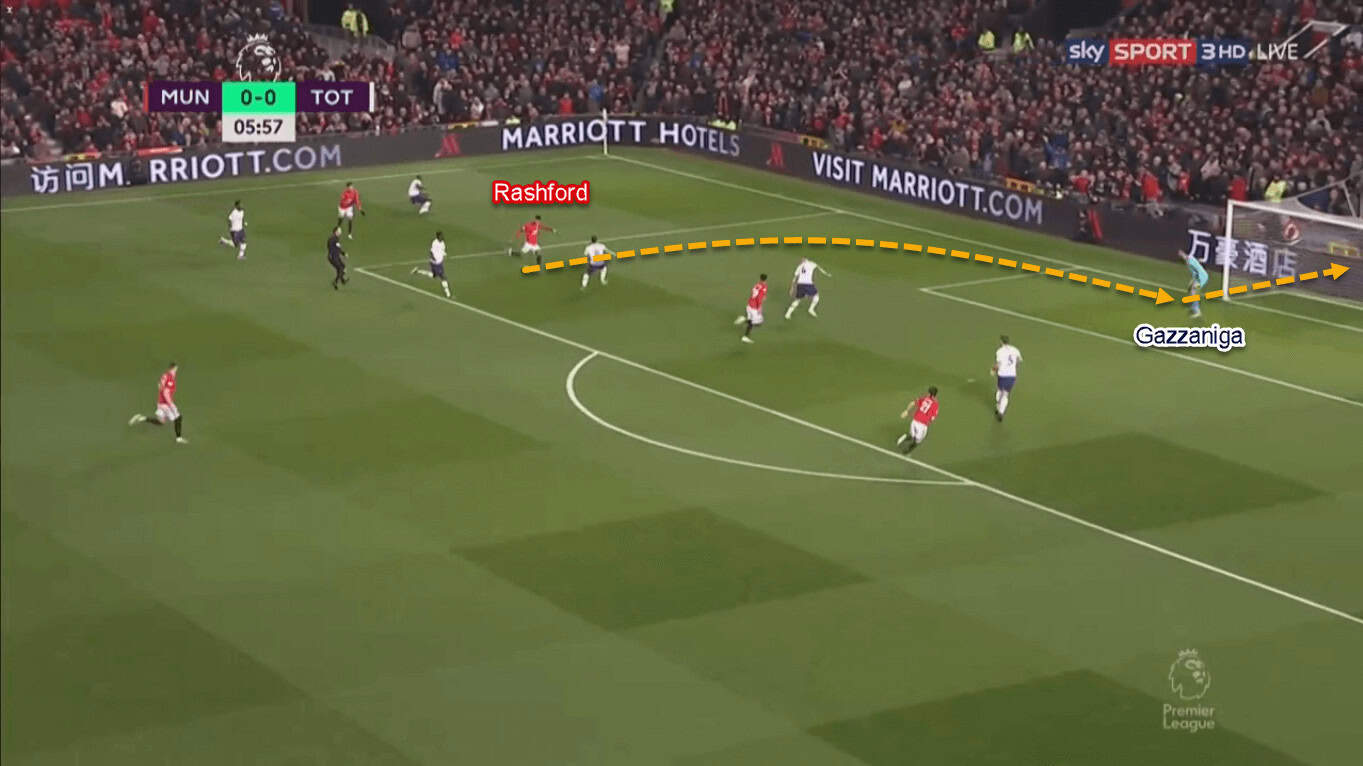
Looking at the statistics, Rashford averages 3.12 shots per 90 minutes. His high volume of shots doesn’t make him a bad-quality shooter. He averages 1.34 (43.1%) shots on target on the same rate; the eight-highest in the league.
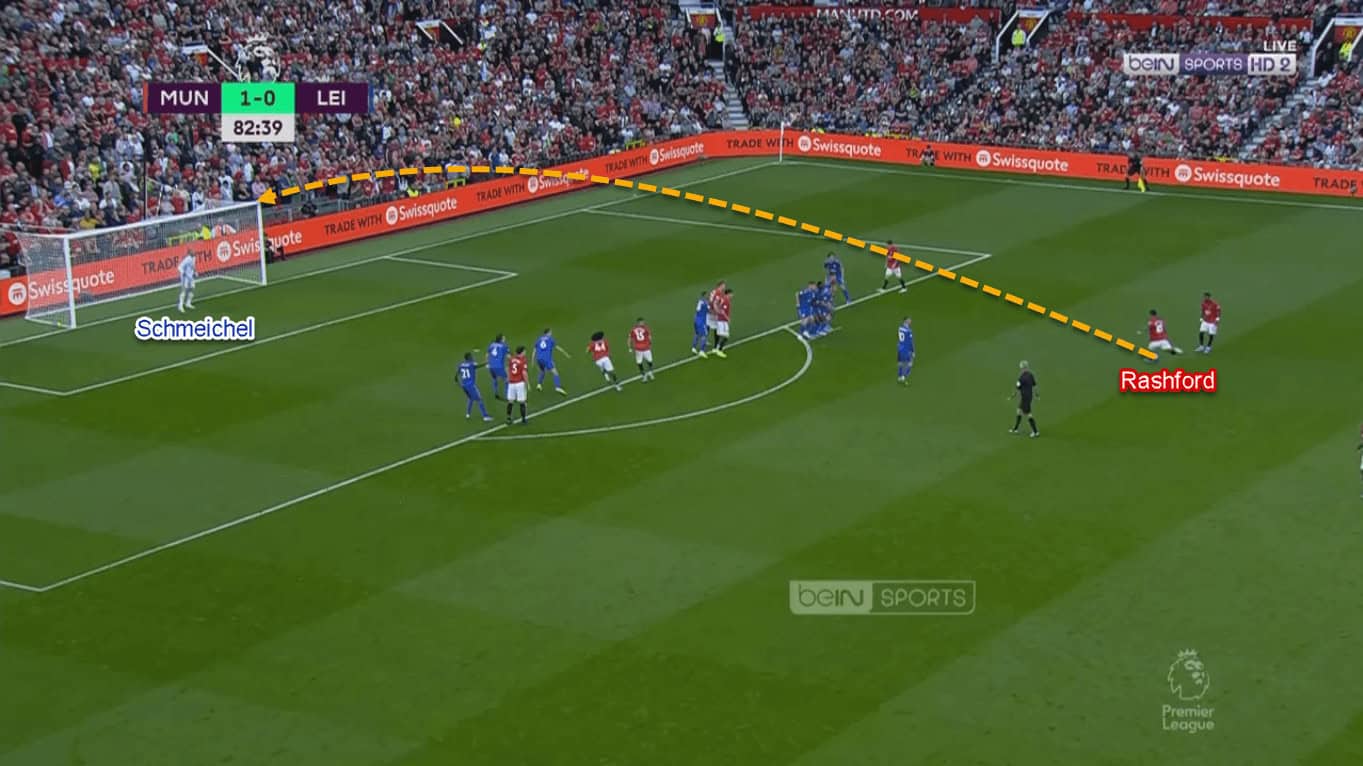
Rashford’s knuckle-balls are also useful in set-piece situations. Per the stats, he has taken at least 18 free-kicks across all competitions this season, including a long-range screamer at the Stamford Bridge last October.
Talking about set-pieces, Rashford is also decent from the 12-yard-spot. Per the statistics, the 22-year-old has taken 11 penalties in his career. From those numbers, nine (81.81%) of them were successful. For all fairness, some of those penalties are not just penalties. Those include the one in the 2019 Nations League, one in the 2018 World Cup, as well as the last-minute winner against Paris Saint Germain in last year’s Champions League.
Dangerous dribbler
Another weapon that has high importance in Rashford’s game is his dribbling ability. As a left-winger, one-versus-one duels is his staple food week in week out. He can drive inside with speed, utilising his pace and space around him, as well as using trickery to get past his marker in a tighter space. One of his favourite tricks is the flip-flap, also known as the elástico. By using this trick, Rashford will start by sending his marker to one direction with his first touch using the outside of the boot. Then he will quickly shift to the opposite way with his second touch using his inside foot.
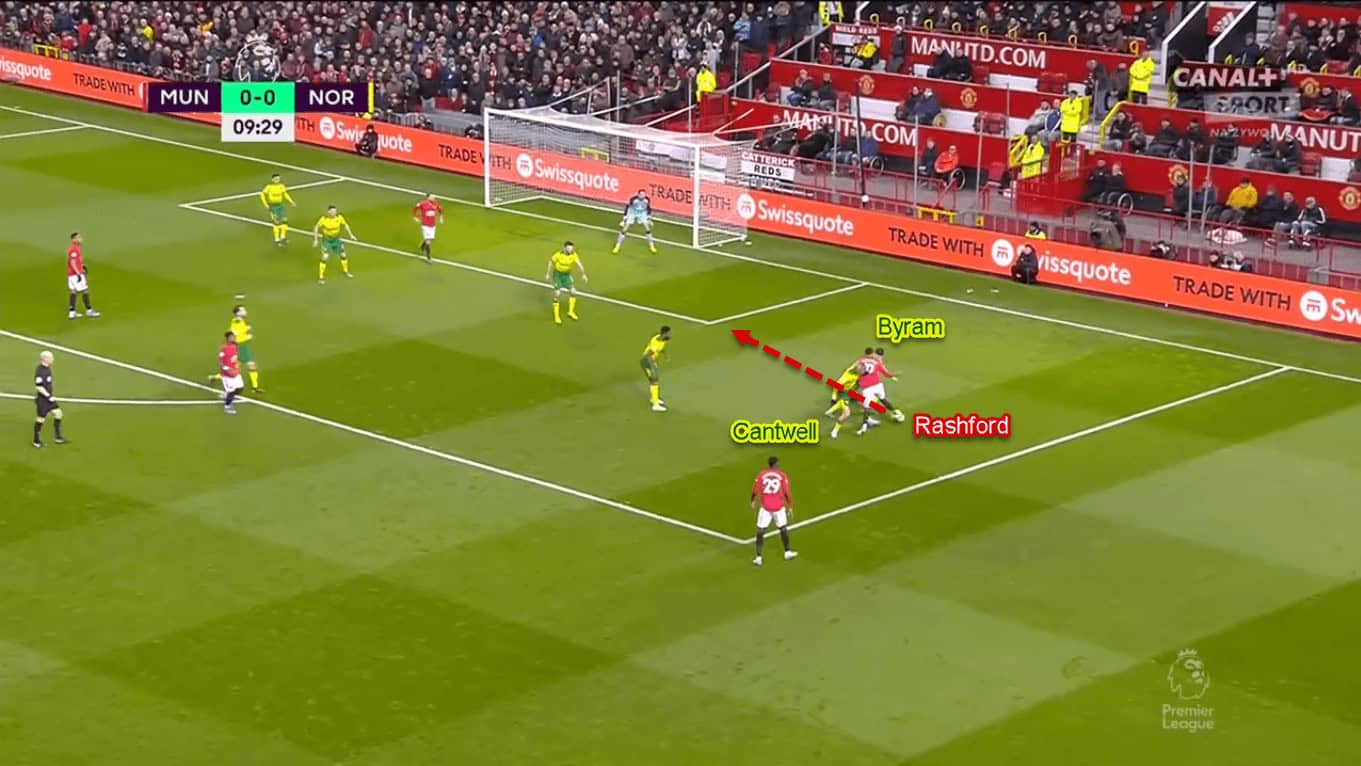
Another trick that Rashford likes to use is the nutmeg. In the process, he will try to knock the ball past the defender between his legs, before chasing it and continue the attack. Looking at the stats, Rashford has made nine nutmegs this season. For comparison, only Diogo Jota has made more in the Premier League this season.
Rashford’s sublime dribbling skill allows him to average 2.1 successful dribbles per 90 minutes in the league. For a fact, this rate is the highest among all United’s regulars this season. It doesn’t stop there. This particular ability makes him the main tackling target for the defenders. So far, he has drawn at least nine fouls that led to a shot attempt, joint-sixth most in the league. Even better, four (44.44%) of them happen inside the 16-yard-box.
Defensive roles as a left-winger
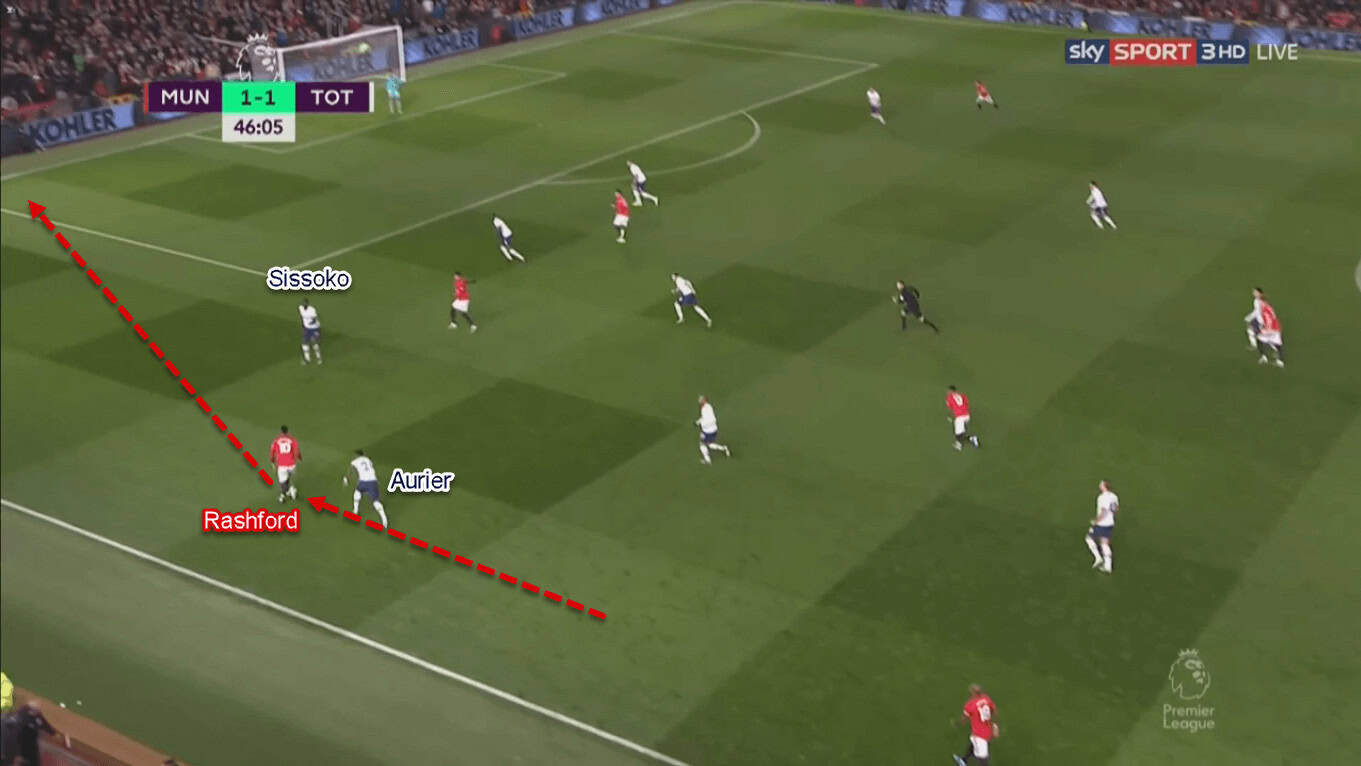
Defensively, Solskjær would set his team up in a rather high-press 4–2–3–1. In the process, Rashford would stand between the opponents’ right-back and right-side (defensive) midfielder. The objective behind this is to allow him to be close enough to press the opponents quickly, yet compact enough to prevent any central penetration.
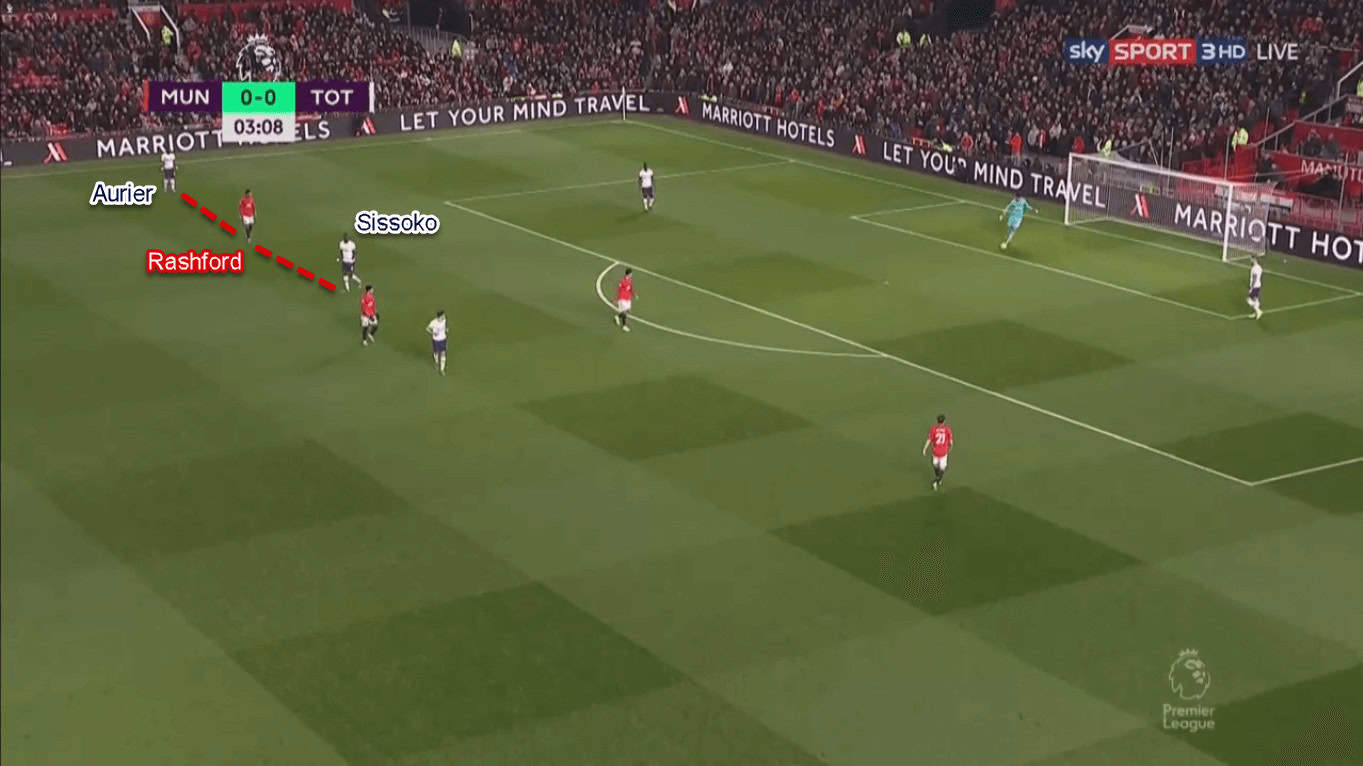
Usually, the opponents will try to build their attacks through their centre-backs due to the numerical advantage they have. If the opponents try to build from their left centre-back (Rashford’s far-side), the Englishman then would step up from his position and close down the opposite centre-back; the one without the ball.
By doing so, United would force the on-ball centre-back to return the ball to his goalie or even better, play it long against the towering duo of Victor Lindelöf and Harry Maguire.
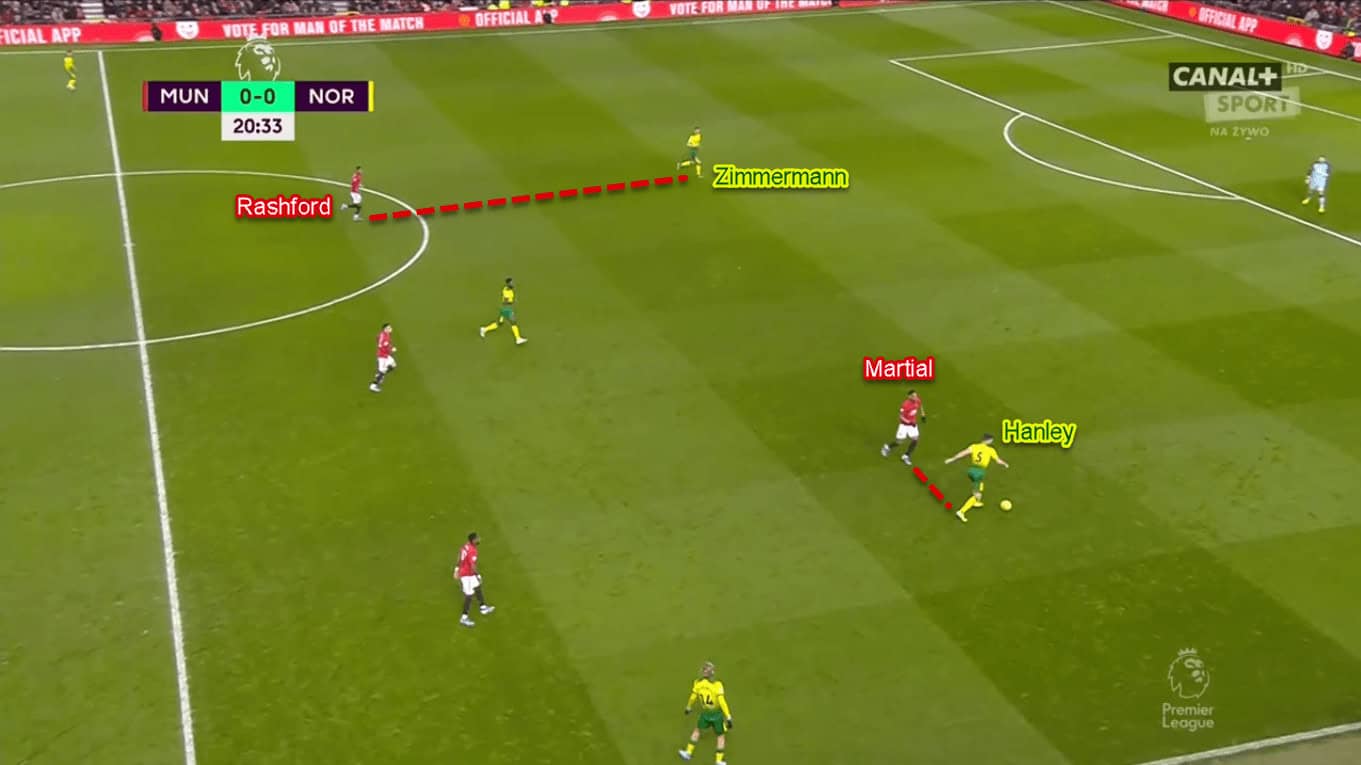
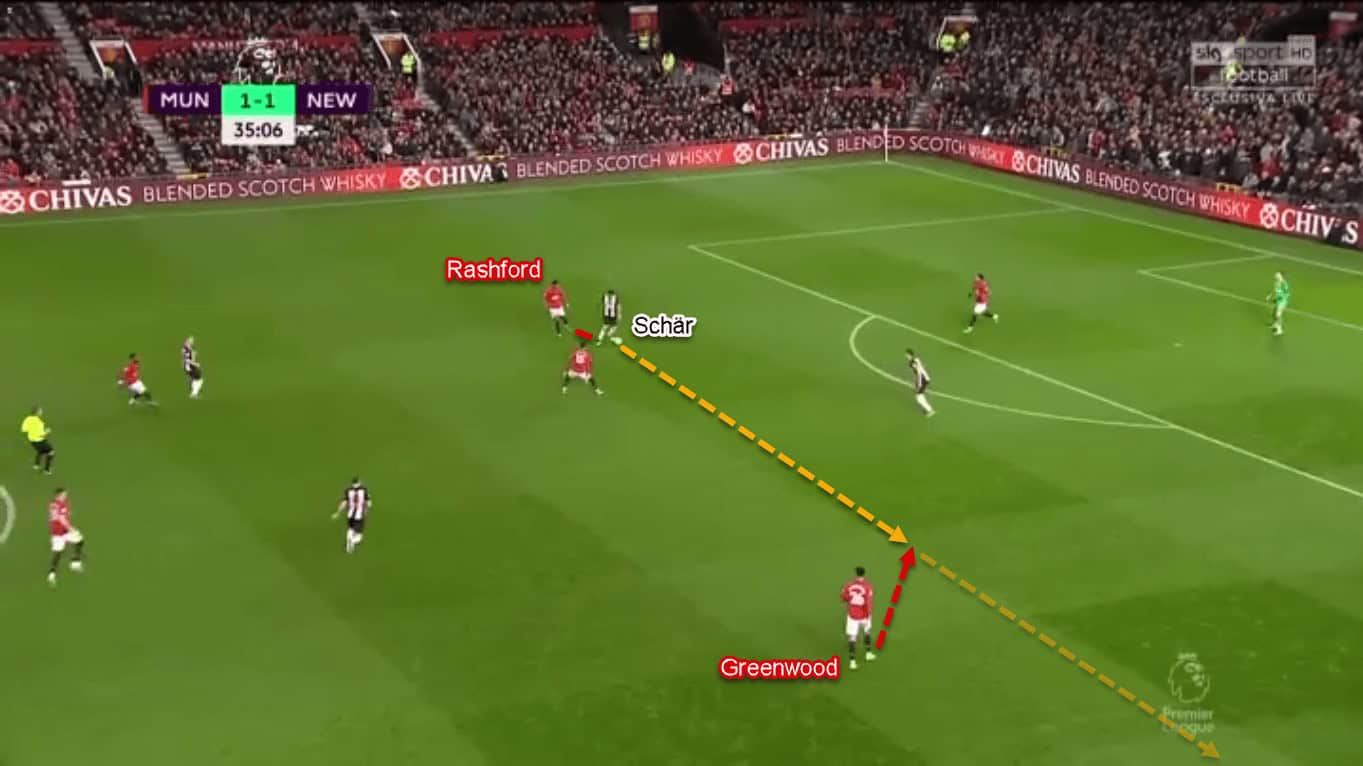
But, if the opponents try to build from their right centre-back (Rashford’s near-side), the Englishman would drift wide and close the right-back instead.
By doing so, he would prevent the ball to be played wide, as well as overloading the area with his teammates. Such defensive roles are important for transition-heavy United tactics.
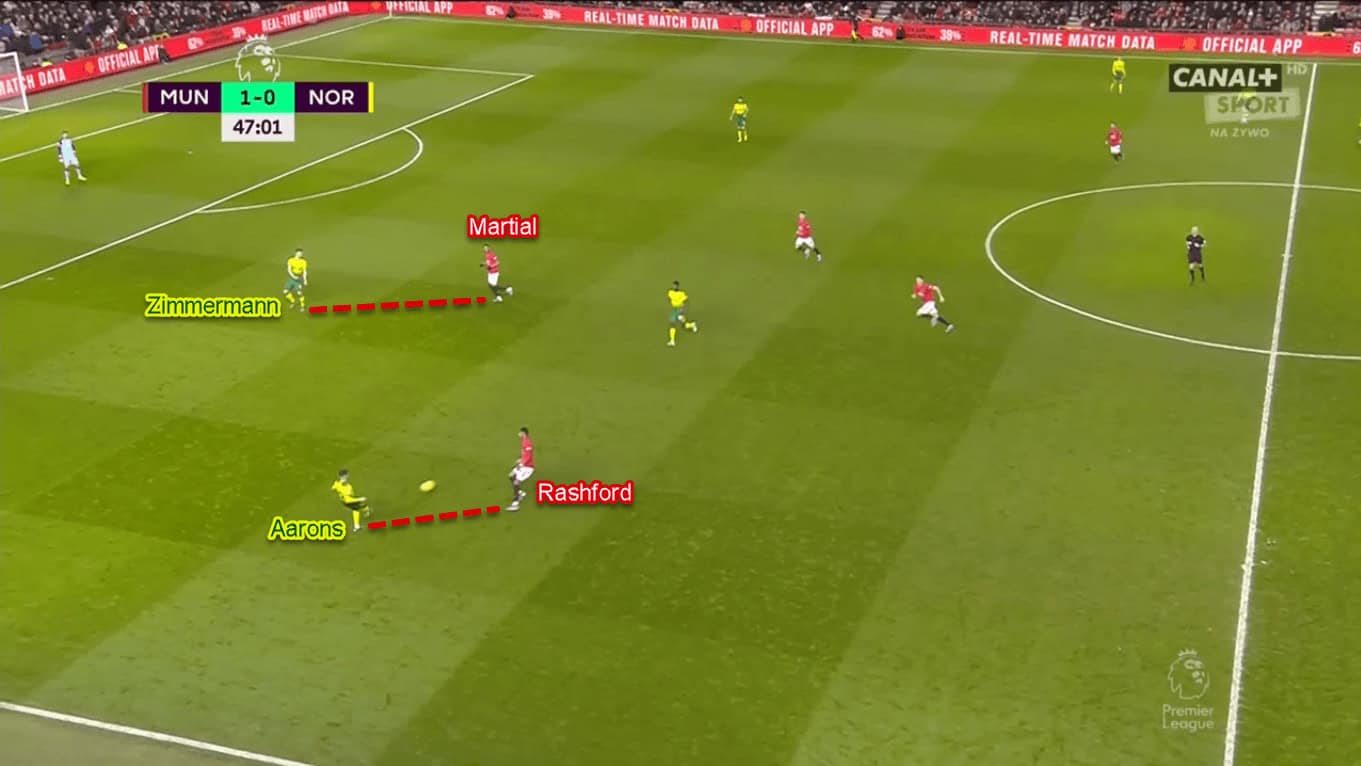
Defensive roles as a centre-forward
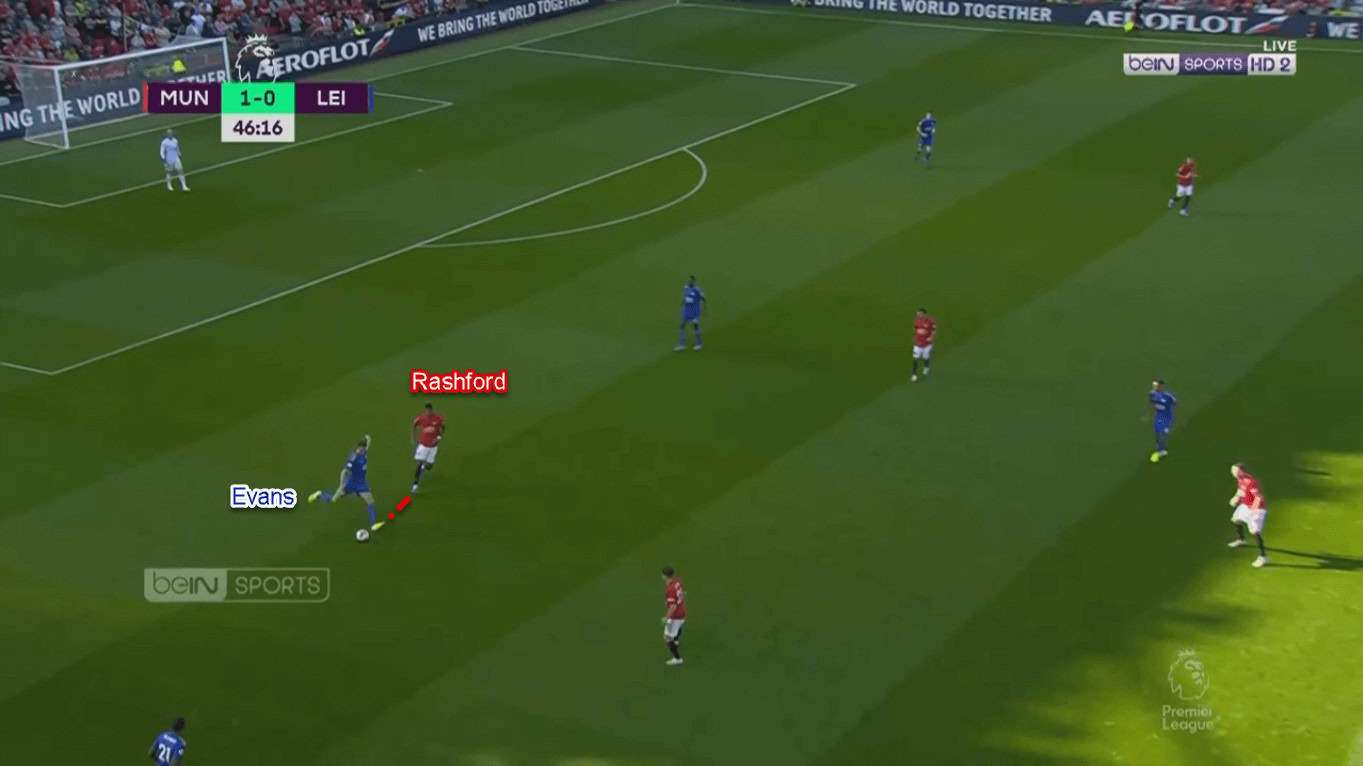
As a centre-forward, Rashford would stand between the opponents’ centre-backs. By doing so he would try to prevent the opponents’ goalkeeper to build the attack through the centre-backs. If they try to do so, Rashford would press the on-ball centre-back as well as closing his far-side partner with his cover-shadow.
The objective behind this is to limit the centre-back’s time and space with the ball, thus forcing him to play rather inaccurate long balls upfront.
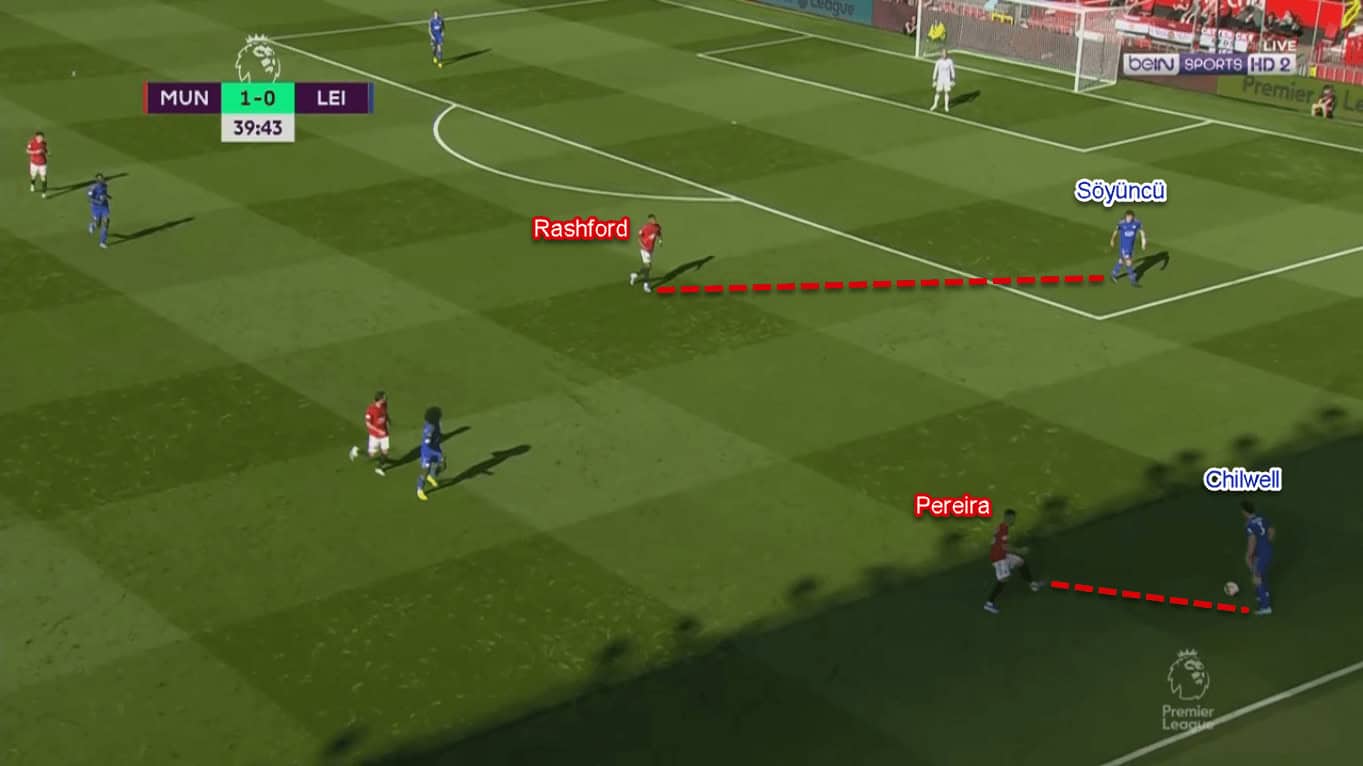
When the ball is being played wide by the opponents, Rashford would come near and join United’s press. In the process, he would try to close down the nearby centre-back.
The objective behind this is to prevent the opponents’ full-back from making a backwards pass to his closest defending partner. If he does so, Rashford would be well-positioned to press the centre-back aggressively.
Quick as a flash
In a transition-heavy team like United, pace is an important asset for the attackers. Lucky for him, Rashford has this natural gift in his armoury. He can utilise his pace in various ways. First, he can use this to initiate counter-attacks on his own. It means Rashford would try to carry the ball forward quickly before finding a better-positioned teammate(s) upfront. So far, he has travelled at least 3,860 yards when progressing the ball on his own. This feat is the third-highest in United’s squad in this league campaign.
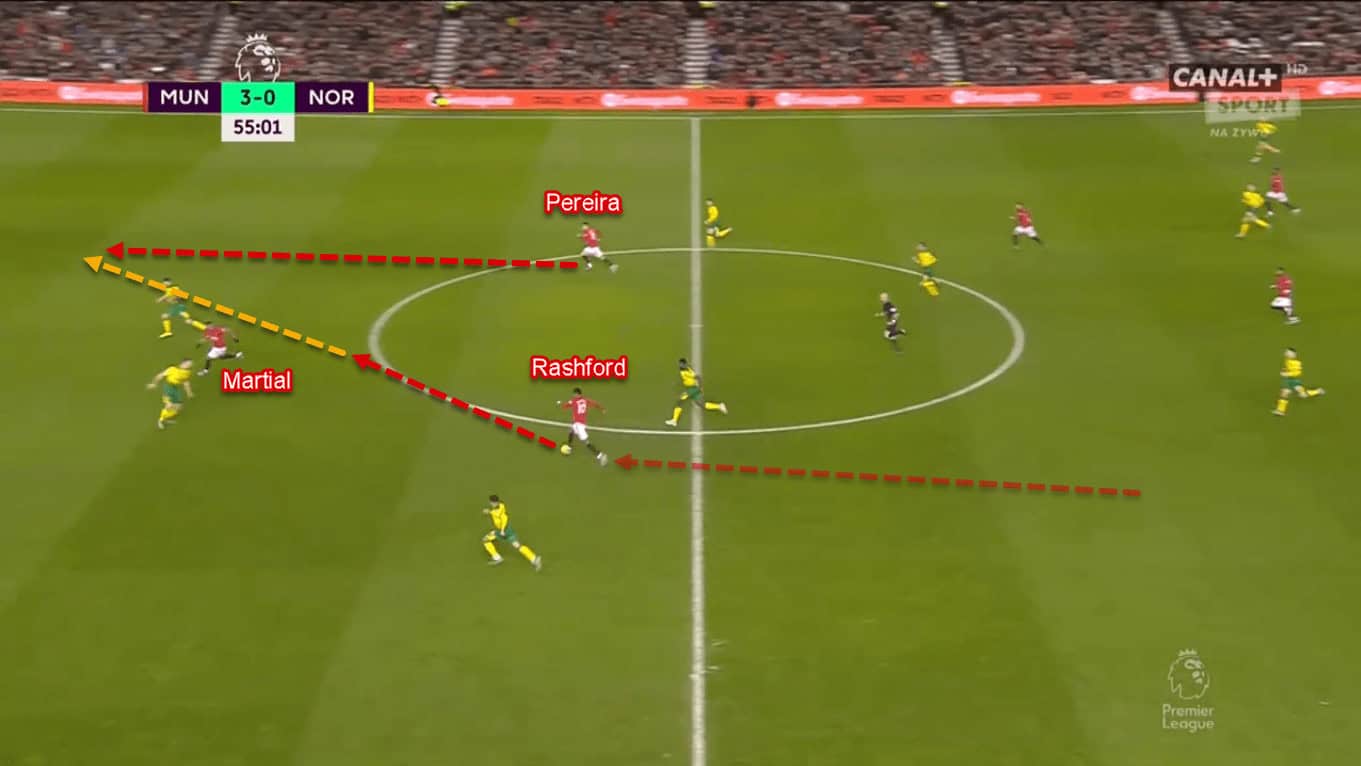
Rashford’s pace is also useful when he becomes the receiving end of United’s counter-attacks. Indeed, he’s known for his trailblazing short-distance speed. But, Rashford is more than that.
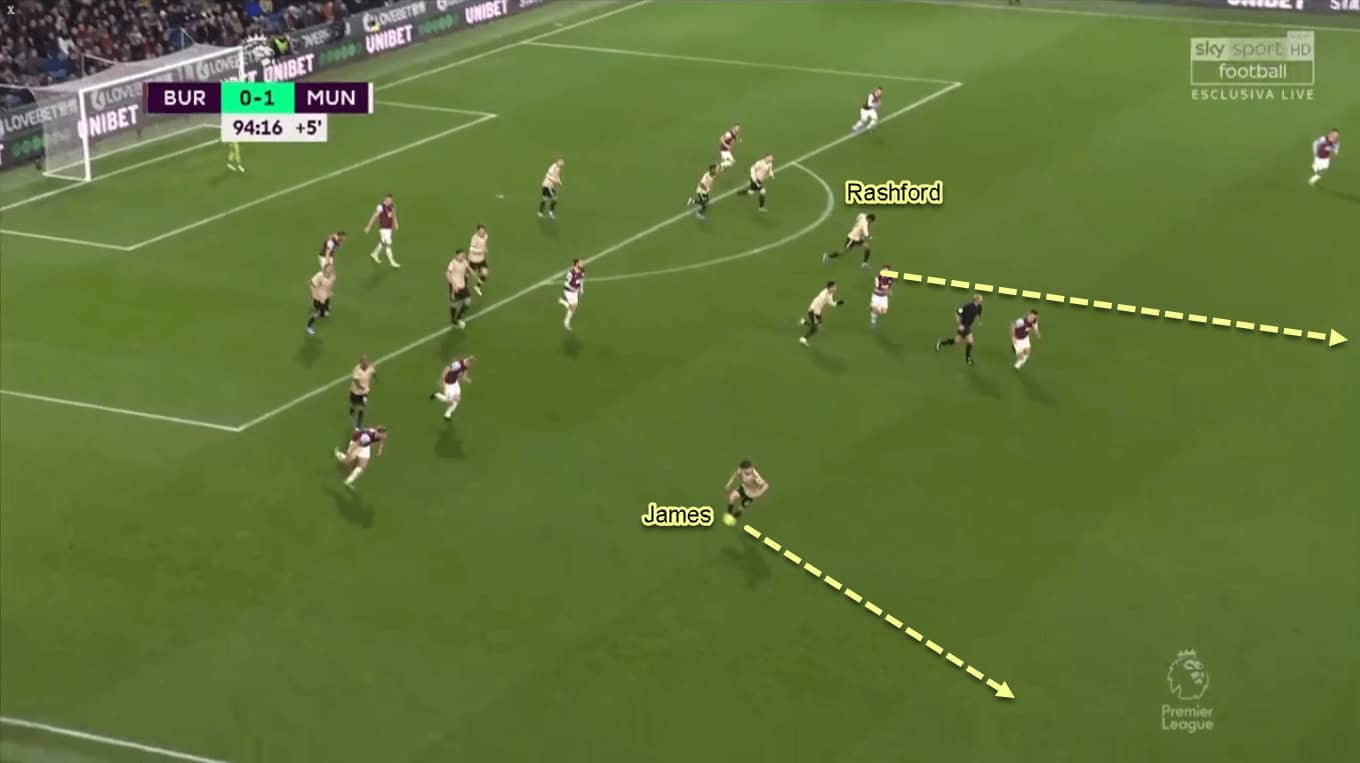
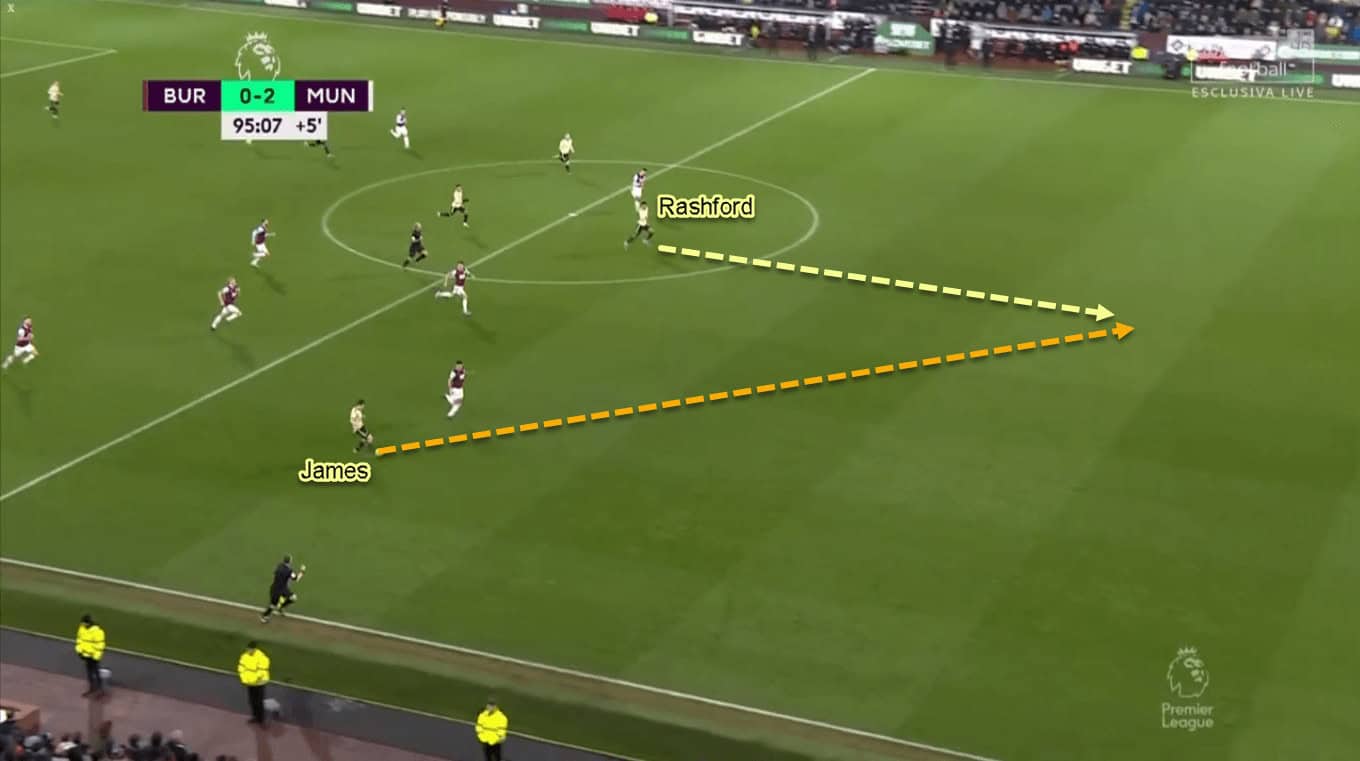
Quite often he can be found making a long sprint to join United’s counter-attacks, especially after defending a corner-kick. That means Rashford would sprint from one box to another with great speed before trying to slot the ball home.
Potential issues
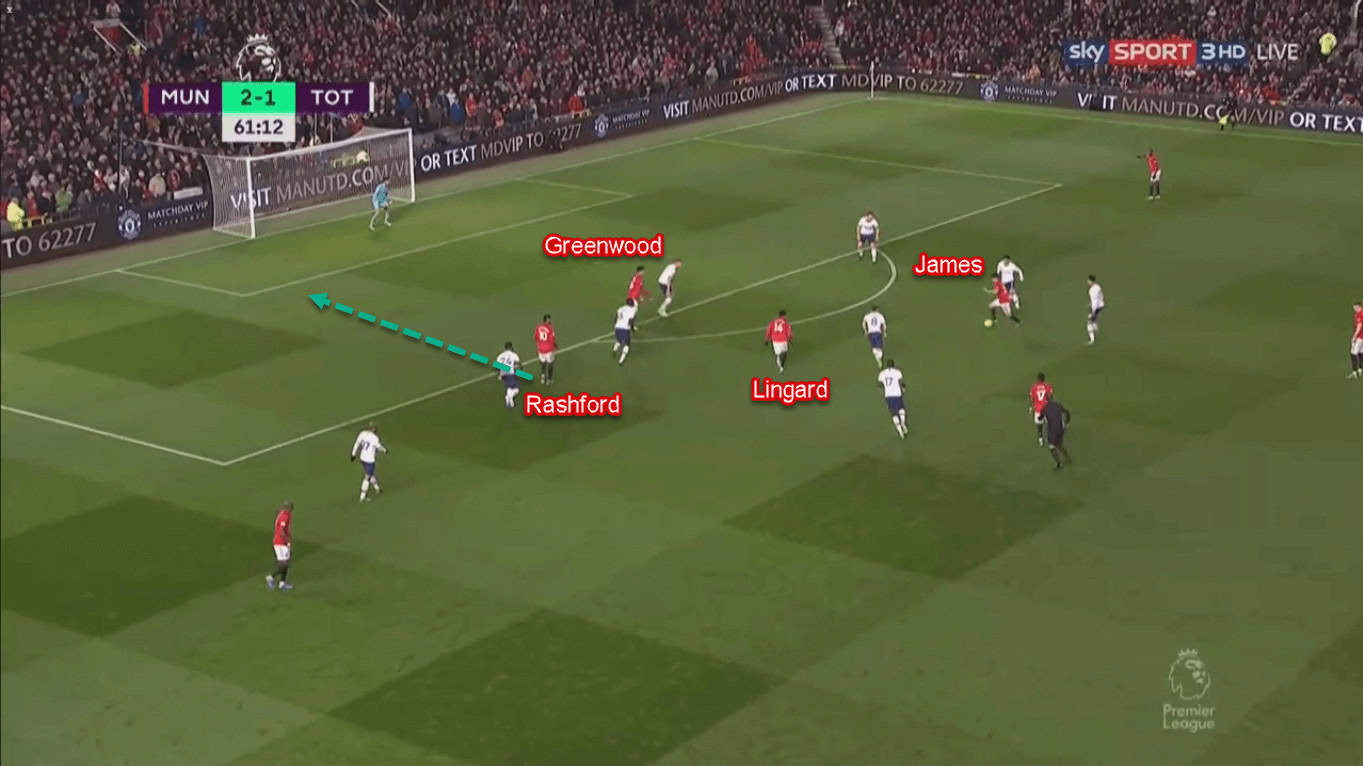
This part of the scout report will take a look at Rashford’s issues in his game. One recurring issue that can be found when he plays as a left-winger or a centre-forward is his lack of off-ball movements in the final third. The number 10 rarely makes curved runs, sudden stops, short bursts to the goalmouth, and even runs in behind. Indeed he has an explosive pace, but such issues make him somewhat more predictable for the defenders.
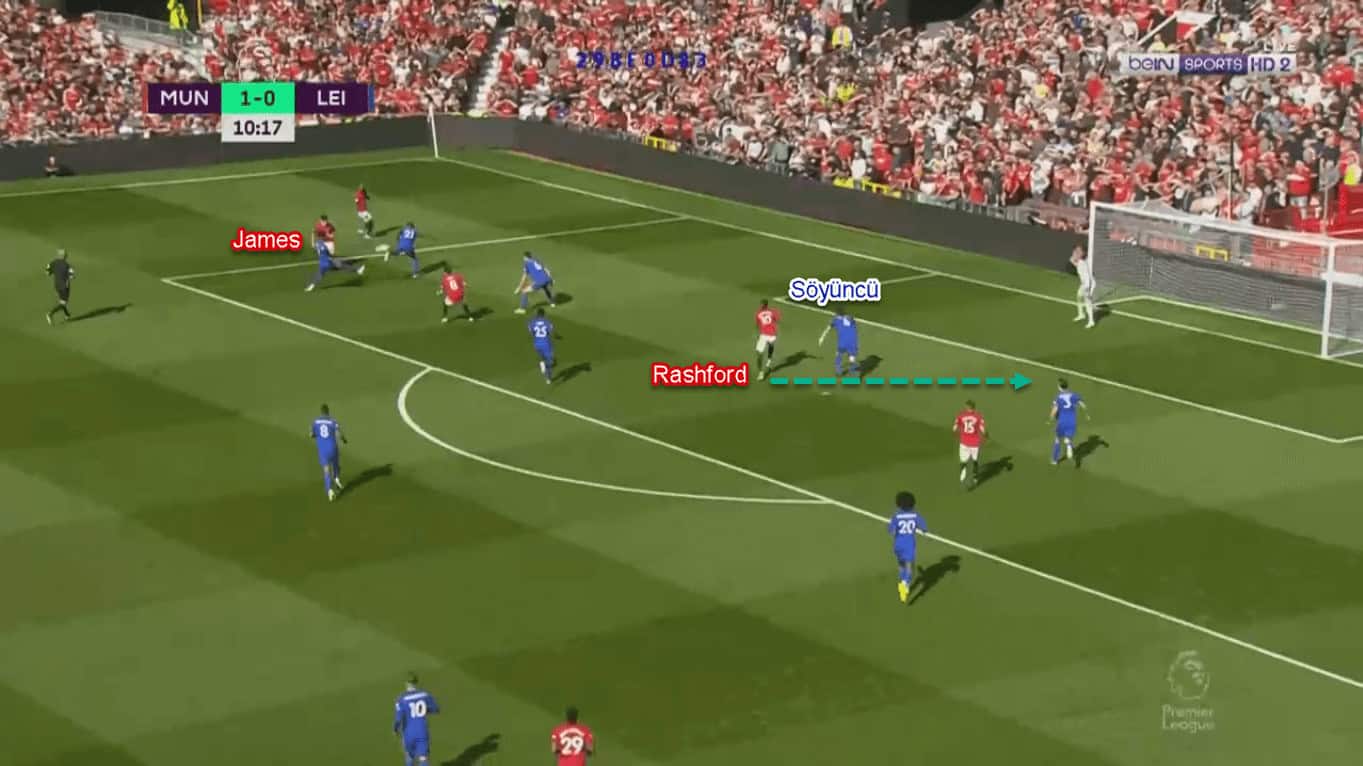
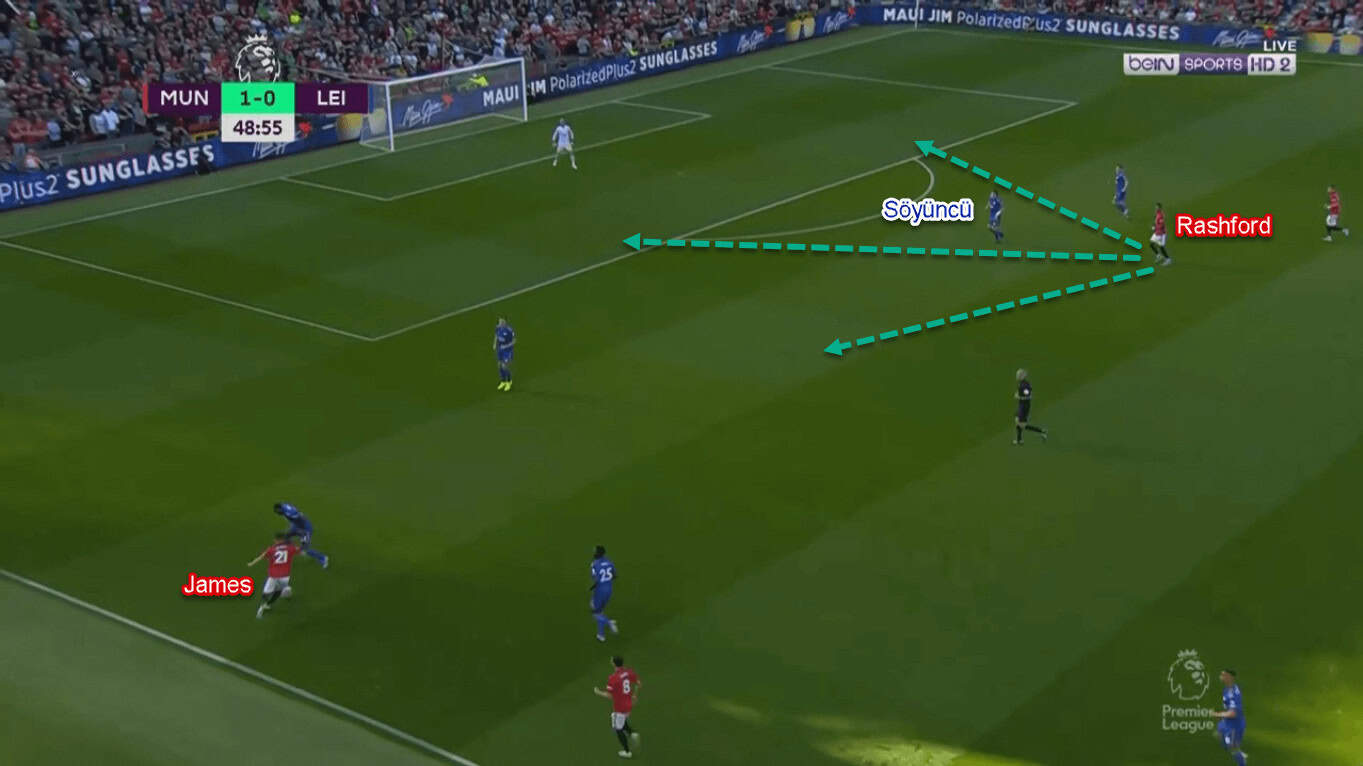
However, the same issue can also be found in another of United’s attackers. This problem is most noticeable when United try to unlock a deep defensive block. All the forwards seem passive and monotonous, including the talisman himself. This is very contrasting to the previous United greats like Van Nistelrooy, Robin van Persie, and Javier Hernández.
Another potential issue that somehow slows Rashford’s progress is his proneness to injury. Since Solskjær took over the managerial role, Rashford has missed at least 59 days due to various injuries. Coincidentally, his partner Martial has also missed at least 66 days because of muscle-related problems. For comparison, he never missed a month of football at United before Solskjær’s return.
Conclusion
Rashford is a joy to watch. His unmatched speed, unlimited stock of trickeries, and of course the unstoppable knuckle-balls are the reason behind that. With still being 22 years old, Rashford already has more than 200 appearances for his boyhood club. On top of that, he has also produced 64 goals and 32 assists for the Red Devils. It’s safe to say that Rashford is the true heir of United’s great number 10 shirt.
However, he still has some issues in his game. United’s transition-heavy approach this season did match his explosiveness, but it forces his muscles to burn out easier, making him more injury-laden than ever. Not only that but Rashford’s minimal off-ball movements inside the box are also a problem he needs to overcome. All of those issues can be solved with detailed tactical adjustments as well as good coaching from Solskjær and staff.
Will we see the best version of Rashford in the upcoming years? Only time will tell.
