
Last month, TSG Hoffenheim secured the services of Leon Avdullahu from Swiss champions FC Basel for a fee of €8m, making him their most expensive summer acquisition to date.
Following the departures of Tom Bischof and Diadié Samassékou and the now-rumoured sale of Anton Stach to Leeds United, Hoffenheim went into this transfer window knowing that reinforcement in the middle of the park may be necessary.
Christian Ilzer‘s men have decided to go with a young player who was a key part of Basel’s league and cup double-winning campaign, which helped them reclaim their place as the dominant force in Switzerland after a few rough years.
This scout report and player analysis will examine Avdullahu’s strengths and areas for improvement ahead of the new season, as well as what he brings to both TSG 1899 Hoffenheim and the German Bundesliga this year.
Who Is Leon Avdullahu?
Leon Avdullahu is a 21-year-old defensive midfielder who stands at 6’1″(185 cm or 1.85 m) and weighs 174 lbs (79 kg).
In 2024/2025, Avdullahu primarily played as part of a double pivot alongside another defensive midfielder in Basel’s 4-2-3-1 formation.
Still, he also played numerous times slightly further ahead as a #8 in a 4-4-2 formation.
Before his summer move, Avdullahu played 71 times for FC Basel, following his promotion to the first team in 2023.
He had spent five years in the club’s youth ranks since joining as a 14-year-old in 2018.
He has also played 22 times for Switzerland at international youth level, spanning from U15 to U21.
However, recent reports suggest he may be looking to make a switch to play for Kosovo at the senior level after meeting with their FA president in June.
While his international future is still to be decided, his club career is secure, as he’s now committed to a long-term deal with his new club, Hoffenheim, and a chance to make a name for himself in a top-five European league.
Before we discuss some of Leon Avdullahu key traits, let’s examine his radar map from the 2024/2025 campaign and find some interesting data points about him.
Leon Avdullahu Radar Map 2024/2025
 Given that Avdullahu is a defensive midfielder, his offensive metrics won’t be as crucial as his possession and defensive ones, so we’ll focus on those here.
As we can see, his distribution of the ball looks to be a strong point in his game.
He ranks in the 89th percentile among others in his league in his position when it comes to his passing accuracy, despite only ranking in the 78th percentile in passes per 90 minutes.
He also ranks well when it comes to playing forward-minded passes, being in the 55th and 66th percentiles for progressive and dangerous passes per game, respectively.
On the defensive side, another strength of his is his success in aerial duels, where he ranks around the 80th percentile in duels won in the air.
However, there are also some weak points to consider when examining his radar map, particularly his ranking in defensive duels won and positioning, which are quite low.
Let’s first elaborate on some of his strengths, though, before touching on some areas he could still work on with his move to German football.
Leon Avdullahu Strengths
As alluded to in the previous section, two main areas of Avdullahu’s game stand out, making him a key player for Basel: his passing and his defensive work.
The midfielder has been described, including by himself, as a quiet character off the field but an aggressive force on it.
He relishes taking on challenges, helping his team regain possession when they lose it, and providing his own input when they’re in possession.
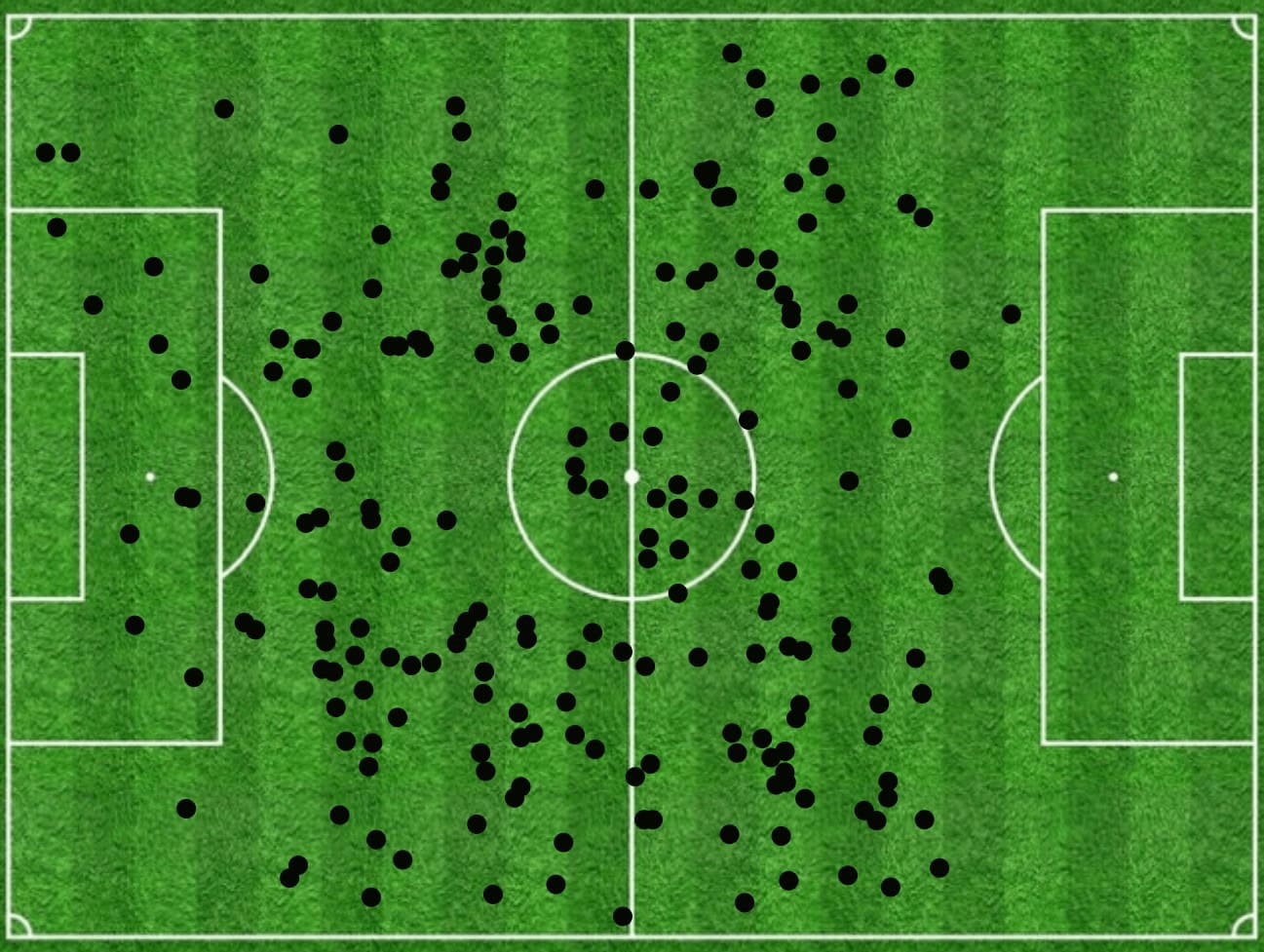
In the 2024/2025 Swiss Super League season, Avdullahu posted a total of 219 ball recoveries, which was the second-most in the league behind Servette‘s Timothé Cognat, who had 270.
He also ranked seventh in tackles made and 17th in interceptions, which further supports his tag as an aggressive ball-winning midfielder.
Below, you can see a visual of all his ball recoveries, which also highlight his activity in different areas of the field, making him appear to be a more mobile than static defensive midfielder who is able to get around the pitch and go wherever needed to attempt to win the ball back.
Leon Avdullahu Ball Recoveries 2024/2025
 To further illustrate this, let’s examine a couple of examples.
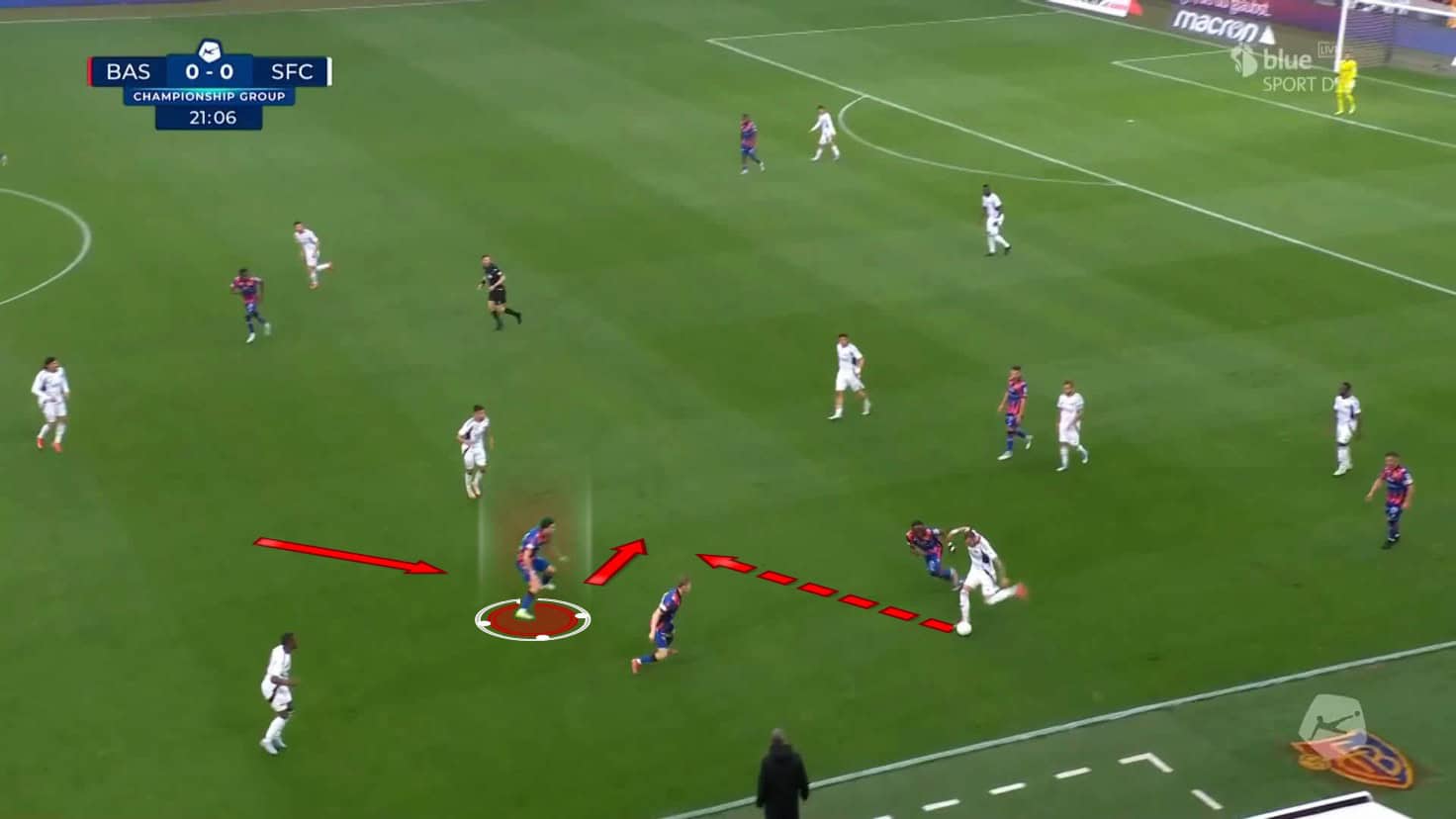 Above is from the last home game against Servette, where we can see Avdullahu pushing higher up the field from his post to join the press.
Before the pass is even played from the left, he anticipates early that it could go central to an open player and decides to move in that direction just in time to reach it, which it was, in case it’s played.
He ended up regaining possession for his side.
It was a simple move, but without the instincts to anticipate the opportunity to win the ball and time his movement into the correct spot to do so, it didn’t happen, and Servette could have progressed upfield to create an opportunity of his own.
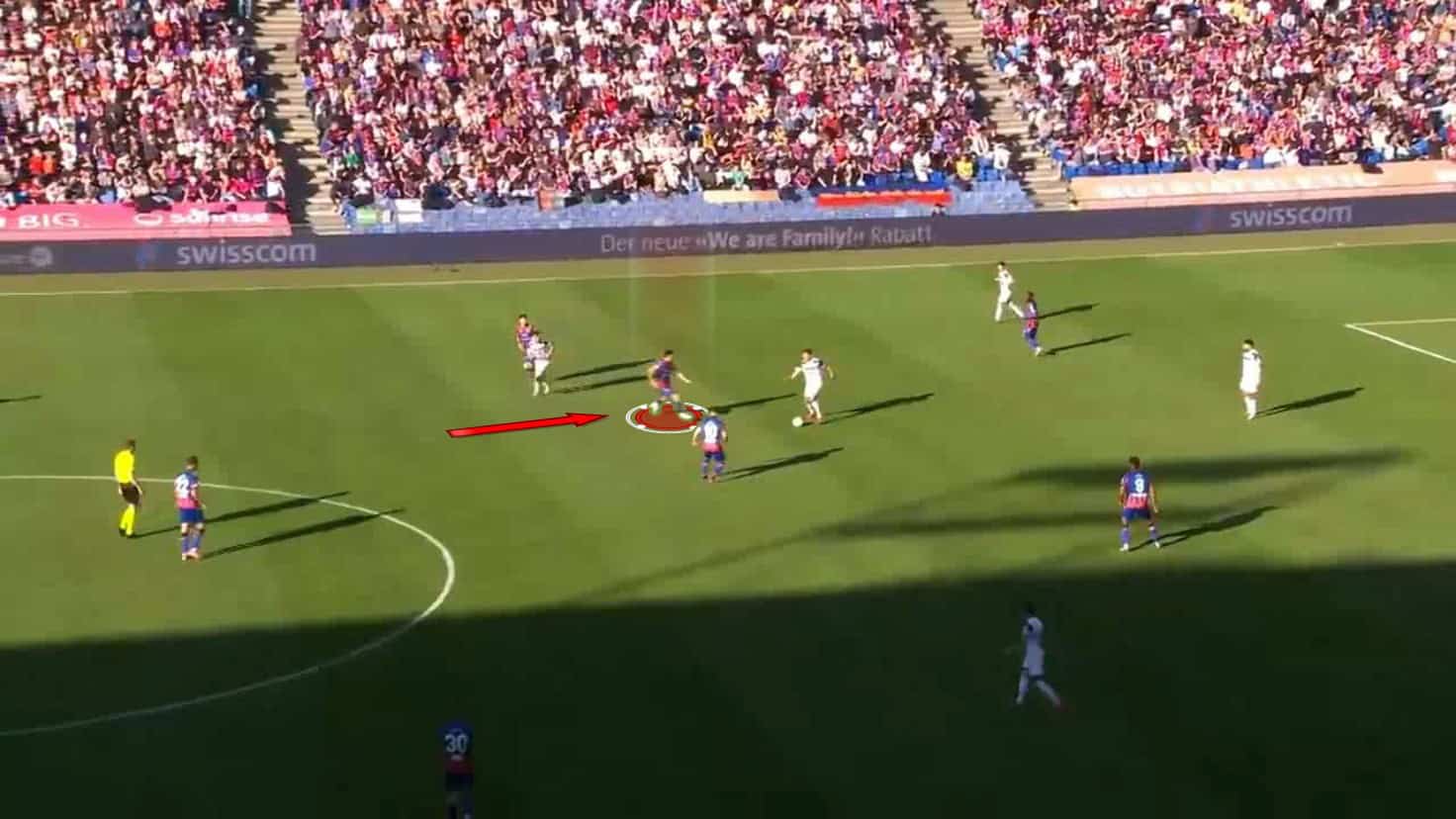 Here’s another one in which he pushes even further up the field to lead the press from midfield beyond the attackers, who have already advanced beyond the ball.
With sufficient cover behind him and no real passing lane available to the player on the ball, Avdullahu decides to gamble and try to nick it off of him.
He ends up doing so, which leads to a scoring chance seconds later, all thanks to his playing with the desire to win possession with a high press.
The other area in which he’s proven himself competent is his passing, but let’s expand on that.
His importance to Basel as a facilitator, coming from deep, only needs to be highlighted by the fact that he ranked third in the league for most passes of any player, with 1871 in total, 1635 of which accurately found their target, for a pass completion percentage of 87.3%.
But it’s also relevant to note that of the 50.83 passes he averaged per game, 17.34 were played forward and 8.57 into the final third, and he still maintained over 80% accuracy in both, displaying that he’s more than just someone who looks to play the ball safe by going sideways or back.
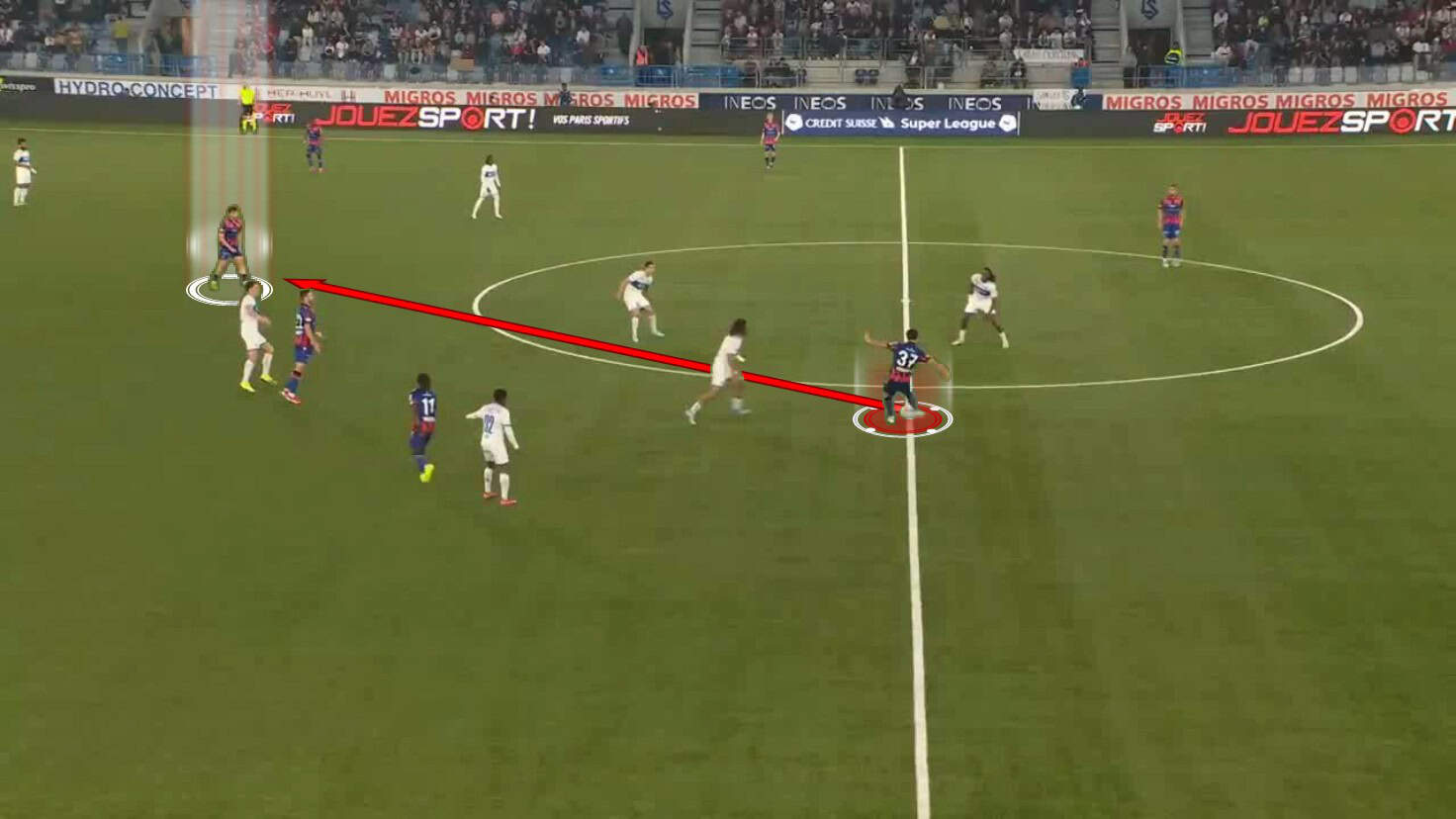 A good example of that above is from the Lausanne away game late in the season, where he spots an open teammate behind six opposing players and picks him out with a line-breaking pass, which allows Basel to move towards the goal from there.
He operated as both a #6 and #8 at different points of the campaign, which required different tasks of him in his role within the team.
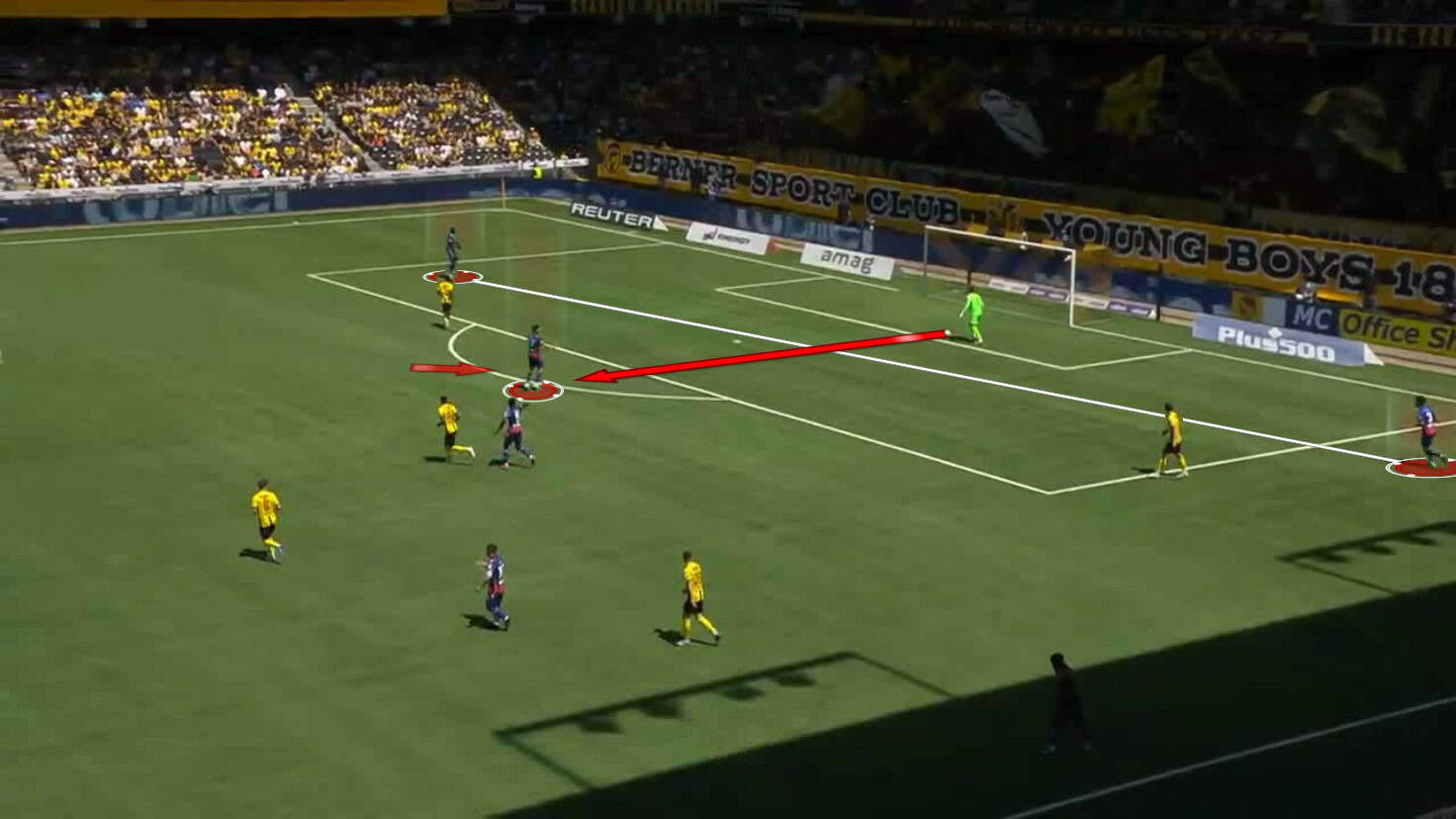 When playing more as a #6, which was his predominant role over the year, he’d often position himself either centrally in front of the center-backs to offer them and the goalkeeper a progressive passing option (like in the example above) or move slightly wider which gave Basel another avenue of moving upfield by accessing the half-spaces (like in the example below).
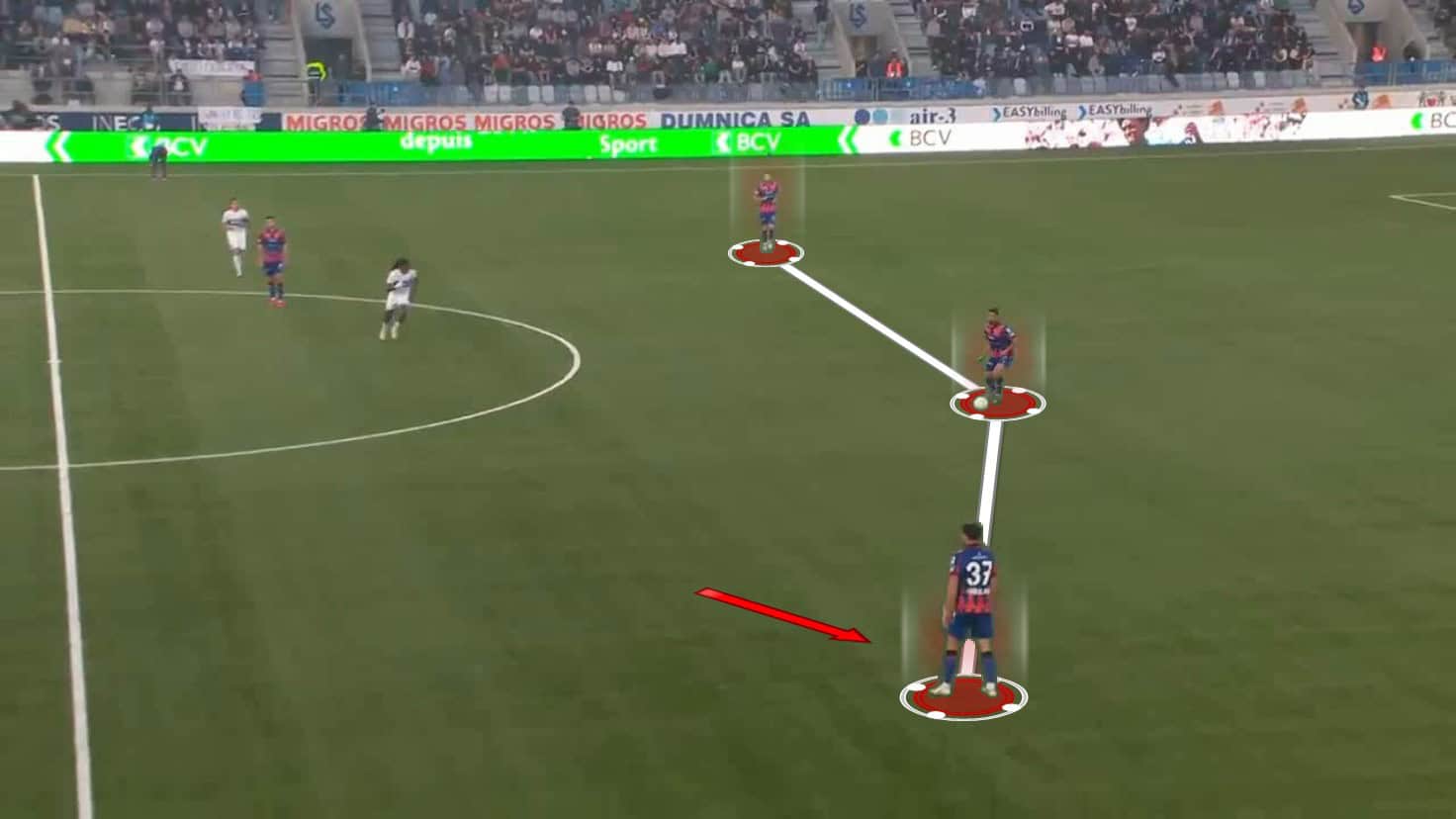 Avdullahu’s intelligent reading of the game and solid passing ability gave Basel more options to play out from the back and through the lines, something Hoffenheim will surely be looking to utilise this upcoming season.
Leon Avdullahu Areas of Improvement
While the 6’1′ Avdullahu is strong in aerial duels, he could use work in his ground duels, judging by what we saw on his radar map earlier in the article.
Although he ranked well in Switzerland in terms of his tackling, interceptions, and ball recoveries, according to the underlying data, he has a low success rate in defensive duels won.
With 6.8 defensive duels posted per game, he won only 58.5% of those on average and just 55.3% of 2.18 loose ball duels.
Some of the reasoning for this could be his tendency to roam around and press early, which can leave his position vulnerable when he doesn’t reach the ball in time.
It’s always harder to defend when you’re arriving late to duels.
Still, there’s also a possible factor that Avdullahu, despite his aggressive approach to defending, doesn’t utilise his body frame and strength effectively at times to win such duels.
He’s often very clean with his timing in attempting to intercept the ball and tries to play within the legalities of the game.
Still, sometimes you have to get your hands a little dirtier as a defensive midfielder and commit fouls, which perhaps he doesn’t do enough of, given he averaged just 1.51 fouls per game all year.
This will be something for him to improve upon as he enters a league with much higher-quality opposition than in Switzerland.
Still, given the physical tools he has at his disposal, he isn’t at a disadvantage to develop this side of his defensive work further.
And although he is a defensive midfielder at the end of the day, his offensive contributions are also a limitation.
With Hoffenheim often playing a double-pivot midfield themselves under Ilzer in a 4-2-3-1 or 3-4-2-1 set-up, the players in central midfield have more responsibility when it comes to providing something going forward on the ball as well.
In his two years at Basel, Avdullahu only scored three times and assisted once.
His only goal contribution came last term in a side that scored 112 times in both domestic competitions en route to winning it, suggesting he has little to offer on the attacking side.
Part of the issue with that is his lack of confidence when he does, rarely, get the ball in the final third.
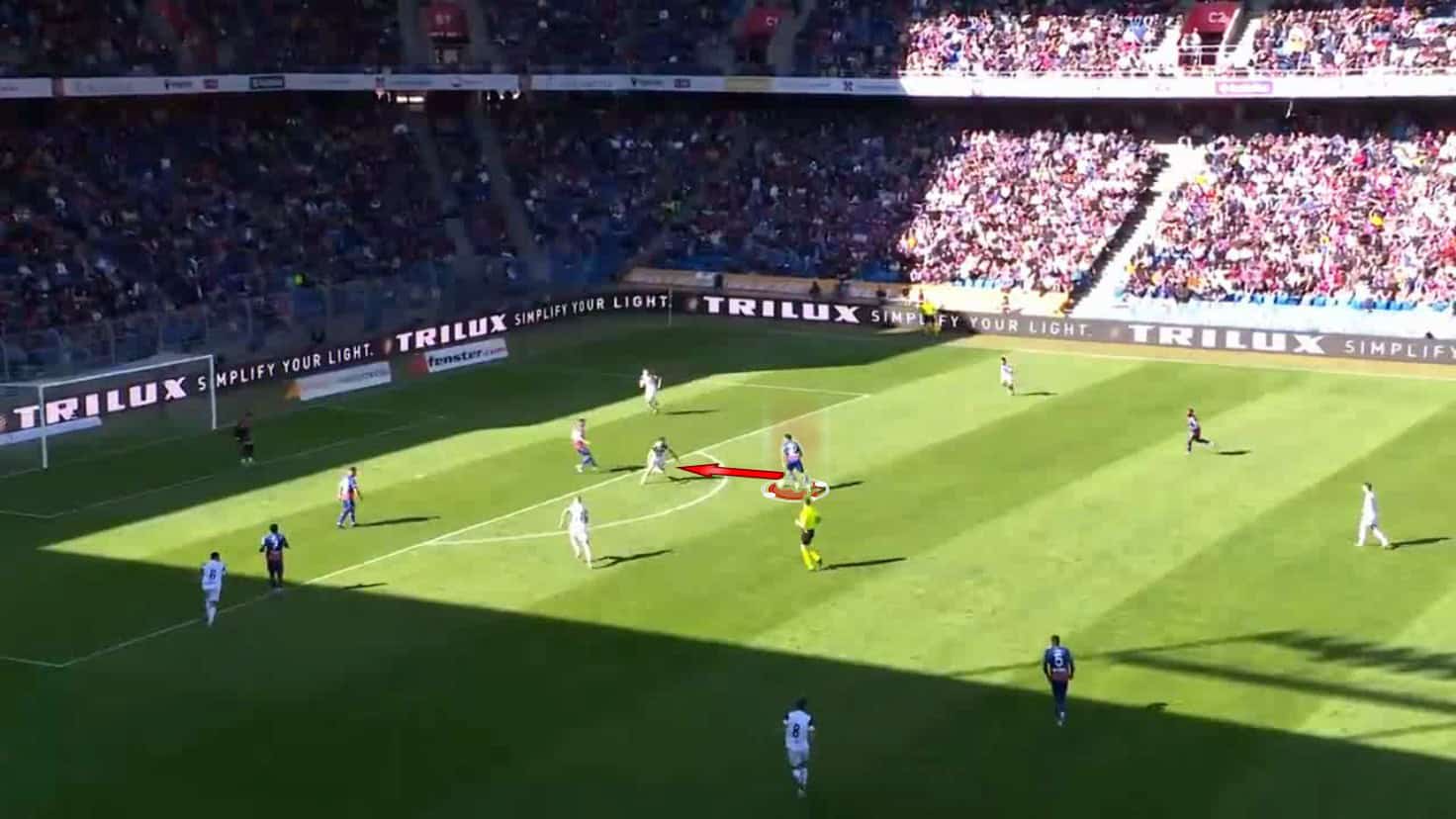
A good example of that above is from the home game against Lugano, where he receives the ball just outside the penalty area following a failed pass from their goalkeeper.
In this situation, with just one player to beat and get closer before shooting, Avdullahu could try to dribble or pick out one of the attackers in front of him who is looking to stay onside.
Instead, he ends up just shooting straight into the defender in front, and the opportunity goes astray.
The shot itself lacked any real conviction and looked like it came from a player who did not believe he could score.
While this, of course, isn’t his primary job as a holding midfielder, learning how to make better use of promising situations in the final third could only add to his skillset and provide another value to his new team.
However, he has not yet developed this aspect of his game sufficiently and requires further improvement.
Conclusion
Leon Avdullahu’s move to Hoffenheim comes at a good moment in the 21-year-old’s career.
He has established himself as a force in defensive midfield in a Basel team that won the domestic double this year.
Hoffenheim offers him a good platform to continue to develop himself as a player at a higher level, particularly with the departures of some key figures in his preferred position.
He’ll provide the height, aggression, and passing ability needed to succeed in Christian Ilzer’s side.
Still, the rest will be about how well he can adapt to the step-up in league quality and playing in a side that doesn’t dominate their opposition most weeks.
However, the tools are there for him to succeed, and his move to Sinsheim should benefit all parties involved in the long run.
