
In a league built on structure and experience, Karl Etta Eyong has emerged as Levante’s unexpected spark.
He is a Cameroonian forward who combines physical power, directness, and timing beyond his years.
Still only 21, Eyong’s rise through Levante’s ranks this season has drawn attention not only for his goal output but for how he interprets space and adapts across attacking structures.
What makes Eyong special isn’t simply his pace or strength; it’s how intelligently he applies them.
His movement between the lines, pressing triggers, and capacity to stretch defences have added a new layer to Levante’s attacking identity.
As clubs across Europe examine La Liga more closely for undervalued talent, Eyong stands out as a player whose tactical maturity is developing as fast as his reputation.
Karl Etta Eyong’s numbers underline why he’s quickly drawing attention beyond Levante.
In eight La Liga appearances this season, the 21-year-old Cameroonian has already registered five goals and three assists, averaging a direct goal involvement every 80 minutes.
This is an outstanding figure for a player still adapting to senior football’s demands.
He chooses his moments well, often operating on the blind side of defenders and exploiting small gaps inside the penalty area.
His conversion rate sits among the best in the league for players with comparable minutes, suggesting a striker who finishes actions rather than forcing them.
Through this Karl Etta Eyong scout report, we’ll examine Karl Etta Eyong’s game at Levante, analysing his performances from both tactical and technical perspectives to understand the key traits that define his profile and potential.
Karl Etta Eyong Attacking Profile
Karl Etta Eyong’s greatest strength lies in his positional intelligence.
Although naturally explosive, he doesn’t rely solely on pace or physicality; instead, his influence stems from timing, body orientation, and subtle off-the-ball movements that manipulate the defensive line.
In Levante’s 4-4-2 setup, Eyong operates as part of a front two alongside Iván Romero, often taking the role of the more mobile striker.
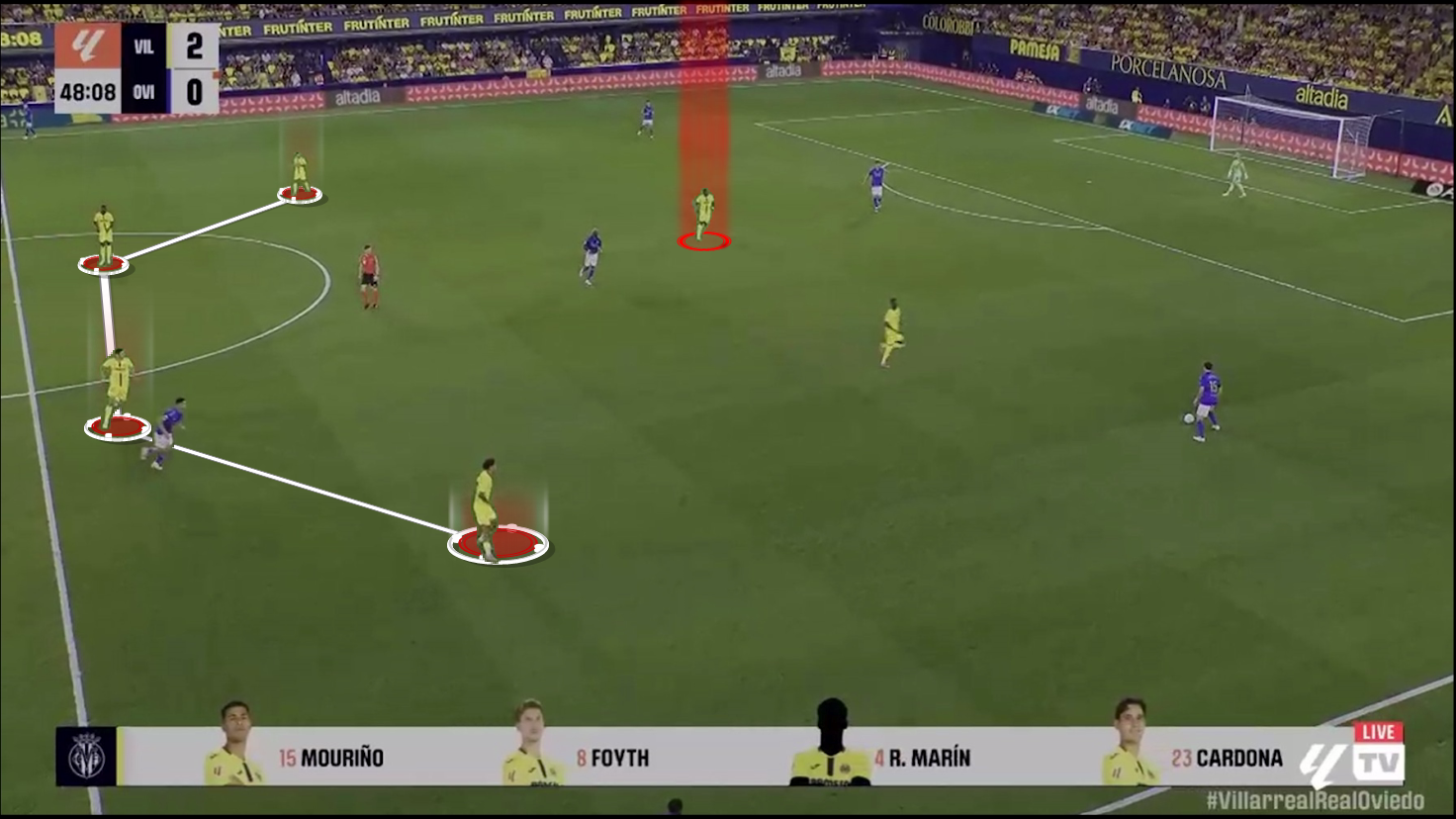
Rather than staying fixed between the centre-backs, he drifts into the left half-space to create dynamic angles for combination play and to stretch the defensive block horizontally.
This movement frees Romero to occupy central zones and opens passing lanes from midfield, allowing Eyong to either attack diagonally into the box or drop between the lines to link play.
What distinguishes Eyong is his ability to manipulate defenders without touching the ball.
His run timing and positional scanning are mature beyond his years.
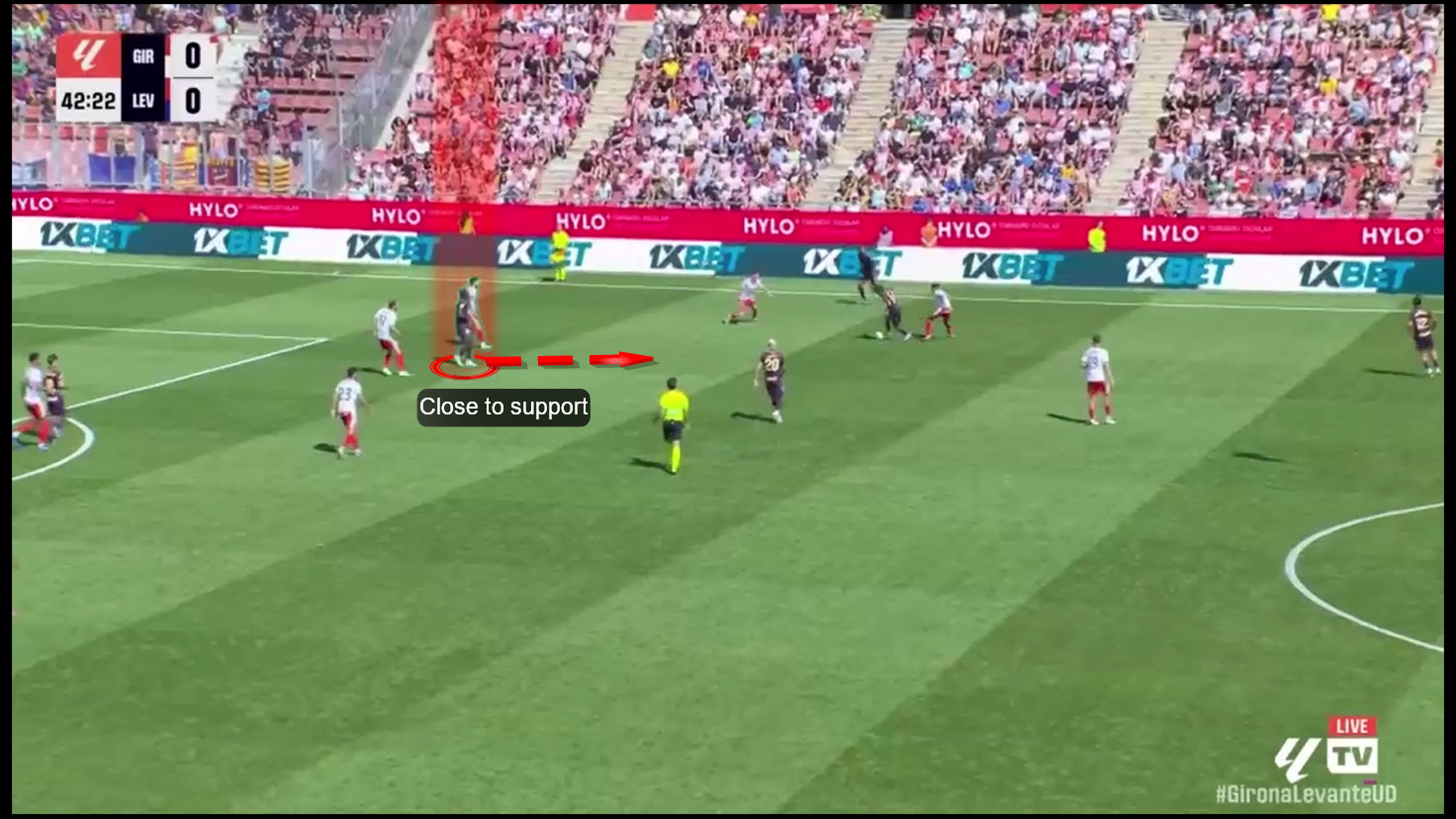
 He uses double movements, feinting toward the ball before bursting diagonally behind, to exploit defenders’ blind sides.
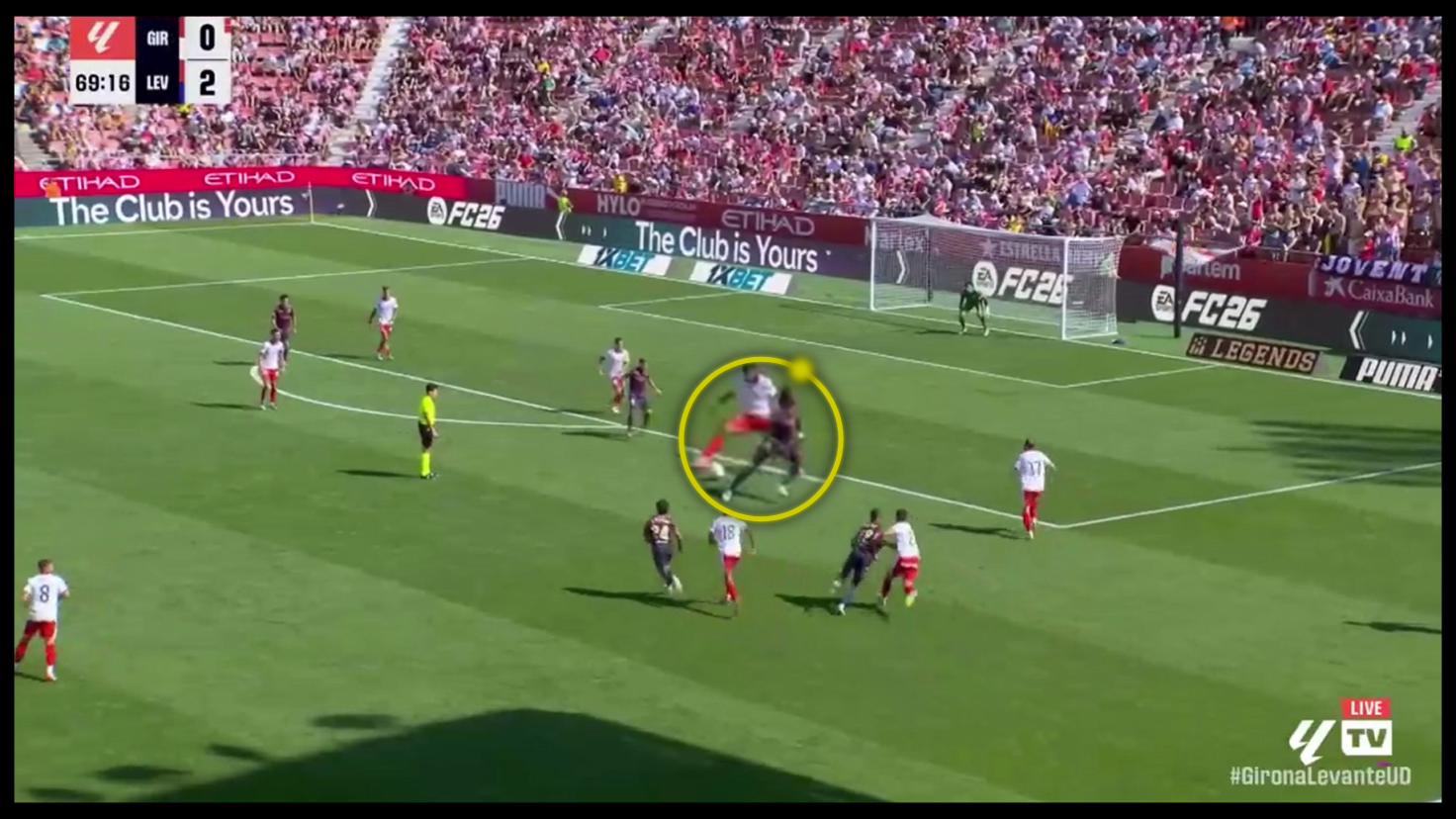
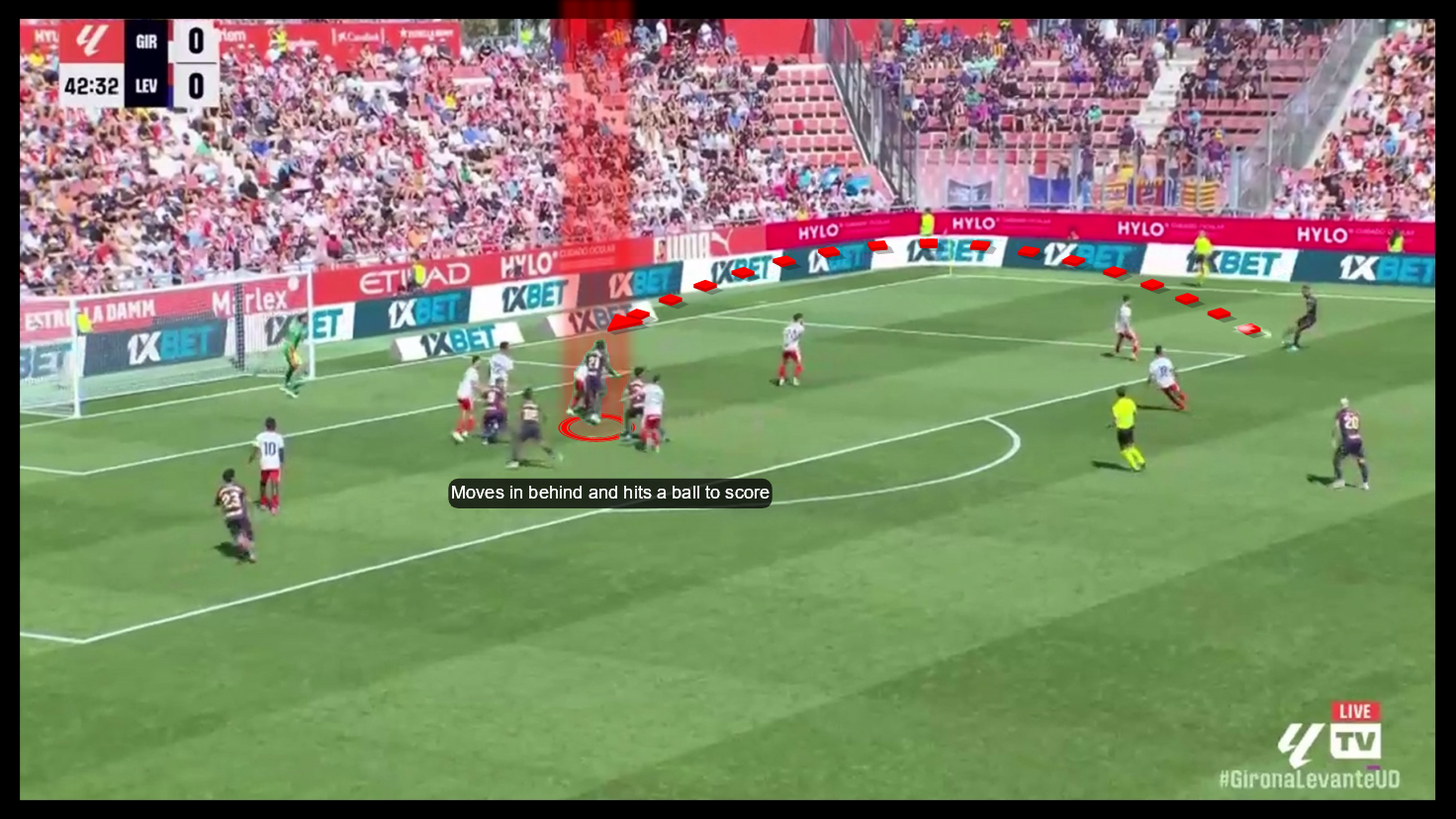
In the final third, his curved runs between the centre-back and full-back have been particularly effective, giving him access to inside channels rather than wide isolations.
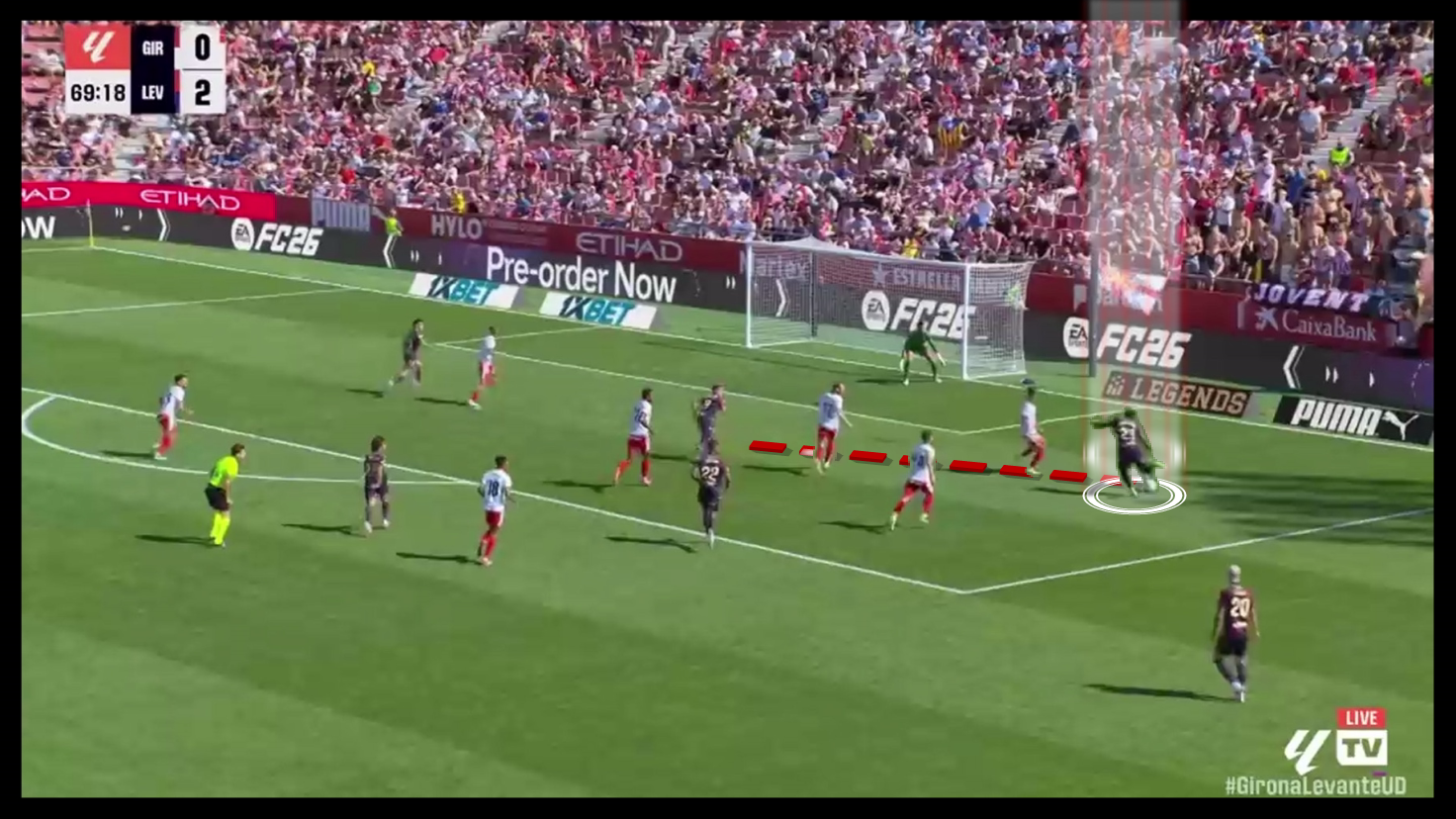
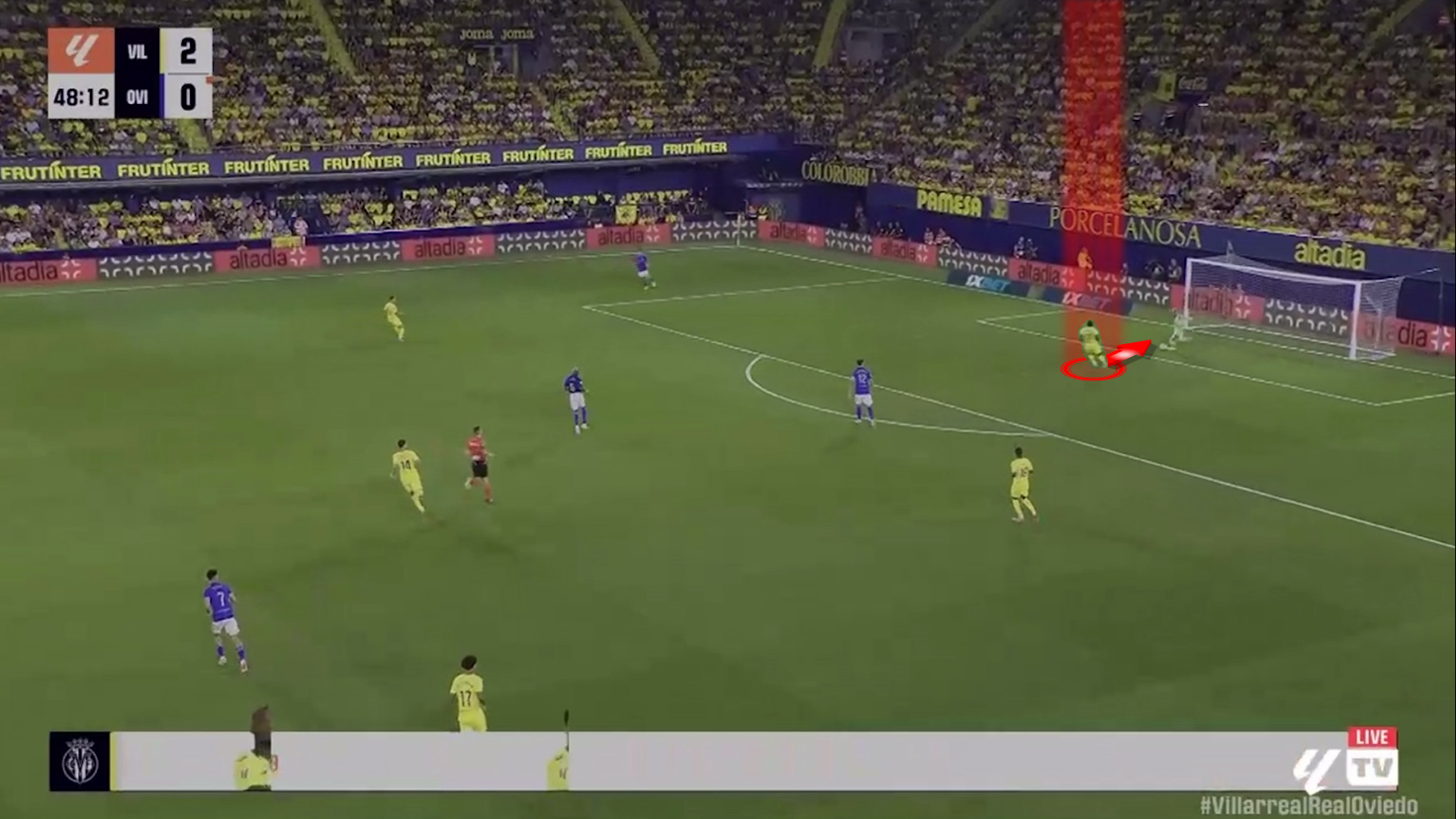
He delayed his movement until the last second, perfectly timing a run that cut through the right channel and generated a high xG chance, even though the shot narrowly missed.
These moments highlight how Eyong’s spatial awareness and late runs add unpredictability to Levante’s attack.
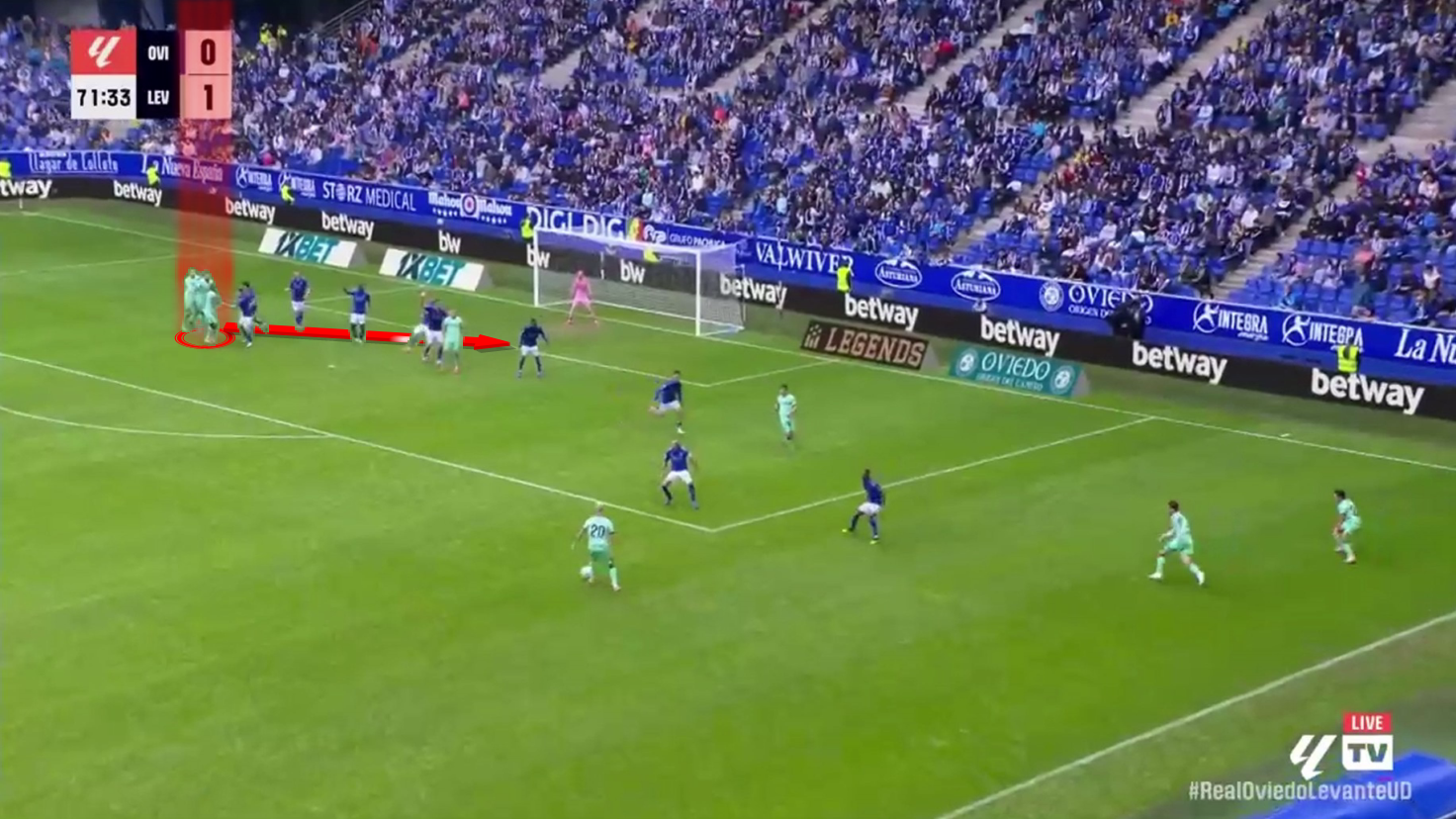
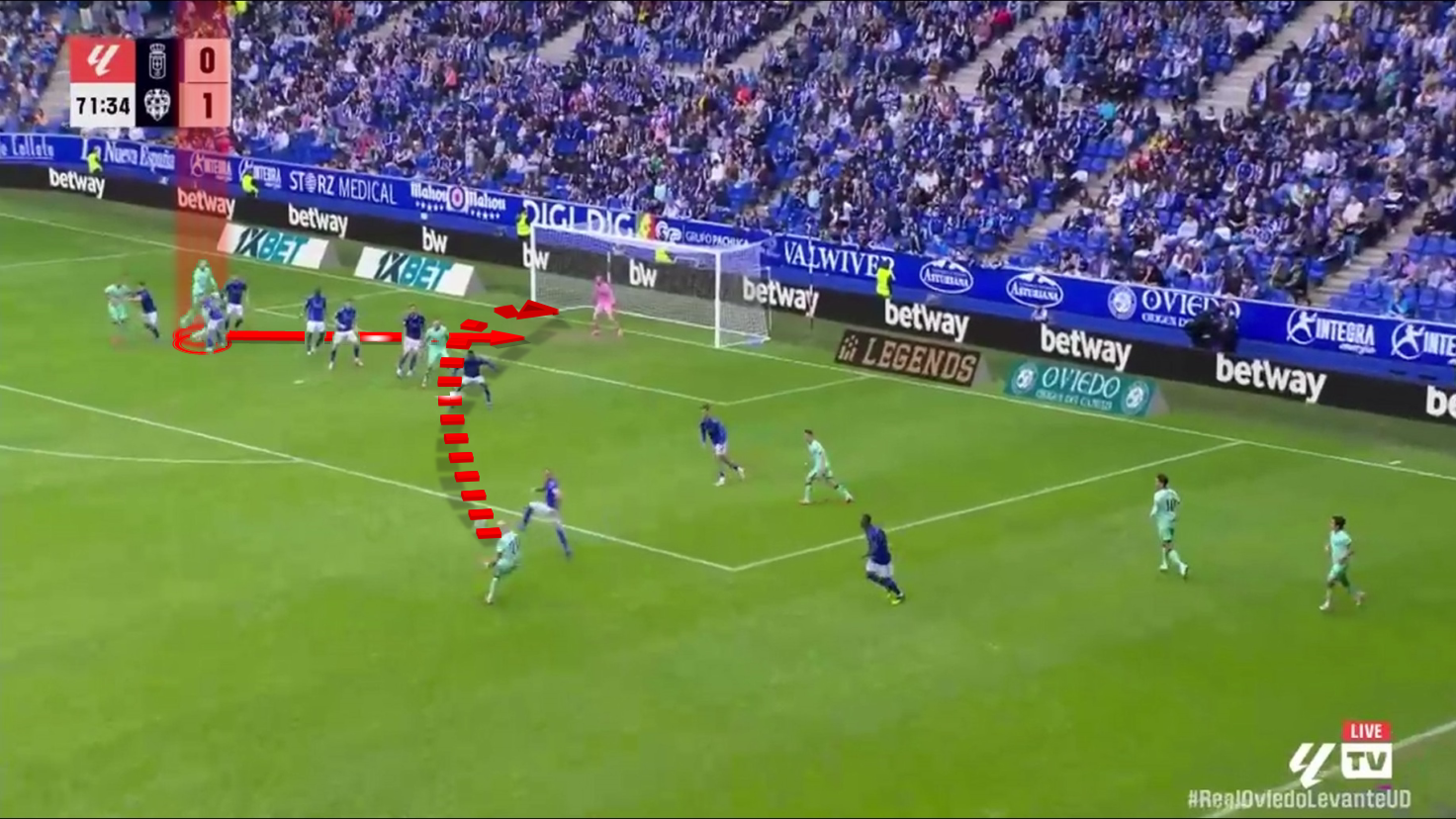
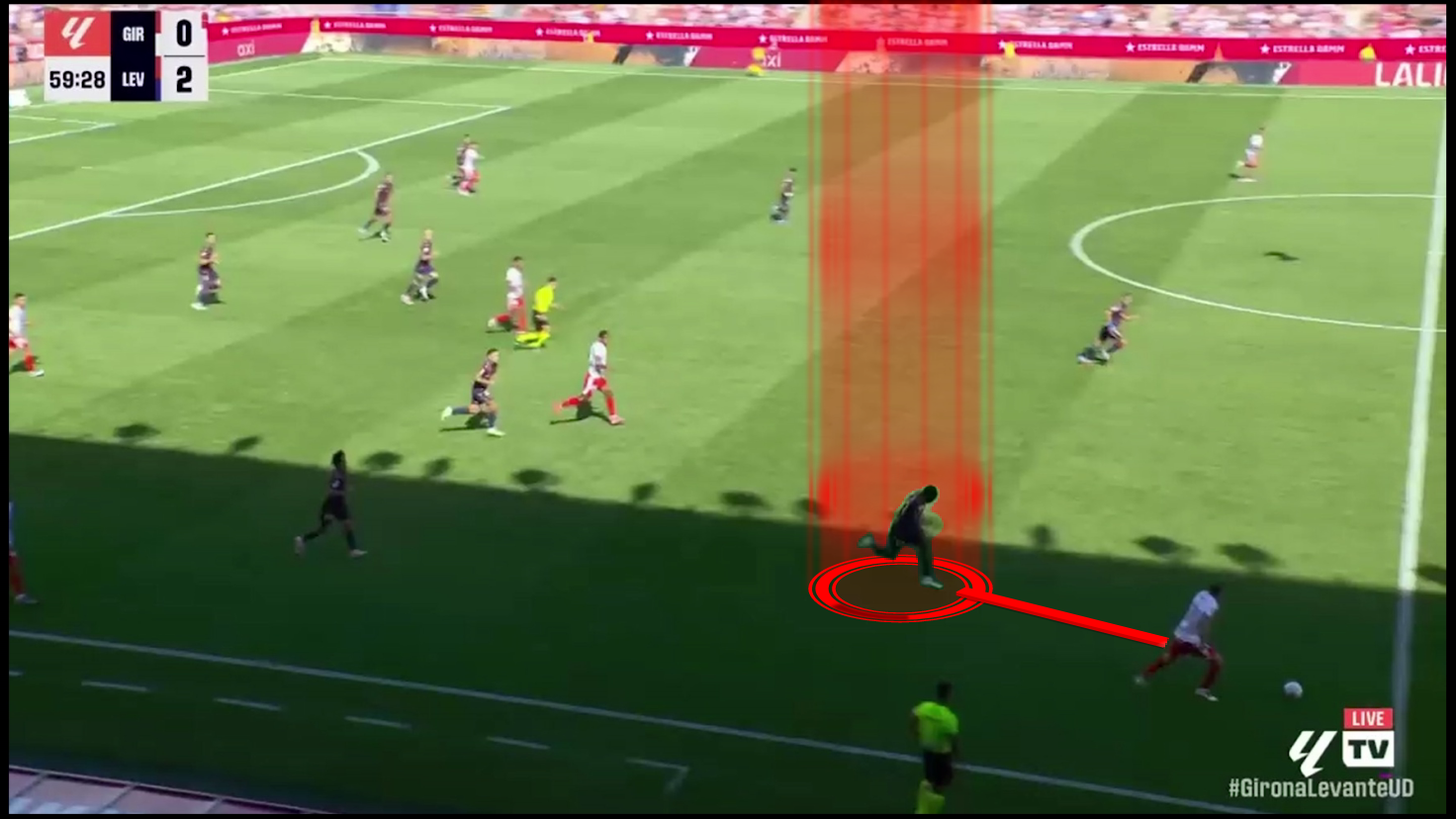
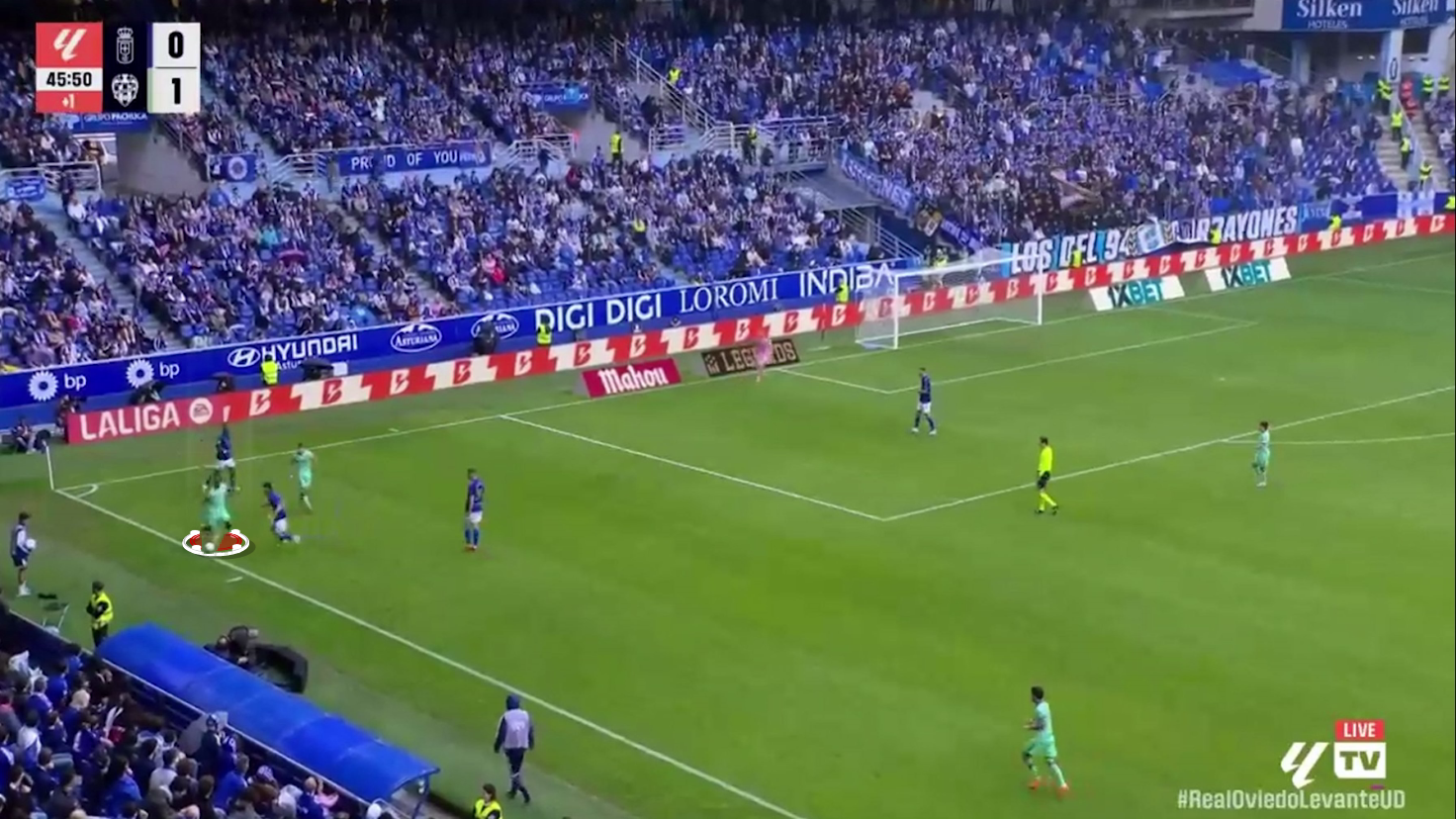
In this key pass, he provides it all.
Karl Etta Eyong Areas For Development
Despite Karl Etta Eyong’s growing influence in Levante’s attack, several technical and cognitive aspects of his game still need refinement to elevate him from a promising striker to a decisive one at the La Liga level.
Eyong’s most significant developmental focus lies in selecting the right option under pressure.
While his positional intelligence enables him to find excellent spaces between defenders, his choices once he receives the ball are occasionally rushed or over-elaborate.
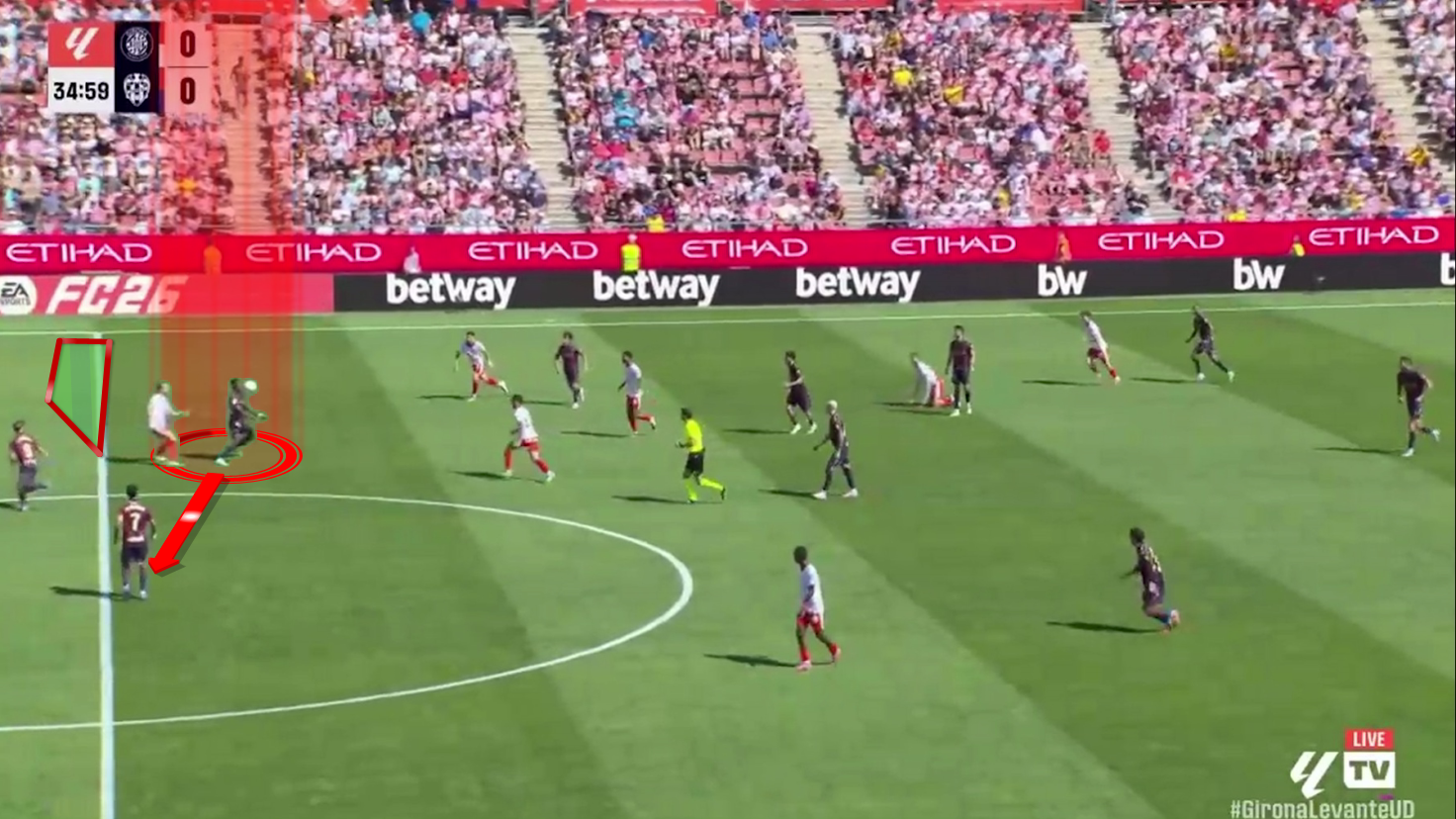 Eyong received between the lines after a quick transition but opted for an ambitious through ball instead of a simpler layoff to Romero, losing momentum in a promising attack.
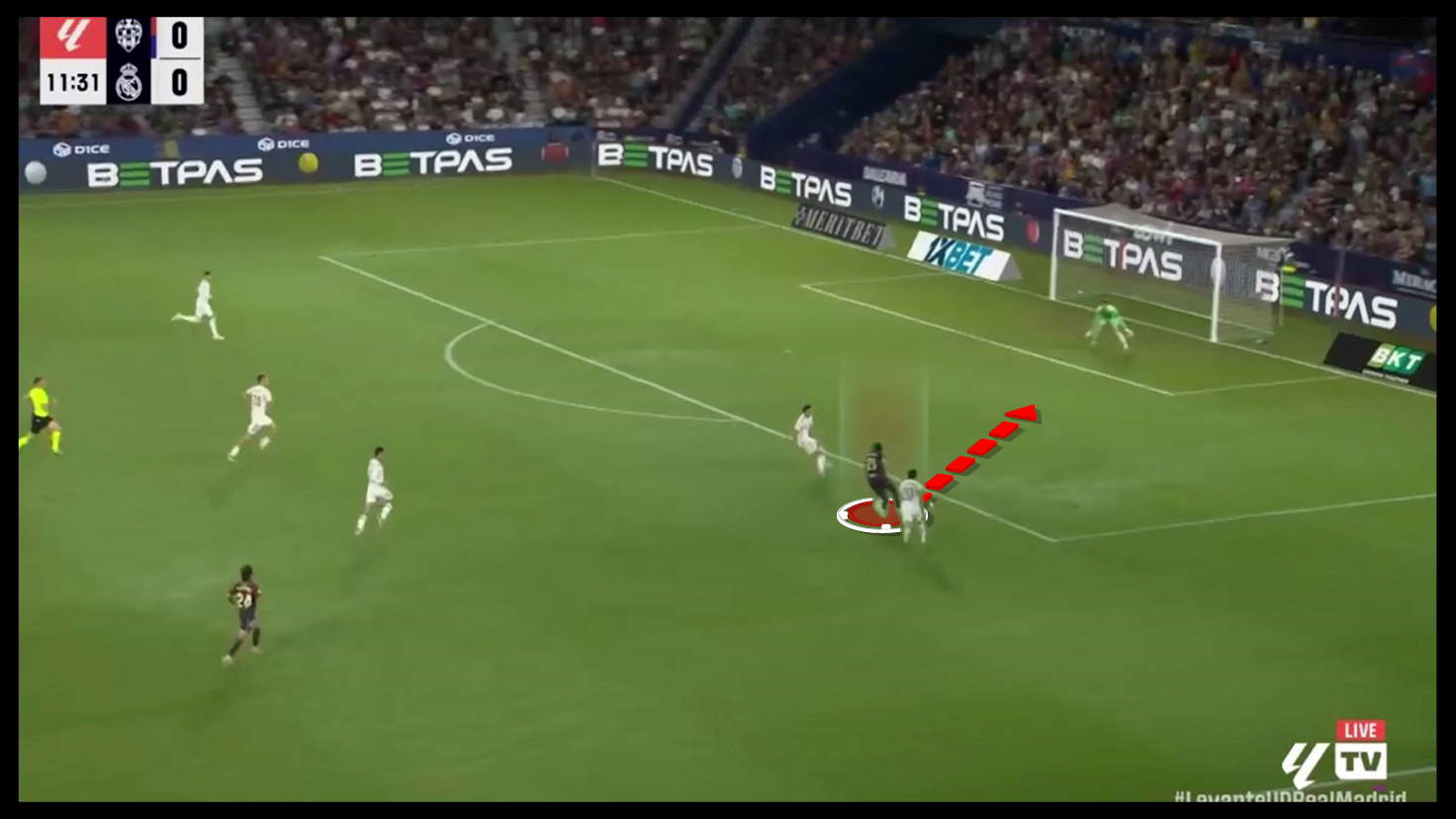
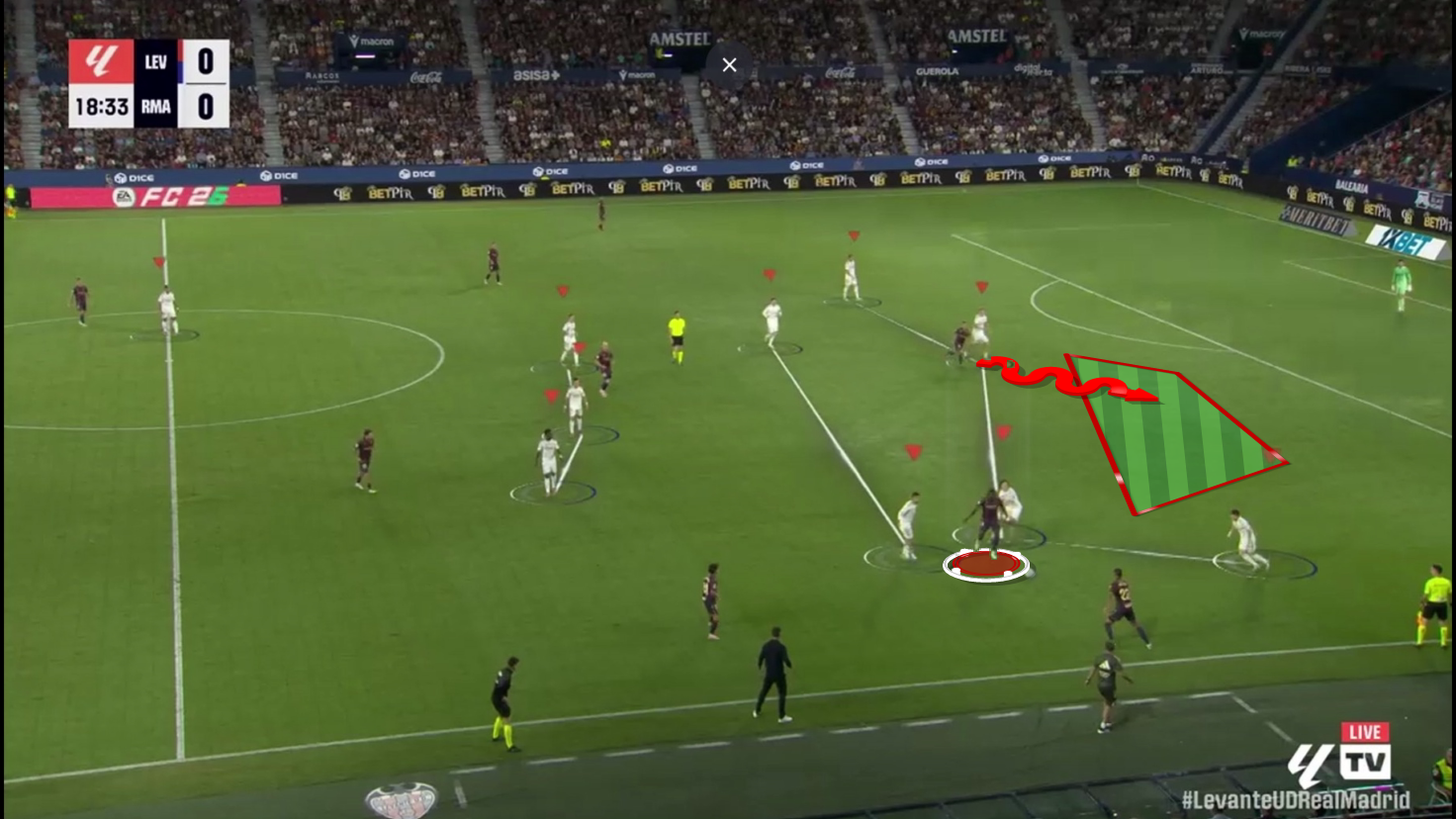
At times, he chooses to dribble through multiple defenders instead of linking up or overlapping, as seen in this instance against Real Madrid, revealing a need for improved tempo control and sharper recognition of high-value actions.
 Eyong is capable of generating chances through movement, but his shot selection lacks consistency.
He tends to shoot from suboptimal angles or rush his finishing rather than waiting for the correct body setup.
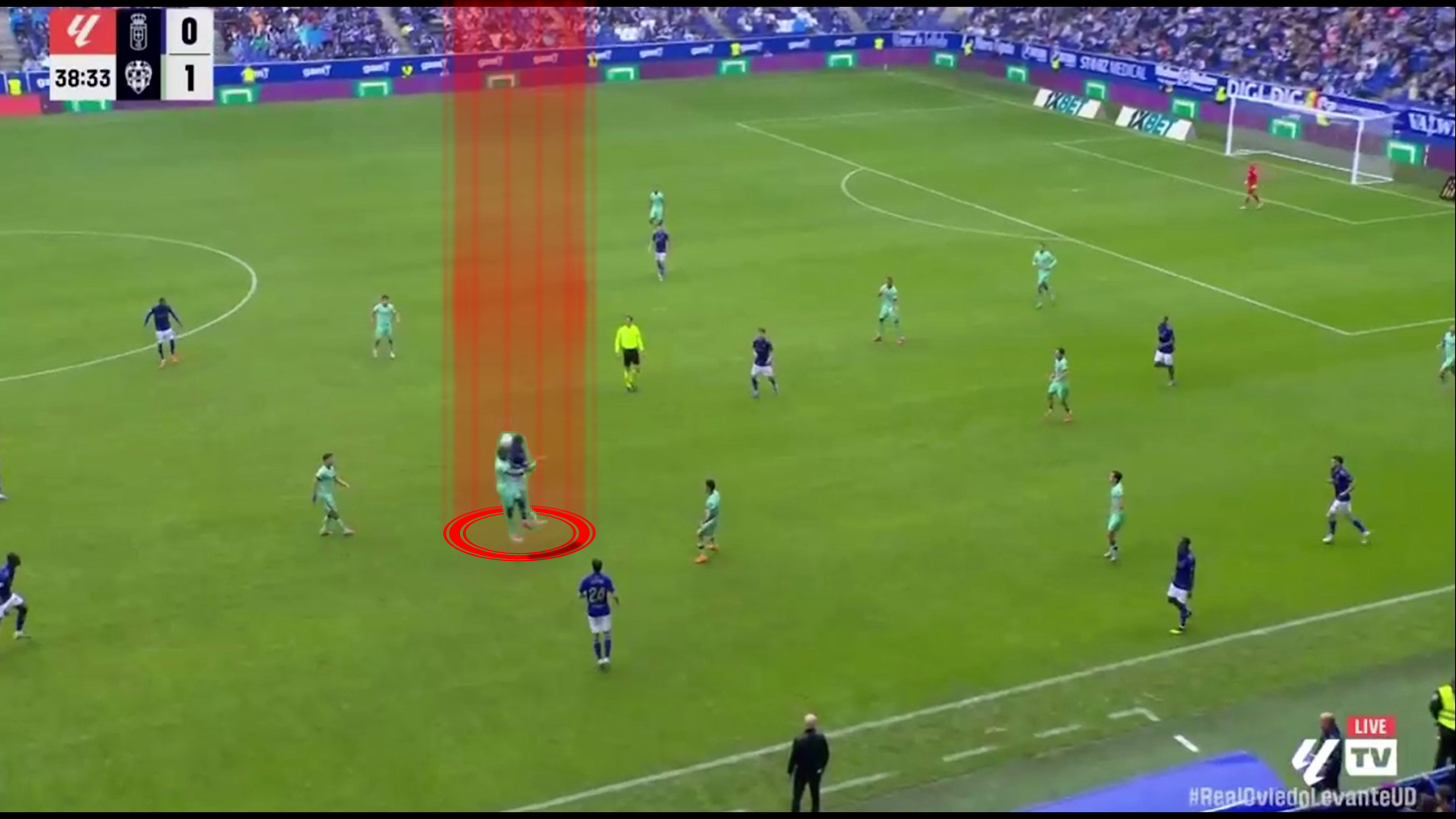
Eyong’s explosiveness and balance give him the potential to win more aerial duels, but his timing and anticipation often fall short against physically dominant centre-backs.
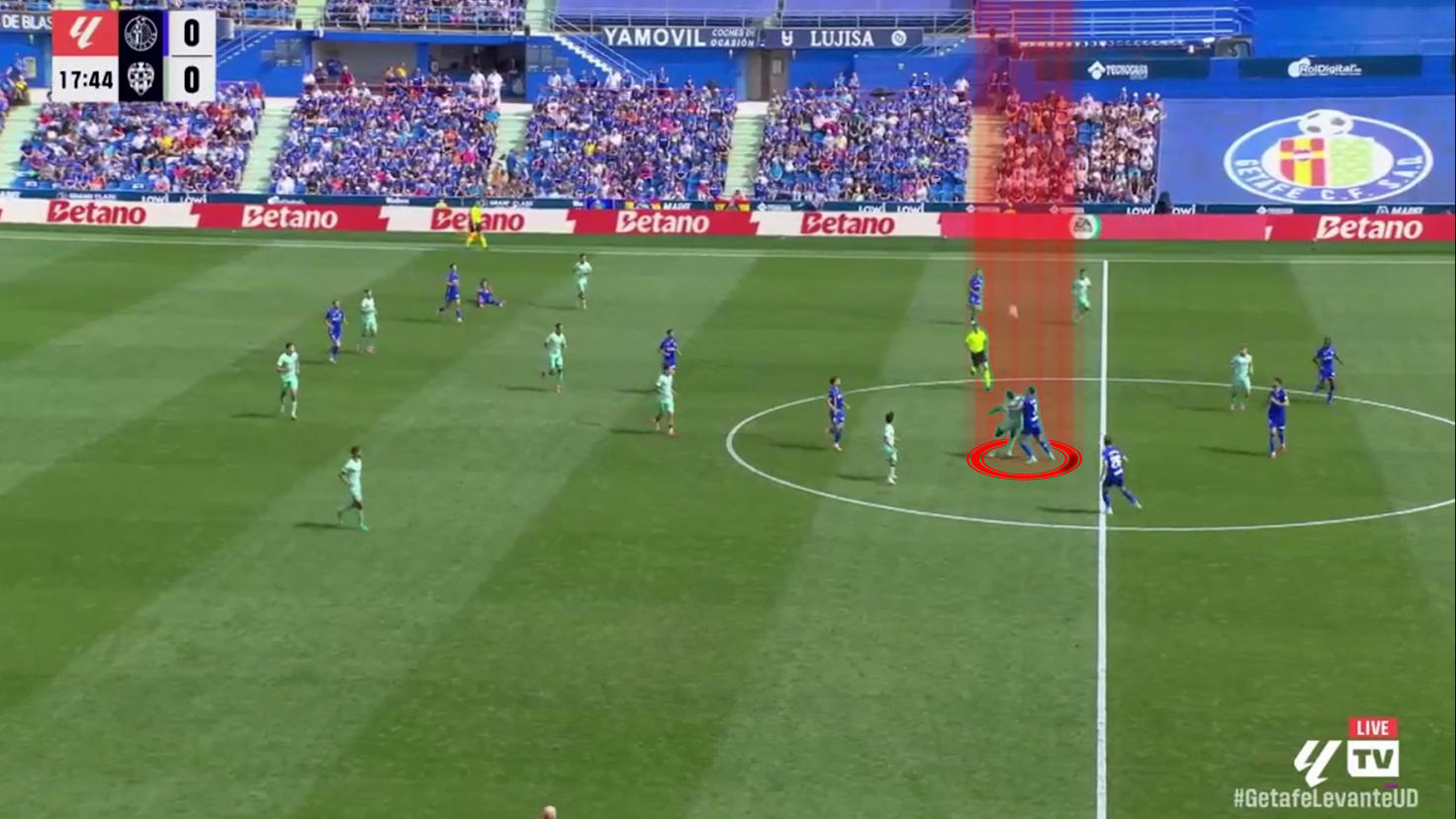
Improved body positioning in duels, yet struggled to direct headers toward teammates, emphasising the need for better aerial orientation and arm usage to create separation before jumping.
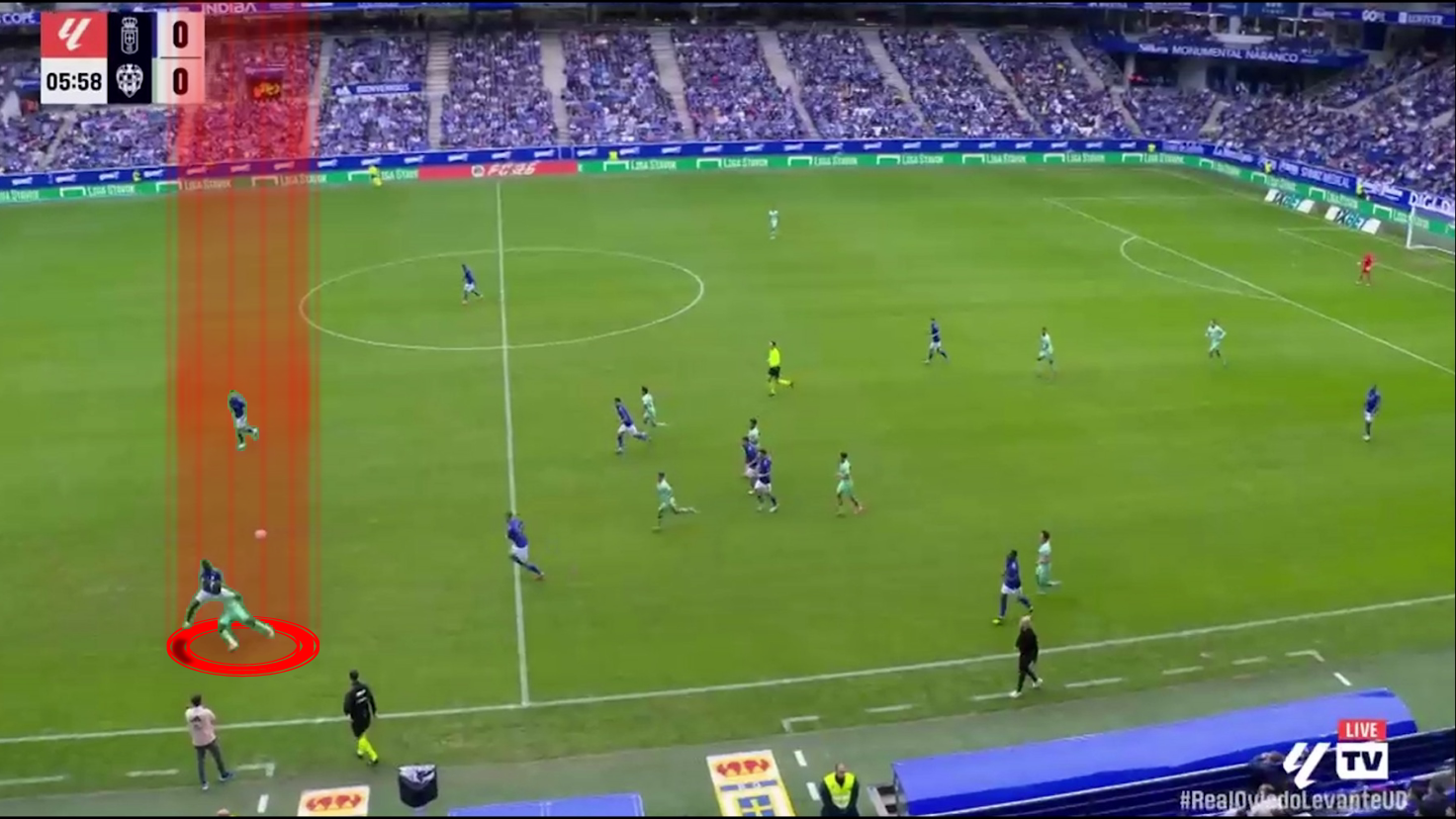
Tried to get rid of marking and wait for the ball to come behind, but it didn’t work.
Karl Etta Eyong’s progression hinges on refining his decision-making rhythm, aerial timing, and finishing patience.
These are not structural flaws but elements that, once polished, can elevate his output from intelligent mover to consistent match-winner in La Liga.
Conclusion
Karl Etta Eyong’s 2025/2026 season reflects a player maturing rapidly in both tactical and technical aspects.
His understanding of space and timing already makes him central to Levante’s offensive identity.
He is a forward who contributes beyond goals by linking phases, creating depth, and intelligently manipulating defensive lines.
In matches against Girona, Real Oviedo, and Real Madrid, Eyong has shown an ability to read the flow of play, adjust his positioning to connect with midfielders, and attack spaces at just the right moment.
These are traits that underline his growing football intelligence.
Yet, the next step in his development depends on refining a few critical areas.
His aerial duels remain inconsistent for a player of his frame, and he sometimes hesitates between taking an early shot or finding a pass, leading to missed opportunities.
Improved decision-making and shot selection will elevate him from a promising striker to a decisive one capable of shaping results.
If he continues to polish those aspects while maintaining his work rate and tactical flexibility, Eyong could soon transcend his current role at Levante.
The blend of movement, anticipation, and technical control he already possesses suggests a player destined to rise beyond mid-table football, potentially into the radar of higher-tier La Liga clubs or abroad.
