
Olympique de Marseille have signed Argentine defender Facundo Medina on a season-long loan from Ligue 1 rivals RC Lens.
This is one of the team’s most important signings for the upcoming 2025/2026 Ligue 1 season.
Under Italian coach Roberto De Zerbi, in his first season at the club, Marseille finished second behind Ligue 1 champions Paris Saint-Germain, which earned them a place in the UEFA Champions League.
The team is looking to strengthen their squad to help the coach implement his philosophy, and Medina is one of the players who will greatly benefit De Zerbi.
In the following scout report and player analysis, we will discuss Facundo Medina style of play and his technical characteristics.
Who Is Facundo Medina?
Facundo Medina is a left-footed player who plays mainly as a centre-back.
He can also play in the left-back position.
Medina is 26 years old, and his height is 184cm.
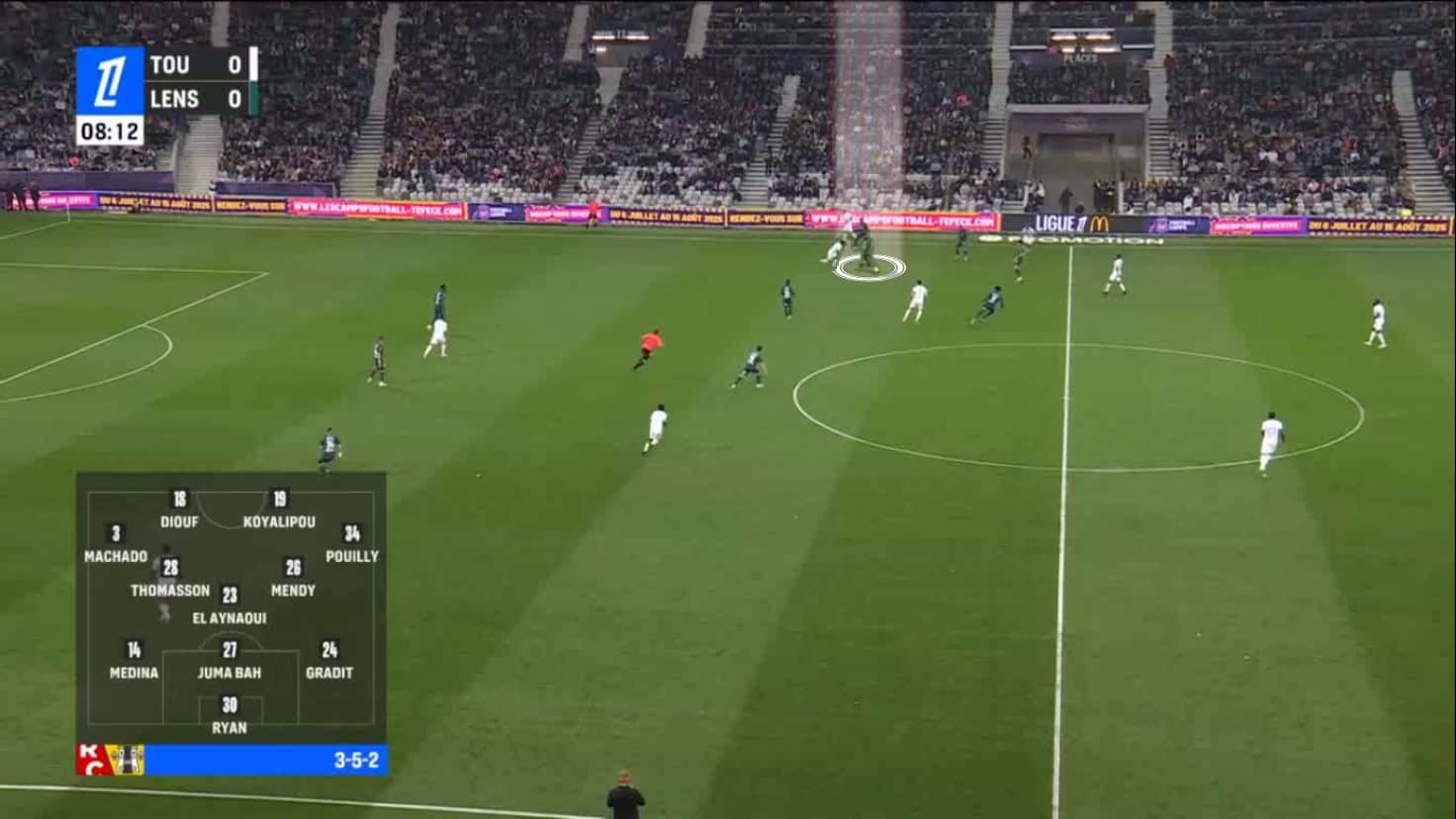
The player used to play as a left centre-back following his arrival at RC Lens in the 2020/2021 season from CA Talleres, where his former coaches, Franck Haise and Will Still, played most of the time with a back-three formation.
Medina played with RC Lens in 165 matches, scoring eight goals and providing 10 assists across all competitions.
Facundo Medina Pizza Chart
Facundo Medina’s radar chart compares his performance with that of other left centre-backs from Europe’s top-five leagues in 2024/2025, providing him a percentile rank with ’50’ being ‘average’.

Starting with the possession section, Medina ranked in the 88th percentile among left centre-backs from the top five leagues for progressive passes per 90, showing his ability to use passing to help his team move upfield.
He was also in the 93rd percentile for dangerous passes per 90 minutes, indicating that his dangerous passes were extremely high compared to other players in the same position.
His passes per 90 and received passes per 90 are high, as he is heavily involved in the possession phase.
Regarding the attacking section, he is in the 89th percentile among left centre-backs for dribbles per 90, as he makes a lot of dribbles due to his third centre-back position with moving forward instructions from coaches.
He was also in the 85th percentile for the ball touches in the opponent’s penalty area.
Also, he was ranked in the 95th percentile for shots per 90.
This number is very high due to two factors: first, his positioning in the corner kicks: he stands on the edge of the box waiting for the second ball and then shoots at the goal.
Second, he moved forward towards the final third many times, either to the penalty area or at the edge of the box.
He was also in the 78th percentile for the expected goal contribution per 90, as he delivers a lot of through balls and shots at the goal, as we will see in the tactical analysis.
From the last section, the defending section, Medina was in the 69th percentile for defensive duel volume, with an average performance in winning defensive duels.
He was also ranked in the 64th percentile of the players in positioning, which is a combination of tackles and interceptions.
Facundo Medina Attacking Abilities
Starting with Medina’s attacking attributes, we will discuss his ability to pass the ball, whether with short or long passes, his attacking support through the final third, and his shooting.
Facundo Medina Passing Ability
The following examples demonstrate Medina’s ability to make short and long passes, whether in build-up play against the opponent’s high pressure or the opponent’s half.
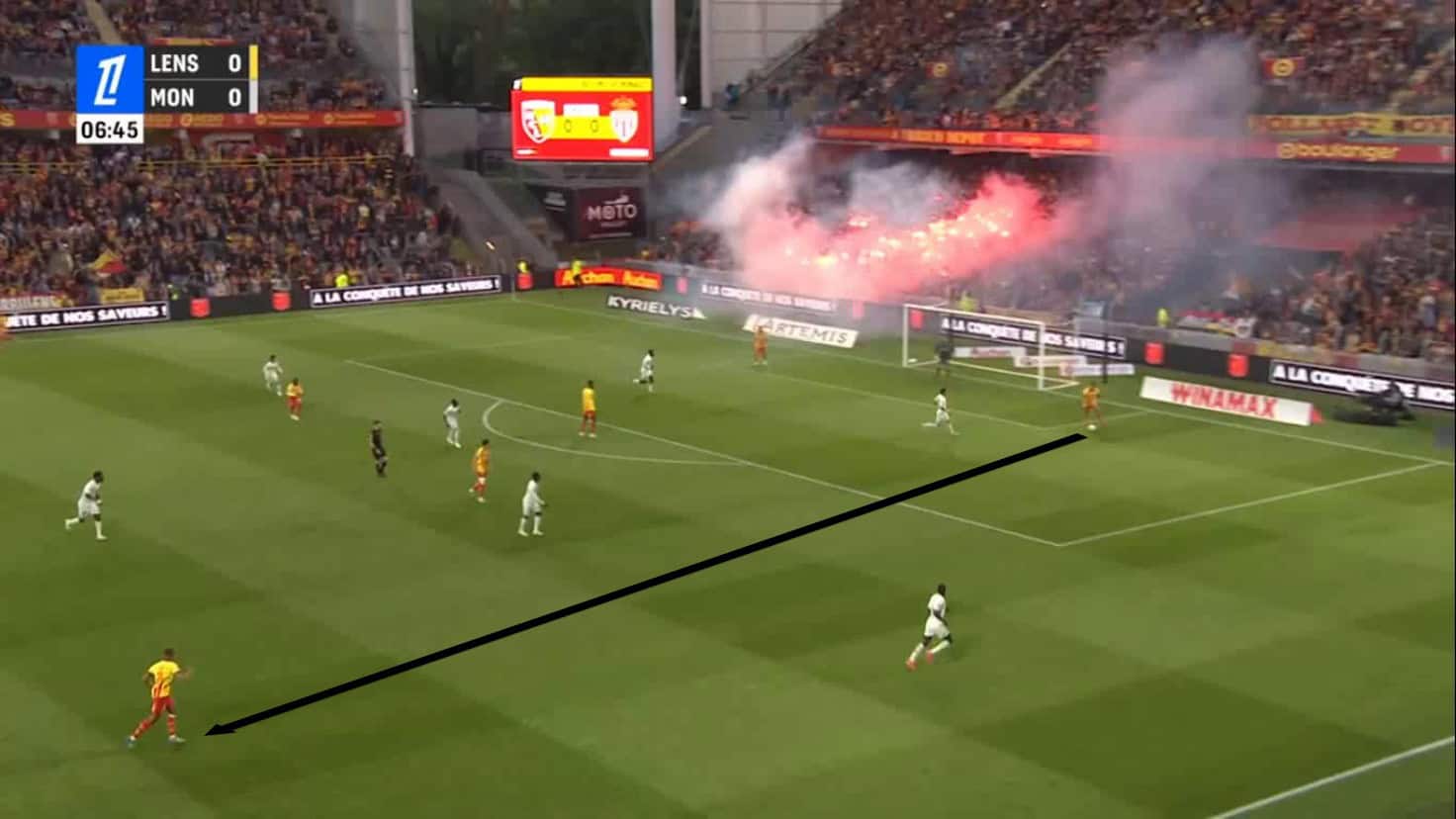
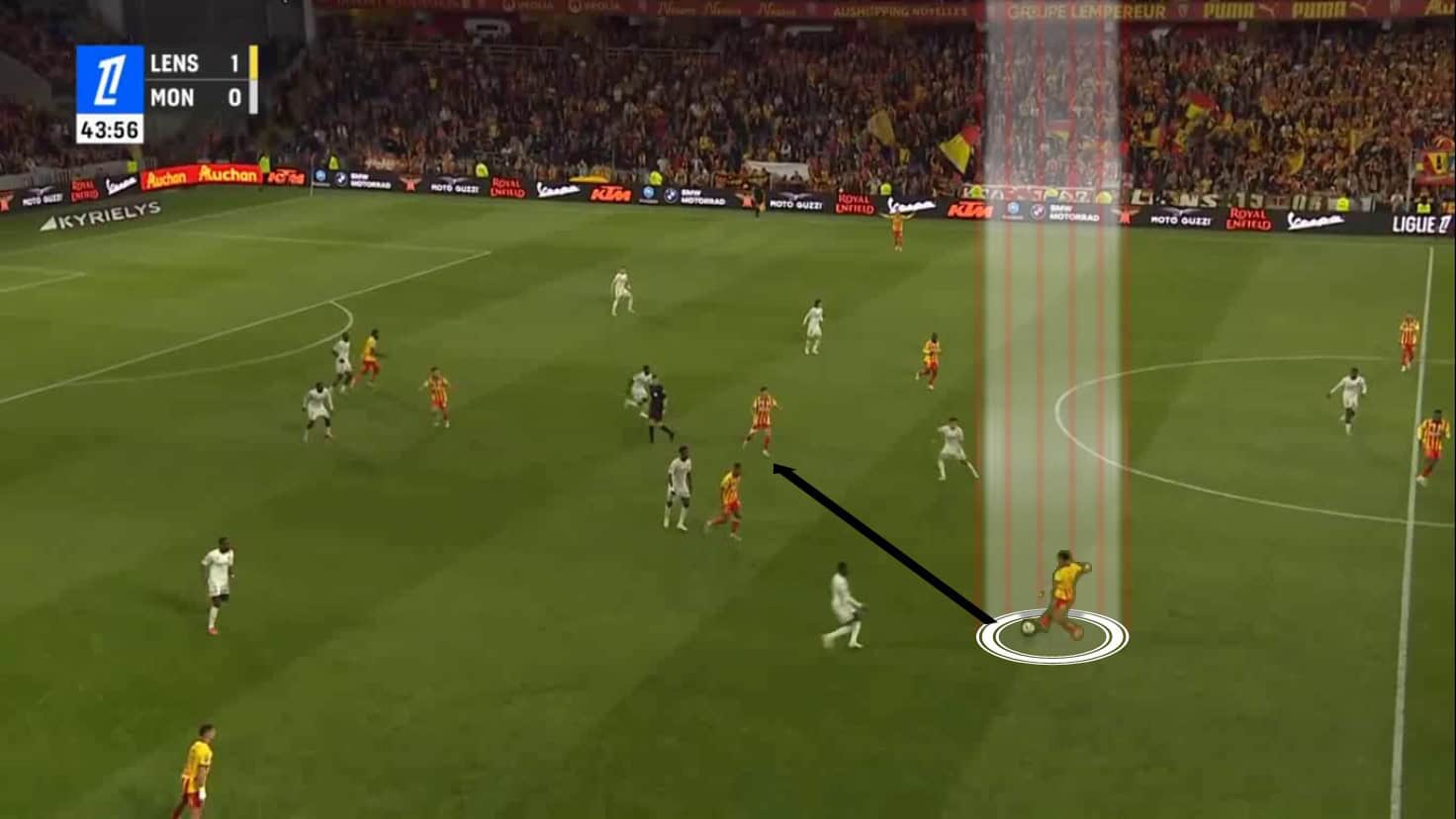
In the next image, starting with his passes against the high press, we see a goal kick situation through the build-up phase.
Medina is the spotlighted player; he receives the ball from the goalkeeper to start the build-up.
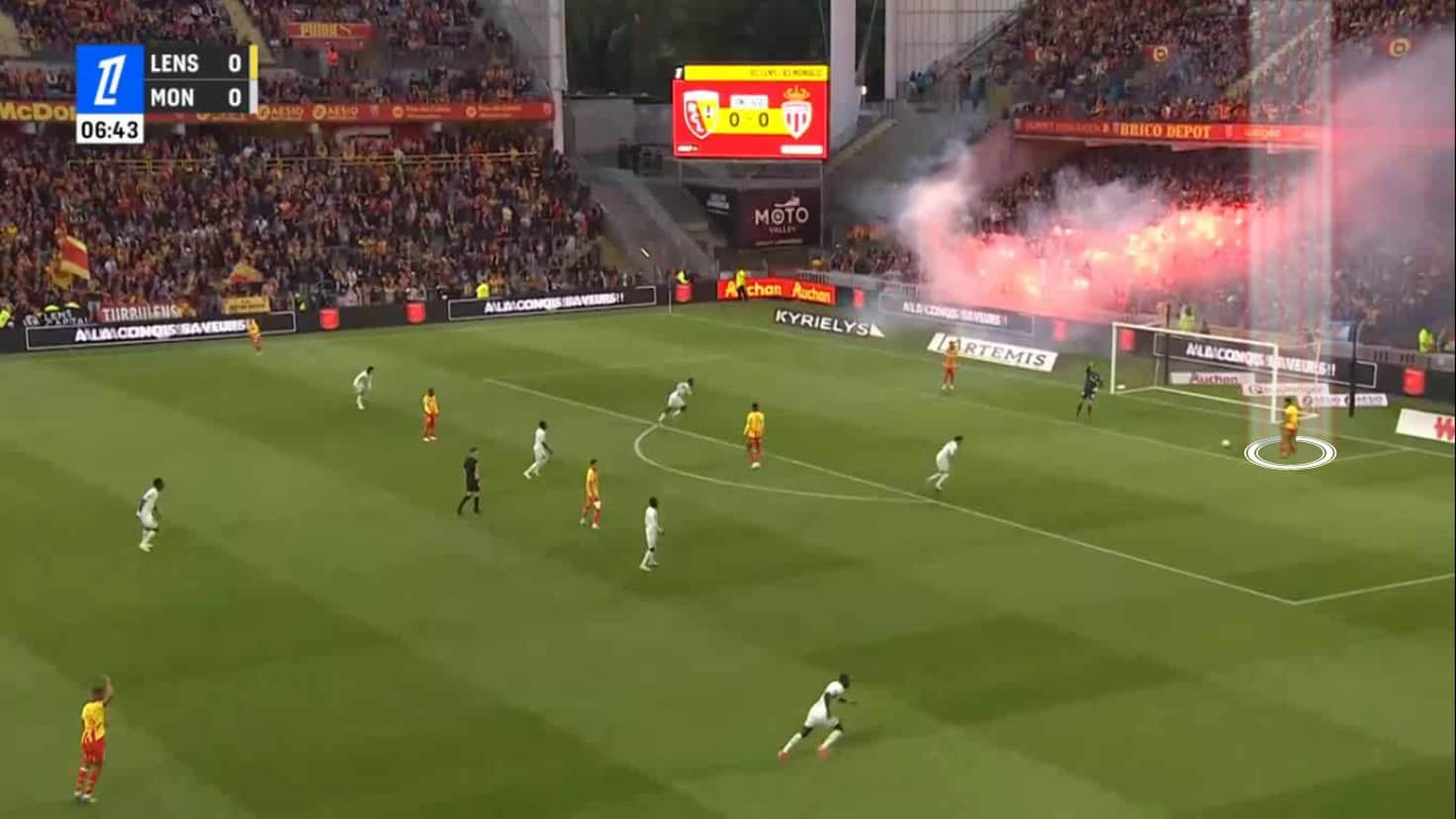
Then, he delivers a mid-range vertical pass to his teammate to break lines.
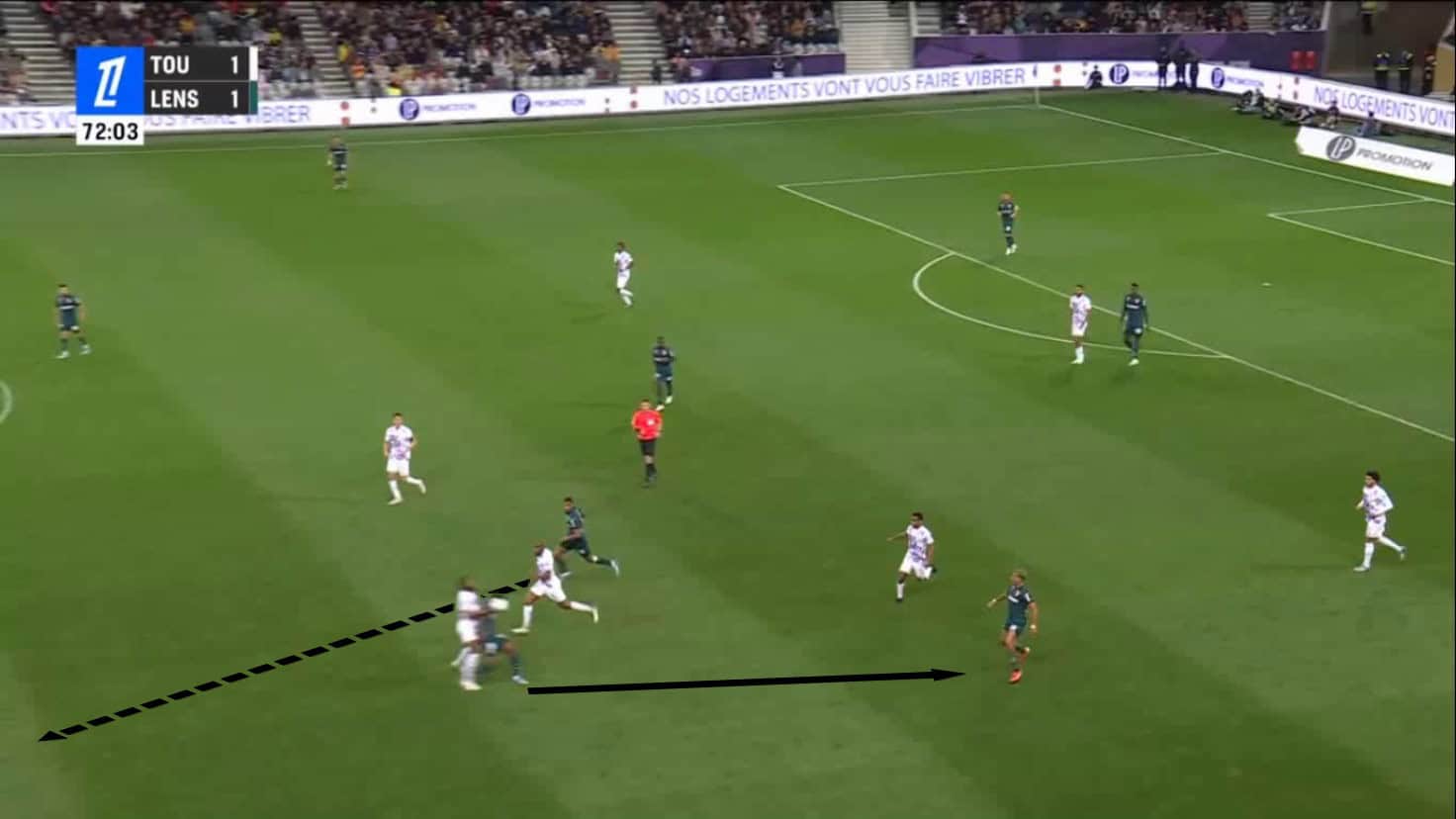
Continuing with the build-up phase, the following case shows us Medina’s ability to pass the ball under pressure.
He then moves behind his direct-pressing player, as we see in the image.
He passes the ball to the left-back and then moves quickly to the space behind the pressing opponent.
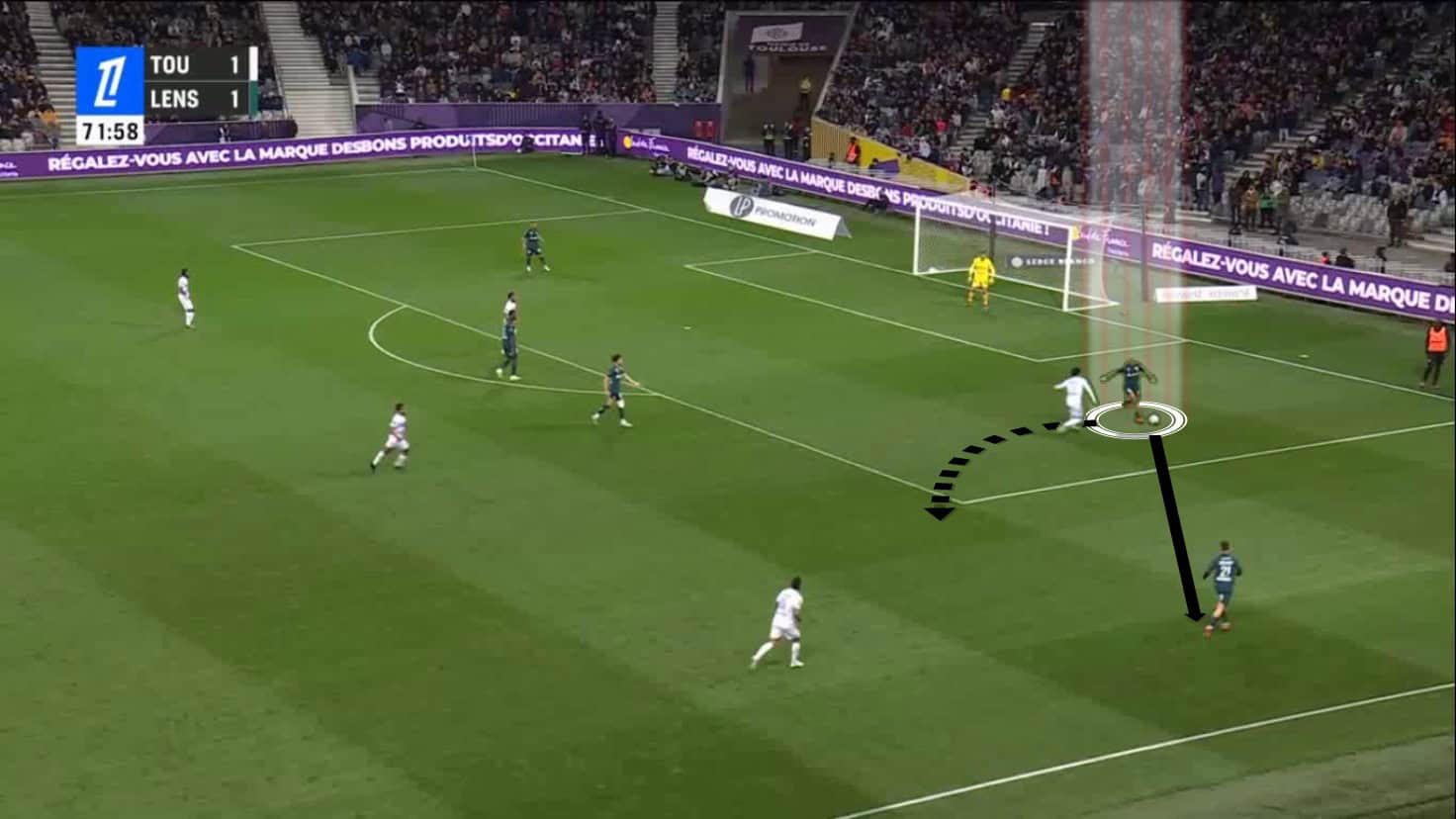
He didn’t receive the ball, as the left back played a direct ball to the striker, who dropped to receive, but Medina attacked the free space on the side.
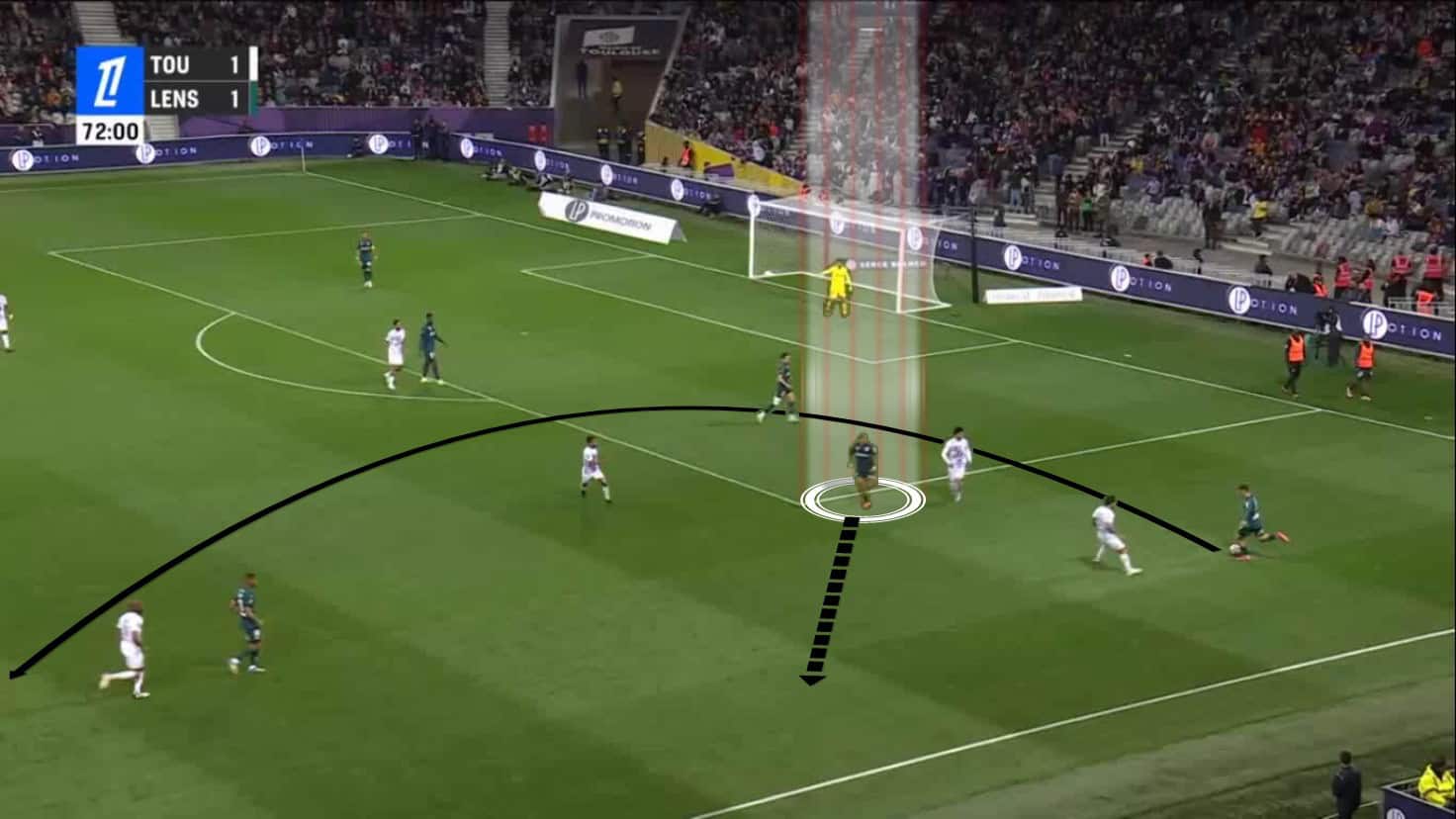
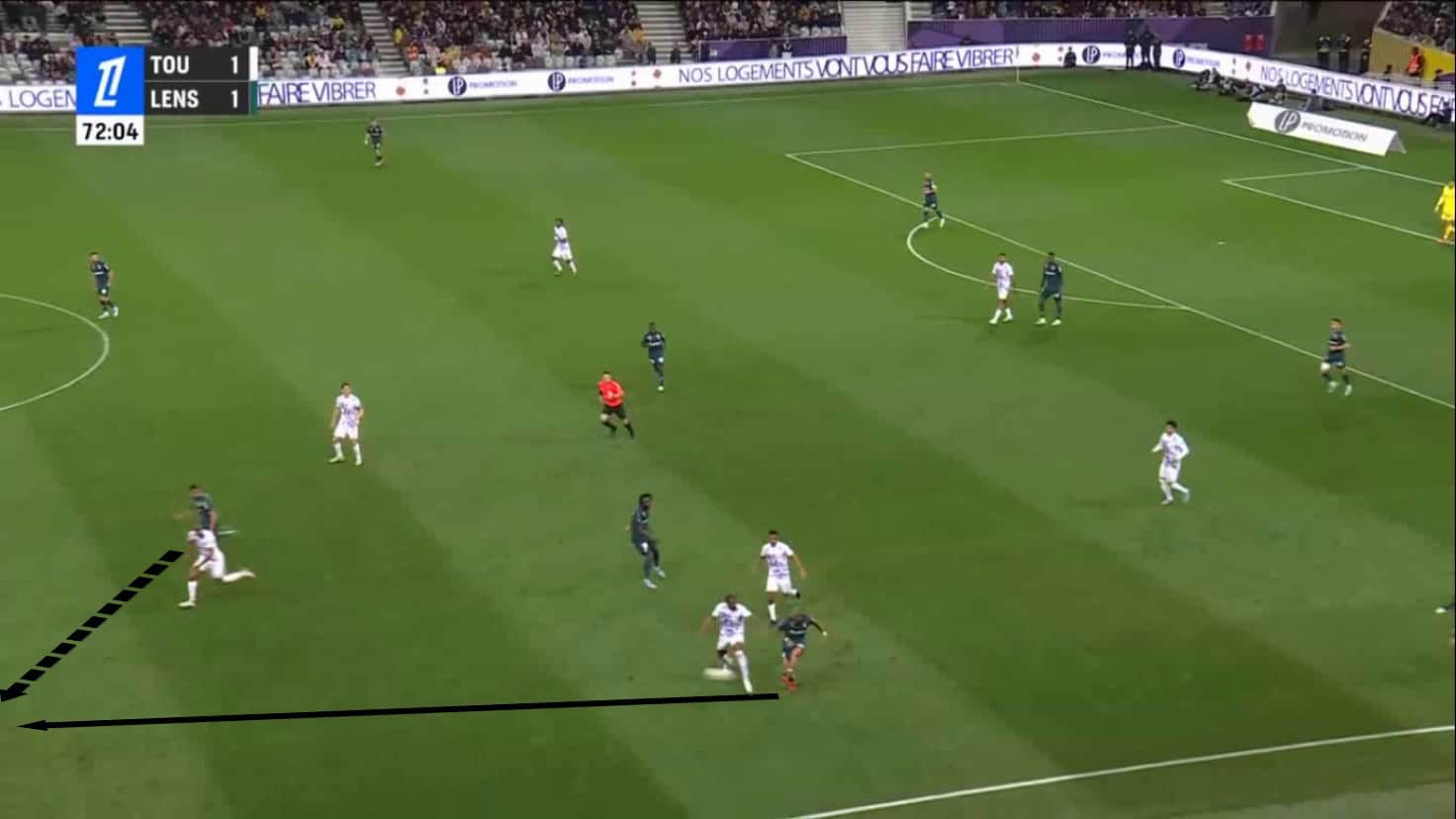
The striker laid off the ball towards Medina and then was ready to deliver a long pass to the penetrating player.
Medina passed a long ball to his teammate in the free space.
In the next example, Medina’s audacity to make short passes in tight spaces is evident through the depth, which fits De Zerbi’s philosophy.
As we see, Medina delivers a short pass between two opponent players to his teammate in a tight space, which helps the team to develop the attack from the centre.
Medina has a significant impact in the final third of the pitch when he pushes forward, where he can dribble the ball and make long or short through balls.
In the following image, Medina guides the ball forward and waits for a forward movement from his teammates.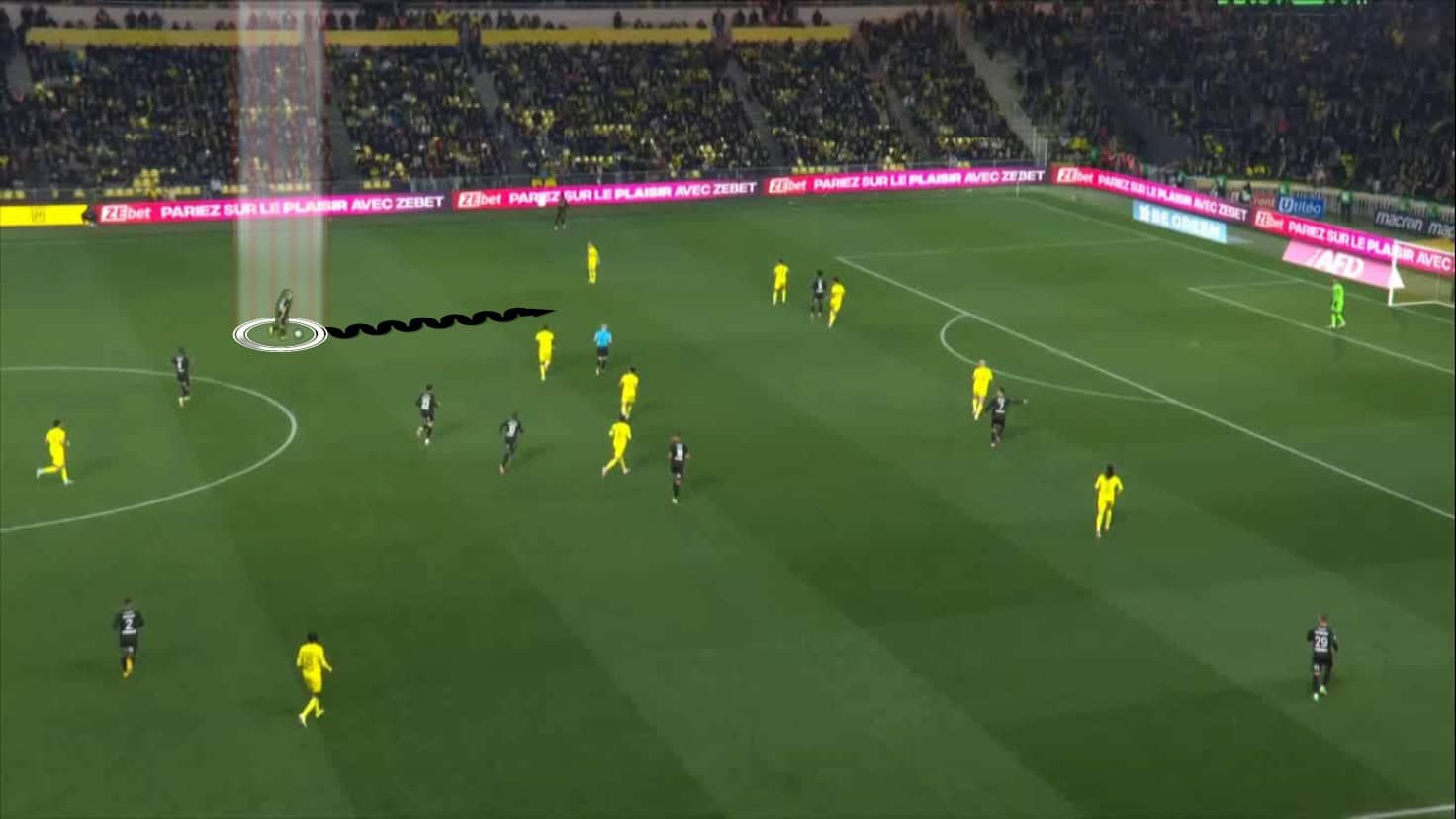
Then, when he recognised his teammate’s movement, he passed an accurate short pass to him.
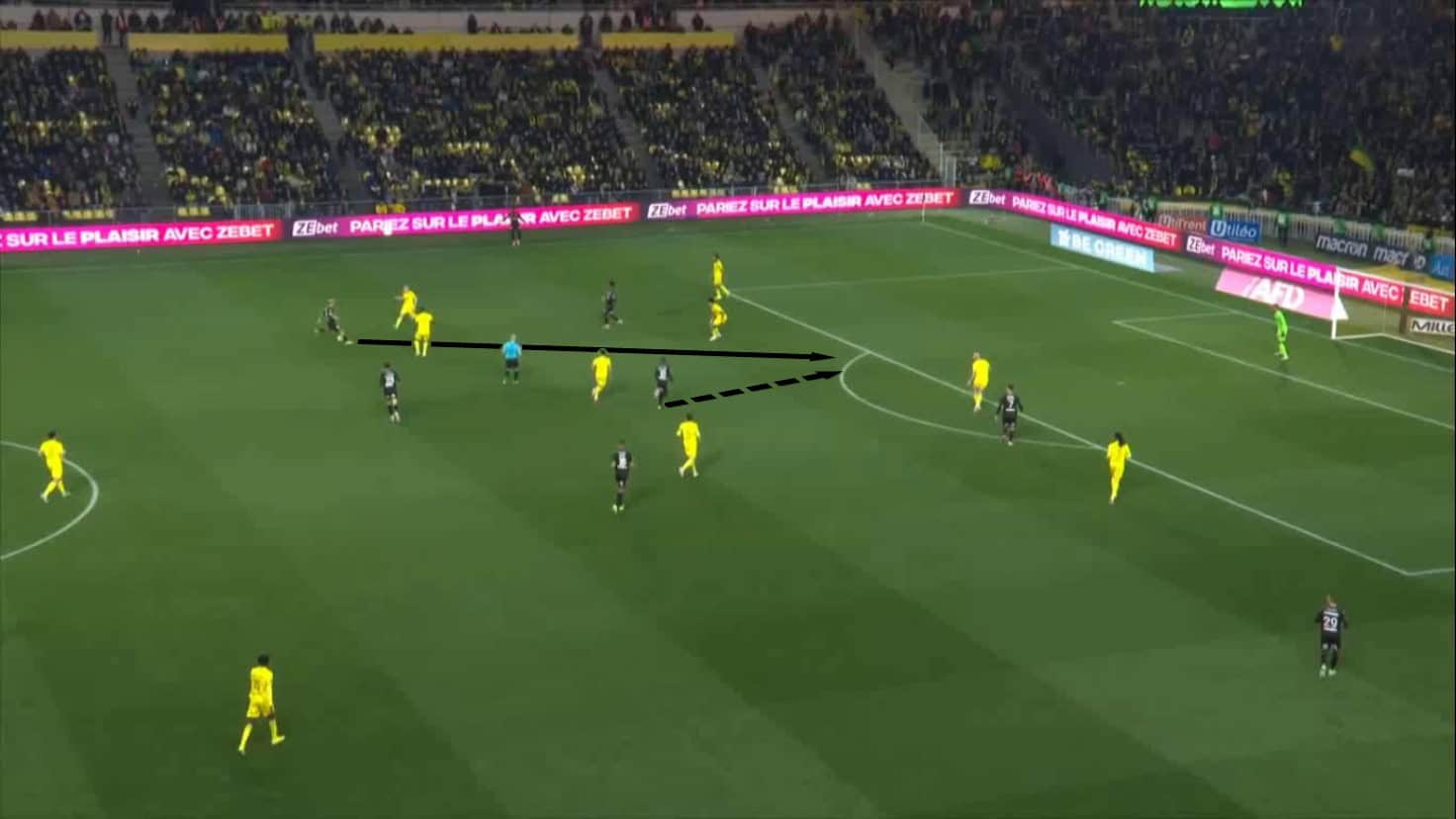
The ball reaches his teammate easily in the free space.
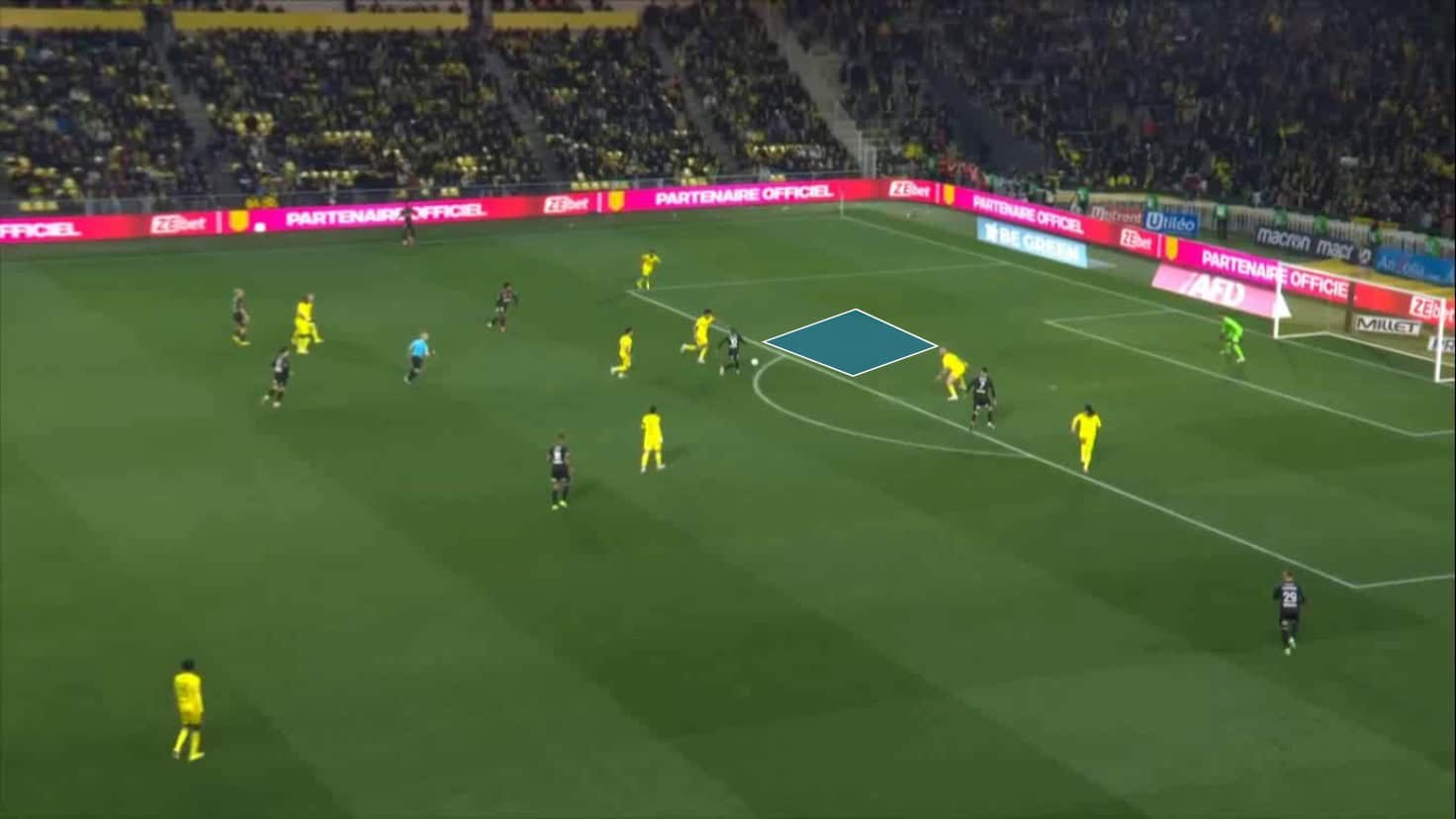
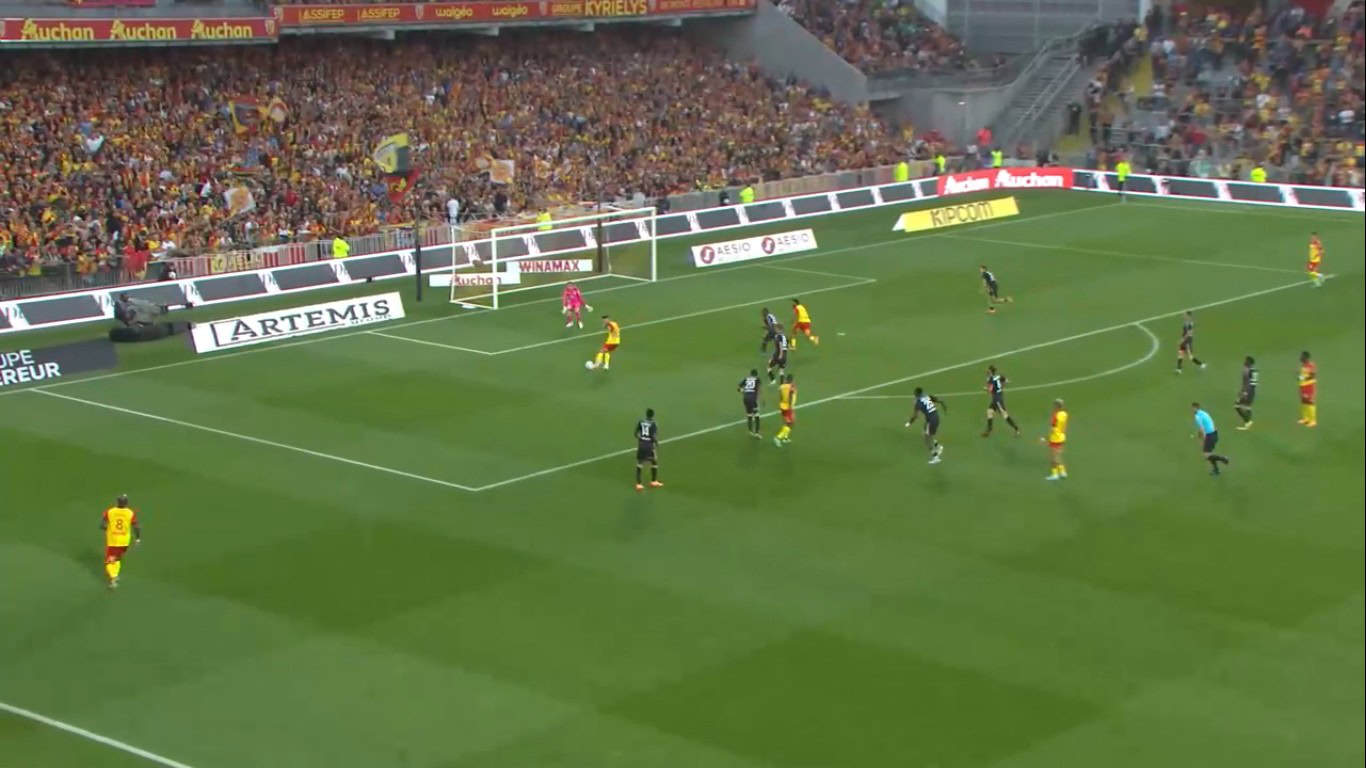
Here’s another example showing the accuracy of through passes from Medina.
Again, he guides the ball forward.
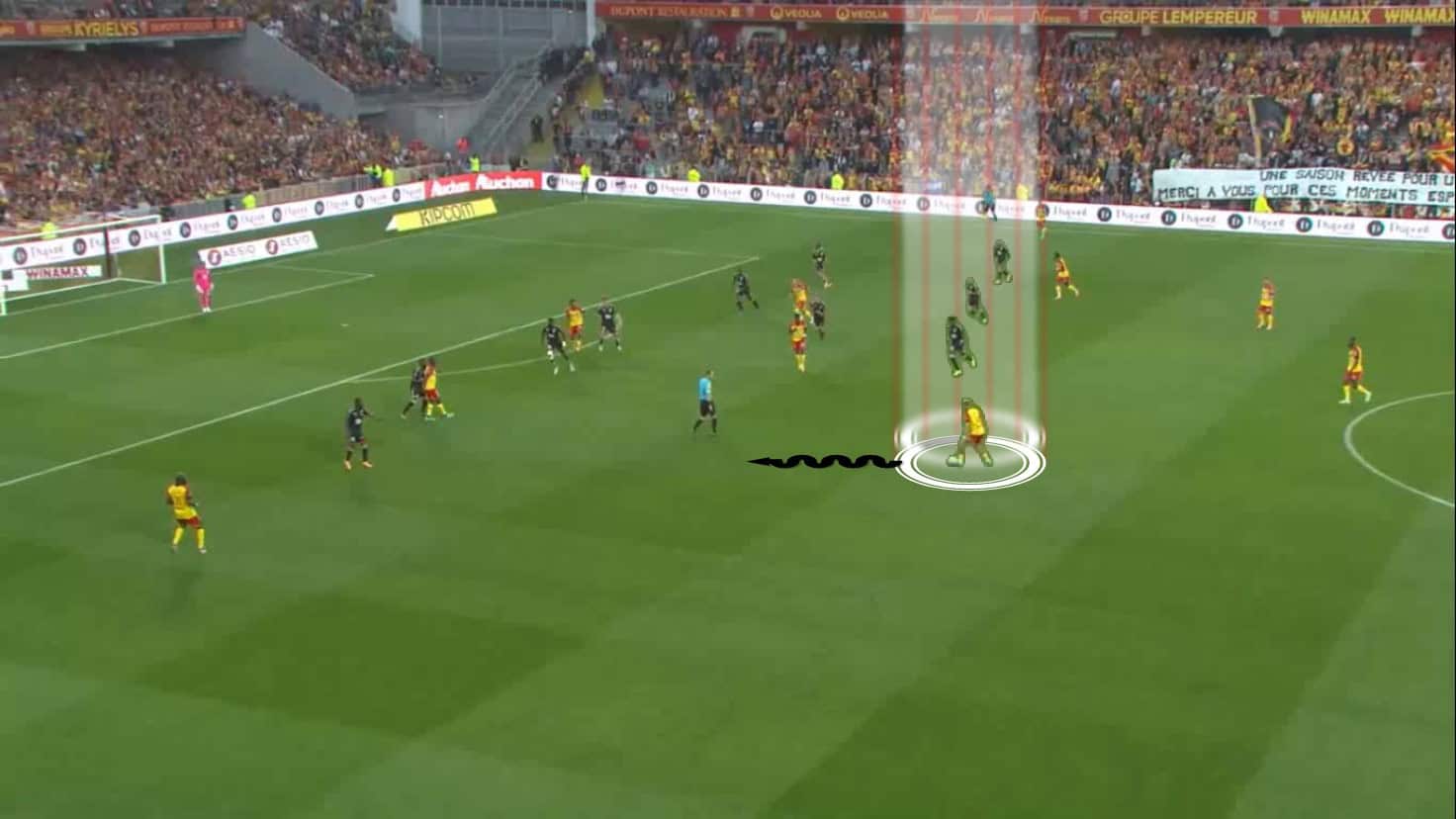
Therefore, he passes a through ball with a high vision and accuracy to his teammate who attacks the free space.
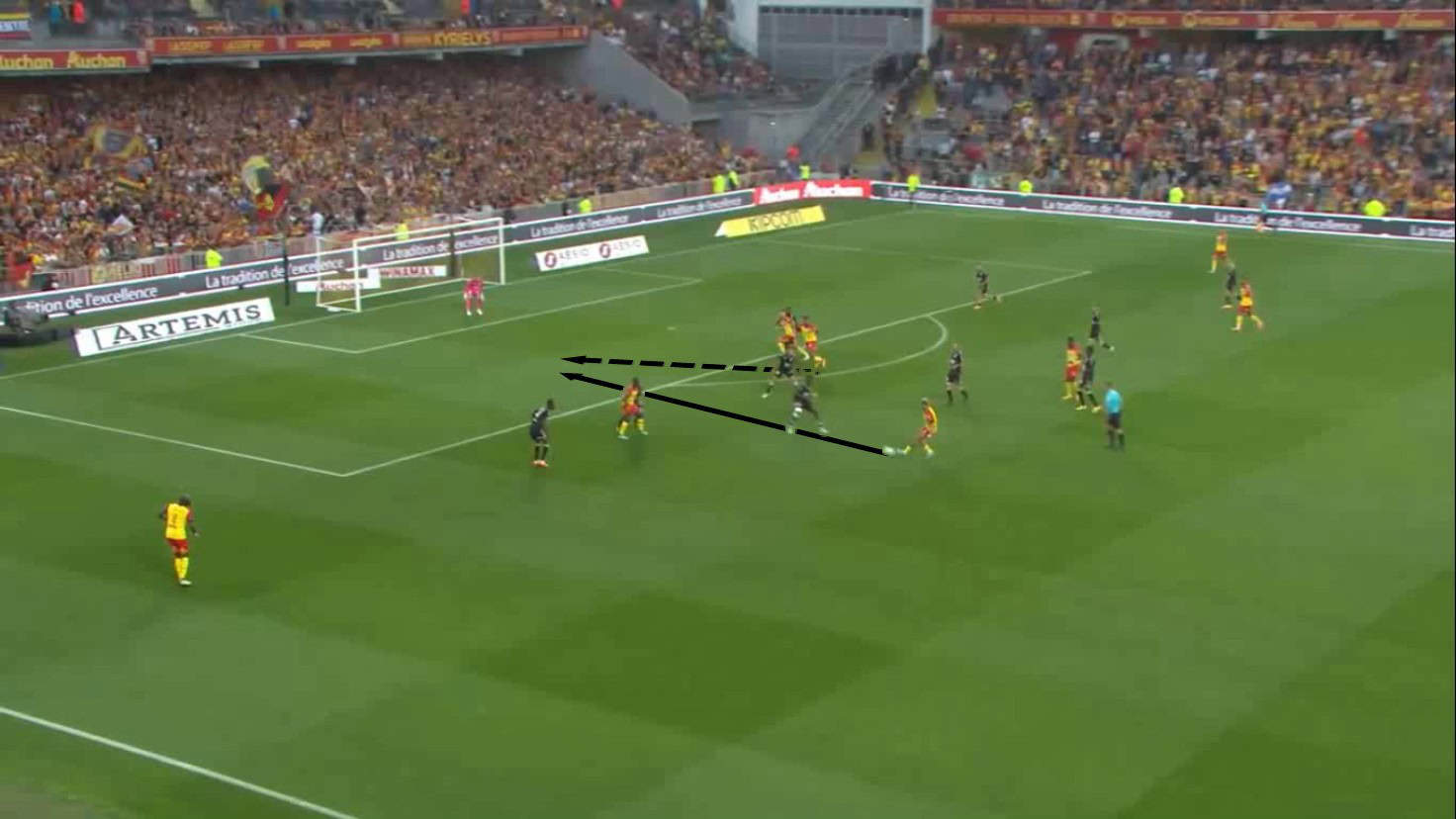
That pass from Medina allowed his teammate to face the goalkeeper and score a goal.
Regarding the long passes, the next image shows us Medina’s long passes behind the defensive line.
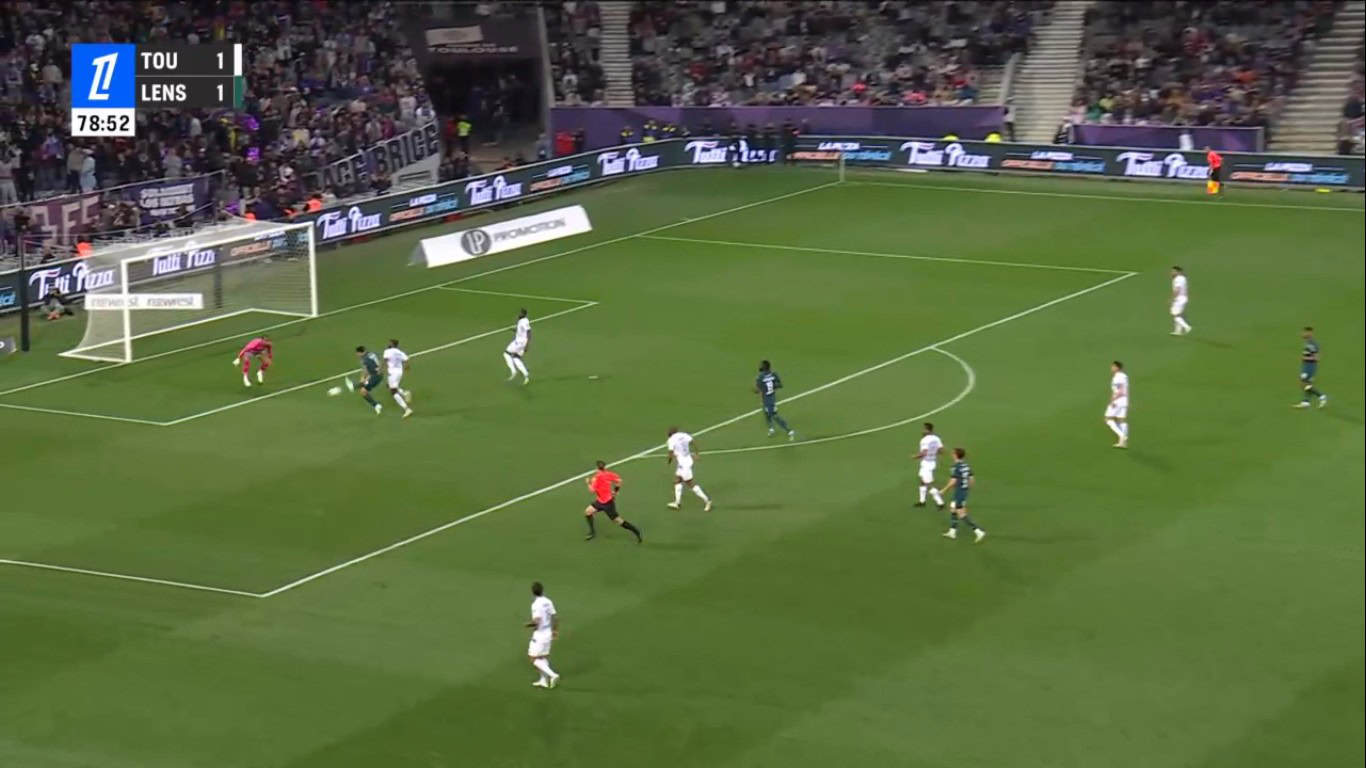
The player made a long pass to his teammate, who penetrated the free space.
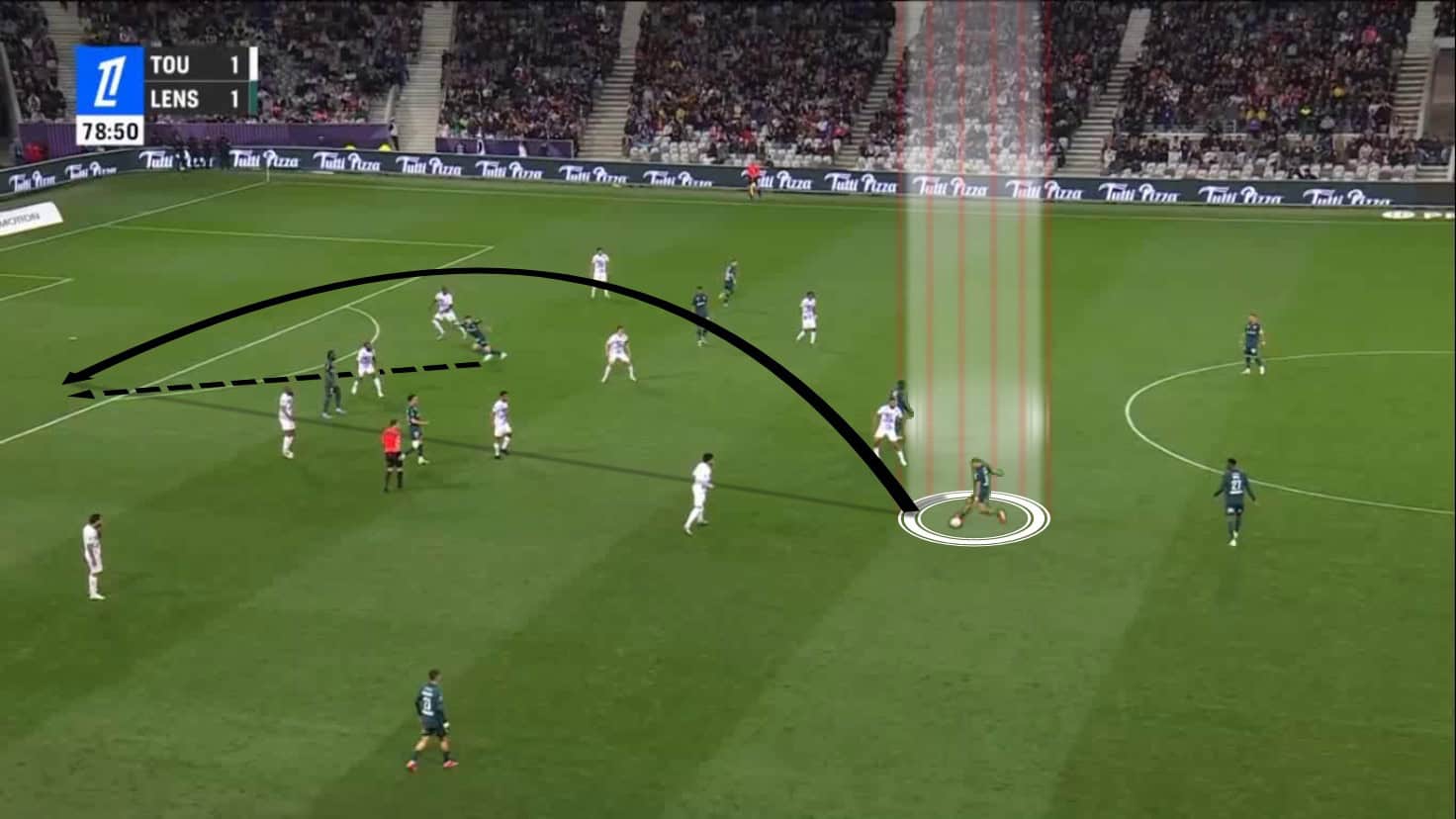
This became a scoring chance for the team.
Facundo Medina Final Third Contribution
Medina makes many attacking contributions in the final third of the pitch, whether through transitions or organised movements, and also makes many shots at goal.
Starting with the attacking transitions, the player has the ability and pace to go forward quickly alongside his teammates to make a transition.
In the following image, there is an attacking transition to the RC Lens team, as we can see Facundo Medina runs forward with the front four.
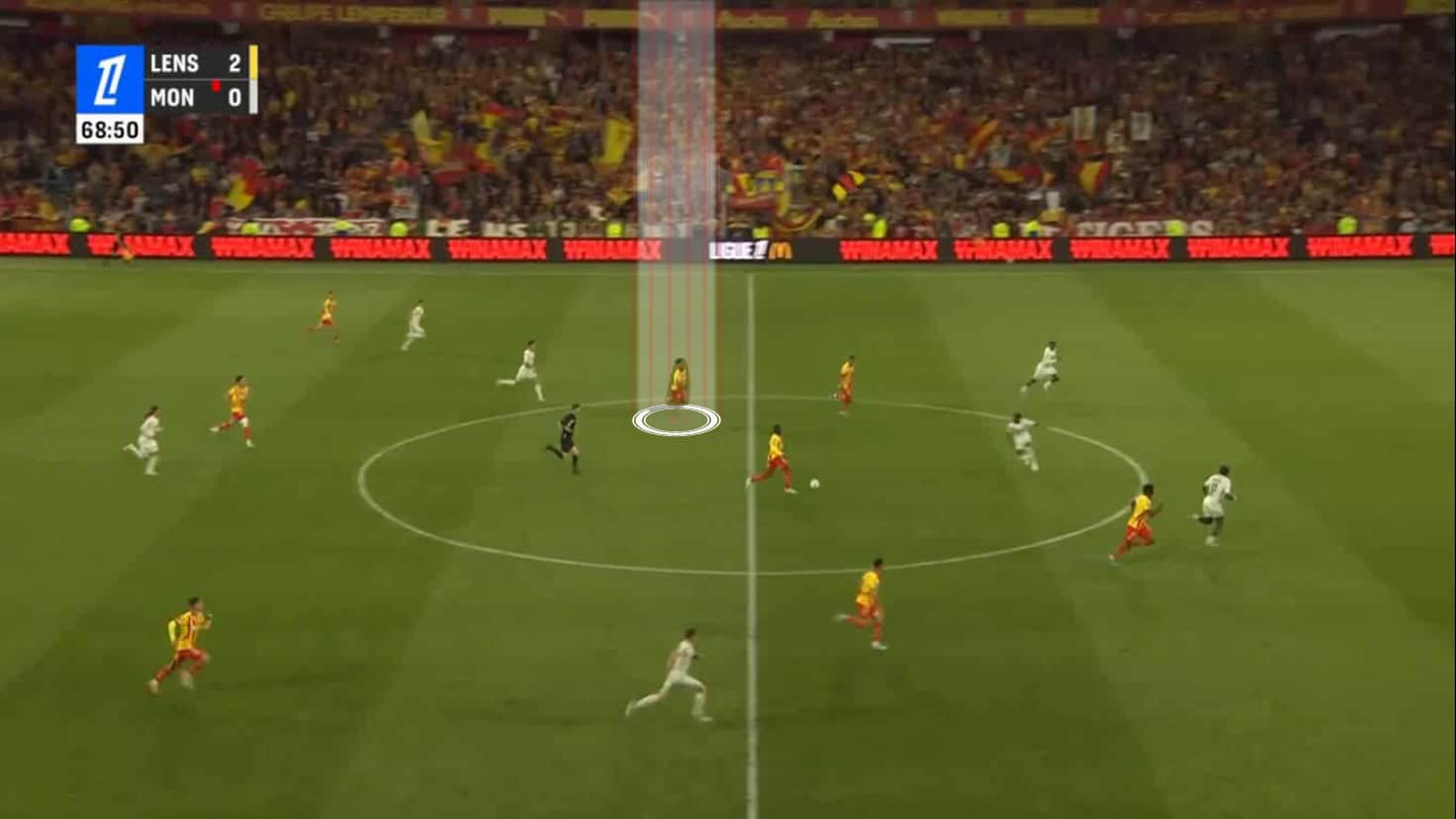
Then, he makes an overlap from the left side.
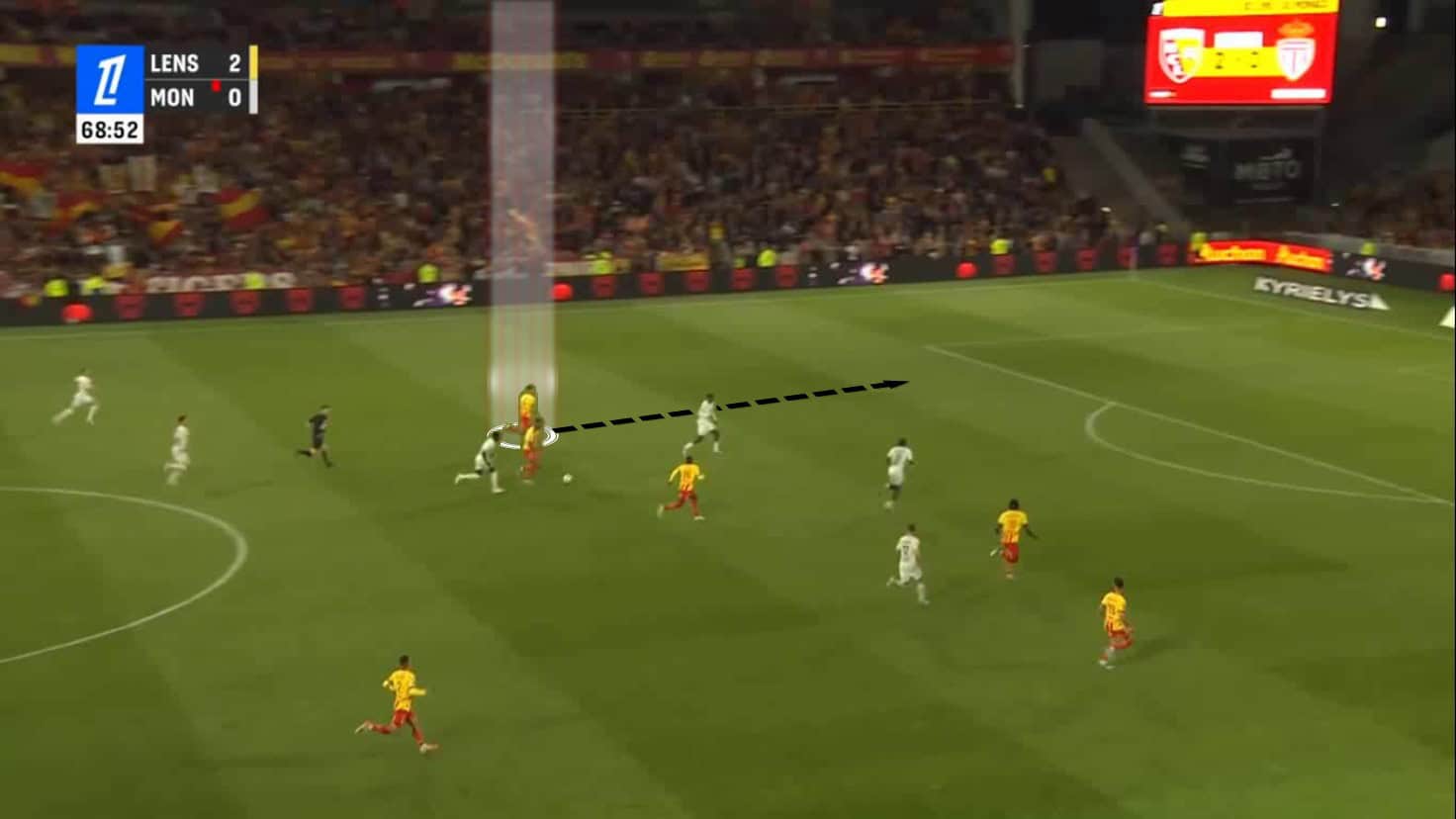
Thus, he receives a pass from his teammate.
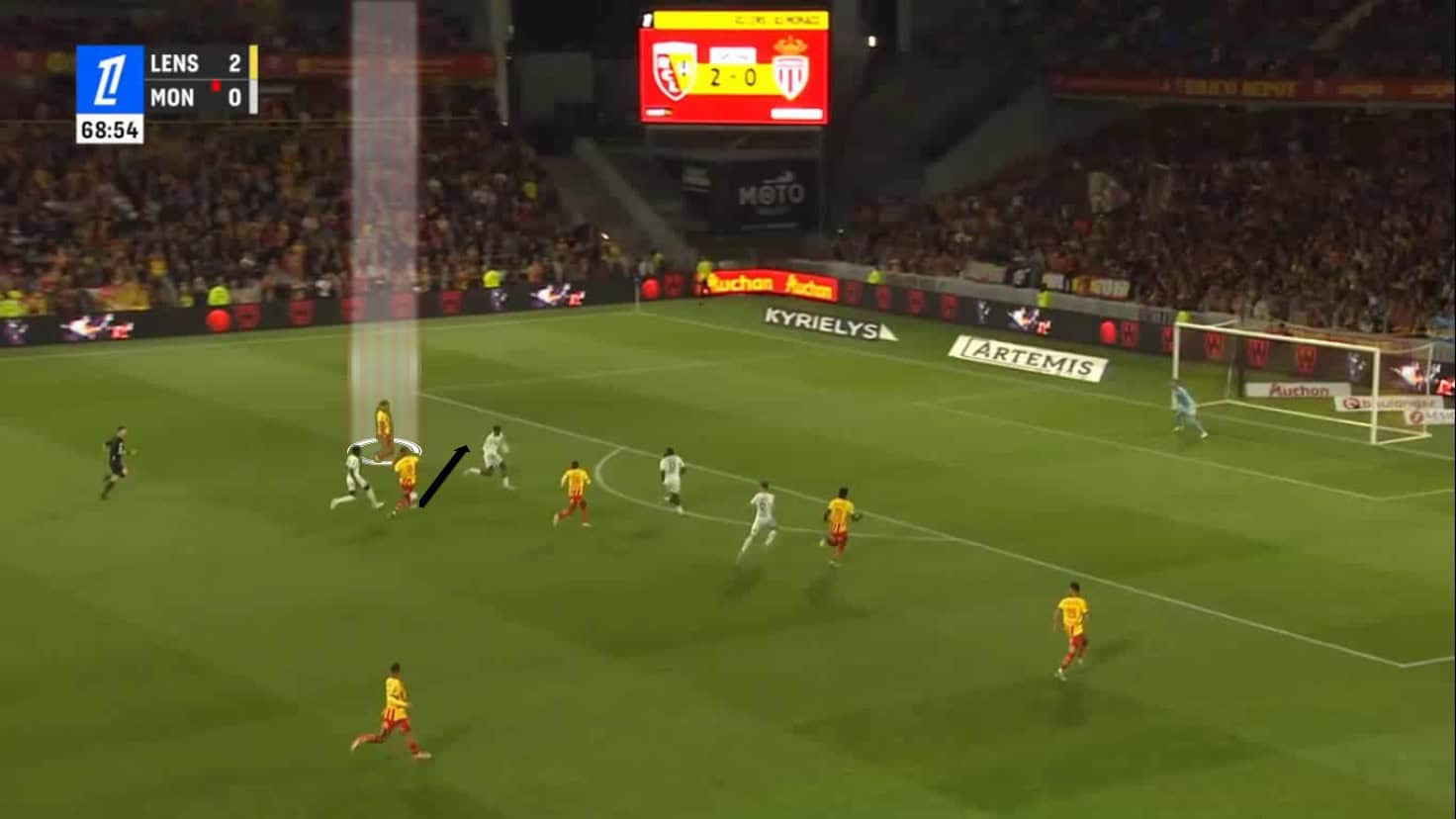
After that, he shot the ball at the goal but missed.
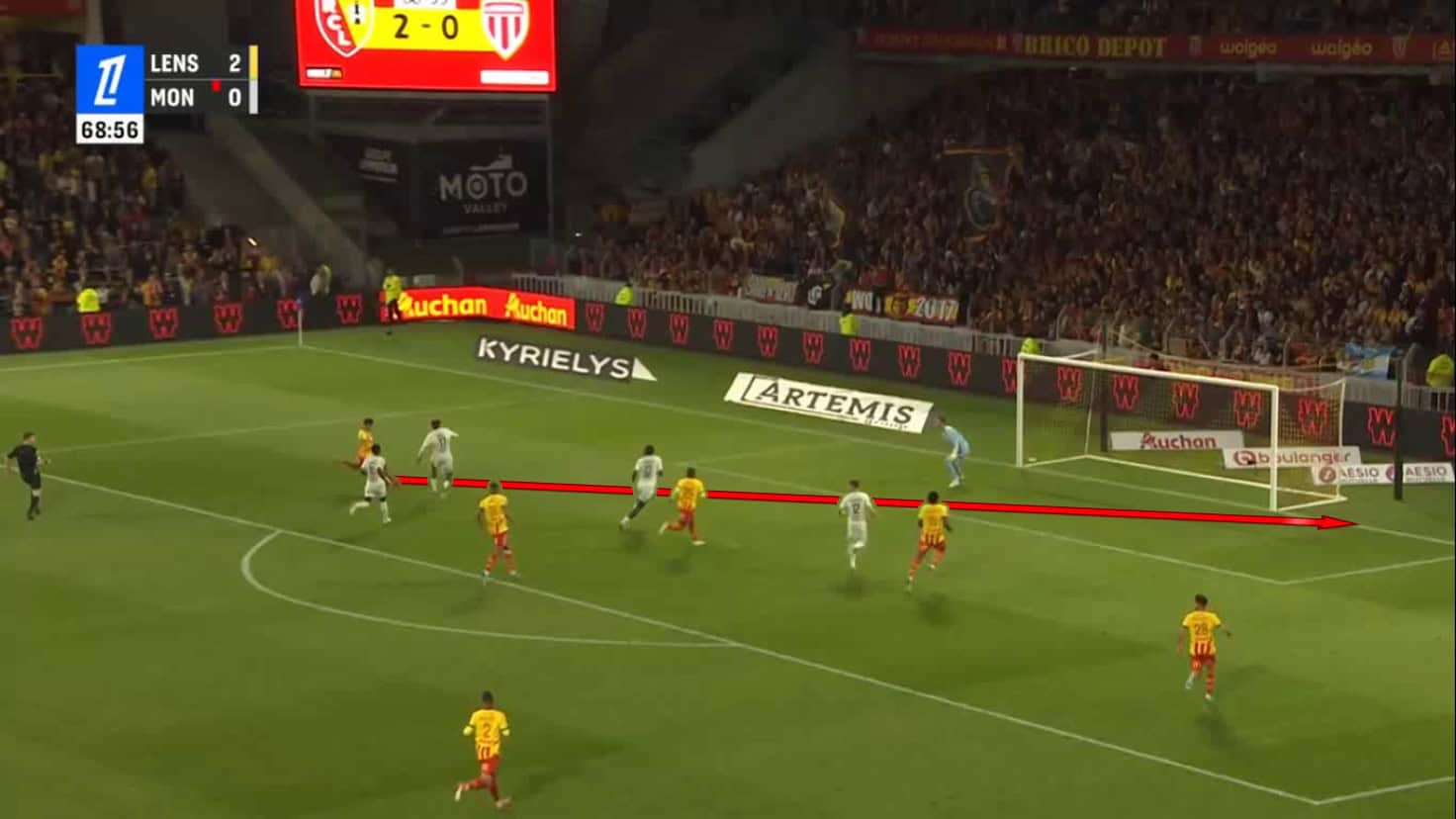
Here’s another example of Medina’s forward movements in transitions.
In the following image, Medina moves forward to create a 2-v-1 situation on the left side.
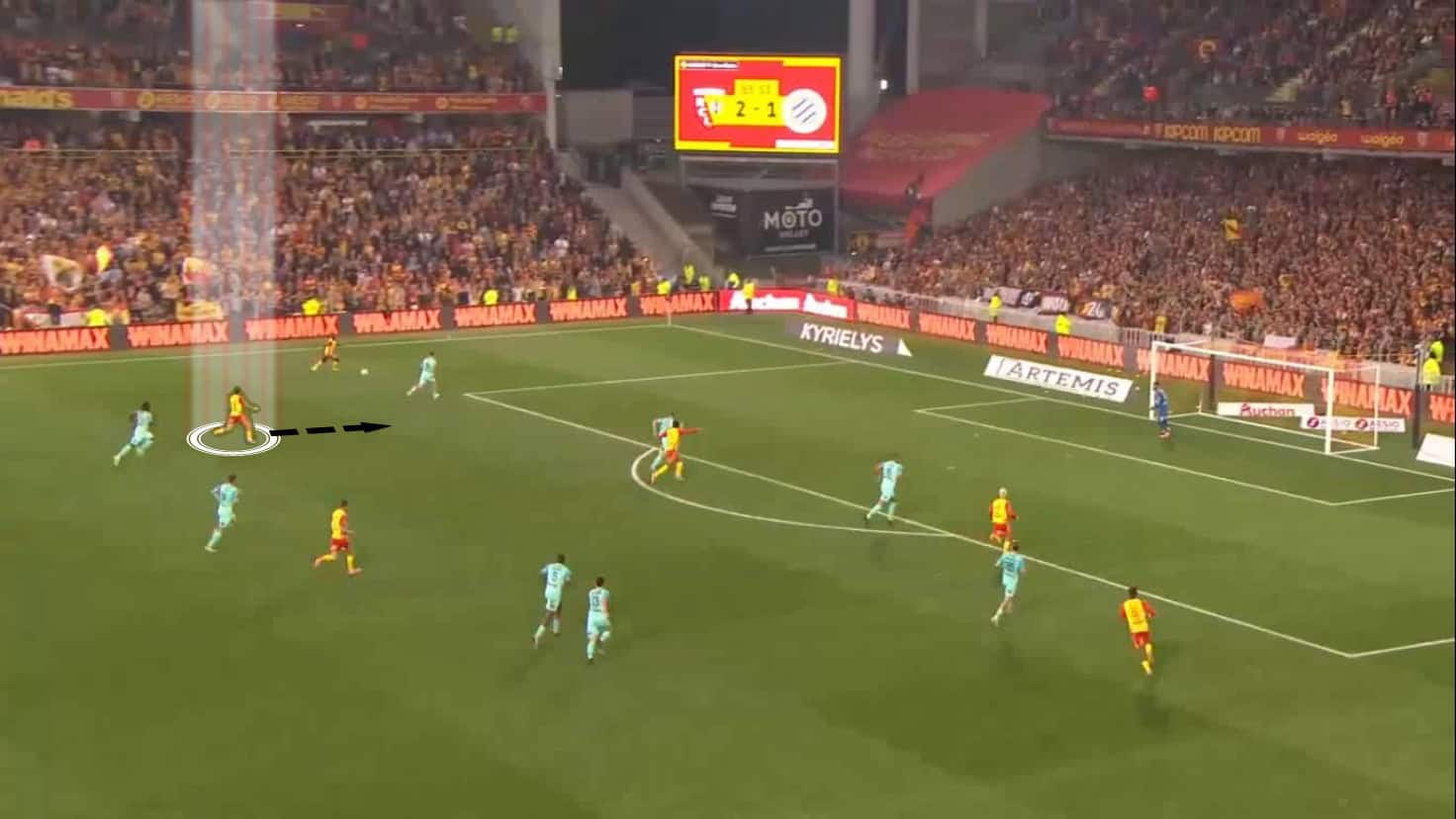
Then, he receives a pass from his teammate.
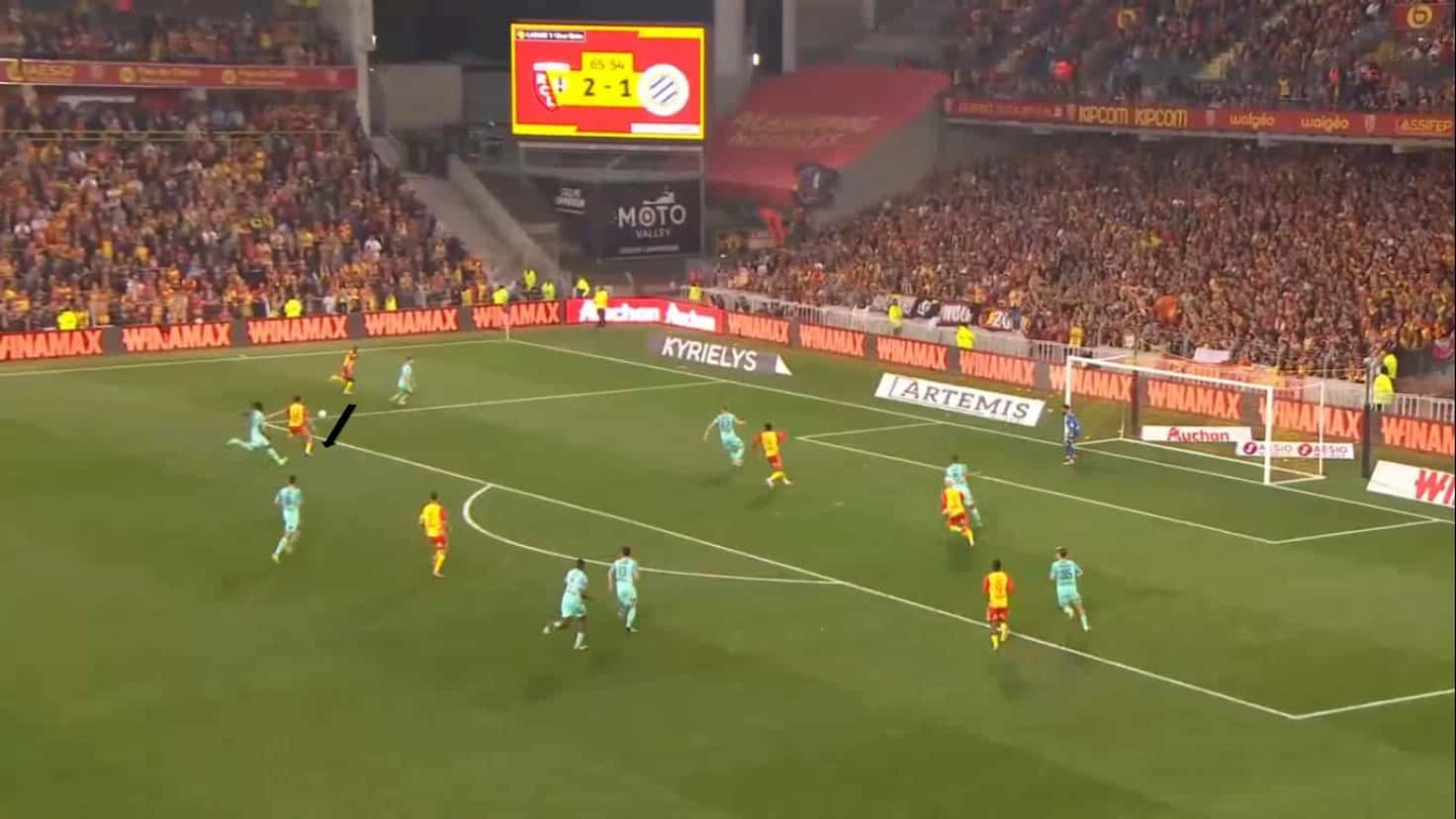
When he receives the ball and realises that the opponent player is rushing towards him, he makes a body feint to bypass the opponent’s player.
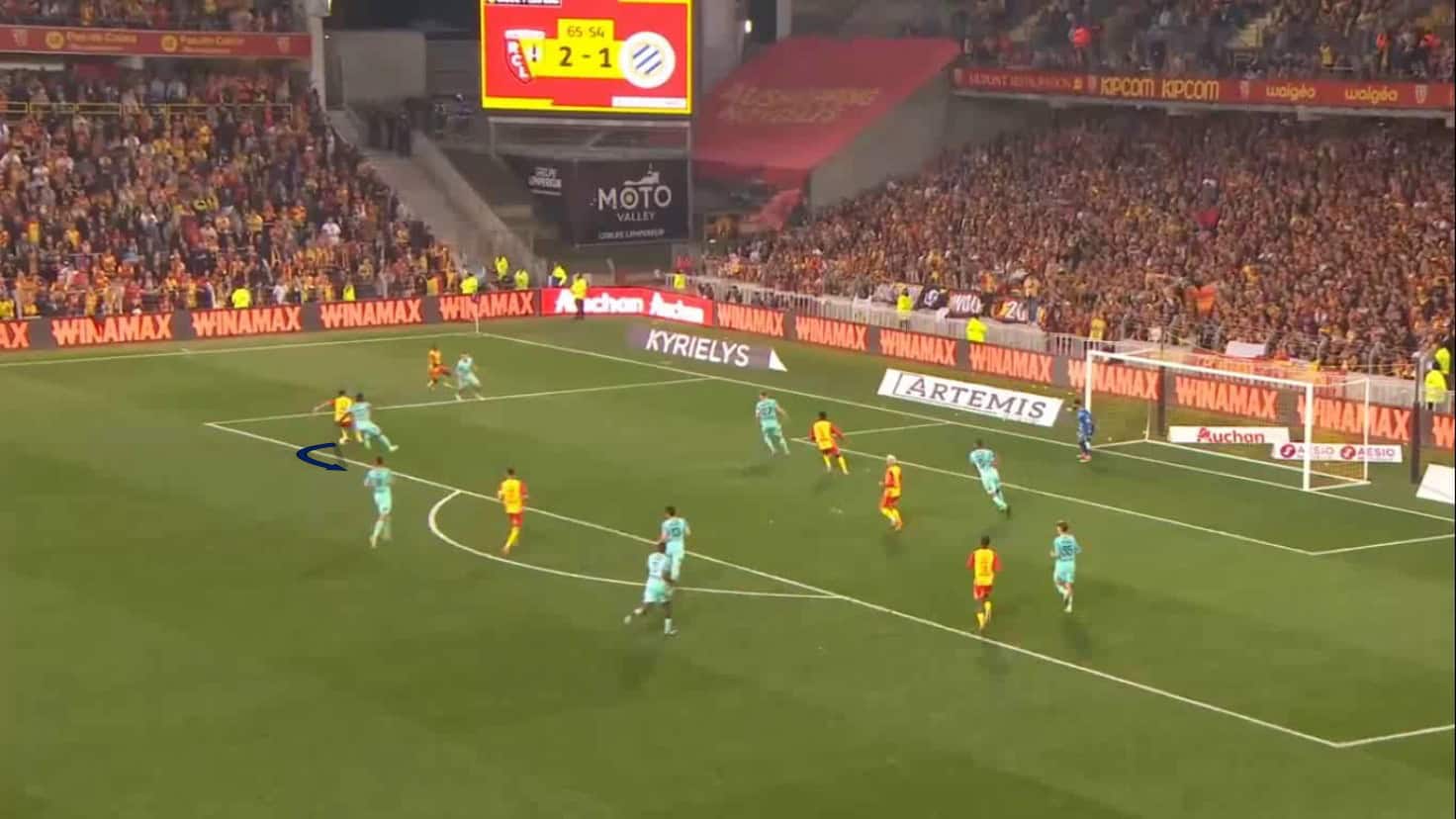
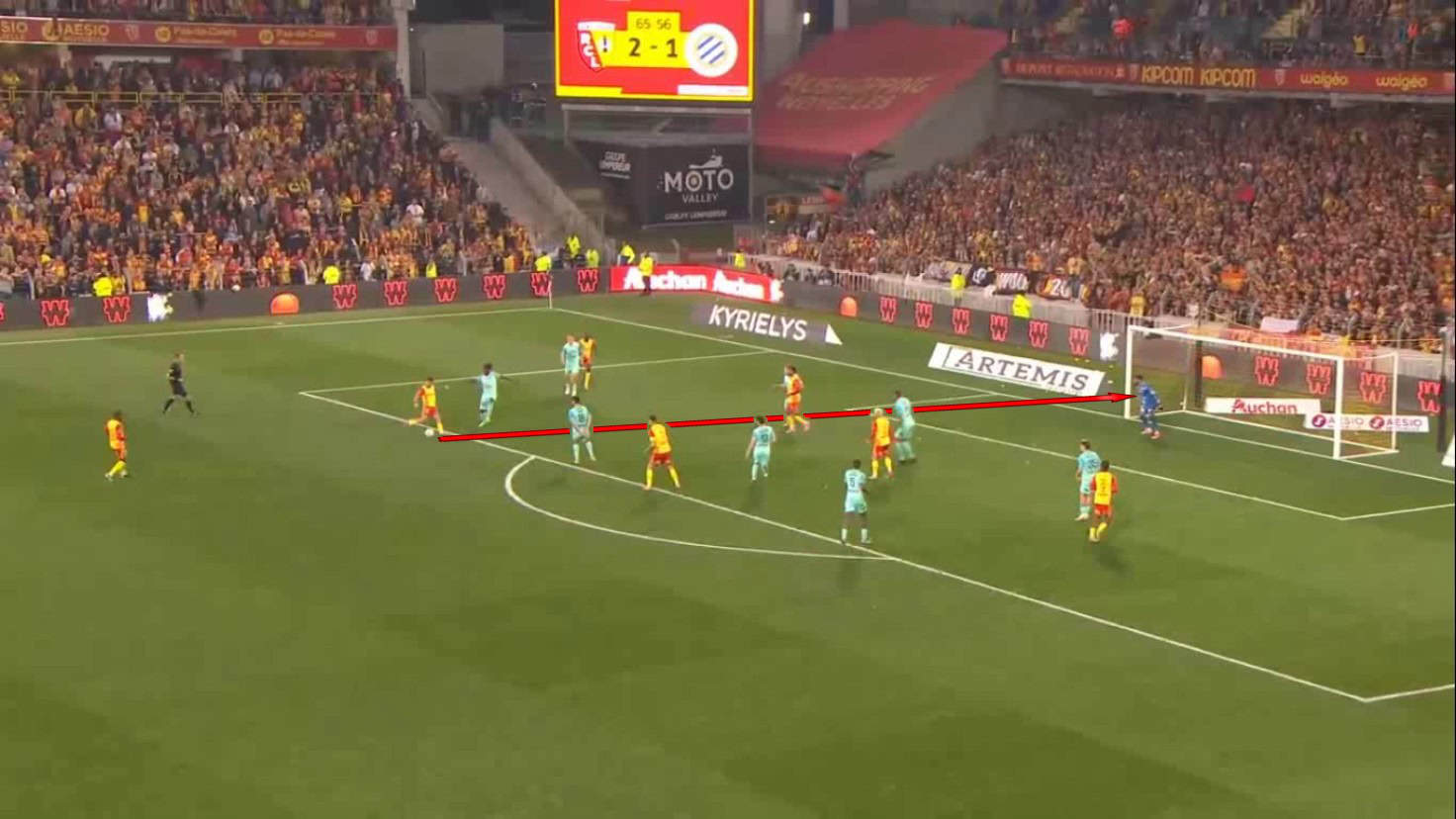
After that, he shot at the goal with his weak foot, but missed it.
Facundo Medina Defending Attributes
Let’s move on to Medina’s defensive attributes, where we will explain some of the principles in which he performs well, such as positioning, covering or protecting depth, anticipation and interception.
Facundo Medina Covering
In the next image, we can see Medina’s ability to move forward and get back easily due to the attacker’s movement.
The opponent’s defender has the ball, and the attacker drops off.
Medina follows the attacker to be able to intercept or tackle him if the ball goes to him.
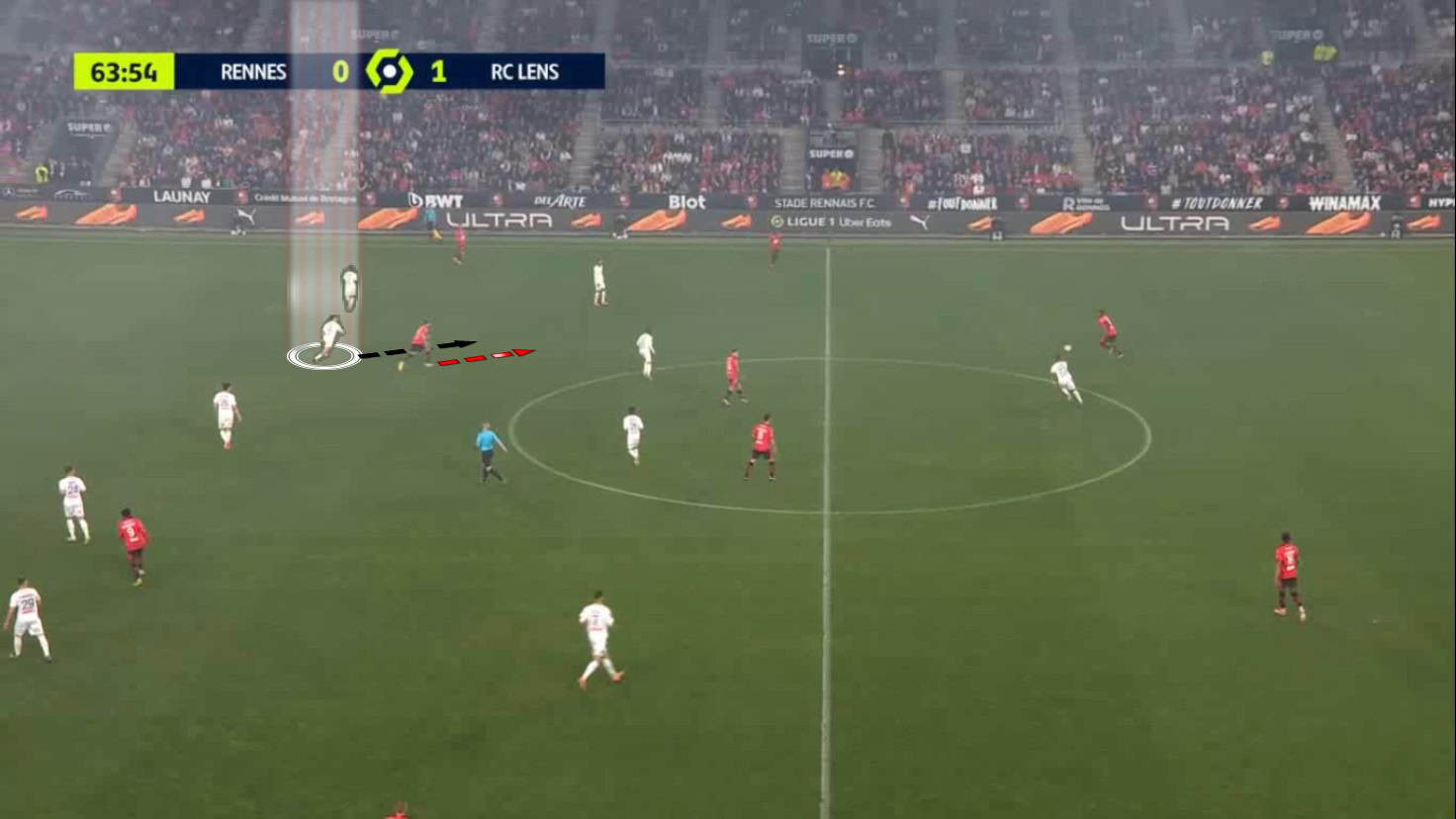
Then, when the attacker decides to exploit the space behind Medina, Medina reacts quickly and gets back with him at a high pace.
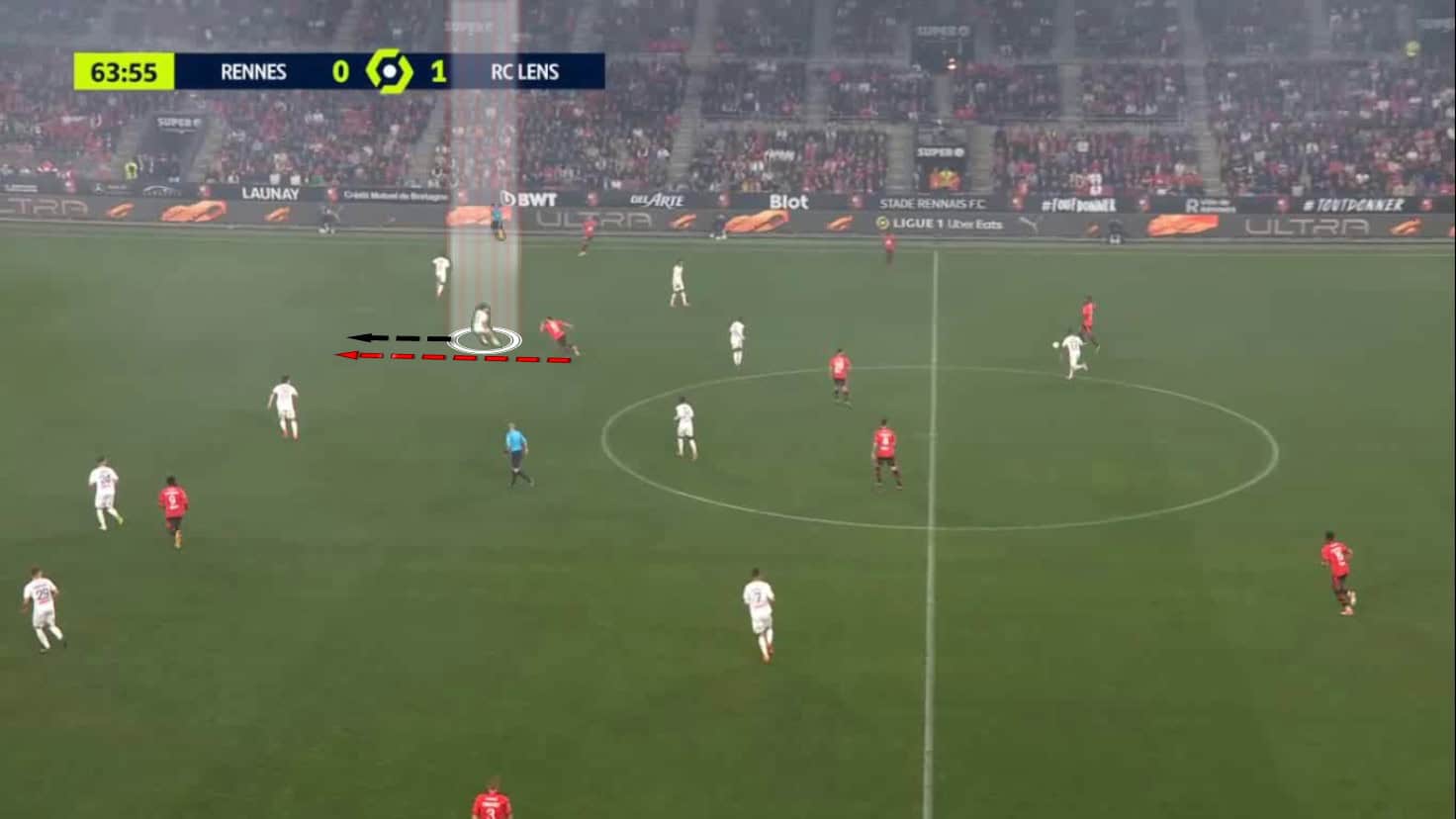
Medina is still getting back with the attacker to protect the depth.
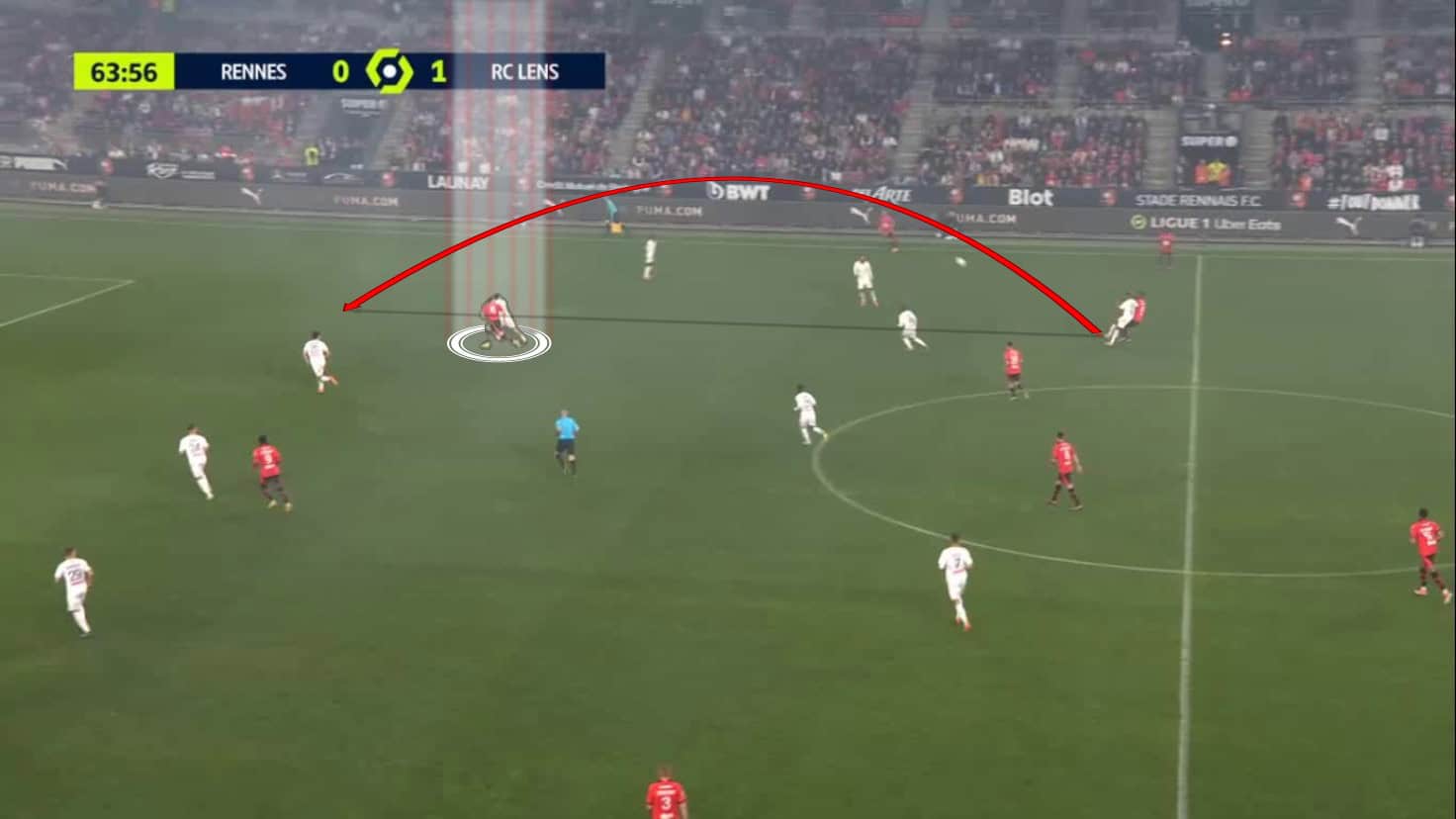
Finally, he reached the ball and cleared it easily, passing it to his teammate, which allowed the team to keep possession.
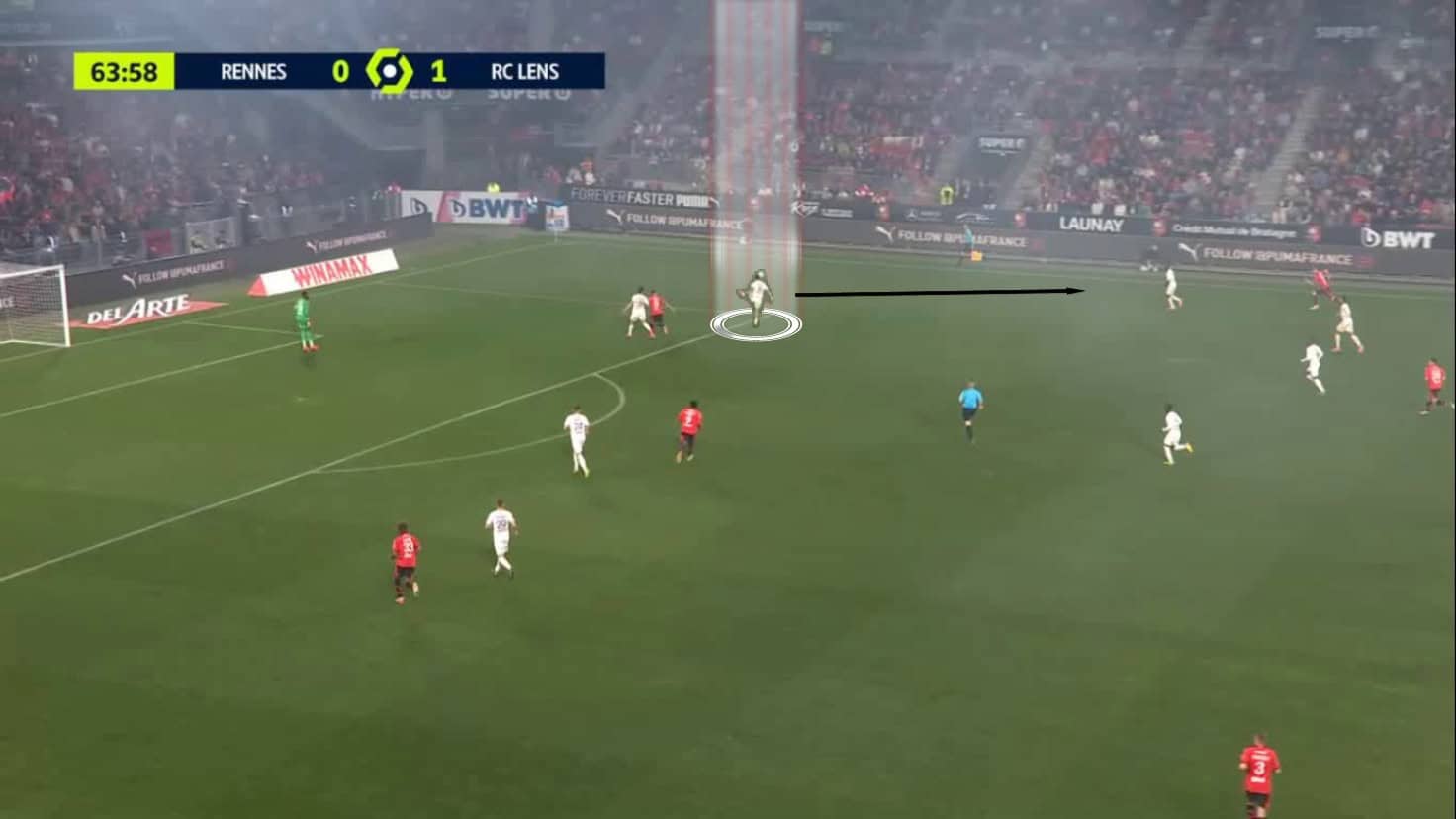
The following example is another one for the positioning and covering depth principle.
The situation is a defending transition, as the opponent team recovered the ball and pushed forward.
When Medina realised that the attacker was running behind him, he got back quickly and moved to the depth.
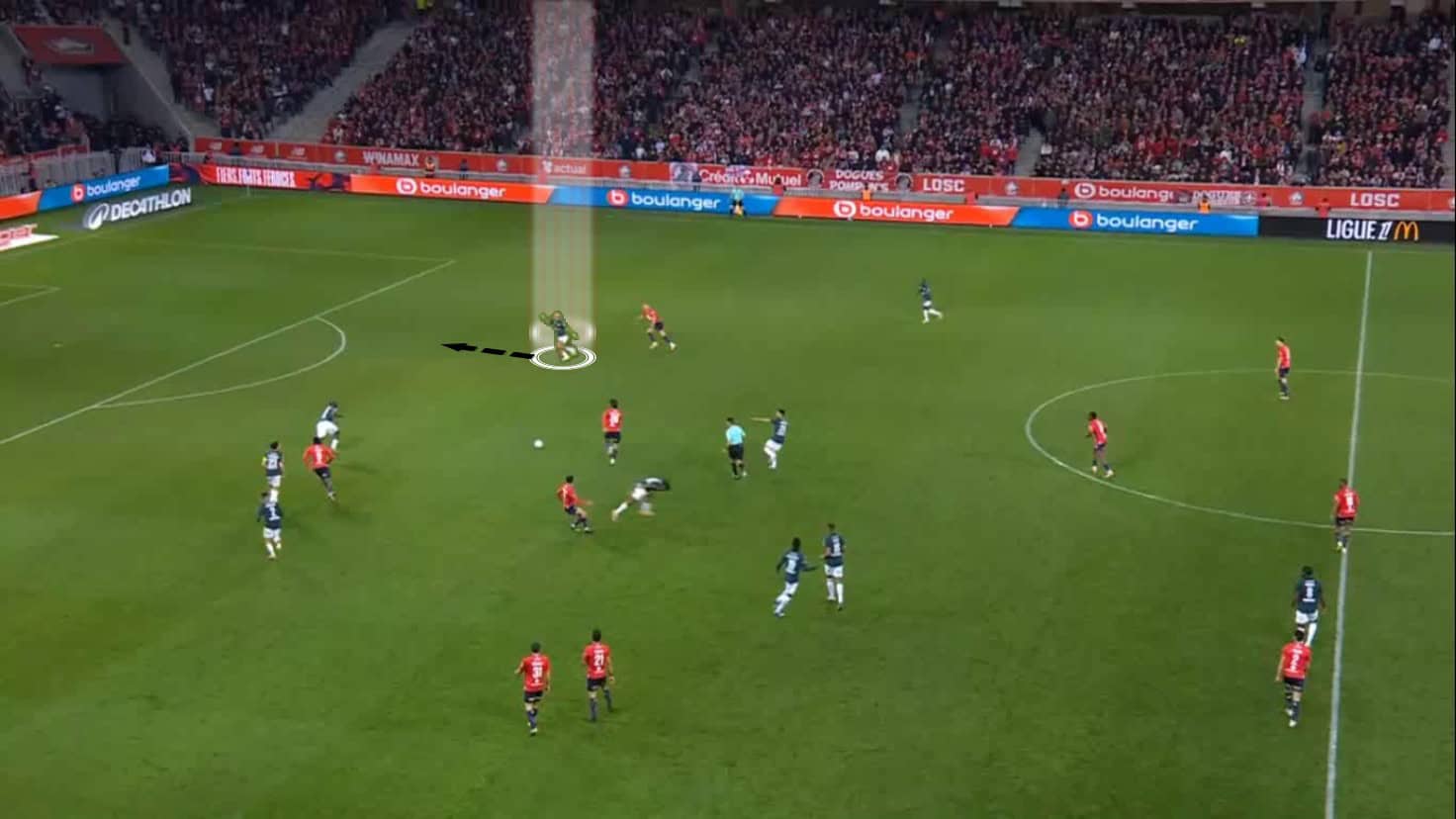
Medina’s positioning here is crucial.
He kept an appropriate distance between himself and the attacker behind him.
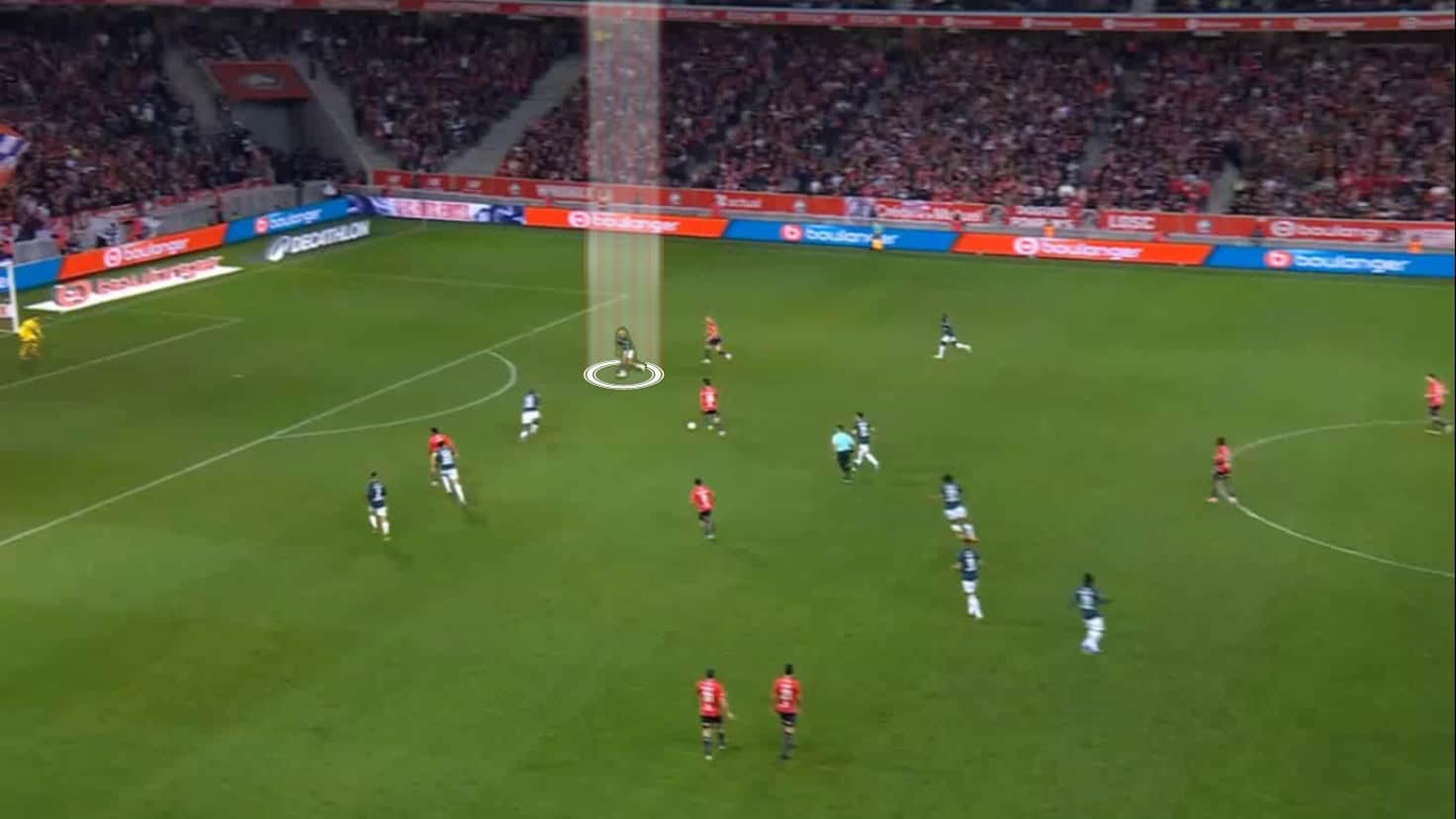
When the ball was passed, he turned his body to the opposite side to intercept the ball.
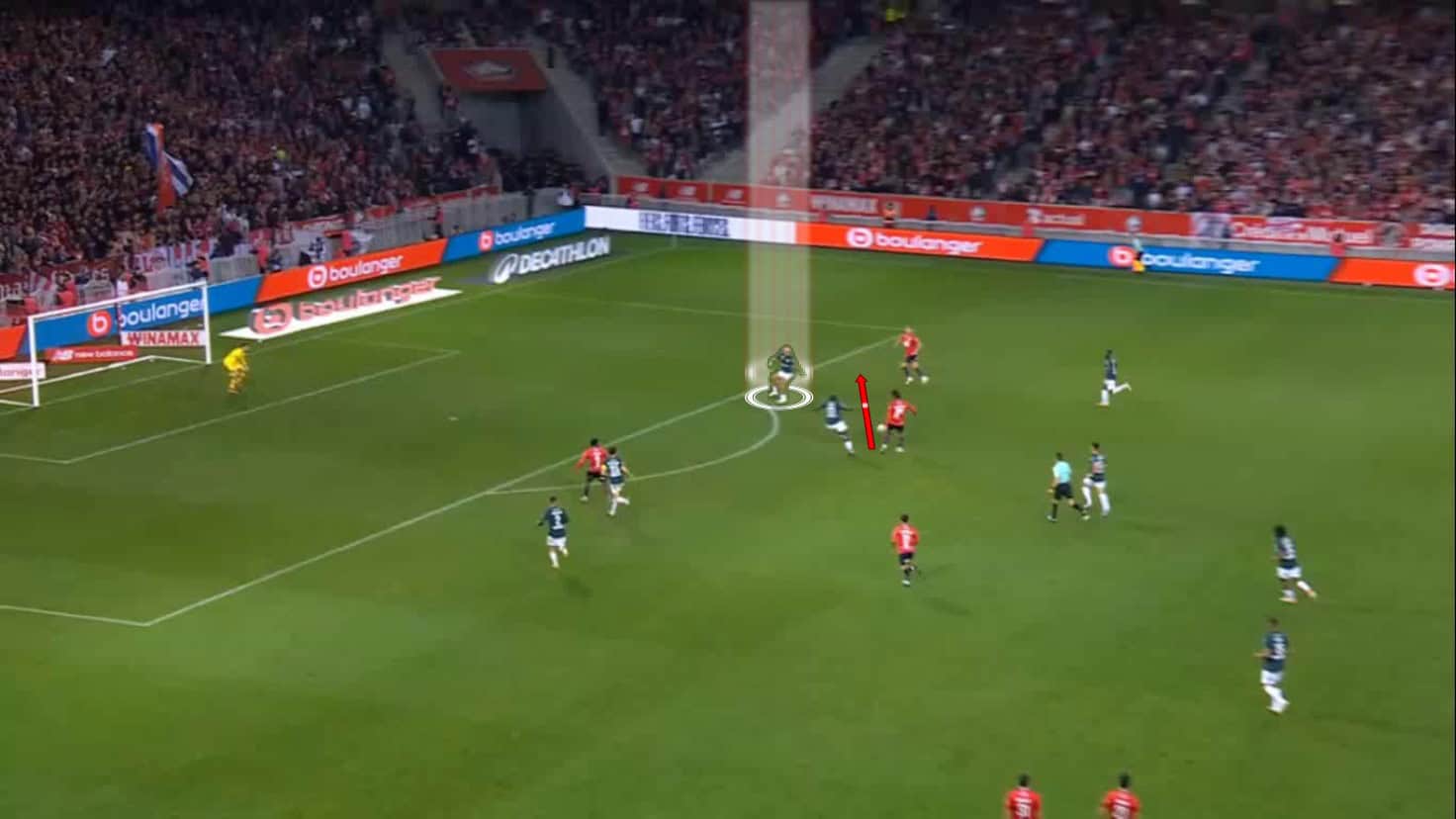
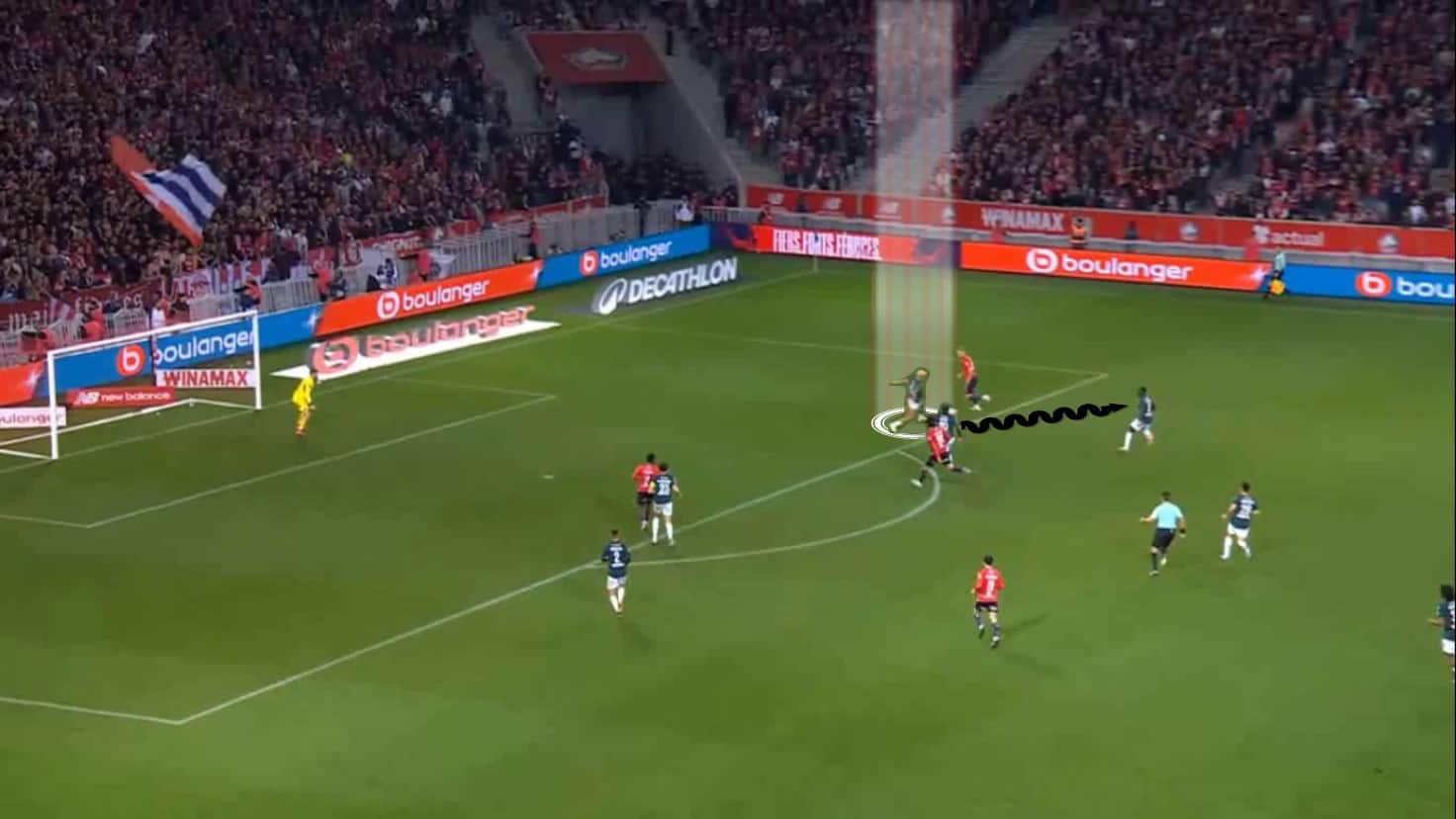
Then, he got the ball and guided it forward to make a counterattack.
Facundo Medina Interceptions
The last defending principle for Medina that we will illustrate is the interception.
The principle of Interception requires the defenders to have the ability to anticipate and be flexible and quick in their movements.
In the following image, we will see how Medina deals with interceptions.
He first moved with the attacker towards the depth.
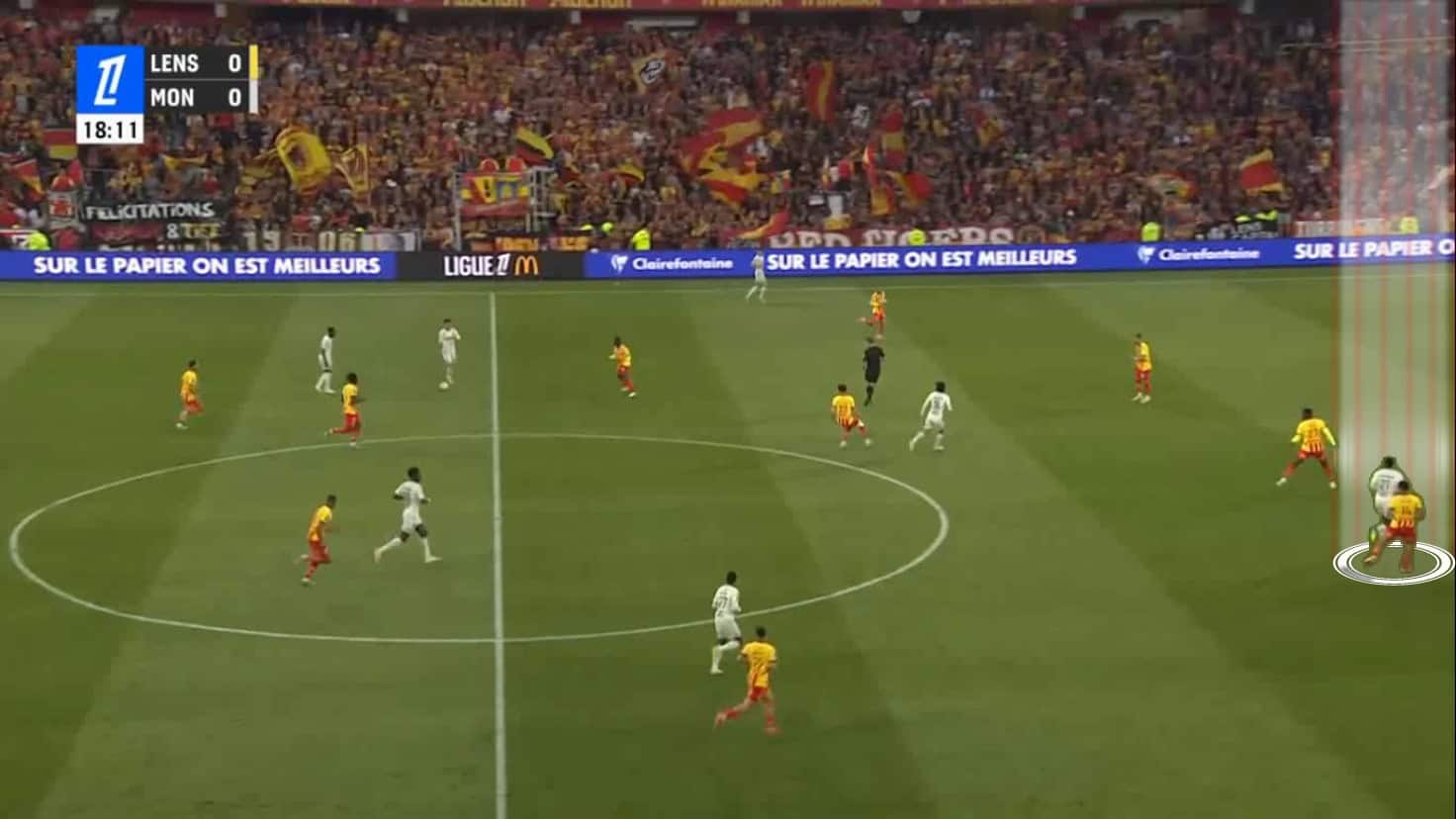
Then, when he anticipated that the ball carrier from the opponent could pass the ball diagonally, he got ready to jump forward.
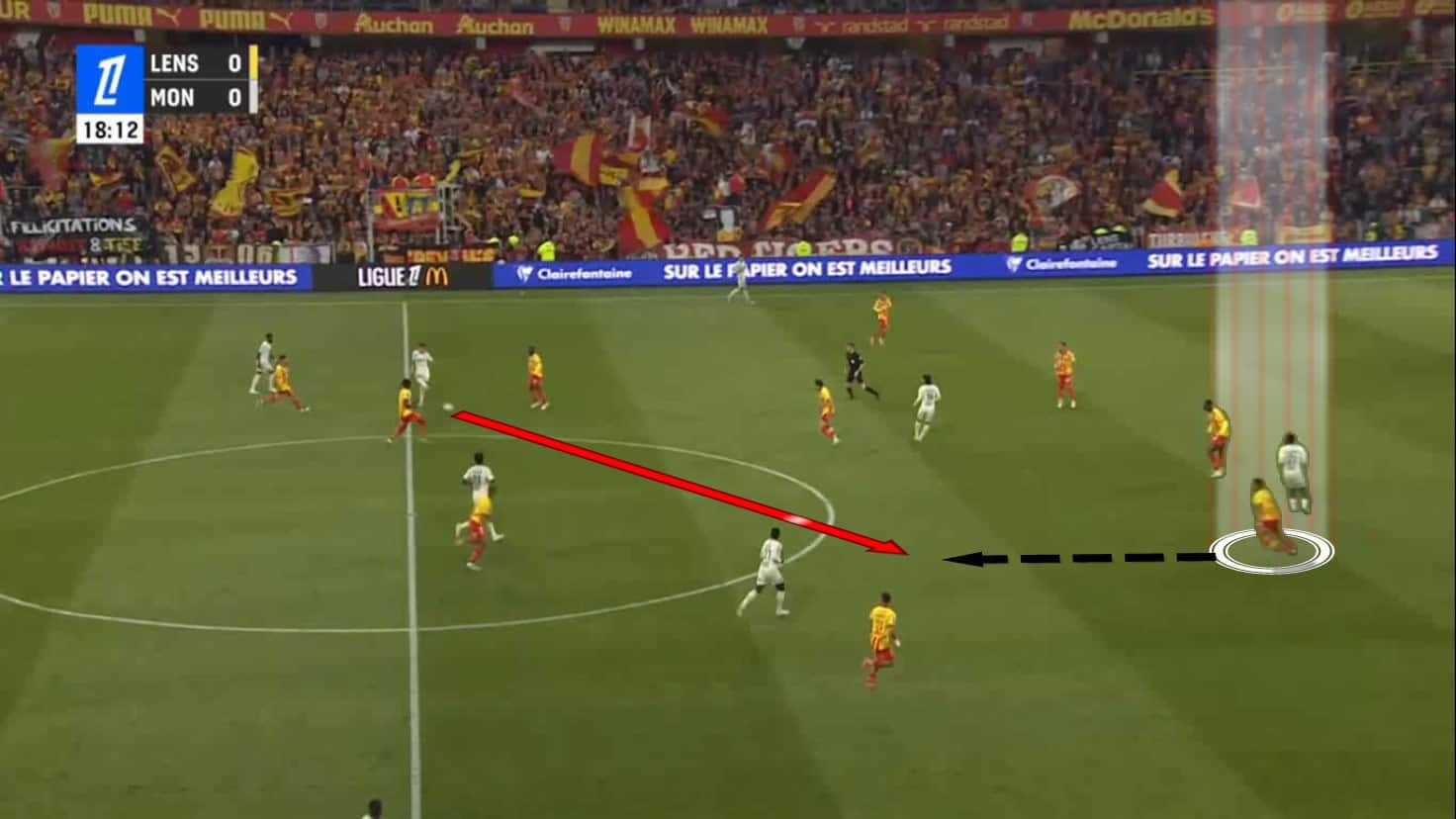
And he succeeded in taking the ball.
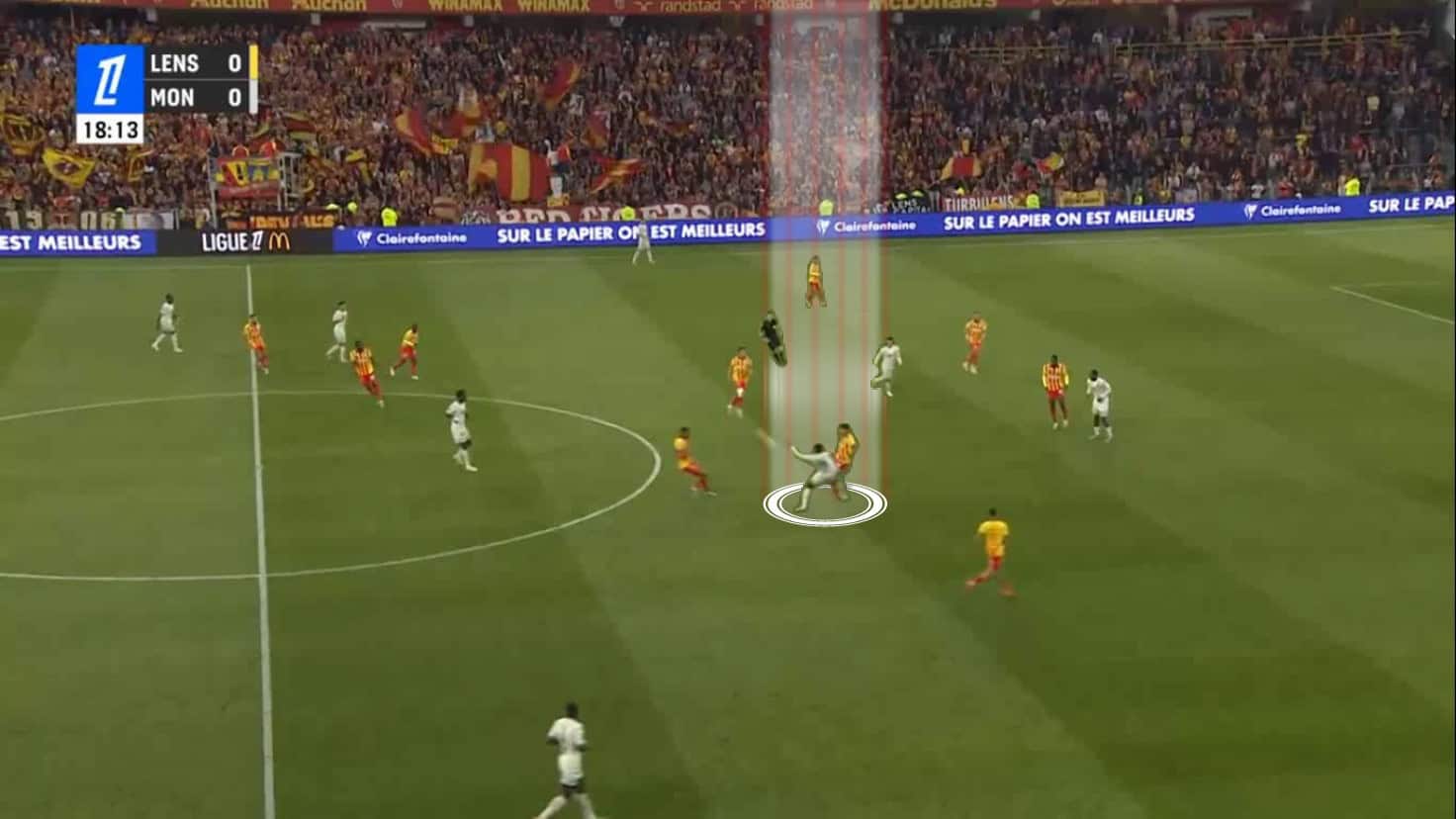
Let’s take another example of Medina’s interceptions.
This time, when he intercepts an attacker, he marks him.
In the following image, Medina marks the attacker and follows him.
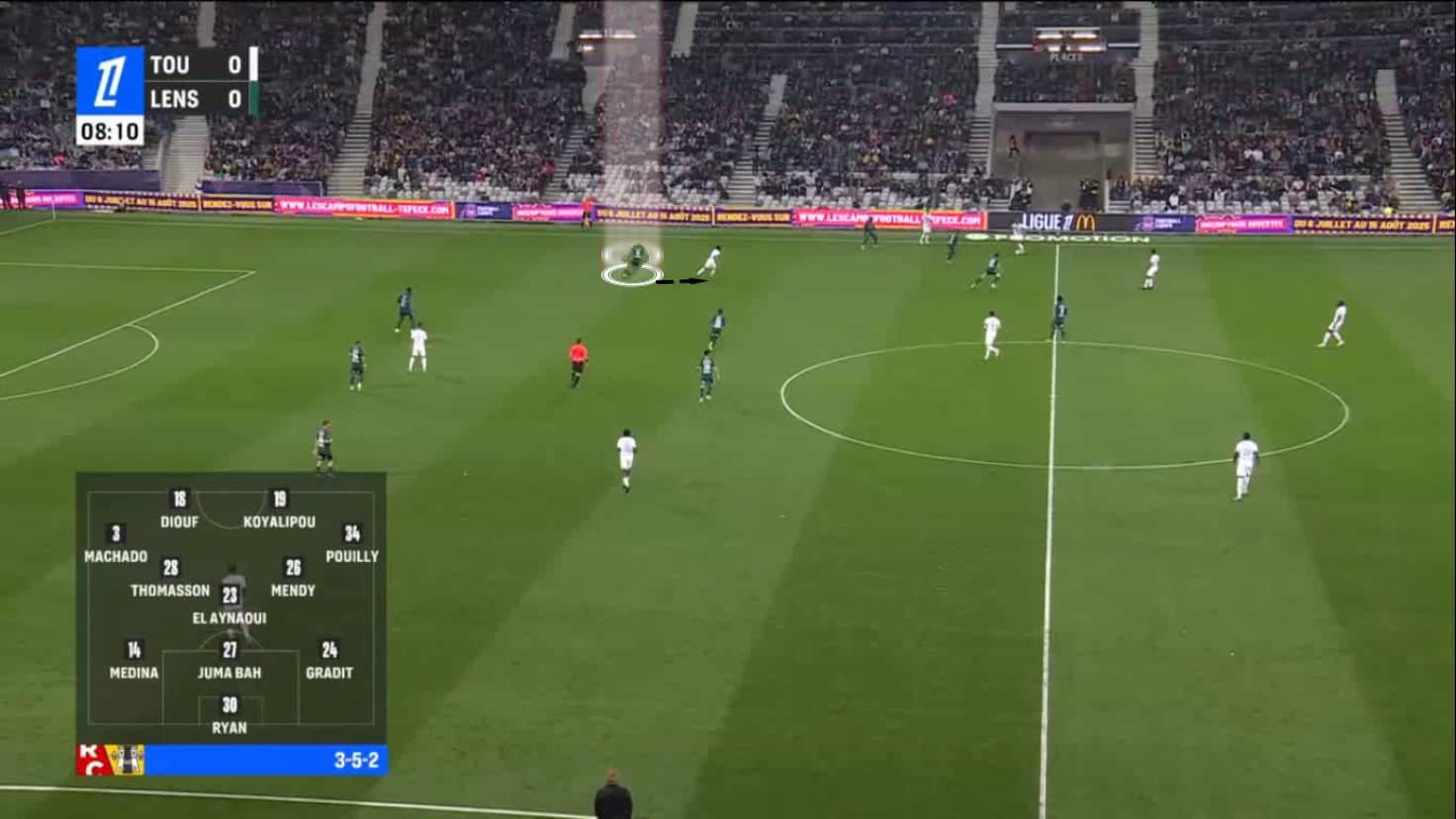
He increased his pace when he saw that the ball had gone from the ball carrier’s foot towards the attacker with a short pass.
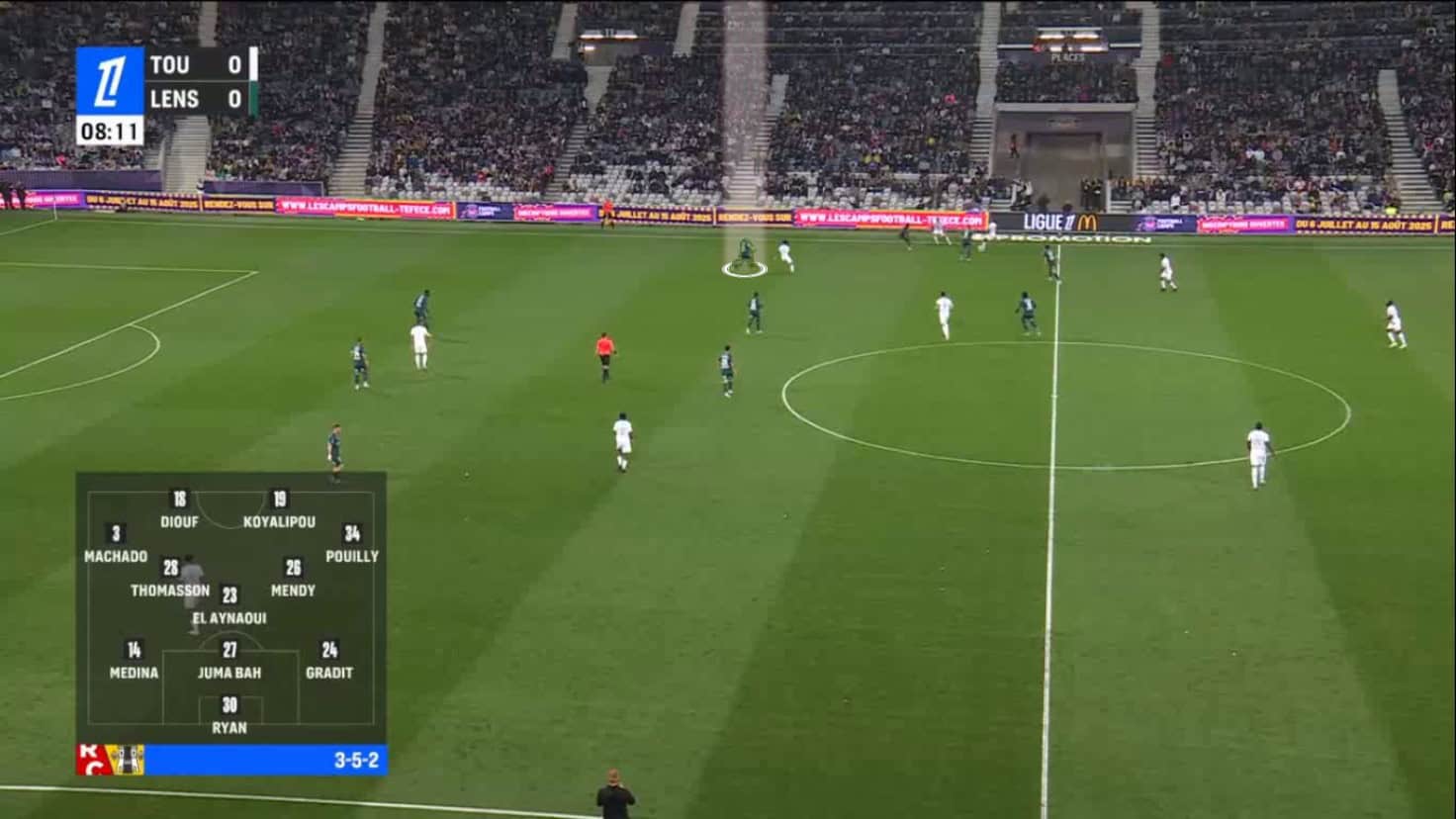
That resulted in the success of the interception from Medina.
Conclusion
Medina can greatly help Robert De Zerbi tactics in the upcoming season, both offensively and defensively.
Offensively, the coach could put him as a left centre-back, whether playing with a back-three or back-four, or as a left-back in a back four, due to his ability on the ball.
Given De Zerbi’s style of play, which involves inviting the opponent’s pressing and making vertical or diagonal passes through the centre areas, Medina can be very useful.
His ability to drive the ball forward can invite the pressure, creating space behind the pressing line.
Also, the defender’s ability to intercept well will allow the team to recover many balls, giving them an advantage in regaining possession and continuing attacks.
