
El Chadaille Bitshiabu (196 cm / 6’5”, 82 kg / 180 lbs) is one of the most exciting young talents to have come through PSG’s youth academy in recent years—yes, that’s saying something.
In December, at 16 years, seven months, and three days, the centre-back became PSG’s youngest senior player when he substituted Presnel Kimpembe against SC Feignies in the Coupe de France.
Now 17, the PSG academy product, born in Paris suburb Villeneuve-Saint-Georges, made one Ligue 1 appearance last season, a four-minute cameo versus Angers, and accumulated a handful of bench appearances for Les Parisiens under Mauricio Pochettino.
Described by L’Équipe as PSG’s “future great” defender, Bitshiabu certainly seems to have a bright future ahead of him.
However, potential remains only potential, and ability remains only ability without relentless hard work to make it to the top of this game, as the young centre-back will be well aware.
He is still just a teenager, and we aren’t here to discuss his performances for PSG’s first team, though his accomplishments thus far have obviously been impressive.
Instead, we want to look at how and why the 196cm centre-back stood out massively in both the 2021/22 UEFA Youth League and 2022 U17 European Championships—the latter of which was won by Bitshiabu’s France, in which the PSG man played a key role for his national side.
This tactical analysis and scout report aims to highlight Bitshiabu’s key strengths and areas for improvement.
It looks at the defender’s roles in the France U17 and PSG U19 setups last season that helped him thrive with those teams’ respective strategies and tactics.
We hope that this tactical analysis explains why, at just 17, Bitshiabu may already have eyes for integration into first-team football, perhaps even at PSG, with the left-footed centre-back perhaps viewed as a homegrown successor to Chelsea-linked Kimpembe at the left centre-back position.
Unless otherwise stated, all stats and data used in this piece have been sourced from Wyscout.
El Chadaille Bitshiabu Long passing
Bitshiabu loves to be on the ball and has excellent technical ability.
He can play as a deep-lying playmaker from the left centre-back position.
He is a risk-taker with great vision and the technical ability to make the move he’s made in his head a reality.
The centre-back can sometimes still be a bit rough around the edges, technically, with the odd heavy touch or overly hefty pass creeping into his game occasionally.
However, in general, he’s a great option to have on the ball deep, with the whole pitch ahead of him to pick his pass and drive his team forward into a more valuable position.
We’ll start analysing Bitshiabu’s on-the-ball quality by diving into his long passing, which is a trademark of the young centre-back’s game.
Bitshiabu played the second-most long passes per 90 (7.75) of any centre-back at this summer’s U17 Euros.
At the same time, he had the third-highest long pass accuracy (53.66%) of any centre-back at this competition.
In last season’s UEFA Youth League, the 17-year-old also played a relatively high number of long passes (6.71 per 90) with a relatively high accuracy rate (53.13%).
So, it’s clear that long passing is a prominent part of the PSG youth player’s game.
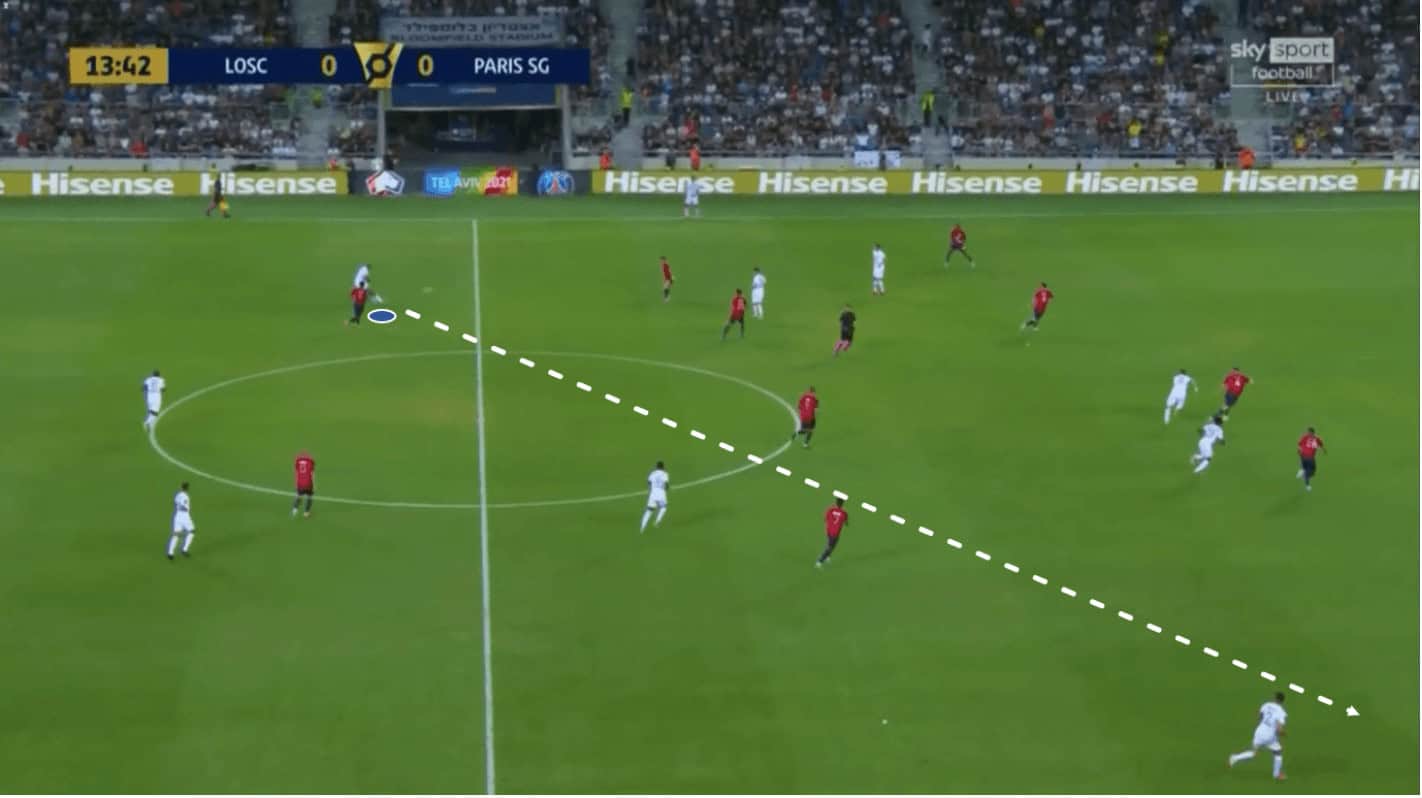
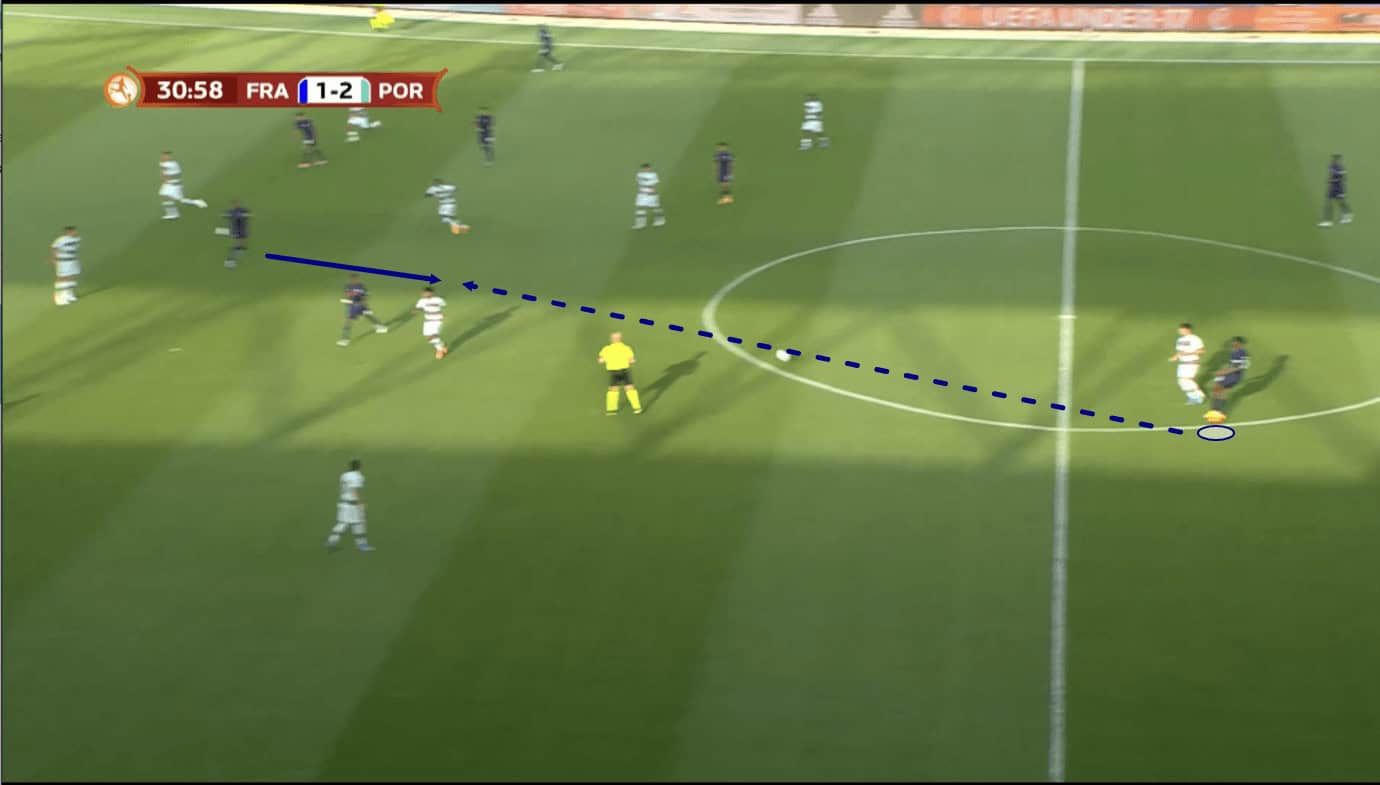
Figure 1 shows an example of Kimpembe playing a cross-field ball for PSG from the left centre-back position.
With this, he can release the right-winger or right-back — with PSG typically utilising attacking full-back Achraf Hakimi for their offensive width on the right-wing.
PSG are a ball-dominant team and their centre-backs will often find themselves on the ball in positions like the one we see Kimpembe in above, just behind the halfway line against a mid-block searching for a way through to set their team up for a chance to break into the box.
This is a typical responsibility for a centre-back in a ball-dominant team, as centre-backs generally play more passes than any other player, given the amount of space they enjoy.
This position Kimpembe occupies in Figure 1 is one in which Bitshiabu is extremely comfortable, as we’ll analyse in Figures 2 and 3.
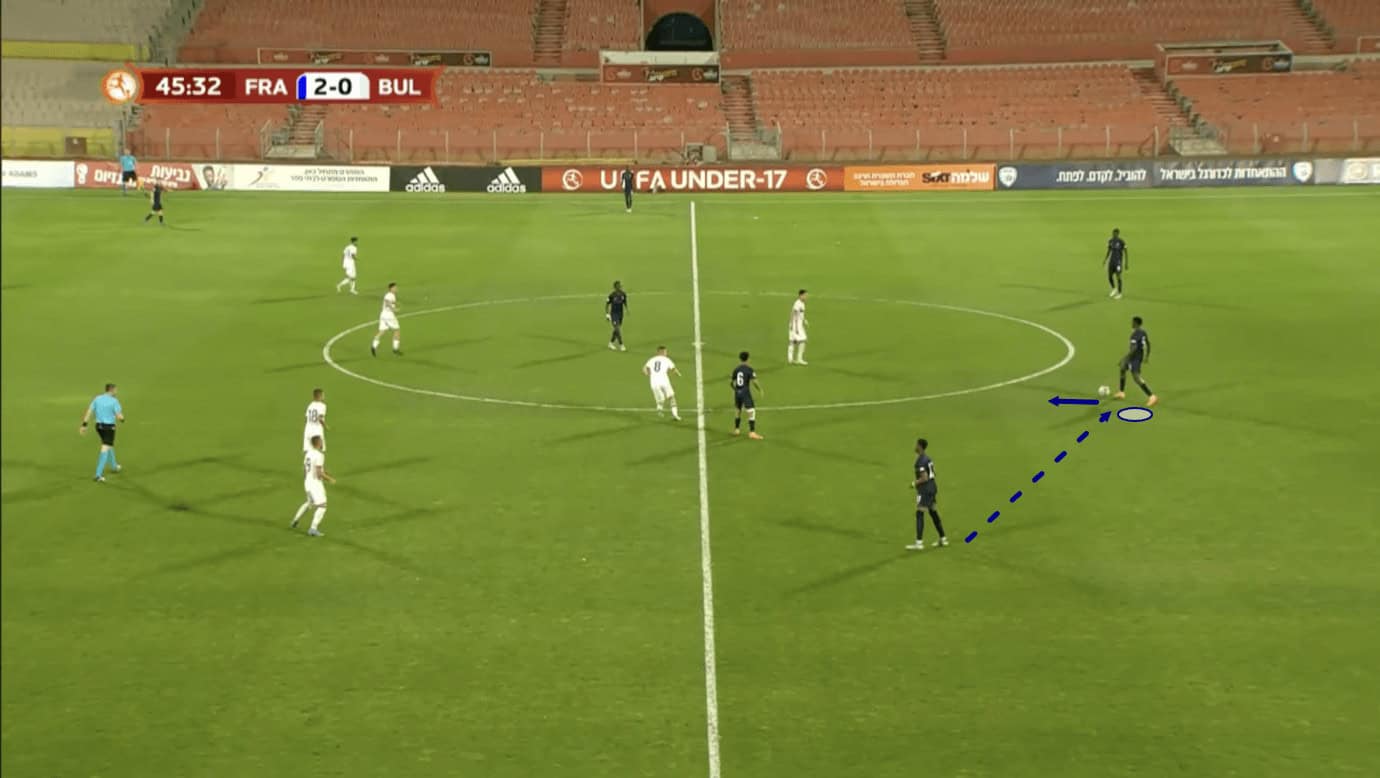
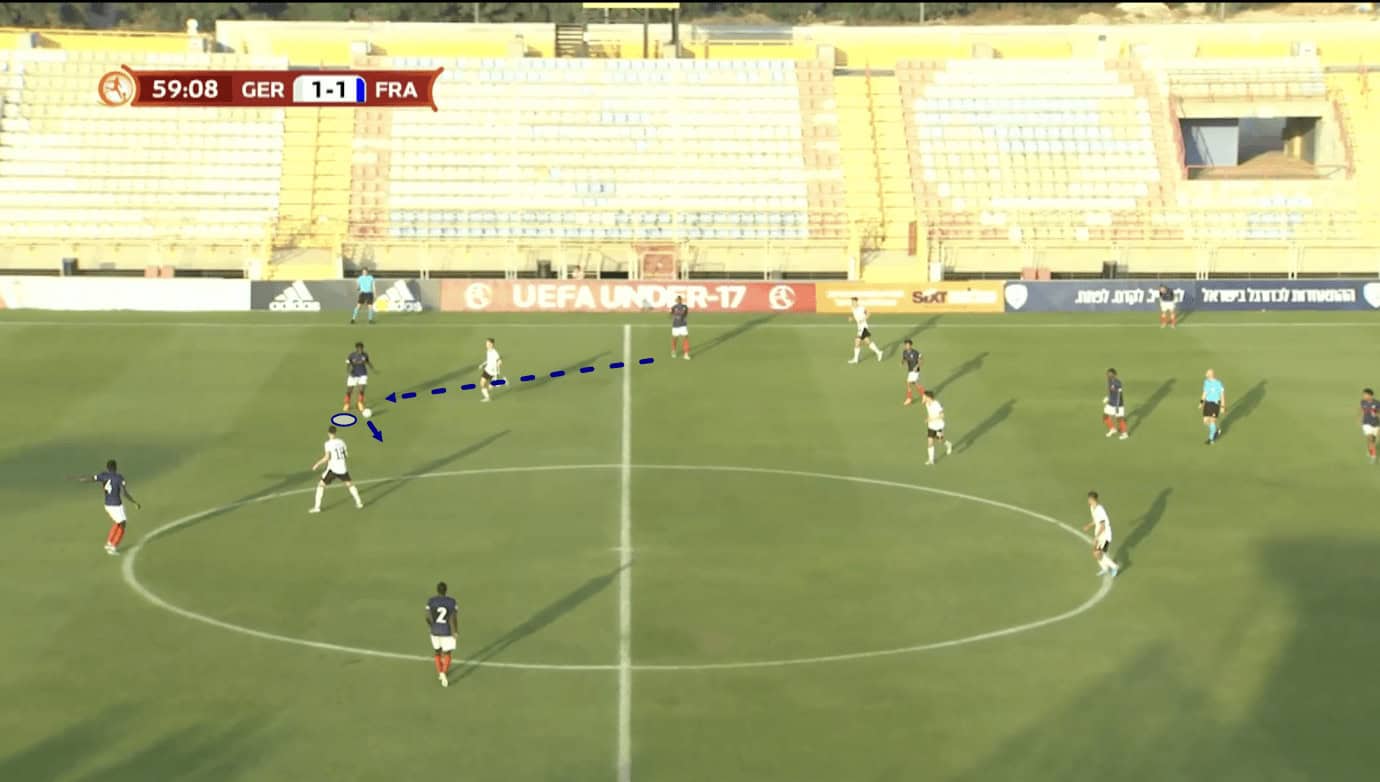
In Figure 2, Bitshiabu has just received the ball from his left-back teammate.
As he receives the ball, note how the young centre-back opens his body to the pitch ahead of him and raises his head to assess his options.
Bitshiabu tends to be very relaxed and calm in possession.
He typically takes his time to consider his options before making a move and has demonstrated a lot of composure under pressure thus far in his young career.
At times, he can be too relaxed, leading to him getting caught in possession.
Still, again, typically, he possesses enough composure, confidence and technical quality to handle the situation masterfully for such a young player.
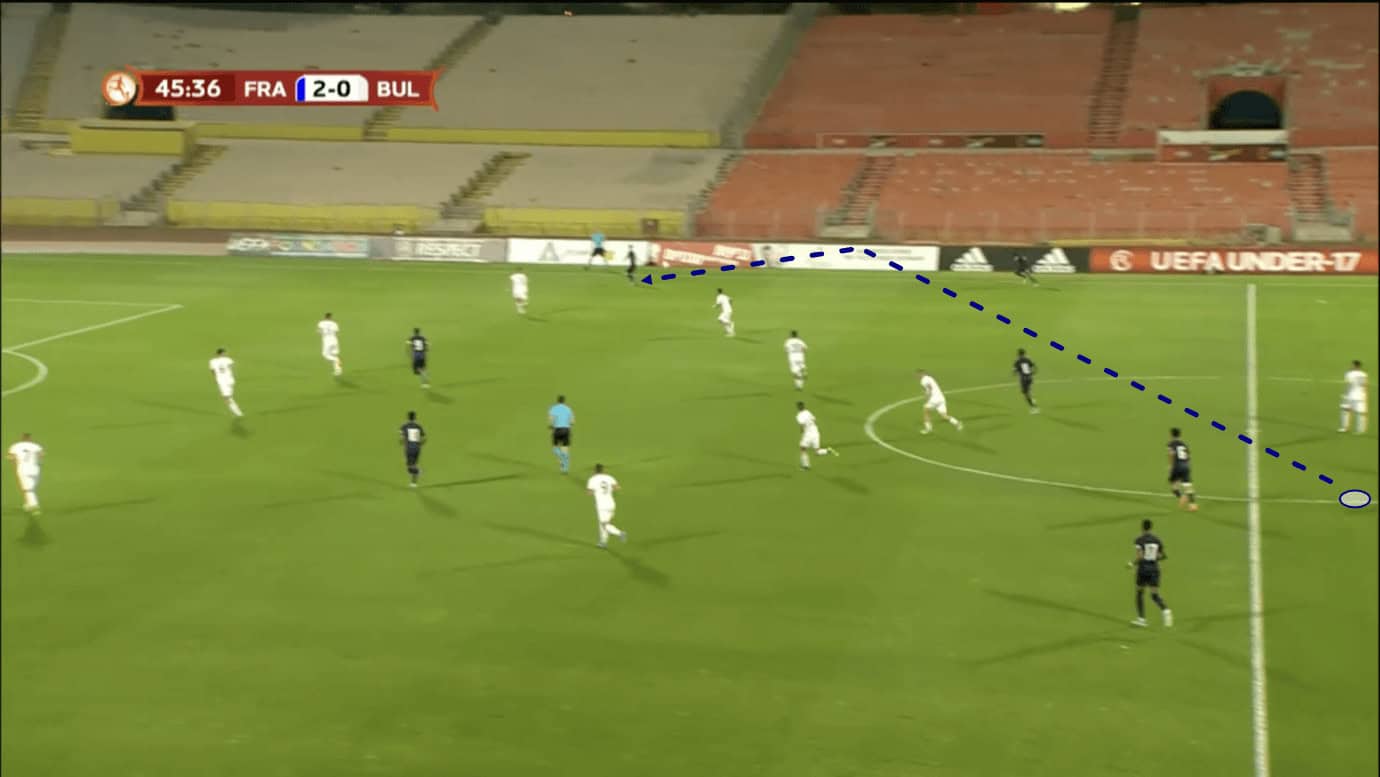
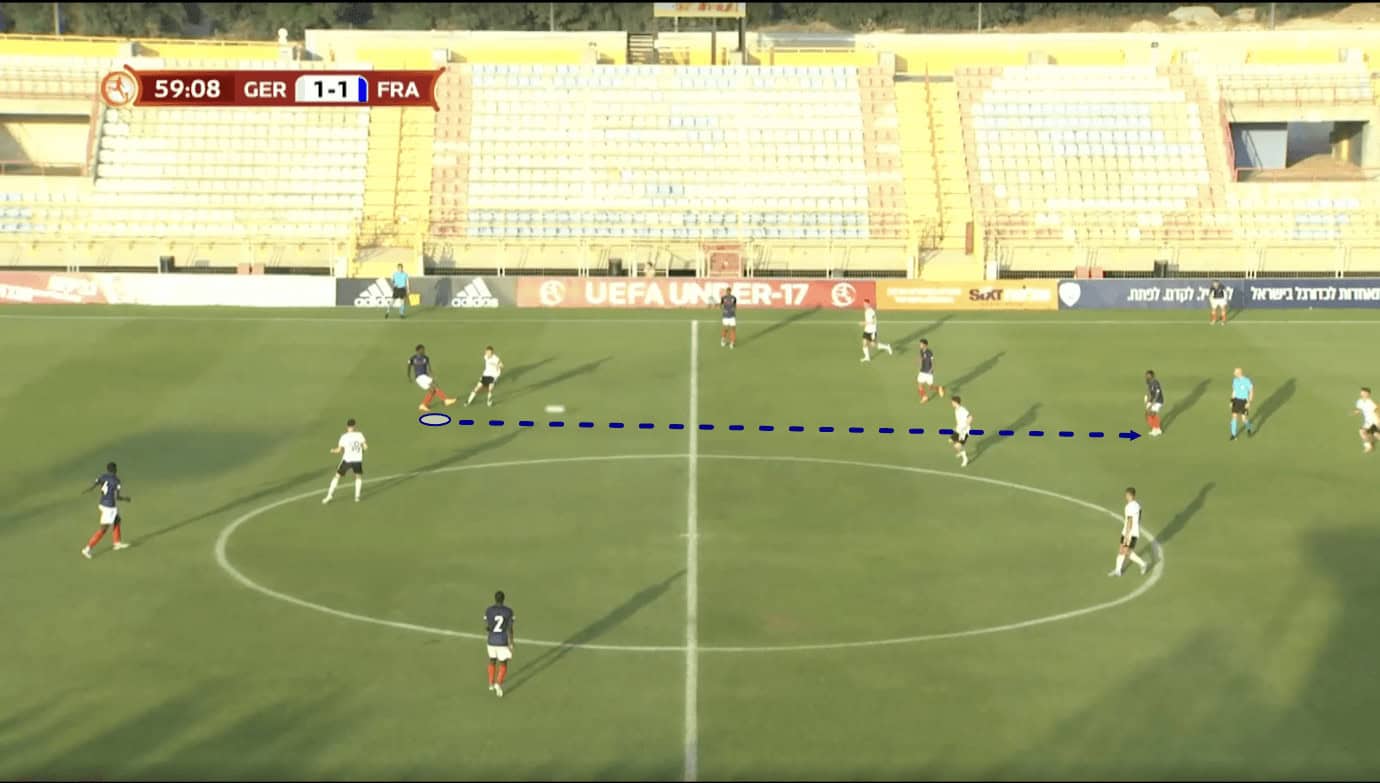
As the play moves into Figure 3 here, we see Bitshiabu pull off a signature pass from his arsenal: the left-footed play switch to the right wing.
If the opportunity presents itself, Bitshiabu could almost expect to make at least one of these passes per game.
Teams will often allow space on the wings against a ball-dominant team like PSG, for example, as they tend to focus on protecting central areas at all costs.
PSG have a great wide threat in Hakimi who Bitshiabu would likely link up with constantly, potentially helping Les Parisiens to create chances from the wings with great regularity.
Of course, PSG also has Barcelona legend Lionel Messi in their ranks. Messi often spends time out on the right, whom Hakimi could then link up with if the Moroccan chose not to take the ball down the wing into a crossing position himself.
It’s clear that PSG has lots of options on the right, and Bitshiabu presents a great asset for getting the ball safely and quickly into those positions, letting those on the right work their magic together.
You don’t need Messi and Hakimi for Bitshiabu’s ability to be a great asset, though.
France U17s, for example, also greatly benefited from it, as in Figure 3, where the wide man can collect the long pass and take on the isolated opposition full-back 1v1 before potentially progressing his team into a dangerous goalscoring position.
All of this happened very quickly following Bitshiabu’s big switch of play, which highlights the benefit of having a centre-back like PSG’s 17-year-old, who is so reliable and dangerous on the ball.
Bitshiabu doesn’t just switch play with his long passing; he’s also very effective at launching balls over the top centrally for attackers to chase down and directly attack the opposition centre-backs/goalkeeper.
If an opportunity to spring a pacey attacker like Kylian Mbappé in behind a high line were on, Bitshiabu wouldn’t hesitate to take the opportunity.
He’s a comfortable risk-taker who believes in his playmaking ability from left centre-back and has repeatedly demonstrated this over the past year.
El Chadaille Bitshiabu Progressive passing
There’s obviously more to on-the-ball quality than just long passing ability for a centre-back.
Our second section of the analysis will focus on another of the most important ways a centre-back typically contributes to his side on-the-ball — progressive passing.
What if there is space centrally to pick out a teammate moving between the lines and slice right through the middle of the opposition?
While a team will generally aim to close off the space in central areas and force their opponents wide, that doesn’t mean they always succeed in doing so.
If one of Bitshiabu’s teammates can find space centrally, the risk-taking centre-back is well-prepared and capable of finding them.
This adds significantly to his threat on the ball; the 17-year-old doesn’t just pose one type of threat when in possession against a mid-block, he can hurt you in several ways so no matter where his team finds space, Bitshiabu can exploit it.
This skill, combined with his impressive mental attributes of vision, bravery and confidence, makes him a massive asset on the ball from centre-back.
The young Frenchman completed the second-most progressive passes per 90 (10.78) of any centre-back at this summer’s U17 Euros, while maintaining the best progressive pass accuracy (75.44%) of any centre-back in the competition.
This is impressive and highlights the extent of Bitshiabu’s ball progression threat and solid reliability.
The 17-year-old completed the sixth-most progressive passes of any centre-back in the 2021/22 UEFA Youth League (10.7 per 90) while maintaining a relatively decent progressive pass accuracy rate (58.82%).
It’s clear that Bitshiabu is a great asset for his side in possession, especially concerning ball progression and would be a good fit for the left centre-back slot in a possession-dominant team.
We’ll now look at a couple of examples of Bitshiabu’s ball progression in action, starting with the passage of play in figures 4-5.
In Figure 4, we see the 17-year-old receiving the ball from his centre-back partner in quite a central position. The opposition is defending in a mid-block, sending just one centre-forward upfield to press the French centre-backs.
As Bitshiabu receives this pass from his centre-back partner, again, we see him opening his body out and scanning the pitch ahead of him to assess his options, which, as we’ve mentioned, is typical of his ball reception.
Another characteristic of Bitshiabu’s ball reception that we mentioned is his comfortability and calmness, both of which he also exudes in this example.
He doesn’t panic as the opposition forward closes in on him as we progress from Figure 4; rather, he welcomes the pressure and takes all of the time he has to make his move after carrying the ball forward a few steps to create a better passing angle for himself.
Moving on to Figure 5, we can see the results of this as Bitshiabu, under pressure, drives a well-weighted, accurate, and intelligent ball along the ground into the feet of the centre-forward, who we can see dropping to receive the pass in this image.
Bitshiabu exhibited highly impressive vision to pick out this particular option as well as great intelligence to form an angle like this where it looked as though he’d continue progressing the ball down the left-wing, especially with the opposition forward closing in from the other side, only to cut across his body with the pass and send it into his centre-forward teammate’s feet — also showcasing brilliant technical ability concerning ball progression.
The PSG academy product is fairly comfortable playing off both feet, even if he is predominantly left-footed.
He’s not someone who can be obviously targeted via a well-organised press from one side, forced onto his weak foot and completely stifled.
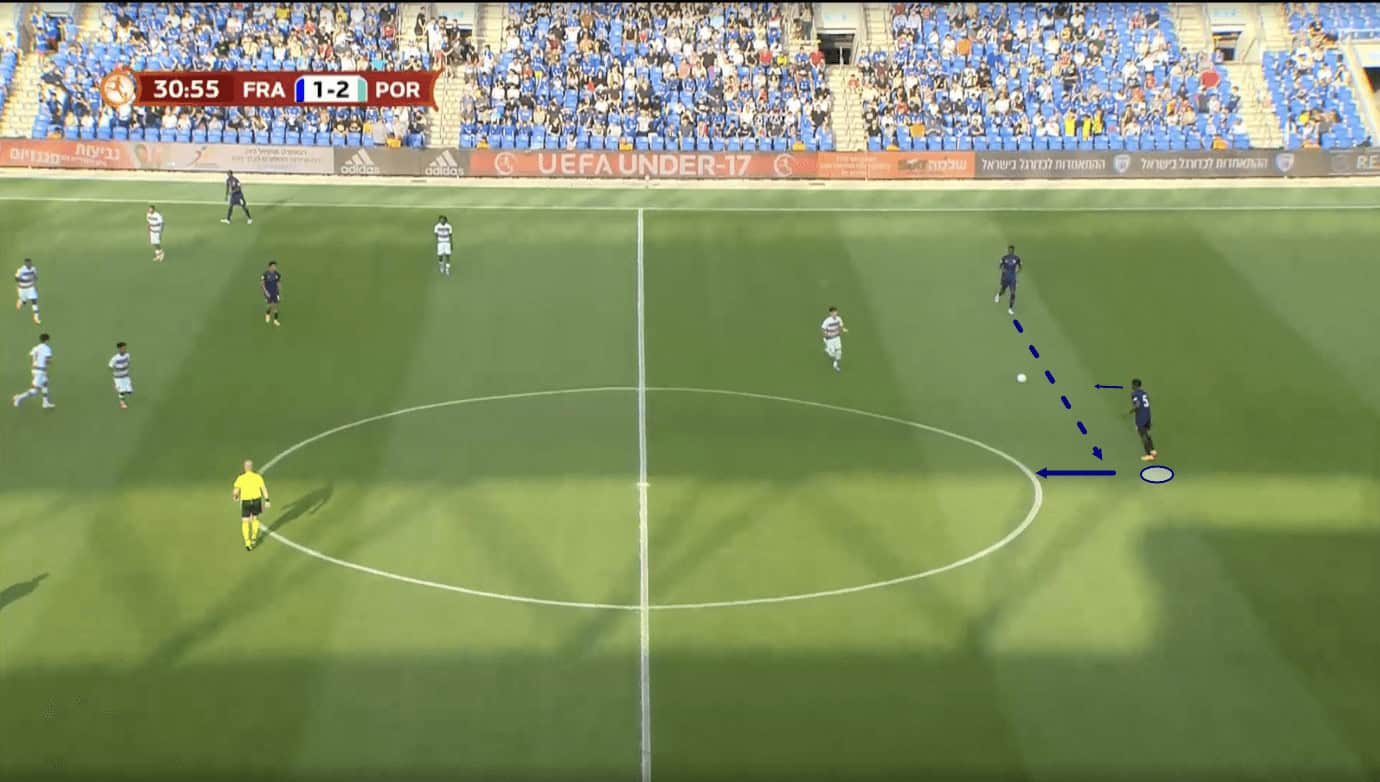
Of course, it won’t help him if this happens, as was the case in Figure 6, but he can cope in such a situation as his weaker right foot is still serviceable.
In Figure 6, we see the centre-back receiving the ball from his teammate at left-back, again opening up his body as the ball arrives at his feet and allowing the ball to roll across his body onto his weaker right foot.
Thus, he keeps the ball away from the pressing forward to his left, who would likely make a move for the ball if it were kept on the centre-back’s left side with nothing in between the pressing forward and the ball.
In this way, Bitshiabu demonstrated some very quick thinking and great decision-making on the ball under pressure.
The centre-back opens out his body as if he’s set to play the ball towards the right, almost mirroring the previous example shown in figures 4-5.
However, as was the case in the previous passage of play, the centre-back did an excellent job of disguising his pass and cutting across his body to progress the ball into a well-positioned teammate’s feet, which we can see as we move on into figure 7.
Bitshiabu’s movement and decision-making catch the opposition completely off-guard, as they hadn’t anticipated that he would cut across his body like this to drive the ball along the line of progression marked out on the image above.
However, that’s what he did, and it proved very effective in progressing his team into a more threatening position just on the edge of the final third.
From these two passages of play, we can see how good Bitshiabu is at disguising his passes.
This is a very valuable trait for a player to have on the ball.
However, it may more commonly be associated with creative midfielders, such as Barcelona’s Pedri, than centre-backs.
As mentioned earlier, though, Bitshiabu is very much a playmaker from left centre-back.
His impressive creativity and technical quality allow him to pull off moves like this.
Ability to disguise passes, composure, bravery, confidence, vision, decision-making quality, comfort under pressure and technical quality are all evident within the young centre-back’s game.
He can still improve in most of the above areas, but he’s already very good in these areas and is one of the best centre-backs on the ball in his age category.
Bitshiabu should work on his sometimes heavy first touch, try to remain focused and not get too relaxed in possession in sensitive, deep positions to avoid getting caught in possession and fine-tune his passing to cut down on the instances of overhit balls to apply the finishing touches to what is an exhilarating centre-back prospect.
Off-the-ball qualities
Last but certainly not least, our final section of the analysis will focus on Bitshiabu’s off-the-ball qualities as a defender.
At 196cm and 80kg, the centre-back’s size certainly helps him to dominate at U17/U19 level.
For example, he was the second tallest centre-back to play in the 2021/22 UEFA Youth League.
Of course, there’s far more to being a quality centre-back than size.
Still, a big centre-back who knows how to use their size certainly has some advantages when it comes to defensive actions like shepherding the ball out of play, shielding the ball from opposition attackers, performing blocks and in aerial duels, providing the ability to judge the flight of the ball and jumping ability are also of a good enough standard which, for Bitshiabu, they are.
Bitshiabu’s physicality will help him to adapt to life in senior football.
While he does have good mental attributes and tactical understanding already, he can improve in this area to progress to senior football standard more than he can improve physically to prepare himself for the senior game at this point, and this is where he should focus.
PSG’s Kimpembe is a fantastic defender in the air, and this is one of his most skilled areas.
However, Bitshiabu is also a brilliant aerial asset, combining his imposing height with an excellent ability to read the flight of the ball and his jumping height.
He also has a good aerial duel technique.
He aggressively enters duels and springs himself off two feet to maximise his peak height.
He also jumps into players and physically stifles their jump to try to ensure his success.
Bitshiabu’s ability to read the flight of the ball, as well as his knowledge of his own height and jumping ability, allows him to move ahead of an opposition attacker, contending an aerial duel with him by an extra couple of steps when possible to make the duel no contest.
In general, though, we wouldn’t describe Bitshiabu as an aggressive centre-back.
He’s more passive the majority of the time, relying more on his ability to read the game, cut out passes when possible, and avoid getting into too many physical ground duels.
Furthermore, don’t expect to see Bitshiabu diving into challenges here, there and everywhere — he’s rather reserved with his tackling, preferring to rely on good positioning, keeping a healthy distance from the attacker while blocking key lanes of progression and forcing them into less-than-ideal positions.
The 17-year-old’s ability to read the game is excellent, and it has helped him build a defensive game around patience, positioning, and calculated moves to pounce on a ball and make interceptions.
The PSG academy product is excellent at regaining possession cleanly via an interception rather than having to get down and dirty with a defensive duel or tackle.
Bitshiabu made 6.08 interceptions per 90 in the UEFA Youth League last season, a relatively high number, but he made 10.12 possession-adjusted (pAdj) interceptions, which was a higher number than any of the centre-backs to have made more interceptions than him, indicating just how prominent this area of his game is.
While he’s generally part of a possession-dominant team, he makes many interceptions, even with fewer opportunities to do so.
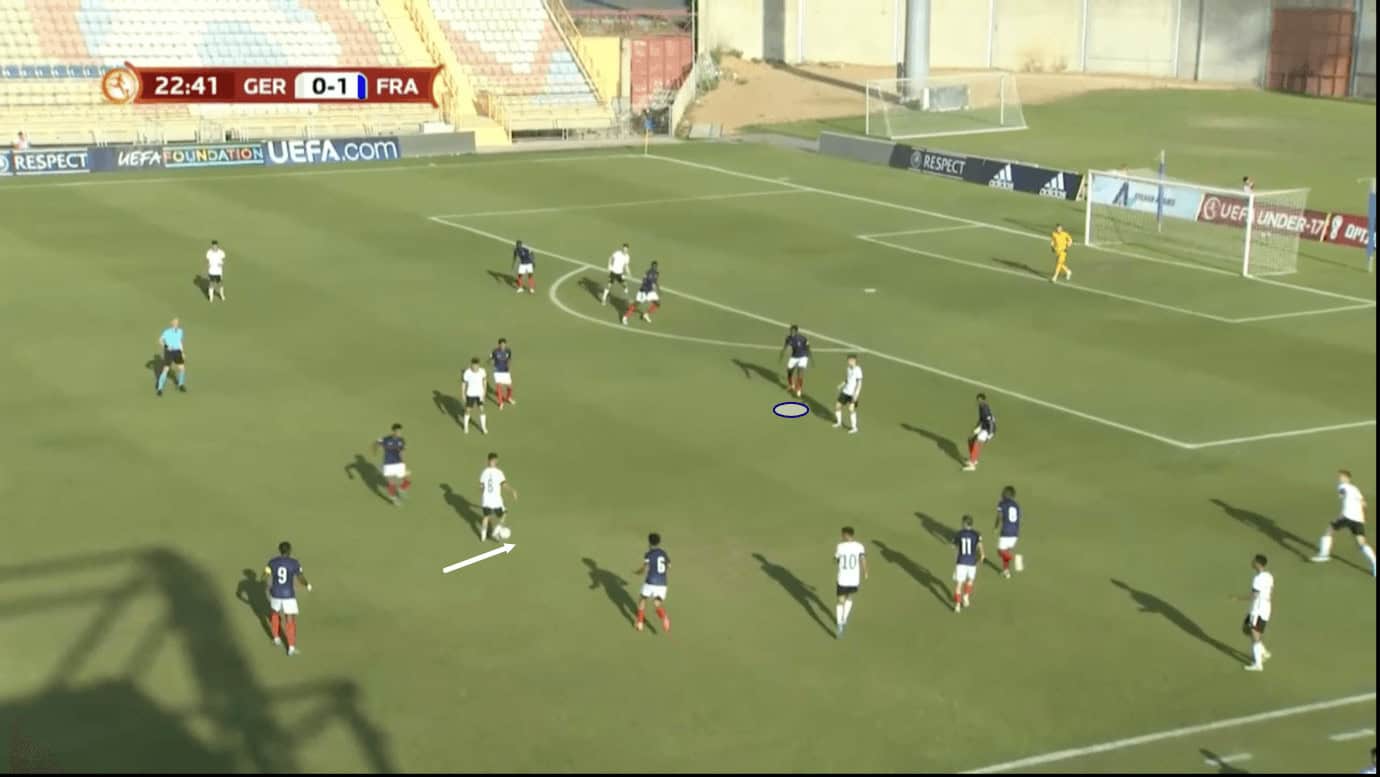
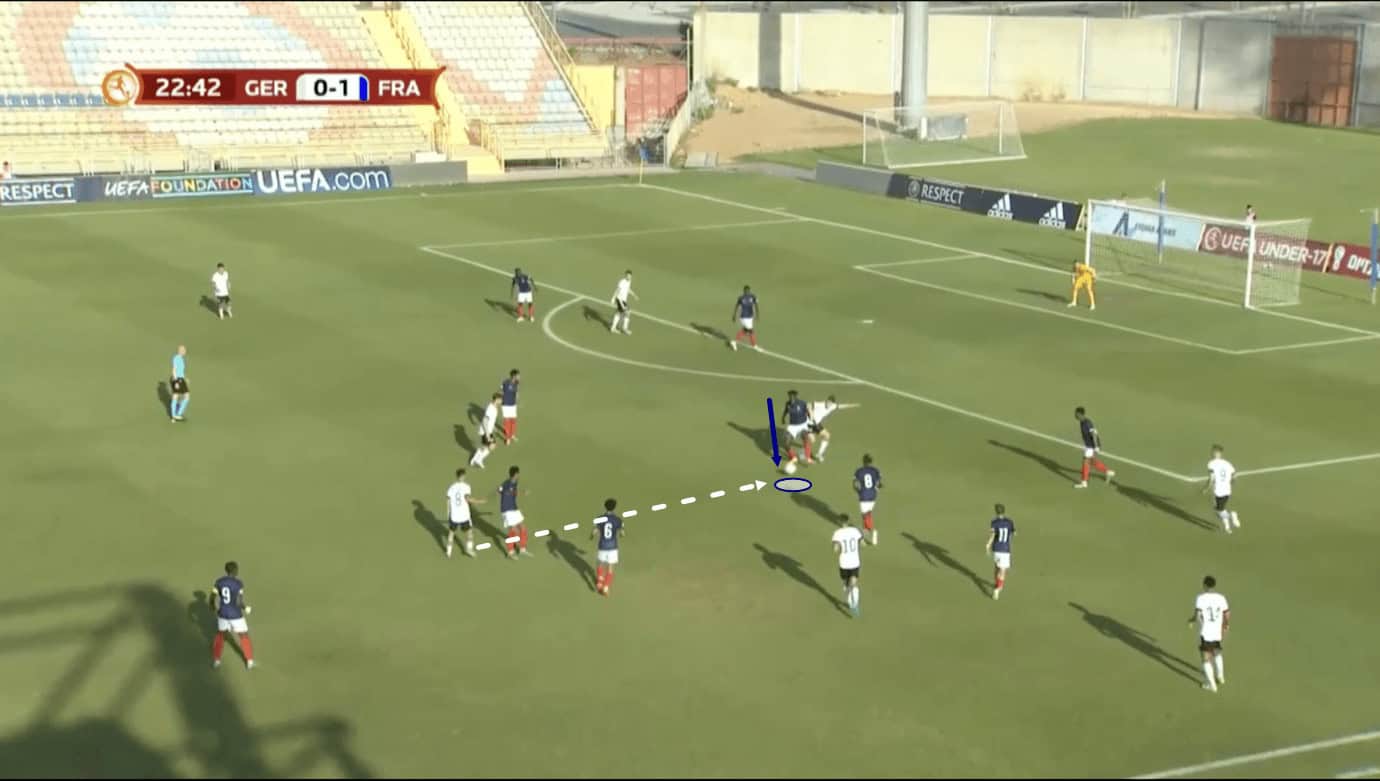
Figures 8-9 show us one example of Bitshiabu’s interception-making ability.
In Figure 8, we see the opposition midfielder lining up a pass to the edge of the box, having just carried the ball forward into the final third and breaking through France’s midfield in the process.
Bitshiabu is alert to the danger, though he doesn’t show his hand too quickly.
He waits behind his man, observing the situation and biding his time before the right moment to pounce as the ball is played, presents itself.
As we move on into Figure 9, we can see that the pass Bitshiabu had anticipated was played. The defender timed his interception perfectly, darting in front of the intended receiver just in time to cut out the pass and comfortably regain possession for his side.
A moment like this is where Bitshiabu’s interception-making quality combines with his impressive ability on the ball, as he now enjoys the opportunity to spring a counter-attack for his side.
This could also represent a risk for his side, as Bitshiabu sometimes takes too long on the ball and could be vulnerable to a counter-press in such a situation.
This will usually be positive for Bitshiabu’s team, and this should only become truer as time passes and Bitshiabu improves in the aforementioned areas, assuming he puts in the necessary elite-level work to do so.
Bitshiabu’s physical qualities go beyond his size, strength, and jumping height.
He also has an impressive pace, especially for such a big lad.
This helps with recovering should the opposition break through his team’s counter-press and get a ball in behind him, but his positional sense in such situations has been even more impressive.
Again, the 17-year-old has a great knack for being in the right place, occupying the right lanes, and slowing the opposition’s attack down.
However, should all else fail, it helps that he also obtains the pace to recover.
Conclusion
So, to conclude this tactical analysis and scout report, it’s clear that Bitshiabu is an extremely exciting talent both on and off the ball.
He has a few glaring weaknesses in his game, but still some important areas to improve before he should be thrust into the limelight at one of the most demanding clubs in Europe right now.
In the words of legendary French Arsenal manager Arsène Wenger: “You build a player like you build a house. The basement is the technique. You get that between seven and 14 years of age… The first floor is the physical aspect of the player, unfortunately, that is decided between 14 and 17… The second floor is the tactical aspect, does he understand the game?…The final part that is decided at 18, 19 years of age is ‘how much do I want to be successful?’
For the most part, when looking at Bitshiabu, the first three boxes are ticked.
The final box will now be up to him, but with the right effort, he has the potential to be whatever he wants in football.
