
As we approach the winter transfer window at the beginning of 2025, clubs around Spain are vying for talent that can immediately impact their current situations, whether attempting to avoid relegation or secure an impressive European qualification.
However, one of the often underappreciated aspects of the transfer period is teams highlighting the stars of the future that they can continue to develop.
One player in particular is capturing the attention of fans across La Liga, with Spanish heavyweights Real Madrid and Barcelona currently vying for his signature.
Antonio Cordero emerged as another homegrown player, showcasing his quality and maturity for Málaga in the La Liga 2.
“Antoñito” further adds to the impressive player pipeline present within Spanish football.
While Cordero is still relatively raw and inexperienced at the senior level, his performance this season has identified areas of his game that display essential traits that would make him attractive to the Spanish elites.
Speculation surrounding Los Boquerones‘ decision to make Cordero one of their highest earners at just 18 years old would further highlight the high regard in which he is held at the Estadio La Rosaleda.
This season, an elevation to the Spanish U19 squad has also allowed Cordero to showcase his qualities on a higher level, coordinating with fellow up-and-coming talents to continue his international journey.
The following scout report and tactical analysis will highlight Cordero’s key traits, both in and out of possession. Further developmental areas will support his personal growth should he play in Spain’s highest tier.
Antonio Cordero Player Profile
During his increased minutes for Málaga this season, we have begun to see just where Cordero likes to operate as part of his side’s attacking arsenal.
Antoñito can be characterised as more of an inside forward, initially starting on the left flank before drifting inside when in possession.
Antonio Cordero Heat Map 2024/2025

From these positions, Cordero’s main tendencies include opening up his body to strike on his favoured right foot from outside the penalty area or, most importantly, to drive into the opposition’s box and facilitate high-probability attacking opportunities.
In just 859 minutes played for Málaga this campaign, Antoñito ranks within the 89th percentile for progressive carries (3.46) and 90th percentile for carries into the penalty area (1.15).
These figures may be slightly skewed due to Cordero being classified as more of a midfielder.
However, they still support the notion that the young Spaniard maintains a relentless and direct attacking nature.
Cordero is recording an average of 3.46 shots per 90 minutes in the Segunda División, which highlights his ball-striking impulses once he shifts the ball inside.
While his direct nature is an important aspect of his all-round game, opportunities to become more of a creative and ball-dominant carrier have revealed methods of attack that could bolster Málaga as the season goes on.
Take, for example, this attacking sequence against Burgos, in which we saw Málaga’s 4-4-2 having an opportunity to attack in transition.
Whilst personnel may be mixed around, with Málaga having to react quickly to attack following an opposition corner, the infield run of the 18-year-old allows the winger to find a direct outlet to pass into the deeper lying forward from Málaga’s strike partnership.
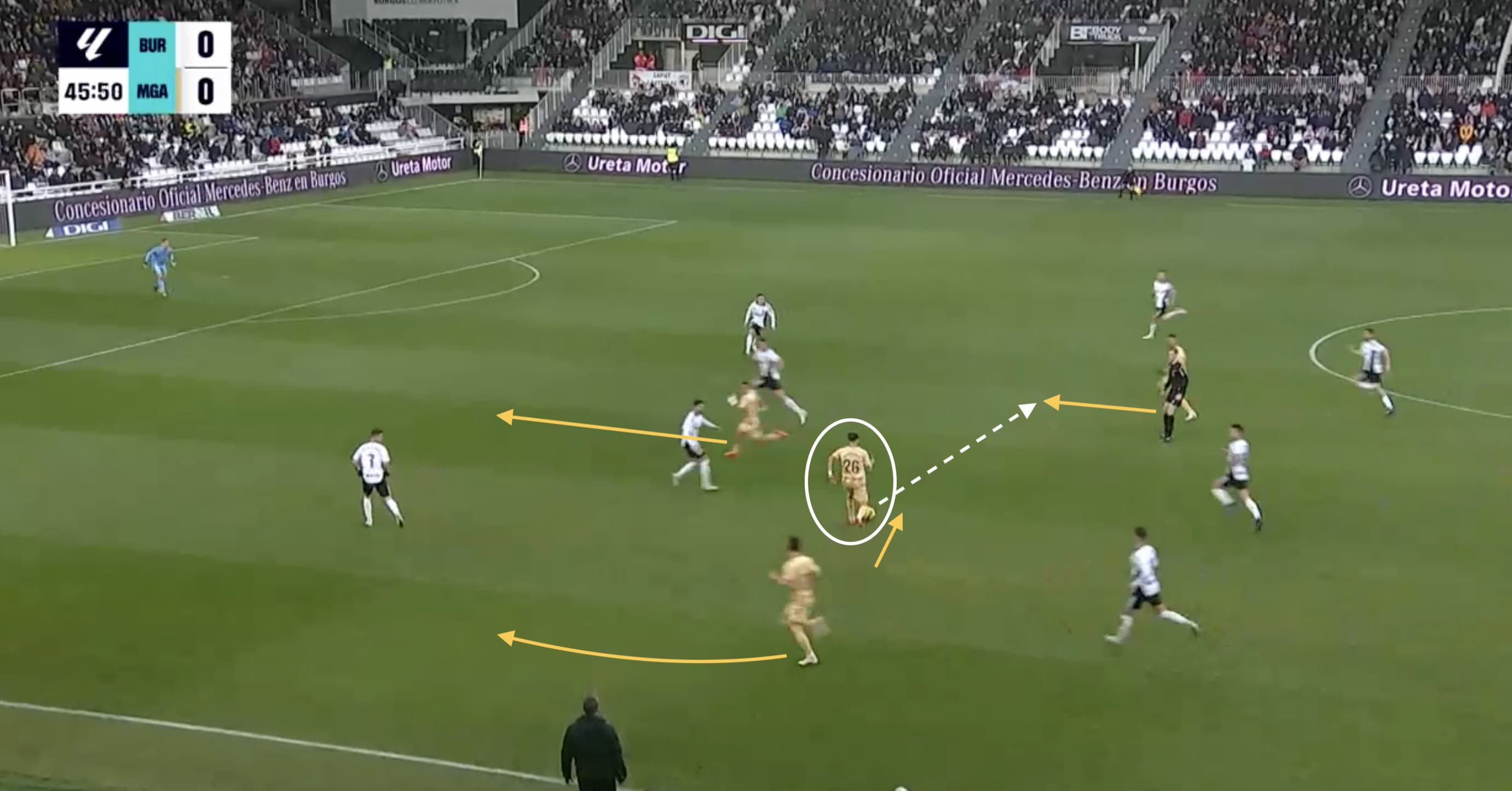
This then indirectly allows the corresponding striker to stretch the verticality of the Burgos’ defence with his run in behind, creating an overlapping opportunity for the left-back to maintain their previously lost width.
This inverted running can also be used more directly, with Cordero also showing his ability to play in behind the last line of defence to receive passes through the centre of the pitch.
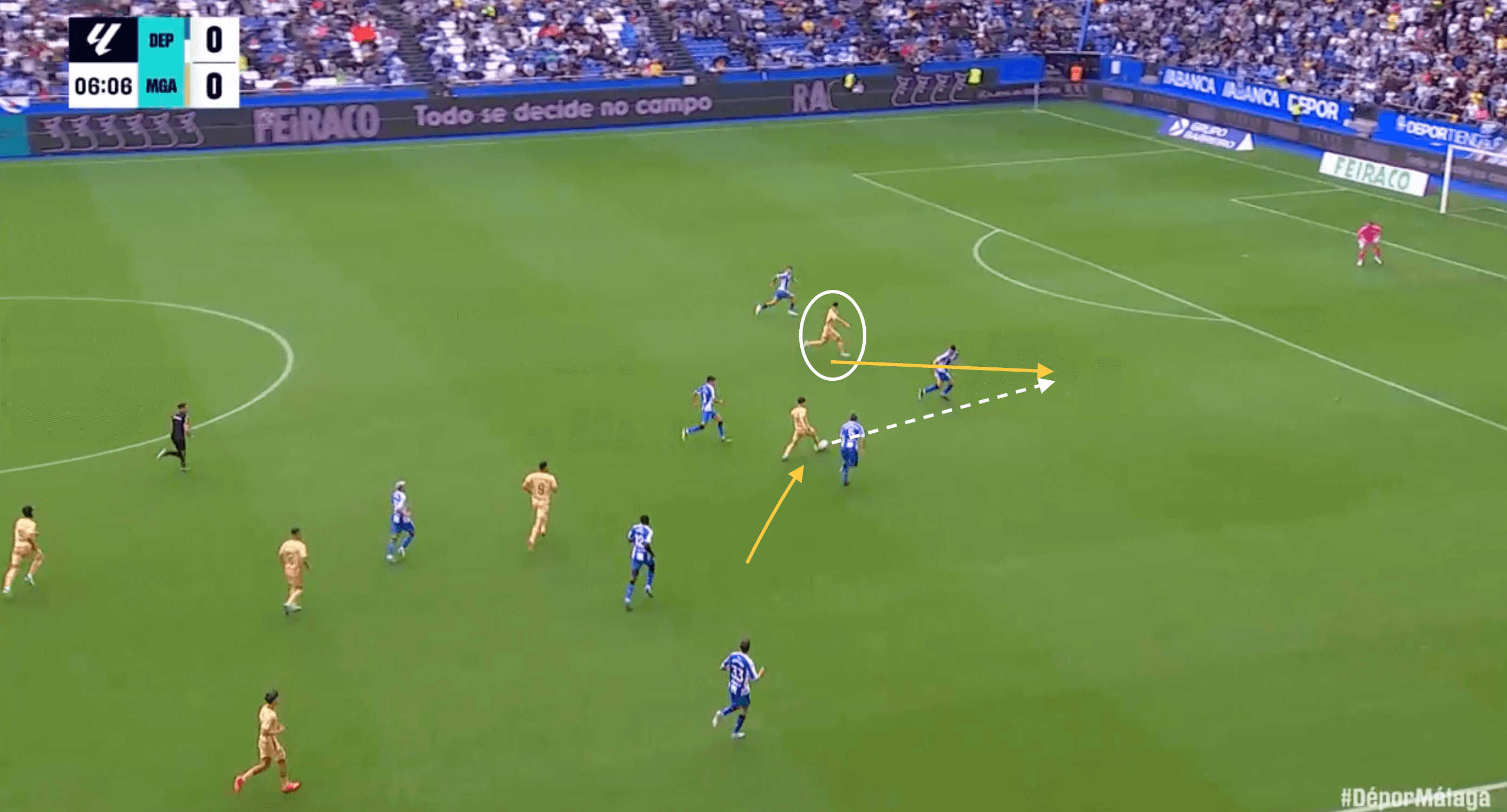
During the current campaign, Antonio Cordero has recorded an average of 6.81 progressive passes received per 90, suggesting he is much more comfortable acting as the final attacking outlet, as opposed to a more possession-based build-up figure.
One of Antoñito’s unique selling points is his ability to play comfortably anywhere along the front line, cementing his positional versatility at only 18 years of age.
Even though we have highlighted Cordero’s preference for the left wing, he has also lined up on the right side of Málaga’s attack to avoid the need to cut inside, operating as a more direct winger who can drive towards the byline.
This has potentially improved his chance creation, with more opportunities for accurate crosses on his stronger foot.
However, once again, his attacking movement is something we feel must be highlighted due to the problems it inflicted on Tenerife.
In a 4-3-3 formation for Málaga, we saw the 18-year-old shift into a more central position to receive the direct pass from the midfield.
Subsequently, he used his physical presence to hold up play and slide the ball into the path of his unmarked teammate.
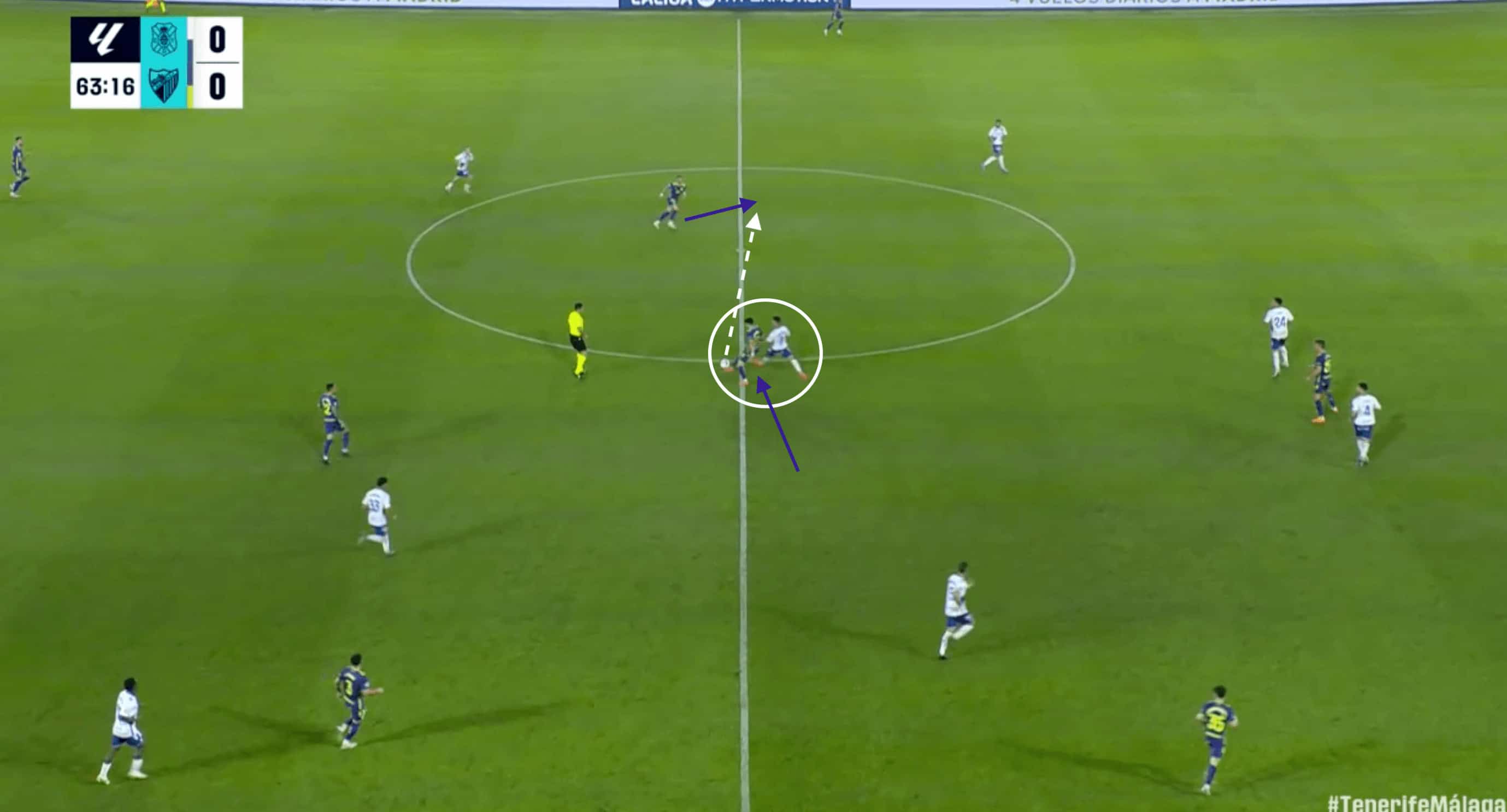
This movement begins to aid Málaga’s numerical superiority through the centre.
It again allows the right-sided central midfielder to attack the space that Antonio Cordero had vacated, further stretching the Tenerife defence.
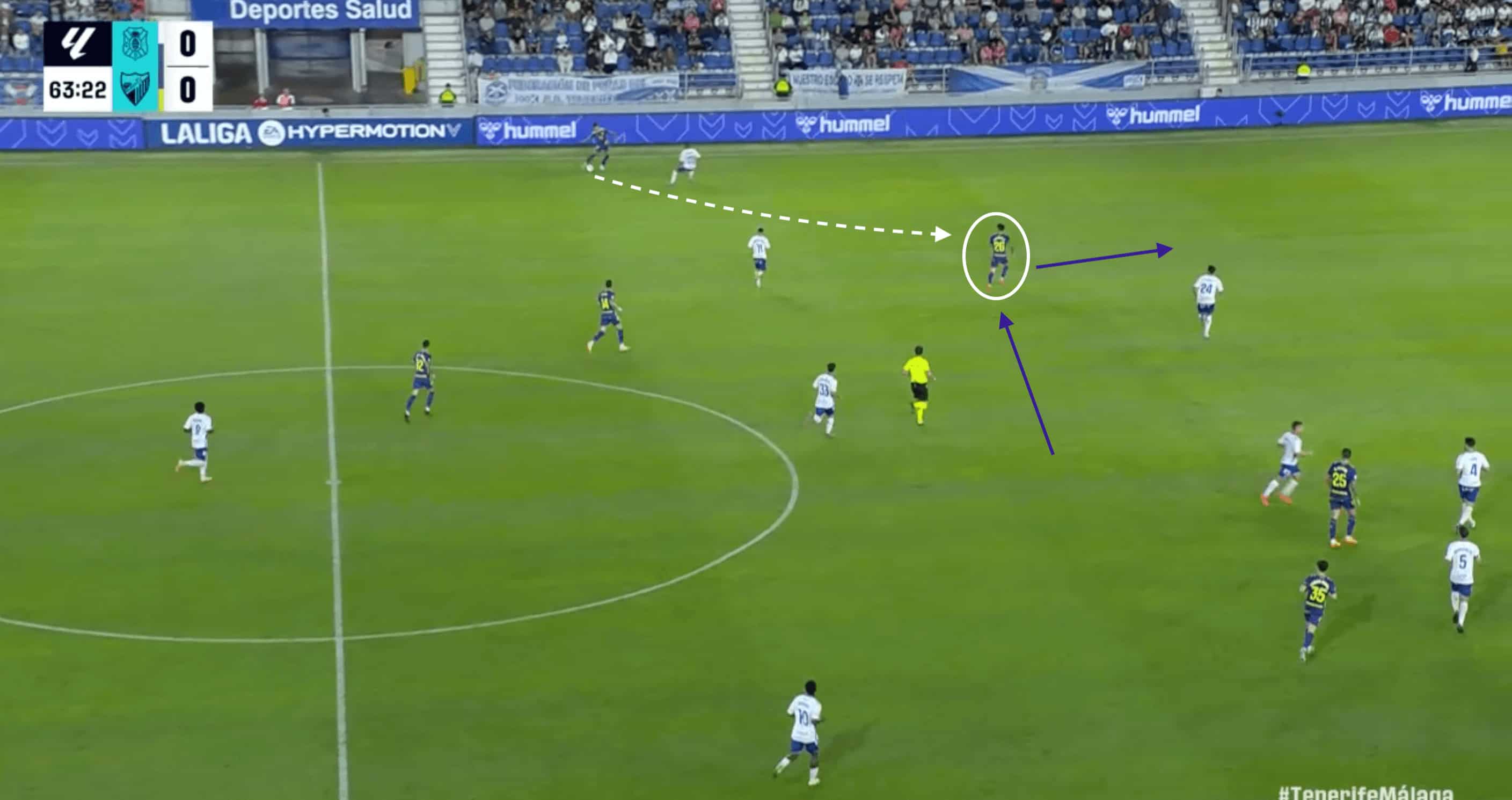
As the attacking sequence continues, Tenerife’s desperate defensive response to Málaga’s swift transition sees Antoñito having acres of space to dart through the left half-space, creating a favourable speed matchup against the opposing central defender.
Antonio Cordero Chance Creation
Despite his presence in and around the final third, one of Antonio Cordero’s style of play developmental aspects would have to include becoming a more efficient chance creator.
His creative metrics this season certainly substantiate this notion, with Antoñito currently recording only 0.10 expected assists per 90 minutes (62nd percentile) and 0.42 passes into the penalty area per match (13th percentile).
Much of this stems from a potential lack of maturity and decision-making when Cordero finally enters the penalty area, something which can be addressed to allow him to develop into the complete package.
This was evident in their match against Racing Santander, where the 18-year-old found himself in an excellent position to slide the ball inside to a runner through the centre, taking advantage of Málaga’s 4v3 inside the box.
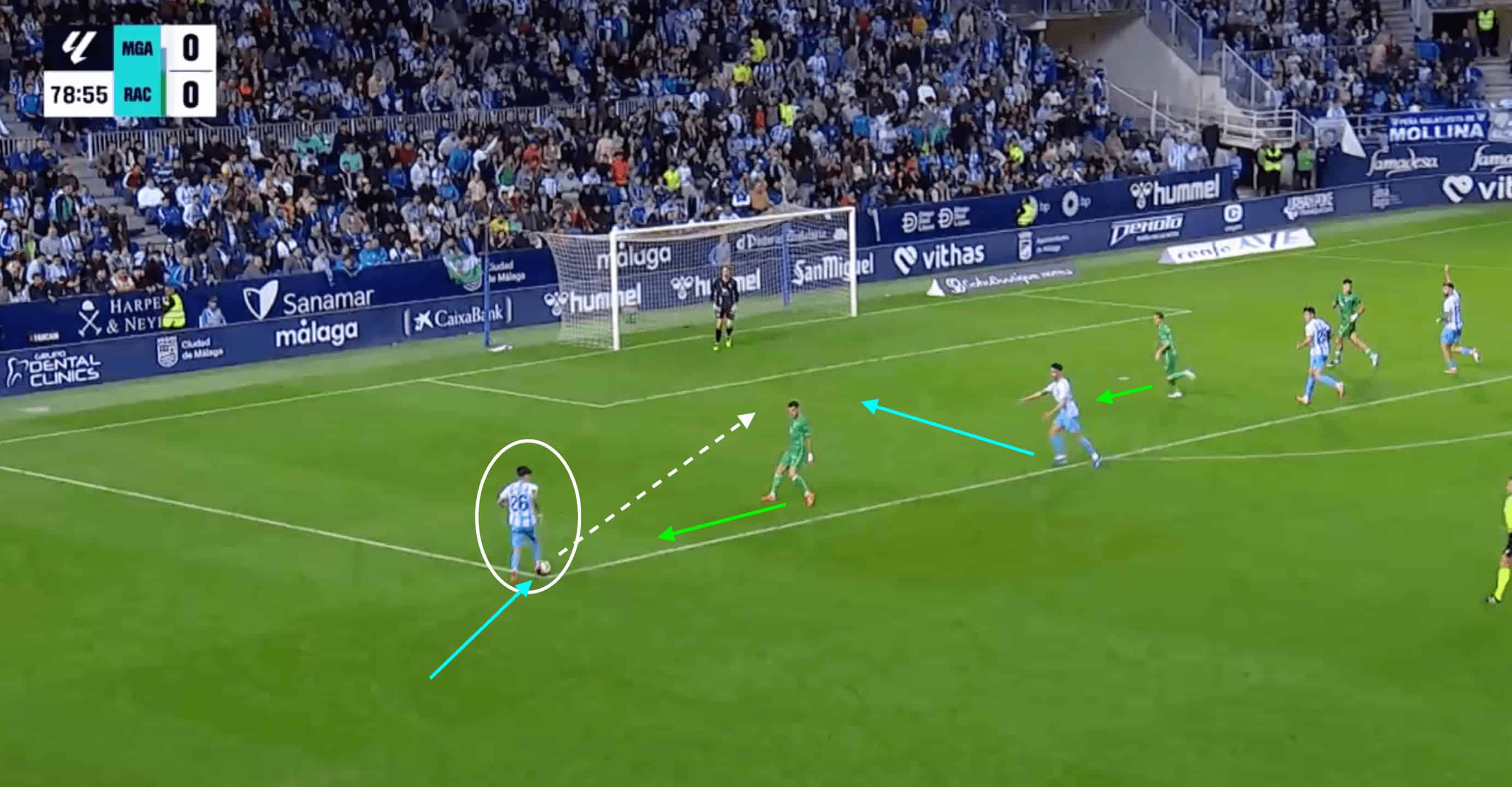
Instead, Cordero appears hesitant and allows the Racing defender to close the space, forcing the winger to attempt a more uncoordinated, driven cross, which flashes across the face of the goal.
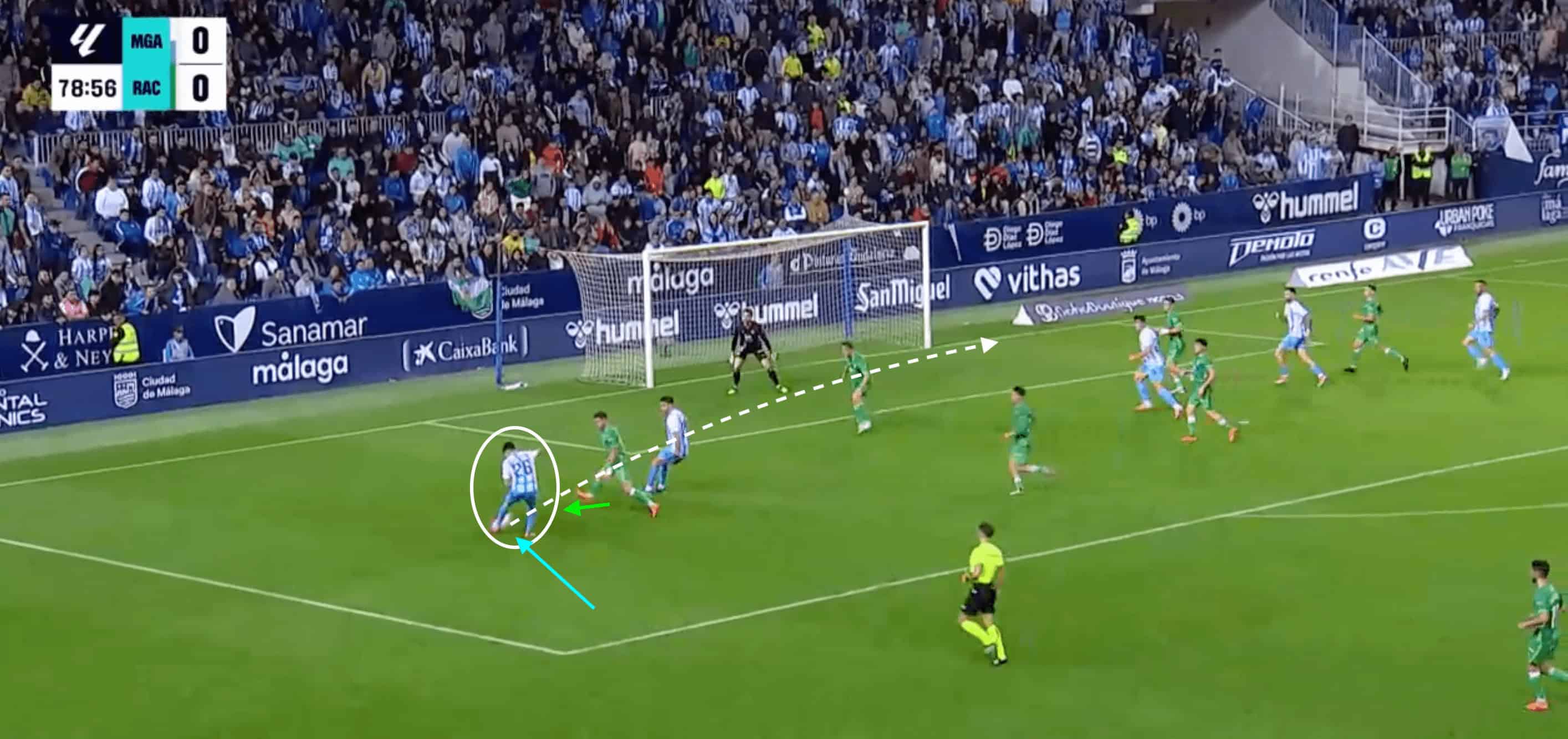
This could’ve also been an advantageous strategy with more of a presence in the 6-yard box.
However, it allowed Racing Santander to quickly retreat and establish a more stout defensive structure to combat any incoming delivery.
These instances highlight Antonio Cordero’s creative inconsistency.
The young Spaniard has not exactly been totally ineffective when creating chances for teammates.
As previously mentioned, his opportunities to play on the right wing have translated into effective crossing situations that have troubled the opposition’s defence.
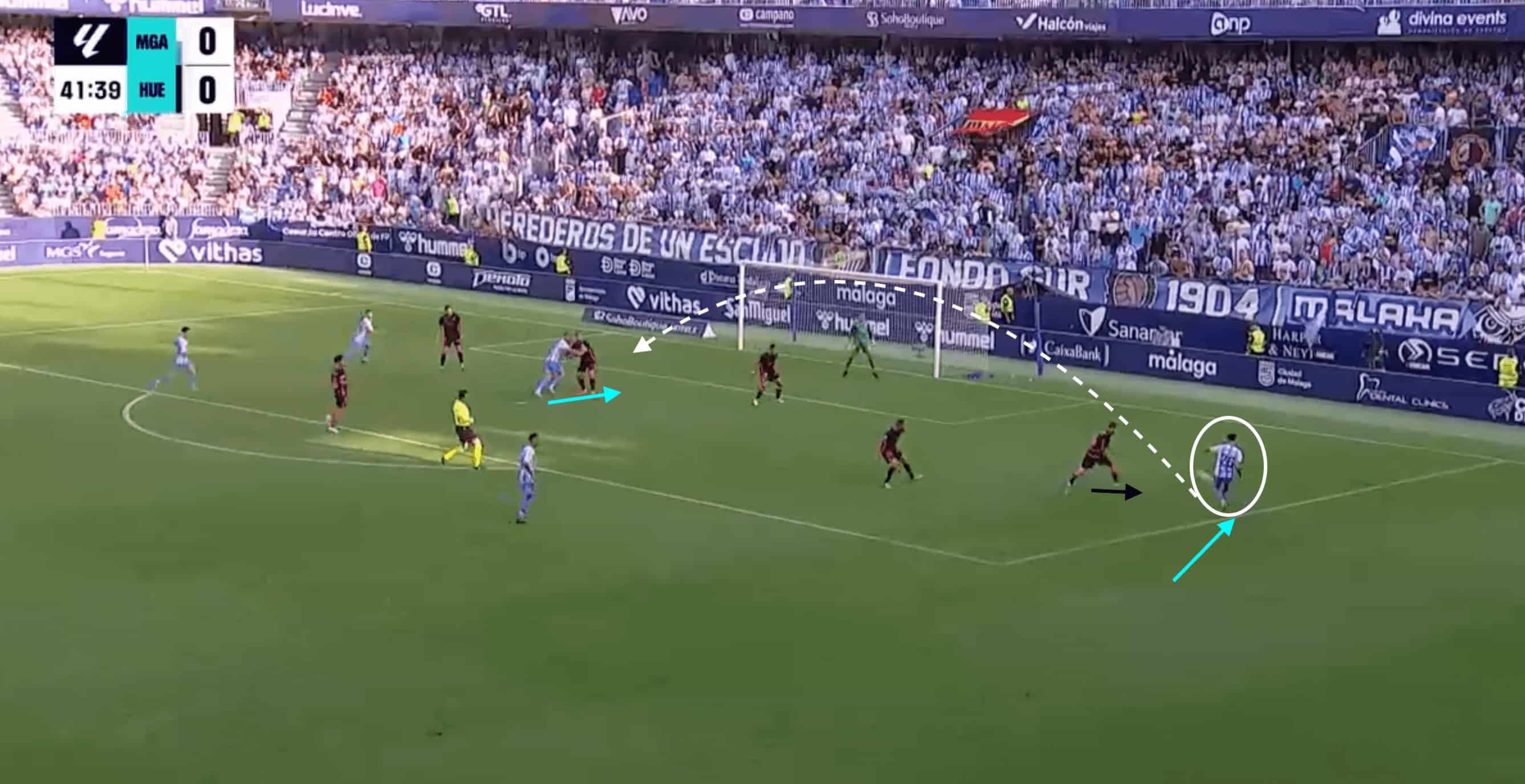
We also see how Antonio Cordero can be strategic with his crossing opportunities in the face of opposition pressure, picking out his teammate’s late run against Elche to create an excellent scoring chance in Zone 14.
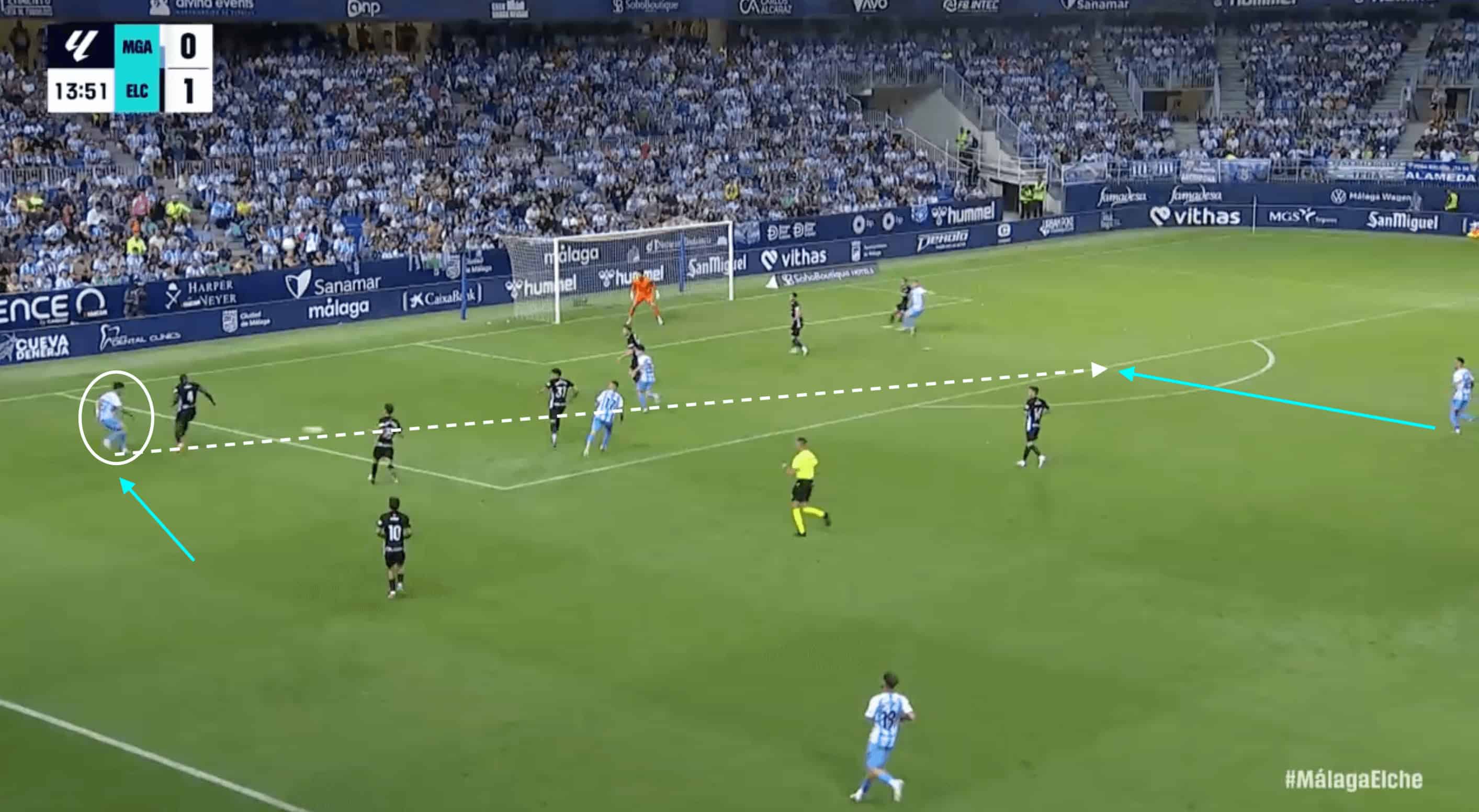
It remains a point of contention, but hopefully, Antoñito can continue to enhance his creative prowess with more experience at the first-team level.
Antonio Cordero Defensive Contributions
As we consider Cordero’s potential move to La Liga, it is equally important to address his effectiveness during the defensive phase of play.
Whilst the underlying statistics would suggest that Antoñito’s footballing strengths don’t exactly include many defensive-minded traits, the winger has shown how an energetic pressing effort can quickly force turnovers and create attacking transitions.
Against recently relegated Granada, Málaga’s pressing structure included Cordero’s explosive movement to close down the ball carrier.
At the same time, Dioni blocked off any easy return pass to the Granada defence or goalkeeper.
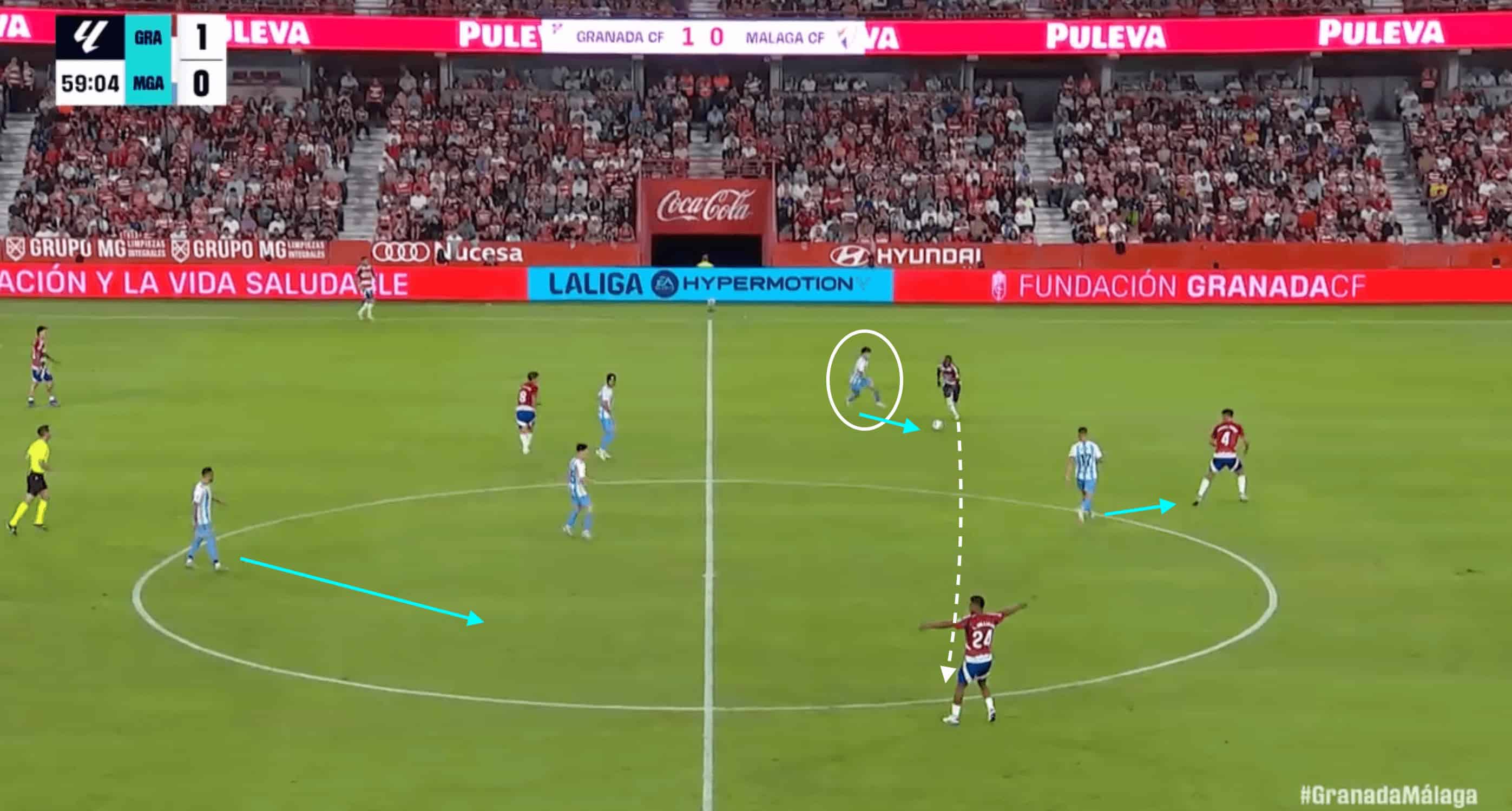
The subsequent pass across the face of Málaga’s midfield line was quickly intercepted, facilitating a rapid counterattack against Granada‘s formation, 3-4-3.
With both wing-backs caught high, Málaga allowed a 3v2 in possession.
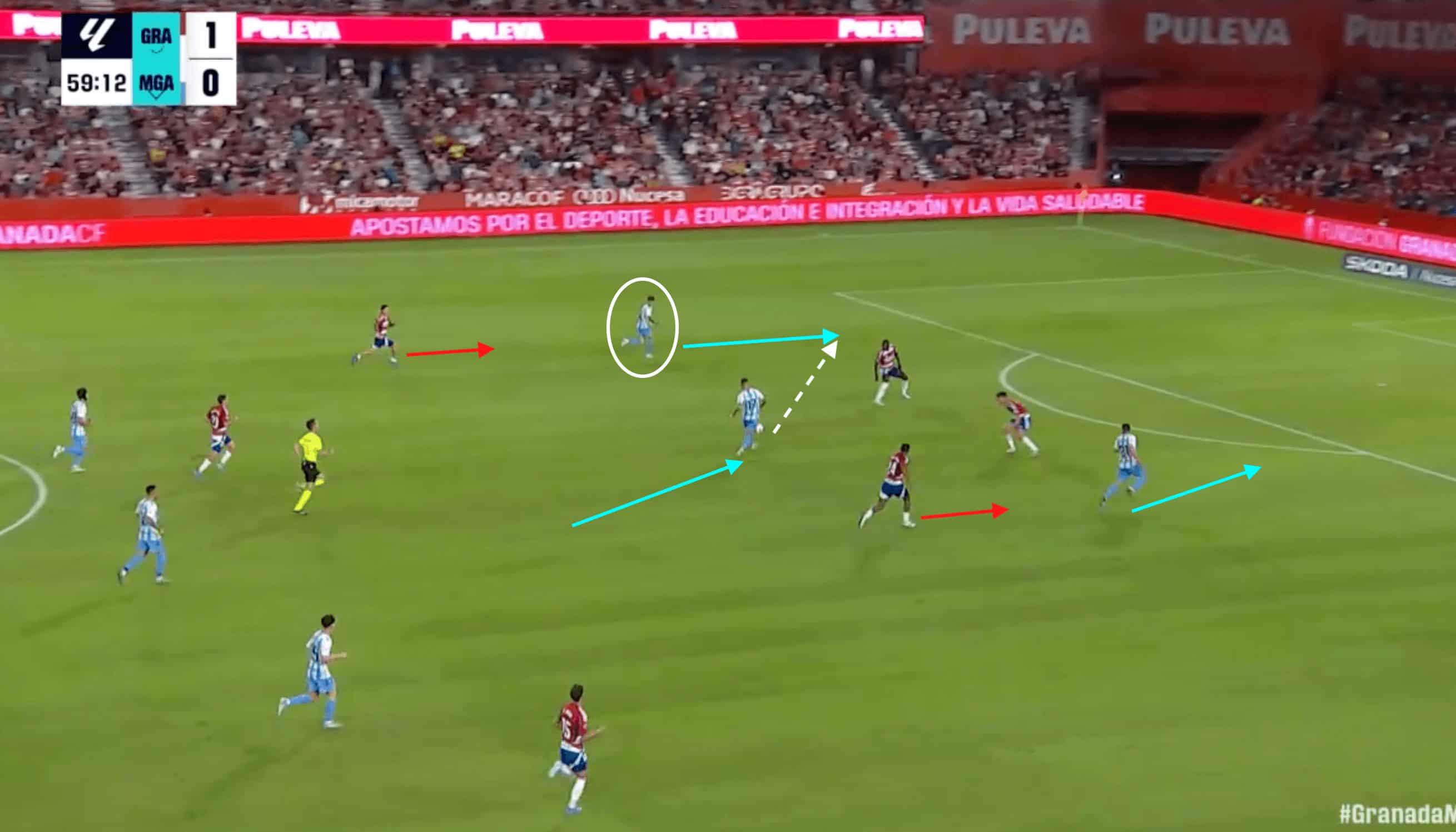
Cordero eventually benefited from this swift attacking transition, with an excellent, powerful strike on his weaker left foot beating the Granada goalkeeper.
In a much deeper defensive structure against Racing Santander, we get a glimpse of the 18-year-old operating as the widest member of Málaga’s low block.
Intelligently, Antoñito shadows the opposing attacker towards the inside of the pitch, reducing his opportunity to get towards the byline and whip a dangerous cross into the penalty area.
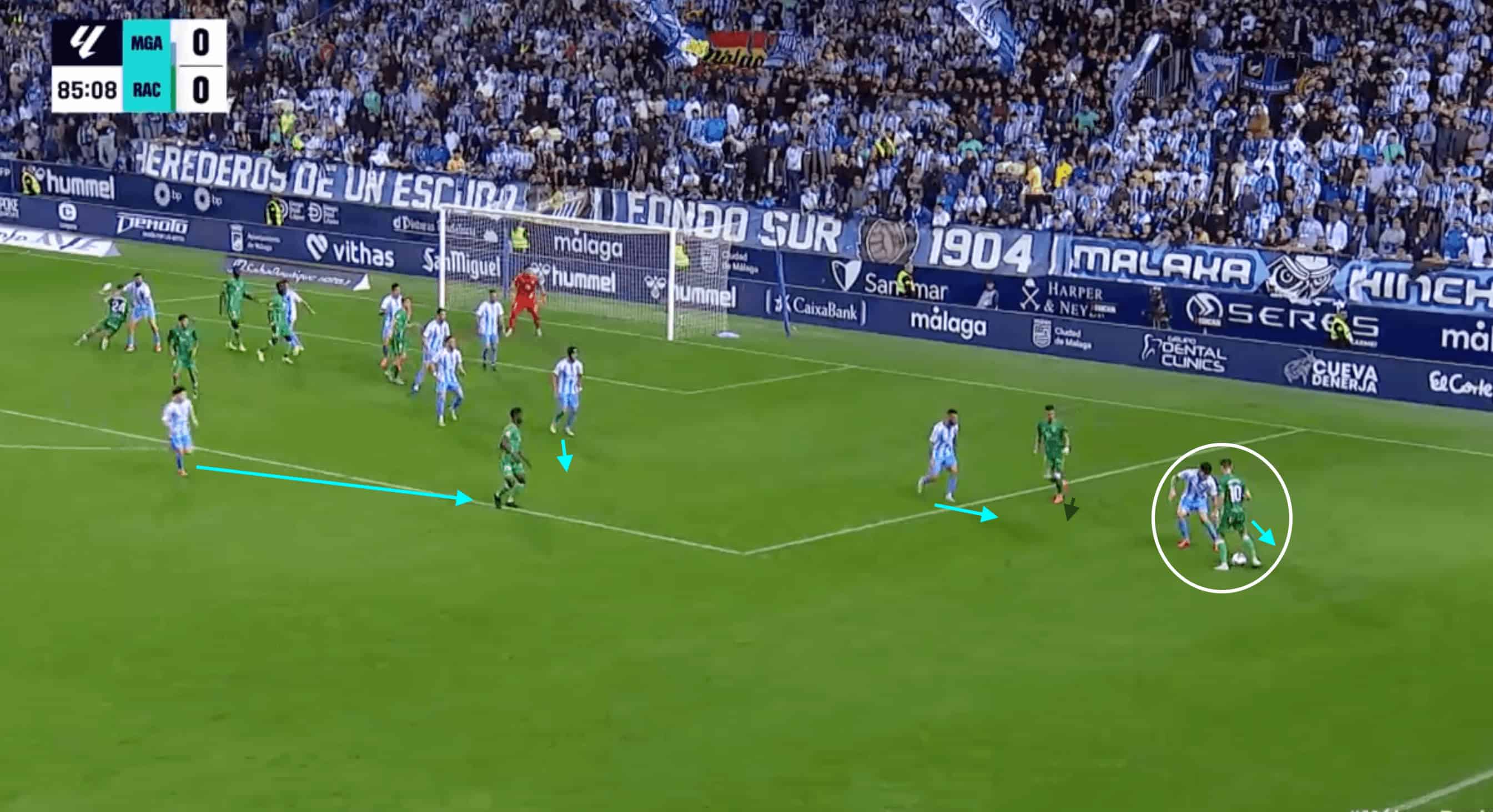
Instead, Málaga offers the easy pass in towards the Racing player moving towards the top of the box, which they can then look to quickly eliminate with two defensive bodies closing on the position.
Even though these rare opportunities for Antonio Cordero to defend begin to highlight how he could adapt to a higher level of club football, where constant switches between attacking and defensive transitions are imperative to success.
Conclusion
With speculation that the boyhood Málaga fan may leave his club to achieve greater things, it is easy to understand why Antonio Cordero has captured the attention of Europe’s finest.
Interest from clubs like Arsenal have magnified his reach across Europe, indicating that the 18-year-old isn’t only appreciated within his home nation.
At this point in his career, he may not be ready for first-team action for the likes of Real Madrid or Barcelona, but it would be an excellent opportunity to harness his talents alongside some of the world’s best players.
A recent paradigm shift in the world of Spanish football has highlighted just how effective the inclusion of youthful homegrown talents can be even within the title-challenging teams.
It may not be too long before we hear about Antoñito finally grasping his opportunity to play in La Liga.
