
The main scheme
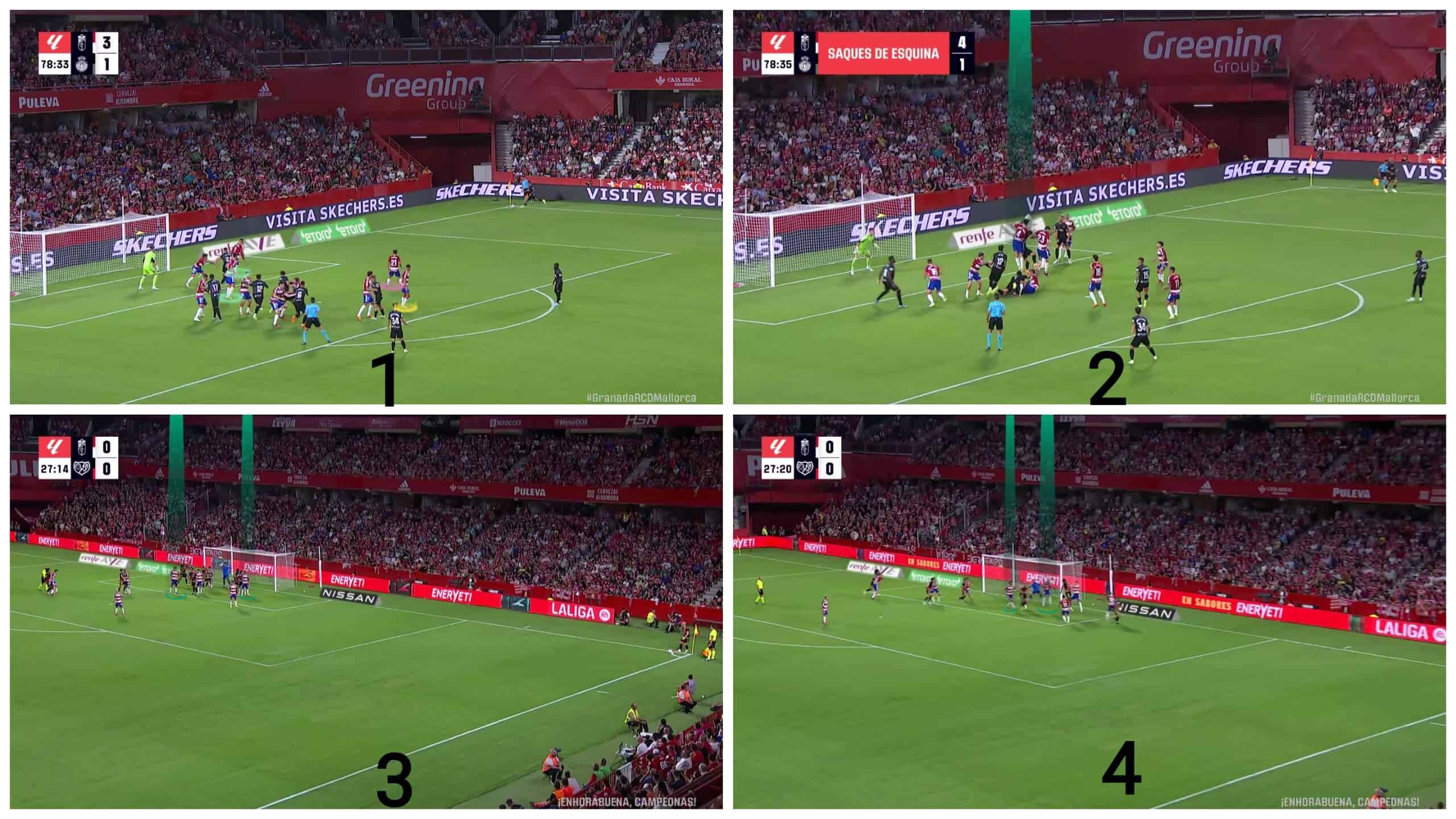
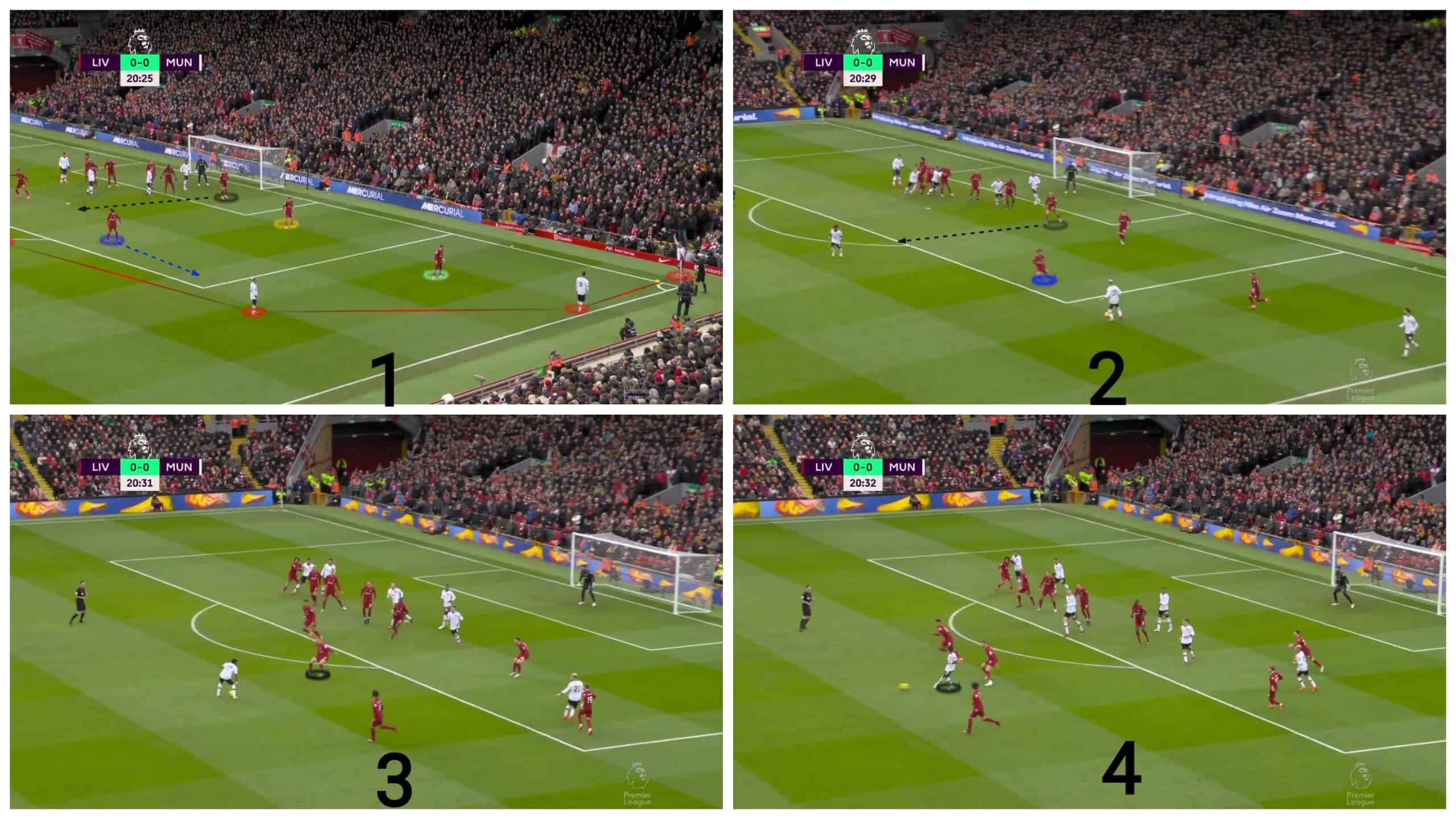
Starting with their main defending scheme at corners, they use the man-marking defending system with two zonal players, a short-option defender, a rebound defender and six man markers, as shown in the first photo below. Their two zonal defenders are assigned, one on the near post and one in the middle, to defend these areas, as shown in the second photo below. They stand more inside against in-swing crosses depending on the cross trajectory, as shown in the third and fourth photos.
Screens
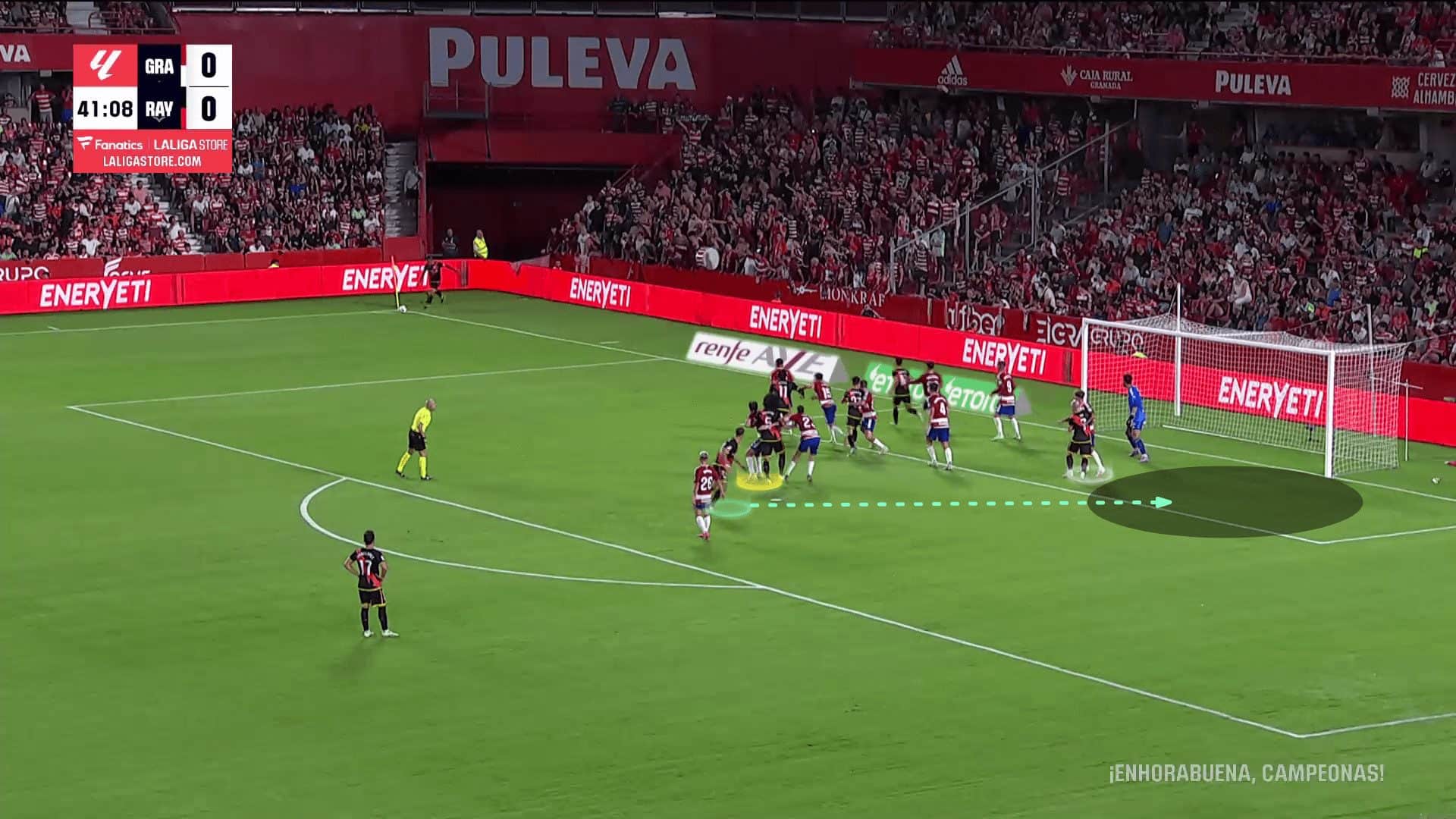
The main disadvantage of this man-marking system is that you can control the defenders’ positions by asking your attackers to stand in certain areas to drag the markers with them, as in the photo below. In this photo, the opponent targets the far post, far away from the two zonal defenders, so he easily empties this area by asking the attackers not to stand there.
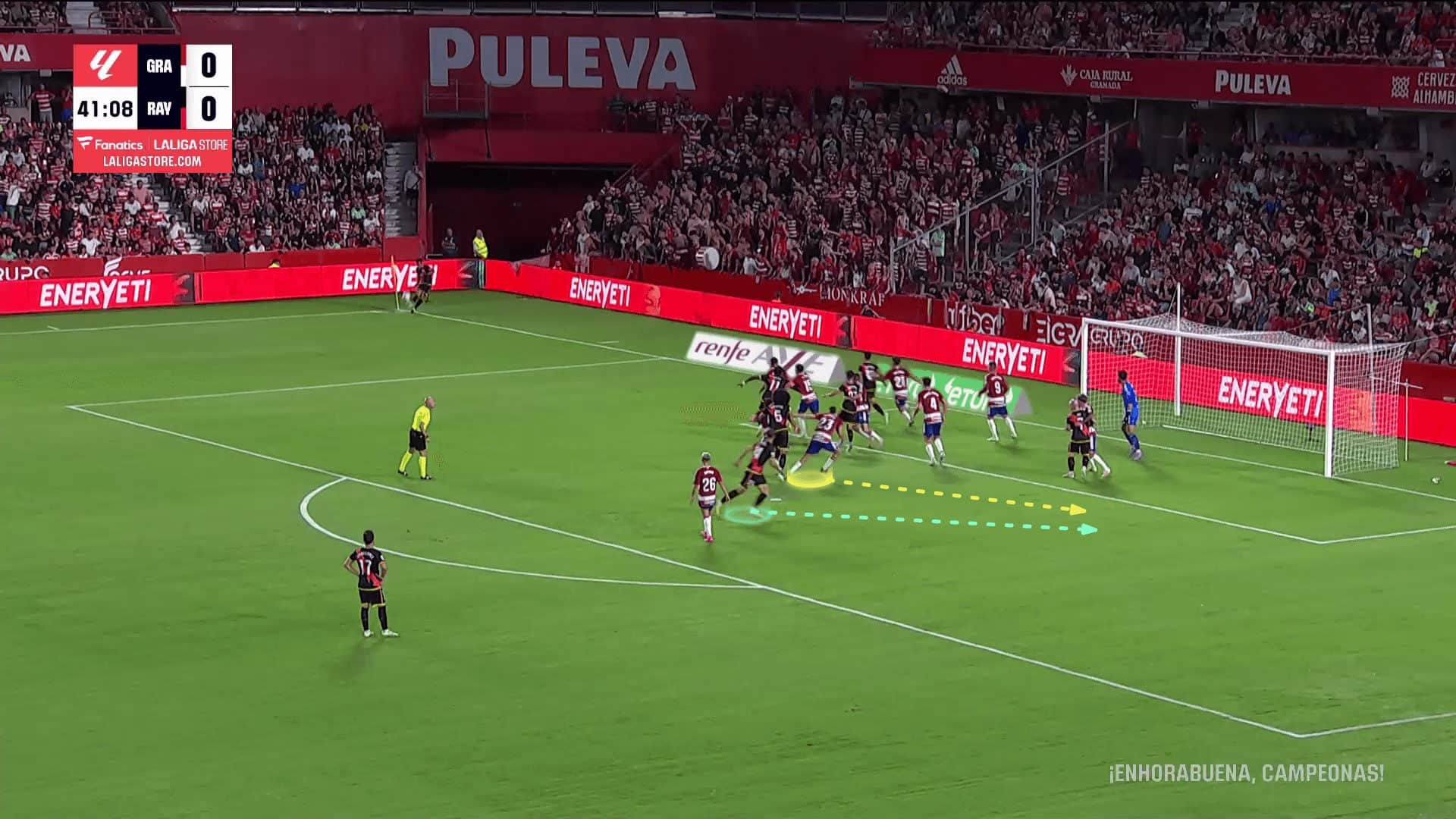
It is still a single problem: freeing the targeted attacker from his man marker. This can be done with many tricks; screens are the most common one. Doing a screen is simply going to your targeted mate’s marker to block him, preventing him from tracking your mate. Hence, the targeted player, in green, goes freely to the targeted area thanks to his yellow mate, who blocks his mate’s marker, a screen, as shown in the two photos below.

It is also should be mentioned that the last attacker, in white, blocks his attacker to make sure he won’t go to the targeted area.
In the photo below, the yellow defender tries to do a switch by leaving his first assigned attacker, who did the screen, and going to the targeted player. Still, this shift is a bit late and gives the targeted player moments before this defender.
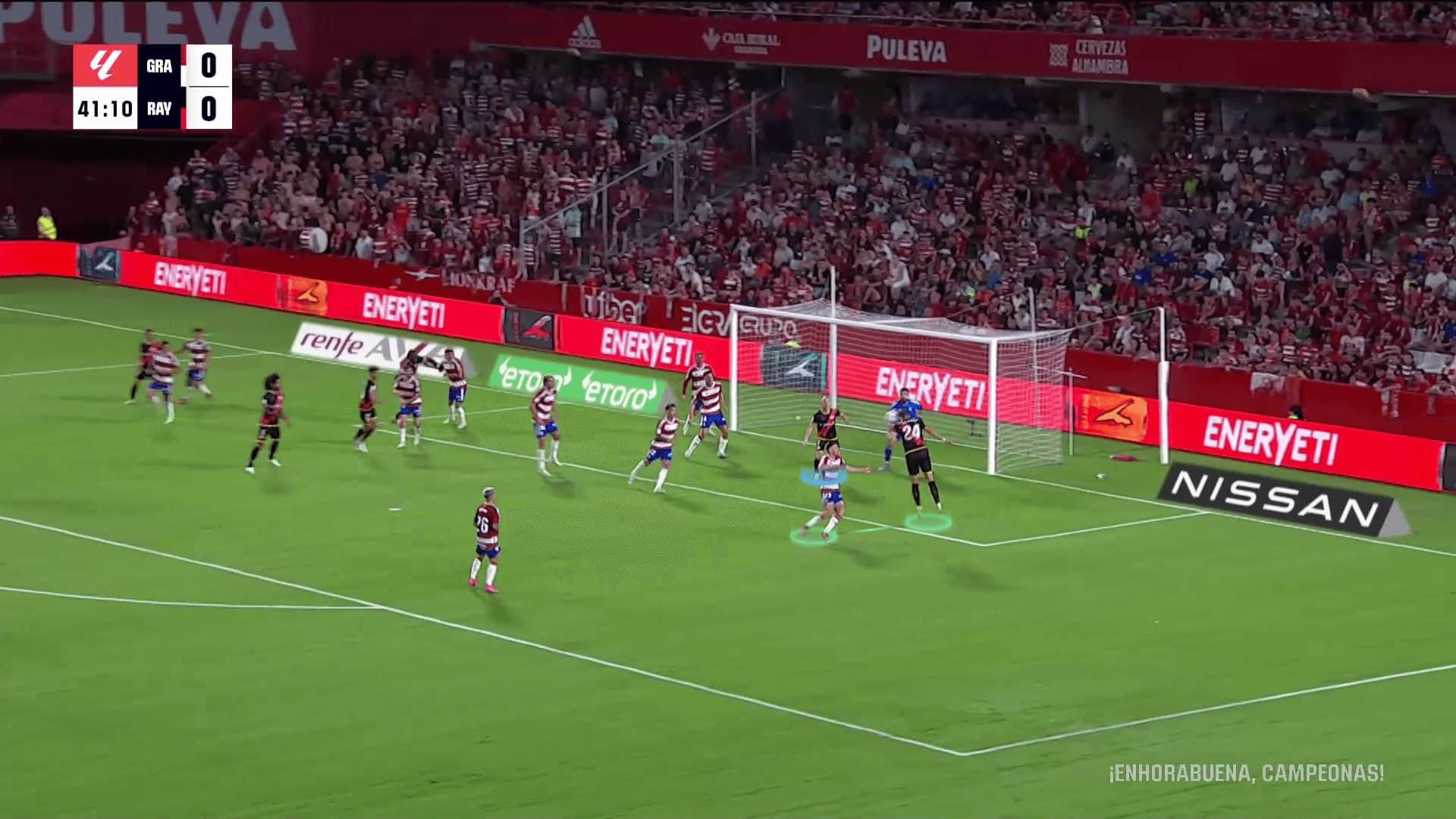
However, the cross is a bit outward, so the targeted player wants to nod the ball to his mate inside the six-yard, as shown below, but the headed pass was inaccurate.
Orientation problems
One of the most known weaknesses of this man-marking defending system is that the marker should keep tracking his assigned attacker while also tracking the ball in the air, so he has to keep having two references, the opponent and the ball which is so difficult in some situations in which the marker faces orientation problems and is forced to track only one of these references, the ball or the attacker. Let’s explain these situations in detail!
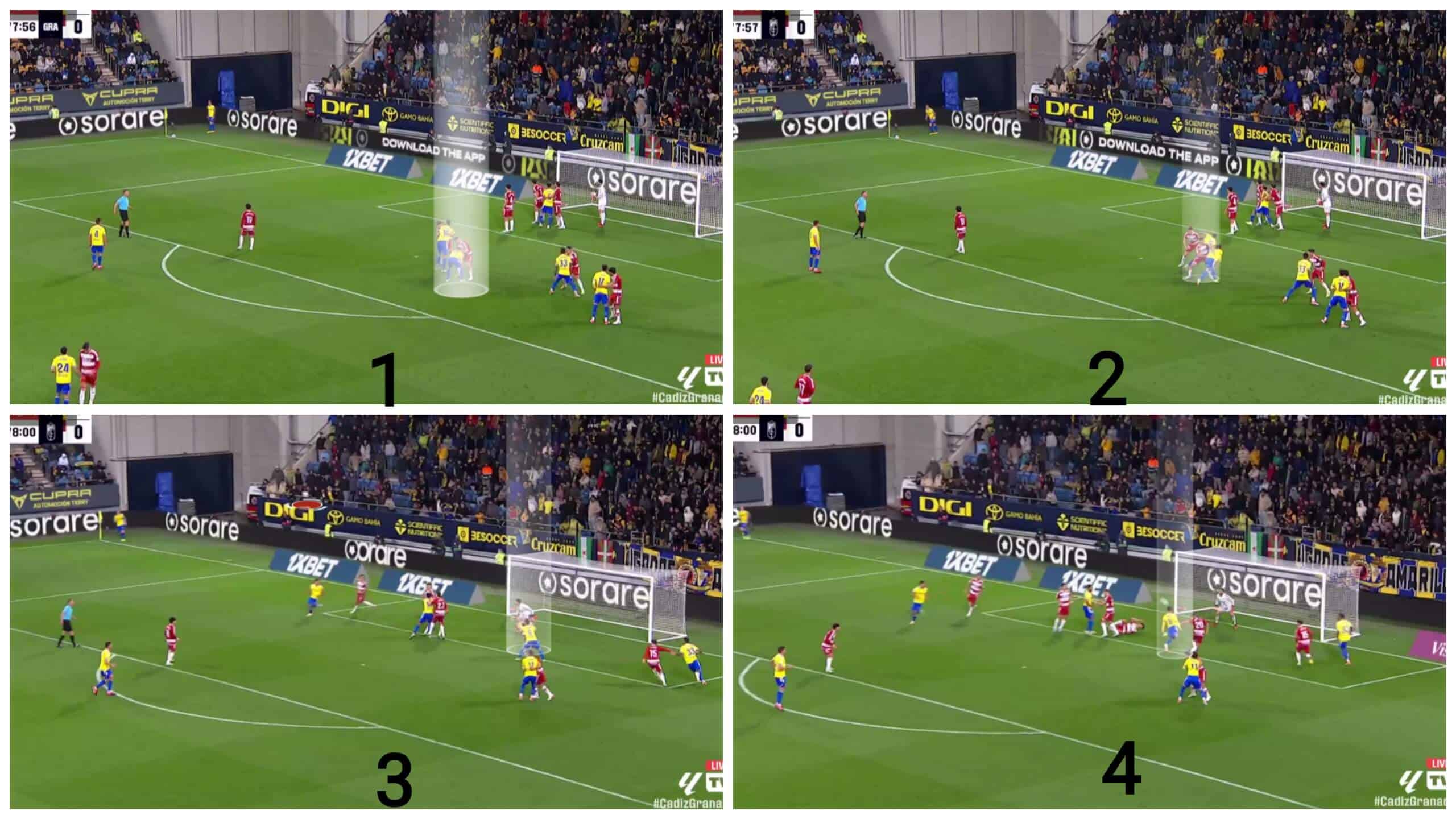
In the photo below, the opponent can also empty the far post area in the same way as the previous one. The green player is the targeted player, so let’s focus on his movements. He starts in the middle, moves a few steps towards the near post, and then does a body feint to the far post, as shown in the second photo below.
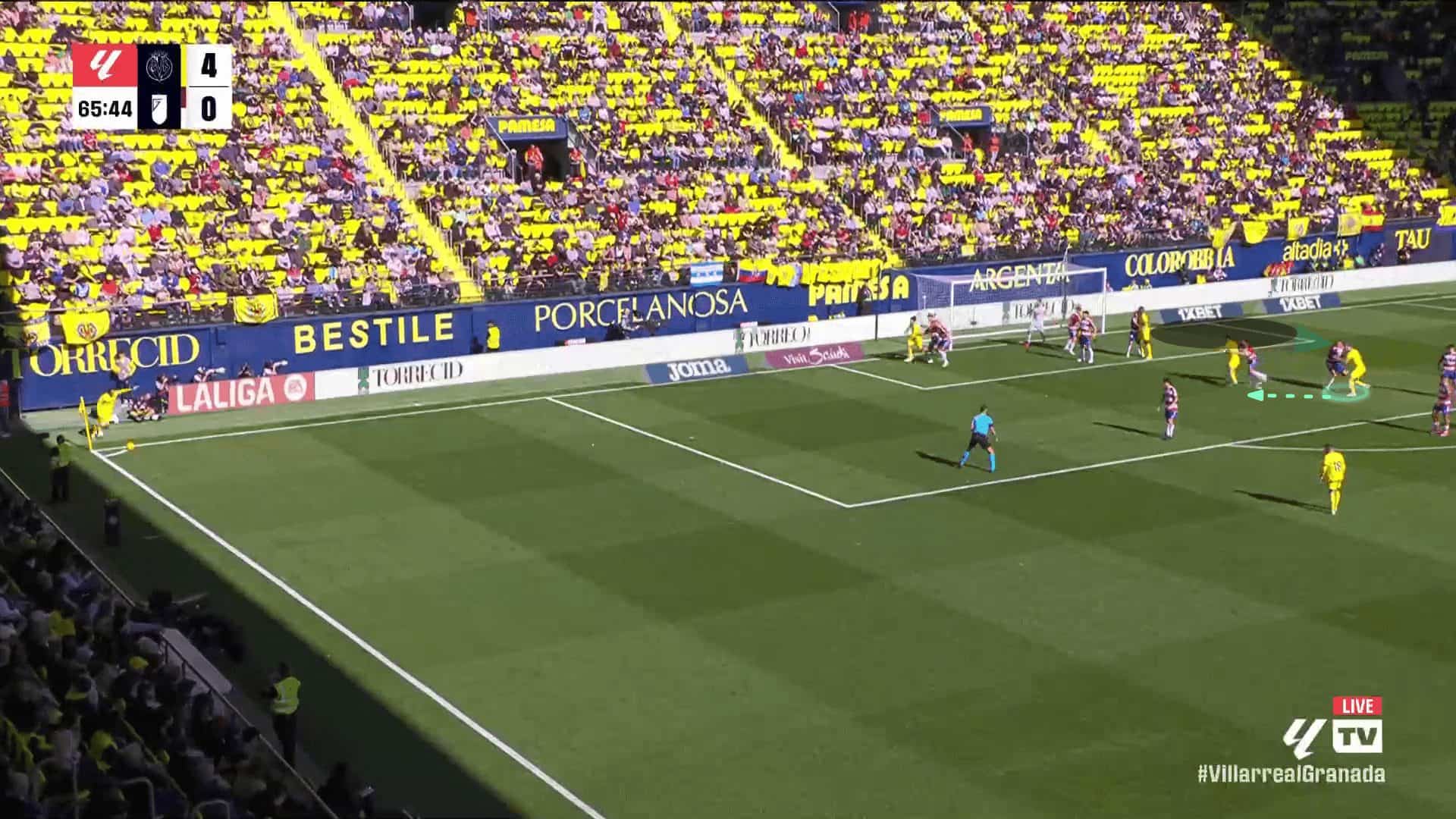
After this feint, the marker was faced with a difficult question: Should I keep tracking the ball or turn around and give my back to the ball, losing communication with it?!
In the photo below, he chooses the first option, losing communication with the attacker.
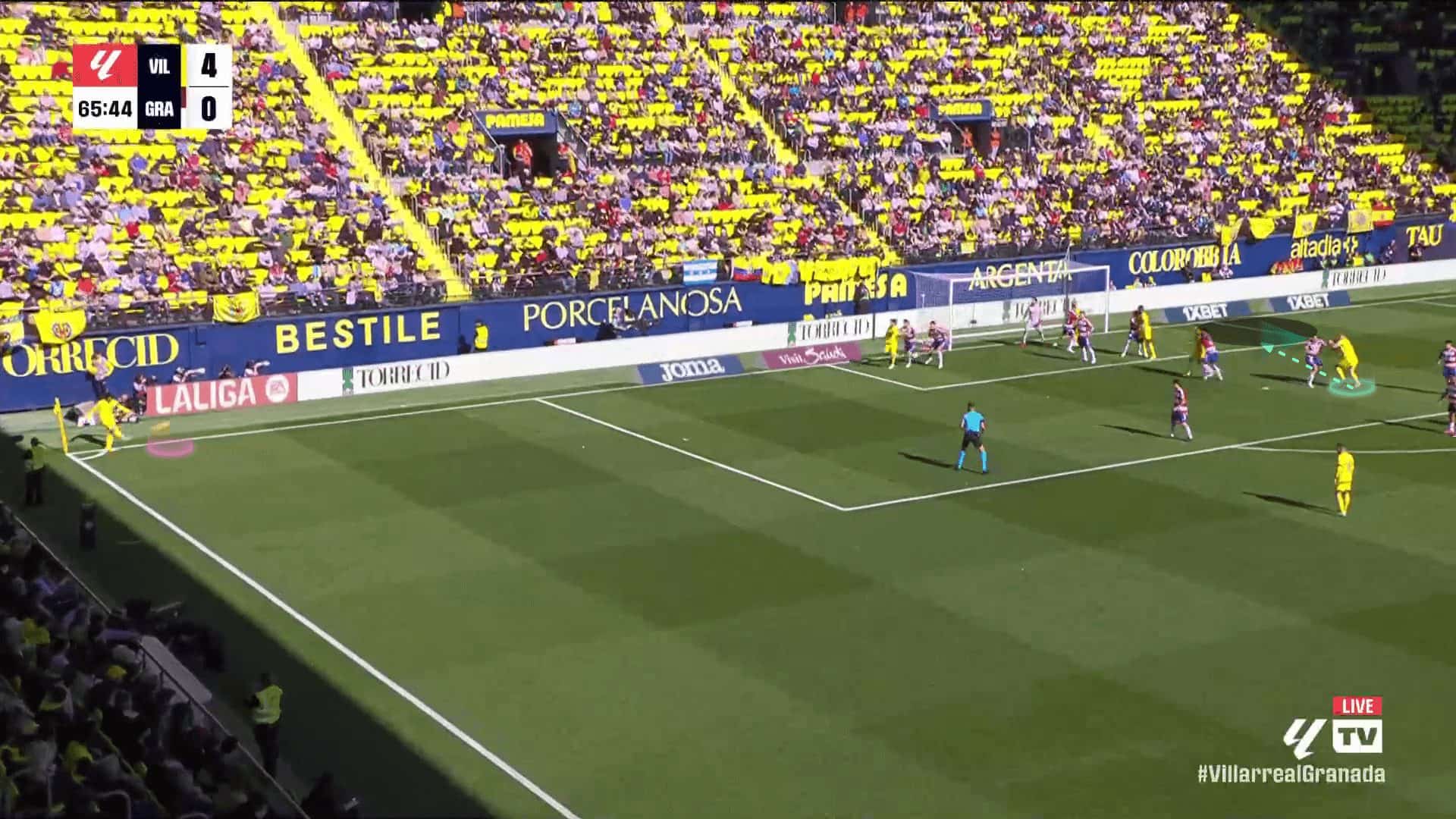
In the photo below, the attacker is entirely free while three white blocks are done to prevent anyone tries to go to the far post. Here, we should mention that opponents usually use floated crosses, which are so high at first and land on the targeted area from a high point to also make sure that the goalkeeper won’t go there.
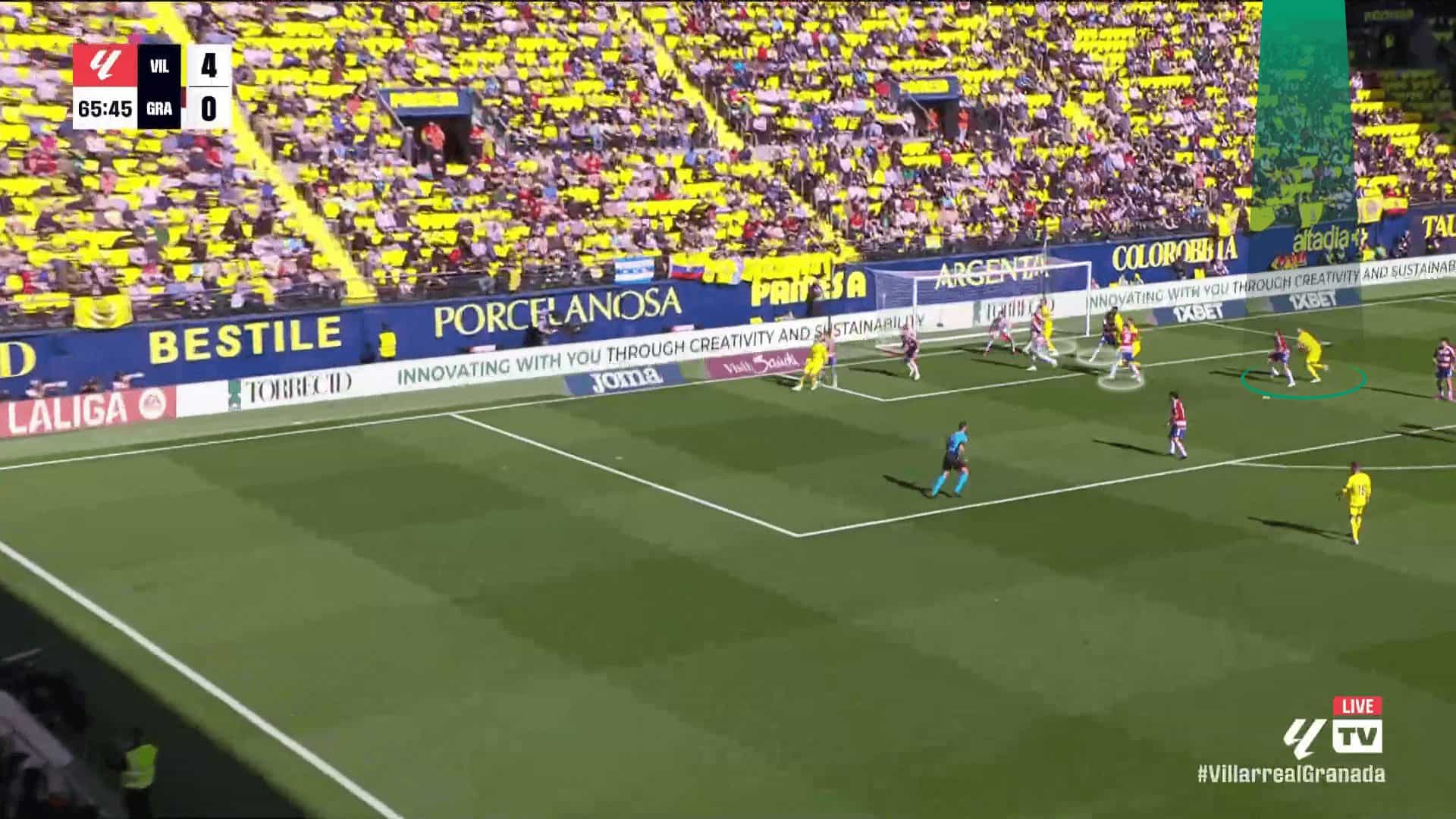
In the end, the targeted player gets the ball easily while it is too difficult for the marker to keep tracking the ball all this trajectory running with his back all this distance. The end was a goal!
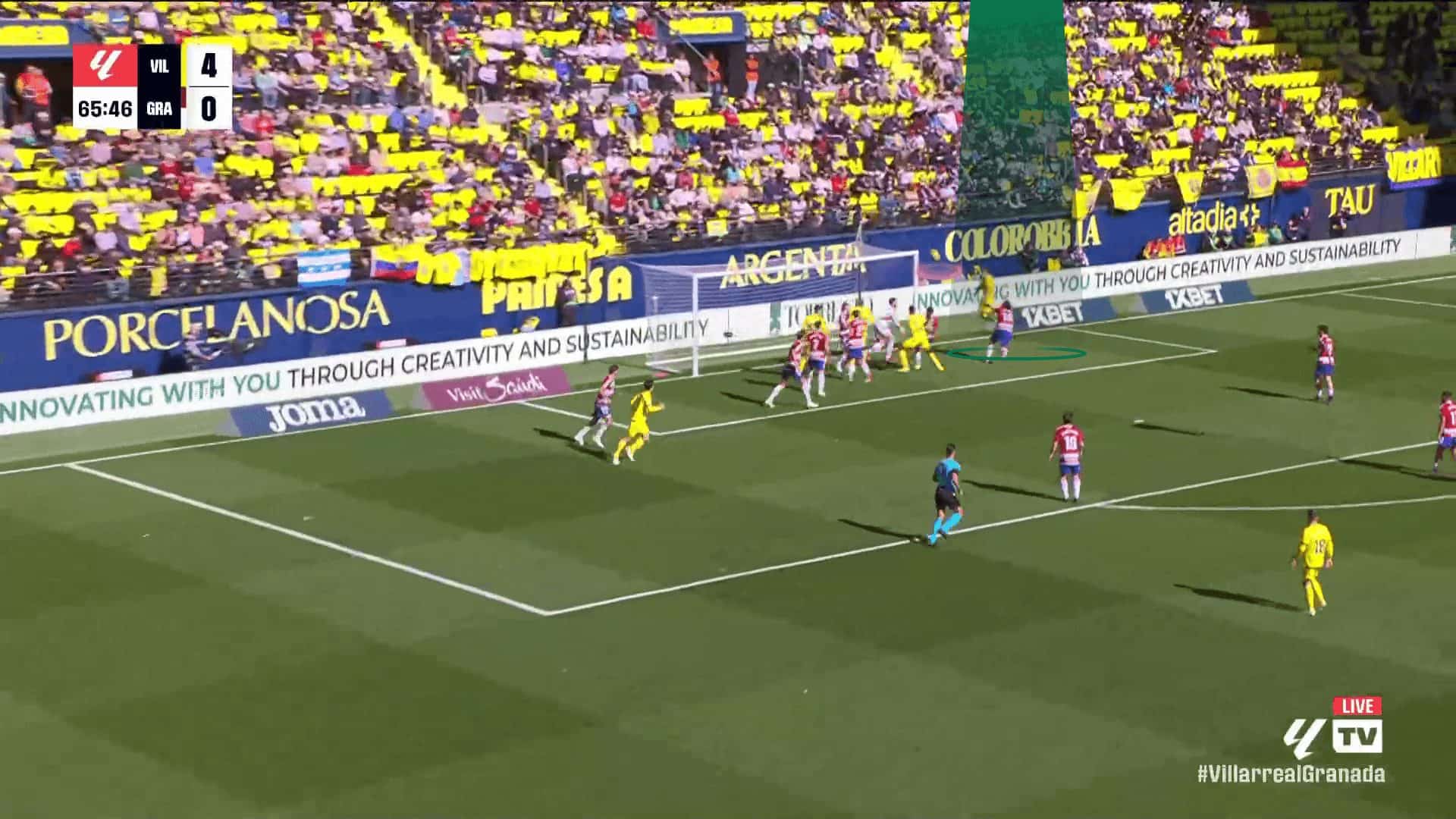
You may ask what if the marker chose the other solution and kept tracking the attacker giving his back to the ball, so I bring an example for you to judge.
In the first photo below, the attacker does the same feint, but the marker chooses to keep tracking him, giving his back to the ball, as already done in the second and third photos. This action makes the marker lose communication with the ball, but the attacker doesn’t and we have forgotten an important thing which is the attacker always knows a piece of information that the defender doesn’t which is the targeted area, so it is easy for him to manipulate the marker, who doesn’t see the ball, to reach the targeted area, as shown in the fourth photo below. The end was a goal, too!
You may ask about the radical solution then. We will discuss it in the suggestions section.
Short corners
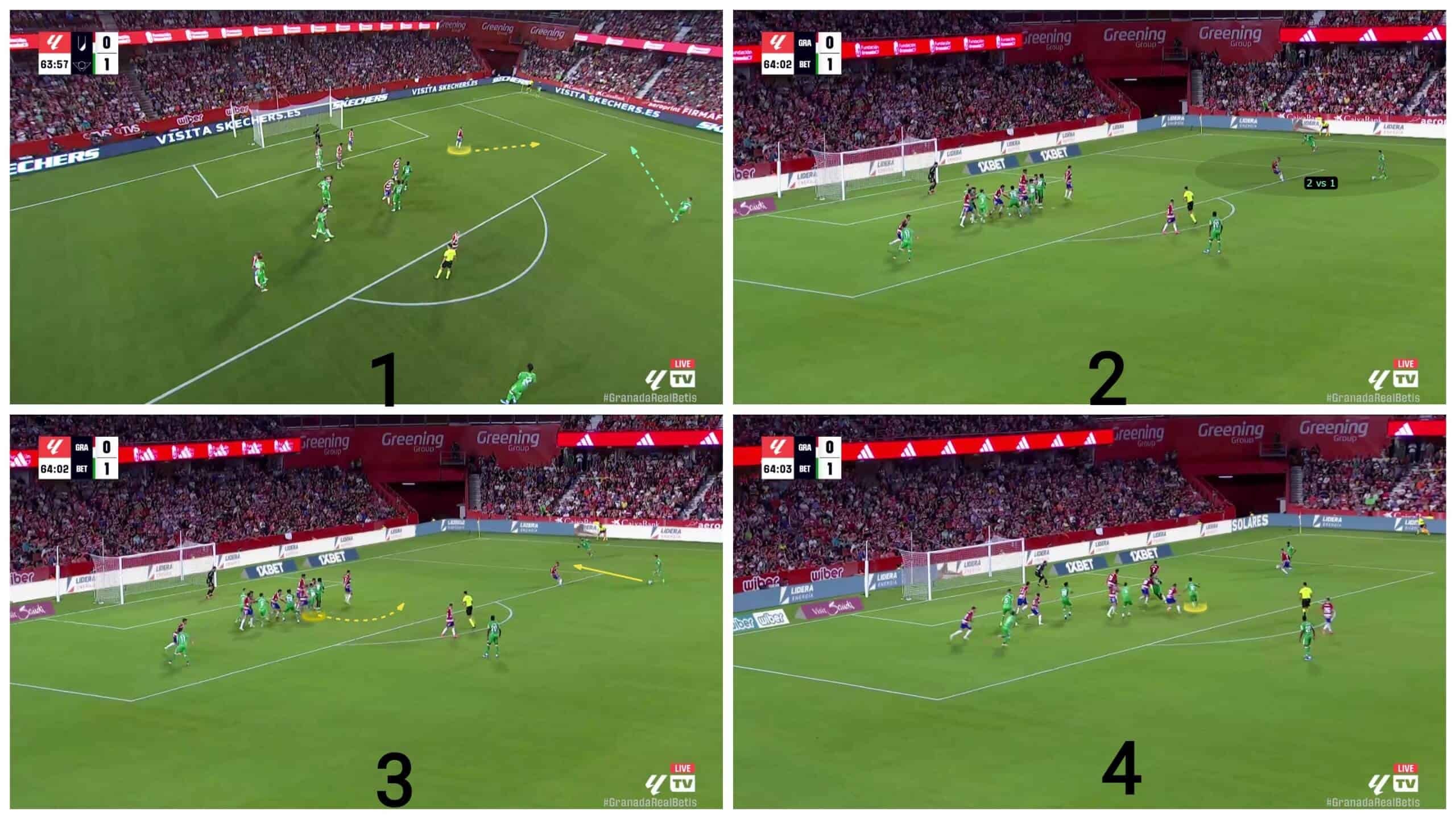
The first issue they have during defending against short corners is that no one is assigned to help the short-option defender, so you can easily notice that he faces a 2-v-1 situation when the taker joins the game after the short pass, as in the first two photos below.
In the third photo below, the two attackers exploit their numerical superiority, so the short-option attacker passes the ball to the free-taker again. In contrast, an attacker comes from the box to receive a cut-back pass, as shown in the third and fourth photos.
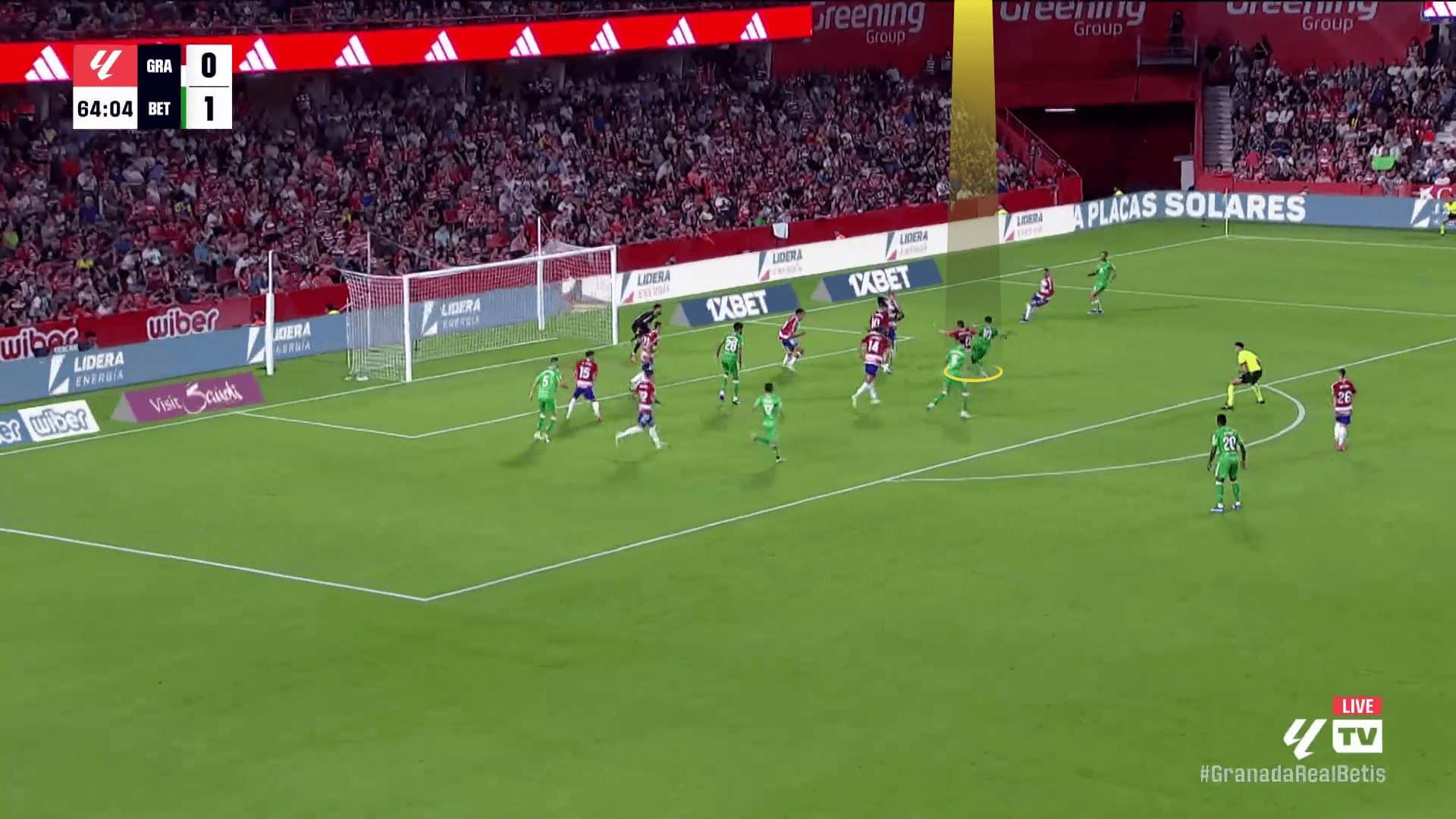
But no mate does a screen to free him from his marker, so the marker makes it difficult for the attacker to finish, as shown below.
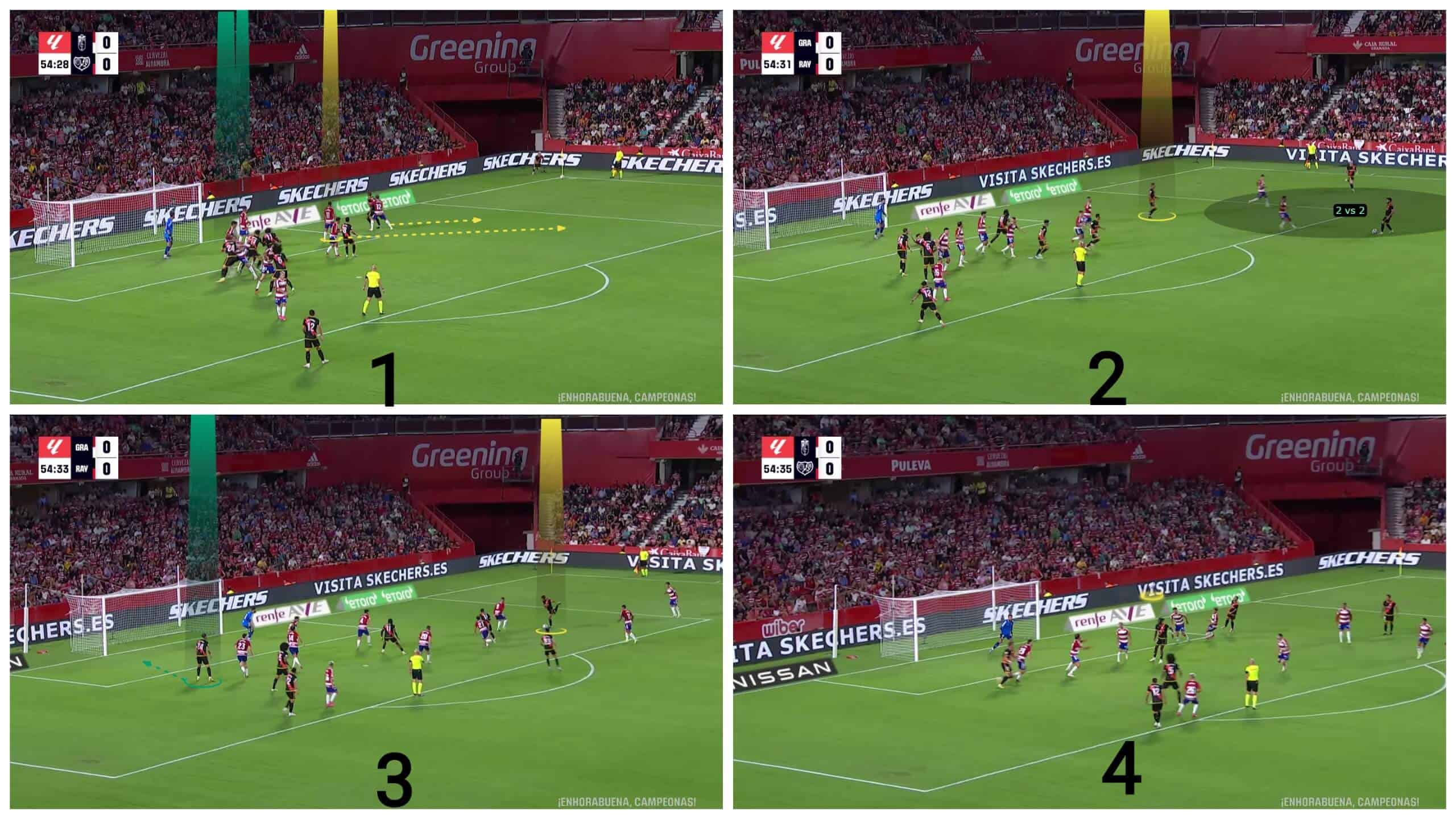
In the first photo below, the short-option defender starts on the edge of the six-yard line when no short-option attacker starts in a near position. When an attacker suddenly comes from the back to be a short-option attacker, the defender takes a long time to reach, and this is another side issue because it gives attackers time to act.
Coming to our problem, a near man marker decides to leave his attacker to make the situation 2-v-2 situation, but this leaves his assigned attacker free behind him, as in the second photo. In the third photo, this free attacker easily receives an easy through ball behind the two defenders and then sends a cross to the free attacker on the far post, exploiting the defenders’ focus on the ball, but the cross is inaccurate, as in the fourth photo.
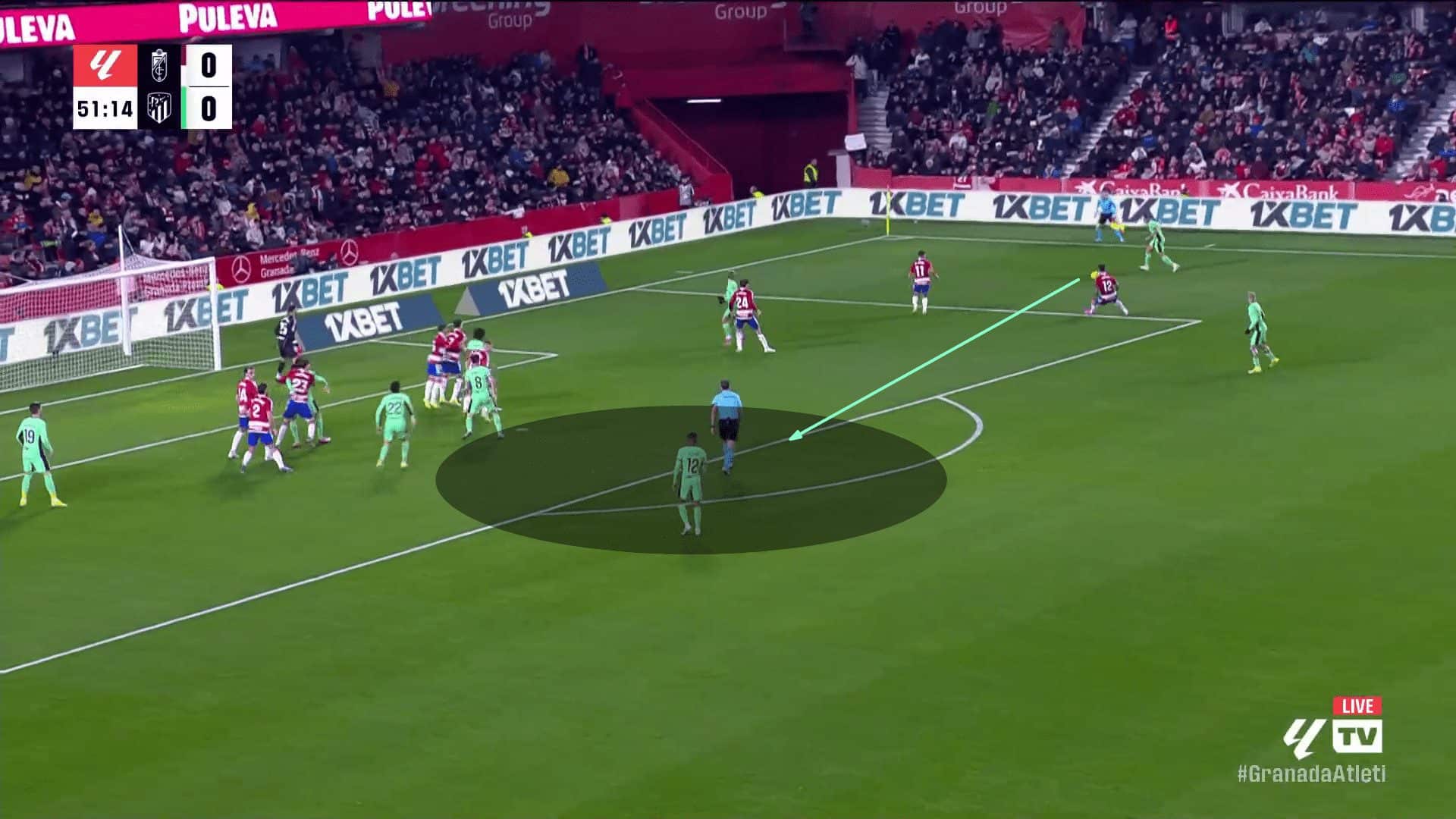
The rebound defender often comes to help, which leaves the rebound area empty, as in the two photos below.

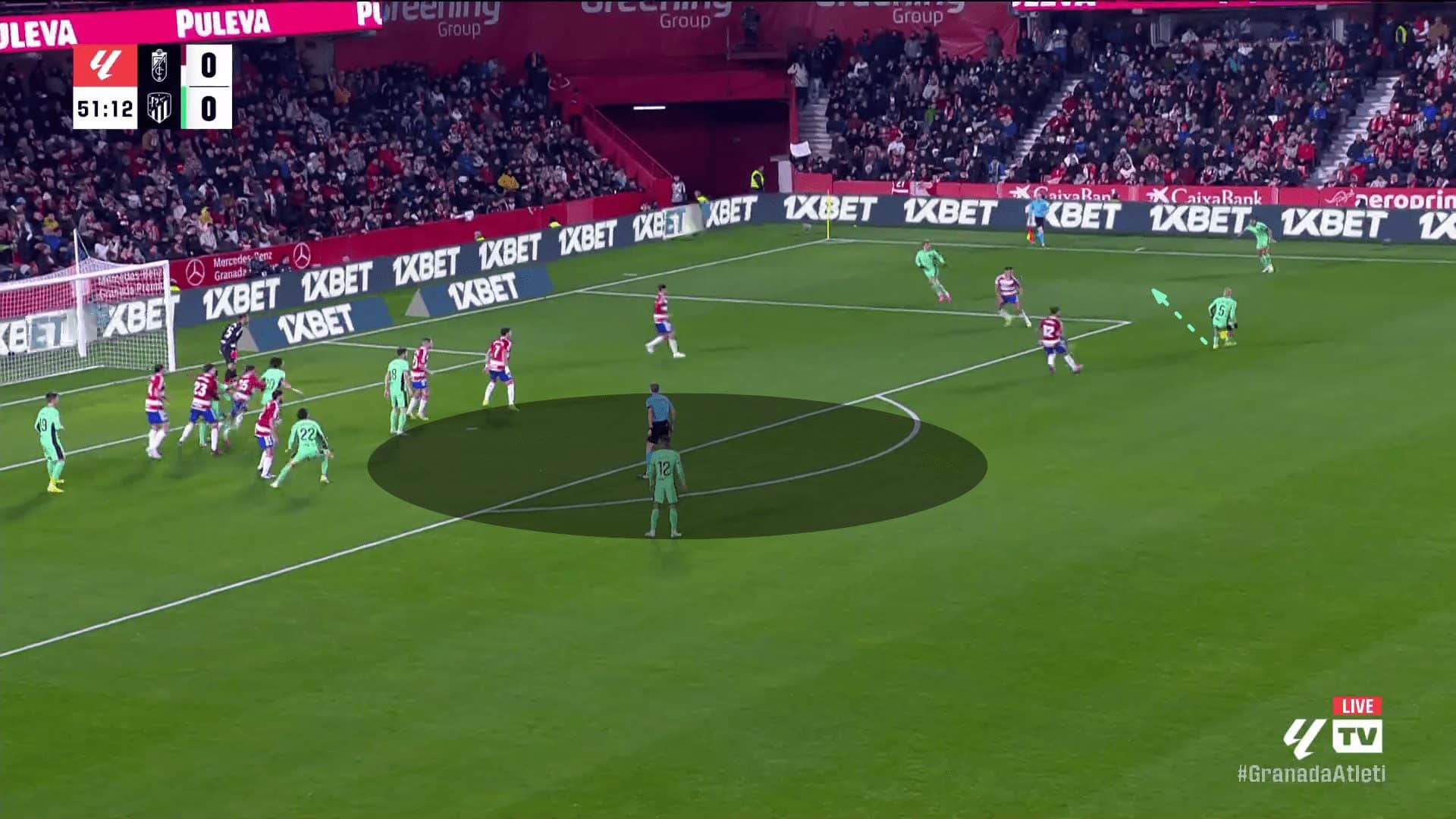
It could be exploited with a direct pass, but the opponent didn’t, as shown below.
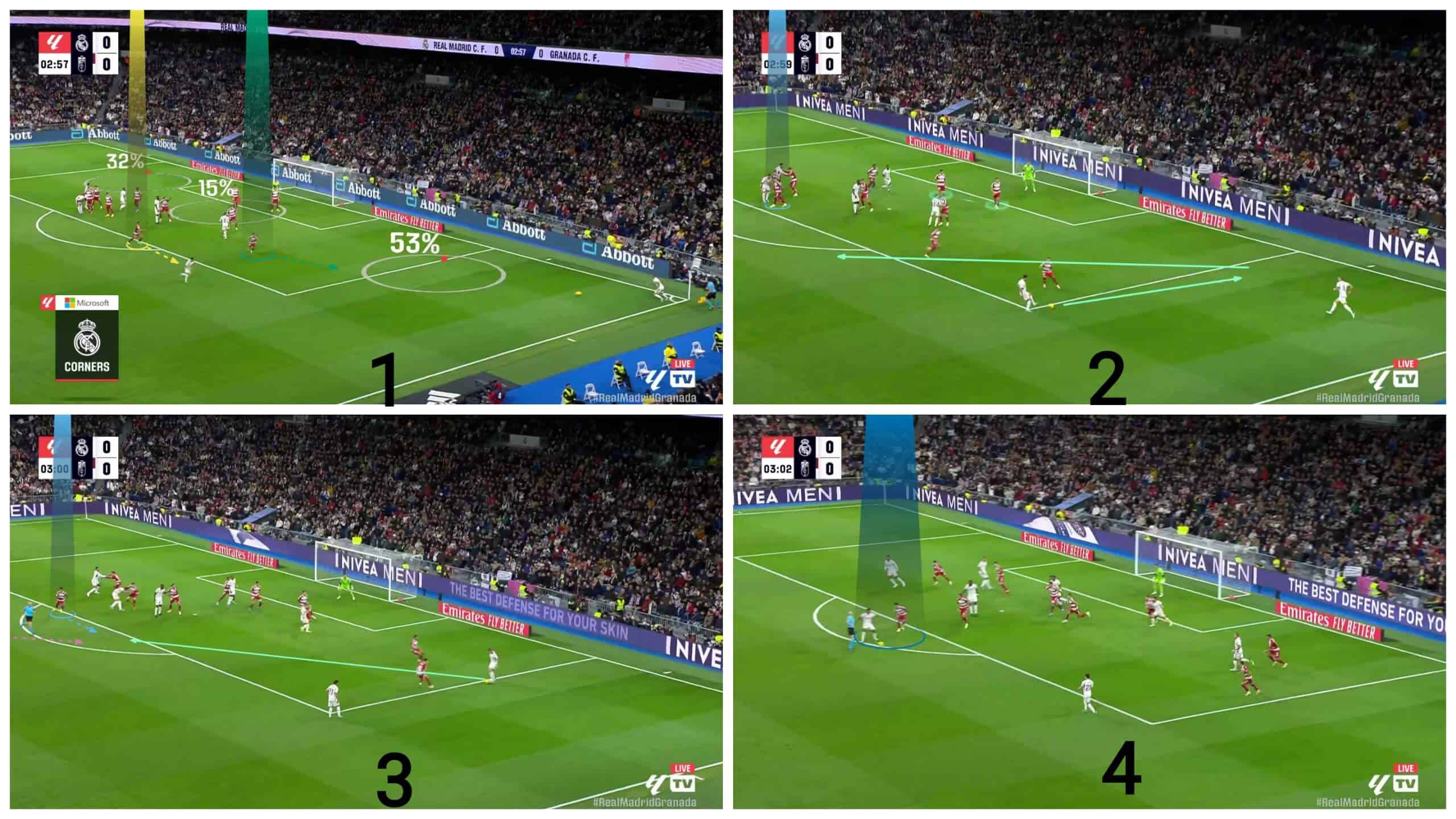
Real Madrid realized this issue, so you can see them trying to do the same plan, as in the first two photos, but they attacked the box with only five attackers against six man markers, so one of them went to cover this gap, as in the third and fourth photos below.
Suggestions
Regarding screens and orientation problems, we can’t say that there is a radical solution for these two issues without changing the system because these are the most common issues facing the man-marking defending systems. Opponents can control the initial positions of the attackers, naturally dragging the man markers, to empty any space they want and then, exploit one of these tricks to make the targeted player escape from his man marker, so it is not difficult to attack that man-marking system at the high level and you might start to notice that most of the big teams turned into the hybrid system because if a man marker suffers from one issue of them which allows the attacker to escape from him, the attacker will find a zonal player around the six-yard.
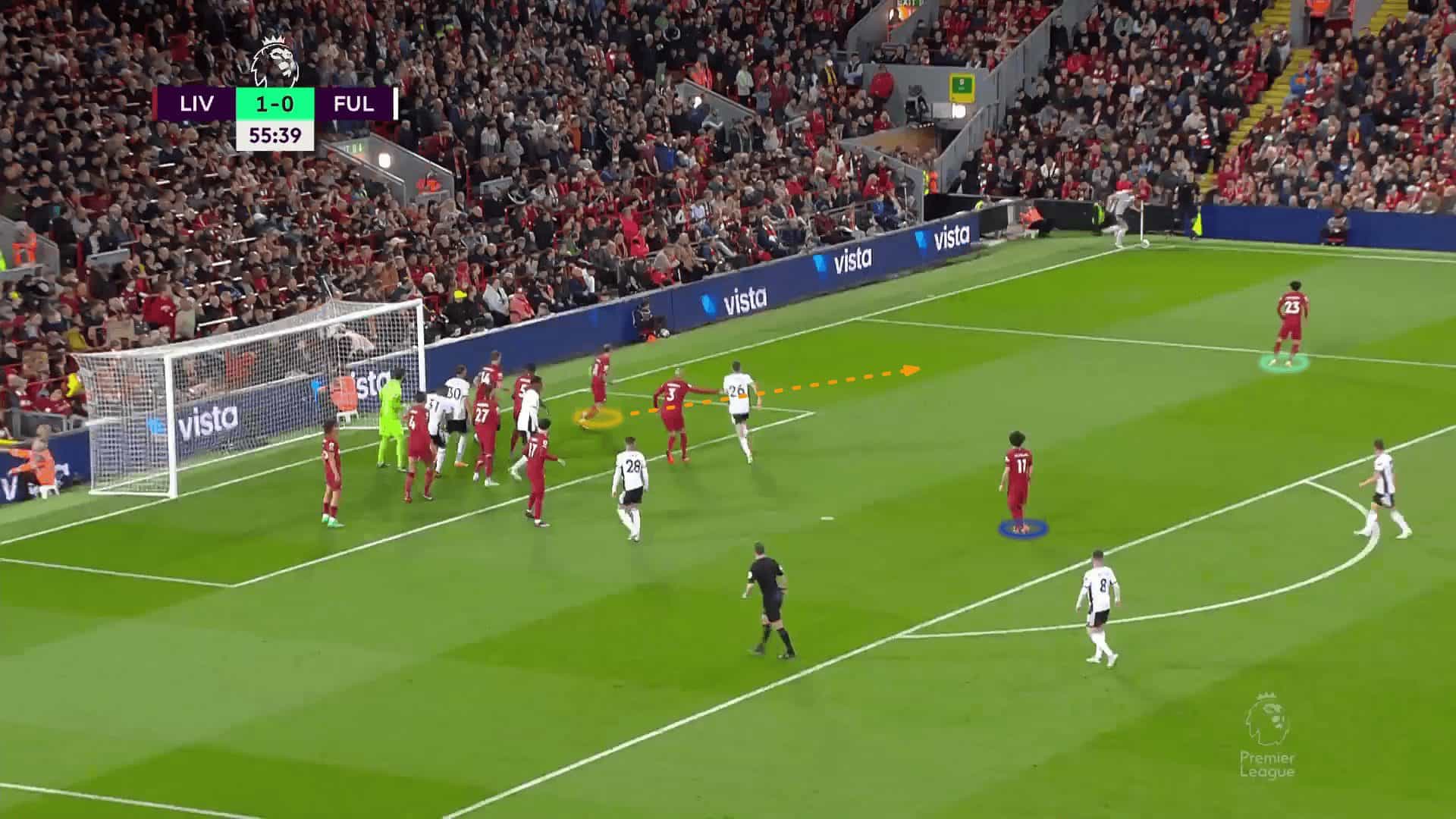
Regarding short corners, it is easy to suggest a solution while using the same man-marking system by making the short-option defender and the rebound defender defend zonally asking the rebound defender not to be dragged towards the short area and keep standing in the rebound zone while asking the first zonal defender to go to help the short-option attacker, as shown in the next example.
As shown below, Liverpool defends the short corner with the green player. The yellow zonal player, whose first responsibility is to get the first touch in crosses, especially flicks, is ready to help him after playing the short corner to prevent a 2v1 situation. The blue player is in the rebound zone, so we have three players prepared to defend this area.
Liverpool could easily face a new challenge with four attacking players in this area. In the first photo, the four attacking players are highlighted in red using two attacking short options and a rebound player out of the shot. Liverpool, as usual, defend with a green player to defend the short option with the yellow zonal player who comes to help and the blue player on the rebound zone, so the situation is 4v3, but they have a plan which is making the rebound player, in blue, defend against the second short option while the near post player, in black, goes to defend the rebound zone. In the second photo, the rebound defender, in blue, faces the second short option, which gives the near post player in black time to meet the rebound-attacker, which forces him to pass the ball to the back, as shown in the third and fourth photos.
There are many defending solutions to face many challenges during short corners shown in that analysis, but the explained one is the easiest and the effective in our case.
Conclusions
In this analysis, we have discussed the defensive structure of Granada in defending against corner kicks, elucidating the weaknesses that have rendered them more susceptible to conceding goals from corner kicks in La Liga thus far.
In this set-piece analysis, we have also examined how opponents utilised various techniques to evade man-to-man markers in order to target areas unguarded by the zone defenders. Among these tactics, the most prominent were the use of screens and orientation problems. We have also highlighted their defensive issues against short corners. Additionally, we have suggested some tactics that may assist them in improvement.
