
The final game of the 2019/20 season came down to a clash between two European heavyweights, with the French and German champions looking to consolidate their domestic success with a European Cup.
Bayern Munich came into the match as favourites, having won every UEFA Champions League match in their campaign and brushing aside virtually all the opposition they had faced domestically since the new year, with only RB Leipzig able to hold them to a draw in 2020.
Thomas Tuchel‘s PSG had, of course, just come off the back of an impressive performance against Leipzig, and with the individual talent on display in their squad, it would have been difficult pre-match to have counted PSG out in any way.
Many pundits seemed to predict a firefight between the two teams, but given this was a Champions League final, such a scenario seemed fairly unlikely.
As it played out, the tactics of the game quickly influenced the nature of the game, and a high-scoring game didn’t ensue.
Paris Saint-Germain‘s defensive system and its dynamics in relation to Hansi Flick‘s Bayern Munich build-up defined the majority of the game.
In this tactical football analysis, I will examine the asymmetric nature of PSG’s structure and its influence on Bayern’s ability to build up, as well as detailing how Bayern largely controlled the game.
PSG Vs Bayern Munich Lineups
Neither side made any obvious tactical changes in terms of players, with PSG electing to play Keylor Navas in goal following his return from injury.
PSG adopted an asymmetrical 4-4-2 shape, which also included a 4-5-1 formation, and thus opted for a central midfield trio of Ander Herrera, Marquinhos, and Leandro Paredes.
Bayern Munich, meanwhile, lined up in their usual 4-2-3-1, with the only change being Kingsley Coman coming in for Ivan Perišić, with the Frenchman coming back to full fitness to reclaim his starting spot for the game against his former club.

PSG Asymmetrical Pressing
PSG used a fairly complex and subtle pressing system in order to manipulate Bayern’s build-up play, with an asymmetrical 4-4-2 system used.
This meant that PSG’s initial 4-5-1, with Mbappé and Ángel Di María on the wings, evolved into a 4-4-2 or 4-2-3-1 formation, with Di María pushing higher from PSG’s right side to press Bayern’s left centre-back.
While he did this, he kept the Bayern left full-back, Alphonso Davies, in his cover shadow, and so shorter passes from centre back to full-back were largely inaccessible.
We can see an example of this, with most examples being from the first half for reasons I will get onto.
We can see Alaba is in possession, and Di Maria presses at an angle to cut the lane to Davies.
Neymar sits slightly deeper and doesn’t cut the lane to the right centre-back.
Herrera here goes higher and acts as a pressing ten, covering the Bayern Munich pivot.
When the ball goes to the opposite centre-back, Neymar goes across to press, while Mbappé stays deeper, closer to the full-back.

In this very similar example, we see the same trend again, with Di Maria higher and covering Davies with his cover shadow.
At the same time, Neymar stays deeper and covers the pivot, leaving the lane open to the right centre-back.
We can see PSG are organised into more of a 4-4-2 now, with Mbappé remaining deeper again and not pressing the centre-back like Di Maria does.
We can see full-back Thilo Kehrer is also fairly high, to trap Davies if any long balls go over Di Maria.
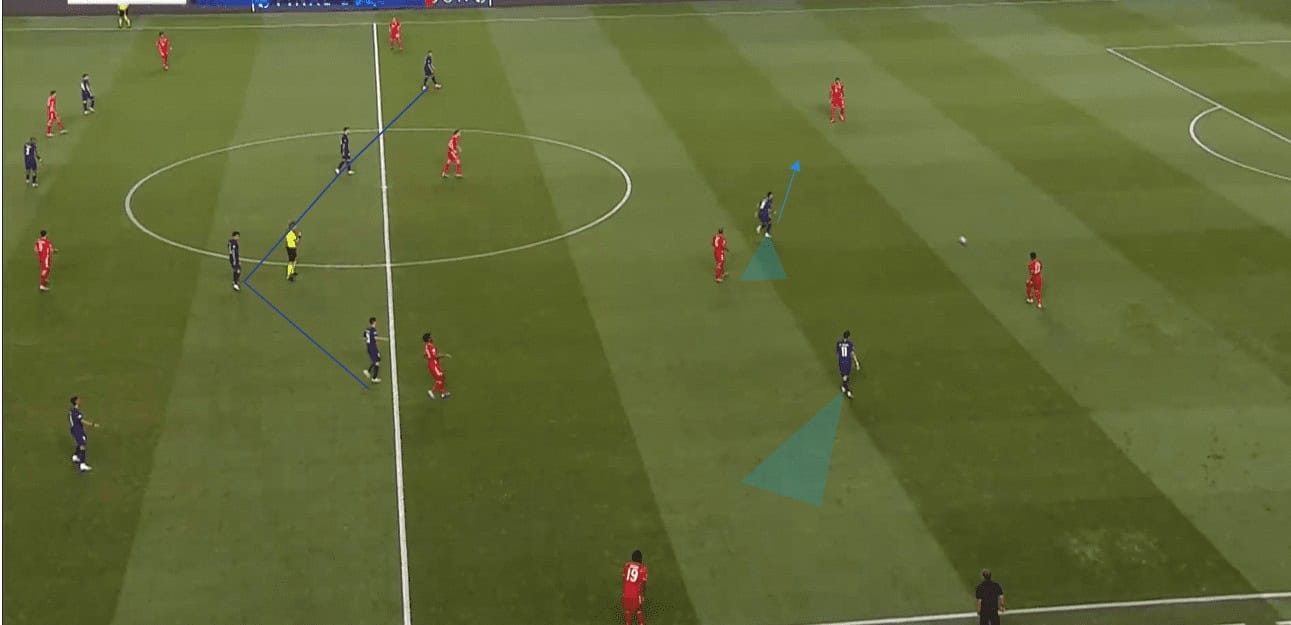
Again, here, Di Maria presses Alaba from a wide angle, while Neymar leaves the lane open to the opposite centre-back before preparing to press.
Bayern also have the option of going back to Neuer, which is where Kehrer comes in.
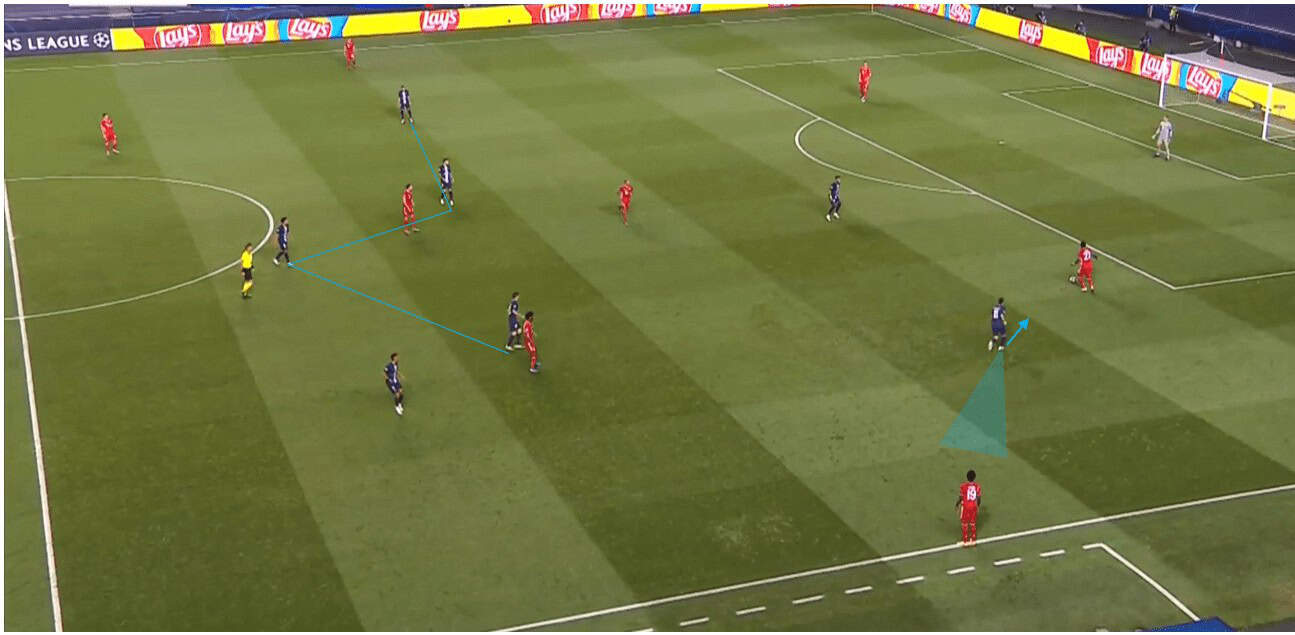
If the ball went back to the goalkeeper, Di Maria wouldn’t drop back to protect the space to Davies.
Instead, full-back Thilo Kehrer would push higher to press Davies, and PSG would attempt to create traps around here.
This meant that, for the most part, PSG limited Bayern’s ball progression down the left to long balls, which are easy to press and, because they take time to reach their target, are easier to adjust to.
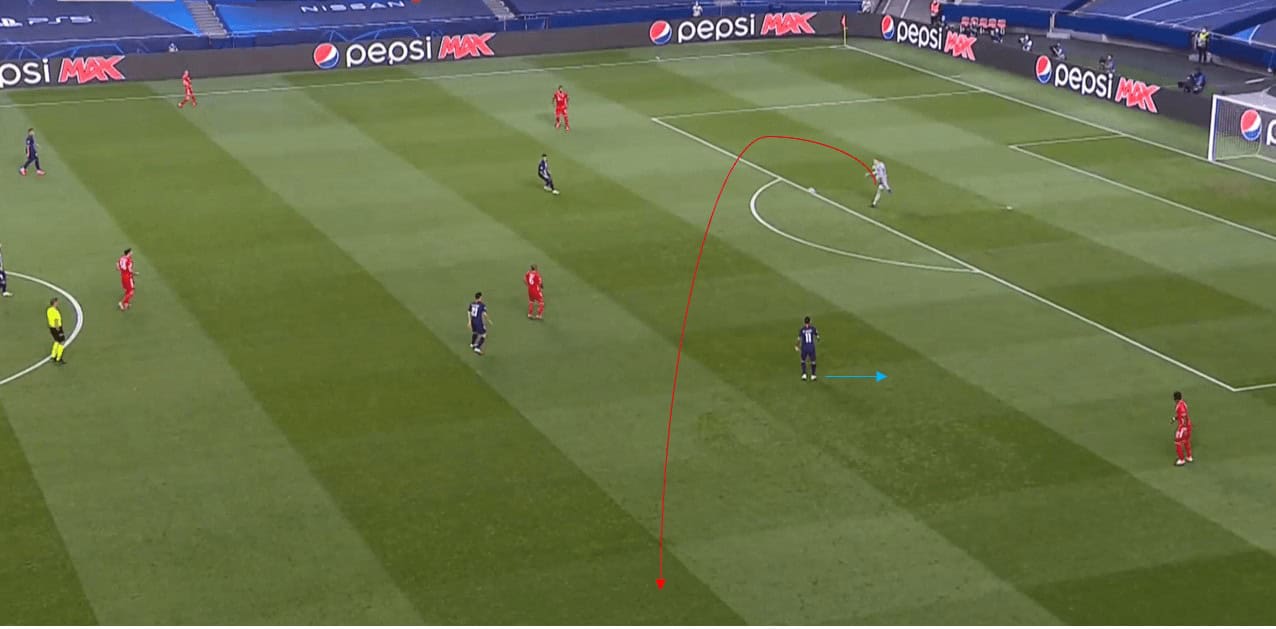
Kehrer here comes across and can apply pressure to Davies immediately.
Davies has no real options but a straight pass down the line, and PSG’s back line is high enough to deal with this and win the ball.
PSG were therefore successful in preventing Bayern from advancing down the left.
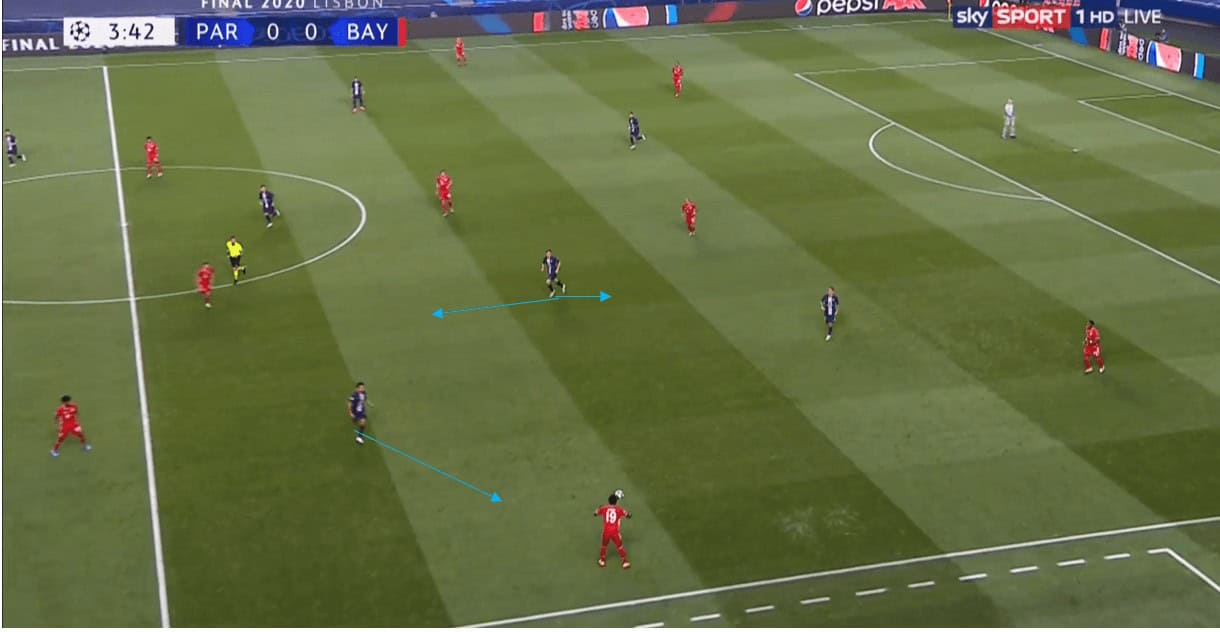
Here Kehrer makes a nice movement that full-backs use often.
With the ball in the air going towards Davies, Kehrer feints to continue his run towards Davies.
Up until Davies’ final scan, Kehrer runs towards him, but as he jumps to go for the header, Kehrer drops back again slightly.
When Davies goes for the header, he believes Kehrer is close by and that he can head it over to him, but Kehrer drops back and is able to make an interception.
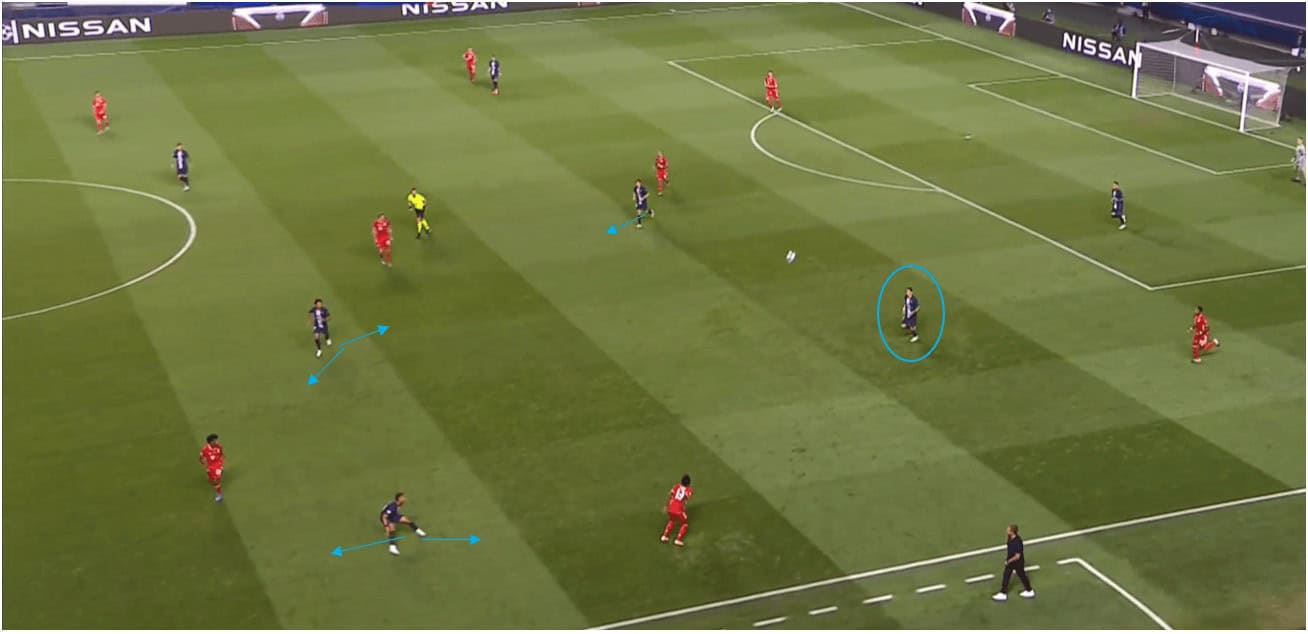
As a quick point of comparison between the roles of Di Maria and Mbappé, we can see in this situation that PSG again adopts a similar shape, with Mbappé’s responsibility being to limit the space Joshua Kimmich had.
Neymar pressed the centre-back, while Di Maria pressed the other, and so PSG formed this lopsided 4-4-2.
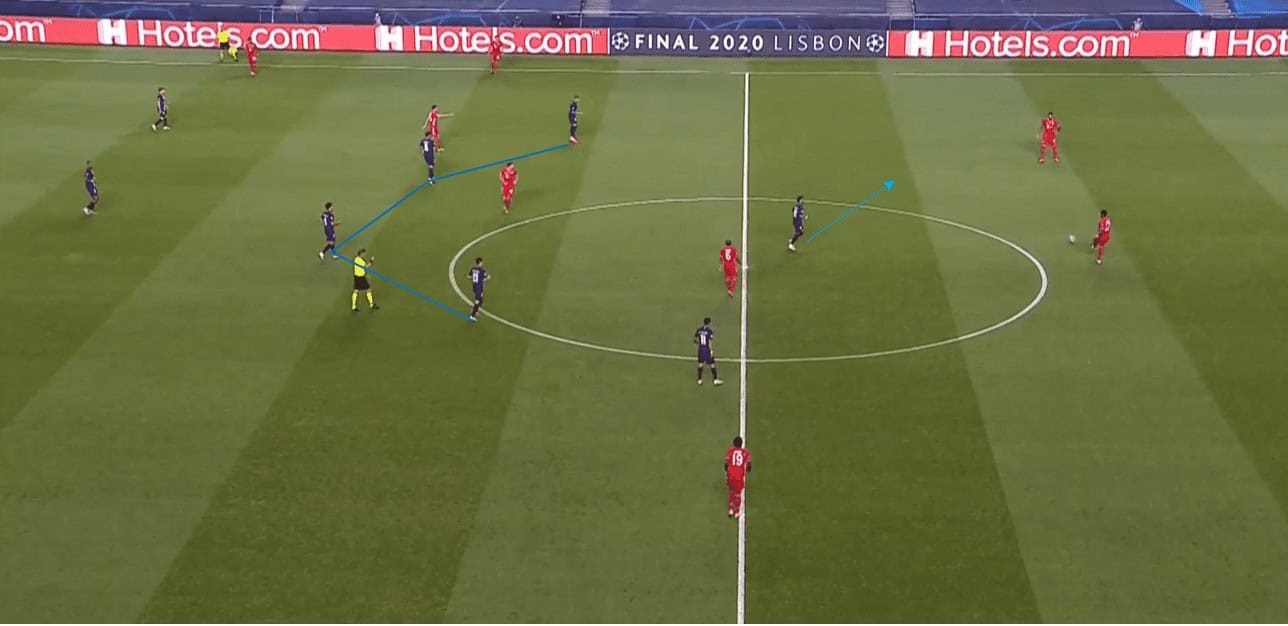
In the second half, presumably to benefit them offensively, PSG’s winger swapped sides, but the players seemed to take their roles with them, which caused some confusion.
Di Maria now pressed the right centre-back, and so PSG were showing Bayern down the left for around ten minutes of play, before at around the hour mark their play started to become slightly less asymmetrical.
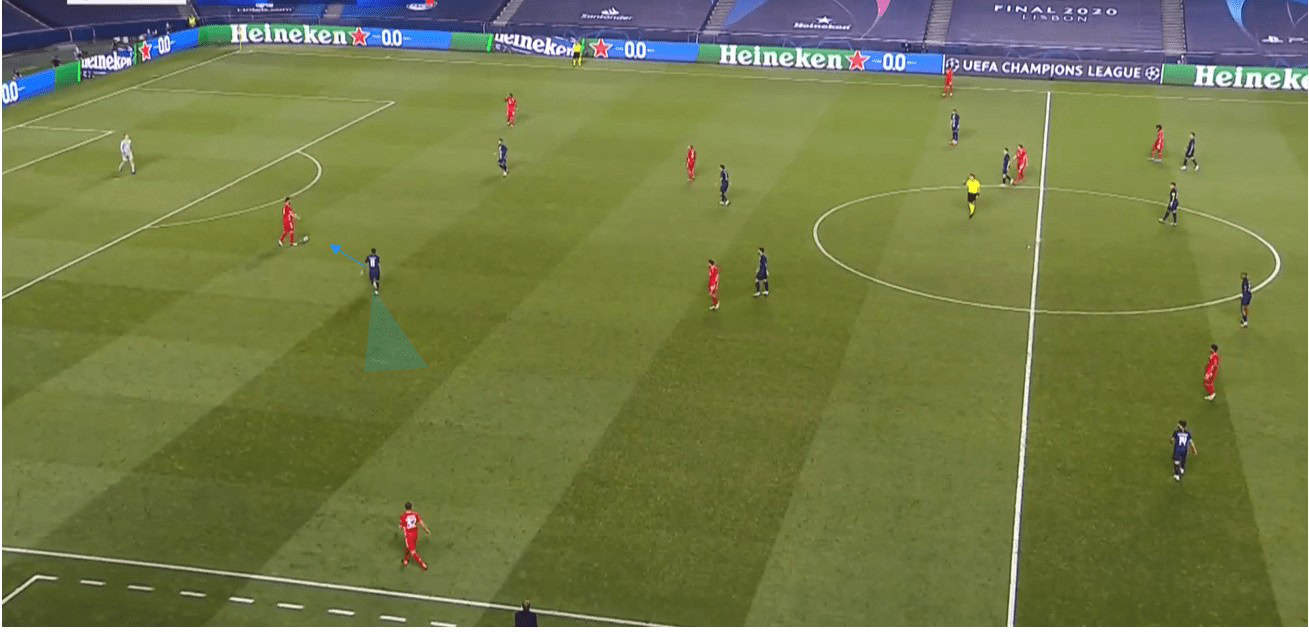
We can see here Mbappé is still sitting deeper while Di Maria pushes forward on the opposite side, with now David Alaba being given plenty of space to receive in.
In contrast, opposite centre-back Niklas Süle has a pressing player in closer proximity.
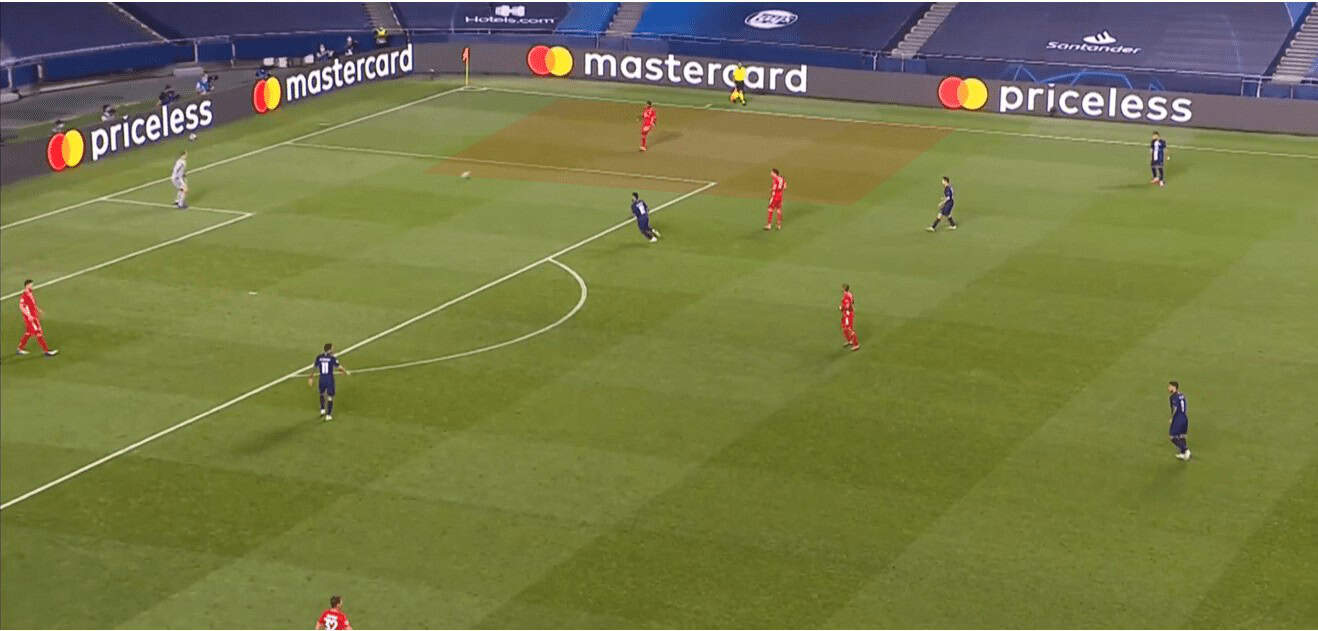
To evidence PSG’s intent to force Bayern down the right for the large part of the game, we can see a density map showing events on either wing, with the right side having around 60 more events than the left.
Although it may be challenging for the data to capture such a subtle tactical trend, this map certainly appears to support the idea.

Bayern Build-Up Against PSG Press
As a nice addition to the trend I mentioned regarding asymmetric pressing, the large majority of the scenes I picked out from Bayern’s build-up happened to be from the right side.
To combat PSG’s pressing, it was clear that the way through was to manipulate the PSG central midfielders.
With PSG playing in a 4-4-2 formation for large parts, it was vital that Bayern utilized their height and depth in possession to disrupt PSG’s midfield and attempt to find clean ways to progress the ball.
One of the common ways Bayern look to manipulate the opposition is by dropping into a back three, and Thiago performed this role often throughout the game.
We can see an example of this being used below, with Thiago the central player of a three against that 4-4-2/4-5-1 of PSG.
This allowed the wide centre-backs to have more freedom when driving forward with the ball, and they could, therefore, dribble to attract pressure at times, as well as engage the second line to press at times.
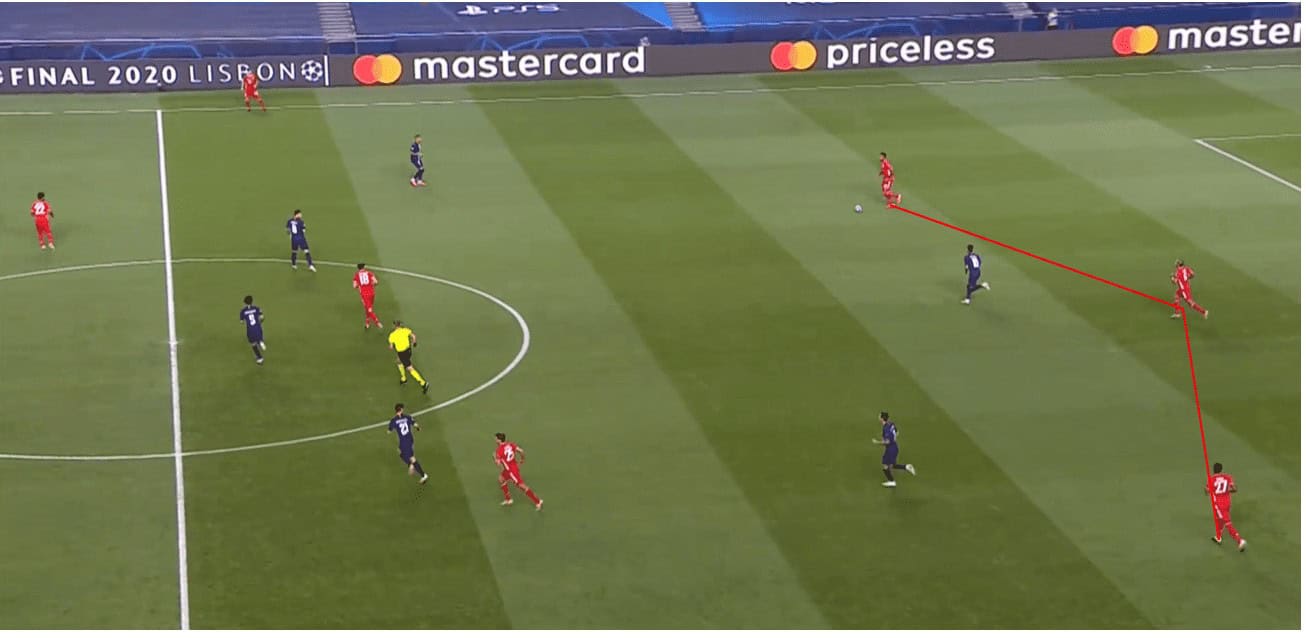
Thiago would also drop in as a single pivot or as a double pivot with Leon Goretzka, and his deep positioning is what caused PSG’s midfield the most problems, despite it being something they likely expected.
We can see a nice example here with a PSG central midfielder dragged towards Thiago to press, which opens up a lane for Gnabry to come inside and receive.
The nearest central midfielder is pinned by the player in front, and so Gnabry can receive and shield the ball from Marquinhos.
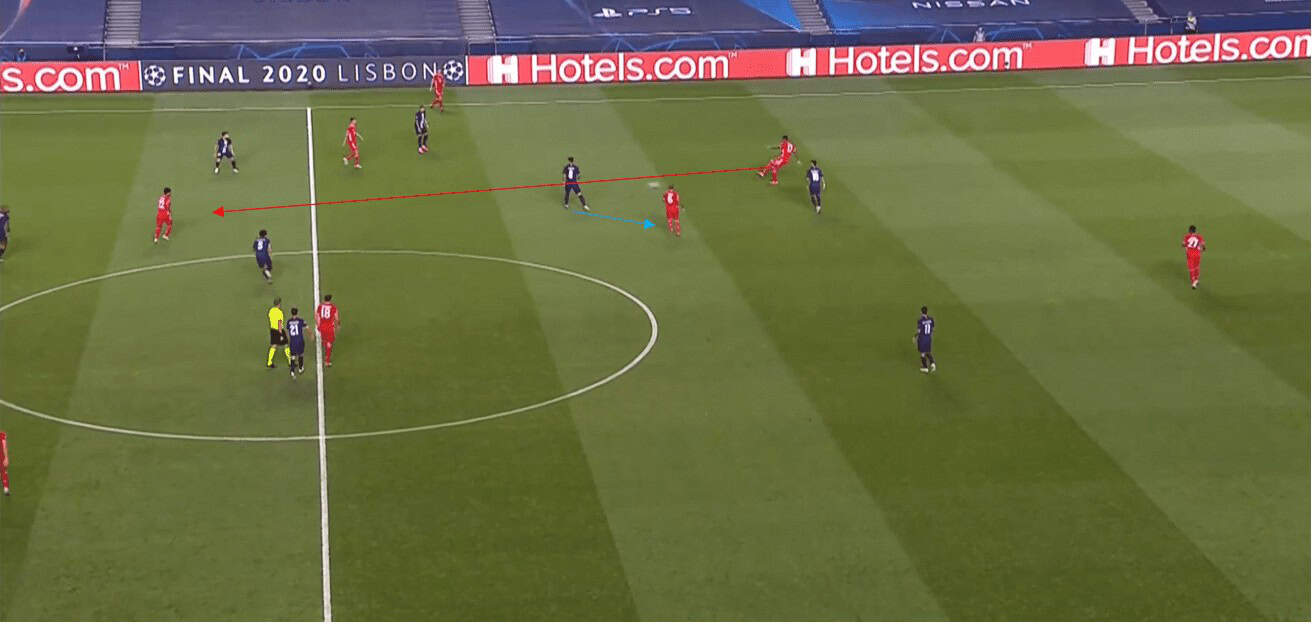
Here, Thiago receives just in front of the first line and is able to shield from the player’s back pressing.
With his body oriented forward, PSG’s midfielder is triggered to press, and this allows Serge Gnabry, positioned behind him, to come off at an angle to receive a pass.
By constantly going deep to receive, Thiago tests the triggers of the PSG pressers, allowing Bayern to manipulate teams at times and providing an easy method of ball circulation.
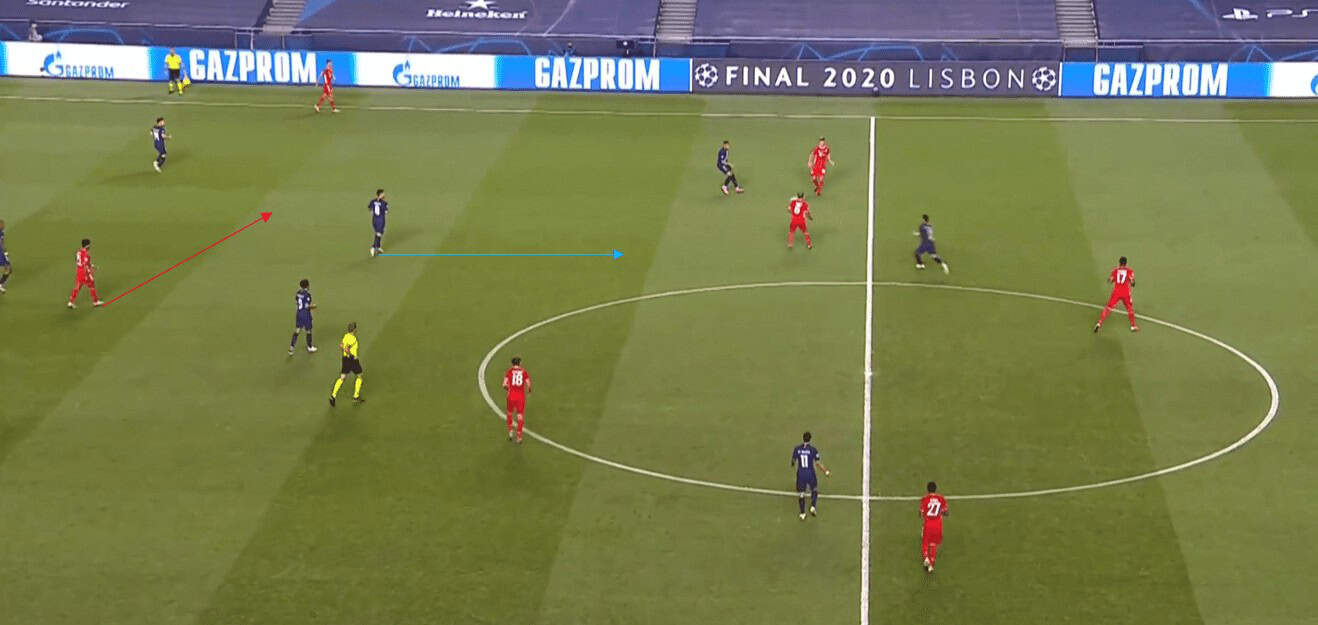
This scene is one I picked out at halftime as being something that Bayern needed to do more.
We see Bayern start in a back four, with a two-plus-one central build-up with Thiago as the pivot.
The pass to Thiago triggers Marquinhos to jump out of the midfield to press.
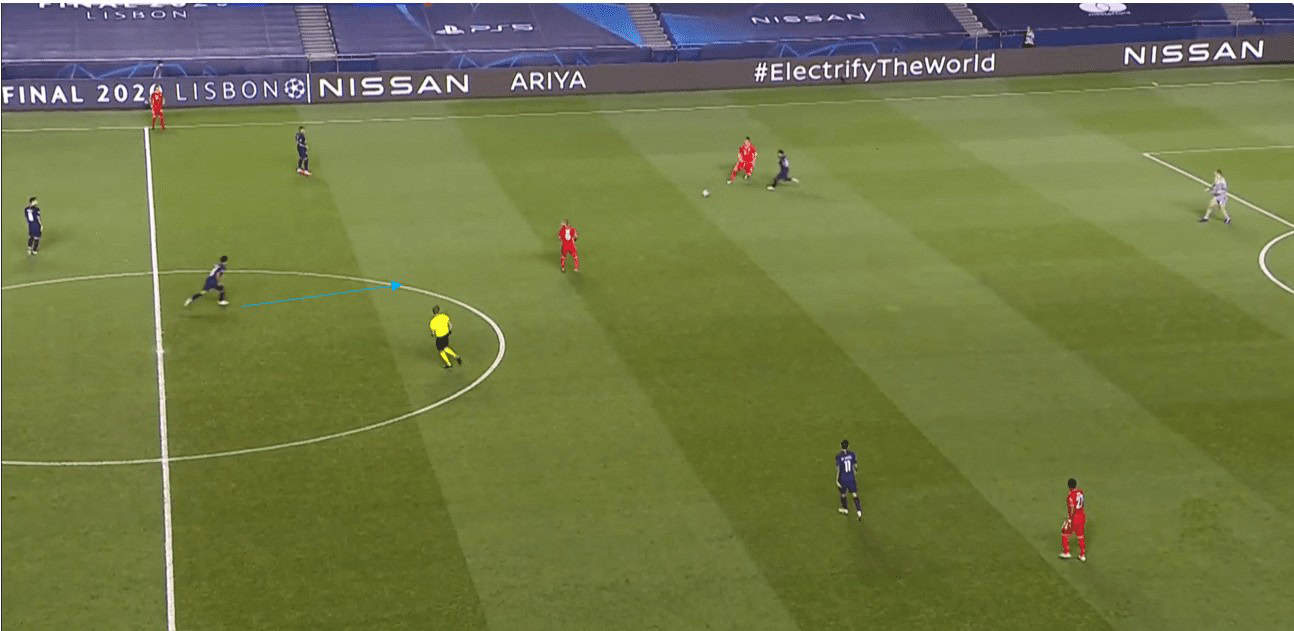
Thiago is able to play the ball backwards and then drops to form the back three.
Because Marquinhos is already in a high position, when the ball comes back to Thiago in the back three, Marquinhos jumps to press.
This means PSG’s central midfield numbers are reduced to two, and Leon Goretzka then drops to assume the role of the single pivot.
Goretzka’s positioning is superb, as he is equidistant between the two PSG players, and so both players make pressing movements towards him.
The right central midfielder presses towards Goretzka, and so Müller drops into the space behind the pressing midfielder.
Goretzka lays the ball off to the centre-back, and Müller can be found with a pass.
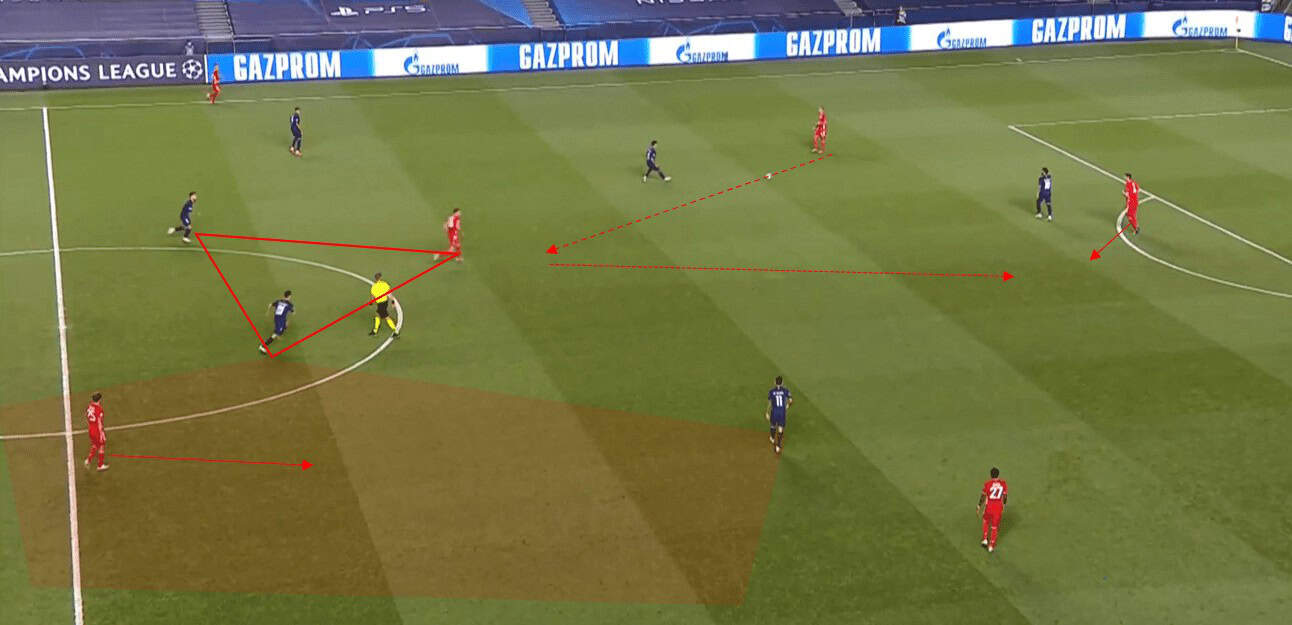
Müller is then in a fantastic position to progress play, as he is now in behind the PSG second line and has runners looking to get in behind the PSG backline.
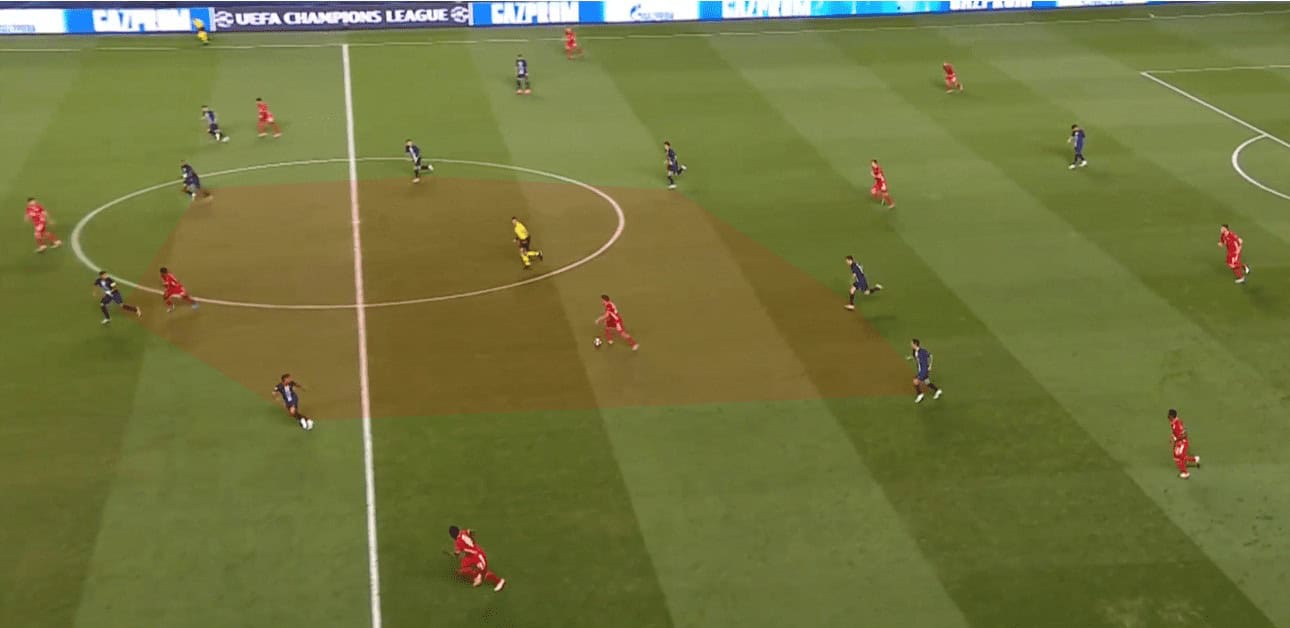
Bayern’s goal came from one of these situations with Thaigo dropping deep, with this being a way for Bayern to bypass that first line and have some time on the ball.
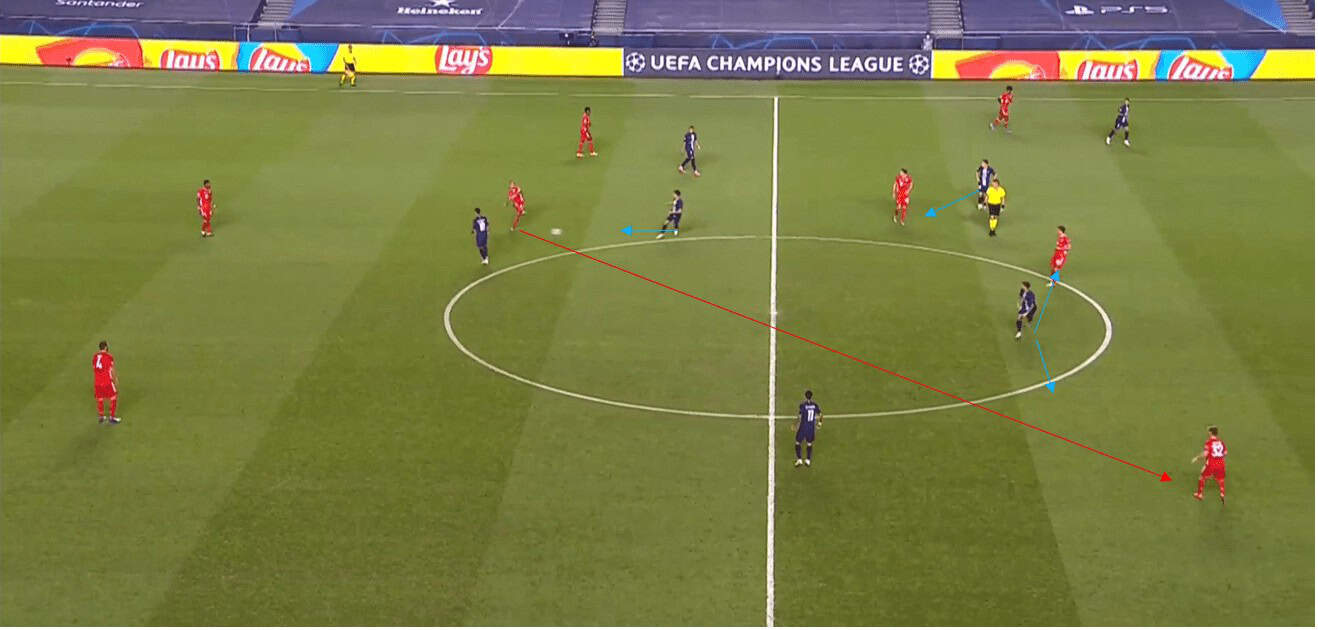
Here, Joshua Kimmich makes a smart move that allows for ball progression.
Bayern place two central players on the PSG central midfielders, which helps to occupy and pin them in place.
Kimmich makes his way inwards from full-back behind the winger and receives in the half-space completely unmarked.
This allows Kimmich to progress the ball for a Gnabry cross, before Kimmich delivers his own cross, which is headed in by Coman.
Bayern Munich Out Of Possession
For all of their possession, one of the most important aspects of Bayern’s performance was their out-of-possession work, which was as effective as it was predictable.
Bayern used their usual 4-2-3-1 press, however as was seen in the Chelsea game, there was less flexibility within the formation, with Bayern usually sticking to that 4-2-3-1.
This 4-2-3-1, as shown below, involves the two wingers pressing the full-backs while protecting the central lanes, while one striker presses the two centre-backs, and the ten presses/marks the pivot.
The Bayern central midfielders then press the PSG central midfielders from behind.
Some flexibility was able to be achieved by Lewandowski and Müller, with the two often swapping the role of the striker situationally and pressing the centre-backs.
We can see Lewandowski here drops and keeps the ball near the pivot in his cover shadow.
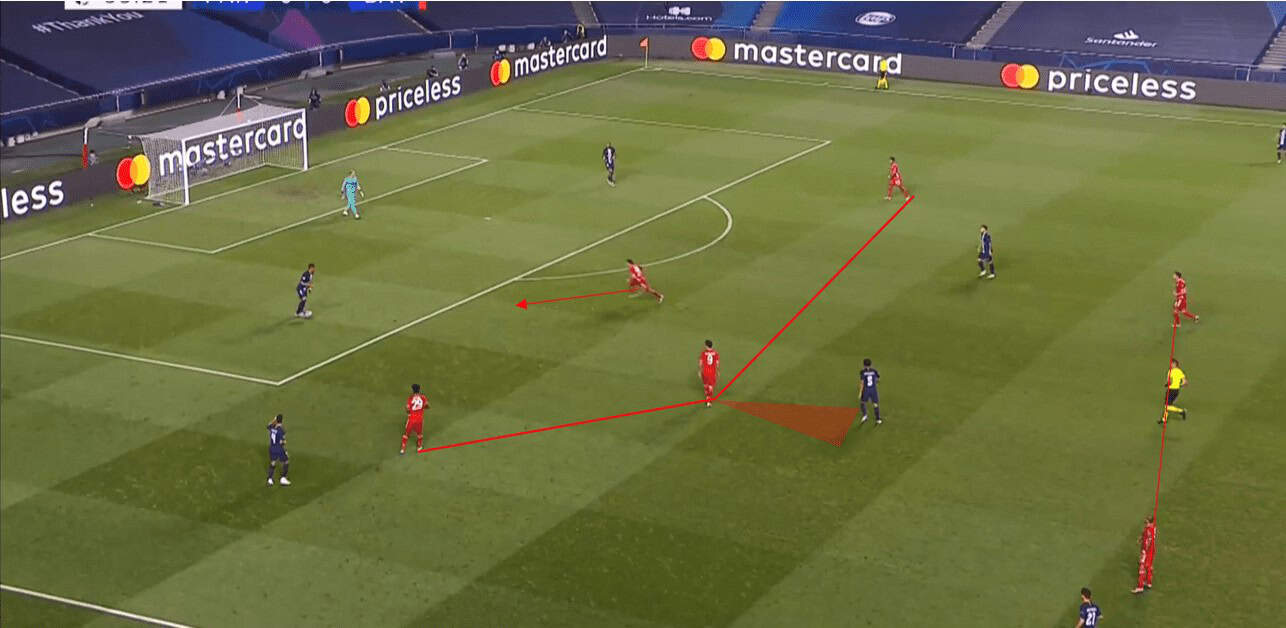
We can see Thiago perform his role excellently here, forcing the ball out of play, with Bayern’s more conservative structure also helping them.
We can see that Gnabry has stayed higher, having pressed the far centre-back, while Müller occupies the number ten role and is able to remain close to the pivot.
In previous games using this 4-2-3-1 formation, Müller would press higher and move into a 4-4-2; however, when facing PSG in possession, with a 4-3-3 shape, Hansi Flick clearly wanted increased numbers to prevent overloads being created.
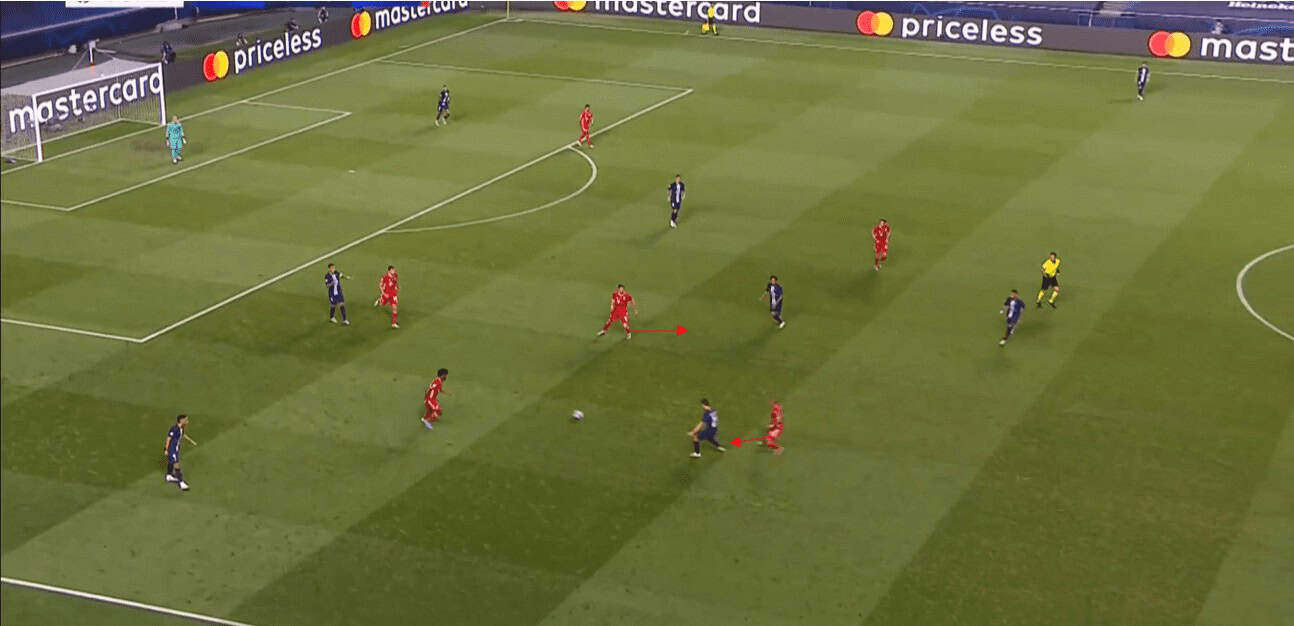
For PSG, the highest reward method of progression seemed to be through the use of a double pivot, but due to the way they were set up out of possession, they probably didn’t allow themselves enough opportunities to execute it consistently.
We can see in this situation the usual pressing structure, but this time a double pivot is implemented.
Due to the depth of the play, Bayern’s central midfielders were not keen on pressing that high, and the far winger was not always aware of this pass, so it could be found at times.
Here, the centre-back is unable to spot the pass, and PSG clear the ball long.
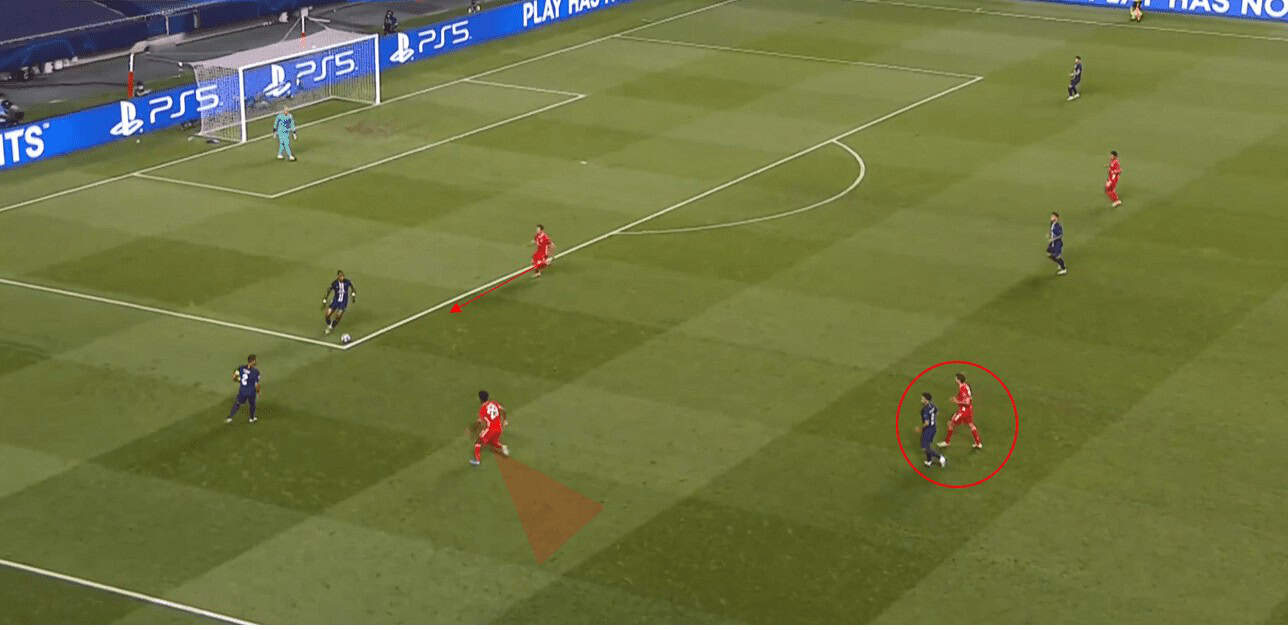
Here, though, in a similar situation, PSG did do a good job, with Bayern pressing ten, occupying one pivot while another is left free.
Goretzka is too deep to press, and so this player can receive and look to exploit Bayern in behind.
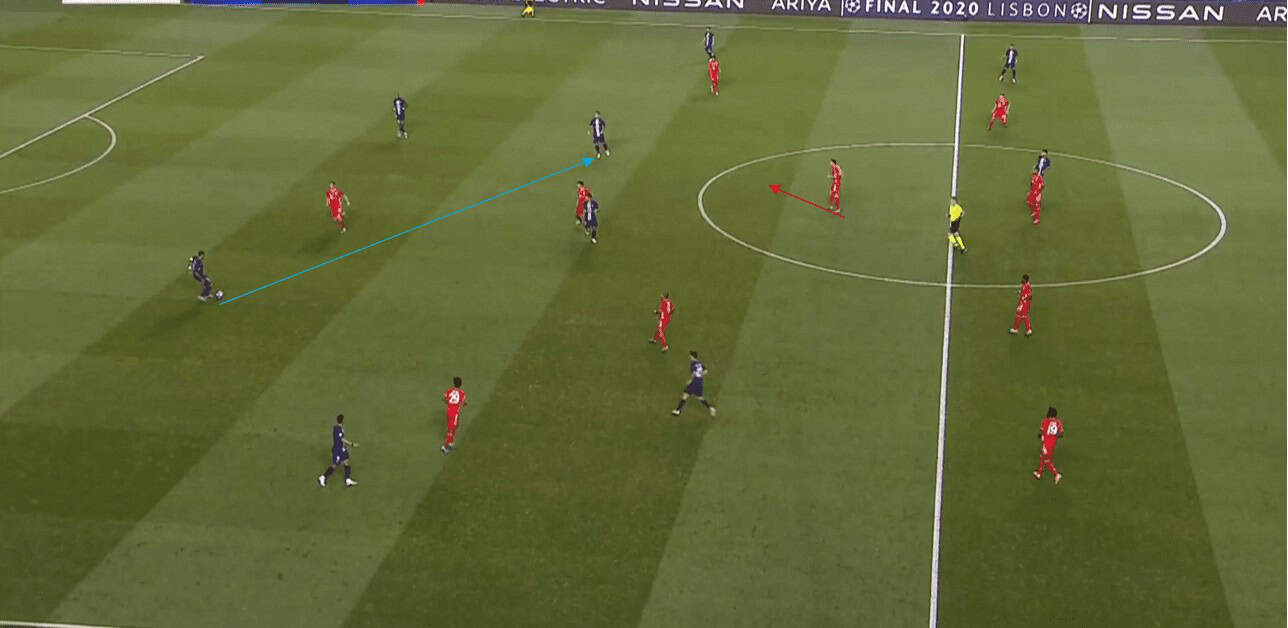
This was also a major talking point before the game, and Bayern’s high line largely helped them nullify the counter-attacks of PSG.
Although many view high lines as risky and foolish against teams looking to get in behind with pace, if done correctly, the high line can be used to stop teams getting in behind and can be used to slow attackers down.
We can see an example of the high line here, with PSG looking to counter.
Bayern hold their line very well while PSG maybe don’t do a good enough job of releasing the ball, but having such a high line means the movements in behind have to be timed, and if they are not players have to backtrack and slow themselves down, which in turn slows the attack down.
Bayern’s initial positioning, followed by the body positioning afterwards, was excellent throughout the game.
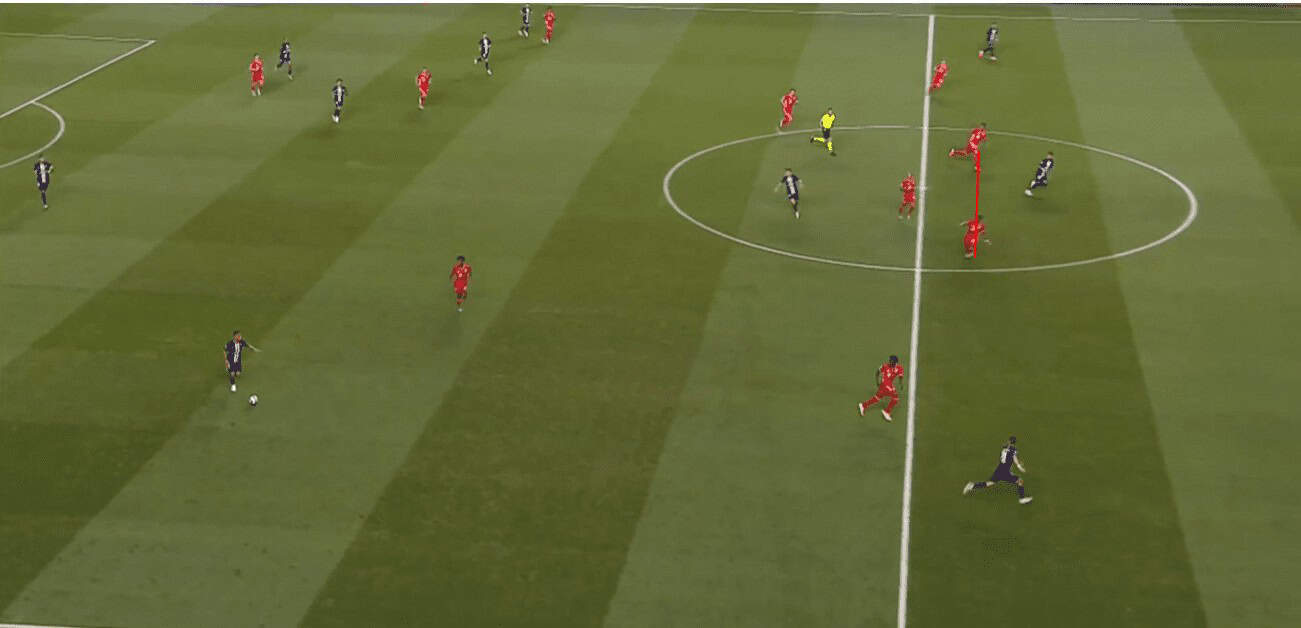
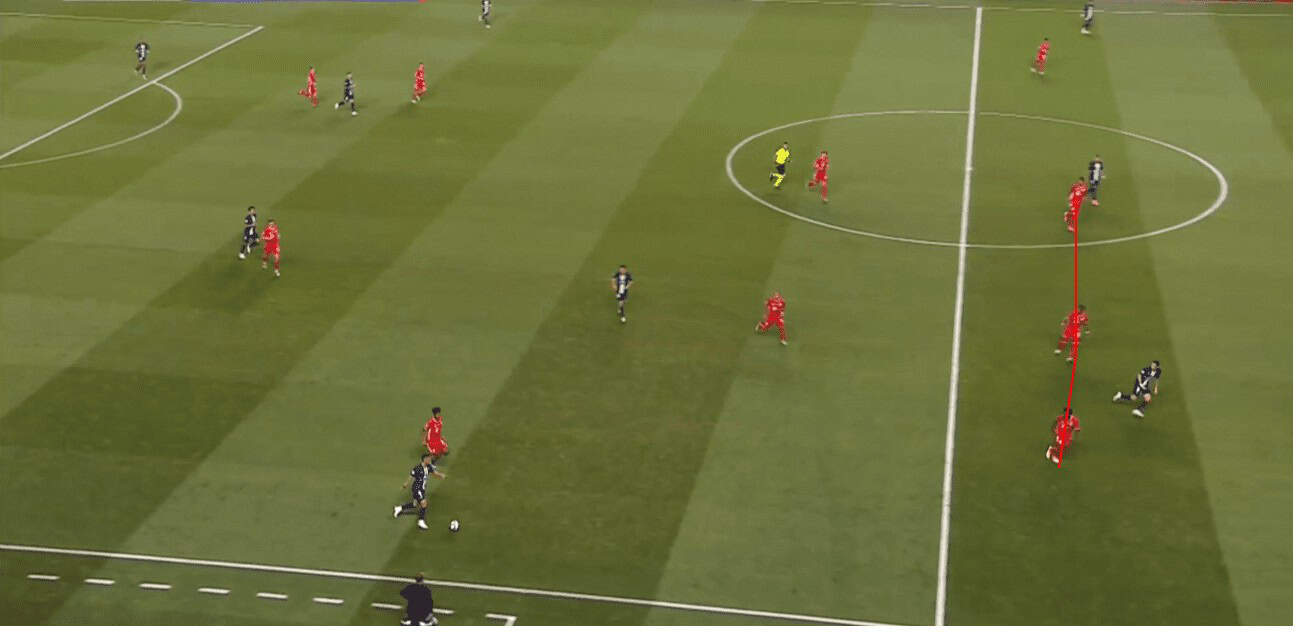
We can see again here the body positioning of that back line is superb, with every player contributing to the depth of the offside line as little as possible, all standing side on with their feet close together.
Players don’t take big steps or lean, and so it is rare that teams are ever able to get past it effectively.
This allows them to strangle the space PSG look to attack in completely, and the ball carrier now has no real options.
On top of this, Bayern’s counter-pressing and rest defence was generally good, with their central midfielders playing a large role in closing distances during counter-pressing moments.
We can see a good example here where Herrera initially scans behind himself and sees Thiago Alcântara at a distance, before then scanning over his other shoulder and receiving.
Thiago is able to speed up his run and make up the ground on Herrera, and so when Thiago receives, he can catch him in a blindside press.
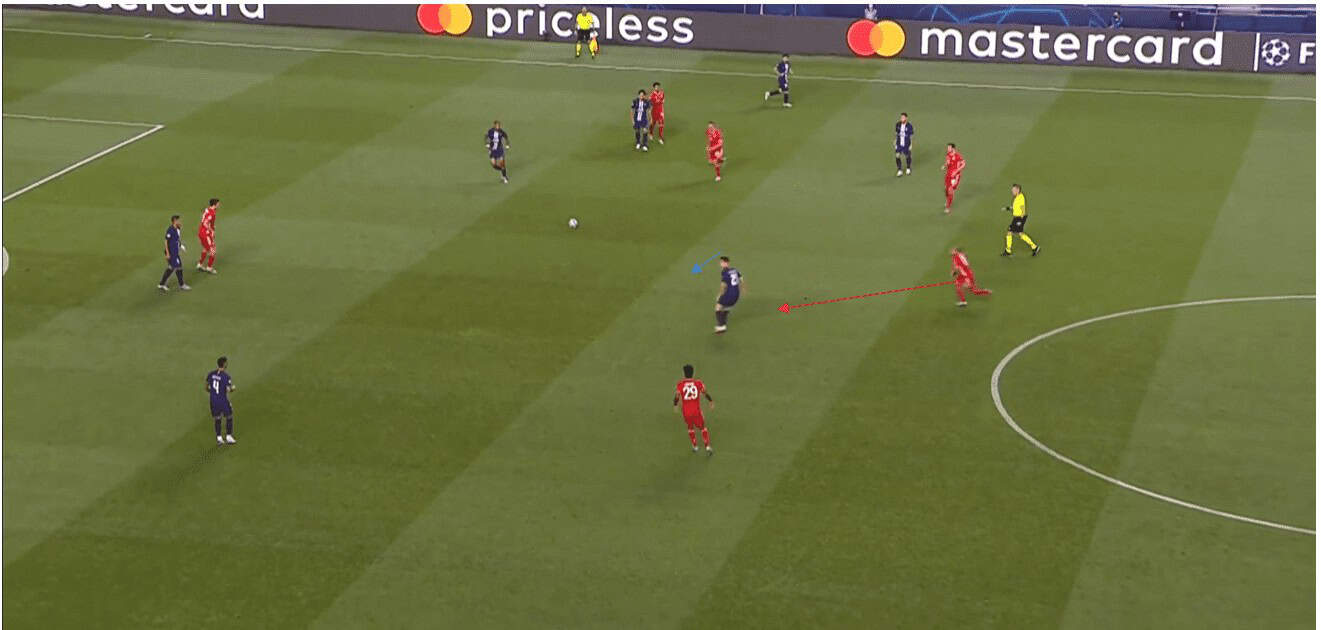
Bayern’s counter-pressing usually relied on at least one player pressuring the ball, while nearby options were marked in a man-oriented way.
We can see an example of this here with Thiago moving to make up a large distance to press a nearby PSG player.
Leon Goretzka covers a nearby player just behind.
In contrast, the closest player applies pressure directly on the ball carrier.
Thiago is able to get close enough and slow down well, meaning he can tackle his player and sustain the attack for Bayern.
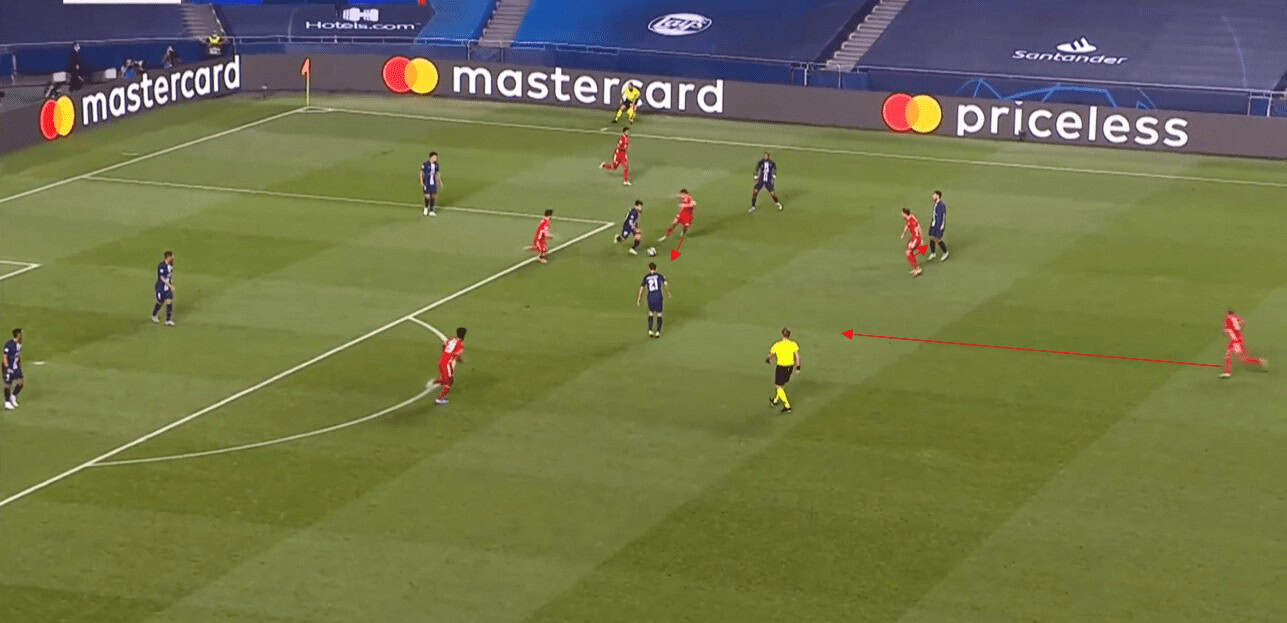
On the other side of that, PSG’s rest offense usually revolved around transitioning into that 4-3-3- from a 4-5-1, and so the positioning of Di Maria out of possession in the first half enabled some counter-attacks to be launched.
Conclusion
It was a fairly even contest with both sides creating some chances in the game, but PSG’s failure to take advantage of those chances early on was their downfall.
It probably wasn’t Bayern’s best game offensively, but in finals that is rarely ever the case for any team, and Bayern did a good job of controlling the game for the most part, and their out of possession work combined with their usual build-up principles are what ultimately won the game.
PSG also deserves credit for their tactics, which I thought were largely effective out of possession, as this analysis has hopefully shown.
As for the 2020 Champions League winners, they have been a pleasure to watch and analyse for the website this season, and I look forward to seeing how Hansi Flick develops the side in the coming years.
