
When Mikel Arteta left Manchester City to join Arsenal, many fans were excited to see how he would implement positional play and this Guardiola style of football at Arsenal. Taking over mid-season though, it was always to be expected that Arsenal would have to adapt initially, and coaching this style of football obviously takes time. Eight months on, Arsenal and Arteta have showcased that adaptability well, not always relying on possession to win games and being tactically astute defensively (sometimes), picking up good results against Manchester City, Liverpool and other teams high in the table. The poorest results of late have actually been those games where they have had the vast majority of possession, but have been unable to break down the opposition using positional play. With Arteta finding stability in some areas and starting to build his principles into this Arsenal team, over the summer it seems like this positional play will be a heavy focus.
This tactical analysis will review the positional play and rest defence used by Arsenal in three games: Aston Villa (a), Tottenham (a), and Wolves (a), and will also look at the key principles Arteta will look to build. Arteta has built the foundations already and seems to have settled into a preferred 3-4-3 shape, but these games best showcase the improvements needed in certain aspects of Arsenal’s in possession play.
General structure
Below we can see a simplistic view of Arsenal’s setup in a 3-4-3 against a 4-4-2 mid-block. Wide centre-backs stay deep in the half-space or will move slightly wider if needed. Ideally, the right inside forward will be positioned vertically from this wide centre-back as seen below, also in the half-space. The right wing-back will stay wide and look to pin the opposition winger in a wide area, while the central midfielders remain central and should look to make angles to receive the ball from a wide centre back. As a result, the opposition’s second line is pinned centrally and wide, opening the channel for the half-space. Movements from players around here, as well as overloads, should then be used to take advantage of the value of this part of the pitch.
Various rotations around this structure have occured, with the most common seeing one of the central midfielders dropping in as a wide centre back in the half-space, freeing a wide centre -back to push higher. All of these will be covered in the course of the analysis.

Role of the central midfielders
The first aspect of Arsenal’s positional play that we will discuss is their central midfielders, and more specifically how the poor positioning of them is impacting their positional play often.
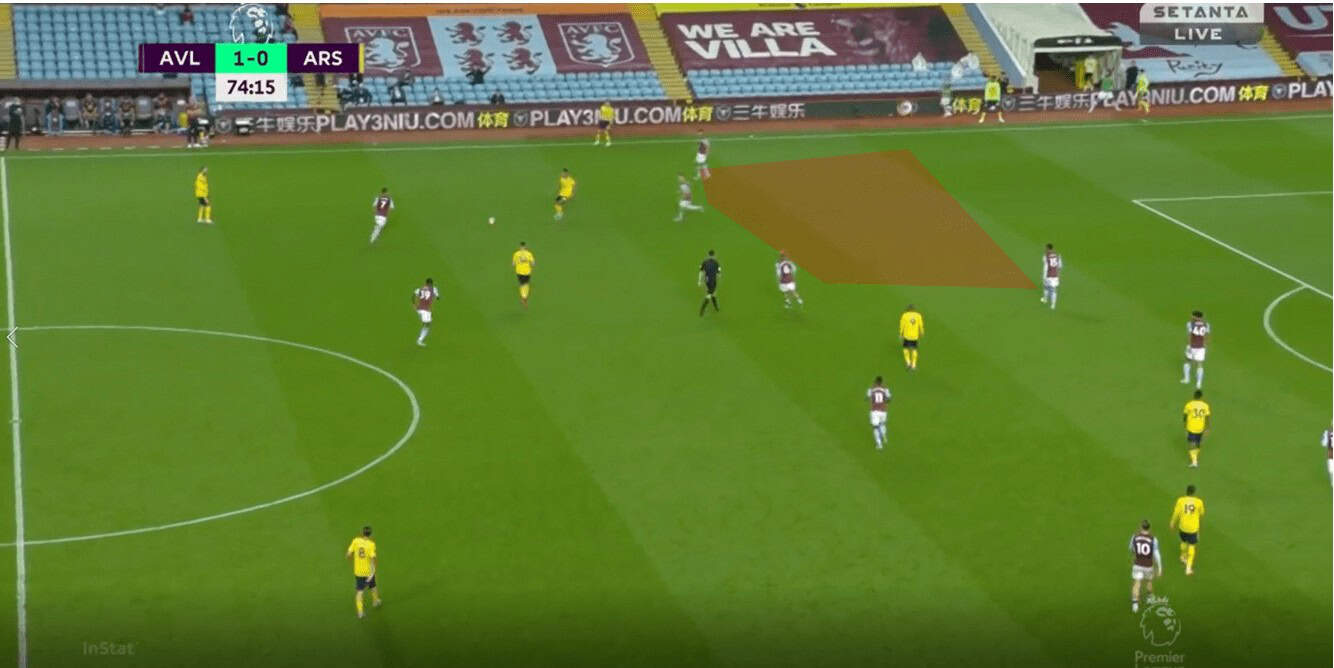
Positional play is all about overloads, superiority, and decisional problems (crises) for the opposition. Central midfielders play a large role in this, and in Arsenal’s 3-4-3 Dani Ceballos and Lucas Torreira have both struggled to create angles to receive the ball, and to recognise situations where they can help create overloads. Here we can see a good example of the effect a central midfielder can have, with this scene from the Aston Villa match.
The opposition press with their front two fairly high, while the midfield is pinned back by Arsenal’s forward line. This creates space between the opposition’s first and second lines, sometimes called the pivot space. We see the pivot is currently just behind one of the pressing forwards, while a central midfielder has dropped into the left centre-back. The pivot has to create an angle here to receive, and also has to time the movement so he can receive without allowing the opposition to anticipate and press him. If he does this, it creates multiple decisional problems for the opposition as each player in the second line has to shuffle to protect the spaces between themselves, which then opens up wider spaces. The central positioning of the pivot also allows him a greater range of passing.

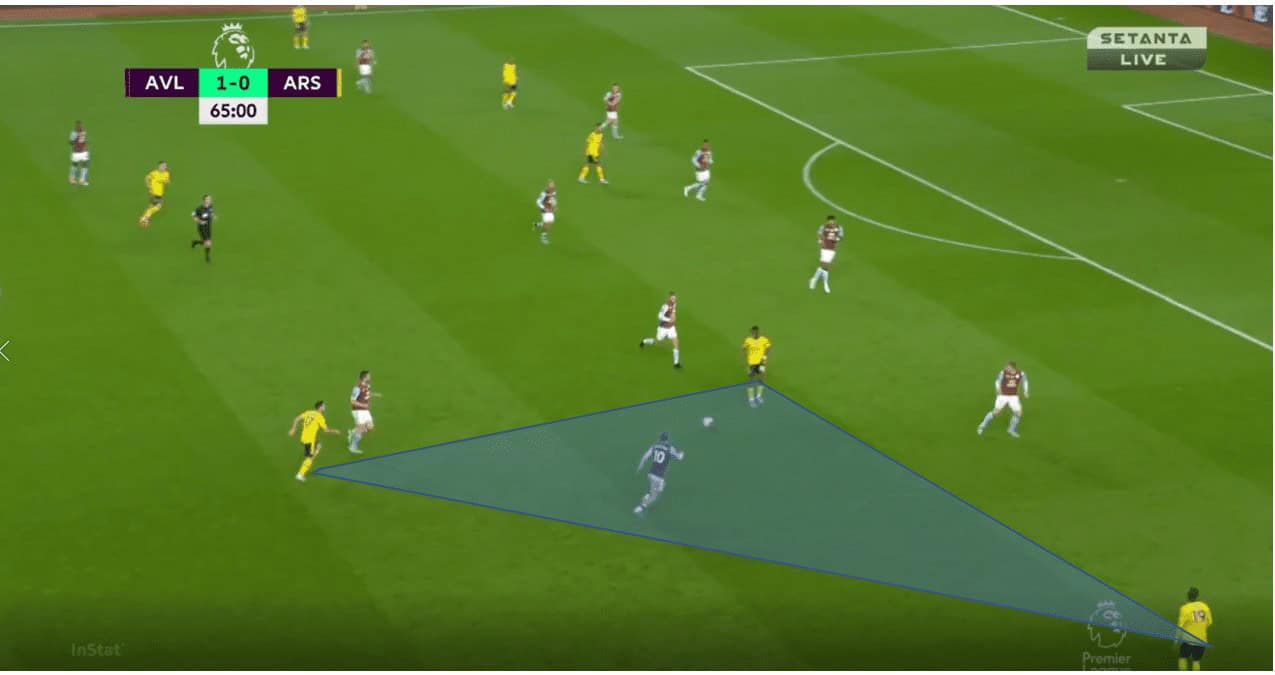
We can see this scene in-game here, with the pivot space highlighted. There is enough space between Torreira and the Aston Villa central midfielders to allow him time to receive, but he just refuses to move forward just a few yards to wipe out Villa’s first line. We can see how vertically compact Villa are here too, and so if Torreira receives on the halfway line and has time for two touches, he is around 20 yards from the Villa defensive line, opening up a chance for a ball in behind.
No movement occurs, and so Arsenal recycle possession on the opposite side.

If you can occupy one central midfielder using a deeper inside forward in the half-space, then a movement by the pivot towards the far central midfielder can be very effective in creating diagonal passes. We can see an example here where again Torreira just doesn’t show for the ball. He’s stood slightly too close to the ball carrier and to the nearby Aston Villa midfielder, and if he simply opens his body up and moves back to the edge of the centre circle, then Aston Villa have a new problem. We can see the far Villa central midfielder John McGinn is occupied by Ceballos and is higher, creating that diagonal passing lane.

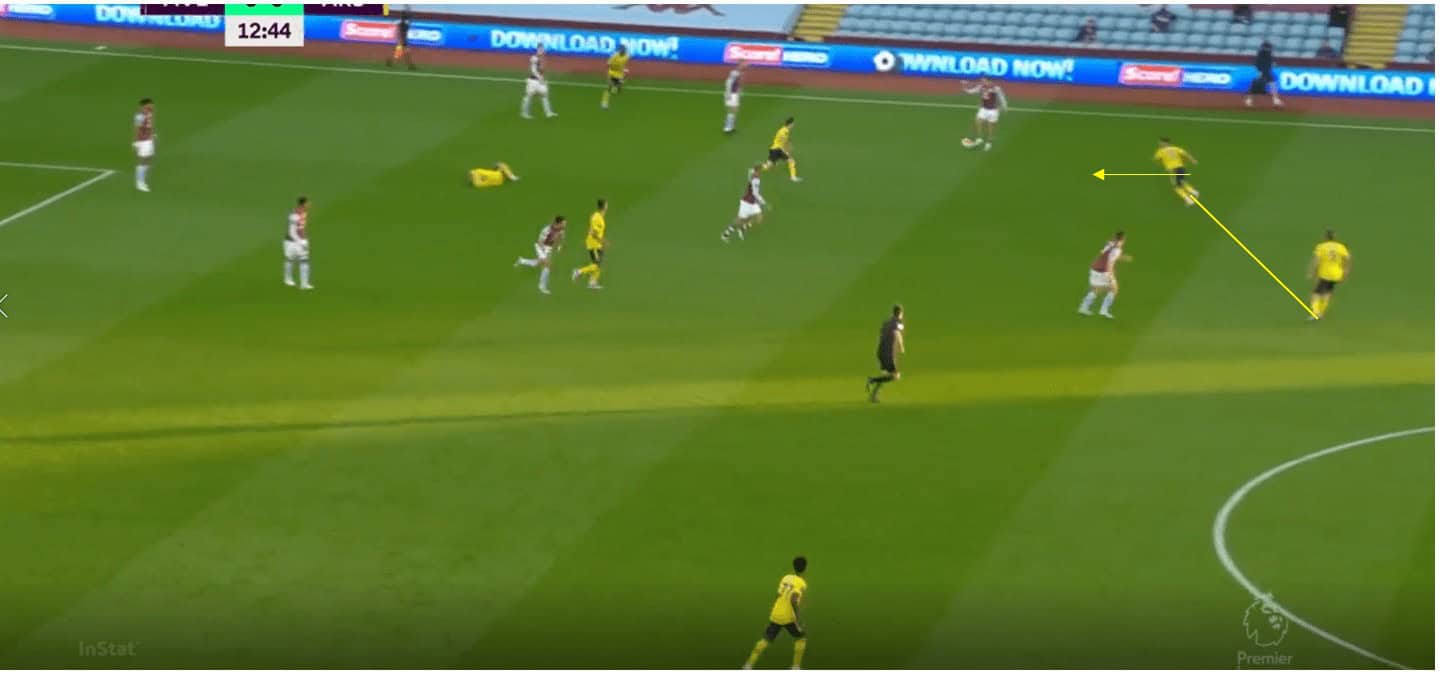
A very similar example from the same game here, where again Torreira doesn’t show for the ball. If Torreira times this movement so that he arrives onto the ball, he has time to receive and find that diagonal pass to Saka who has done an excellent job in occupying this space, as he also is looking to arrive into it. Arsenal’s structure is off slightly here too, and movement from other players isn’t good either. We see the half-space occupier isn’t vertical from the wide centre-back, and so can’t receive. There is an opportunity for the wing-back to make a run in behind the Villa full-back, but because the half-space player isn’t vertical, he doesn’t do a good job of occupying this player and creating a decisional problem, meaning the Villa full-back can potentially just drop back.

When Torreira does receive the ball in these areas, they progress the ball and can find this diagonal pass against Villa, as a result of the staggering of Villa’s midfield. Because it is a diagonal pass, Aubameyang can then receive and play forward immediately.

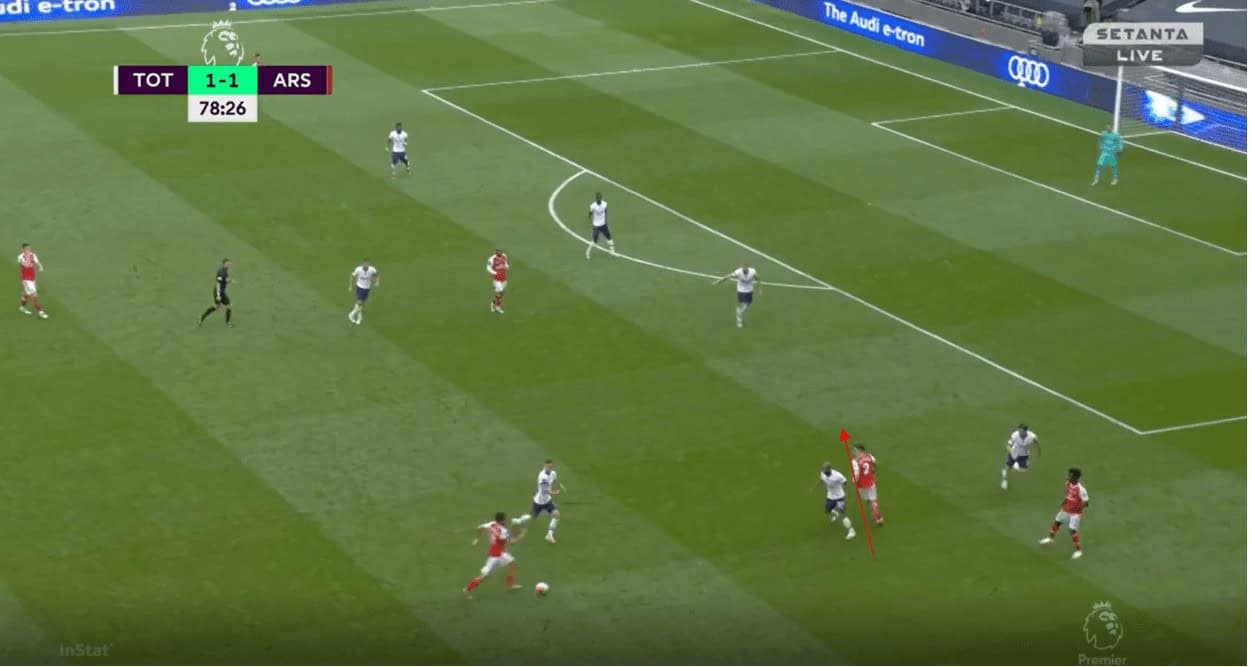
In the first goal conceded against Tottenham, Ceballos can’t get out of the cover shadow of Harry Kane to offer an angle for a pass. Due to Spurs’ setup and Arsenal’s positioning (which we’ll discuss), Kolašinac also doesn’t want to play directly into the half-space, and so as such plays a poor ball backwards which is pounced on by Heung-Min Son.

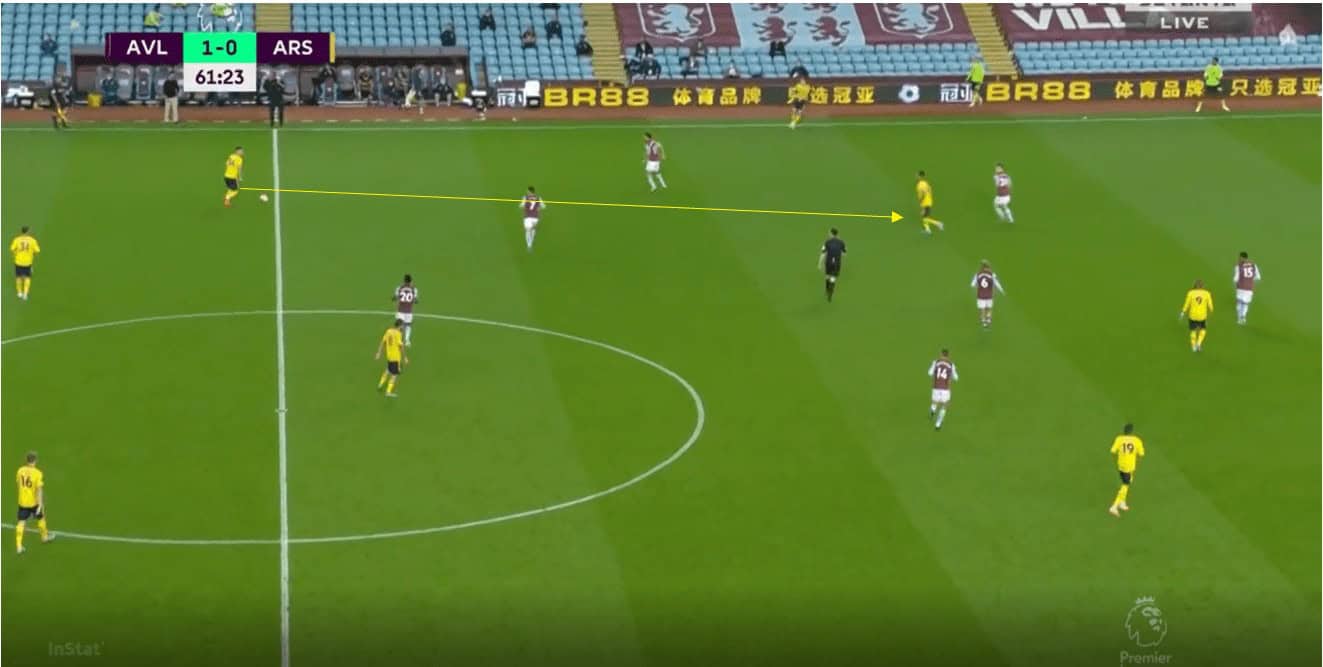
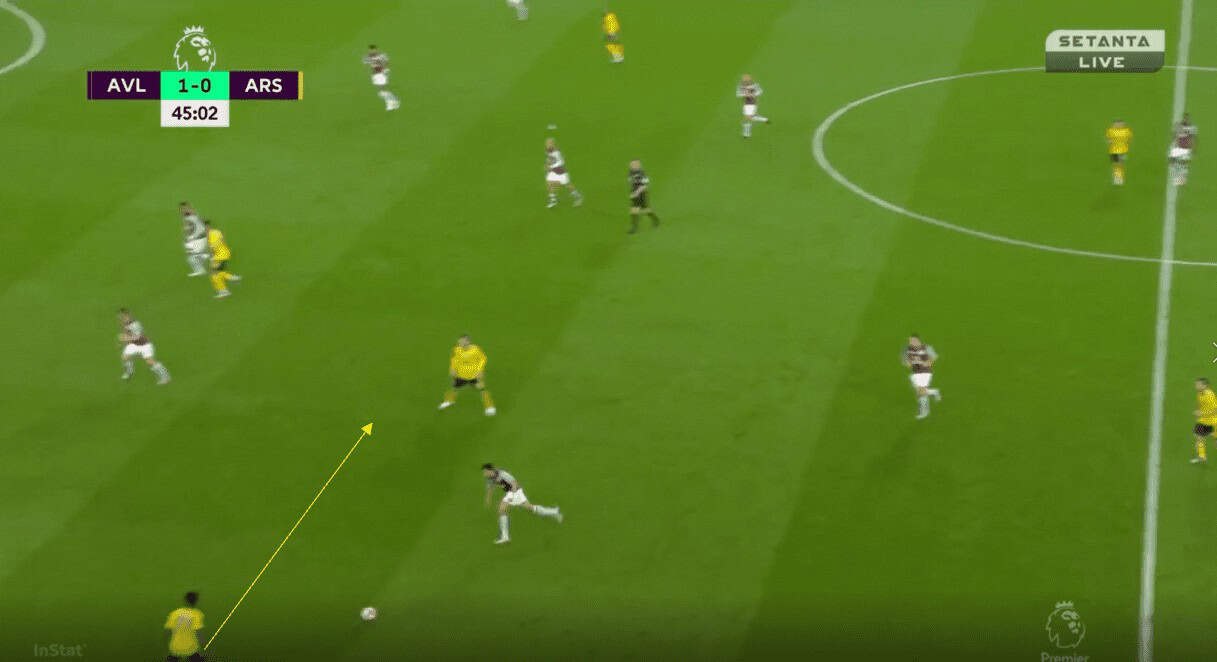
This final example shows again the central midfielder not offering a passing angle, despite that pivot space being plenty large enough to receive in. The Wolves game also showcased this again, and throughout the three games I picked out over fifteen scenes where this was a problem and prevented them from progressing the ball.

Movements around the half-space and the key principles of positional play
Below is a diagram of Arsenal’s structure and the basic general principles that I work from when analysing/coaching positional play. Depth is needed to build the attack and to also cover the attack in case the ball is lost. Width is needed to create space in the half-space or central areas, and the benefits in terms of passing angles, vision and body orientation mean that half-space occupation is also prioritised. Height is also needed, as teams can play in the half-space all day but they need to keep height up the pitch in order to create space in front but to also penetrate in behind. Height could also be replaced by central occupation, and overloads or free men in the half-space can also be added.
This is important to bear in mind while going through examples of movements (or lack of) in Arsenal’s positional play.

At the beginning of positional attacks, Arsenal’s structure is generally pretty good, and they tend to tick those four boxes initially. Once movements occur, Arsenal will begin to lack in one or more of these areas, and it prevents them from advancing. We see here the wing-back provides width, the nearby central midfielder and centre back provide depth to the attack, while Aubameyang occupies the half-space. The problem here then is height. Aubameyang has dropped deeper in the half-space to receive, drawing out his marker to press. A complimentary movement should then be made by an Arsenal forward so that Aubameyang occupies the deep half-space, and say Lacazette runs into the now unoccupied higher half-space.
Aubameyang could even fulfil both roles in one, receiving deep and then spinning and sprinting into that space.
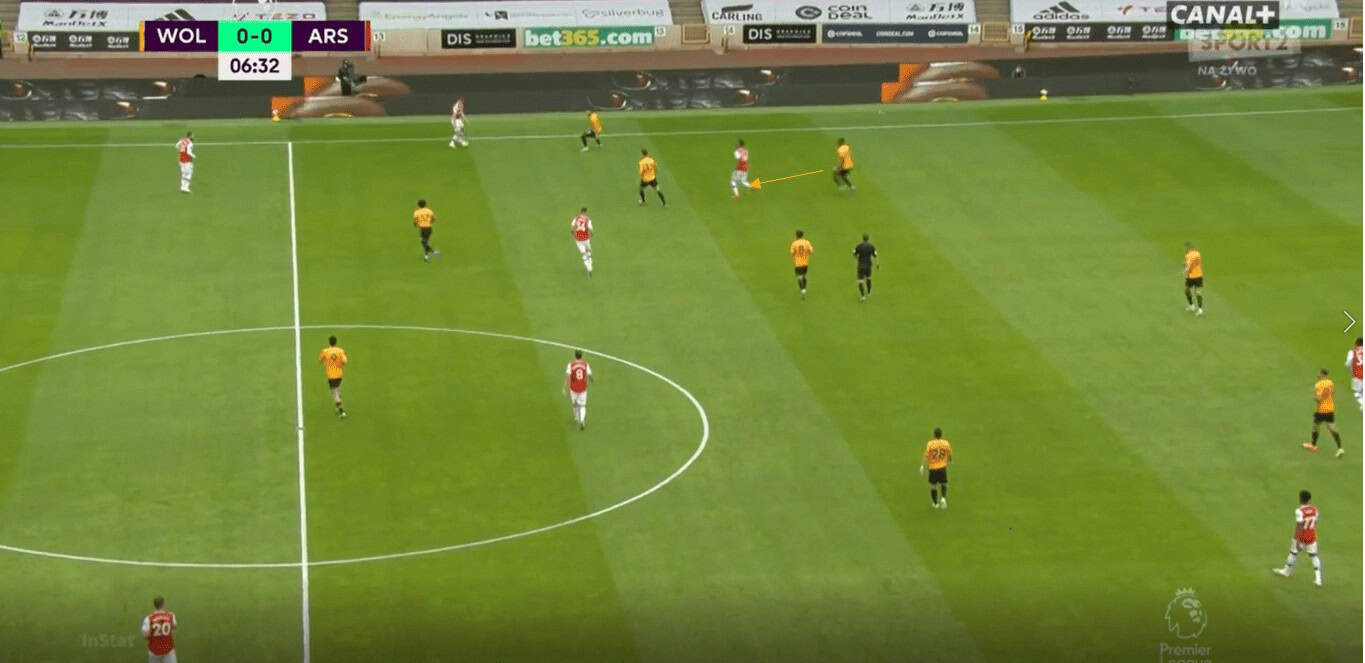
Oppositely, if the height is suddenly provided, depth is also needed, as is the case here in the half-space, where the Arsenal front three are too far apart in my opinion. We see the wing-back receives and Aubameyang comes deep and then looks to get in behind, which therefore opens up the deeper space. Lacazette though is too far away and not alive to the situation, and so the wing-back has to dribble out of danger and switch play.
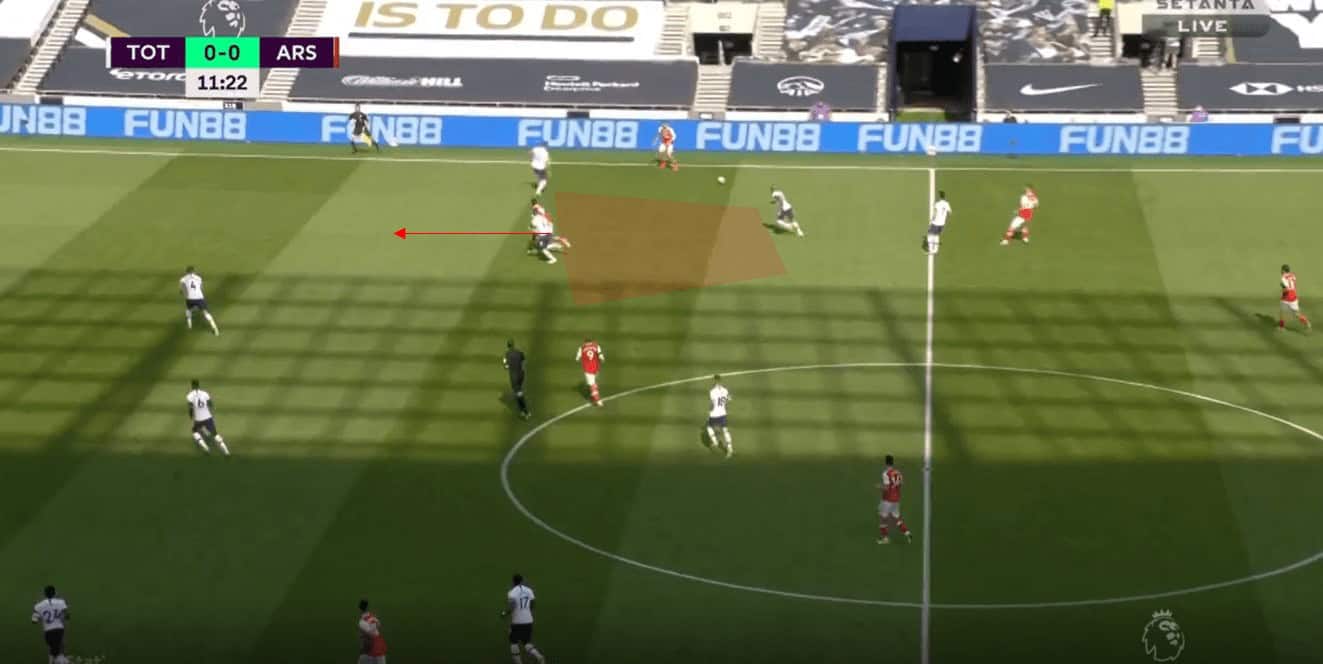
This example again from the Wolves game highlights that lack of height and cohesion in the movements of Arsenal’s front three, with the trio so far apart the central striker is nearly off-screen. Width, depth and occupation of the half-space are provided, but no height means the attack can simply be squeezed.
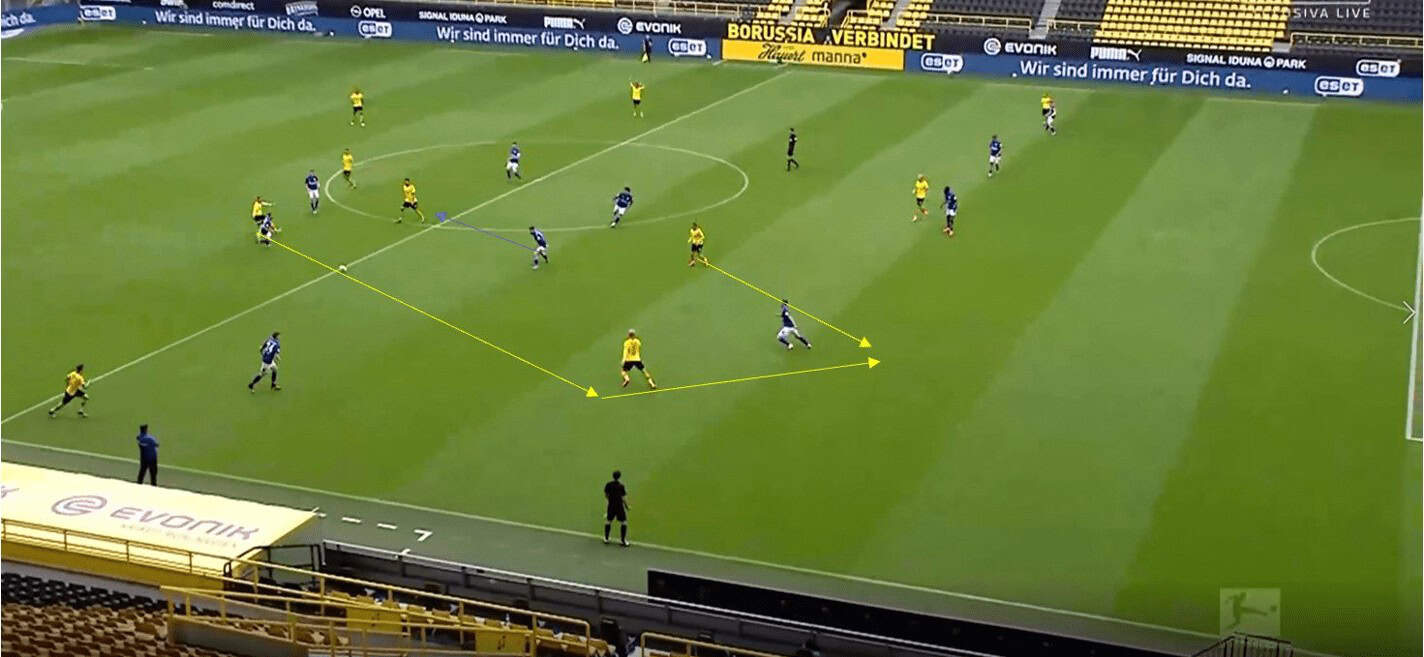
If we look at another team who has used a positional play 3-4-3 this season, Borussia Dortmund, we can see the differences in the cohesion between the front three. We can see we still have the occupation of the half-space, as well as an overload or +1 to provide height, depth by the wing-back, and Haaland maintaining some central occupation. The ball is played from wide centre back into Brandt in the half-space, and the Schalke centre back moves to press, meaning Thorgan Hazard makes a movement behind him. Hazard receives in behind and crosses for Haaland to score.
Here those same principles open up the half-space for Aubameyang to receive, but Spurs aren’t too concerned about him receiving here.
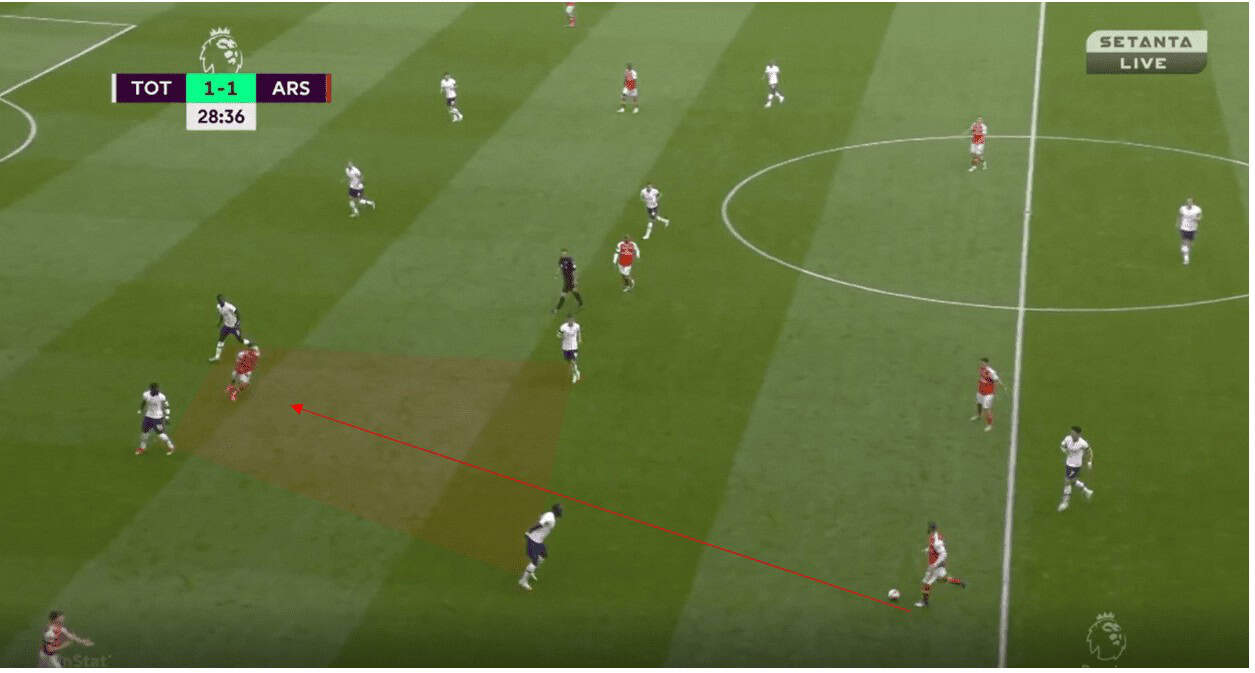
Aubameyang receives at a terrible angle, and his nearby partner Lacazette offers little to no support in any way. Situations like this require overloads of the half-space or central occupation, and Lacazette provides neither. There are a number of ways the half-space can be overloaded, and the simplest here could be just to occupy the central zone and receive a sideways pass from Aubameyang, but the angle that the ball is received at makes this impossible. Arsenal have some decent ideas every now and again, but they struggle more often than not in these areas.
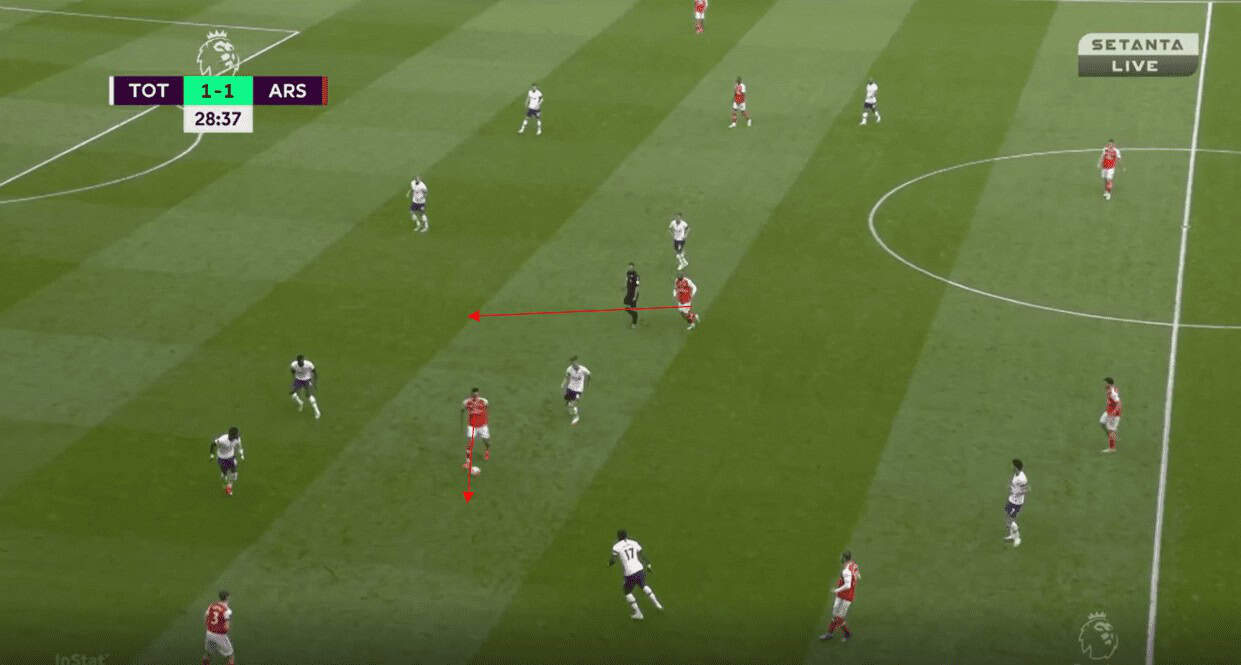
Here’s one nice example where dynamic space occupation is used to overload the half-space. The Bayern player starts from a deeper position and the ball is played vertically into the half-space, and so that depth then becomes an option further forward. Because he is arriving into the space by running forward, he is harder to mark and also has better body orientation to then make the next pass.
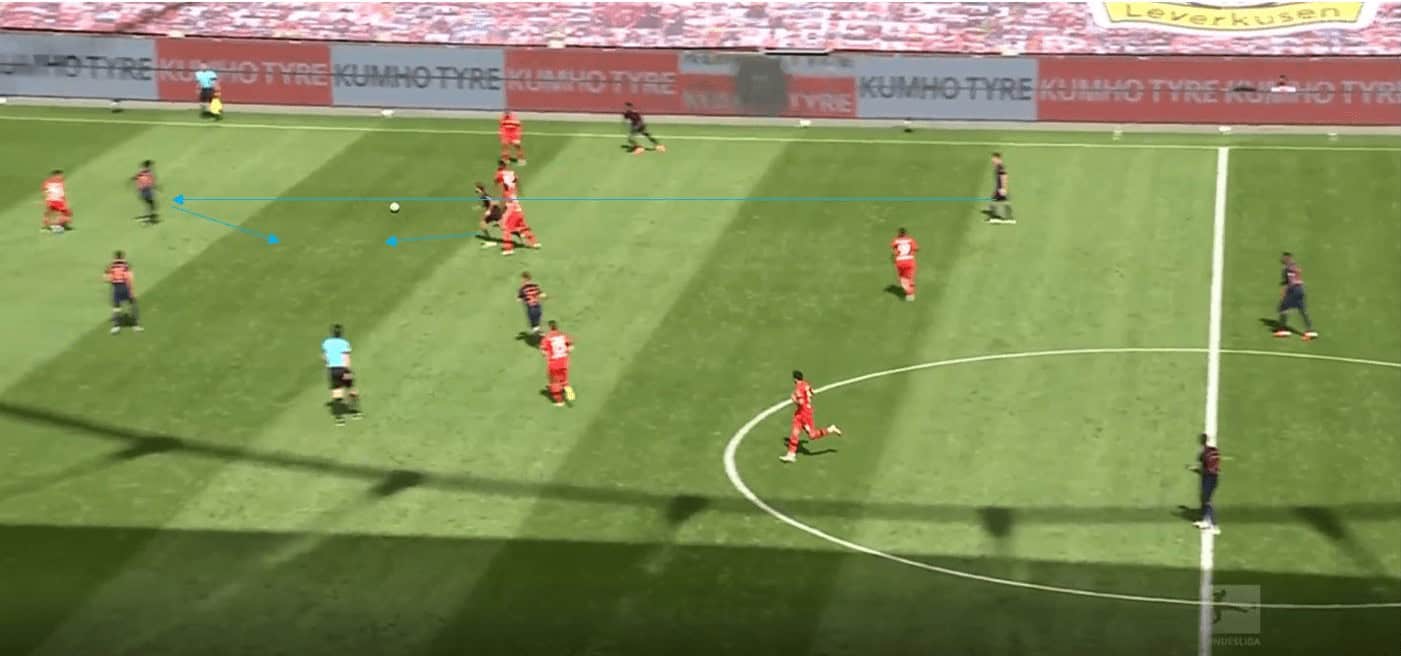
Arsenal have tried movements like this before, but they haven’t perfected recognising these moments and then utilising them with well-timed movements. We see Eddie Nketiah here moves deeper and then looks to move forward. Rob Holding could potentially recognise this, and play into Lacazette in the half-space, and Nketiah can then arrive to overload that individual Aston Villa defender.
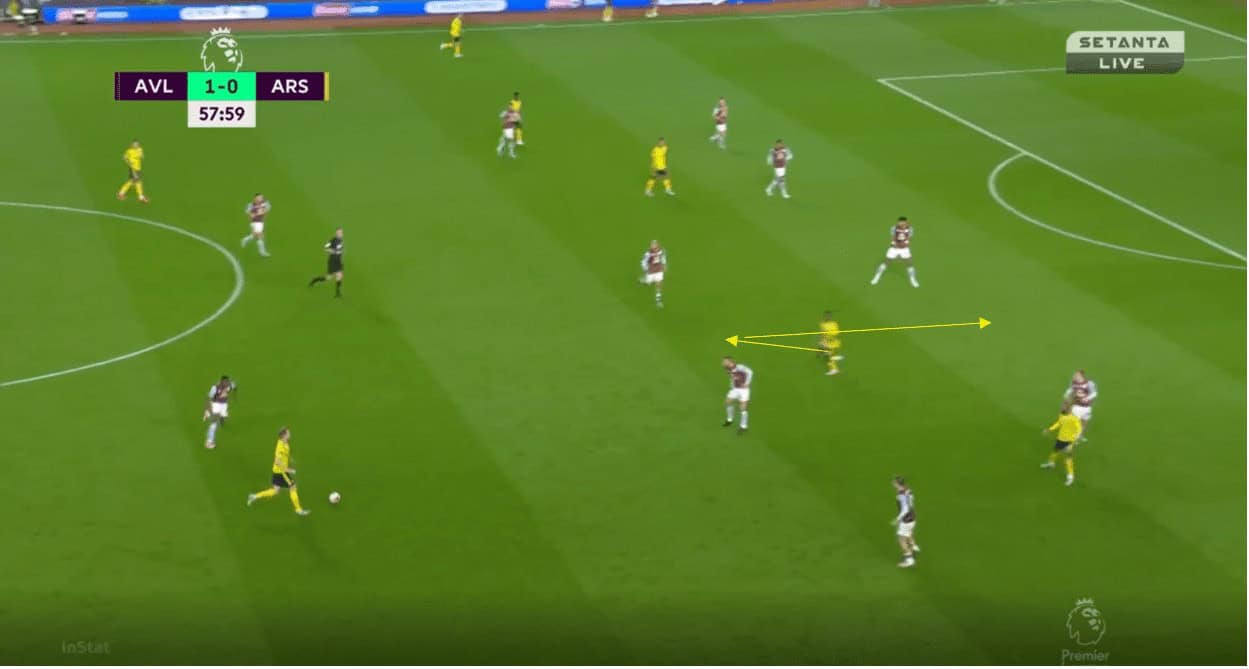
Here is a good example of movement from Arsenal here, who overload the central midfielder covering the half-space. Winks is not initially occupied in front of him, and so he can just drop to protect the half-space. Lacazette recognises this and drops to provide depth while Nicolas Pépé then provides height. Arsenal can then play wide and then centrally to Lacazette, who is free due to this creation of the 2v1 on Winks.
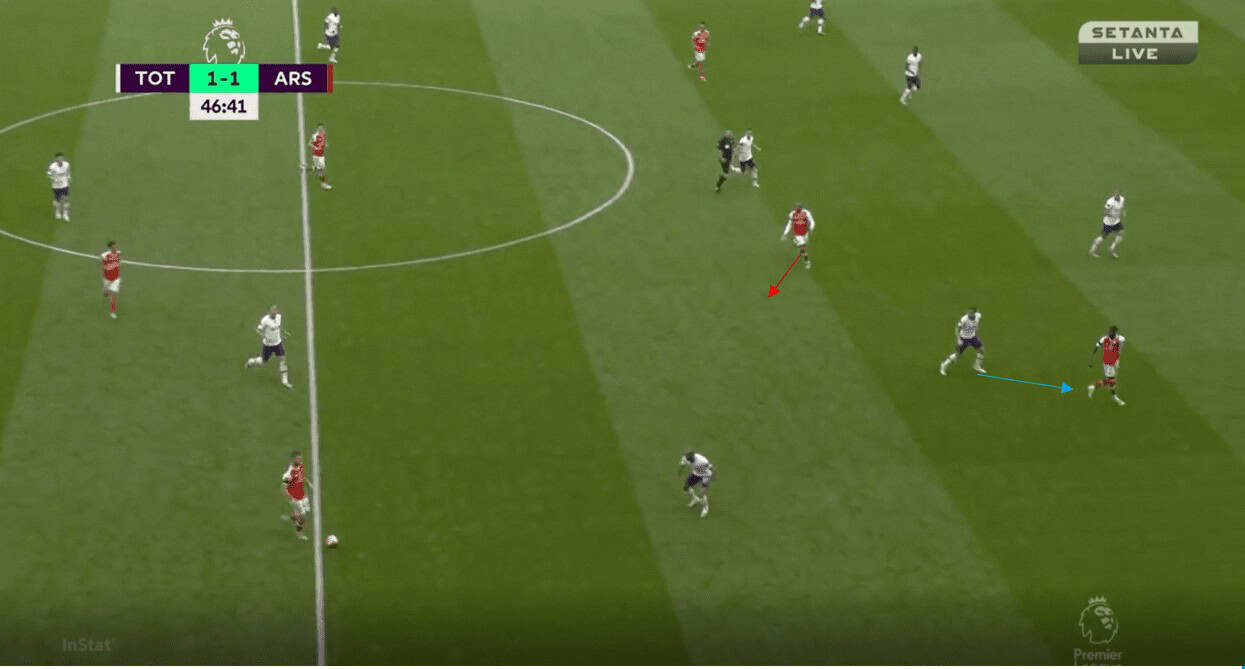
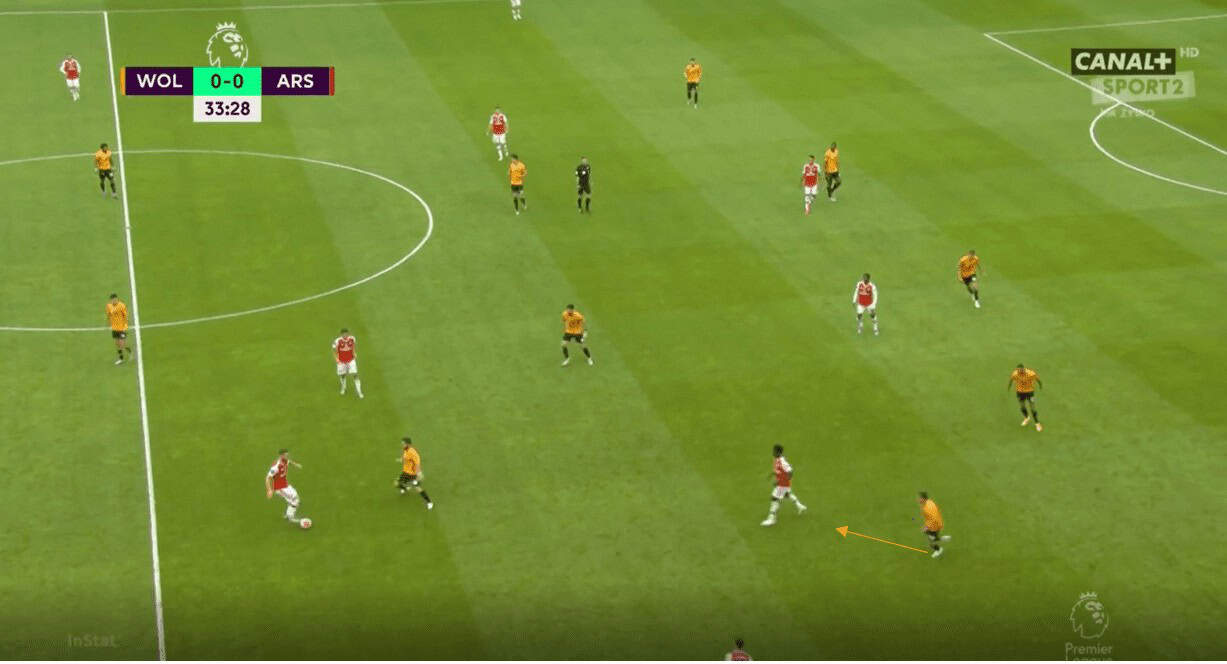
These two examples from the Wolves game show the same problem in Arsenal’s positional play coming up three minutes apart. We see Cédric receives in a fairly deep position, meaning the full-back doesn’t have to move forward to press immediately and can instead stay with the right inside forward Saka. The nearby Wolves central midfielder is also free to come across to cover Saka and so he can’t occupy the half-space effectively. Furthermore, Saka’s deep positioning means he hasn’t occupied the Wolves centre back covering the half-space, and so he has no space in any area, as no height or width are really provided.

Here again, the Wolves wing-back is able to occupy Saka and the centre back can just stay in position, meaning Arsenal offer no threat in behind. Cédric here has to get the attention of the Wolves full-back so to speak, and so has to engage him to mark/press him to give Saka some space. Arsenal’s spacing with the front three is much better here as they are all in the same half of the pitch, and so if Arsenal can force the centre back to press Saka, one of the other forwards could get in behind. With Cédric unmarked, he could also make a run in behind sooner in order to provide height to the attack.
Central midfielders dropping into the back line
Like most of the aspects of their positional play mentioned, Arsenal’s rotations offer some good promise but are yet to become consistent. One main rotation in their structure is the use of a central midfielder as a wide centre back. This is usually used in a back four formation to allow a full-back to push higher, but in a back three is used to allow a centre back to commit forward. We can see an example of this structure below, with two players now able to provide width and an overload created on the full-back.

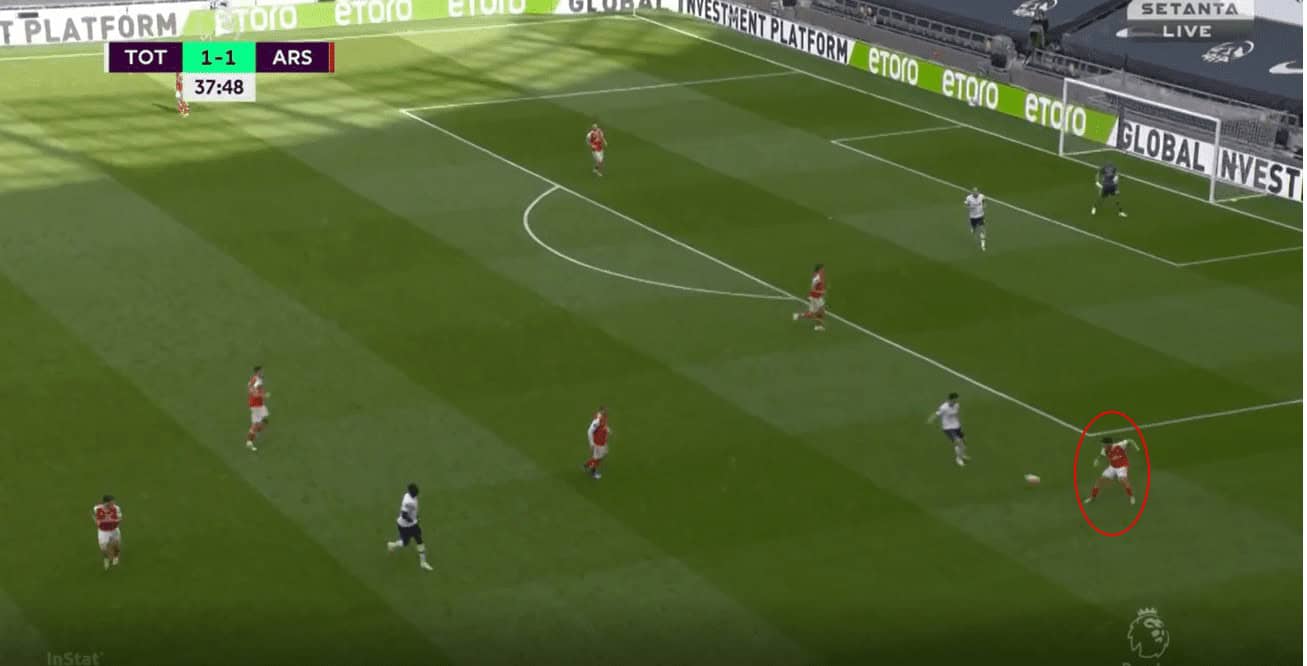
We can see an example here of this occurring, with it usually happening on the left to allow Kolašinac to move forward. This leaves them with an extra player on the wing, which usually helps to create an overload if utilised well. The problem I have with this tactic is Arsenal’s use of Dani Ceballos at left centre back. For me, a right-footed left centre back doesn’t allow for optimal passing angles towards the half-space, as it is an awkward movement to make a vertical pass from here. We can see Ceballos here starts to cut onto his right foot for a central pass, and so that advantage of increased width is lost.

This example of a pass here from Ceballos highlights for me the problems of a right-footed left centre back, as passes just become a little bit awkward and the same passing angles can’t be reached. Ceballos here has to use the outside of his foot rather than his left foot to play the ball inside, and so he is clearly not the most comfortable using his weaker foot.
Furthermore, when Granit Xhaka was brought on against Aston Villa, he rarely went over to the left side as a centre back and Ceballos still insisted on moving here. We can see that when he does, Xhaka has much better passing angles to access the half-space and inside due to his left foot.
In the Aston Villa game, Kolašinac actually often seemed to forget to push forward to create an advantage, and so Ceballos on multiple occasions had to delay the switching of the ball because the Bosnian wasn’t in position.
Rotating roles in the structure
Earlier in the general structure section, we assigned positions to each role, but in reality, Arsenal can be more fluid. The best positional play sides have roles in teams rather than positions, and so it doesn’t matter a great deal who occupies each role, as long as each role is occupied. We can see an example of such a rotation where forward Saka moves wide to provide width, while wide centre back turned wing-back Kolašinac then moves into the half-space to receive.
Here Dani Ceballos acts deep in the half-space as normal, while forward Saka supplies width. Héctor Bellerín starts as the wide player but makes a nice rotation to move into the half-space to replace Saka. Each player must understand each other’s role, and these rotations make you harder to mark and less predictable.
Here we see wing-back Cédric acts as the depth player in the half-space, while forward Pépé supplies width. Forward Nketiah then occupies the half-space also.
Rest defence
With positional play effectively about committing players forward in the most intelligent way possible to create overloads, rest defence underpins it all. While preparing an in possession shape, teams must simultaneously be preparing to lose the ball, and so must provide cover around attacks in order to either counter-press or drop back should they lose possession. Arsenal’s rest defence impressed me in the games analysed, and Arteta has perhaps prioritised this to gain stability in the team initially.
We can see an example of Arsenal’s rest defence here where we imagine they have lost the ball in the half-space. As with many teams, the most defensive cover comes from the two central midfielders, who don’t commit past the opposition second line often and instead will sit in front. As a result, if the ball is lost they can squeeze in to counter-press, or drop off to cover passing lanes. The wing-back can provide width from a deeper position at times, and so he can also counter-press from a wide-angle on occasion.

We can see an example of those two central midfielders acting as the cover for the attack, with Lacazette losing the ball in the half-space. The wing-back has committed higher, but the two central midfielders remain behind the ball and in a compact shape when in possession, meaning they can counter-press immediately.
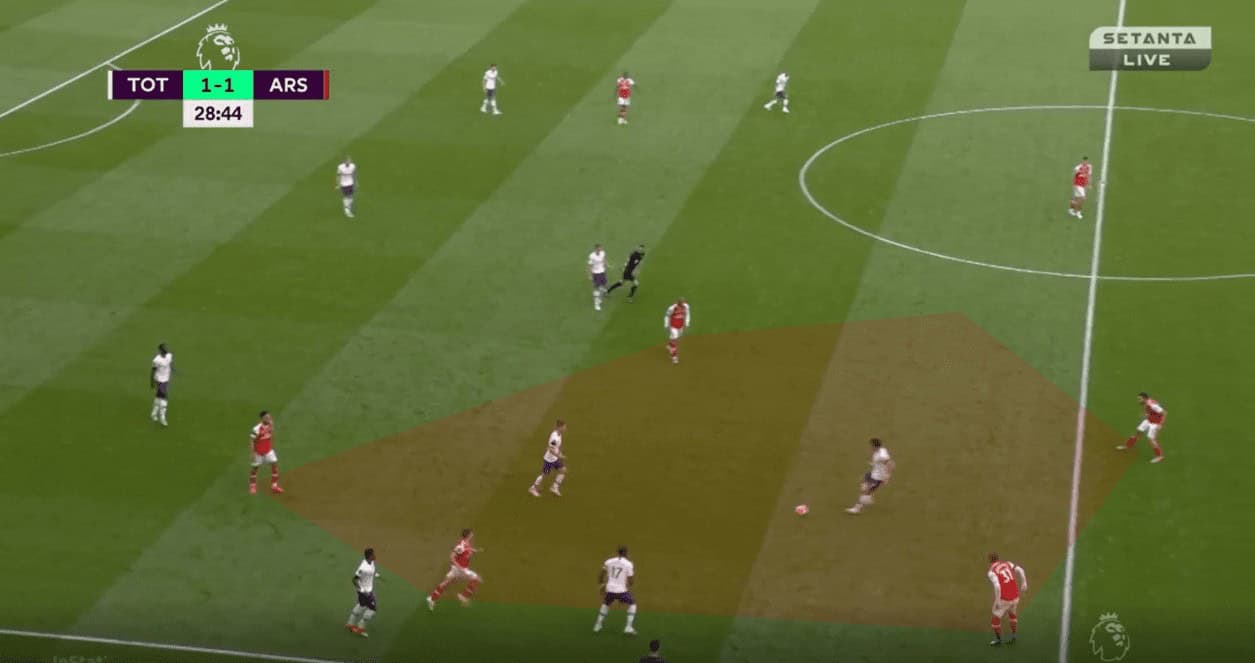
Arsenal’s rest defence against Tottenham impressed me for the most part, and their goal in the game actually came from a counter-pressing situation. We can see Arsenal maintain that structure just after the ball is lost, and Xhaka is able to counter-press vertically and win the ball, which leads to Arsenal scoring.
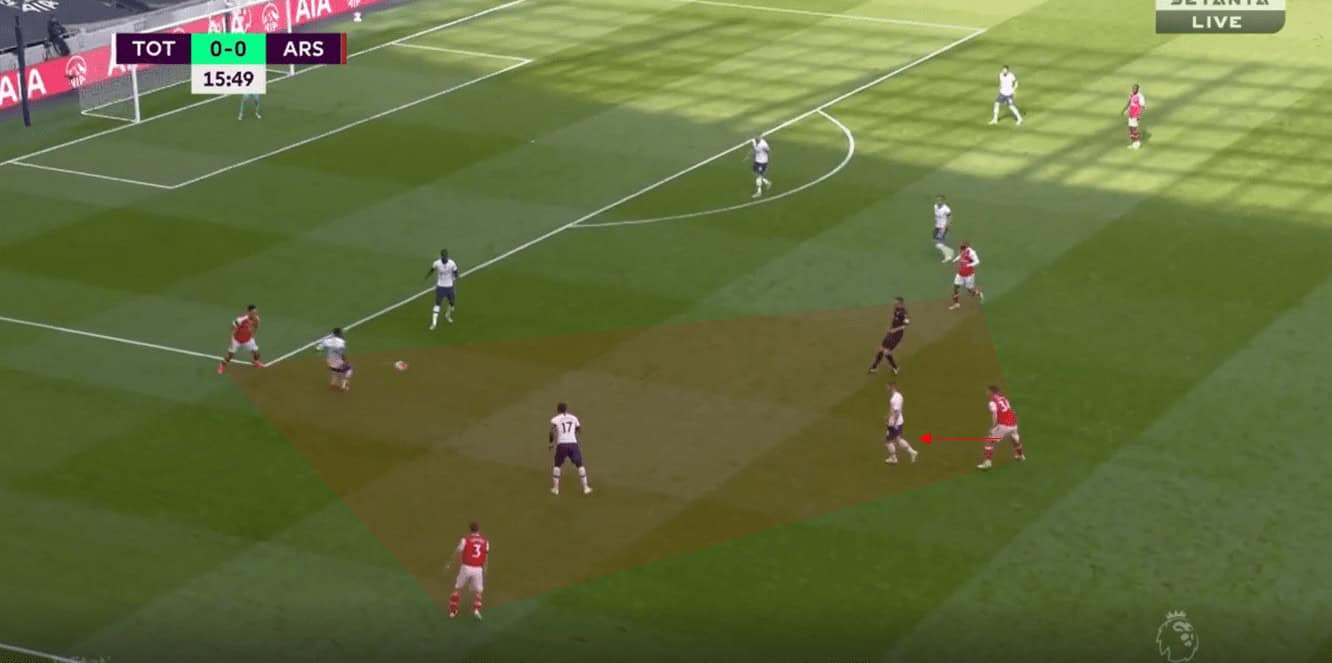
We can see the structure well here too, with the far central midfielder Xhaka not quite as compact. The wing-back and near central midfielder remain deep and compact to the ball, and so space is restricted for Tottenham to play in. They opt not to counter-press here, and instead look to cut passing lanes more than anything else.
Conclusion
Arteta is slowly starting to build his team and his principles at Arsenal, and I expect Arsenal to improve going into next season with a trophy and European football earned. Despite this analysis mainly identifying flaws in Arsenal’s current tactics, I do believe Arteta will groove these principles into his players in time, and I hope to see his Arsenal playing a more positional play style of football next season. With a heavy focus on team cohesion, coordinated movements, and rotating roles, only coaching and time will determine if Arsenal have improved in this area.
My rough notes of over 70 scenes from these games is also available on my Twitter if you want to view more examples and ideas around the topic.
