


Rubén García remains one of Osasuna‘s most creative playmakers, boasting significant experience and a consistent role within his team’s tactical system in La Liga.
The 32-year-old left-winger is a playmaker who doesn’t rely so much on speed or physical strength.
Instead, his game prioritises intelligence, quality ball control, and good timing.
In a team that often relinquishes possession, García is Osasuna’s crucial link in the attacking third, whether via defence-splitting passes, set-piece delivery, or intelligent movement between the lines.
This season, he has featured in 16 matches, scoring two goals and providing four assists.
These figures reflect his true impact more than statistics alone.
This Rubén García scout report details why Rubén García is a player who dictates the tempo for his team and provides solutions for the attack when space is limited.
Rubén García Tactical Role & Positional Framework
Rubén García operates within Osasuna’s attacking structure as a nominal right winger, but his functional role consistently shifts toward that of an interior wide playmaker.
Osasuna frequently operate in a 4-3-3 or 4-2-3-1 shape.
Within these systems, García consistently drifts into the right half-space, positioning himself between the opposition’s midfield and defensive lines.
Across major fixtures against ball-dominant opponents, García regularly abandons the touchline to occupy the half-space, positioning himself between midfield and defensive lines.


This movement gives Osasuna constant width, creating an option to advance from deep without adding a new player in midfield, as we could note against Real Sociedad.
The positioning puts the opposing full-back in a constant state of hesitation: should he follow the player inside or maintain width?
These moments of indecision disrupt the defensive organisation, and Osasuna capitalise on this during periods of quiet possession.
It’s not an improvisation move, but a calculated tactical mechanism to break down the solidity of defensive blocks.
Rubén García Contribution In Build-Up Phases
In the build-up phase, García is a key solution against organised defences.
Under close marking from the midfielders, he intelligently drops back into midfield to provide the team with a safe and clean passing option.
This role is particularly evident against teams that close down the centre and defend with a compact block, where García becomes the link between defences and the first line of defence.
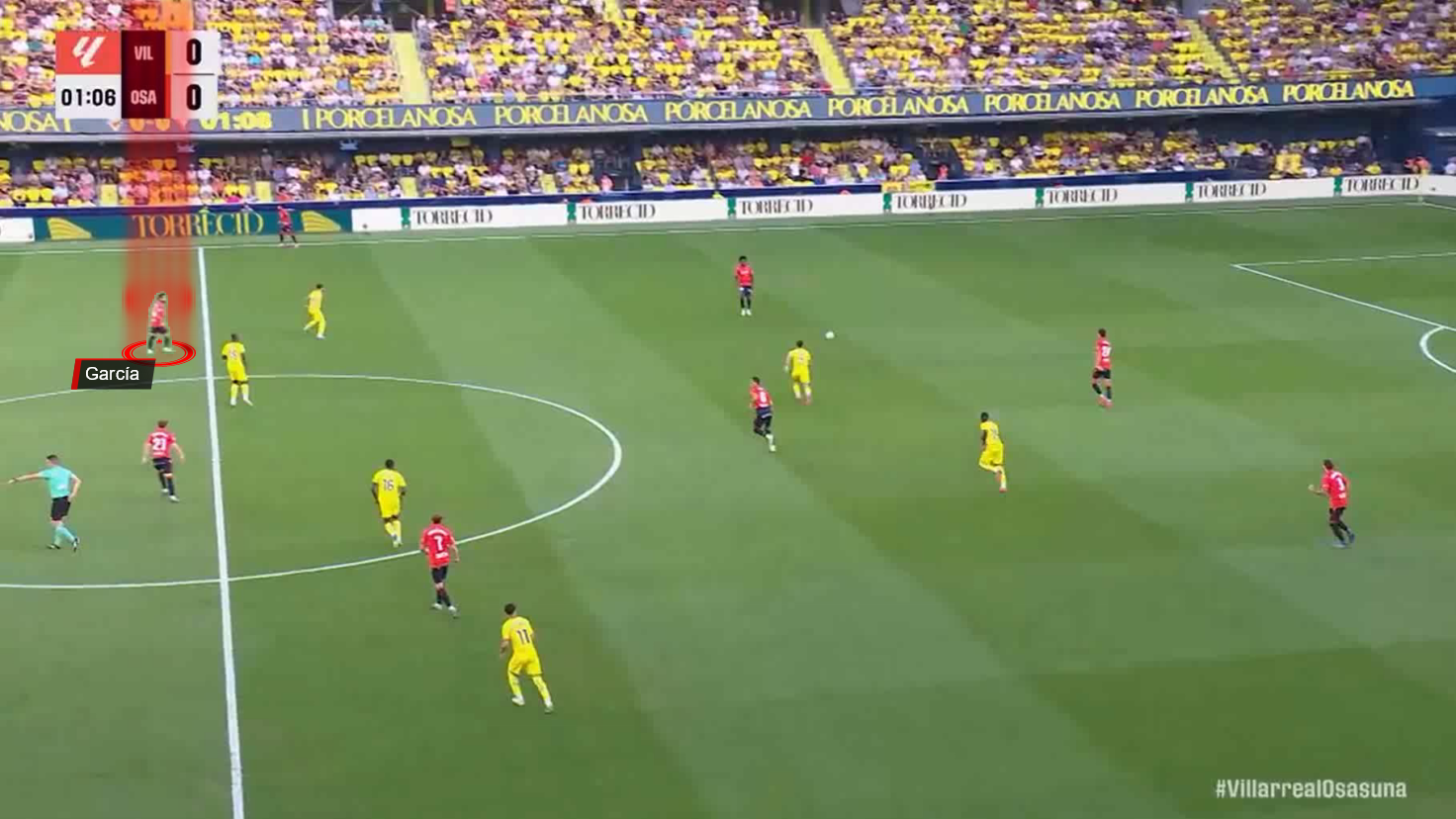
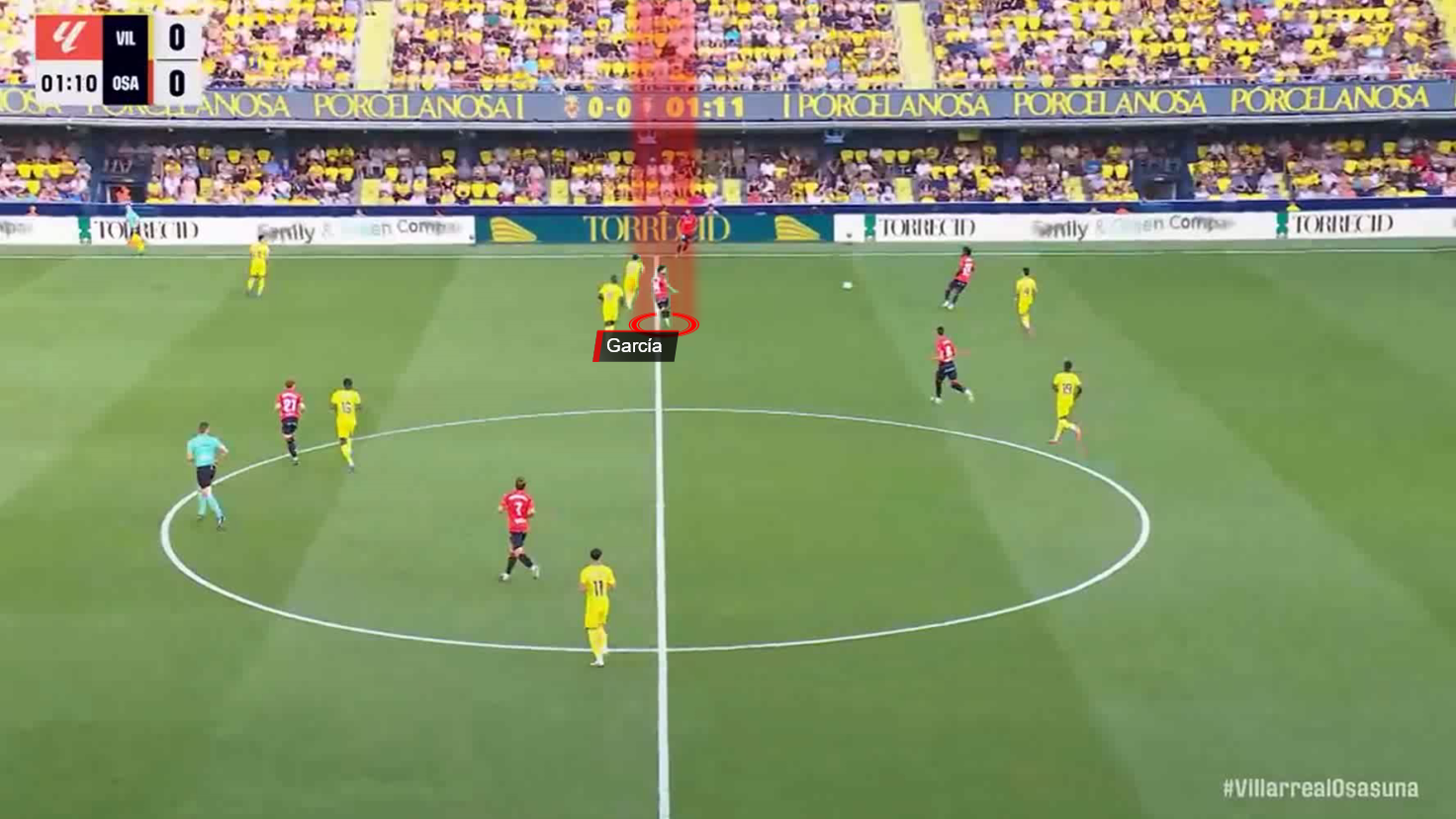
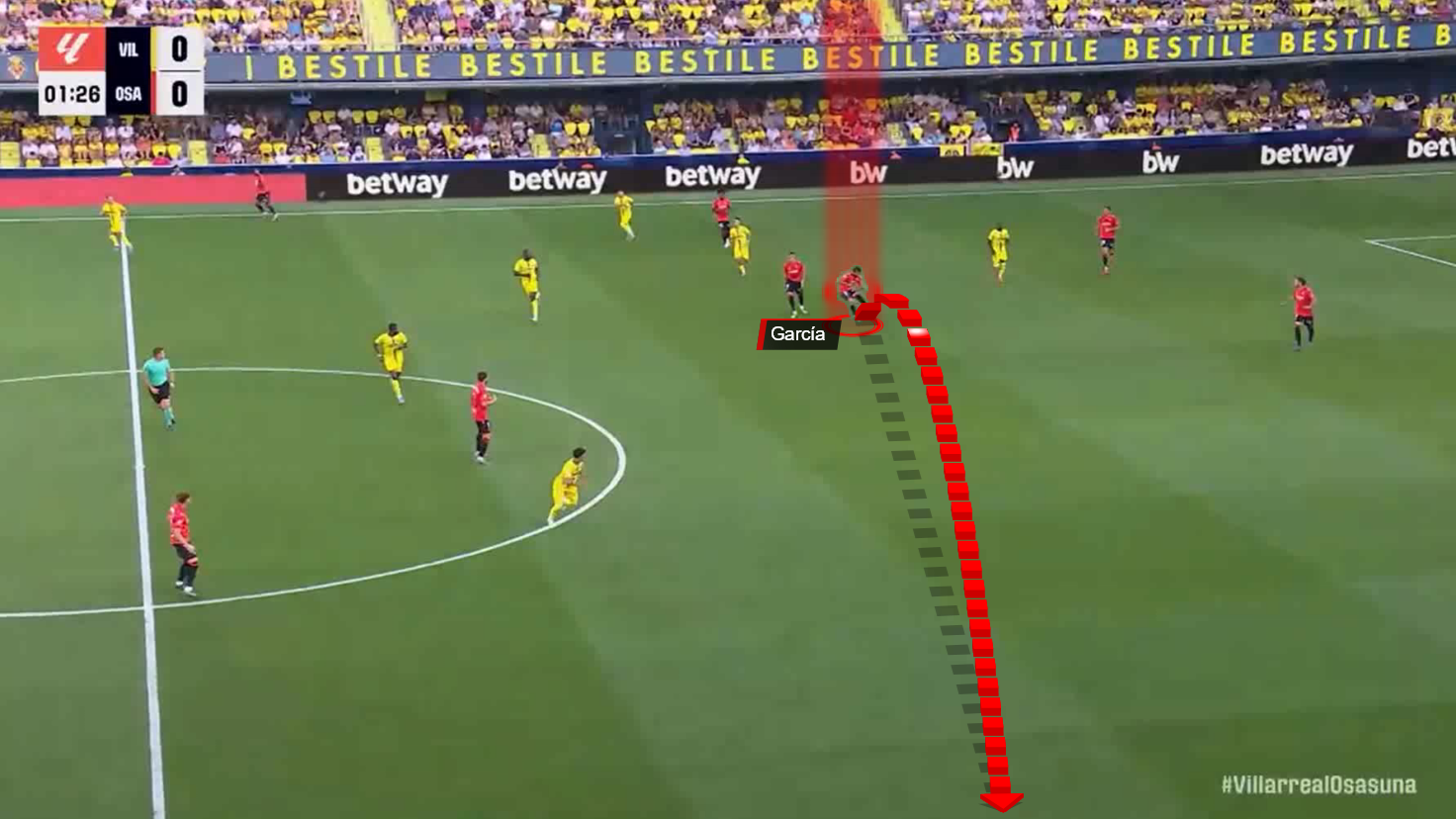
As we can see here with Villarreal, upon receiving the ball, García maintains an open physical position, allowing him to quickly read the game and deliver forward passes with minimal touches.
Instead of risking long vertical passes through a crowded area, he prioritises continuity of play and maintaining his position, intelligently circulating possession to force the opposition’s defence to move horizontally.
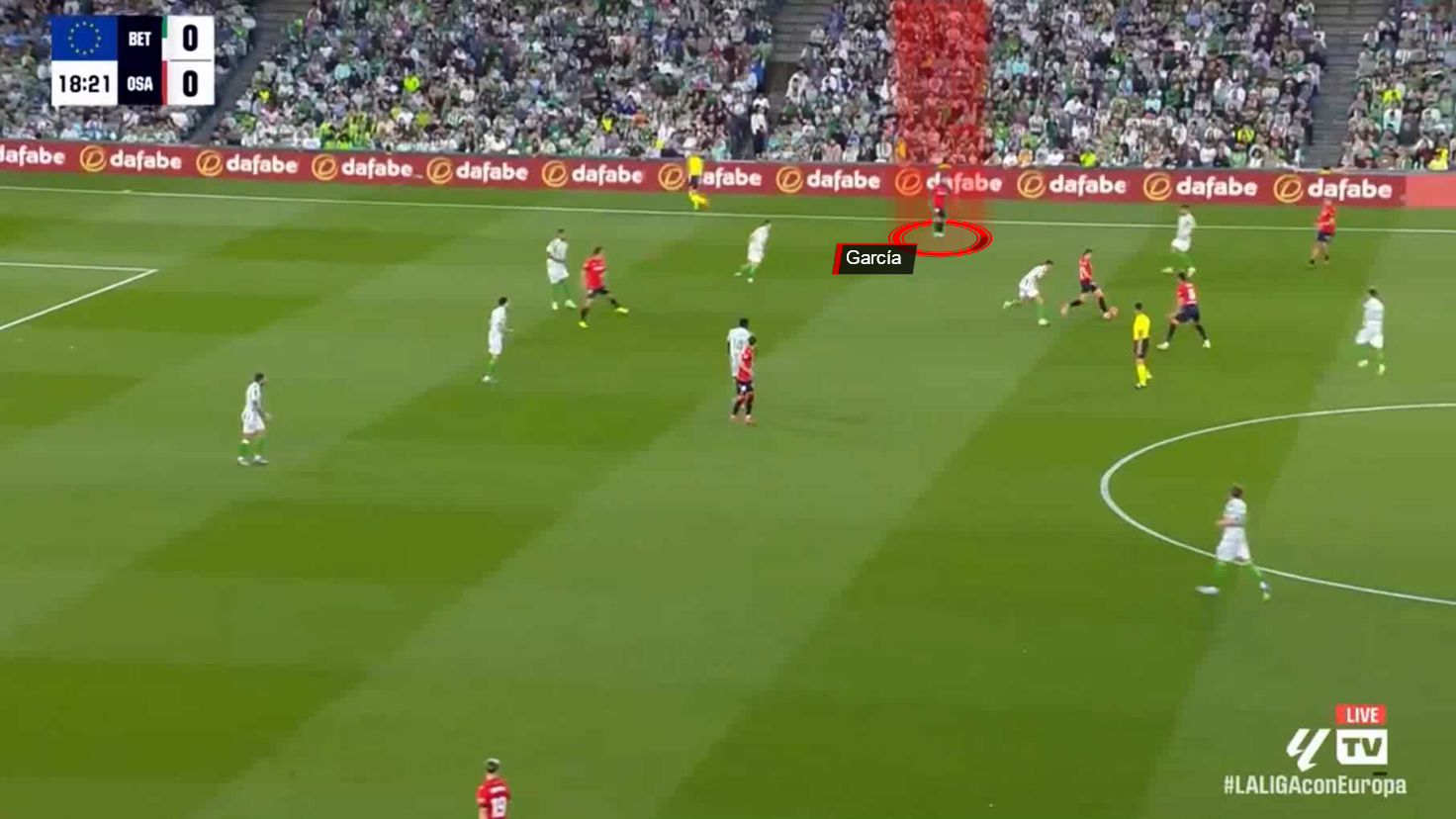
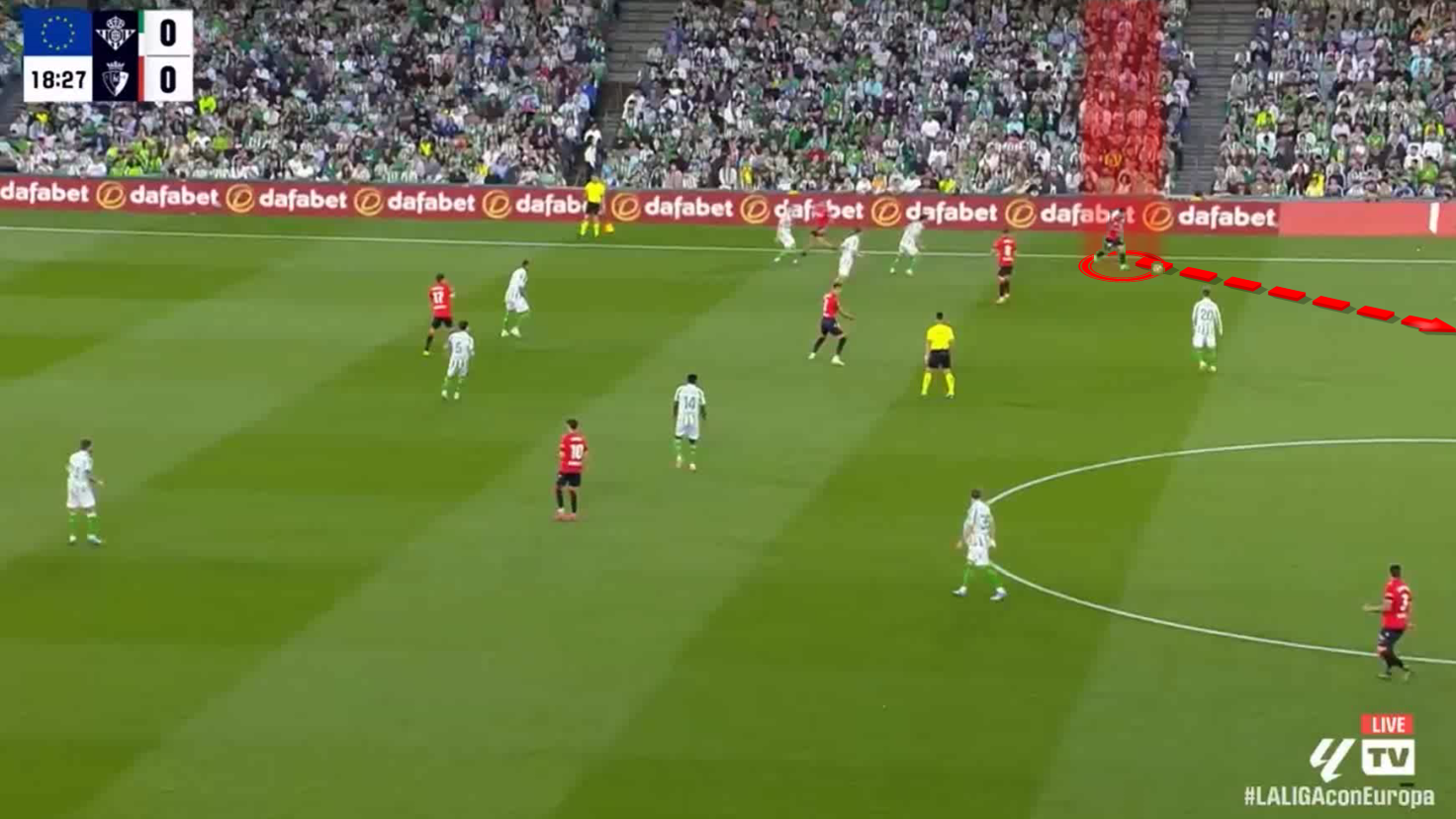 As we saw against Real Betis, García retains possession, relieves pressure, and then calmly switches the direction of play.
Technically, his efficiency is the cornerstone of his influence within the system.
His first touch allows him to receive the ball under pressure without disrupting Osasuna’s rhythm, while his passes are calculated to maintain the tempo rather than speed it up prematurely.
This approach reduces turnovers and gives Osasuna greater control during periods of possession.
Rubén García In The Final-Third & Chance Creation
Once Osasuna had possession, García suddenly transformed from a mere playmaker into a true playmaker.
He didn’t rely on dribbling or positioning himself on the touchline, but rather on timing, intelligent positioning, and the ability to select the right players to capitalise on scoring opportunities.
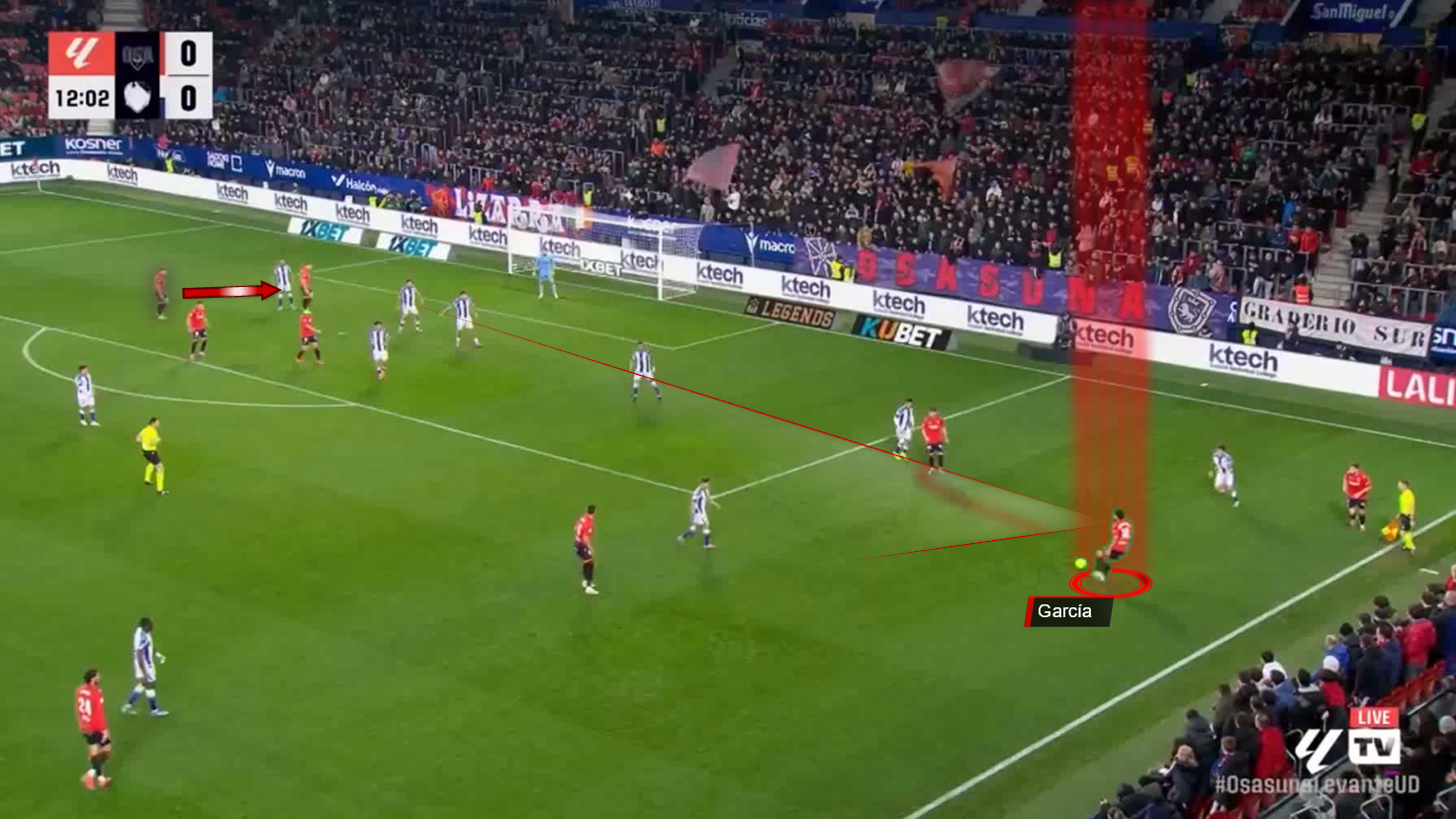
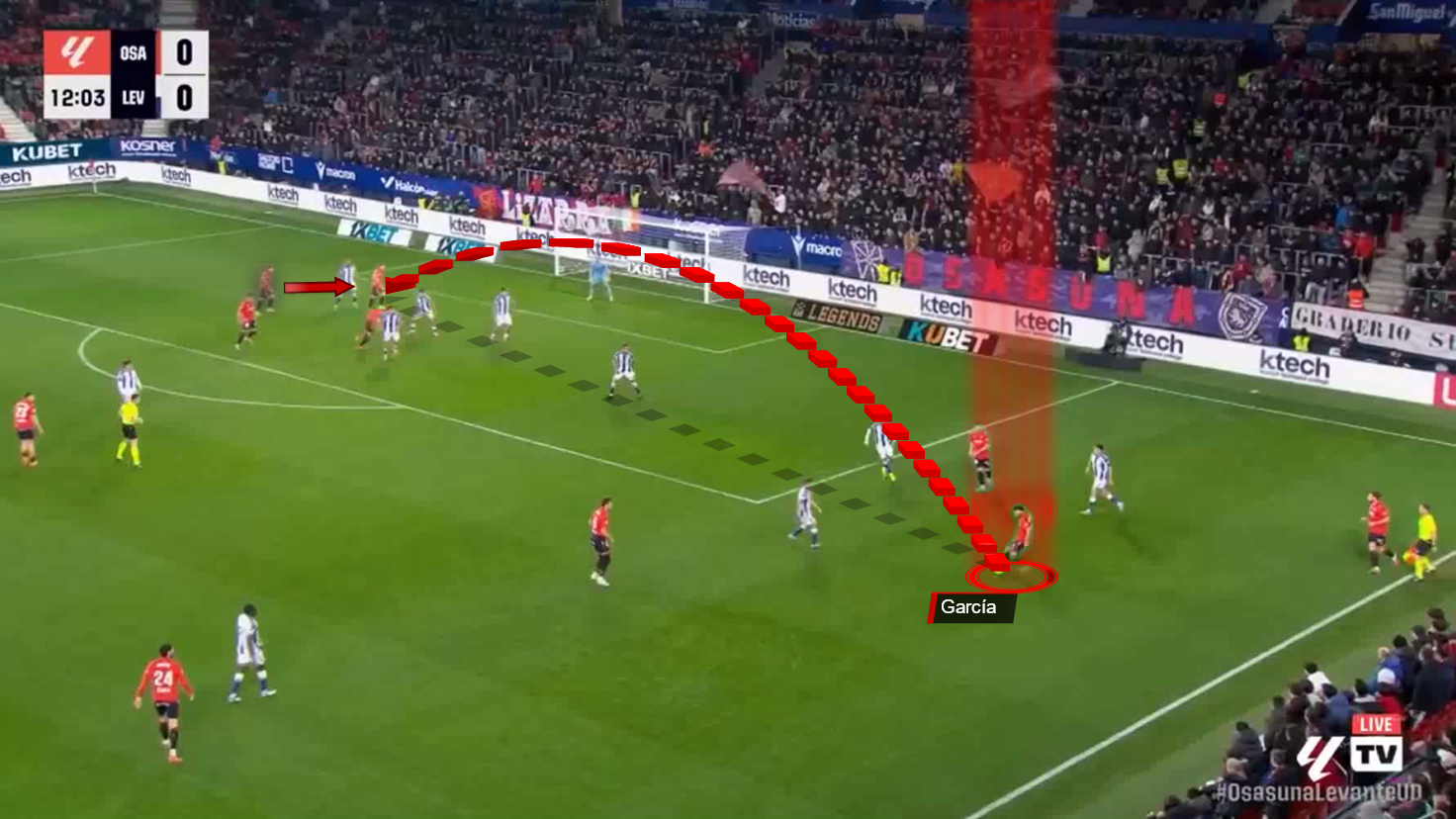
Rubén García’s decisive pass against Levante showcased his composure and perfect timing in the final third.
He received the ball between the wing and the centre, slowed the tempo to draw the defence inside, and then delivered a precise left-footed cross towards the far post.
The ball bypassed the two centre-backs, creating space behind the full-back for the onrushing striker, turning a period of patient positioning into a clear-cut chance.
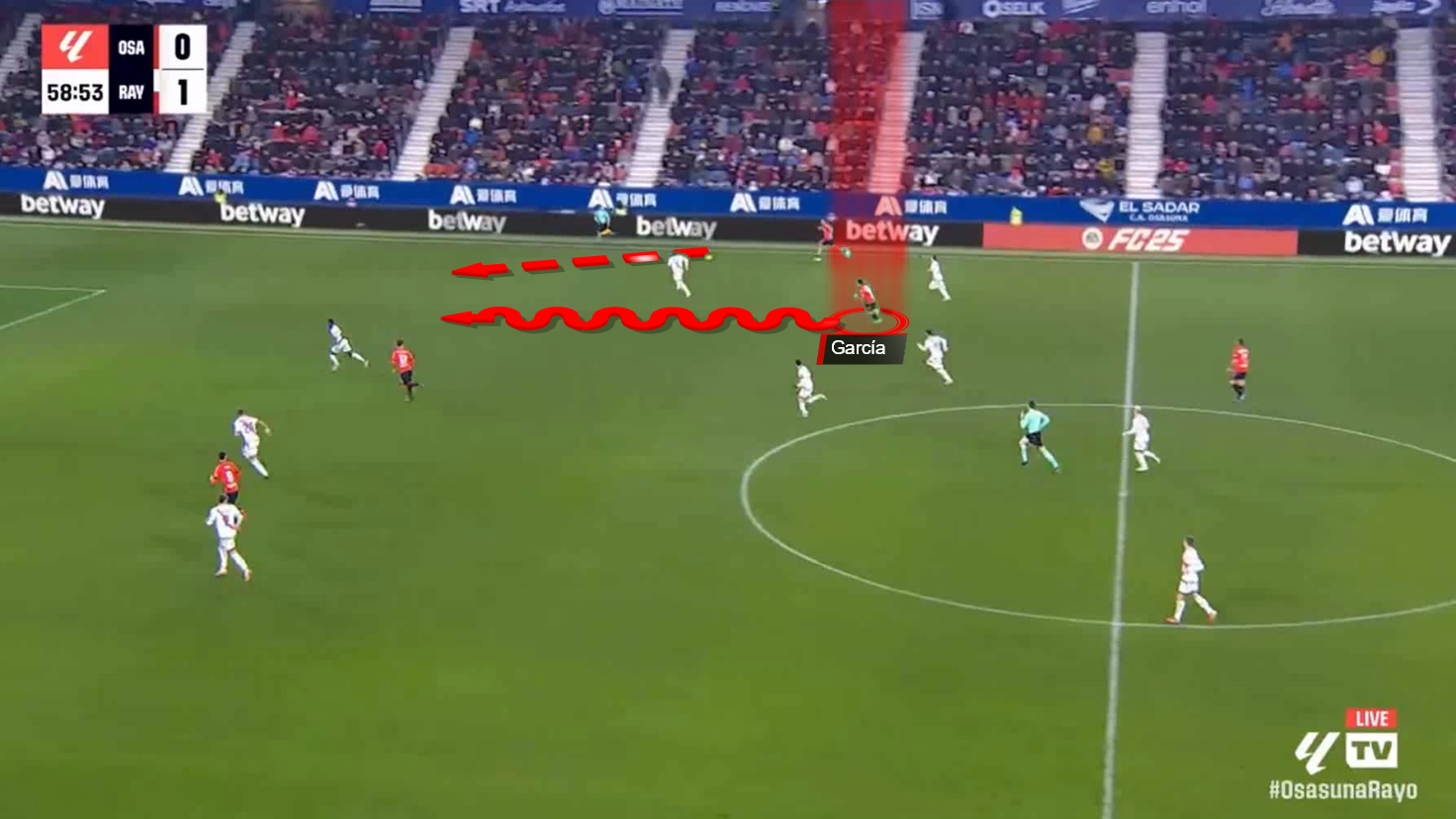
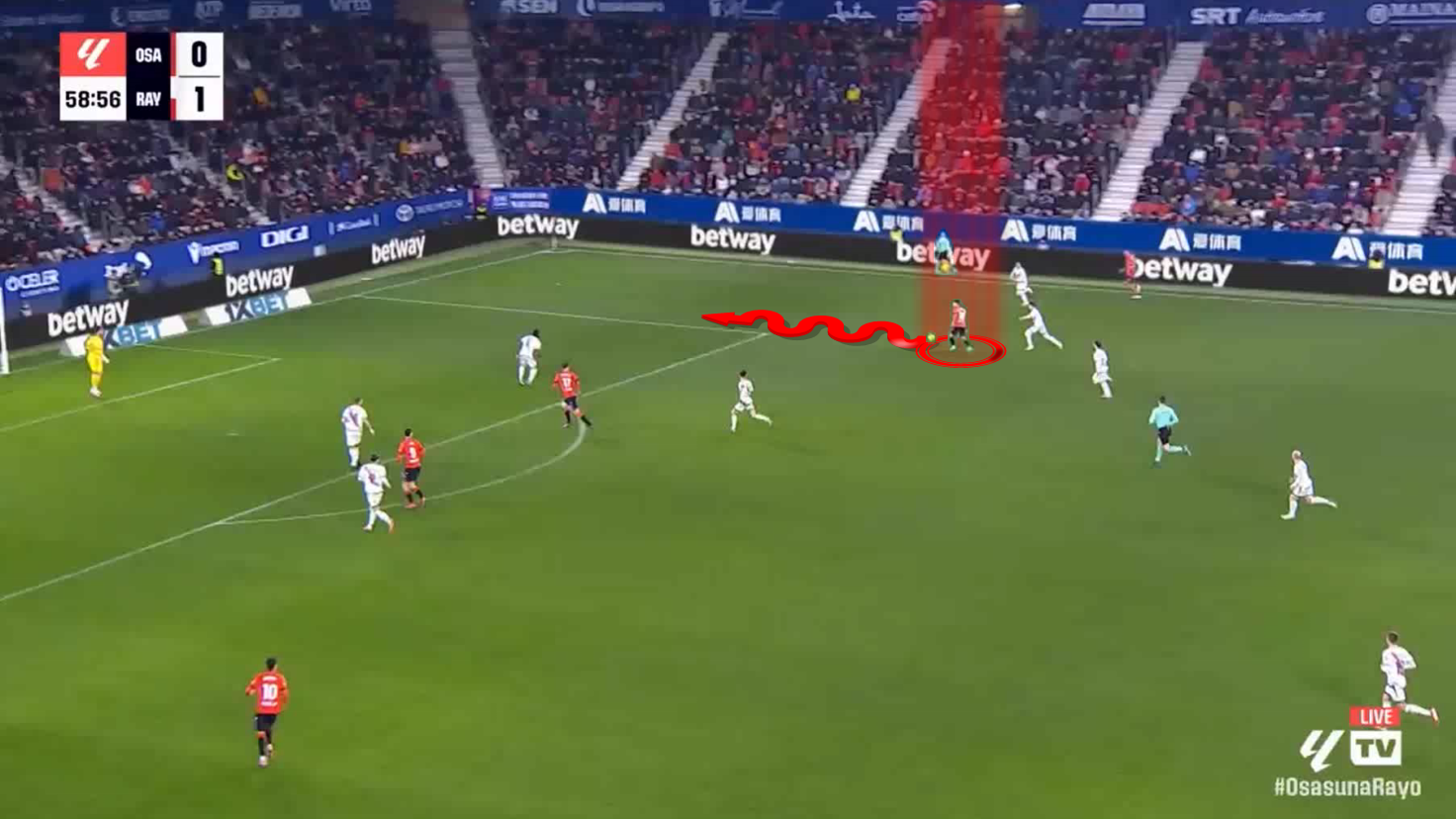
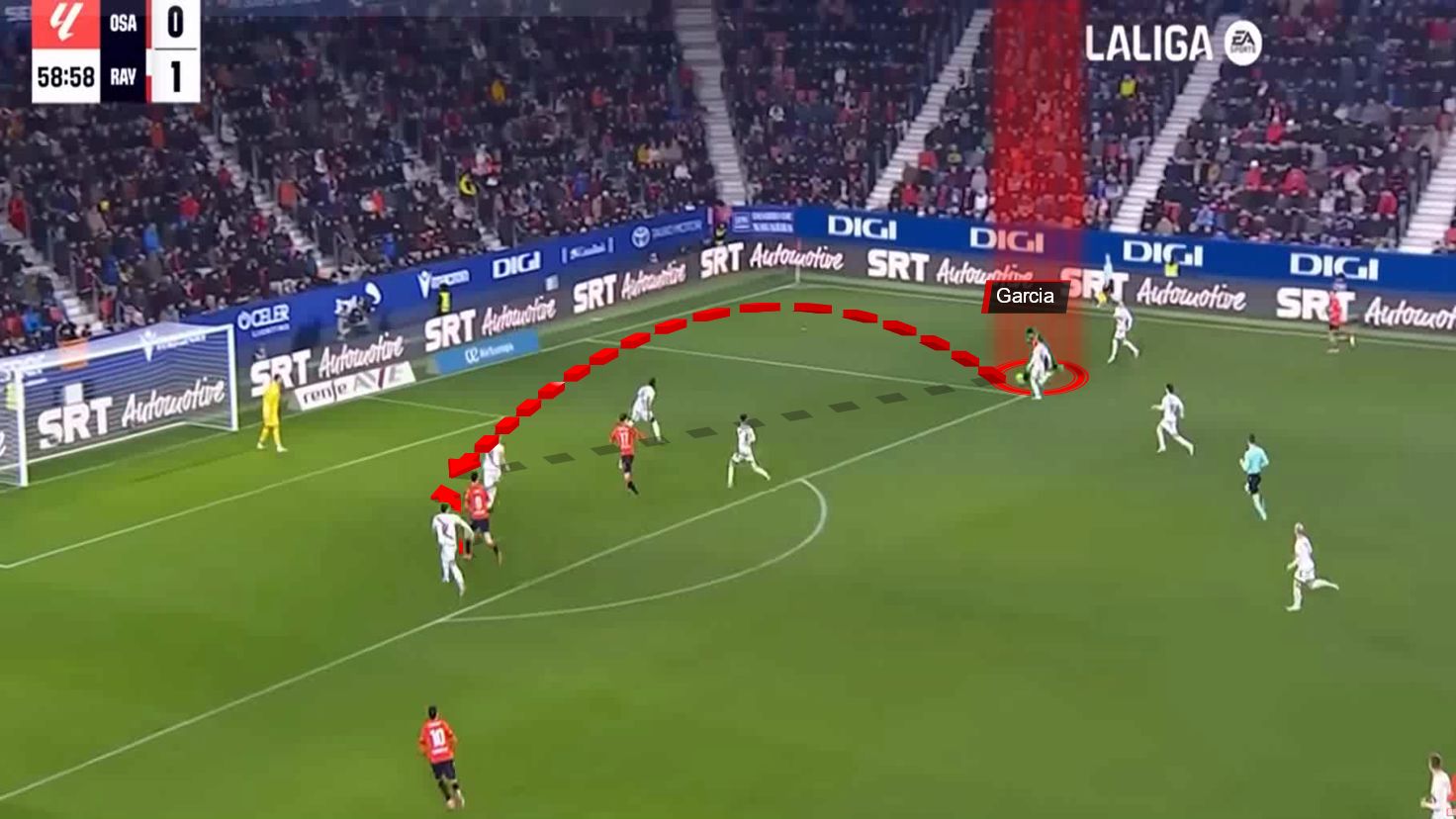
Garcia’s decisive cross against Rayo Vallecano came after a well-organised attack down the right flank.
He held onto the ball for a few seconds to assess the defensive positioning inside the box before unleashing a perfectly weighted, right-footed cross towards the far post.
He capitalised on Rayo’s deep marking, allowing us to attack unmarked and score from a high-quality position.
Garcia’s strategy involved delaying the ball’s movement until it reached the defensive areas, creating space around the historic moment.
This approach gives him the highest level of width and passing, targeting the far post or the deep spaces rather than gently delivering the ball towards the organised defence.
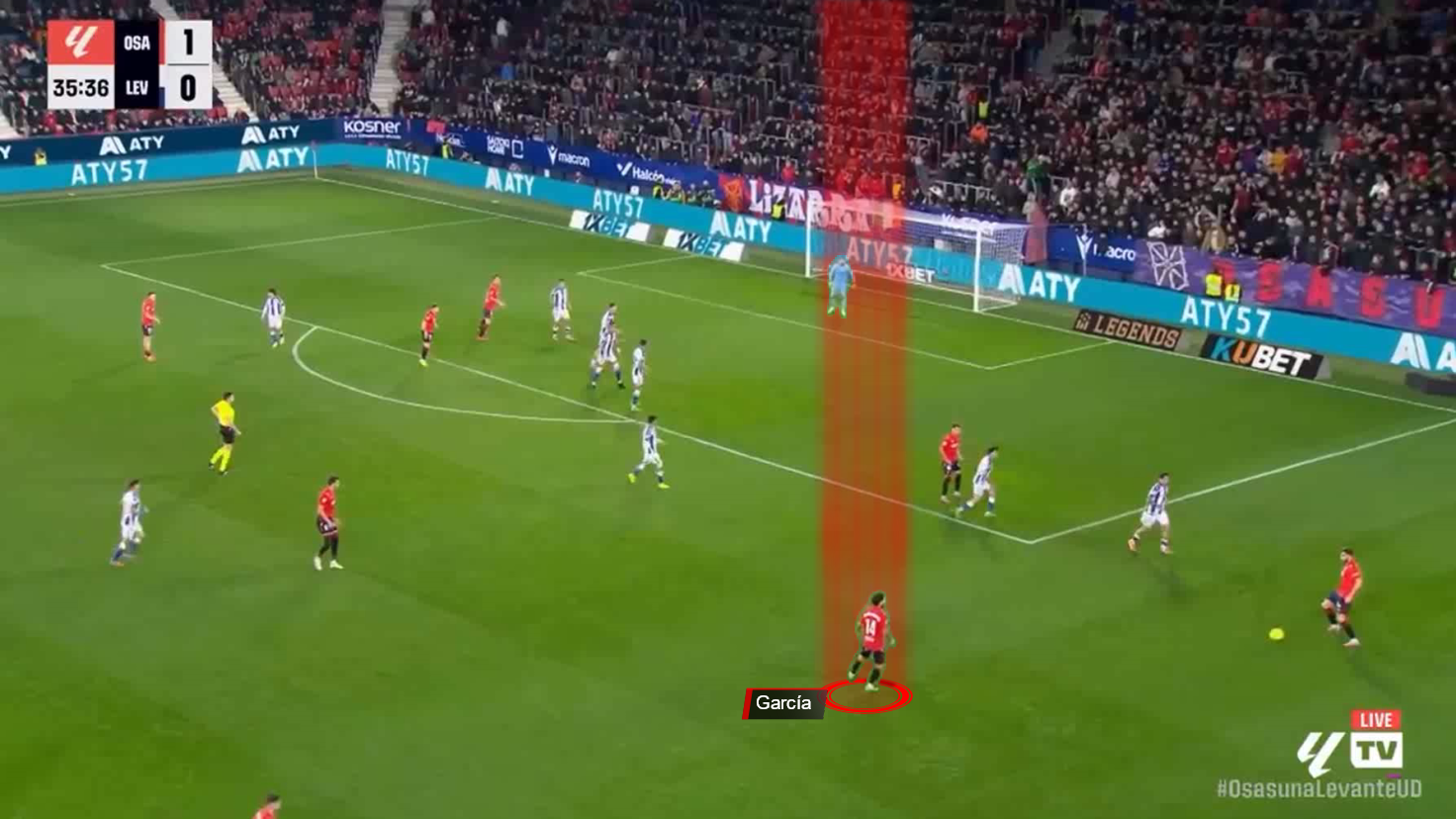
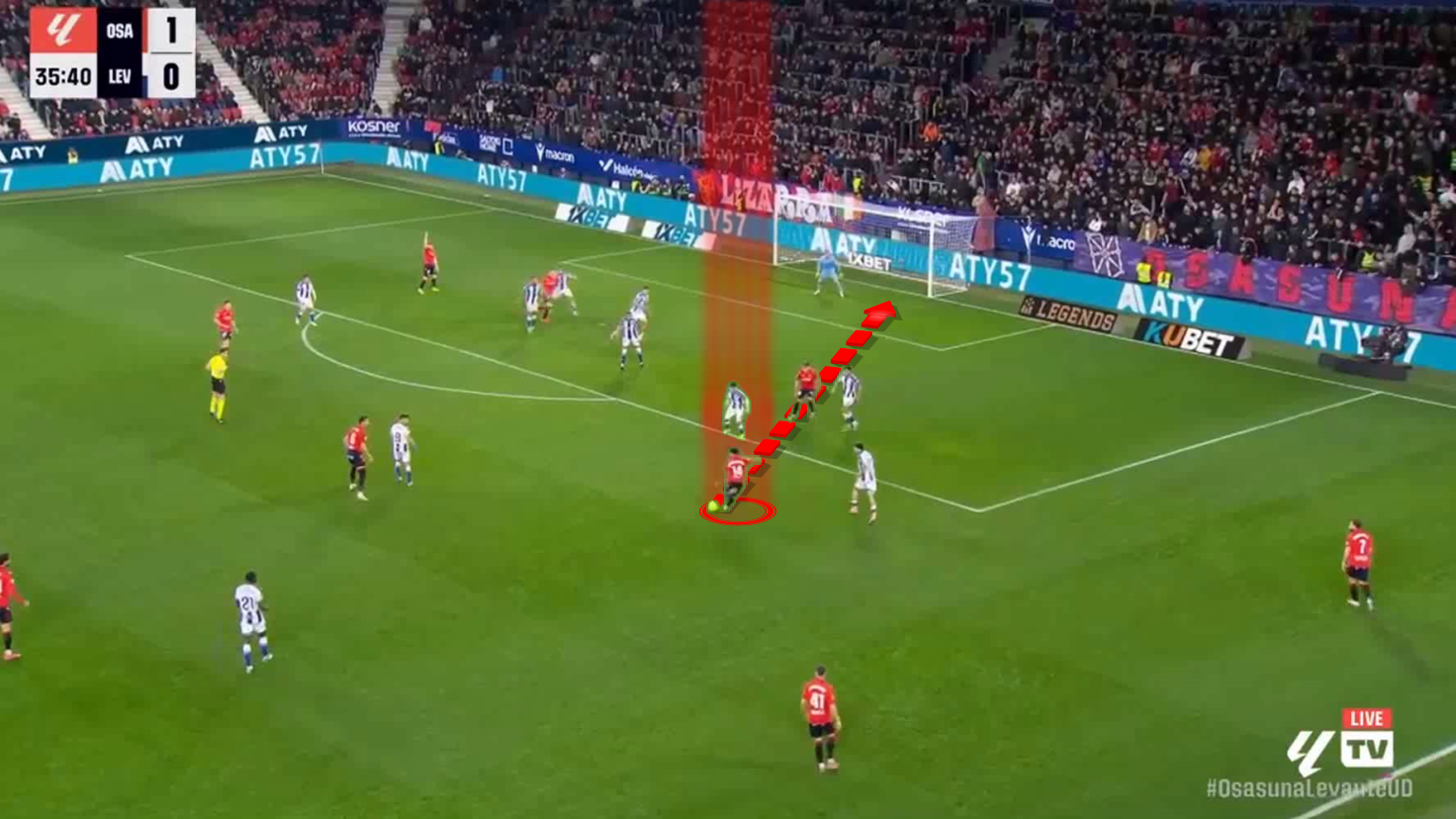
García positioned himself inside the penalty area, receiving the ball at the perfect moment to prepare his body before shooting.
He unleashed a precise left-footed shot from outside the box, a low, precise effort aimed at the far corner, capitalising on the defensive line’s poor positioning and the goalkeeper’s limited vision.
His value is amplified by set-pieces in the final third.
From corners and free kicks on the flanks, he directs his crosses towards predetermined areas, giving Osasuna constant attacking pressure and maintaining momentum even after missing the first clear chance.
Rubén García Defensive Style & Transitions
Rubén Garcia’s defensive role isn’t limited to individual pressing; it’s fully integrated into Osasuna’s collective system.
When defending from the midfield, his task is to maintain his position, close down passing lanes, and direct play towards the flanks rather than allowing penetration through the middle.
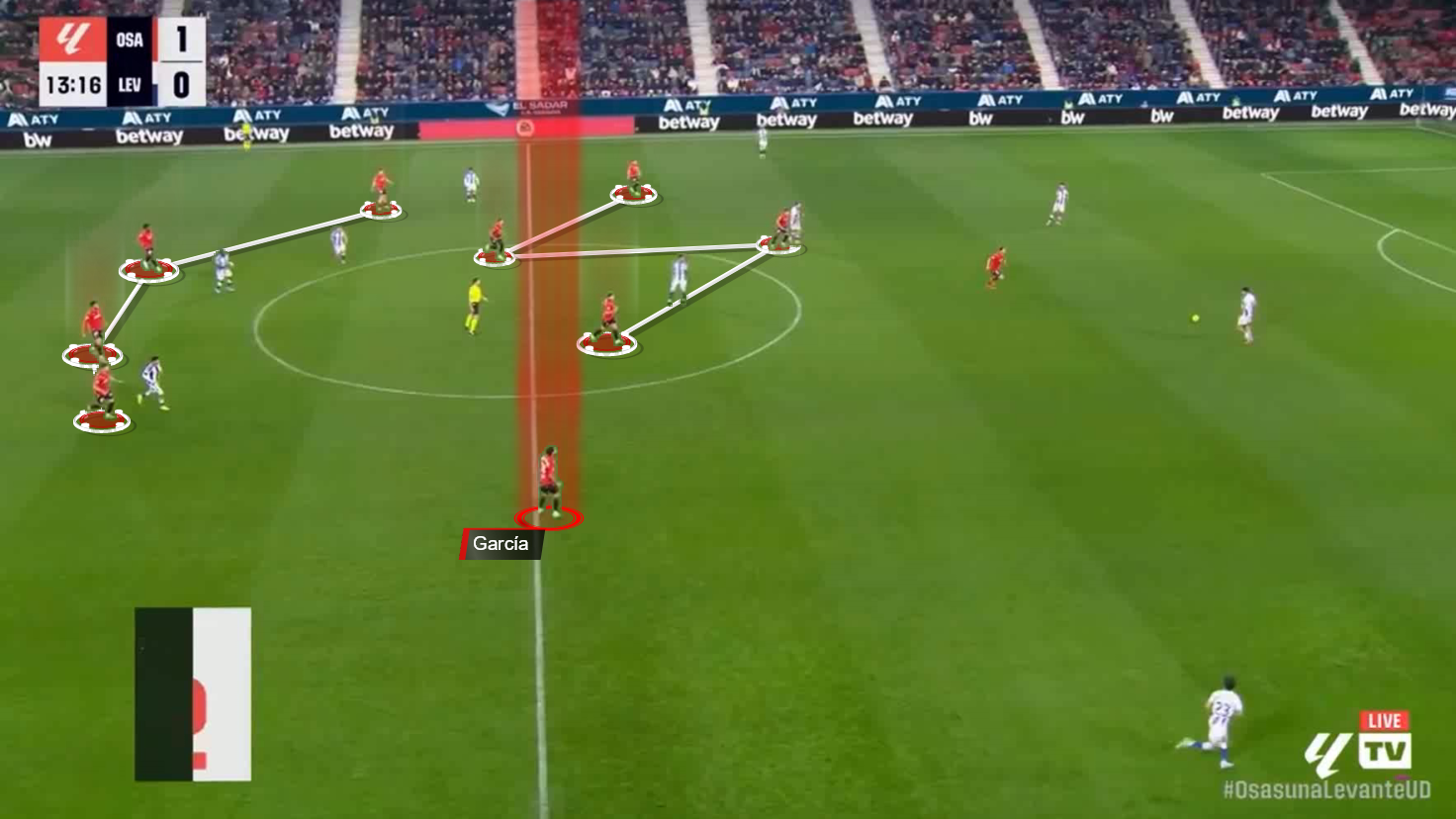
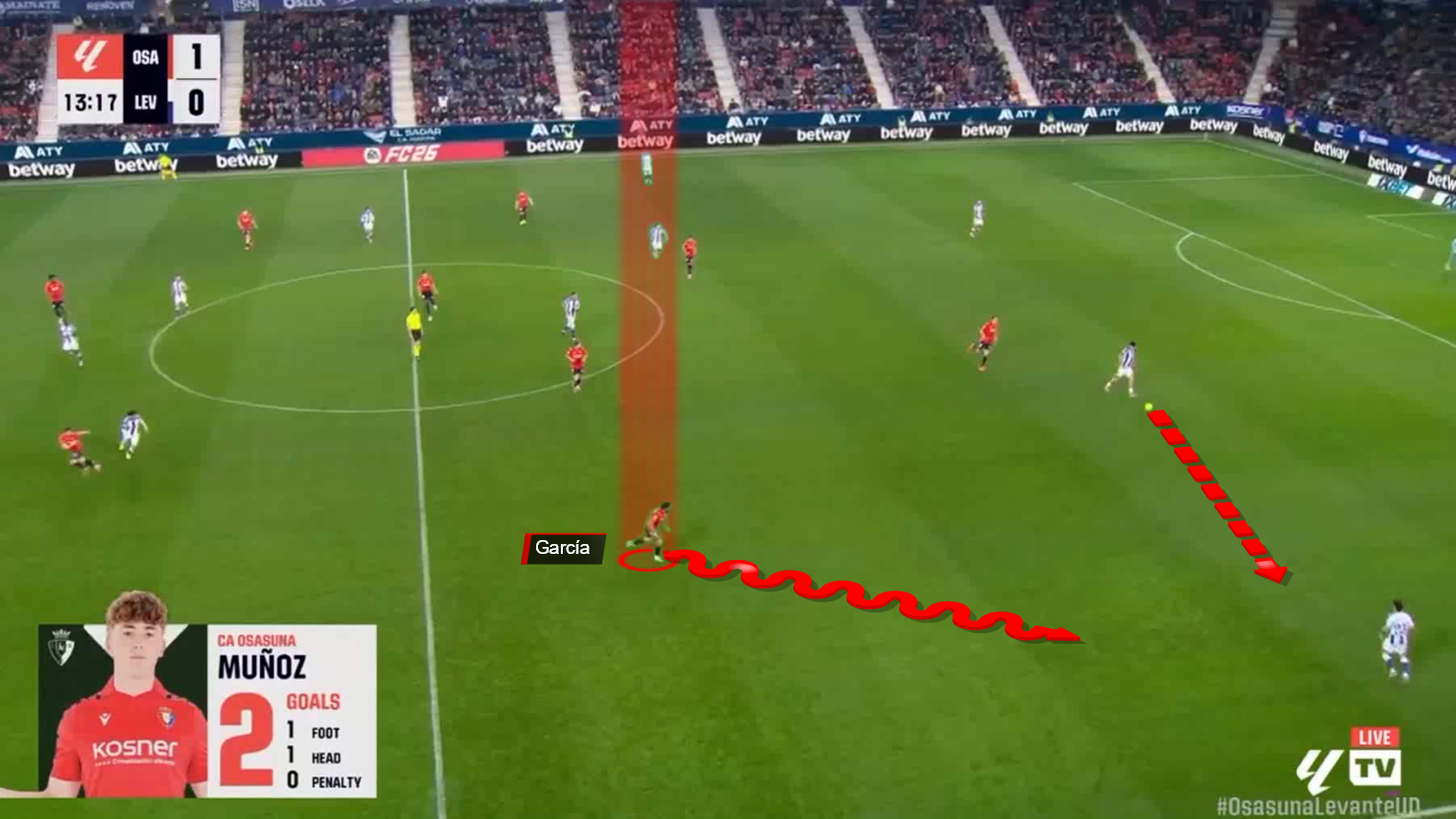
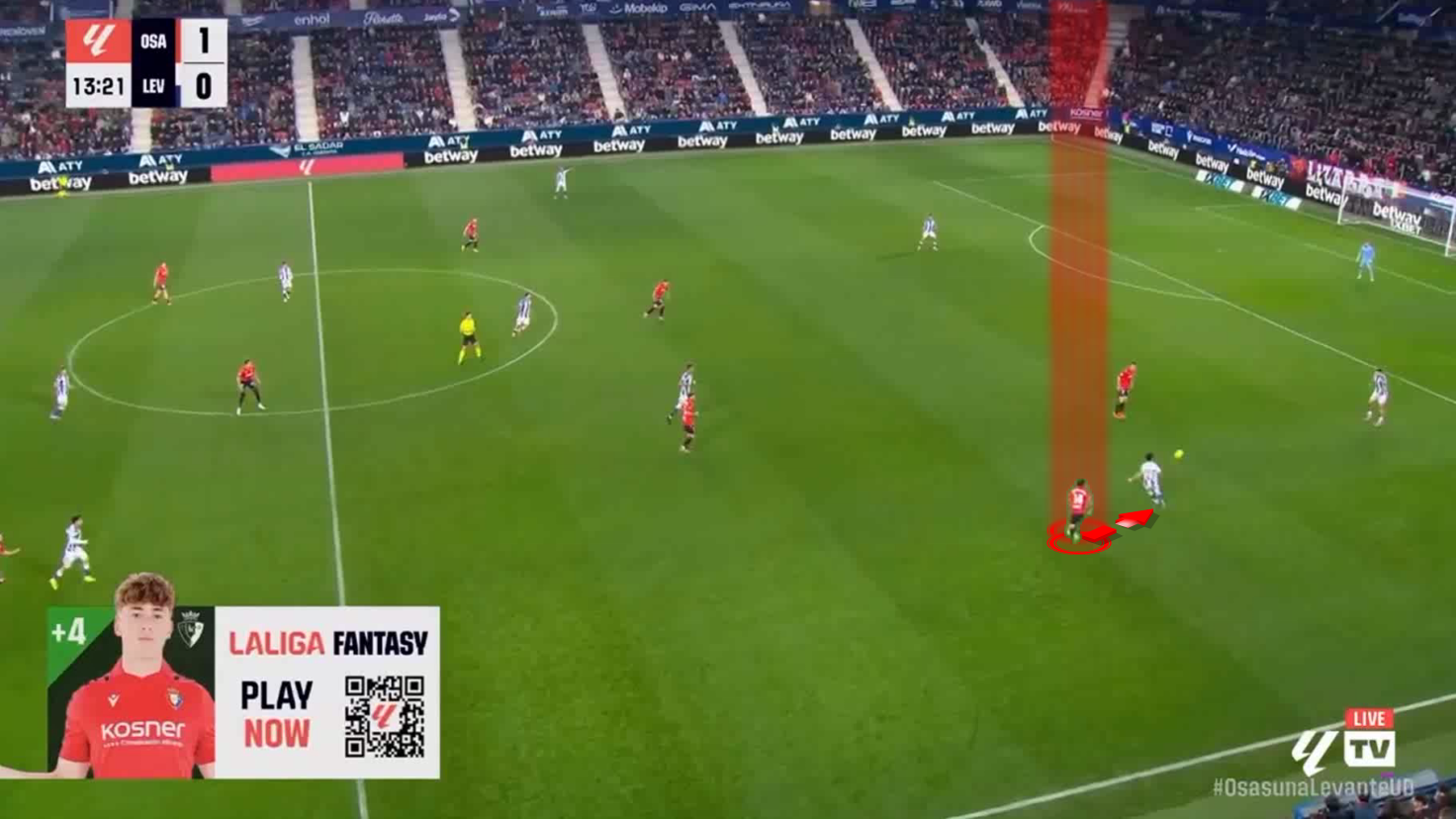
When possession is lost, García doesn’t rush to win it back immediately.
Instead, he relies on his intelligent positioning and anticipation to slow down the opposition’s attack.
By blocking passing lanes and applying light pressure, he gives his teammates time to regroup and reorganise their defence smoothly and effectively.
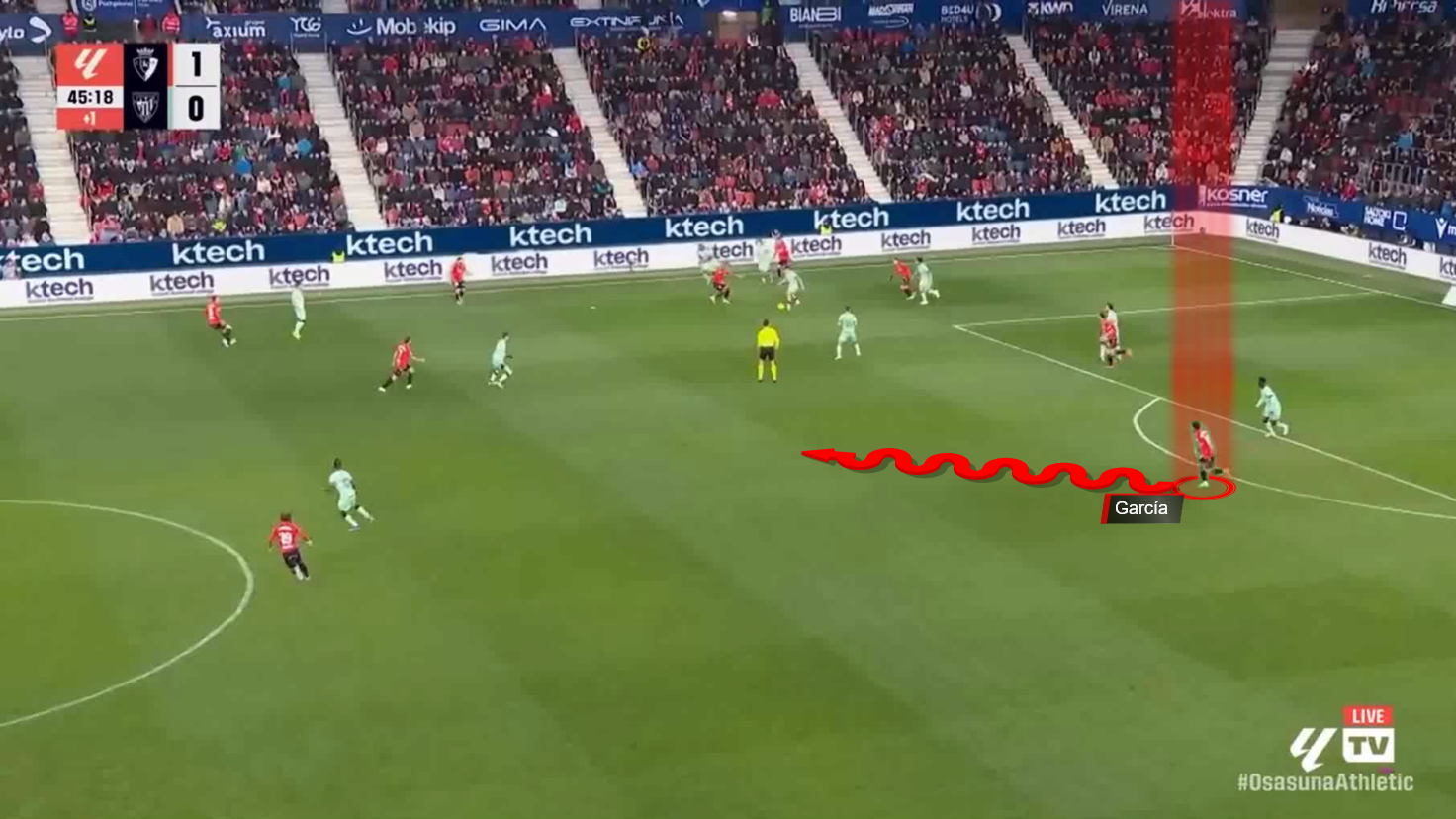
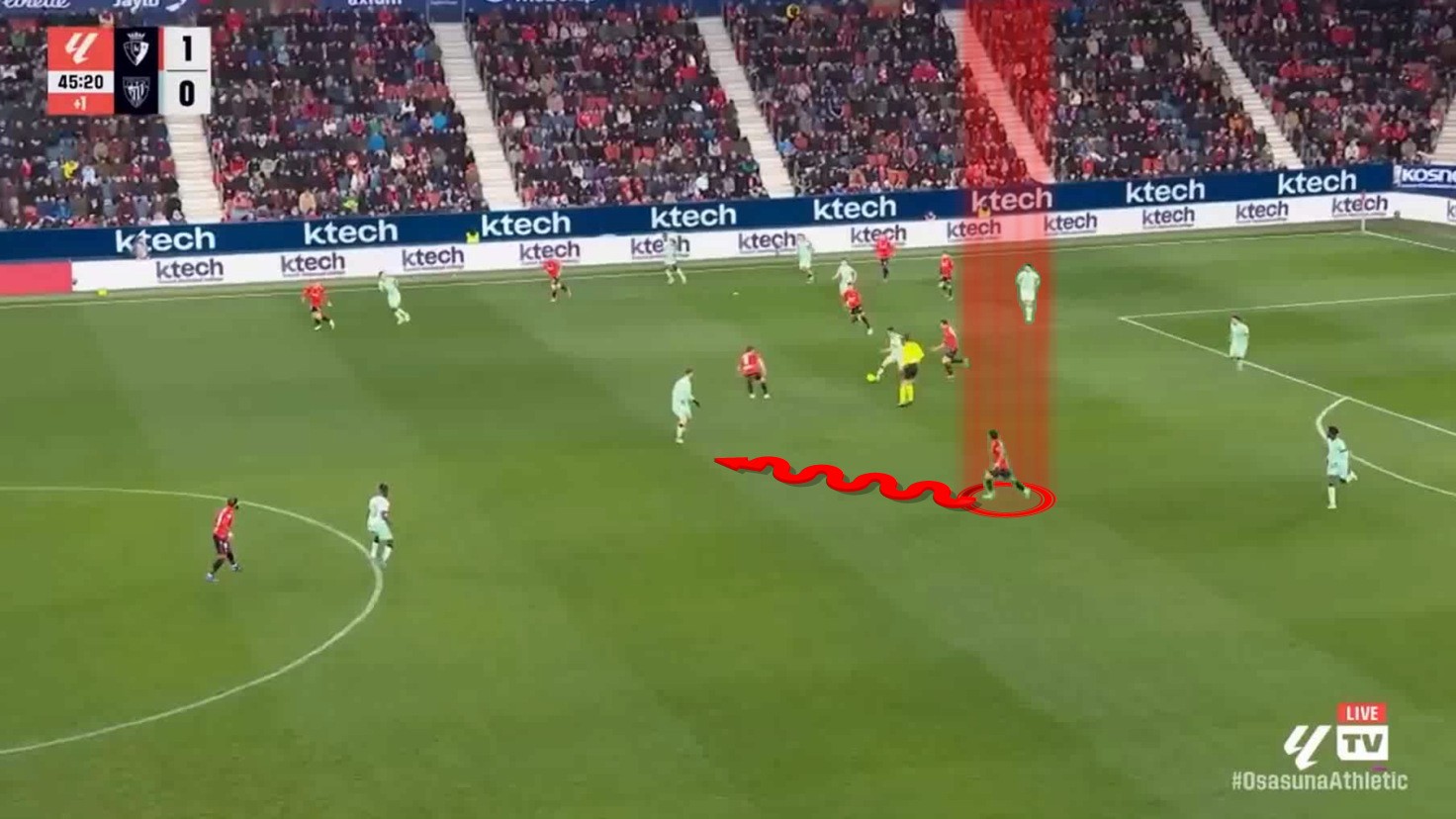
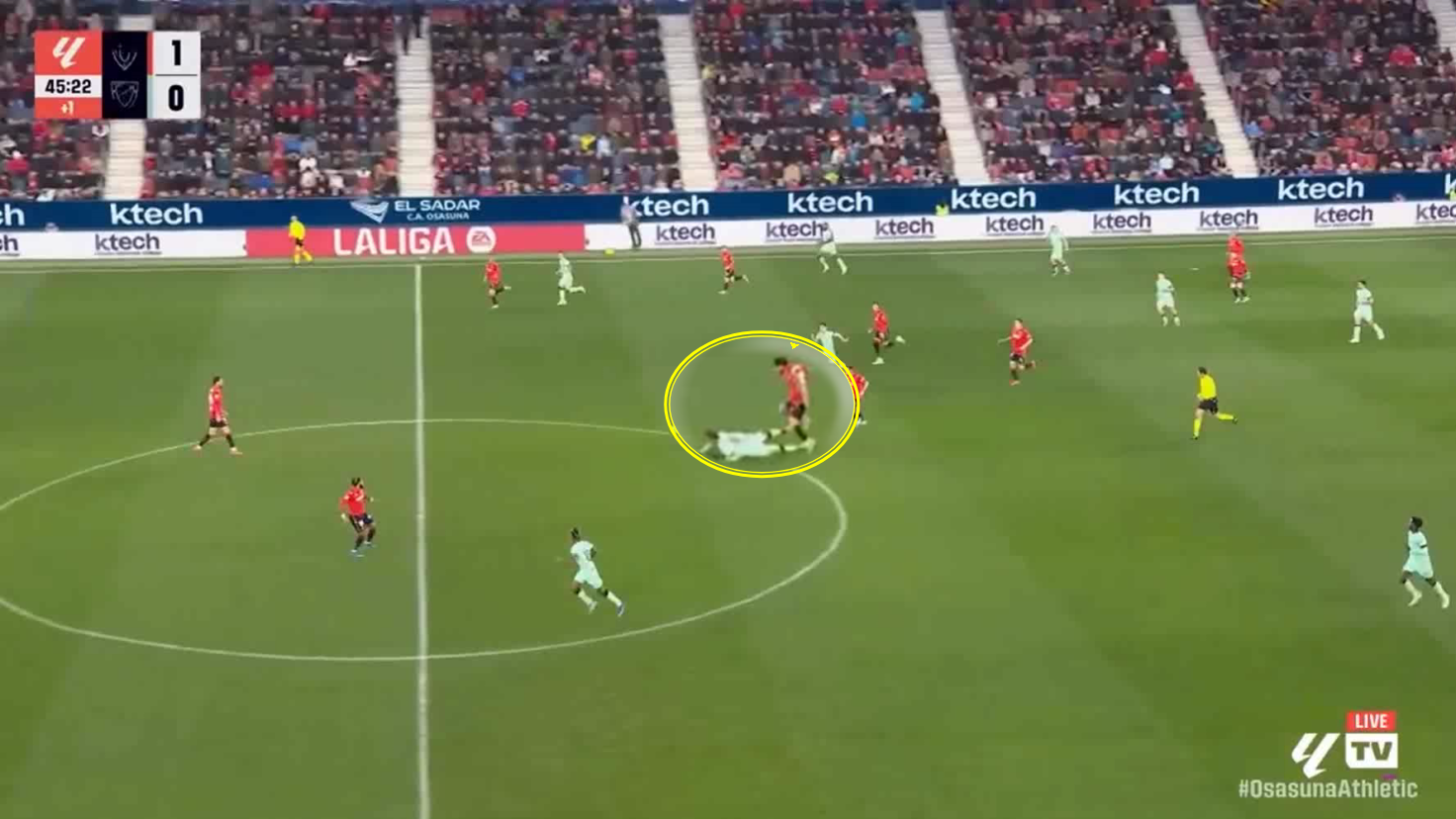
Although not the fastest, García’s astute reading of the game compensates for this, helping Osasuna maintain their organisation and making their defence difficult to break down.
In attacking transitions, his composure and tactical awareness are evident rather than relying on speed, and his first action after regaining possession is often to consolidate the team’s hold, especially against fast-paced teams like Atlético Madrid.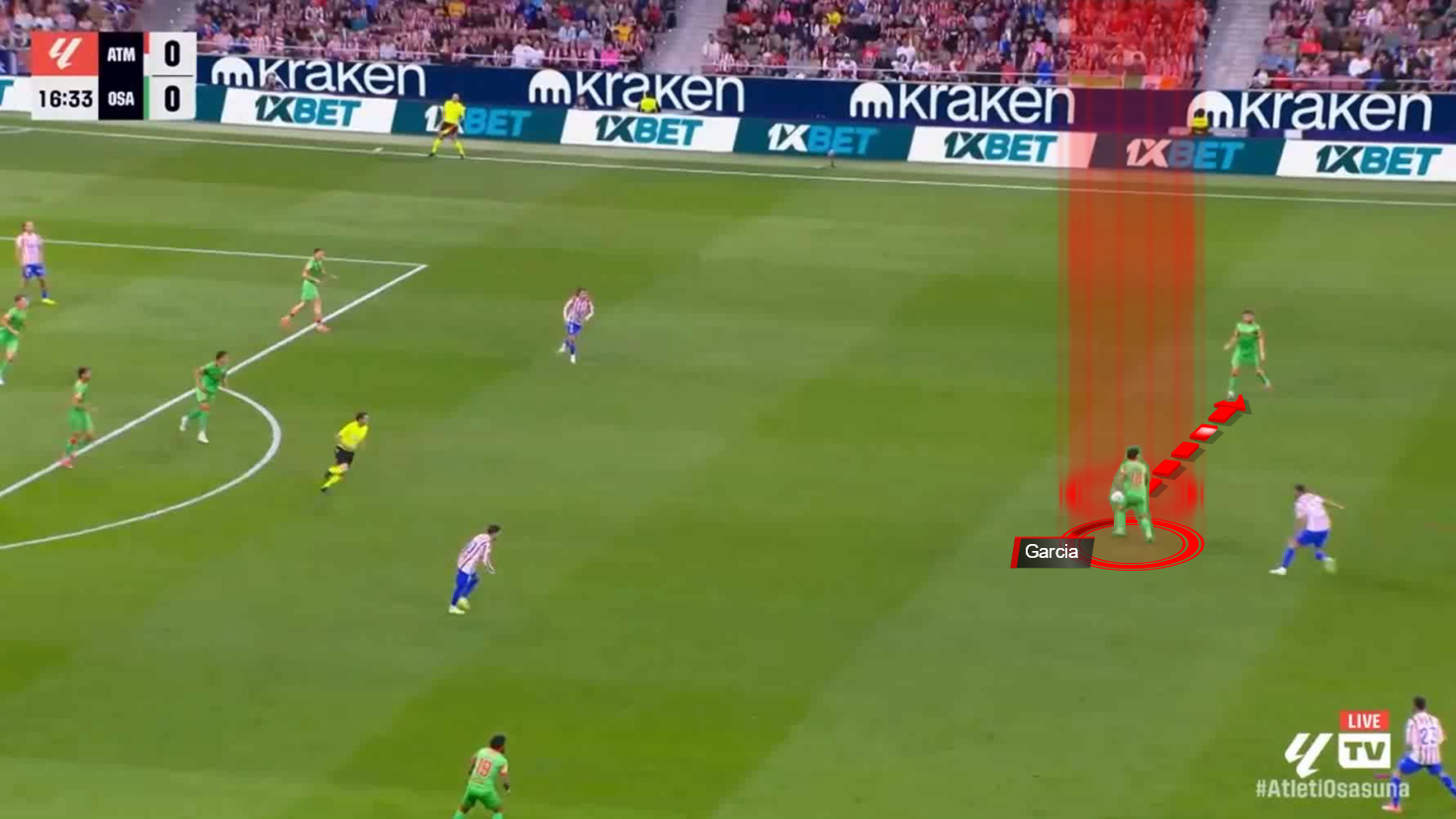
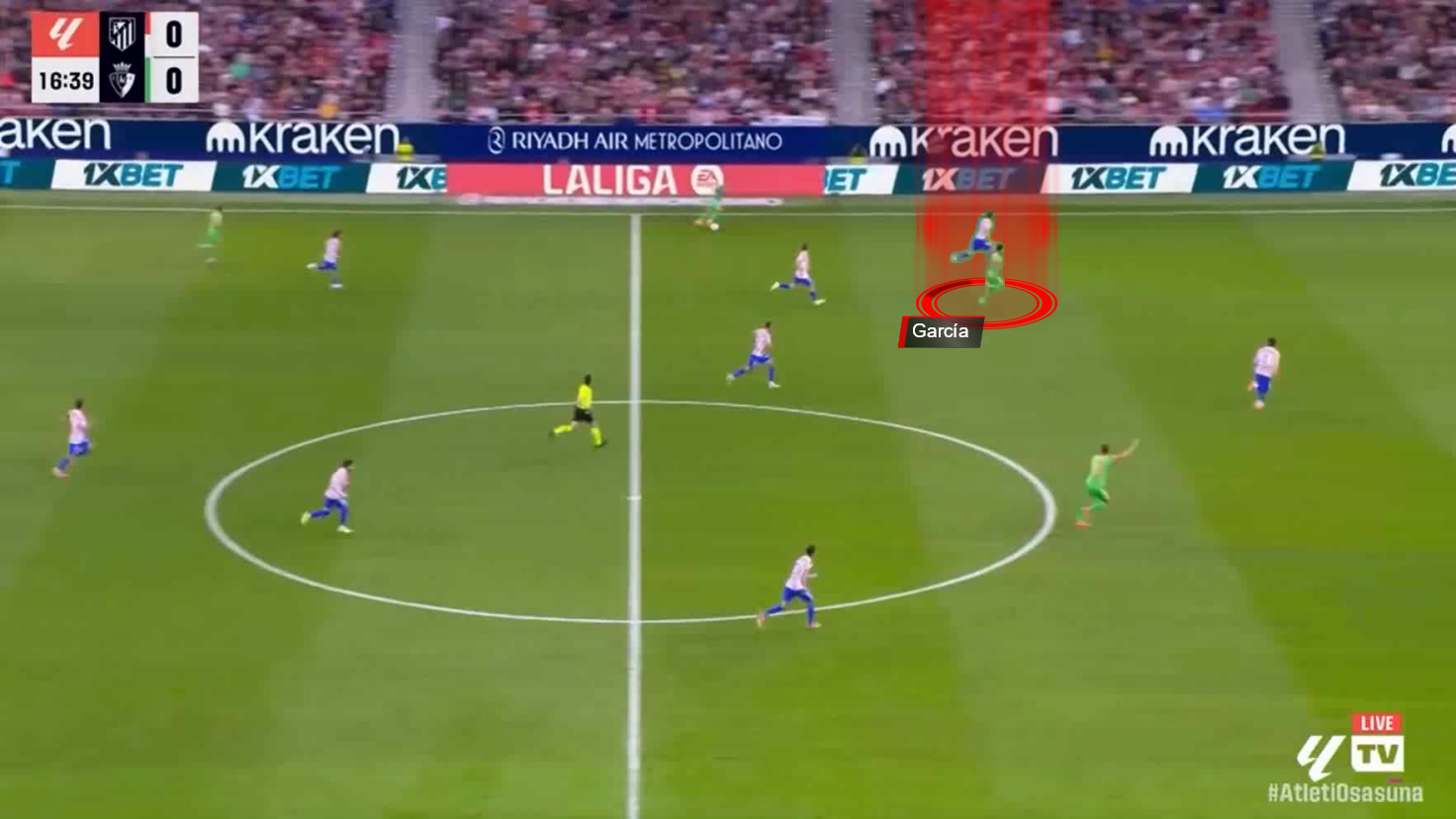
Here we can clearly see his style in the attacking transition, he prefers to move in an organised attack, rather than an explosive power or running vertically.
Tactical Limitations
García is not a traditional winger who relies on speed or constant running, and his impact may diminish during long periods of high-intensity play, especially in the final stages of matches against physically strong teams like Atlético Madrid.
However, his tactical discipline and technical ability remain constant, allowing him to adapt and continue contributing through intelligent positioning and skilful ball distribution, rather than relying on physical strength.
Conclusion
Rubén García is an intelligent winger whose value lies more in his tactical awareness, technical precision, and sound decision-making than in his physical strength.
He enhances the collective attacking structure by occupying the spaces between the lines, his controlled forward runs, and his precise interventions in the final third, making him effective in organised possession-based systems.
Although his impact may diminish in high-intensity matches, his adaptability and ability to maintain organisational balance ensure he remains a reliable player when control and clarity are required rather than speed and intensity.

