


Matheus Cunha’s career hasn’t followed the normal path for a Brazilian player.
He came through the academy system of Curitiba, Brazil, but moved to Sion, Switzerland, at age 18 without making a single senior appearance.
His 10 goals and 8 assists in his first senior season attracted the interest of RB Leipzig, who paid 15 million euros to bring Cunha to Germany.
Faced with a lot of competition, Cunha couldn’t make an impact in Leipzig, and after just 1.5 seasons (52 games, 9 goals, and 3 assists), he joined Hertha Berlin for 18 million euros in January 2020.
In the German capital, Cunha showed everything he had hinted at in Switzerland, and it only took him another 1.5 seasons (40 matches, 13 goals, and 10 assists) to attract Atletico Madrid, where he joined them for 30 million euros this summer.
Cunha also has a great trajectory for his national team.
He made his senior national team debut last week after scoring 18 goals in 21 appearances for Brazil U23 and winning the Gold Medal in the Tokyo Olympics.
In this tactical analysis, we’ll examine Cunha’s strengths and weaknesses and what he can contribute to Simeone’s Atletico Madrid.
Matheus Cunha playing style

Cunha is a right-footed attacking player who has yet to find a fixed position and can adapt to different roles and tactics.
He has defined his playing style as ‘flexible’ and can be used almost anywhere in attack.
Standing at 184 cm / 6’0’’, he possesses good strength and physicality but is also quick, agile and has a good change of pace.
Such great physical conditions also contribute to his adaptability on the pitch as he can cope with challenges in tight spaces or beat players in longer distances.
Cunha’s positional flexibility makes him a hard to compare player.
He has played most minutes as an attacking midfielder or second striker and the profile above compares him to every other attacking midfielder in the Bundesliga last year.
But Cunha isn’t the typical number 10 who gets the ball a lot and intervenes constantly in the organization of the attacks.
If we look at his attacking metrics, we see all of them are above average compared to the rest of the attacking midfielders.
He’s great here in everything related to getting and creating chances.
He’s in the top 15% of attacking midfielders in the Bundesliga for goals, xG, shots, offensive duels, touches in the box, shot assists and xA per 90.
This means he’s much closer to the box than the average attacking midfielder but not as much as a forward, as his 0.3 xG per 90 isn’t outstanding for a pure striker.
His passing metrics also show this.
He’s in the bottom 10% for passes, accuracy and forward passes per 90, meaning he doesn’t come deep to take the ball and prefers to wait closer to the box.
But once he gets the ball in more dangerous positions, he has the ability to create things, and he stands out in smart passes, key passes, and through passes.
This flexibility could be a blessing or a curse for Atletico Madrid.
Cunha can play in any position in attack but he’s not a specialist in any of them at the moment.
Simeone needs to understand where he can contribute more and find him a space there.
If he does, he will have a player who combines physicality, work rate, creativity and end product.
Matheus Cunha Dribbling and protecting the ball
Cunha’s combination of power and agility makes him a very difficult player to defend.
When he receives the ball between the lines and needs to use his body to hold it and turn, he combines his strength with his technique to protect the ball, turn and create space to play.
This ability to receive with his back to the goal and escape pressure makes him a very useful player in the buildup if he moves between the lines and offers passing lanes to his teammates.
His low number of progressive passes compared to other attacking midfielders (4.18 per 90) is in part due to him usually receiving those progressive passes instead of making them.
Looking at Cunha’s dribbles last season, we see that he attempted them all over the pitch and with a high success rate.
Getting past players in different situations and using both pace, strength and skill is a great asset for Cunha’s team.

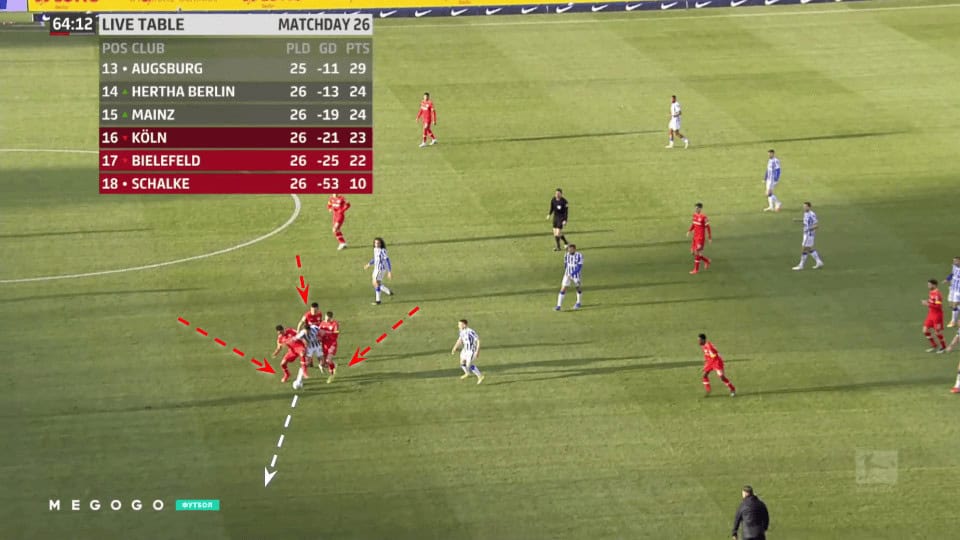
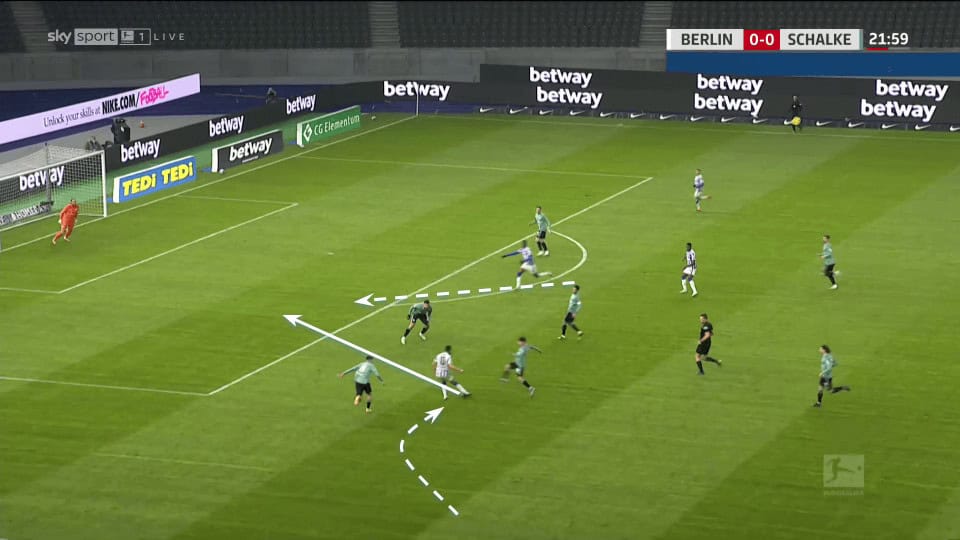
In the following picture, we can see an example of Cunha’s ability to shield the ball.
He has just received the ball in his own half and despite being pressed by three rivals, he manages to protect the ball and escape pressure.
Cunha uses his hips and arms very well to create space around him and prevent rivals from getting close to the ball.
When facing rivals in tight spaces, Cunha has a wide repertoire of tricks to dribble them and keep progressing.
His technique is fantastic, especially for a player of his size and strength.
He’s also creative, thinks quickly, and finds solutions in difficult situations.
On top of that, his pace and power help him when getting into duels and racing against defenders.
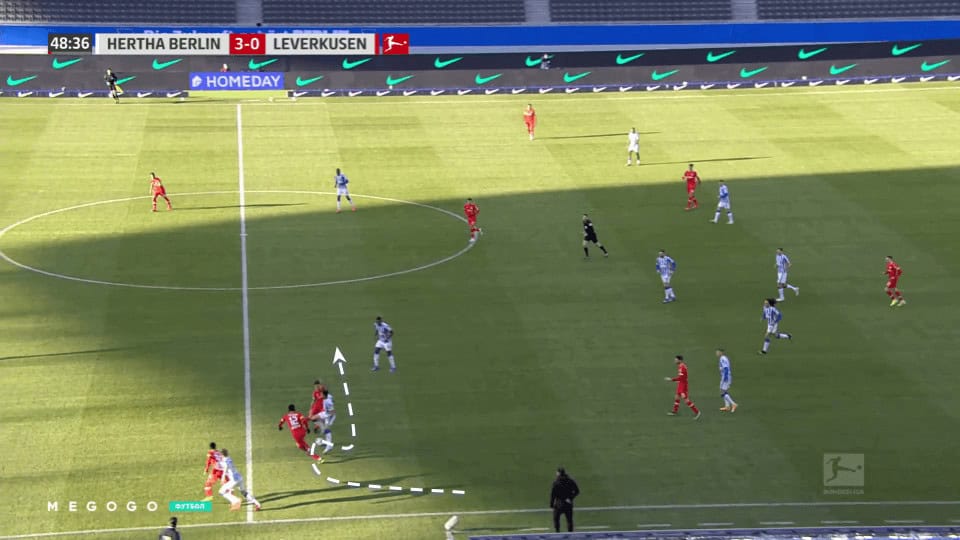
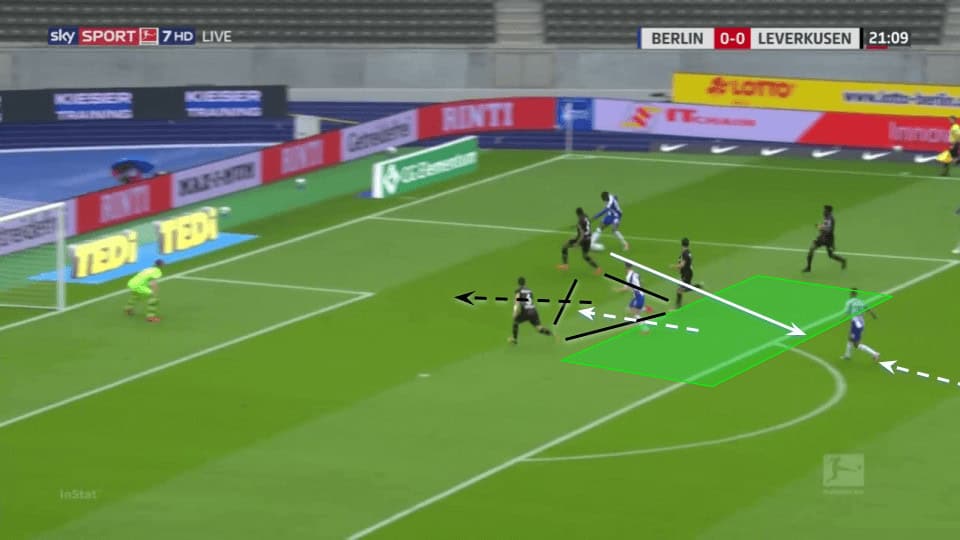
The next picture is a good example.
Cunha starts the attacking transition on the left and faces two rivals.
He gets past the first one cutting inside and when the second one comes to press him, he executes a perfect roulette to keep running into free space.
It’s not only the technical quality that stands out here but also the quick reaction to choose the right skill right after dribbling the first rival.
This dribbling quality and ability to win offensive duels make Cunha an unpredictable player who can create chances and space for himself.
But he also has quality in his passing as we’ll see next in this scout report.
Matheus Cunha Creativity and assisting
Cunha’s tendency to play in the second line means he usually has movement in front of him.
Knowing Cunha’s vision and passing quality, his teammates usually make runs in behind as soon as he has the ball and is facing the goal.
Cunha has a great passing range and accuracy and can create chances from lots of positions and using different kinds of passes.
The map below shows all his open-play assists and key passes last season.
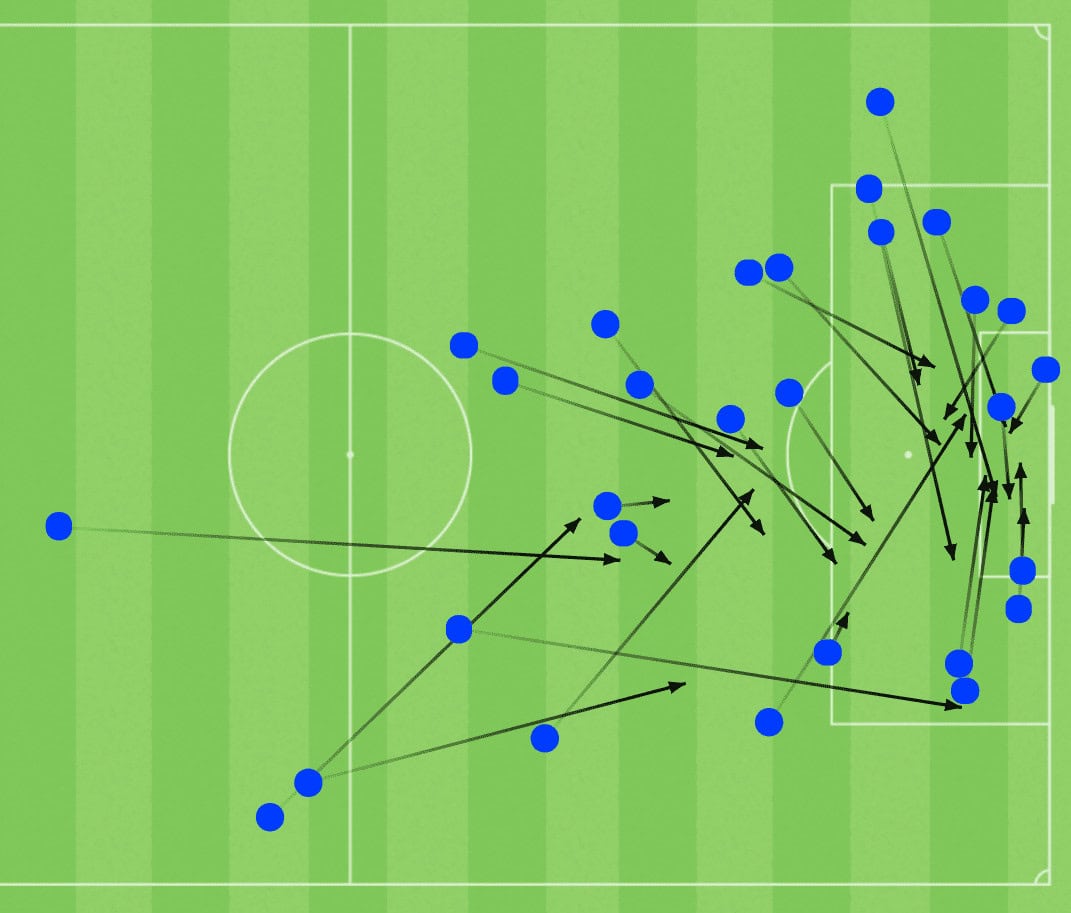
We see he creates from deep, from the edge of the box and also from both wings.
His dribbling skills mean he can get to the goal line and play excellent cutbacks from there too.
Again, Cunha shows great versatility and ability to create from anywhere in the pitch.
Let’s see a couple of examples.
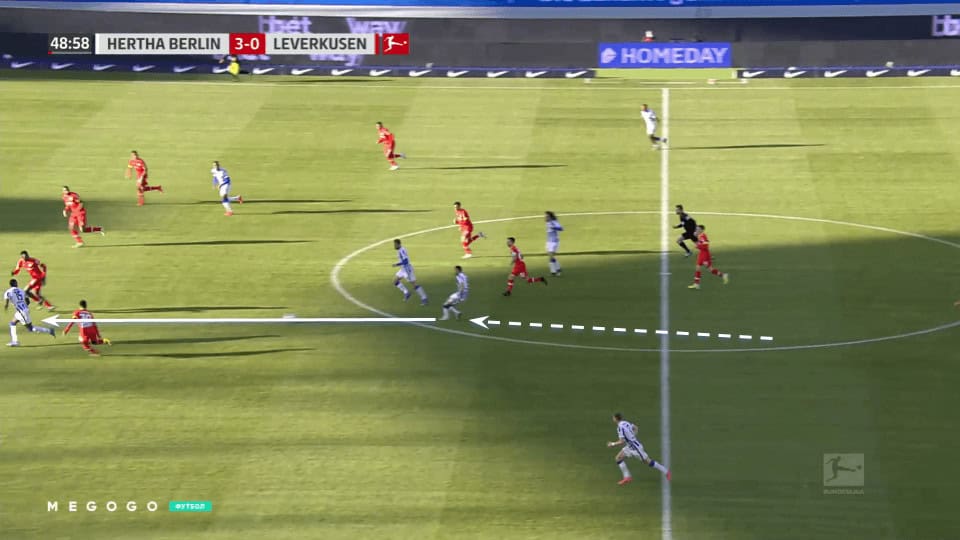
In the first one, Cunha runs with the ball and as soon as he crosses the halfway line, he plays a perfectly weighted ball into his teammate’s run.
Apart from being accurate, as there isn’t much space between the defender and Cunha’s teammate, the pass needs to have enough power to prevent the defender from intercepting it but not too much so the striker gets to it in a good position and before the goalkeeper.
Cunha’s passing combines both.
In the next one, Cunha comes inside from the left and spots his teammate running in behind.
Cunha’s body position suggests he’ll play the pass to a more central area, but he hides his intentions until the last moment and plays a through pass into the box and into his teammate’s run.
Again, the pass requires perfect accuracy, vision, and quality to send the defender the wrong way.
Seeing all this, it’s no surprise that Cunha was one of the best Bundesliga attacking midfielders in terms of creating chances, registering 1.7 shot assists (top 4.8%), 0.43 key passes (top 25%) and 0.22 xA per 90 (top 10.8%).
A threat from the second line
Again, Cunha’s mobility in the second line affects his game.
Even if he can be used as a striker, he excels at arriving at the box from the second line.
He’s intelligent enough to create separation and find free spaces at the edge of the box or just inside it.
Using the dribbling and combination skills we have seen before in this scout report, Cunha also gets good shooting chances.
Most of his shots from inside the box come from these plays instead of being at the end of crosses or running in behind.
At the moment, Cunha doesn’t have the instinct to make off the ball movements to create passing lanes and get into scoring positions and needs to be active on the ball to get these opportunities.
The map below shows all the balls Cunha received last season.
Considering he’s an attacking player who has sometimes been used as a striker, it’s astonishing that he hasn’t received any balls inside the marked square.
This is very good evidence of his lack of movement behind the defensive line and inside the box.
The fact that he didn’t register any open-play shot with his head last season only adds reasons to think there’s a lack of activity in the box he needs to solve if he wants to become a dangerous striker.

On the positive side, Cunha’s lack of movement to receive the ball inside the box doesn’t mean he doesn’t get chances to shoot from there.
As explained before in this analysis, his skill in getting past rivals also gives him good chances to shoot from inside the box.
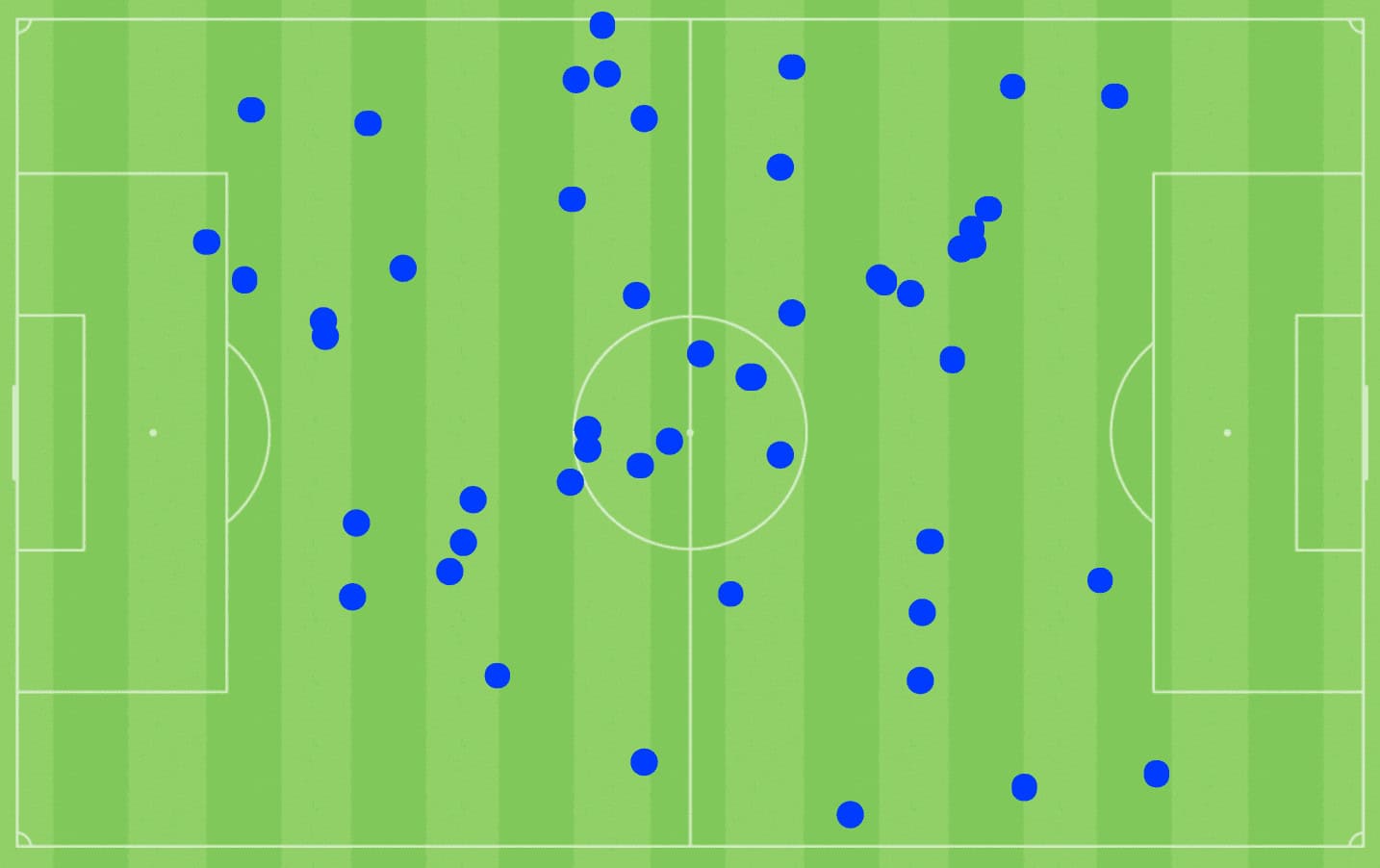
In the map below, we can see all his shots from last season.
Notice how despite the issues mentioned before, he still has a lot of shots from inside the box, especially from the left side, where he can cut inside to his strong right foot.
We can also see that he likes to try his luck from a distance.
Even if he hasn’t been especially lucky, his shots are powerful and pose a threat from far.
The lack of shots from inside the six-yard box reinforces the argument regarding his lack of instinct in the box.

Focusing on the positives, let’s examine a couple of examples of Cunha arriving from the second line and getting good chances to shoot.
In the first one below, Brazil’s striker makes a run to pin the Egyptian centre-backs, creating space behind him.
Coming from the second line, Cunha times his run perfectly to give the man on the ball time and space to play a relatively easy but dangerous pass to the edge of the box.
Cunha has enough time to control and score by timing his run well.
The same logic applies to the next example.
With the ball on the wing, Cunha’s teammate makes a run into the box and attracts three rival defenders who try to prevent him from receiving.
This movement frees the space at the edge of the box and Cunha arrives there to receive the ball and shoot.
It remains to be seen if Cunha can play as the most advanced man on his team, but at the moment, he has shown he excels when someone is making runs in front of him.
This activity from more advanced teammates creates space for Cunha at the edge of the box and also passing lanes for him to assist the strikers.
Matheus Cunha Defensive contribution
Simeone’s Atletico Madrid has stood out in the last ten years because it is a team in which every player works hard, both in attack and defence, regardless of their position.
Cunha has the work rate needed to succeed in these tactics.
If we look at the stats, Cunha’s mixed position between an attacking midfielder and a forward prevents us from grasping all the information.
Compared to other attacking midfielders, he’s just above average in defensive duels (6.87 per 90) and shows good aggression levels as seen by the 1.81 fouls he commits per 90.
However, these stats would be great if compared to strikers or wingers so we can’t say he’s just average.
Looking at Cunha’s ball recoveries last season, we see he’s active both in pressing and, especially, in tracking back.
Despite his advanced position, Cunha doesn’t hesitate to run back to a defensive position as soon as his team loses the ball and he can be seen defending in his defensive final third.
Two examples will show us Cunha’s defensive abilities and how he can contribute in different scenarios.
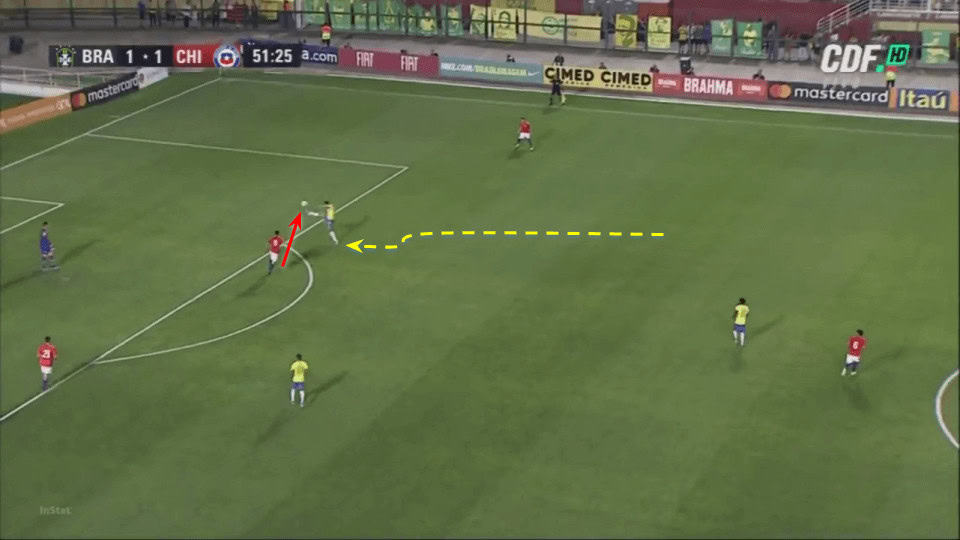
In the one below, we see Cunha pressing high and forcing a mistake from the Chilean defender, who is in a very dangerous position.
He first keeps some distance to make the defender think he can pass the ball to the wing. In the last moment, he accelerates and intercepts that pass, which leaves him alone against the goalkeeper, and he scores.
This play shows intelligence, good timing and also flexibility and instinct to intercept the pass.
In the last one, the situation is the opposite.
The play starts with a corner kick for Hertha (Cunha’s team).
He attempts a shot from a very long distance, which is saved by the goalkeeper.
Conscious of his team’s lack of players in defence, Cunha stays deep after the shot. When the rivals play a long ball into space, he’s there to be the last man and prevent a clear chance.
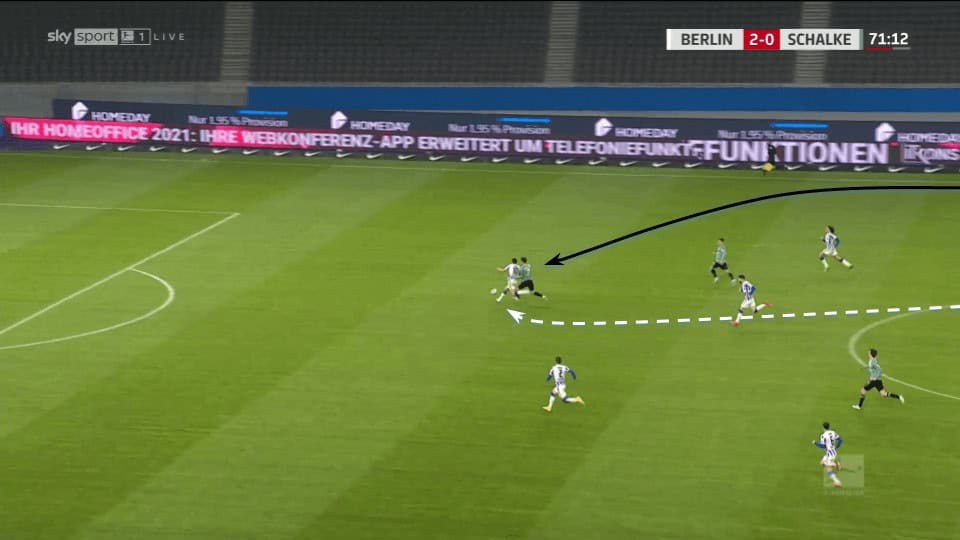
This example shows Cunha’s ability to think about defending even when his team is attacking, his willingness to work in defence, and his pace and strength to defend effectively.
Knowing that Cunha will always work hard after losing the ball should make Simeone trust him to play in any position and not worry about the balance of the team.
Conclusion
At just 22, Cunha has already proven he’s a player capable of making a difference at the highest level with his wide range of action and repertoire.
He combines a classic striker’s physicality with a winger’s skill and pace and the quality of a Brazilian number 10.
Now it’s up to Simeone to decide where he will be most useful for Atletico Madrid.
The competence will be huge, especially with Antoine Griezmann joining the club from Barcelona, but Cunha has all that’s needed to make an impact in La Liga and earn his spot in the starting XI.

