
After just 12 months into his role as the head coach of the South Korea national team, Jürgen Klinsmann was relieved of his duties on the back of a disastrous Asian Cup campaign. Despite reaching the semi-final, a humbling defeat to underdogs Jordan capped off an embarrassing display in Qatar, epitomising the disdain shown towards the German manager. Having received ample criticism from Korean fans regarding his level of commitment and tactical direction, Klinsmann and his side displayed a distinct level of tactical naivety and lack of adequate preparation- ultimately resulting in their demise. Klinsmann’s ‘zombie football’ was coined in response to their need to come from behind in the majority of matches throughout the Asian Cup, requiring moments of brilliance and last-minute goals to give them a burst of life.
This tactical analysis and scout report will begin to understand what truly went wrong for the South Korean national side, with their ‘golden generation’ failing to end the 64-year wait for silverware. With Klinsmann’s tactics and philosophy being shown to lack a sense of creativity, this analysis will begin to identify how tactical issues were left to be exploited and what the next head coach must do to avoid these in the future.
South Korea’s Asian Cup setup
One of the biggest criticisms of head coach Klinsmann would be that he lacked the proper desire and perceived commitment to succeed in the role. There was major backlash regarding his decision not to relocate from his home in the United States in the run-up to the tournament. It was said that his ‘work from home’ management did not begin to instil the correct principles and give him the best opportunity to properly scout the array of talents at his disposal in the K-League. Perhaps this may be seen as a bit of a stretch, but his tactical configuration at the Asian Cup does imply a lack of preparation.

South Koreans appeared as though they were in the dark when beginning to predict which formations their nation would be playing in, with Klinsmann using 4-3-3, 4-4-2, 4-2-3-1 and even 3-4-3, depending on the personnel he had at his disposal for each match. Whilst the tactical adaptations would appear beneficial on the outside, the lack of tactical consistency for a side deemed to be one of the clear favourites does not exactly exude confidence for both fans and players.
Formational modifications between matches attempted to negate some of the weaknesses within the side and address specific areas which could be exploited against the opposition. However, as it eventually panned out, these changes were far from fruitful, and the underlying systematic problems remained at large.
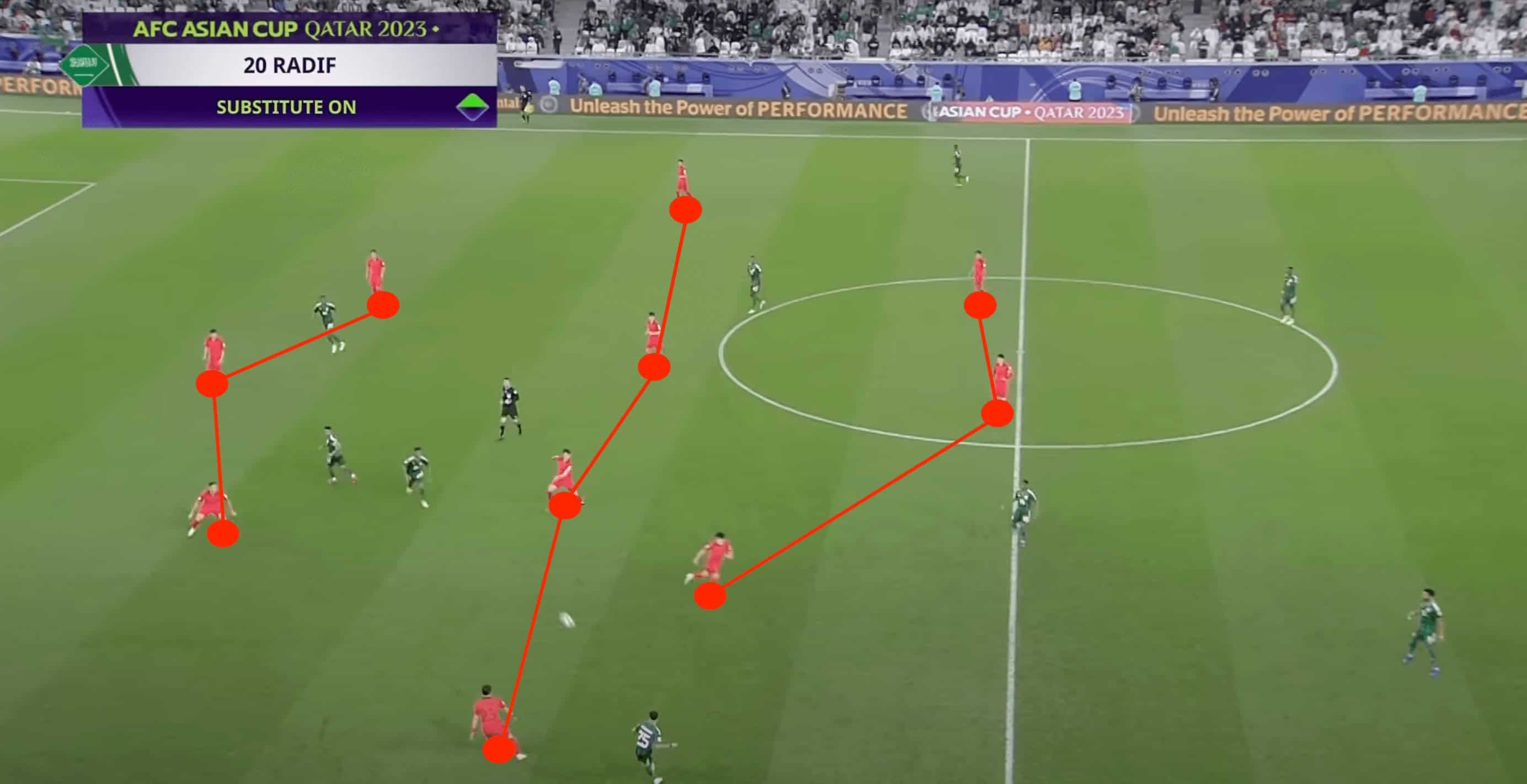
South Korea in possession
When you think about the attacking prowess of the South Korean forwards, it is hard not to wonder why they were so off the boil and needed last-gasp goals to see positive results. The forward line that they set up against Jordan in the semi-final consisted of Premier League stars Son Heung-min and Hwang Hee-chan, accompanied by PSG’s new wonderkid, Lee Kang-in. Whilst we have come to understand that poor squad dynamics and team harmony would have played a crucial part in their shocking Asian Cup exit, it must be stated that the offensive naivety must be given an equal share of the blame.
The talismanic figure of Son Heung-min was met with extensive defensive attention in each of South Korea’s matches, with Klinsmann acting accordingly and shifting his position from left-winger to shadow striker over the course of the tournament. The reality of the matter would be that the opposition defences did just enough to negate Korea’s superstar attacker, having scored 0 goals from open play despite their huge number of shots on goal. The static movement of the South Korean forwards in the attacking third meant that those in the middle third were usually bypassed.
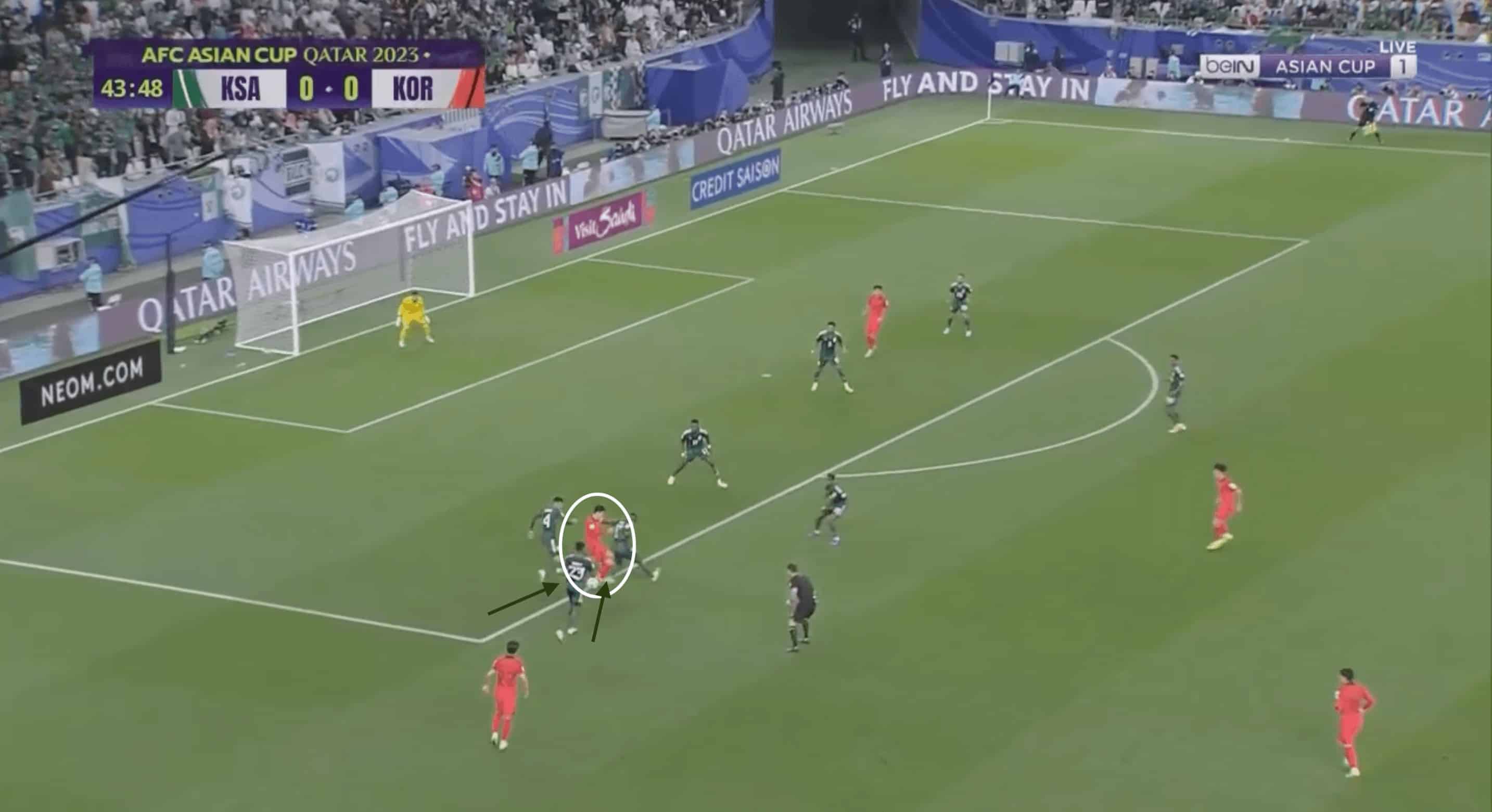
The lack of progression and worry regarding opposition counterattacks meant that South Korea saw a lot of build-up play ending with a long-range pass from the central defenders, searching for quicker forwards through the channels. While this would appear promising in theory, it remains an inconsistent method of attack and risks the immediate loss of possession, placing more pressure on the already weaker defensive line.
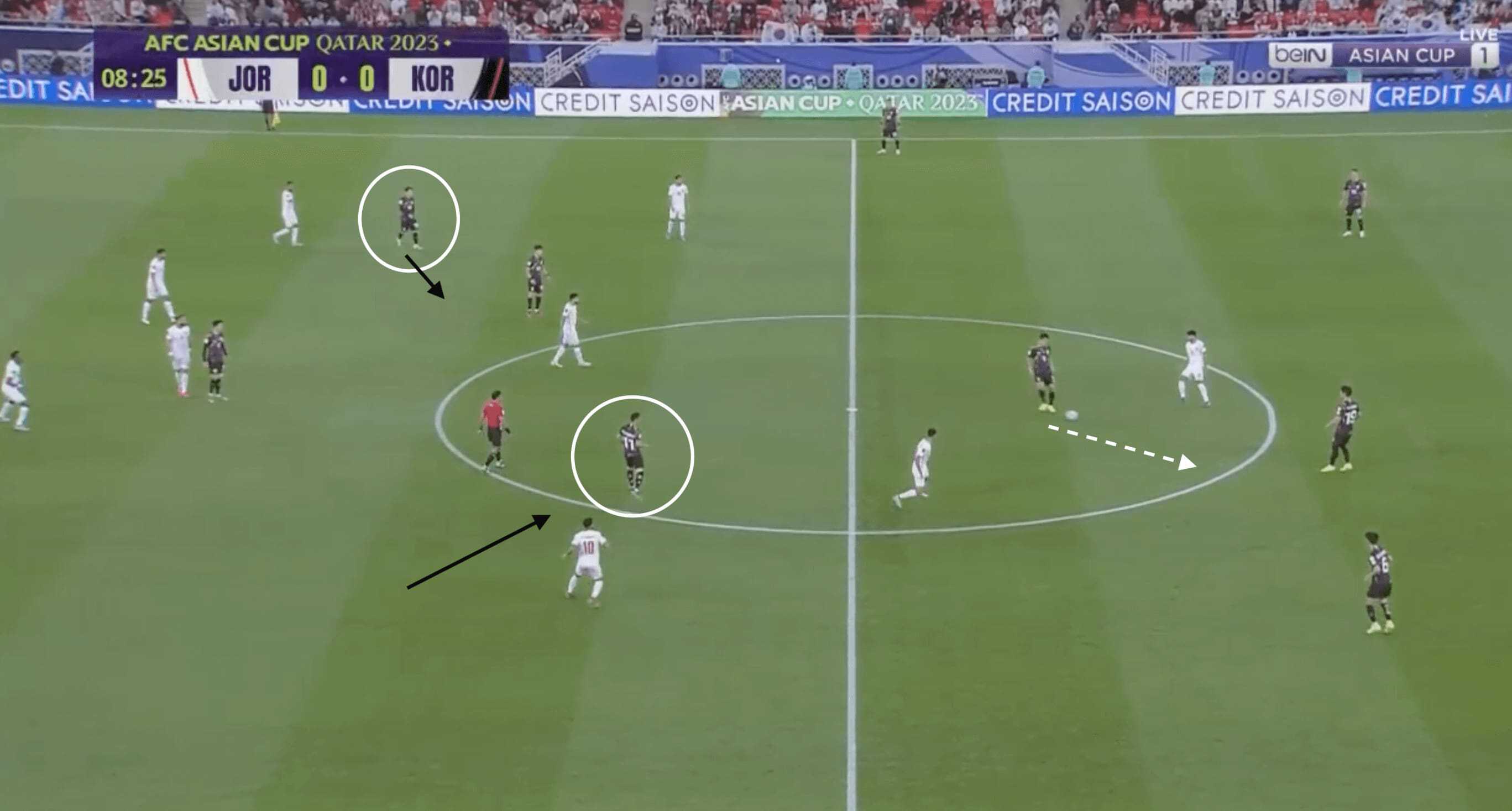
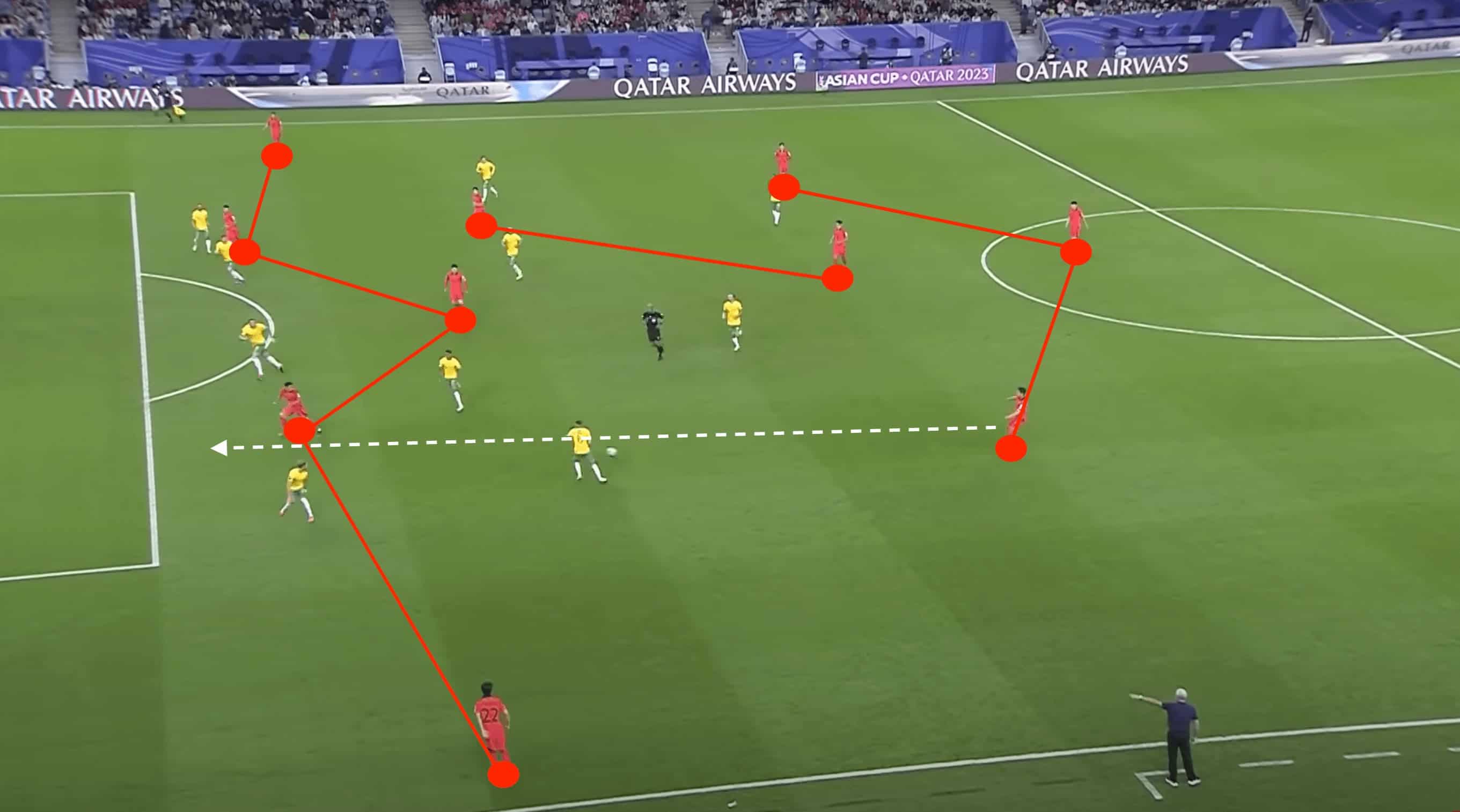
Attacking spark against Jordan
The one method of attack that looked promising for South Korea would be utilising the wider areas and looking for crosses into the box. In the semi-final against Jordan, the opposition’s deep low block with five defensive personnel meant that South Korea would have to evade the central areas and play around it. With the advanced full-backs of Seol Young-woo and Kim Tae-hwan, Klinsmann’s side were able to overload the wide areas and look to play balls into the box.
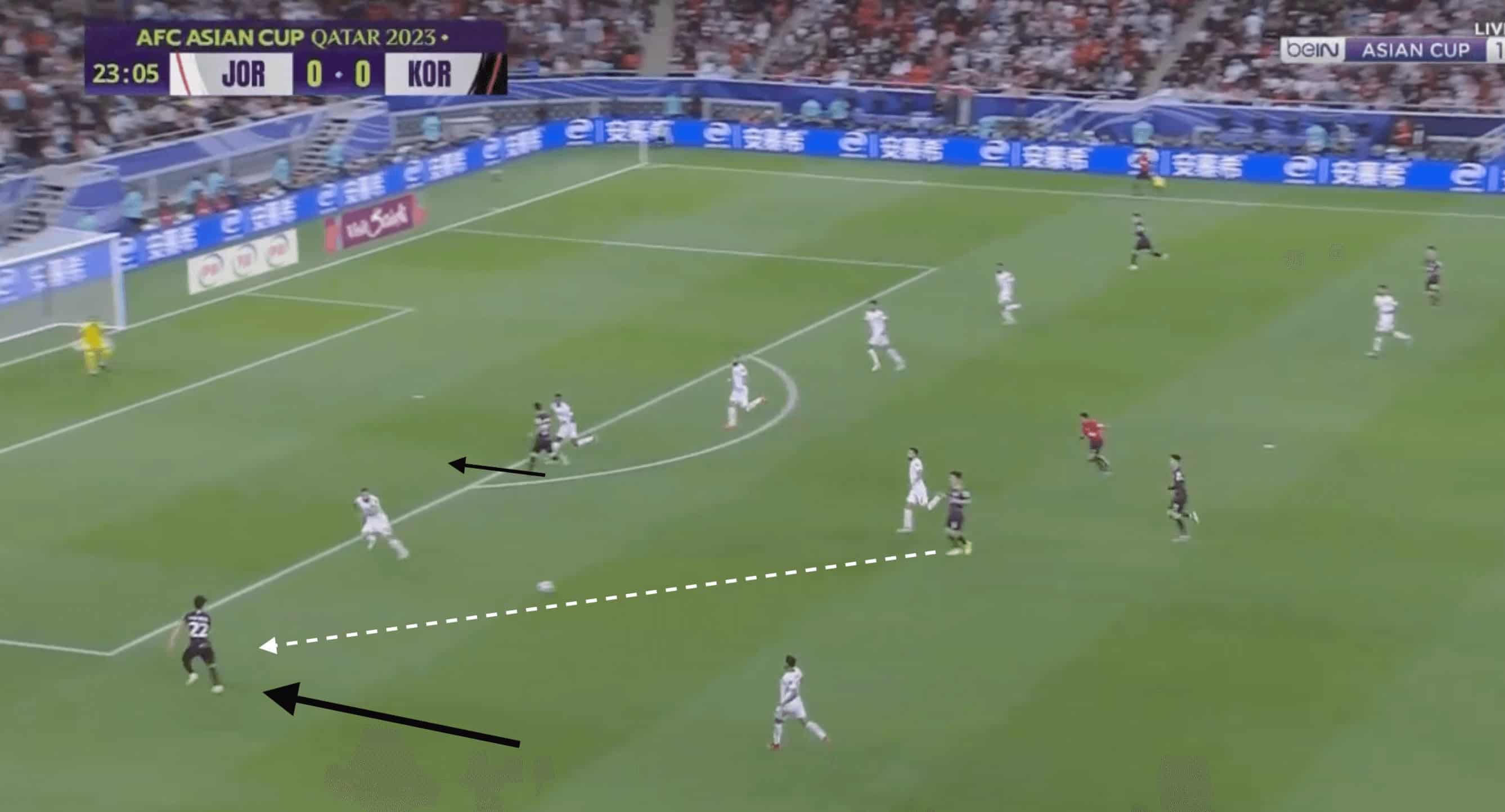
Despite not playing into the hands of their more technically gifted stars, it provided the most rewarding effort on goal, with Lee Jae-sung heading against the base of the post. Although they benefited from this attacking method, it could have further been enhanced by the addition of forward Cho Gue-sung from the outset. Whilst he fails to excite with his technical abilities and distribution, it is undeniable that his aerial presence would’ve suited this setup more than the forwards Klinsmann selected. Having succeeded with 6.87 aerial duels per 90 at the 2022 Qatar World Cup, it begs the question as to why he was only offered 34 minutes of football in the semi-final.
Attacking data
It is astounding to think that South Korea failed to make a positive mark on the tournament when looking at their offensive data and their ability to dominate the ball. Their figure of 69.8% possession on average was by far the largest amongst their competitors, leading many to ponder why they failed to make it count. 1.35 goals per 90 saw them ranked 8th in the tournament, but as we have seen, these mostly came in the dying embers of the match. The most damning attacking stat would have to be the fact that they only scored 0.17 goals per shot on target, a figure which ranked them only 18th out of the 24 contending nations. This creates a huge disparity between their shots on target figure per 90 of 5.40 (3rd highest), suggesting that for all their attacking firepower, South Korea failed to be clinical when it mattered.
Defensive struggles
With one of the world’s best defenders, Kim Min-jae, leading their defensive group, South Korea would’ve certainly been optimistic about their ability to remain resolute at the back, letting their attacking talents flourish. However, the 2023 Asian Cup marked a tournament full of defensive weakness that continued to be punished, leaving them in a deep hole to claw their way out of. A serious problem between the sticks was certainly detrimental to their defensive success, with keeper Kim Seung-gyu suffering a long-term injury after the opener against Bahrain, forcing Cho Hyun-woo to deputise in his absence. A 64% save percentage over the course of the tournament (18th best) was particularly poor but more so indicative of the fundamental issues South Korea showed when out of possession.
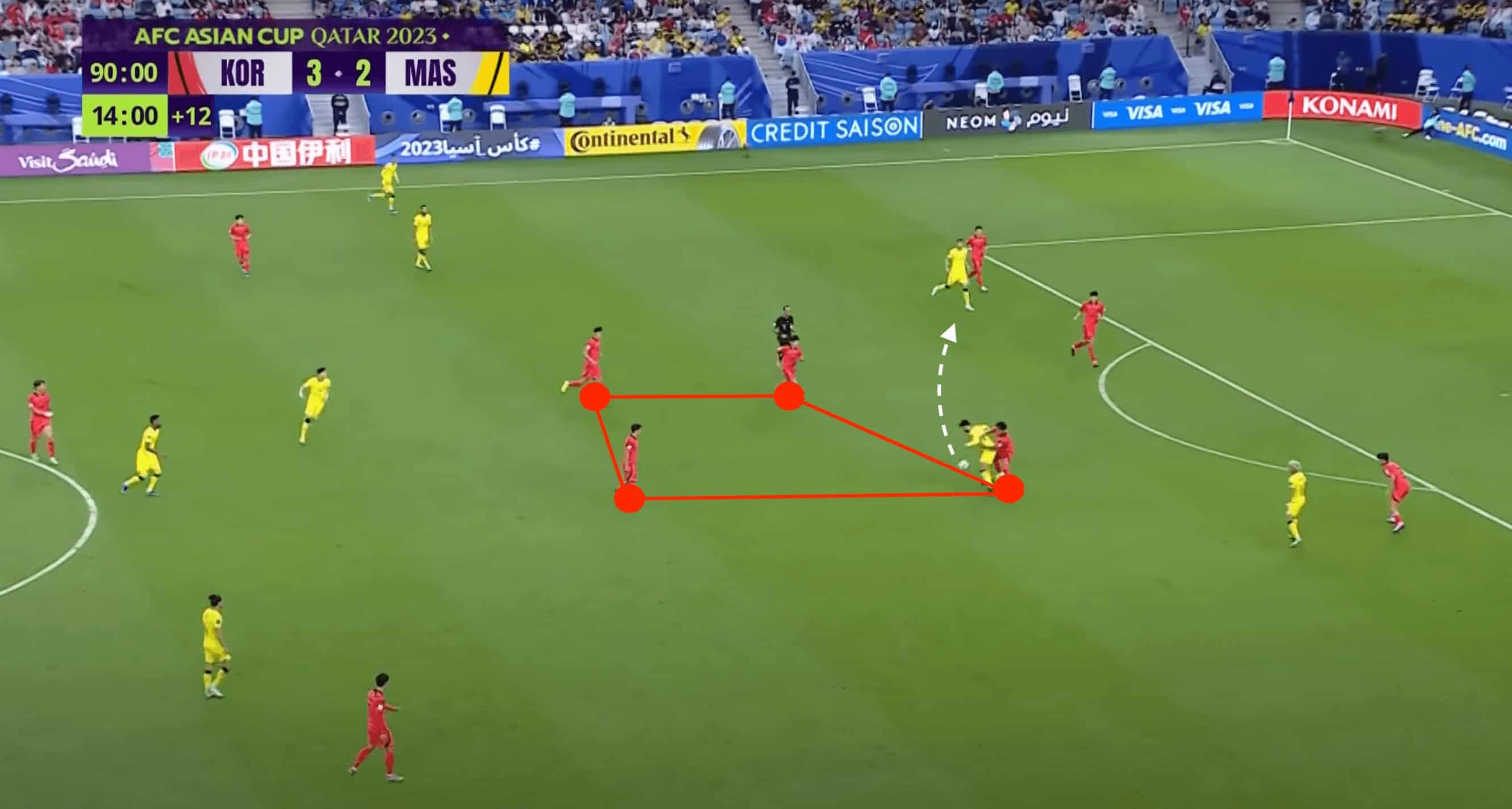
South Korea were incredibly vulnerable in transition, especially when committing players forward in an attempt to regain control when playing from behind. The depth of the full-backs in the 4-3-3 or 4-4-2 meant that they were often outnumbered on the break, resulting in a numerical superiority for the opponent and conceding key chances. The midfield selection was also hurting the side defensively, with a partnership of Hwang In-beom and Park Yong-woo being too imbalanced with defensive duties in mind. The former represents more of an advanced number eight in the 4-4-2, with his desire to run forward leaving Park Yong-woo too isolated and needing to cover an extensive amount of the midfield zone.
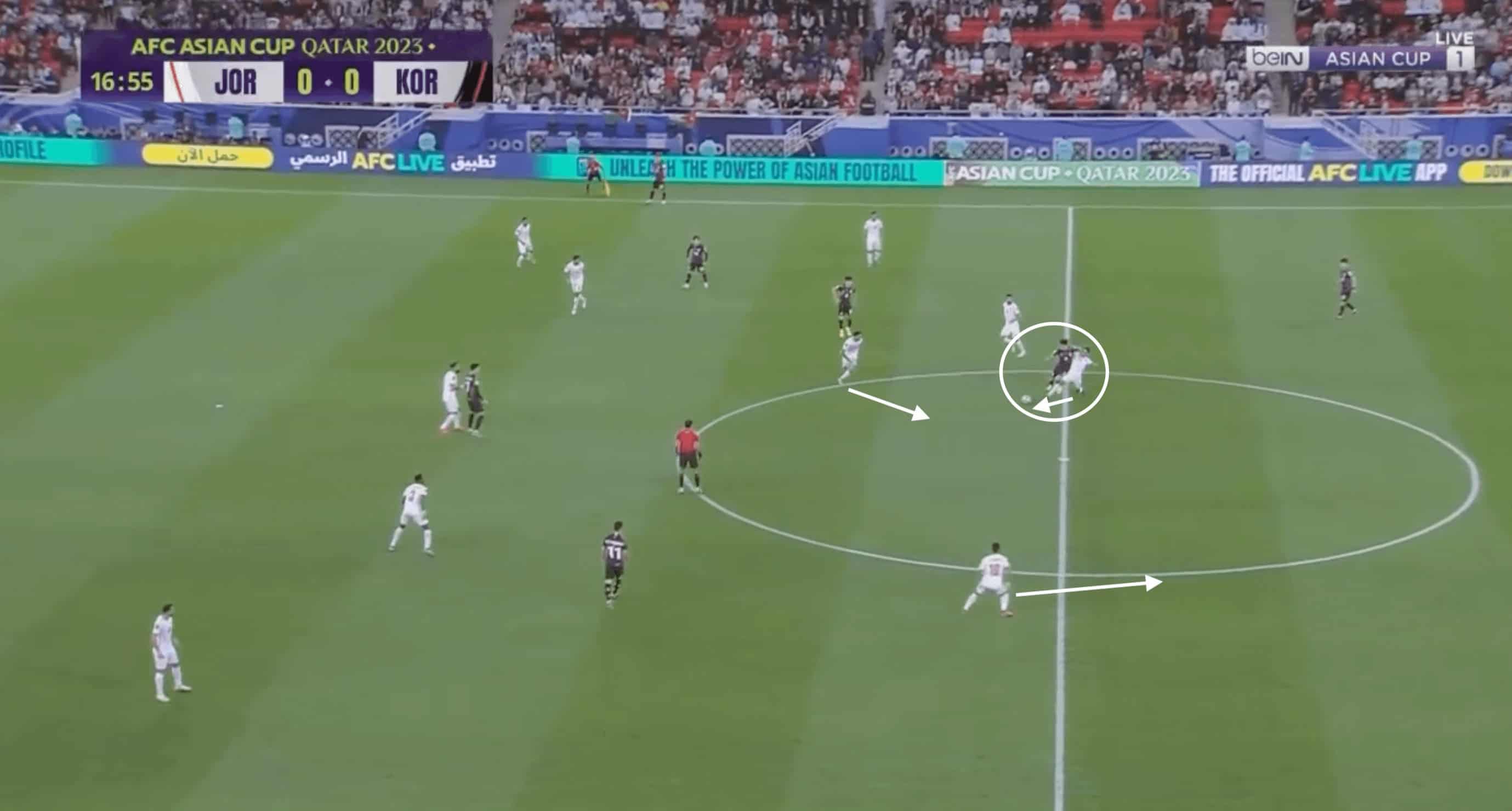
The monumental loss of Kim Min-jae to suspension for the semi-final was incredibly detrimental, especially when he managed to mostly negate the Jordan attack in the group stages and salvage a much-needed point. His absence amplified Korea’s vulnerability and was capped off by an incredible solo run from Musa Al-Taamari, gliding through Klinsmann’s defence practically untouched. The whole tournament was overshadowed by defensive sloppiness and moments of error gifting goals to the opposition. The semi-final loss capped off South Korea’s tournament, where their defence and midfield appeared to succumb to the Jordan pressing effort.

Conclusion
With the tournament behind them, the shocking display resulted in the Korean Football Association relieving Klinsmann of his duties. Despite being regarded as the best South Korean team since 2002, the Asian Cup was a massively missed opportunity, especially for the likes of Son Heung-min, who will be 34 years old when the tournament rolls around again.
It was clear that Jürgen Klinsmann was too reliant on the star power of his key players, leaving them to play on their own accord with a lack of tactical direction. The next South Korean head coach must employ a clear tactical system which looks to play to the strengths of their side, whether it be utilising the creative capabilities of Lee Kang-in as an attacking midfielder.
He single-handedly saved his side in the opening match with moments of brilliance, so a switch to the No.10 role may be just what they have lacked in an attempt to be progressive and allow Son Heung-min to excel as the striker running beyond the defensive line. On the back of such a disappointing moment, the South Korean national side must regroup under new leadership, creating a harmonious and effective gameplan for them to prosper in future tournaments.
