
What started off as a potential promising campaign for RWD Molenbeek after promotion to the Belgian Pro League has turned into one with the imminent threat of relegation. After a very poor winless run of eight matches in all competitions, the club sacked Claudio Caçapa, with his replacement being confirmed as former ESTAC Troyes and Quevilly-Rouen boss Bruno Irles on a deal until the end of the season.
The 48-year-old Frenchman did lose his first match in charge, 3-1 away to Genk, and now has four matches left in the regular season to attempt to save the Brussels club from being involved in the relegation playoff, with RWDM currently three points off of safety. This tactical analysis will take a look at Irles’s tactics from his time in charge of Troyes and where he needs to improve the side immediately to secure safety.
ESTAC Troyes in possession principles under Bruno Irles
During his time in charge of Troyes, Bruno Irles opted for a counterattacking style of in-possession football with not much emphasis on dominating the ball and being more methodical in build-up phases of play. This was similar to Irles’s time at Quevilly-Rouen in the French third division, where they averaged the third-lowest possession percentage of all sides in the division.
During the 2022/23 Ligue 1 season, Troyes finished with the lowest average ball possession (42.8%). Breaking this down into the matches that Irles was in charge of last season, the number is slightly higher (43.8% in 14 Ligue 1 matches). Still, it begins to paint a picture of how Troyes tended to play in possession under the 48-year-old Frenchman.
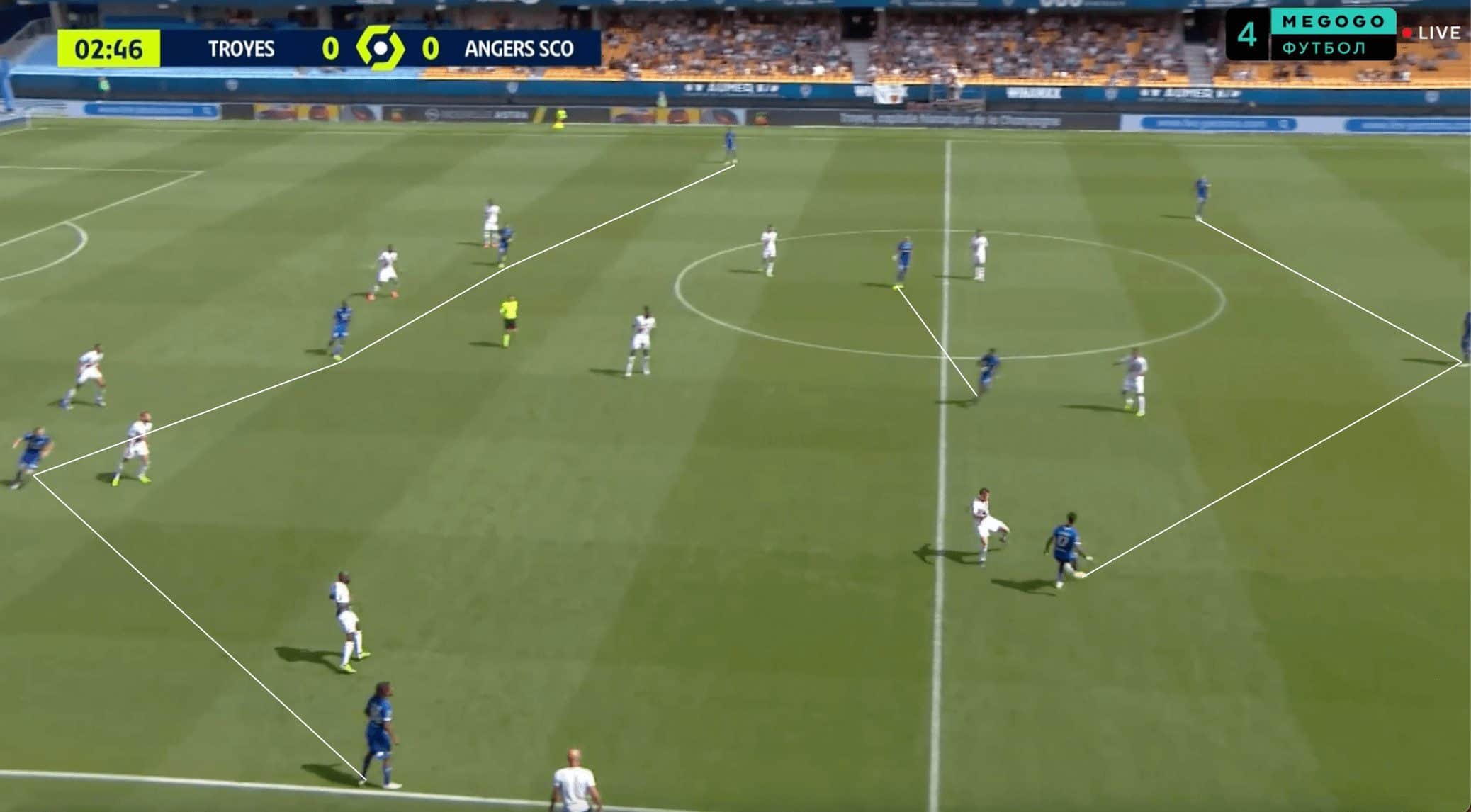
The image shown above shows the typical shape during the build-up that Irles looked to use during his time at Troyes. Regarding a starting formation, the Frenchman usually opted for a more defensive 5-4-1 or a more aggressive 3-5-2 formation, which allowed the wing-backs to start in more advanced positions. Though they usually did not hold the lion’s share of possession during matches, their shape tended to resemble the figure above when they did look to build out from the back.
In build-up phases of play, Irles looked for his side to be numbered even with his attackers against the opposition back line, so the build-up shape sometimes alternated depending on the opposition’s defensive shape. For example, the phase of play above against Angers shows Troyes in a 3-2-5 shape, with this allowing the French side to be 1v1 against the opposition’s defenders, as Angers opted for a back five shape defensively. This tendency to consistently go numbers even with their attackers allowed the wide players or wing-backs to utilise their dribbling ability to get past opposition defenders, with most of Troyes’s chance creation during Irles’s time in charge coming from the wide channels.
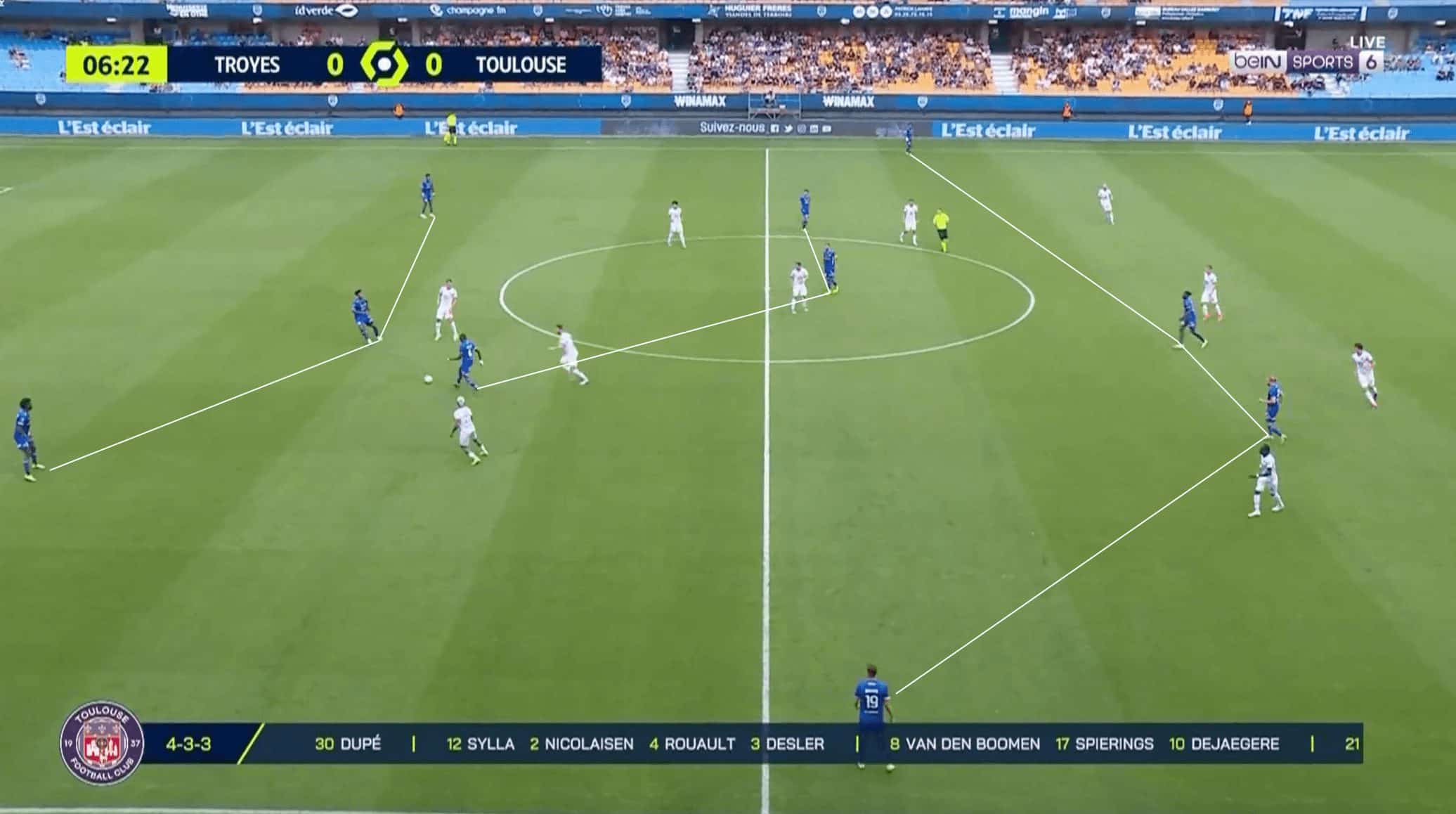
Continuing with this point, the image above shows a phase of build-up play for Troyes when they faced Toulouse, who defended in a back four system in this match. As we can see from the figure, the wing-backs are still playing very wide, looking to stretch the opposition’s defence and create goalscoring chances from these areas. However, the shape in the attack is slightly different. Here, the Manchester City-owned side is in a 3-3-4 shape, with the same conclusion, being 1v1 against the opposition’s backline, again looking for the attacking players to get the ball in favourable positions matched up one-against-one.
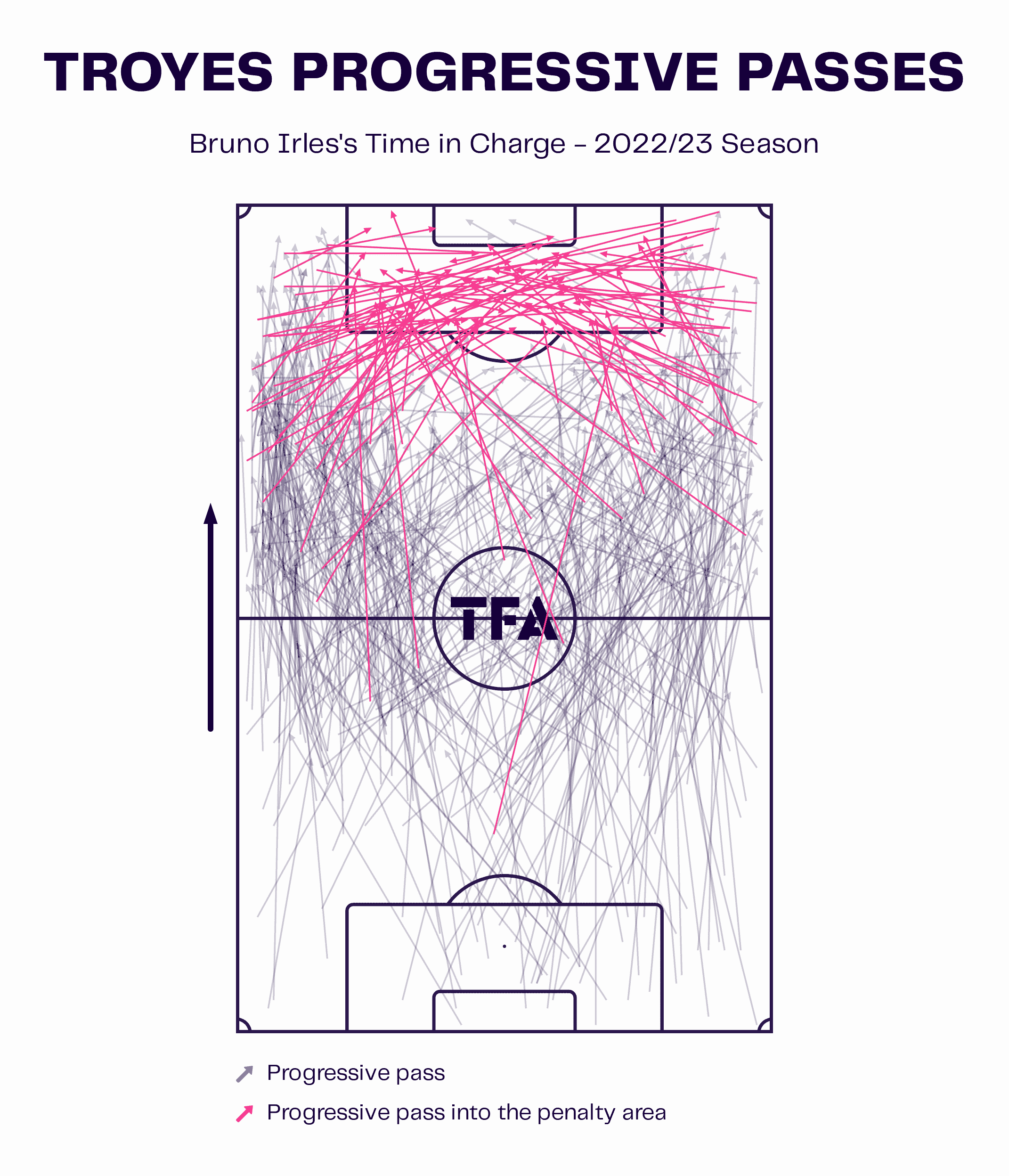
Talking more about chance creation now, as mentioned earlier, the majority of Troyes’s goalscoring chances under Irles originated from the wide channels, with the data viz graphic above showing this in more detail. Above, we can see the progressive passes of Troyes during the Frenchman’s time in charge during the 2022/23 Ligue 1 season. The pink passes highlight progressive passes into the penalty area, with most of them occurring from the wide channels or from deeper positions in midfield.
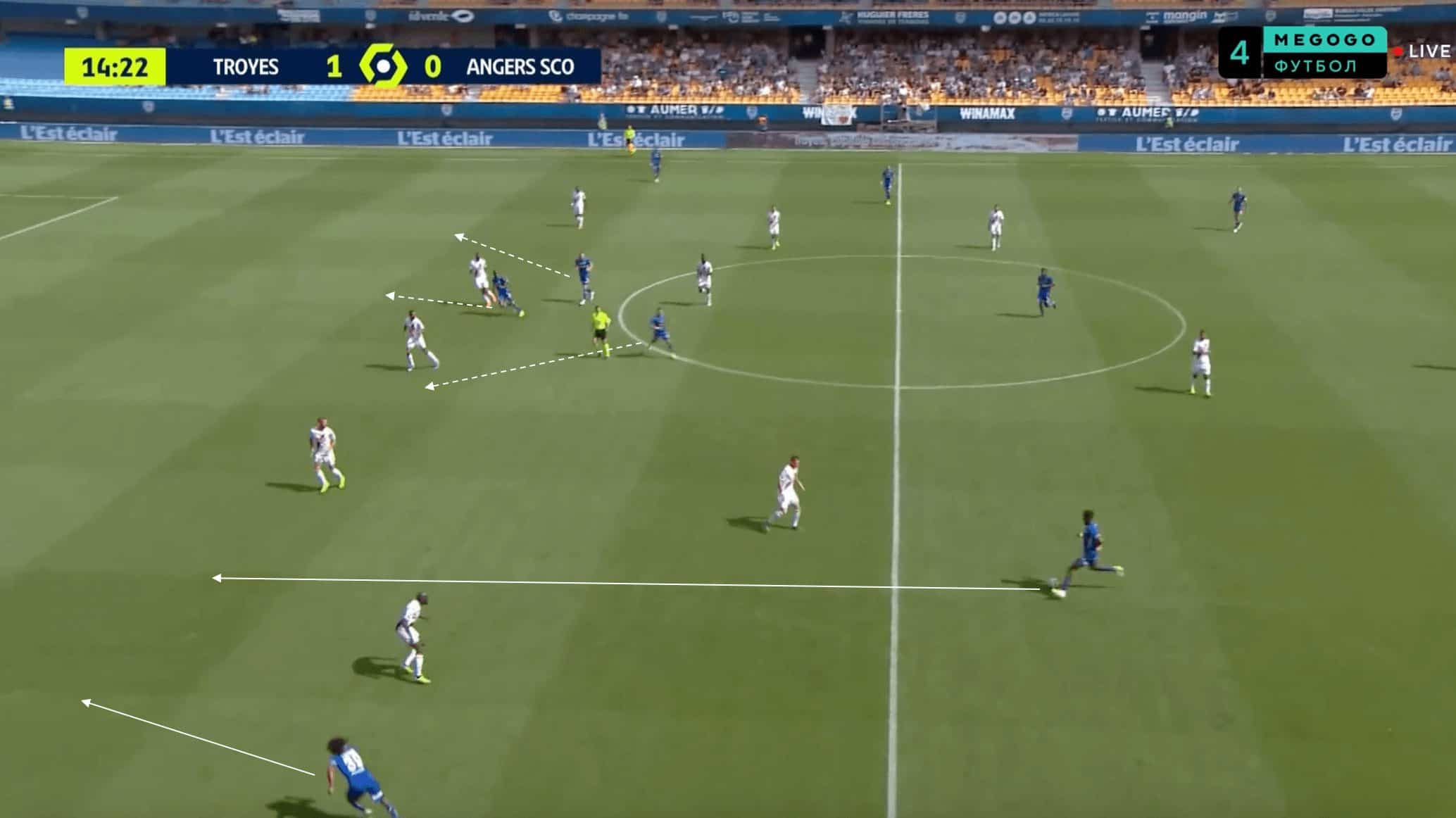
The figure above shows an example of this chance creation from the wide areas for Troyes. The ball is currently in possession of the left-sided centre-back, Yoann Salmier. Hugging the near touchline is former Liverpool wing-back Yasser Larouci, with the 23-year-old able to make a run beyond the Angers’s defence. This prompts the verticality and quick attacking sequences that Bruno Irles liked to utilise during both his time with Troyes and Quevilly-Rouen.
Salmier plays a through ball behind the defence, with Larouci able to run onto it. This triggers the runs forward of the centrally positioned Troyes players, with Larouci looking to play a quick cross into the central areas for one of the attackers to latch onto due to the quick vertical movements of the attackers forcing the defenders to turn and run towards their goal rather then get side on to defend against an incoming ball across. While the cross is not the greatest and gets intercepted by an Angers defender, the presence of numbers forward for Troyes force Angers to play long, allowing Irles’s side to continue their attacking phase after regaining possession.
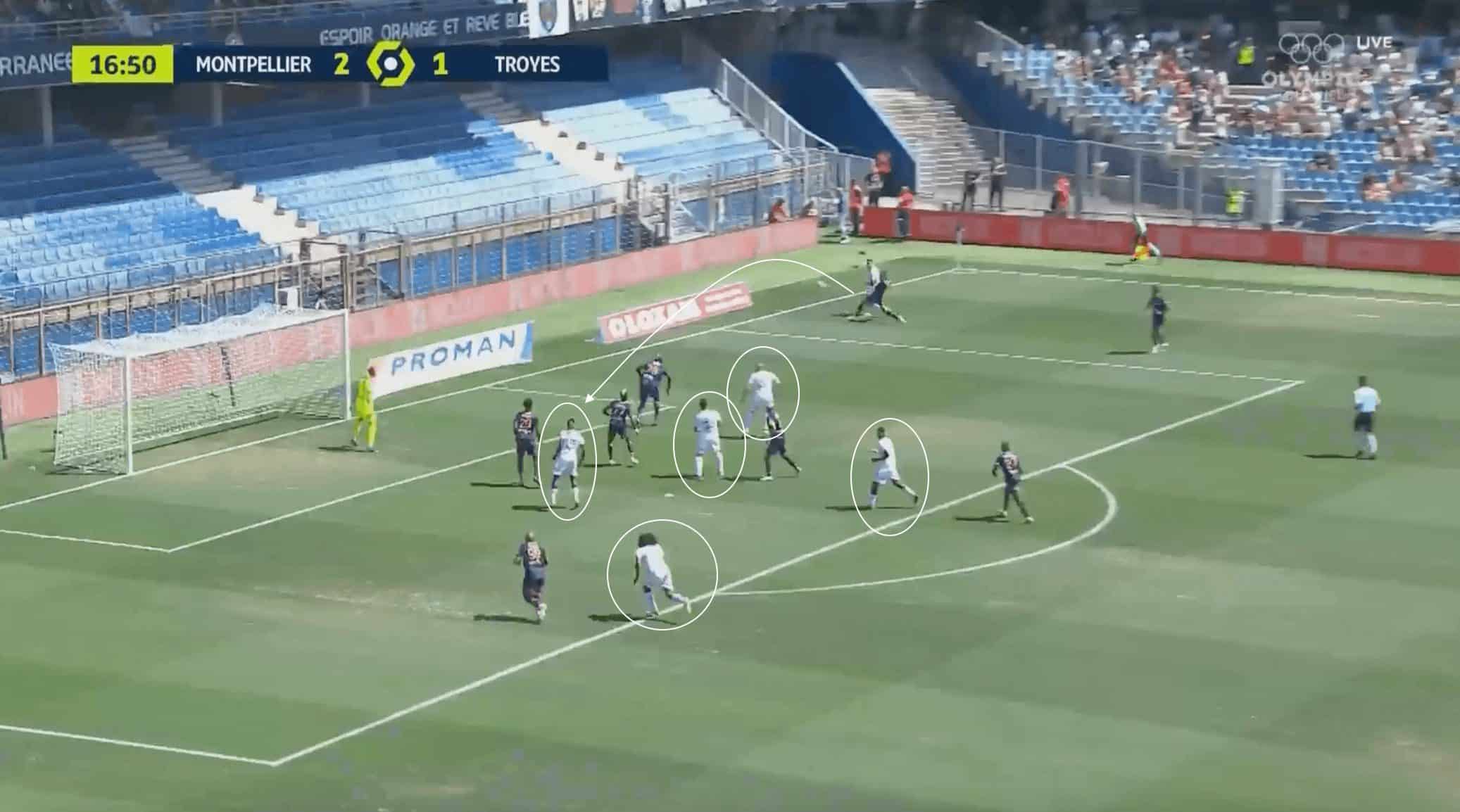
The image above shows another example of the use of width leading to a goal for Troyes against Montpellier. In this phase of play shown above, the ball is in possession of Andreas Bruus, with the wing-back able to get isolated 1v1 against the opposition fullback due to the width that he held when driving forward. The Danish defender is able to dribble his way past the Montpellier defender and open up enough space to send a cross into the penalty area.
In the central area, Troyes have pushed plenty of numbers forward into the penalty box, with them matched up 1v1 against the Montpellier defenders inside the area. The ensuing cross by Bruus is able to reach Mama Baldé, who is able to fire a shot home past the opposition goalkeeper. This example is again able to show the emphasis on progressive passes and crosses from the wide areas that Bruno Irles has looked to utilise in his previous two managerial stops.
ESTAC Troyes out of possession principles under Bruno Irles
During his time with Troyes, Bruno Irles did not have a very aggressive defensive setup, with the French side tending to drop off and look to get compact in their defensive shape when the opposition regained possession or reached the middle third of the pitch or higher. During opposition phases of build-up play between the defensive line and goalkeeper, Irles did not really set his side up with a high line of confrontation, with the French side having a PPDA of 17.05 during the 2022/23 Ligue 1 season, making them the lowest pressing side in the French top flight. Pressing for Troyes was more opportunistic, with a high press usually only occurring if they were able to lock the ball to one side during opposition moments of build-up between the goalkeeper and defensive line.
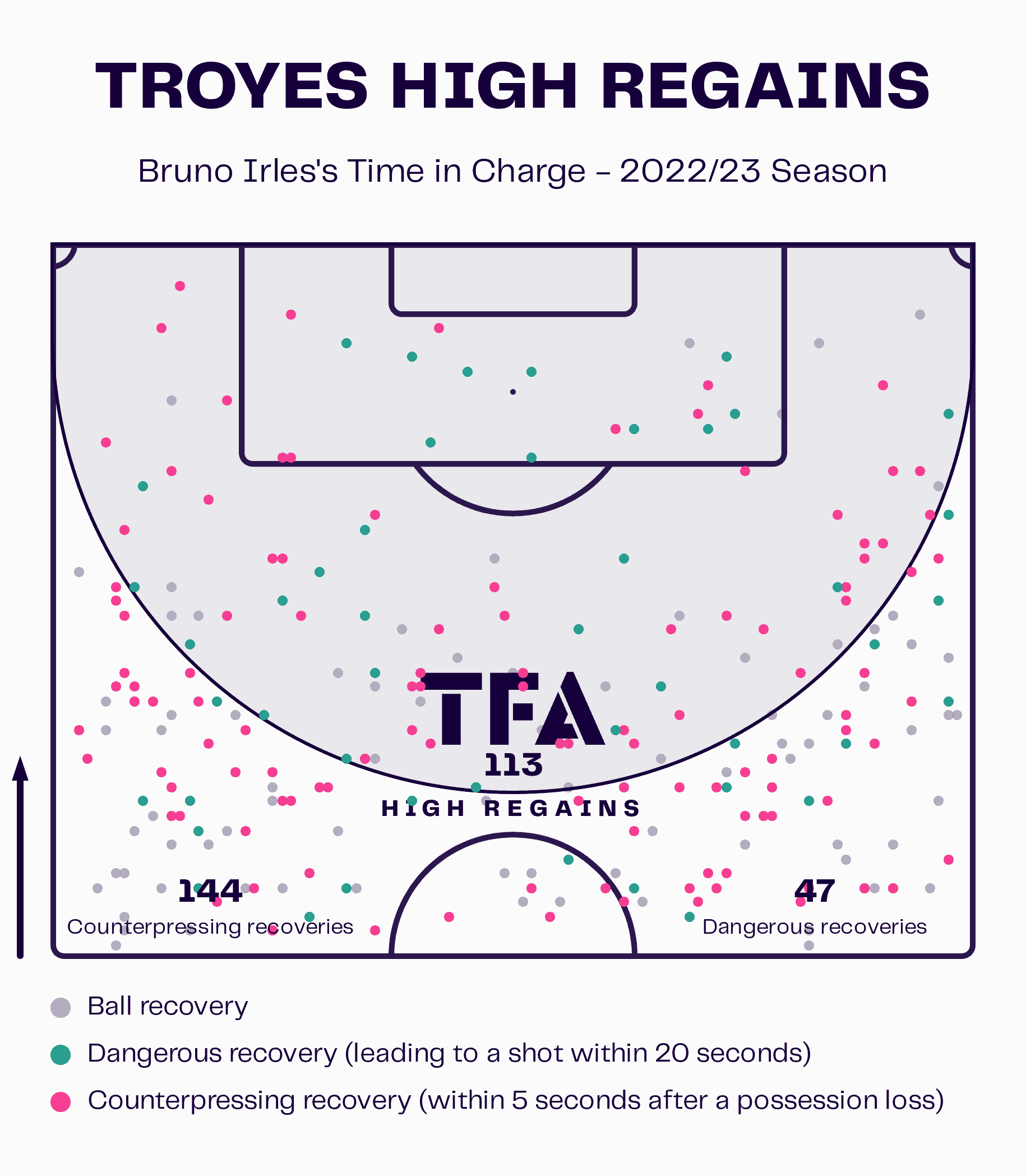
The data viz graphic above shows the high regains of Troyes during the beginning of the 2022/23 season, when Bruno Irles was in charge. This helps to illustrate the lack of pressing Troyes tended to display when the opposition were building out from the back. The majority of their high regains occurred in the wide channels, which goes back to the opportunistic pressing the Irles tended to prefer.
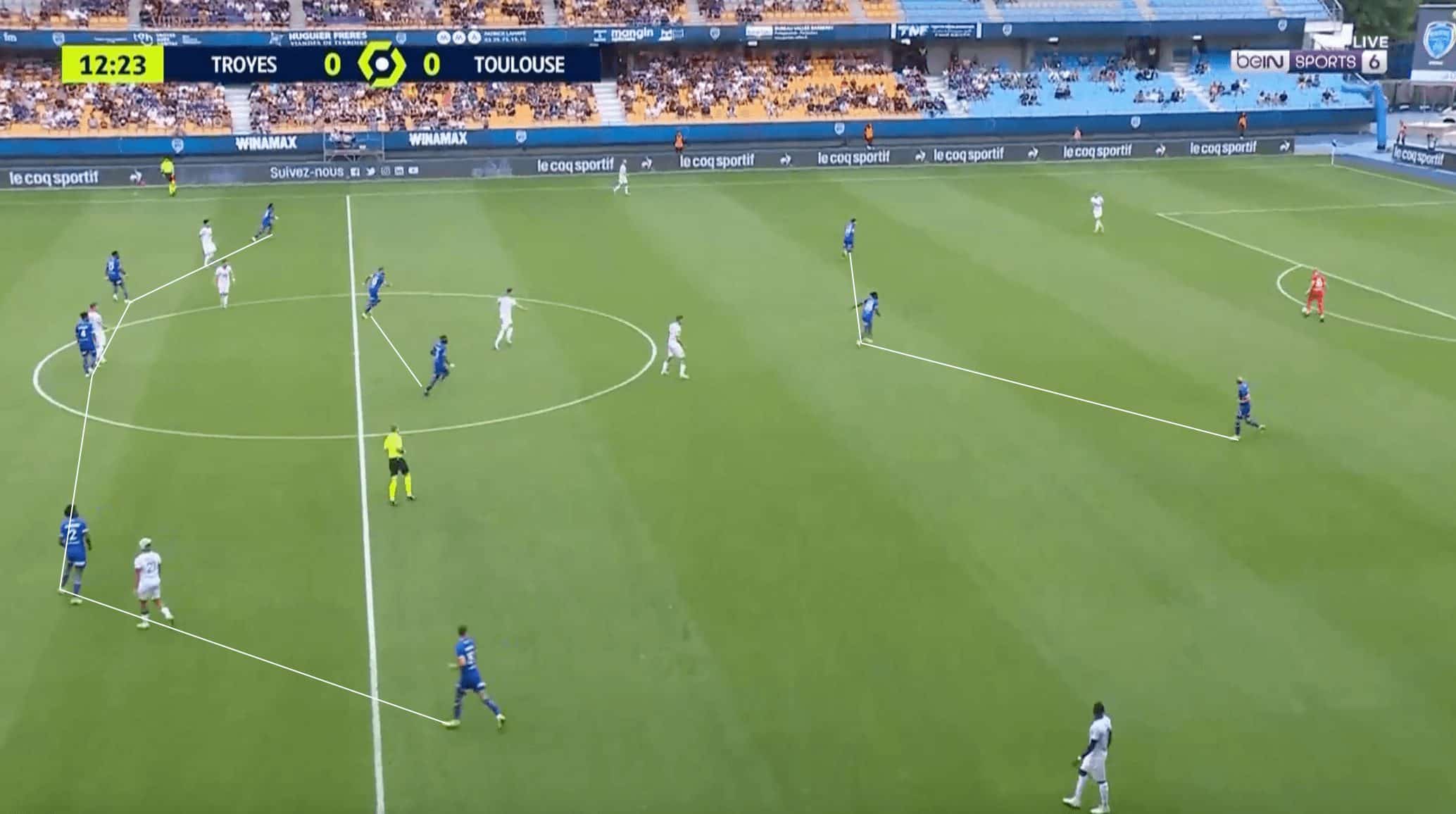
The image above shows the defensive shape Troyes tended to set up in during Bruno Irles’s time in charge. It normally looked like a 5-2-3 or 5-2-1-2, with it sometimes looking like a box in midfield to prevent central progression from the opposition short and force them to play the ball long. As we can see, the Troyes attackers are not holding the highest line of confrontation, with them allowing Montpellier to build between the goalkeeper and defenders. The narrowness of Troyes’s shape looks to force the opposition wide if they look to play short, which can then trigger an opportunistic press for the French side.
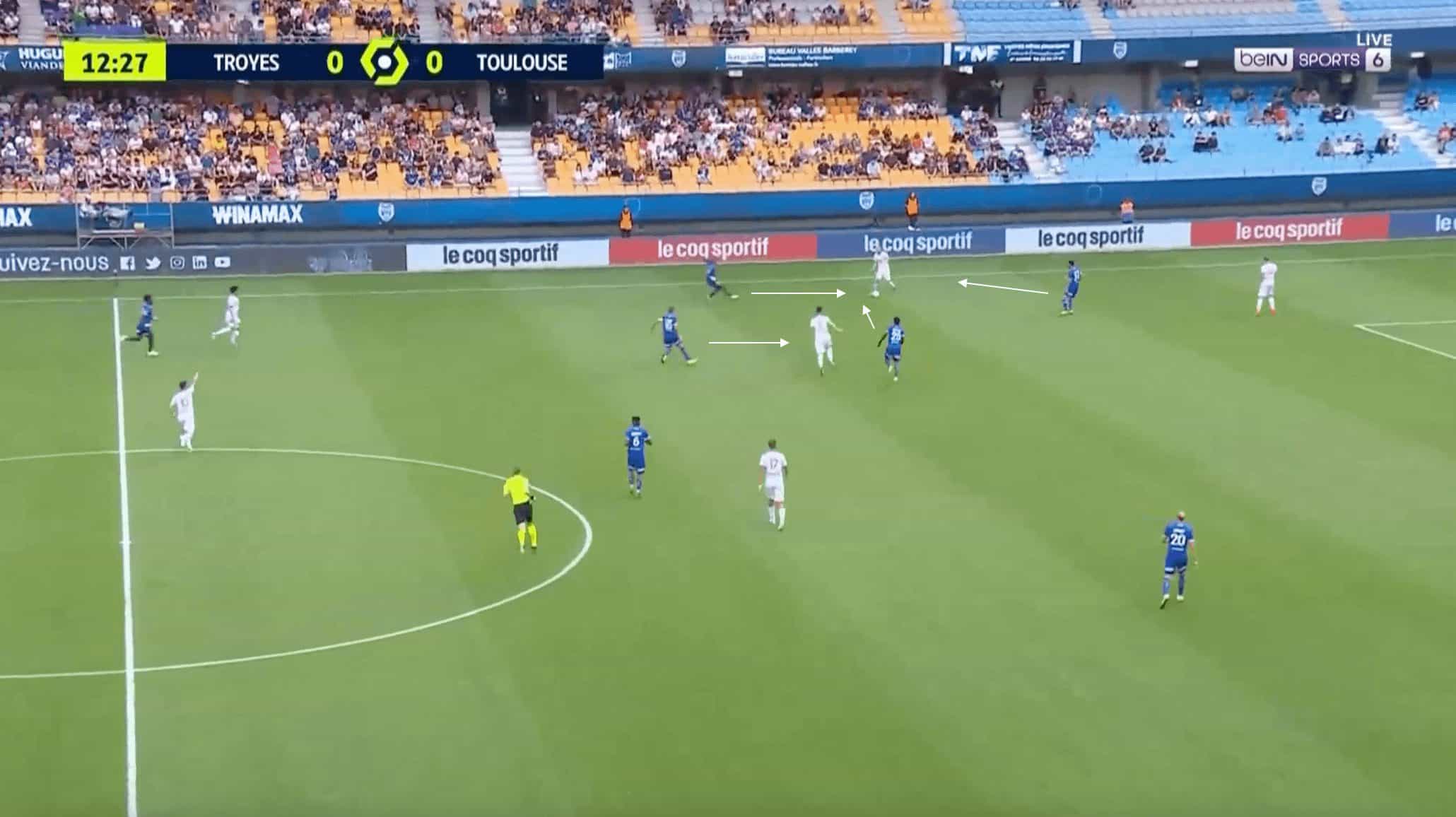
This is the end result of this opportunistic pressing sequence from Troyes. In the same phase as shown previously, the ball is eventually rotated to the full-back, triggering the press of Troyes. As we can see, they look to all collapse on the Toulouse fullback, with four Troyes attackers quickly getting around the ball to try and lock it to one side. As a result, the fullback does not have many options, with Troyes able to keep the ball locked to this side before almost winning back possession in an advanced area before it goes out for a throw-in.
This two-part example has illustrated how, while Bruno Irles’s side may not be the most aggressive pressing team in any given league, they will still look opportunistic when these moments arrive. A lower line of confrontation allows them to bait opposition sides into wanting to build out from the back while staying narrow and compact defensively to block central progression, which is another common trend when defending in the opposition’s half.
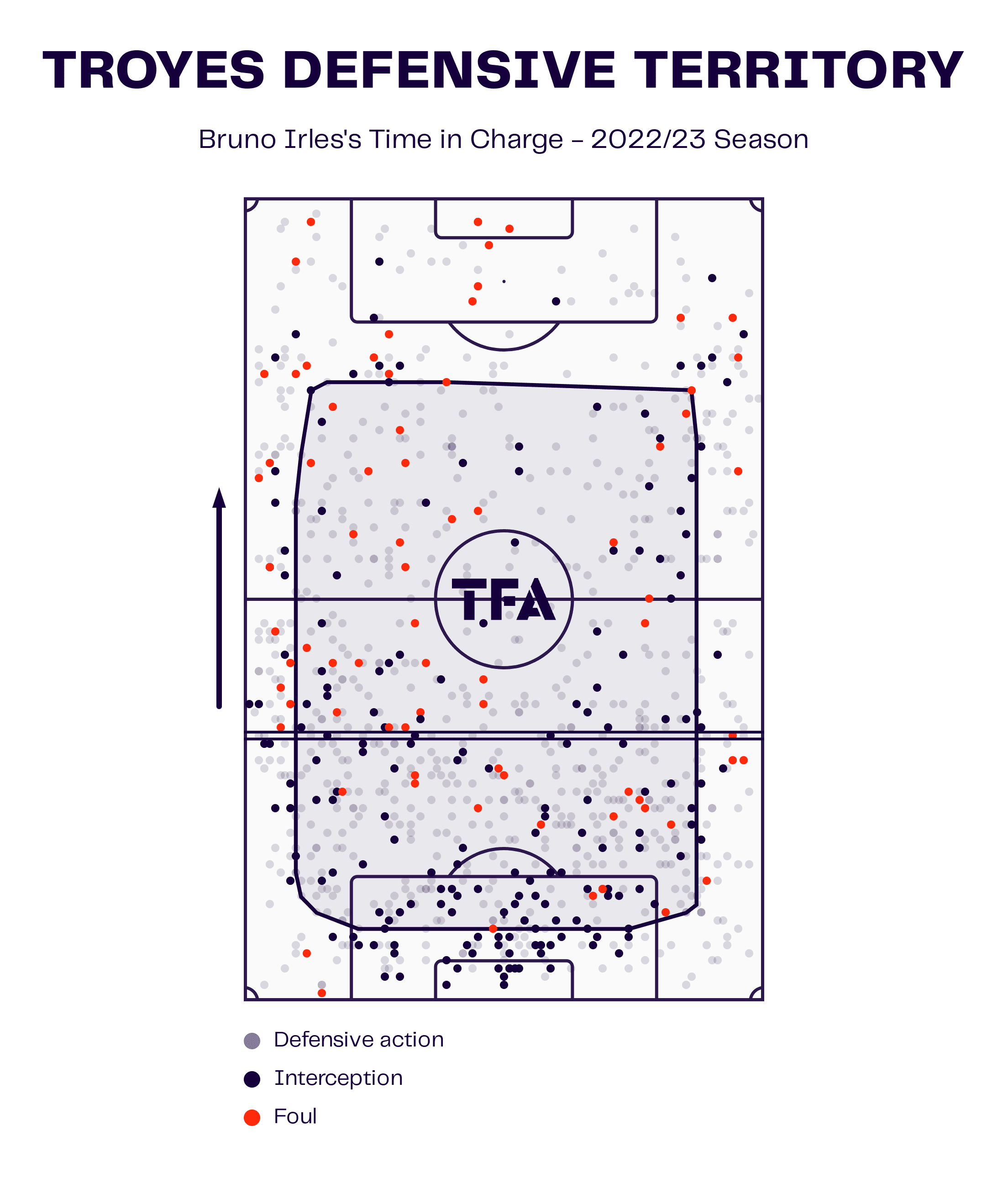
Moving on to how Irles’s Troyes side played defensively in the middle and defensive third, they looked to be narrow and compact. They tended to not hold a high defensive line, as the defensive territory graphic above shows. They looked to invite the opposition into their half more often than not, where they looked to rely on their compact and narrow shape and sit with numbers behind the ball, as well as their high tendency to block shots, to prevent opposition goalscoring chances.
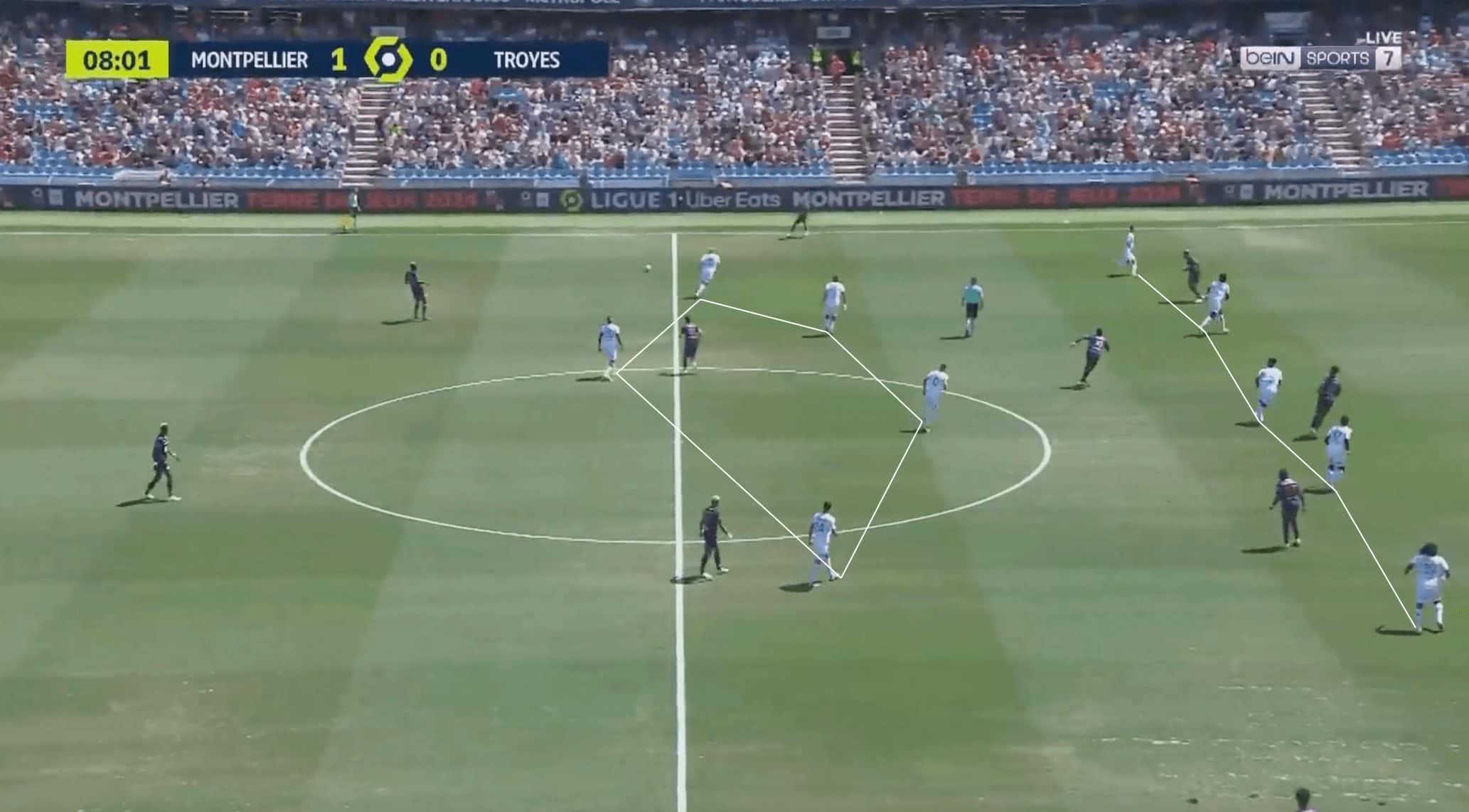
The image above shows a defensive phase for Troyes where the opposition have entered their defensive half of the pitch and the shape Irles’s side tend to take up. As we can see, the shape becomes a 5-4-1, emphasising forcing the play wide and blocking central progression for the opposition. As the opposition continued to progress towards the Troyes defensive third, the French side looked to get tighter and more compact, looking to stifle any potential attacking progress from Montpellier.
As the attacking move for Montpellier progresses, they are forced to switch the play to the opposite flank, but it does not open up any gaps from the Troyes defence, as they shift and slide to cover the gaps as the ball is rotating. Ultimately, this opposition attack does not result in a chance, with the Troyes goalkeeper able to eventually gather possession and relieve pressure on the defence.
As this section on Bruno Irles’s defensive principles has been able to illustrate, the 48-year-old Frenchman tried to implement a solid and compact defensive shape at Troyes, which is also something he implemented during his time in the French third tier with Quevilly-Rouen.
What areas does Bruno Irles need to address first at RWDM?
This next section will take a brief look at a couple of areas that Bruno Irles should look to address first at RWDM, granted he does not have much time, given there are only four matches left in the Belgian Pro League regular season.
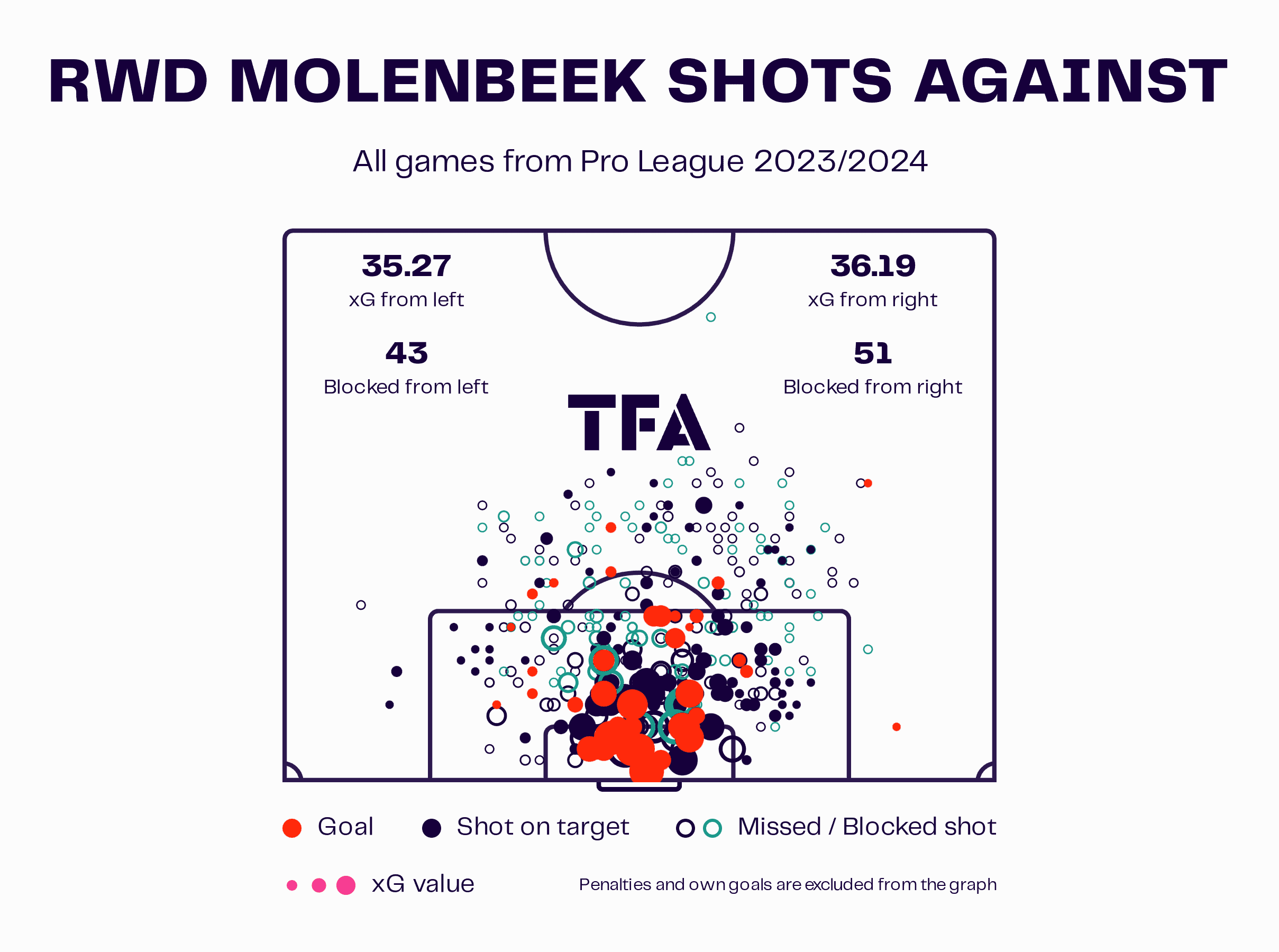
The most crucial area of improvement needed is defensively, with RWDM conceding the most goals in the Belgian Pro League this season, with 56 against. The shots against the map above from the season show the areas of the shots they have conceded this season, with the Brussels club also facing the third most shots in the Belgian top tier this season.
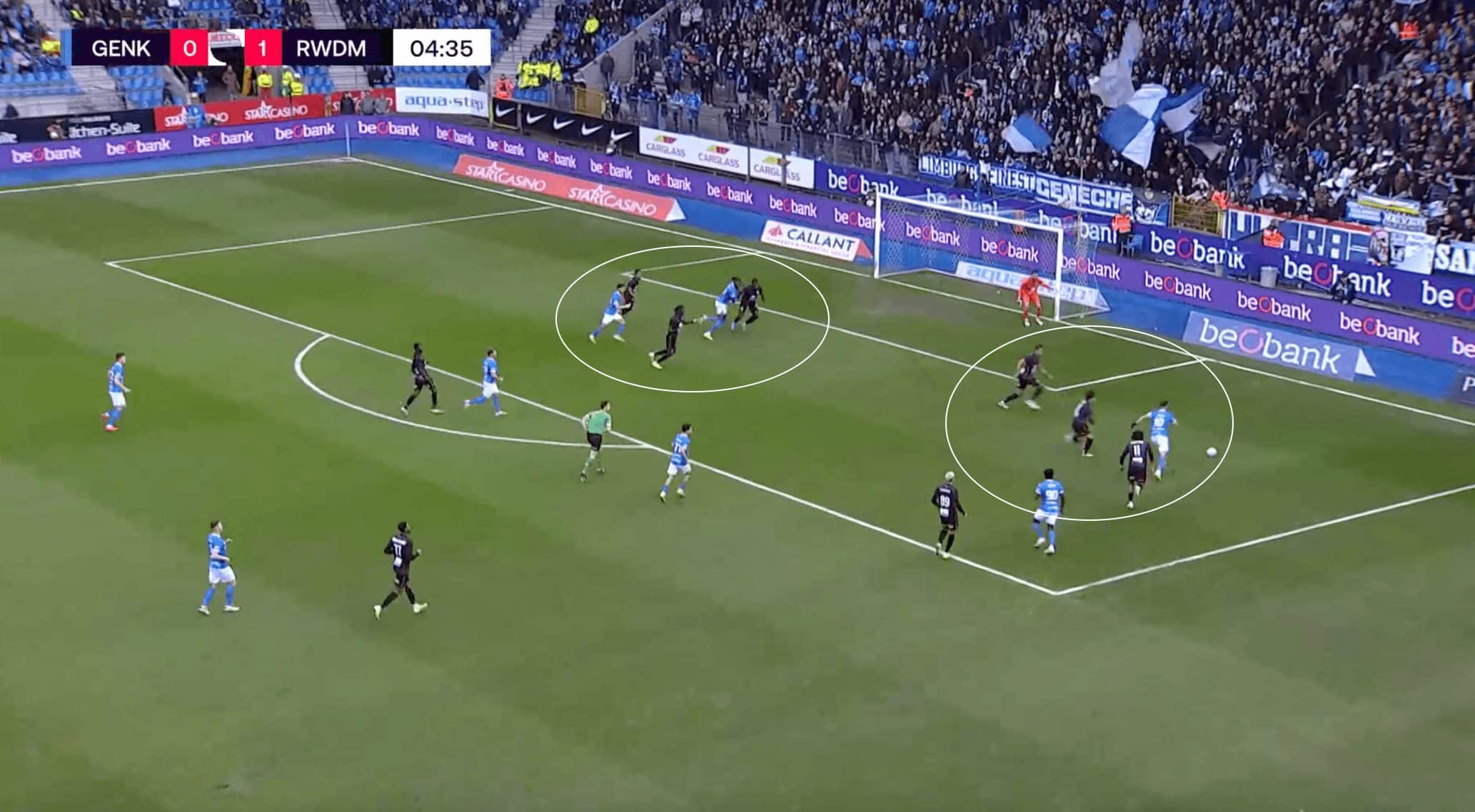
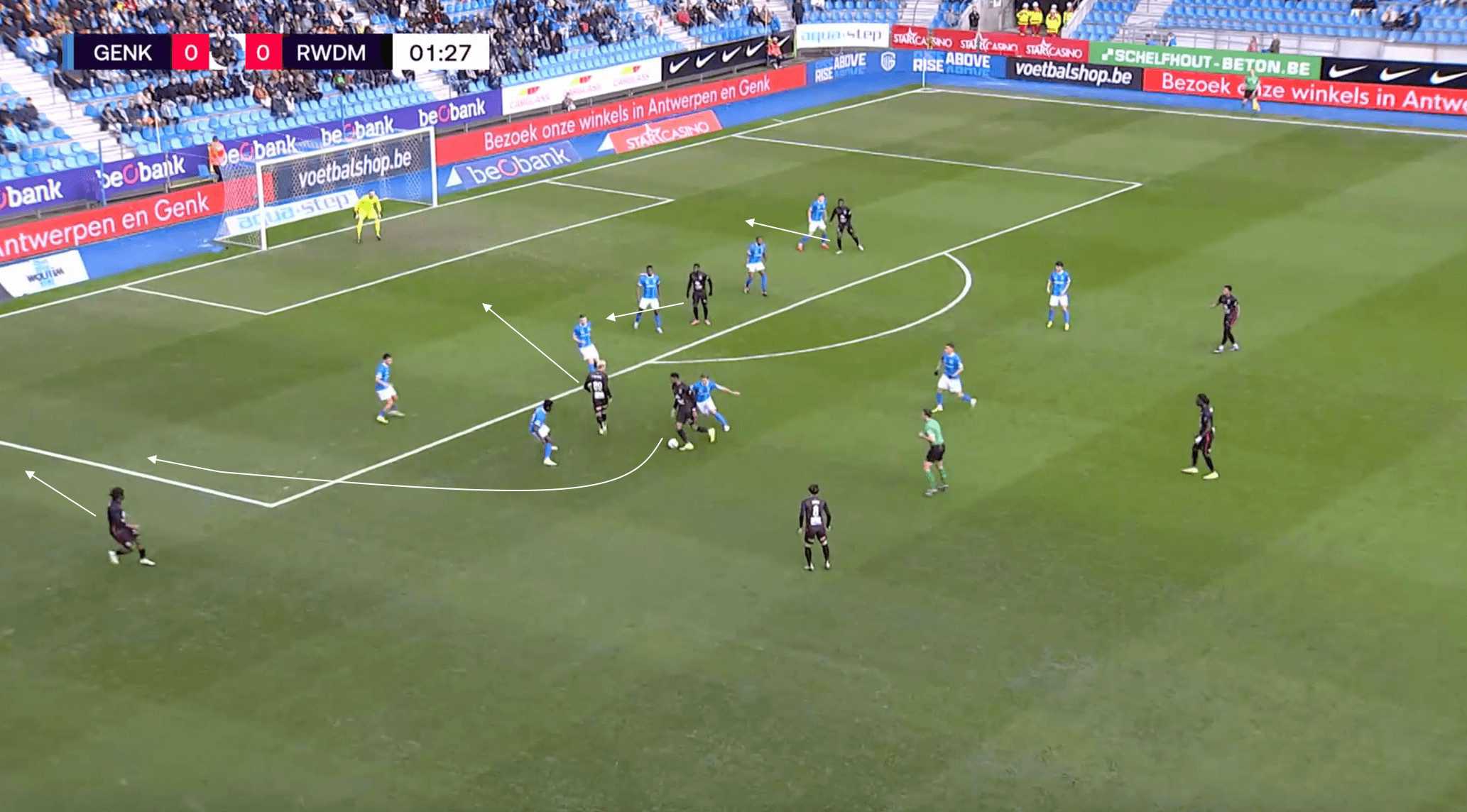
Though Bruno Irles has only been in charge of RWDM for one match (3-1 loss to Genk), there has already been a bit of a noticeable improvement from a defensive perspective. This image above shows an example of the box defending that the Belgian side showed at times during Irles’s first match in charge. As we can see from this example, Genk are in possession and have been able to progress the ball inside the penalty box.
However, the Brussels-based side was able to get plenty of numbers back, with the Genk attackers outnumbered both out wide and centrally, leaving RWDM in an excellent position to win possession back without giving up a shot on goal. That is exactly what happens, with the Molenbeek defenders able to force Bilal El Khannous wide and away from goal, dispossessing him as a result and allowing RWDM to clear their lines and relieve the pressure on their defence. Though they still conceded three and lost, there were some bright spots defensively from Irles’s first match in charge.
Another principle that is already beginning to take shape at RWDM under Bruno Irles is the emphasis on width to create chances in the attacking third. The phase of play above shows the first goal for Molenbeek under Irles, which originates in the wide area due to the width of the fullback who has gotten advanced into the attack.
This example paints a similar picture to the ones that were shown earlier during the 48-year-old Frenchman’s time in charge of Troyes. As we can see, RWDM have four players in the attacking line, matching up against the back four of Genk. There is also an extra midfielder for RWDM in the central area, forcing the Genk defensive line to pinch and stay narrow, allowing the RWDM left back the ability to stay wide and not be put under any pressure.
This allows the advancing defender to receive the ball under no pressure, allowing him to pick out a cross into the penalty box. After a bit of bouncing around in the box, the ball eventually falls to Brazilian Carlos Alberto, who is able to score for the first goal of the match.
Conclusion
As this tactical analysis has shown, Bruno Irles has quite a task on his hands if he is to keep RWDM from being relegated this season. Though he did lose his first match in charge of the Belgian side, there were positives to take out of the performance, and Irles will hope the side continues to improve as they enter the final four match days of the Jupiler Pro League regular season.
