
Man City finished their previous season by winning a historic treble. They achieved the Premier League, the FA Cup, and UEFA Champions League. Yet, they did not stop developing and paying attention to all the details, big and small.
Everyone knows the fierce competition in the Premier League, and that is why all the teams strive to excel in everything over the other teams. This was clearly shown in Man City in the pre-season, the UEFA Super Cup and the first two matches in the Premier League. City significantly improved their set pieces, especially at attacking free kicks.
In this tactical analysis and set-piece analysis, we will discuss the tactics of Pep Guardiola‘s team at attacking free kicks and how they varied and helped them to threaten the opponent’s goal.
Starting in the offside position
At first, we should know that defending free kick systems are affected by many factors, but here, we will focus on Man City’s ideas against the common high line generally.
In the game against Bayern Munich in pre-season, the first idea was to make Erling Haaland start in an offside position, but for a different reason than usual by many teams. Some teams make a player or more begin in an offside position to block a player from the line or, let’s say, prevent him from stepping back to empty the way for another attacker. Other teams use an offside player, or more, to receive a second-headed pass from the first targeted man, but here we will focus on Man City’s use of the offside players.
In the first photo, Bayern Munich defended with a wall player in green, a short-option defender in yellow, the line and a player in white in front of it for the rebound. The red-highlighted attacker stands between the line and the wall player in green, so the first defender in the line, in blue, is forced to move to him.
In the second photo, Erling Haaland targets that area that the first defender leaves in a curved run, in green. That’s fine, but Haaland still stands in an offside position, which we explain in the third photo.
In the third photo, Haaland moves in an inclined path to the back, then moves forward, in green, but to make sure that he is onside, Manuel Akanji, in blue, and Rodri, in yellow, start to move with Haaland before the taker’s touch to force the line to move early to make Haaland onside.
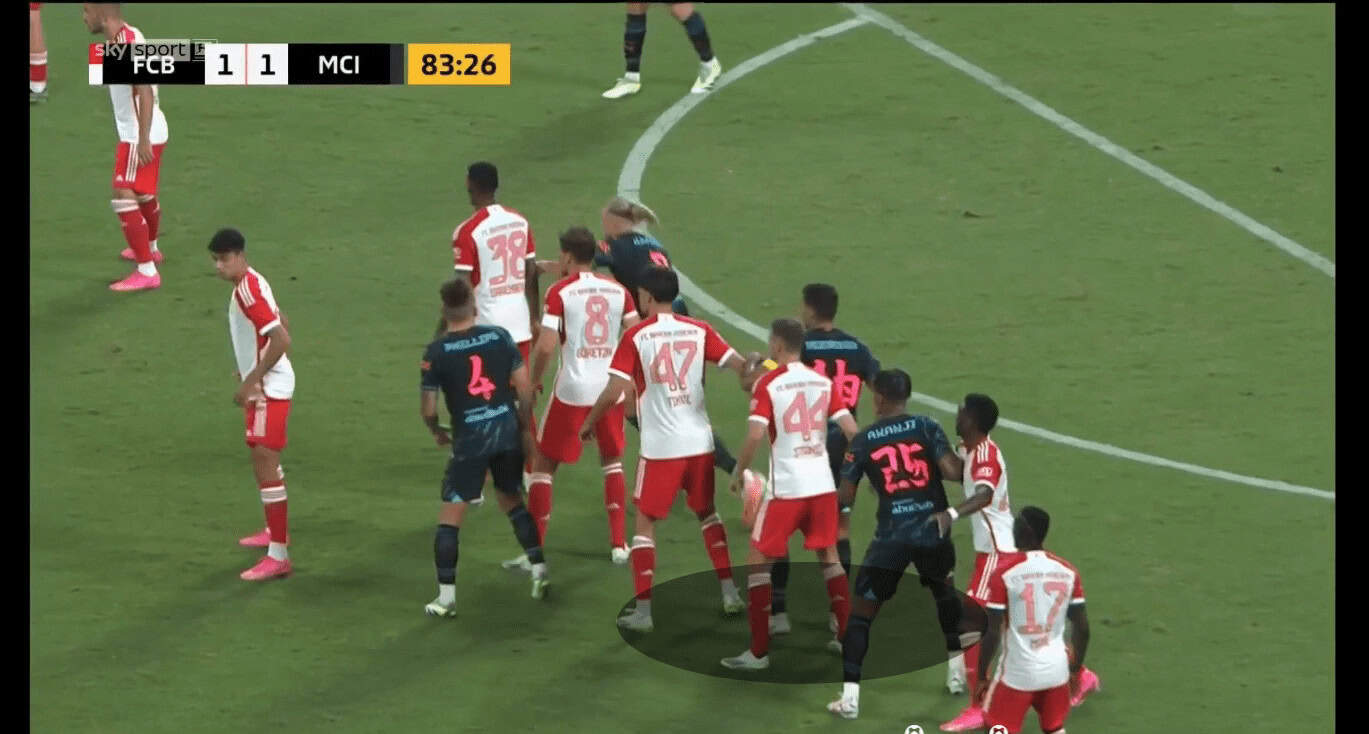
Still, Bayern Munich’s line drops late as the taker touches the ball, so in the fourth picture, Manuel Akanji and Rodri push the defenders to make Haaland onside, and that, with the help of his back movement at first, make him onside.

Haaland gets the ball and kicks the ball, but it hits the defender, as shown below.

In that closed photo, we see how Akanji pushes the defender while Rodri tries to drag the defender with him to cover Haaland.
Two takers manipulation
Man City have usually used two takers of late, as shown in the first photo, to manipulate the line, which helps the first idea to cover the player who starts in an offside position, but let’s focus on how two takers manipulate the line at first.
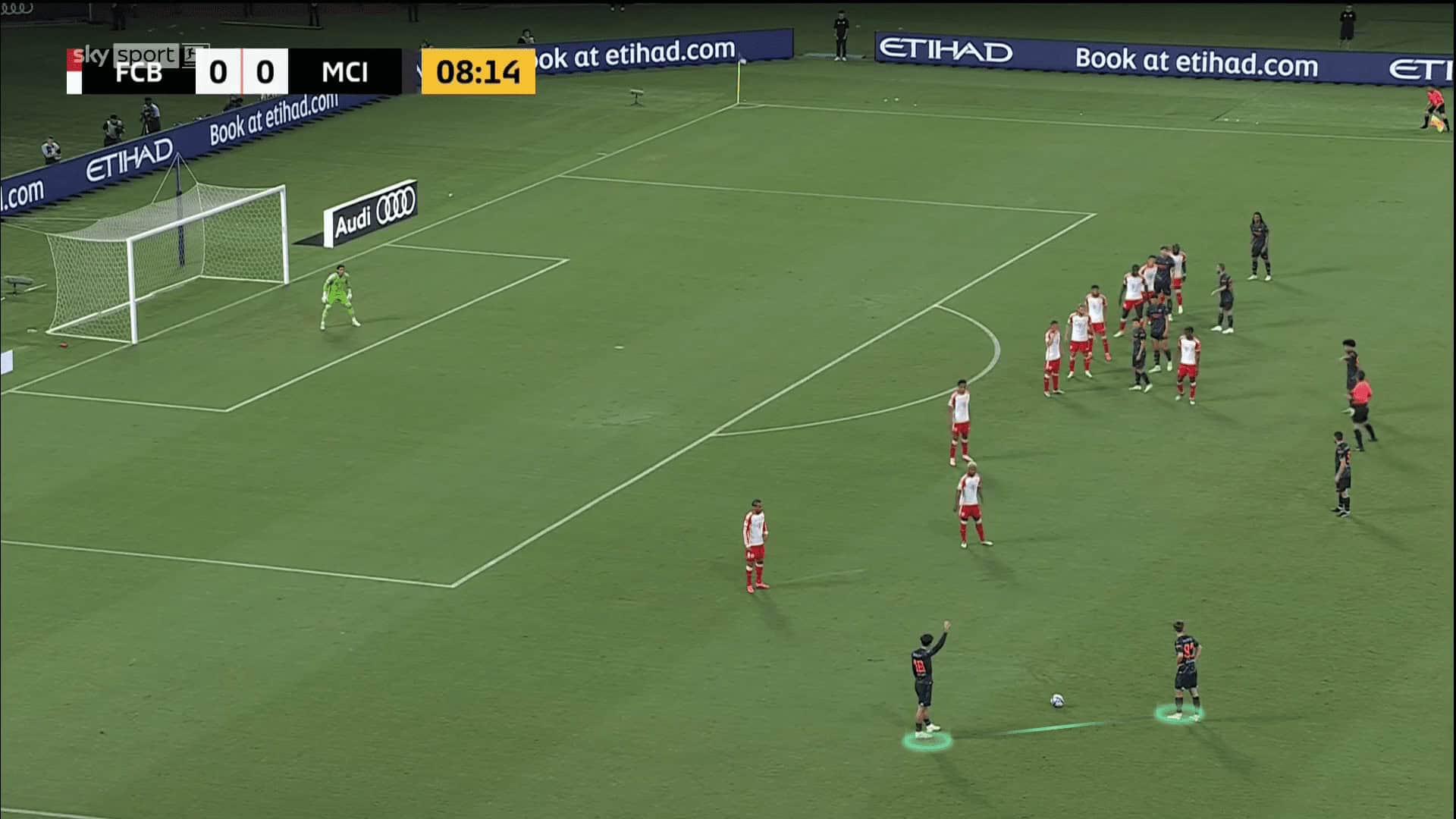
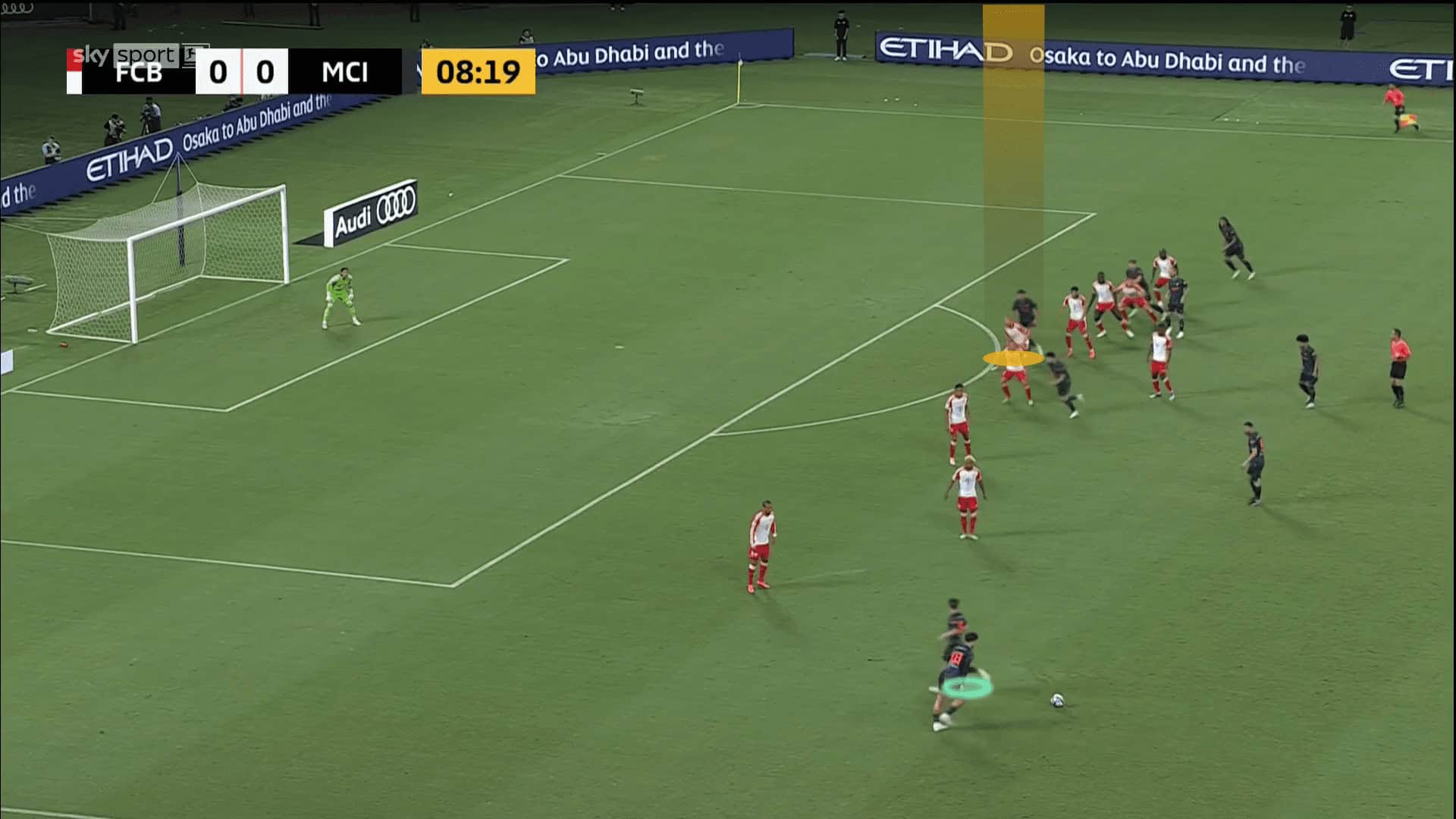
In the first photo, the line stands in a good arrangement, but when the first taker acts as he would play the cross the line or some players in it moves, so when the second, the real taker, touches the ball, there are one or more defenders covers the offside as shown in the second photo where the yellow defender moves earlier than line affected by the movement of the first taker, in green, so the attacker behind him, who is supposed to be offside is now onside when the real taker touches the ball.
Using both previous ideas, let’s see a complete routine that Man City used against Burnley.
In the first photo, Haaland stands in the offside, in blue, and there are two takers in green. As the first taker, highlighted in green, moves, Nathan Aké and Rodri, highlighted in yellow, moves to manipulate the line dragging the two players with them to cover Haaland, highlighted in blue, making him onside.
In the third photo, Haaland, in blue, waits until Nathan Aké and Rodri drag the opponent’s two defenders in green. He moves in an onside position, also having a positional superiority against the defender by pushing him back in blue, and then he moves forward.
In the fourth photo, the plan works, but the cross is a little strong, so Haaland can’t catch the ball.

The ball hits the goalkeeper, then reaches Rodri, who puts it in the goal to score an important goal to kill the game.

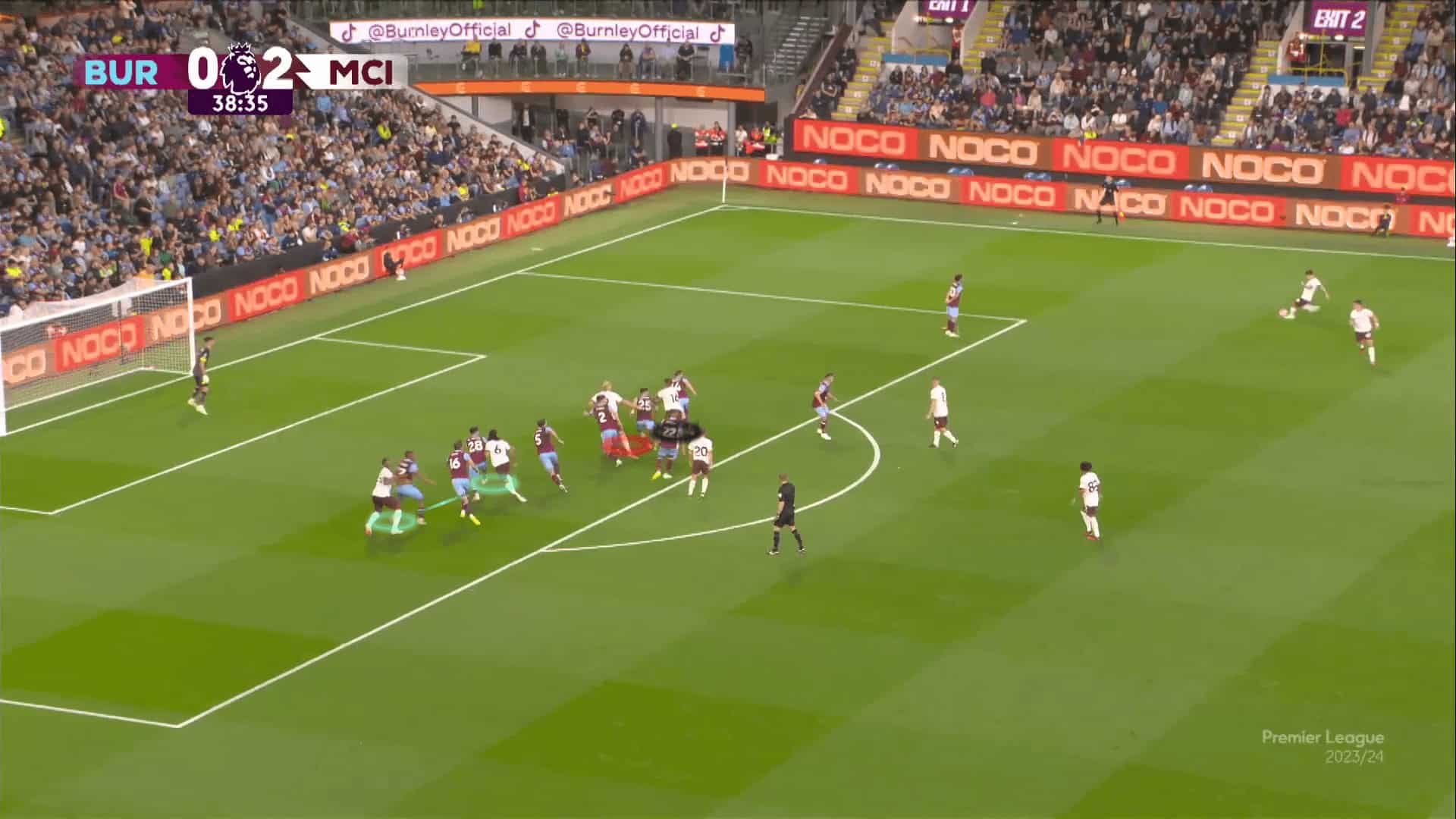
Man City have varied ideas depending on the same strategy, so in the photo below, you can see Haaland in the offside, in red; Akanji, in yellow, pushes the defender as the first taker moves to make Haaland onside by the second taker touch, but here, there is a small extra idea. Rodri, in black, starts in the rebound zone with Bernardo Silva, in blue, who blocks the rebound player to make Rodri free to move in the black targeted area.
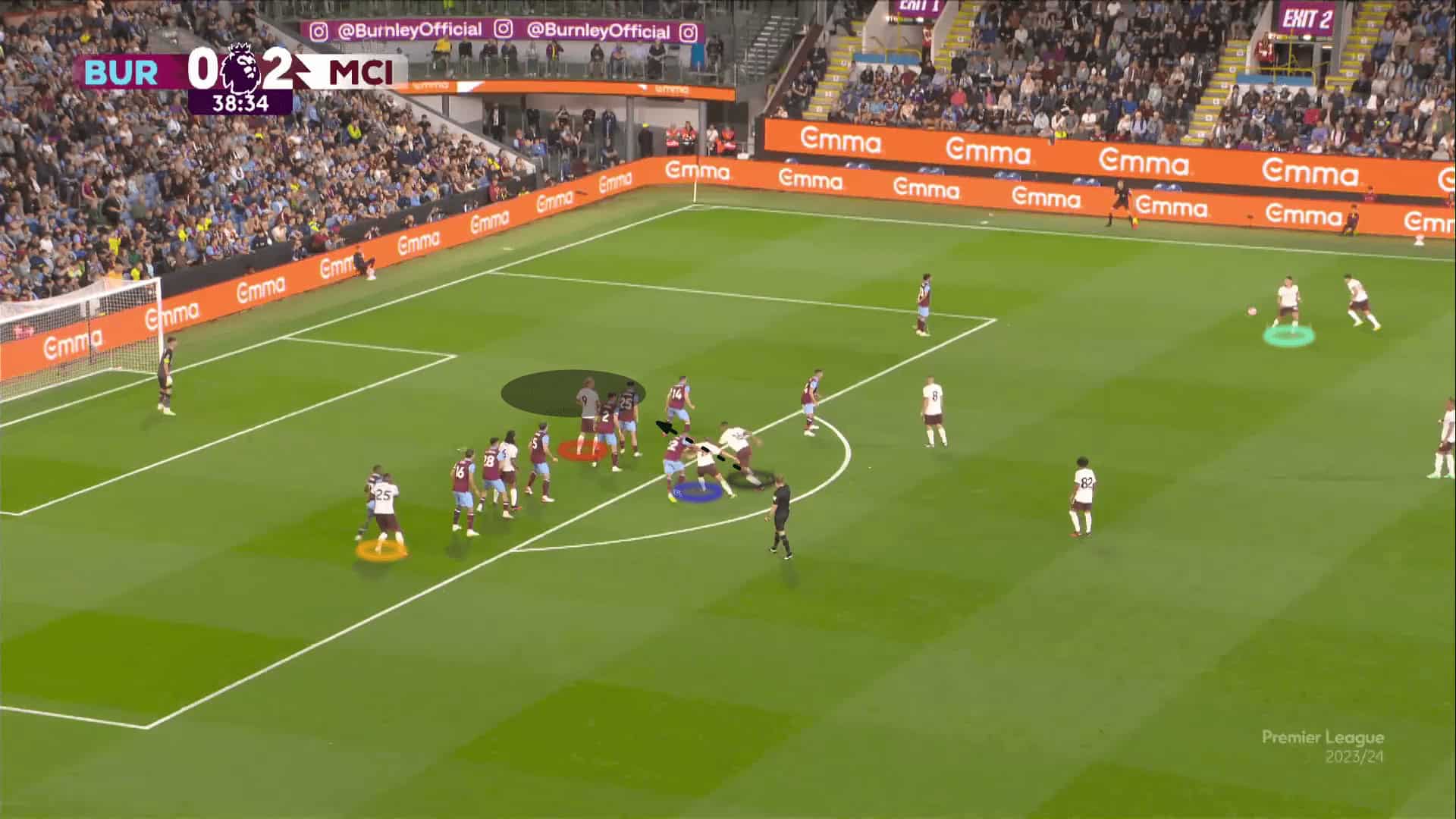
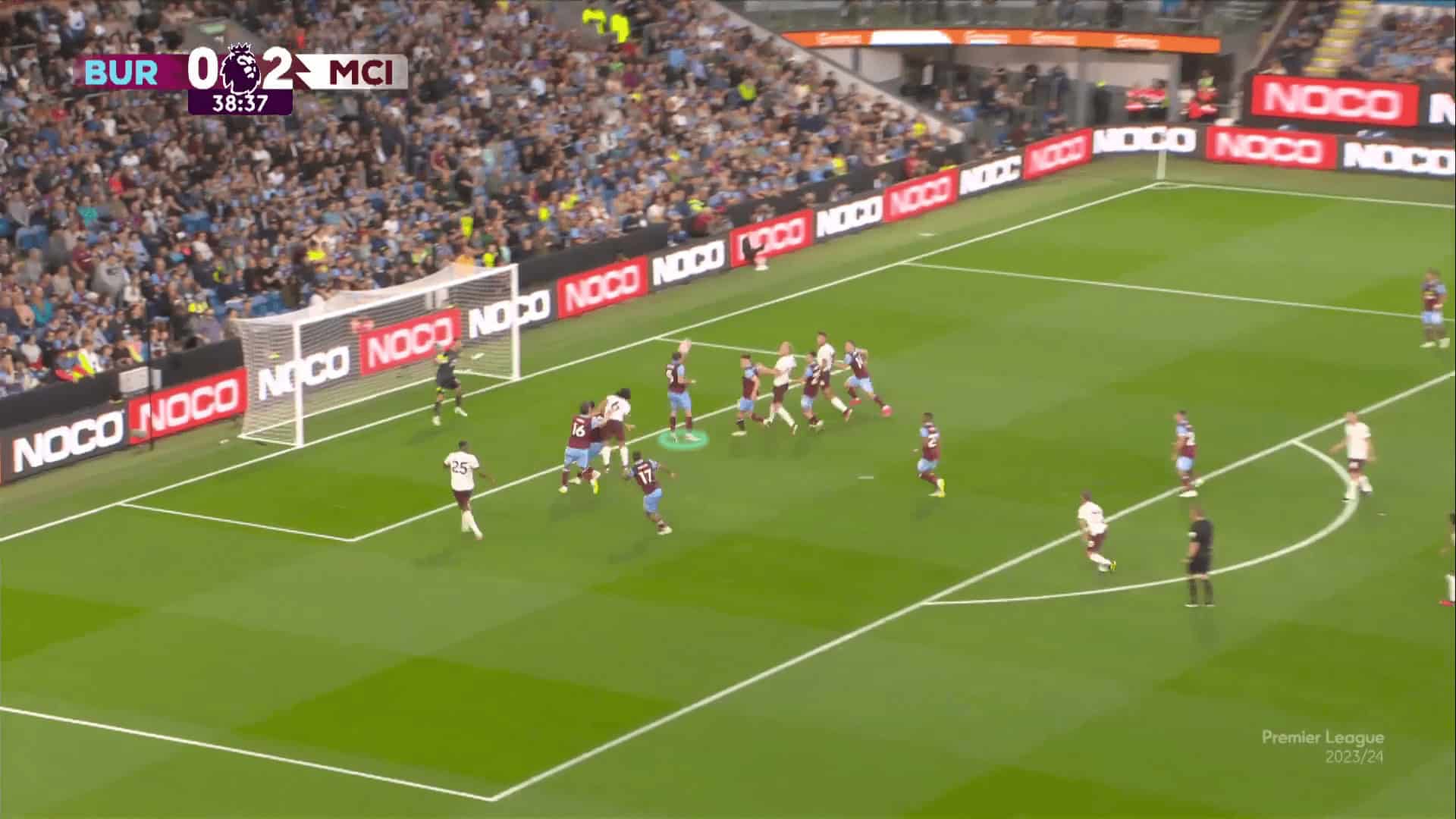
Here, Haaland touches the defender attracting his attention to prevent him from following Rodri, or to be honest, it is maybe the opposite thing by using Rodri to attract the attention to free Haaland; it wasn’t clear because the cross was inaccurate, as in the second photo below.
Targeting the far post
Here, Man City use Haaland’s start in an offside position as a trap because they want the opponent to move early to defend Haaland, and that covers the offside to the far-post attacker.
In the first photo, there are two takers, in green, Haaland, in blue, a yellow player who starts to move from the rebound zone to force the line to drop early and two far-post attackers, one to block and one to run.
In the second photo, the black-targeted player starts a little late, then moves when the first attacker moves, in green, while the red player blocks the last defender on the far post to make the black-highlighted player free.
In the third photo, Rodri, in yellow, pushes the defender to cover the offside while Haaland, in blue, moves, dragging the defender with him earlier than the movement of the far-post attacker.
In the fourth photo, the plan works, but the goalkeeper saves the ball in green.

Playing quickly before the arrangement of the line
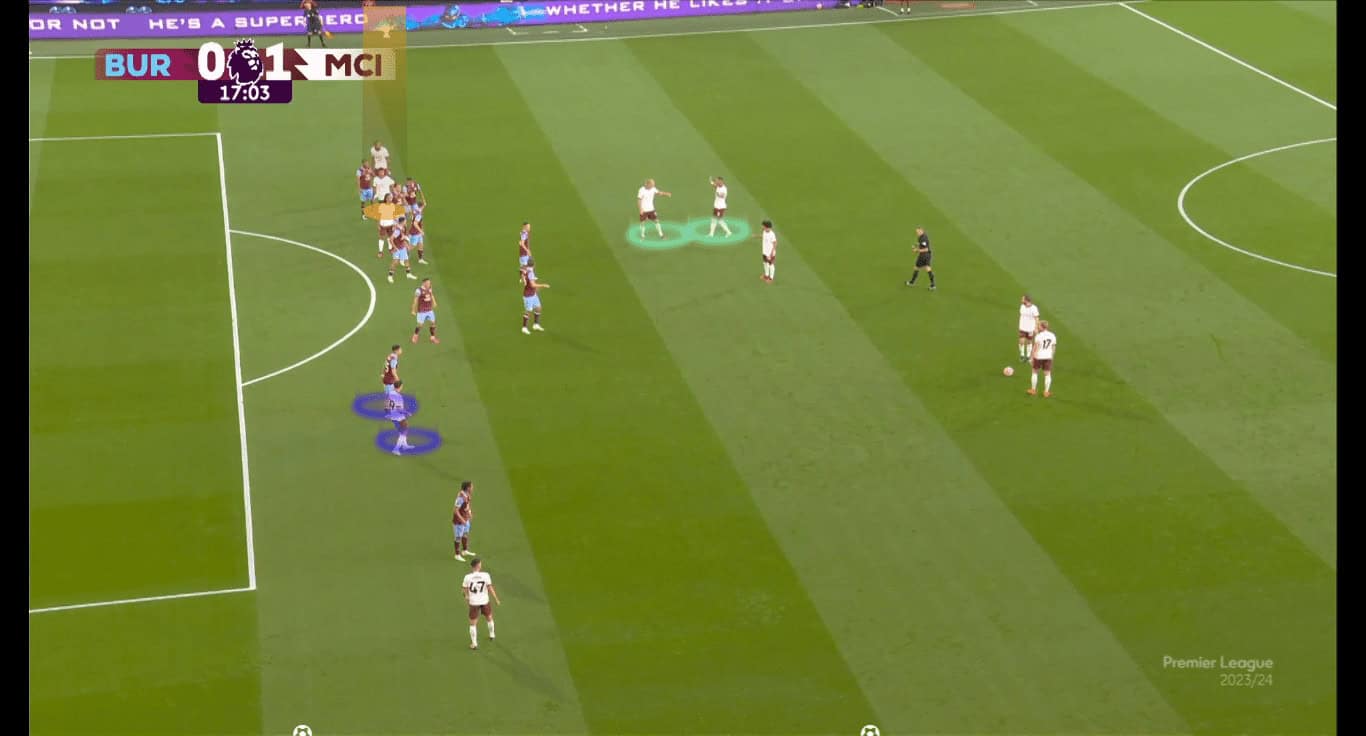
Man City also use a quick trick which is good and causes threats to the opponents because they are forced to reorganise the line too quickly, which is too difficult.
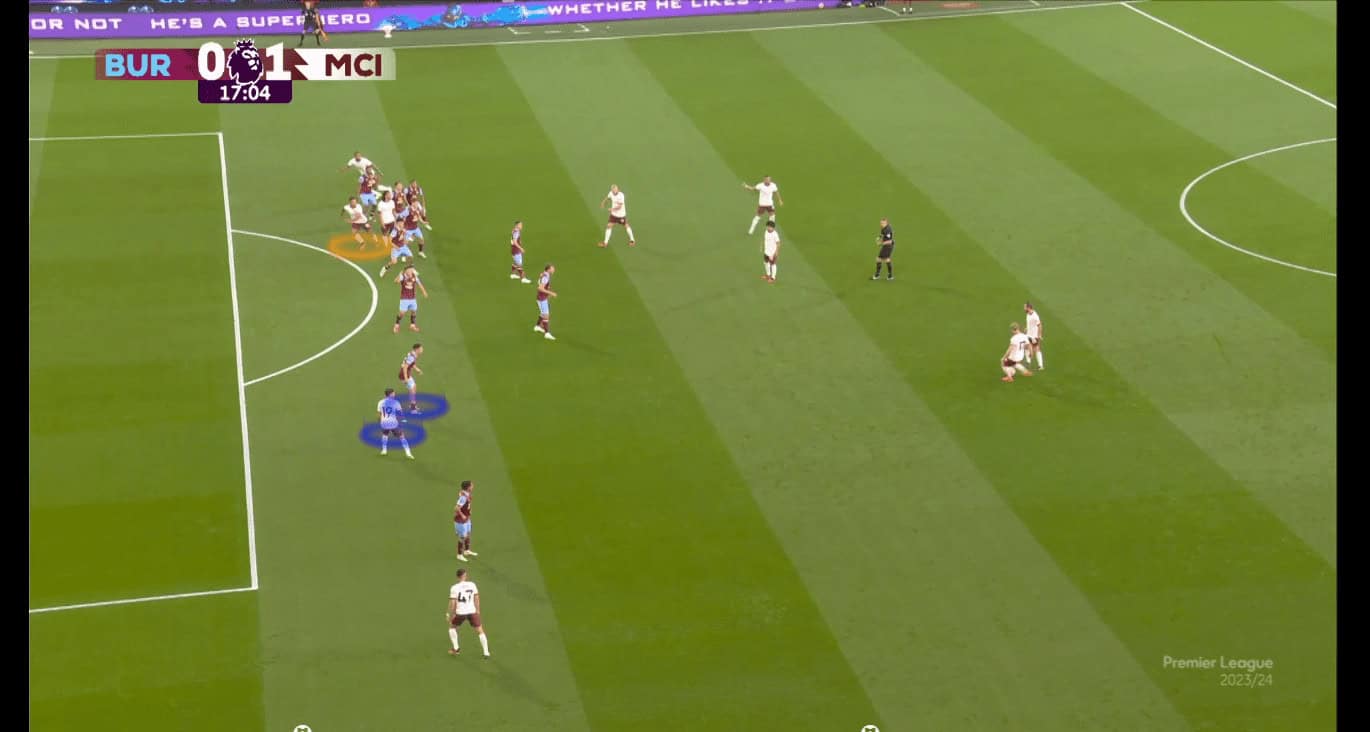
In the first photo below, Haaland talks with Walker, in green, to deceive the defenders that they still think about the plan, while the blue attacker stands behind the line dragging the defender with him because the line hasn’t been organised yet. Rodri, highlighted in yellow, is our targeted player ready to move to receive Kevin De Bruyne’s cross.
In the photo below, Kevin De Bruyne touches the ball while Rodri, highlighted in yellow, starts to move, but the intelligent blue defender reads the situation stepping forward to put Rodri in an offside position.
A possible counter idea
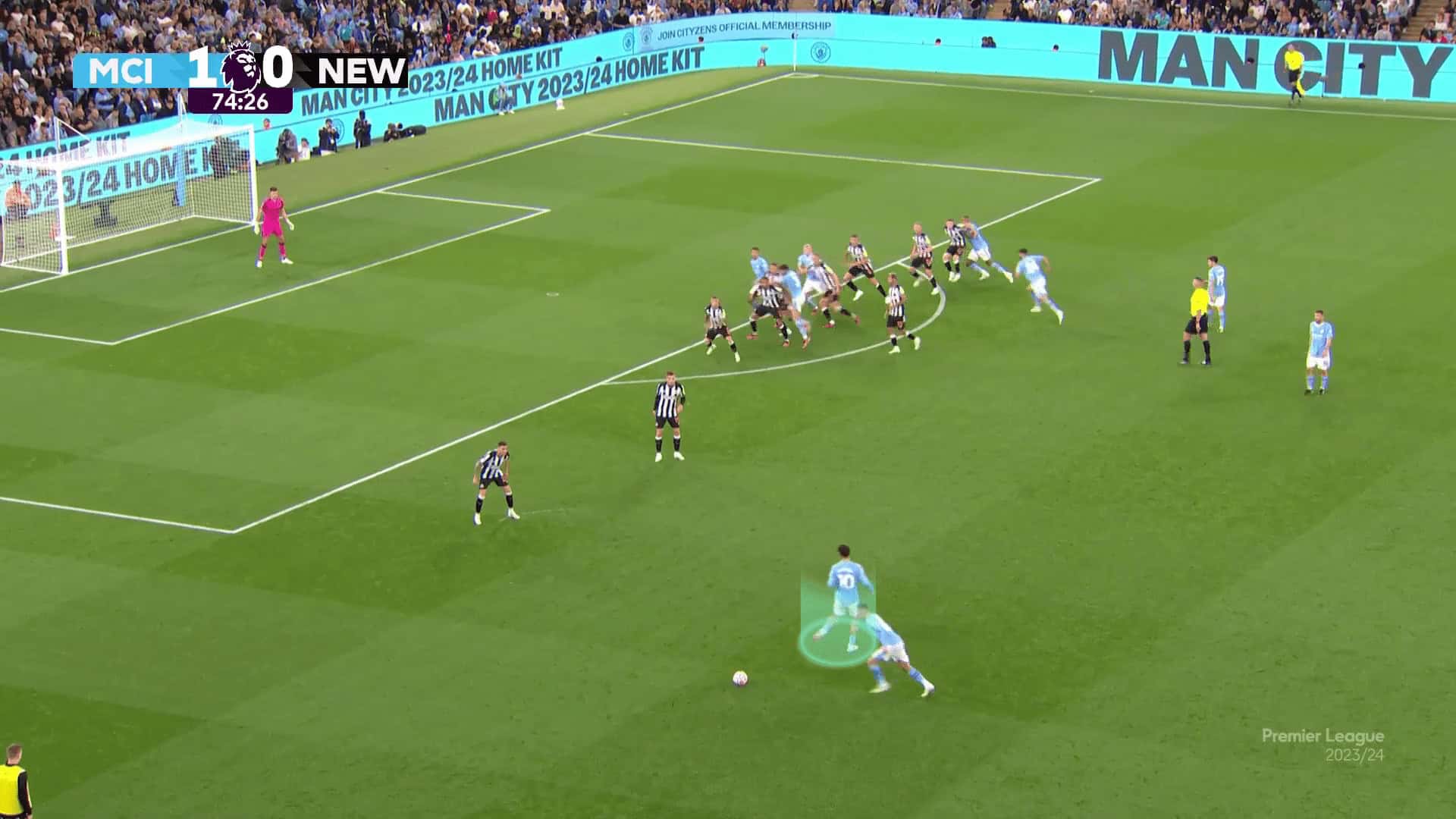
Against Newcastle United, Man City have failed to carry out this plan, let’s know the reason, but we should know a vital note first.
Newcastle United, as shown in the photo below, defend against freekicks with a high line but with an early drop which means that the line drops earlier than the taker touches the ball, which gives the defender positional superiority against the attackers, but that makes them depend on the offside trap less than teams who drops late, they force the danger away from the goal.

That is clear in their match against Man City. They agreed to drop together early regardless of the manipulation of the first taker, so they start to drop together and still drop after the first taker’s fake movement, in green, so the line is well organised together, as shown below.
Conclusion
This analysis has shown the different tactics of Man City in attacking free kicks and how varied and effective they are. They rely heavily on Erling Haaland, whether as a direct target man who starts offside and comes back before the ball is played or as a decoy to pull the line for targeting the player on the far post.
Man City also use many methods to manipulate the line, like two-takers manipulation, the offside initial position of one or more, player and quick cross before the defence reorganise in a line, and that succeeds in making them score, but we should see how they suffer against Newcastle United’s system by dropping early together regardless the two takers manipulation, so let’s see how they will overcome this system in the future.
