
Hugo Duro has cemented his role as a key figure in Valencia CF‘s current era under the guidance of coach Carlos Corberán.
Following several seasons with inconsistent performances, Duro has become the team’s reliable offensive leader in the 2025/2026 season.
With five goals in 15 La Liga matches, he is a cornerstone of Los Che‘s attack, valued not just for his goalscoring but also for his relentless work rate off the ball, his pressing, and his ability to link up with teammates during transitions.
This scout report analyses Hugo Duro’s role within Valencia’s tactical framework, breaking down his profile, offensive behaviours, finishing patterns, hold-up play, defensive contribution, and key areas for development.
Hugo Duro Style Of Play
Hugo Duro functions as a mobile No. 9 whose identity blends the aggression of a classic penalty-box striker with the mobility and work rate required in Valencia’s pressing-oriented game model.
Under coach Carlos Corberán’s system, which is usually a 4-3-3 or sometimes a 4-2-3-1, Hugo Duro serves as the lone forward positioned between the opposing centre-backs, but he is far from a stationary player.
He is constantly in motion, alternating between pressing the defensive line, dropping deeper to link up with the midfield, and making diagonal runs to create space for Valencia’s wingers.
Duro is particularly effective in the left half-space, where he can position himself for right-footed shots on goal or use curved runs to create distance from defenders.
His explosive short-distance speed enables him to attack spaces aggressively, even without having elite top speed.
When Valencia does not have the ball, Hugo Duro leads the team’s pressing efforts.
He often dictates the opponent’s build-up play by angling his runs to cut off central passing lanes, and his tactical discipline allows the team to maintain a compact shape behind him.
While he may not have the aerial prowess of a traditional target forward, he makes up for it with smart timing and clever, unpredictable movements inside the penalty area.
His role can best be summarised as that of a striker who activates Valencia’s entire structure, both offensively and defensively.
Hugo Duro Pizza Chart 2025/2026

Hugo Duro Finishing Profile & Offensive Positioning
Duro’s finishing profile is built on anticipation, timing, and quick execution inside the penalty area.
Almost all his goals come from within twelve metres of the goal.
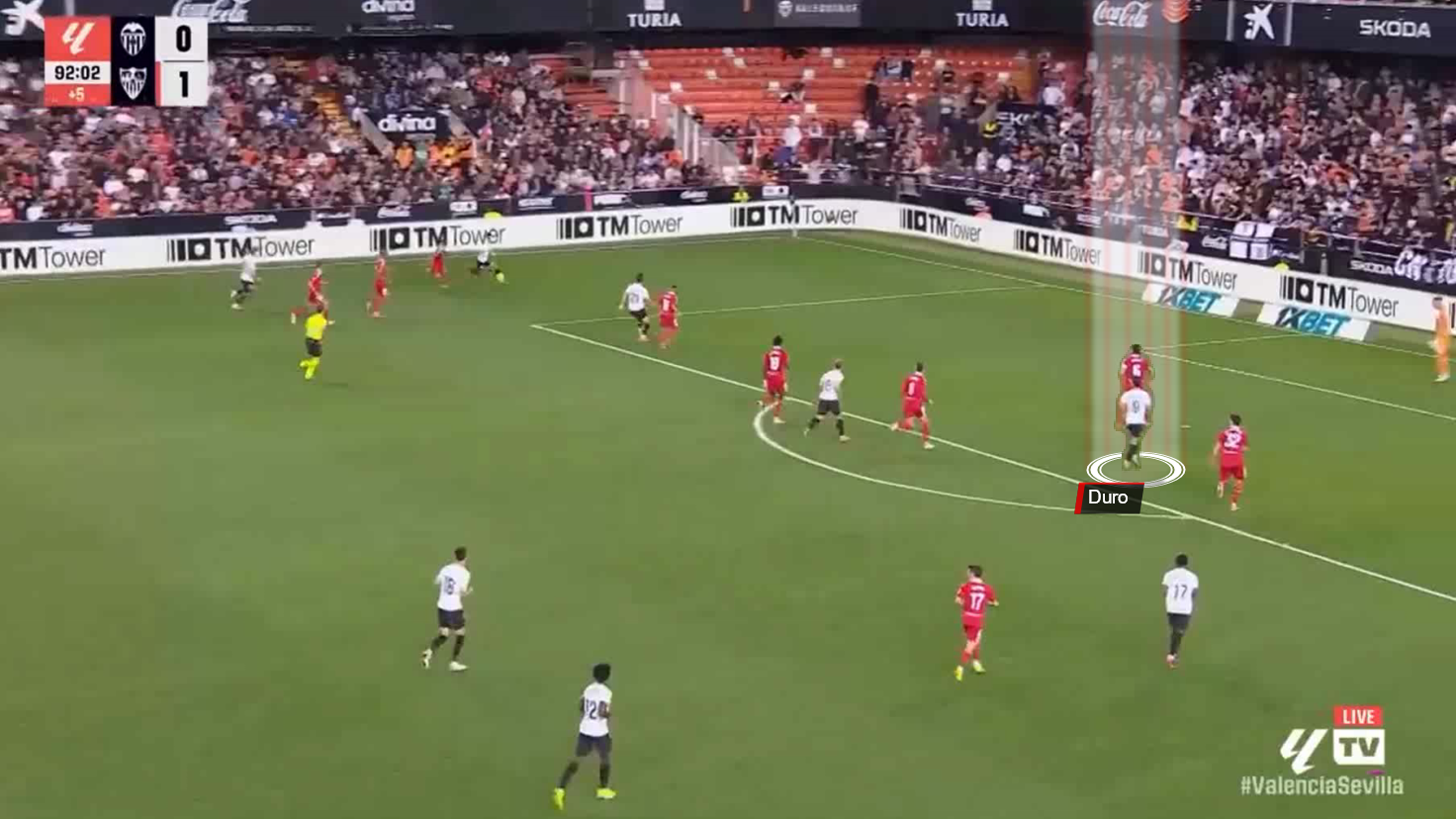
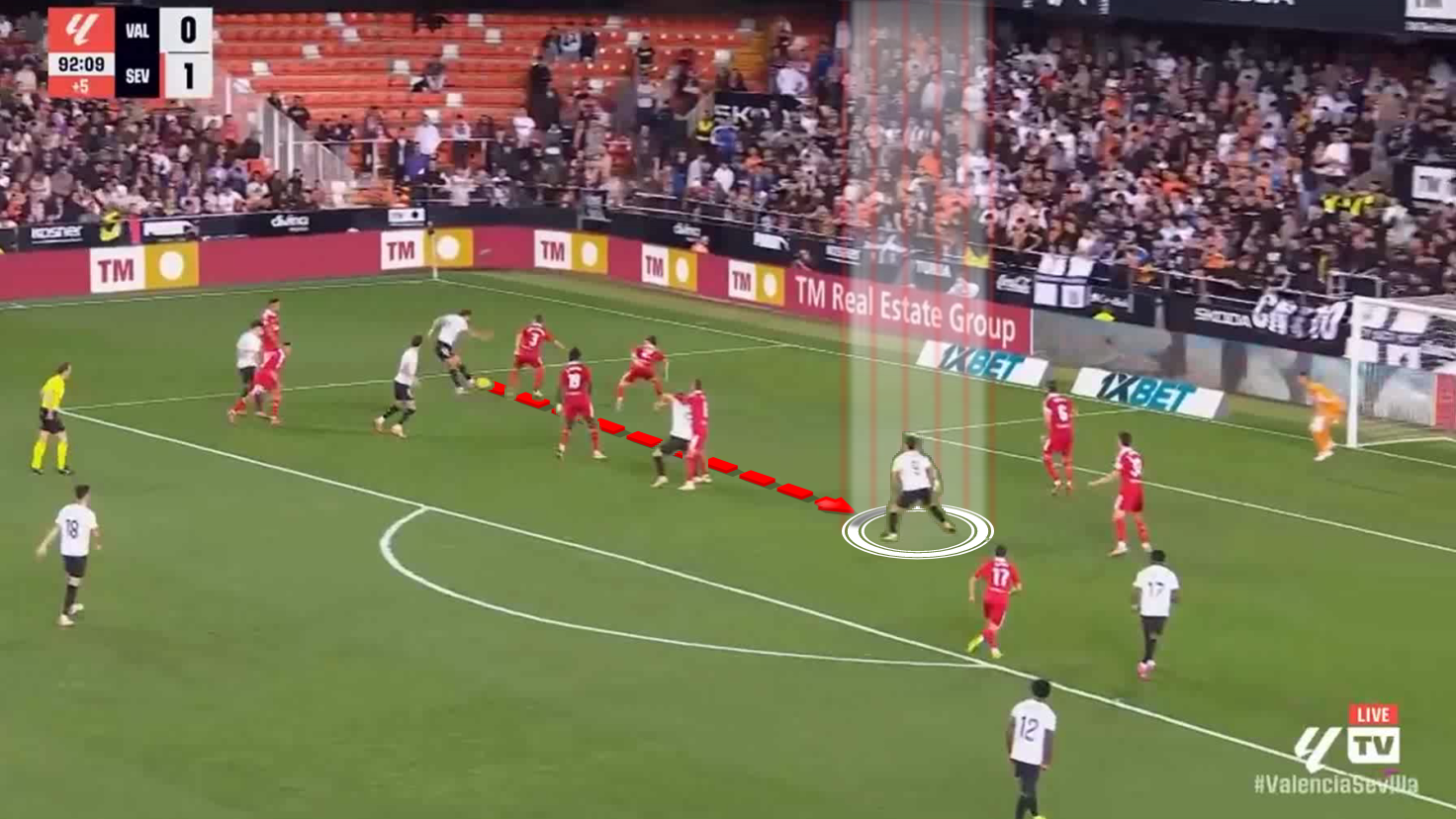
Here is a comparison versus Sevilla, where he attacked the near post ahead of the centre-back and finished a low delivery with a first-time touch.
His instinct to attack space consistently generates high-quality chances.
His best finishing sequences come from first-time efforts, usually when arriving at the near post to meet low deliveries or when reacting quickly to loose balls.
When finishing, Hugo Duro maintains a compact body shape, prioritising accuracy and quick contact with the ball over sheer power.
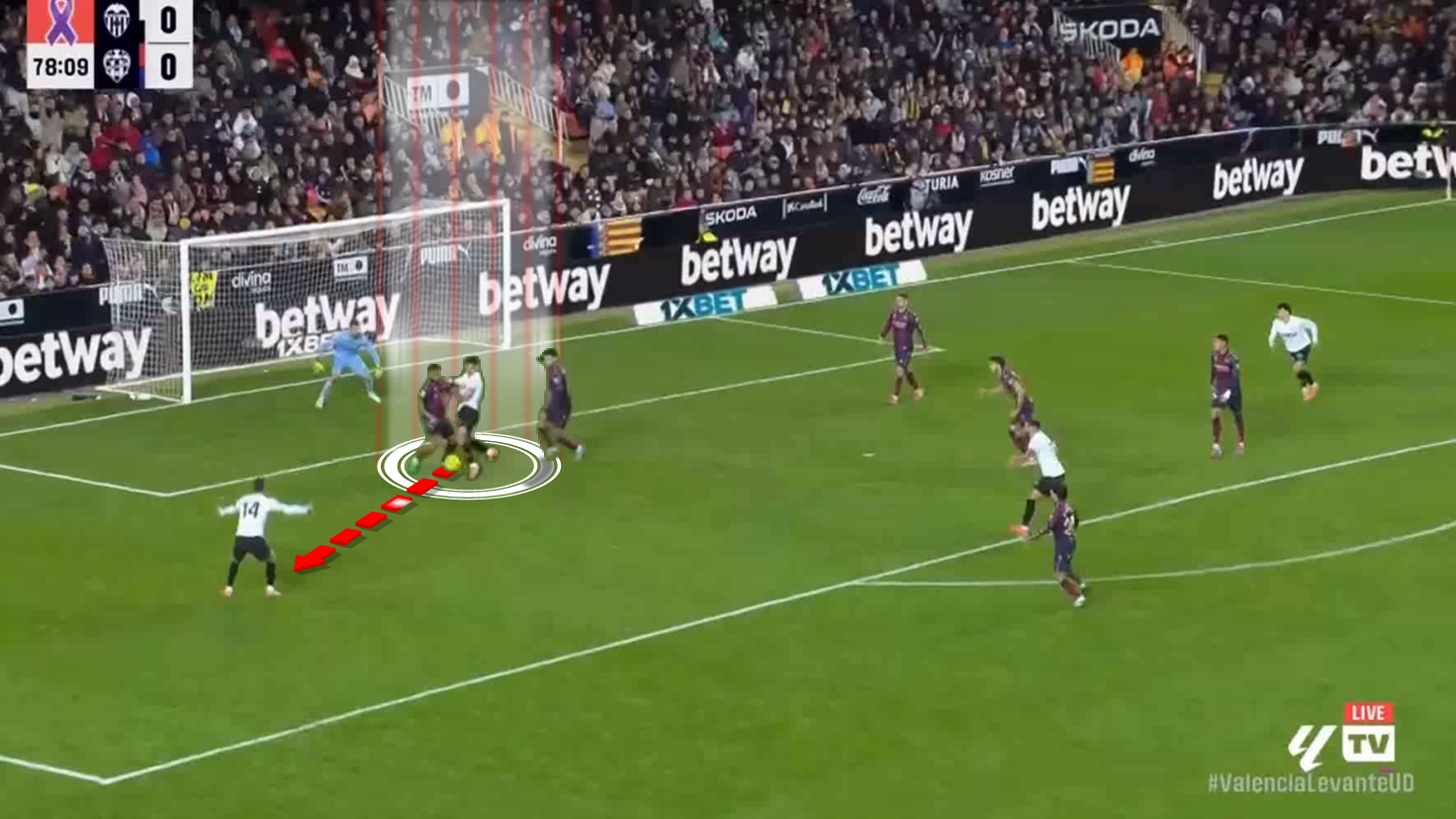
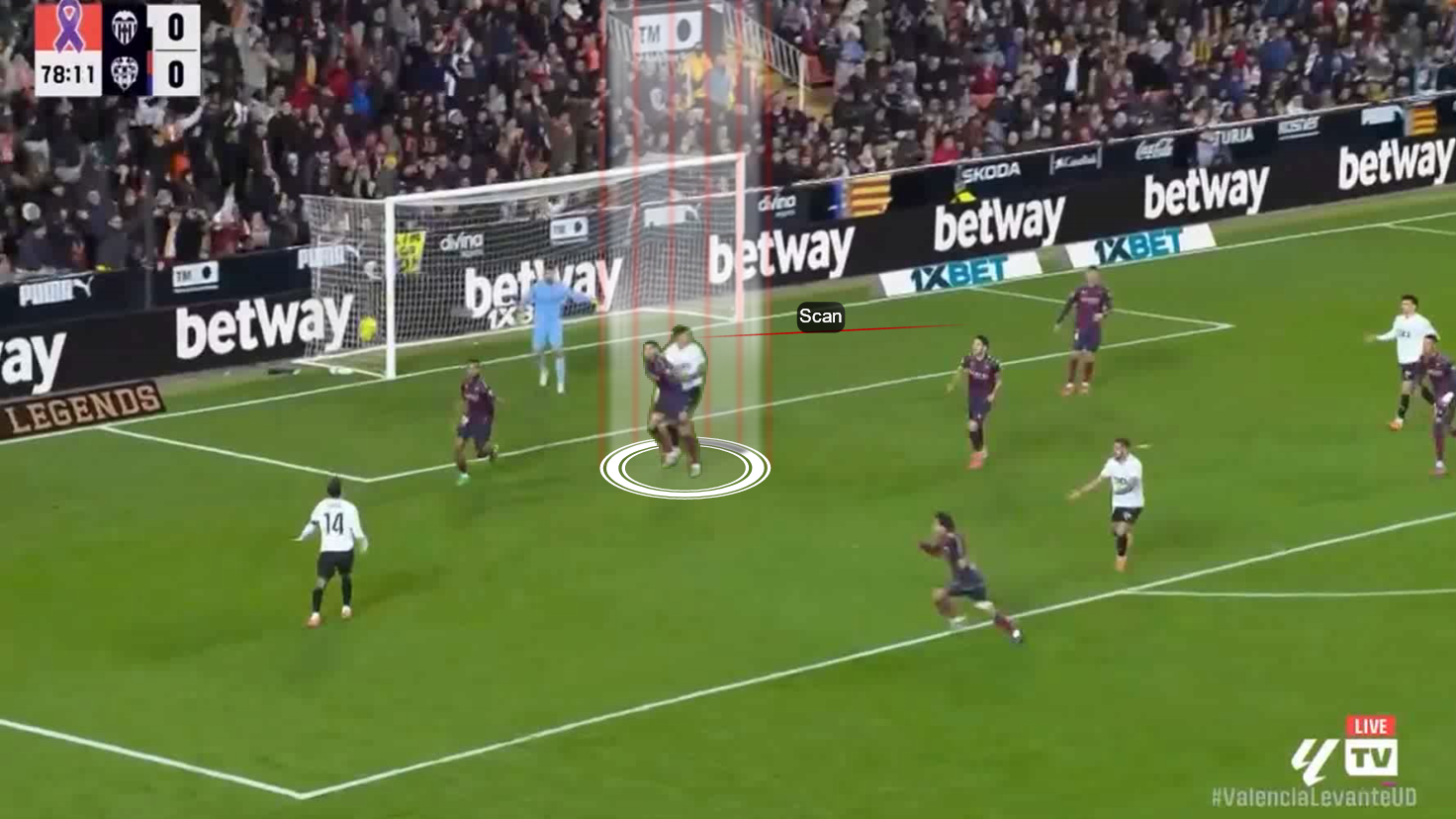
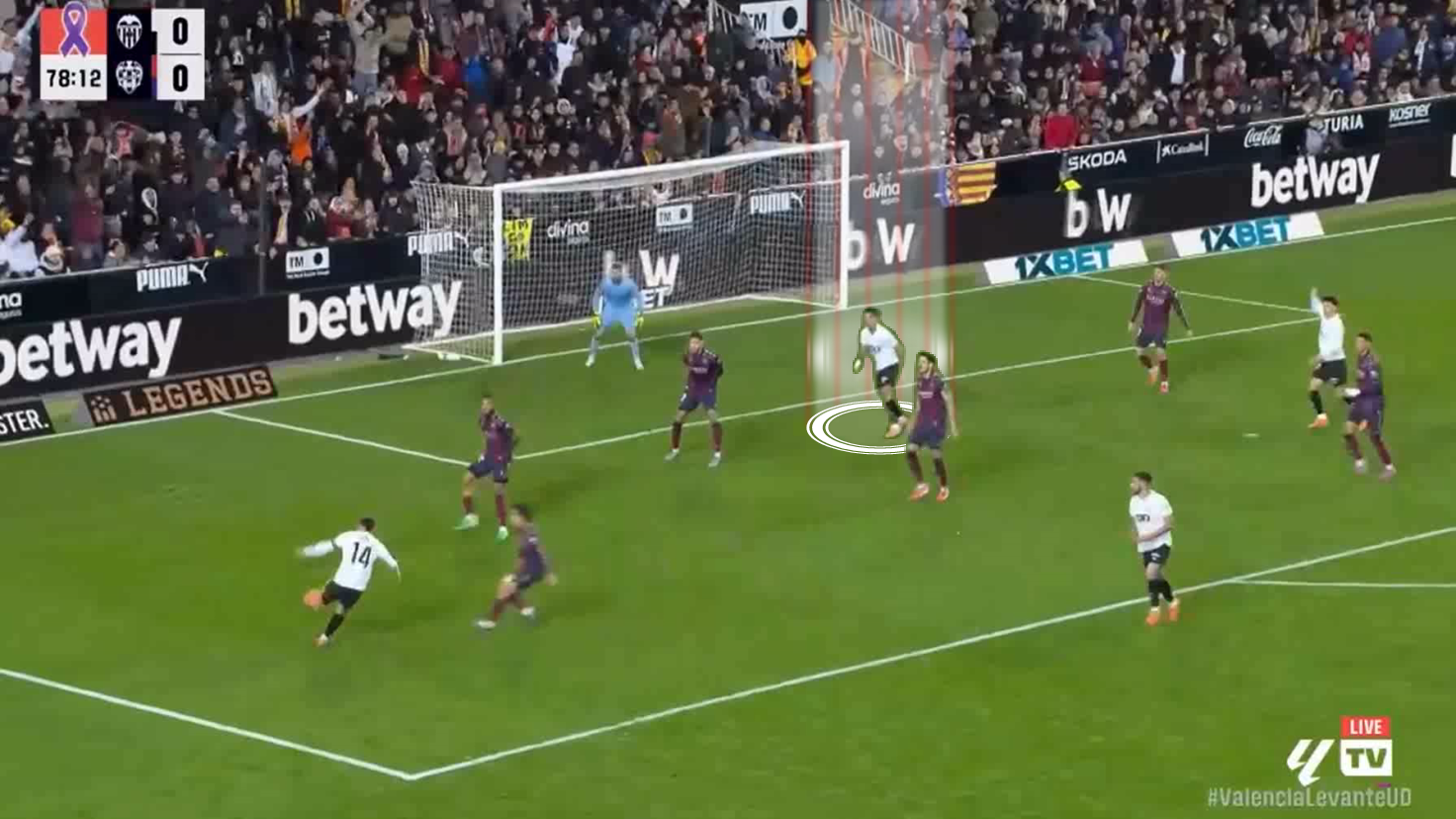
A signature move of his this season is his “double-movement” inside the penalty box: he often starts with a subtle step away from his defender before bursting explosively across the centre-back’s path.
Offensively, Hugo Duro uses his intelligent positioning to get the most out of Valencia’s crosses.
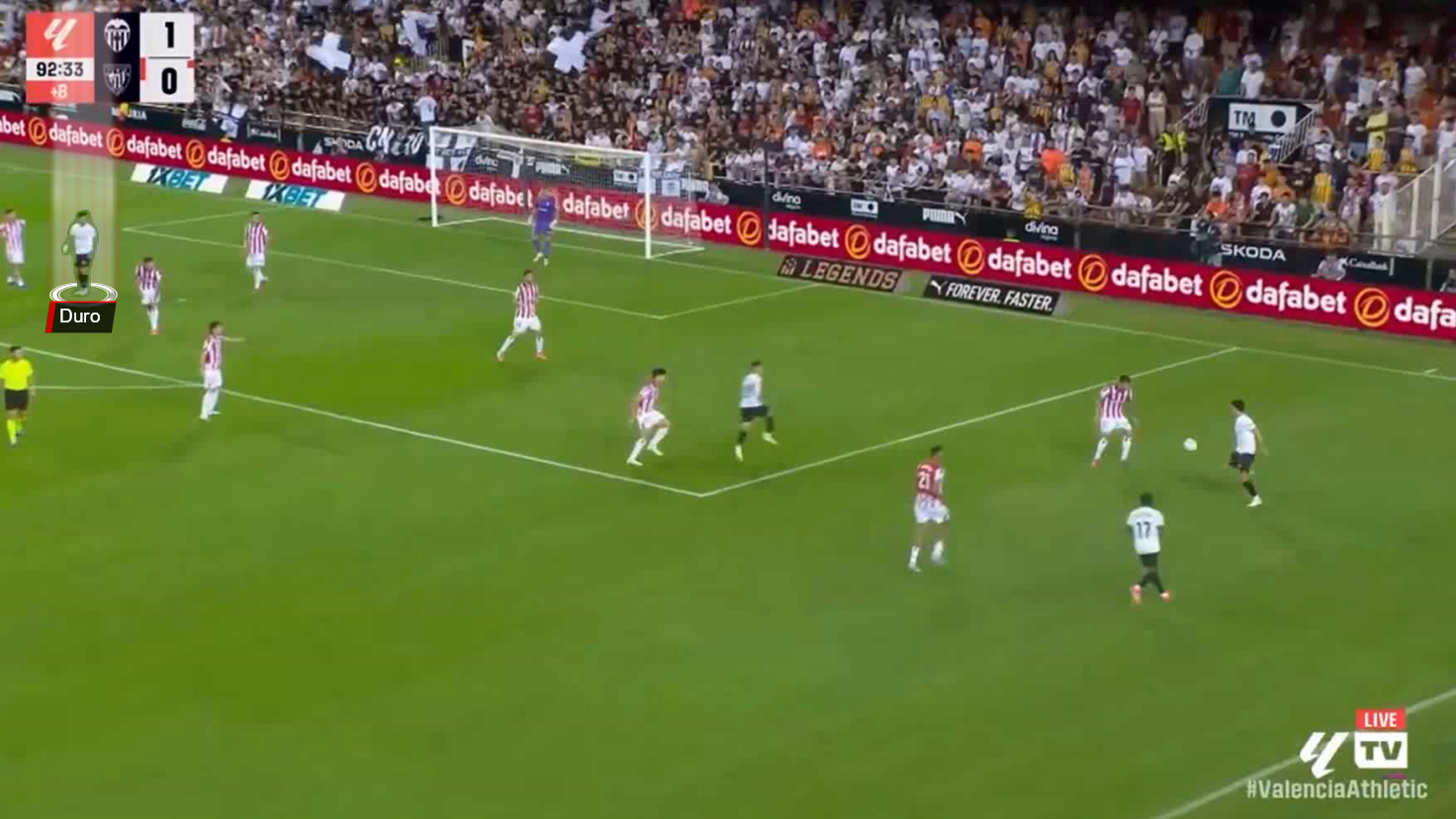
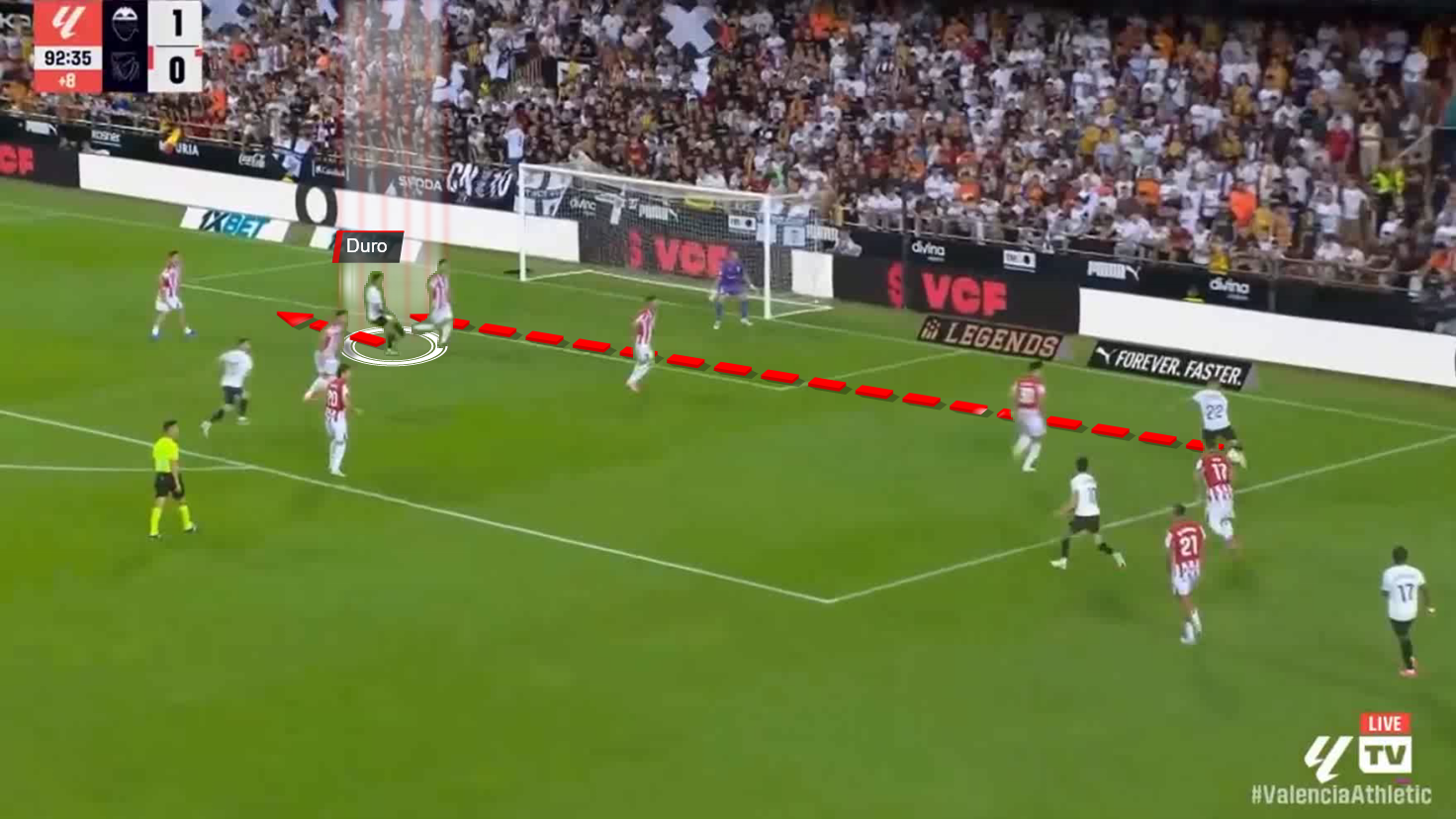 When the ball is out wide, he moves into the blind spots of defenders, often creating one-on-one situations against full-backs at the far post.
If a winger cuts inside, he perfectly times his run toward the penalty spot, ensuring he arrives at the right moment rather than waiting for the ball.
His quick reactions to rebounds and loose balls in chaotic situations give him an edge over most centre-backs.
Furthermore, he demonstrates a mature, practical approach to shooting, preferring to maintain a strong presence in the penalty box rather than taking low-percentage shots from distance.
Hugo Duro Hold-Up & Link-Up Play
While not a physically imposing striker, Hugo Duro has notably improved his ability to hold up the ball.
His back-to-goal play relies on balance and timing instead of raw strength.
When under pressure, he typically takes two touches: the first to control the ball and the second to pass it to an onrushing midfielder or an overlapping full-back.
This effective shielding of the ball helps Valencia stabilise their play during transitions, particularly when breaking through the opponent’s midfield.
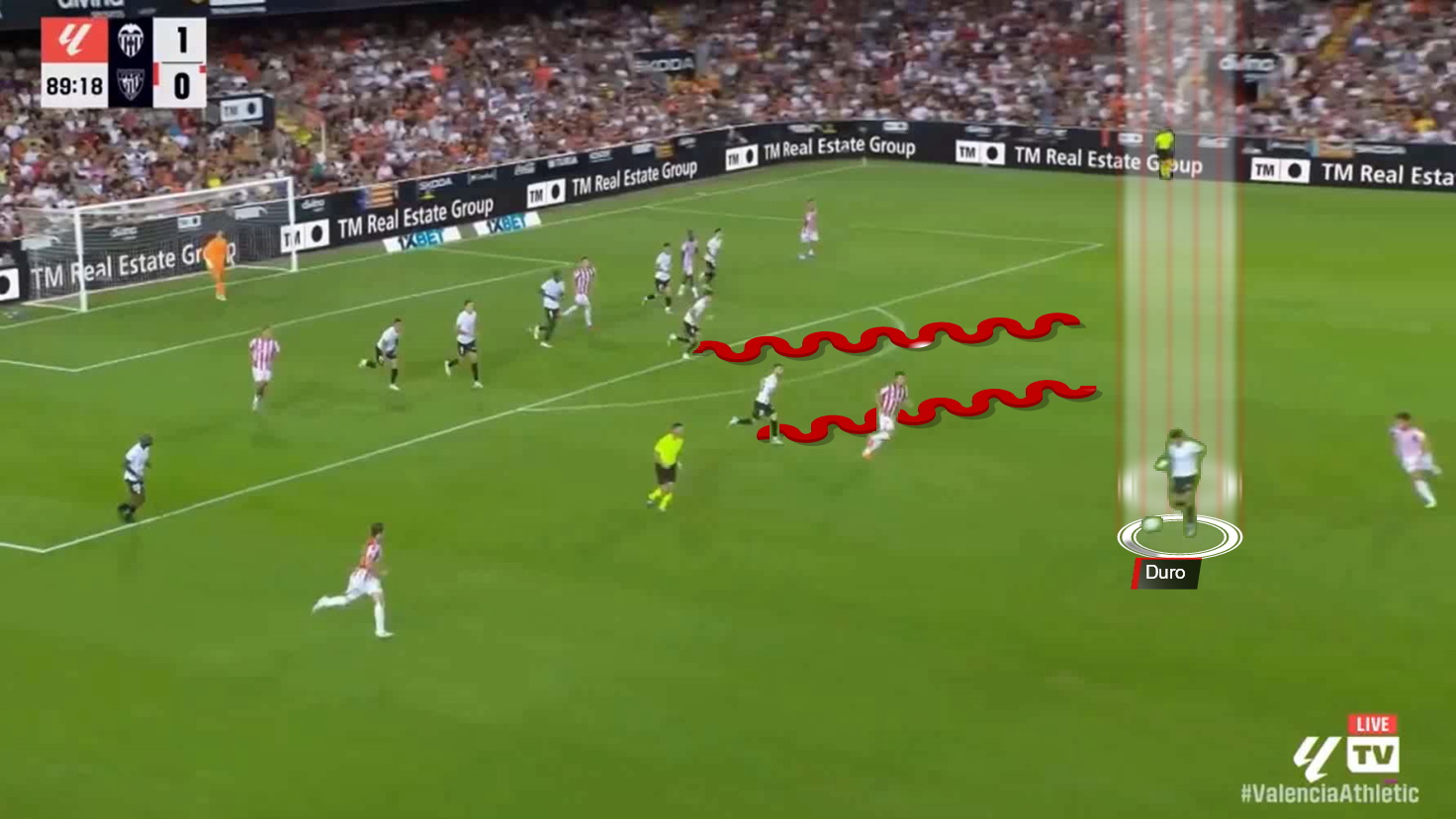
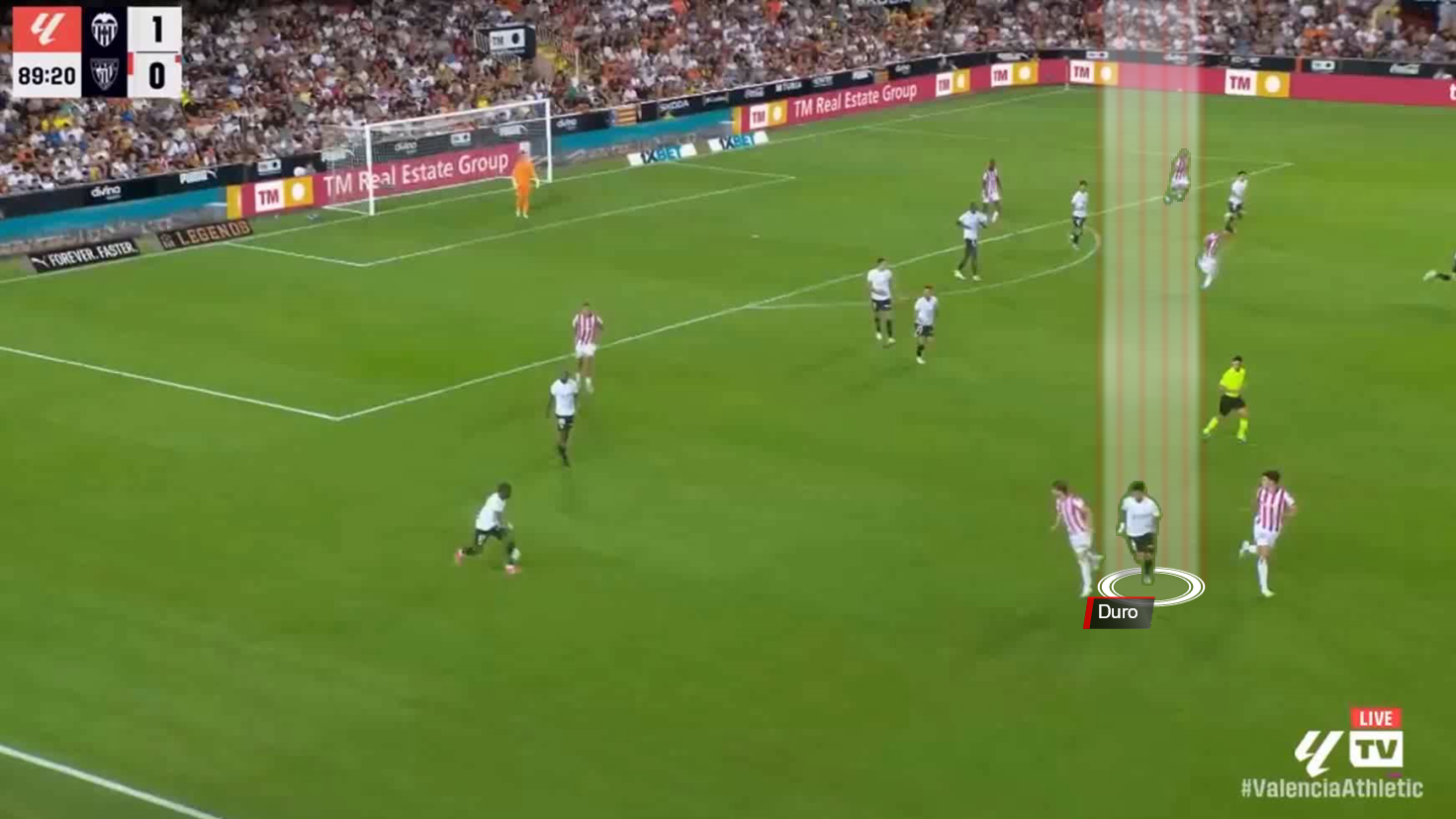
He consistently scans the field before receiving a pass, allowing him to find smart angles for his lay-offs and minimising the risk of losing possession in central areas of the pitch.
Hugo Duro’s ability to link up play is especially important when Valencia plays against teams that apply aggressive pressure in the midfield.
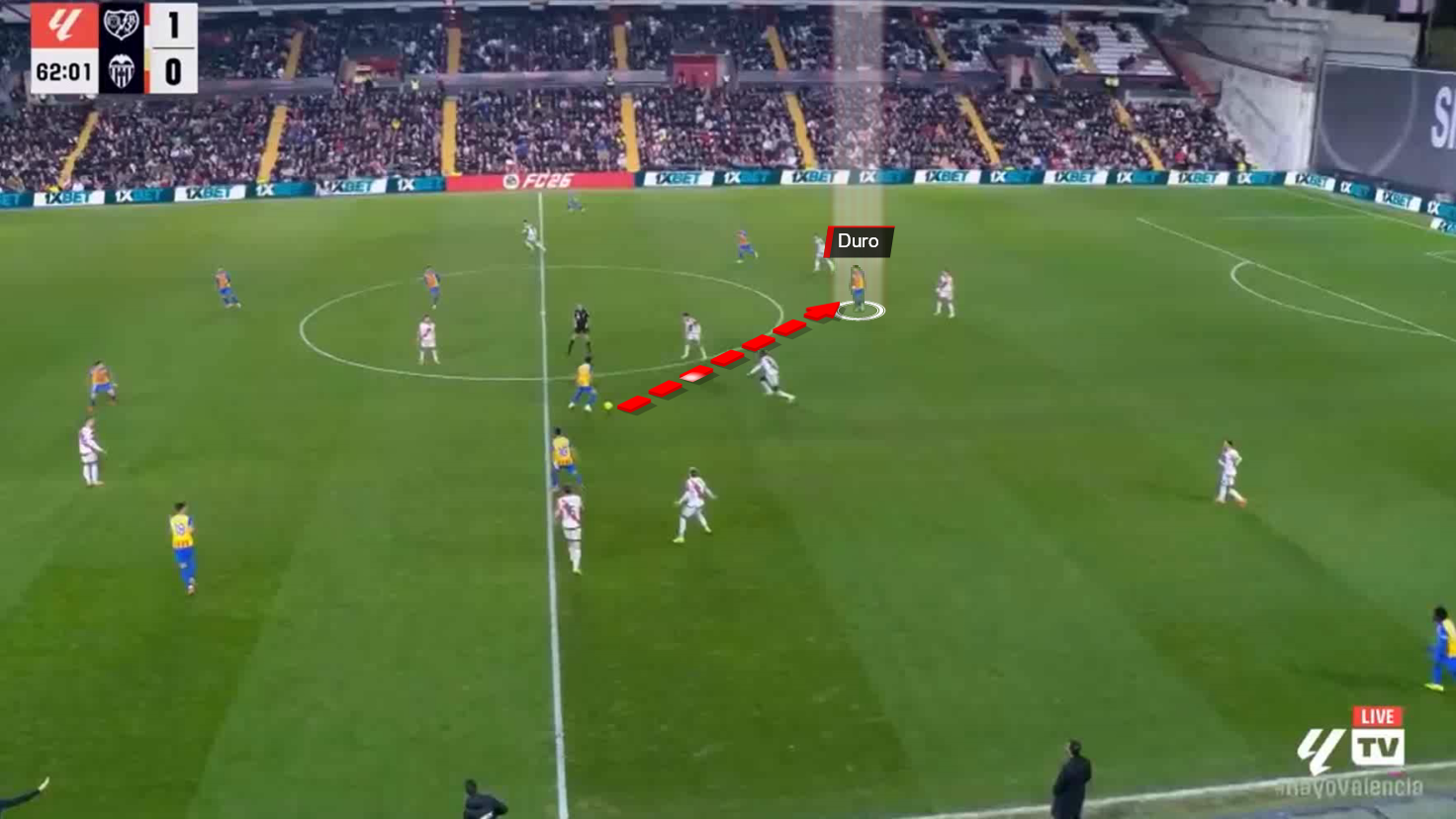
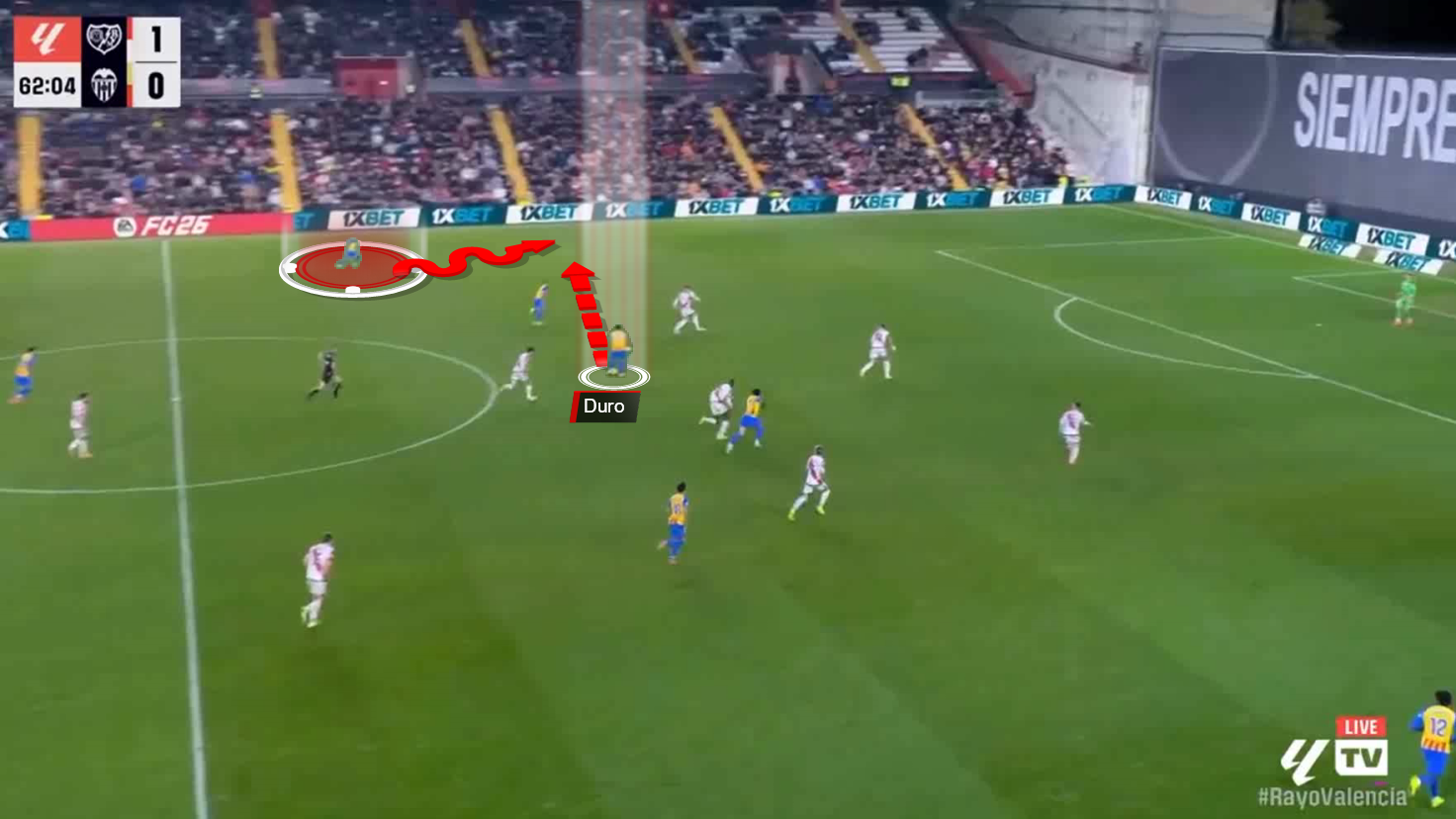 By dropping into the half-space, he acts as a vital link, creating “third-man” combinations that help Valencia bypass the press. In these situations, Duro’s clever use of short passes is key to moving the team up the field.
When dealing with long passes or clearances, he challenges defenders to create opportunities from second balls, a crucial part of Valencia’s direct, vertical attacking style.
Although he doesn’t often carry the ball over long distances, he makes up for it by playing quick one-two passes and immediately sprinting toward the penalty box to be part of the final attack.
Hugo Duro Defensive Style & Transition
Duro’s defensive contributions are arguably among the most influential aspects of his role.
Valencia’s pressing identity relies on intensity and coordinated actions, and Hugo Duro serves as the reference for all triggers.
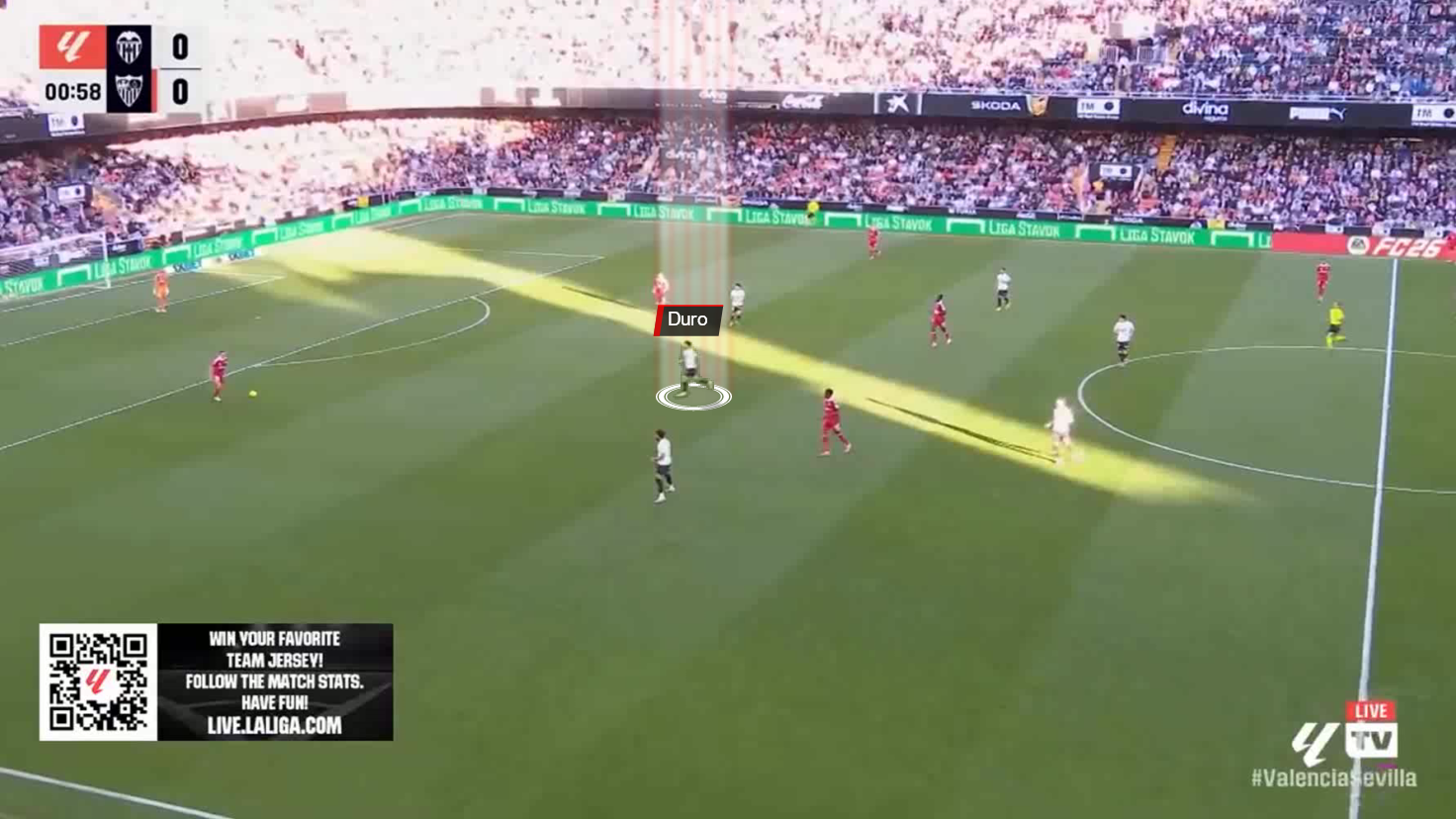 He begins most pressing actions by curving his run toward the centre-back or goalkeeper, shutting off central passing lanes and forcing the opponent to build through wide areas.
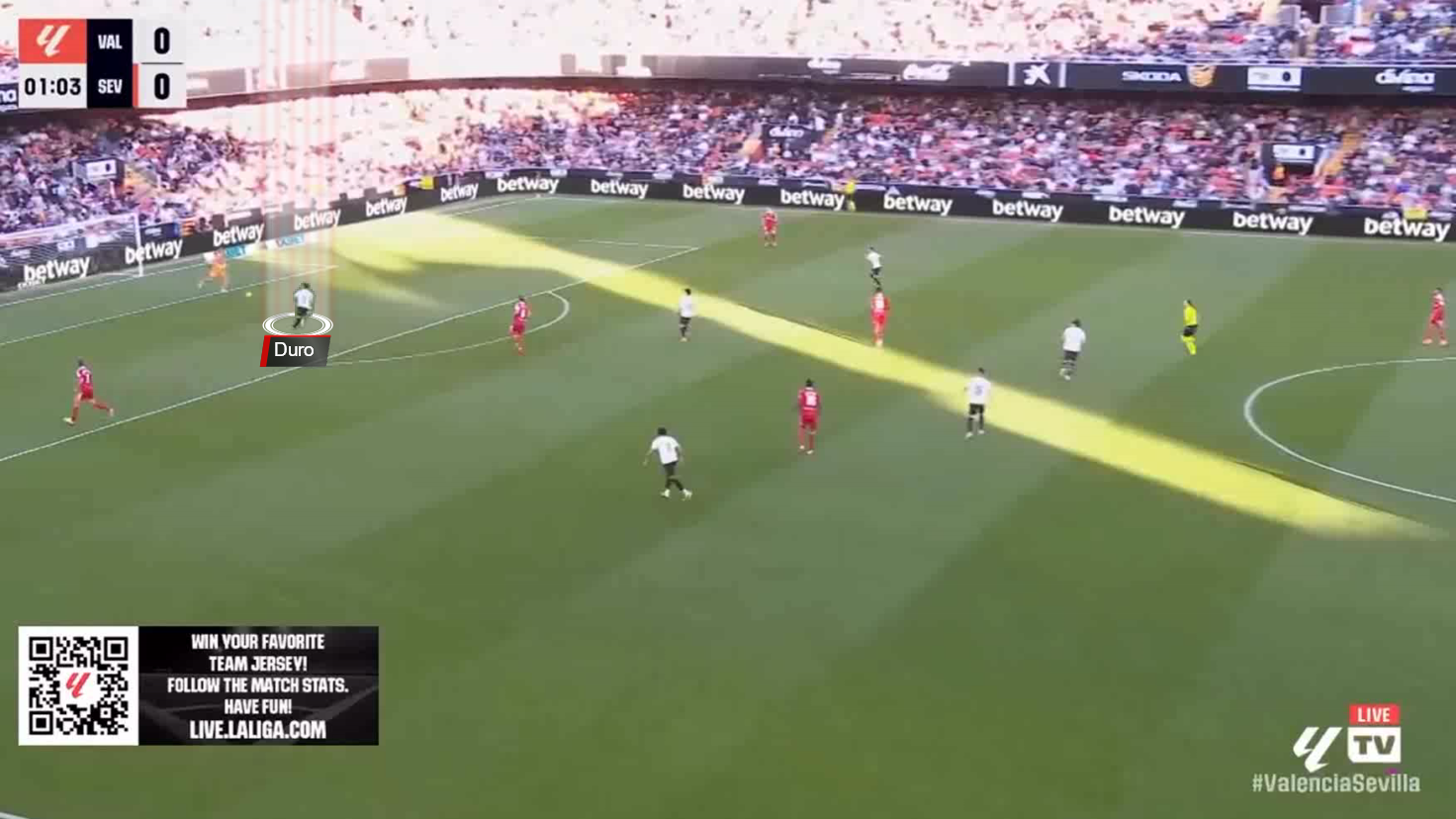 His timing is crucial; he rarely presses blindly but instead adjusts his angle to guide the opponent toward Valencia’s trap zones.
When his team, Valencia, loses possession, Hugo Duro immediately spearheads the counter-press.
He instinctively closes down the nearest opponent, cutting off passing lanes and disrupting the other team’s attempt to build an attack.
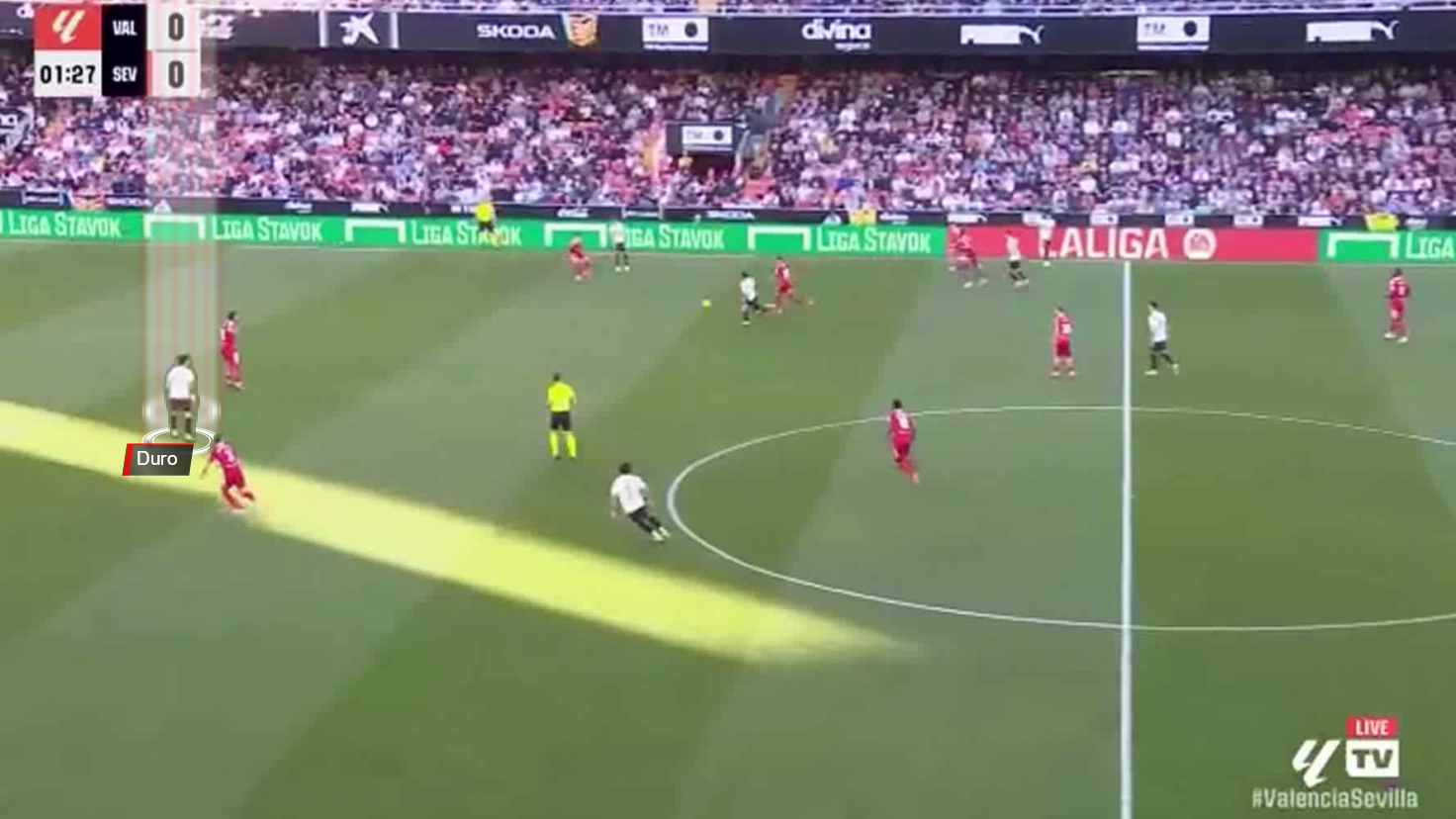
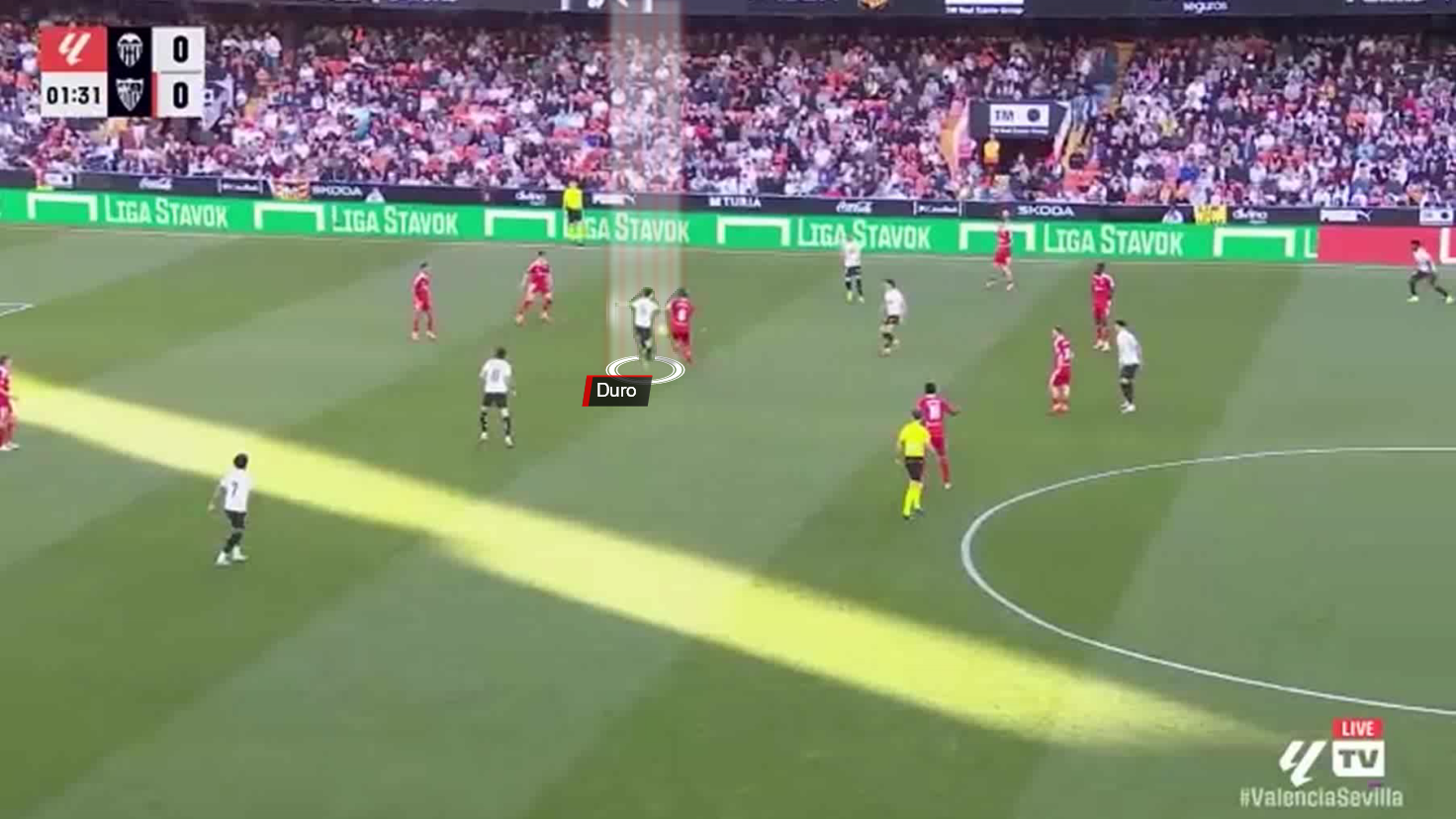
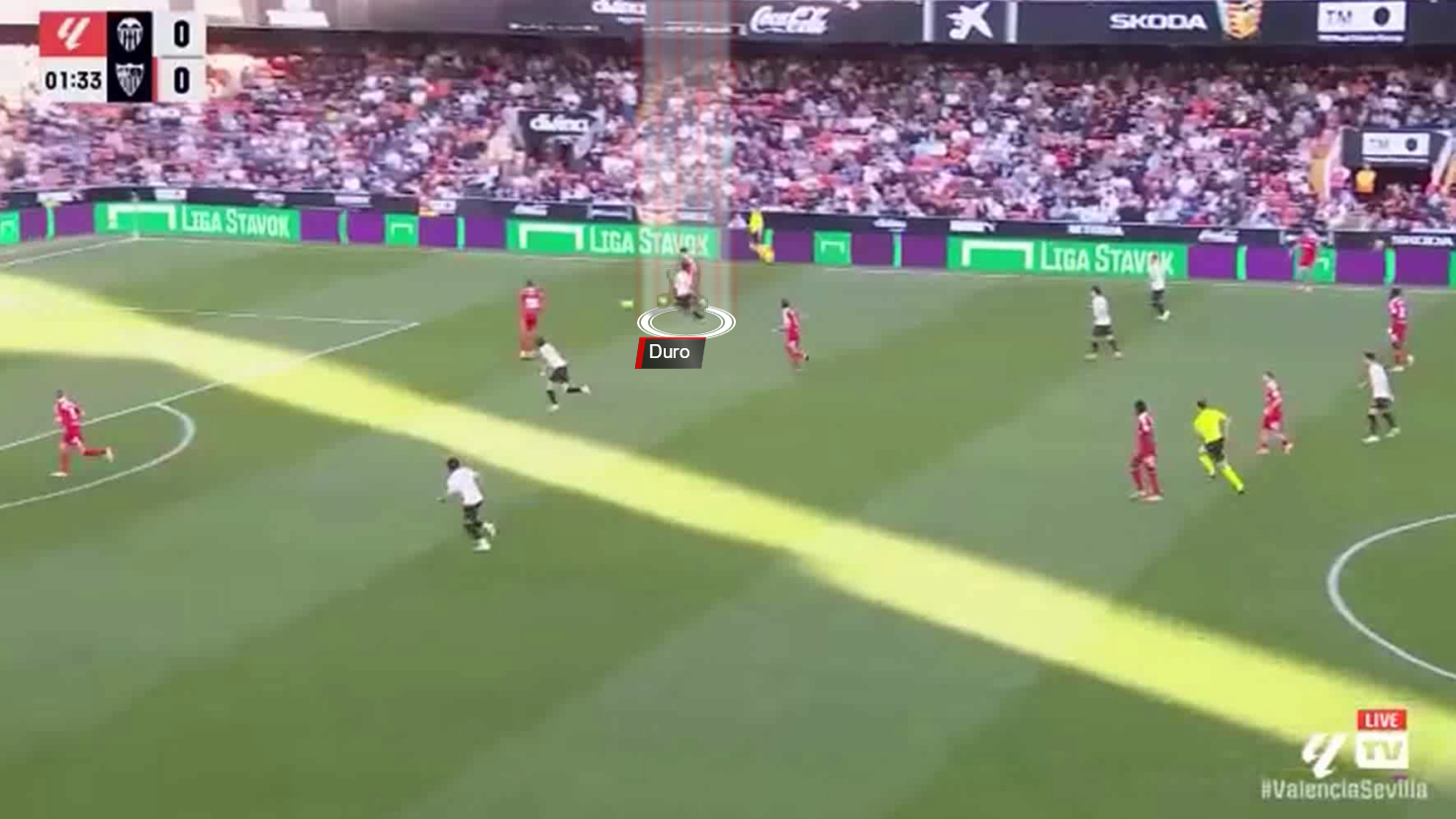 This allows Valencia’s midfield to get back into a compact shape.
Hugo Duro’s work rate is outstanding; he covers a lot of ground to relentlessly pressure the player with the ball.
When defending deeper in his own half, he positions himself to block passes to the opposition’s key central midfielders, forcing them to play out wide.
His aggressive but smart pressing sets the defensive standard for his teammates, showing true leadership on the pitch.
Hugo Duro’s goal against Getafe illustrates his intelligence in attacking transitions.
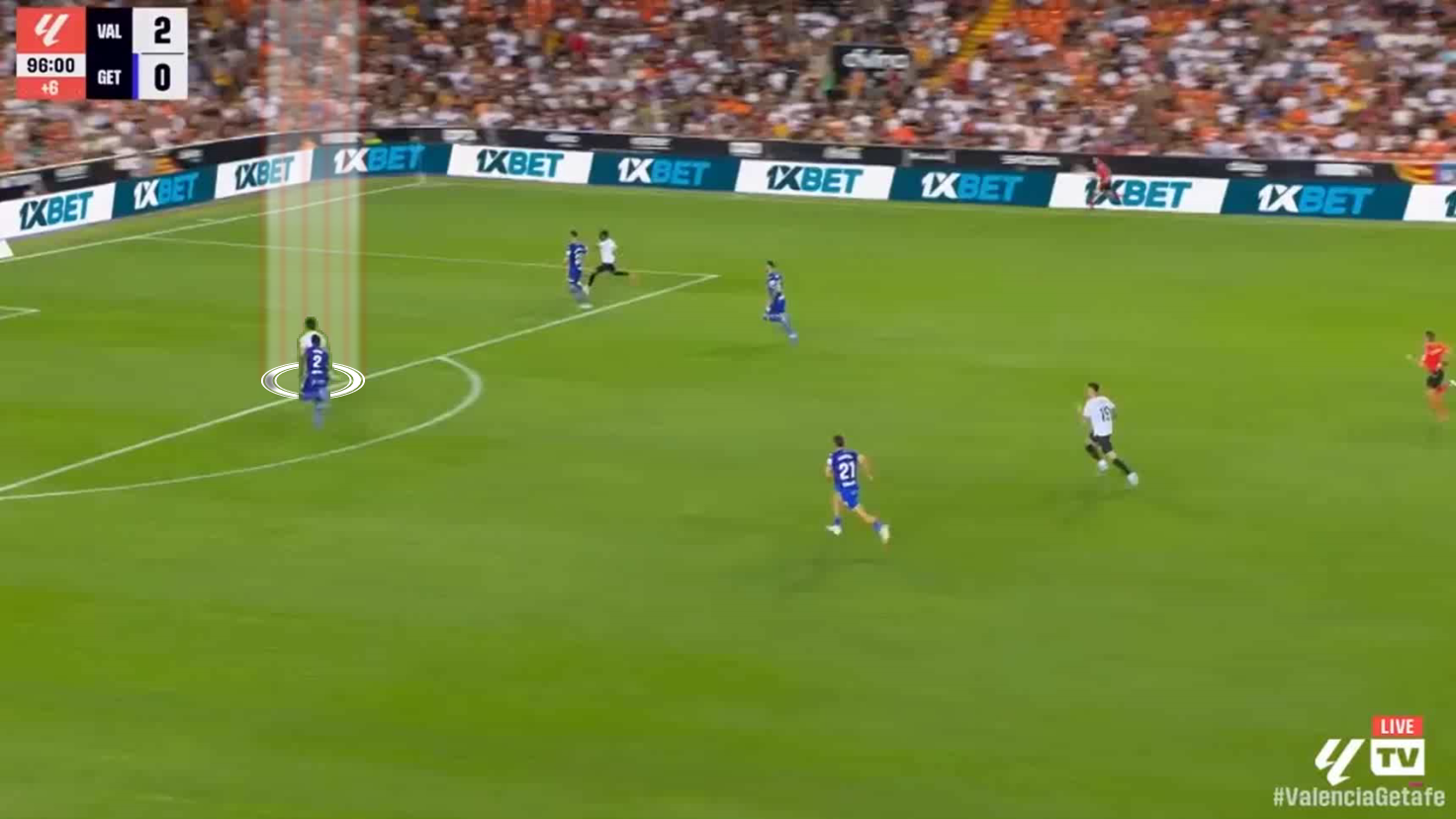
Following a ball recovery in the middle third, his immediate movement is into depth, attacking the space behind the retreating centre-back rather than dropping toward the ball.
By running on the defender’s blind side, he exploits Getafe’s unbalanced defensive line.
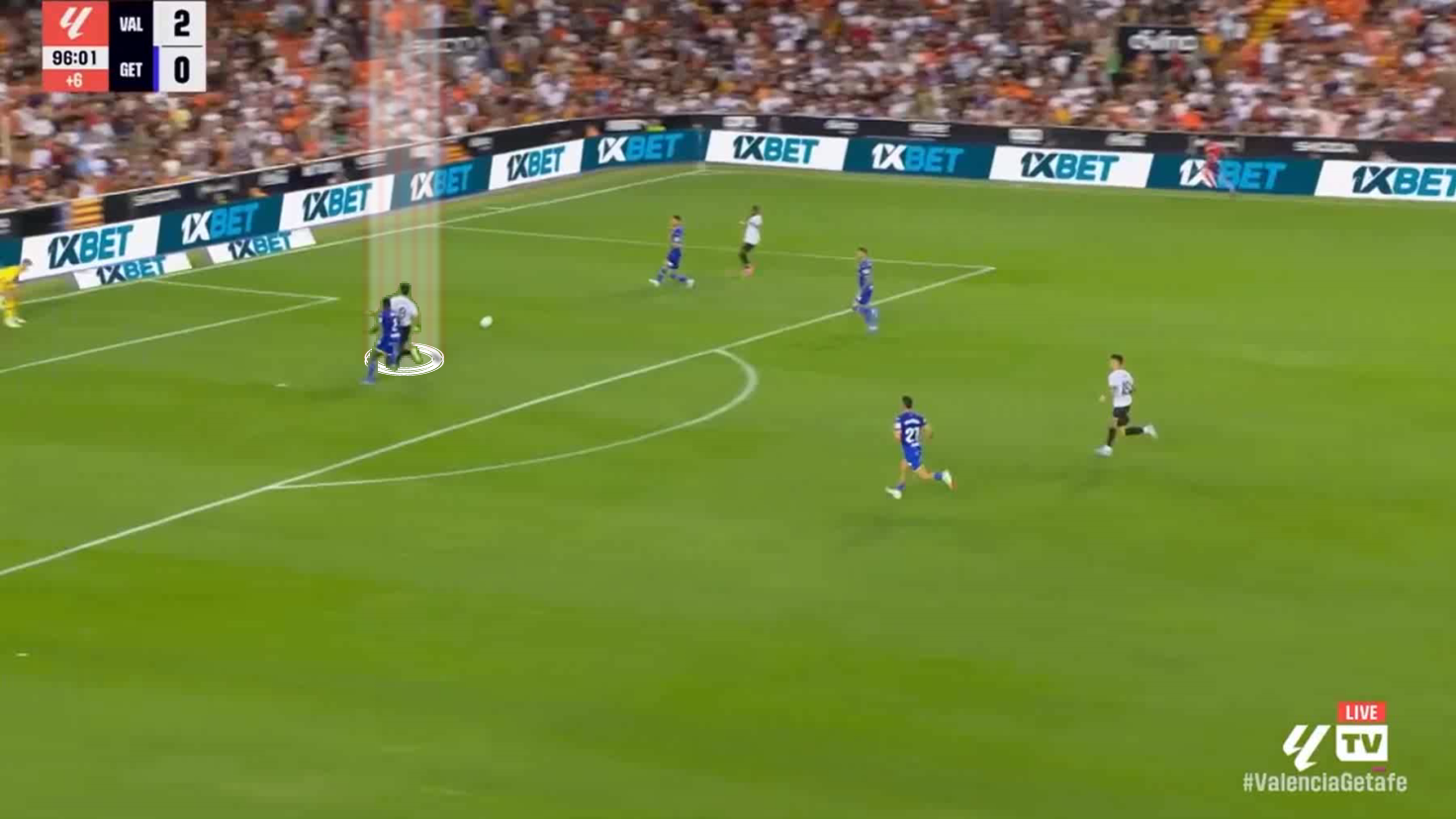
His first touch carries the ball forward into the box, maintaining momentum, before finishing with minimal backlift and high composure.
The speed of the transition and Hugo Duro’s decisive timing prevent Getafe from recovering their defensive shape, turning a moment of disorganisation into a clear scoring opportunity.
Hugo Duro Areas For Development
While Hugo Duro is a valuable player in many ways, there are a few key areas he needs to work on to become a top-tier striker.
First, his finishing could be more clinical.
He gets into great goalscoring positions but sometimes snatches at his shots, especially when he’s one-on-one with the goalkeeper or has time in the penalty area.
If he could add more composure in front of goal, he would become a much more dependable goalscorer.
Another area for development is his first touch when under pressure from defenders.
He can sometimes lose control of the ball when receiving direct passes, particularly when marked by strong centre-backs.
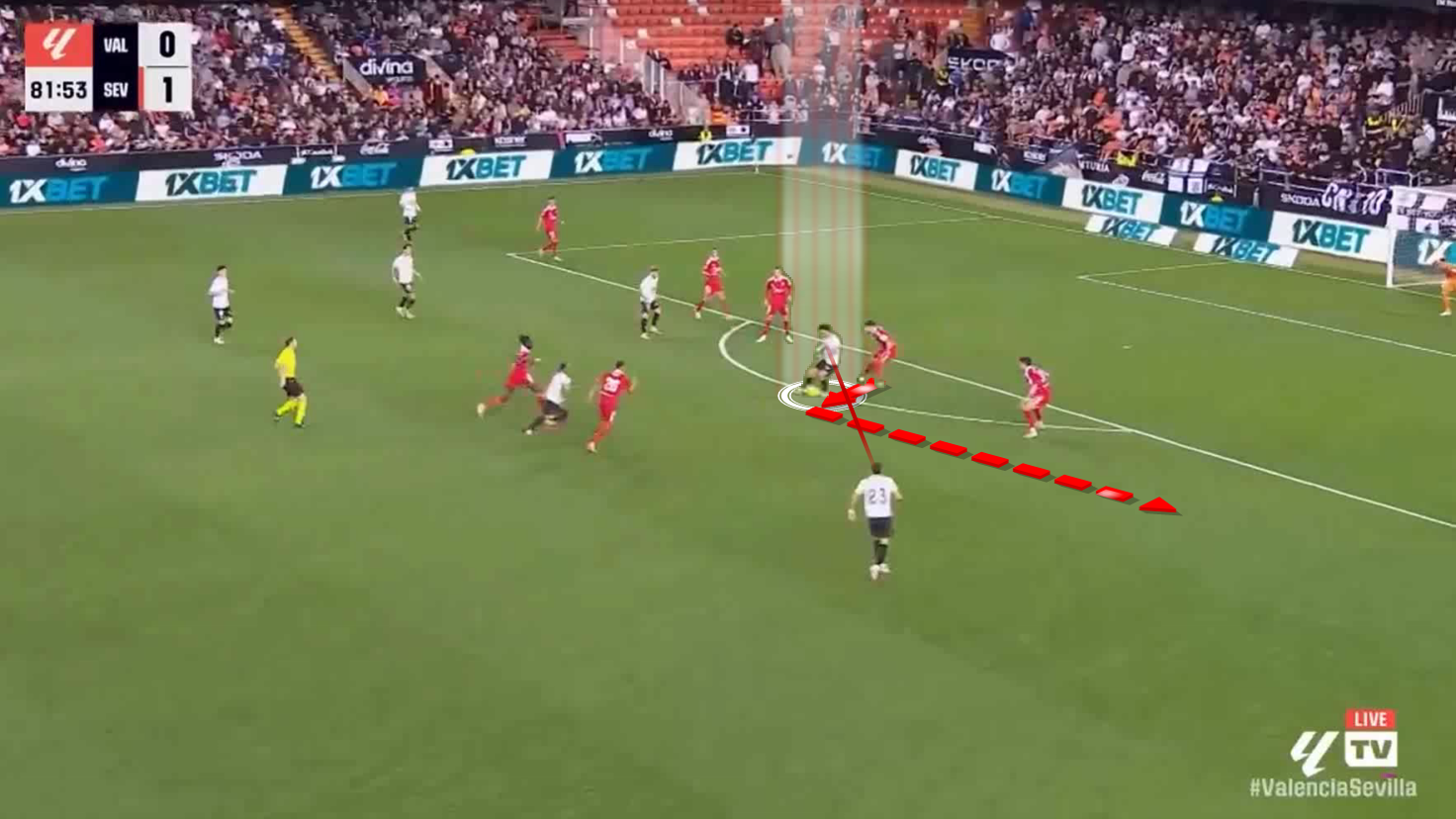
Improving his technical ability in tight situations would make him a more effective target man and allow him to hold up the ball more consistently.
Hugo Duro’s heading is another area for improvement.
While he’s willing to challenge for high balls, his timing and jumping technique aren’t always consistent.
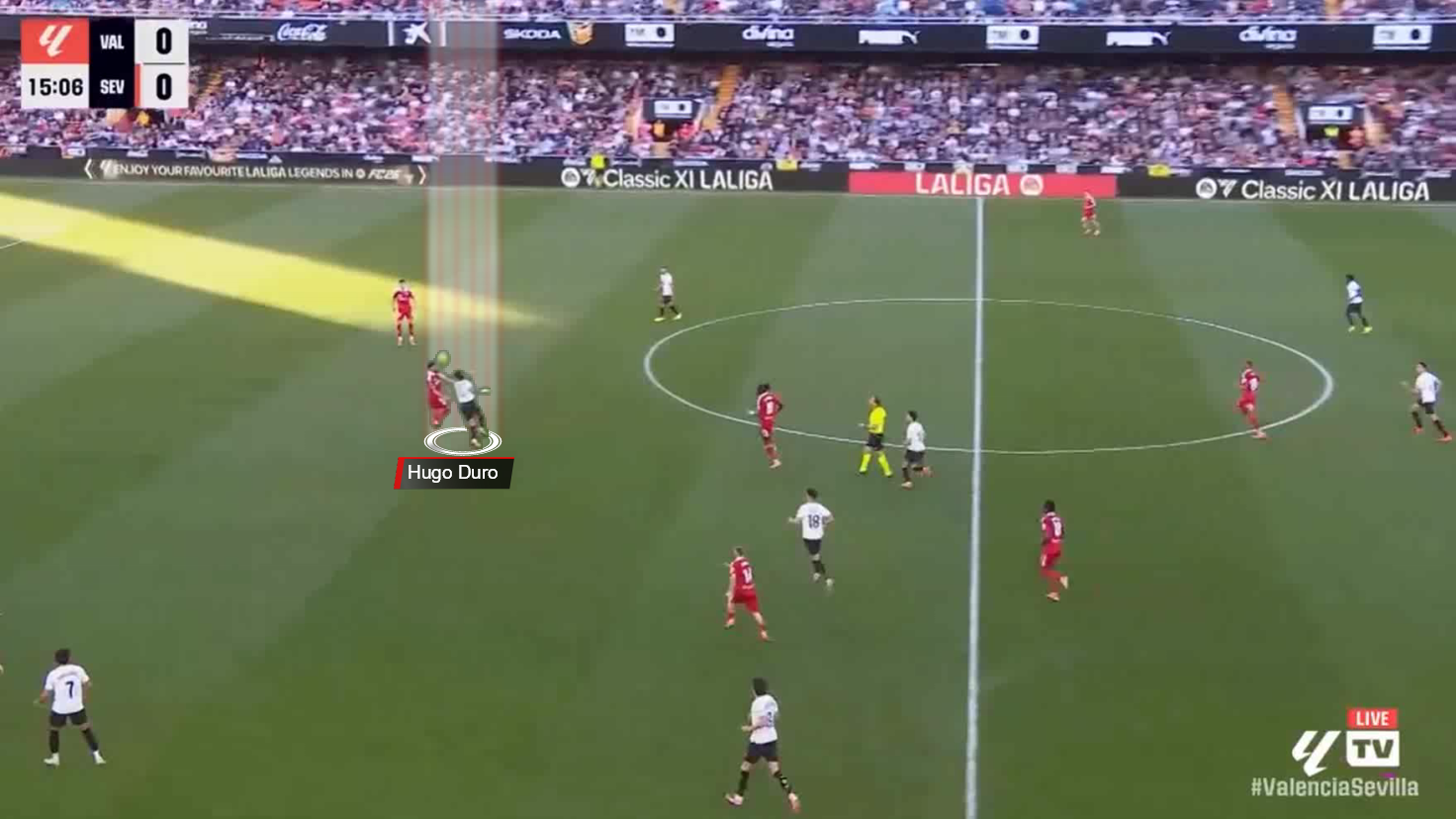
Becoming a bigger threat in the air would be a huge advantage, especially since Valencia often attacks by sending crosses into the box.
Finally, he could improve his ability to dribble with the ball over longer distances.
If he could carry the ball up the field more effectively during counter-attacks, it would give Valencia another way to attack instead of always relying on quick, short passes.
Conclusion
Hugo Duro’s 2025/2026 season showcases a striker who holds immense tactical value for Valencia CF.
With five league goals in fifteen matches, his contributions extend far beyond scoring.
His intelligent movement, compact finishing technique, aggressive pressing, and reliable link-up play make him indispensable to Corberan’s structure.
He embodies the club’s identity: disciplined, intense, and always proactive.
While he has clear areas for improvement, particularly in composure, aerial threat, and first-touch security, his overall influence remains significant.
If he continues to refine these aspects, Hugo Duro has the potential to evolve into one of La Liga’s most complete strikers outside the traditional top tier of clubs.
