
While a few details have to be ironed out, Botafogo look set to appoint Portuguese manager Luís Castro. The 60-year-old manager has been at Al Duhail this season but has also managed Shakhtar Donetsk and Porto in the past. This is the first appointment of John Textor’s ownership. The American, who also owns a part of Crystal Palace, has expressed the desire to turn Botafogo into a South American giant and a global brand. In order to do so, he is implementing a new structure at the club. From heavily investing in the analysis and data department to bringing in a whole new set of sponsors, Botafogo are looking to build something big.
There are two main motivations behind Luís Castro’s appointment: youth importance and attacking football. The Portuguese manager has years of experience working in Porto’s youth academy and developing young players. In the first seven matches of this year’s Carioca, Botafogo have used 12 youth players and started a total of eight. While John Textor will look to invest and enhance Botafogo’s academy, the club already has a lot of talent. Castro will be key in using and developing this talent.
Luís Castro’s recent jobs at Al Duhail and Shakhtar Donetsk have demonstrated the Portuguese’s attacking playing style. He has averaged around 60% possession in both clubs and puts a large emphasis on controlling the game. This is in line with John Textor’s comments on wanting a forward and modern-thinking manager. However, Botafogo have just been promoted from the second division and do not have the strongest squad. It will be interesting to see how Castro copes with this.
In this tactical analysis, Luís Castro’s tactics at Al Duhail will be analysed to determine how Botafogo might look under the Portuguese.
Formations
There are many defining characteristics of Luís Castro’s playing style, but perhaps the most significant one is the importance of possession. We will look at this in more depth, but he focuses on retaining possession through quick and simple passes. In order for this to be done, the organisational structure of his team must be one that allows for constant support. Additionally, triangulation is necessary. The third man principle indicates players should constantly form triangles in support of possession. This allows the team to maintain possession and keep numerical superiority in certain areas.
In order for these principles to be carried out, the formation must be correct. This essentially means players are effectively distributed among the five channels and three thirds. In his last two projects, Luís Castro has consistently used a 4-1-4-1 and a 4-2-3-1. The 4-1-4-1 was most common at Shakhtar, whereas the 4-2-3-1 is used at Al Duhail. This is due to the characteristics of the players at his disposal. These formations allow players to constantly support possession and create numerical superiority, whether through the middle or the wings. With attacking full-backs and inverted wingers, his team becomes dynamic and able to change the area of focus.

Patient possession
A patient style of possession is the defining characteristic of Castro’s tactics. More specifically, his style of possession is very high tempo yet not very direct. Players are looking to break the lines in a much more controlled manner, with certainty. As a consequence, players take fewer risks and keep the game very simple. Players are constantly providing support and creating numerical superiority in small areas. His teams still move the ball with great frequency, though, as Al Duhail lead the league in passes per minute of possession at 15.3. The team also averages 59.91% of possession and 527 passes per 90. Unsurprisingly, they have the fourth-lowest 1 vs 1 and dribbling per 90 at 25.03.
Castro’s teams have a few patterns of behaviour which allow this style of possession to be carried. A common one is the attract and switch. Especially in the build-up, his team will look to attract a high number of opposition players into an area before quickly switching the ball and attacking the other side. In the example below, Al Duhail attempt to build out of the back through the right side. Not wanting to take risks or simply kicking the ball up the pitch, the right-back switches to the ball to the other side.
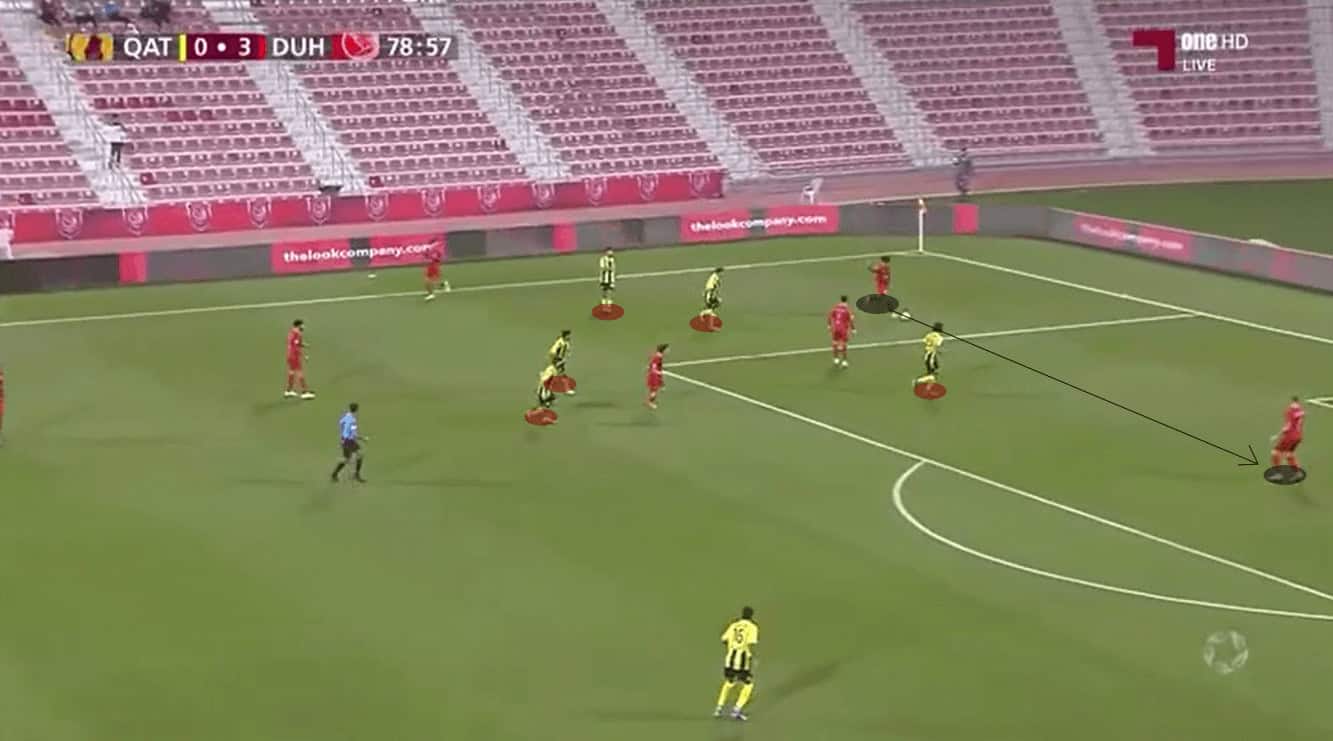
Having switched to the other side, they look to drag the opposition in once again. With the centre-forward coming along, the opposition has a total of six players in this area of the pitch.
Al Duhail’s left-back simply finds the switch to the centre-back, who advances into the space created.
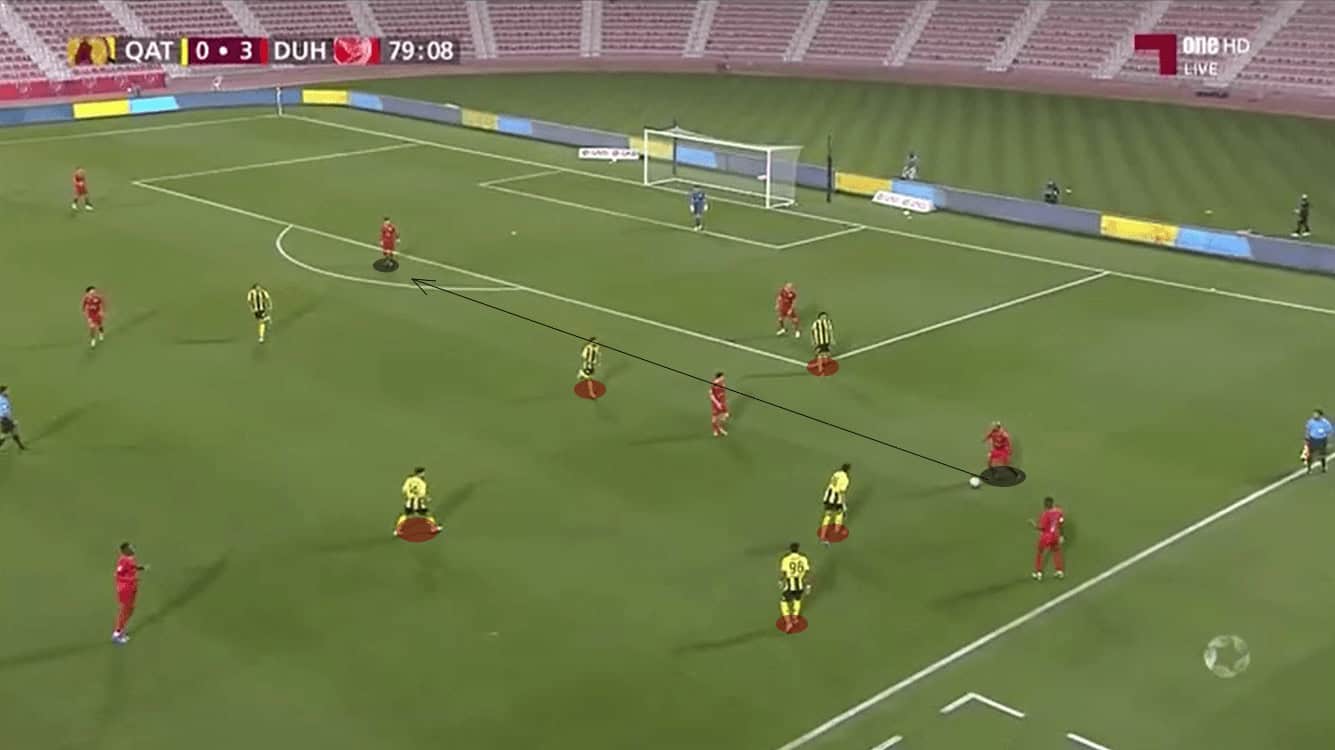
Now in the opposition’s half, Al Duhail look to break down a low block. The player with the ball on the right wing does not have any options as all players are tightly marked. Rather than forcing a dribble or a pass, he plays it back to the centre-back.
The centre-back quickly switches to the other side where the left-back is with space. As the ball is coming, the forward then performs a movement to drag the centre-back out of position and create space.
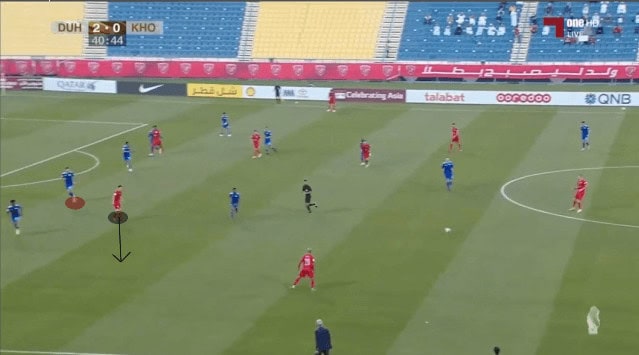
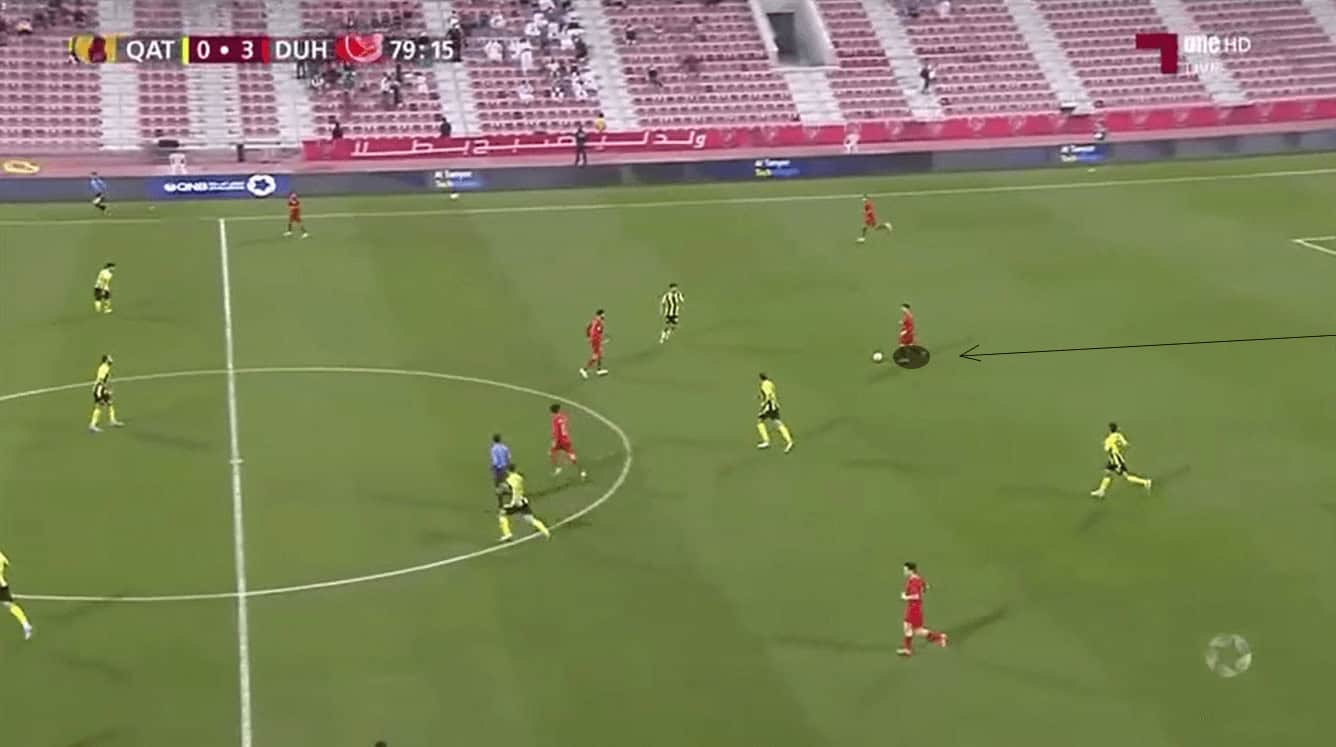
The attacking midfielder quickly sees this space left behind and attacks it.
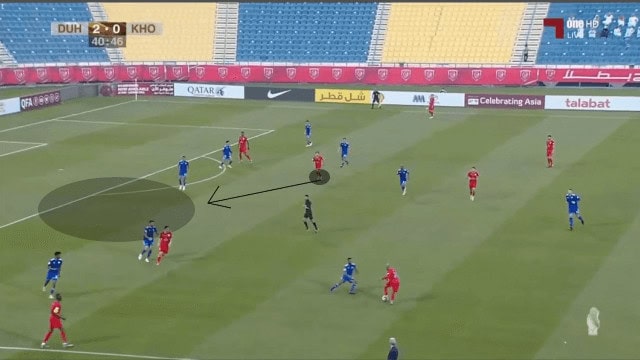
As the attacking midfielder makes his run, the left-back plays a perfect through the ball for Al Duhail’s third goal of the night.
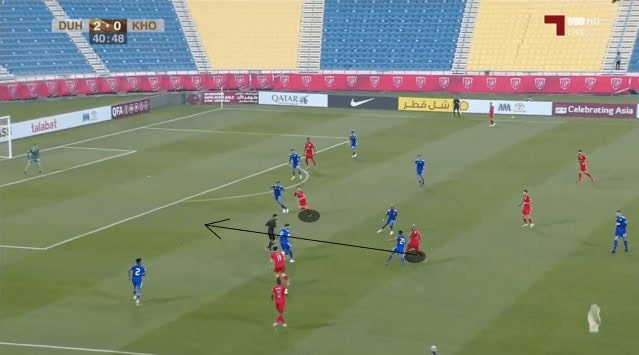
Casto’s patient possession game is also very rewarding, as they are a very effective team. They have averaged the highest xG per shot in the league at 0.161. They average 14.5 shots per 90 and have delivered the most crosses to the six-yard box at 42. It highlights their ability to get into very good areas to deliver these crosses and create good chances. Similar to Guardiola teams, Al Duhail are able to dominate opponents and consistently create very good chances.
Third man and combinations
In simple terms, the third man concept is a passing combination between three players. It does not necessarily need to involve the three players, but the third man’s presence provides a different dynamic. It is an effective and now common principle, often mentioned by modern coaches such as Xavi and Pirlo. Luís Castro’s system is heavily reliant on this. Players are constantly attempting to create triangulations that will assist them in effectively breaking the defensive structure. In a playing style that requires constant support and a quick tempo, this is almost essential.
Al Duhail’s players do a very good job of being in constant movement to create these structures and provide support. While this can be achieved in the wide areas with midfielders moving wide to create an overload, it is most often done through the middle. As Castro’s side tries to break down a defence, they are patient in moving the ball until they are able to create these structures and break a defensive line in a very controlled manner. It requires players to be very dynamic and intelligent in their movement, but most importantly, always move after a pass. Below is the passing map in one of Al Duhail’s matches. Notice the thick lines among the players in the centre.

Especially with attacking fullbacks, the inverted wingers are key in providing support. The number 10 also has a heavy involvement in possession. The image below perfectly illustrates this. As the defensive midfielder looks to enter the final third, the attacking midfielder and the left-winger quickly drop in to provide support. This creates a triangle around the defender who is easily beat.
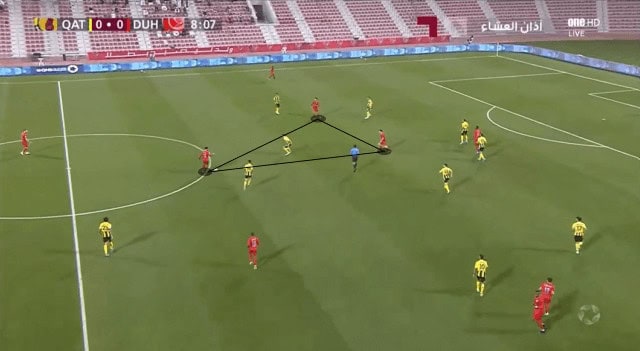
The image below is an even better example of this structure. Again with the defensive midfielder, players look to provide support. The attacking midfielder comes in centrally, while two other players come on either side. This creates a double triangle structure which provides numerical superiority with great passing angles. As the defender chooses to cut off the player on the right, the attacking midfielder is left open.

Yet another example that highlights the significance of providing support in Castro’s system. As the midfielder looks for a passing option, players provide support from both sides, creating a 5v3 in the middle. Again, two triangles are created. The ball carrier turns to his left side, where there is one defender trying to block two passing lanes. With that being virtually impossible, the ball carrier reacts to the defender’s movements and finds a way out.
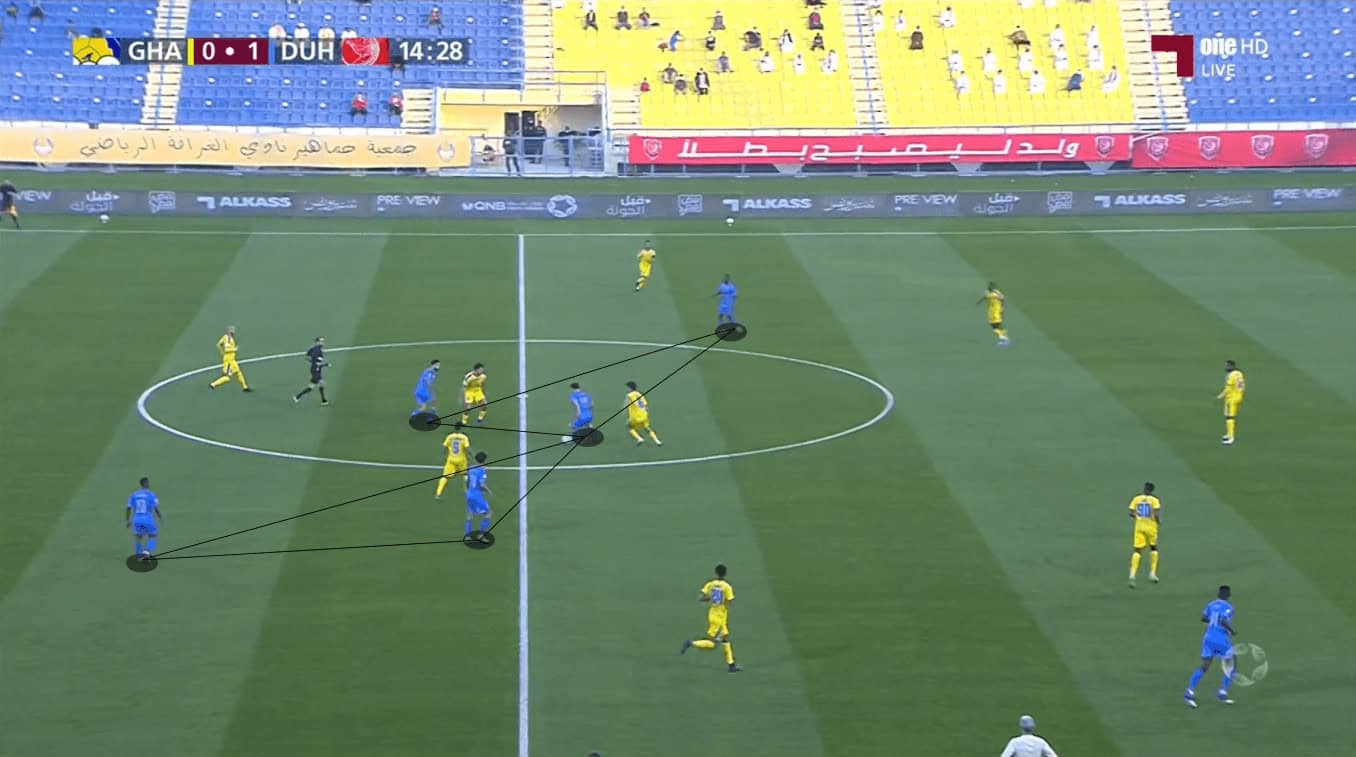
Another key principle that allows Castro’s attacking structure to be so effective is quick combinations. Players should always move after releasing the ball, preferably attacking space. Quick one-two’s and triangulations maintain the match tempo desired by Castro, but it also helps them attack the defence in a dangerous manner. In the image below, the player quickly lays his teammate off before attacking the space between lines.
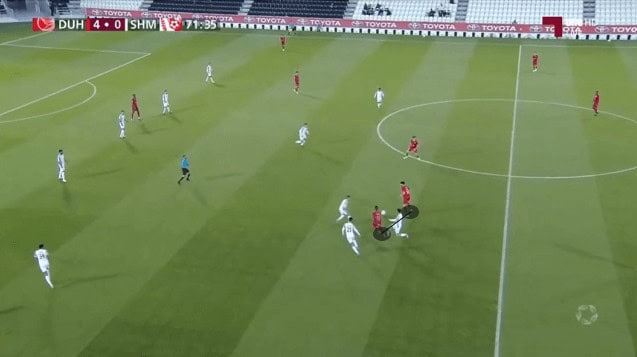
He receives the ball back in a very dangerous position after taking three defenders out of the picture with a simple combination.
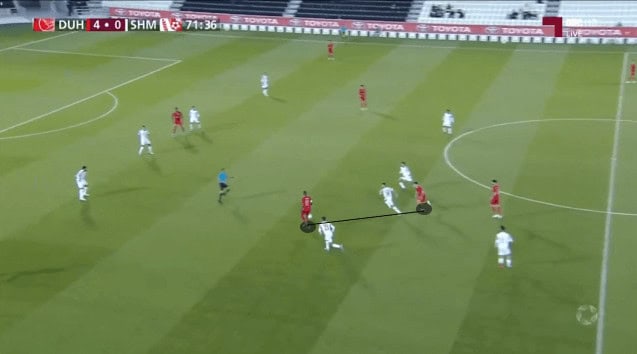
Attacking the depth
Despite putting a large emphasis on patient and controlled possession, Castro’s Al Duhail do look to for the long option from time to time. This keeps them from being predictable in their behaviour. The attackers constantly attack the depth which lowers the first defensive line and creates space. It may also disorganise the defensive structure and this could be exploited. At any rate, the simple threat of dangerous long balls keeps them very dynamic and unpredictable. With a great ball-playing defender in Toby Alderweireld, they often create good chances from this strategy.
Players will also attack this depth during the offensive transition or if they are able to break the pressure in a more direct manner. As Al Duhail look to enter the final third, the forward makes a very good run in the lane between the centre-back and the left-back.
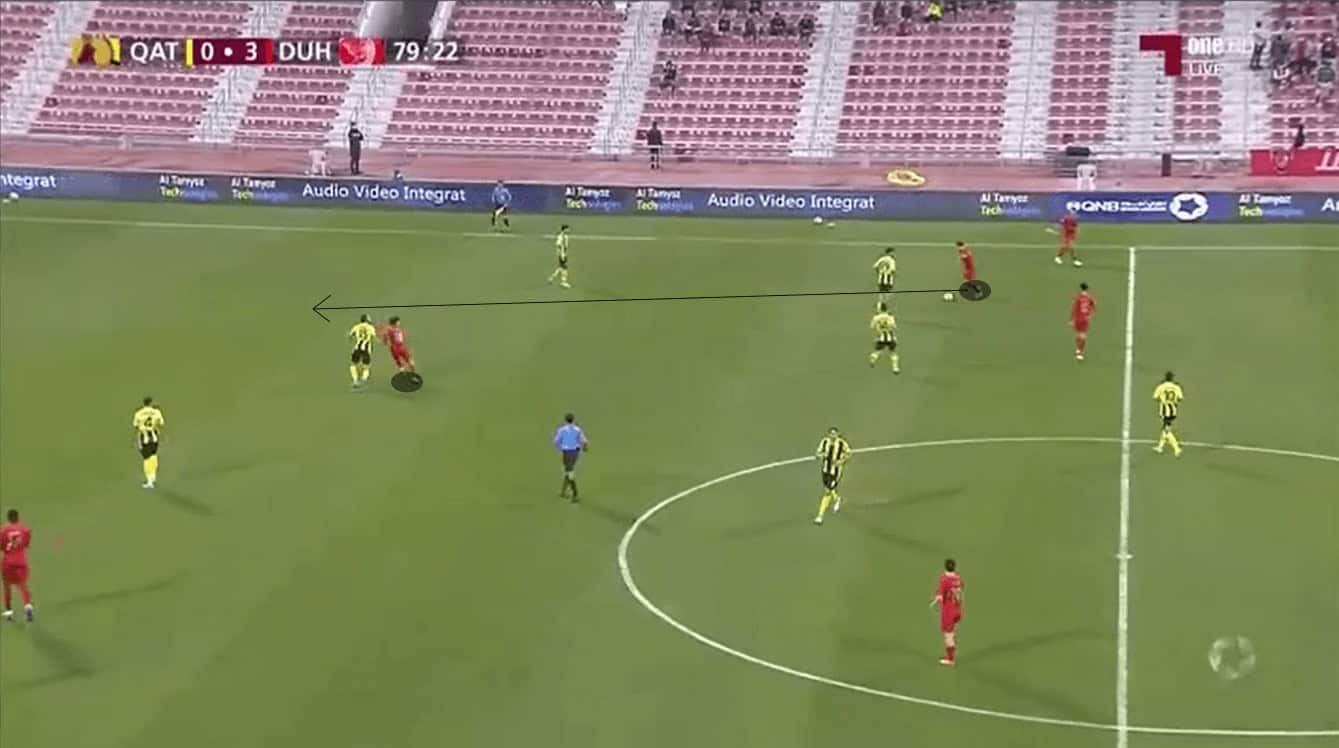
The image below illustrates the consequences of attacking the depth. Two players make runs into the space behind the defensive line. In this instance, one of the runs is very good as he has beaten his defender, so the midfielder plays that ball. However, simply making those runs drags three defenders deeper into their own third, creating a lot of space in between the lines.
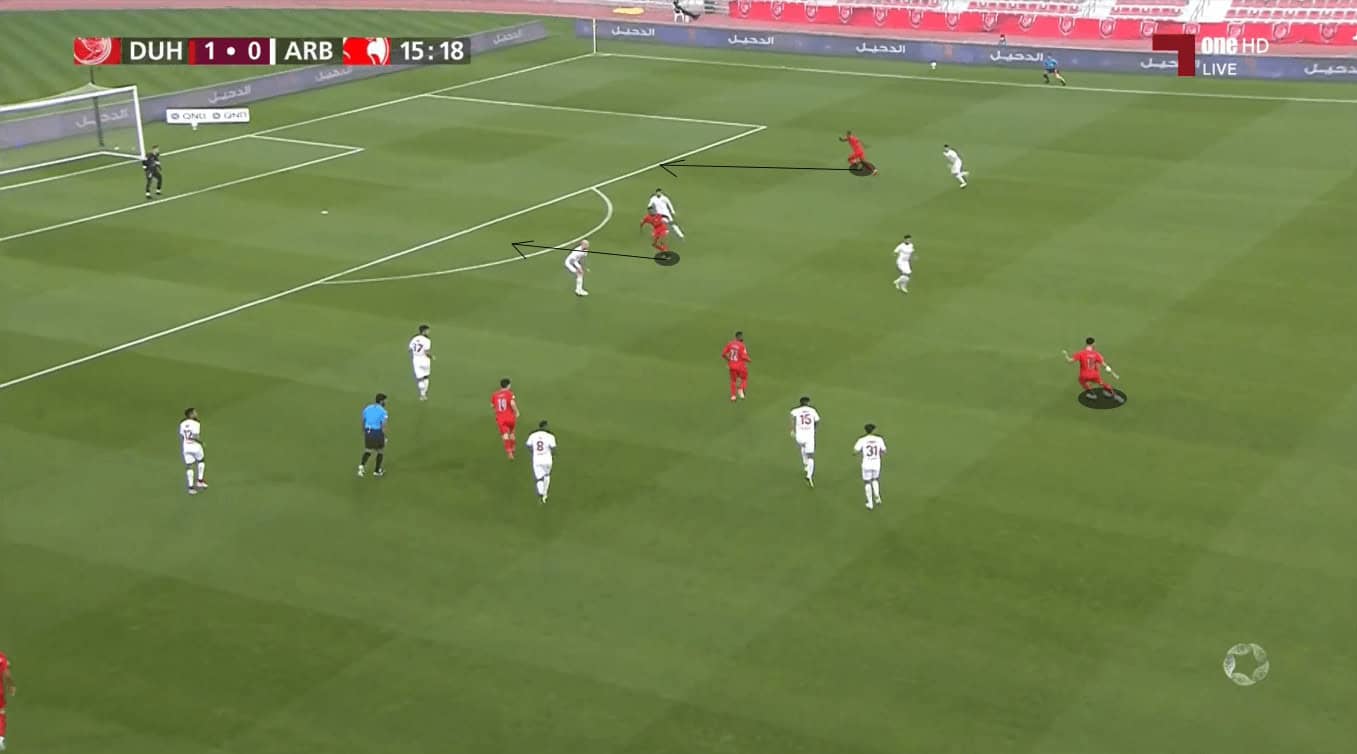
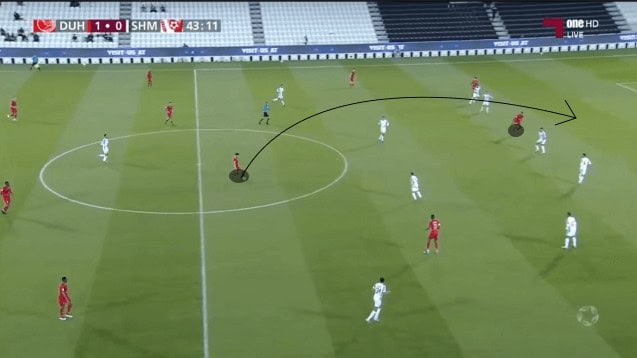
Finally, the image below is another example of these runs. As the defensive midfielder carries the ball into the opposition half, two players are making runs into the space. With a higher defensive line, the space and threat is even greater.

This time, the defensive midfielder plays a very good long ball into the final third. The forward times his run so he is not offsides and is able to attack the space.
Defensive behaviour
Al Duhail have been one of the best defensive teams in the league. They average the lowest shots against per 90 at 8.3 and have the lowest xGA in the league with 17.55. This defensive record is not only due to their defensive behaviour, but also because they have the ball so much. If they have possession of the ball for over two-thirds of the game and are able to dominate the opponent, they will consequently face fewer threats defensively. That is not to say, however, that they do not have a good defensive structure. They definitely do, and we will examine this further now.
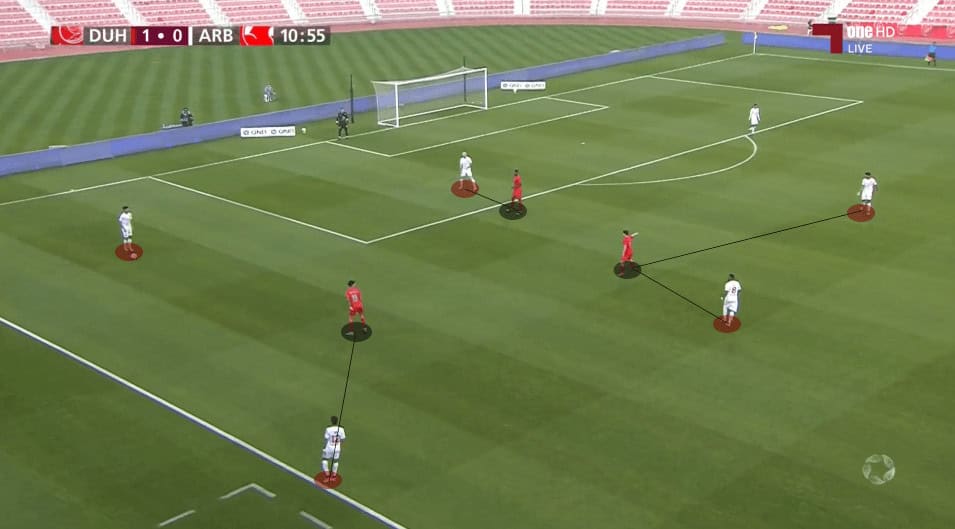
Surprisingly, Al Duhail do not press with that much frequency and average a PPDA of 9.54. While this isn’t the worst, it is not that impressive either. In fact, it is only the fifth-best in the league. Castro’s side are very selective with their pressing, and it has specific triggers. The most common one is the pass back. They will keep a medium to high block, but they will wait until the defender makes a pass back and they are able to quickly pressure that player. This strategy allows them to keep a compact block and conserve energy, but it still allows them to press when available.
Below is an example of this pressing strategy. With a block relatively higher in this scenario, they cut off passing lanes and wait for a mistake rather than intensively press the ball carriers.
The image below illustrates how quickly they jump to press when the trigger happens. After the fullback plays it back to the centre-back, the forward and winger quickly pressure and force him to get rid of it.
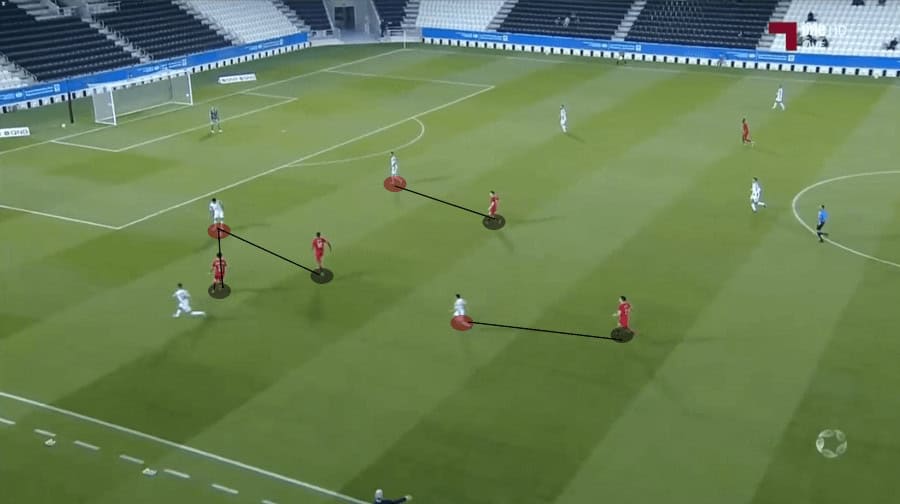
In this instance, it was not an effective clearance. Al Duhail is quickly able to bring it down and perform their favourite three-pass combination to attack in transition.
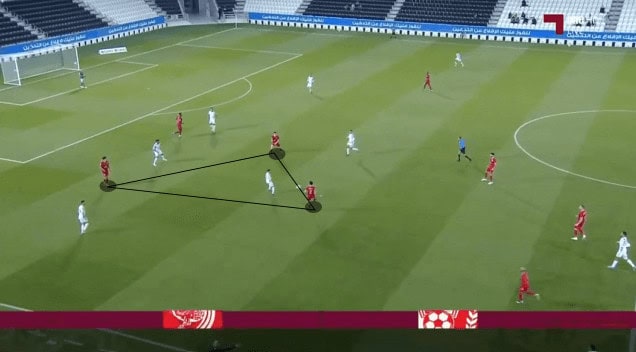
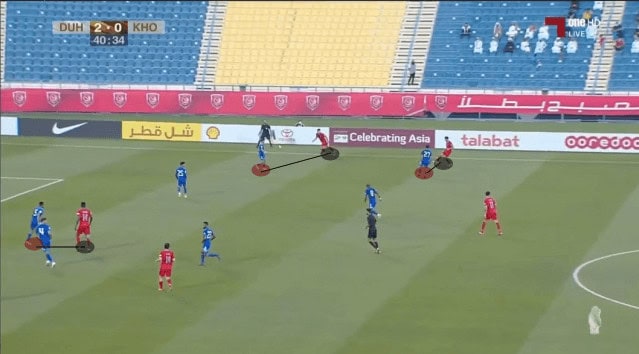
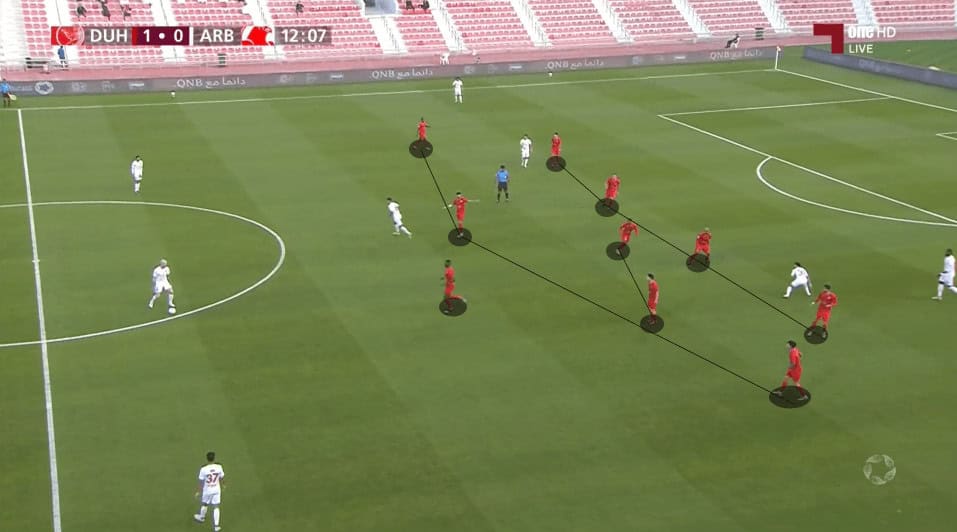
In lower blocks, Castro’s team stays incredibly compact. They will either remain in their 4-2-3-1 or go to a 4-4-2. The space in between lines is very limited and the team moves as a unit. As a consequence, they are very hard to break down and play through.
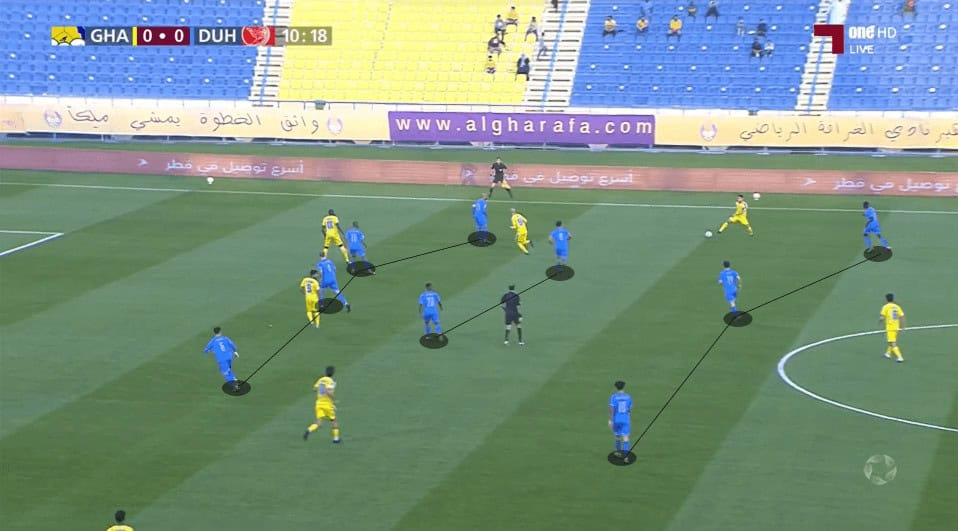
The wingers may track attacking fullbacks which would affect the organisational structure. However, they still look to remain very compact with little to no space in between lines. They are a very organised side defensively.
Conclusion
Luís Castro is a very attacking coach who looks to dominate the game through control of the ball. He wants his teams to have the ball for long periods of time and patiently create chances. This helps them progress through the zones in a very controlled manner and limits risk-taking. This strategy is carried out through further principles such as the third man concept. Players are constantly providing support and creating numerical superiority. Combinations are also key. To make them more dynamic, the forwards are constantly looking to attack the depth. While these may be good runs that lead to chances, they will also set off a chain of reactions in the defensive structure, allowing the rest of the team to exploit this. Defensively, Castro’s teams are very solid. Due to their control of possession, they face much fewer threats. Their defensive behaviour also makes them very hard to penetrate and play through.
Luís Castro is an overall very good manager with a lot of experience. He is the ideal manager for Botafogo, and if it goes through, it will be a historical signing. John Textor is definitely leading the club in the right direction, and Castro is the first step in that.
