


After five years in the EFL Championship, it looks like Blackburn Rovers are finally on the right path and are pursuing the glory that the Premier League promotion will surely bring under former Feyenoord and AC Milan player Jon Dahl Tomasson.
They are currently sitting in second place on the table.
Throughout this season, they have promoted the youngster Adam Wharton into the first team and given him 496 minutes.
Wharton is a left-footed midfielder with a good understanding of the game and quick thinking about the possession phase, but with pauses in focus when the defensive phase is on the run.
This tactical analysis will examine the biggest strengths in the 18-year-old’s actions and how he could get even better and become one of the most important players for Blackburn’s tactics in their hunt for Premier League football.
Adam Wharton Style Of Play
When we look at Wharton’s profile, he’s a midfielder who brings the most when his team is in possession.
He thinks and acts quickly and is almost strictly vertically oriented, which lowers his passing success rate since he sometimes lacks rationality in his actions.

As we can see in his pizza chart, his main impact is attack-related since all of his numbers in that segment are above average, with goal contributions per 90 minutes being really high up the chart.
You can see that Wharton loves to be included in the possession phase of the game, as he receives a lot of passes.
His verticality is portrayed through the high number of progressive passes, but their accuracy suggests that the fact that he doesn’t pick the right solutions is indeed the issue on which he needs to work.
Even though some of his defensive numbers picture it differently and imply that he could be very utilised defensively, he lacks a bit of timing in his actions and time and again loses focus when necessary, so the numbers could deceive us if we didn’t go through with an eye test.
This analysis will try to show you all the best points in his game with the ball – his clever positioning to receive passes, his versatile solutions and his quick thinking that creates progression for his team.
We will also examine why his defensive engagement isn’t as good as the numbers suggest.
Adam Wharton Offensive impact
Adam Wharton thrives when his team has the ball, and because of his positive attitude and proper positioning, he’s one of the main progression providers for Blackburn.
He commonly provides his team with in-between solutions that could help them move vertically.
His positioning isn’t too complex but is very lucrative for the ball carrier and for the team’s structure.
He usually manages to beat at least one opponent and open the field for his team, almost forcing them to move forward.

He is commonly positioned in the left central defensive midfielder position and starts most of his runs from there.
Therefore, one of his main roles is to provide the progression from the first line to the second sector of the pitch, and he does so by positioning as shown in the picture above.
Wharton provides his centre-backs with a top-of-the-triangle player who allows Blackburn to go forward, and you can also see him initiate these passes very frequently.
He does so in different ways, such as pointing in the direction where he wants the ball carrier to pass the ball to him, aiming his run towards different zones, changing the pace of his runs, etc.
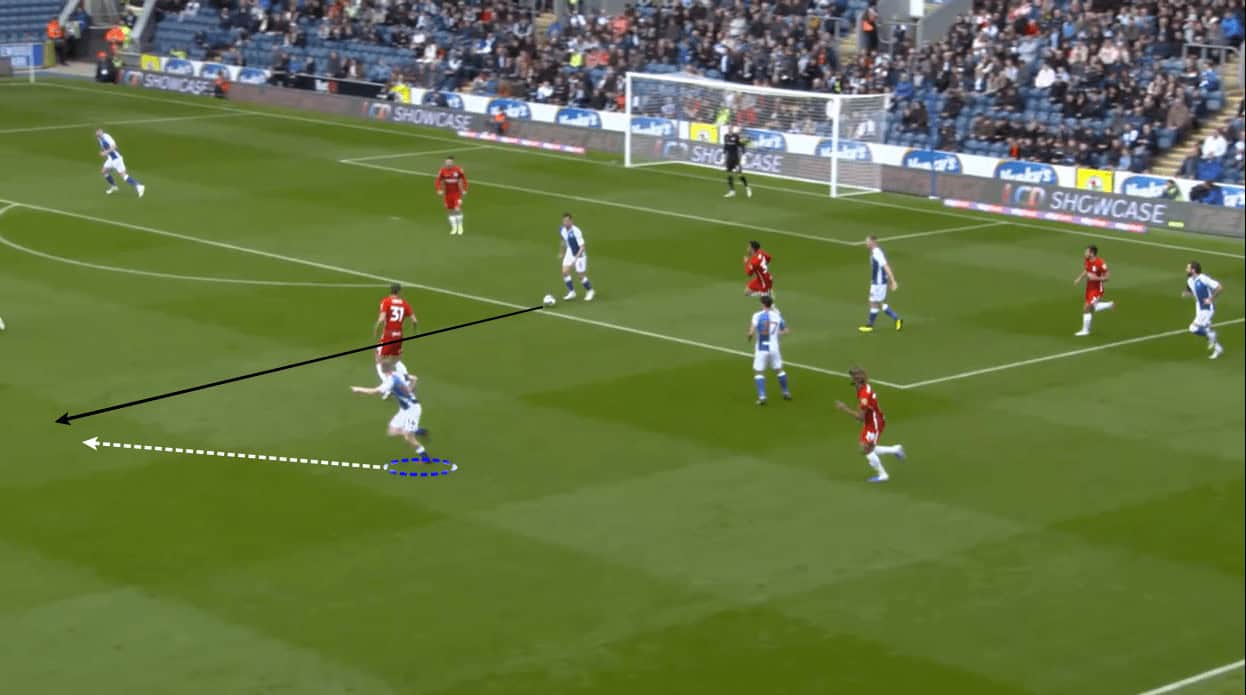
He repeats this and similar movements constantly and gets a lot of passes out of them.
The two situations show us how he operates when driving to get the ball unnoticed.
He has a good success rate even when he’s under clear pressure from the opponent.
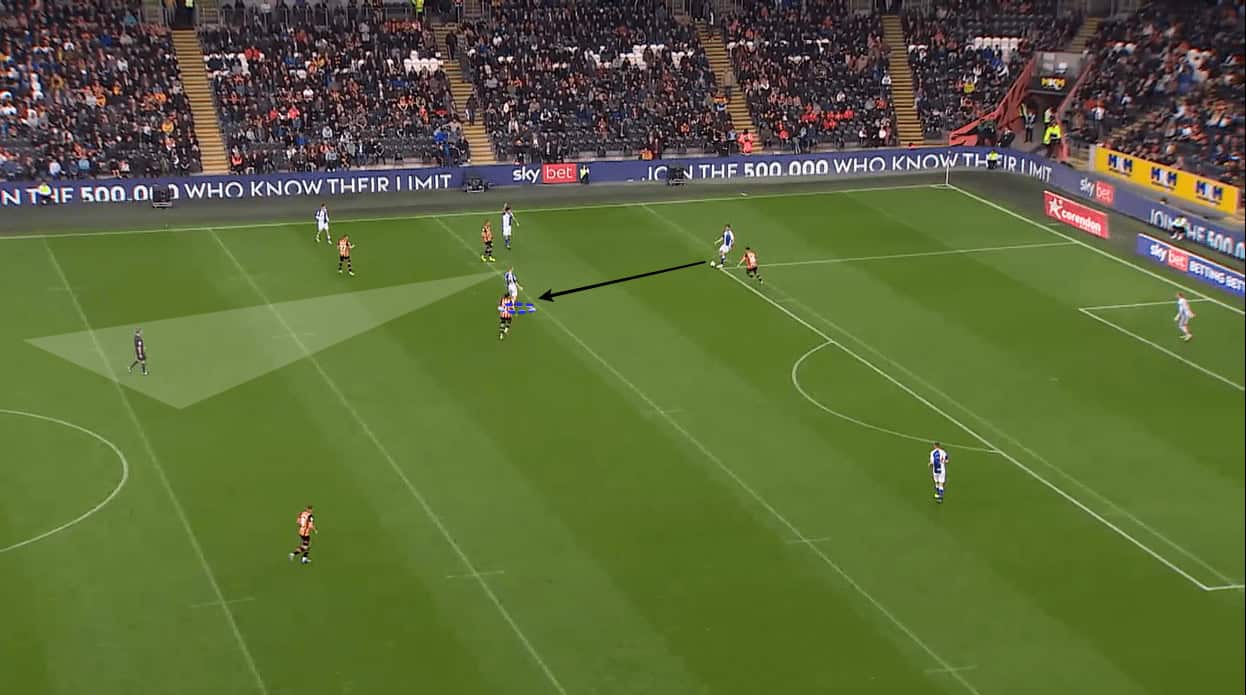
The main factor that helps him get the best out of situations when he’s under direct pressure is his vision and comfort with the ball.
Along with his technical abilities and perception skills, he reads the game really well.
Hence, he knows how to take advantage of the opposition’s errors in positioning or non-compact moments during the 90 minutes.
The pictures above show that he can move and turn quickly and hide his intentions to fool players around him.
When it comes to higher zones of the pitch, that trait becomes even more useful as it helps him deceive blocks and bring his teammates directly into goal-scoring situations.
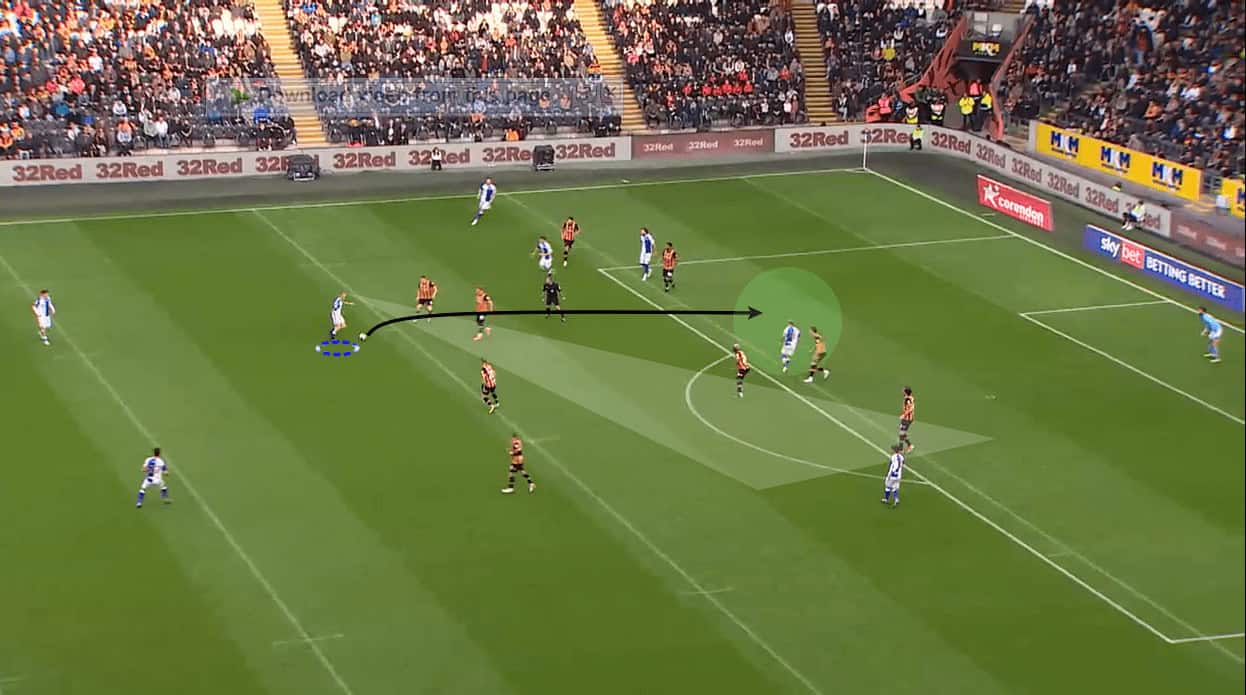
The combination of all of his in-possession skills makes him a valuable chance creator with a big impact on moving down the pitch.
If he brings a rational note to his decision-making and engages more in playing it laterally and out of pressure sometimes, he can become even more valuable and less predictable since his actions could become more 360-degree, and he’d have a bigger influence on the tempo of the game.
Adam Wharton Second-ball engagement
It is clear that Wharton likes to be in possession, and since that is his main trait, he tends to give all that he has to make it happen.
If you want the ball, you should put yourself in a position to get it. As the first segment of the analysis clearly shows, he does so when his team has possession, which makes him very included in the game’s organisation.
The second thing he does correctly most of the time, which helps him feel more included, is his positioning near the action.
Wharton is always within the ball’s reach, no matter which team has the possession, tracking the action properly and being in the right place to engage.
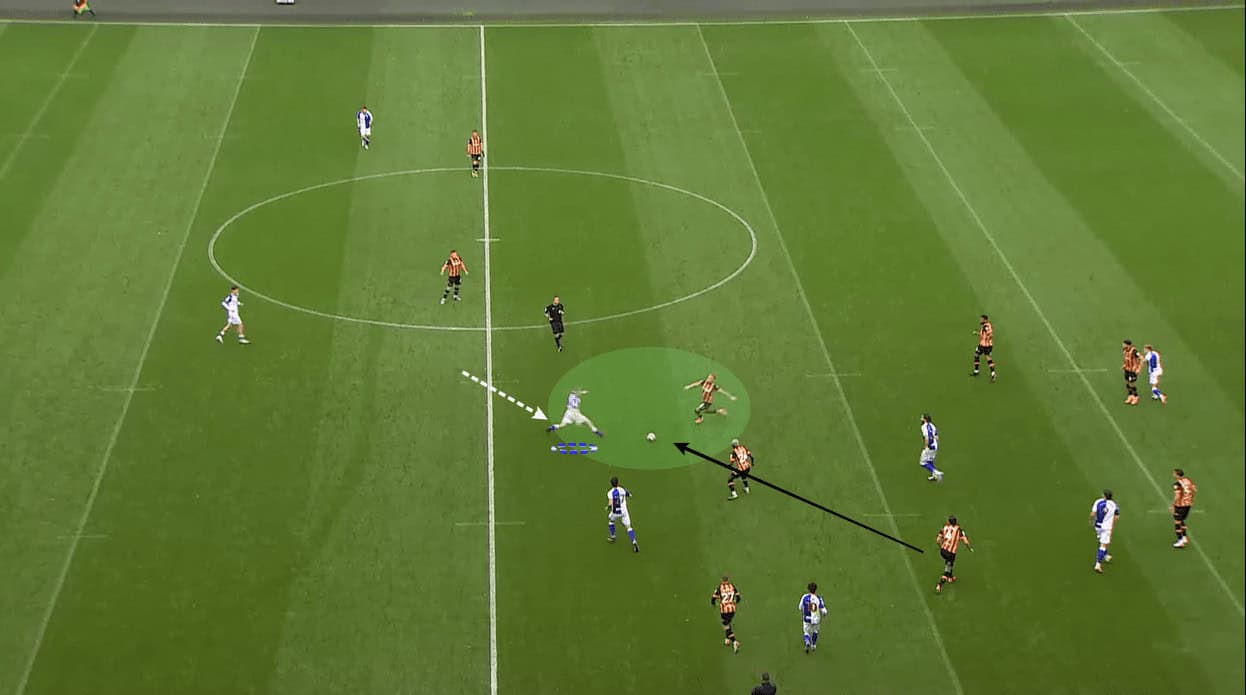
We can see the combination of his possession attitude and defensive contribution in the example above.
He gets close to the action and gets all in, so he can play with the ball, which is his main virtue/idea.
His second-ball action isn’t flawless, but it has the necessary foundations on which he could build himself up and make it become his strength.
Wharton isn’t very fast, so that’s why he sometimes lacks timing, especially when he also doesn’t react instantly, so his pace comes to attention. His plus is the fact that he commits completely and reacts positively to duels.
The next scene shows us how he fully engages in the second-ball duels and makes a positive pass just a few moments later.
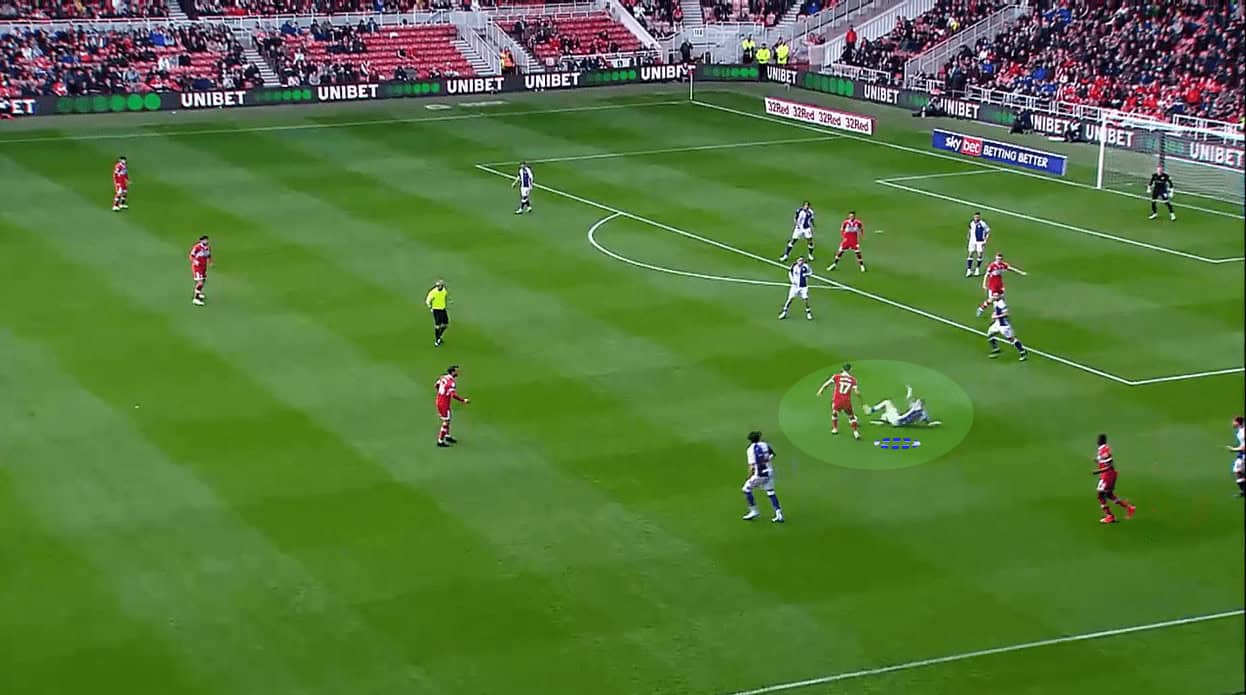
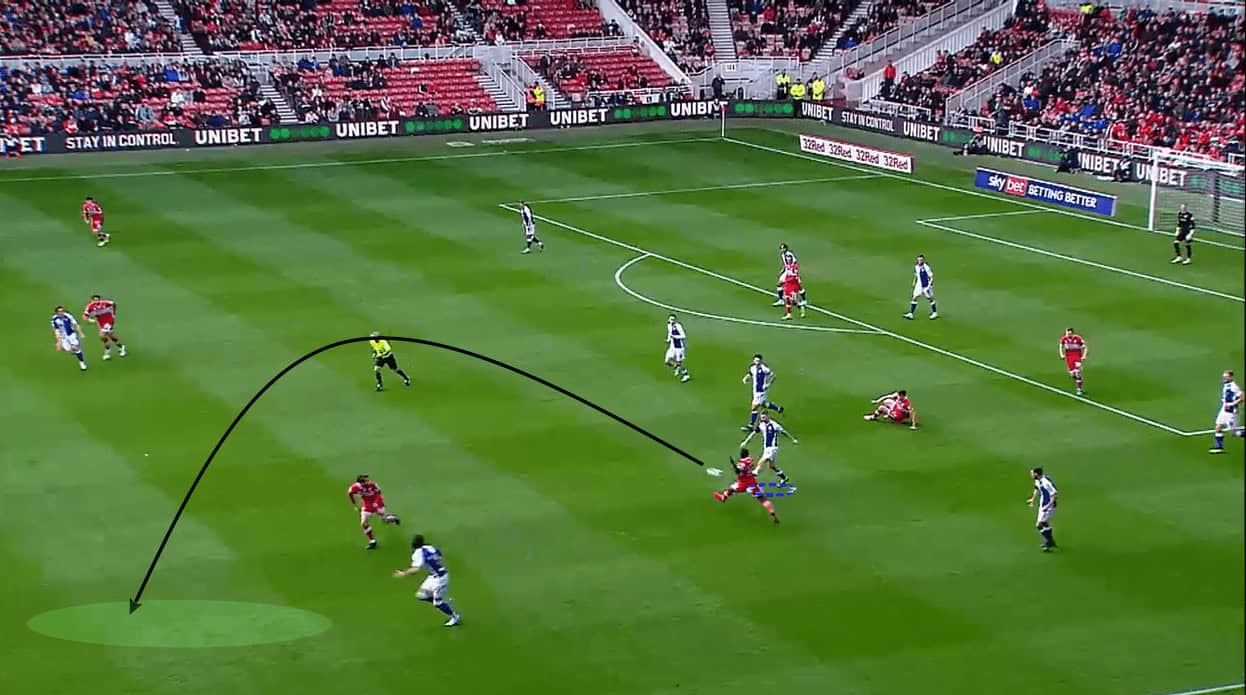
What impresses me the most is his ability to remain calm after being engaged in the high-intense second-ball action.
He often goes for similar solutions and progressive passes, which can be seen coming from top-class players.
Problematic at the moment is his consciousness about what’s happening behind his back when the second-ball action is about to happen.
When he is in charge of securing dangerous zones where the ball could drop off—like at the edge of the box or different areas in central and inner corridors—his team can get in trouble because of his sporadic blackouts.
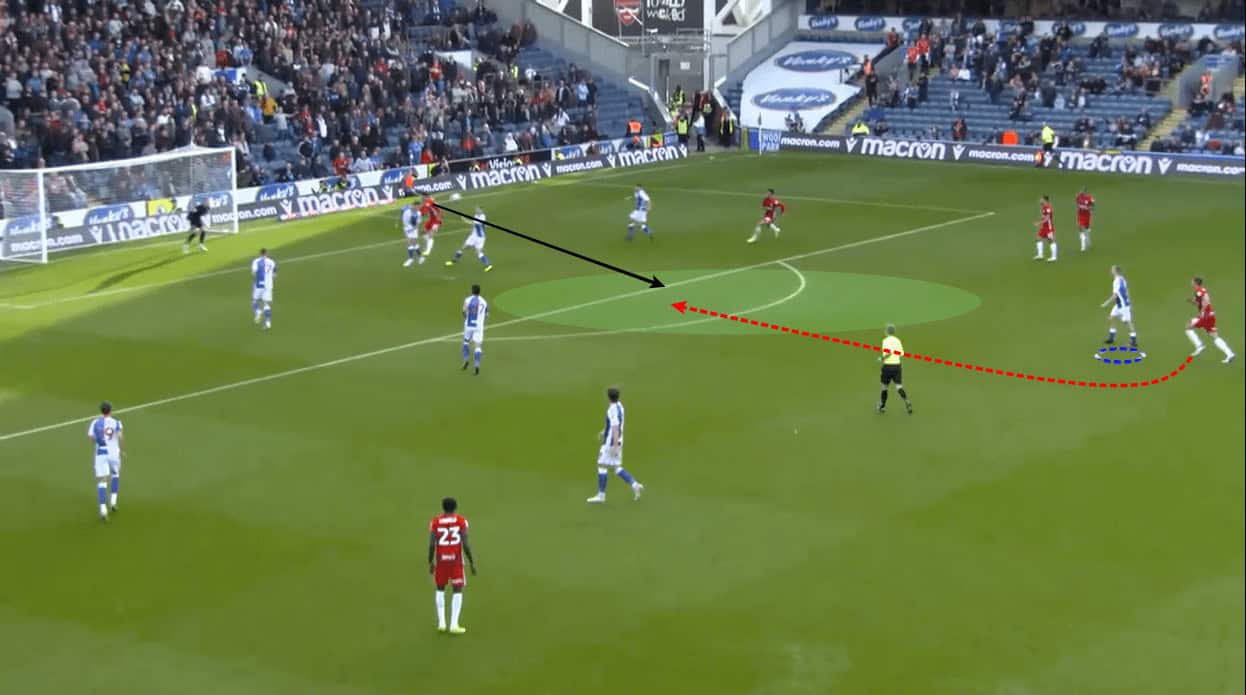
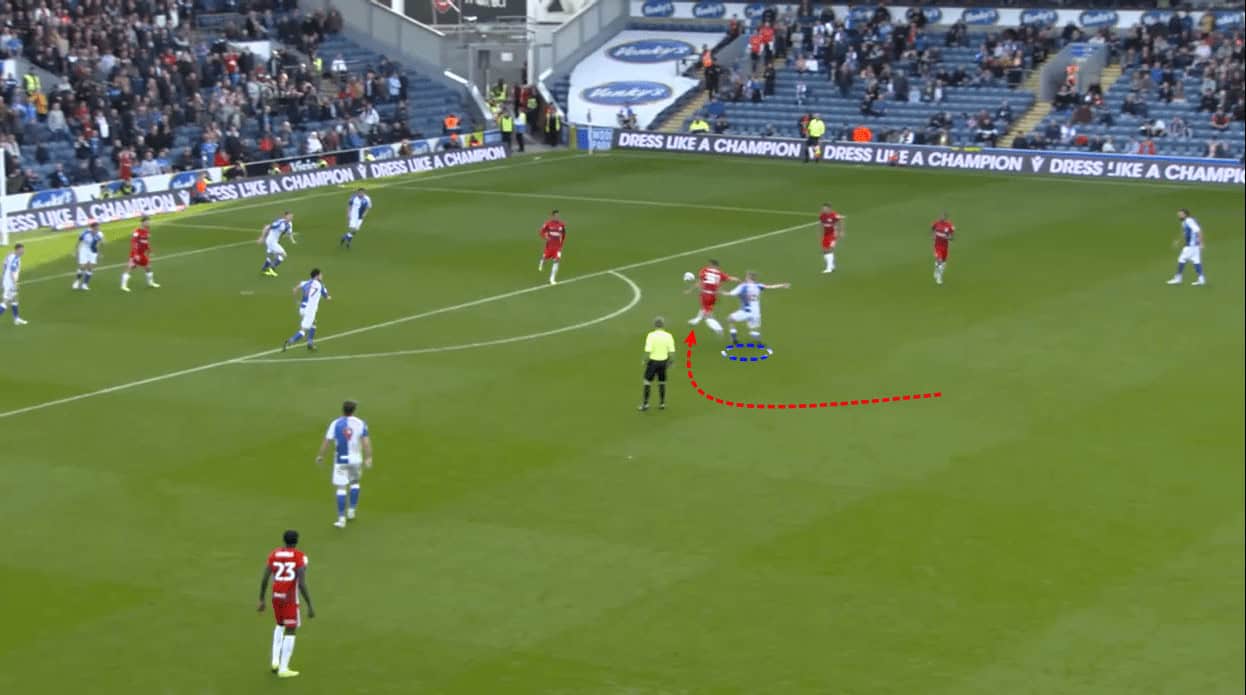
The combination of his actions, reactions, and ideas suggests that he has the proper mindset to become a very omnipotent playmaker, utilised in all the phases of the game. However, he needs to adjust his focus and keep an eye on all of his surroundings in order to fulfil his potential.
Adam Wharton Problems in Recovery
The issue that was shown just paragraphs earlier in the scout report is the scratch on the surface of the 18-year-old midfielder.
Even though his defensive numbers could suggest differently, his out-of-possession impact isn’t that good.
The fact that he’s good in direct duels is true only in slow-paced moments of the game – when the opposition tends to play positional attacks or when his side goes for team pressing in different zones of the pitch, where he can play an important part.
In other situations, when the game becomes more direct and transitional, Wharton struggles and can be exploited as the weak link of Blackburn’s defence because of problems with his focus and speed.
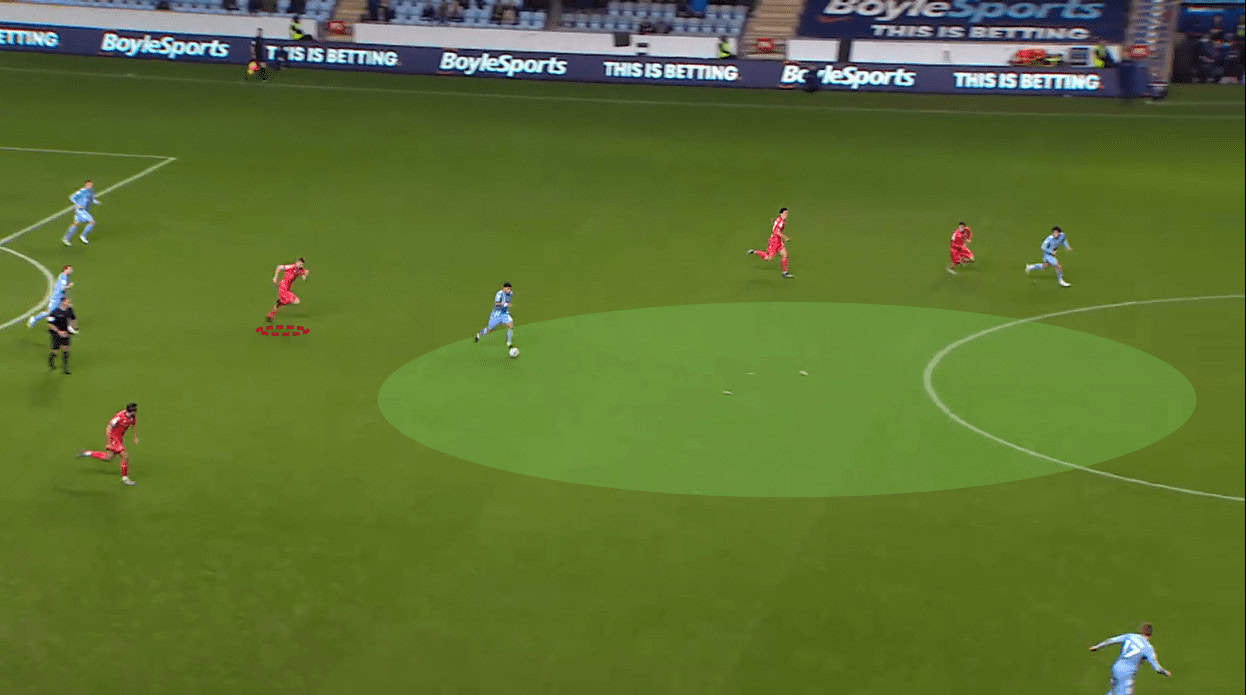
His pace on longer distances could be a problem, and he’s only useful defensively when he’s close to the action and when he presses the player with the ball.
As soon as a similar scenario occurs, like the one shown in the image, Wharton can’t deliver and easily gets outpaced and nullified.
He can’t get to the proper position in time when the counter-attacks happen or some fastbreaks come into play because his mind is offensively oriented, and it takes him time to transfer his focus from offence to defence.
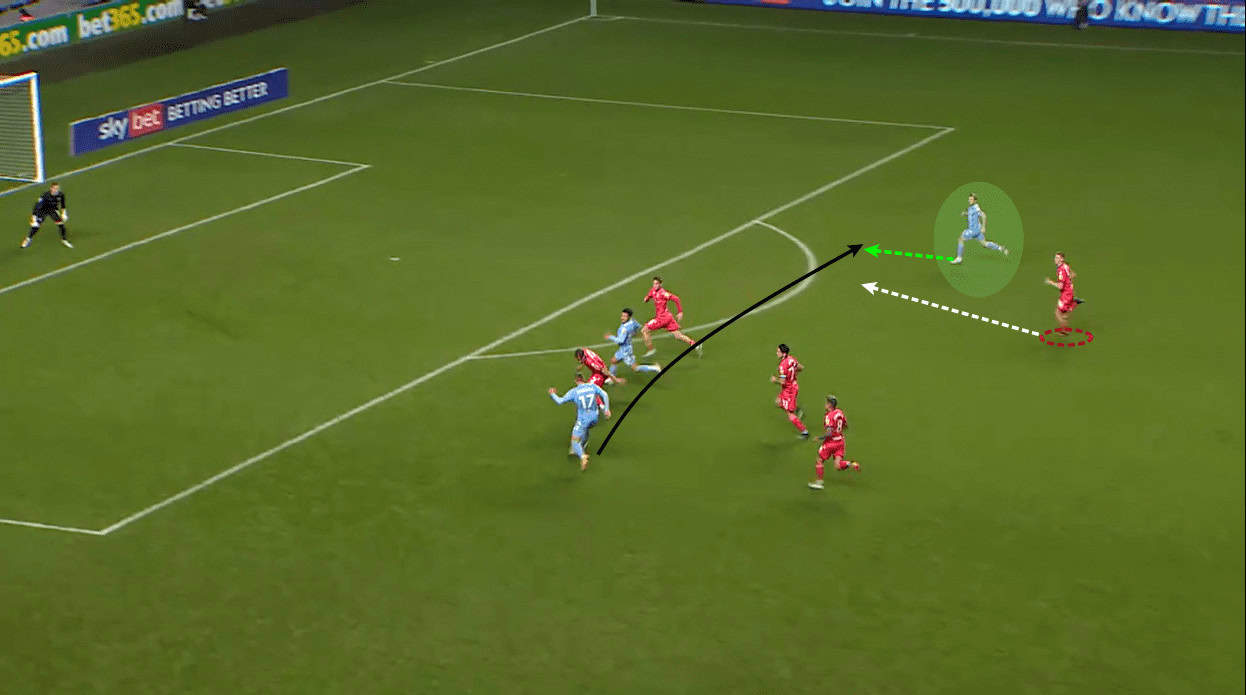
Although it sometimes takes just a couple of moments or as much as it takes him to make a turn, it’s usually good enough for the opponent to exploit it and come to positions similar to the one that’s above.
He reads the action offensively very well and knows how to get the best out of most contexts when he plays with the ball in his feet, or when his team has the possession, but it isn’t the same when they are defending.
Wharton doesn’t always know when to react, when to cover or provide defensive support/correction to his teammates, so the spaces break wide open for the rivals who can easily progress because of his actions.
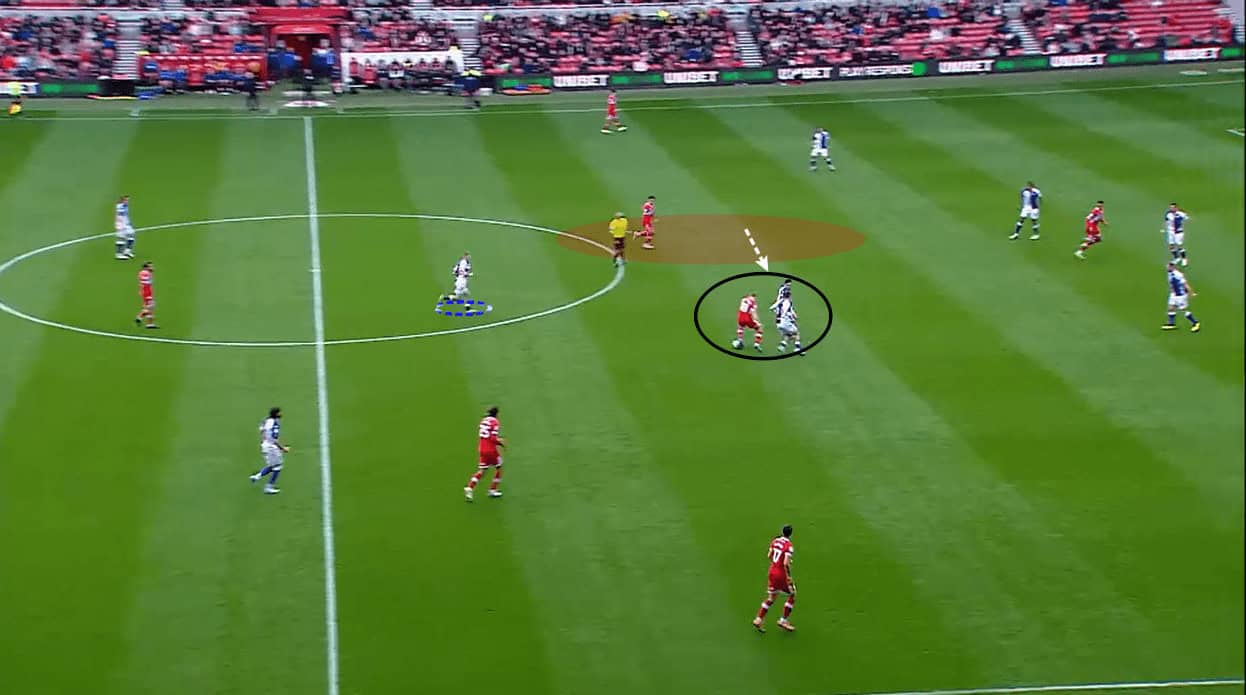
To underline his flaw and best picture it, he knows how to defend properly when the action is happening in front of him, but the quality of his defensive engagement drops when it comes to defending the space behind his back or defending negatively down the pitch.
Conclusion
Adam Wharton is an exciting prospect who can be a very useful player for Blackburn in the next couple of years. He has the basics on which he can build to prosper.
At the moment, his game has some red flags that limit him to the Championship, but he has all the tools in his hands (and feet), so once he fixes his flaws, he can become a proper Premier League player.
This scout report has shown you how Wharton is fascinating in possession but has some problems with his defending, and the defensive phase of his game is what holds the keys for his future.

