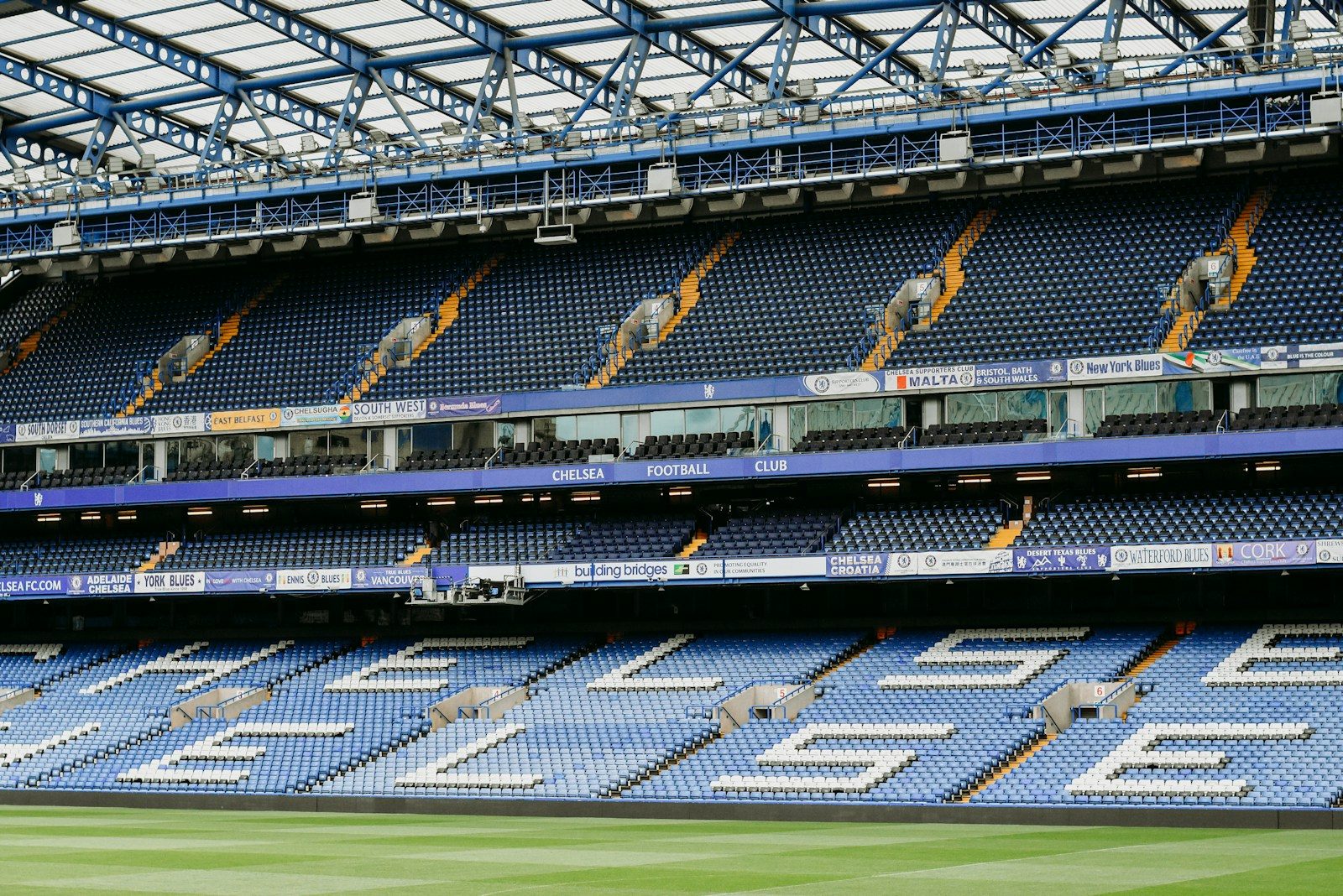
Chelsea’s lengthy Premier League investigation has finally concluded after years of scrutiny and intense internal review.
The outcome has sparked fierce debate across soccer circles regarding fairness, transparency, and governance standards.
The club’s co-operation proved decisive, as officials sifted through vast documentation that revealed hidden financial dealings over several seasons.
However, critics argue the punishment fails to match the seriousness of the breaches and their competitive implications.
Why Chelsea’s Co-operation Reduced The Sanction
As per widespread reports, a key reason for the delayed outcome was Chelsea’s extensive co-operation with investigators.
The club submitted thousands of documents, as per The Independent, voluntarily during the process.
This created a complex review that took years to complete after ownership changed hands from Roman Abramovich to Clearlake Capital.
Officials gained access to information they may never have discovered otherwise.
As a result, the Premier League adopted a more measured approach to punishment.
Consequently, Chelsea (4.50) received a suspended first-team transfer ban alongside a nine-month academy signing restriction.
Additionally, the club was fined £10.75 million for historical breaches.
These breaches related to secret payments involving players and unlicensed agents.
The offenses occurred between 2011 and 2018. While the fine is significant, many believe it remains relatively minor in terms of overall effect.
Debate Over The Severity Of The Punishment
Criticism has emerged across the game. It could be argued that the sheer volume of documents highlights the scale of wrongdoing.
Therefore, they view the punishment as extremely lenient.
Some insiders believe the sanction does not reflect the seriousness of the breaches.
Others have described the outcome as a compromise designed to avoid wider disruption.
Moreover, comparisons have been drawn with other recent Premier League cases.
Clubs such as Everton and Nottingham Forest faced harsher consequences.
This contrast has fuelled claims of inconsistency within the league’s disciplinary framework.
As a result, frustration continues to grow among rival clubs and stakeholders.
Financial Rules Vs Sporting Integrity
The Premier League has maintained that Chelsea did not breach financial sustainability rules.
Officials stated the undisclosed payments would not have caused violations if properly declared.
However, critics argue this misses the broader issue entirely.
The focus, they insist, should be on honesty and sporting integrity.
Importantly, the hidden payments may have influenced outcomes on the pitch.
Success in competitions ultimately defines a club’s legacy and value.
Therefore, any competitive advantage gained through undisclosed dealings raises serious concerns.
This argument continues to dominate discussions within soccer governance circles.
It also impacts perceptions in areas such as online sports betting, where integrity remains essential.
Any serious punishment to Chelsea could impact odds on platforms such as Easybet.
Eden Hazard Transfer And Competitive Impact
One of the most notable transfers investigated involved Eden Hazard.
His move to Chelsea became a central example in the case.
Hazard played a crucial role in title-winning campaigns during the 2014-15 and 2016-17 seasons.
Notably, there is no suggestion that the player was aware of any wrongdoing.
Nevertheless, his influence on those title wins highlights the wider implications of the case.
Success on the pitch increases a club’s global reputation and financial power.
Therefore, any irregularities linked to key transfers carry significant weight.
Critics argue that this aspect has not been fully addressed by authorities.
Ownership Change And Self-Reporting Factor
Chelsea’s current ownership played a major role in shaping the outcome.
After acquiring the club, they uncovered historical issues and reported them.
This proactive approach led to what is known as a “sanction agreement”.
As a result, formal charges were not issued by the Premier League.
The Independent quoted their sources as saying Chelsea had a “completely open door” policy.
This level of transparency is rare in such investigations.
Consequently, it became a major mitigating factor in determining punishment.
Some sources even suggest the club may have avoided sanctions entirely without self-reporting, which creates a controversial precedent that could influence how future cases are handled across elite soccer structures.
Comparison With Uefa And FA Investigations
The Premier League’s decision followed earlier action from UEFA.
In 2023, UEFA imposed an £8 million settlement on Chelsea.
This brought the total financial penalties to £18.75 million. Despite this, questions remain about the Football Association’s role.
It is possible that the FA investigation could still result in further action.
Historically, similar cases have led to harsher sporting sanctions.
For example, Luton Town received a 10-point deduction in 2008 for financial irregularities.
Wider Implications For The Manchester City Case
Attention has also shifted towards the ongoing case involving Manchester City.
There are parallels.
However, there are key differences that could influence outcomes.
Manchester City have consistently denied any wrongdoing.
Chelsea’s co-operation contrasts sharply with City’s approach.
Additionally, ownership continuity is another important distinction.
These factors could shape how future sanctions are applied.
Some believe the Chelsea case may even delay proceedings involving City due to legal complexities.
Concerns Over Sporting Advantage And Legacy
A major concern remains the lack of focus on sporting advantage.
Critics argue that financial compliance alone is not enough.
Competitive fairness must also be considered in such cases.
Trophies won during the period in question remain part of Chelsea’s history.
Even though ownership has changed, the club retains those achievements.
This raises difficult questions about accountability and legacy.
The Independent quoted an insider as saying: “They blatantly cheated and still have the trophies to show for it.” That view captures the frustration felt across parts of the soccer community.
It also highlights the ongoing tension between governance, fairness, and commercial realities.
Final Verdict And Lasting Questions
Ultimately, Chelsea’s case stands as a unique example within modern soccer regulation.
The combination of self-reporting and historical breaches created an unusual scenario.
While the financial penalty is the largest of its kind, it remains modest in context.
Many continue to question whether justice has truly been served.
Furthermore, the case leaves a lasting impact on how rules are enforced.
It may influence future investigations and disciplinary actions.
The balance between co-operation and accountability will remain a key issue.
As debates continue, the Chelsea ruling could shape the future of governance in elite soccer for years to come.