
In the intricate tactical theatre of 2. Bundesliga, few narratives have been as compelling this season as the evolution of Mateusz Żukowski at 1. FC Magdeburg, a player whose journey encapsulates themes of reinvention, adversity and sudden impact.
Originally developed as a right-back and forged in the Polish system with stints at Lechia Gdańsk, a move to Glasgow Rangers in 2022 promised exposure on a bigger stage.
But that transition didn’t unfold as hoped: limited opportunities and multiple loans curtailed his progression in defence before his return to Poland.
Then Magdeburg swooped for him in the summer of 2025.
Despite joining while rehabilitating a metatarsal fracture, a setback that delayed his impact, the club regarded him as a forward-thinking addition for the future.
This season, Żukowski’s story has taken yet another dramatic turn.
Shifted higher up the pitch into an advanced attacking role, his transformation into a striker, far from a mere positional tweak, has become a central pillar of Magdeburg’s attacking structure.
Across 11 league appearances, Żukowski has rapidly emerged as one of Magdeburg’s most potent offensive outlets, registering 11 goals and two assists, outperforming expected output with incisive runs, spatial intelligence and decisive finishing.
What makes his emergence all the more remarkable is not just the statistical productivity but the underlying development arc: from a defensive background, through injury and a club’s relegation, to becoming a tactical focal point in a team seeking stability and goals.
In this Mateusz Żukowski scout report, we’ll analyse how Mateusz Żukowski’s playstyle adaptation, positional transition and evolving role are influencing Magdeburg’s broader framework and what his breakout means for both his future and the club’s ambitions.
Mateusz Żukowski Feel For Space
One of the most striking elements of Mateusz Żukowski’s adaptation to the number nine role is his intuitive understanding of the shadow.
In the Magdeburg structural framework, where the wingers often pin the opposition full-backs wide, the central vertical corridor becomes a playground for a striker who understands how to manipulate the defensive line’s horizontal orientation.
Mateusz Żukowski does not merely sit on the shoulder of the last man; he operates on the blind side of central defenders with a predatory precision that belies his background as a defensive-minded player.
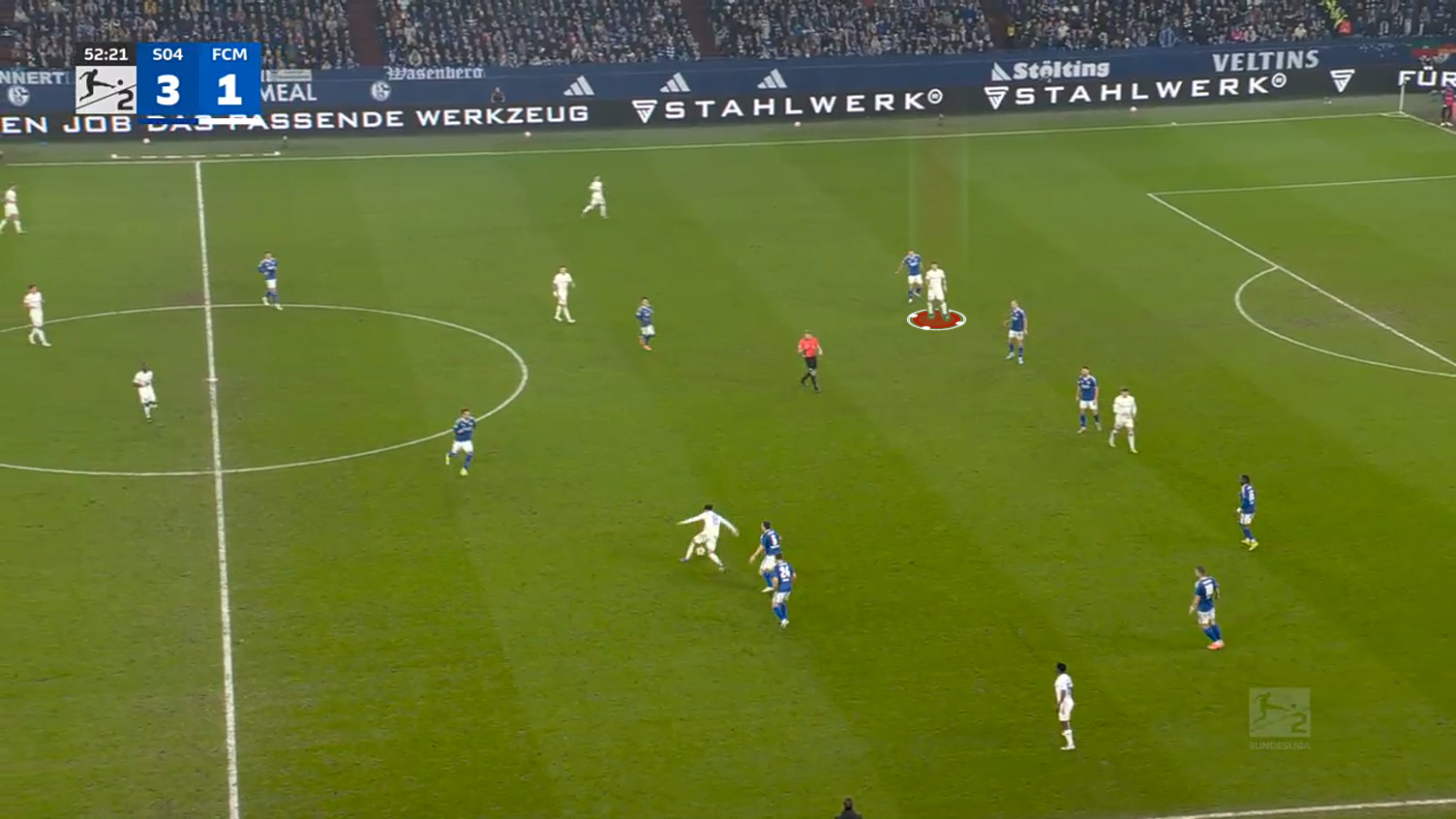
His spatial recognition is particularly evident during the transition from the middle to the final third.
As Magdeburg’s midfielders look to break the second line of pressure, Żukowski frequently utilises dismarking movements.
He will initially drop into the far-sided half-space, dragging a centre-back out of the defensive block, only to immediately explode into the vacated space behind.
This yoyo movement creates a momentary lapse in the opposition’s defensive shape, allowing him to receive the ball in high-value areas.
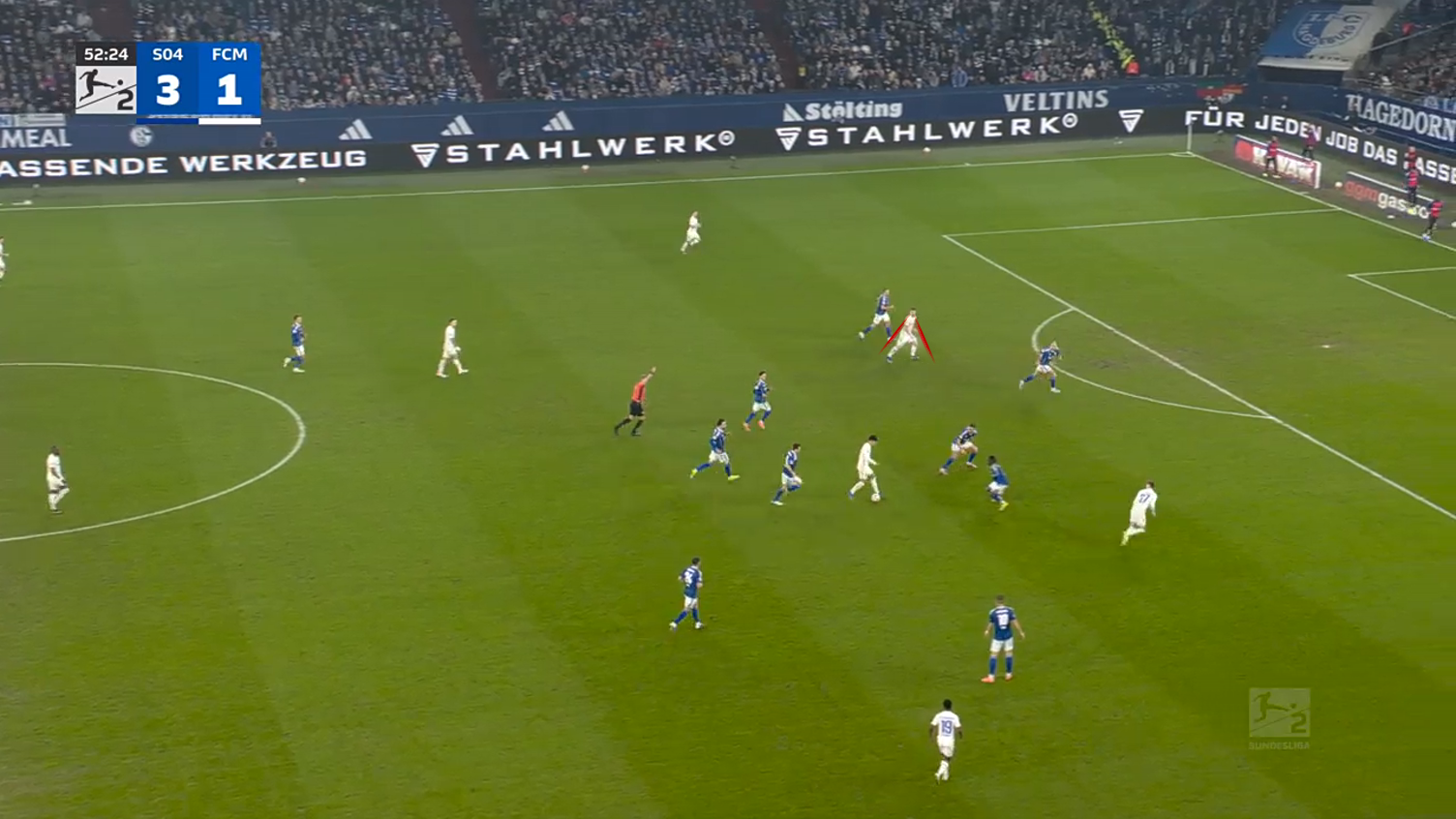
Furthermore, his history as a right-back gives him a unique perspective on defensive vulnerabilities.
He understands where a defender’s peripheral vision ends, and he excels at timing his runs to coincide with the moment a defender turns their head to track the ball.
This allows him to ghost into the half-spaces, the zones between the centre-back and the full-back, where he can receive the ball facing the goal.
His ability to identify these pockets of space ensures that even when Magdeburg is faced with a low block, he remains a constant vertical threat, stretching the pitch and forcing the opposition into uncomfortable choices regarding their marking assignments.
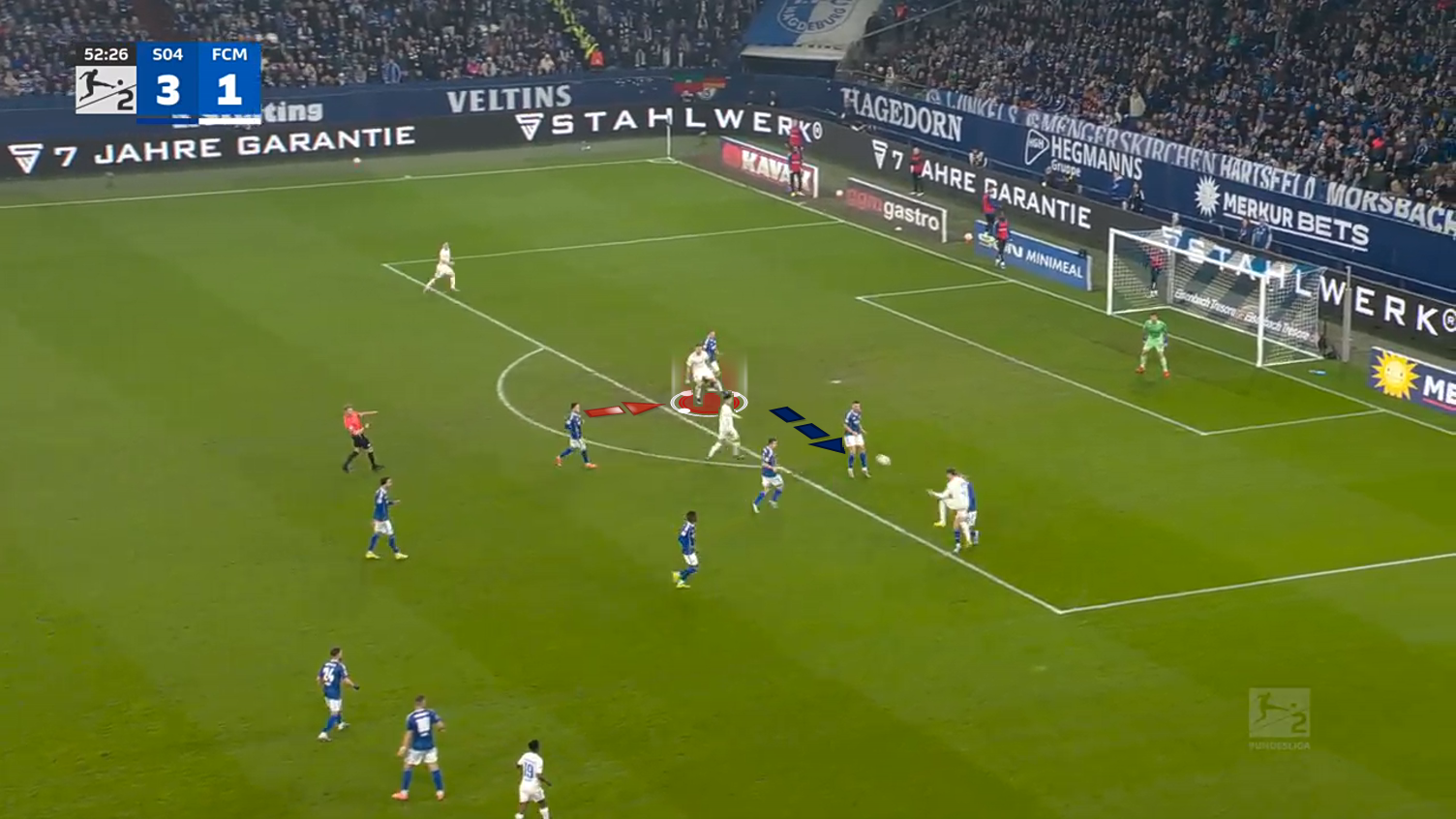
When the entire Schalke team shifts to the right side, the Polish striker just stays vertical and central, now gaining inside leverage compared to his marker.
This allows him to go for the cross much better than just a couple of seconds ago; he manipulates leverage incredibly well.
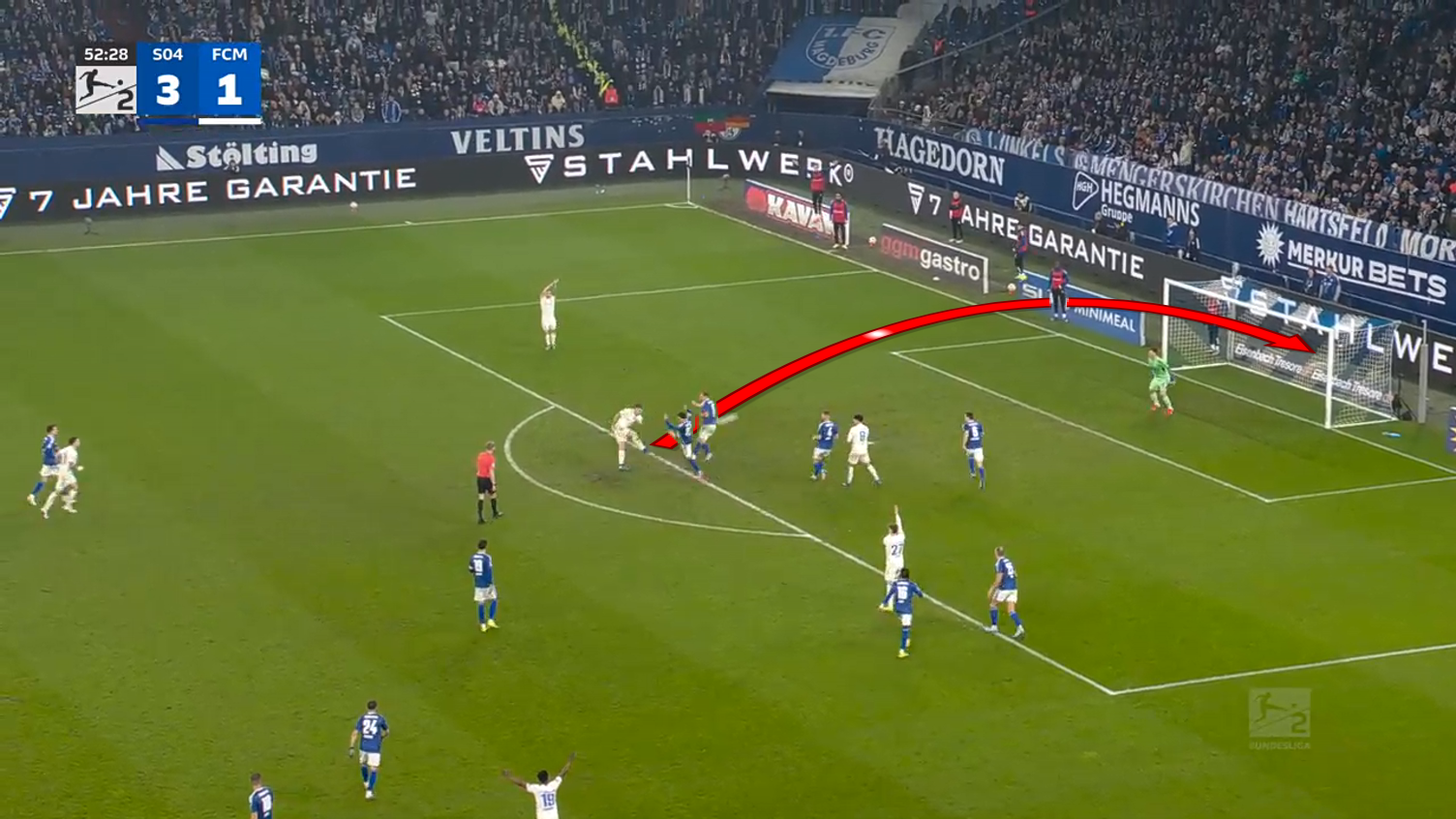
Furthermore, Mateusz Żukowski has become the division’s premier exponent of the first-time finish.
A significant percentage of his 11 goals this season have come from first-touch strikes, a statistical marker of a player who is mentally ahead of the ball’s trajectory.
This requires a sophisticated level of proprioception: the ability to sense his body’s position relative to the goal without looking.
When a cross comes in from the half-spaces or the wing, Żukowski doesn’t look to control; he looks to “redirect.”
In this case, it’s actually a two-time finish; a good first touch sets up a volley shot that the Polish star absolutely hammers into the net.
Mateusz Żukowski Movement
If his movement in the middle third is about subtlety, his work within the 18-yard box is defined by a high-octane occupational philosophy.
Statistically, Mateusz Żukowski is a statistical outlier in the 2. Bundesliga regarding touches in the opposition penalty area and shots per 90.
He treats the box not as a destination, but as a high-intensity combat zone.
His relentless activity ensures that he is never a static target.
He is a volume-creator, constantly shuffling his feet and re-adjusting his body orientation to remain an active passing lane for his teammates.
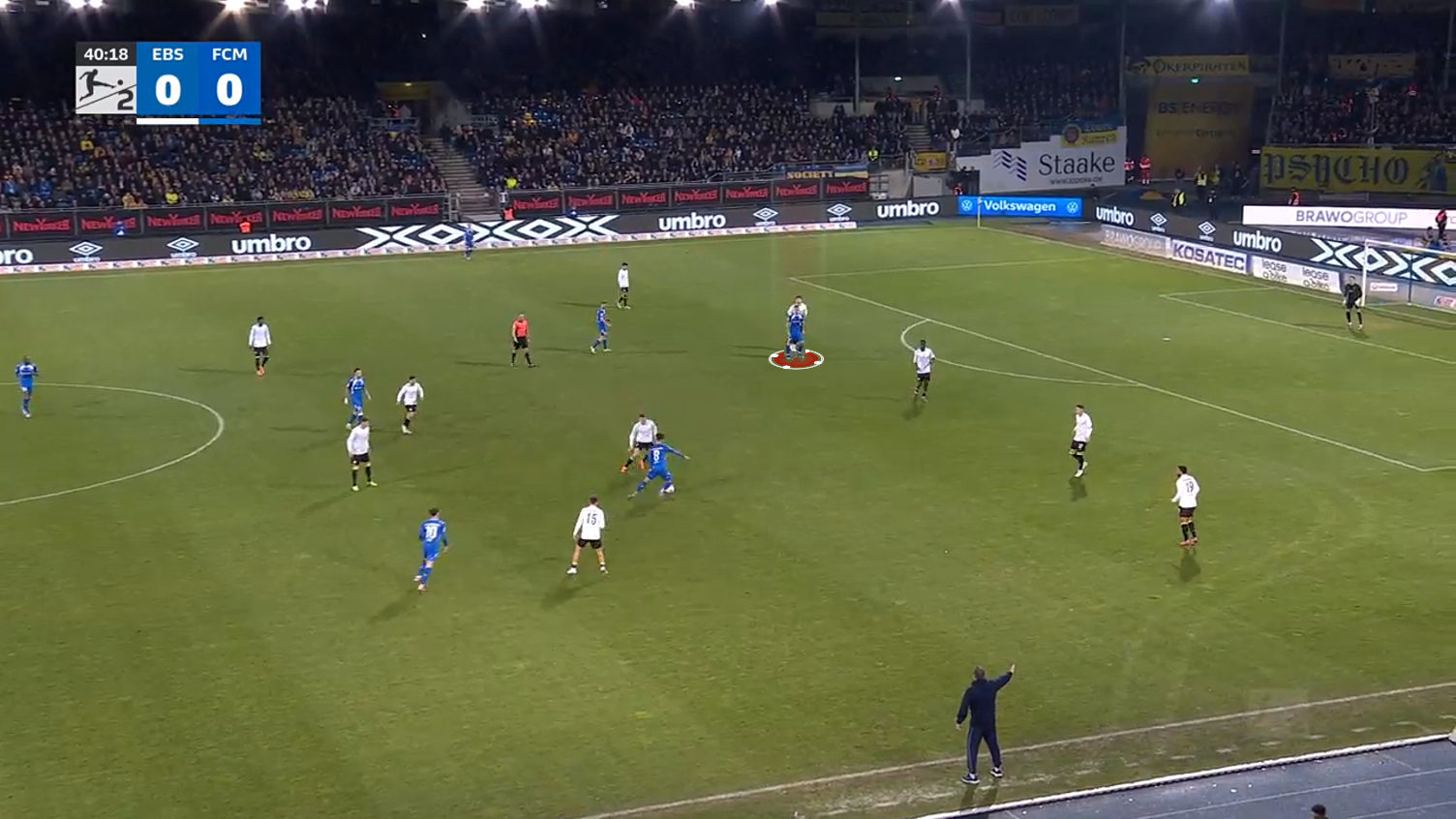
The start of the situation is the same as always: Magdeburg plays through the right, and Laurin Ullrich and Mateusz Żukowski are in the far-side half-space.
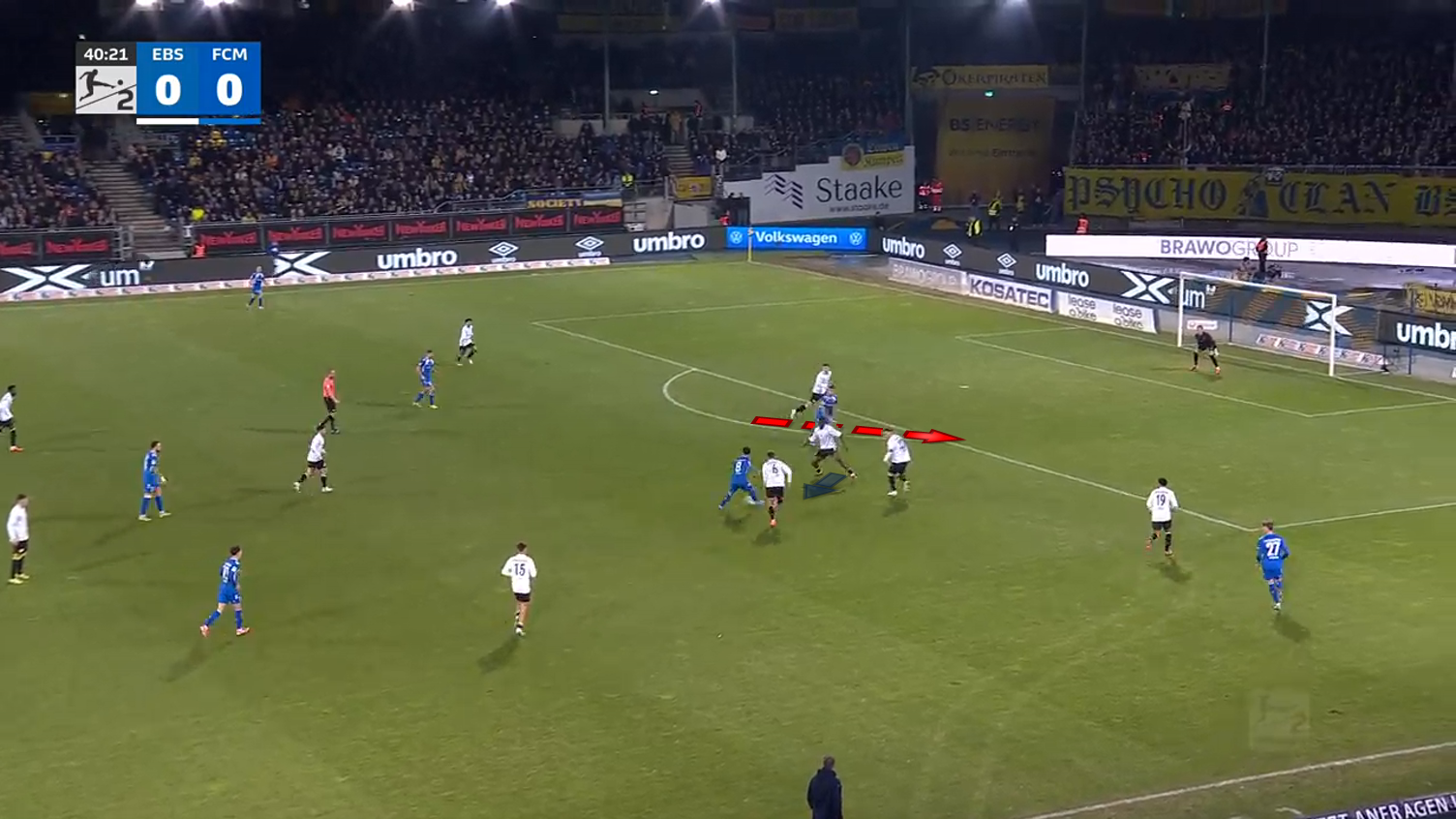
Within the final line, Mateusz Żukowski acts as a constant irritant.
He employs a method of swifting across the defensive line, a movement that essentially tests the communication of the opposition’s centre-back pairing every few seconds.
This high-frequency movement is exhausting for defenders, both physically and mentally.
The moment a marker loses focus, Żukowski is gone.
His 185cm frame allows him to withstand physical contact, but his true strength lies in his second-ball reactivity.
He is often the first player to react to deflections or saved shots, a trait that stems from his proactive positioning.
He doesn’t wait for the ball to arrive; he anticipates the most likely trajectory of chaos.
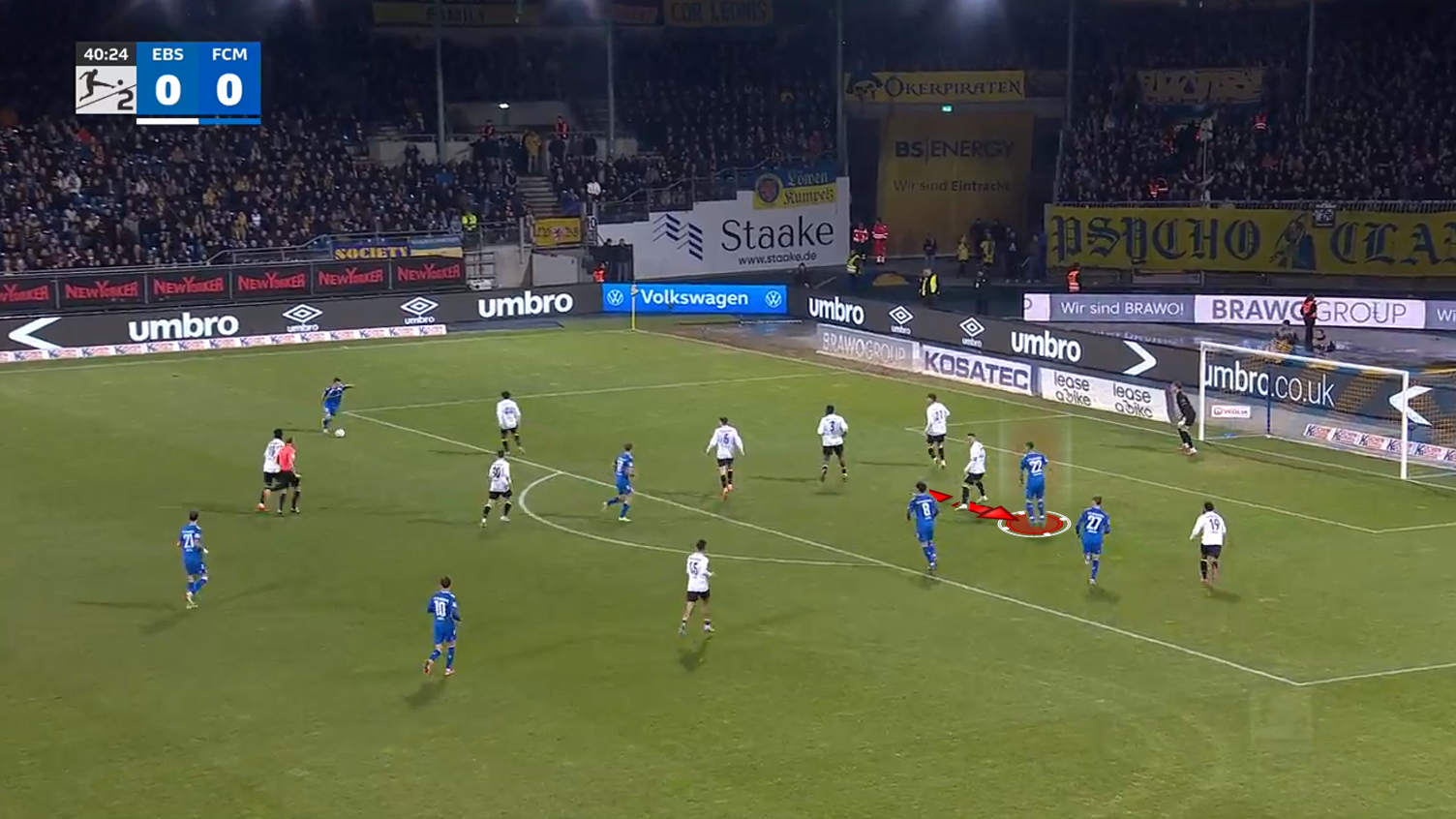
Żukowski’s box activity is governed by a principle we might call friction.
Unlike traditional strikers who try to stay as far away from defenders as possible until the final ball, Żukowski often initiates physical contact early in the attacking phase.
He attaches himself to the stronger centre-back, using his frame to gauge the defender’s balance.
This is a veteran’s trick; by feeling the defender’s weight, he knows exactly when that weight shifts.
The moment the ball enters the delivery zone (the wide areas or the Zone 14 edge of the box), he executes a violent detachment.
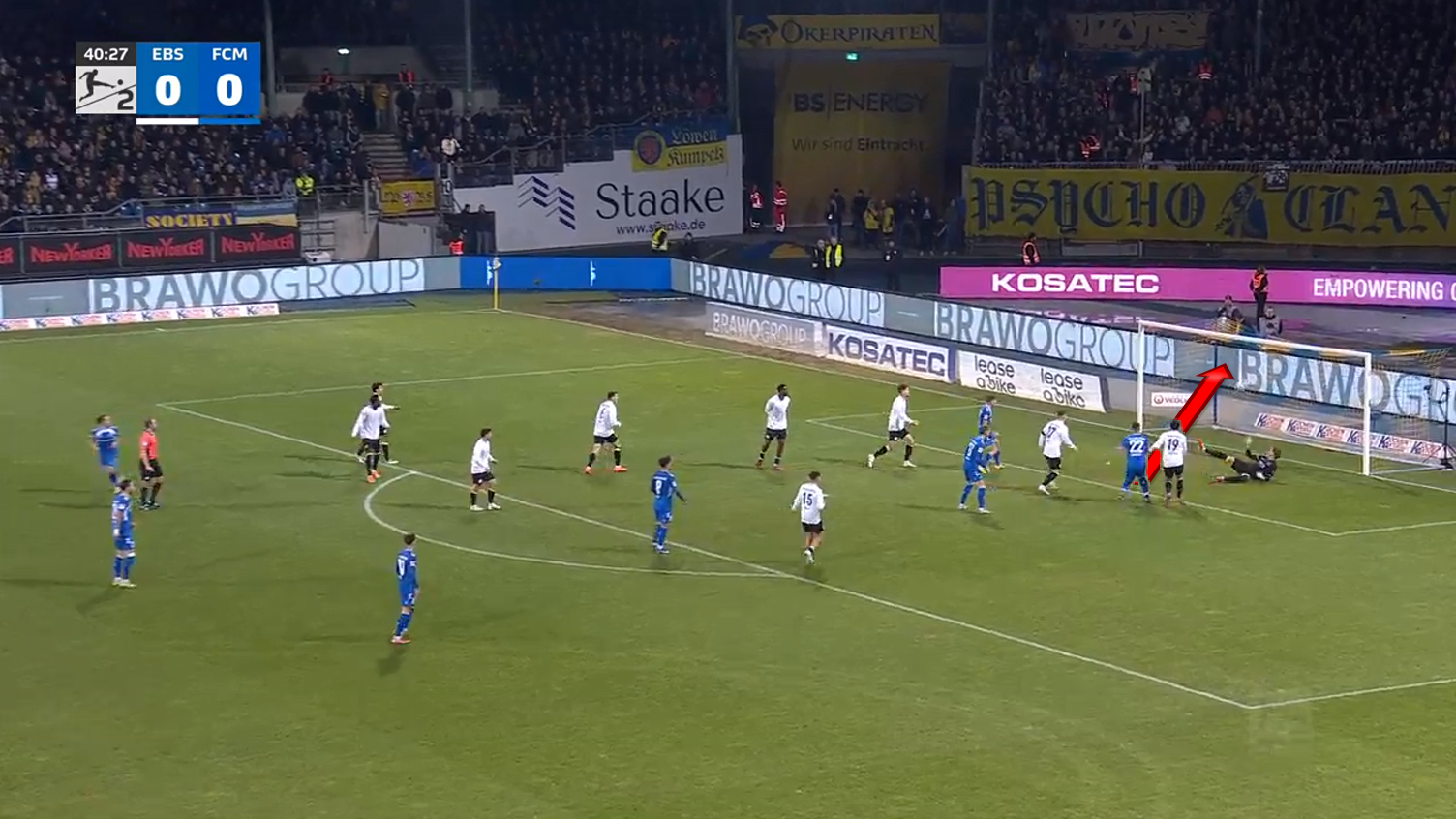
In this situation, he once again ended up with the rebound, scoring another goal from close range.
His instincts and work in the box are second to none.
Mateusz Żukowski Problems In Linking Up
However, to provide a complete tactical picture, one must address the problems in Mateusz Żukowski’s profile.
While he is a devastating end-product, he is frequently a “disconnected” element in the earlier phases of possession.
In the tactical framework of Magdeburg, there remains a high demand for a striker who can facilitate the build-up.
Here, Mateusz Żukowski’s technical floor becomes evident.
When dropping deep to act as a wall player or a link between the lines, his execution often lacks the necessary softness in his touch or precision to maintain the tempo of the attack.
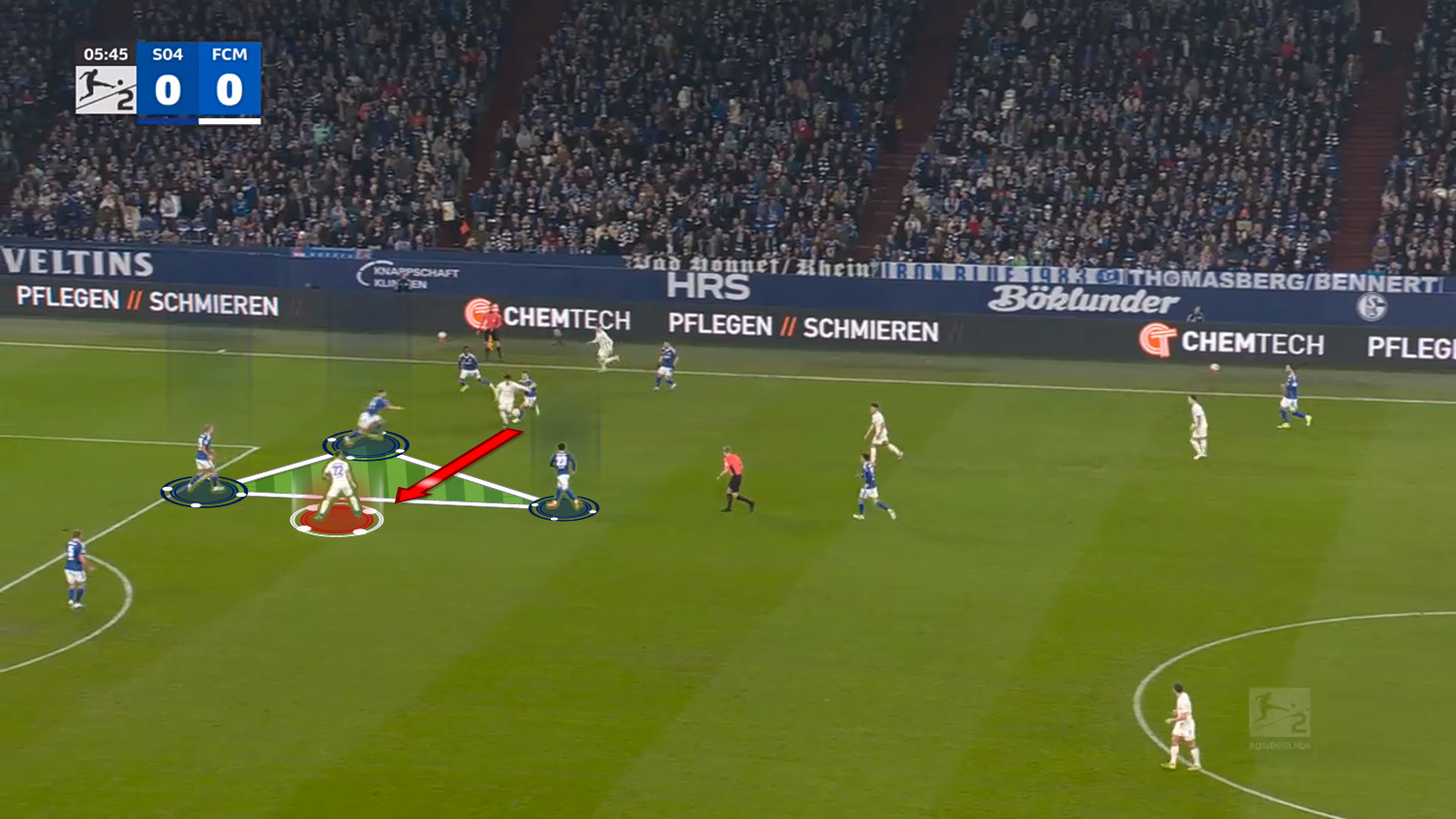
His primary issue lies in oriented control under pressure.
When receiving the ball with his back to goal, his first touch can be heavy, allowing aggressive defenders to step through him and initiate a defending press.
Unlike a natural ten or a false nine, Żukowski struggles to turn in tight spaces.
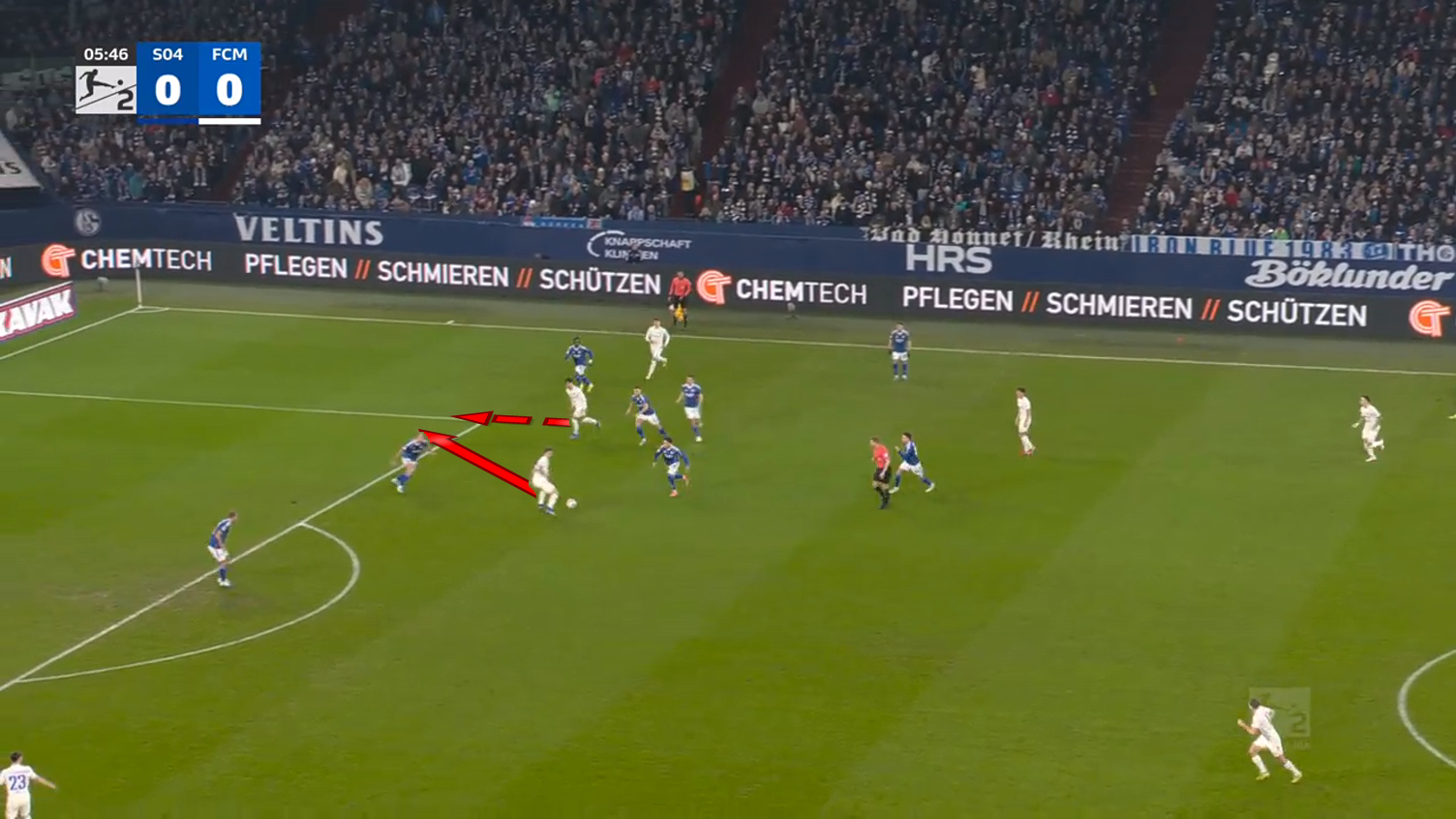
His passing range is also notably narrow; he is proficient at simple, linear layoffs, but lacks the creative vision or technical range to execute breakthrough passes or switch the play.
This makes him a somewhat predictable asset during sustained possession phases, often forcing Magdeburg to bypass him entirely in the build-up and look for him only once the ball has reached the final third.
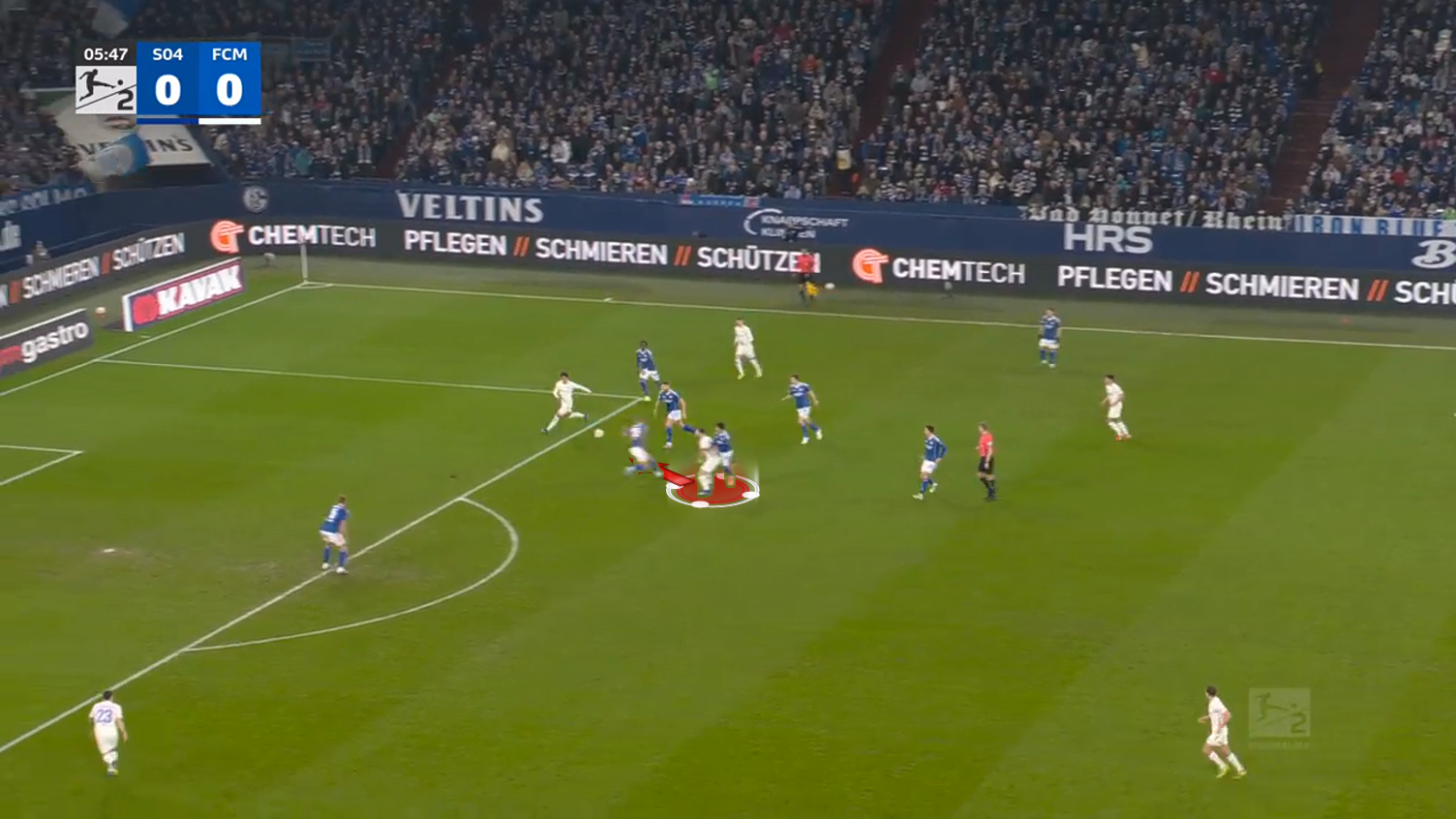
While he provides a physical outlet for long balls, his flick-on success rate is inconsistent, and he lacks the creative vision to execute the final pass himself.
For Magdeburg to truly maximise his potential, they must ensure the structure around him compensates for this.
He is a finisher in the truest sense, the end point of the attack rather than a participant in its construction.
As long as the service is there, he is elite; when he is asked to be the architect, the cracks in his technical foundation begin to show.
Conclusion
Ultimately, Mateusz Żukowski’s season at 1. FC Magdeburg stands out as one of the most fascinating examples of positional reinvention and form resurgence in the 2. Bundesliga.
Once identified primarily as a right-back, his early professional years, including a high-profile transfer to Glasgow Rangers, were characterised by limited opportunities, loans and oscillating roles.
Like many players adjusting to the demands of senior football, his path was disrupted by injury, most notably a substantial metatarsal fracture upon arrival at Magdeburg that postponed his full integration into Magdeburg’s system.
Yet it is precisely this adversity that makes his current run of form so compelling.
Reimagined as an advanced attacker, Żukowski has become a consistent offensive catalyst, combining spatial intelligence with a goal-oriented instinct that wasn’t necessarily anticipated when he signed.
His eleven goals and two assists in eleven league matches reflect not just finishing prowess, but a deeper understanding of timing, positioning and anticipation, core components of Magdeburg’s attacking patterns.
Moreover, Żukowski’s transformation underscores a broader tactical lesson: flexibility and adaptability can redefine a player’s impact, especially in teams navigating the challenges of a demanding league and the pressure of avoiding relegation.
By embracing a new role and excelling within it, he has not only elevated Magdeburg’s offensive threat but also reshaped his own career trajectory from defensive prospect to one of the division’s most intriguing emerging forwards.
Looking ahead, his form raises questions about Magdeburg’s future attacking architecture and whether this tactical gamble might become a cornerstone of their identity in the seasons to come or if the Polish striker will make a move to a bigger club this summer already.
