
In a match that was largely dominated by Argentina, Ricardo Gareca’s Chile side were able to defend solidly for the majority of the match, with only a late Lautaro Martinez winner in the 88th minute being the difference for Argentina. This result means Lionel Scaloni’s side are guaranteed a place in the quarter-finals of Copa América, while Chile need to win against Canada on the final day to advance.
This tactical analysis will look at a couple of tactics from both sides and analyse how both Scaloni and Gareca looked to go about this matchup between two South American rivals.
Lineups
For Argentina, Lionel Scaloni stuck with the 4-4-2 formation that he deployed in Argentina’s first match of the group stage against Canada but made three changes to the starting lineup. Emiliano Martínez kept his place in goal, with Lyon’s Nicolás Tagliafico replacing Sevilla’s Marcos Acuña at left-back. The rest of Argentina’s backline stayed the same, with the Premier League pairing of Lisandro Martínez and Cristian Romero at centre-back and Nahuel Molina retaining his place at right-back. The other two changes occurred in the midfield four, with Nicolás González and Enzo Fernández coming into the midfield to replace Ángel Di Mariá and Leandro Paredes. Rodrigo De Paul and Alexis Mac Allister kept their places in the midfield. Manchester City’s Julián Álvarez partnered captain Lionel Messi up front.
Ricardo Gareca made two changes to his Chile side that drew 0-0 with Peru in their opening group stage match, with the Argentine also using a 4-4-2 system. Claudio Bravo kept his place in goal, with the back four also staying the same. Toulouse’s Gabriel Suazo started at left back, with Paulo Díaz and Igor Lichnovsky being the centre-back pairing. Mauricio Isla started at right back for Chile. The two changes from Gareca occurred in the midfield, with talented 20-year-old Dario Osorío replacing Diego Valdés and Rodrigo Echeverría replacing Norwich City midfielder Marcelino Núñez. Erick Pulgar and Victor Dávila kept their places in the midfield. Alexis Sánchez and Eduardo Vargas kept their positions leading the front line up top.
Argentina’s midfield dominance and looking to overload the left side
The statistics paint a picture of this match mostly being dominated by Argentina, and that verdict would be accurate. In total, Argentina outshot Chile 22-3 (9-3 on target) while also holding just over 61% possession throughout the course of the 90 minutes. Most of these chances seemed to come from their left-hand side of the attack, with Scaloni’s game plan to isolate Isla and move the ball down this flank, with Messi often drifting over to help González. Tagliafico advancing to make overlapping runs while the fullback would also invert into central midfield while Fernández made third man runs from a deeper midfield position. They also held positional superiority in the midfield areas, with Chile having almost no presence in this area throughout the course of the match.

The touch map above shows Argentina’s dominance in the central areas of the pitch and how they looked to favour the left-hand side of their attack and the right-hand side of the Chilean defence. Chile had virtually no presence in the midfield for the majority of the match, with Gareca’s side forced to play the ball long and bypass the middle third of the pitch.

The data viz graphic shown above highlights a little bit more how most of Argentina’s ball progression occurred down the left-hand side of the pitch, with this graphic putting that statistic in more perspective. While the Argentinian attackers did not look to commit to all that many dribbles over the course of the 90 minutes, when they did, the majority looked to come down this left side, with the tactic to exploit the space the Isla left when he ventured forward, eventually causing the veteran defender to not go forward much at all.

From the figure above, we can see this overload Argentina looked to create in action. In this phase of play above, the ball is in possession of Martínez, with the Manchester United defender looking to progress the play. We can see how, on this left side, Argentina have managed to create an overload, with González keeping wide on the touchline, Tagliafico inverting and advancing, and the third-man run from Fernández, which the Chelsea midfielder did often during this match.
This allows Scaloni’s side to create a 3v2 numerical advantage against Isla and the Chilean midfielder while, more specifically, giving Isla a conundrum since he becomes isolated 2v1. The defender sticks in his position, marking the run of Fernández and allowing Martínez to play the ball to the winger in the wide channel. Nothing of note results from this specific attacking move, but it helps to highlight what Scaloni wanted his Argentina side to try and exploit.
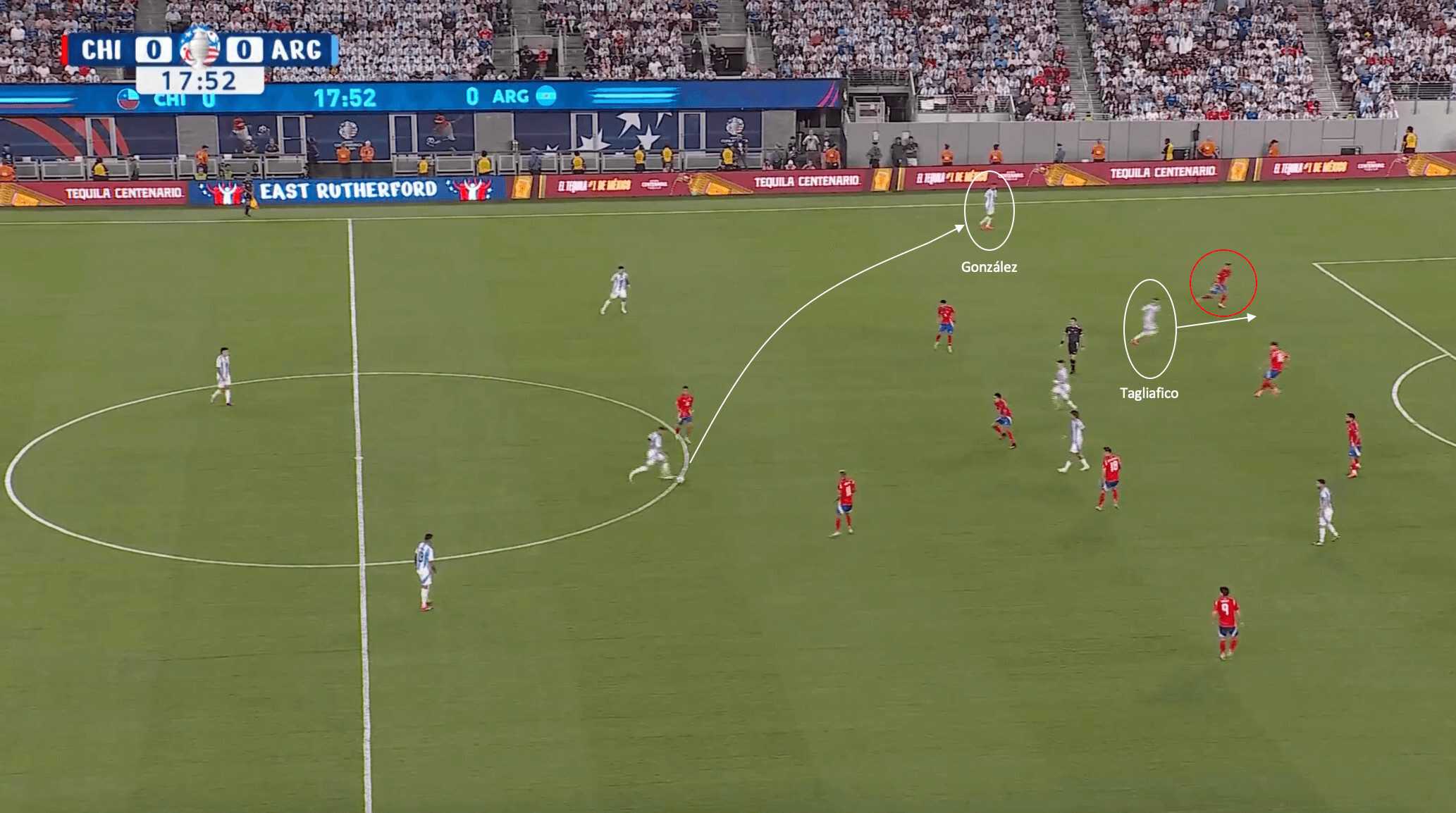
The image above shows another example of these third-man runs and positional movements off the ball to create overloads and opportunities down the left-hand side for Argentina. In this phase of play above, the third-man run is instead made by Tagliafico, with Fernández sitting as more of an inverted fullback. This movement by the Lyon fullback again isolates Isla in a 2v1, with this freeing up the pass to go to the Fiorentina winger on the touchline. The ball finds González, who is able to play a pass back for Fernández to send into the penalty area and force Claudio Bravo into action.

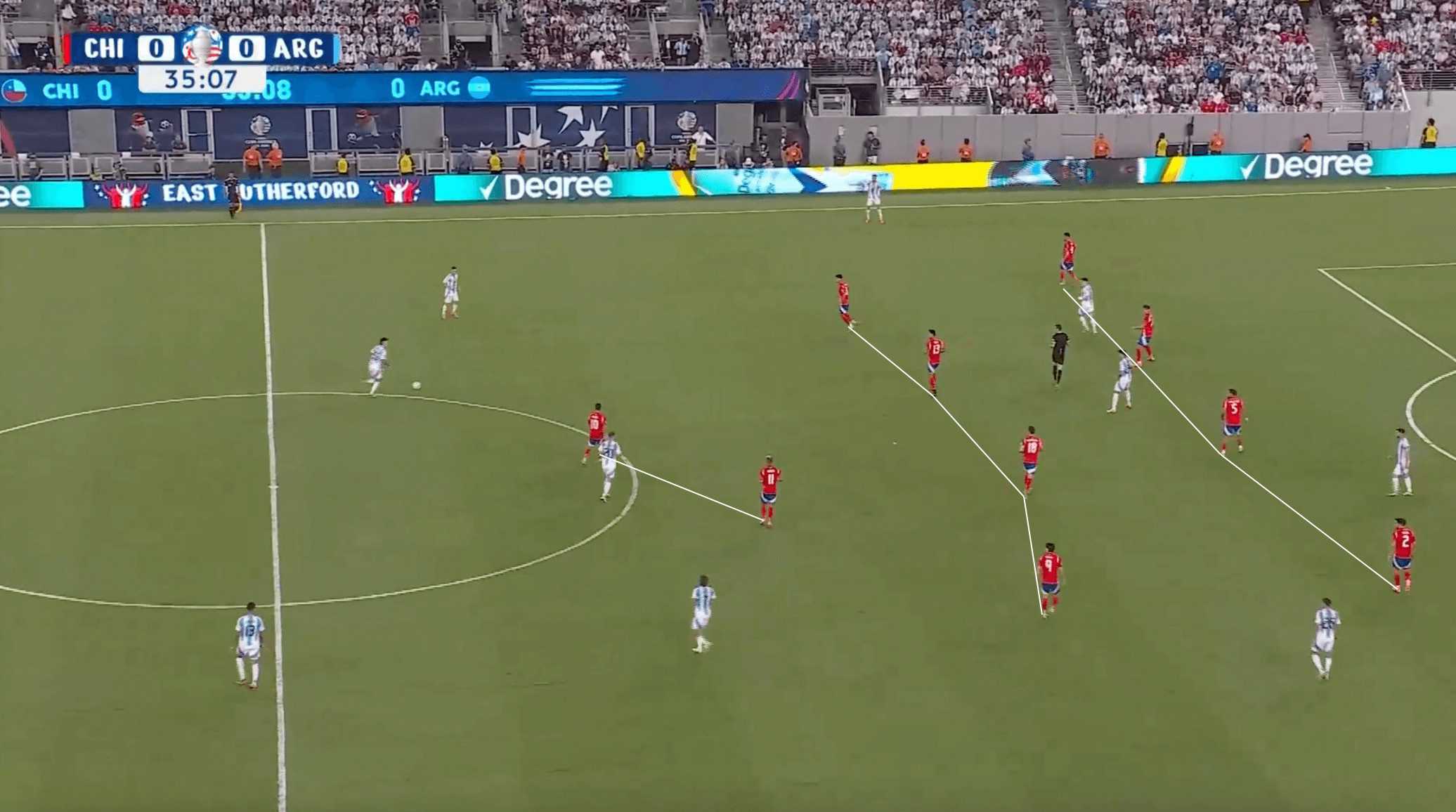
We also talked briefly earlier in this tactical analysis how Argentina also held midfield superiority for much of this encounter, not allowing Chile any time or space to play the ball into this area. The image above shows a better visual of how Argentina were able to dominate this area of the pitch. This example comes from a Chilean build-up, with the ball currently in possession of the central defender. We can see how tight and compact the shape in the midfield gets for Argentina, with five players preventing the deepest-lying Chile midfielders from receiving possession.
As a result, they allowed Chile to have the wide spaces, but this then resulted in them looking to lock the ball to one side, which they did well. This Chilean phase of possession ended like plenty others did in this match, with the ball eventually being played long towards the forwards, with Argentina able to win possession cleanly on the second ball before again beginning to attack the Chile defence.
Strong Chilean defending almost leads to a valuable point
From an attacking perspective, Ricardo Gareca’s side did not offer much over the course of this encounter with Argentina. They did not have a shot on target till around the 75th minute and did not offer much of a threat for Emi Martínez in the Argentina goal, though he did have to make a couple of pretty good saves at the end to keep Chile out.
Most of the good work from Gareca’s side came defensively, with Chile defending really well for essentially the entire match. They looked to defend in a mid-to-low block 4-4-2, with two lines of four staying tight and compact and not offering many avenues for Scaloni’s side to play slick possession football through.
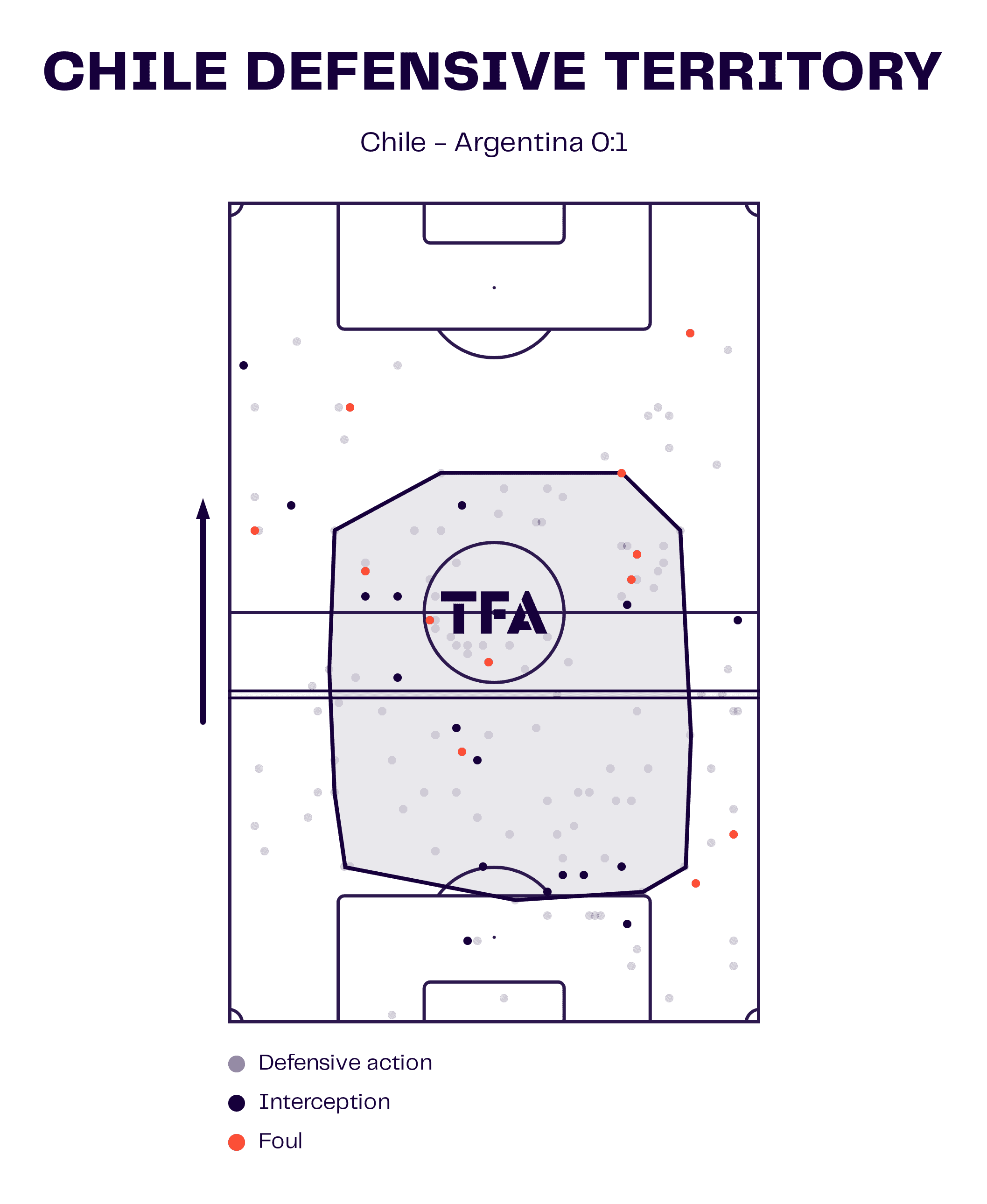
The data viz graphic above shows the average defensive territory of Chile throughout this match against Argentina, and we can see just how narrow and compact the defensive block looked to get. For the most part, they looked to allow Argentina possession in their defensive third in the wide areas but did look to put pressure on the ball when it was circulated to those areas. The key for the Chilean defence was not to bite on the third-man runs and positional rotations from Argentina, something they did relatively well during the match.
From the image above, we can see the defensive shape that Chile tended to drop into once Argentina were in controlled possession. We can quite clearly see how Gareca’s side dropped into a low block 4-4-2 shape, with the defensive and midfield lines looking to stay tight and compact. This meant that the Chilean fullbacks and wide midfielders also looked to tuck inside and stay narrow, which allowed Argentina to have the wide areas, where they would be less dangerous in creating goal scoring opportunities, while preventing them from building through the central zones. However, Scaloni’s side were still able to create plenty of chances, but this rigid defensive shape did well to prevent Argentina from embarking on quick and slick passages of possession once they were able to control the ball after winning possession back, with most of these quick passages of attacking play instead happening in transition when the Chilean defensive shape was more open.
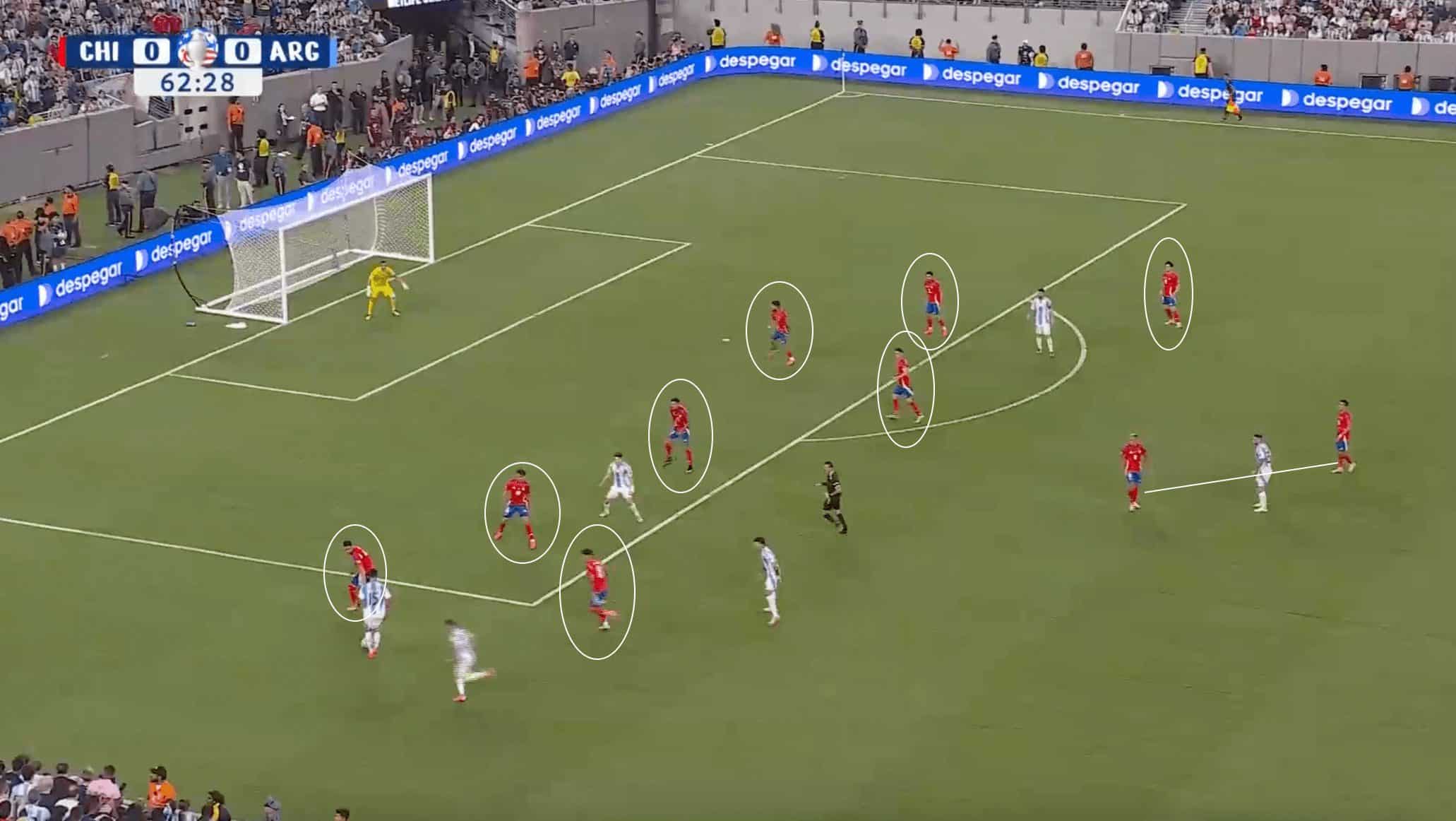
Chile also did a good job with their box defending against Argentina and, on multiple occasions, were able to force them to keep the ball in the wide area while allowing no way through into the centre of the penalty box. In this phase of play above from the second half, we can see how eight of the ten Chilean outfield players are either inside or just on the edge of the penalty area, with both strikers also sitting in pretty deep positions.
They do well in this phase of not getting dragged out of position. The overlapping run of the Argentinean fullback is tracked instead by the wide midfielder, allowing the fullback to stay in his position and not get dragged out of shape to create a gap for the Argentine attacker to drive into. It worked, with Chile able to repel this attack and plenty of others from Argentina throughout this Copa América group stage match.
Conclusion
Throughout this tactical analysis, we have been able to take a look at a couple of tactics from each side in this matchup between Chile and Argentina, with Ricardo Gareca’s side doing very well for the vast majority of this match from a defensive standpoint, before Lautaro Martínez was able to score right near the end of the match to confirm Argentina’s passage to the quarter-finals, while Chile go into a must-win match against Canada in match day three.
