At the end of August, Scott Parker was sacked by Bournemouth after a 9-0 drubbing at the hands of Jürgen Klopp’s Liverpool.
Now, almost exactly four months later, the Englishman has been hired as manager of the current Belgian champions, Club Brugge, after they sacked Carl Hoefkens.
The former Tottenham Hotspur player has had success promoting both AFC Bournemouth and Fulham to the Premier League and now gets to manage Club Brugge KV in the Champions League round of 16 against Portuguese heavyweights Benfica.
This tactical analysis article will look at what Club Brugge fans should expect from their side under Scott Parker’s tactics.
Scott Parker preferred formations
Scott Parker has been thrown straight into the deep end at Club Brugge, with the Englishman’s first match in charge of the Belgian giants against current leaders Genk.
Club Brugge currently sit 12 points behind the leaders, so three points are a necessary aim.
With that being said, Parker does not have much time on the training pitch to convey his ideas to the players.
When looking back at Parker’s spells in charge of both Bournemouth and Fulham in the Premier League and Championship, he will alternate between both a back three and back four system.
Usually, he prefers setting his sides up in either a 4-2-3-1 or a 4-3-3, while a 3-5-2 or 3-4-1-2 is also possible.
It will be interesting to see how he sets up the Belgian side, with either option a possibility.
Carl Hoefkens typically utilised a 4-3-3, while his predecessor, Alfred Schreuder, typically preferred some variation of a back three system.
The following sections of this tactical analysis and scout report will now anlayse some tactical trends from Parker, which should give a basis for what Club Brugge fans should expect.
Scott Parker Strategic pressing strategy
One thing that Club Brugge fans should expect to see from Scott Parker style of play is an implementation of a system that defends on the front foot.
This includes defending from the front, with the forwards expected to press the opposition defenders in possession, as well as the defensive line keeping a high line at times.
Looking back at the PPDA of the Bournemouth and Fulham sides he has managed shows this tactical trend.
With Bournemouth in the 2021/22 Championship season, Parker’s side averaged a PPDA of 8.72.
This was lower than the year before his arrival, with the Cherries having a PPDA of 10.79 in the 2020/21 season, showing an increase in pressing in the opponent’s defensive third when Parker arrived.
With Fulham in the Championship, Parker’s side had a PPDA of 9.44.
The Premier League equivalent of these numbers is substantially higher, but this is due to a tendency of his sides sitting off more against usually far superior opposition.
Under Carl Hoefkens, Club Brugge also pressed at times, with their PPDA sitting at 10.19 while he was in charge.
It is very similar to the PPDA numbers that Scott Parker has averaged at his other managerial stops, but this section will now go more into detail about Parker’s style of pressing.
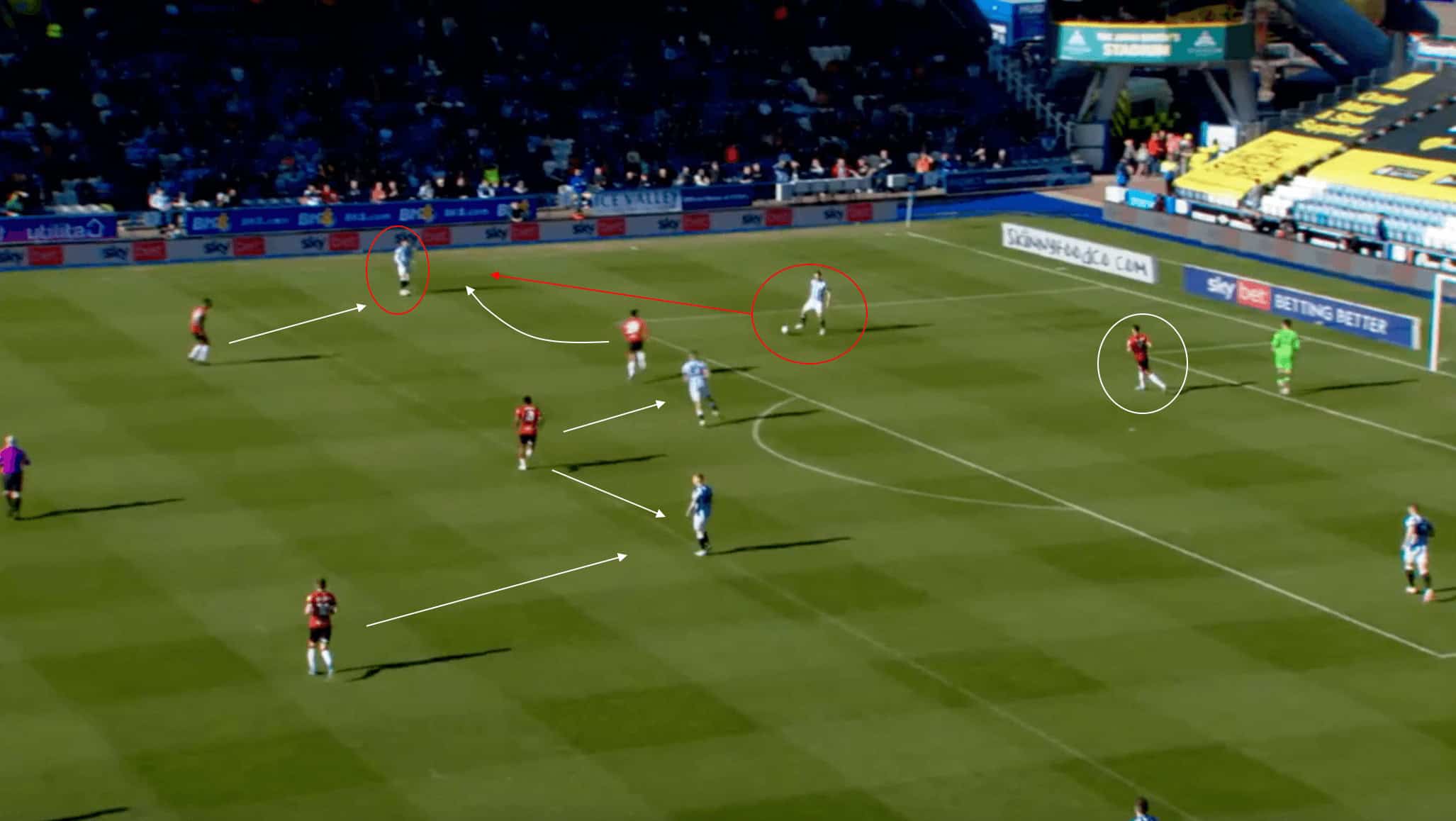
The image above shows an example of Scott Parker’s pressing style from Bournemouth’s Championship match last season against Huddersfield Town.
In this phase of play above, Huddersfield are looking to build out from the back after the goalkeeper receives possession.




![Burnley Vs Manchester United [2–2] – Premier League 2025/2026: The Red Devils New Ideas And Potential Tactical Changes – Tactical Analysis](https://totalfootballanalysis.com/wp-content/uploads/2026/01/Burnley-2-2-Manchester-United-tactical-analysis-350x250.png "Burnley Vs Manchester United [2–2] – Premier League 2025/2026: The First Steps Of The Post-Rúben Amorim Era – Tactical Analysis 7")