
After the game, though the scoreline was negative, Mikel Arteta said his Arsenal team were better in the second leg against Paris Saint-Germain (PSG).
Arsenal were knocked out of the Champions League semi-final by PSG with a 1-3 aggregate score, after PSG won the second leg 2-1 at Parc des Princes.
However, Arsenal really did look like the better team, as they dominated ball possession 54% to 46% and had 2.91 expected goals compared to PSG’s 1.74.
The underlying numbers showed that Arsenal FC should have won the game and booked their ticket for the Champions League Final in Munich, but football of course, isn’t played on paper and only the final score matters.
At his own PSG press conference, Luis Enrique disagreed with Mikel Arteta’s post-match comments and said “We are here because we deserve to be”.
That’s why perspective matters and tactical analysis helps you understand the state of the game better.
This tactical football analysis will show you what happened during the second leg of Arsenal vs Paris Saint-Germain, how Arteta’s tactics outsmarted Enrique in some parts of the game, and how Enrique outsmarted Arteta in others.
Arsenal Tactics Vs PSG: Play Wide & Direct to Get Corners & Throw-Ins
Arteta learned from the first leg that PSG often used three players at the back to defend Arsenal’s build-up.
This means that Arsenal can create an advantage in that particular situation.
Arteta did two things in the second leg.
First, he made sure his wingers stayed wide to create width.
Take Gabriel Martinelli, for example.
In the first leg, he often switched positions with centre-forward Leandro Trossard.
This was mainly because Martinelli wanted to pull Marquinhos into the middle of the park to open up the left flank for Trossard.
However, this was not the case in the second leg.
Most of the time, Martinelli stays out wide and waits for the ball, just as Bukayo Saka did on the right.
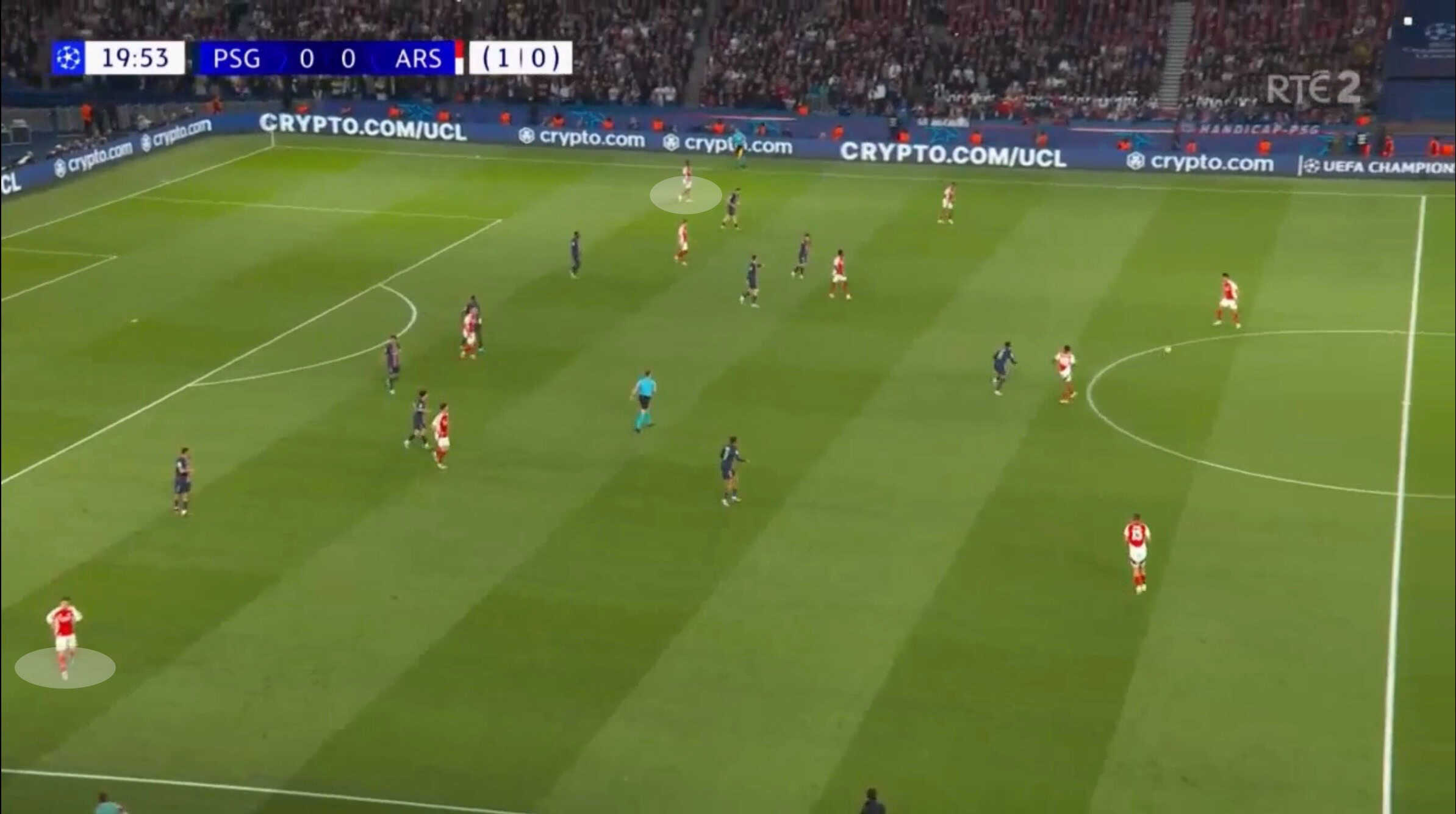
Secondly, it is possible to play more directly through the goalkeeper.
David Raya played 24 long balls in the second leg, compared with 18 in the Emirates.
More often than not, the direction of his long balls is the wing.
Arteta was keen to ensure his team took advantage of PSG’s structure.
With Achraf Hakimi, one of PSG’s defenders, stepping up to mark Merino as he cut inside on the left, Martinelli and Saka were always going to be in a 1v1 situation.
And just in case the ball came back into the centre area, Arsenal had a backup man in Declan Rice, who spent most of his time unmarked against PSG’s man-to-man (Willian Pacho is PSG’s backup man, but first, he didn’t step up too far to mark Rice, preferring to stay on his defensive line).
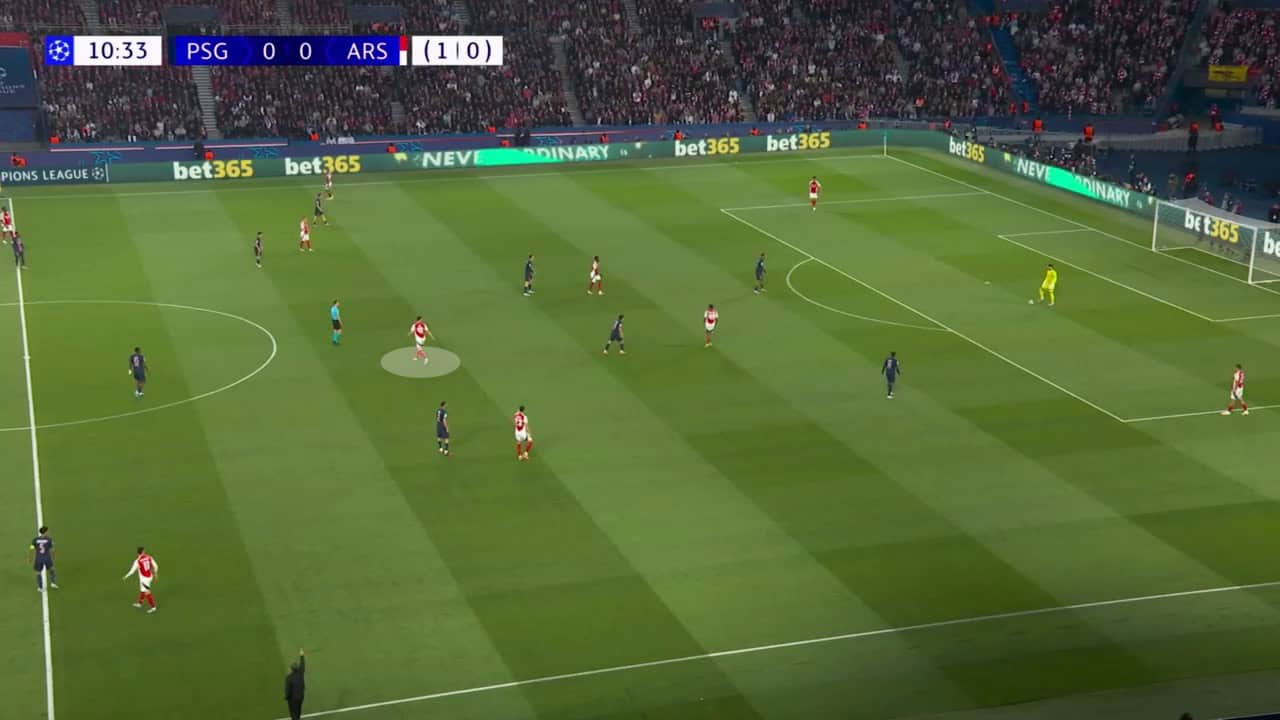
The reason for Arteta’s decision to play direct and wide was to allow Arsenal to create plenty of crosses and set-pieces—and they did.
Not only did Arsenal send in 14 crosses in the first half—a Champions League high—but three of their first four shots came from set-pieces.
I have written before that Arsenal have tended to increase their number of crosses this season because they know how to turn them into dangerous chances.
And so it was in the second leg, where both crosses and set-pieces, like many throw-ins, allowed Arsenal to get closer to the PSG goal.
Martinelli’s and Odegaard’s shots, the only two on target for Arsenal in the first half, came from set-pieces.
And both came from inside Les Parisiens’ penalty area.
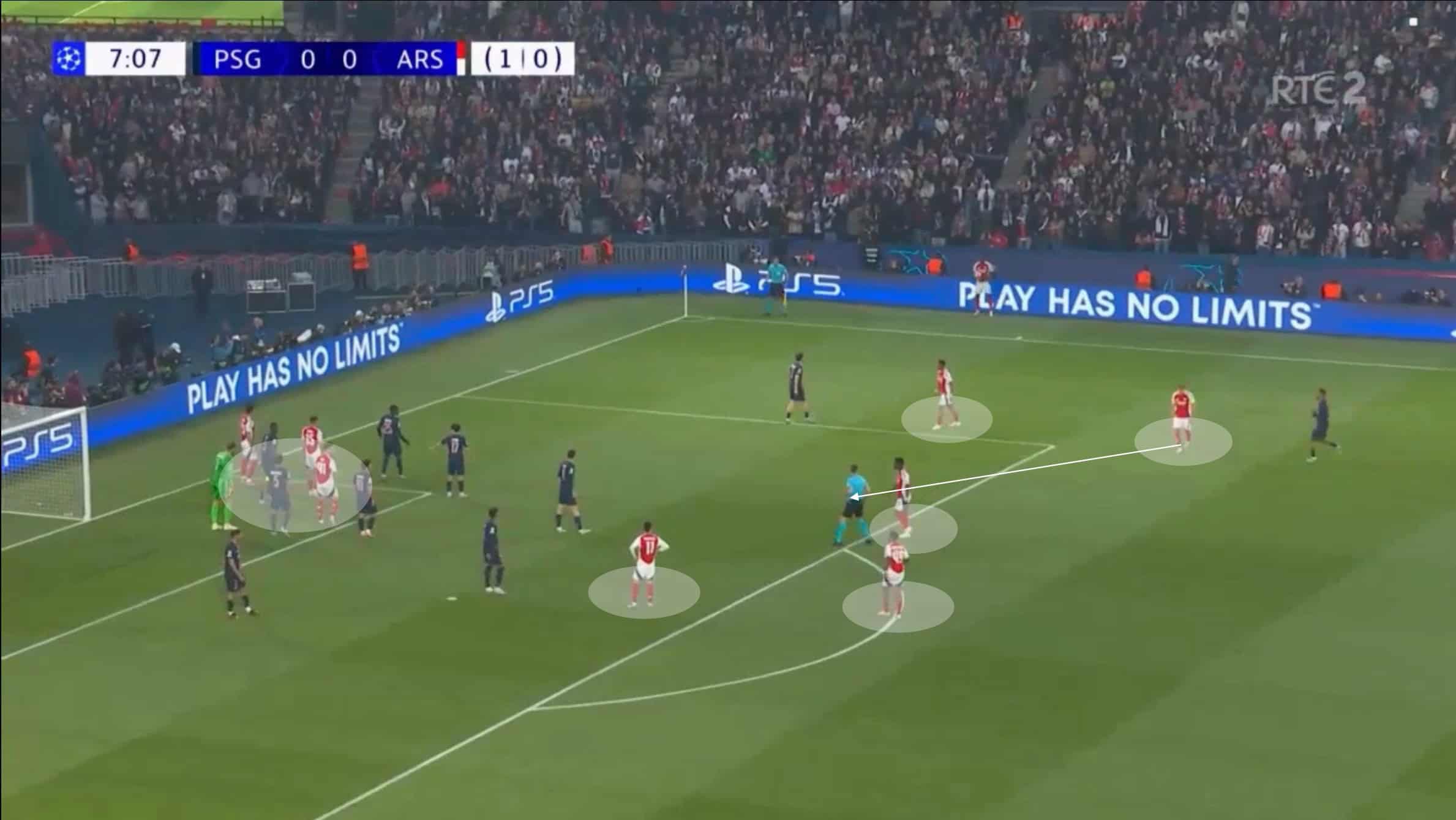
So Arsenal were trying to create a win-win situation either way: If they played direct, they could easily create a one-on-one situation in the wide area, leading to set-pieces, and if they played short in the build-up, they made sure they had a man to spare against PSG.
Luis Enrique Tactics: Gamble With Pacho, Mark Ødegaard All The Way
After the first 20 minutes, at least, Luis Enrique understood Arteta’s tendencies and knew that his team had problems with one-on-one situations and the spare man in Declan Rice; he then changed his approach.
Against the Arsenal build-up, Enrique changed and allowed Pacho to move forward and leave his defensive line.
It was a bold move—a gamble—but it paid off.
PSG’s first goal came from this situation.
Against Arsenal’s build-up, Pacho decided to follow Martin Ødegaard, leaving Vitinha free to follow the free Declan Rice.
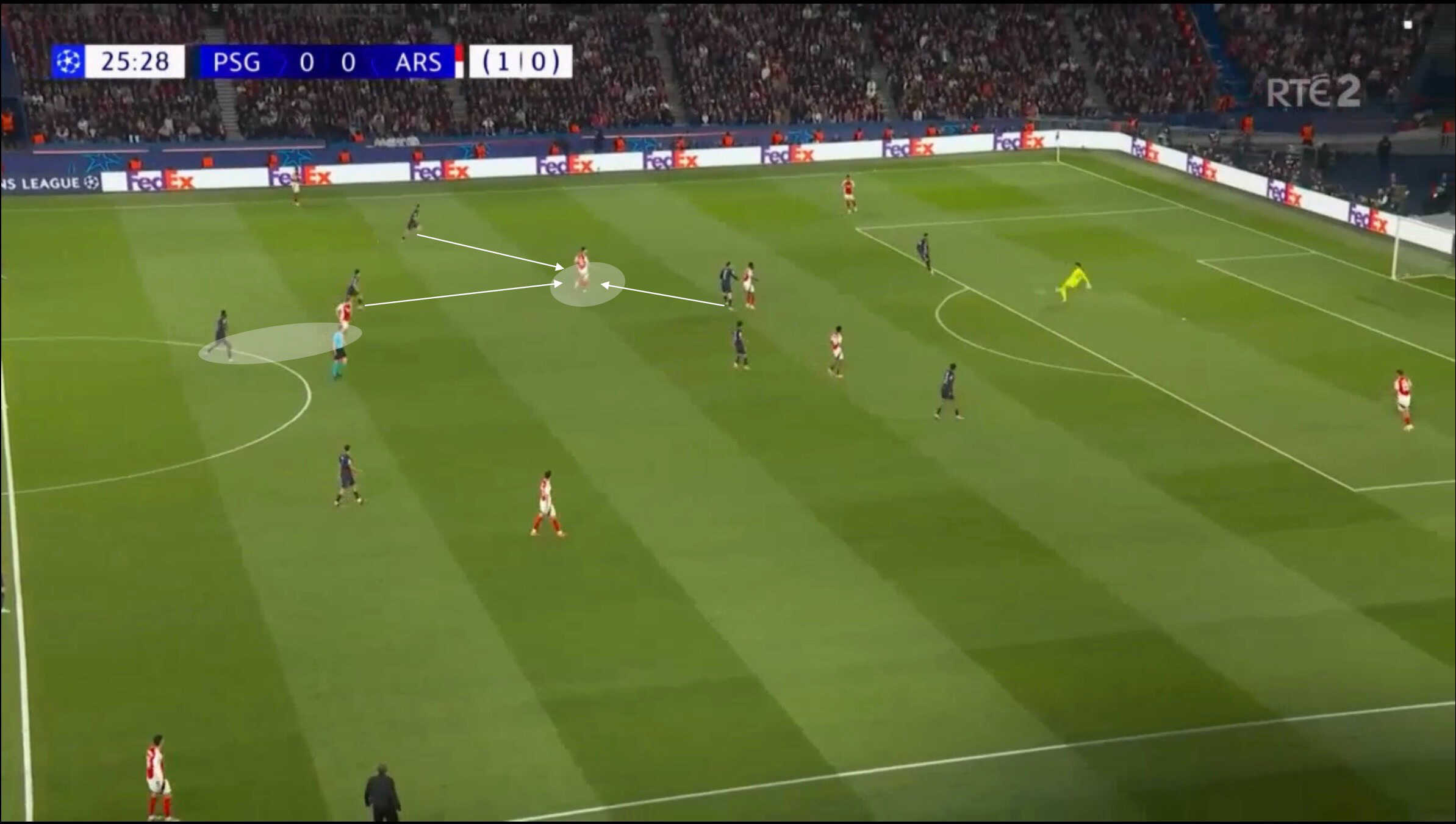
Khvicha Kvaratskhelia then stepped up to press and helped PSG steal possession and win the free kick that led to Fabian Ruiz’s goal.
Another example of how Enrique’s success disrupted Arsenal’s build-up was his insistence that his players follow Ødegaard wherever he went.
The natural marker should have been Vitinha, but Ruiz also took on the role when Ødegaard dropped deep into his own area.
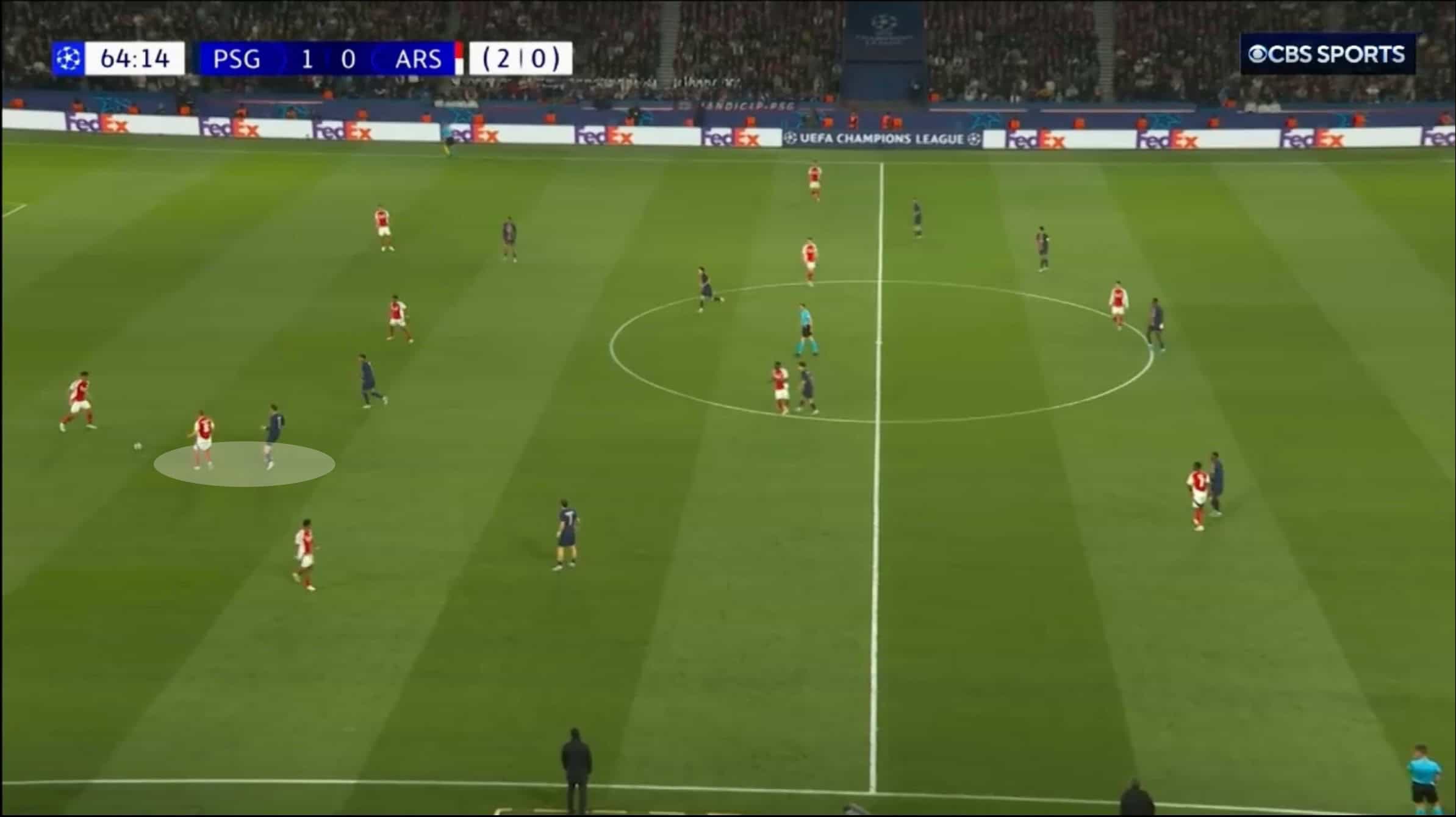
By following the Norwegian playmaker whenever he tried to overload his team’s build-up, PSG also ensured that Arsenal could not have their numerical advantage to push the ball forward.
That is how PSG managed to score their second goal in the game.
Yes, it started with an errant pass from Jakub Kiwior.
But guess who was the target of his pass—yes, Ødegaard.
It was a bad decision on Kiwior’s part, but it was also because of the decision of PSG’s players to position themselves narrowly in an attempt to close down the centre area and half-space, which left Ødegaard between three players.
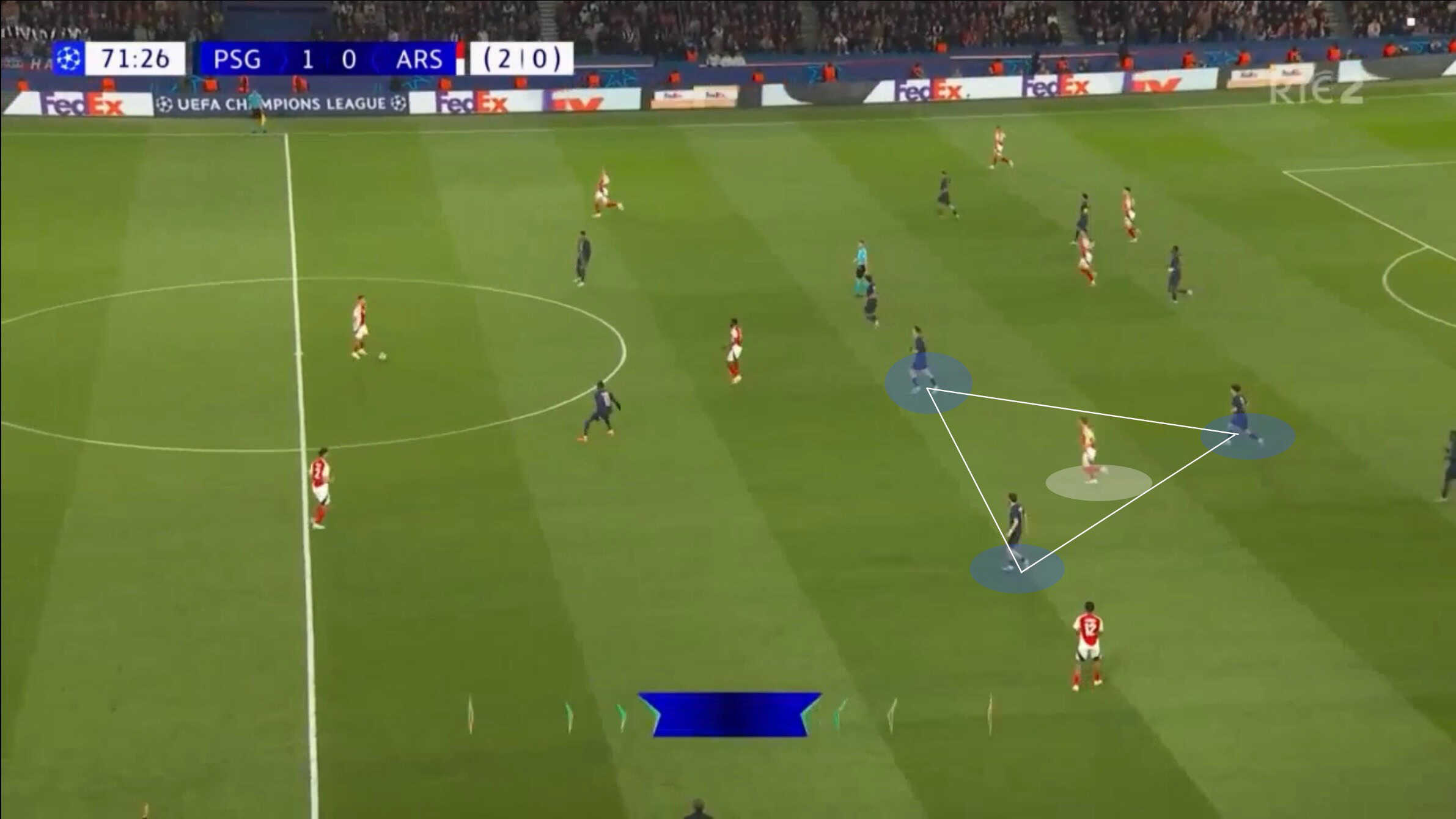
Kiwior’s pass was intercepted, and PSG were able to attack in transition.
This pushed Arsenal’s backline deeper and deeper, creating space in front of them that Hakimi took advantage of with a smart run into the middle of the Arsenal penalty area.
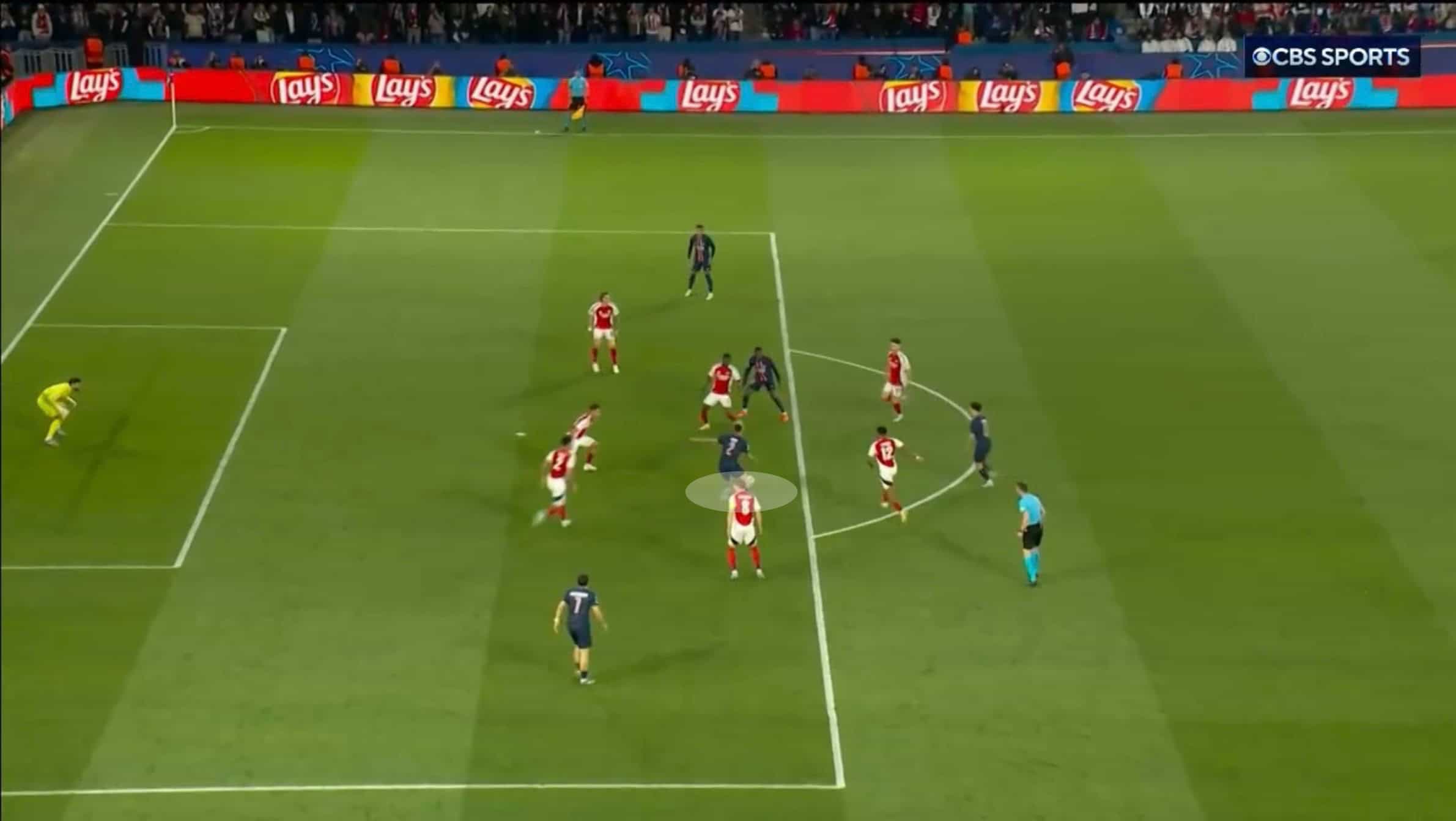
Enrique’s changes helped PSG reduce the quality of Arsenal’s chances.
In fact, Arsenal had a 40-minute drought of shots on target, during which their xG was just 0.49.
This means that 83.2% of Arsenal’s xG came between the first 20 minutes and the last 26 minutes of the game—18 minutes of which were spent with PSG 2-0 up and bringing on more defenders to make them more passive.
This out-of-possession approach from Enrique also showed how he was able to outsmart Arteta, who was praised for his work against the ball most of the time.
Enrique knows that if his team can catch Arsenal in some areas and if they are able to win the ball back, they can create good opportunities—and that is what happened for both of their goals.
Mikel Arteta Tactical Changes
After the second goal, Luis Enrique brought on Lucas Hernández for Désiré Doué.
The defender replaced the attacker. It was also a sign that the game had changed, with PSG already 2-0 up.
Enrique wanted to salvage the game, as his side were already 3-0 down and were becoming more passive with the ball.
Arteta tried to take advantage of the situation.
Before the 70th minute, the Arsenal boss introduced Ricardo Calafiori and Leandro Trossard and made several changes to his team’s play.
Firstly, with Trossard occupying the left flank, Arteta changed the way Saka operated on the right.
Instead of staying out wide, Saka moved diagonally to find the target in the middle of the park—a situation that led to his goal and his big misses in the 80th minute.
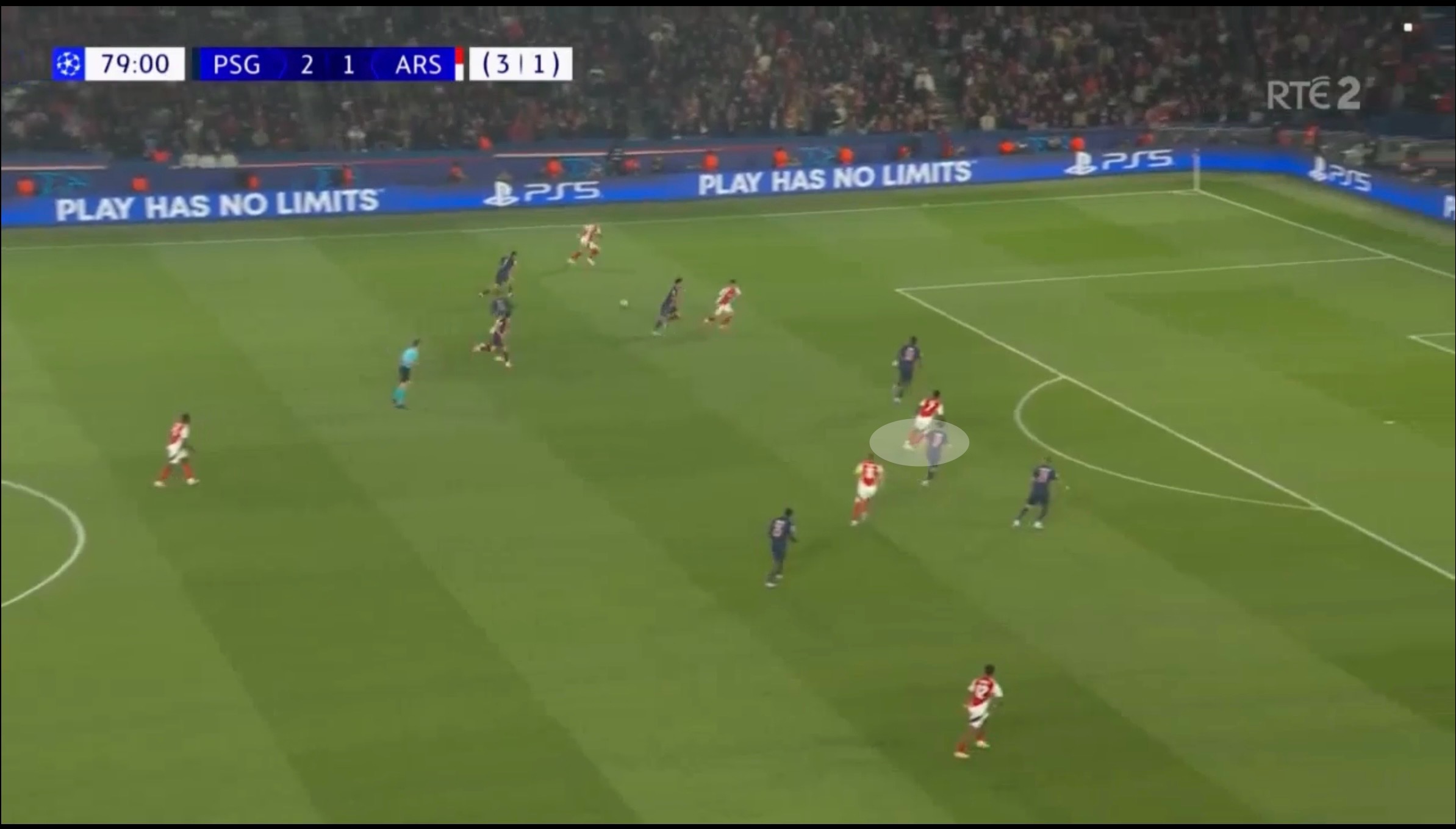
Secondly, what allowed Saka to operate more centrally was that Merino sometimes dropped to provide a body in the middle to replace Ødegaard and overload their build-up.
So, the space left by Merino was taken by Saka.
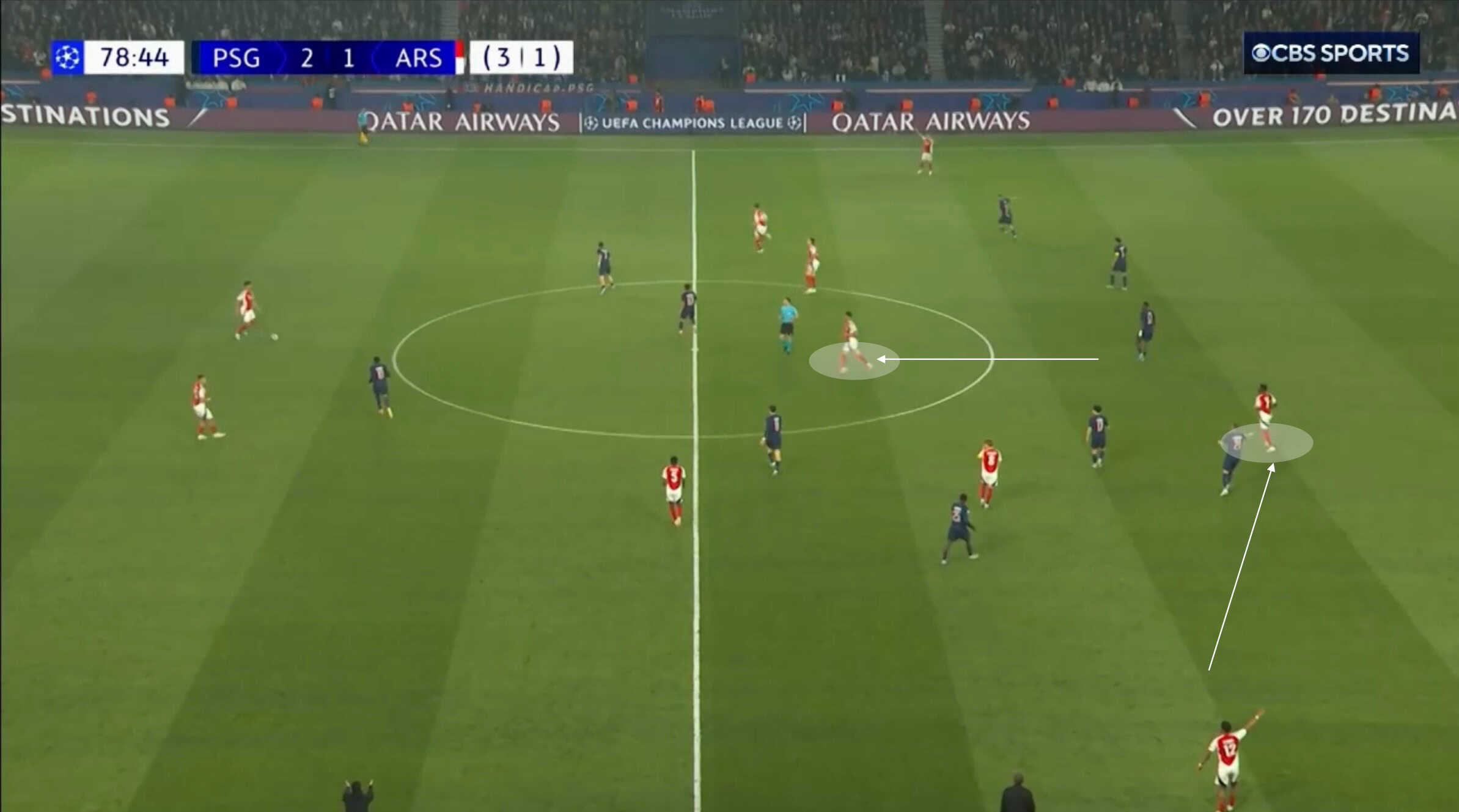
In addition to these changes, Arsenal also tried to press PSG’s build-up higher, forcing them to play long in order to win the ball back as quickly as possible.
In the last 18 minutes of the game, Arsenal gained some momentum but only managed to score one goal.
Conclusion
Arteta may have said that his team was better.
However, the tactical analysis gives us another perspective: Enrique, on the other hand, was able to provide answers and had a good out-of-possession plan to create a counterattack that could hurt Arsenal.
Enrique seems to know his team’s ability very well.
His squad has many fast, technical, energetic attackers who can hurt Arsenal’s defence.
He also has clever midfielders who can play smartly in both attack and defence.
This combination allowed them to successfully beat Arsenal in the Champions League semi-final. They also had a solid defensive performance that focused on winning the duel against Arsenal’s attack.
Yes, Arteta is a smart manager with an answer for what happens on the pitch.
But his approach, which relies on individual players such as Saka or sometimes Ødegaard, has made Arsenal too predictable.
PSG are in the final because they deserve it.
Meanwhile, Arteta and Arsenal will have to think hard over the summer about the stars they need to bring in to complete their squad because this tactically gifted Arsenal is missing one piece.
