


After four consecutive years of finishing outside of the EFL League One Playoffs, fans of former Premier League side Charlton Athletic most likely braced themselves for another season of mediocrity.
Their 17th-place position in the 2023/2024 season was their lowest since the 1980s, and things certainly did not look up for the London Club.
The manager tasked with turning around these dismal affairs was controversial Welsh manager Nathan Jones.
Jones, the Addicks’ fourth manager since relegation in 2022, was brought in towards the end of last season and had his first real chance to put his stamp on the squad this summer.
Jones is a two-time managerial promotion winner with Luton Town, yet has struggled elsewhere with Stoke City and Southampton.
As a result, many within the EFL questioned his ability to adapt to differing club circumstances.
After a slow-ish start to the season, Jones’ men have gone beyond all expectations this season and now sit in fourth place ahead of a season-defining fixture away at second-placed Wrexham.
In their last 21 games since the turning point, Charlton have collected 46 points, the most of any side in the division.
This figure is just seven short of the 53 points they collected in the whole of last season, highlighting the rapid improvement.
So, what has changed under Nathan Jones that has so dramatically changed the fortunes of his side?
This tactical analysis will take a look at the tactical adaptations, as well as analyse any changes in mentality that have been imposed on this now hugely promising young squad.
Charlton Athletic Formation & Shape 2024/2025
Charlton started the season unsure of their preferred formation.
This inconsistency cost them.
Injuries and a lack of personnel played a part, but the club shifted between formations, primarily adopting a 3-5-2 setup.
Around the halfway point of the season, the formation became significantly more consistent, and they have since utilised a 4-2-3-1 in nearly all of their fixtures.

The 4-2-3-1 formation is now preferred, allowing Jones to get all his best players on the pitch, particularly in wide attacking areas.
The shape also allows them to gain more width in attack, with Campbell and Small playing in front of overlapping full-backs while also maintaining a solid defensive base with a central midfield trio that all contribute in both defence and attack.
Charlton Athletic Style Of Play
Nathan Jones’ style of play is arguably not glamorous but prioritises being effective and challenging to play against.
His sides in possession play focuses on two key principles:
- Do not take risks on the ball in the defensive third
- Progress the ball into dangerous areas in the attacking third quickly and directly
Charlton Athletic Attacking Style
Charlton do not subscribe to the modern notion of control coming solely through possession, but instead feel comfortable having a smaller share of the ball.
In comparison to the rest of the league, they sit 13th for average possession, with just 49%.
Instead, Jones wants his team to be impactful on the ball and dangerous when they have the opportunity to be so.
Charlton sit fifth for the % of passes played forwards, which is rare for a top side.
Above them for this statistic are just Shrewsbury Town, Rotherham United, Cambridge United and Northampton Town, who all sit near the bottom of the division.
This highlights the desire to get the ball forward quickly and cause a constant threat in possession.
This approach usually suggests hopeless long balls, but this is far from the case with Jones.
Charlton are very structured in their directness.
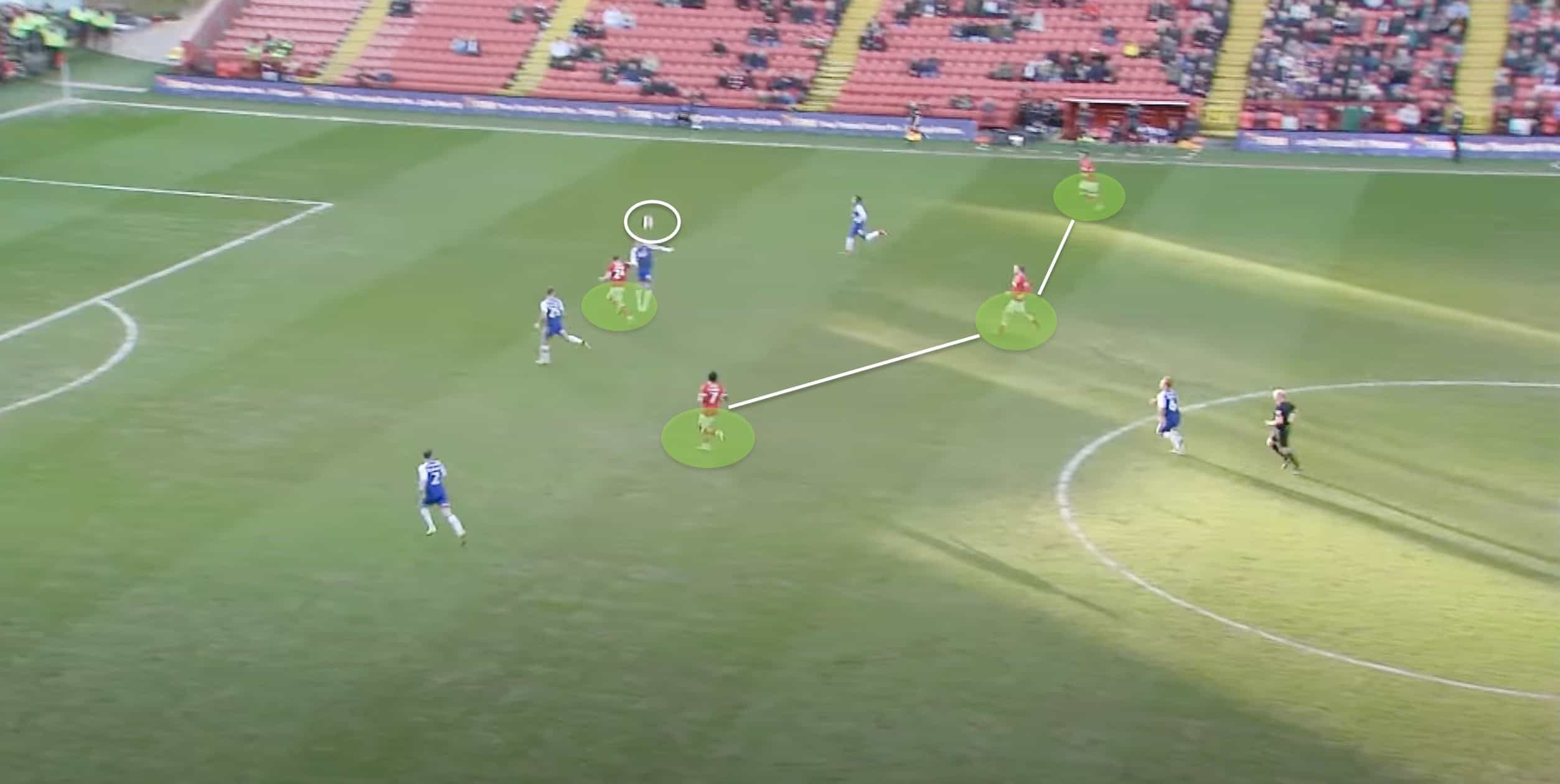
If they look to go long to Matt Godden, they ensure they have at least three runners to collect any second balls.
These are usually Tyreece Campbell, Thierry Small, and Luke Berry; however, they also have flexibility in who can push on and support the attack.
They also look to utilise their width in attack, which is something Jones has adapted since his early days at Luton Town, where he preferred a more centralised system.
This emphasises one massive growth in his managerial development: an ability to adapt to his profiles.
This style of play compliments his squad to a tee, which is something he potentially struggled with at Stoke and Southampton.
Charlton average over fourteen crosses per game, and seek to use the individual attacking quality of Small and Campbell to create opportunities.
Matt Godden Radar Map
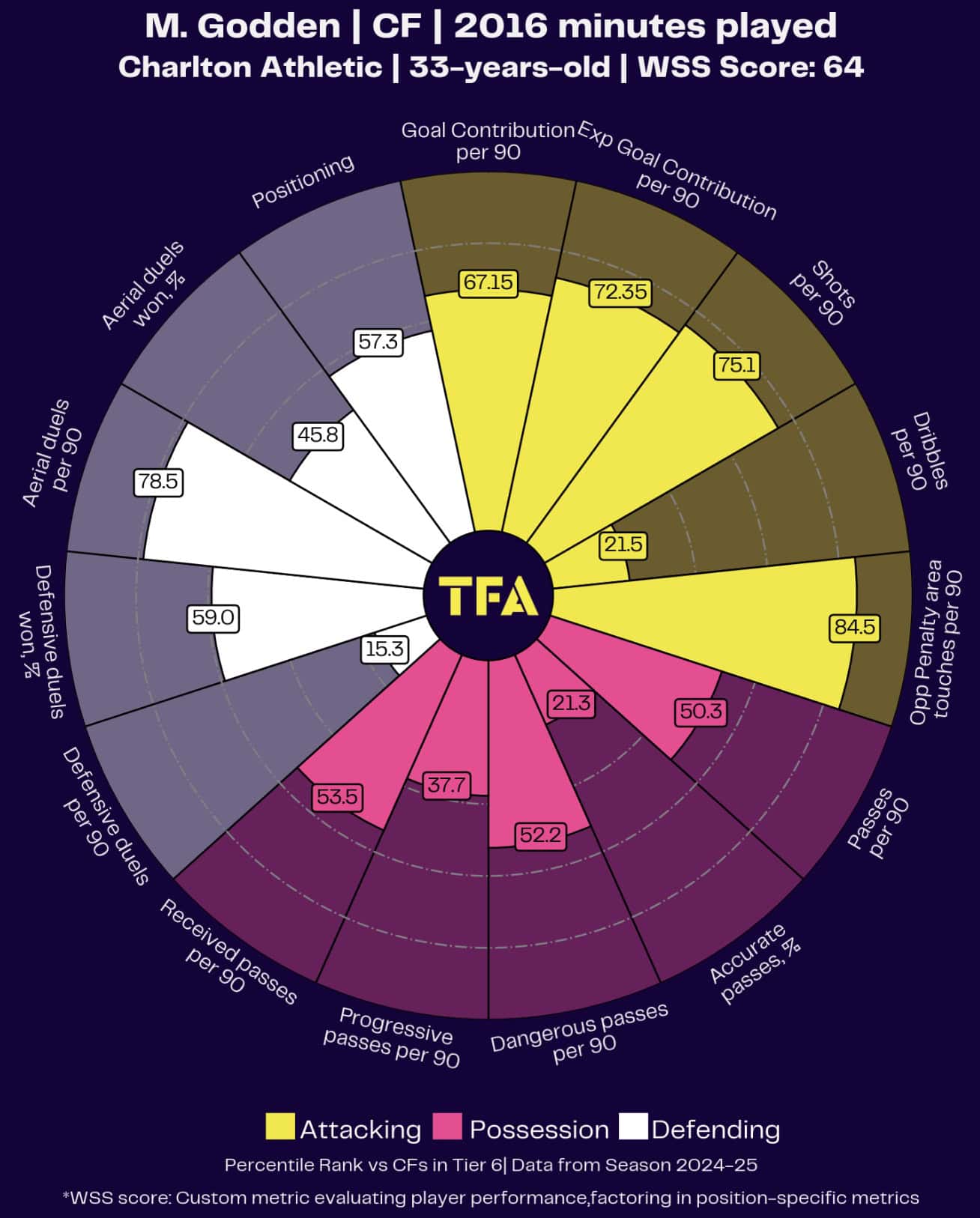
Despite not being a traditional target man by any means, Godden competes for a lot of aerial duels.
This is a combination of knockdowns from clearances and winning headers in the attacking areas.
Charlton also allow the full-backs to push high and wide, creating overlaps to outnumber and force the opposition defenders to commit.
This opens up avenues to the goal, and Jones gives his attackers the freedom to decide whether to cross or cut in and shoot, which has allowed the wide attackers to contribute with decent goal outputs.
The change to a 4-2-3-1 system has been a significant contributor to their attacking improvement, as it has allowed them to play the wingers with overlapping full-backs.
Previously, if they wanted to get the same personnel on the pitch, the wide attackers would have to play as central forwards in the 3-5-2 formation, which limited their ability to carry the ball and significantly hindered their positive traits.
Since this change, both wingers rank highly in the league for progressive carries and crosses into the box.
Charlton Athletic Defensive Approach
Off the ball, Charlton are highly aggressive in their approach and look to win the ball back quickly.
This mindset has been a key success factor and the backbone of Jones’ coaching style.
So far, they rank second for clean sheets and fourth for goals conceded.
A good indicator of a team’s intensity is PPDA, passes per defensive action.
The lower this is, the more intensely a team is pressing, and the less time they are giving the opposition on the ball.
In League One, only Birmingham City rank better.
Man To Man Press
In the press, Jones’ men look to go man-to-man and limit the passing options for the opposition side.
They are visibly willing to push as far forward as possible to block the passing options and even commit their full-backs high and wide if the opposition looks to drop deep to collect.
This approach requires a very hardworking side and also demands that they be well-drilled in their approach.
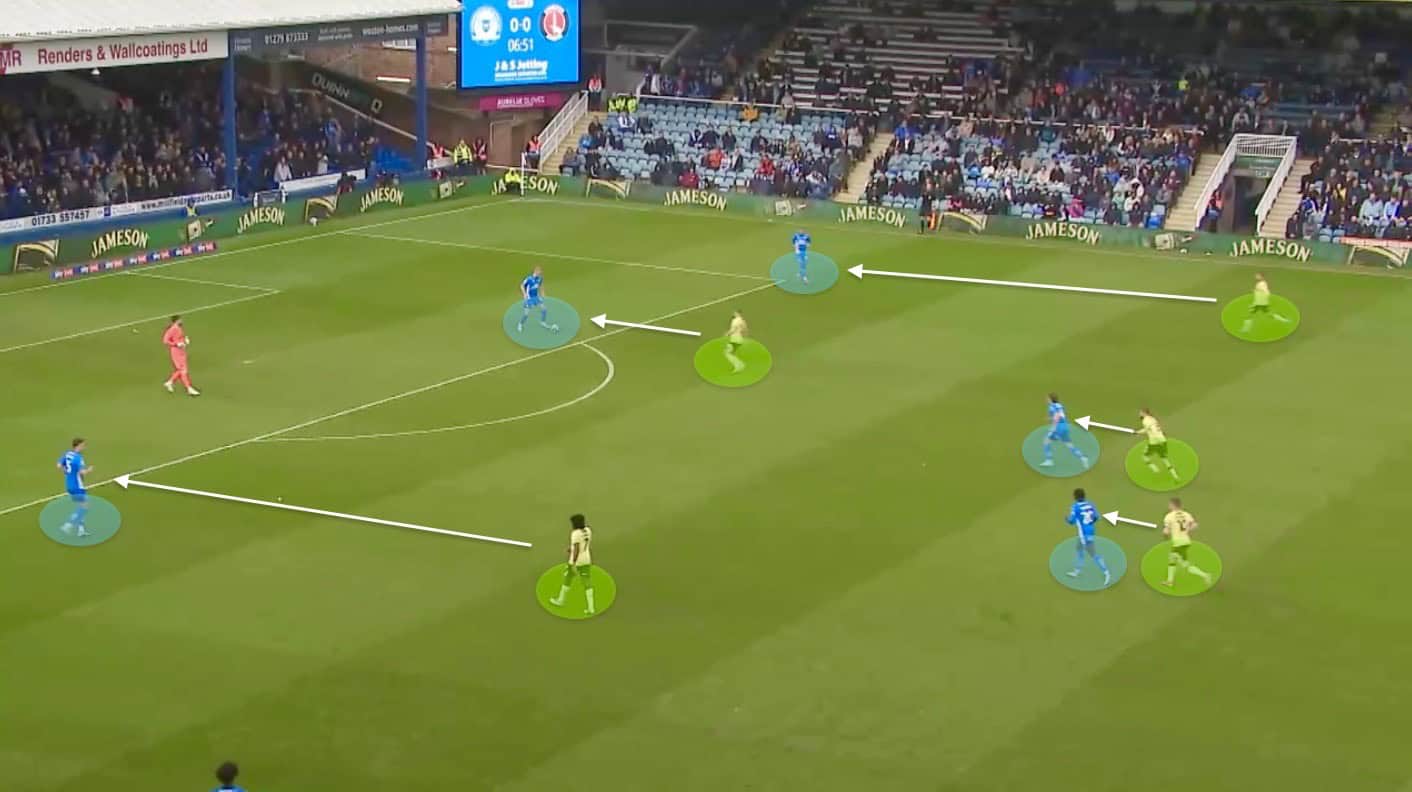
In essence, it’s a high-risk, high-reward situation.
If one player does their job inadequately, it can be easy to play through and can quickly turn into an outnumbered counterattack.
Charlton’s staff have clearly been coaching this very effectively, as the side rank third for possession won in the final third and second in the league for interceptions.
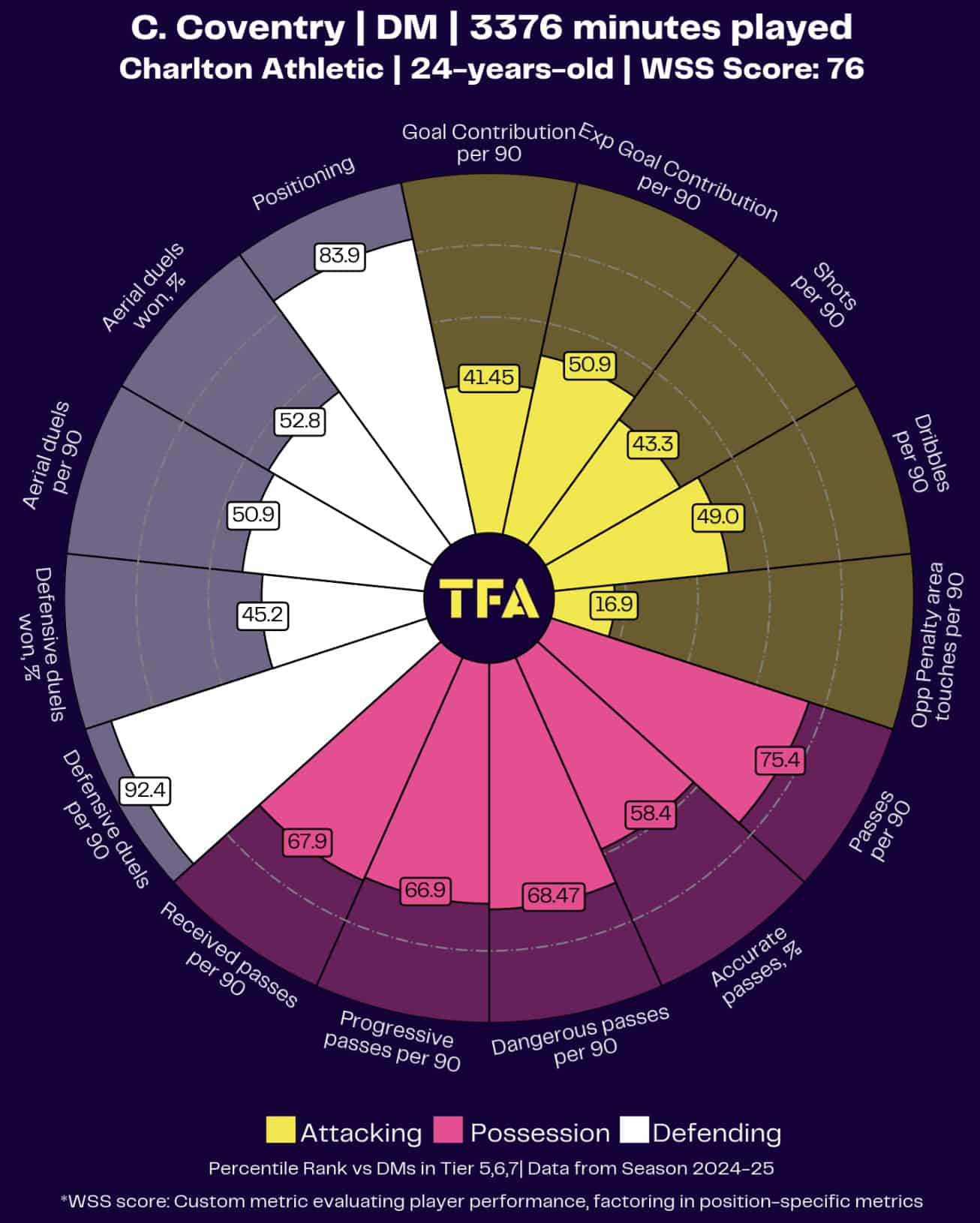
Interestingly, despite being statistically very high up the pitch, the main winners of the ball are sitting midfielder Conor Coventry and centre-back Lloyd Jones.
This demonstrates how effectively Charlton defends as a team, as once the attacking trio is bypassed, Coventry and Jones are fully concentrated and willing to continue the press.
It also highlights the commitment to aggression and the ‘do or die’ approach that Jones has instilled in his team when it comes to regaining possession.
Difficulty To Play Against
Another huge indication of their off-the-ball aggression lies in the foul statistics, in which Charlton rank second in the League.
A huge part of Jones’ ethos is being difficult to play against, and part of this means being willing to commit fouls when beaten to preserve the result and prevent any opportunity attack.
Conor Coventry, for example, ranks first for tackles completed in the division, which brings huge positives to the side.
However, he has also picked up ten yellow cards along the way as a side effect of his proactive approach out of possession.
Conor Coventry Radar Chart
A further aspect of their approach that is difficult to play against is their simplistic commitment to fundamentals at the back.
The Charlton defenders do not take risks in possession, and as a result, they are the best team at avoiding errors leading to goals.
If you want to score against this team, you have to go out and force the chances yourself.
Charlton Athletic Set-Pieces
Another element Charlton has developed is a great set-piece ability.
This season, Charlton have conceded nine and scored 20 goals off set pieces, a +11 net positive goal difference.
Additionally, only Rotherham have created more xG from set pieces, and 31% of their team goals come via this method.
Their threat comes from multiple avenues, as they have good crossers of the ball in Luke Berry and Alex Gilbert, and they also have a long-throw specialist in youngster Josh Edwards.

Jones and Gillesphey are dominant in the air, and the centre-back pair have ten goal contributions between them this season.
In terms of their approach and set-piece tactics, Charlton do not overcomplicate it.
They focus on getting their most aerially dominant players into one zone of the penalty box and getting a high-quality delivery into this zone.
The dominant players then run towards the ball’s destination, while less dominant players with good positional awareness, such as Matt Godden, make runs behind them and anticipate knockdowns.
This provides a threat from the initial action as well as on the second balls.

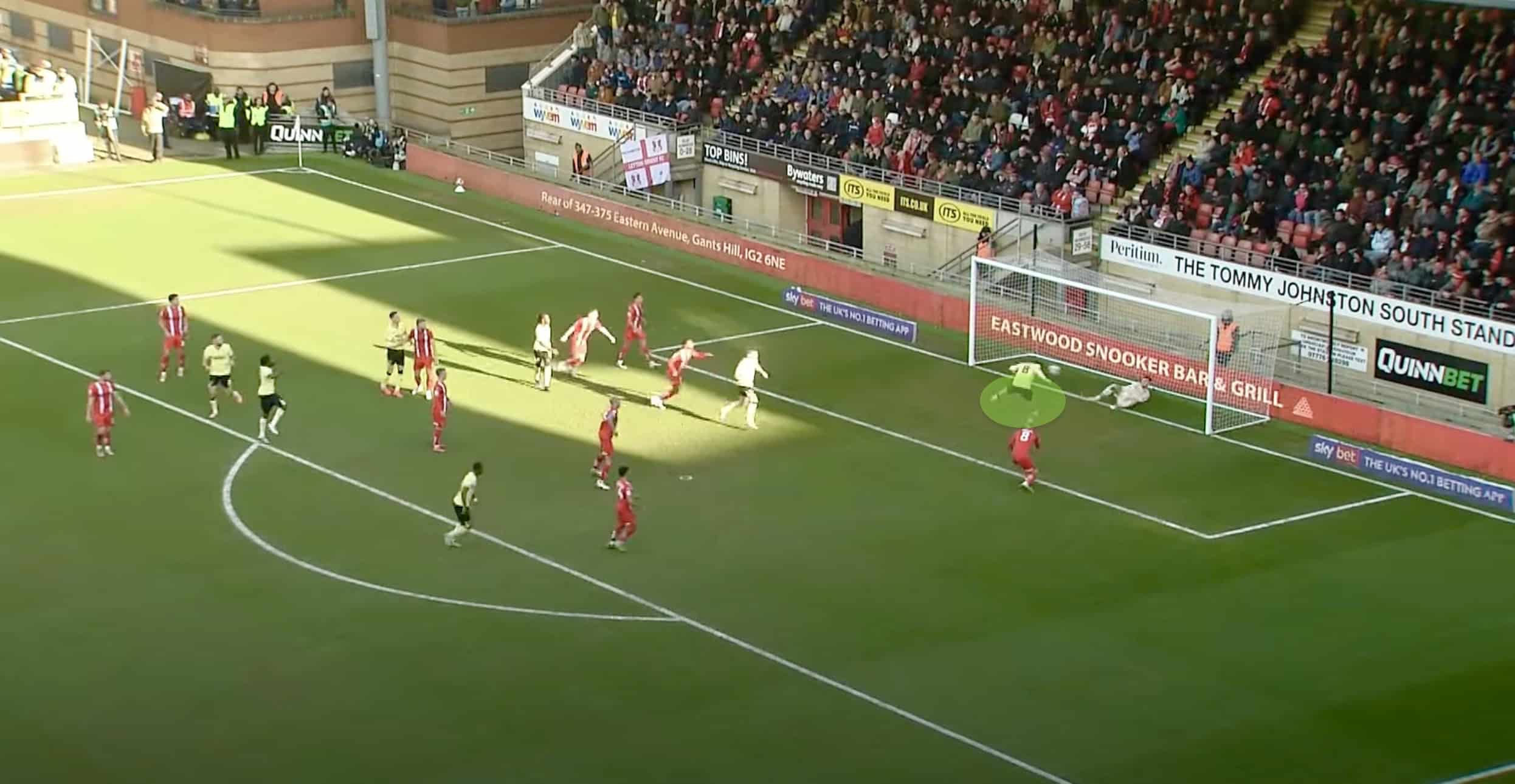
For this to be successful as it has been, the player’s aggression and commitment to winning the duels has to be exceptional, and they deserve a lot of credit for their willingness to compete.
Charlton Athletic Late Goals
As of March, no team in England had scored more than Charlton’s ten stoppage-time goals.
They have scored sixteen in the final fifteen minutes of the game in League One alone, and this late success has ultimately kept them in the promotion race.
So, why is this?
Firstly, Jones has instilled a relentless winning mentality that the squad previously lacked.
This side never gives up, continuing until the very end.
The do-or-die mindset persists throughout the entire game, and they possess the belief and fitness levels to continue threatening until the final whistle.
Secondly, the substitutions this season have been consistently impactful.
The Addicks have the most goals from substitutes in the league, with 12, which stems from the manager’s great tactical understanding combined with their good squad depth in attack.
In their last fixture against Wycombe, they could bring off the bench Danny Hylton, Chuks Aneke, Karoy Anderson, Alex Gilbert and Tenant Watson.
These players are all very talented for the division and provide a real ability to switch it up when required.
However, Jones deserves the credit for using them effectively and having the game management to know when to utilise each player’s profile.
For example, Hylton and Aneke both possess a more distinct physical ability and are therefore well-suited as targets in games, whereas Charlton struggles to get up the pitch.
Conclusion
This season, Charlton have grown massively as a side under the nurture of Nathan Jones tactics.
They have become much more direct and progressive in their attack and more simplistic and difficult to beat in defence.
They press higher up the pitch and go after the opposition, and they have also become much more mentally strong and persistent.
They undoubtedly possess the typical Jones trait of never giving up, and the form books show that all these improvements are now clearly evident in their results.
Whilst the end-of-season fixtures are always tricky to decipher, I certainly would not bet against Charlton as a strong promotion possibility.
Going into the weekend’s fixture against Wrexham, it will be interesting to see how the league’s most dominant and direct sides match up against each other.

