
Newcastle United’s approach at St James’ Park on the opening weekend of the season was built on a simple premise: sit deep, absorb Liverpool’s possession and strike through the middle when the ball turned over. It worked twice inside 63 minutes and reopened a debate that has followed Liverpool since Fabinho’s departure: whether their midfield has the defensive-minded profile to control games rather than simply dominate the ball.
A Double Pivot Built for Control, Not Containment
Liverpool used Ryan Gravenberch and Dominik Szoboszlai in a double pivot, with Florian Wirtz operating as the 10 behind Alexander Isak. Gravenberch was theoretically the six, but he lost possession in advanced positions for both Newcastle goals, leaving space behind him for the hosts to exploit.
The shape depends on positional discipline and collective coverage when possession is lost. Against a Newcastle side that played in a low block for a greater percentage of its game than any other team across the opening round of Premier League fixtures, that coordination had to be close to flawless. It was not.
The Transition Numbers Behind Newcastle’s Directness
Anthony Elanga’s opener came nine seconds after Amar Dedic intercepted the ball in Newcastle’s own box. Joe Willock’s second arrived 12 seconds after Malick Thiaw passed to Yoane Wissa on the edge of the Newcastle area. Both goals came from direct moves through the centre of the pitch.
Liverpool controlled much of the match, recording almost 61% possession, 27 shots to Newcastle’s 13 and 16 shots inside the opposition box to six. Newcastle, however, generated more expected goals from open play, 1.46 to 0.96. The contrast between possession and the quality of danger created explains why the midfield discussion has returned so quickly.
Iraola’s post-match assessment was that the issue was collective rather than solely a question of personnel. He accepted that Gravenberch’s advanced position could have produced a positive attacking moment, but said the team had to adapt to the possibility of transitions. He also pointed to the need for greater competitiveness for the first ball and more aggression against the ball carrier in the build-up to the second goal.
The Case for a More Defensive Profile
Daniel Sturridge argued after the match that Liverpool need a defensive midfielder and said the club have been discussing that need for three years. He described Gravenberch, Szoboszlai and Wirtz as naturally more attacking players, while pointing to Mamadou Sangaré’s move from Lens to Brentford for a fee of around £40m as an example of the type of profile Liverpool do not currently have.
The recruitment history helps explain the frustration. Liverpool have tried and failed to sign Moisés Caicedo and Martín Zubimendi in recent years, while Wataru Endo is the only specialist six they have signed since Fabinho left. Endo is a 33-year-old squad player who has not established himself as a regular starter during his three years at the club.
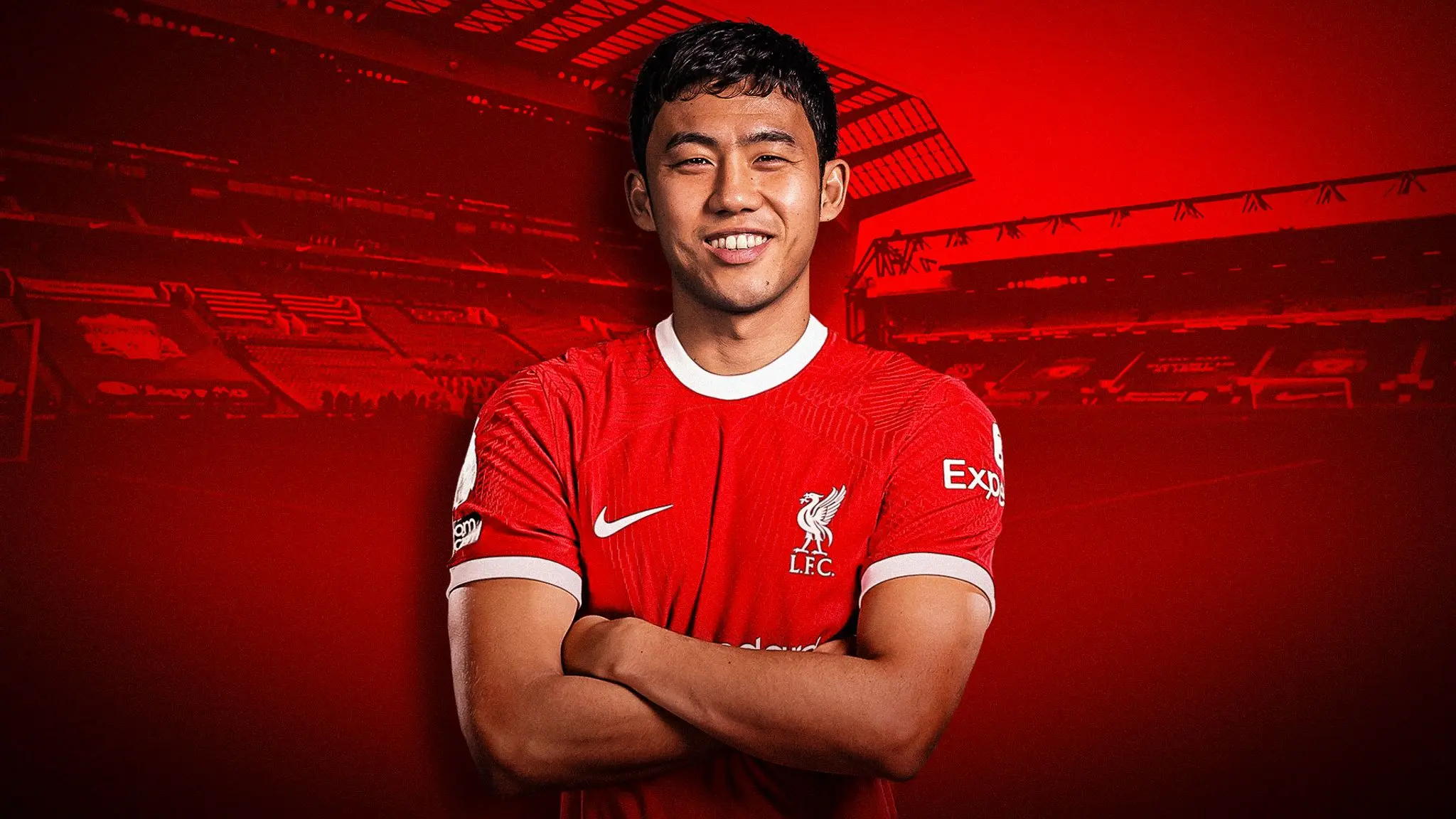
Reports indicate that Liverpool do not intend to strengthen the specialist-six position during this transfer window. That makes the question less about an immediate signing and more about whether the current group can provide the balance Iraola wants.
What the Numbers Say About Gravenberch’s Six
The curious part of the debate is that Gravenberch has already performed the role successfully. In Liverpool’s 2024-25 title-winning season, he operated as a deep-lying midfielder alongside Alexis Mac Allister, won the Premier League Young Player of the Year award and made 60 interceptions. That was at least 11 more than any other midfielder in the division, while his 193 possession wins were bettered by only seven midfielders.
He was also productive in possession. Only Bernardo Silva, with 130, made more long progressive carries among midfielders than Gravenberch’s 118 that season. Last season, Gravenberch’s interception total fell to 48, though that was still the fourth-highest among midfielders, and his heat maps showed little notable change in where he took his touches. That suggests the decline cannot be explained simply by a positional shift.
The Newcastle match nevertheless provided a clear example of the problem. Gravenberch lost the ball in advanced areas for both goals, and the space left behind Liverpool’s midfield was immediately exposed. Mac Allister replaced Wirtz after the hour and played more defensively, but the wider issue remained the team’s shape when possession changed hands.
The Case Against a Simple Fix
Jamie Carragher argued on Sky Sports that a midfield containing Wirtz, Szoboszlai and Gravenberch has too many attacking instincts. The first Newcastle goal supports that reading: Gravenberch had carried the ball into the Newcastle box while Szoboszlai was already ahead of the ball when the move broke down.
Yet the wider data complicates the claim that Liverpool are consistently unable to defend transitions. Six Premier League teams conceded more fast-break goals than Liverpool’s five last season. Six teams also allowed more fast-break shots than Liverpool’s 34, including Manchester City with 46 and Iraola’s Bournemouth with 36.
The 2024-25 title-winning season produced the most fast breaks on record in the Premier League, at an average of 1.79 per game, but Liverpool conceded only twice from them with essentially the same midfield. Liverpool also conceded four fast-break goals in the 2019-20 title-winning season with Fabinho in midfield, only one fewer than last season.
Wirtz’s defensive output also compares reasonably with Szoboszlai’s. In the 2024-25 title-winning campaign, Szoboszlai won possession in the opposition final third 16 times, or 0.58 per 90 minutes. Last season, Wirtz did so 21 times, or 0.79 per 90. Wirtz applied high pressure 58.3 times per 90, compared with Szoboszlai’s 61.0 the previous season. Those figures do not support the idea that the number 10 alone is responsible for Liverpool’s openness.
Iraola’s Structural Puzzle
A Yahoo Sports report similarly noted that recent reports suggest Liverpool do not view the specialist-six role as a position that needs strengthening. That position is easier to understand when set against Liverpool’s fast-break record last season, but it leaves Iraola with a structural problem to solve on the training ground.
Iraola’s diagnosis is coherent given Gravenberch’s success in the same role two seasons earlier. The Newcastle draw also showed why the answer is unlikely to be as simple as assigning responsibility to one player. The first goal began with both midfielders high up the pitch, while the second involved Liverpool failing to stop Wissa’s run through the centre.
Liverpool are only one game into the season, so firm conclusions would be premature. But the directness of Newcastle’s two goals and the familiar debate around midfield balance make clear that Liverpool need a more reliable response when their attacking shape is broken. A specialist defensive midfielder would not necessarily solve every problem, but neither would it remove the need for better collective rest-defence and transition control.
