
In recent years, Atalanta BC has emerged as a force to be reckoned with in Serie A, steadily climbing the ranks to establish themselves among the top sides in Italian football.
Their impressive journey this season has seen them reach the final of the Coppa Italia, albeit falling short against perennial powerhouse Juventus in a closely contested match. However, their ambitions don’t end there, as they also find themselves on the cusp of glory in the UEFA Europa League, set to face Bayer Leverkusen in the final. On their way to the final, they knocked out top European clubs such as Sporting CP, Liverpool FC and Olympique Marseille. Moreover, their strong performances in Serie A have positioned them favourably in the league standings, currently occupying the fifth spot, a position that could secure them a coveted place in next season’s UEFA Champions League.
In this recruitment analysis, we delve into the data and statistics that have propelled Atalanta to their current standing. Furthermore, in this analysis, we examine the key strategies driving their success on the pitch.
Recruitment Philosophy
Atalanta BC’s recruitment policy is built on a strategic approach that aims to enhance the squad’s value while maintaining financial profitability. The club’s transfer strategy revolves around several fundamental principles:
Firstly, Atalanta prioritises the development and acquisition of top talents, with a preference for players from their own youth academy. These promising youngsters, mostly hailing from Italy or having undergone training in Italian youth academies, are valued for their potential and high market worth. However, given their desirability, they are typically not retained for more than a few years before being sold for substantial profits.
Atalanta’s success in developing young talents and selling them for profit can be attributed to several key factors. One of the main reasons is their excellent youth system, which is widely regarded as one of the best in Italy and even the world. With a strong scouting setup and a clear understanding of the style of football they want to play, Atalanta’s sports director and scouts are adept at identifying players who fit their system.
Atalanta stands out from other Serie A clubs by utilizing an Under-23 team in the lower divisions of Italian football. This allows young players to gain valuable experience playing senior football at a competitive level, accelerating their development and better preparing them for the challenges of first-team football at Atalanta.
Secondly, the club engages in shrewd transfers of relatively unknown players at favourable terms. These “no-name” acquisitions often come from lesser-known leagues or clubs, offering Atalanta a cost-effective means of bolstering their squad depth and talent pool.
Additionally, Atalanta seeks out late bloomers who have yet to reach their full potential but can make significant contributions to the team. These players may have flown under the radar in their earlier careers but are identified by the club as possessing the qualities needed to thrive in their system.
Lastly, the club executes smart transfers aimed at ensuring the quality and stability of the squad. These acquisitions may come from outside Italy or Serie A, offering Atalanta a diverse range of talents to choose from. These players are carefully selected to complement the team’s style of play and contribute to its long-term success.
Recruitment Success
Atalanta BC’s recruitment success is not only evident on the pitch but also in their astute player trading off the field. Despite being a club that doesn’t boast the highest financial resources, Atalanta has managed to build a squad that rivals the top teams in Serie A in terms of market value. Currently, their squad ranks among the top five in the league regarding market value, showcasing their ability to compete at the highest level.
Looking at their transfer activity over the last five years, Atalanta has consistently maintained a healthy balance. They have managed to achieve positive transfer balances in four out of the five seasons, with the total transfer balance amounting to an impressive €155.01 million. This financial stability sets them apart as the most financially prudent club in Serie A during this period.

In terms of transfer effectiveness, Atalanta’s investment has yielded impressive results on the pitch. They have achieved 63 points this season at a relatively low cost of €3.33 million per point, which is the second-lowest among the top five clubs in Serie A. Additionally, their cost per victory stands at €11.03 million, further demonstrating their efficiency in turning their investments into tangible success on the field.
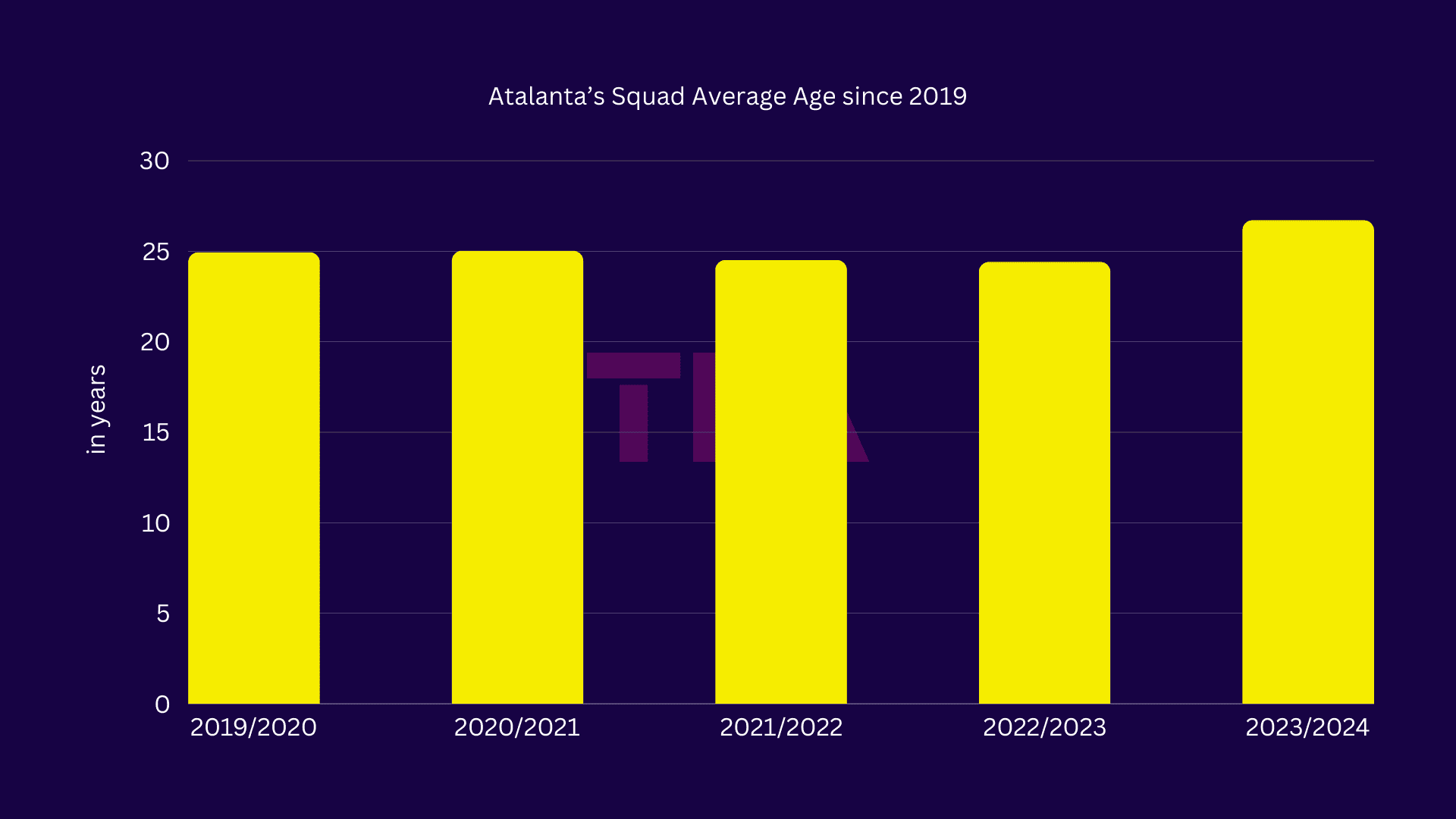
One of the key factors contributing to Atalanta’s success in the transfer market is their shrewd approach to player acquisitions. The average age of their current squad is 26.7 years, with players typically being signed at an average age of 24.3 years. Despite not splurging on big-name signings, Atalanta has been able to assemble a competitive squad with a total market value of €349.60 million. This represents a significant % value added of 40% (€139.94 million) to their purchase value of €209.66 million, highlighting their ability to identify and develop talented players.
In the past five seasons, Atalanta has achieved remarkable success in player trading, capitalising on the talents nurtured within their ranks. The club has orchestrated lucrative deals, seeing their young players make high-profile moves to prestigious clubs, both in Italy and abroad. Among these notable transfers are Rasmus Højlund and Cristian Romero, who fetched a combined fee of €124 million in moves to Manchester United and Tottenham Hotspur, respectively. Additionally, talents like Amad Diallo (transferred to Manchester United for €21.30 million) and Dejan Kulusevski (sold to Juventus for €37 million) have also graced Atalanta’s roster before moving on to bigger stages.
These significant player sales have contributed to Atalanta’s financial prosperity, with the club raking in a staggering €521 million in transfer revenue since the start of the 2019/20 season. This impressive figure not only ranks Atalanta as the eighth highest earner in European football but also positions them as the second most lucrative club in Italy in terms of player sales during this period. Remarkably, when compared to the club’s expenditure on player signings over the same timeframe (€370m), Atalanta boasts a substantial transfer balance of €155 million. This surplus represents the ninth-highest return on investment in European football and underscores Atalanta’s unparalleled success in player trading within Italian football.
Atalanta BC’s recruitment strategy has been a masterclass in efficiency and effectiveness, allowing them to punch above their financial weight and establish themselves as a force to be reckoned with in Italian football.
Previous Transfer Window
In the transfer market ahead of this season, Atalanta acquired 48 new players for a total expenditure of €78.10 million. Conversely, they offloaded 49 players, fetching a significant €152.59 million in return.
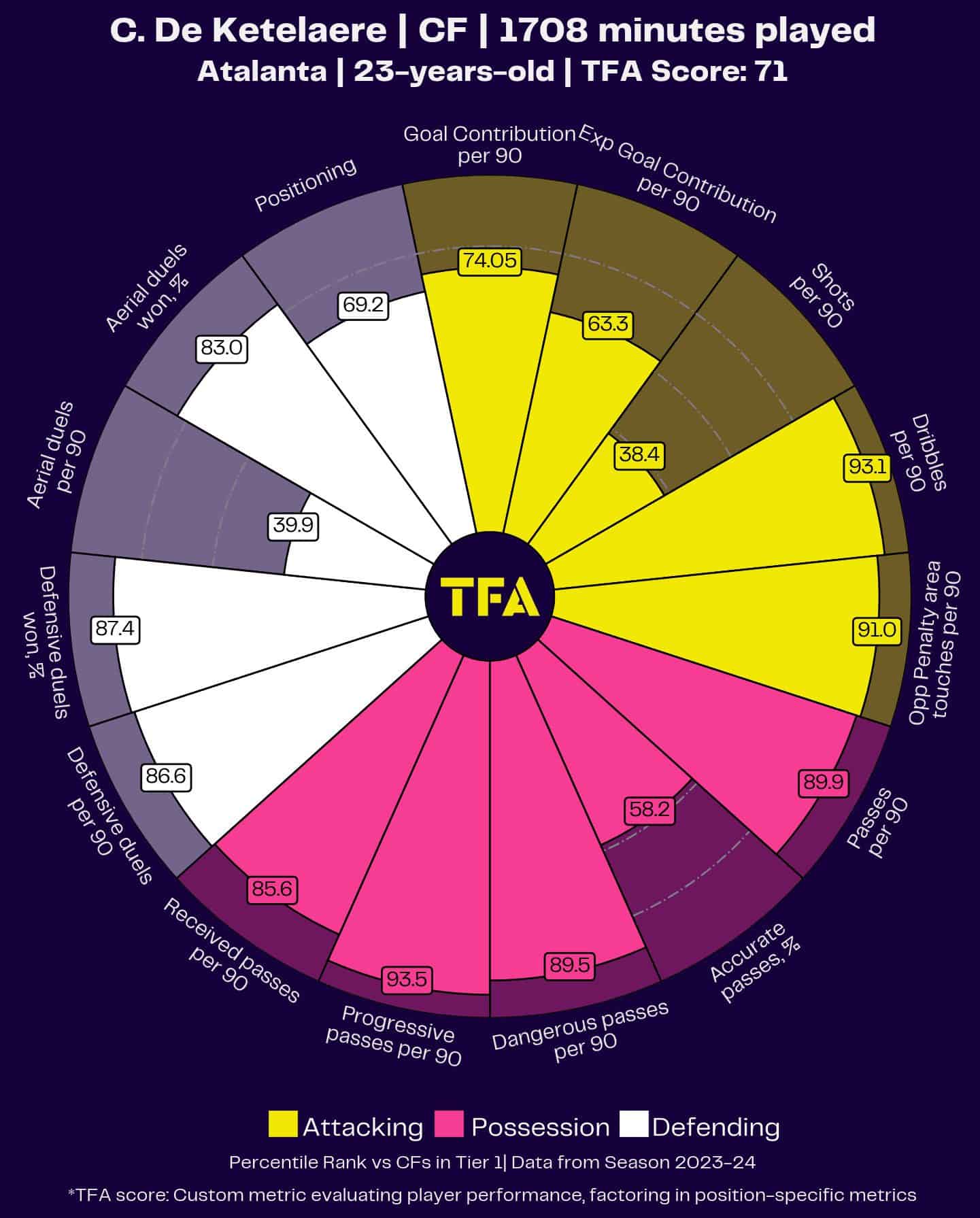
Atalanta is renowned for its extensive reliance on loan players, a trend not uncommon in the Italian Serie A. Currently, the club has 16 players out on loan with a combined market value of €46.33 million, while they have only loaned out two players from other clubs for the ongoing season. Despite this, the two loaned-in players, Charles De Ketelaere and Emil Holm, hold a substantial market value of €42 million alone.
In this season’s league games, Atalanta has utilised 28 players, with nearly 69% of them being foreigners and the remaining 31% holding Italian passports. While this might seem noteworthy, it aligns closely with the Serie A average, highlighting the prevalent reliance of Italian clubs on foreign talent.
Upcoming Transfer Window
As the 2023/2024 season draws to a close, Atalanta BC finds itself in a position to navigate the upcoming summer transfer window with strategic considerations.
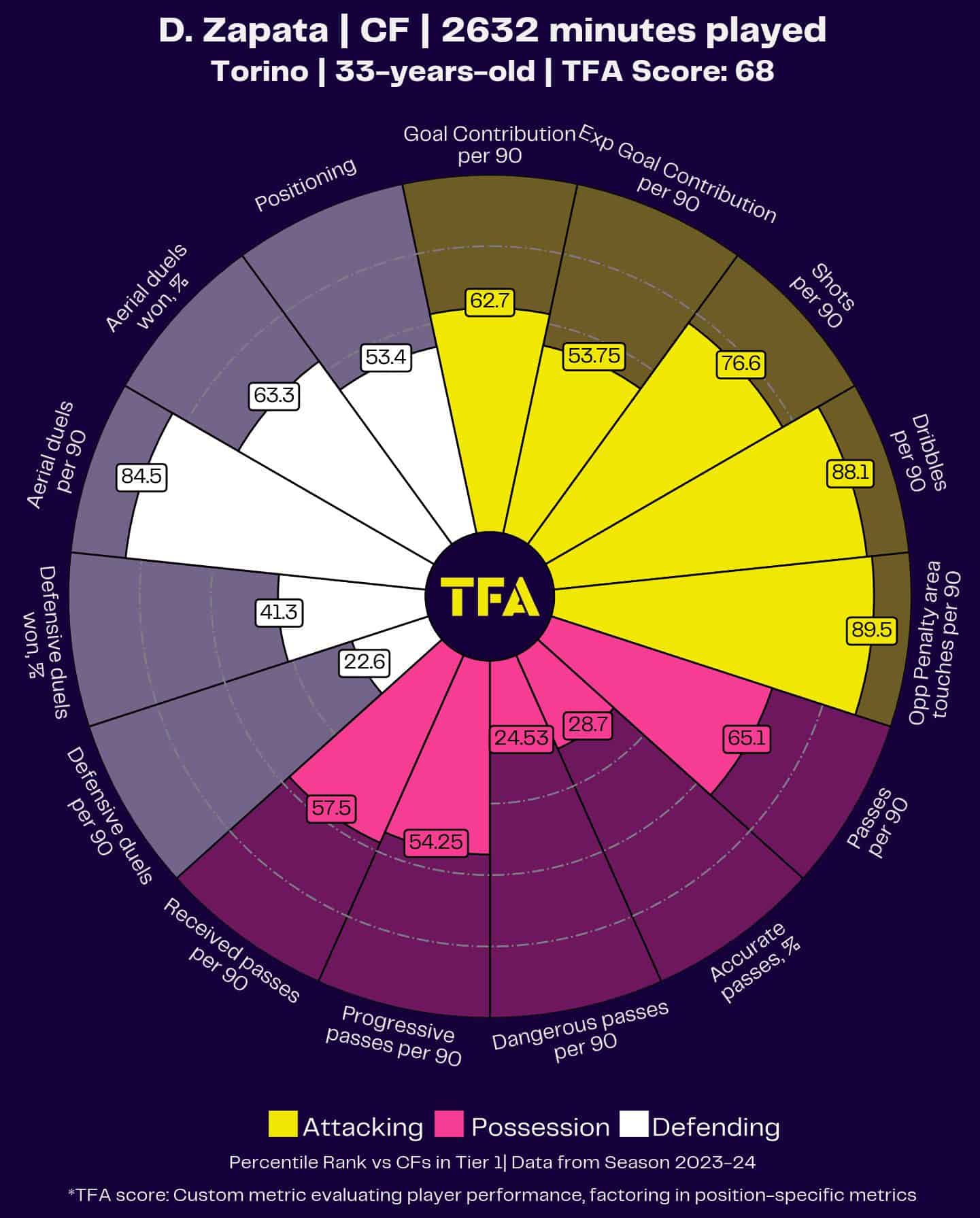
In terms of outgoings, Atalanta has already finalised a transfer deal for Duván Zapata, who will join Serie A rivals FC Torino for €5.60 million. The Colombian striker is currently on loan at Torino, indicating Atalanta’s proactive approach to reshaping their squad for the upcoming season.
Currently, contracts for six players in the squad, collectively valued at €55 million, are set to expire. Notable names among them include Marten De Roon, Hans Hateboer, and Francesco Rossi. While this represents a significant portion of the squad’s market value at 15.8%, it falls within a reasonable range compared to other clubs in the league.
Additionally, for three players—Charles De Ketelaere, Emil Holm, and José Luis Palomino—the club holds options to either exercise buy clauses or extend the contract for a further year, providing flexibility in squad management.
Director Profile
Giovanni Sartori is a seasoned figure in the world of football, renowned for his astute vision and meticulous approach to talent recruitment. Joining Atalanta BC in 2014 from Chievo Verona, he assumed the role of Technical Director, wielding considerable influence over the club’s strategic decisions and player acquisitions. Sartori’s tenure at Atalanta spanned nearly a decade, during which he played a pivotal role in shaping the squad into a formidable force in Serie A and beyond.
His approach to scouting and player evaluation is marked by a blend of traditional methods and modern technologies. Despite the advent of new tools and analytics, Sartori remains committed to the age-old practice of live observation, attending an impressive tally of 90 games annually.
Sartori’s negotiation skills and persuasive demeanour have been instrumental in securing key signings for Atalanta. His dedication to the club’s project and unwavering pursuit of top talent is exemplified in his tireless efforts, often engaging in daily communication with prospective players over an extended period. Whether through face-to-face interactions or virtual meetings, Sartori leaves no stone unturned in his quest to strengthen the squad.
Transitioning to his current role as Technical Director at Bologna FC, Sartori continues to uphold his principles of thorough assessment and strategic planning. His keen eye for talent and unwavering commitment to success make him a driving force behind Atalanta’s remarkable rise in Italian football.
Gian Piero Gasperini stands as another pivotal figure behind Atalanta BC’s meteoric rise in Italian football, infusing the club with his innovative tactical acumen and unwavering commitment to fostering a winning mentality. With a storied coaching career spanning various clubs, including Juventus, Internazionale Milan, Genoa CFC, Palermo, and Crotone, Gasperini’s tenure at Atalanta since 2016 has been characterised by transformative success and an indelible imprint on the team’s identity.
At the core of Gasperini’s coaching philosophy lies a profound emphasis on unity, resilience, and proactive gameplay. Drawing inspiration from the dynamics of a wolf pack, he instils a hierarchical structure within his team, where each player assumes a vital role in protecting and supporting one another. Gasperini’s leadership extends beyond the pitch, as he nurtures a cohesive team ethos that transcends individual talent.
His tactical ingenuity is evident in his advocacy for an aggressive, high-intensity playing style characterised by relentless pressing and dynamic attacking movements. Embracing the mantra of “defending makes you invincible, but attacking wins matches,” Gasperini cultivates a brand of football that prioritises proactive engagement and relentless pursuit of victory. Central to his approach is the belief in proactive defending, where players actively seek to regain possession and launch swift counter-attacks.
A staunch advocate for youth development and strategic recruitment, Gasperini has spearheaded Atalanta’s transformation into a hub for nurturing young talent and promoting expansive, quality football. By placing unwavering trust in emerging prospects and fostering a culture of continuous improvement, he has orchestrated Atalanta’s ascent to the summit of Italian football.
The club’s commitment to youth development is further highlighted by the hiring of Roberto Samaden, considered the top youth academy manager in Italian football, from Inter Milan. His expertise and experience add another layer of quality to Atalanta’s already impressive youth setup, demonstrating the club’s dedication to nurturing young talent.
The environment at Atalanta also plays a significant role in the development of young players. With a calm atmosphere and relatively low pressure compared to other top clubs, players have the opportunity to grow and evolve in a supportive environment conducive to their development.
Conclusion
Atalanta BC’s ability to identify and nurture talent, both from their own youth academy and from scouting networks abroad, has been instrumental in their sustained success. By focusing on hot talents, no-name transfers, late bloomers, and strategic acquisitions, Atalanta has cultivated a squad that not only competes at the highest level but also serves as a lucrative asset in the transfer market.
Furthermore, Atalanta’s commitment to youth development, evidenced by their investment in an Under-23 team, underscores their long-term vision and dedication to sustainable growth. This approach has not only facilitated the development of young players but has also contributed significantly to the club’s financial stability, as demonstrated by their impressive transfer balance and profitability in recent years.
As Atalanta continues to excel on the pitch and in the transfer market, it is evident that their recruitment strategy serves as a model for success in modern football. With a keen eye for talent, a supportive environment for player development, and shrewd decision-making in the transfer market, Atalanta BC has firmly established themselves as a force to be reckoned with in Italian and European football.
