
Max Dowman made his first start of the season count. The 16-year-old scored twice in Arsenal’s 4-2 Carabao Cup win over Ipswich Town at Portman Road, completing all 90 minutes as Mikel Arteta’s heavily rotated side reached the fourth round. It made him only the second 16-year-old in history to score twice for a Premier League club, following Wayne Rooney’s brace for Everton against Wrexham in 2002, and it raised an immediate question about how quickly a talent this obvious should be exposed to senior football – a question that runs through whether teenage players can already influence senior football at the highest level. This piece examines the tactical mechanics behind the brace, where Dowman’s profile fits inside Arteta’s structure, and what Arsenal’s own handling of him suggests about the next stage of his development.
Right-Half-Space Creation and the Opening Goal
Dowman is registered as a midfielder, but his natural terrain is the right half-space – the corridor between the opposition full-back and centre-back that Arteta’s system is built to exploit. Started wide, he drifts inside; the ball then arrives in pockets where a rigid back four struggles to assign coverage.
The opening goal against Ipswich was a clean demonstration of that movement. Dowman received on the right flank, combined with Eberechi Eze, then went past Cedric Kipre before finishing low into the bottom corner – seven minutes on the clock, and Portman Road silenced instantly. Kipre is an experienced Championship defender, not a makeshift stand-in, which makes the manner of the dismissal more instructive than the scoreline alone.
What stands out technically is the combination of a low centre of gravity with an explosive first five yards, allied to the ability to keep his head up while shifting the ball at speed. That is precisely the demand of Arteta’s right-sided attacking role: receive under pressure, carry through traffic, and still pick the correct final action. Dowman also had a hand in Arsenal’s fourth, contributing to the build-up before Mikel Merino curled home – evidence that his half-space presence was a recurring outlet rather than a single moment of magic.
Pressing Without the Ball
The goals will dominate the headlines, but the more revealing detail from Portman Road was what Dowman did without the ball. His pressing forced the error that led directly to Noni Madueke doubling Arsenal’s lead in the 16th minute – the kind of sequence that rarely makes a highlight reel but tells a manager everything about a player’s understanding of the system.
Arteta’s wide attackers are asked to counter-press as a first instinct, not a secondary duty, and a 16-year-old sustaining that intensity for a full 90 minutes is not a given. Arteta himself pointed to this specifically after the match, framing Dowman’s defensive application and his capacity to sustain those actions across a whole game as the trait that impressed him most, given the player’s age. That framing matters: raw dribbling ability is the easiest part of a teenager’s game to identify, but the willingness to repeat unglamorous defensive work is usually the last piece to develop.
Bukayo Saka’s own path from Hale End into Arsenal’s first team offers the clearest precedent for what that defensive maturity can look like once it is paired with end product. Saka, speaking to BBC Radio 5 Live while on international duty, described Dowman’s talent as insane and made clear that how far he goes from here is a question of application rather than ability – a verdict carrying extra weight given it comes from a player who made the identical Hale End-to-first-team journey himself.
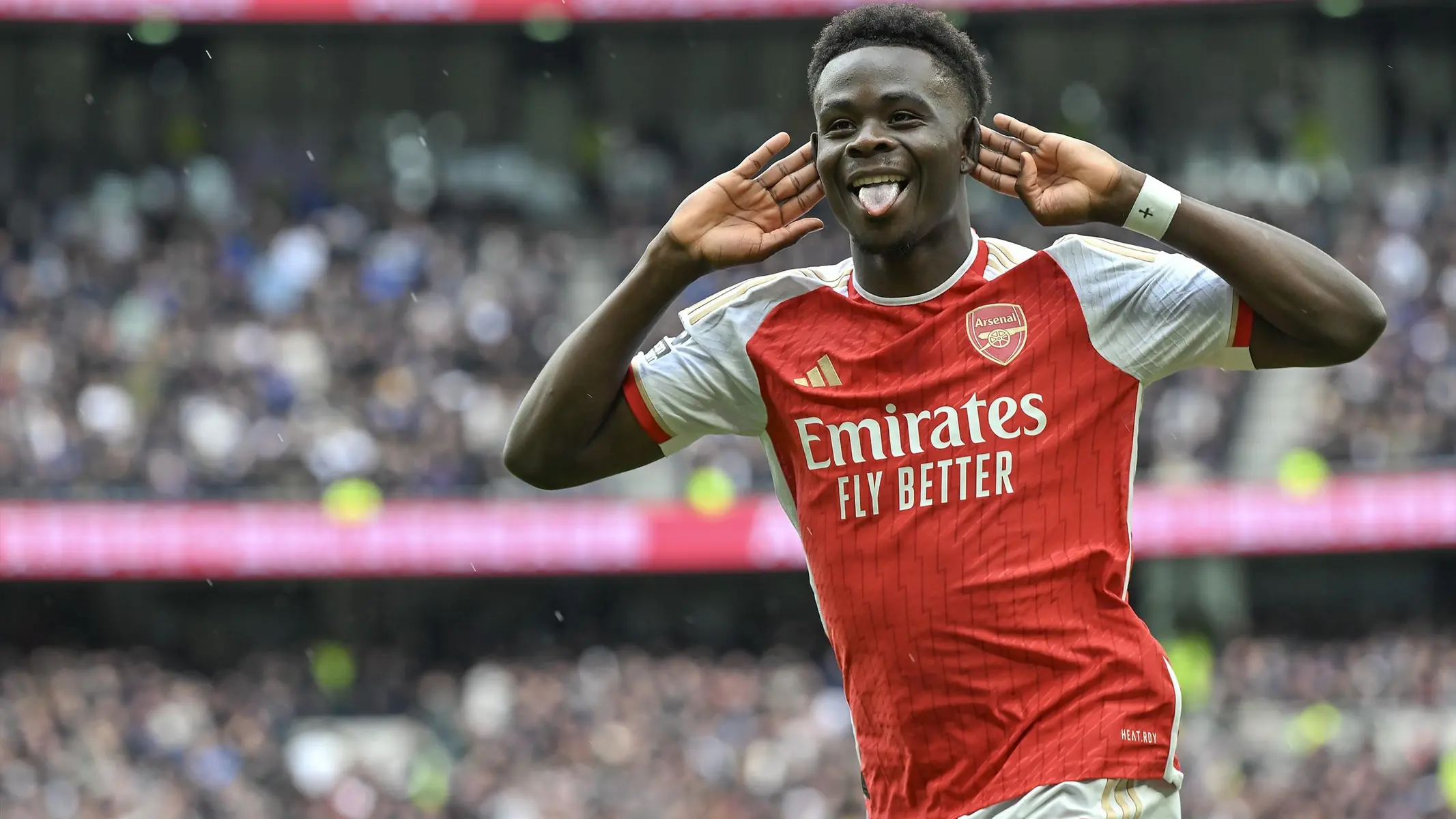
Two Goals, Ninety Minutes, and a Rotated Attack
Context matters here. Arteta made nine changes from the side that beat Sunderland the previous weekend, several enforced by fatigue management rather than tactical choice, with a handful of first-team regulars given the night off entirely. Viktor Gyokeres struggled to impose himself, Martin Zubimendi had uncharacteristically loose moments, and Gabriel was withdrawn at half-time – Arsenal were not at their strongest, even accounting for the level of opposition.
Dowman’s response was to become Arsenal’s most reliable creative outlet on the night. His second goal arrived two minutes after the restart, making it 3-0 and effectively settling the tie before Ipswich had any route back into it. Late arrivals into the box, comfort receiving in tight areas, and a two-footed finish are all elements the primary reporting attributes to his profile, and both goals against Ipswich showcased different aspects of that toolkit – the first a driven finish off a dribble, the second an instinctive strike from a more central position.
Taken together with his role in Madueke’s goal and his contribution to Merino’s, Dowman had a hand in every one of Arsenal’s four goals. That is a rare density of influence for any player in a single match, let alone one who had not started a competitive fixture all season before kick-off.
Systemic Fit and Arteta’s Integration Plan
The tactical case for Dowman is straightforward: his skill set maps onto the right-sided attacking-midfield role behind Saka almost exactly, giving Arteta a like-for-like stylistic deputy in a position where squad depth had previously relied on shifting personnel from elsewhere. The harder question is timing, and Arteta has been explicit about resisting the urge to accelerate simply because the talent is obvious.
Reports of interest from clubs seeking a loan move were dismissed by pundit Julien Laurens, who argued Dowman was already too good to be sent out – a view Arteta appears to share, having stated the club had not seriously entertained the possibility because the priority was keeping him inside the first-team environment through pre-season. Arteta drew on his own experience of leaving Barcelona for Paris Saint-Germain as a teenager to explain the risk: a loan only works if the environment and the coach’s belief in a young player align, and without that, it becomes a spell on the periphery of someone else’s squad rather than genuine development.
The stated plan is a six-monthly review of minutes, squad needs and Dowman’s own readiness – not a fixed pathway. Before Ipswich, he had been an unused substitute in four of Arsenal’s first seven matches this season, with only a nine-minute Premier League cameo against Brighton as senior game time. The step up from that to a full 90 minutes in a cup tie is a meaningful but controlled escalation, not a wholesale change of approach.
Managing the Ceiling
None of this removes the central risk. English football’s history with precocious teenage talent is littered with cases of burnout brought on by exposure that outpaced physical and psychological readiness, and Arsenal’s caution should be read against that backdrop rather than as reluctance to trust the player.
Arteta’s framework – minutes, competition, squad availability, and what Dowman himself needs, reassessed every six months – is a deliberately unhurried structure. Mikel Merino, who profited directly from Dowman’s build-up play for Arsenal’s fourth goal, has already suggested the teenager can become a genuine star if the learning curve continues at its current rate, and Jamie Redknapp praised the club’s handling of the situation specifically because it has avoided the trap of overexposure. Whether that restraint holds once cup form starts translating into pressure for more league minutes is the question Arsenal will have to keep answering through the season.
Verdict
Dowman’s trajectory through age records – second-youngest Premier League appearance, youngest Champions League appearance, youngest Premier League and Arsenal goalscorer, youngest Premier League title winner – is unusual enough on its own. The Ipswich brace adds something more specific: proof that the underlying tactical qualities, not just the age-record novelty, already function inside a senior structure against senior opposition.
The pressing that manufactured Madueke’s goal, the half-space carry that produced his own opener, and the ninety minutes of sustained output all point toward a player whose fit with Arteta’s system is not theoretical. The next test is not whether the talent is real – Portman Road settled that – but how Arsenal manage its exposure through the Carabao Cup and early Champions League fixtures that remain the most likely proving ground for now.
