
It is sometimes the case that the best players don’t always make the best managers.
However, Robbie Keane seems to be debunking that myth at present.
The former striker was well known for his goals in the Premier League, particularly at Tottenham Hotspur, and remains the Republic of Ireland’s record goalscorer.
The 43-year-old is currently in the dugout at Maccabi Tel Aviv, where his side sit top of the Ligat ha’Al Israeli Premier League.
The Irishman didn’t make an immediate transition into management following retirement in 2018.
Although Keane oversaw three matches as player-manager whilst at ATK in India, he has been more accustomed to an assistant managerial role.
This included stints with the Ireland national team and EFL Championship side Middlesbrough under former teammate Jonathan Woodgate, and, more recently, at Leeds United, where Sam Allardyce was drafted in to attempt to save the Yorkshire side from relegation from the Premier League last season.
In this tactical analysis and scout report, we will assess Keane’s start to his managerial career, analyze the tactics he has deployed, and examine whether there are any similarities with his previous mentors.
A near-perfect start
Although it is very early days into the new season in the Ligat ha’Al, Maccabi Tel Aviv are looking like strong title contenders.
From their 10 fixtures to date, they have won 9, drawn 1, and are thus undefeated.
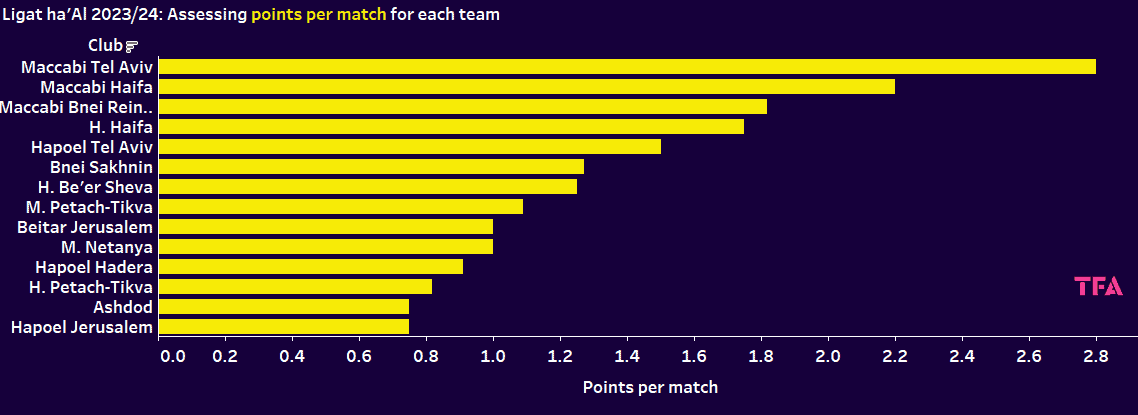
With teams having played different numbers of games so far, the bar chart shows that Keane’s side is leading the way in points per match.
They are currently averaging 2.8 points per match.
Their closest rivals in terms of points per match are the current Israeli Premier League holders, Maccabi Haifa, who are averaging 2.2 points per match.
Maccabi Tel Aviv finished last campaign averaging 2.03 points per match and ultimately finished third, one point adrift of Hapoel Be’er Sheva in second.
Fast forward to the present, however, and Be’er Sheva are lagging 13 points behind Maccabi Tel Aviv in a fight to stay out of the relegation round in Israel’s top flight.
Keane’s team is not only dominating the top flight in terms of points but also the goal charts, both in attack and defence.
At the time of writing, they have scored 25 goals, the most in the division and more than three times as many as three sides in the league.
Moreover, they have conceded only seven goals, the fewest in the division.
These figures show that Maccabi Tel Aviv is scoring 2.5 goals per game while conceding only 0.7.
Not only are they dominating domestically, but they are also dominating this season’s Europa Conference League.
The Israeli side topped Group B after sailing through the qualifying rounds.
Only four teams scored more than Maccabi Tel Aviv’s 14 goals in the group stages.
Although their defensive record isn’t quite as strong as that of other sides that have also qualified, they still topped their respective group with five wins from six matches.
Interestingly, though they seem to have overachieved in Europe this campaign, they are still one of the top scorers in the competition and scored 6.8 goals more than expected in the group stage.
Whilst this suggests a bit of luck, it can still point to a team whose domestic form has bred confidence into their overall performances.
Utilising the width of the pitch
Robbie Keane style of play favours the 4-3-3 formation, a system that Woodgate first deployed while at Middlesbrough and equally utilised by Allardyce at Leeds.
Whilst ‘Big Sam’ was known for a much more direct approach, Keane is instilling a possession-based game into his side, often playing out from the back, starting with the goalkeeper.
Maccabi Tel Aviv look always to be progressive with quick build-up play but can also be patient in waiting for the right opportunity.
Woodgate also favoured this attacking-incentive approach deployed by Keane, and, in further parallels with the former Real Madrid defender, Keane likes his side to utilise the width of the pitch.
The centre-backs will often look to carry the ball into the opposition half and spread it out wide to the full-backs or the wider options of the front three.
Felício Milson & Dan Biton Heat Map
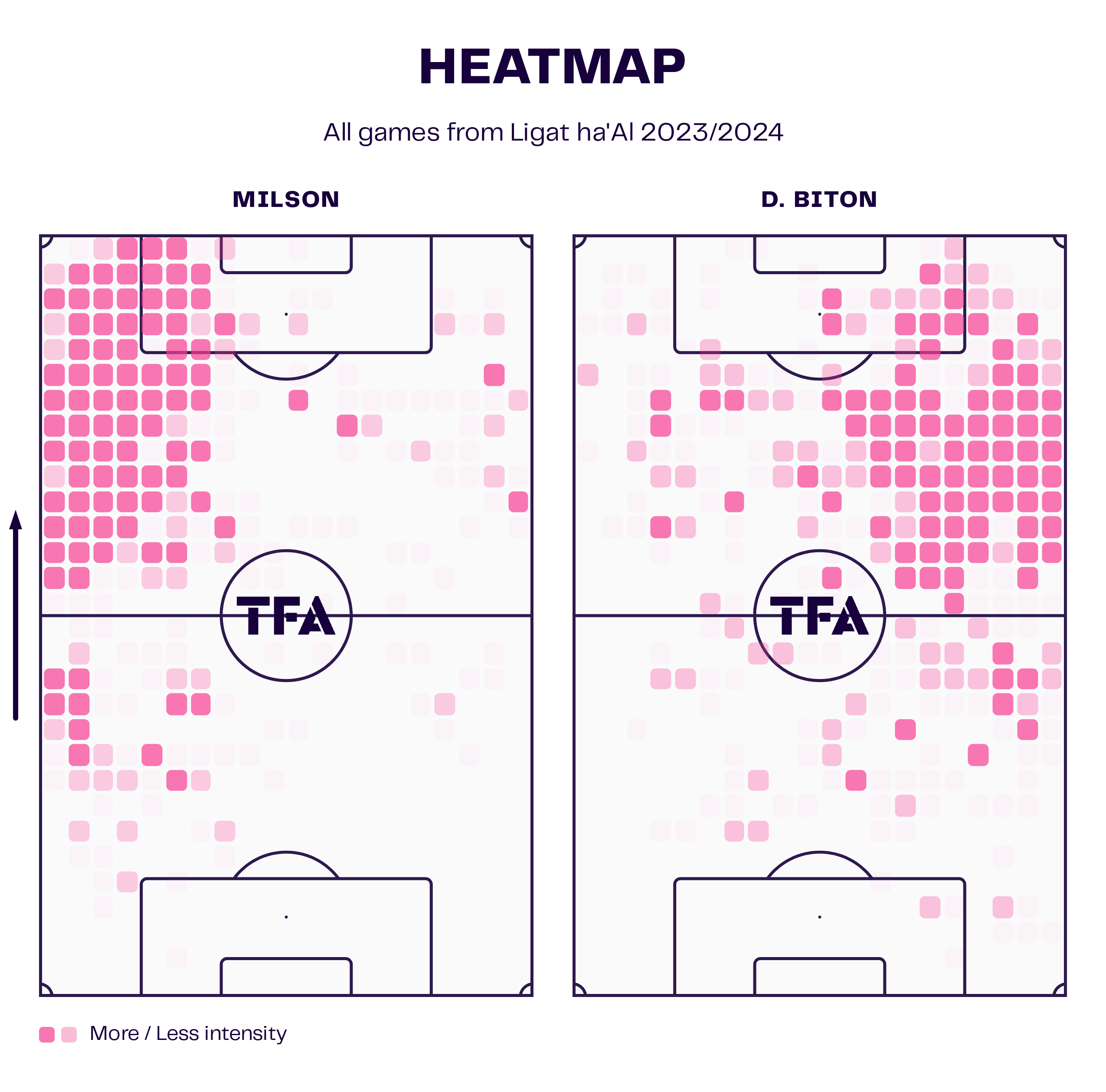
The above heatmap shows that the two Maccabi Tel Aviv players, Felício Milson and Dan Biton, who operate as the wider players of the front three, tend to feature on the channels and inside channels.
Their positioning not only facilitates crosses into the penalty box for the more central Eran Zahavi but also allows two of the midfield three to occupy the inside channels during the attacking phases.
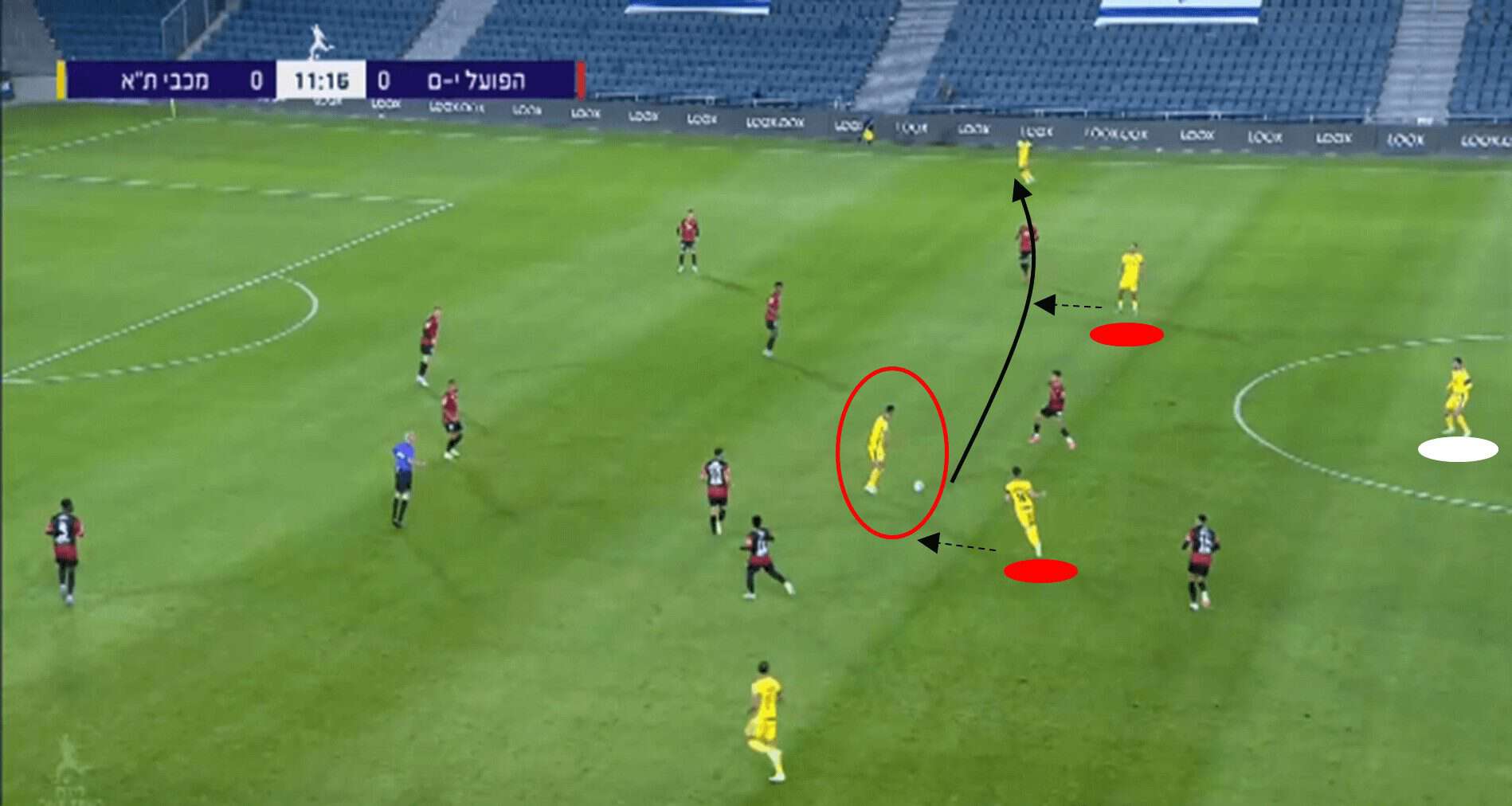
The above image shows the ball being distributed to the right-hand channel, and upon completing the pass, Zahavi’s instinct is to run towards the penalty area to meet the cross.
The two midfielders also advance towards the edge of the penalty area to provide support.
The positive shape allows Robbie Keane’s tactics to commit players forward in the attacking phases and utilise the width of the pitch, with crosses into the area, which suits the veteran centre-forward, Zahavi.
Eran Zahavi Shots Map
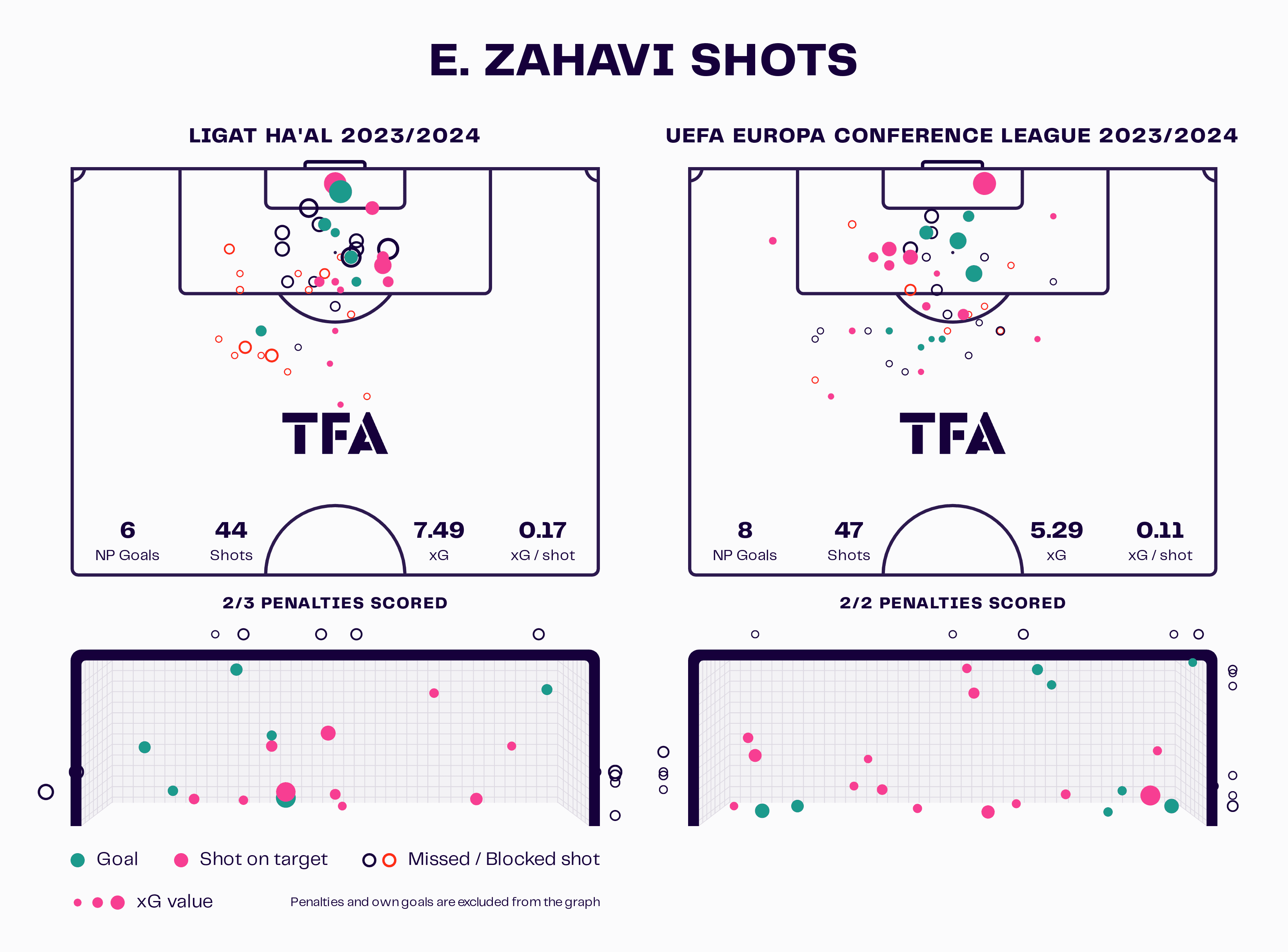
The graphic above shows that Zahavi is a potent finisher, scoring from inside the box.
Whilst the same can be said of his performances in the Europa Conference League, he has also been scoring goals with low expected goals from outside the area in Europe.
This suggests confidence in the striker’s game.
Zahavi’s goals-per-match ratio has increased from 0.63 last season to 0.9 this campaign in the Ligat ha’Al.
He tops the goal-scoring charts in Israel’s top flight at present.
Moreover, the Israeli is joint-top of the goal-scoring charts in the Europa Conference League group stages with five goals, averaging 0.83 goals per match.
He is undoubtedly an essential figure in their attacking play.
This was demonstrated when he scored the winner in a recent fixture against Hapoel Be’er Sheva.
Maccabi Tel Aviv dominated this match, holding 64% possession, and ran out 1-0 winners.
However, it was a game in which they were wasteful with their chances, converting only 25% of their shots on target.
They did break the deadlock, though in a more direct fashion, with a goal that was more textbook Allardyce.
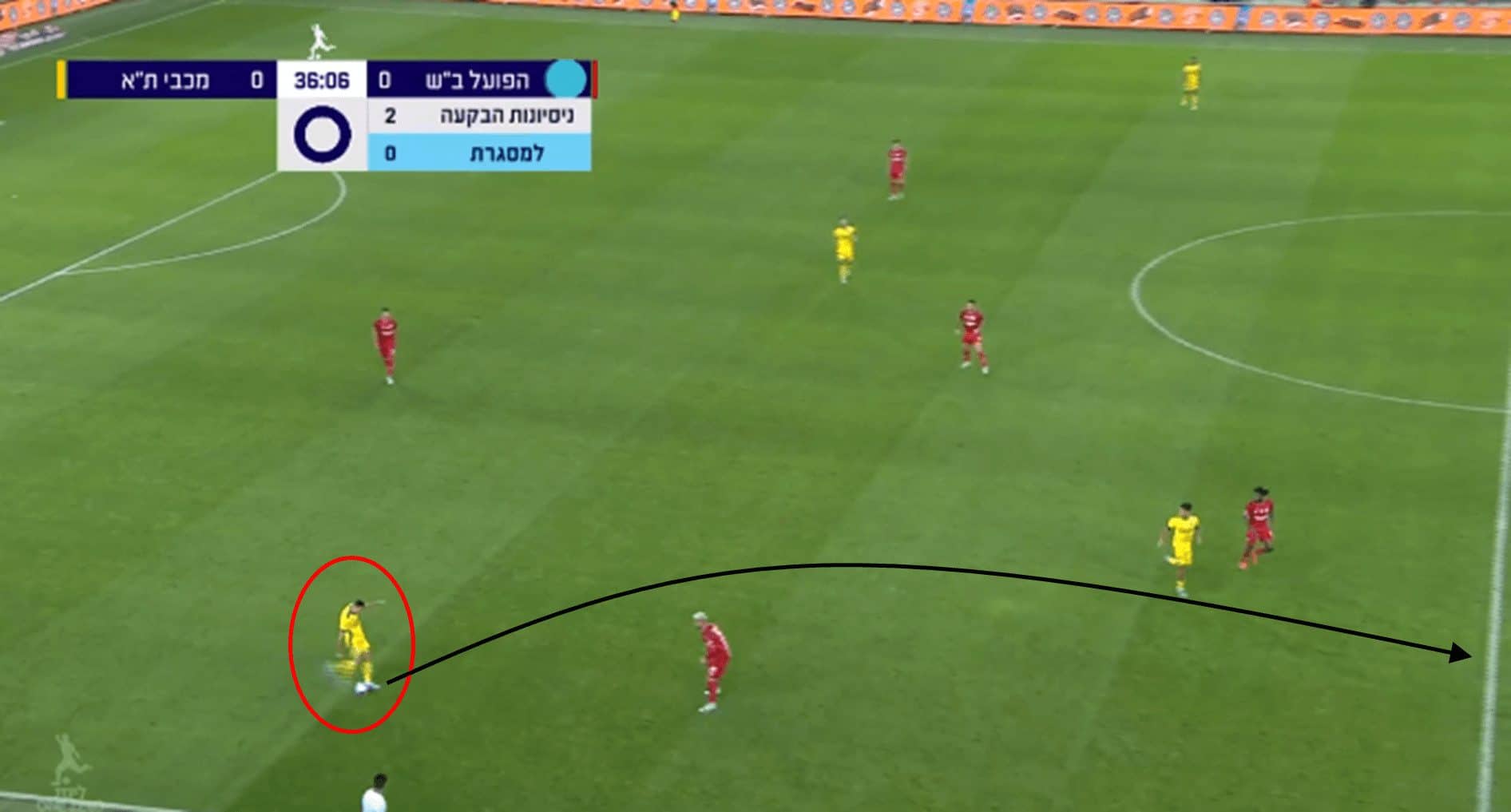
With the opposition adopting a high press, Maccabi opts for a long ball down the right-hand channel.
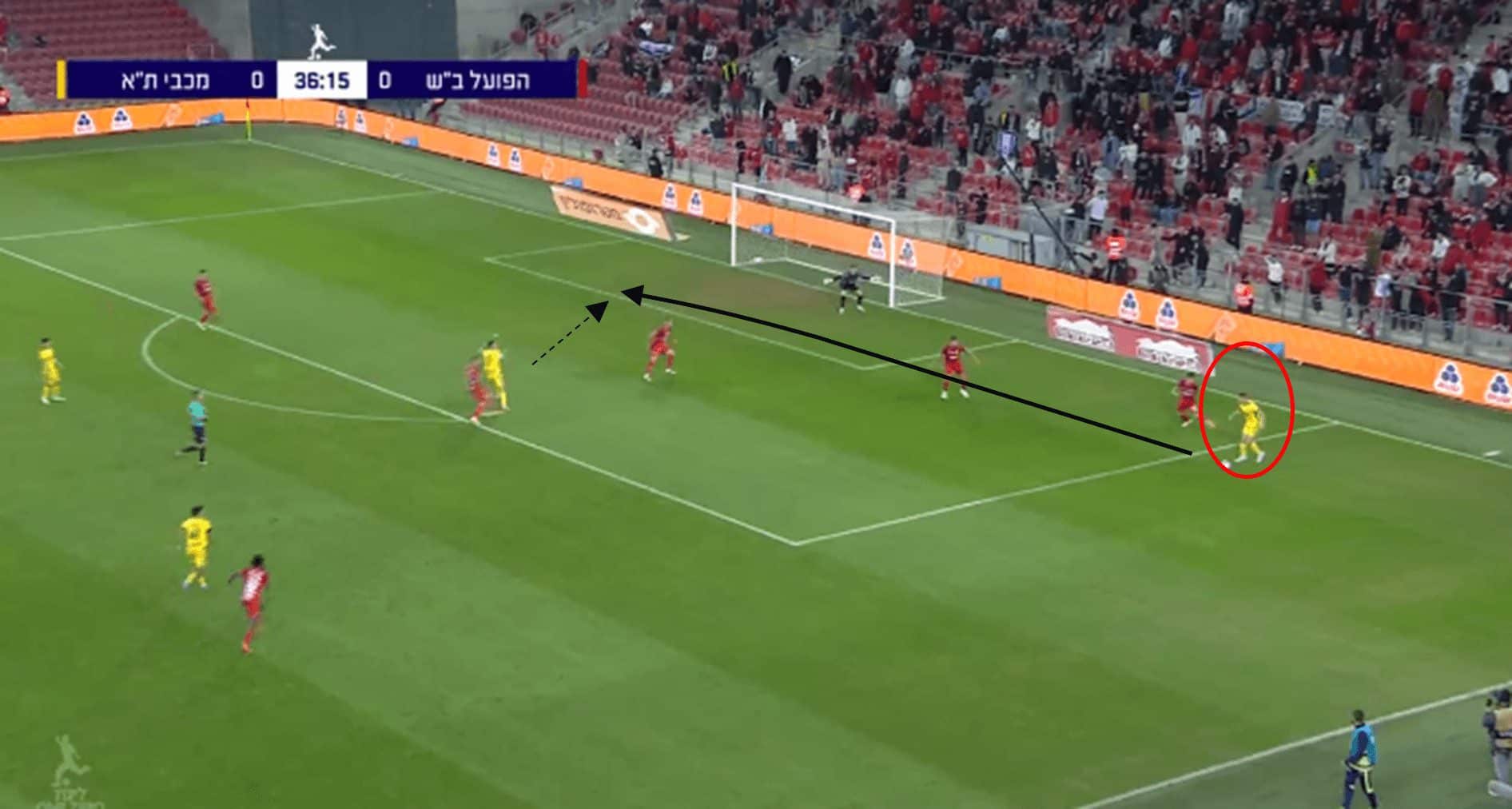
Osher Davida then dribbles down the right-hand channel before cutting back to cross for the incoming Zahavi, who heads his side into the lead.
It shows that Keane’s side doesn’t always have to play intricate passing football through the thirds to be effective and can adapt their play when necessary.
Flexibility in and out of possession
In the adopted 4-3-3 formation, one of the midfield three is used as a single defensive midfielder, providing cover for the back line.
The full-backs sometimes support the defensive midfielder, who drift toward the inside channels.
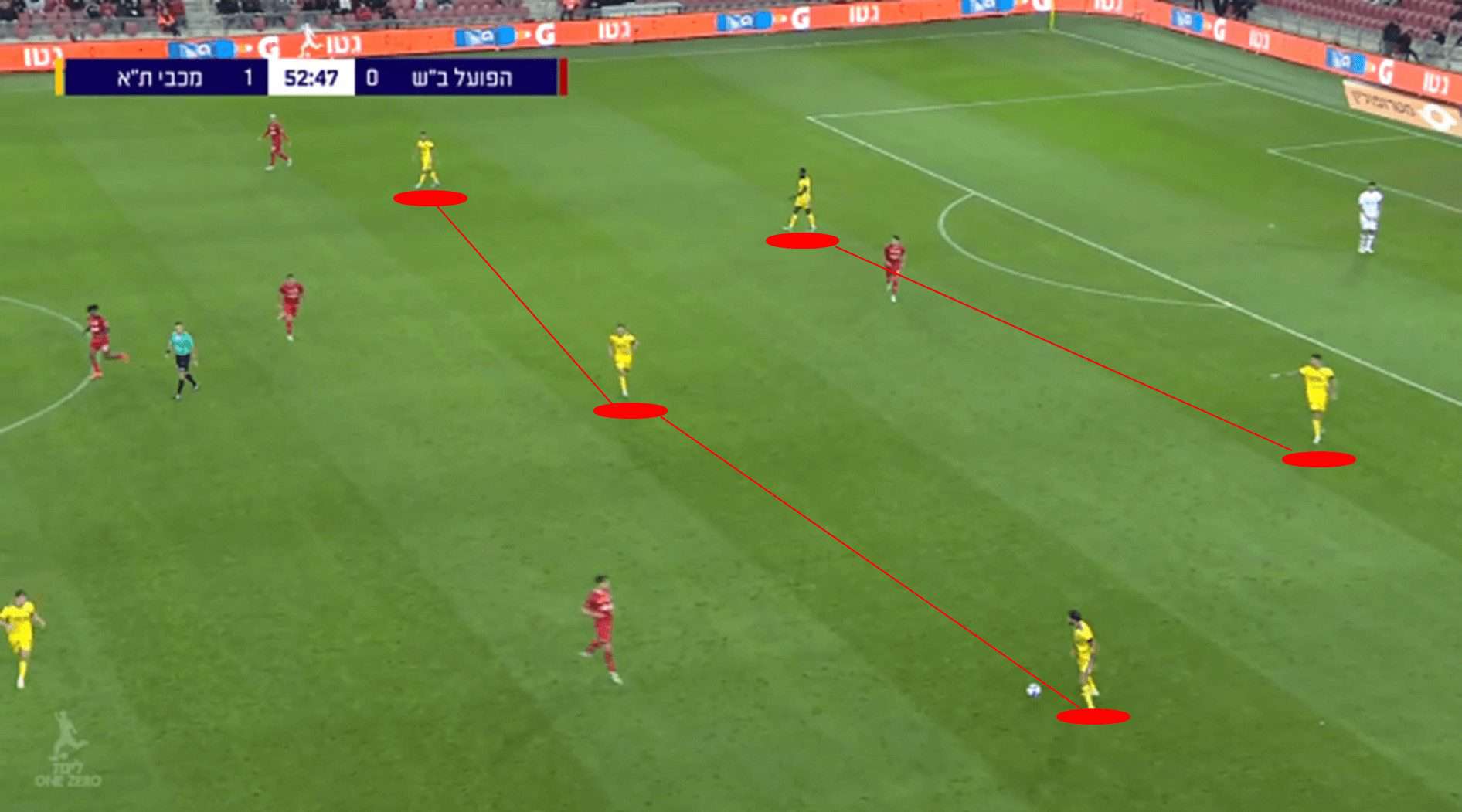
As the full-backs invert, it creates a front three ahead of the two central defenders, which congests the central areas of the pitch, making it harder for teams to break down Maccabi Tel Aviv.
The overload of players centrally also enables Maccabi Tel Aviv to dominate possession.
However, they vary, and the full-backs will stay wide at times, as seen with the positioning of the right full-back in the example below.
Moreover, Keane’s side are flexible when not in possession.
They typically set up in a 4-1-4-1 shape without the ball.
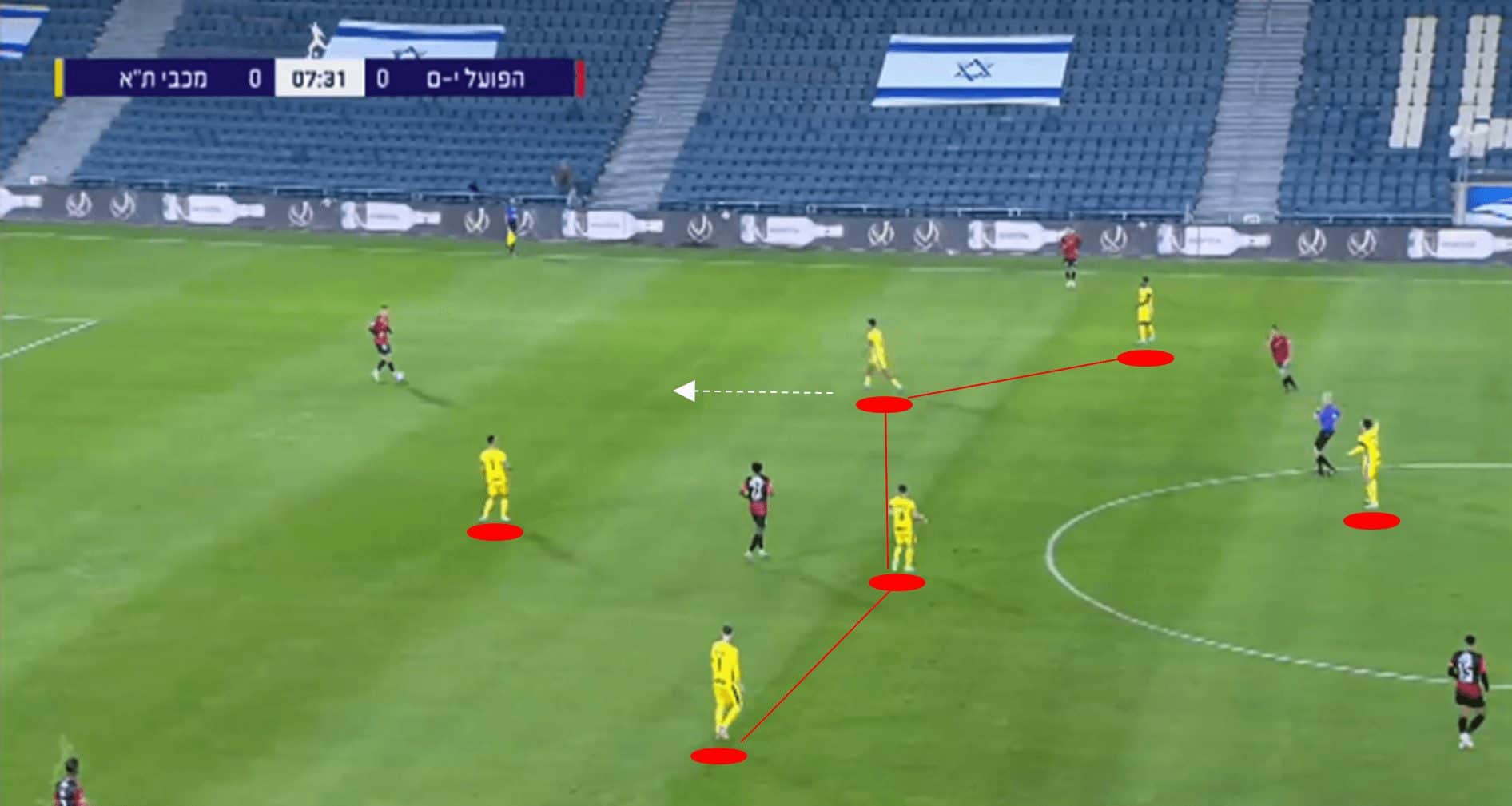
Depending on the opposition player who has possession, it is not uncommon for one of the four players in the block to advance to press higher with the lone forward.
Furthermore, throughout the course of the game, Maccabi Tel Aviv adapt their out-of-possession shape.
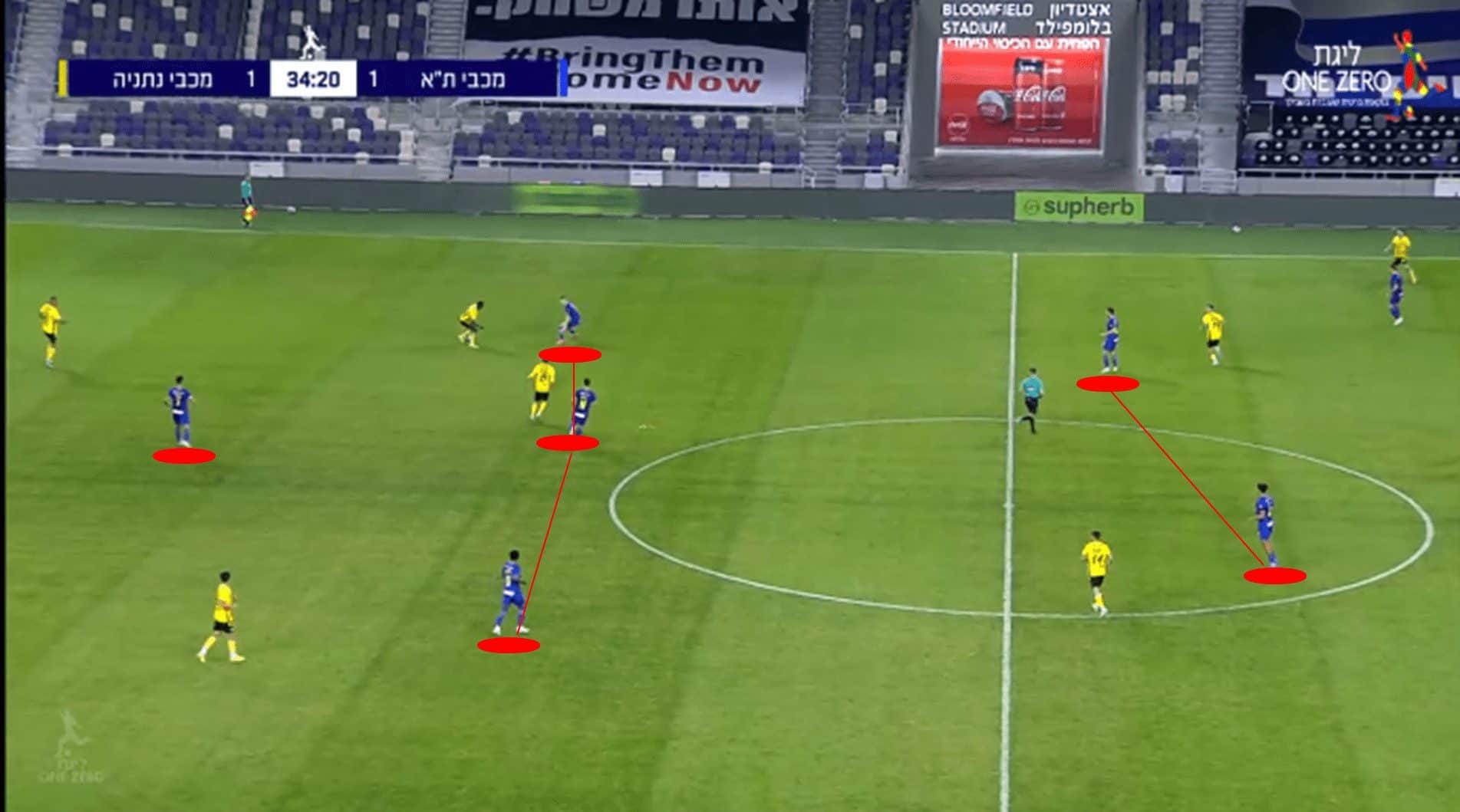
In the above still, their press is in a 4-2-3-1 shape, narrowing the space for the opposition.
The Irishman’s flexible approach to matches is a contributing factor towards their current good form domestically and in Europe.
Keane’s side have also tended to continue to dominate possession in the Conference League.
For example, during the group games, they averaged 63.5% possession in the two matches against Zorya Luhansk and 74% in the game against Breiðablik.
However, against Belgian side Gent, they only averaged 46.5% possession over two matches.
The first match against Gent ended in a 2-0 defeat, but the Israeli side improved in the second match, winning 3-1.
Maccabi Tel Aviv created more opportunities in the second tie, with an expected goals figure of 1.7 compared to 0.9 in the first encounter; the expected goals against tally decreased by 2.4.
This demonstrates a level of improvement.
Maccabi Tel Aviv Defensive Territory Map
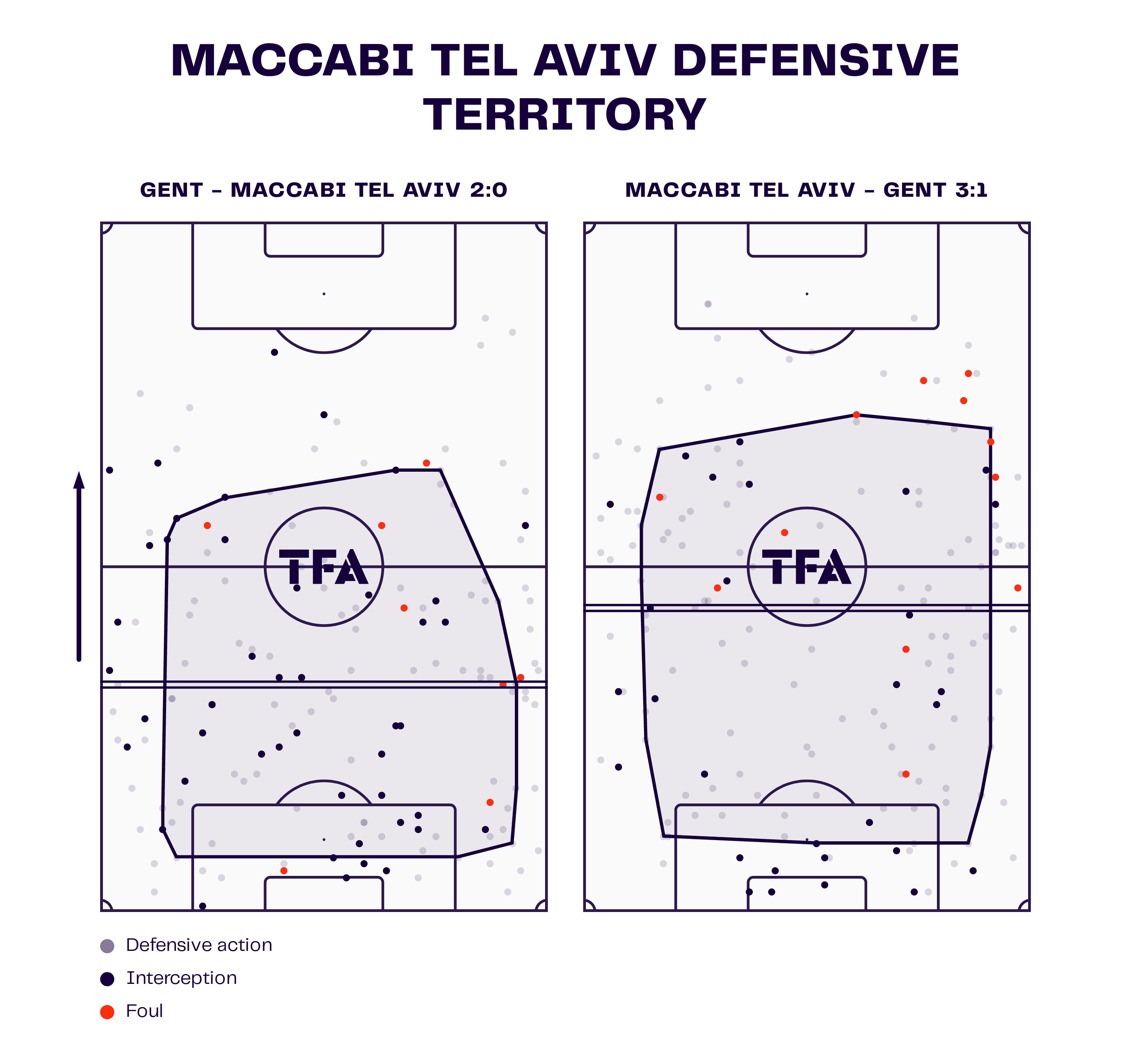
Maccabi Tel Aviv often keep a relatively high line just short of the halfway line.
The above graphic shows that in the defeat to Gent, they played a much deeper line.
However, they beat the Belgian side when they stuck to their usual defending principles, playing a higher line.
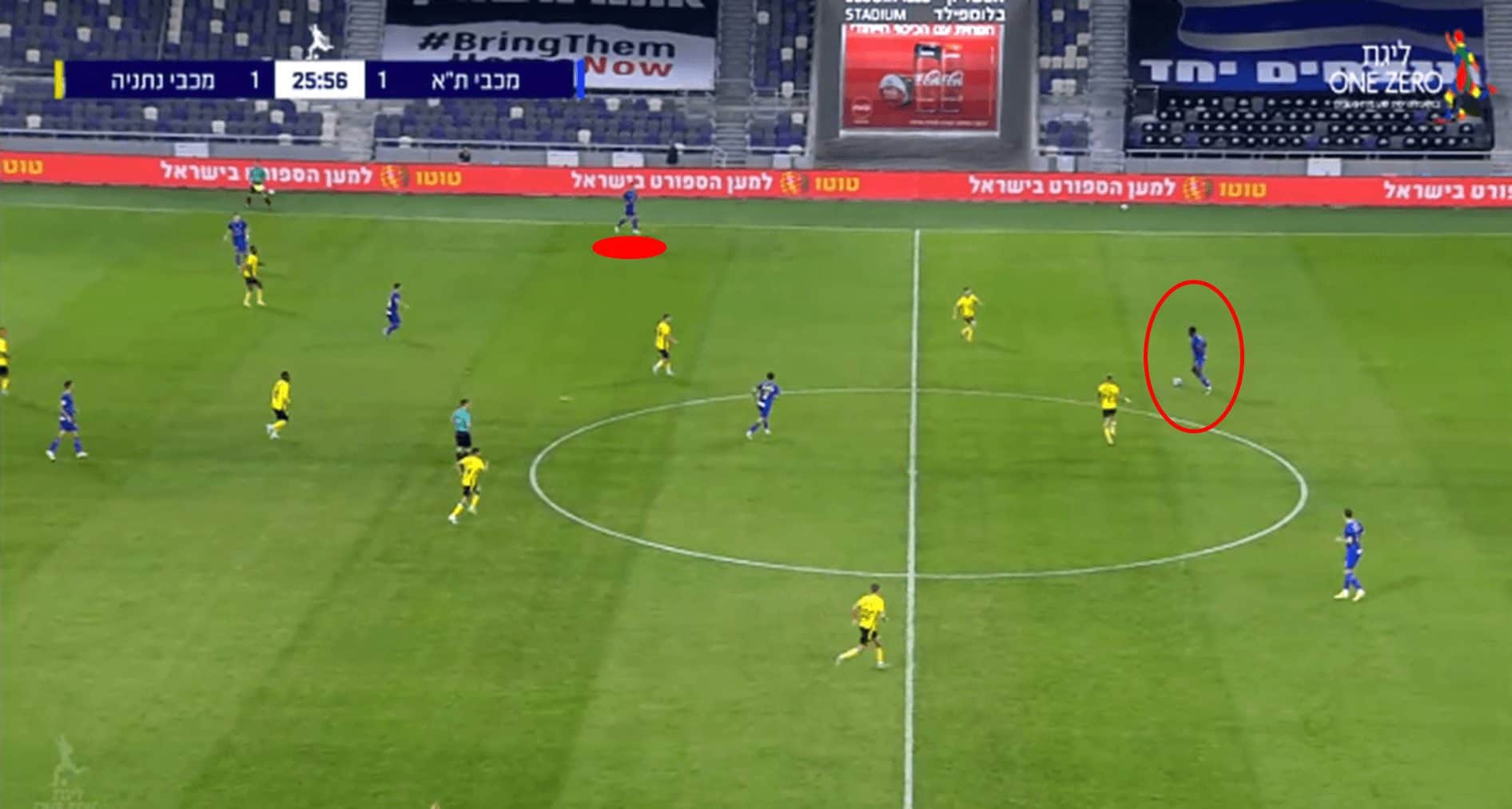
However, Keane’s side’s dominance on the ball and their relatively high line make them susceptible to counterattacks.
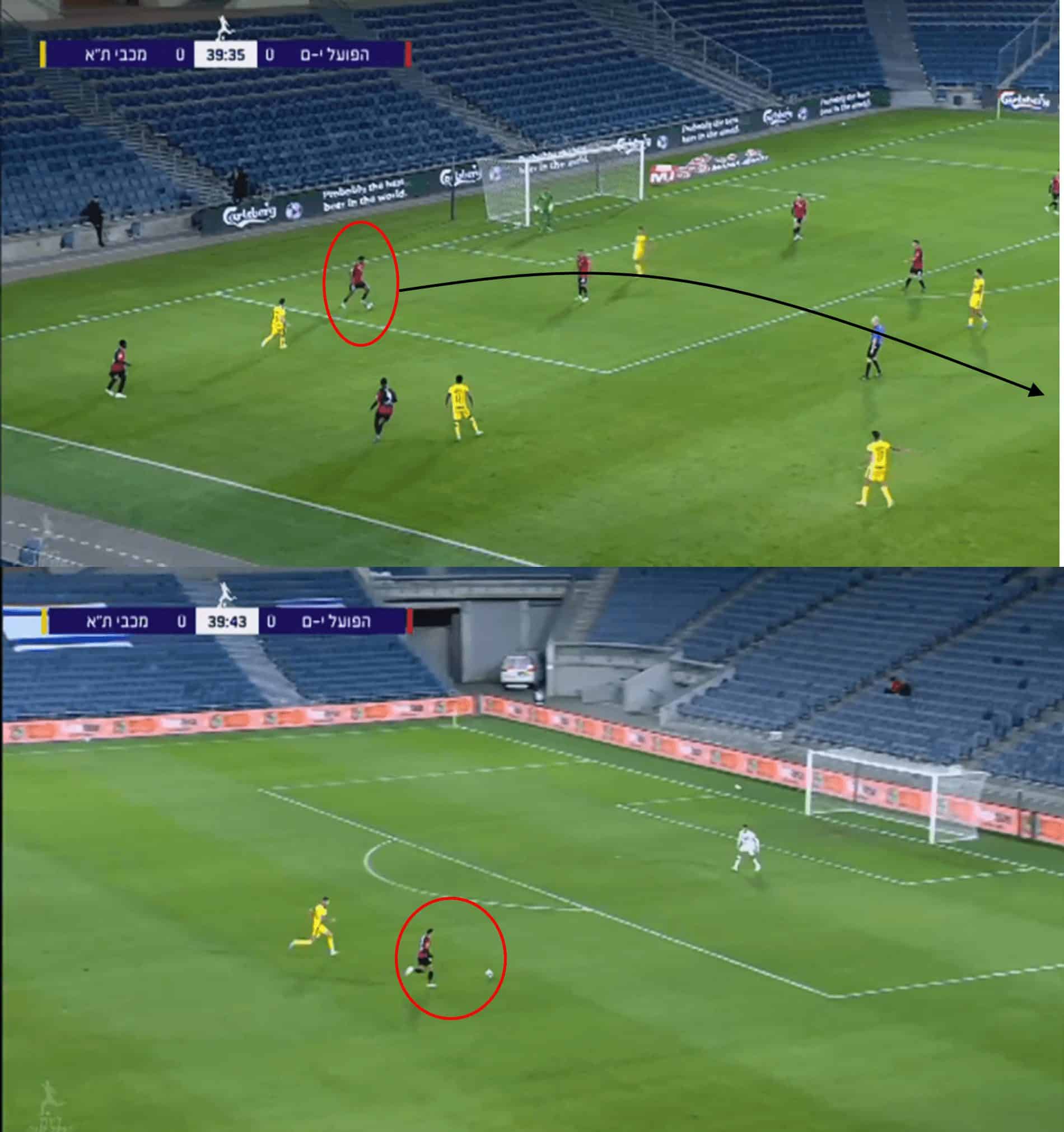
Keane’s side lost possession deep in the opposition half.
The opposition launched the ball forward, where Maccabi had two defenders left near the halfway line.
Ofek Biton outmuscles one defender and outpaces the other to put his side ahead.
However, the opposition hasn’t always made the most of breakaways, as only 47.9% of its counterattacks against Israel’s top side have led to a shot this season.
The most significant contributor to Maccabi Tel Aviv’s goals conceded in the league is an inability to not defend crosses efficiently.
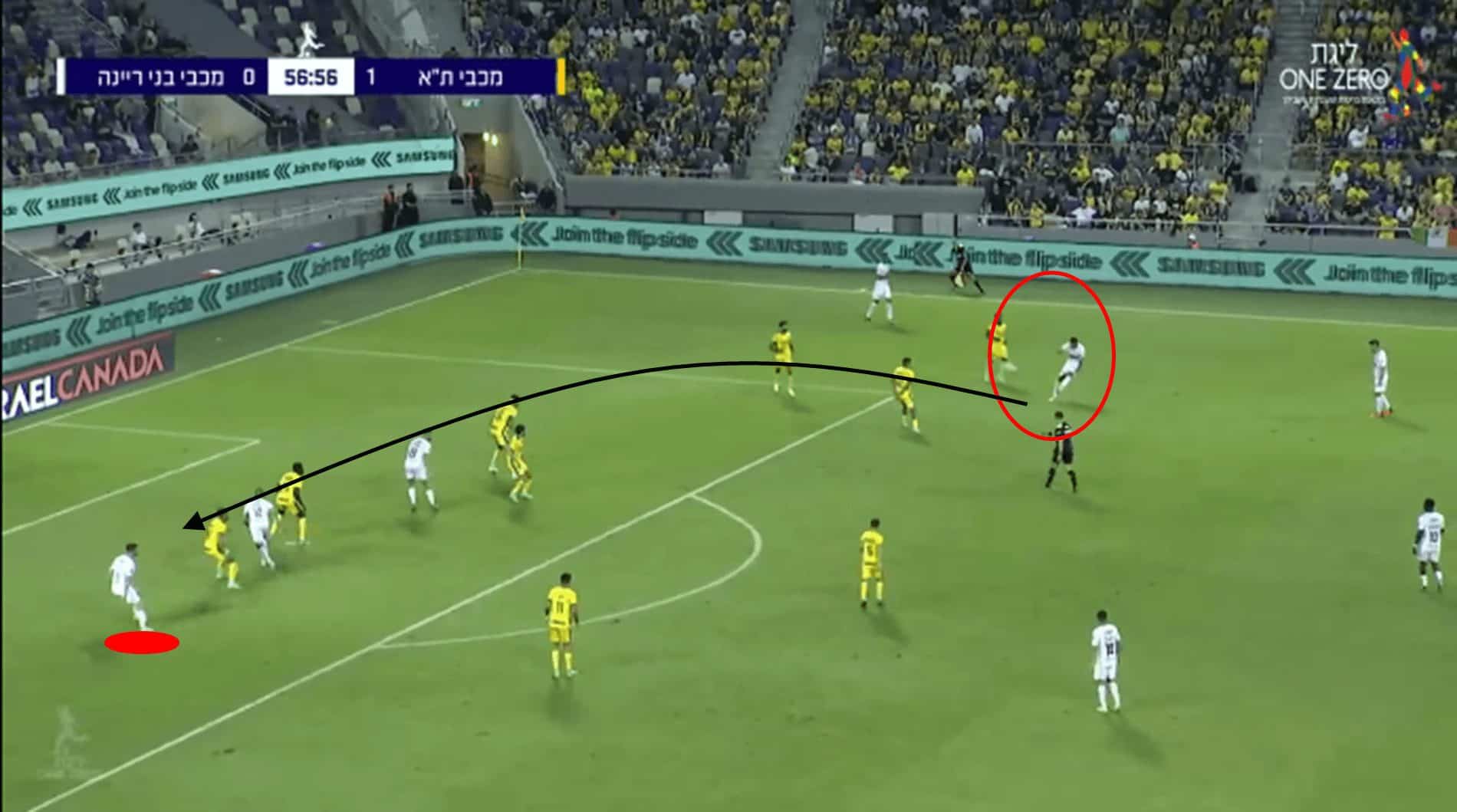
As the ball is crossed in, nobody picks up the opposition player at the back post, and he eventually scores.
Failing to pick up players’ runs in their own box has been their downfall at times this season.
Nevertheless, when they do lose possession, Maccabi Tel Aviv are aggressive and efficient with counterpressing recoveries.
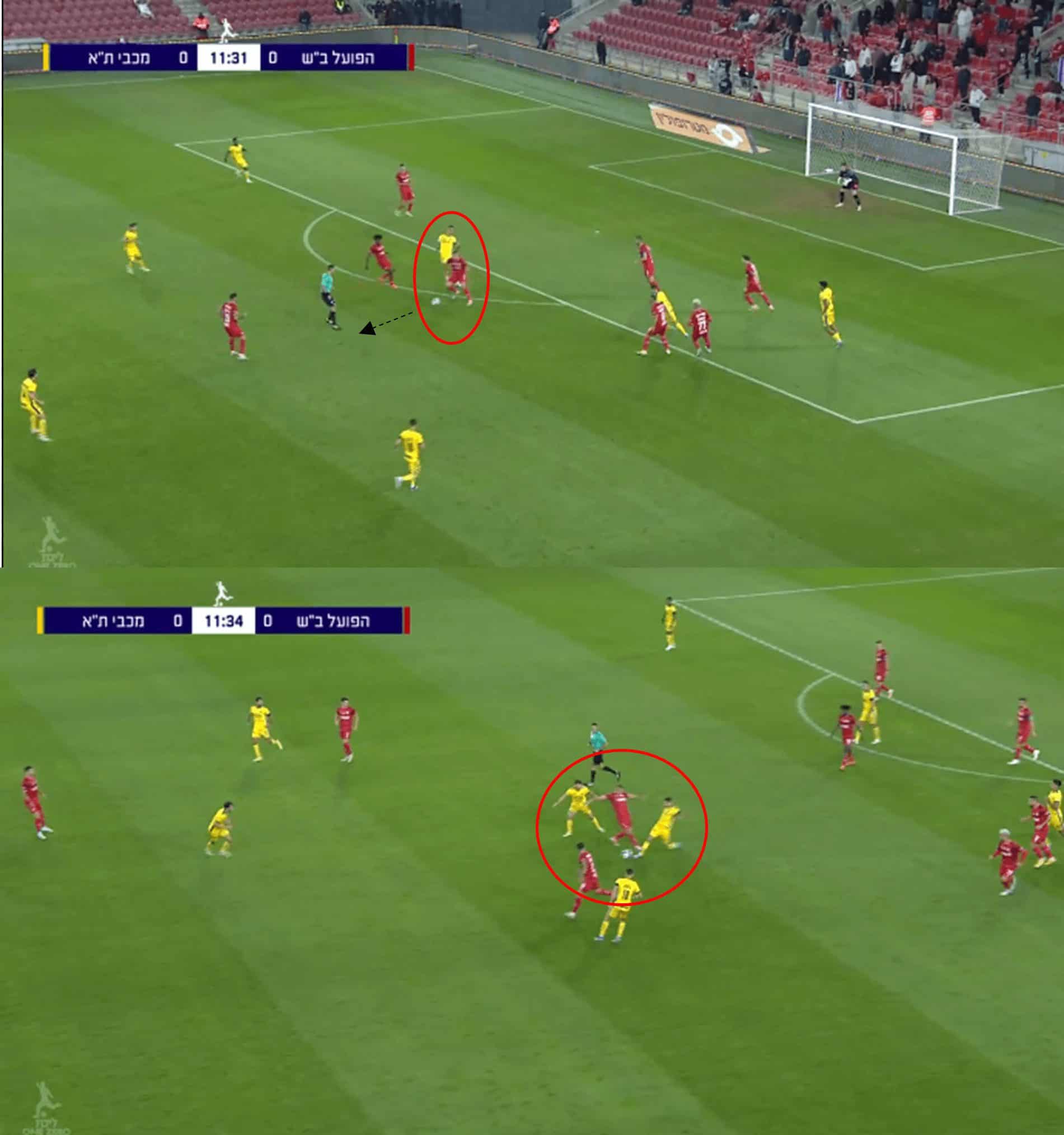
The opposition has successfully intercepted the ball and looks to instigate an attack.
However, Keane’s side reacted quickly and in strength, applying pressure to regain possession.
Thus far, they have completed 196 such counterpressing recoveries in the league, an average of 19.6 per match, demonstrating their hardworking effort out of possession.
It is such dominant play both with and without the ball, which is why they are performing so well at the moment, and making them a hard team to beat.
Conclusion
In this tactical analysis and scout report, we have shown how dominant Maccabi Tel Aviv has been this season, both domestically and in Europe.
The possession-based football instilled by Robbie Keane’s coaching style is more reminiscent of his former teammate, Woodgate, utilising the width of the pitch to attack with purpose and allowing forward Zahavi to flourish.
It has been shown how flexible Keane’s side’s shape is with and without the ball; their ability to counterpress effectively ensures they often dominate matches.
Although the Irishman has not won anything yet and is still early in his managerial career, the signs are encouraging.
It may not be too surprising if he is in the frame for future managerial vacancies.