
Spezia’s second season in Serie A is full of inconsistency in their performance with them currently sitting near the relegation zone after 12 defeats in 21 games. The manager, Thiago Motta, cannot find the right formula to bring balance in their performance and they struggle defensively while underperforming in attack too. His position as a head coach was under question due to the poor results but reports explain that the club owners have difficulties in finding a replacement.
The team’s defensive woes are partly a result of the average age of his available centre backs — 21.4 years — and the lack of a leading figure who can step up and provide support whenever needed. Despite their inexperience, Motta can rely on a few talented defenders who could develop into leaders, which will improve the team’s performance.
One of them is the 22-year-old centre-back Petko Hristov who arrived after a free transfer from Fiorentina in the summer. The Bulgarian couldn’t secure a spot at his former club but played consistently on loan in Serie C, where he impressed and earned Spezia’s interest.
The youngster was a regular starter for the team at the beginning of the season but is now more irregular in the first XI since Motta’s change of tactics and formation, relying more on Martin Erlić and trying out different partnerships in search of the winning strategy. He also tested positive for Covid-19, which put him out of the squad for even longer.
However, Hristov is among the best performers for Spezia and could be one to help them in their future ventures. In this scout report in the form of tactical analysis, we explain what his strengths are and how he helps the team.
Spezia’s defensive performance
As mentioned, the manager struggles to find the right strategy to decrease Spezia’s defensive vulnerability. They currently have one of the worst defensive records in the league, having conceded 41 goals in 21 games. The team have difficulties in many aspects of the game, but their poor record is a result of a few main weaknesses.
The players are prone to making individual errors which often results in their opponents shooting and, eventually, conceding goals. The players’ 1vs1 actions are not always well-measured, especially when under pressure. That often comes due to their failure to defend as a unit. Quite often, the defenders are left without support and knowing that there’s no one to cover depth, they are prone to act hastily and demonstrate poor decision making. They are easily being stretched out and dragged out of position, which results in their opponents making combinations and threatening the goal.
The way they are approaching 1vs1 situations often causes them trouble, as it results in fouls and, respectively, often leads to conceding set-play opportunities or even worse — penalty shots — with Spezia having conceded more penalties than any other team in Serie A this term (6), at the time of writing.
Their inability to judge a situation also affects their positioning and reactions when defending set-pieces. Motta’s side have issues when defending in the air which is reflected in the number of headed shots that they conceded. That’s a problem during set-plays but also when their opponents rely on crossing to expose them. Spezia have conceded six headers and four of them are a result of corners. The combination of poor marking and poor aerial performers allows the opposing players to take advantage of these situations and shoot or even score.
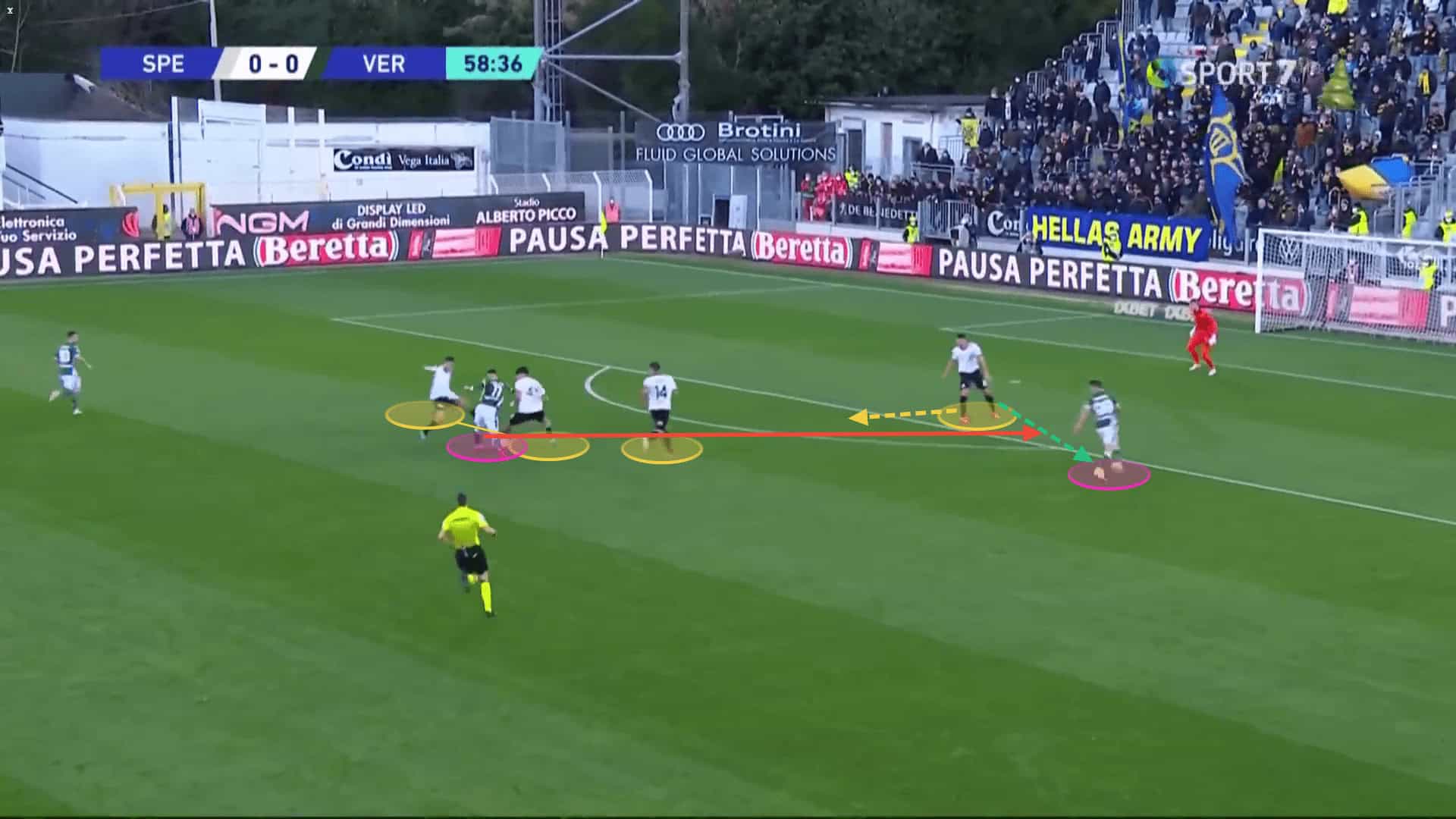
The defenders often fail in splitting their responsibilities and overcommit to certain areas which makes it very difficult to have a well-organised marking strategy. That’s why nine of the goals they have conceded are from outside the box. They overload the areas in front of the ball carrier to keep him away from the box but their disorganization under pressure often allows the ball carrier plenty of space to shoot from distance. The wrong timing of their movement and challenges makes it even more difficult for the team to defend in such situations.
Many times, they fail in retaining possession and lose the ball in dangerous areas which turns out crucial. They are among the teams that lose the ball most frequently on average, especially on the flanks. That’s part of the reason they concede 14.59 shots per 90, which is the third-worst record in the league.
Hristov’s defensive capabilities
Despite the poor performance, players like Hristov do their best to compensate and save the team in difficult situations. He is used as a right centre-back who is focused on his defensive responsibilities but is also involved in the ball progression, often moving closer to the central line and supporting the build-up-play.
Defensively, his actions are well measured, and he doesn’t dive into risky challenges, trying to minimise the errors and not commit unnecessary fouls. That’s why he focuses his actions outside of the box and tried to block the oppositions’ movement in safer areas.
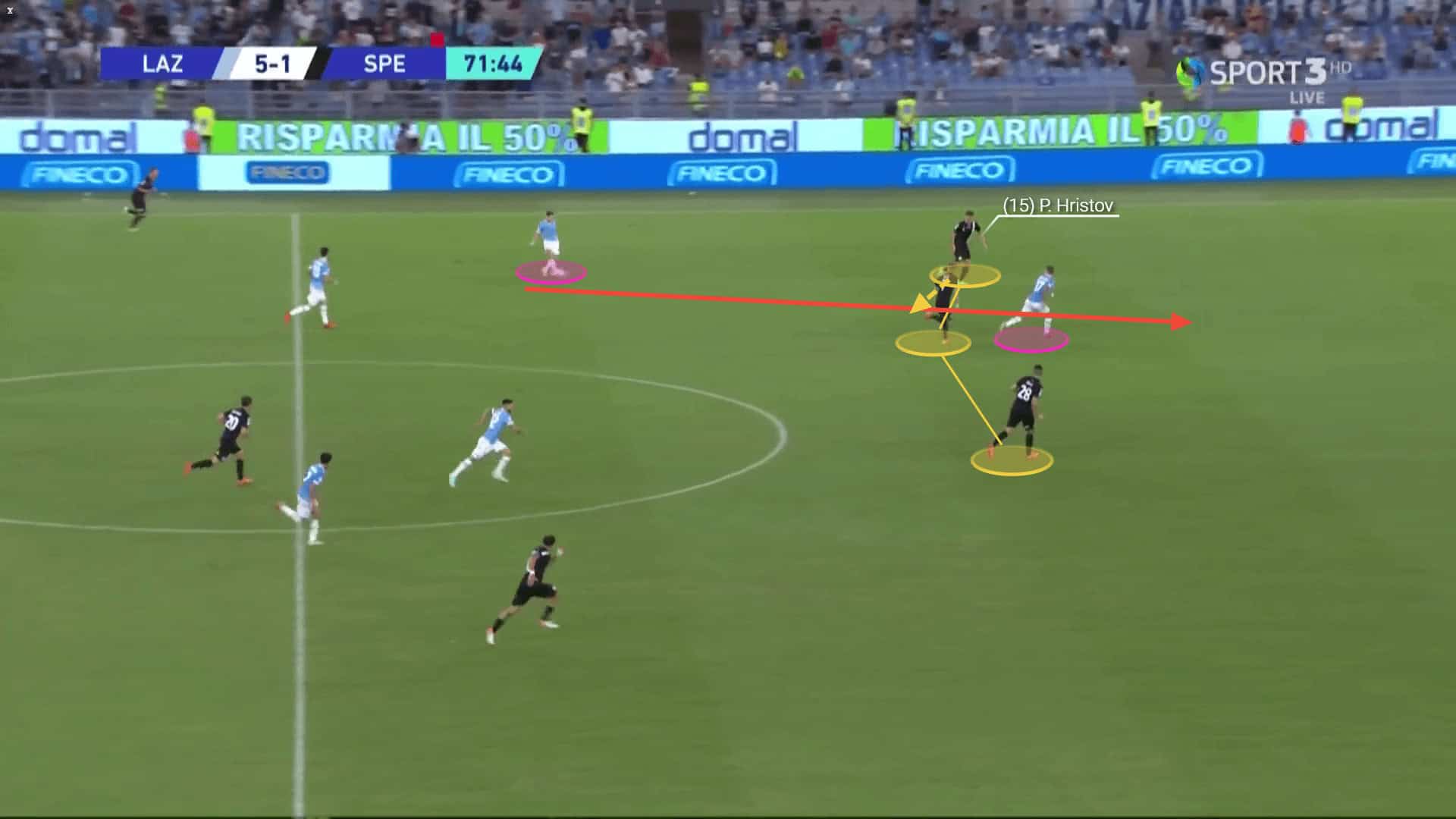
He influences the game more by intercepting the ball in an aim to gain back possession rather than diving into 1vs1 duels, although he does equally well in them too. He contributes with 7.78 PAdj Interceptions per 90 which often saves the team a lot of trouble and also gives them more time to reorganise and start their attacking movement.
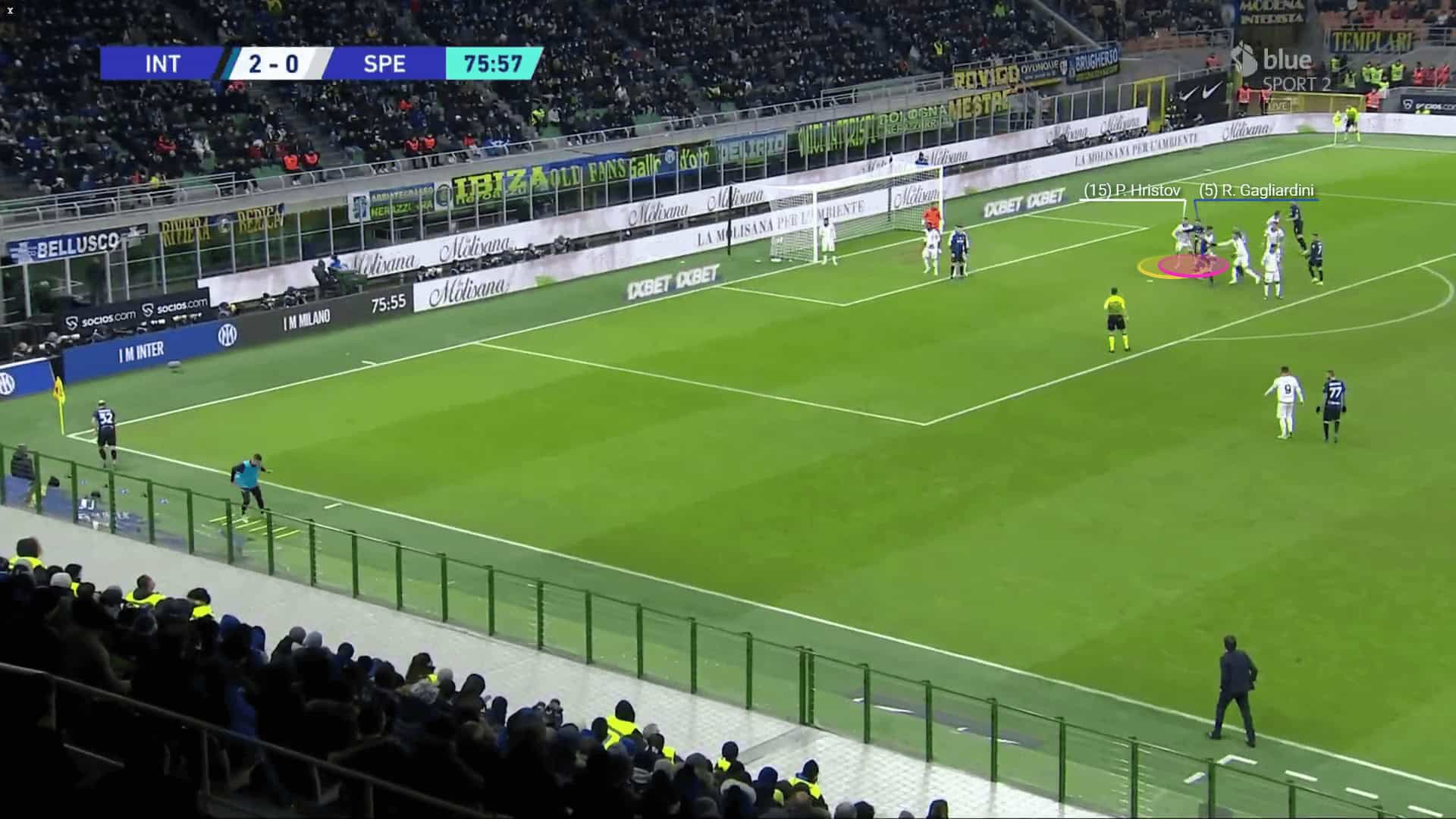
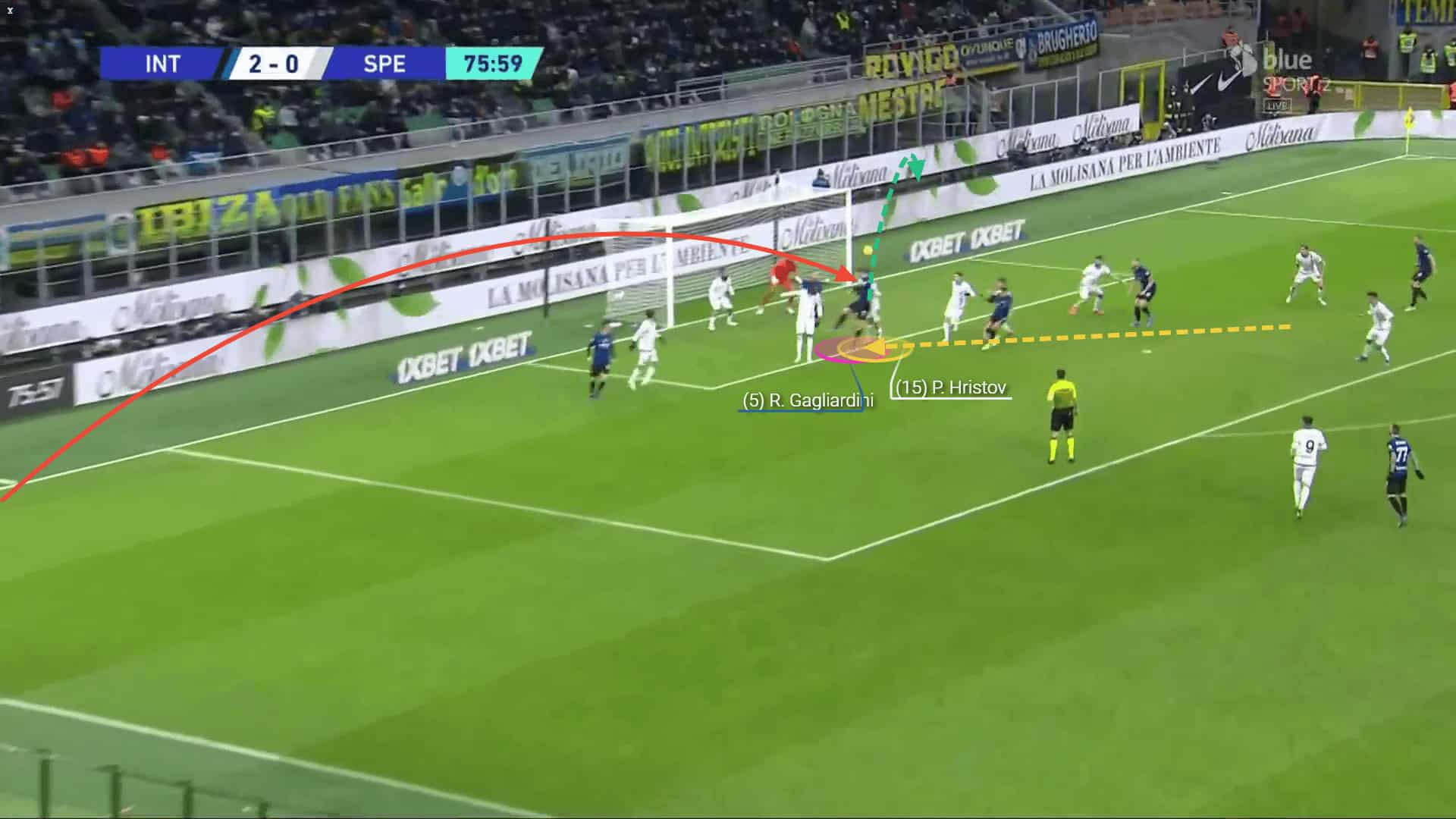
Hristov’s height of 191cm and his awareness make him one of the team’s best performers in the air, meaning he’s very important for Spezia since they are lacking a strong aerial presence in the box. His movement gives them a better chance in defending corners and crosses, which, as already explained, Spezia often fail to avoid. His aerial contribution was crucial against Inter as his interventions stopped the Nerazzurri’s dangerous attacks on a few occasions and helped the team in not conceding even more goals.
His ball recovery ability is one of his biggest strengths. Hristov recovers the ball 12.06 times on average per game but what makes his attempts even more beneficial for the team is that he often aims to recover the ball in midfield. Most of his successful attempts are outside the box, underlining his awareness and anticipation skills as he tries to stop the opposition attacks early on, instead of risking committing fouls in key areas. He tends to pressurize the opposing players before they are too deep into Spezia’s defensive third, where it is more likely to concede dangerous chances.
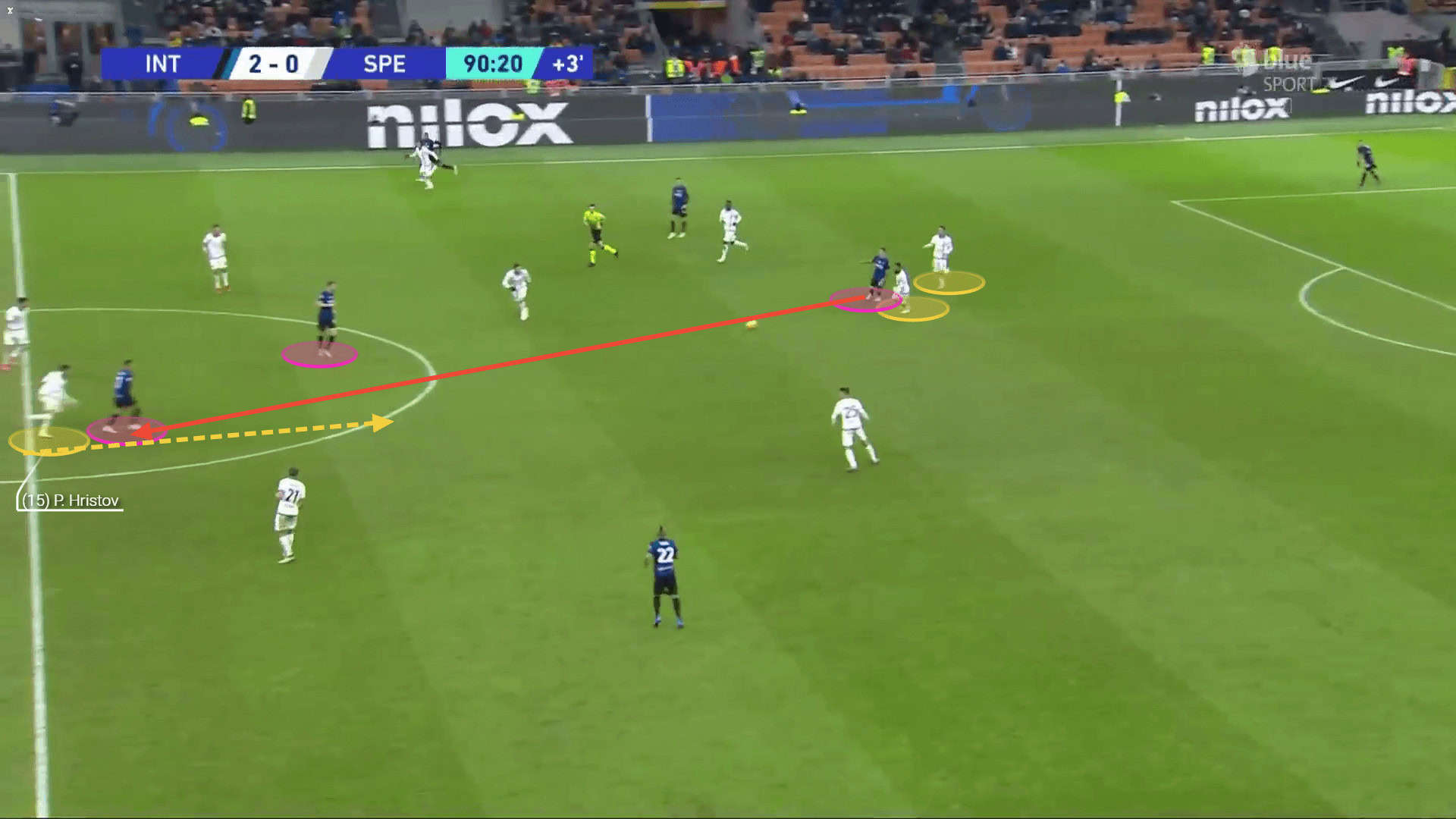
Another advantage of his game is that he rarely commits fouls, which is very important for Spezia. He averages less than one foul per game which makes him the safest choice out of all Spezia centre backs.
His contribution in possession
The 22-year-old contributes to ball progression too. His movement closer to the central line helps the team with the build-up. As his heatmap shows, he also moves out a lot as the team tend to play with width and attack through the flanks.
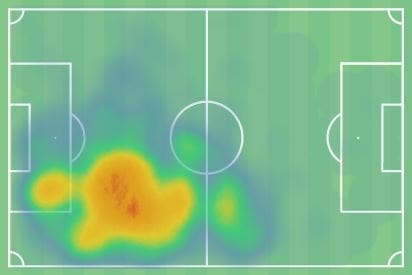
Hristov provides both forward and lateral balls depending on the opposition’s press. He aims to clear the ball out of the defence and release the pressure which often results in long forward balls. That’s beneficial defensively, but also sometimes allows his teammates to pick up the ball in the advanced positions and attack.
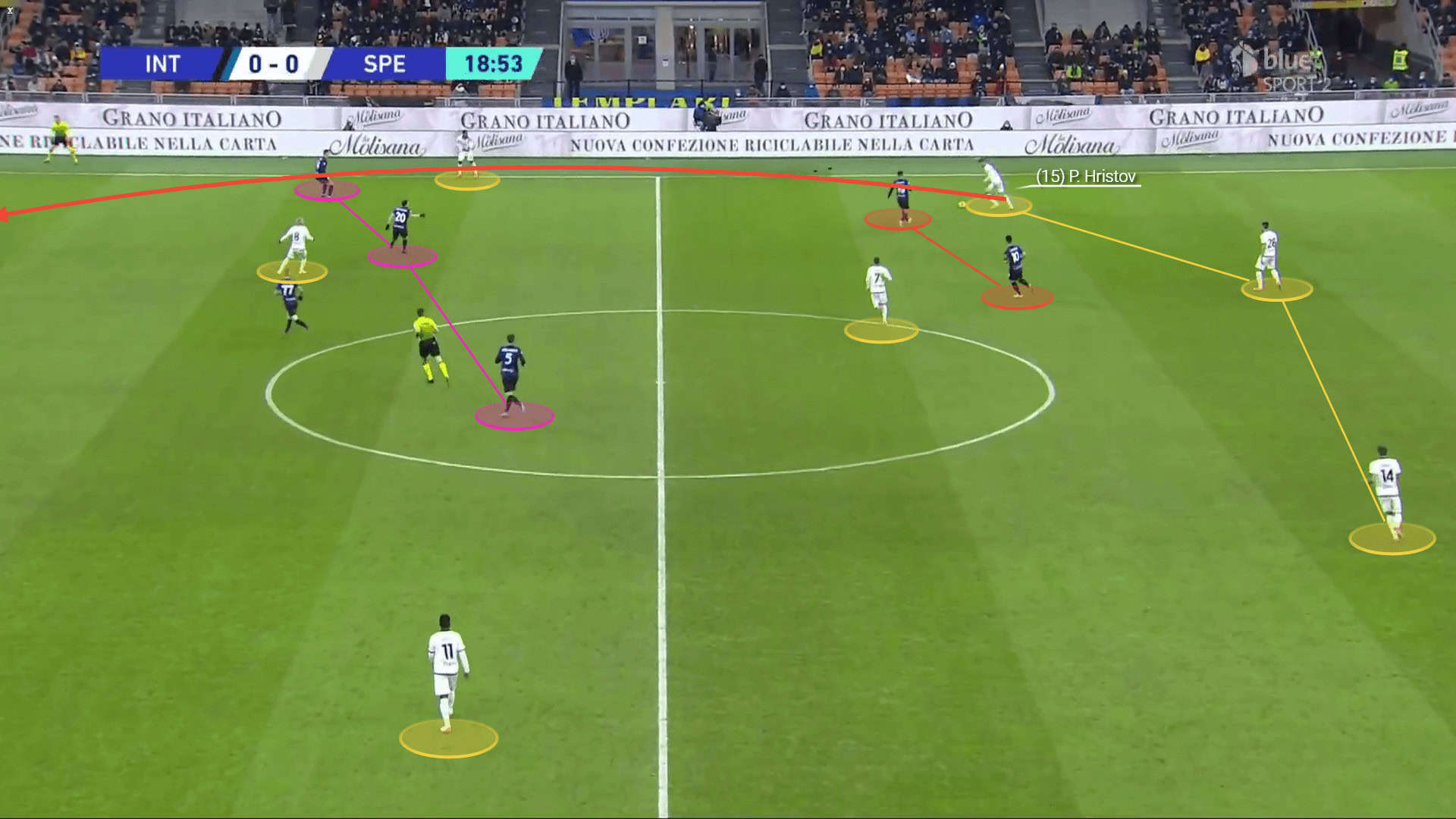
Due to the former PSG player’s frequent change of formations and tactics, the centre-back could often be found past the centre line due to the manager’s requirement for the whole team to move in a more advanced position and also press high off the ball. Hristov has been used in a back-three as well as in a back four, with Motta switching between 4-2-3-1, 4-1-4-1, 3-4-3 and 3-5-1-1 rather often. The manager is known for his different approach and the use of multiple formations, which might be considered one reason for Spezia’s inconsistency.
Comparison to Martin Erlić
Currently, Hristov is most frequently replaced by the 23-year-old Martin Erlić who had a few solid displays lately and looks like he might permanently take his starting spot. Both players have some similarities in their style of play, and it is difficult to say who is more beneficial for the team. We compared their data from the 2021/22 season to see where the similarities and the differences are and to try to determine who has a greater contribution to the team’s success.
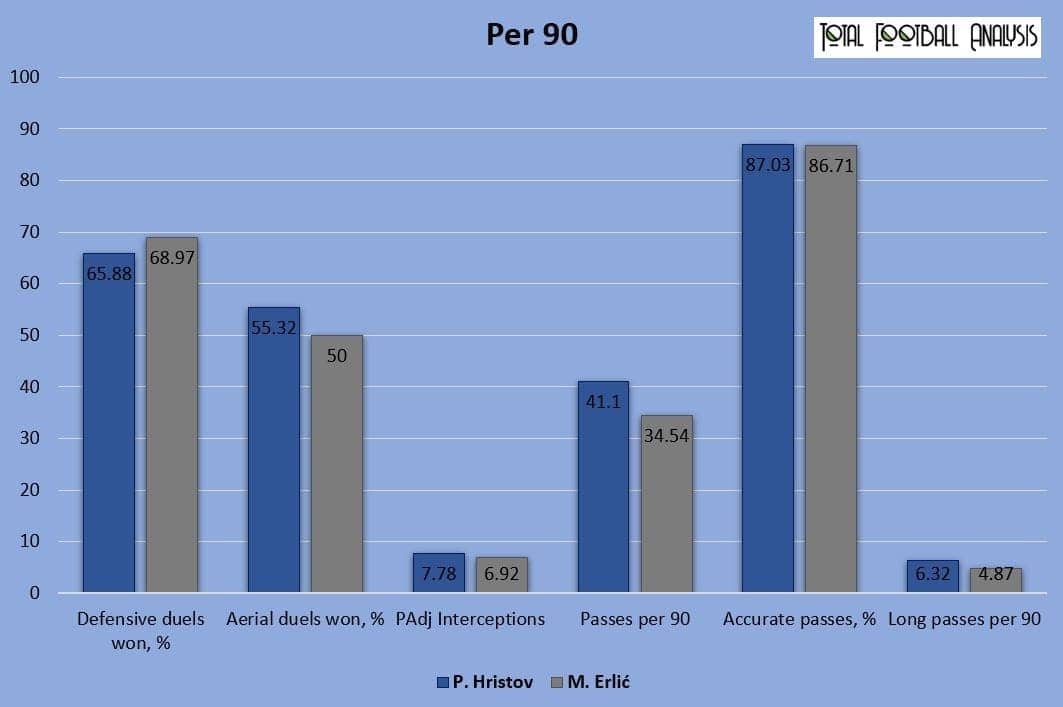
Looking at their defensive data, we can see that the Croatian has a better success rate in his defensive duels. While Hristov dives into challenges a bit more often than his teammate, his 65.88% of won duels on average is lower, although luckily for him, the difference is not that big and is compensated by his clear actions and the fewer fouls that he commits.
When it comes to their aerial performance, Hristov’s successful contribution is underlined by his 55.32% won aerial duels too. Even though Erlić is taller than Hristov, the Bulgarian’s agility is better, along with his anticipation skills, which helps him win more of his aerial challenges.
Hristov also has better numbers in terms of possession-adjusted interceptions. With his 7.78 PAdj interceptions per 90, he gives the team more time on the ball and stops the opposition from attacking more frequently.
The same goes for the ball recovery. With his 10.77, Erlić is more influential in Spezia’s defensive third, pressurising the attackers and gaining back possession in dangerous areas. Hristov, on the other side, presses higher and aims to stop the opposition attacks earlier by recovering the ball in the middle third.
In terms of their contribution in possession, the data says that Hristov is more active on the ball and spreads out the ball more often than Erlić with a slightly better success rate. The chart, though, indicates that Hristov opts for long balls more often than his teammate. The Bulgarian often opts for long balls to switch play or to deliver the ball to advanced areas.
Conclusion
As our analysis showed, Spezia’s poor defensive performance is more a result of the failed collective effort rather than the players’ individual fault. Petko Hristov displays enough stability to be considered for a regular starting spot, especially in terms of providing more stability at the back. His contribution in possession is not as crucial as his defensive one, but he does try to adjust to the constantly changing environment and executes his tasks well. Should he gain more Serie A experience, he might turn into one of Spezia’s stepping stones to better results.
