


Spain have qualified for the FIFA Women’s World Cup semi-finals for the first time ever after beating the Netherlands 2-1 following extra time. This considerable achievement resulted from an excellent effort throughout a tiring match for both sides. In the end, Spain’s quality — and, especially, the substitutions made in the last part of the match — made the difference and helped the team to create a few suitable goalscoring situations that were exploited with the necessary conviction.
On the other side, we cannot say that the Netherlands did not deserve to qualify simply because the team was as dangerous as Spain; sometimes, they were even more dangerous than their opponents. However, lacking squad depth and failing to convert some goalscoring chances into goals led to losing their qualification ticket to the semi-finals.
Nevertheless, the Netherlands can be proud of their performance and of their World Cup journey despite this loss, knowing that they did their best and were very close to eliminating Spain, if not for a few crucial misses.
In this tactical analysis article, we will focus on Spain’s performance, their attacking tactics and how they can improve defensively. At the same time, the analysis will shed some light on Netherlands’ performance and what was lacking to beat Spain.
Lineups
Jorge Vilda preferred to start the match in the 4-3-3 formation with Cata Coll as the goalkeeper, Oihane Hernández, Barcelona’s Irene Paredes, Laia Codina and Ona Batlle in defence, Teresa Abelleira as a defensive midfielder, Aitana Bonmatí and Jennifer Hermoso as central midfielders, but with attacking freedom, Alba Redondo and Mariona Caldentey as wingers while Real Madrid’s Esther González was the team’s striker.
On the other hand, Andries Jonker opted for the 3-1-4-2 formation with Daphne van Domselaar as a goalkeeper, Sherida Spitse, Stefanie van der Gragt and Dominique Janssen as centre-backs, PSG’s Jackie Groenen as a defensive midfielder, Esmee Brugts and Jill Roord as central midfielders, Victoria Pelova and Damaris Egurrola as wingers. At the same time, Juventus’ Lineth Beerensteyn and Lieke Martens were the team’s two strikers.
Spain’s progressive football and defensive performance
Spain started the match with the right mentality, focusing on completing quick short passes throughout the game to survive the Netherlands’ pressing. They always exploited their midfielders and wingers’ dribbling and penetration skills to put the team in numerical superiority — this helped them immensely when in tight spaces.
Players like Caldentey, Hermoso, González, Bonmatí, Battle and, later on, the subs Olga Carmona and Alexia Putellas added a lot of quality to the team’s midfield. They helped them retain more possession and reach the final third more quickly. Upfront, Spain could promptly test the Netherlands’ defensive line and put their goalkeeper in danger as they started the match with a lot of dynamism inside their opponent’s half.
In this regard, González was the player who created a lot of space for her teammates coming from behind thanks to her movement and her ability to play with her back towards the goal and receive passes successfully using her body to either win the ball or win fouls.
Moreover, she created problems for the Netherlands’ defence with the help of Caldentey and Redondo since she used penetration at times and one-two passing combinations at other times while liberating a player or two inside the box. Caldentey was also fundamental since she won most duels and was always well-positioned with and without the ball, as she formed a massive threat on the Netherlands with González.
In the following action, for instance, González created an incredible opportunity for Redondo following Caldentey’s penetration on the left wing. González then received the ball and made a quick one-two combination with Hermoso to get rid of Netherlands’ defenders before serving the ball to Redondo on a plate.
However, the latter did not make the move she needed to do to meet the ball, mainly because she didn’t believe that she would receive a pass in that specific area from González.
At the same time, González could have gone for a shot but preferred to opt for a pass to secure a goal. This indecision and lack of understanding inside the box was a bit recurrent for Spain and made things more complicated for them in this match as they could score at least two goals in regular time before going to extra time.

Two minutes later, Redondo received another key pass and had the opportunity to open the score early in the game. However, she failed to do so due to poor finishing. In other words, Hermoso or González could have dealt better with the ball when being tightly marked and having to attempt a shot. Apart from the finishing, this opportunity highlights Bonmatí’s role in creating numerical superiority and supporting the team’s attacks by asking for the ball at the back of the Netherlands’ defensive line.

Spain pressed in zones where the Netherlands had the ball with great intensity to win the ball more often. And when in possession, they quickly reached the box with accurate passes and sometimes crosses.
The following big goalscoring chance occurred in the 16th minute when Caldentey provided an excellent cross to Redondo, who directed her header perfectly towards the goal. Daphne van Domselaar’s great save deviated the ball to the post and back, and then Redondo was unlucky to hit the bar once again with her second attempt.
Avoiding such misses in the semi-final and why not in the final would be crucial for Spain as they would make a lot of difference and help the team be more concrete in front of goal instead of waiting until the end of the game to score as they did in this match.

Salma Paralluelo was able to add a second decisive goal in extra-time thanks to a solo dribbling effort against Nouwen and a powerful shot after receiving an excellent assist from Hermoso. But before scoring that goal, Spain could have avoided the equalising goal in the last minutes of the second half.
The defensive line should have been more attentive during that goal action to prevent van der Gragt from having the time to go for an accurate shot. This fragility in one vs one marking during critical moments should be avoided shortly in order not to suffer painful losses.
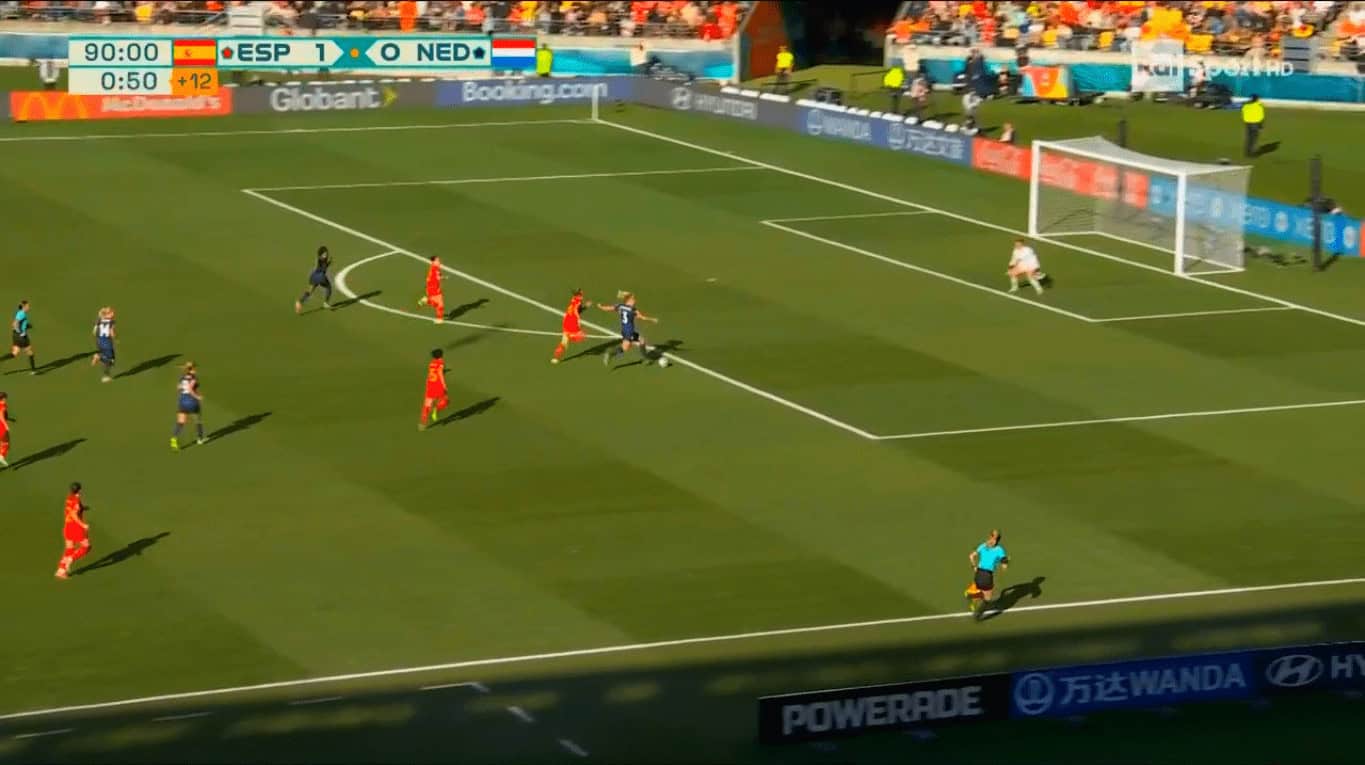
Despite this defensive issue, it should be said that Spain were also excellent when defending on some specific occasions and especially during a cross that Andrés cleared out with an acrobatic move to prevent the Netherlands from scoring a very suitable goalscoring chance. This sense of sacrifice in defence was essential for Spain to keep the team composed and solid throughout the match, except for some occasions where more organisation and attention were needed.
What the Netherlands lacked in their performance
The Netherlands did everything possible to disturb Spain and defend against their powerful opportunities throughout the match. And although they were able to limit their attacks to a certain degree, mainly thanks to aggressivity and tight marking, the team made a few mistakes that led to conceding two goals and could not resist longer.
The defending during the second goal action, for instance, should have been a bit more decisive since Nouwen wasn’t able to cope with Paralluelo’s dribbling moves and was easily distracted by her footwork, knowing that Nouwen had the time to intervene or even a sliding tackle to stop Paralluelo before getting inside the box.
From an attacking perspective, the Netherlands missed the presence of players like Van de Donk and Vivianne Miedema as they needed more creativity in midfield and some natural and experienced goalscoring abilities inside the final third.
These goalscoring skills of someone like Miedema were lacking mainly because Beerensteyn missed numerous relatively easy goalscoring opportunities that could have led to a Netherlands qualification.
This being said, Beerensteyn was Netherlands’ most dangerous player on the pitch and was the player who kept Netherlands’ chances alive since she was always present in pressing and disturbed Spain a lot with her excellent acceleration with the ball.
But at the same time, some players like Maertens and Roord underperformed in the Netherlands’ midfield and attack, which added to their finishing issues.
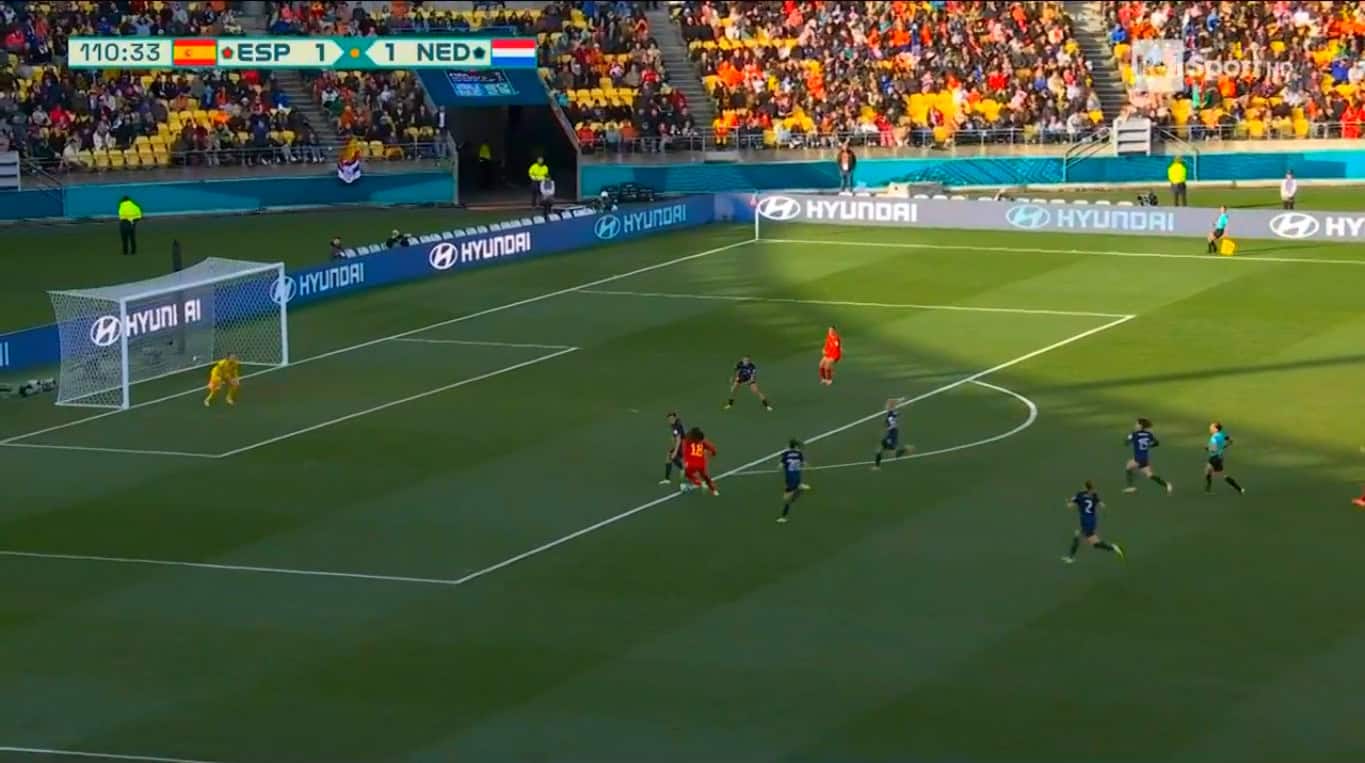
As an example, this was one of the most significant goalscoring chances for the team, as its timing was crucial as well, knowing that this occurred a few seconds before Spain’s second goal. Beerensteyn couldn’t deal well with this long throw-in that came directly towards Beerensteyn’s feet.
The latter, however, didn’t coordinate her body in the needed way to shoot and attempted a volley that went above the goal despite being very close to it.

Conclusion
This match could have gone either way, but Spain believed in their chances a bit more and were better in concretisation even though the Netherlands had more goalscoring chances.
Spain will have to improve a few things in their defensive organisation and especially in one vs one marking throughout the 90 minutes, in order to avoid bad scenarios in the semi-finals.
On the other hand, the Netherlands shouldn’t be ashamed of their performance as they did their best from the defensive and the attacking perspective despite the huge absences and the lack of squad depth.

