
Appointed in the final weeks of the 2022/23 campaign, Pierre Aristouy initially had one job on arrival at Nantes: save the club from relegation. He helped them achieve their goal on the final day of the season, with Les Canaris finishing just one point clear of the drop zone after winning in game week 38 versus Angers.
With Aristouy still in charge this term, Nantes sit in a somewhat healthier position — 11th, five points clear of the relegation zone, four from the relegation playoff position. However, it would be wrong to then believe all is well and there’s nothing to worry about just because they occupy a better position now than they did when Aristouy first took over. This season has seen plenty of issues for Aristouy’s side, leading to his dismissal earlier this week.
Nantes have conceded the second-most goals (23) and third-most xGA (24.08) of any side in France’s top flight this term, at the time of writing. Furthermore, their xG per shot against of 0.148 is the highest in the league — not a table any club wants to be topping.
Our tactical analysis piece will provide an analysis of the reasons behind Nantes’ defensive struggles in the 2023/24 campaign and offer some solutions to combat these issues at the back, putting the club on track to avoid the relegation scrap come May and enjoy an overall more comfortable campaign.
Long passing
Firstly, Nantes have played the fifth-highest amount of long passes (40.05 per 90) in Ligue 1 this term. That in and of itself isn’t a problem, but it provides added context as to why it’s such a concern they’ve got the worst long pass success (49.7%) in their division for the 2023/24 campaign.
Plenty of their long passing comes from the goalkeeper. This happens primarily as a result of high pressure from the opposition and tight marking forcing Nantes’ defenders to move back to the ‘keeper, who then has to play the ball long, as he’s faced with the same high pressure and lack of nearby options due to tight marking.

At times, this can work out positively and foster some decent ball progression. Take figures 1 and 2, for instance. Here, Alban Lafont is pressed aggressively after receiving a back pass. However, he can spot left-back Quentin Merlin in space out wide.

Lafont can clip the ball over the opposition’s forwards, finding Merlin out wide in a position to progress upfield. Merlin is a key player for Nantes, so finding him in such space is a huge positive for Les Canaris and a situation they’ll undoubtedly look to recreate when possible.

With that said, this pass isn’t always on and when it’s not, Nantes’ long passing can be detrimental to their game. Take figures 3 and 4, for example. Firstly, Lafont receives this back pass under pressure and immediately lines up a long pass upfield.
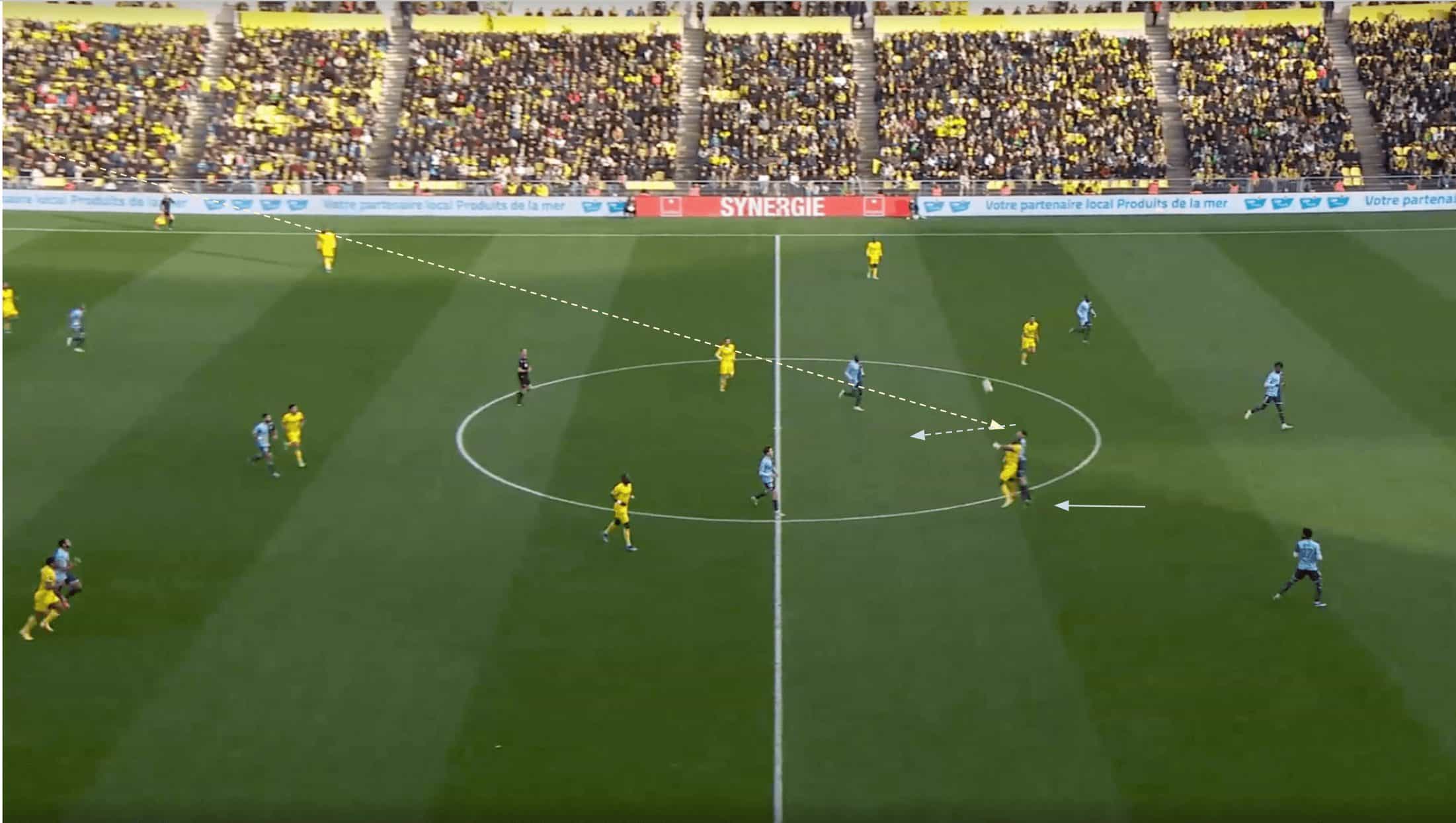
The ball drops towards Ignatius Ganago, who is vastly outjumped by the taller opposition player on his back — the play ends up with a throw-in for Nantes, a relatively positive result given the circumstances, but we’ve seen plenty of examples of these types of passes just resulting in possession being lost for Nantes this season.
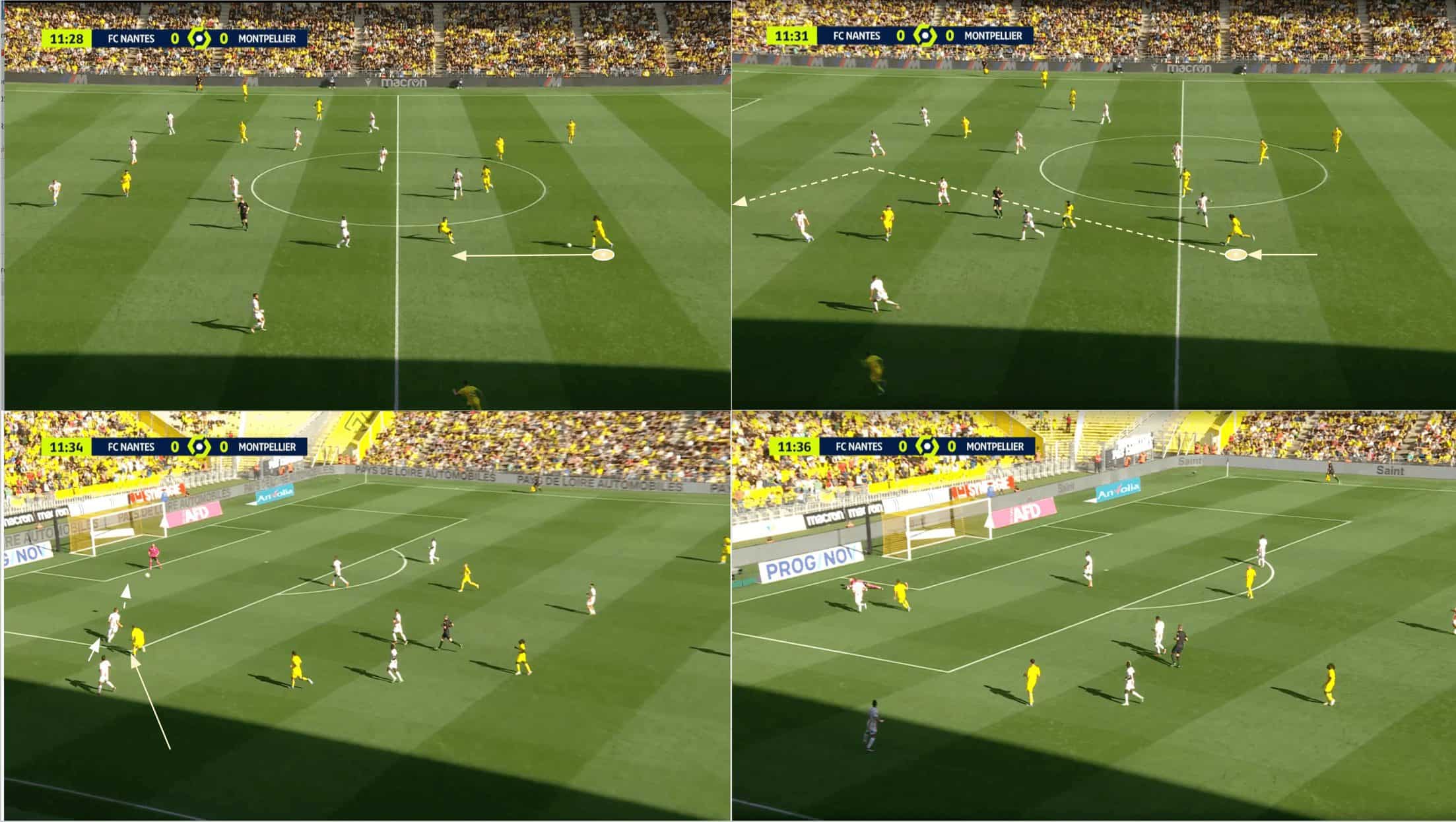
See another example here with Jean-Kévin Duverne receiving and then carrying forward, ignoring the short passing options that could facilitate play through the thirds, instead lining up the long ball over the top, which is not really played into any teammate’s path, resulting in a comfortable header for the opposition centre-back towards his goalkeeper.
Essentially, Nantes senselessly play the ball long too often, resulting in cheap loss of possession, thus giving the opposition opportunities to attack.
They don’t have a lot of players who can successfully receive long passes outside of Mostafa Mohamed at centre-forward, which is one issue, along with the fact that some of their long passers positioned deep aren’t the most accurate passers of the ball, meaning that, all in all, this strategy of playing the ball long isn’t always well thought-out.
If playing the ball long, they could set up a compact structure near the drop zone prepared to fight for the second ball, negating the issue of the initial target struggling to win the aerial duel or control the long ball. Often, their long balls are a result of high pressure, but if they’re going to be forced into playing them anyway and continue struggling in the build-up, Les Canaris could prepare better for these situations and use them as opportunities to progress towards the opposition’s goal regardless of the initial duel’s outcome.
With that said, at times, they are too quick to give up on playing through the thirds and with an excellent passer like Pedro Chirivella at the base of their midfield, that can be a bit wasteful. They could practice more movement to free up players to progress through the thirds or play around with different structures and/or specific player roles to generate cleaner ball progression.
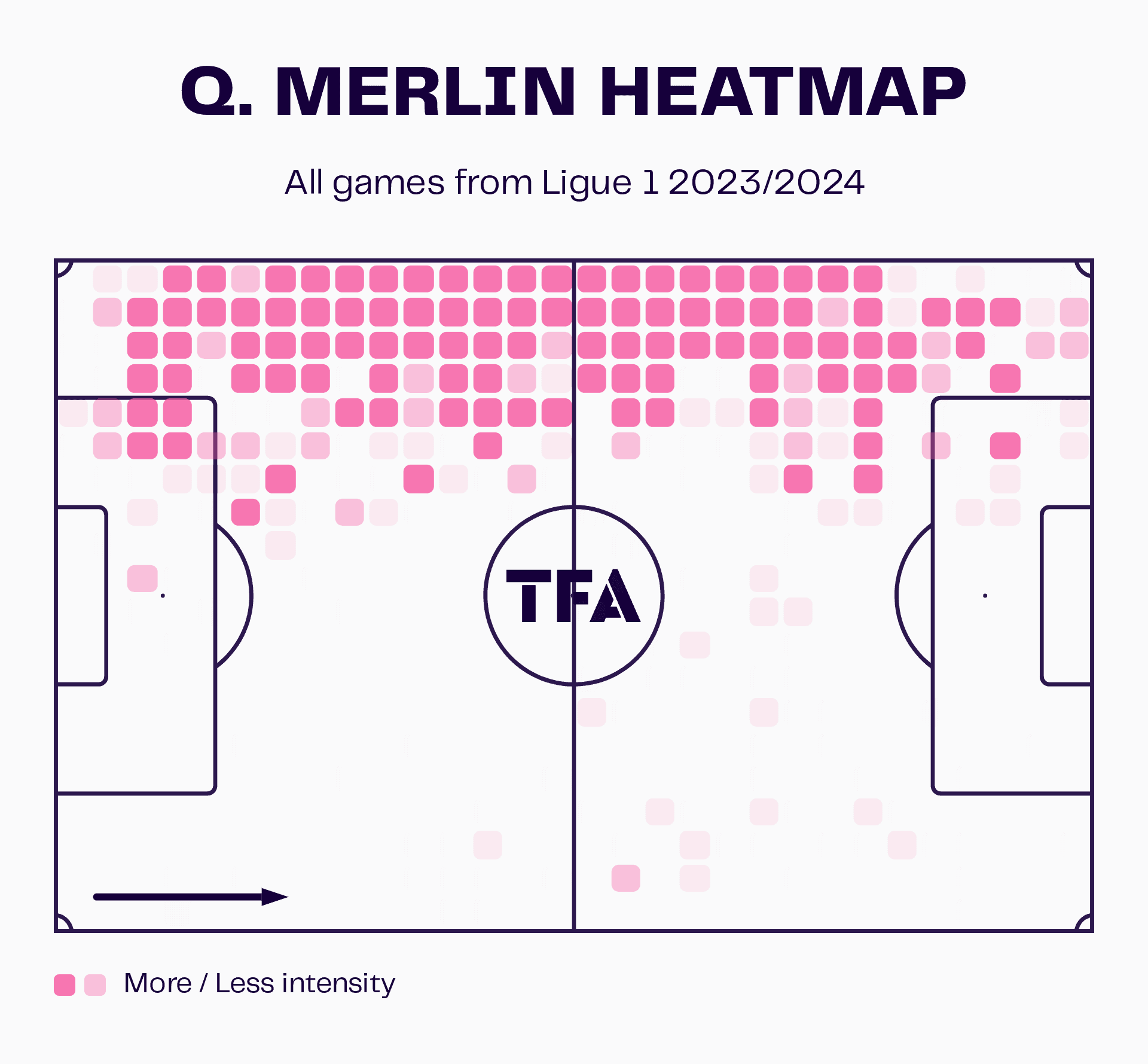
One such role change could see Merlin play in a more central position as an inverted full-back, compared to the wider areas he’s typically occupied in the build-up and progression phases this term. It’s common to see him operating in more central areas once he reaches the final third, but he’s also often been deployed as something of a wide, deep-lying playmaker required to ping long balls forward from around the halfway line this season.
Merlin functions best when he’s given the freedom to roam in central areas, coming in from wide and creating via line-breaking passes from the half-space rather than launching balls forward from deep. He could add an extra body into midfield, which may facilitate easier ball progression, especially as his movement from out to in could be difficult for the opposition to mark without allowing space to open up elsewhere.
Defensive transitions
A big reason their poor long pass success is such an issue is that Nantes have struggled with the transition to defence this term, conceding plenty of chances and, indeed, goals in this phase.
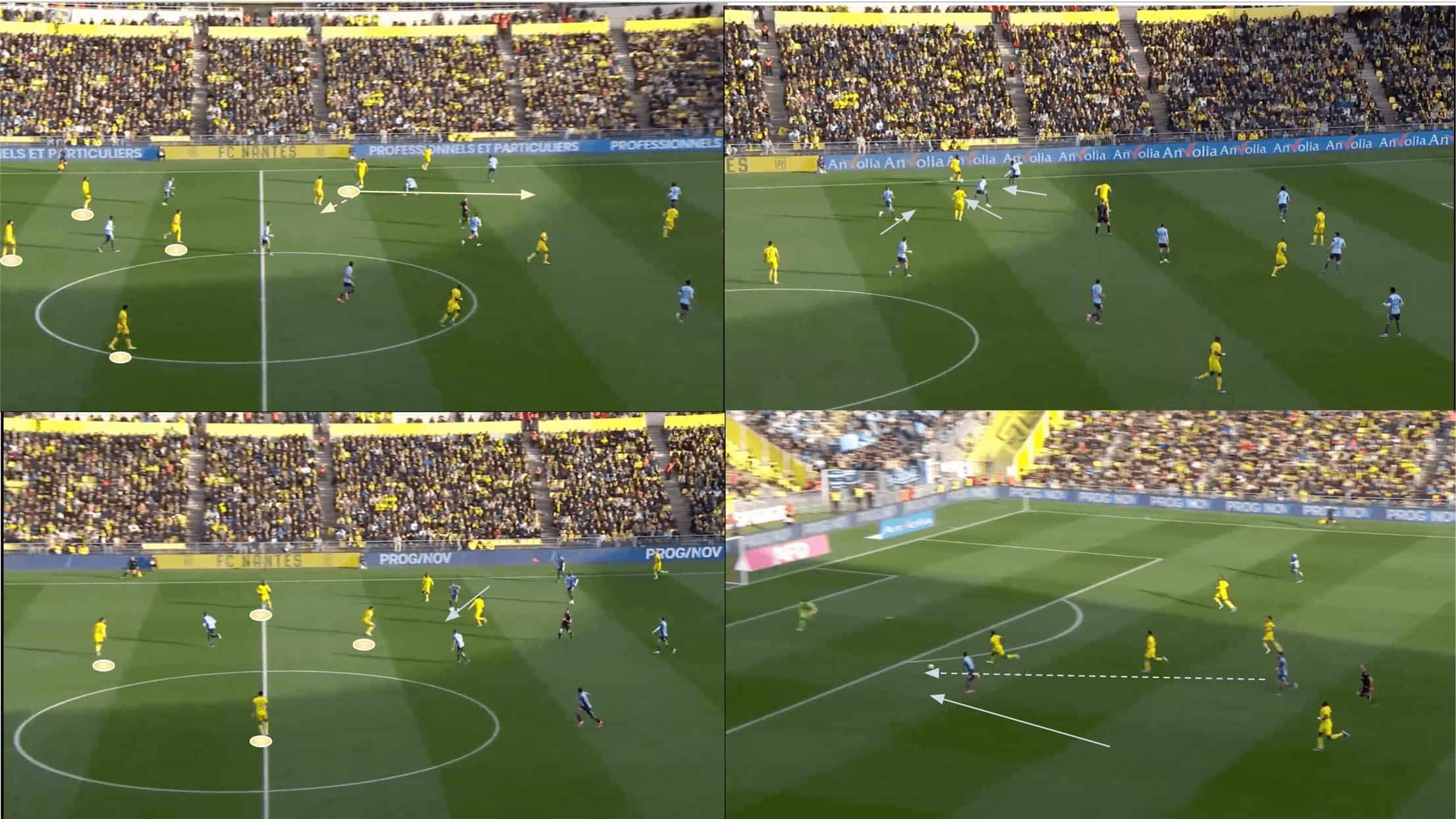
In figure 7, we see Merlin playing the ball into midfield and driving forward off the ball, positioning himself in the left half-space to receive in a position from where he likes to create. However, the ball doesn’t make it to him as his teammates succumb to the pressure of Le Havre’s defence, leaving the backline vulnerable.
Nantes build with a 3-1 / 1-2-1 base structure, as seen in the top-left image above. This is partly with preparation for a loss of possession in mind. Les Canaris typically play with this diamond-like structure in defensive transitions, which we can see an example of in the bottom-left image above.
In this instance, they don’t defend successfully, resulting in Le Havre’s forward being played through on goal and Lafont having to come out fast and clean things up.
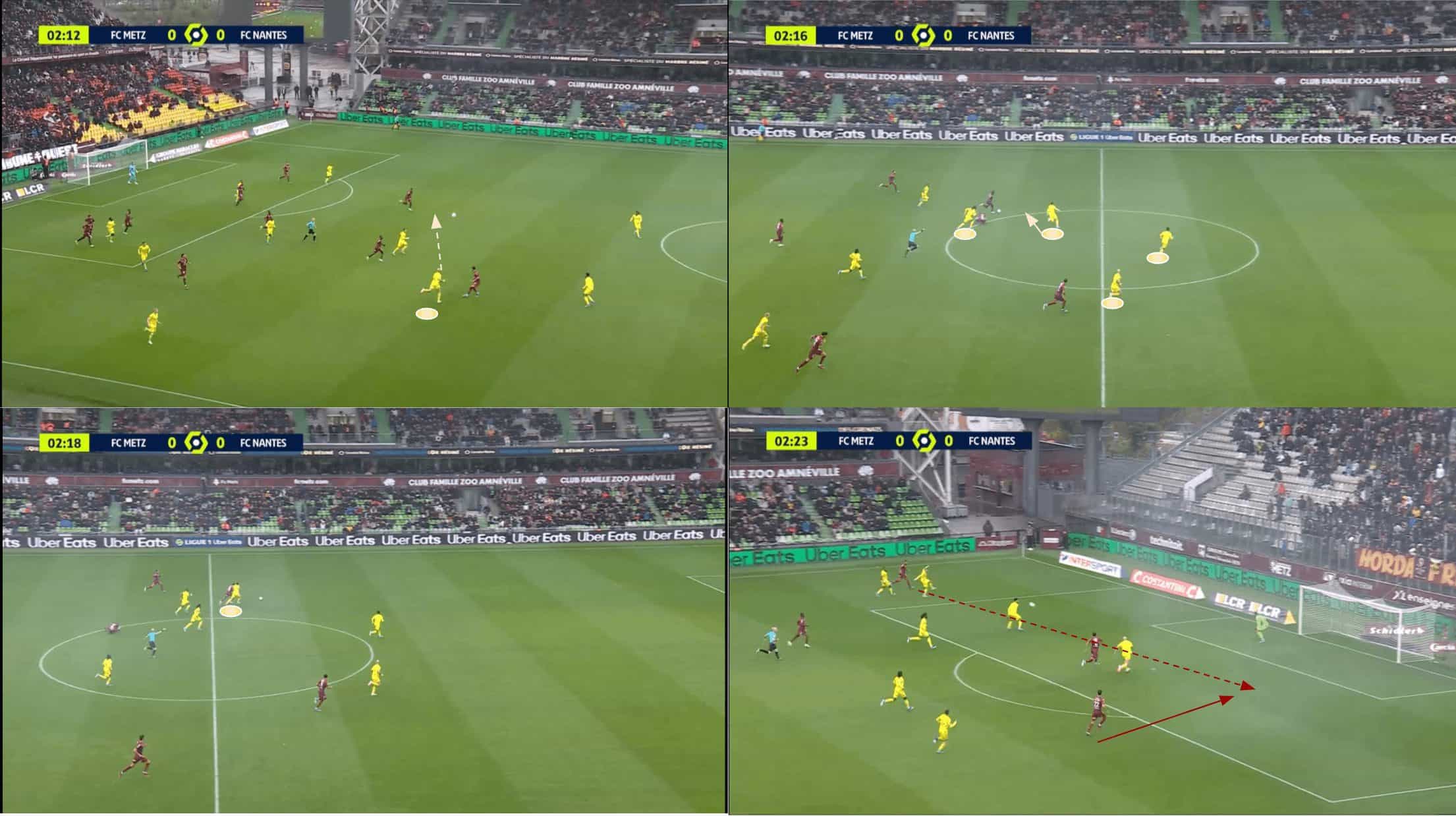
We see another example of Nantes transitioning to defence in figure 8. On this occasion, the ball is given away cheaply in midfield with a poorly directed header, allowing Metz to spring their counterattack. The tip of the diamond — normally a holding midfielder — attempts a ‘tactical foul’, but advantage is played; the next Nantes player on the right of this diamond structure doesn’t opt to foul, instead trying to win the defensive duel to no avail.
The counterattack results in a cross being played into the danger zone for Metz to put away, punishing Nantes’ sloppy play in midfield and failure to halt the transition.
One potential solution here would’ve been a second foul, cutting the ball carrier off in midfield before things progressed into such a dangerous position.
However, a more sustainable approach to the defensive transitions may be for Nantes’ backline to defend less aggressively in these situations. They set up in a way that naturally results in lots of 1v1 defensive duels in transition. However, they don’t really have the calibre of 1v1 defenders across the board that can consistently come out on top of these duels, leading to lots of unsuccessful defensive duels and, ultimately, chances created for the opposition.
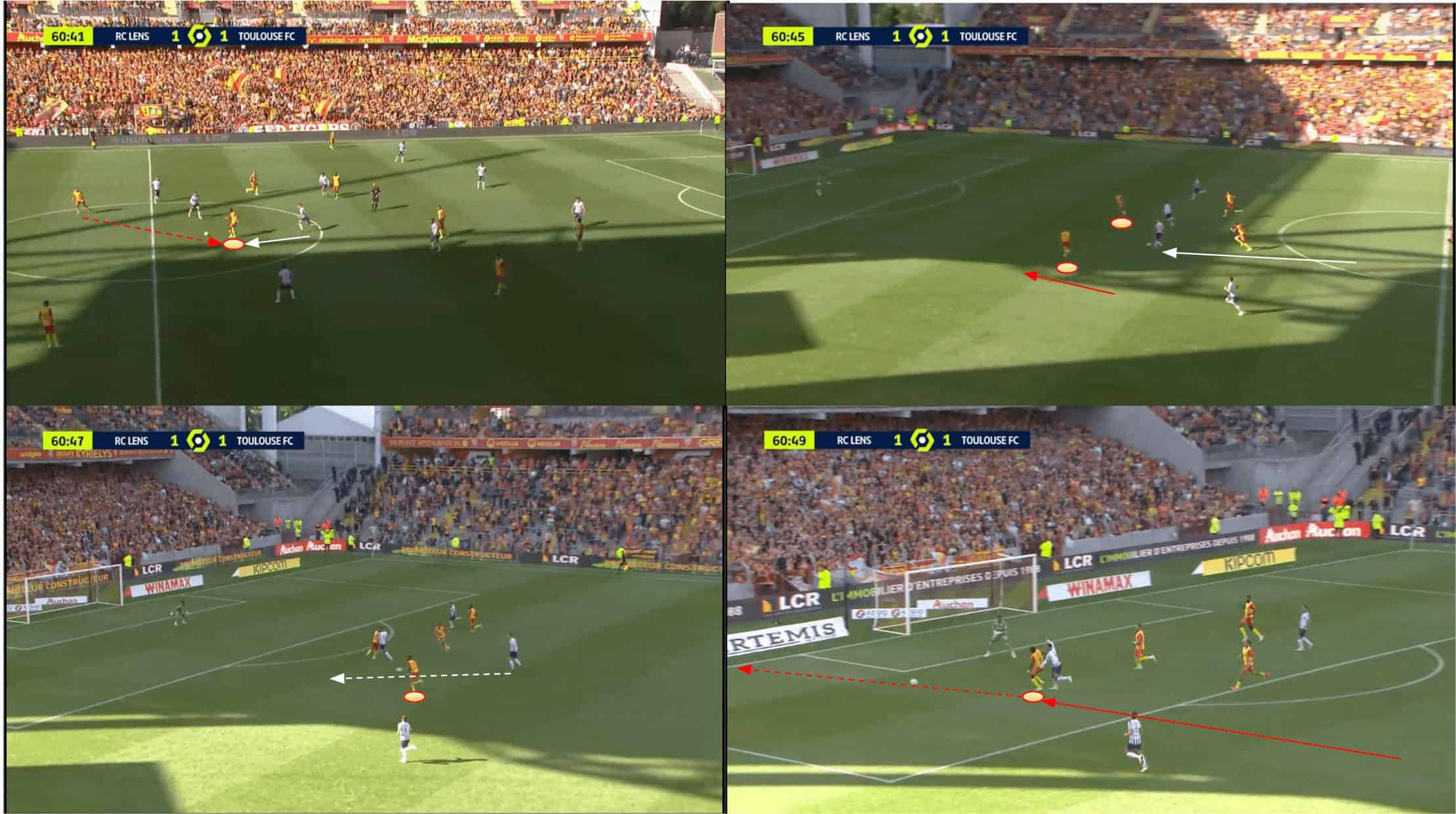
Lens, like Nantes, often have this season, typically set up in a shape with three centre-backs and two wing-backs. Their wing-backs operate high in possession, just as Quentin Merlin at left-back does for Nantes. Lens have done a better job of covering for their attacking wing-backs in defensive transitions, with Les Sang et Or conceding 10 fewer goals than Nantes with both teams having played 13 games this season.
We see a typical example of Lens in defensive transition here in figure 9. The key thing to note is how their backline operates much less aggressively, instead backing off, prioritising protection of the space behind and not immediately committing to a 1v1.
They back off and protect that space while buying their teammates time to get back in support.
The result is that the player retreating from midfield ultimately makes the vital touch that sends the ball out for a corner, protecting Lens’ goal in this vulnerable phase of play. Conceding a corner here isn’t ideal, but it’s far better than conceding a goal, which is what happened in figure 8 for Nantes and can easily happen a lot in transition.
Les Canaris can protect their goal better in defensive transitions by being less aggressive and engaging in less 1v1 duels, though this would require a significant departure from their current tactics in this phase of play.
Disorganised low-block defence
Lastly, our final section of this analysis will focus on Nantes’ settled defending, specifically their disorganisation in the low block. It’s not just defensive transitions that can be blamed for Les Canaris’ poor defensive record; their defending in settled out-of-possession phases has also often left a lot to be desired.
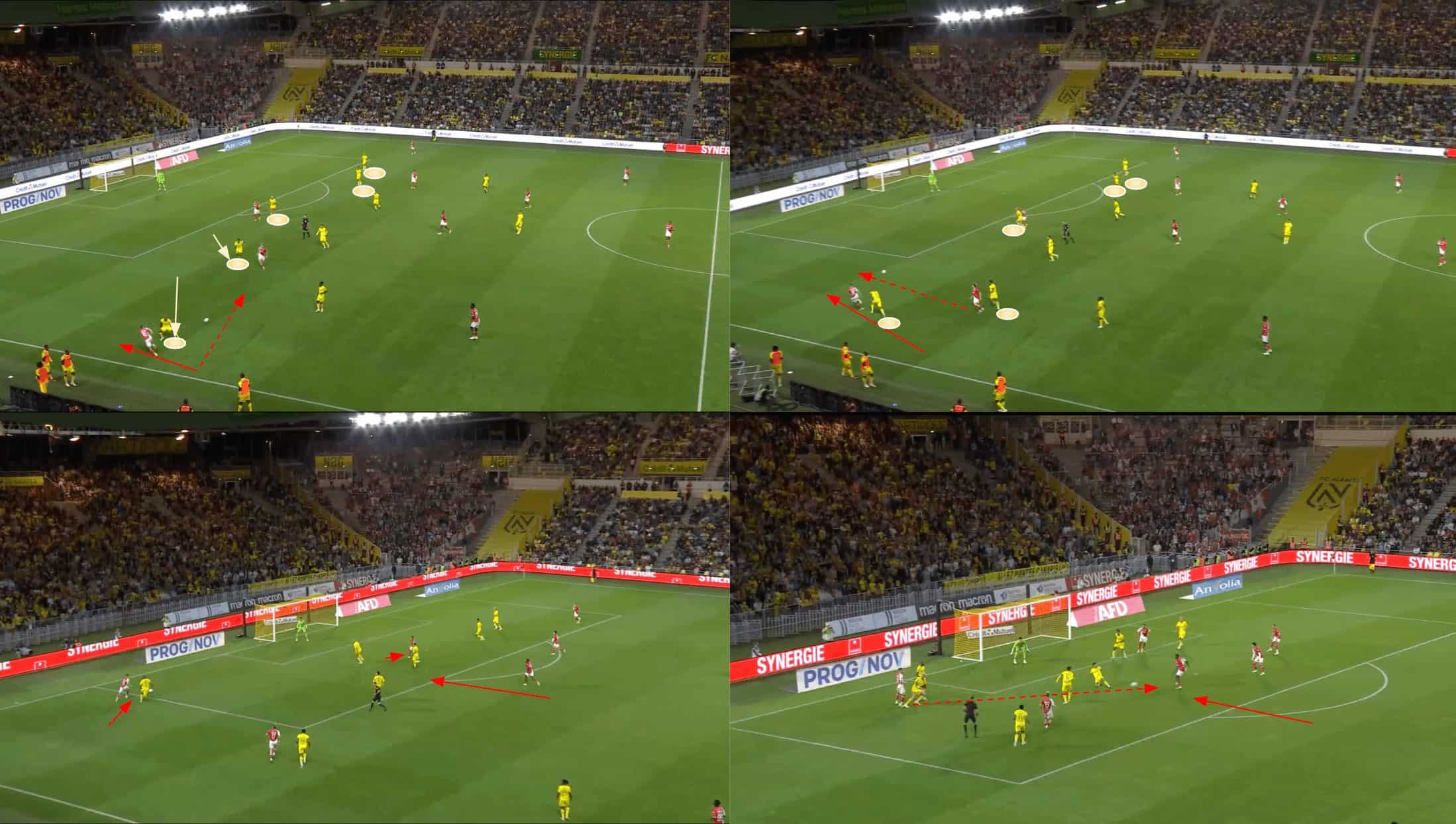
One issue Nantes’ defensive transitions and low-block share is that their players often struggle when dragged into 1v1s. In this case, the right wing-back is drawn out wide and double-teamed by the Monaco players as the more central attacker drops to receive to feet, dragging Nantes’ right centre-back out of position.
By the time the return pass is played through to the wide man, Nantes’ right wing-back and right centre-back are effectively eliminated, leaving too much space in the box for the other defenders to cover, as the midfielder arriving late ends up getting onto the end of the low cross.

From this game, here we’ve marked out the back five in the top two images, but we can see seven Nantes bodies in a line here, giving the opposition far too much space in midfield.
As Nantes start to move out and apply pressure on the Monaco midfielder, they allow a forward to completely lose his markers, making that player a target for the lofted ball over the top. He can meet that ball and enjoy a free header at goal.
This was an example of very poor marking and poor switching of opposition players between defenders. Nantes should’ve been more careful here, and the midfielder should’ve ensured this dangerous attacker was dealt with before moving away. The result of this carelessness ended up being a goal to Monaco.
Conclusion
To conclude this tactical analysis and team-focused scout report, we can see several major issues in Nantes’ game that make their defence so vulnerable. These are their inaccurate long passing, their overall approach to defensive transitions and their disorganisation in the low block.
In order to ensure they stay clear of a relegation scrap this term, they must fix these issues. If not, they run the risk of being dragged into another anxiety-ridden run-in come the end of the campaign.
