
Yverdon team occupies the ninth place in the Swiss Super League after 25 matches with 30 points, having won 8, drawn six, and lost 11 matches. They scored 32 goals, ranking ninth in terms of goal scoring in the league, and conceded 50 goals, ranking tenth in terms of best defensive lines in the Swiss Super League.
Despite the narrow point difference between them and the top positions, being only 7 points away from the third-placed team, FC St. Gallen, it’s noteworthy that, as mentioned earlier, the team’s offensive and defensive aspects are not in the best form. Surprisingly, however, the team occupies the first position as the team that scored the most goals from corner kicks in the Swiss Super League, with eight goals.
The strange thing is that Yverdon don’t do anything extraordinary in their routines during offensive corner kicks. Instead, they employ extremely simple ideas. However, despite their simplicity, they are very effective and perplex the opponent. The routine is characterised by its simplicity and effectiveness at the same time, which makes it difficult and represents the pinnacle of success in set pieces.
In this tactical analysis, we will discuss the various tactics employed by Yverdon in executing offensive corner kicks and how they execute simple yet effective ideas with repetition, leading to confusion for the opposing team. We will also elucidate their adaptation to their opponent’s reactions and their ability to find alternative solutions smoothly and effectively.
Short corners
Teams usually defend short corners with only one defender. This may cause a 2-v-1 situation for the attacking team, having the taker and the short-option attacker against the short-option defender, as we know. For that reason, defending teams began to ask the defender who stands initially on the edge of the six-yard to defend flicks to go and help his mate to be in a 2-v-2 situation, but what will happen if the attacking short option stands very close to the taker, as a second taker? The distance that should be cut by this defender will become too long, so he won’t be useful. Let’s see how!
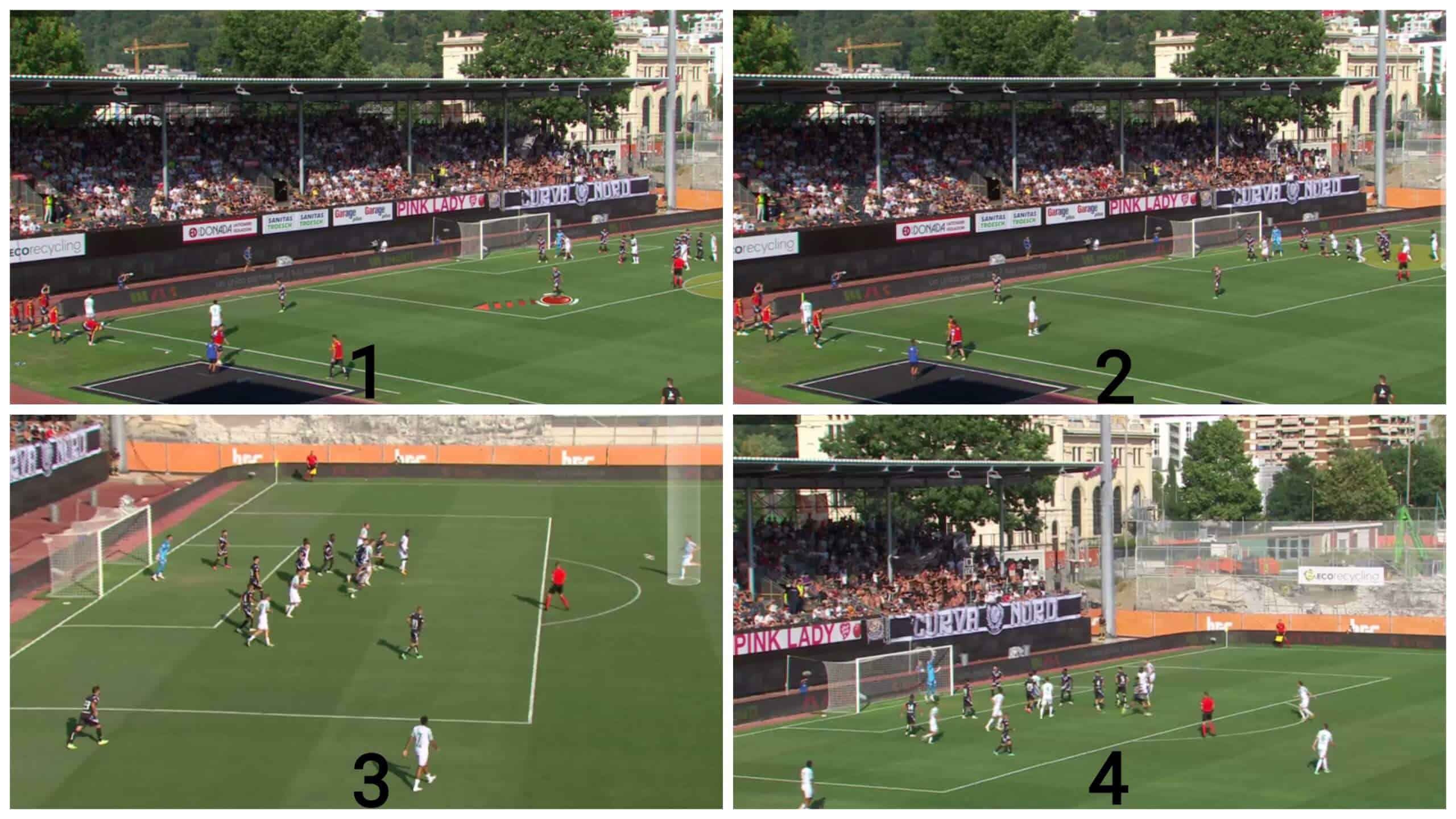
In the photo below, the short-option attacker is the second taker, in red, while the yellow one is the short-option defender, and the blue one is the defender who will go to help.

Yverdon have also another trick that makes it more difficult for the blue defender, below. The taker passes the ball to his mate and then does an overlap run behind him, as shown in the yellow arrow. This leads to a longer path for the blue defender; as you can see, path number 2 is longer than that of normal number 1. You may see that overlap often in short corners, and now you know why.
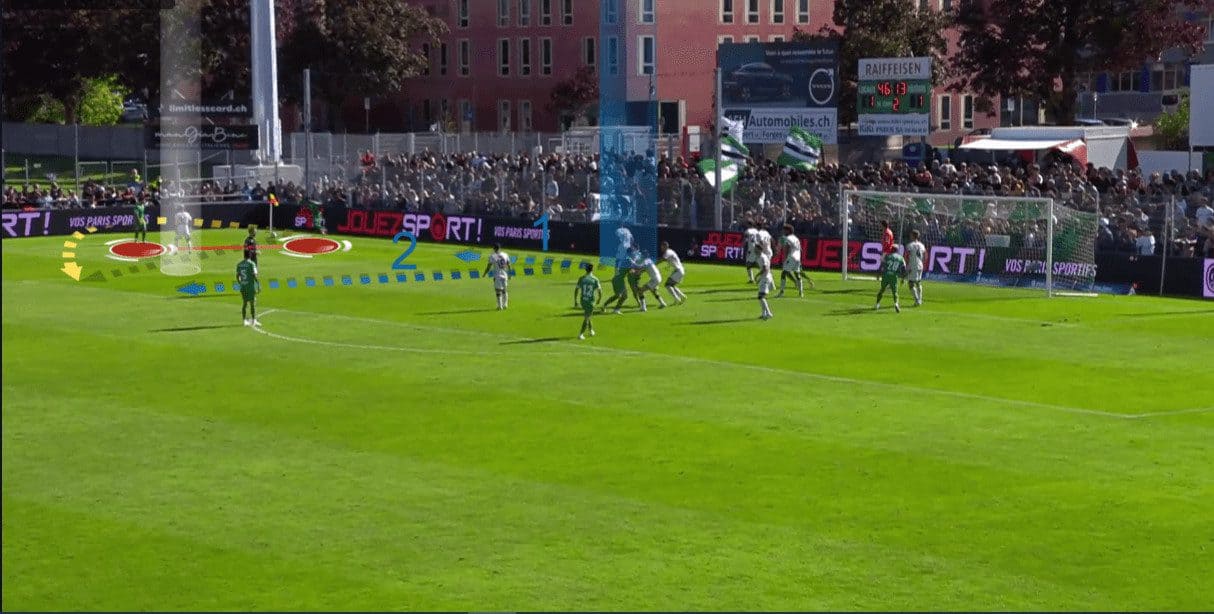
As shown below, the attackers are in a 2-v-1 situation, so earlier than the reach of the second defender, the taker will receive the short pass on the edge of the box, as shown in the second photo below, but what is the second part of the routine? The second part is targeting the far post by two players. One of them didn’t start there to escape from his marker against his direction of movement because the defender was busy with the ball and going up to form a line so that he couldn’t track the ball and the attacker at the same time. We call this problem a problem of orientation.
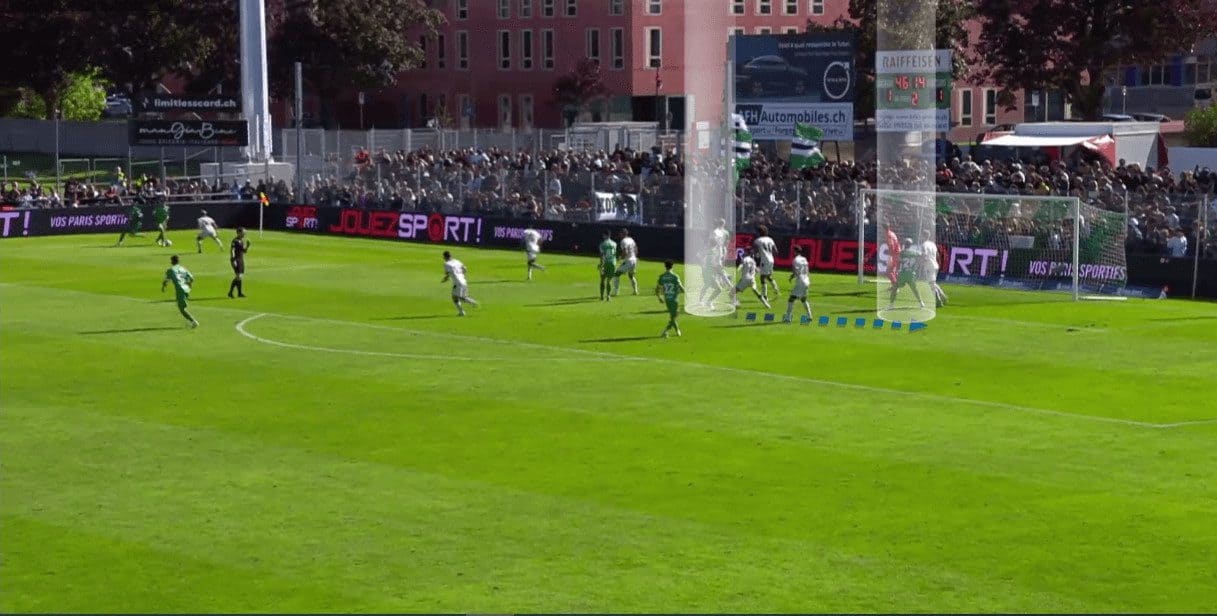
Now, the attacker becomes at the defender’s back, on his blind side, as shown below.
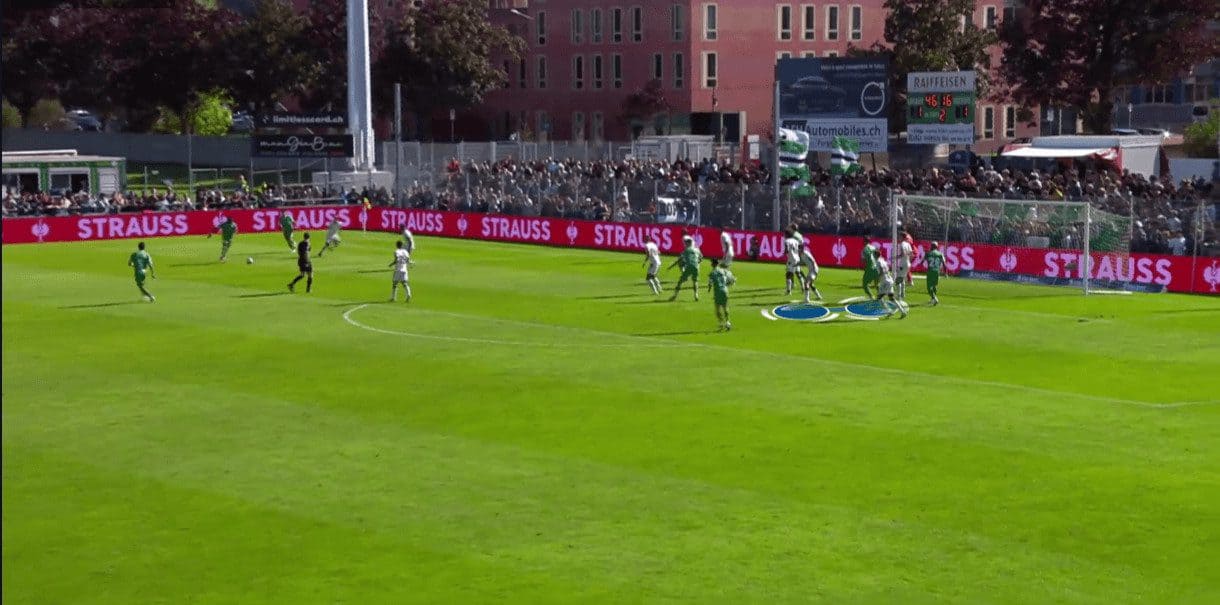
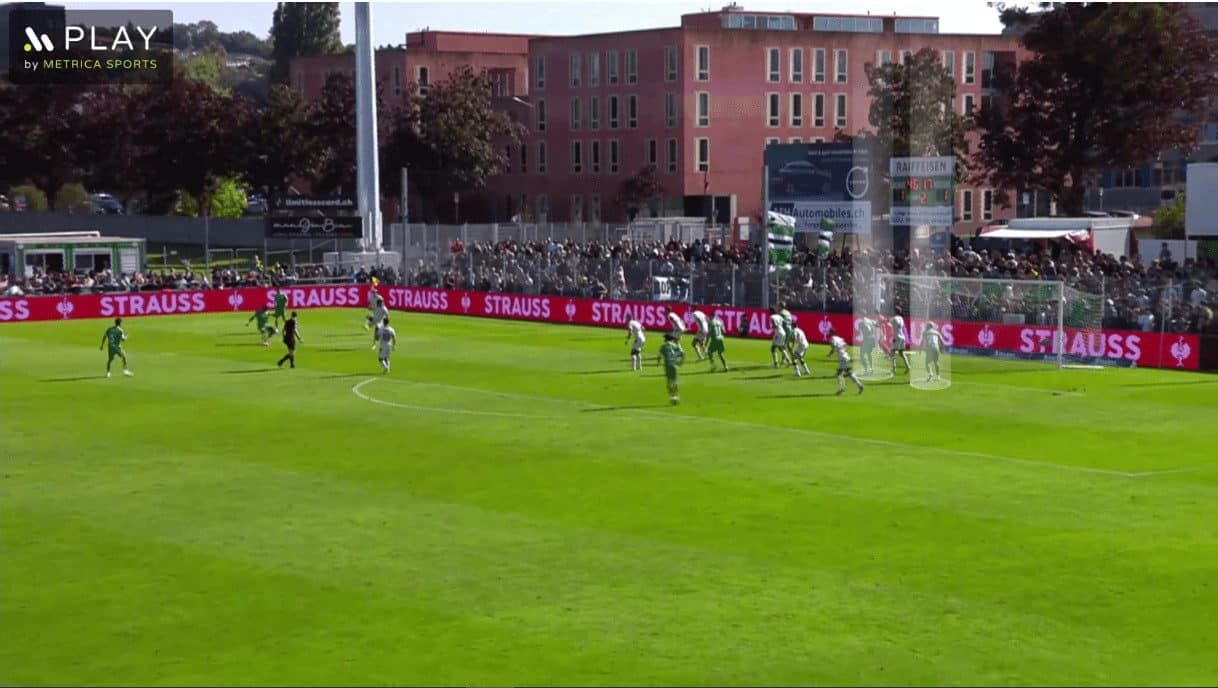
Now, they have two attackers on the far post; one drags the defender inside to empty the space for the other, who scores the goal, as shown in the two photos below.
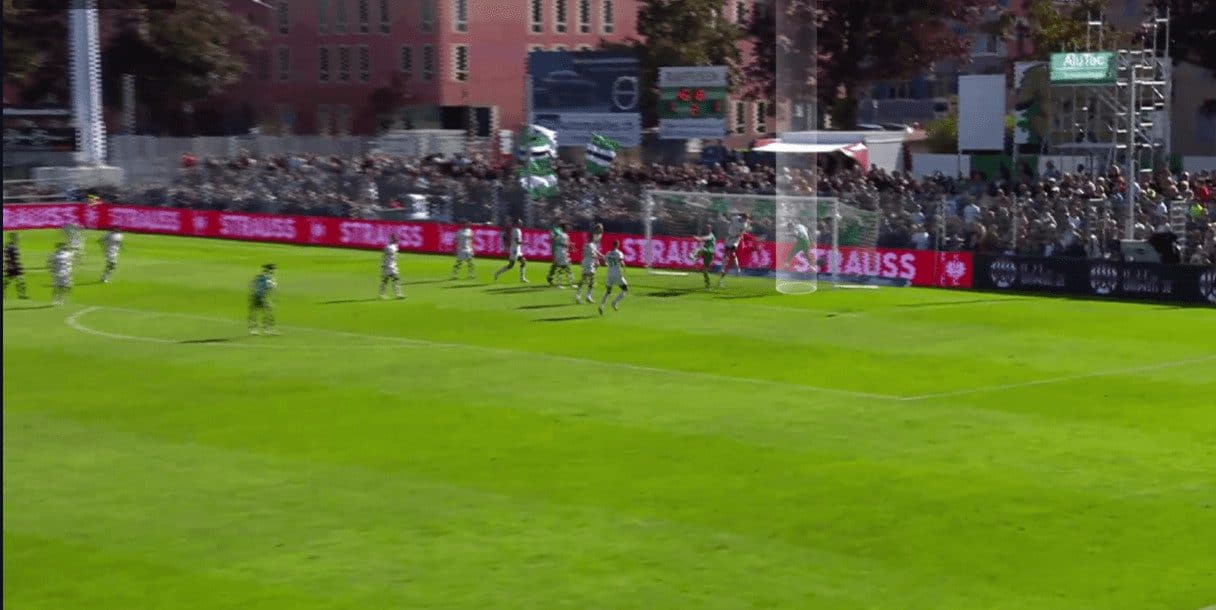
As we have mentioned above, They have many diverse solutions, so they don’t only depend on sending crosses after the numerical superiority. Still, the attacker has the freedom to deal with the situation by exploiting that large space. In the case below, you can find the usual second taker who receives the ball and get it back to the taker after overlapping.
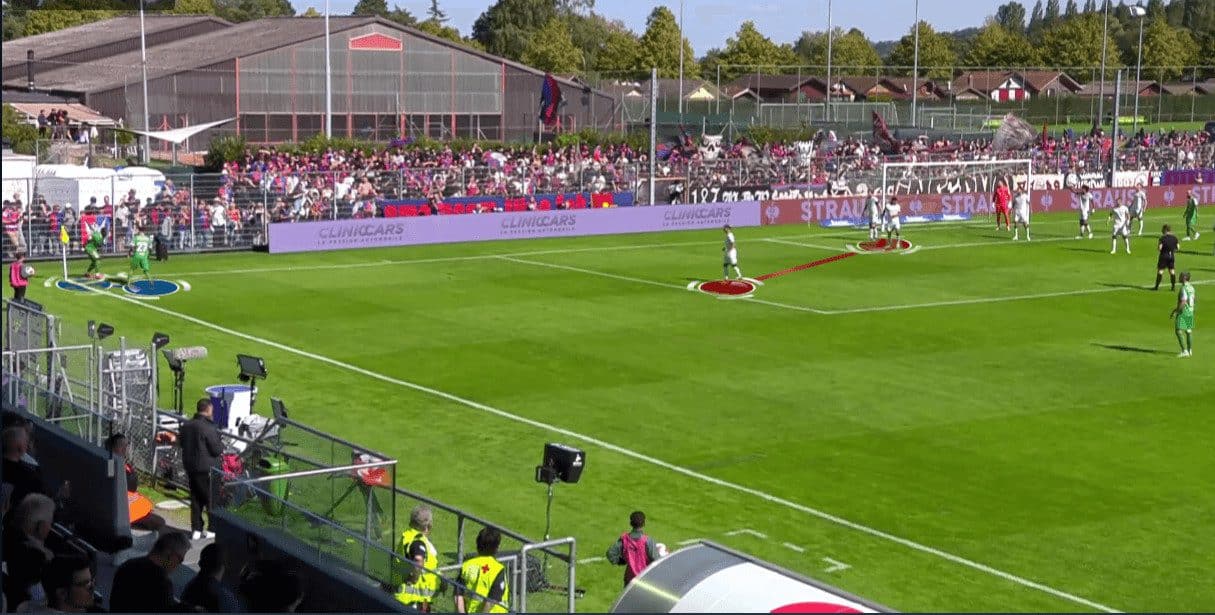
The early 2-v-1 situation causes chaos on the defenders, so you can see that they stand in a vertical position because the first defender is forced to face the short-option attacker while being beware of the second attacker, so he is forced to defend the two directions. The short attacker exploits that, so he attracts the defenders to the line direction and then passes the ball to the taker into the free space inside the box, as shown in the two photos below.
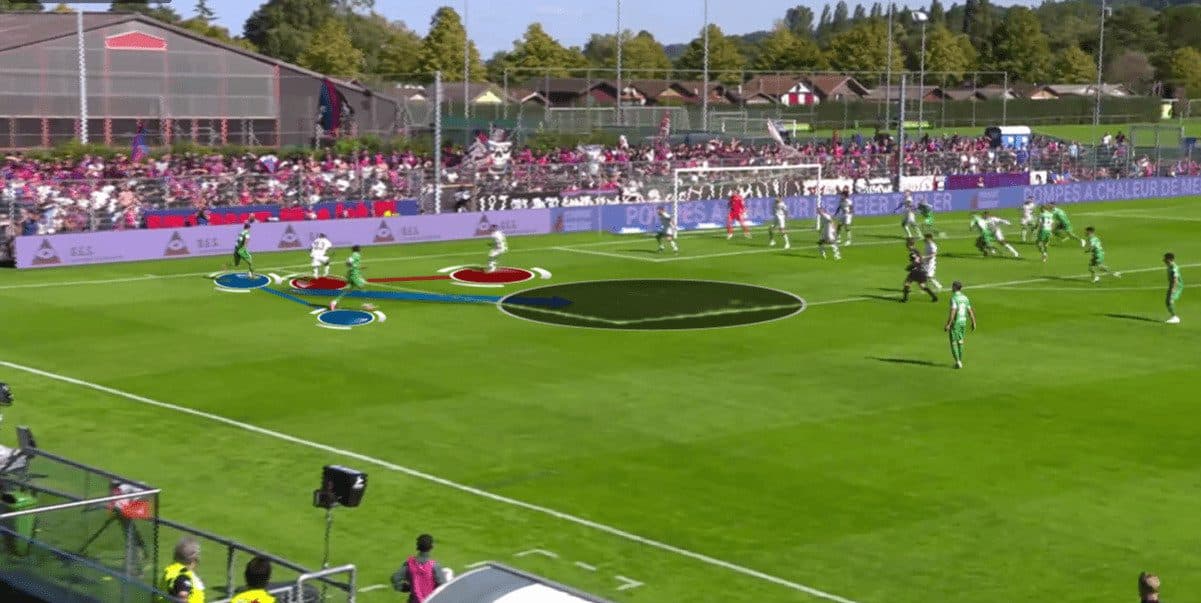
He decides to shoot the ball from that close distance, but it hits a defender.
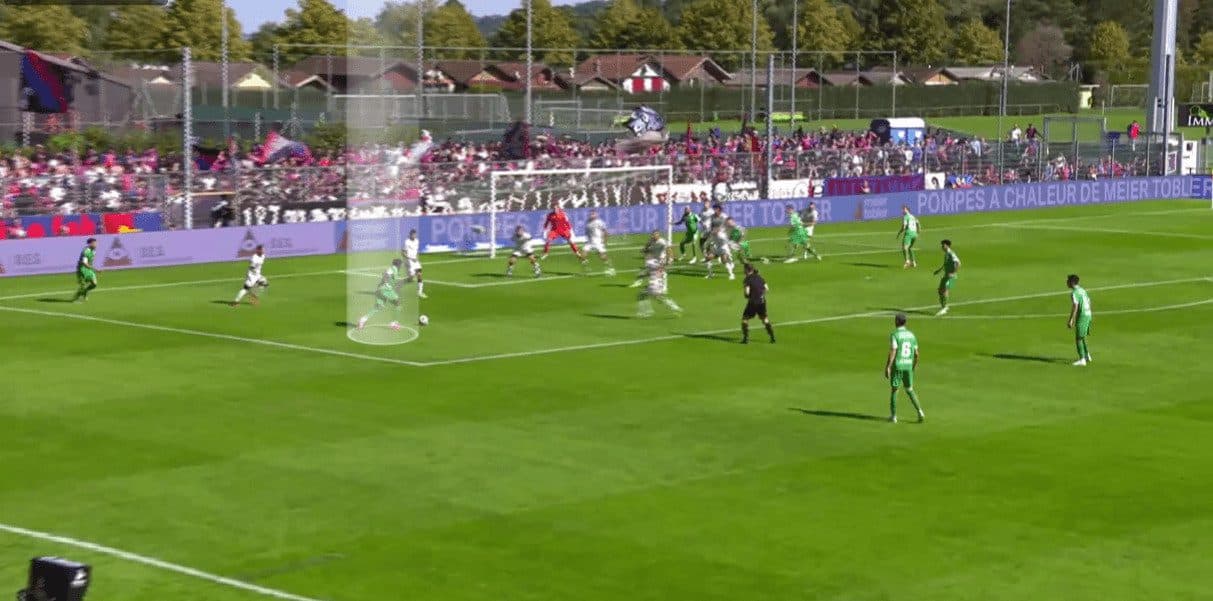
So, what if the second defender manages to reach early to be in a 2-v-2 situation? As we have mentioned, they have no problem dealing with different situations, so they use their skilful players on those short routines. Let’s see how!
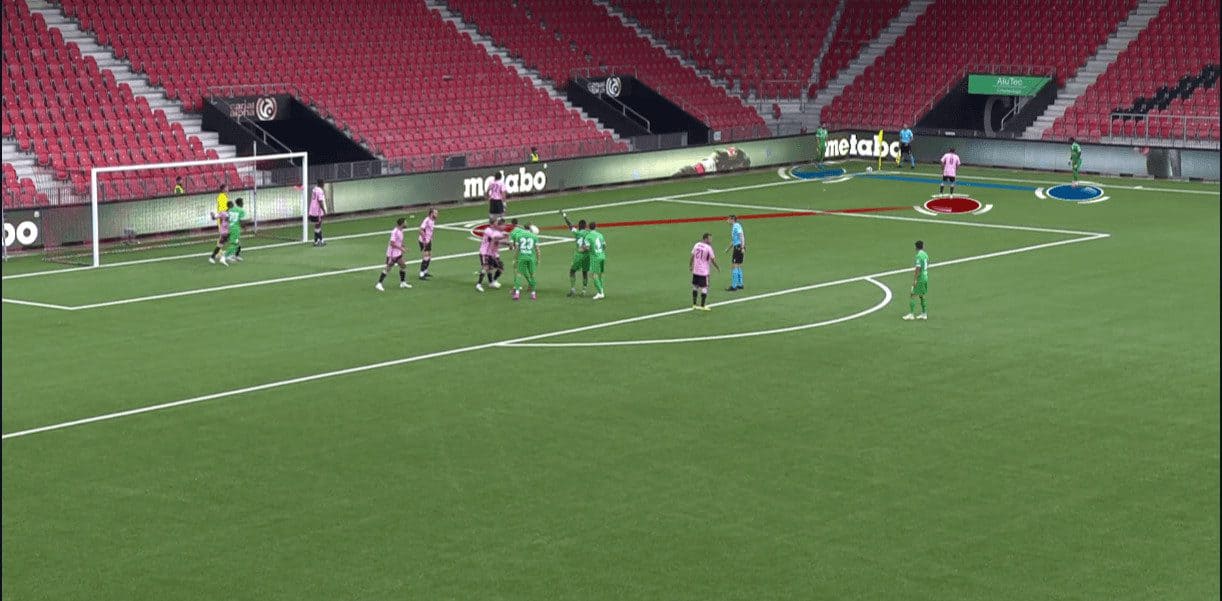
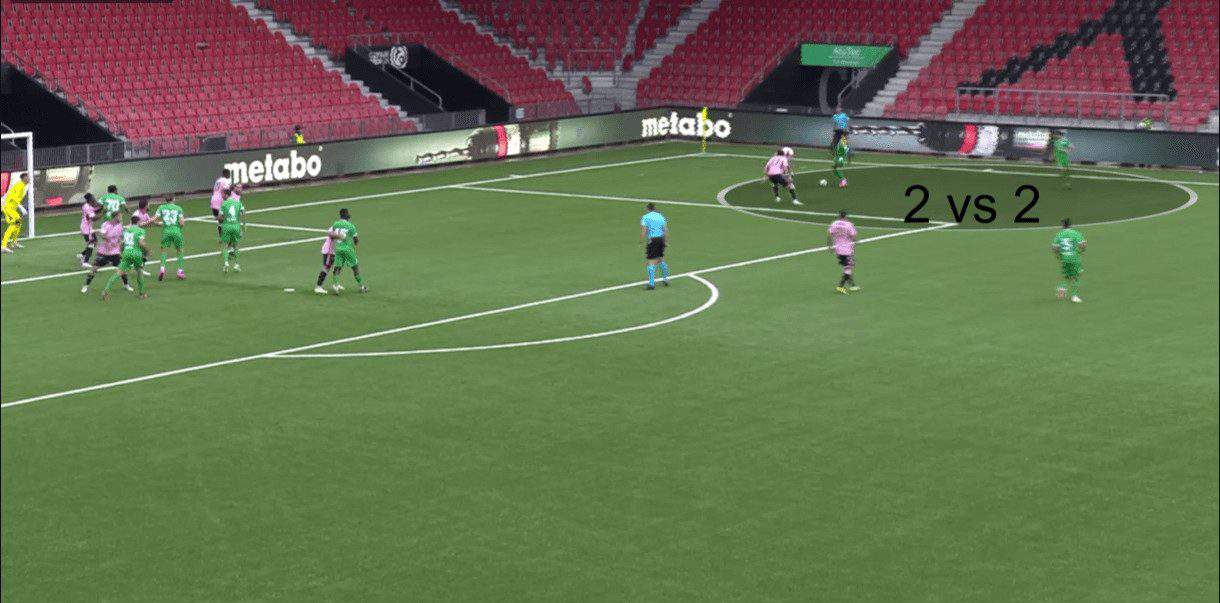
You can find below the worst scenario for them to be in a 2-v-2 situation, but for skilful players who can dribble and are excellent at 1v1 attacking, this isn’t a problem. This is a situation they aim to reach during the match, so the attacker dribbles, passing the defender and getting inside the box, as shown in the second photo below.
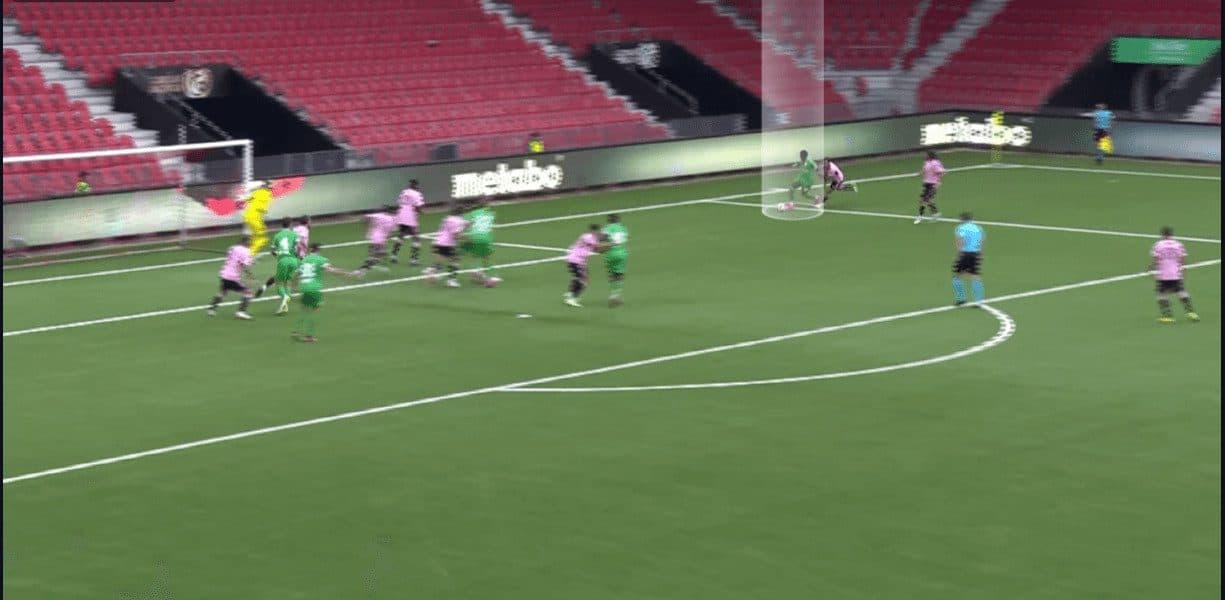
He shoots from a good area, scoring a goal in a simple, smooth way.
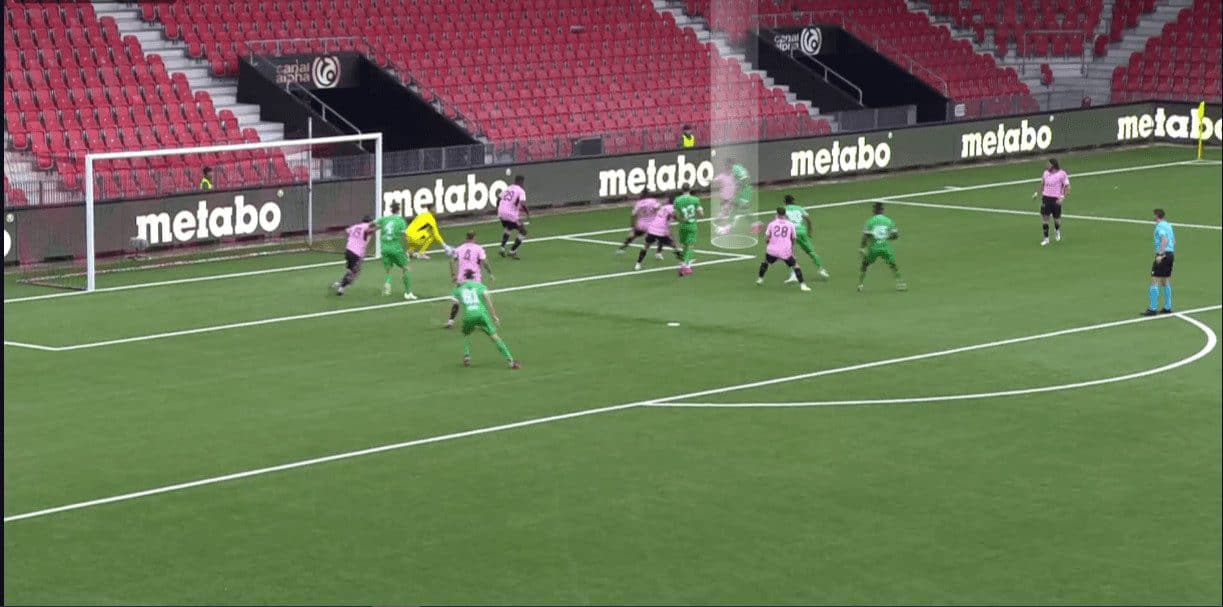
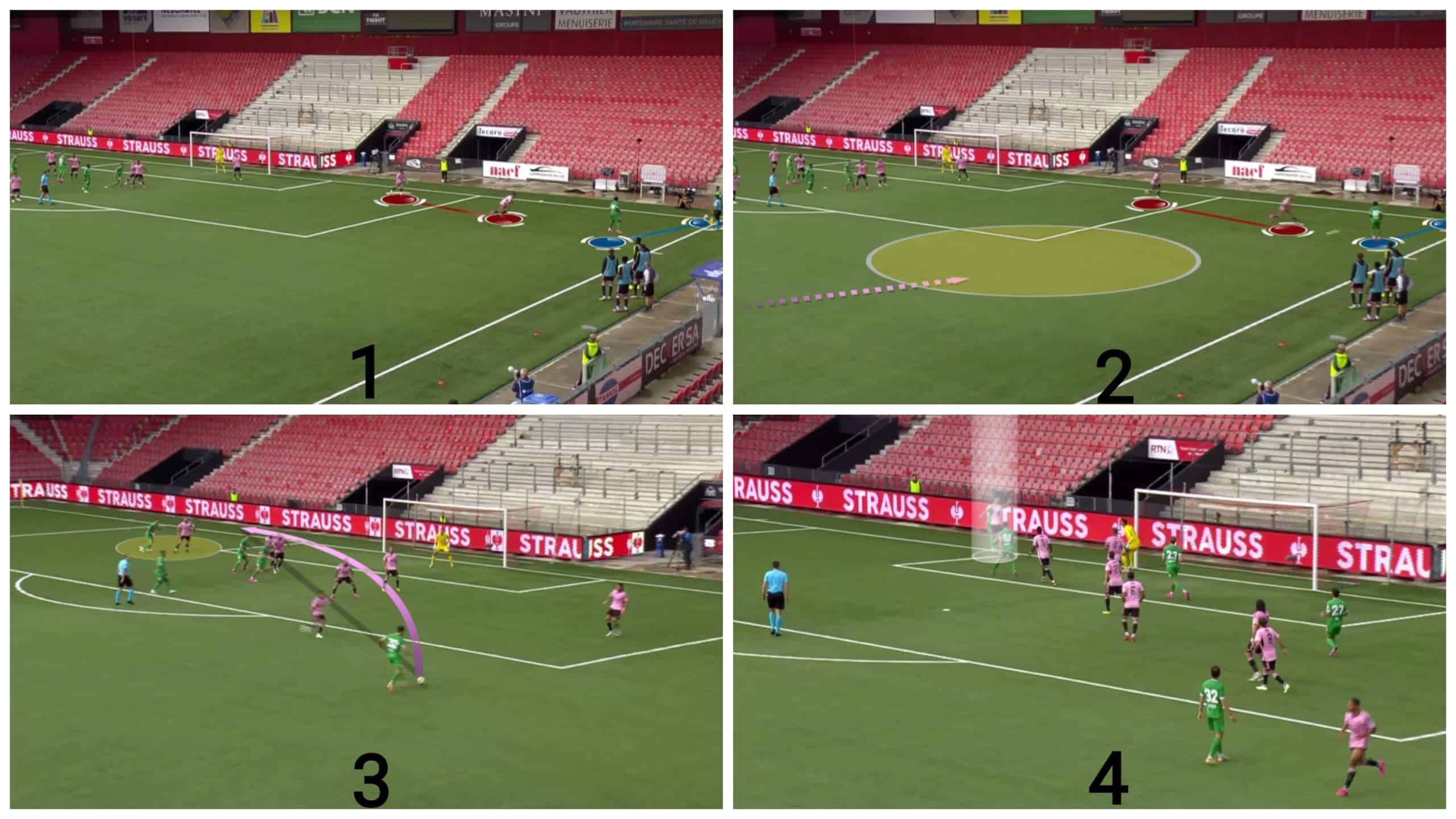
Some teams use the rebound defender to join the short-option defender to achieve that 2-v-2 situation, asking him to start closer to the short-option defender, avoiding this problem of numerical superiority.
In the first photo below, you can see that leaves the rebound area empty, so they have no problem targeting it directly, but with a more trick, which is asking the attackers to start in far positions near the rebound zone and then go deeper to drag any defender can go to protect the rebound area with them, as shown in the second photo.
In the third photo, you can see that the plan works, and the rebound area is empty for a player coming surprisingly from the back to kick the ball, but the goalkeeper saves the ball, as in the fourth photo.
We get all the details in 2-v-2 and 2-v1 situations, but what if the opponent can defend the short area with two defenders while leaving a rebound defender? They have no problem implementing a 3-v-2 situation using an attacker from the back, as shown in the second photo below.
In the third photo below, that player manages to send a cross on the last defender’s blind side against the defender’s position of moving up, but the cross isn’t optimum, as shown in the fourth photo below.
Some teams don’t ask a defender to stand in a close position to the edge of the box to be ready for any short pass if the attacking team doesn’t start with short-option attackers asking this defender to go deeply near the six-yard thinking that they are safer now so, Yverdonalso may leave the short area without attackers to deceive the opponents making them think that they won’t send short passes, but an attacker comes suddenly from the back to send that cross which is difficult for the defenders, as we have mentioned, despite being so simple.
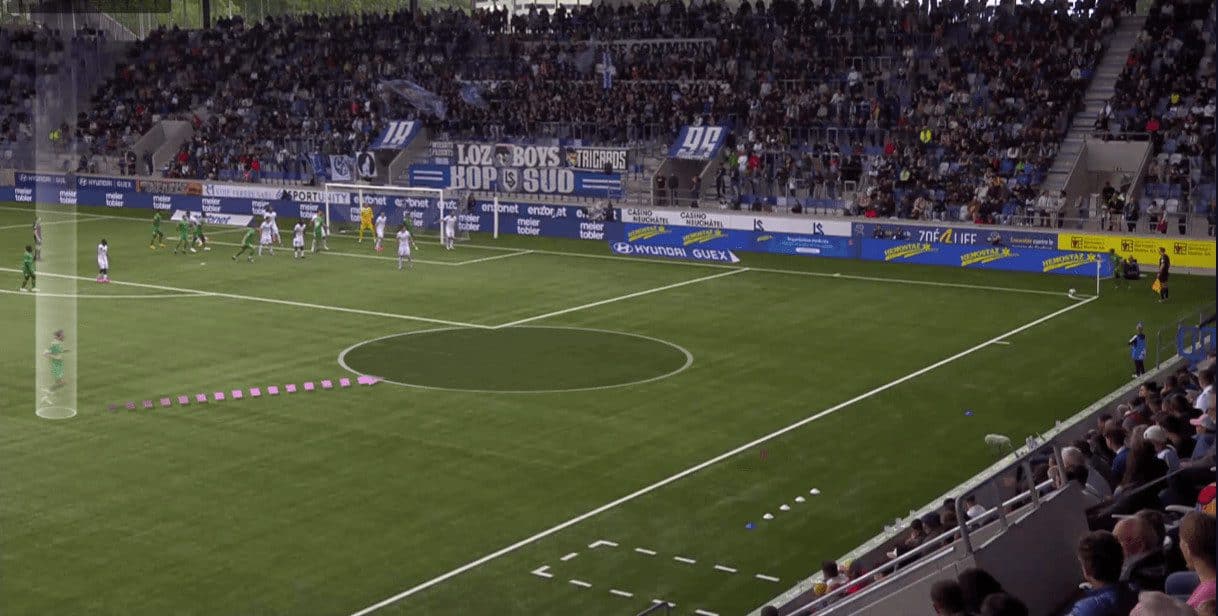
They also use overloading in that routine to increase their opportunities to score goals, so you can find below that they overload the far post aiming for the same reason.

Overloading
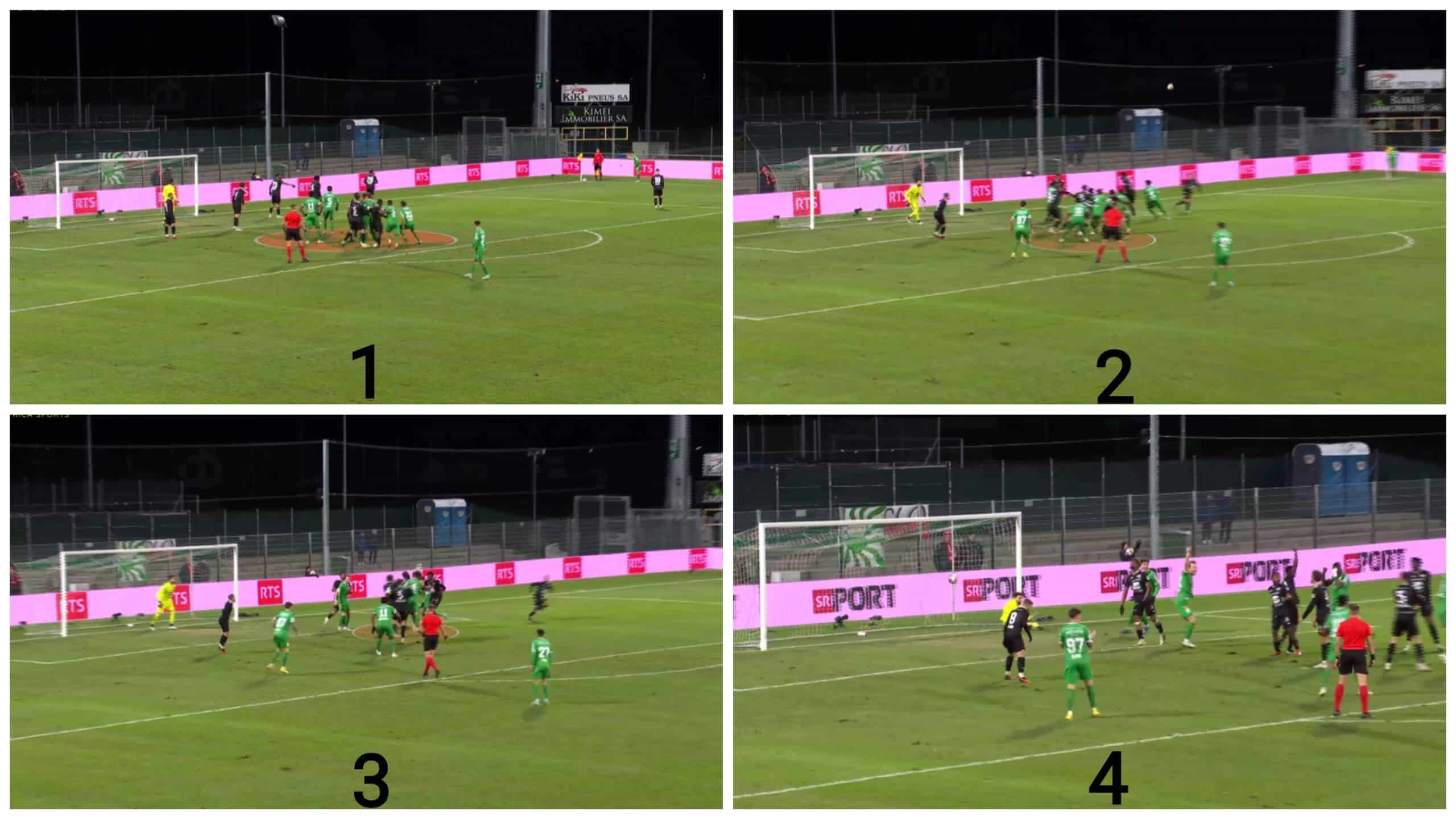
They also have scored goals from direct corner kicks without using short-corner routines using simple but effective methods to increase their opportunity to get the first touch. One of those simple, effective principles is overloading, which simply means that many attackers target the same area, the targeted area, so the possibility of getting the first touch and scoring goals increases.
In the first photo below, you can see that the attackers start in a pack near the penalty spot and then go toward the near post, as shown in the second photo below.
In the third photo below, they get the first touch after simple overloading, which can be done in better ways, but this simple way works, and they score a goal, as shown in the fourth photo below.
Conclusion
In this analysis, we discussed the effectiveness of Yverdon in executing offensive corner kicks with simple yet highly efficient ideas, making them the team that has scored the most goals from corner kicks in the Swiss Super League.
In this set-piece analysis, we elucidated how they exploit short corner kicks by creating a 2-v-1 situation due to the position of the short-option attacker. Additionally, they utilise specific rotations that pose a threat afterwards, either through shots or crosses on the defenders’ blind side toward the far post. We also explained their ease in adapting and transitioning from a 2-v-2 situation to a 3-v-2 one or exploiting the rebound area directly. Furthermore, we highlighted their reliance on overloading in case of sending direct crosses, maximising their opportunities to get the ball.
