
Reims are in third place in Ligue 1, having accumulated 13 points after seven matches. They are one point behind Monaco and Brest, the holders of the first and second positions, respectively.
Reims have the third-strongest attacking line in Ligue 1, with 13 goals, after Monaco with 18 and PSG with 14.
However, Reims are the strongest team in Ligue 1 at exploiting set pieces, as they have scored five goals from set pieces in seven matches out of a total of 13 goals—this equals about 38% of all their goals this term.
When it comes to attacking corners, under Will Still tactics, Reims are the highest-scoring team in Ligue 1 this season after netting from three corners.
In this tactical analysis, we will discuss Reims tactics at attacking corners and explain how set-piece analysis helped them to be in third position ahead of big teams like Paris Saint-Germain.
Will Still Tactics – Using flicks
They usually use flicks against teams who don’t use an extra zonal defender in the flick zone in front of the first defender in the zonal line on the near post or, let’s say, teams who don’t defend the near post well.
At the same time, the second targeted player who targets the far post to receive the headed pass starts to move late while his first position is in the rebound zone, on the edge of the box, as we will explain.
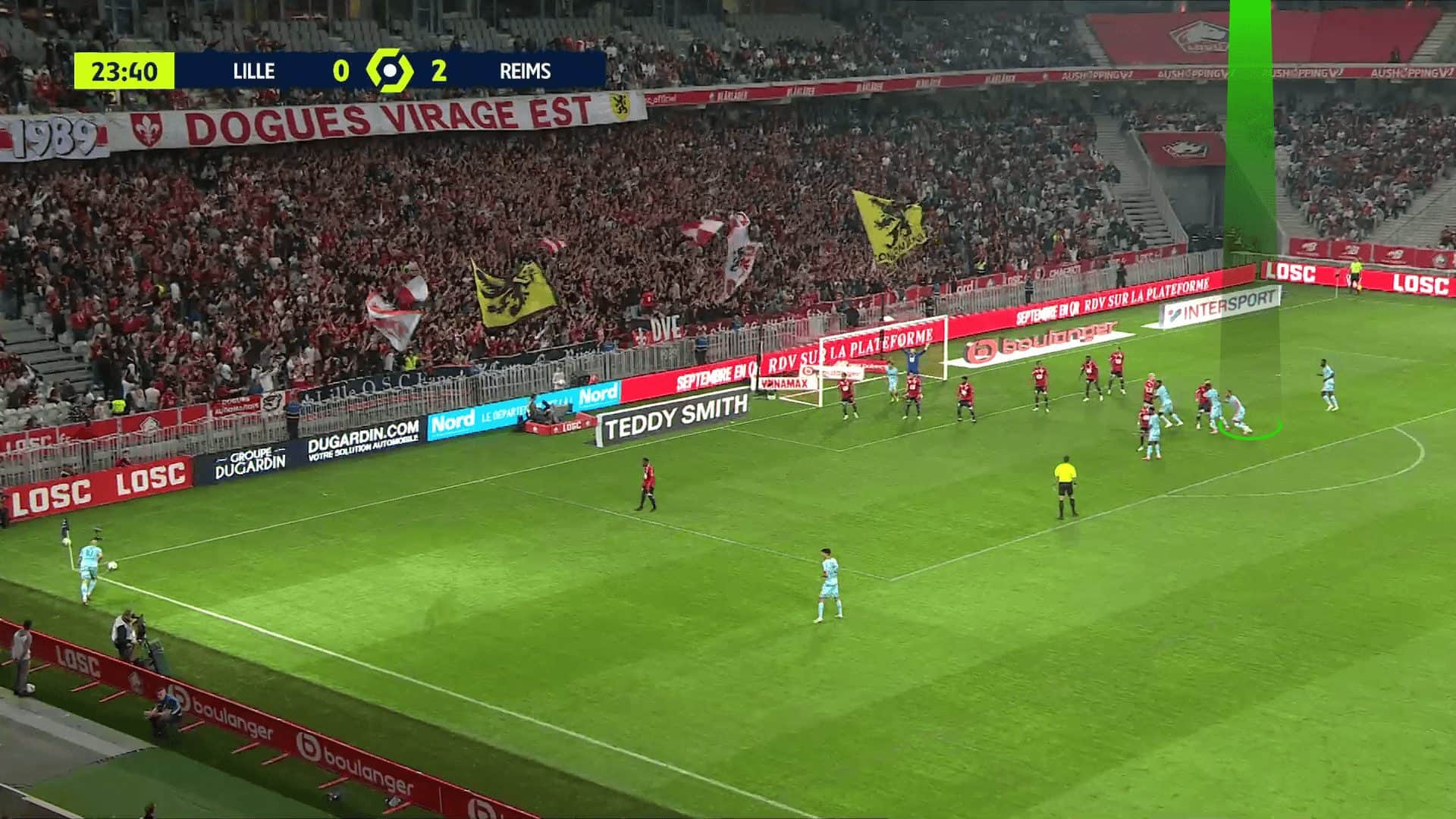
In the first photo, the opponent is defended by five players in a zonal marking defending system, three defenders in a man-marking defending system, a short-option defender and a defender standing in the rebound zone.
Here, we can note that the opponent doesn’t use an extra defender in front of the first zonal defender on the near post to defend the flick, so the Reims plan is to target this area.
In the second photo, the corner routine begins, so the three attackers, whose initial position was in front of the goalkeeper, start to move.
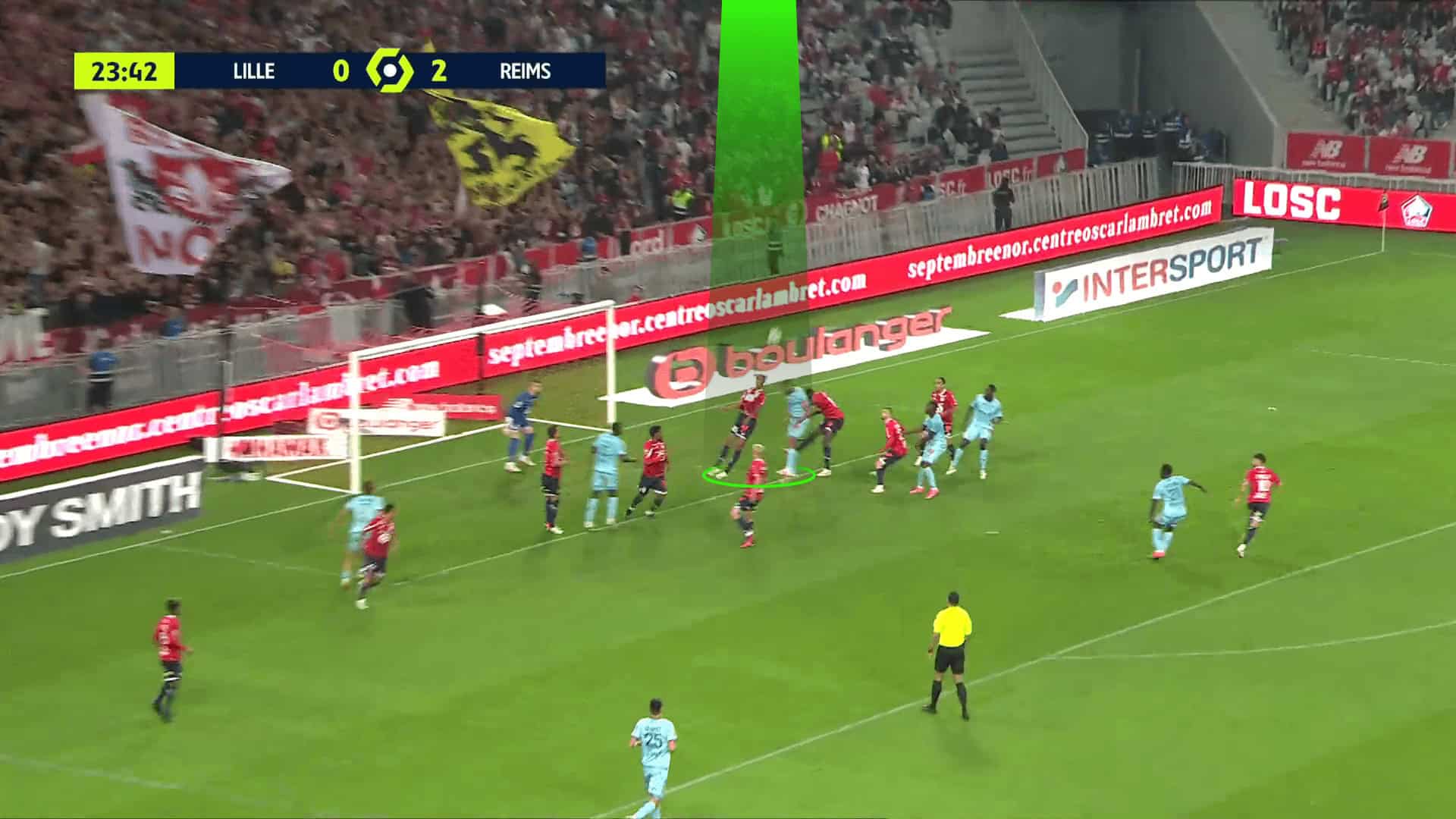
The targeted player moves to the area before the near post, the flick zone, from the near-post defender’s blind side while a player blocks the goalkeeper to prevent him from getting the flicked-headed pass on its way to the far post. The other moves to the area that the near-post defender leaves to track the targeted player, as in the third photo.
This movement is for two reasons.
The first one is to get the ball if it gets over the targeted player, and the second reason is to fix the second zonal defender, preventing him from tracking the targeted player.
The second targeted player, who starts in the rebound zone, appears in the fourth photo.
He runs after the green-highlighted headed pass to the far post from the defenders’ blind side.
The timing of the second targeted player’s movement is really too important to be away from eyes when every defender looks around him before the cross and the first headed pass, as in the first and the second photos where he is out of the shots, in the rebound zone.
Still, in the third photo, he starts to move after the first headed pass when all defenders focus on the ball in the air.

He gets the headed pass and scores a goal, as shown in the following two photos below.


Using fake flicks to target the near post
They have another idea against teams who defend the near post well: a player in the flick zone, with a player asking to follow the attacker in the flick zone.
Usually, this player is the near-post defender.
Will Still’s tactics involve an attacker who must move forward into the flick zone and drag the near-post defender with him.
Then, the taker crosses the ball in the area behind him, between him and the flick-zone defender, as we will explain clearly in the case below.
In the first photo, the opponent is defended by five defenders in the zonal line, inclined to the outside, waiting for the out-swinging cross, a flick-zone defender, highlighted in yellow, three man-markers, and a rebound defender who stands near the edge of the box.
In the second photo, the corner routine begins.
Hence, the attacker on the near post moves in front of the near-post defender, dragging him to the edge of the six-yard line to target the area between him and the flick-zone defender.
However, our targeted player must first escape from his man marker.
He pushes his marker and then uses a small trick to escape, so let’s see how that will happen in the third photo.
In the third photo, the targeted player runs in a curved path around his mate, using him as a screen.
When his marker tries to follow him in the same path, he will stand in his path, preventing him from tracking the targeted player indirectly without a foul, as shown in the fourth photo.

In the photo below, the plan works.
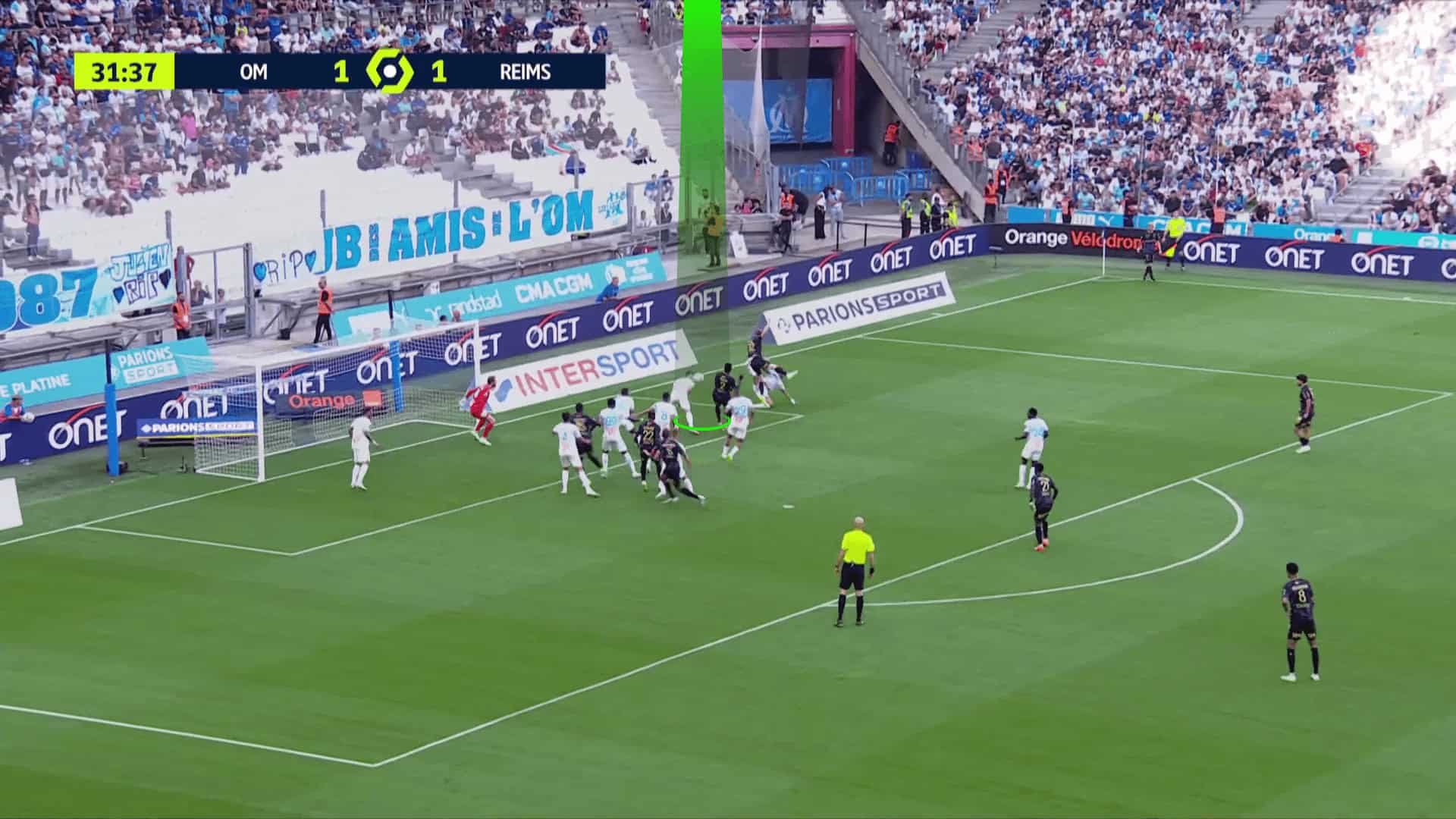
The blue attacker drags the near-post defender with him while the green-targeted player targets the area between him and the flick-zone defender.
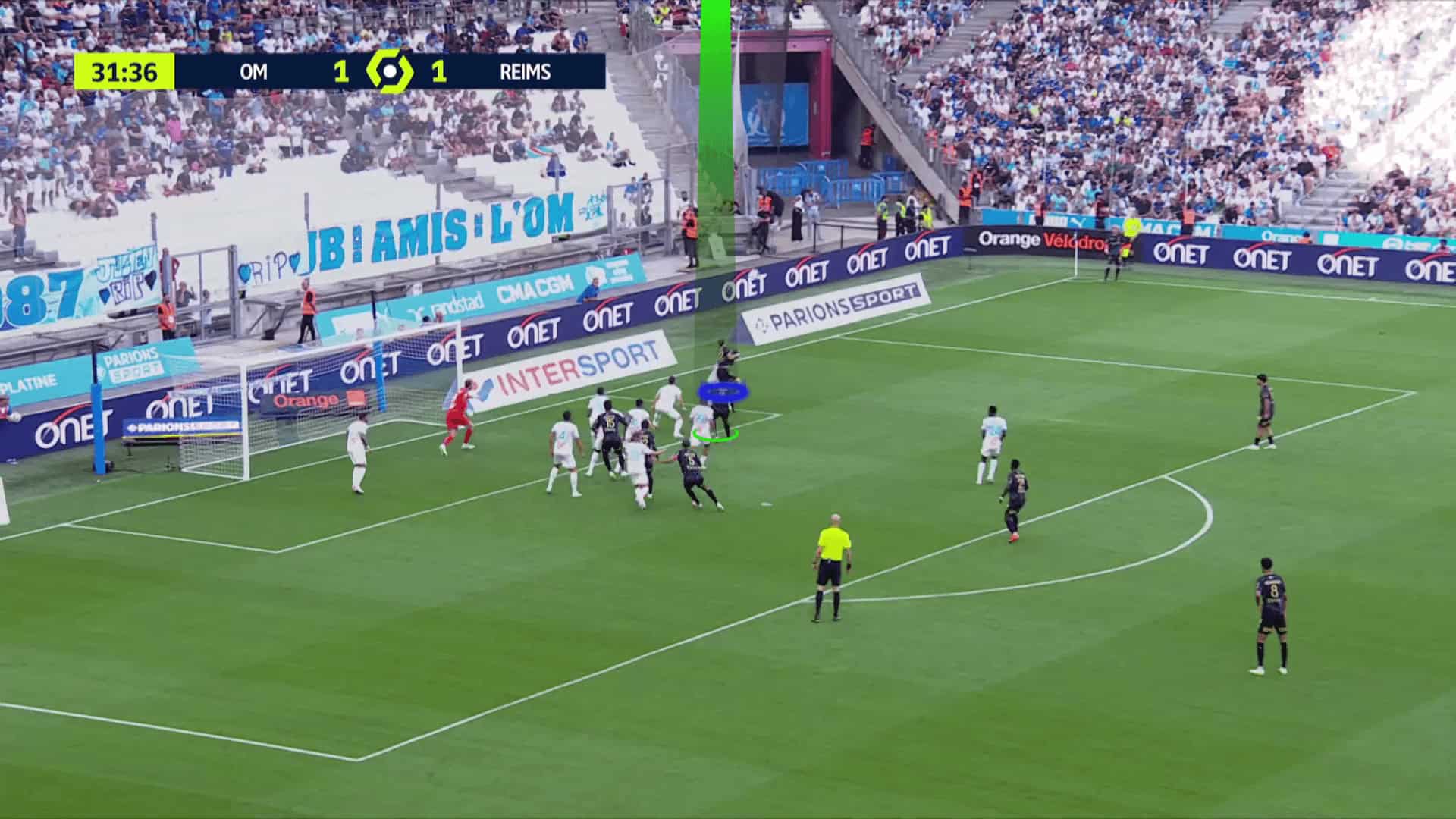
But the targeted player reaches a little late, so the ball gets over the targeted area and reaches the flick-zone defender, who saves the situation, as shown below.
Overloading the area near the penalty spot
They also use other tricks, such as overloading the area near the penalty spot, far away from the zonal line, to achieve numerical superiority against man-markers.
We will explain that they use different methods to perform this trick, targeting different areas.
In the first photo, they overload the area around the penalty spot by putting five players against three man-markers.
Still, they use an extra trick by putting the two unmarked players between the zonal and an-marking, who are dragged near the edge of the box defenders.
These two attackers, the green one being targeted, have a large area to move and jump between the zonal and man-marking defenders.
In the third photo, our targeted player is in an excellent position to jump without being marked, while the last zonal defender tries to catch him, but he can’t, as shown in the fourth photo.

But the headed shot is weak, so the goalkeeper saves it, as shown below.
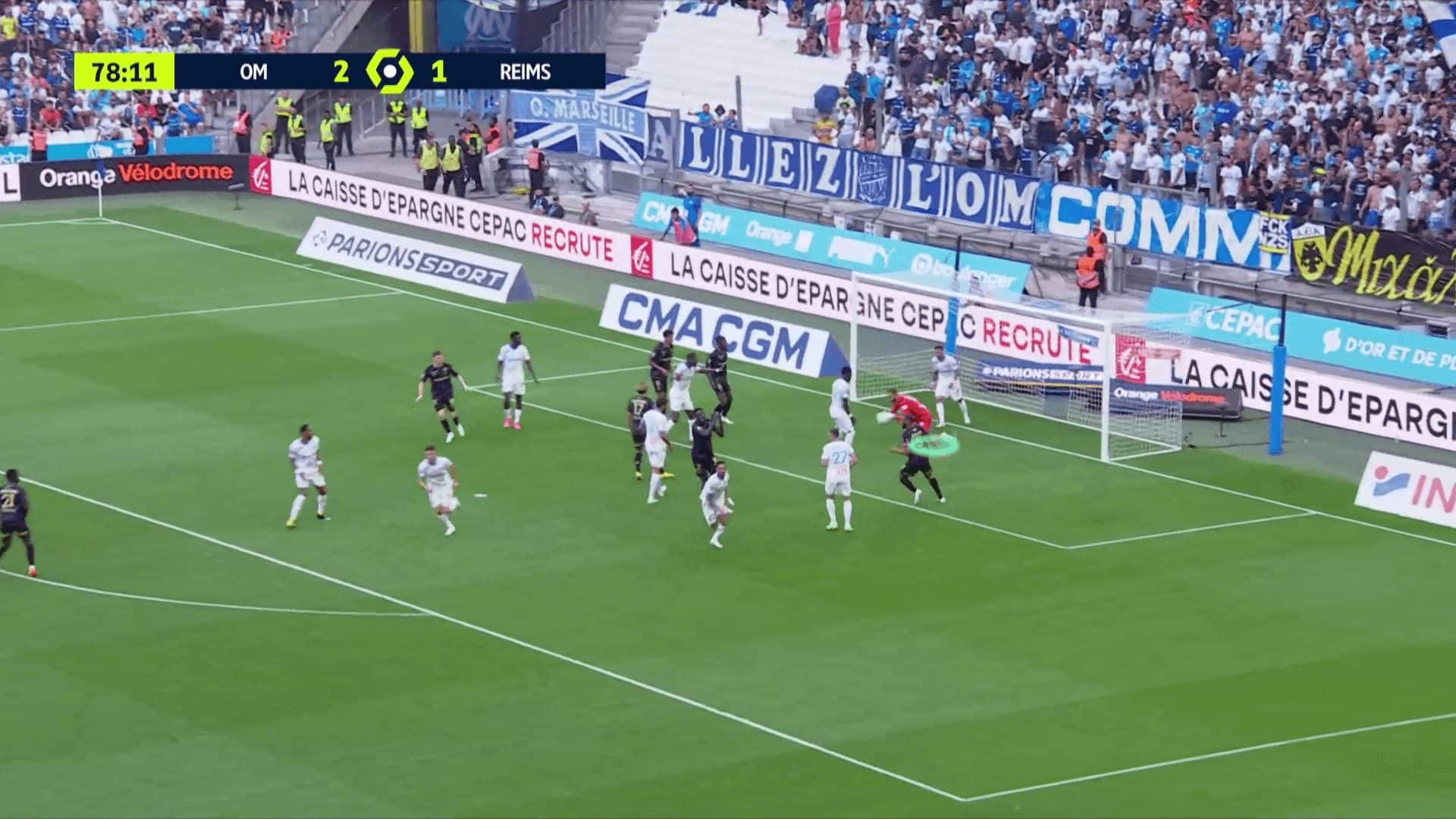
In this case, it is a four-against-two situation because a man marker tracks the attacker who tries to block the goalkeeper, leaving two free attackers, as shown in the first photo below.
In the second photo, one of the two free attackers blocks the last zonal defender, preventing him from stepping back, while the other targets the area behind him, as in the third photo.
In the fourth photo, the targeted player tries to nod the ball into the three attackers waiting in the six-yard box, but he can’t direct the headed pass inside, so it goes to a goal kick.

In the case below, the situation is five against three, keeping the numerical superiority we talk about in this area around the penalty spot against the man-markers.
Still, the targeted player also uses his mate as a screen to ensure the defender can’t catch him, so he stands at his mate’s back, as shown below.
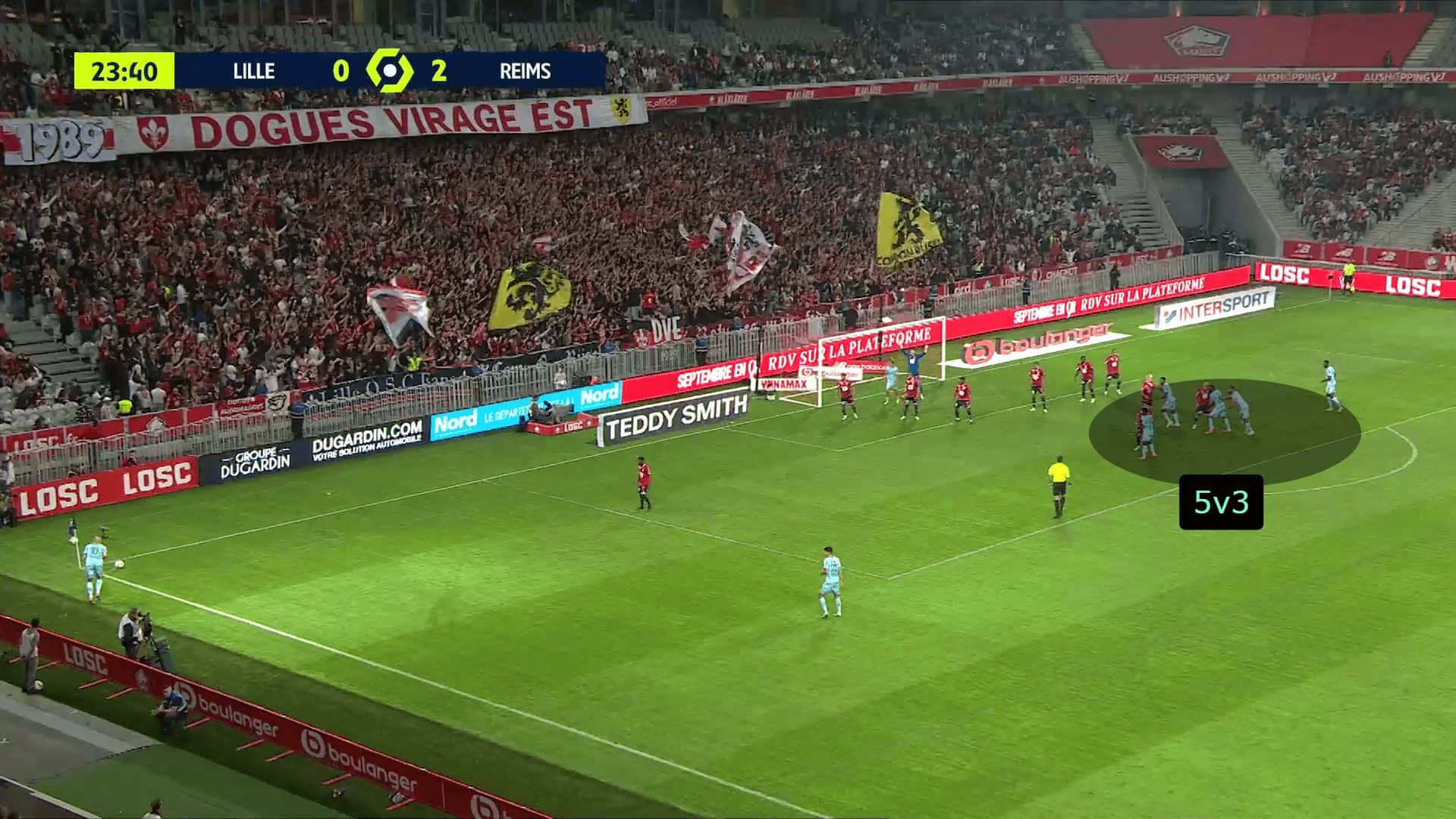
In the photo below, the targeted player is free, with his mate pushing and blocking his marker to prevent the marker from leaving him and allowing him to track the targeted player.
In the photo below, the targeted player reaches the cross without marking, but the zonal defender gets the ball because the cross is on the edge of the six-yard zone, more near the zonal line than it should be.
The problem with this idea is that the headed shots come from far areas in front of the zonal line, so they become so weak that goalkeepers can save them easily, as shown above in the three routines, so we think that they should focus on nodding the ball to a second targeted player, or more framing the goal, inside the box trying to free this second targeted player or crossing the ball directly to a nearer area in front of the zonal line to make the headed shot near, but in this case, they should put a player, or more, to block the zonal player near the targeted area.
Conclusion
In this analysis, we have explained how Reims has effectively exploited set pieces this term, especially the attacking corners, to be in third place in Ligue 1 ahead of big teams like PSG.
We have also explained how they use different corner routines excellently, having different routines against different defending systems.
Therefore, they prefer to use flicks against teams that don’t defend the near post well without putting a defender in the flick zone.
If the opponent has a player there, they use the fake-flick trick to design their corner routines.
They also prefer to overload the area around the penalty spot, especially against teams whose markers follow the attackers too far into areas on the edge of the box, leaving ample space between them and the zonal line.
