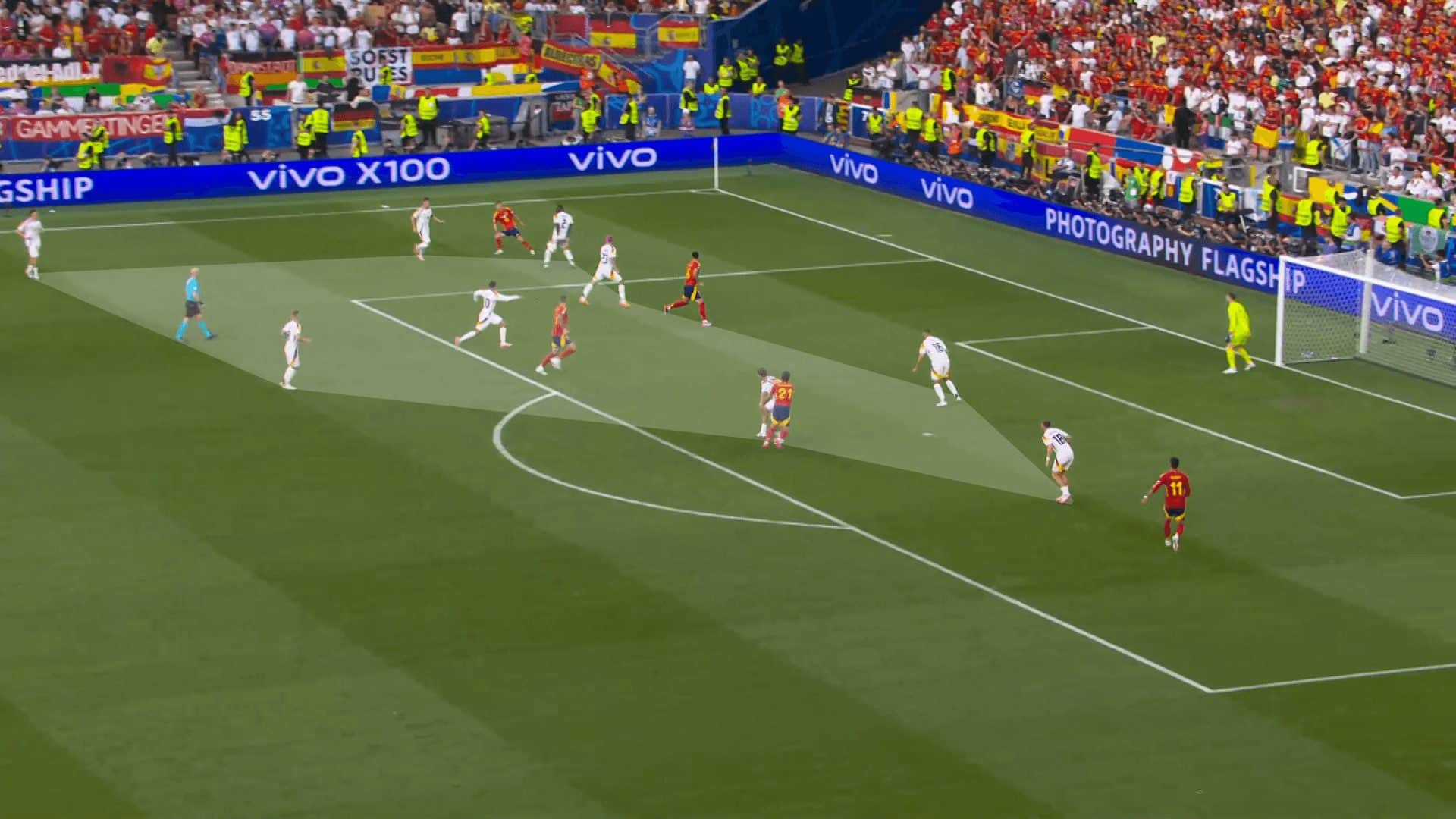
When Spain won the European Championships in 2008 and 2012, La Roja often operated without traditional wingers or (during the latter tournament) a centre forward.
However, they showcased an entirely new modus operandi at Euro 2024, winning with a far more varied game that saw them average just 58.15% possession per 90 minutes.
They also completed 281 of their attempted 392 long passes, as they deployed direct switches of play and hit their wide players early when looking to beat the press and launch an attacking transition. This caught many teams off guard, while not even fans of the
GG Poker betting site would have staked their cash on such a marked change of identity.
Of course, Spain also played with two direct wingers throughout the tournament, with Lamine Yamal and Nico Williams offering a pacy threat both on the outside and when inverting. But will this herald a return of wing play, and could we see this replicated across Europe’s big five leagues?
How has Wing Play Evolved Through the Years?
Prior to the noughties, teams regularly played with two wingers (especially in England). However, it was the legendary Jose Mourinho who changed course in 2004 and 2005, with this Porto and Chelsea sides deploying compact 4-3-3 and 4-4-2 diamond shapes to prioritise midfield dominance and stability.
Over time, this trend has evolved further, with teams eschewing traditional wide play in favour of compacting the midfield and creating central overloads. Head coaches like Pep Guardiola have even sought to invert full backs and wingers, while his false nine tactic has seen players like Lionel Messi and Kevin De Bruyne drop into advanced midfield positions.
However, it’s inarguable that teams have deployed increasingly compact defensive and offensive shapes over time. This lends itself to more aggressive and effective pressing, but Spain blazed a trail for others to follow at the Euros by looking to exploit spaces out wide and negating the press with direct switches of play.
How Spain Brought Wing Play Back into Fashion
Both Yamal and Williams leveraged this tactic to its fullest potential in the Euros, completing 63 dribbles between them and contributing eight goal involvements.
Most impressively, they held their width superbly (particularly Yamal) and willing to beat their full backs on the outside, creating a thrilling playing style that afforded players like Fabian Ruiz additional space centrally.
In games against Croatia and Denmark, this tactic saw Spain regularly cede possession in order to draw their opponents forward, defeat their press and release their wide players in behind. This represents a huge departure for La Roja, who inspired others to follow suit in Germany.
Slovakia also sought to defeat Belgium’s high press by hitting wide forward Ivan Schranz directly, while Romania adopted a similar tactic when thrashing Ukraine 3-0. Germany were more than happy to keep Jamal Musiala and (to a lesser extent) Florian Wirtz high and wide too, so there’s no doubt that wing play has made a welcome return at the Euros.
Will This Trend Continue?
The question that remains, of course, is whether this trend will persist in Europe’s big five leagues through 2024/25? The short answer is yes, particularly given the incredible amounts of space that now exist out wide and in-behind opposing defensive lines in these competitions.
Also, sides have been innovating ways to beat the press for a while now, using inverted full backs and underlapping centre backs (in a back three) to create new passing lanes into midfield.
The deployment of direct wing play, quick switches and long passes from back-to-front offer another way of beating an aggressive press, and one that could well influence coaches in the new season.