
Who Is Régis Le Bris?
Régis Le Bris is currently in his second role in senior football management at Sunderland, following an interesting two-year stint with Lorient in Ligue 1 from June 2022 to June 2024.
The 48-year-old coach has taken his next challenge in the EFL Championship to keep developing his ideas and football identity.
Although Preston eliminated them from the EFL Cup, Sunderland have been one of the big positives in English football so far this season.
They have conceded just one goal since the beginning of the Championship campaign, but they are at the top of the classification with 12 out of 12 points.
What we have seen from Régis Le Bris reflects his time at Lorient.
There are many different profiles on the pitch, obviously, but he is trying to consolidate the same principles within a similar shape and exploit the skills of his new players.
In this tactical analysis, we will provide an in-depth analysis of Régis Le Bris’ tactics with his new team.
Régis Le Bris Tactics & Formation
One of the details that characterised Le Bris’ Lorient was the freedom of Enzo Le Feé — his smartest and most technical player in possession.
Now, at Sunderland, Le Bris does not have a ‘rhythmist’ or a player with a similar varied range of passes.
However, he already has a physical beast in Jobe Bellingham — a tidy pivot on the axis, Dan Neil and a player who is comfortable receiving in complex positions to make oriented controls or shifting between half-spaces and external channels to dynamise the possession, Chris Rigg.
This recognisable midfield trio dictates Sunderland’s game model.

In 4-3-3/4-2-3-1 and building up in 4-2 with Chris Rigg as an advanced midfielder—even with Bellingham-Rigg as ‘8s’ and the goalkeeper involved during the Sunderland build-up play, as Figure 1 shows—The Black Cats constantly look to build their attacks quickly and directly after recovery.
Centre-backs try to slowly attract the rival pressure — not restarting the game immediately.
They need spaces to play through/around and aim to exploit triangles in wide overloads with exchanges between the winger, full-back, and midfielder.
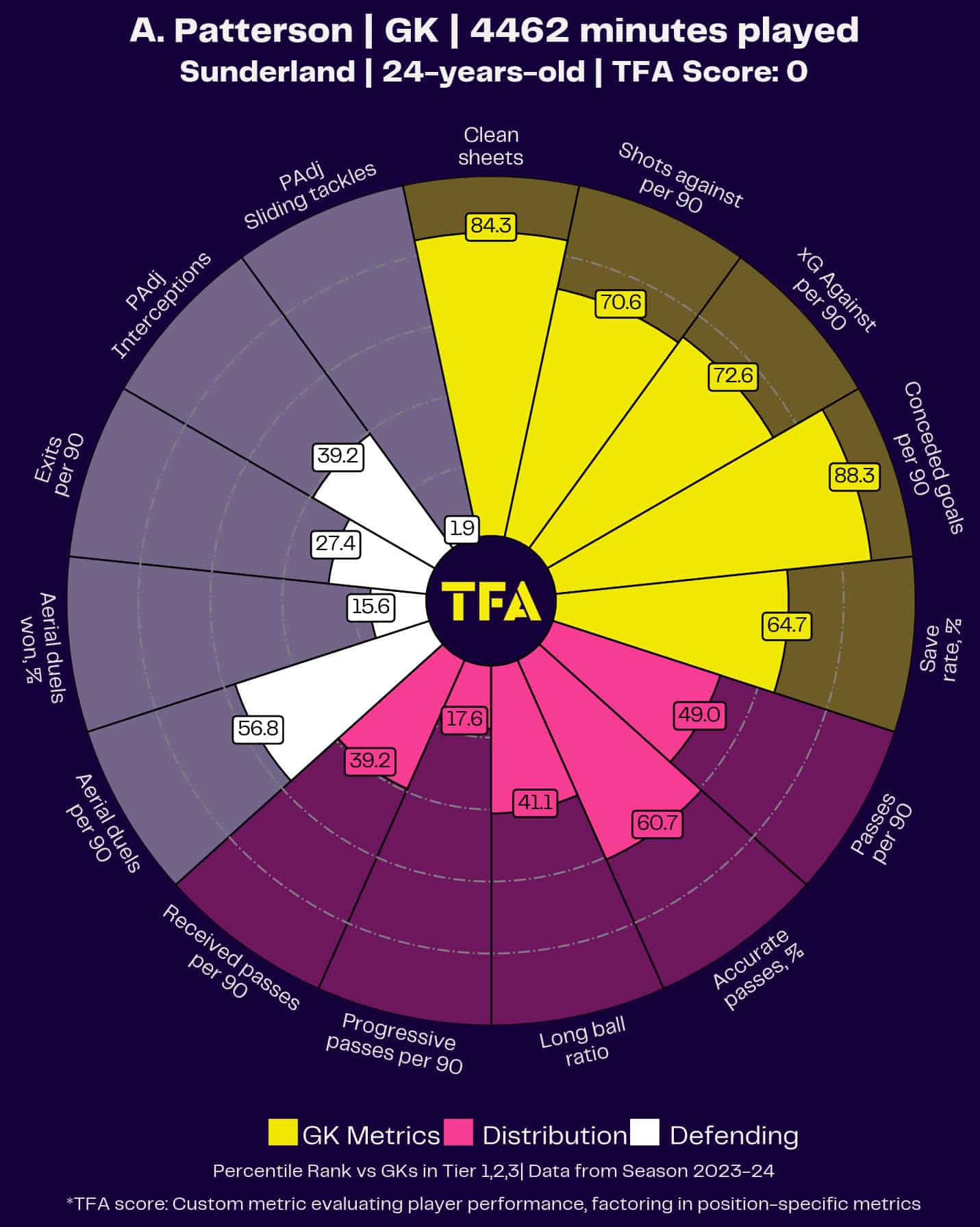
As Anthony Patterson is not a distribution specialist, the other way to progress is with long balls.
If he is pressed and his passing line is going to be closed in the next play, a long ball to play over the pressure, followed by a teammate either running in behind or winning a second ball, is a great deal for Sunderland players.
Régis Le Bris Faster Circulation And Wide Overloads
The primary resources in Le Bris’ attacking phase are wide overloads.
After attracting the pressure or recovering the ball in dangerous zones, Sunderland is thinking about orienting around the ball out wide; this helps them attack faster via the wing.
Once they have possession, the idea is to create advantages through good relationships, positional intelligence and skills.
Both relationships are increasing their dynamics.
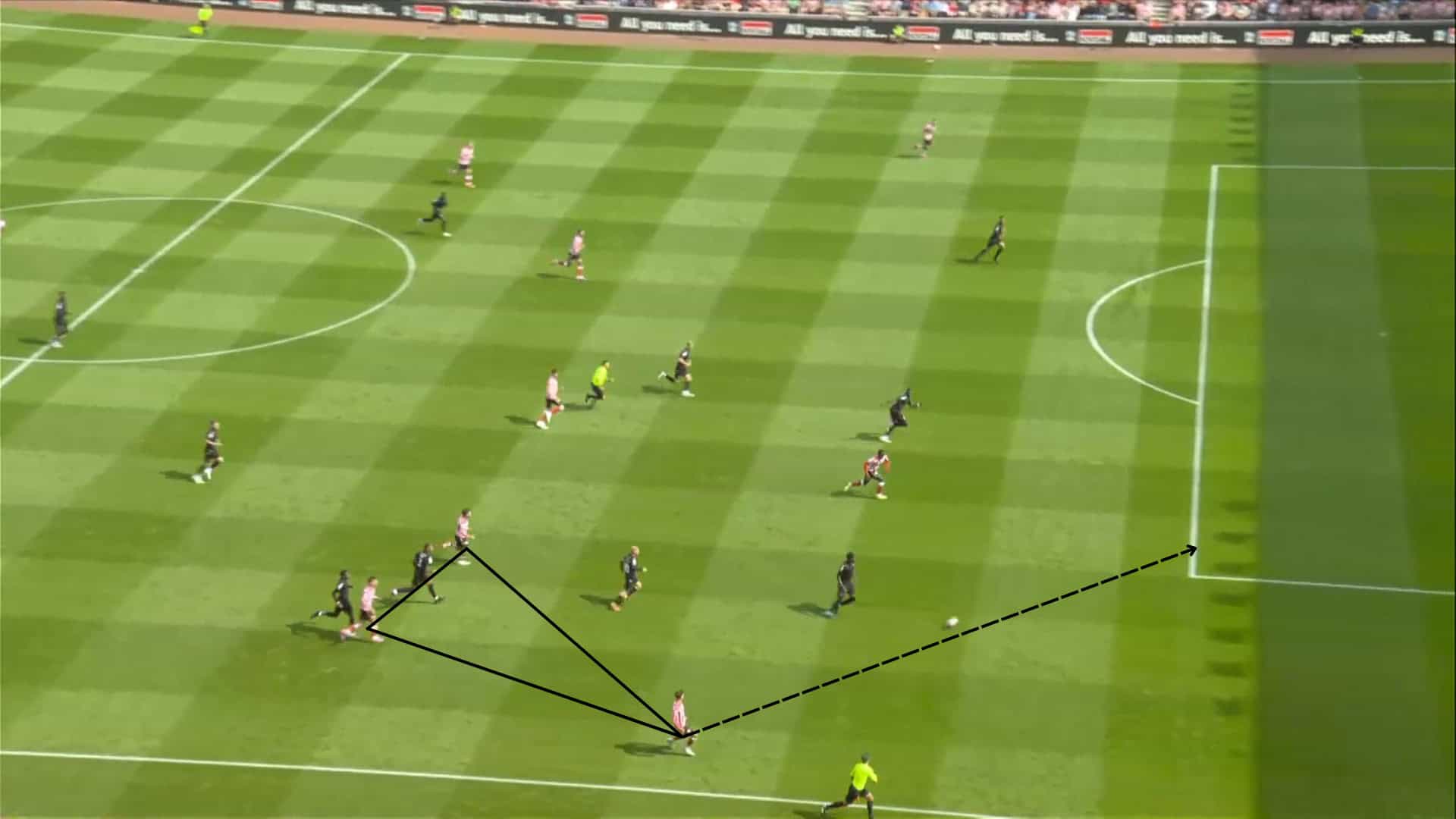
In Figure 2, as a right-winger, former Manchester City talent Patrick Roberts consistently provides maximum width.
At right-back, Trai Hume underlaps or overlaps whenever his partners need him.
While Chris Rigg —a 17-year-old left-footer from the academy— exploits the half-spaces, turning back to the rival goal to penetrate central channels through his technique.
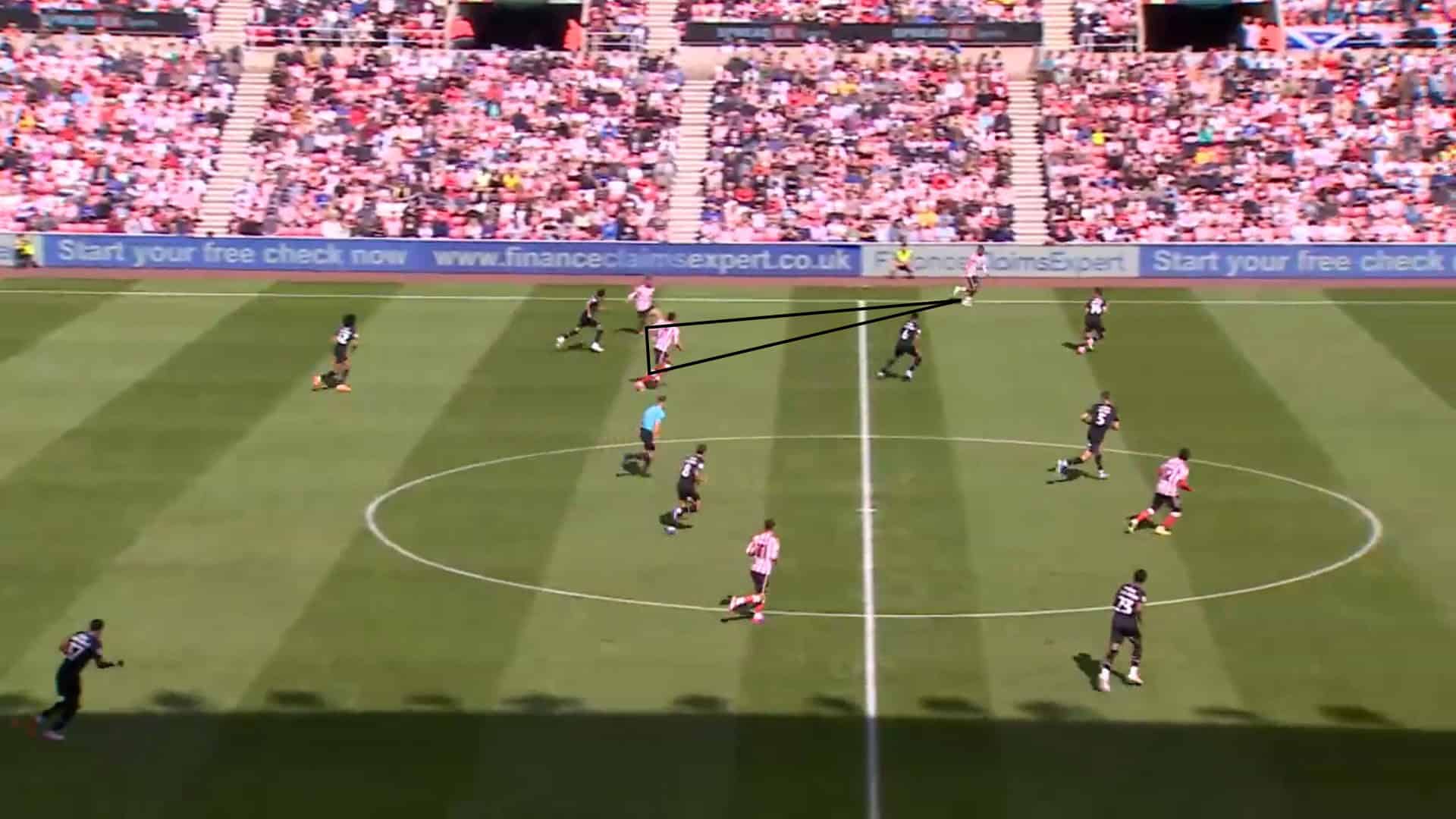
On the other side, as Figure 3 shows, it seems like Romaine Mundle has taken the baton from Jack Clarke as Sunderland’s left-winger.
Good in 1v1s, Mundle should build a solid relationship with Dennis Cirkin, his left-back.
Cirkin has so much presence in the final third that he is a menace inside the box; his powerful lower body and reading of the game help him position himself wide or push into the half-spaces deeper, all of which are effective weapons for Sunderland.
Then, there is Jobe Bellingham, who provides Cirkin with the freedom to move forward safely because he is a runner with a fantastic capacity to correct.
Also, he can load the box effectively without being a deeper player.
Just like in Figure 2, these triangles to create wide overloads are a way to penetrate the box with the centre-forward running in behind quickly after combining directly and accurately.
Sunderland Defensive Approach
Sunderland stand out for defending aggressively in a high-block or mid-block in 4-4-2, with Chris Rigg moving forward to accompany Mayenda on the first line of pressure, as Figure 4 below shows.
Many teams across the world use this configuration—looking to lock central channels, jump faster when the rival full-backs receive, and recover when the passes into the centre threaten.
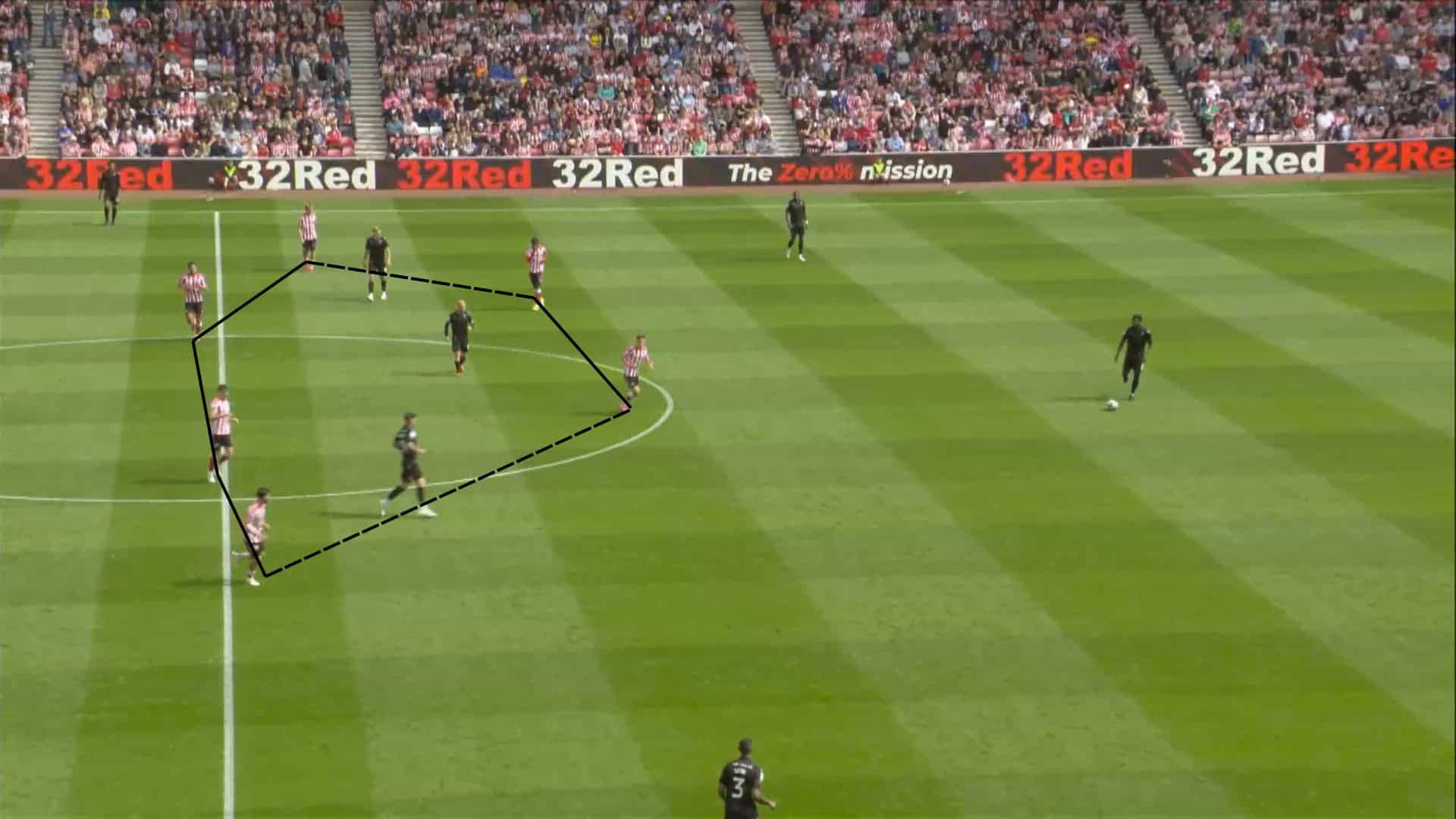
As Figure 4 shows, in the mid-block, they use a compact and narrow 4-4-2 to make it impossible for the opponent to penetrate the central channels—the same shape Le Bris used at Lorient to defend as well.
One of the main interesting topics in Régis Le Bris’ Sunderland is that they attack while defending.
When a team builds up and combines close to their own goal, there is a real danger from Sunderland.
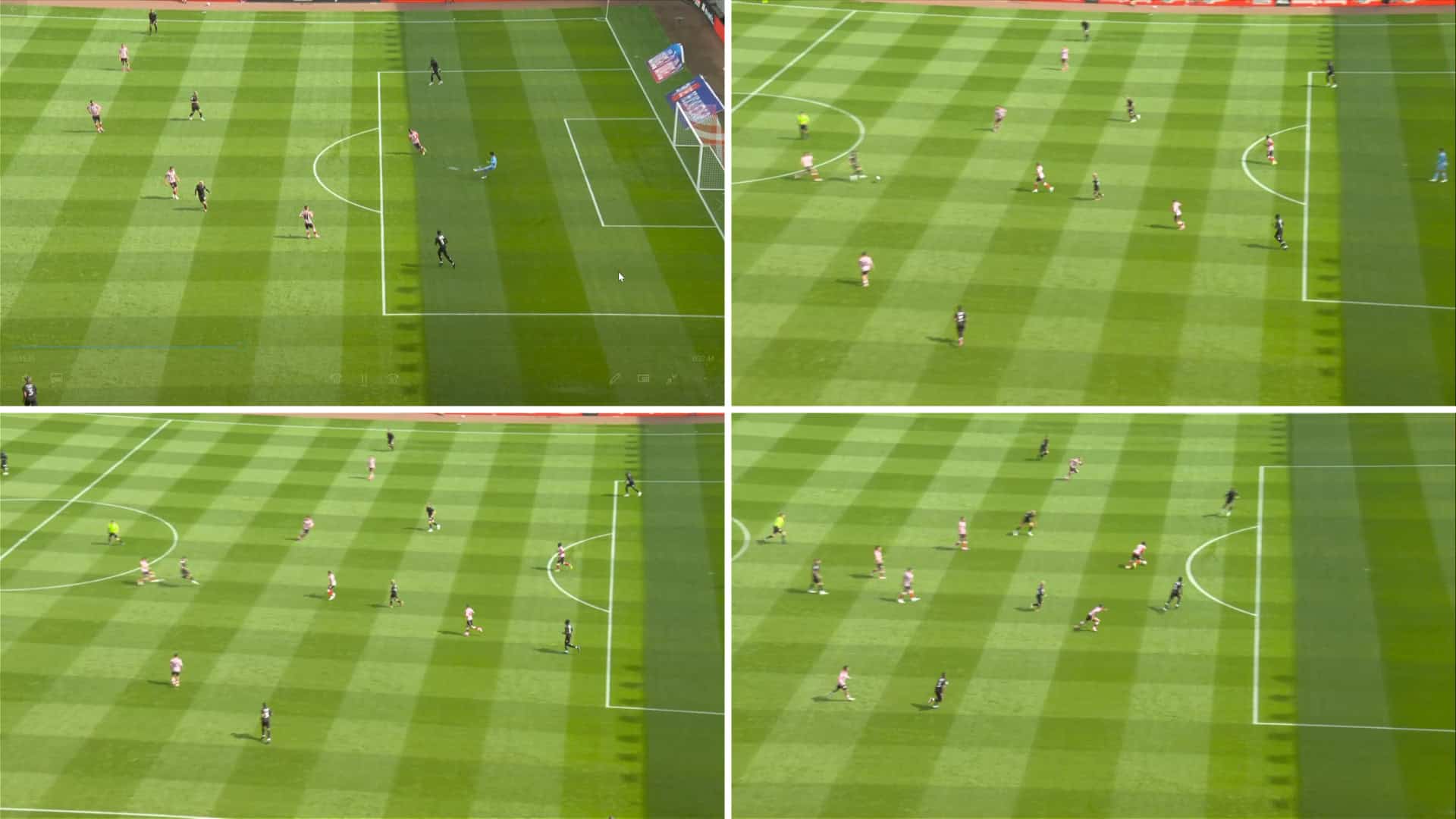
As observed from this goal versus Sheffield Wednesday in the sequence of Figure 5, trying to progress vs Sunderland could allow the Black Cats to make these types of recoveries.
With man-oriented high-block marking, the opposition goalkeeper plays onto the free centre-forward, who drops in before Luke O’Nien intercepts and assists Mayenda in a great position.
In that sense, Jobe Bellingham is a key player, although he played closer to the last third in the past season, and his goal contribution was not great, as shown by his radar below in Figure 6.
Jobe Bellingham Radar Map
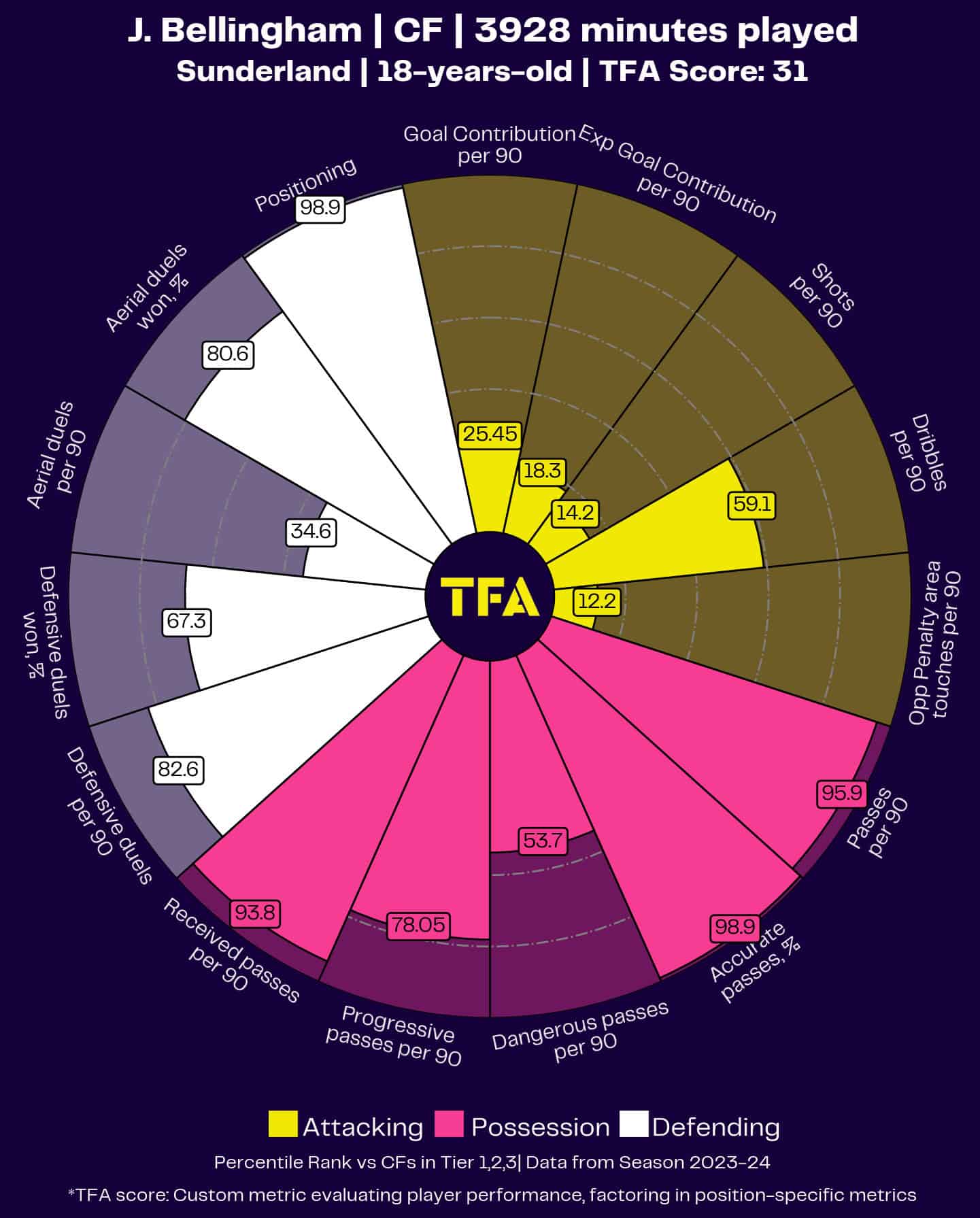
Still, his participation in possession, accuracy, and athletic physique, with long legs to commit difficult tackles, is a privilege to lock down the midfield.
In addition to his stamina as the team’s runner, he has made extended careers to jump to far marks.
He is not a technical prodigy, but physically, the 18-year-old is capable of already making a difference in the EFL Championship.
Sunderland Box Defence
Sunderland are also comfortable when defending inside their own box.
If they defend static, they accumulate some players in a narrow shape, covering the front of the area well, thanks to their midfielders.
Both Luke O’Nien and Aji Alese—the starting centre-backs at the beginning of this season—are very aggressive and reactive in completing faster clearances, allowing the team to reorganise the shape and press once again.
Likewise, in these cases, Anthony Patterson is a competitive shot-stopper to divert not-too-clear shots from congested zones.
His claiming and distribution are not top-level, but he has understood what Régis Le Bris needs in the build-up, knows his limits, and is fairly reliable in the goal.
Anthony Patterson Radar Map
Sunderland Reliance On Transitions
Regarding offensive and defensive transitions, Sunderland are frequently giving the ball to their rivals.
As mentioned, this is because they are more dangerous without the ball than in positional attacking a lot of the time.
In chance creation, even if they have some resources—mainly with right wide overload with Rigg inside—to break low blocks, they create more reactive danger after recovering when their rival is with the guard down.
So Régis Le Bris smiles when they recover with space to run into or when they’re in advanced zones.
Offensive transitions are their most common and accurate resource during the match, used to win fouls, cause set-pieces, or finish plays.
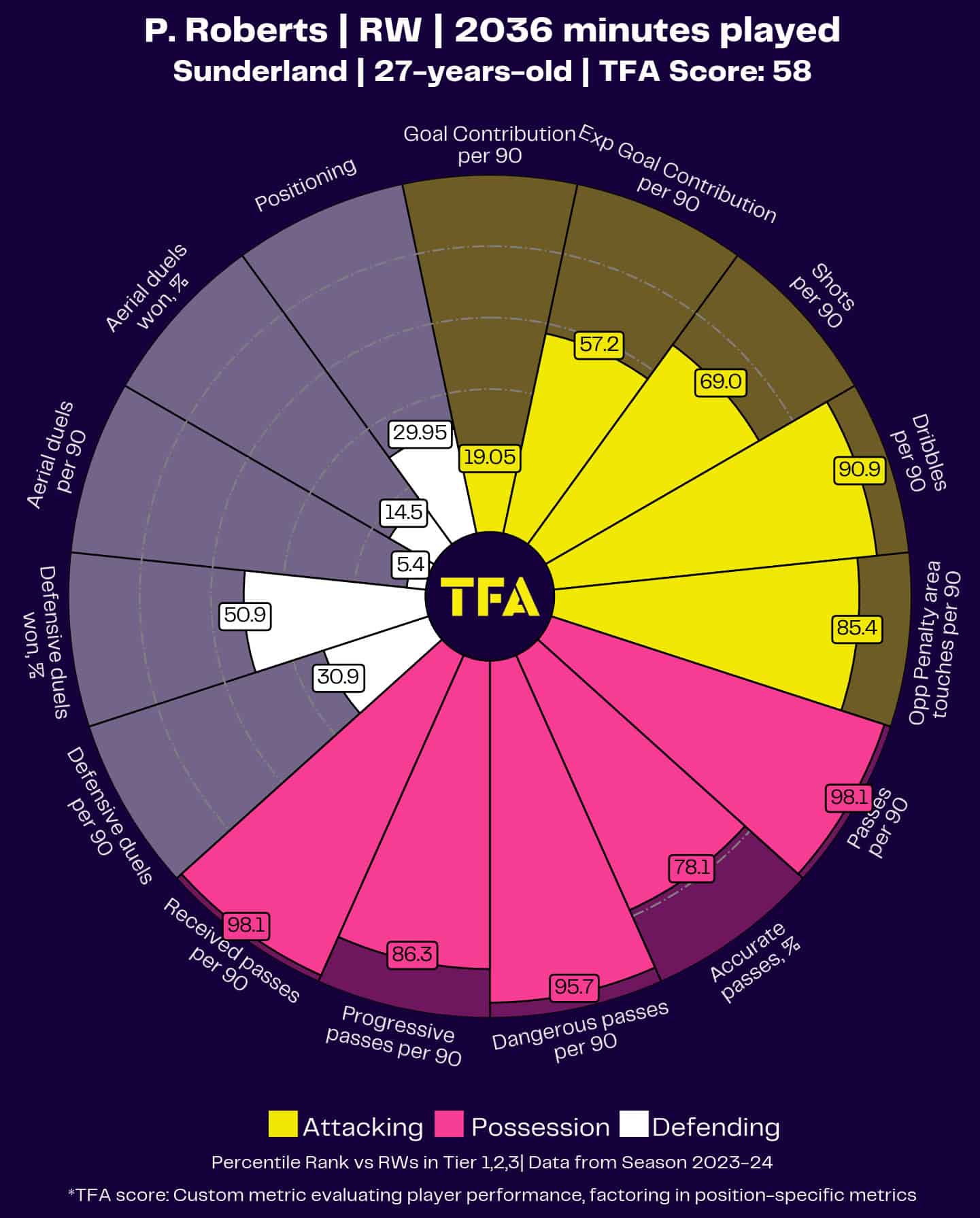
Patrick Roberts may be the key player in this phase after Jack Clarke’s departure.
The former Manchester City winger is so technically sound and delivers well-thought-out actions even under pressure.
He understands when he has to switch the play or keep driving.
At various times, he is responsible for carrying the ball.
His dribbling and passing are of such high quality that an extra point of explosiveness in his running would significantly boost his profile.
Patrick Roberts Radar Map
The other side of the coin is their defensive transitions.
Yes, Le Bris likes chaos; he is one step ahead of his opponent if there is chaos.
However, if there are any imbalances between the lines in the mid-block, Sunderland’s defensive line is not the best to quickly recover.
They are comfortable anticipating and being aggressive.
Still, to get bodies back behind the ball, they can struggle.
This could be an important weakness for more teams to target.
Jack Clarke Departure – A Painful Downgrade
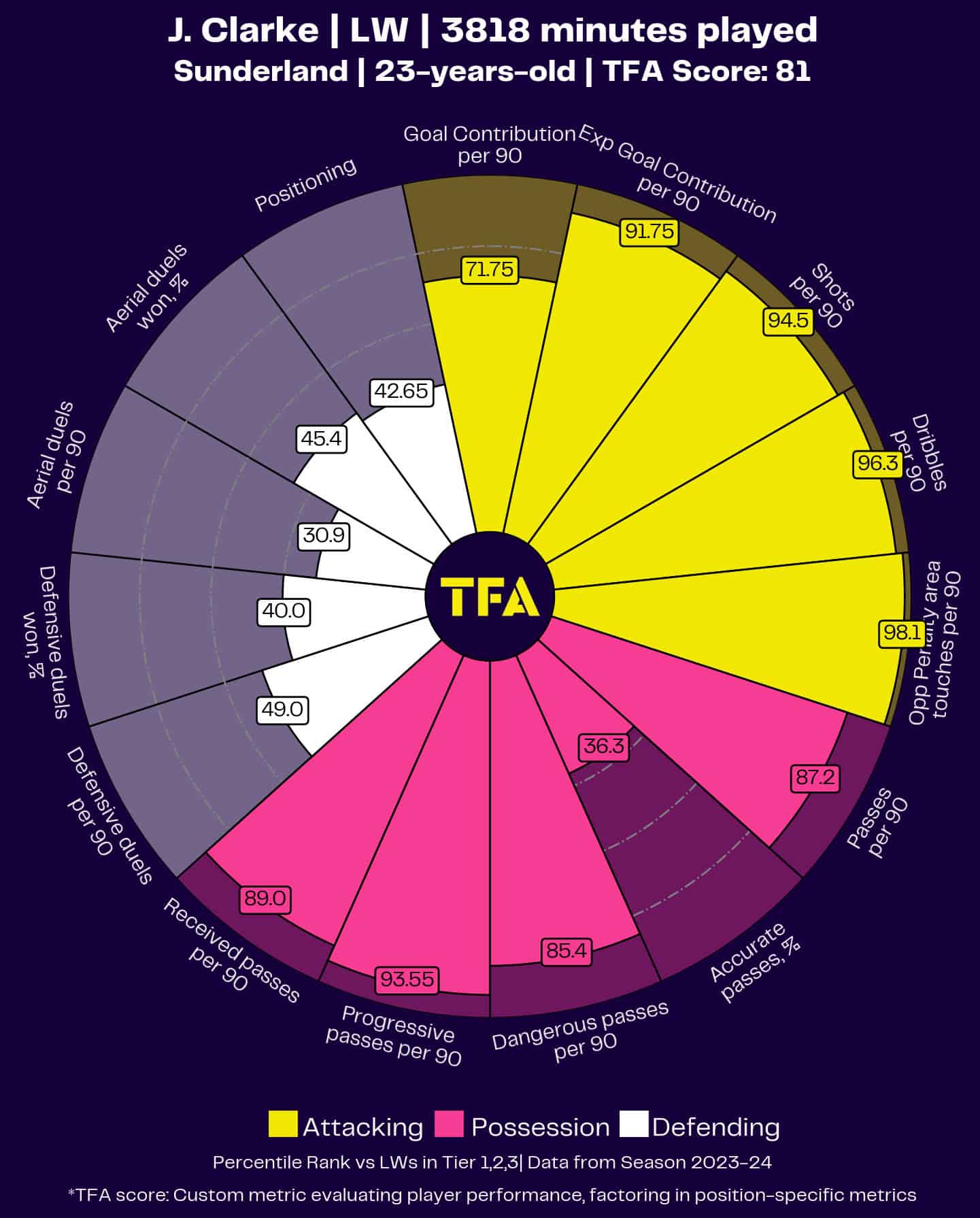
The best Championship dribbler of last season is no longer with Sunderland.
Jack Clarke’s departure represents the loss of dribble volume, fewer 1v1s, electricity and goalscoring capacity, with the talent being swooped away by Premier League Ipswich Town after performing at a level that caught top-flight attention, as his radar below shows.
Jack Clarke Radar Map
Régis Le Bris must consolidate relationships on both sides, depending on the modifications to be made after losing a constant and accurate menace to rival full-backs, having to challenge them with a solid dynamic to boost Sunderland’s collective.
Conclusion
Sunderland had a great start to the season.
Régis Le Bris’ winning streak is impressive, considering the short time he has been coaching them.
Certainly, if he continues to consolidate his system and collective relationships, his football will continue to grow in the English game.
This continuous idea with his Lorient is entertaining and mainly creates high expectations around his figure.
Remember, this is only Le Bris’ second experience in senior football management.
Still, he has a very clear philosophy which he wants to keep refining based on his new players.
