


Club Brugge have been dominating the Belgian Pro League for the last few years, winning four league titles in the previous five seasons.
This time though, they have been below their best and currently sit in third place.
But they have been brilliant in the UEFA Champions League and have qualified for the knockout stages for the first time in their history, with two games to be played.
One of their key performers has been their summer signing, Raphael Onyedika.
The Nigerian defensive midfielder has settled in really well.
This Raphael Onyedika scout report, in the form of a tactical analysis, discusses the strengths and weakness of Onyedika as a player and states how he contributes to the tactics and playing style of Club Brugge.
Raphael Onyedika Position & Style Of Play
Raphael Onyedika is a right-footed defensive midfielder who plays as a lone pivot or as part of a double pivot for Club Brugge.
In Midtjylland, he was part of the double pivot, playing in the right defensive midfield role.

We can see his action map in the image above, and he has mostly featured as an RDMF in a double pivot; however, in recent games, he has been deployed as the lone defensive midfielder for Club Brugge.
Raphael Onyedika On-Ball Abilities
Playing as a number ‘6’/lone defensive midfielder for a side that plays with high possession and territory in their league, Onyedika has a responsibility on the ball, especially when his team is looking to play out from the back.
The critical thing for any defensive midfielder on the ball is having a secure first touch and the ability to control the ball over a five-yard radius from the opponents.
Onyedika has a very good first touch on the ball, which is clean and secure from multiple angles.
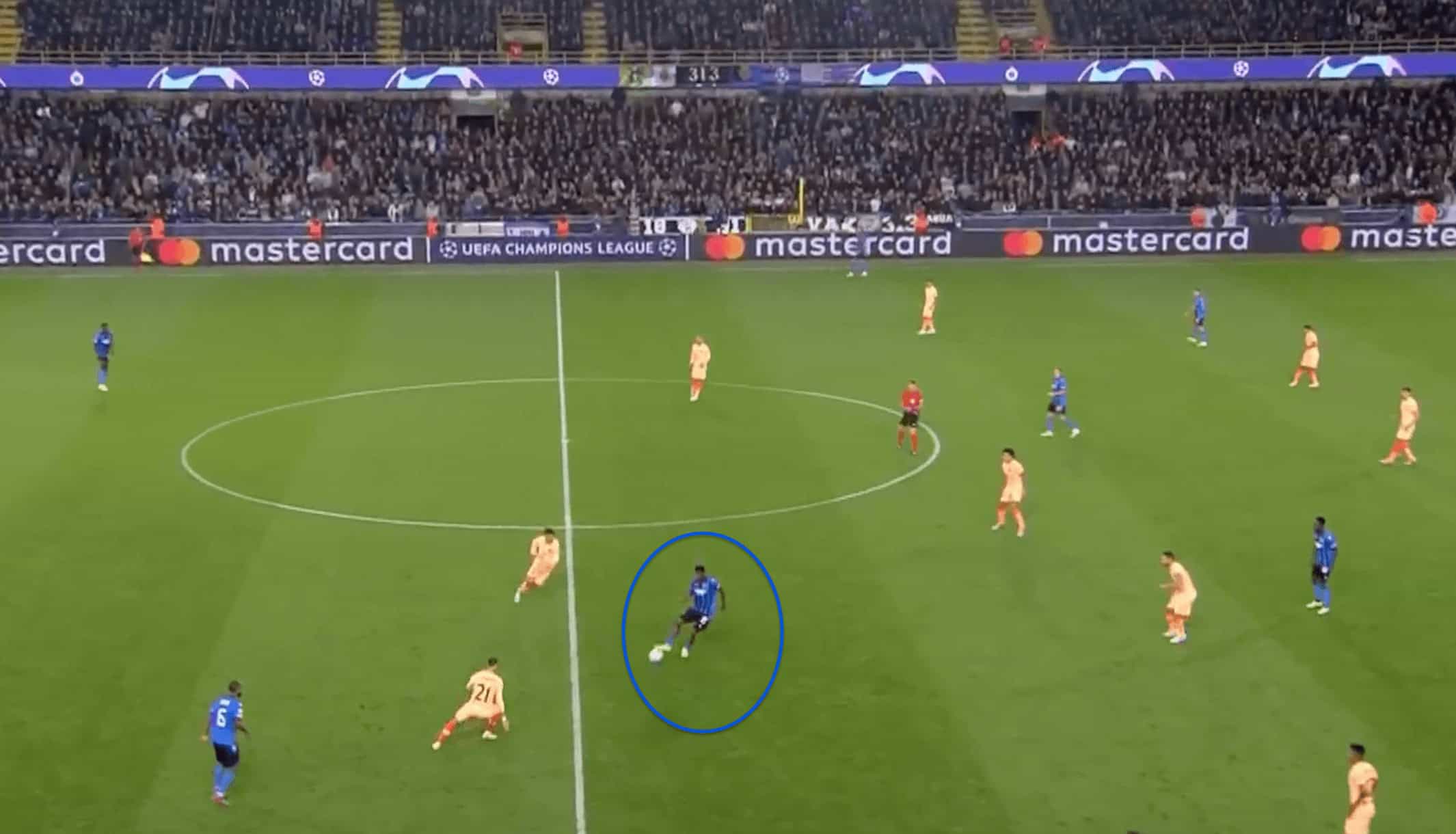
The following image shows an example of his exquisite first touch.
He receives the ball in half-turn from his teammate which gives him the option of playing a pass to a player upfield.
Additionally, when he receives, he slides the ball just ahead of him with his first touch, which allows him to carry the ball with space ahead.
Onyedika is also strong in other basics, such as scanning the field around before receiving the ball or performing an action on the pitch.
Scanning is an important aspect that is highly required from a midfielder, especially when they are looking to take the next feasible and ideal step to progress the ball or help their team control the game.
It provides a good understanding of how the field is set up with your own teammates as well as the opposing players, especially regarding their placement.
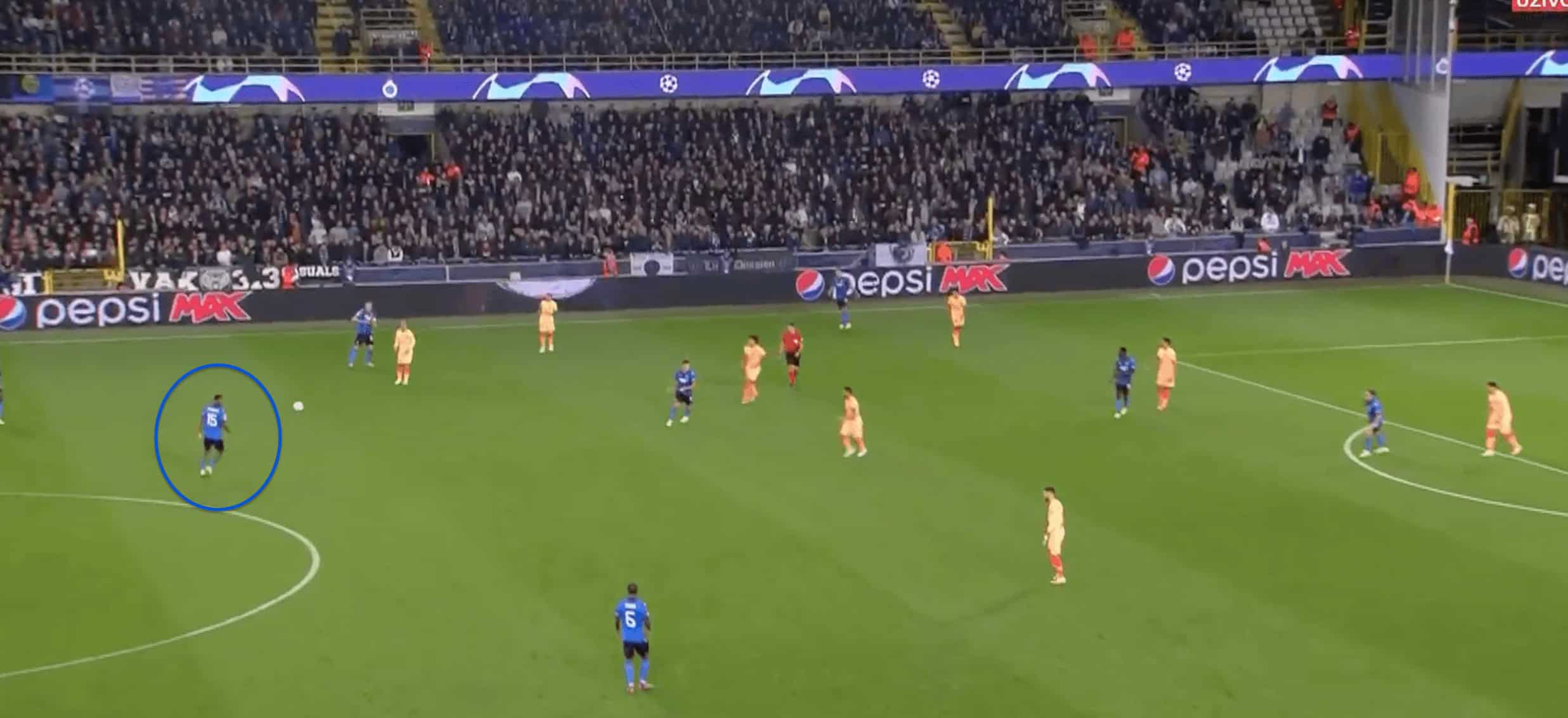
Onyedika scans at least twice before receiving the ball from his teammate.
This can be seen in the image below, where he scans behind before receiving the ball.
He averages 42.2 passes per 90 minutes in all competitions this season, while also averaging 7.58 progressive passes per 90 minutes, which is a very high value for a midfielder.
This means that he is one of the most critical players for his side and is crucial for their transition from the first to the second phase and from the second to the third phase in possession.
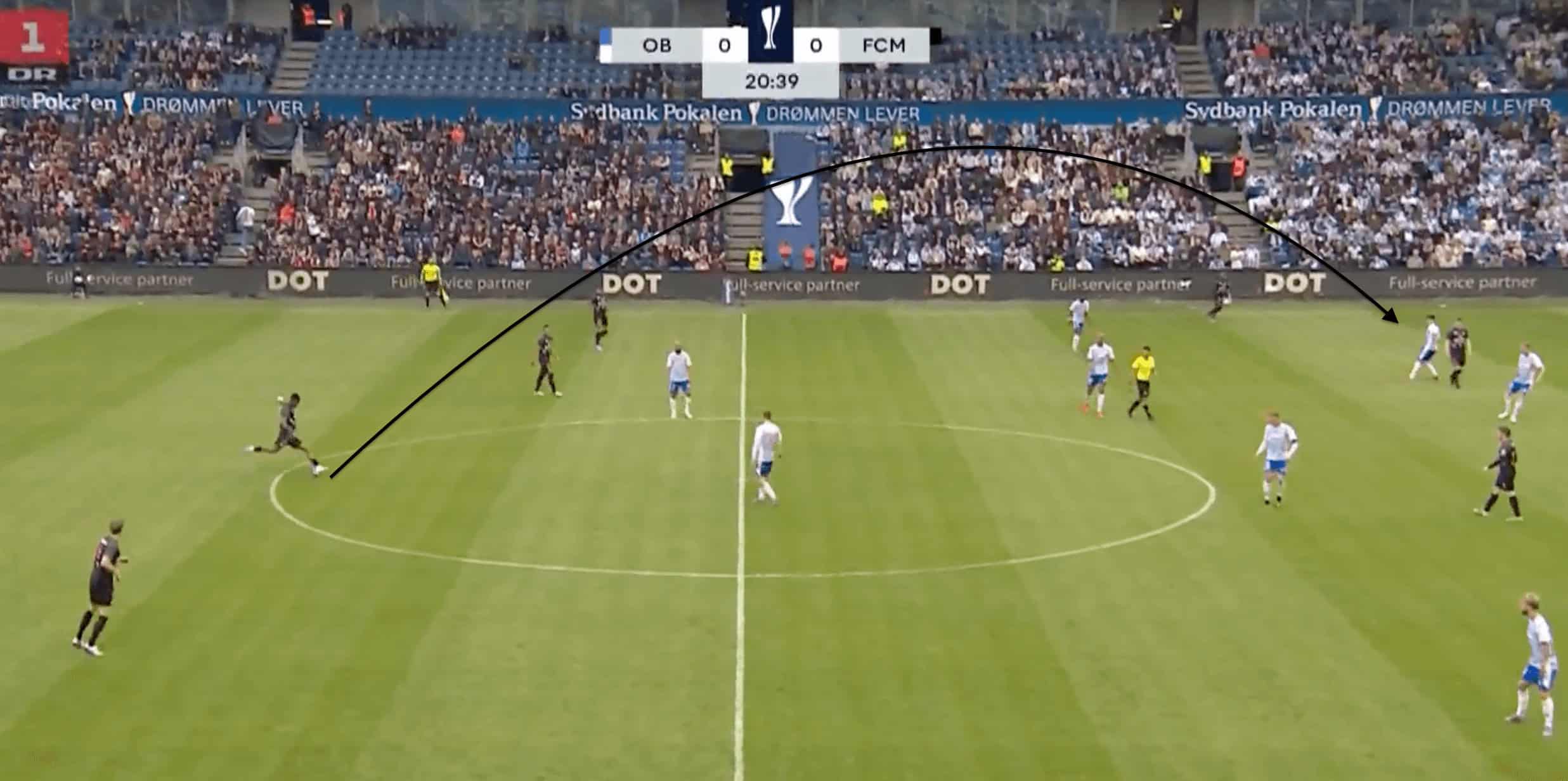
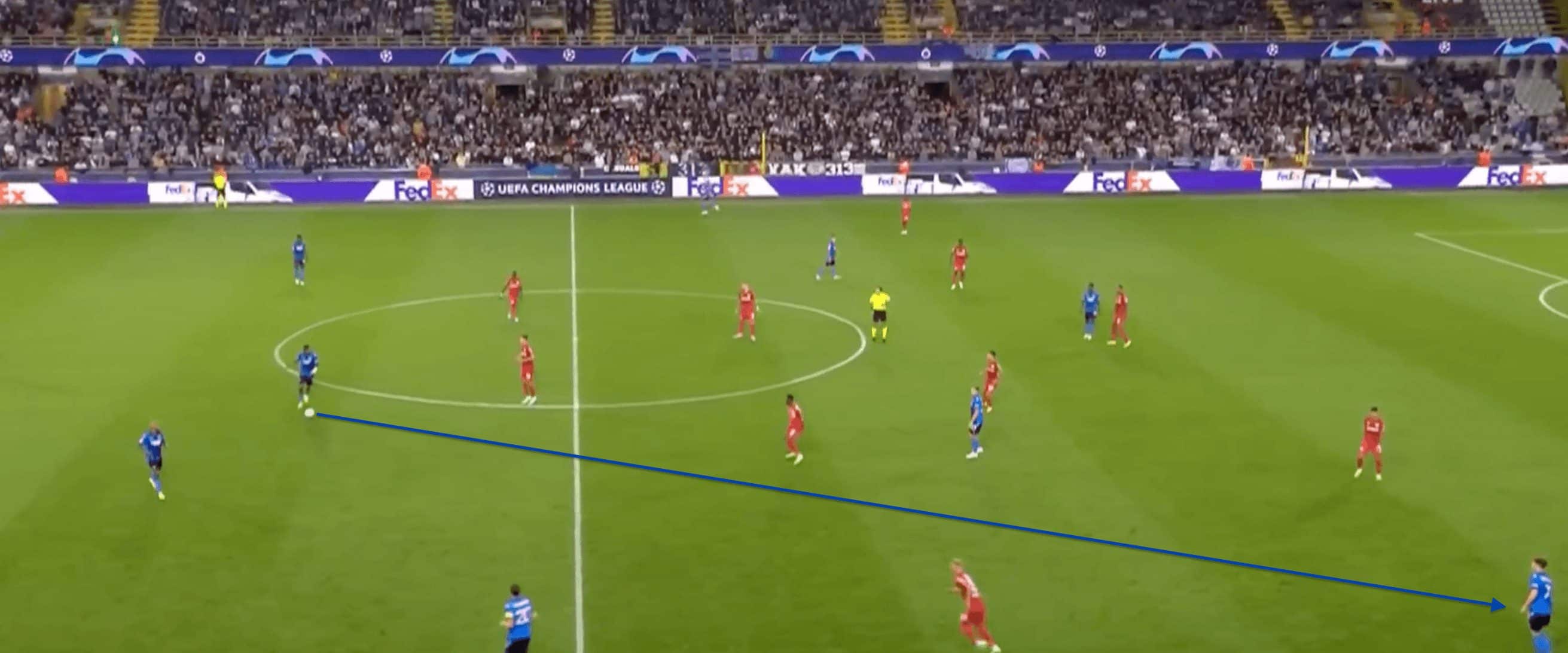
The image below shows him playing a long pass that progresses the ball for his team and finds a free man in space on the wing.
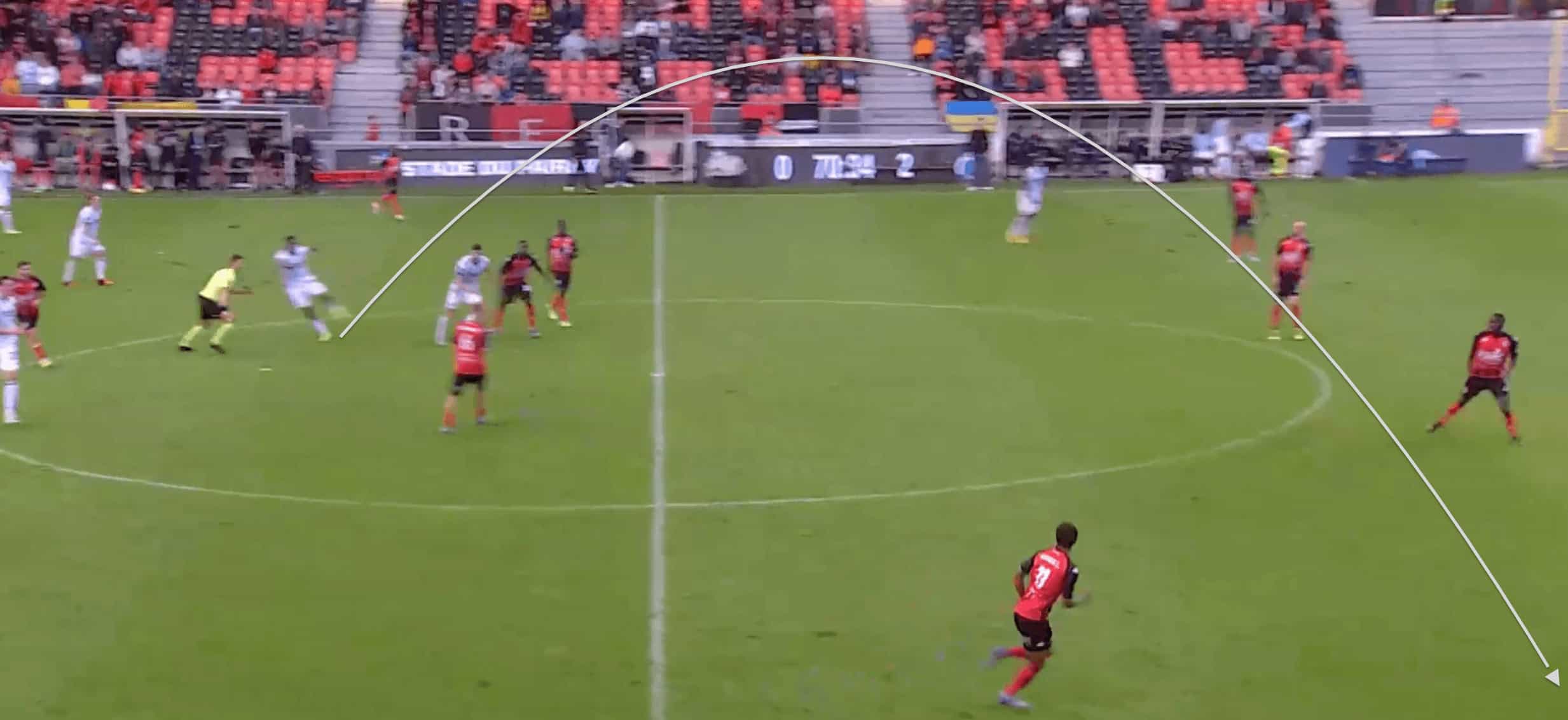
In another example below, we can see Onyedika playing a pass forward to one of the wingers who is ahead.
Although his passing is good during settled possession, it’s during transitions we see his passes adding more value to the team, particularly when he launches them into the spaces available for his teammates to run and receive them higher up the field.
He is also good at disguising passes when playing it forward for his teammates.
The advantage of such passes is that they eliminate a significant number of opposition players from the equation and break lines quickly.
We can see an example of this in the image below, where his body orientation suggests that he is going to play a pass to the full-back near the wing.
However, he eventually plays it forward to one of the wingers out there in the forward line, thus breaking two lines of defence at once.
One of the key things expected from a midfielder is security on the ball, especially in shielding and protecting it under pressure.
It is something that is closely observed when signing a midfielder, due to their location in the middle of the park, where the opposition would typically look to win the ball and initiate a transition.
A secure midfielder in these regions is crucial to a side in possession.
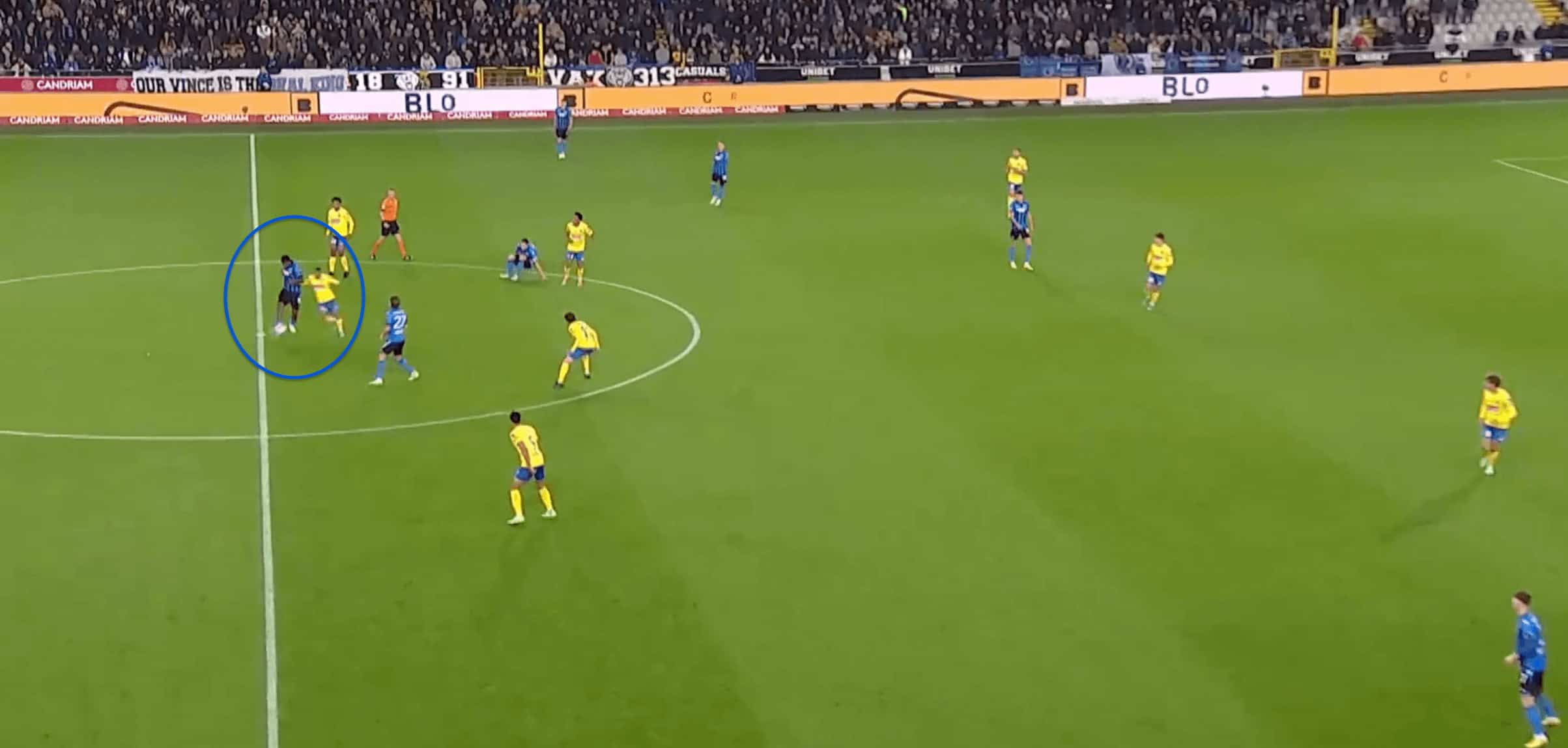
Onyedika has that security on the ball where he is very good at covering it and protecting it under pressure from the opponent.
Due to his physicality, he has the ability to shield it with his strength, and as a result, it’s not easy for opposing players to dispossess him.
We can see an example of this in the image below, where the opposition is pressuring him, but he still manages to get out of the pressure and play it to his teammate.
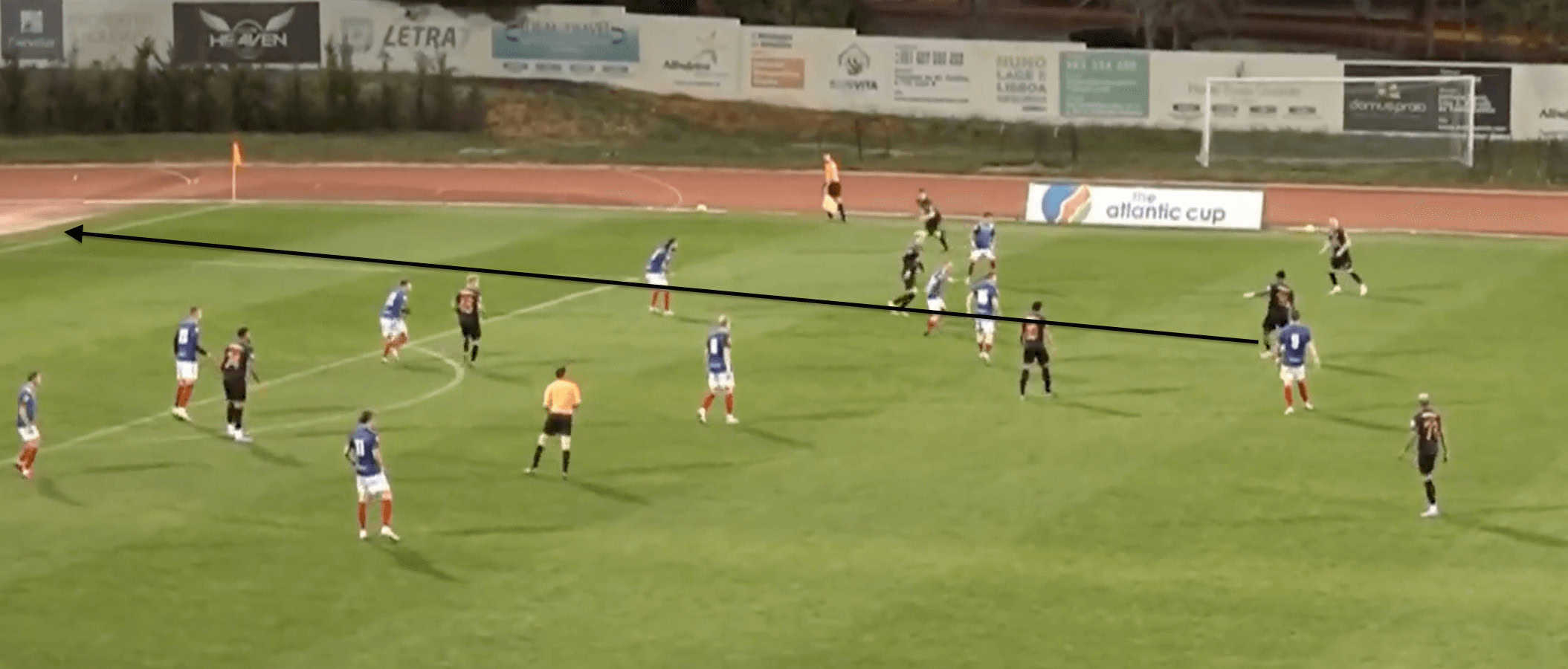
However, Onyedika has a glaring technical inconsistency with his passing, where, at times, his passes may have too much weight, leading to them being overhit and his teammates struggling to reach them on most occasions.
This can be seen in the image below, where he looks to play a through ball to his teammate, who makes a cross-run from the wing.
But the weight in the pass was too much, and before his teammate could reach the ball, it went out of play for a goal kick.
Onyedika is also not a very high-volume dribbler or carrier of the ball.
This means that 90-95% of his progression on the ball comes from his passes.
Although this is not an issue in his game, as most deep-lying midfielders are primarily progressive with their passes and focus less on their ball-carrying game, it still means that his game on the ball is not entirely complete.
We can see this image below, which shows that he has made very few progressive runs on the ball.
Raphael Onyedika Ball Progression Map

Overall, his ability on the ball in possession is very good and is one of the crucial aspects of Club Brugge’s possession tactics.
Since he is still young, he may be able to iron out some of the inconsistencies in his game as he ages.
Raphael Onyedika Defensive Abilities
Although ability on the ball is something very important to look out for, in modern-day defensive midfielders, their ability to defend and protect the backline is what makes them valuable to any team.
A defensive midfielder without good defensive principles is not worth starting, even for a feeder club.
Onyedika’s defensive principles are very good and well-refined for playing in a highly competitive league.
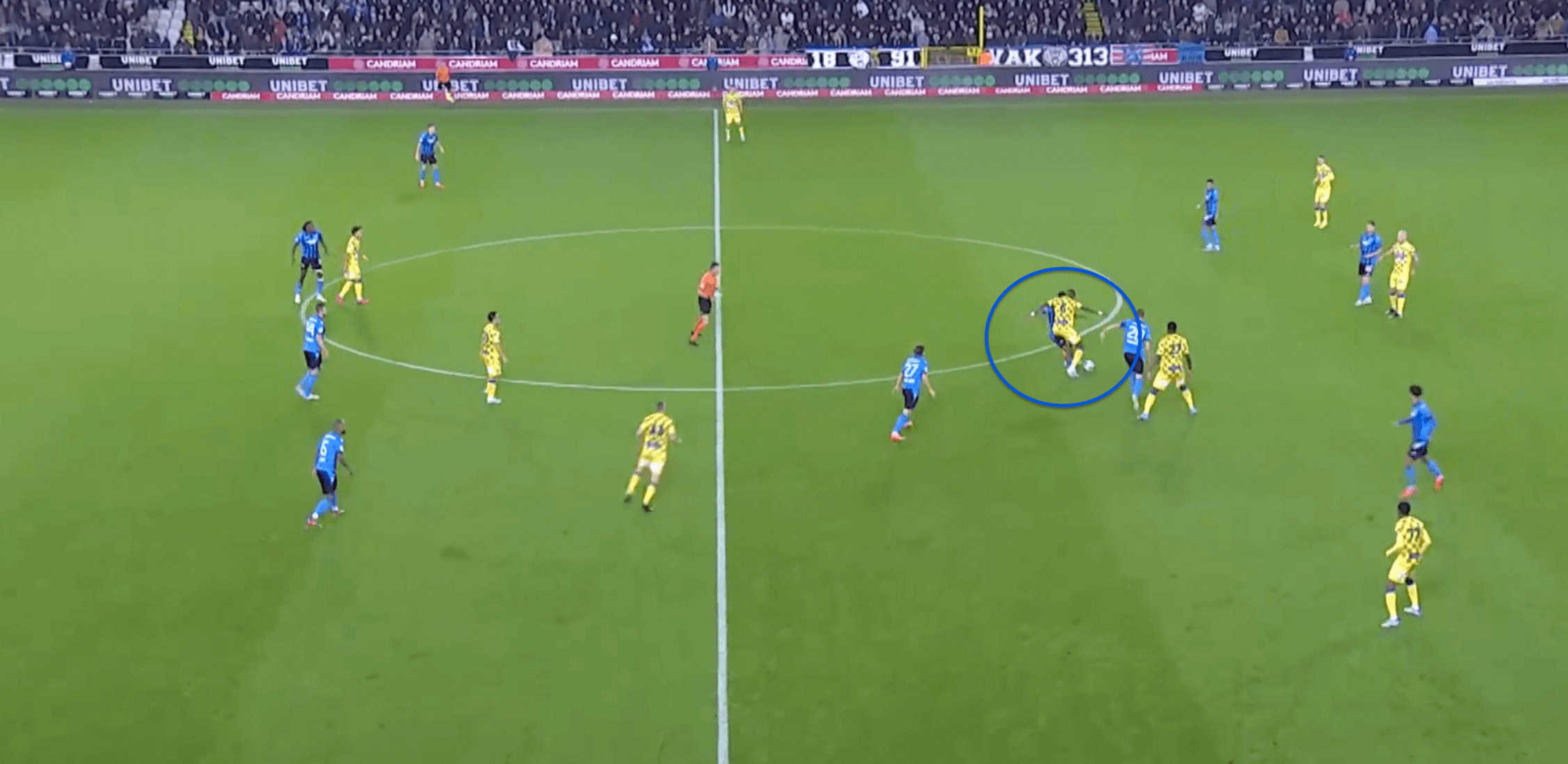
We can see him in the image above where he waits in his position and when the opposition player receives the ball and has a bad touch on it.
He immediately presses him forward and wins the ball back from him when he is in an unstable position.
This starts a counterattack for Club Brugge, and they go on to take a shot.
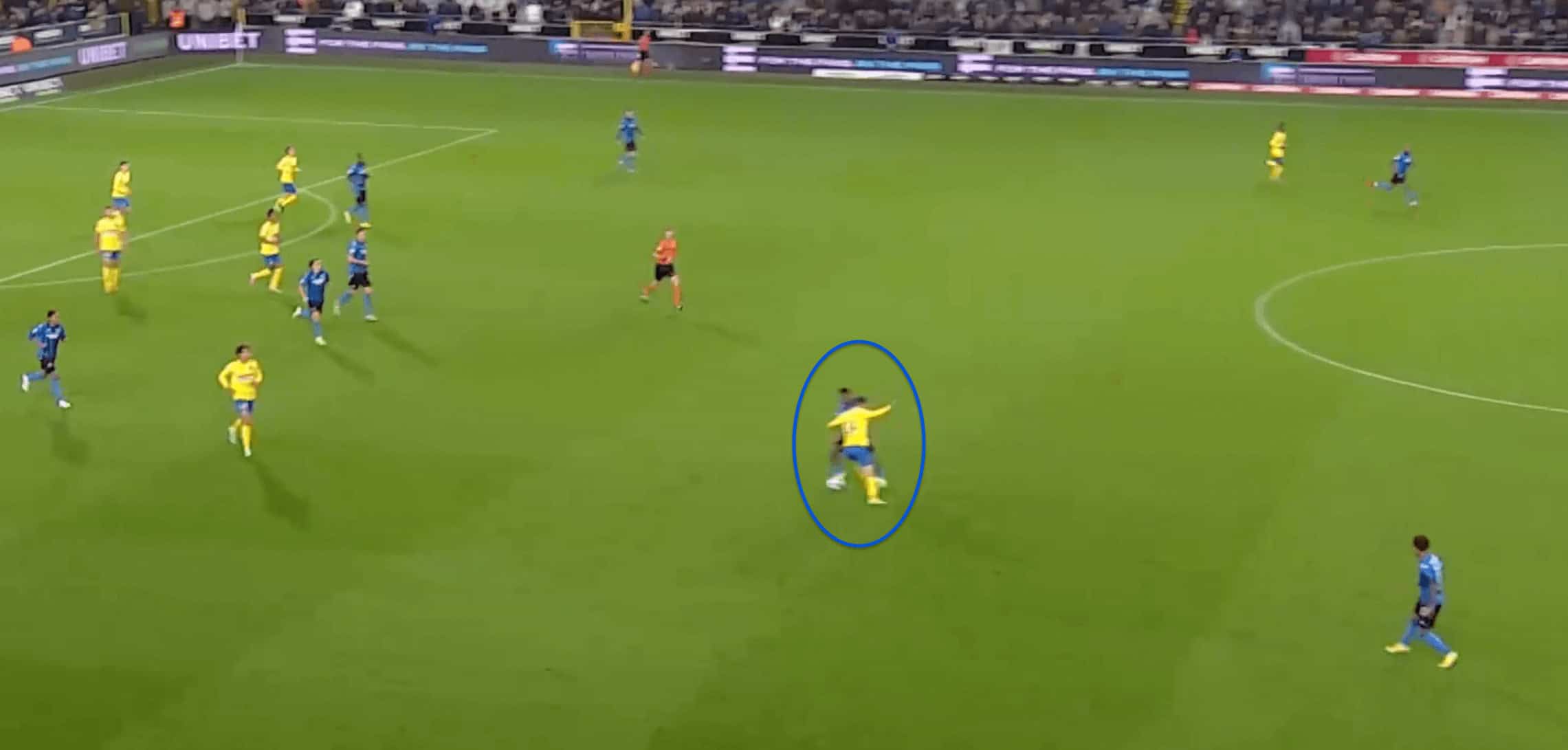
In another example in the image above, we can see him contest a duel again and win it cleanly against the opponent.
He has contested 8.1 defensive duels per 90 across all competitions and has won 58% of them, which is at a very good rate.
His technique, as he contests the duel and performs the tackle, is very good.
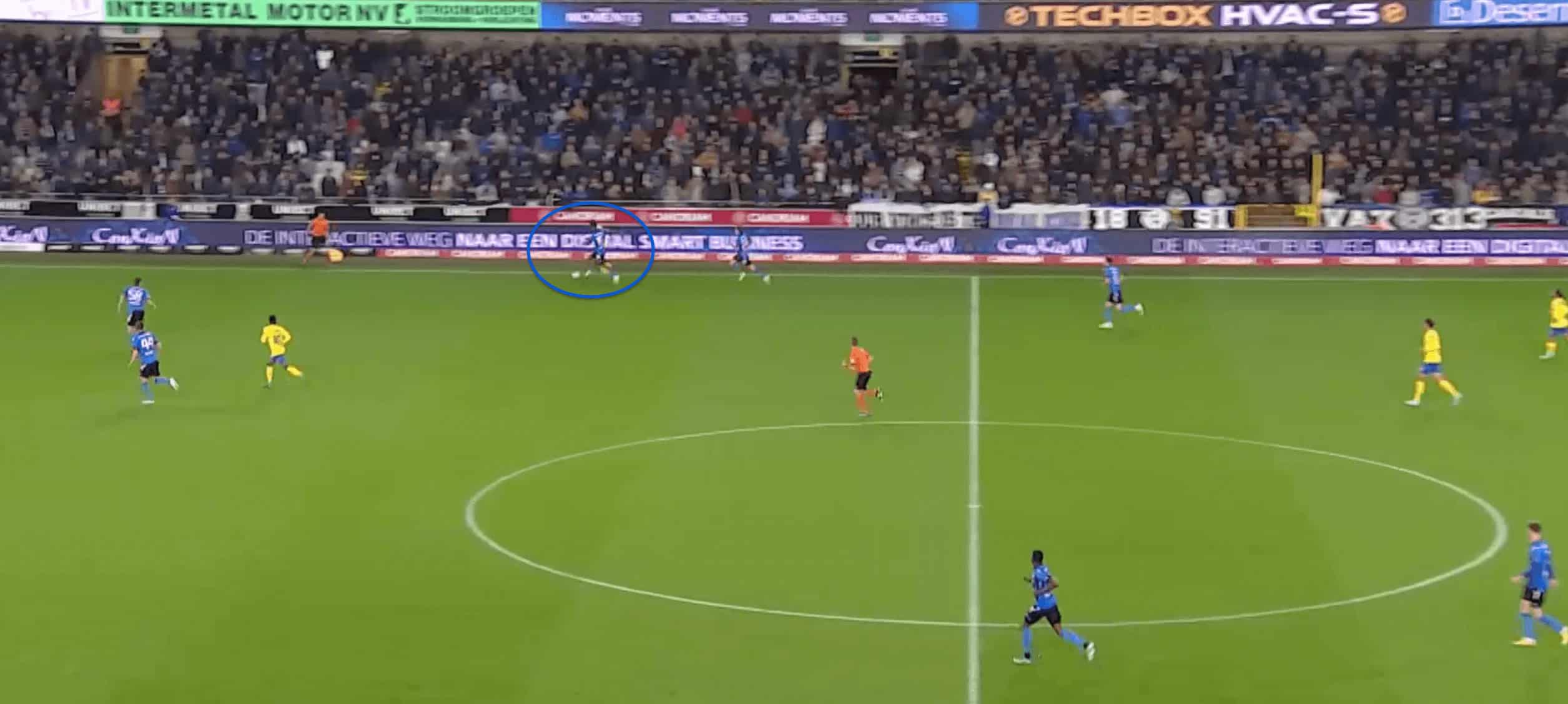
He is also very good in 1v1 situations and mostly comes out victorious in the duels that he contests in these situations.
We can see an example of this in the image above, where he wins the ball out in the wings in a 1v1 situation against a forward from the opposing team.
Although he frequently engages in duels, he does not rush into them and waits for the right time to take on challenges.
He knows the drawbacks of diving too early into challenges, which can lead to gaps opening up in midfield.
We can see that in the image below, where he stays in his position without intensely looking to press the ball carrier higher up the pitch.
He covers the passing lane to the inside and then intercepts the ball immediately.
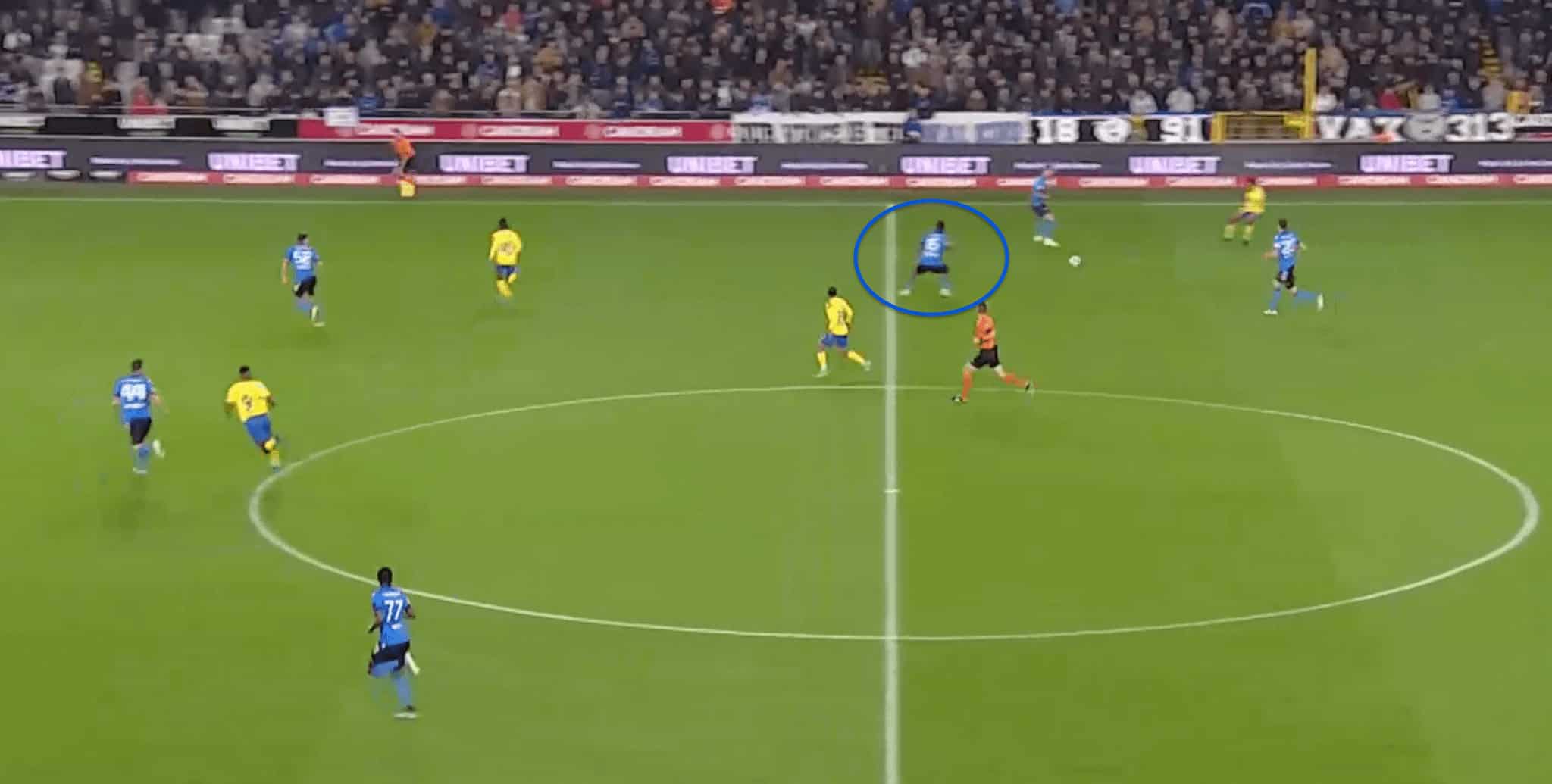
Another example can be seen below, where he delays his defensive action and looks to cover the passing lane to the player behind him while slowly moving forward to cover the angle as well.
This, combined with his long legs and broader shape, helps him to intercept the ball and win back the possession for his side.
On average, he records 4.84 interceptions per 90 for his side across all competitions.
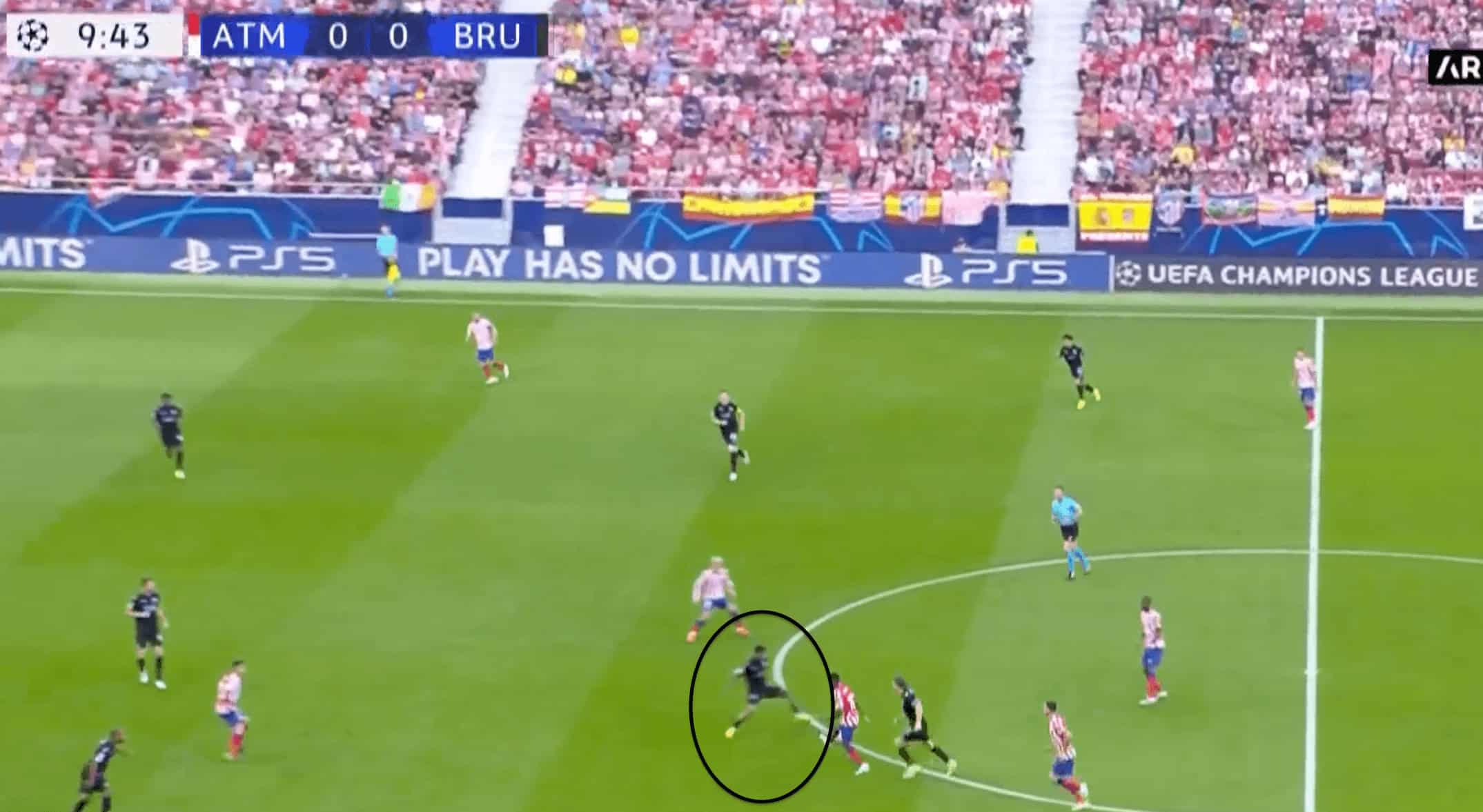
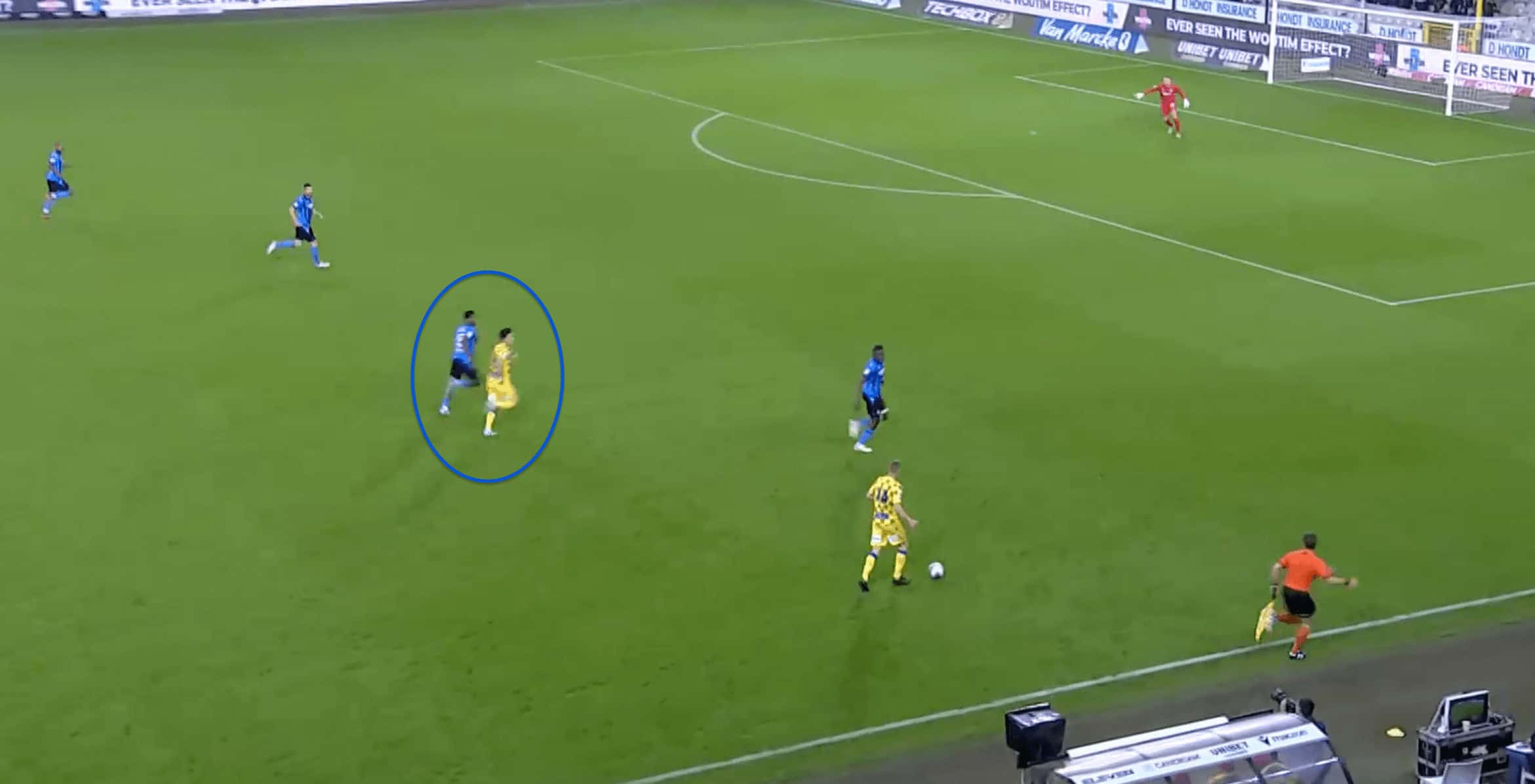
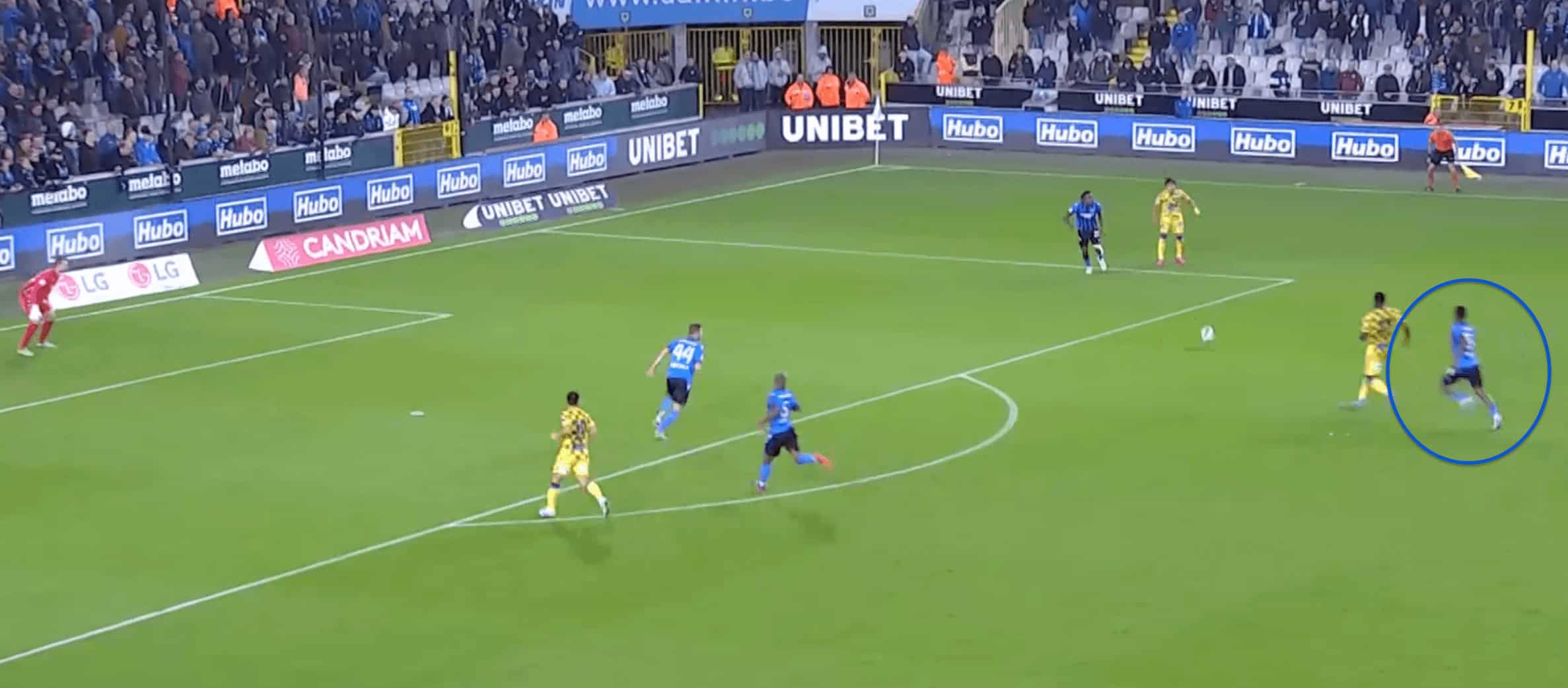
He is also an active defender and tracks his markers really well.
He keeps tabs on them and also shows good determination to keep pursuing them until he manages to mark them completely out of the game.
We can see an example of that in the image below, where he tracks his marker all the way to the penalty box.
This is a valuable trait in him, which would also improve his team’s defence in transitions.
Even at times when he is slightly ahead and positionally at a bad place where he is not near his marker, his athleticism and speed mean that he can catch up to the marker as soon as he reaches the penalty box.
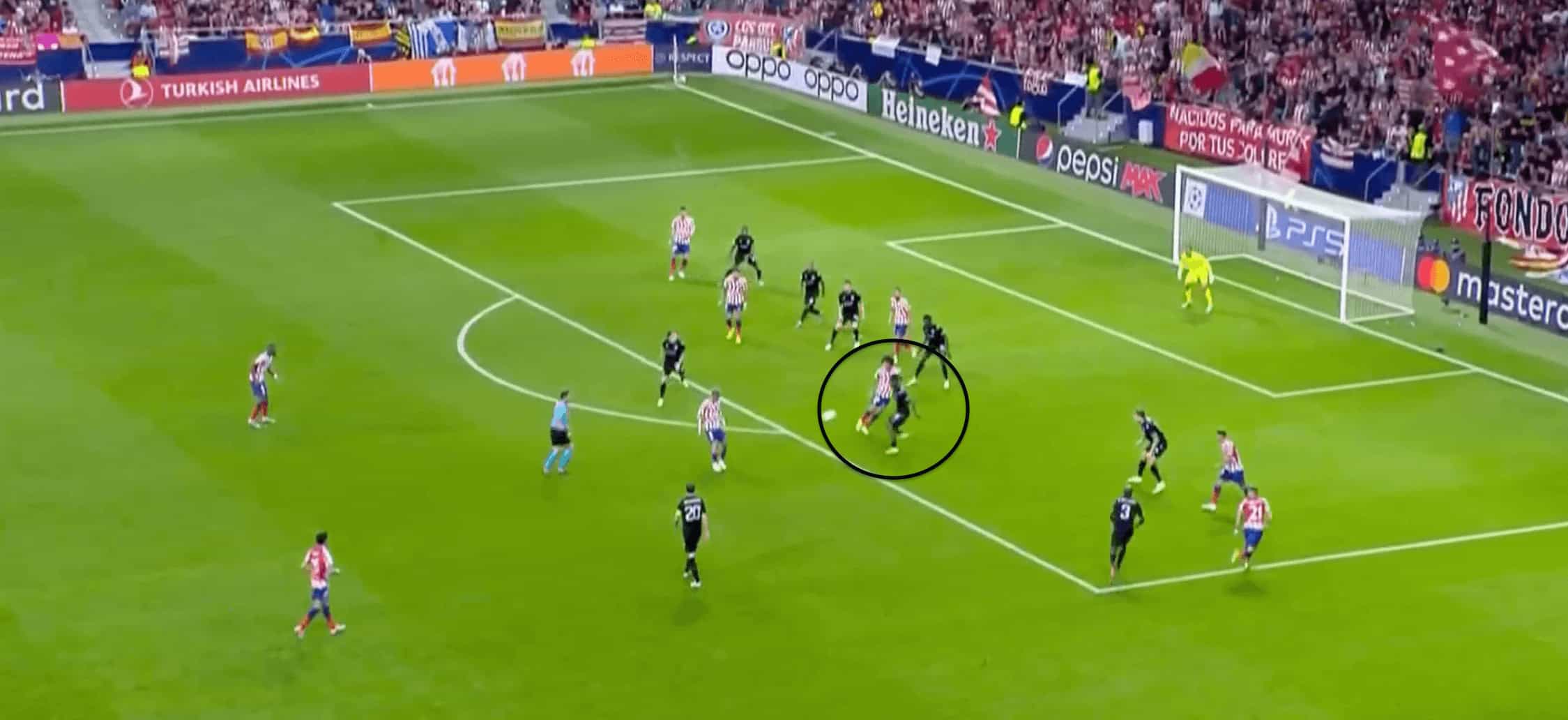
He also covers the half-spaces effectively, and whenever his team sets up in a low block, he does a good job of covering the half-spaces as well as zone 14 for his side.
We can see an example of that in the image below, where Club Brugge has set itself in a low block to defend.
He covers the half-space well, which prevents the Atletico Madrid player from playing the through pass.
The image below shows his defensive territory, which illustrates the extent of his area of responsibility, and he has been present almost everywhere across the first two-thirds of the pitch.
He is also very skilled in the air, and due to his physicality, he excels at winning aerial duels against stronger opponents as well.
This means that he is also a valuable figure when it comes to defending or attacking set pieces.

Conclusion
Onyedika has been an excellent addition to the Belgian defending champions and has played an important key role in their qualification for the round of 16 of the Champions League.
Many top clubs playing in major leagues, such as the Premier League and Serie A, should be monitoring his development, especially for someone who has a refined game at the age of 21.

