
Xavi Simons (2003, Amsterdam) has been one of the best-known underage players for a long time now. His football quality, catching looks – his long golden curly hair is a trademark – and his presence in social media with 3.7 million followers on Instagram make him a perfect marketing product.
Now that he turned 18, Simons is starting to show why he’s been at two of the best clubs in the world (PSG & Barcelona) at such a young age and his performances for PSG U19 have caught the eye of scouts of the best clubs in Europe.
With his contract expiring next summer and struggling to get playing time with PSG’s first team, he’s been linked with a move back to Barcelona or a surprising move to Rangers, where he should be a regular starter.
In this tactical analysis, we’ll see what’s so appealing about Simons’ playing style, why he’s one of the best players in this season’s UEFA Youth League and what he would contribute to his new team.
Profile and career
Born in 2003, Xavi Simons played for CD Tháder in Alicante, Spain when he was a little kid before joining Barcelona at the age of seven. At Barcelona, he progressed through the ranks as one of the most promising players in La Masía, with top clubs like Chelsea or Real Madrid reportedly trying to sign him.
Despite the attempts of Barcelona to keep him, Simons rejected all the professional contracts he was offered and joined PSG in 2019 when he was 16. Since he arrived at PSG, he has played just three games for the first team but has been an important part of PSG U19 in the UEFA Youth League, playing 11 games (four goals and six assists).
Simons holds both Spanish and Dutch passports but has chosen to play for the Netherlands, representing them at U15, U16, U17 and U19 levels. In total, he has 20 youth caps and has scored seven goals and provided three assists.
He can play in any midfield or attack position as he’s very complete in terms of physicality and technique. We’ll cover this in the next section of the analysis but despite being raised as an interior in La Masía, he’s evolved more into an attacking midfielder or false-9 role at PSG.
Physically, Simons stands at around 1.70m and is still developing but has a great presence thanks to his athletic build. He’s very mobile and agile, has good acceleration and a decent top speed. His change of pace, once he’s running at high speed, isn’t especially good. On top of that, he’s quite strong to resist challenges.
Technically, Simons is excellent in all aspects. His first touch is fantastic, both to control and pass the ball, he’s skilled to dribble in tight spaces and also to carry the ball in open spaces (looks faster on the ball than off it), his passes are tense and accurate and he can also finish with quality.
He also displays excellent communication and leadership skills. His football is enough to be an important part of his team but he also has the personality to take responsibility and lead the team.
Positional versatility and movement
As we mentioned in his profile, Simons is an offensive player who can adapt to very different positions on the pitch. At Barcelona, he was one of the central midfielders in their classical 4-3-3 but since arriving at PSG, we’ve seen him play from either wing, as a false 9 and as a 10.
He generally plays with a lot of freedom and likes to be in contact with the ball, either dropping deep and moving between the lines or drifting inside from the wing. What he’s not is a classical winger who will stat wide and be patient to receive the ball and run at the defender in 1v1 situations. Dribbling and pace aren’t his best attributes and his quality demands to get more on the ball and affect games from central areas.
If we look at the positions in which he received his passes this season in the UEFA Youth League, we see he drops deep a lot, even to his half, to get the ball from defenders and lead PSG’s progression. As the attacks progress and he gets forward, he gets more and more central, moving first to the half-spaces and then to zone 14 at the edge of the box.

Simons often needs other players to go deep and take advantage of the spaces he creates when coming deep, which is often done by one of the central midfielders when PSG use a 4-3-3 or by the wingers. Let’s see some examples.
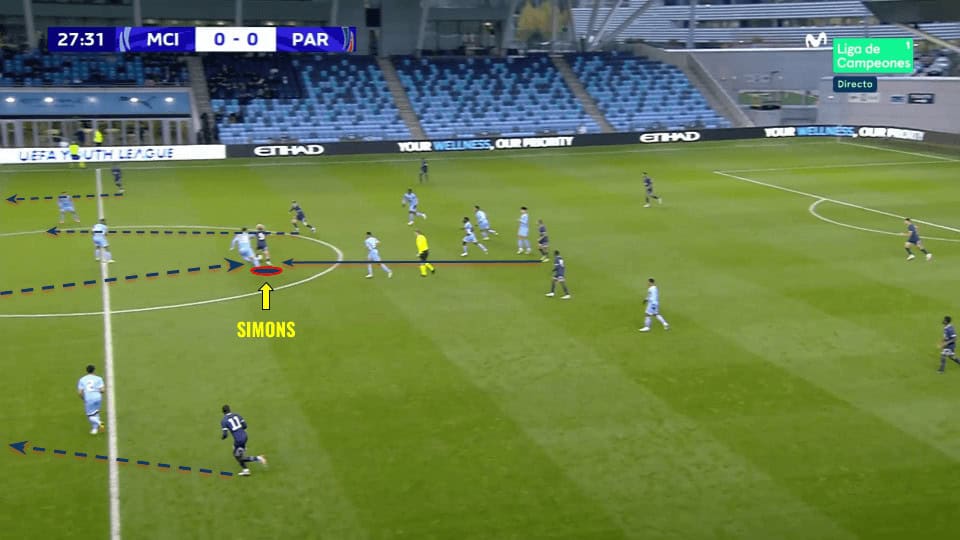
In the first one, Man City are pressing PSG very high and Simons comes deep from the striker position to offer a progressive passing option. As he receives the ball, both wingers and one of the central midfielders rush forward to attack the space he has just left. He turns and plays the ball to the right, setting up a quick attack and breaking Man City’s press.
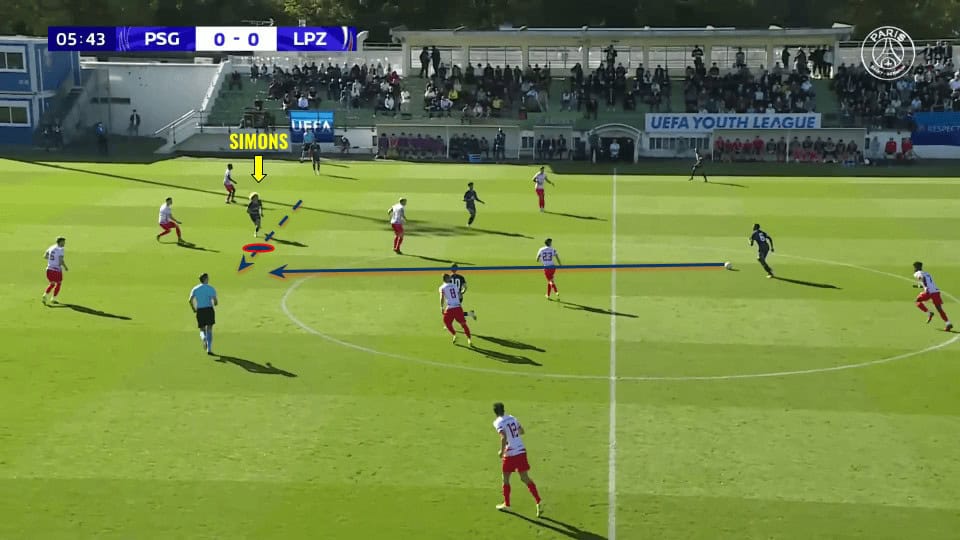
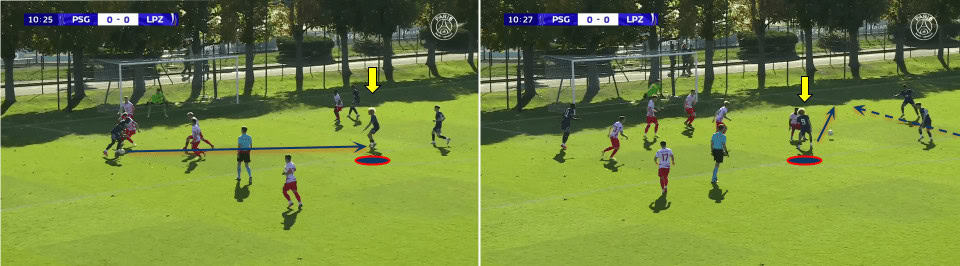
In the second one, Simons is positioned in the right half-space but there he can’t be reached because there’s a teammate already on that passing lane so he comes central and offers a new option to progress with a pass between the rival central midfielders. By moving between the lines, he creates doubts in the centre-backs, who don’t know if they should step out and mark him or stay in the defensive line. We can see that doubt in the image as RB Leipzig’s defender seems to take a step forward but doesn’t finish his movement.
But Simons is an intelligent player and mixes his movements well enough to always have the option to surprise rivals. When he effectively drags defenders out of position, he can quickly change directions and attack the space he has generated. Even if his pace isn’t top, he’s quicker than most centre-backs and by catching them on the wrong foot he generates the advantage he needs to receive the pass and face the goalkeeper.
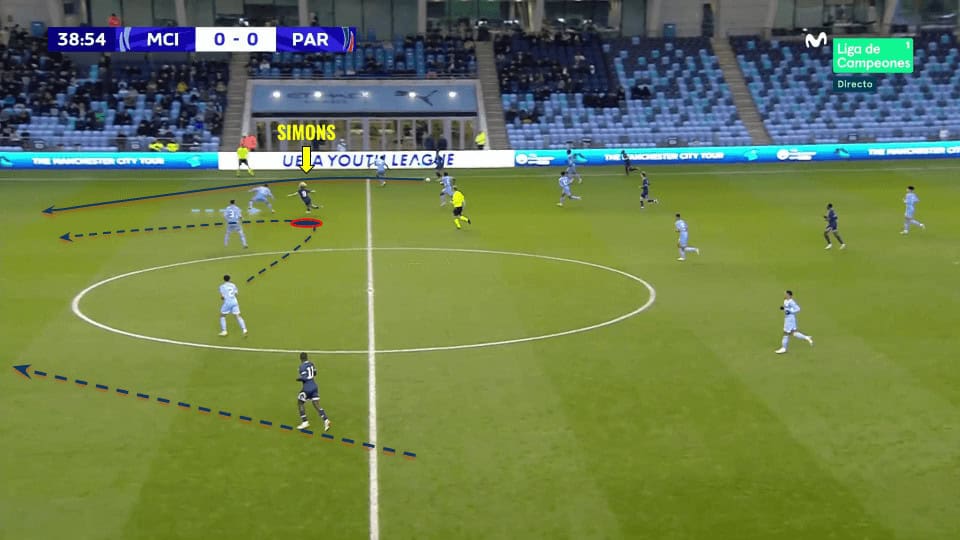
Below, we have a perfect example of this movement. In the first picture, Simons comes from between the centre-backs towards his teammate to offer a short passing option. But as Man City’s centre-back takes a step forward to try to mark him, he changes directions and attacks space in behind before the defender can react.
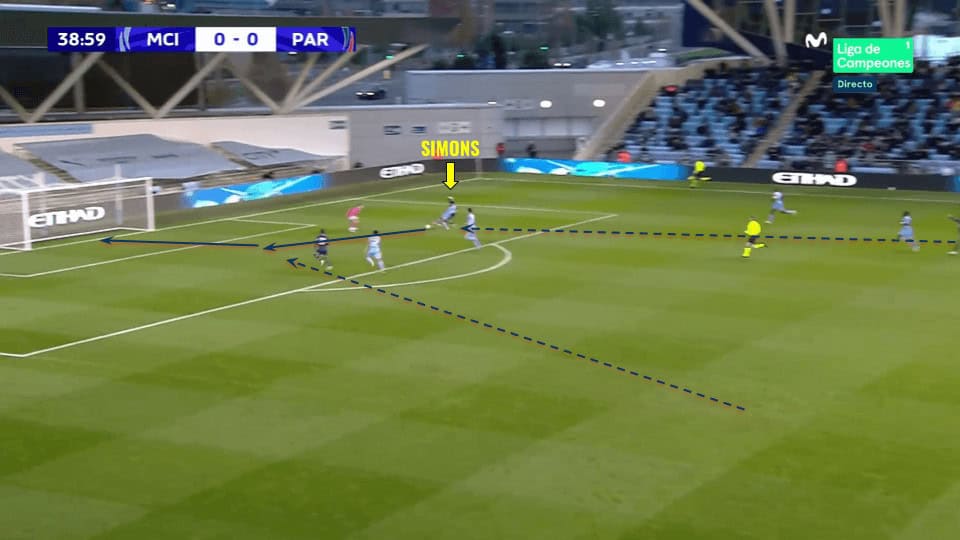
Next, we see he leaves the defender behind, gets into the box and assists his teammate for him to score the tap-in. The wingers are used to running in behind when Simons comes deep so this time the left-winger had already initiated the movement and arrives at the box unmarked.
In this section, we’ve seen how Simons moves from his starting striker position. Next in this scout report, we’ll see some of the things he does when he receives the ball, starting with his passing.
Passing quality
After receiving between the lines or even in his half, Simons displays an excellent passing quality. Educated at Barcelona, he understands the value of possession and also how to find the third man when he receives the ball. He plays lots of great passes that on the stats appear as sideways or backward passes but are great layoffs for a player who’s facing forward to continue advancing.
Below, we have the map with all Simons’ passes in the UEFA Youth League this season. Again, we see his involvement all around the pitch, especially in central areas, and his high completion rate. We can also see what’s been explained before. Lots of his passes are short back passes, often in just one touch, that complete a three-man combination and leave his teammate in an excellent position to advance.

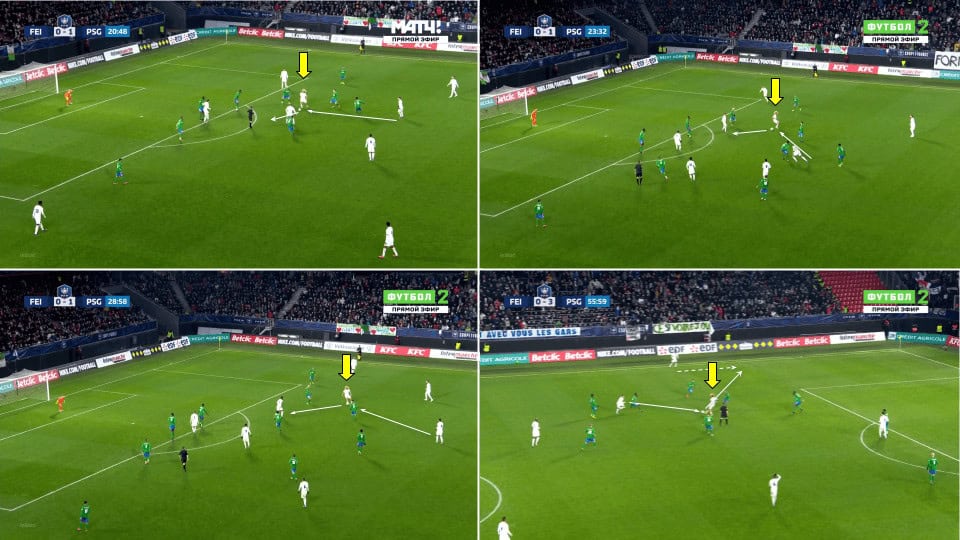
The next picture shows four moments in his game against Feignies in Coupe de France in which Simons shows his ability to receive in the right spaces and play excellent first-touch layoffs. He displays a very good understanding of his surroundings and quick decision making to accelerate the attacks in the final third and prevent rivals from pressing him.
In the four plays, rivals take a step to mark him and prevent him from turning but he doesn’t need to do it to pass the ball to a better-positioned teammate so he generates the space he needs to make the pass and improve the attacking play.
When playing for PSG U19, Simons has all the freedom he needs and plays mostly in central areas. However, in the first team, he has to wait wide in some plays and create from there. His good dribbling skills are mostly seen when he can run through ventral areas but he lacks some explosiveness to dribble from the wing so he needs to find other solutions.
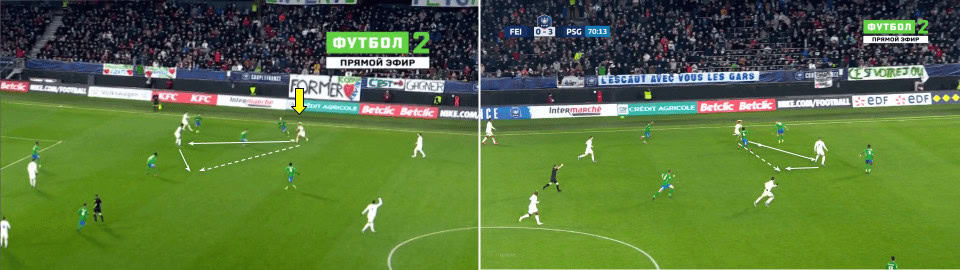
The main way he progresses from wide is combining and getting central with quick one-twos. Again, he understands well how to do this as it’s a similar play as in his layoffs but with him having another role.
The picture below shows two examples of these combinations in his cup game, one from either wing. In both, he displays directness and creativity to find ways to advance, skill to pass the ball accurately in tight spaces and a good understanding of the game to make the appropriate run to receive the ball back.
Now, let’s look at his more creative passes. When in and around the box, Simons is very calm to raise his head and choose the best option to assist or create chances. He does this very quickly as his pitch geography is excellent and he’s always scanning to decide quickly once he has the ball.
The map below shows his key passes and passes into the box from this season’s UEFA Youth League. Most of them concentrate in Zone 14 at the edge of the box but he also has some good passes in transitions (the longer ones from deep) and quality layoffs and cut-backs from inside the box. His accuracy is also excellent considering these are the most difficult passes to make, showing both his technique and good decisions.

Let’s see some of these quality passes. The first one below is in a counterattack. In his false-9 role, Simons receives the ball and when he turns and runs forward, he has three teammates running into space in front of him. He raises his head and plays a perfect curled pass to the left-wing, leaving his teammate in a good position to dribble into the box or cross.

In the next one, we see another quality layoff by Simons. This time, he’s in the box and receives with his back to the goal from the winger. With a quick and accurate touch, Simons returns the one-two and puts his teammate in a great shooting position.
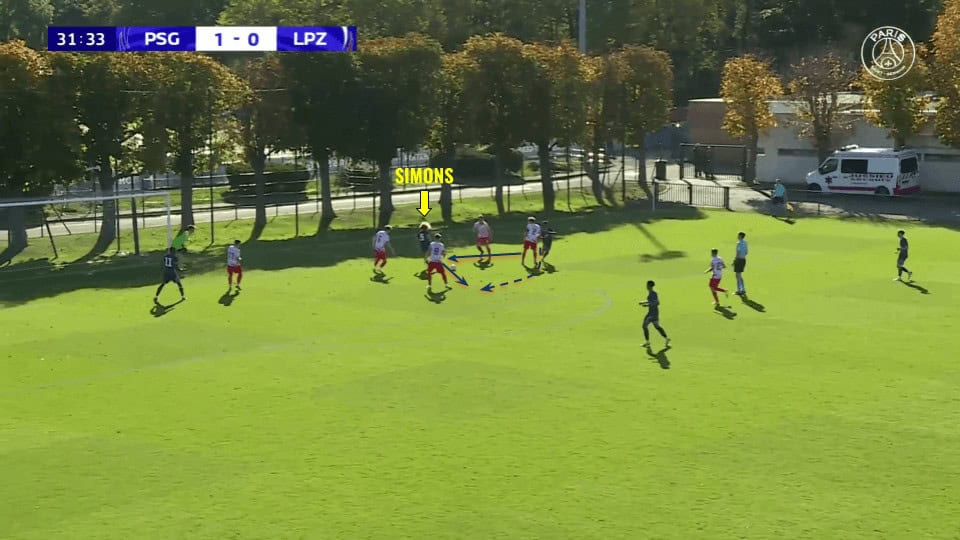
He can also create things from wide but he needs players overlapping or underlapping him. As seen below, with movement into space ahead of him, Simons has the passing accuracy and timing to put his teammates into great situations to create chances.
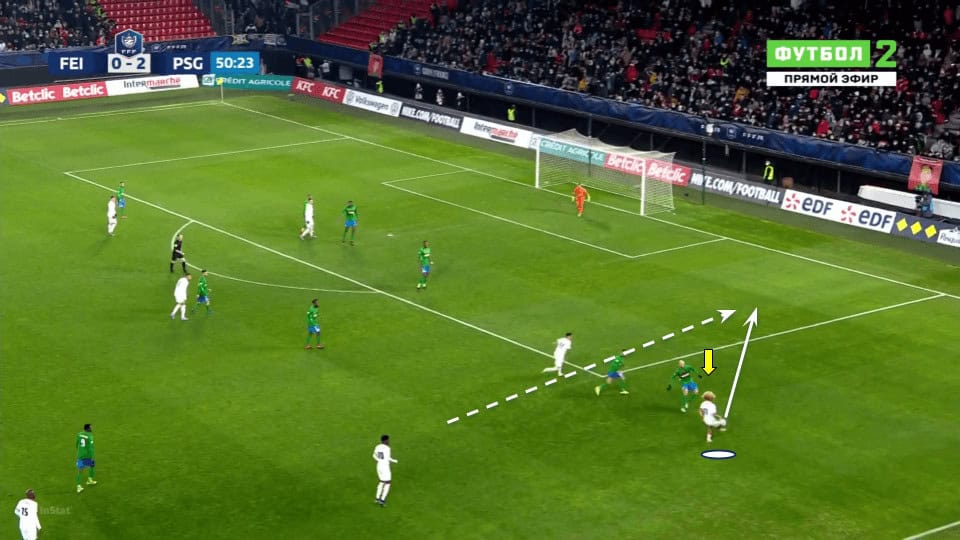
In the example in which we saw his runs in behind, we also saw how calm Simons is in the box. He takes that extra second to evaluate his options and is selfless to pass the ball even when he can shoot if there’s a teammate in a better position.
In the example below, Simons arrives in the box from the second line and receives a cutback. He controls the ball and attracts the rival defender, which leaves his teammate alone at the far post. Despite having a good chance to shoot, he plays the pass and his teammate scores.
Dribbling
Moving into Simons’ dribbling ability, the first thing we have to say is that he’s not a winger who will take on his man at every chance. He’s very skilled on the ball, very mobile and a strong runner on the ball but his acceleration and change of pace are good but don’t make a difference.
Despite not being especially tall, Simons is well-built and uses his arms and body very well to shield the ball and resist challenges while running. This makes him look quicker on than off the ball and allow him to break lines with strong runs and lead counterattacks with his carries.
The map below shows his dribbles in the UEFA Youth League. First, we see he doesn’t dribble too much and does it mostly in the half-spaces. His decision making also shines here as he completes 69% of attempted dribbles.

While dribbling isn’t his main way of progressing and creating, he shows good potential to become a good ball carrier. In the next few examples, we’ll see how and where Simons dribbles.
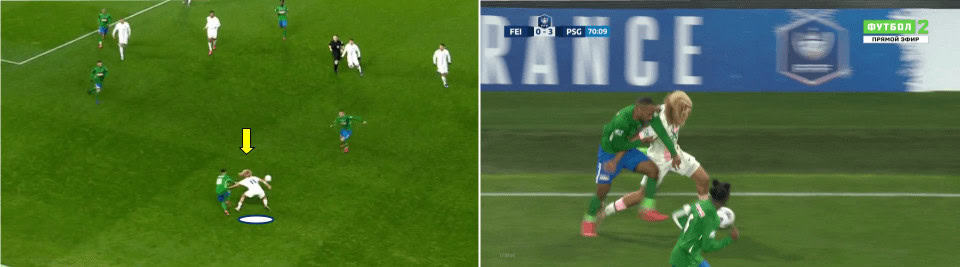
The following two pictures show Simons using his body and arms to protect the ball, on the one on the left to push the rival and get past him and on the one on the right to prevent the rival from approaching the ball with his arms while he runs forward.
Once he starts running, Simons reads the space around him very well and can advance big distances getting past several rivals. He also understands when to release the ball and rarely gets into crowded areas if there isn’t a way out of them.
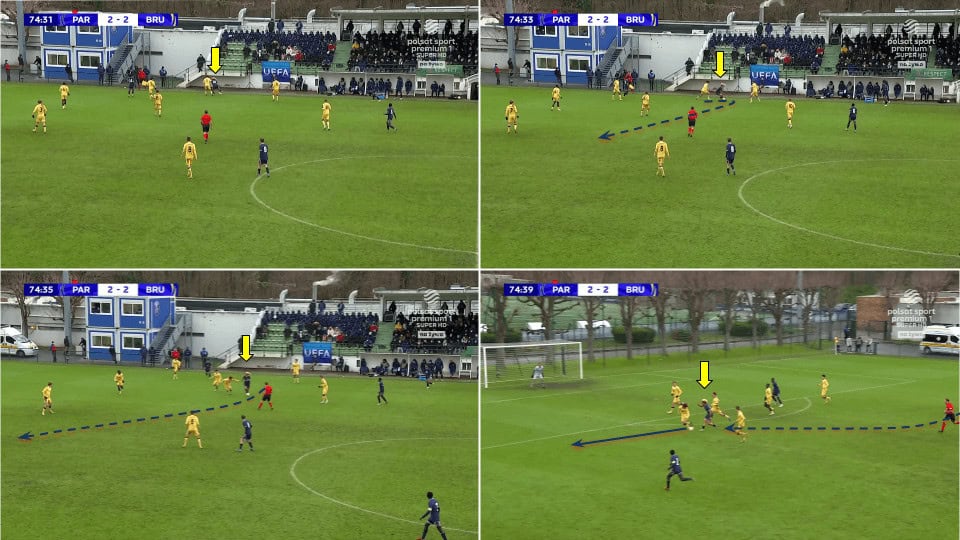
In the sequence below, Simons starts holding the ball and trapped between his marker and the touchline. He uses his agility and skill to turn and gets away from the rival with his powerful first steps. When a second rival comes, he changes directions to cross his way and prevent him from intervening. When he reaches the defensive line and can’t continue his run, he releases the ball for the overlapping full-back to continue the play.
Near the box, Simons also has a range of skills he can use to get past players and create space to shoot or pass. He tricks with very good feints and doesn’t need to be explosive to get past them.
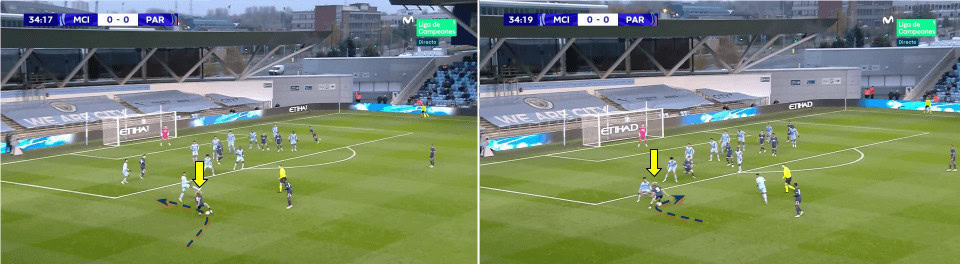
The next play is a good example. Attacking from the left half-space, Simons feints a shot and the first Man City defender completely falls for it, being easily left behind. When he runs at the second rival, he drops his shoulder and goes right so the defender is forced to foul him to prevent a dangerous shot.
Despite not standing out for his dribbling skills, Simons is a very able player in this aspect. His technique, reading of the game and of the spaces around him and his good speed are enough to take on rivals when needed and create dangerous situations.
In the last section, we’ll see how he behaves in front of the goal, one of the key aspects of any attacking player.
Scoring
In this last section of the tactical analysis, we’ll have a look at Simons’ scoring abilities. He’s not an out and out striker so we need to keep that in mind when looking at his movements in and around the box.
Simons usually plays in relatively deep positions for a striker, closer to an attacking midfielder even when he’s the number 9 on paper. This means his presence in the box isn’t as big as other strikers’, which also shows in his scoring figures.
The Dutchman usually arrives at the box with late runs, trying to benefit from players who move in front of him to receive cut-backs with some space to finish. However, he isn’t especially active once he’s in the box and doesn’t try to create separation from the defenders or attack different positions in the box. This means he needs the striker (or any player who’s in a more advanced position) to pin the centre-backs to have space to receive the ball.
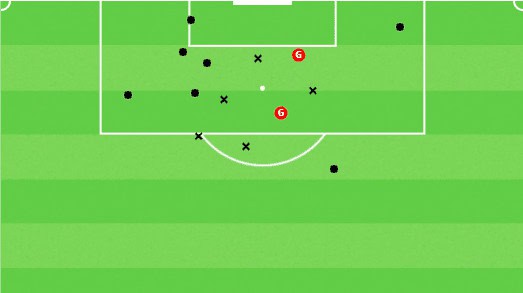
Below, we have the map with all Simons’ open-play shots in the Youth League this season. He’s taking good shots from central areas, most of them arriving from the second line as we described, and also can create some shooting opportunities with his dribbling from wide.
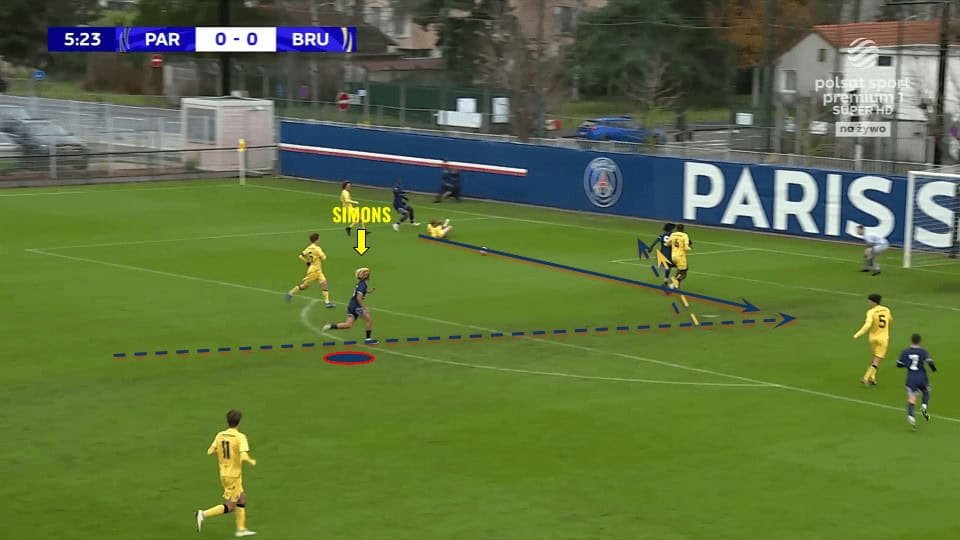
The example below is a great one to illustrate how Simons gets his best chances. The ball is on the left side and the forward in front of Simons drags the defender with his movement, creating a lot of space in the box behind him. Simons runs into that space and receives the cut-back, scoring from close range.
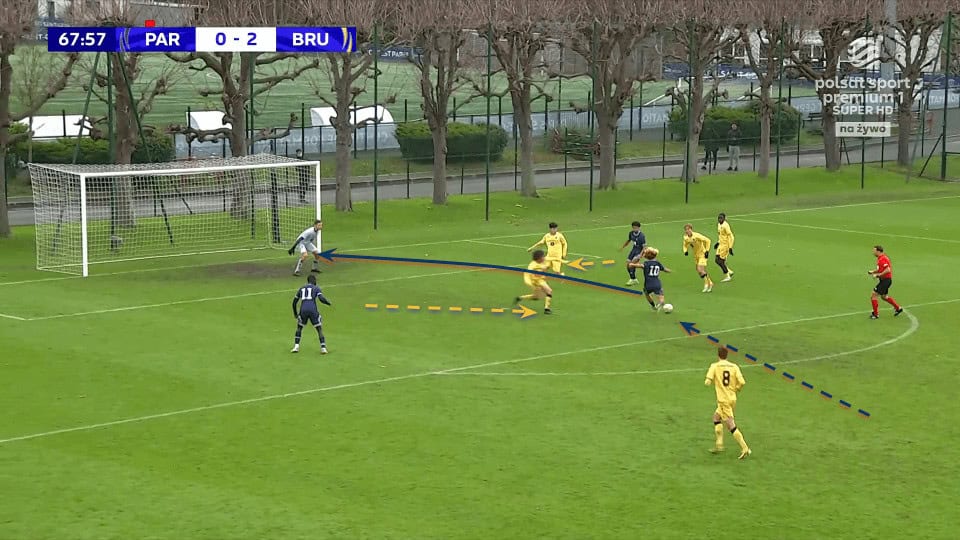
In the next one again, a PSG winger has the ball and attracts two players, leaving Simons alone at the edge of the box. When he receives the ball, he’s calm to control and place it close to the post to score.
Simons has the quality to finish and also is intelligent to get into good positions from behind. If he can add some movement once he’s in the box instead of always waiting for the cutback, he could become a good goalscorer and improve as a striker, even if he has a false-9 role.
Conclusion
Simons is a great player in the making. His combination of physicality, technique and football IQ make him ready for senior top-level football even if he’s struggling to get his minutes at PSG.
He’s been well-known for a long time but is still only 18 so he should be patient. If he chooses to move to Barcelona, he would benefit from playing regularly with the B team in Primera RFEF until he’s ready and needed at the first team. If he chooses to go to a second-level league like the SPL, then he’ll face the challenge of showing all his quality in senior football from the first minute. Either way, he’ll be one of the hottest commodities in football from January 1st 2022.
