Buying online has quietly become the smartest way to chase rookies, refractors, and one-of-one hits without leaving your sofa. The strongest NBA card trading sites now let you rip a pack, see your pull instantly, then sell, ship, or vault it in seconds. That single shift has turned a slow, shipping-heavy hobby into something closer to real-time collecting.
If you only have time to read one line, here it is: ClutchPacks is our top pick for basketball-first collectors who want curated packs, transparent pull values, and instant buybacks. Below we stress-test it against four serious rivals so you can spend with confidence. Every recommendation is weighed on odds, real card quality, fees, and how painless it is to cash out.
🥇 Editor’s Pick: ClutchPacks
Best blend of basketball-heavy inventory, fair pricing, and instant sell-back. New collectors get the cleanest path from “buy a pack” to “money or card in hand.” Start here, then branch out as your collection grows.
All Five NBA Card Trading Sites Ranked
Here is how the five platforms finish once every ranking factor is combined into a single score. ClutchPacks takes the crown for basketball collectors, but each rival earns its place for a specific need. Use the watch-out column to sense-check a platform against your own priorities.
| Rank | Platform | Overall Score | Standout Strength | Main Watch-Out |
|---|---|---|---|---|
| 1 | ClutchPacks | 9.6 / 10 | Basketball-first packs with instant buyback | Smaller catalogue, US only |
| 2 | Courtyard | 9.2 / 10 | Liquidity and 0% seller fees | Basketball shares the spotlight |
| 3 | Arena Club | 8.7 / 10 | Grading and insured vaulting | Not built for ripping |
| 4 | Boxed GG | 8.1 / 10 | Cheapest entry and community | Slower shipping, gems not cashable |
| 5 | Topps | 7.8 / 10 | Classic sealed product | No buyback, full cold-rip risk |
Treat these scores as a starting point, not gospel. Your best platform is the one whose standout strength matches how you actually like to collect.
Testing and Reviewing The Top Five NBA Card Trading Sites
Each review below is capped for quick reading and built on hands-on platform behaviour, published odds, and collector feedback. We lead with our top pick, then rank the rest by overall value for basketball collectors. Scores reflect the ranking factors above rather than brand size.
1. ClutchPacks — Best Overall NBA Card Trading Site for Basketball Fans

ClutchPacks earns the top spot because it does the basketball thing better than anyone else on this list. The catalogue is curated rather than bloated, with tight quality control and some of the strongest NBA-focused pack tiers available digitally. You buy a digital pack, rip it, and instantly see the real card you pulled.
From there the flow is genuinely frictionless. You can sell the pull back for instant cash, keep it vaulted in your digital showcase, or request secure shipping whenever you like. Inventory is powered by a major sports card distributor, so fresh hits and new drops keep arriving.
Every pack page shows clear value categories, from commons up to chaser and epic tiers, with floor and ceiling figures. That transparency makes it easy to weigh risk before spending. US collectors get SSL-secured payments and a clean, beginner-friendly interface.
Pros
- Deep, basketball-first inventory
- Transparent pull values and odds
- Instant buyback on real, vaulted cards
Cons
- Fewer total SKUs than mega-marketplaces
- Currently US-focused
ClutchPacks vaults the physical card behind every digital pull, so “selling back” is selling a real asset, not a token. That is the detail that separates it from gimmick sites.
2. Courtyard — Best for Instant Liquidity and Vaulted Trades
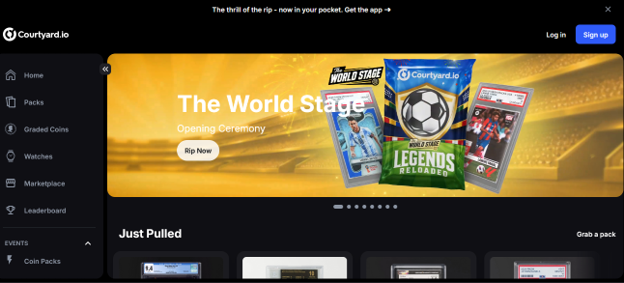
Courtyard is the liquidity king of this group. Every card is a real, graded slab that lives in an insured vault, and you can buy, sell, or trade it instantly without shipping anything. If you do not like a pull, you can sell it back for roughly 90% of fair market value on the spot.
Packs run from accessible starter tiers up to premium legend packs, with transparent real-time odds shown before you commit. The marketplace charges 0% seller fees, which is rare in this space and a real money-saver for active traders. Basketball sits alongside Pokemon and comics rather than being the sole focus.
The trade-off is breadth over basketball specialisation. Courtyard is brilliant for flipping and collecting across categories, but a dedicated NBA collector may find the basketball catalogue less curated than ClutchPacks. Shipping to your door is available worldwide once you redeem.
Pros
- 0% marketplace seller fees
- Instant buyback near 90% of value
- Insured vault and worldwide shipping
- Transparent real-time odds
Cons
- Basketball is one of several focuses, not the headline
- Card payments carry a small surcharge
Use a digital wallet rather than a credit card on Courtyard to dodge the small card-payment surcharge. Over many rips, that saving adds up faster than most collectors expect.
3. Arena Club — Best for Grading and Long-Term Storage
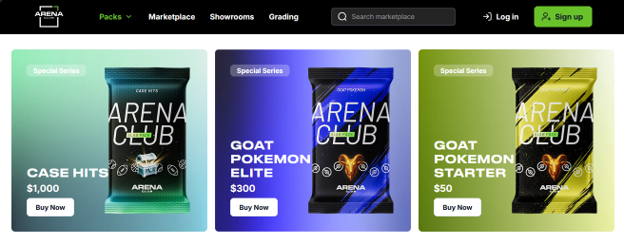
Arena Club, co-founded by Hall of Famer Derek Jeter, is built around grading and secure vaulting rather than mystery rips. You send raw cards to be graded with a mix of human review and AI-assisted computer vision, then store them in a temperature-controlled vault or receive them in slabs. Each collector gets a personal showroom to display, buy, sell, and trade.
That makes it less of a “pack ripping” destination and more of an end-to-end home for serious holdings. If your goal is to grade key rookies and protect long-term value, the platform is purpose-built for it. Transactions are logged on-chain to support authenticity and provenance.
For pure pack thrills it is the weakest fit here, since the headline experience is grading and the marketplace rather than digital packs. But for safeguarding the priciest rookies in your collection, few platforms match it.
Pros
- Strong AI-assisted grading
- Insured, climate-controlled vault
- Slick personal showrooms
- On-chain provenance and authenticity
Cons
- Not built for pack ripping
- Grading turnaround takes time
4. Boxed GG — Best for Budget Rips and Community
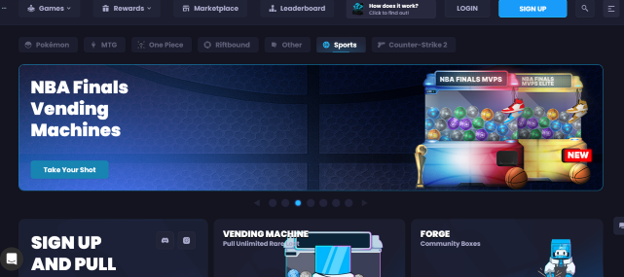
Boxed GG is the wallet-friendly entry point of the group. You buy gems, open boxes, and either ship the physical card, sell it back for gems, or trade it on the marketplace. Per-item odds are shown before you open, and the platform runs a provably fair audit page.
Its roots are in Pokemon and other trading card games, with sports cards rolling out more recently across basketball, baseball, and beyond. The community features, battles, and vending-machine format make it fun and very cheap to start. Backing from established gaming investors adds a layer of trust unusual for this corner of the market.
The honest caveats are real. Fulfilment can be slow, sports inventory is thinner than the TCG side, and the gem system means your balance is site credit rather than cash. For low-stakes basketball card packs and casual ripping, though, the value is hard to beat.
Pros
- Very cheap entry point
- Per-item odds shown upfront
- Strong community and mobile app
Cons
- Slower shipping and fulfilment
- Thinner sports catalogue than its TCGs
- Gems are site credit, not cashable
Gems are site credit, not withdrawable cash. Treat anything you load as money spent on entertainment, and only deposit what you are genuinely happy to convert into cards.
5. Topps — Best for Classic Sealed Basketball Card Packs
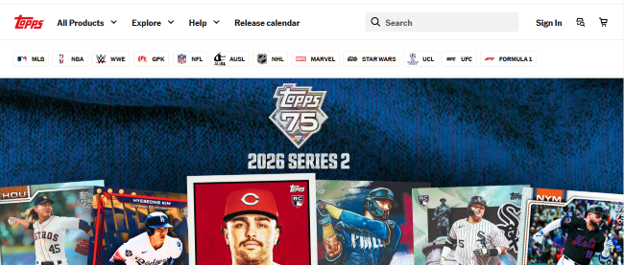
Topps is the traditionalist’s choice and the only name here built on physical, sealed product. For collectors who want the tactile ritual of tearing real foil rather than a digital reveal, nothing on this list replaces it. The brand carries decades of hobby heritage and instant name recognition.
Buying sealed gives you the full unopened experience and the long-term storage upside that sealed boxes can hold. You control the cards entirely, with no vault custody or platform middleman between you and your collection. That independence appeals to purists who distrust digital-only ownership.
The downside is that there is no instant buyback or live value reveal. You carry all the risk of a cold rip, and reselling means listing on a separate marketplace yourself. For pure NBA card packs in their original sealed form, however, Topps remains a cornerstone.
Pros
- Real, sealed physical packs
- Iconic heritage brand
- Full ownership with no custody
Cons
- No instant buyback or value reveal
- Full exposure to a cold rip
- You handle resale and storage yourself
Best NBA Card Trading Sites Compared at a Glance
The table below summarises how each platform stacks up on the things that matter most. Use it as a shortlist, then read the full reviews for the detail behind each score. Pricing tiers reflect typical entry points rather than the most expensive premium packs.
| Platform | Best For | Format | Instant Buyback | Entry Price |
|---|---|---|---|---|
| ClutchPacks | Basketball-first collectors | Digital rip, physical vault | Yes, instant | Low to mid |
| Courtyard | Liquidity and trading | Digital rip, marketplace | Yes, around 90% value | From about $25 |
| Arena Club | Grading and storage | Marketplace, vault, grading | Via marketplace sale | Varies by card |
| Boxed GG | Budget rips and community | Gem-based boxes | Sell back for gems | Very low |
| Topps | Classic sealed product | Physical packs and boxes | No, resale only | Retail pricing |
How We Ranked the Best NBA Card Trading Sites
No two platforms work the same way, so a fair comparison needs fixed rules. We judged every contender on the same five factors, each weighted toward what collectors actually feel when they spend real money. The goal was simple: separate genuine value from flashy marketing.
- Odds and transparency: Are pull rates and card values published before you buy, or hidden until after?
- Inventory quality: Real, authenticated cards versus reprints, and how deep the basketball catalogue runs.
- Cash-out and liquidity: How fast and how fairly you can sell a pull back or trade it on.
- Fees and pricing: Marketplace cuts, payment surcharges, and overall price-per-pack value.
- Trust and fulfilment: Shipping speed, vaulting security, and the platform’s track record with collectors.
💡Pro Tip:
Before depositing anywhere, open one low-cost pack first. A single cheap rip tells you more about fulfilment speed and card condition than any review, including this one.
What to Look for in NBA Card Trading Sites
The flashiest homepage rarely makes the best platform. When you compare NBA card trading sites, the boring fundamentals decide whether you keep money or lose it slowly. Here is what genuinely matters once the novelty wears off.
Transparent Odds and Card Values
The best platforms publish pull rates and value tiers before you buy, not after. If a site hides its odds, treat that as a warning sign rather than a quirk. Knowing the floor, ceiling, and average value of a pack lets you make an informed bet instead of a blind one.
Real, Authenticated Cards
Every card behind a digital pack should be a genuine, authenticated item, ideally vaulted and insured. Reputable platforms partner with established distributors or grading services to guarantee this. That backing is what turns an instant sell-back into a real cash-out rather than an empty promise.
Fast, Fair Cash-Out
Liquidity is the feature collectors underrate most. A platform that lets you sell a pull instantly at a fair percentage of market value is worth far more than one with prettier packaging. Check the buyback rate and any marketplace fees before you commit serious money.
A 0% seller fee can quietly outperform a flashy welcome bonus. On a platform where you trade often, fees compound against you far more than a one-time deposit boost helps.
Shipping, Vaulting, and Security
If you plan to hold cards, vault security and insurance matter as much as the cards themselves. If you plan to ship, realistic delivery times and protective packaging are the difference between mint and damaged. The strongest platforms are clear about both upfront.
Understanding Pack Tiers and Pull Odds on NBA Card Trading Sites
Most digital platforms split each pack into value tiers, and learning to read them is the single fastest way to spend smarter. The labels differ slightly between brands, but the underlying logic is consistent. Once you recognise the pattern, every pack page becomes easy to evaluate.
A typical pack is built around a handful of tiers, from common base cards up to rare premium hits. The published odds tell you how likely each tier is, while the floor and ceiling values show the realistic range of outcomes. Reading both together stops you overpaying for a pack whose ceiling barely beats its price.
- Commons: The lowest tier, usually base or lightly numbered cards that set the floor value.
- Hits: A step up, often inserts or short prints worth more than the entry price.
- Chasers: Scarce, high-demand cards that justify the gamble for most ripping sessions.
- Epics or grails: The rarest tier, where serial-numbered autographs and premium rookies live.
The smartest approach is to match the pack tier to your goal. If you want frequent small wins, a lower-priced pack with a tight value range works best. If you are hunting a specific grail, a premium pack with a higher ceiling gives you a real shot at higher risk.
Compare a pack’s average value against its price, not just its ceiling. A flashy top prize means little if the average pull sits well below what you paid to open.
How to Buy Basketball Card Packs Online Step by Step
Getting started is simpler than the jargon suggests. The process below applies to most modern digital platforms, with minor wording differences between brands. Follow it once and every future rip becomes second nature.
- Create and verify your account. Sign up, confirm your email, and complete any quick checks the platform requires.
- Add funds or claim a starter offer. Many sites hand out a free or discounted first pack, so use it before depositing more.
- Browse the basketball card packs. Open a pack page and read its value tiers, floor, ceiling, and published odds.
- Choose your tier and buy. Pick a price point that matches your budget and risk appetite, then confirm the purchase.
- Rip and decide. Reveal your pull, then sell it back instantly, keep it vaulted, or request shipping home.
Set a fixed session budget before you open anything and stop when you hit it. The instant-reveal format is designed to be moreish, so a hard limit protects both your wallet and the fun.
Digital Rips vs Physical Packs: Which Suits You?
The biggest decision new collectors face is format. Digital platforms and traditional sealed product both have real strengths, and the right choice depends entirely on how you like to collect. Neither is objectively better, only better for a given goal.
The Case for Digital Rips
Digital platforms win on speed, transparency, and liquidity. You see your pull instantly, know the odds before you buy, and can sell back or ship in seconds. For collectors who value flexibility and real-time value, this format is hard to beat.
The cards behind each rip are still real and vaulted, so you are never trading in pure pixels. You simply gain the option to skip shipping until you actually want the physical slab in hand. That convenience is a big reason digital ripping has grown so quickly among modern collectors.
The Case for Sealed Physical Product
Sealed product offers something no app can fully replicate: the tactile ritual of tearing real foil. You own the cards outright, with no vault custody or platform sitting between you and your collection. For purists, that independence is the entire appeal.
Sealed boxes can also hold long-term value when the print run is limited and demand stays strong. The trade-off is zero instant buyback and full exposure to a cold rip. You also handle resale, grading, and storage entirely yourself.
Plenty of collectors run both formats at once. They use digital platforms for fast, transparent ripping, then keep a few sealed boxes aside for nostalgia and the long-term hold.
Most Valuable Basketball Cards Worth Chasing
Part of the thrill is knowing what the chase cards actually are. The basketball trading cards below regularly headline auction results and define collector wish lists. Treat this as inspiration rather than a guaranteed price guide, since the market moves constantly.
| Card | Why It Matters | Value Tier |
|---|---|---|
| 2003-04 LeBron James rookie patch auto | A holy-grail rookie that has sold for seven figures at auction | Grail |
| 1986 Fleer Michael Jordan rookie | The most iconic modern basketball card ever printed | Elite |
| 2009-10 Stephen Curry rookie | A cornerstone of the modern shooting era | High |
| 2018-19 Luka Doncic rookie | A blue-chip modern rookie with strong long-term demand | High |
| 2023-24 Victor Wembanyama rookie | The most hyped recent prospect on the market | Rising |
The most expensive basketball cards almost always combine a generational player, a low serial number, an on-card autograph, and a top grade. Hit three or four of those and value climbs fast. That formula is why some of the most valuable basketball cards in the hobby trade for the price of a house.
Condition and grade can swing a card’s value many times over. The same rookie in a pristine slab versus a softer grade can mean the difference between a nice pull and a life-changing one.
You will not pull a grail every session, and you should not expect to. The realistic goal on these platforms is steady value, the occasional strong chaser, and the genuine fun of the reveal. Chasing the best basketball cards is a marathon, not a single lucky rip.
Card Grading Explained: How Condition Drives Value
Grading is the single biggest swing factor in a card’s price, so every serious trader needs to understand it. A third-party grader inspects a card’s corners, edges, surface, and centring, then seals it in a tamper-proof slab with a numbered score. That score, far more than the player alone, decides what a card is worth.
The major graders are PSA, BGS, SGC, and CGC, each using a scale that tops out at a perfect 10. A gem mint 10 can be worth many times the same card in a lower grade. This is why two identical rookies can sell for wildly different prices.
| Grade | Label | Typical Market Impact |
|---|---|---|
| 10 | Gem Mint | Top premium and the strongest demand |
| 9 | Mint | Strong value, a slight step below a 10 |
| 8 | Near Mint-Mint | Solid mid-tier pricing |
| 7 and below | Lightly played and lower | Steep discounts and niche demand |
| Raw | Ungraded | Unknown condition, priced with caution |
Population reports show how many copies exist at each grade. A low population at the top grade can push value far beyond a card’s raw rarity, so check the pop report before paying a gem-mint premium.
Submitting raw cards for grading costs money and takes time, so it only pays on cards likely to grade high and carry real value. Platforms in this guide that vault graded slabs remove the guesswork by selling cards that are already scored. For a raw pull, weigh the grading fee against the realistic upside before you submit.
When to Sell, Hold, or Trade Your Pulls
Knowing what to do with a pull matters as much as pulling it. The instant-buyback button is tempting, but it is not always the smartest exit. A simple framework keeps your decisions consistent rather than emotional.
When to Sell
Sell into hype, not after it fades. Rookie cards often peak during a breakout run or a deep playoff push, so cashing out while demand is hot usually beats holding out for more. If the instant buyback already meets your target, taking a clean profit is rarely a mistake.
When to Hold
Hold generational rookies and low-population slabs with genuine long-term ceilings. Cards tied to true franchise stars tend to reward patience across a career rather than a single season. Vaulting these protects the condition while you wait.
When to Trade
Trade when you can upgrade quality without spending cash, or consolidate several smaller cards into one stronger asset. Zero-fee marketplaces make this especially efficient for active traders. Always compare recent sales for both sides before agreeing to a deal.
Hitting instant buyback on a strong rookie the moment you pull it. The convenience often costs you real money, because the open market will frequently pay more than a fixed buyback percentage.
Tips to Get the Most From NBA Card Trading Sites
Smart collectors treat these platforms like any other market: with a plan. A few habits separate people who build real collections from those who simply burn through deposits. The advice below applies whether you spend ten dollars or ten thousand.
- Start small and learn the platform. One cheap rip reveals fulfilment speed, card condition, and how buyback actually works.
- Compare buyback rates. A higher sell-back percentage protects your bankroll far more than a flashy bonus does.
- Track market values. Know roughly what your chase cards are worth so you can spot a good sell-back from a poor one.
- Mind the fees. Payment surcharges and marketplace cuts quietly erode returns over many transactions.
- Decide before you rip. Know in advance whether you are flipping, vaulting, or shipping each pull.
Chasing losses by opening bigger packs after a cold streak. Odds do not reset because you are owed a hit, so stick to your session budget regardless of how the last rip went.
Diversifying across the right platforms can also pay off. Use a basketball-first platform for rips, a low-fee marketplace for trading, and a vault service for long-term holds. Matching the tool to the task beats forcing one site to do everything.
Any platform that will not let you withdraw a sold card’s value as real money, or that hides its odds entirely, deserves real caution. Transparency is non-negotiable in this hobby.
How to Spot Fakes and Avoid Scams
The hobby’s rapid growth has attracted counterfeiters and bad actors, so a trader’s eye for authenticity is now essential. Most risk hides in raw cards, altered slabs, and unofficial marketplaces. A handful of quick checks filter out the vast majority of problems.
- Verify the slab: Cross-check the certification number against the grader’s official online database.
- Watch for alterations: Trimmed edges, recolouring, and re-holdered slabs are common tricks.
- Inspect autographs: On-card signatures are harder to fake than stickers, so compare against known examples.
- Stick to vaulted platforms: Authenticated, vaulted inventory removes most counterfeit risk before it reaches you.
- Distrust impossible deals: A grail priced far below market value almost always carries a catch.
A seller pushing you to finish a deal off-platform to “save on fees” is a classic scam setup. Keep transactions inside trusted, vaulted marketplaces where you actually have recourse.
Final Verdict: The Best NBA Card Trading Sites for You
There is no single winner for every collector, but there is a clear winner for most. ClutchPacks combines the deepest basketball inventory, transparent pull values, and instant buybacks into the smoothest experience here. For anyone who wants to start ripping with confidence today, it is the place to begin.
Whichever route you choose, the fundamentals never change: chase transparency, real cards, fair cash-out, and trustworthy fulfilment. Get those right and the best NBA card trading sites turn a slow hobby into something genuinely thrilling. Start small, set a budget, and enjoy the rip.
NBA Card Trading Sites: Frequently Asked Questions
Are NBA card trading sites legit?
The established ones are. Reputable platforms vault real, authenticated cards, publish their odds, and let you ship or sell back genuine assets. As with any market, stick to providers with a clear track record and transparent terms, and start small to confirm fulfilment.
Where can I buy basketball card packs online safely?
ClutchPacks is our top recommendation for basketball-focused collectors thanks to its curated inventory, transparent values, and instant buybacks. Courtyard is excellent for liquidity, while Topps covers traditional sealed product. Pick based on whether you want digital rips, trading, or physical packs.
Which basketball cards are worth the most?
Generational rookie cards with low serial numbers, on-card autographs, and high grades top the charts. Names like LeBron James, Michael Jordan, and Victor Wembanyama anchor most want lists. Condition and grade ultimately decide where a card lands in value.
Do I get a real card or just a digital one?
On the leading platforms, every digital pull is backed by a real, physical card held in a vault. You can request shipping at any time, sell it back instantly, or keep it stored and insured. The digital layer is simply how you manage a genuine asset.
How are NBA card packs different from full boxes?
Packs are smaller, cheaper units that suit casual ripping and instant-reveal platforms. Boxes contain multiple packs and are favoured by collectors chasing volume or sealed long-term holds. Most digital sites focus on single-pack rips, while traditional sellers like Topps offer both.
Can beginners use these platforms easily?
Yes. The leading sites are built around simple sign-up, clear pack pages, and one-tap selling or shipping. Start with a single low-cost pack to learn the flow before committing anything more.
How much money do I need to start collecting?
Far less than most people assume. Budget platforms let you begin for just a few dollars, while premium packs scale up for serious chasers. Set a comfortable session budget and treat anything beyond it as off-limits.
Do these sites ship cards internationally?
It varies by platform. Some vault and ship worldwide once you redeem your pull, while others are currently limited to specific regions. Always check the shipping policy before depositing if your delivery location matters.
Is ripping online the same as gambling?
There is a chance element, since pulls are random, so it pays to treat ripping as entertainment with a fixed budget. The difference is that reputable platforms back every pull with a real, authenticated card you can keep, ship, or sell. Spend only what you are happy to convert into cards and the experience stays fun.