



From also-rans to provincial champions in just three years, Conestoga College has taken the CCAA by storm.
At the heart of the program reboot is head coach Stuart Mackie, assisted by Total Football Analysis’ own Jamie Brackpool. Between a revamped recruitment model and trendsetting tactics in the Canadian collegiate system, Conestoga College is a program on the rise.
I had the privilege of sitting down with Stuart and Jamie as they prepared for the CCAA national championship tournament. After recording their first provincial title since 1979 and second in program history, Conestoga advanced to the national finals, finishing as finalists after a heartbreaking shootout loss in the championship game.
The coaching staff reshaped the program with the introduction of new tactical principles, which is the subject of our tactical analysis. We’ll look at some of those fundamental principles, first focusing on the defensive side before taking a more nuanced look at the attacking tactics. We’ll separate the fall 2022 and 2023 seasons as Conestoga used different systems in the two years.
In the Canadian college system, the schools are two-year technical institutions, as opposed to the Canadian university game, which consists of four-year schools, so the personnel changes drastically from year to year.
We’ll look at the impact of how the recruitment model can change the system from year to year, but it’s Conestoga’s firmly established principles of play that have changed the program’s outlook. This scout report will show the commonality of the principles of play while showing how the team’s tactics changed their implementation.
Core elements of the game model
Before launching into the principles of play, let’s quickly lay out the systems. In 2022, the team wasn’t getting the production they wanted in the wings, so they predominantly played out of a 3-5-2. Their big #10, Josip-Pavle Stojanovic, played just underneath the two forwards, often giving a 3-4-1-2 look. Mackie believed 2022’s roster was simply better suited for a three-back system: “Last year, the biggest challenge was that we had no natural wide players. No wingers. No one who was comfortable taking players on 1v1. How do you adjust and adapt to that? We played in a back 5 last year and had success with that…fast forward 12 months, we had no full-backs, but we had wide players.” Without natural profiles for the wide-forward spots, emphasising other areas of the pitch made more sense.
In 2023, the team recruited excellent wingers, so a switch to a 4-3-3 was made. We’ll dive into the implications of the change in the systems more deeply in sections two and three, but for now, let’s move to the discussion of their ascension and defensive tactics.
In terms of the results, Conestoga’s rise was meteoric. Often a bottom-of-the-table team, the 2021 season brought a tremendous improvement from 0.33 points per game to 1.17, a 355% improvement. 2022 would see the program take another step forward, finishing with a single loss in conference play to the winners and perennial favourites, Humber. But in 2023, it was Conestoga that finished the job with a perfect conference performance.
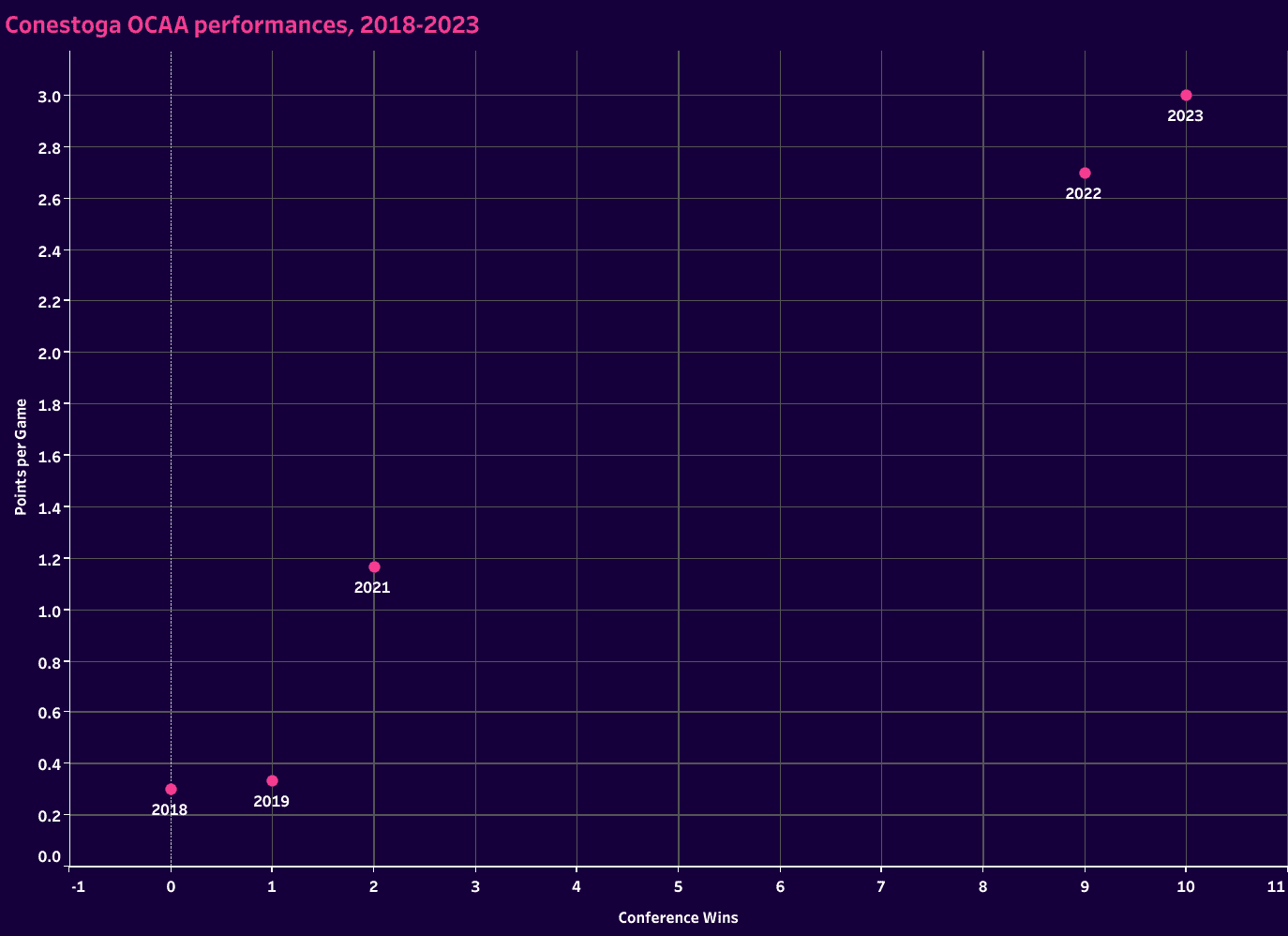
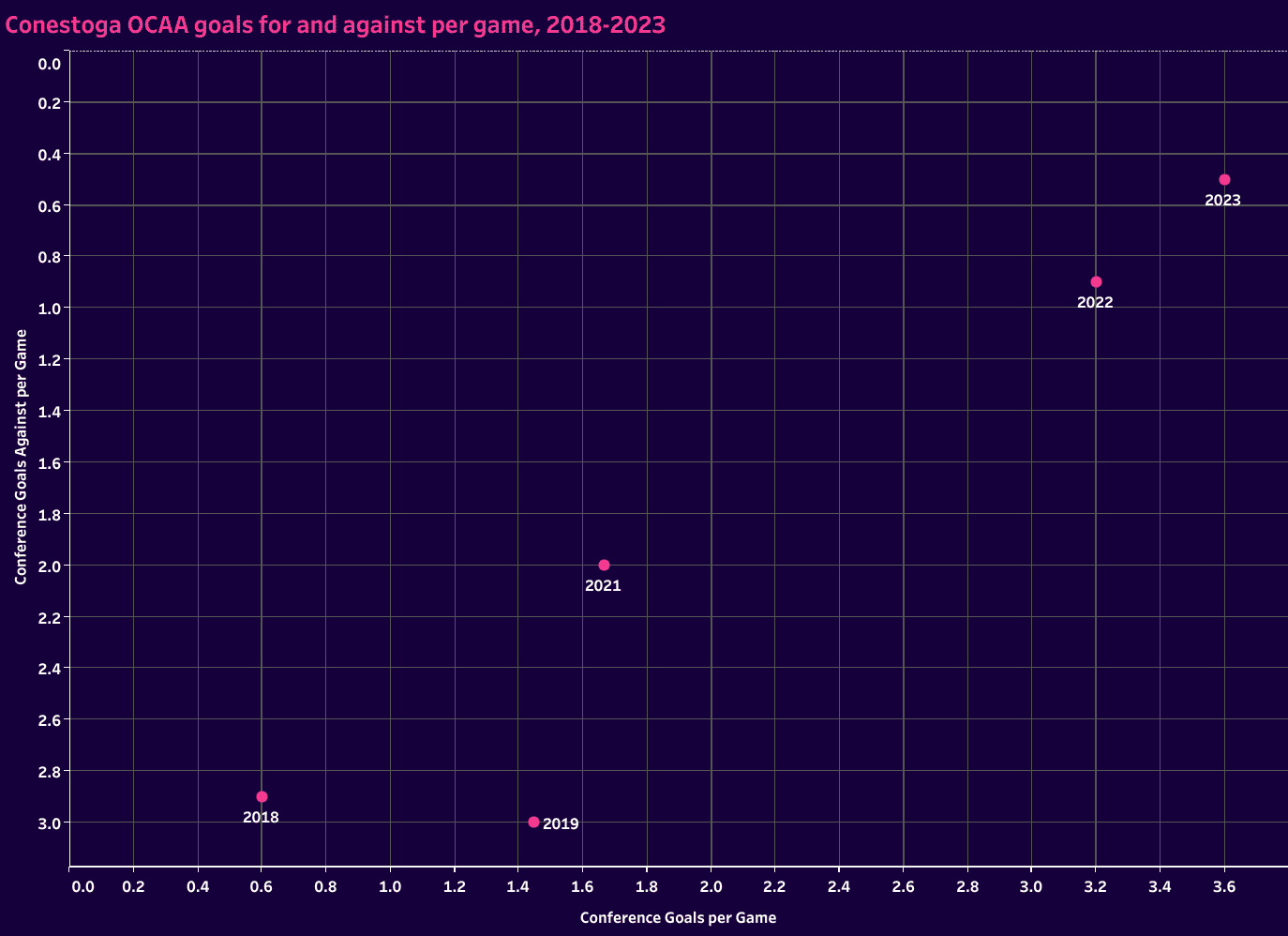
That jump in results correlates with the improvement in goals for and against per game. In fact, the two charts are near mirror images.
Conestoga is a team that gets after opponents in the high press. They like to play on the front foot, so an aggressive approach in the press and transition is essential to their style of play.
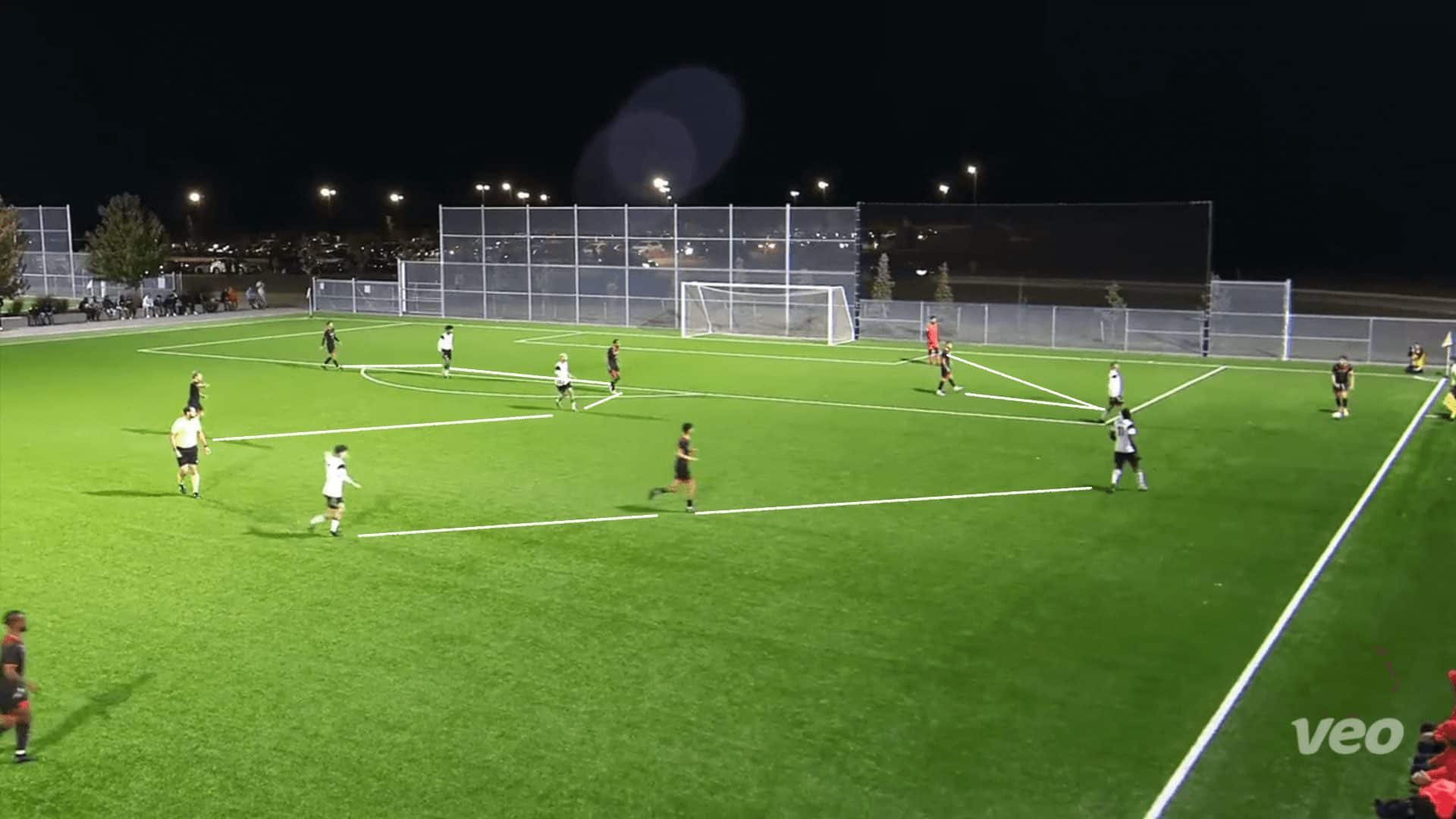
Their shape in the high press is designed to fit the personnel on the pitch, so there was some change from one year to the next. That said, two common themes were funnelling opponents into the wings and quickly condensing the playing area. Conestoga got organised quickly to eliminate short and intermediate options.
In our first image, we can see the emphasis on overloading centrally to force opponents into the wings. With the centrebacks and midfielders tightly marked, the most obvious passing option was to the outside-backs. That’s when the high press sprang into action. The team shifted quickly to one side to apply pressure on the ball while following the second attackers as they raced to offer support.
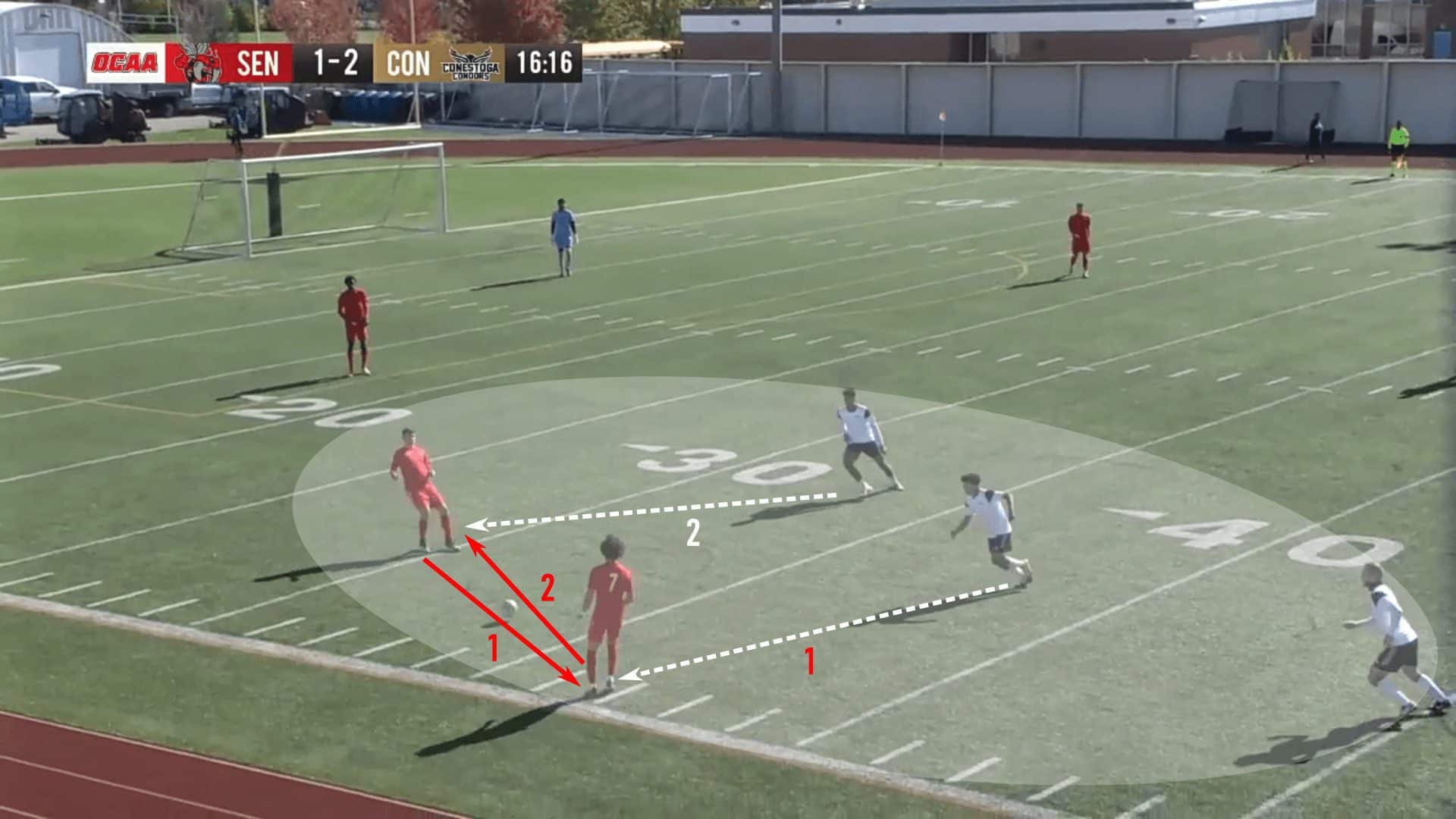
Conestoga’s close proximity to supporting options made opponents predictable and allowed the Condors to set pressing traps. In the national semifinal, by funnelling the opponent into the wing and then taking away forward options, Seneca was routinely forced to play backwards. The first forward pass into the wings was given, but it was the negative pass that was heavily pressured. With their numbers high up the pitch, Conestoga consistently converted high-press recoveries into goal-scoring opportunities.
With their ability to take away short and intermediate options, many opponents resigned to playing over the press. With the distance the ball had to travel, Conestoga was well prepared to push their backline forward to contest those first balls. Their structure also ensured that they were prepared for the second ball, making it very difficult for opponents to retain possession and create scoring opportunities.
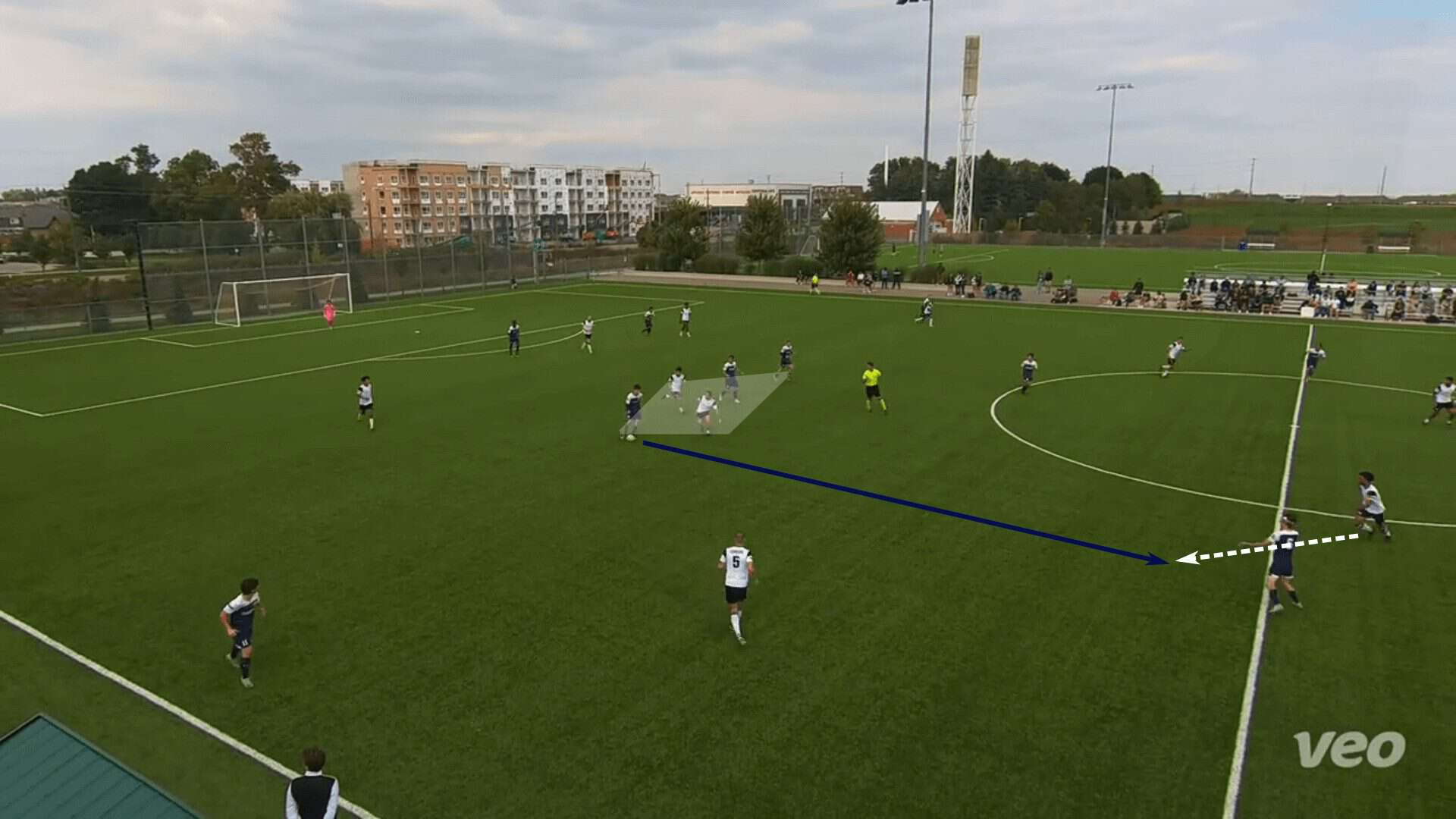
In transition, we mentioned that they are an aggressive counterpressing team. They were very successful in defensive transitions, limiting progression. We have a perfect example in this last picture from the section. As the ball was lost in midfield, Conestoga had numbers near the ball to quickly transition to defence. Their counterpress didn’t win the ball immediately, but what it did do was force a contested pass higher up the pitch. The backline won that battle and restarted the attack.
Regardless of shape, those principles were at play for Conestoga in both 2022 and 2023. They initiated the game’s tempo in both attack and defence. Their ability to funnel opponents into the wings and then quickly condense the playing area led to tremendous success in the opposition’s half of the pitch.
Now that we’ve covered the defensive aspects, it’s time to turn our attention towards the other side of the ball.
2022: A back three and focus on the centre
The difference in systems shows the tactical flexibility of Mackie’s approach, a necessity with the ever-changing rosters in the Canadian college game. It’s an approach that is contingent on the personnel available. While college coaches recruit new players each year, just as we’ve shown in our NCAA analysis articles, there is often some need for adaptation. Whether crafting a system for the best XI players on that particular team, accounting for injuries or working around limited depth, adaptability is a necessity in the college and university football universes.
In 2022, Conestoga had three very strong centrebacks and limited production from the wings. Having two players in each wing promised less production than a back three, standard three-man midfield and two up top. Stojanovic’s playing style at the #10 is also such that he’s best playing off of the 9s or even switching roles with them. Giving him two options to play off of and allowing Conestoga to routinely get three players into the box was pivotal to their goal-scoring success.
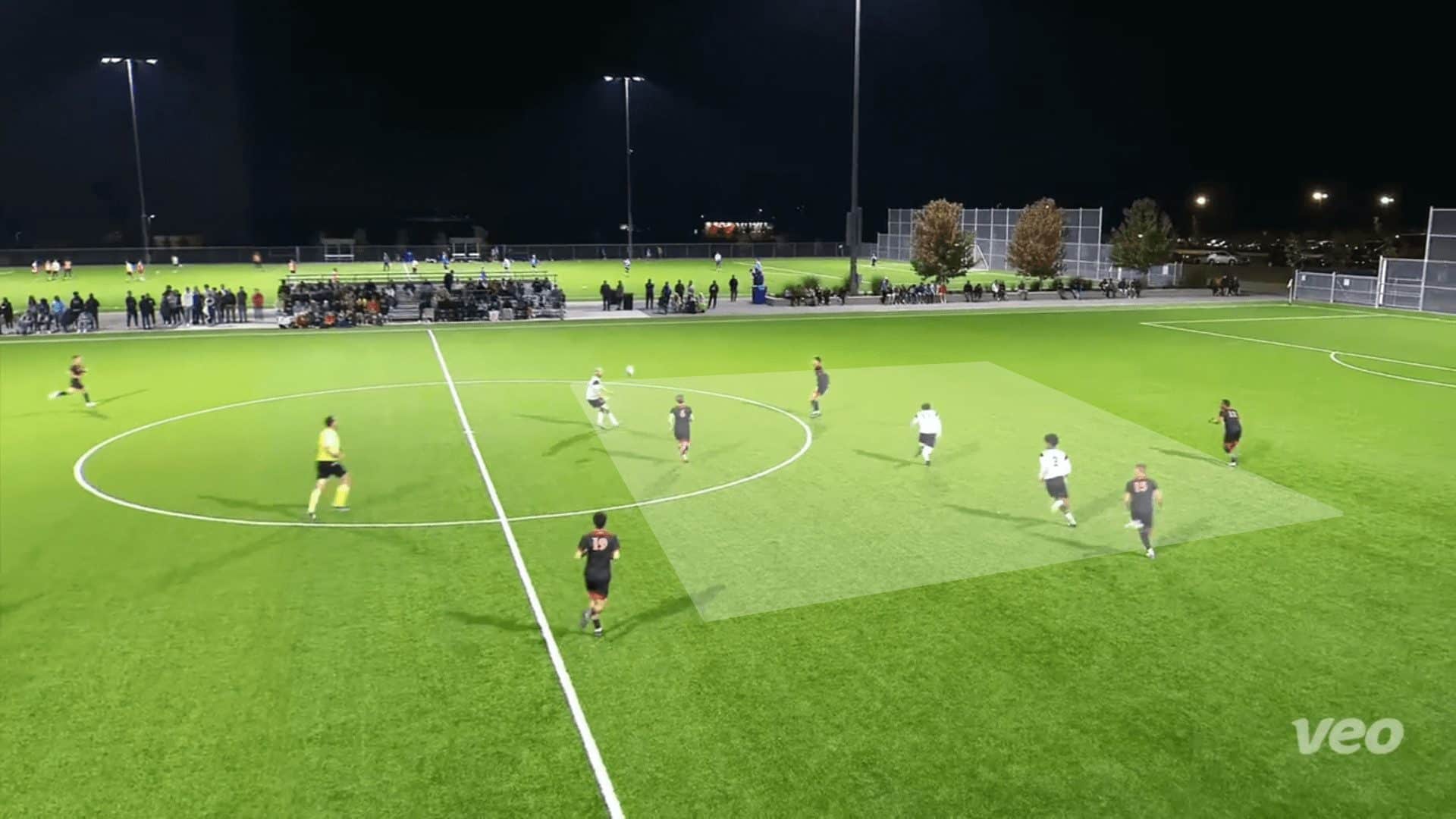
Having three high players centrally was especially dangerous in transition. They coordinated runs off of each other well, finding a balance between running in behind and checking back into midfield. They were especially effective at finding runners in each of the half-spaces. Once the forwards were able to receive in the half spaces, they had the confidence to run 1v1 at the opponents and either have a shot themselves or find one of their two teammates in the box.
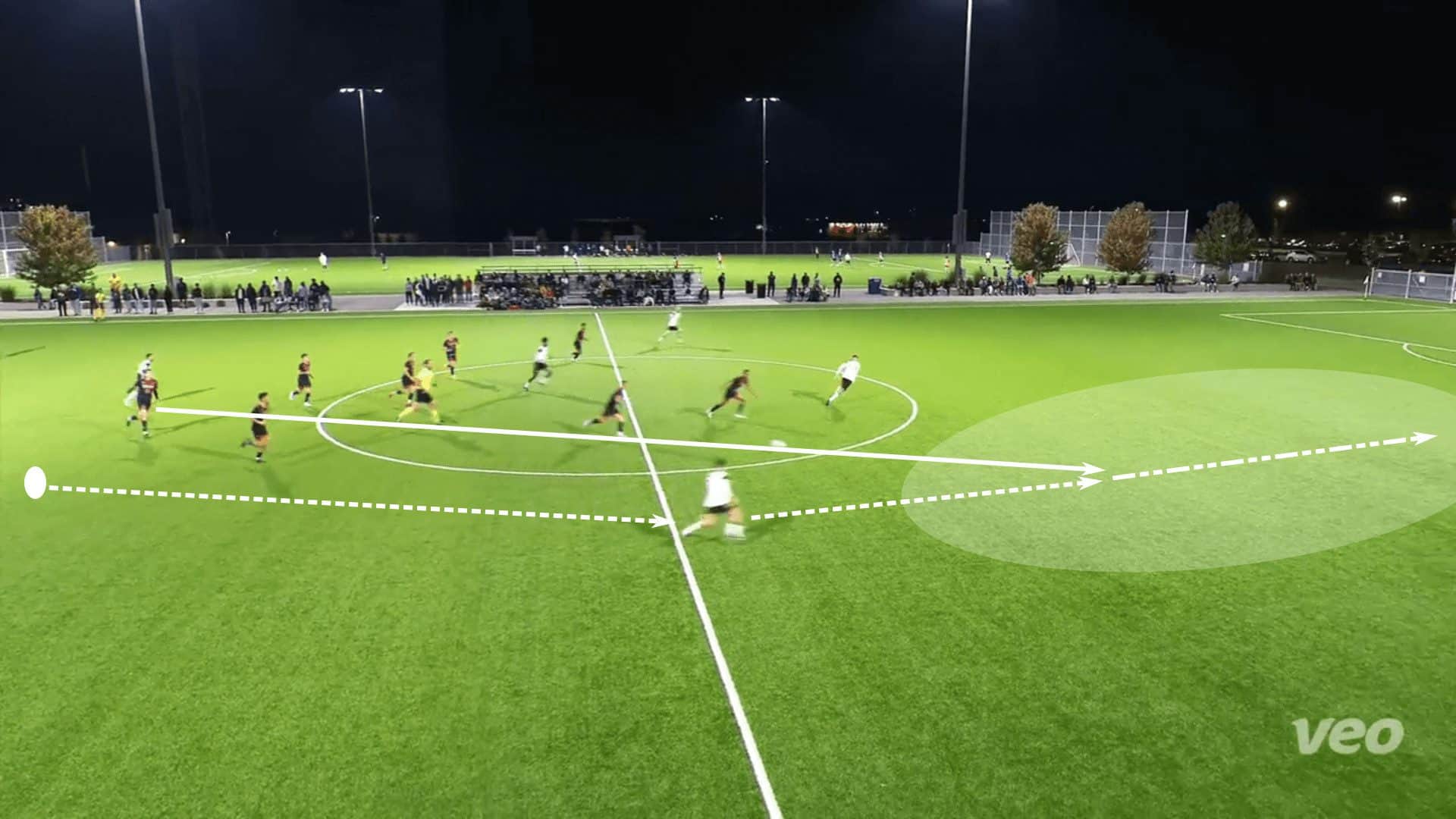
When Conestoga wasn’t playing into the two centre forwards or the Stojanovic, the back three would look to play into the wing-backs to advance the ball. Those wing-backs help the team move from inside to outside and then back inside. Against most opponents, playing into the wing-backs allowed Conestoga to attack the space between the opponent’s outside-backs and wide forwards. That forced the opposition’s backline to decide whether they were going to drop off or send an outside-back higher up the pitch to apply pressure on the ball.
If the outside-back stayed, Conestoga’s wing-back could push forward on the dribble. If the outside-back stepped forward, one of the centre forwards could run into the space he vacated. Their ability to keep opponents off balance through the wing-backs was a central theme during the campaign.
Finding space in front of the opponent’s outside-backs was a lucrative chance producer. Playing with wing-backs, Conestoga played into the wide outlet at a deeper position than in 2023. That meant movement in front of the wing-backs was needed to help Conestoga progress.
The match against Sheridan gave an excellent example of progression through the wings. A switch of play along the backline helped the Condors break the press and attack free space on the right.
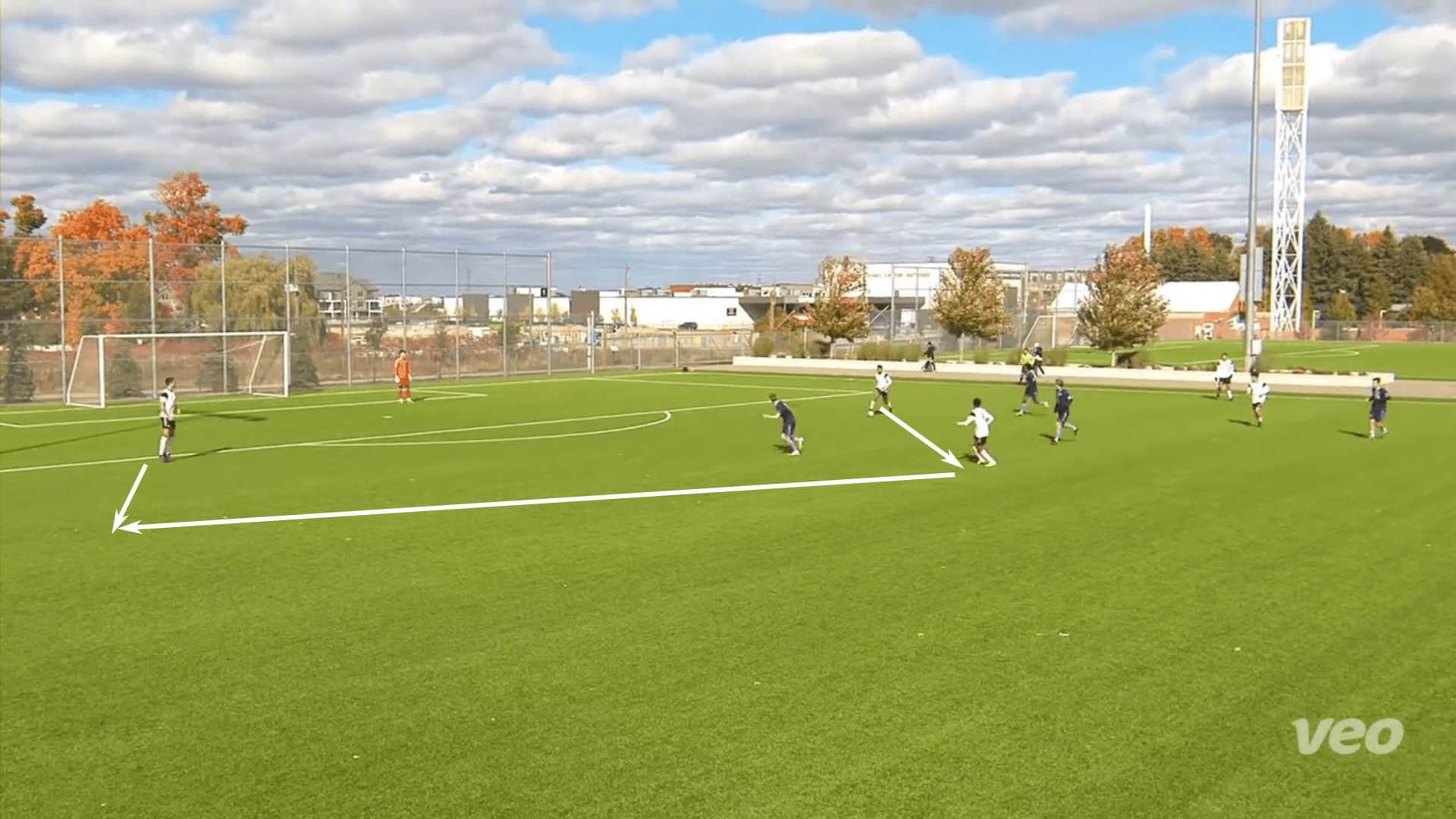
This time, instead of the wing-back receiving the outlet pass, he pushed into the front line, and Stojanovic dropped into his position.
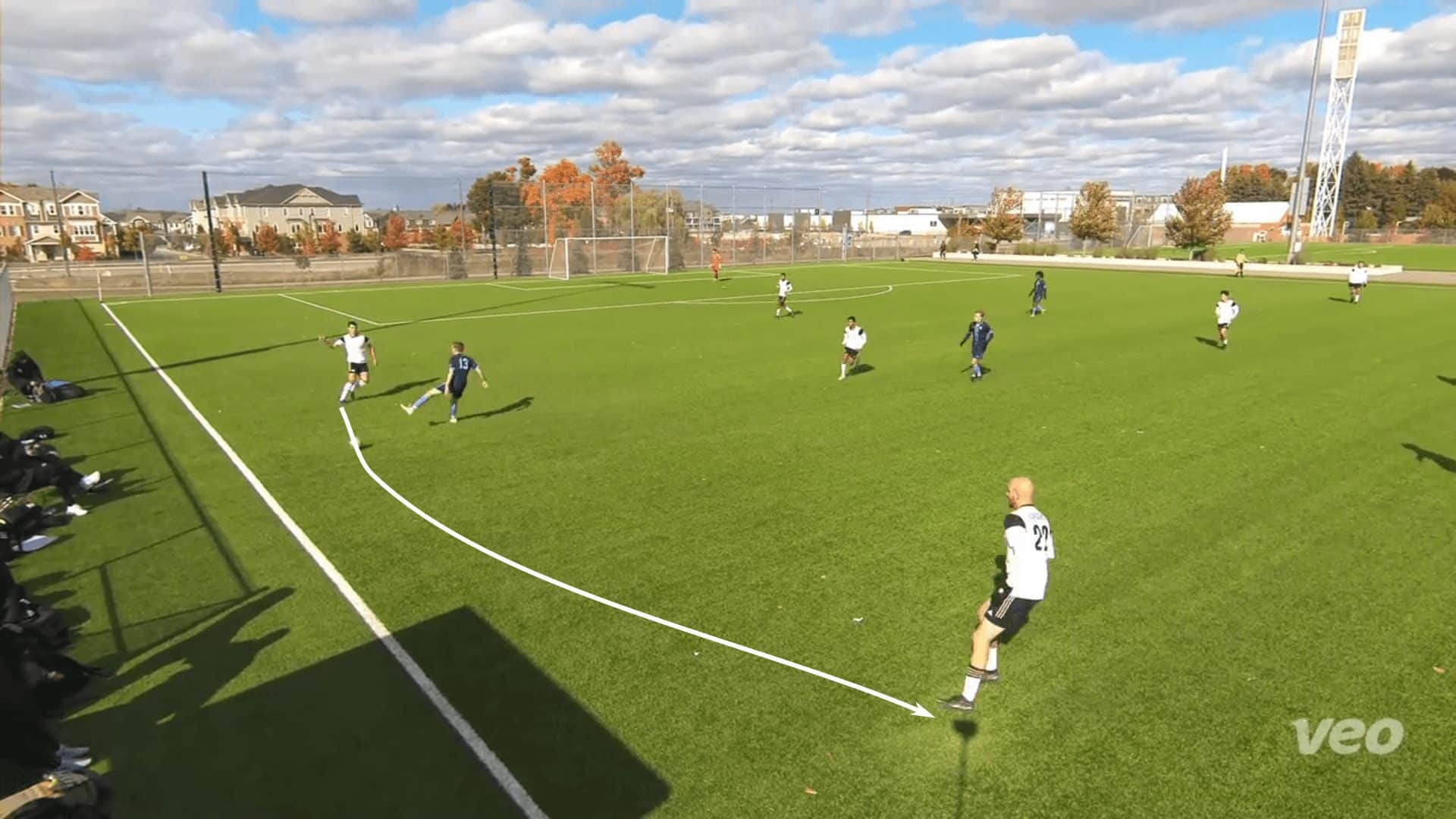
As Stojanovic moved into the wing, Conestoga quickly created an overload in front of him. Quick combination play allowed them to get behind the Sheridan backline through Kurtis Amorim. He would connect with Stojanovic for the opening goal of the game.
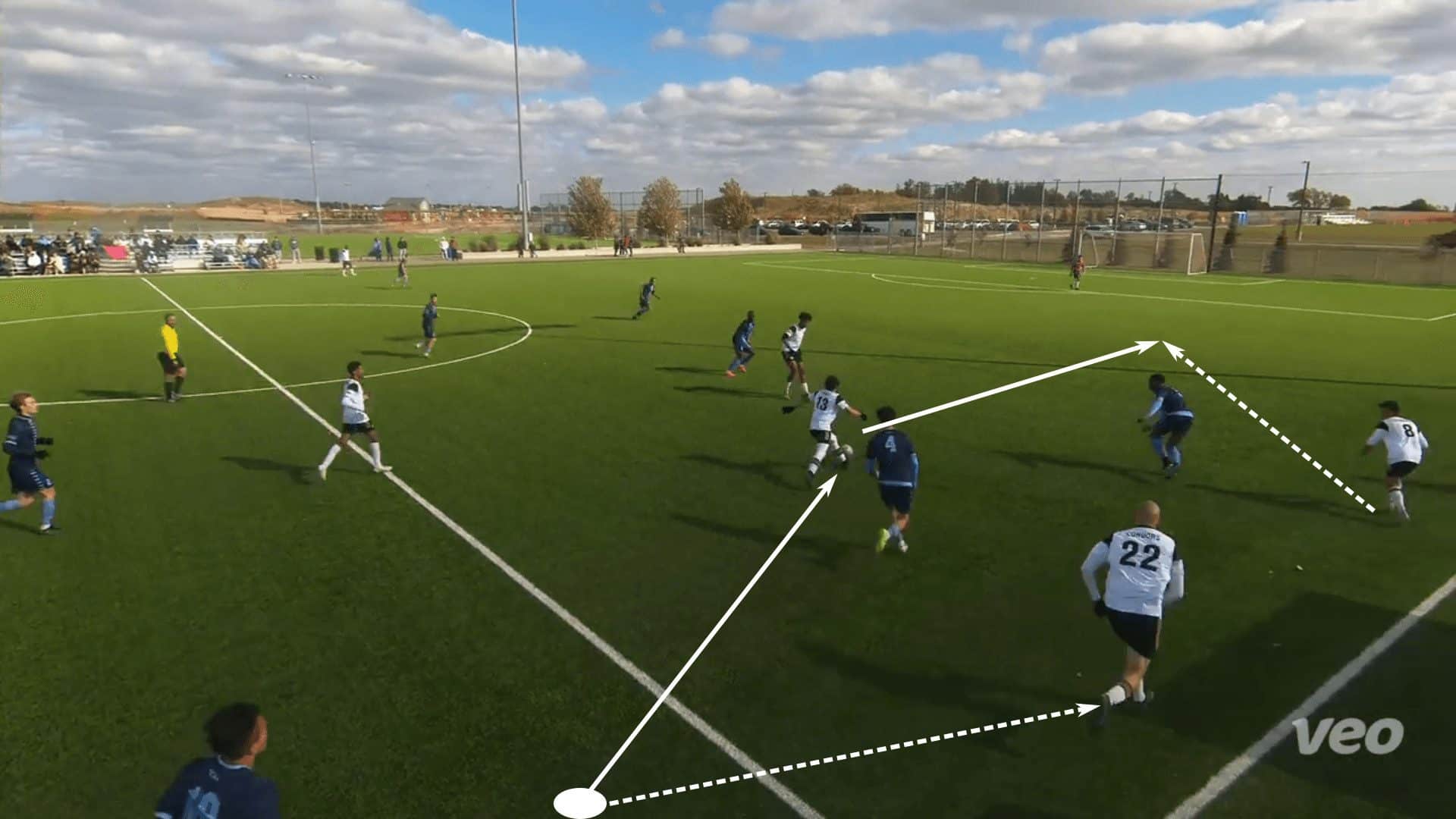
Those quick movements in the wing differed from the 2023 approach in that there were often more players involved in the attacking moves and a greater reliance on combination play than 1v1 attacking. Funnelling play into the wings to create central penetration is a theme that will carry over in the next section, but the method of moving the ball forward differed slightly.
2023: A back four and emphasis on the wings
In 2023, Conestoga was more dangerous in the wings. Shifting to a 4-3-3 made perfect sense. Ricardo Alvarado and Gamtessa Berehe were especially dangerous on the dribble. As the new class of freshmen arrived, it was clear Mackie had the weapons he wanted: “In an ideal world, you’d want to play in some form of a 4-3-3, in some form of a possession-based style. But, in our first couple of years, we couldn’t play like that…now we’re gifted with these players who can play.”
With the added threat in the wings, there was a slight shift in Conestoga’s tactics. Now, the emphasis was to hit the 7 and 11 in those high and wide positions. With their 1v1 ability, they were tasked with the burden of progression — and they handled it well.
To give the side balance, Conestoga inverted the outside-backs to give a 2-3 at the back. One of the outside-backs was a centreback the previous season. Moving him out wide fit his profile and gave the squad the balance they needed, said Brackpool: “All those attributes you would put towards an effective full-back we had in our centerbacks. It was easy to adjust.” The outside-backs typically positioned themselves at the edge of the wing and half-spaces. That allowed the wide forwards to give the team their width higher up the pitch.
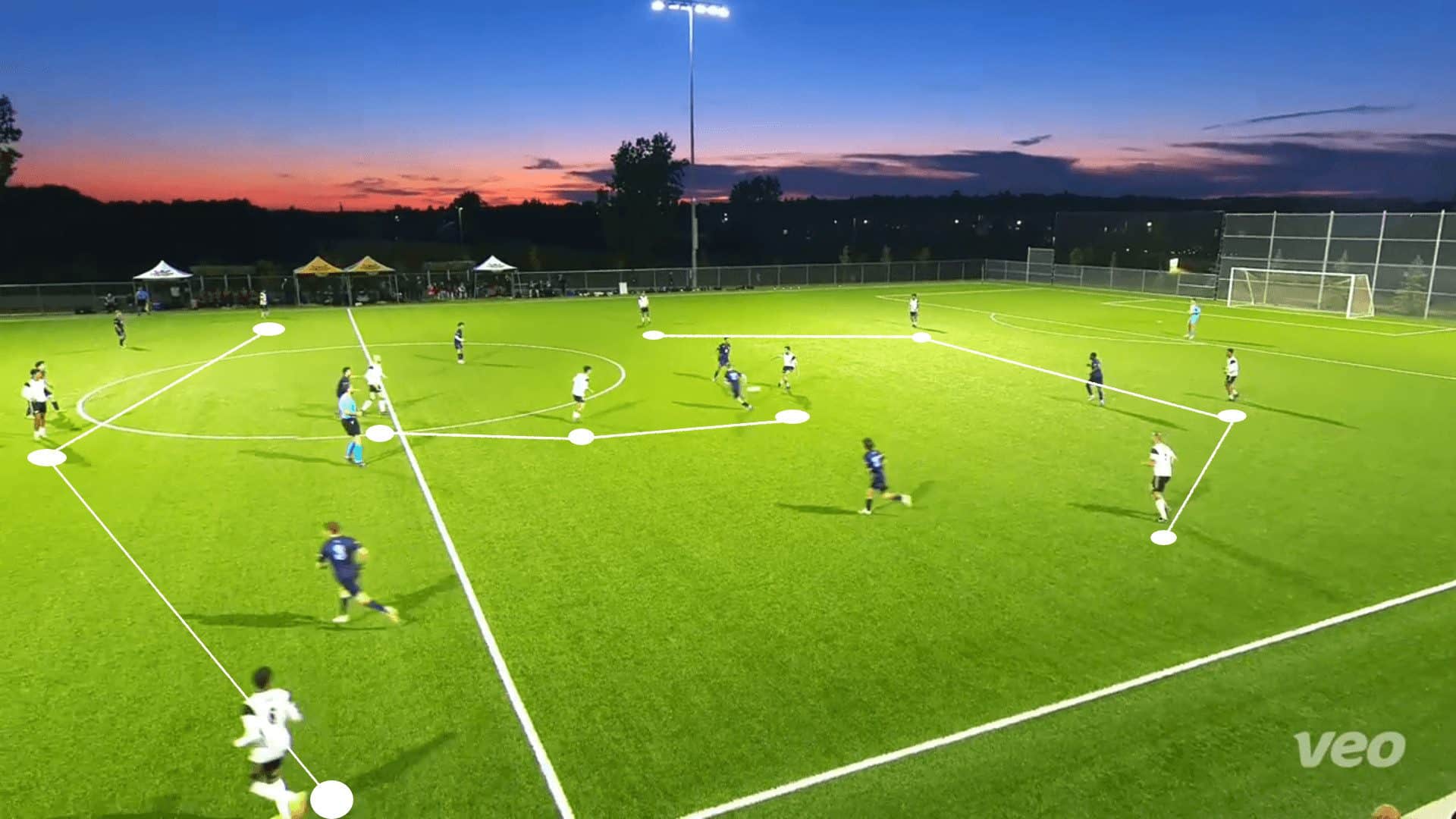
From build-out situations, Conestoga also showed excellent versatility. At times, they committed numbers near the ball and played through the opposition as a unit. That said, they could also mimic the tactics of former Serie A and current EPL mastermind Roberto De Zerbi. Dropping the backline and two midfielders into deep positions, they could coax the opposition forward and create more space for the front three and #10 to receive.
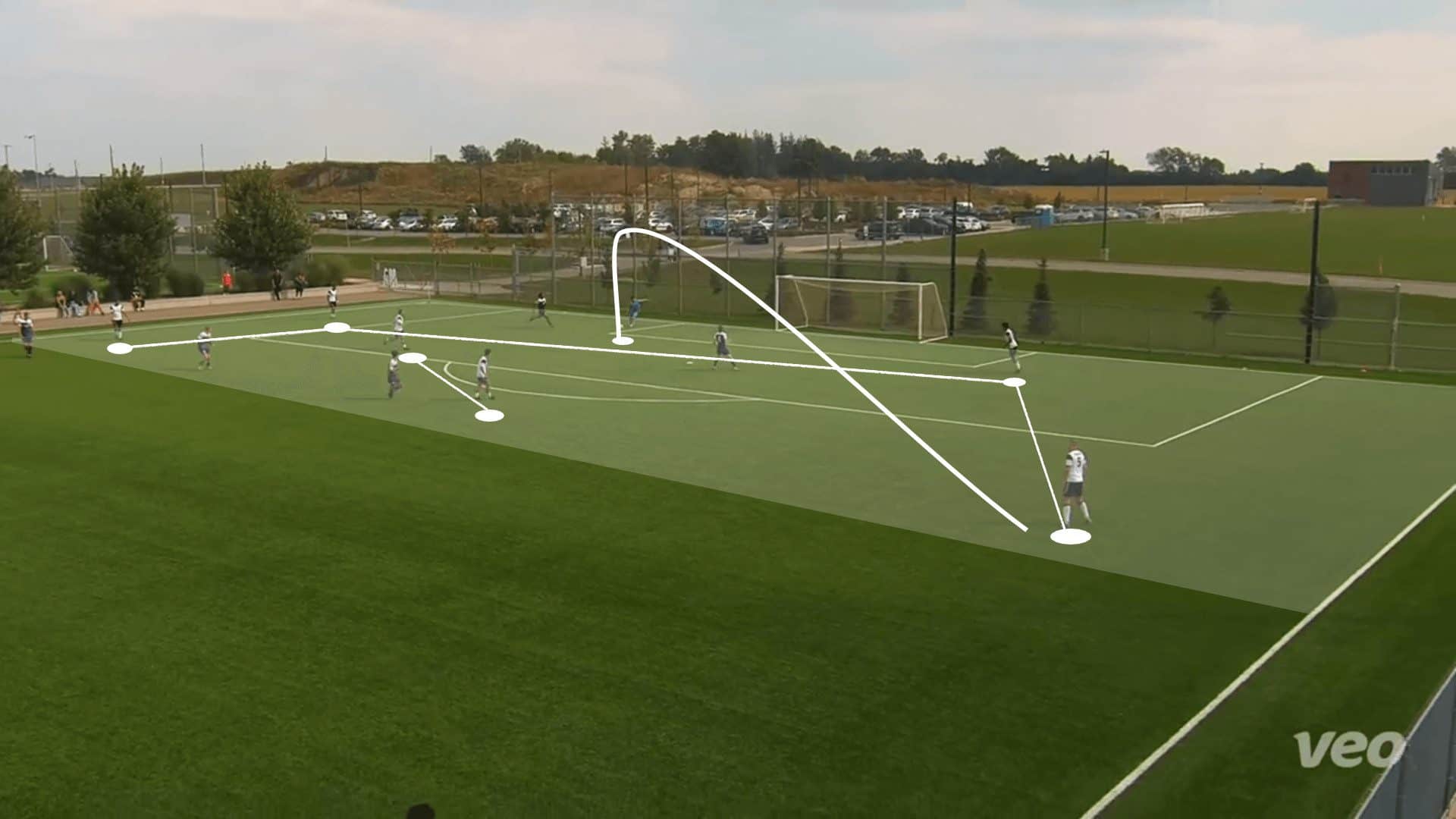
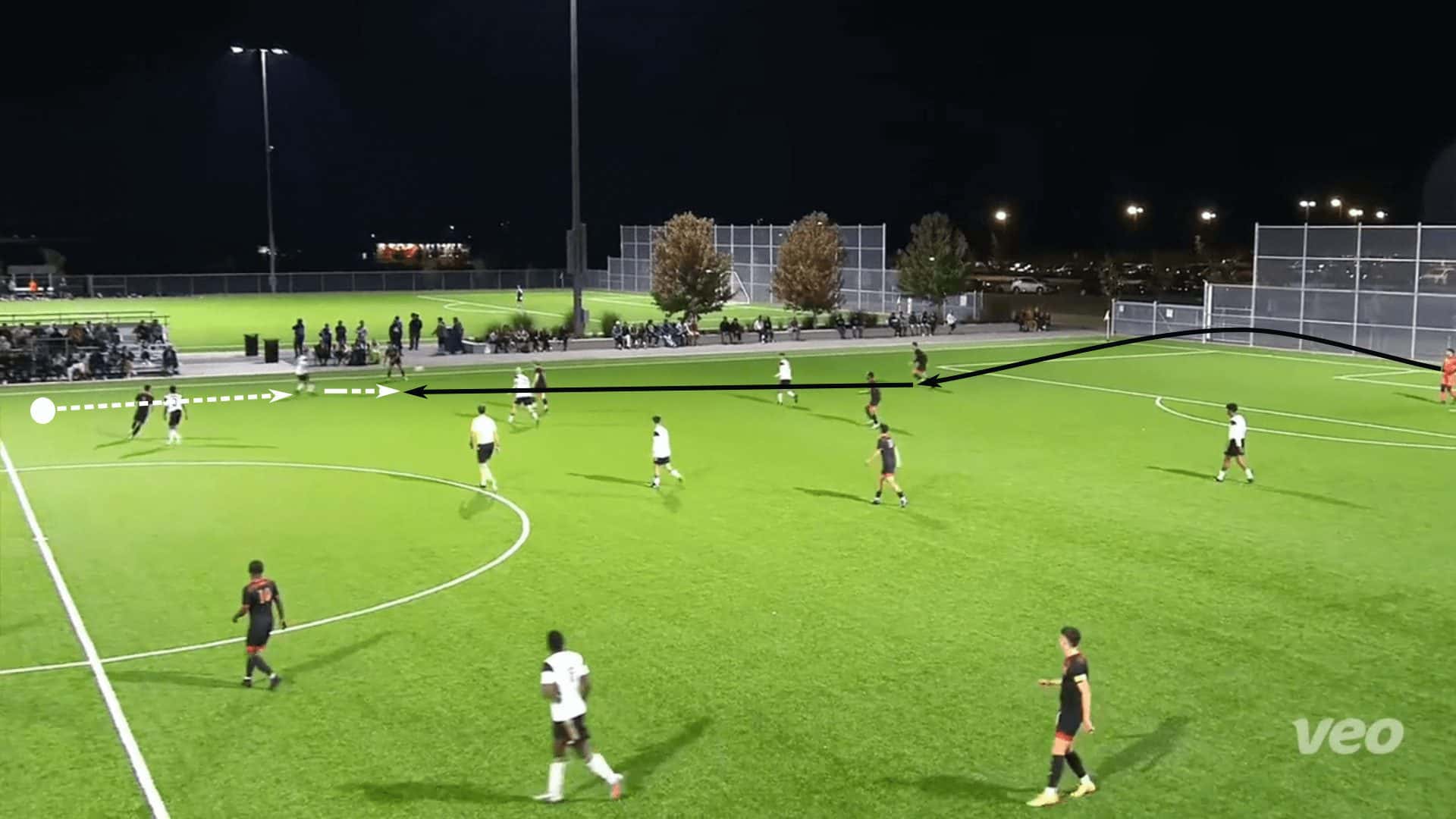
Of course, the primary objective was to find those high and wide wingers and play off of them. Conestoga kept opponents off balance with a mix of playing through, around and over them. Those long diagonals into the wings, as seen in this third image from the section, got the ball to their playmakers in dangerous positions. With the pace and 1v1 ability to get behind opponents, there was always a way for Conestoga to break the opponent’s press.
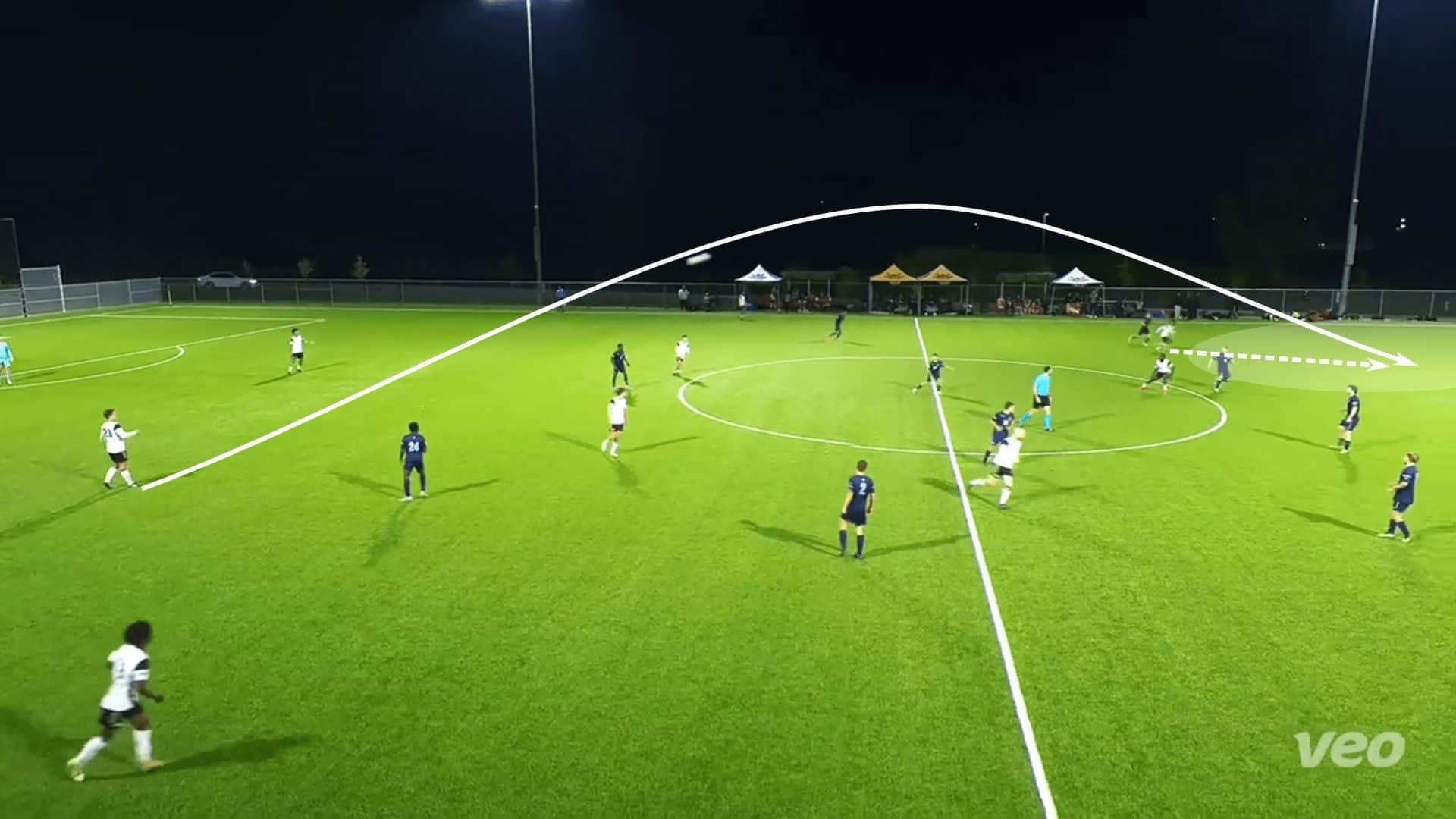
That outlet to the wingers was especially dangerous in transition. The systemic design played into the coaching staff’s principles, said Mackie: “If you’re in transitional moments, you want 1v1. You don’t want 2v2s or 3v3s. You want isolation.” With the team in its narrow defensive shape, the 7 and 11 were well positioned to attack the half-spaces, be it with a ball over the top or with a precise pass on the ground.
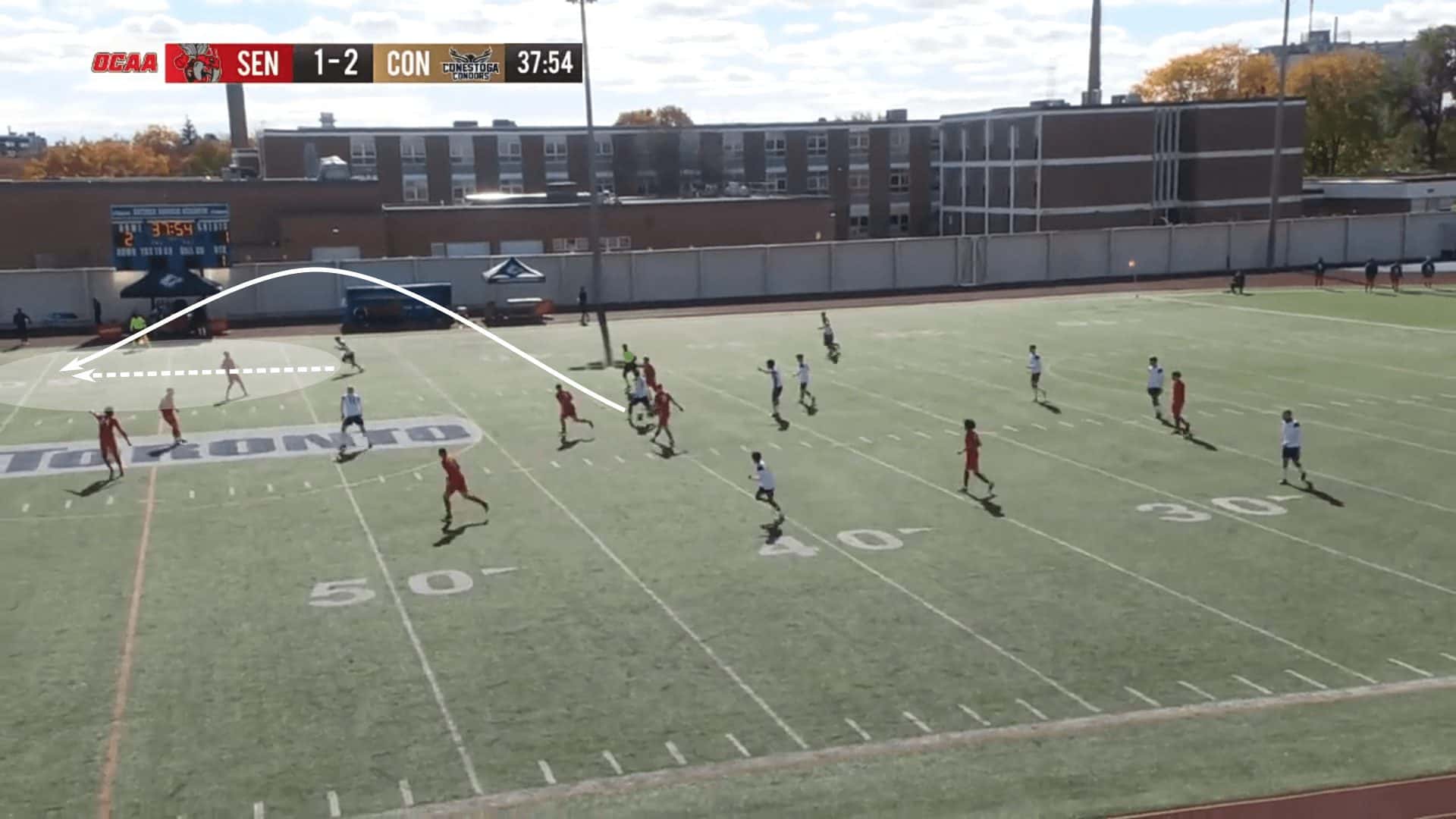
Once the wingers received in those high and wide positions, they were given the freedom to make play happen. Their individual brilliance in the final third wrecked havoc. Plus, with the wingers inverted, they were able to cut in on their shooting foot, as we find in this sequence starring Alvarado. Opponents were left with the predicament of defending against the shot, pass and dribble.
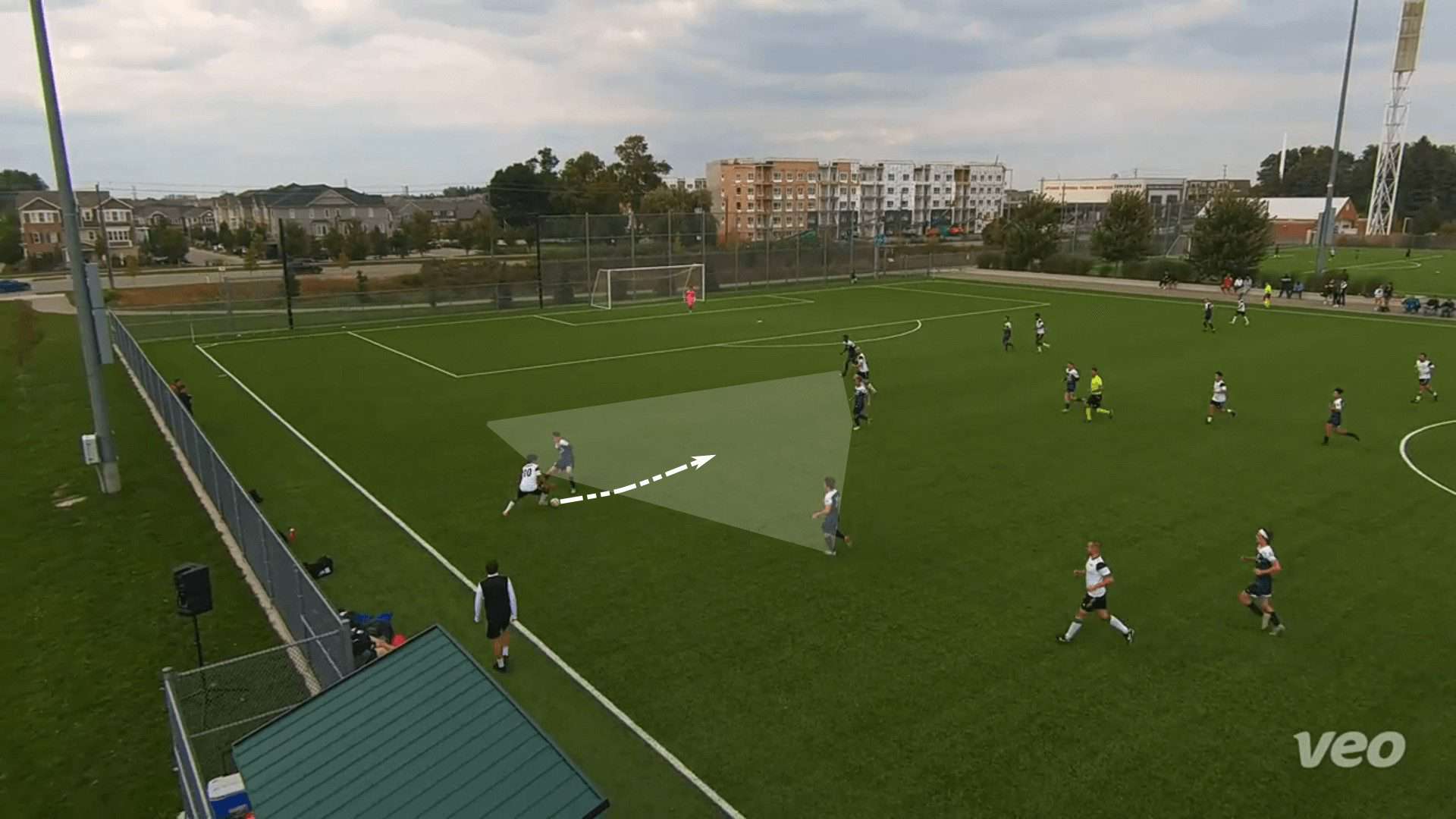
With so many options and the forward line well positioned to offer a variety of runs, this was a difficult team to track in the final third. The creativity and intelligence of their movement led to their explosive goal production. Conestoga ruthlessly attacked zone 14, getting numbers into that area and forcing frantic defending.

The target area and their attacking patterns changed, but the ability to use the wings for progression before cutting inside and before entering the box were staples from year to year. They might have to change the height of the outlet pass, but they were successful in finding the wide players in space. Whether the wing-back in a 3-5-2 or the wide forwards in a 4-3-3, the emphasis on the wings before consolidating centrally is a central theme in Conestoga’s game model.
Conclusion
Conestoga’s run from the OCAA basement to provincial champions and national finalists is a remarkable story. The speed of the transition from the bottom to the top is credit to the work of Mackie, Brackpool and the staff.
Within three years, they’ve changed the status of the program. As they look to build in the future, Mackie and our own Manchester United-loving Brackpool only have one more step to advance in the Canadian college system. With the national championship ending in shootout, Conestoga enjoyed an undefeated season. That last game, the national title match, is the last hurdle to clear.
With its balanced yet aggressive tactics and fantastic team culture, this side is set for big things. Watch out for Conestoga College, the reigning OCAA Champions.

