


Football in Northern Ireland is thriving; Larne secured their first-ever NIFL Premiership title last season and possess a fantastic youth academy that is producing highly talented youngsters. Additionally, Linfield are the country’s most successful club and have some highly rated young players among their ranks, including Max Haygarth, who has spent time at Premier League clubs Brentford and Manchester United.
On the international stage, Northern Ireland’s most notable appearance came at the UEFA European Championship in 2016, marking their first-ever participation in the tournament. During the competition, Michael O’Neill’s side progressed to the round of 16, where they faced Wales and were unfortunately knocked out due to an own goal.
Throughout the tournament, key players such as Rangers legend Steven Davis, Kyle Lafferty, and Manchester United fan favourite Jonny Evans played pivotal roles, displaying their talents and contributing to the team’s excellent run.
In this tactical analysis and scout report, our focus is to shed light on the young players with the brightest futures in Northern Ireland’s footballing landscape. We will look into how these players fit into their team’s tactics and analyse what their individual skills bring.
Jack Hastings – Larne F.C.
The first player we are going to look at in this analysis piece is Larne centre forward Jack Hastings. The 17-year-old has put in some impressive performances at Under 18 and Under 20 level this season, which have seen him propel himself onto the fringes of the first team.

Hastings has a wonderful ability to get himself into pockets of space to receive the ball when Larne U20s are looking to build an attack. Here, he tends to drop deeper to receive the ball from his teammates, often drifting into the half spaces and the wide areas, which naturally creates space for midfield runners through the centre. As Hastings retreats into deeper areas, opposing defenders are compelled to follow suit, creating valuable space behind the defensive line. This spatial disruption is instrumental in opening up opportunities for Larne’s attacking players to exploit.
Moreover, as Hastings drops deeper into the midfield, it increases Larne’s numerical superiority in this area of the pitch. Having more players in a smaller area proves crucial for ball retention, enabling the team to control the tempo of the game and overwhelm the opposition during the build-up phase. The young forward’s off-the-ball movement and positioning also offer an additional passing option as Larne are looking to build an attack which is often particularly valuable in high-pressure situations or when playing out from the back.
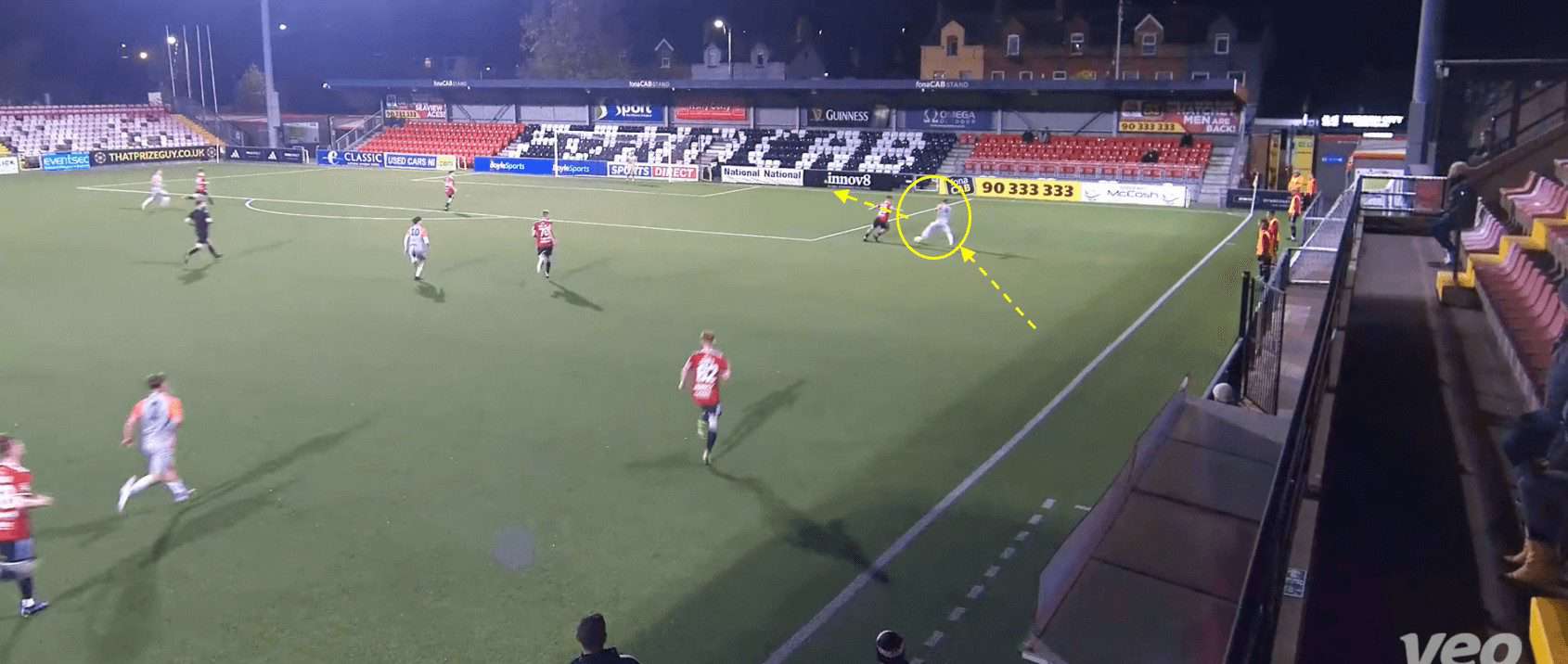
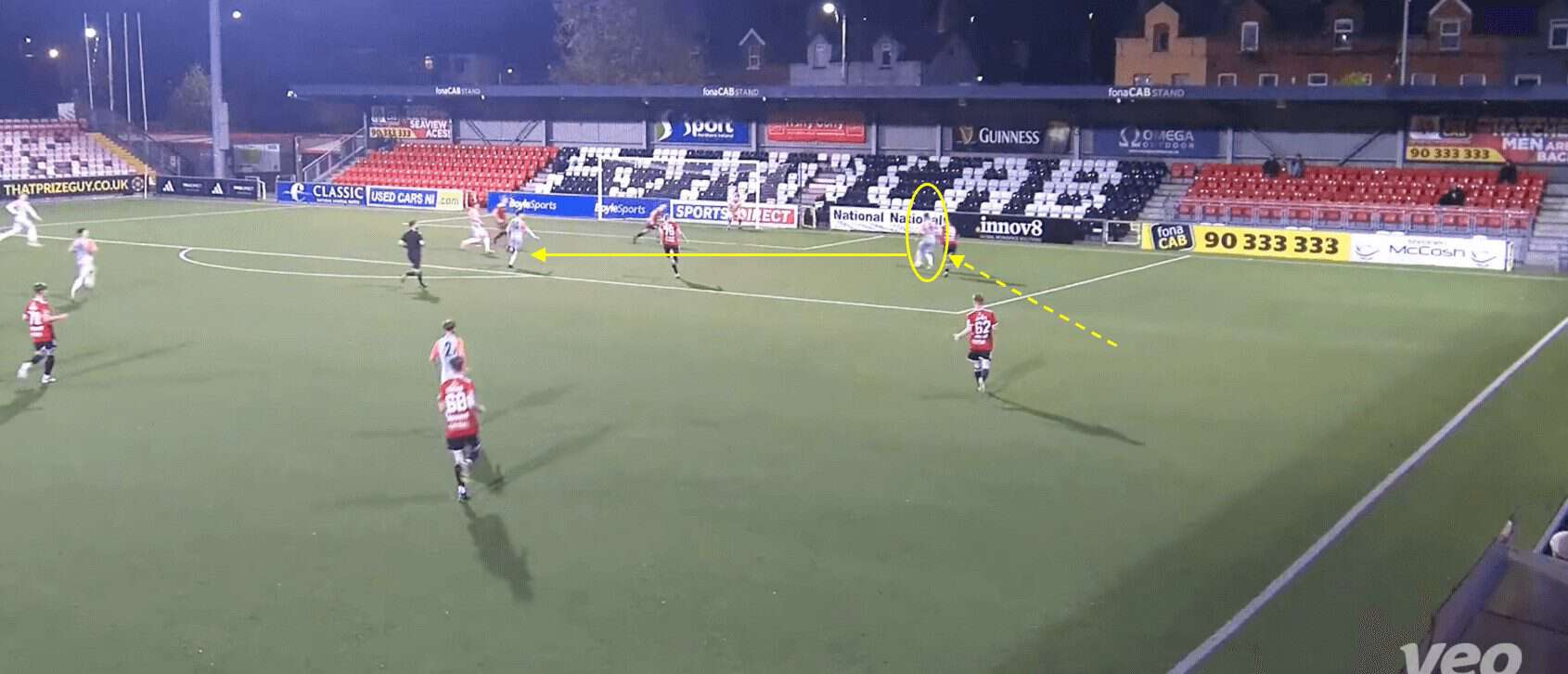
Hasting excels in 1v1 situations, often utilising his quick feet and close control to bypass his opponent successfully. The images above demonstrate how effective the Larne striker can be in 1v1s. He can quickly take on his opponent and frequently looks to do so, as he averages 3.5 take-ons per 90.
The young striker’s proficiency in close control and quick feet enables him to navigate through tight defensive spaces with ease. This allows Larne’s attack to break through compact defensive lines and progress the ball into more advanced positions on the field. By taking on defenders directly and successfully manoeuvring around them, Hastings forces the opposition to commit additional players to defend against him, creating imbalances in the defensive structure and leading to some of his teammates being able to exploit gaps and spaces.
Additionally, his ability to beat opponents in 1v1 situations adds a layer of unpredictability to the team’s attacking play. His unpredictability when in possession makes it challenging for defenders to anticipate his movements, providing his team with a valuable element of surprise.
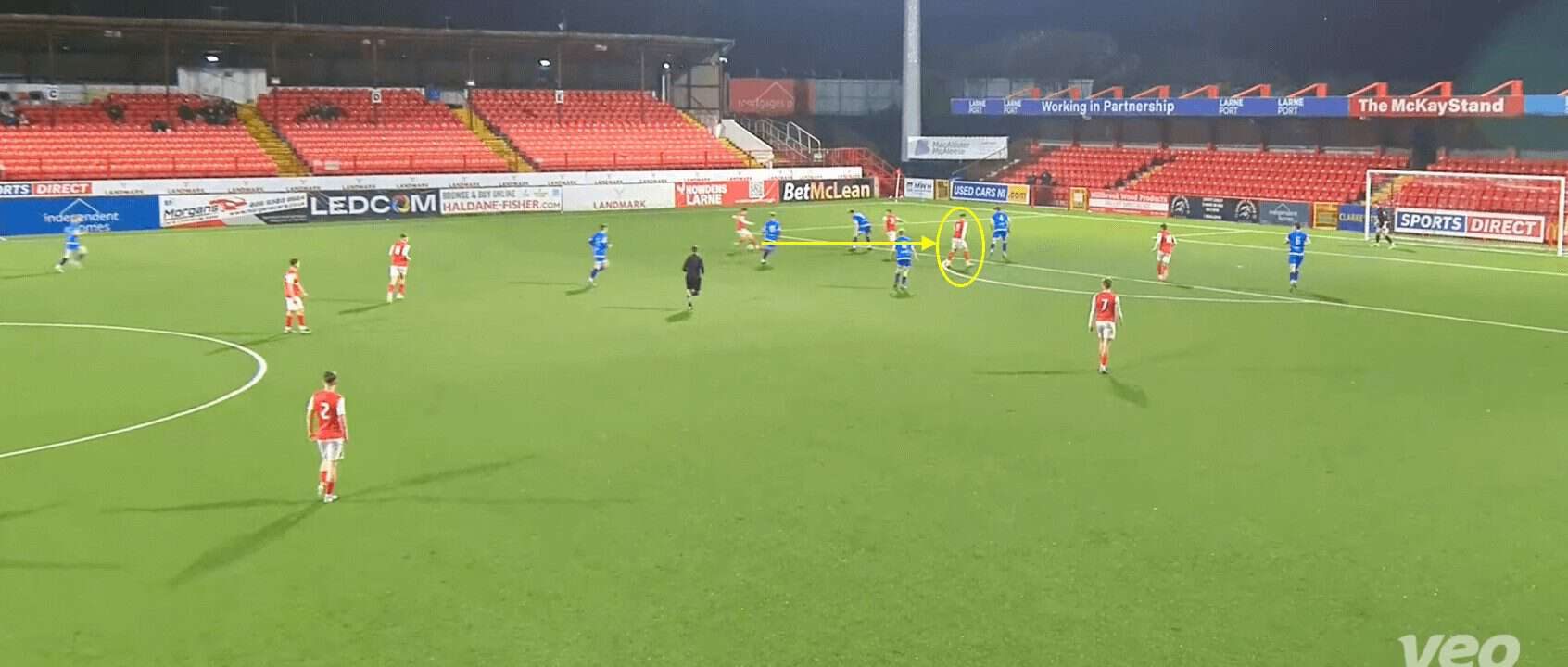
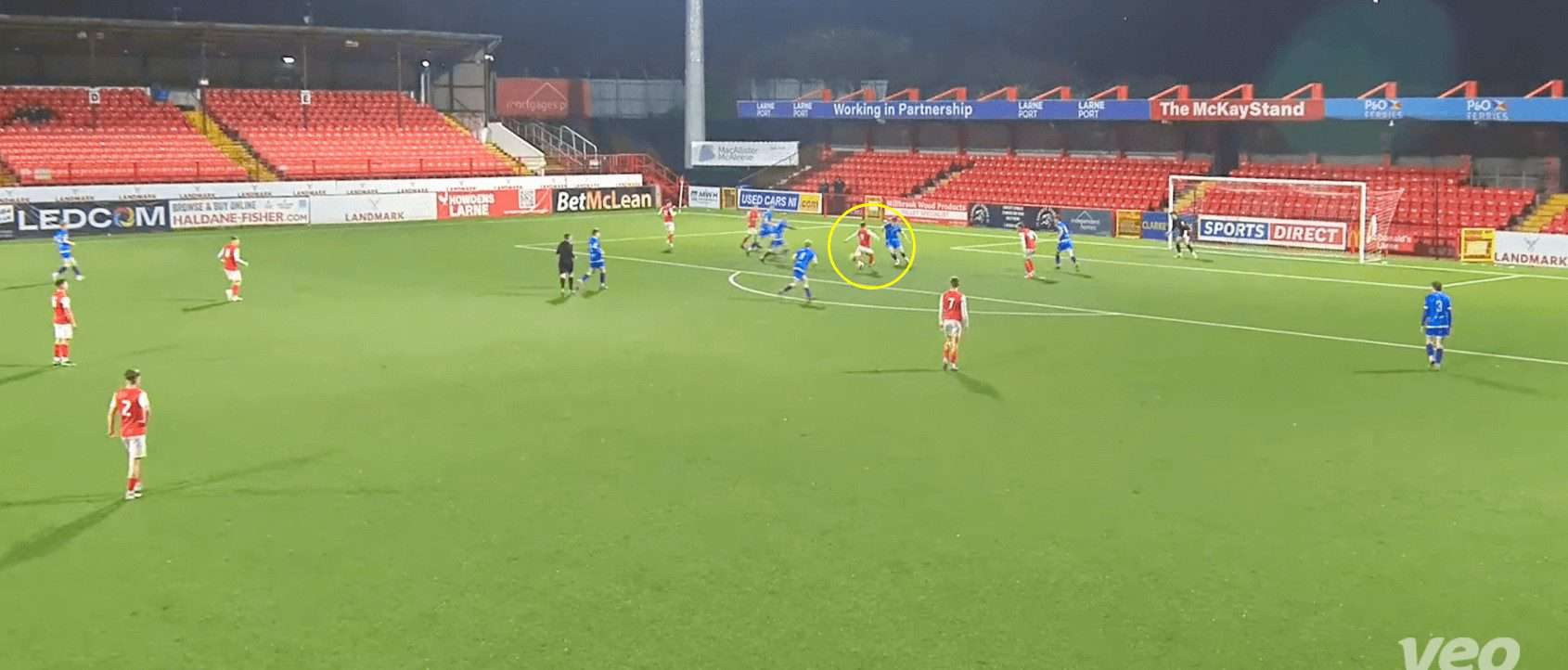
Hastings possesses a natural goalscorer’s instinct. He likes to hit shots early, looking to catch the opposition off guard. Although naturally right-footed, he is more than capable of shooting with his left, as depicted above. Having a forward who can shoot with both feet offers several valuable advantages in the context of football.
Firstly, it makes Jack Hastings much less predictable for defenders, as he can comfortably strike the ball with either foot. This unpredictability makes it challenging for opposing teams to anticipate the direction of his shots, making it difficult to block them successfully. Hastings averages 2.6 shots per 90 as he looks to take advantage of his abilities with right or left foot.
Secondly, a striker proficient with both feet brings versatility in shooting angles. This capability allows Hastings to exploit goal-scoring opportunities from various positions on the pitch, making it more difficult for defenders to restrict shooting options. The Larne forward’s adaptability to different angles enhances his effectiveness in diverse attacking situations.
Plus, his quick decision-making is another critical benefit of Hasting’s style of play. In high-pressure situations inside the penalty area, his ability to make split-second decisions on which foot to use when shooting becomes crucial. This skill helps the young striker navigate through tight defensive scenarios and capitalise on goal-scoring chances efficiently.
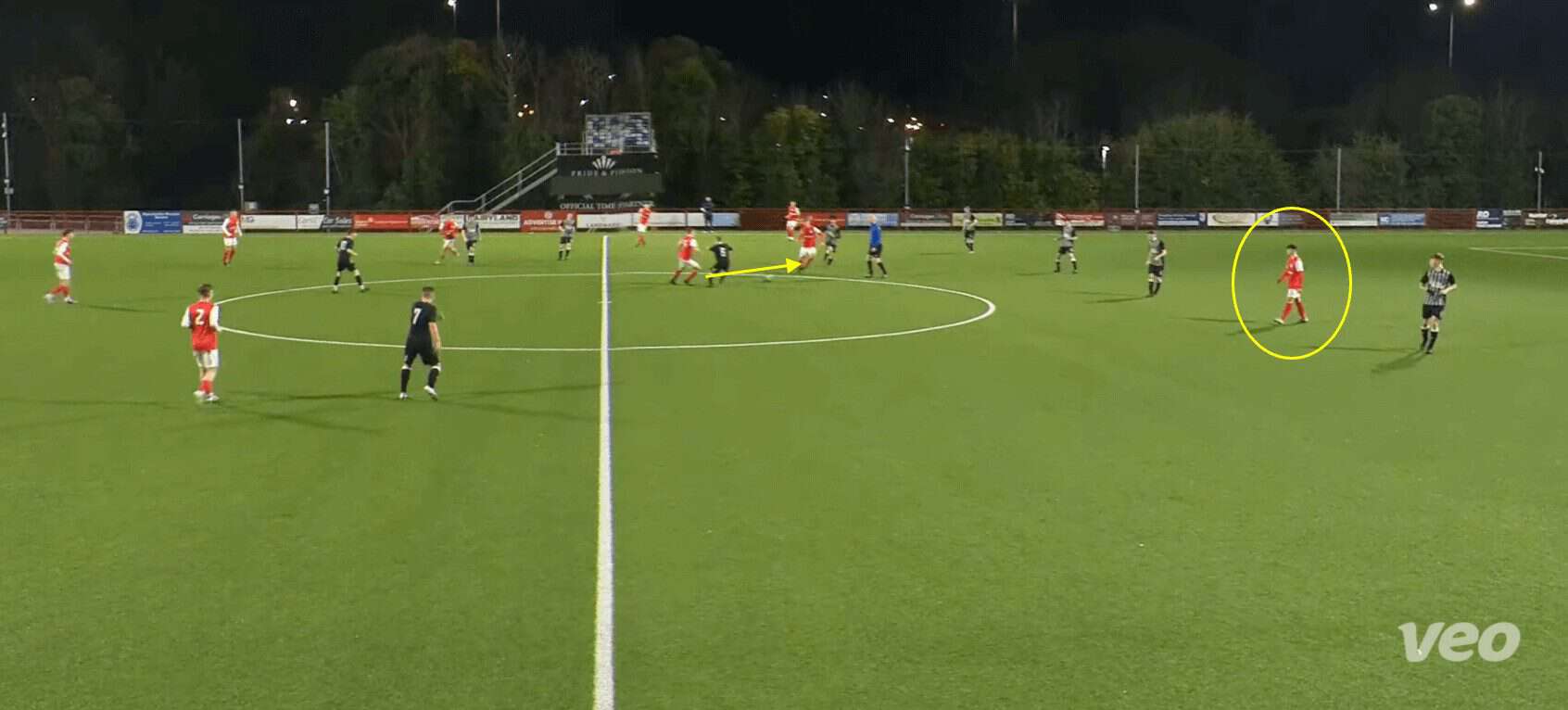
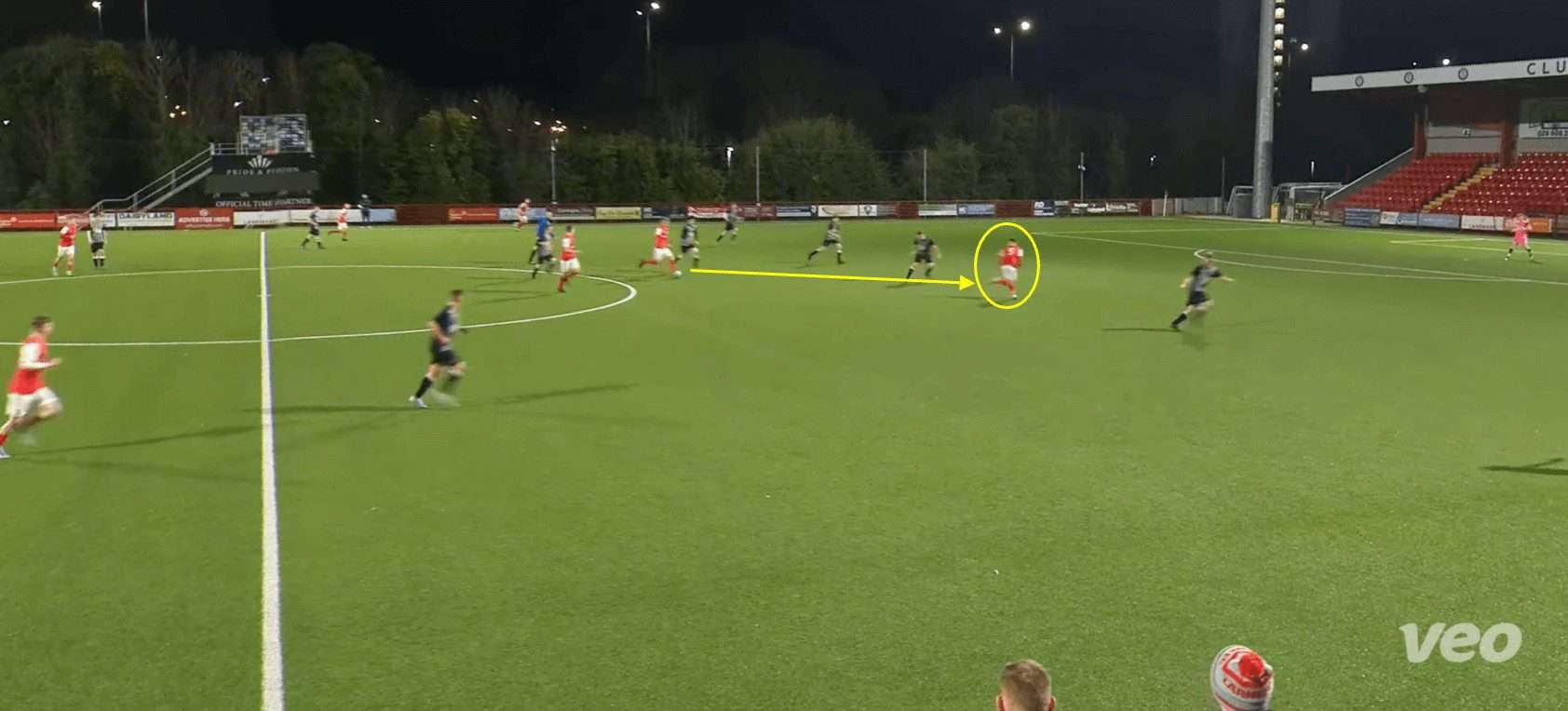
Furthermore, Hastings is comfortable playing as a lone striker or in a front two; he adjusts his movements accordingly. Here, playing up front on his own, he consistently looks to make runs between the opposition defenders. We can see that he likes to position himself on the shoulder of the last defender, ready to make a run in behind the defensive line. As his teammate plays a well-timed pass, Hastings utilises an excellent burst of acceleration to ensure he reaches the ball before the backtracking defenders.
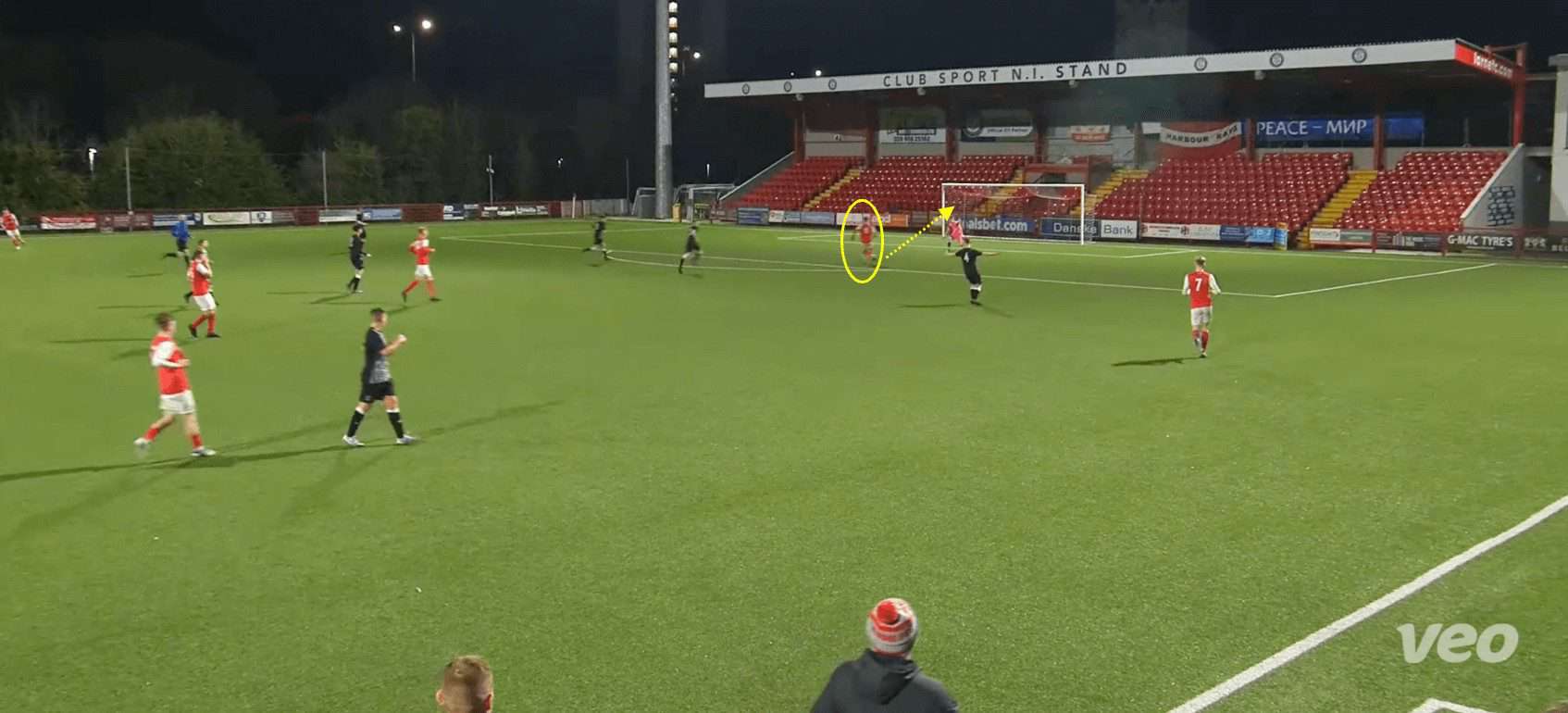
The 17-year-old possesses a composure in front of goal that we would associate with a much older player. Here, he does not panic when put through 1v1 with the goalkeeper and calmly executes a right-footed finish into the top corner. He remains calm under pressure and makes very astute decisions, demonstrating his tactical intelligence.
James Bleakley – Linfield F.C.
The next player we are going to highlight in this scout report is Linfield’s 17-year-old centre-back, James Bleakley. The young defender has been very impressive with his performances for Linfield’s U18s and U20s this season. He is very much a modern, ball-playing defender who is very strong in his duels and does not shy away from a battle with his opponent.
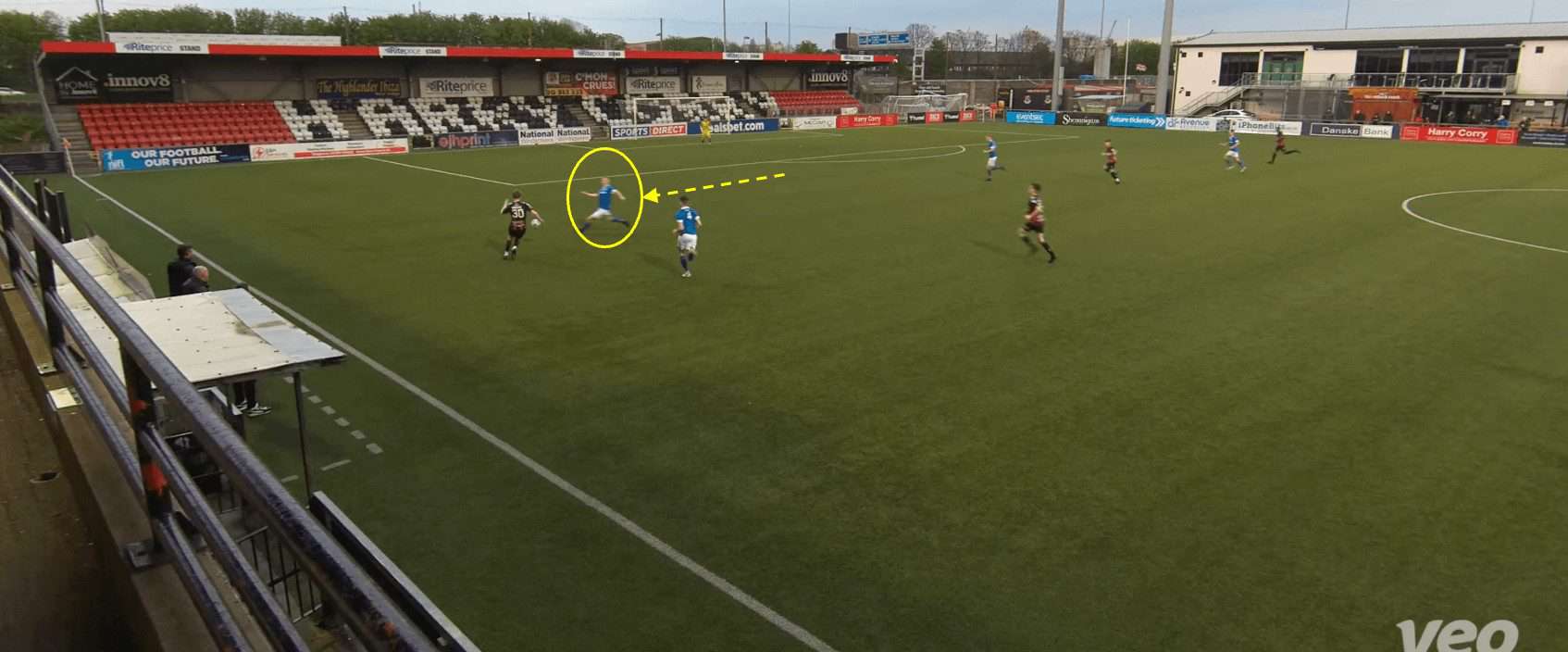
Bleakley frequently showcases a high level of tactical intelligence and awareness. Here, he can understand that the opposition is counterattacking and sees that his teammate has been caught out of position. Bleakley utilises his acceleration and reading of the game to move across and successfully clear the ball to prevent the opposition attacker from going through 1v1 with the goalkeeper.
Tactical awareness is paramount for a central defender, playing a pivotal role in their effectiveness on the field. Bleakley takes charge of the situation, ensuring the defensive line remains compact and well-structured, employing effective communication to direct teammates and cover spaces intelligently. It’s no surprise that he has been given the captain’s armband on numerous occasions this season.
Bleakley can successfully read the ebb and flow of the game, including anticipating the movements of opposing attackers, understanding the opponent’s attacking strategies, and recognising patterns of play. This means he can make informed decisions to intercept passes, block shots, and neutralise potential threats. As a result of his intelligent playing style, the Linfield defender averages 4.3 ball recoveries per 90.
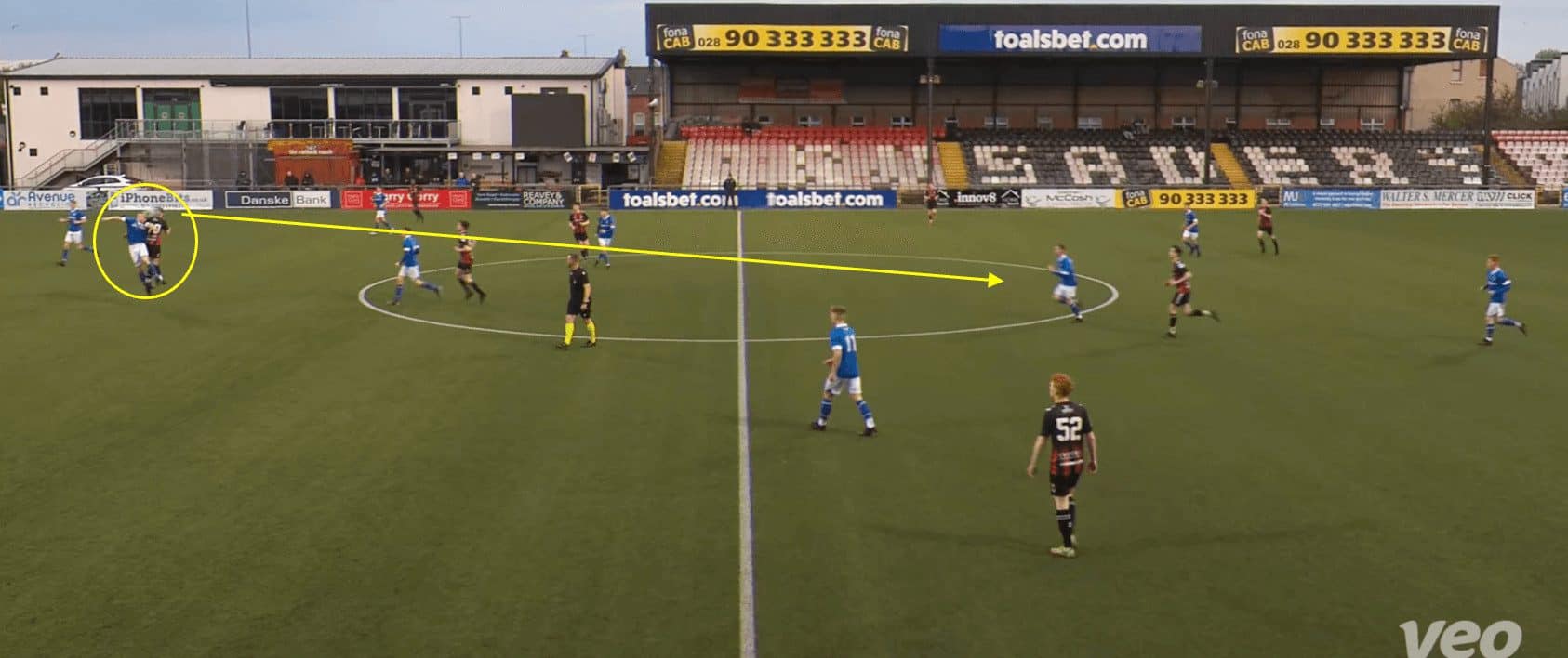
Moreover, Bleakley’s reading of the game proves useful in the aerial battles. He averages 7.0 aerial duels per 90, winning 5.4 per 90, and it’s not difficult to see why. Standing at 180 cm, he is reasonably tall and possesses a good jumping reach, which allows him to outleap his opponent. He generates some excellent power and distance on the header, enabling him to clear his lines successfully, preventing the opposition from attacking.
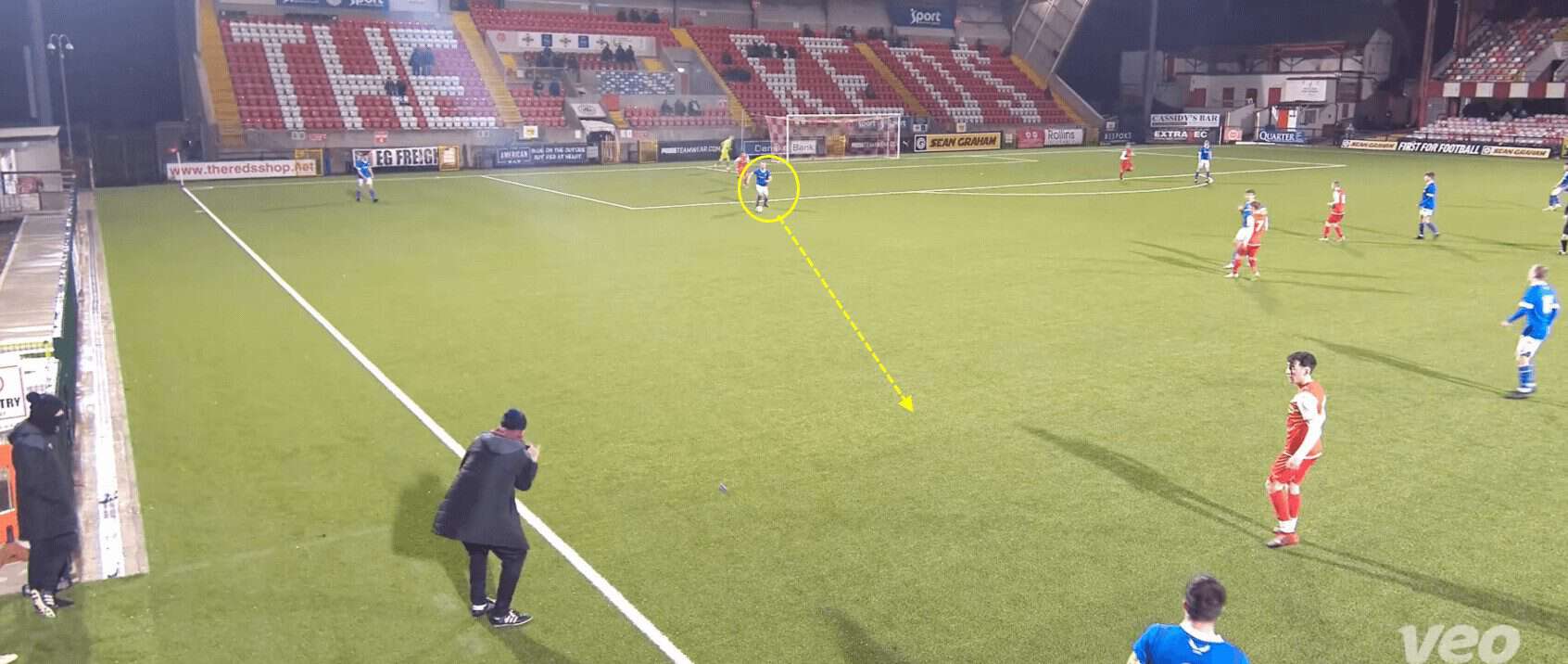
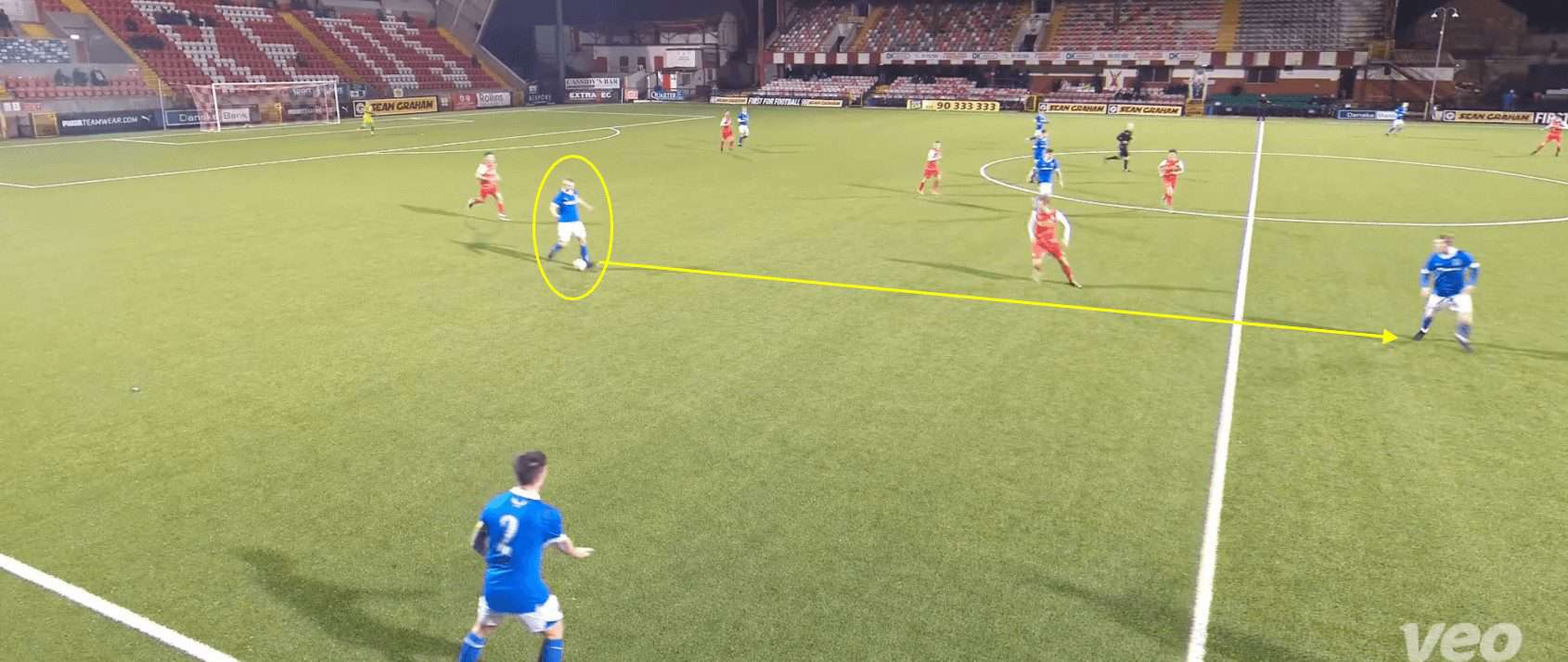
Furthermore, Bleakley is very confident on the ball and is more than adept at carrying the ball out of defence in a bid to kick-start the Linfield attack. By confidently dribbling past opposition players, the young defender can alleviate pressure and progress the ball into more advanced areas of the pitch. This quality becomes particularly crucial when a team faces aggressive pressing tactics, as a ball-carrying central defender can help bypass the press and retain possession, as we can see above.
Beakley becomes an additional playmaking asset for the Linfield team. By advancing into midfield with the ball at his feet, he forces the opposition to make tactical decisions, potentially creating numerical advantages in key areas of the pitch for Linfield. This not only provides more passing options for the team but also disrupts the defensive organisation of the opponents.
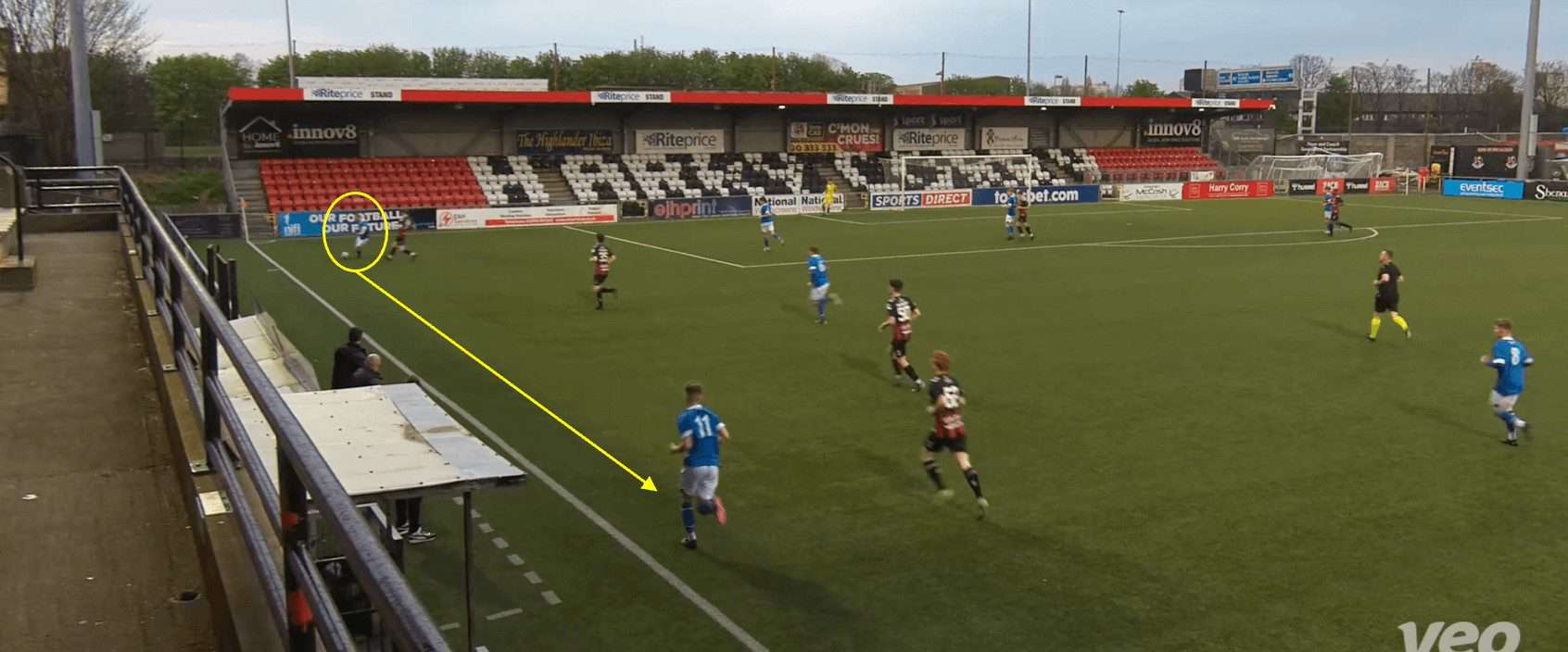
His passing ability under pressure is also an impressive feature of Bleakley’s game. In the scenario depicted above, most defenders would simply kick the ball out of play to alleviate the pressure. James Bleakley opts to get the ball under control despite the opponent putting considerable pressure.
He then plays an accurate pass up the flank to his teammate. This allows Linfield to transition from defence to attack and launch a counterattack immediately. Making a pass such as this is risky and could lead to turnovers. Still, the central defender analysed the situation and made an excellent decision regarding the best course of action.
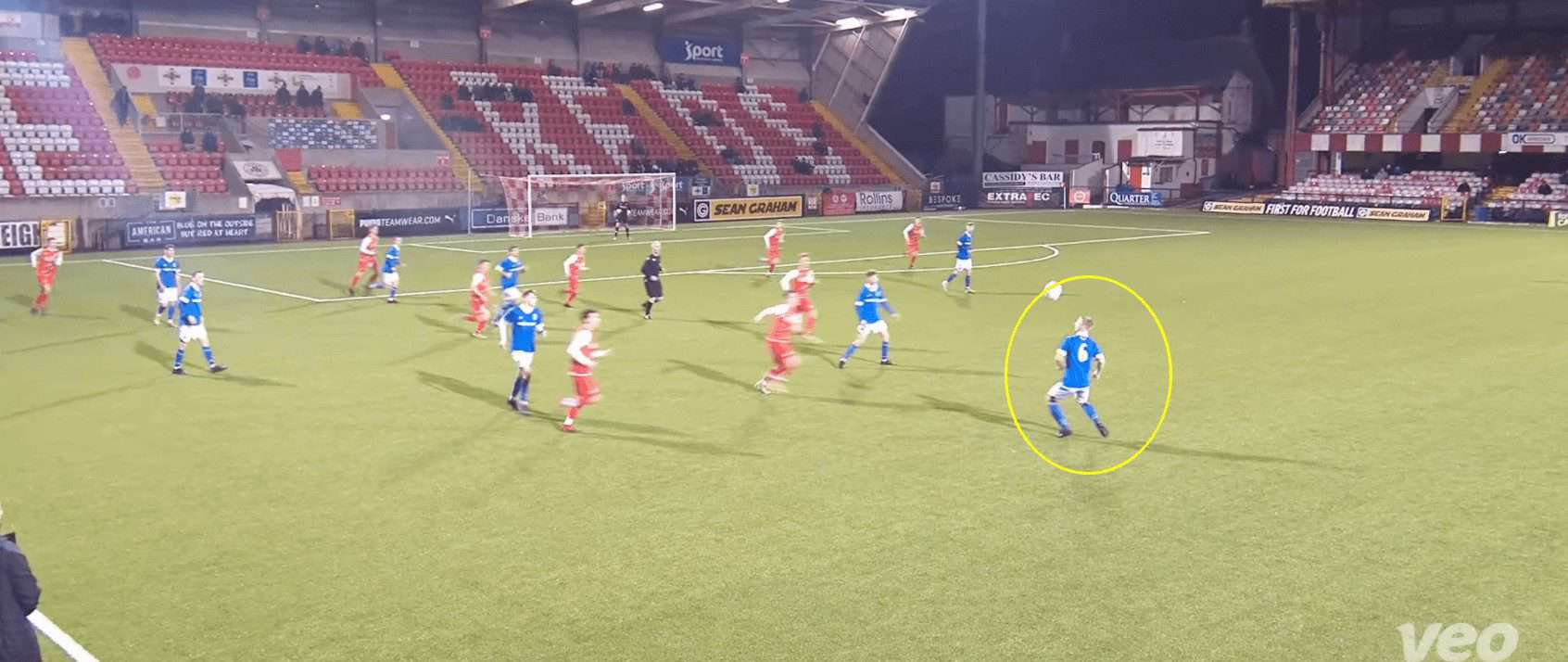
When Linfield are in the attacking phase, he will always push up higher so he is on hand to recycle possession, as we can see. This allows Linfield to pin their opponents back into their own half and limit the opportunities for them to break out on the counterattack.
Additionally, this provides an opportunity for Bleakley to utilise his passing skills by looking to play passes into the attacking third or the penalty area. He also possesses an excellent burst of acceleration, enabling him to track back relatively quickly should the opposition break out of their defensive structure.
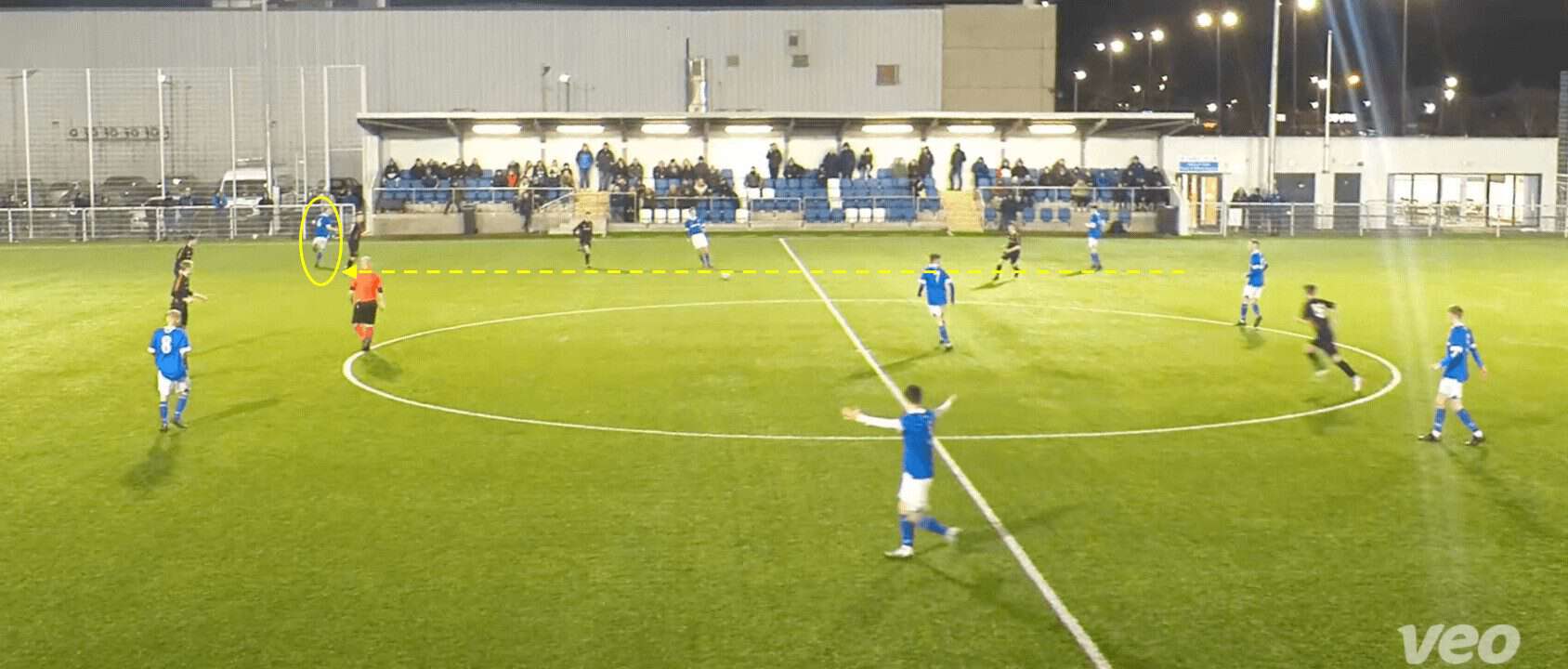
The Linfield central defender will look to get forward when possible. In this instance, we can see he has stepped out of his role in the back for to make a run into the midfield and then out wide. By doing this, it forces an opposition player to follow him to track his run. Therefore, this creates space for his Linfield teammates to exploit in the central areas. Should the opponent fail to track Bleakley’s run, he is available as an extra passing outlet in the midfield areas to provide additional link-up play as the team build an attack.
Ryan Kerr – Crusaders F.C.
The final player we are going to look at in this scout report is Crusaders’ 17-year-old goalkeeper, Ryan Kerr. Throughout the season, he has shown himself to be a confident goalkeeper capable of making important decisions and smart choices to prevent his team from conceding a goal.
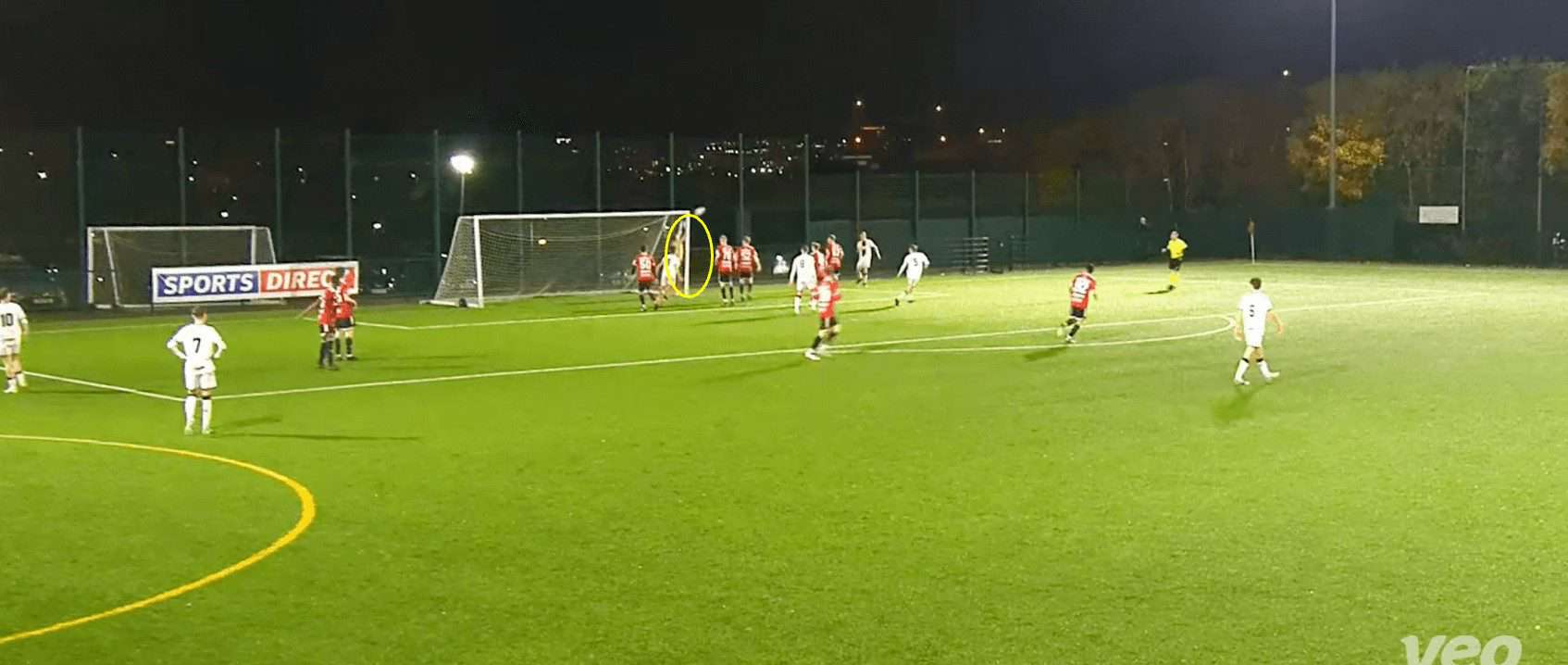
The first aspect of Kerr’s game we are going to look at is his ability to deal with aerial crosses into the penalty area. This is an area where the young goalkeeper excels; he makes 2.3 aerial clearances per 90, with 2.2 of them being classed as successful.
Mastering how to deal with aerial crosses is essential for a goalkeeper to command their penalty area with authority. In the scenario above, the opposition has played a dangerous free kick, putting Kerr under pressure. However, the young goalkeeper remains calm and watches the trajectory of the ball, which allows him to successfully leap off the ground and collect the ball in the air.
As Kerr is a goalkeeper who can confidently catch or punch away crosses, this immediately helps to neutralise the threat posed by opponents during corners, free-kicks, or open-play crosses into the box. This ability is vital in preventing the opposition from capitalising on set-piece scoring opportunities in and around the penalty area. Furthermore, by consistently intercepting or catching crosses, the Crusaders’ goalkeeper reduces the risk of second-phase attacks.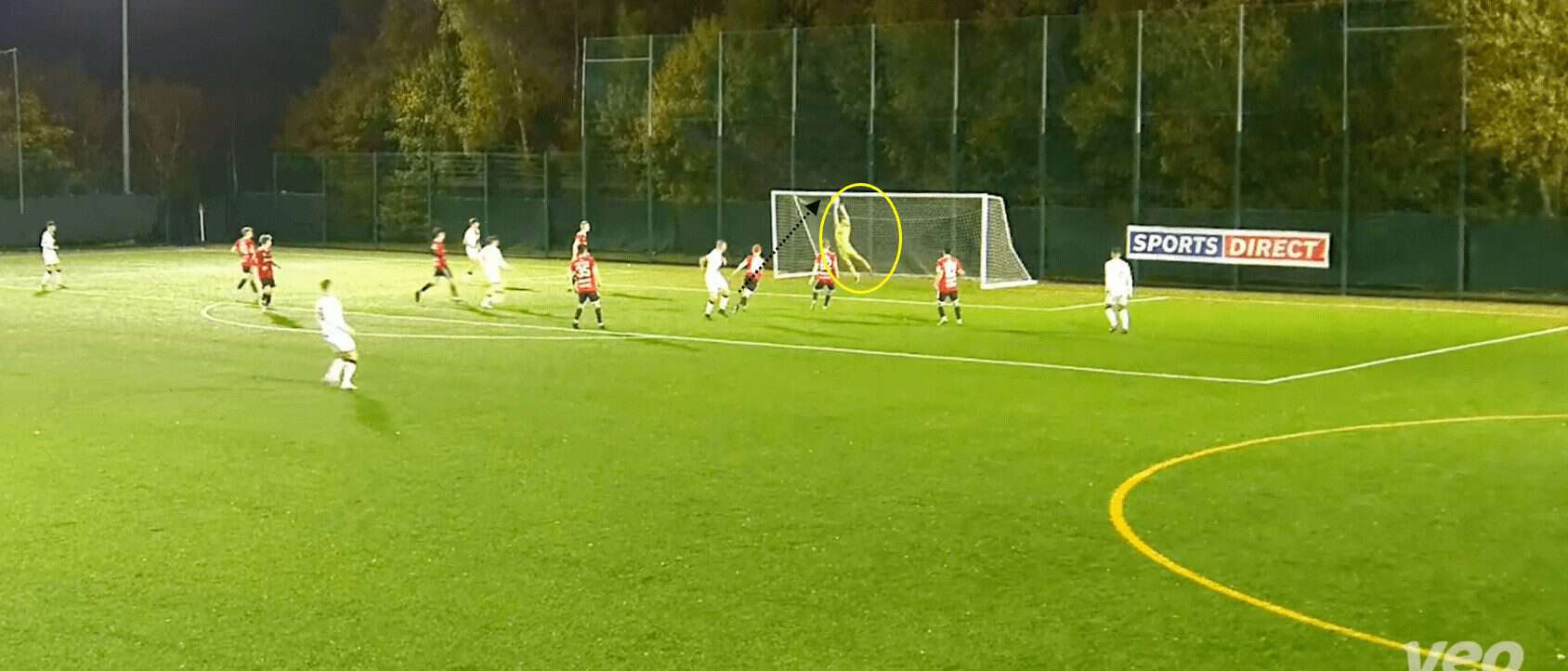
The 17-year-old ‘keeper possesses some excellent reflexes and is able to make some vital saves as a result. Here, we can see how Ryan Kerr utilises his reflexes to make a crucial save. He quickly moves across his goal line and tips the ball over the bar to prevent the goal.
Having sharp reflexes enables the Crusaders’ goalkeeper to make split-second decisions when facing powerful and unexpected shots. Whether it’s a deflection, a point-blank save, or a fast-paced shot from an opponent, he can utilise his quick reflexes to move rapidly and position himself to block or deflect the ball, reducing the likelihood of conceding goals.
Additionally, quick reflexes aid Kerr in dealing with shots from close range or deflections in crowded penalty areas. The fast-paced nature of these scenarios requires an immediate response, and his excellent reflexes can make crucial saves even when visibility is limited or when the trajectory of the ball changes unexpectedly.
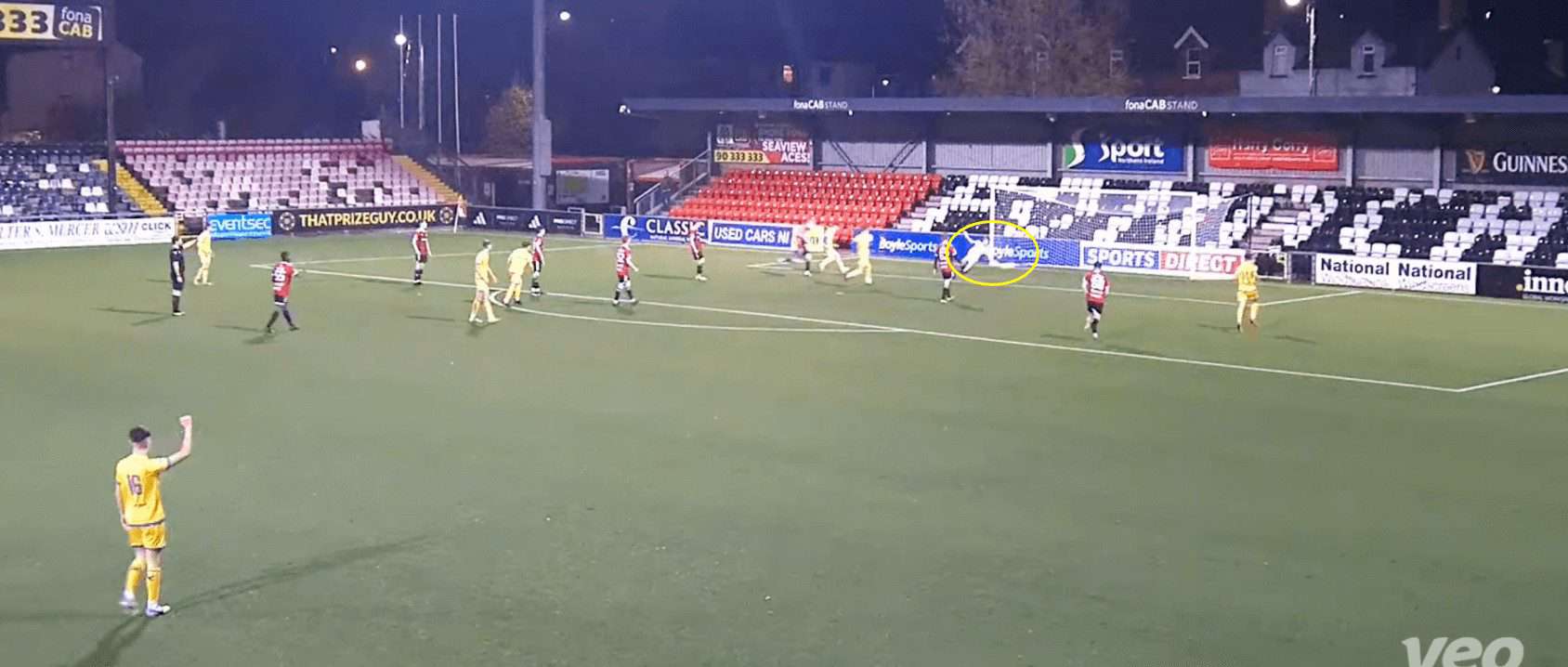
Here, we can see that Kerr can react quickly when shot-stopping. He stays on his feet to close down the angles available to the forward. This forces the opposition forward into making a decision about where to place his shot by closing down the angles. Kerr effectively influences this choice, meaning he knows where to dive to successfully save the shot.

Kerr is an incredibly decisive goalkeeper who reads the game well. He possesses a good amount of acceleration over short distances, which means that when he decides to come off his line, he mostly reaches the ball. In this scenario, upon realising the opposition is breaking through the Crusaders’ defensive structure, Kerr swiftly moves forward and collects the ball.
The young goalkeeper’s ability to rapidly advance off the goal line is also crucial for cutting down angles and narrowing the shooting options of the oncoming attackers. This is a proactive approach which puts pressure on the opposition, forcing them to make quicker decisions and reducing the available goal-scoring space.
Plus, this is vital in dealing with through balls and one-on-one situations, as we can see above. By swiftly closing the distance between himself and the approaching striker, Ryan Kerr can intercept passes and challenge the opponent before he has a chance to get a clear shot on goal.
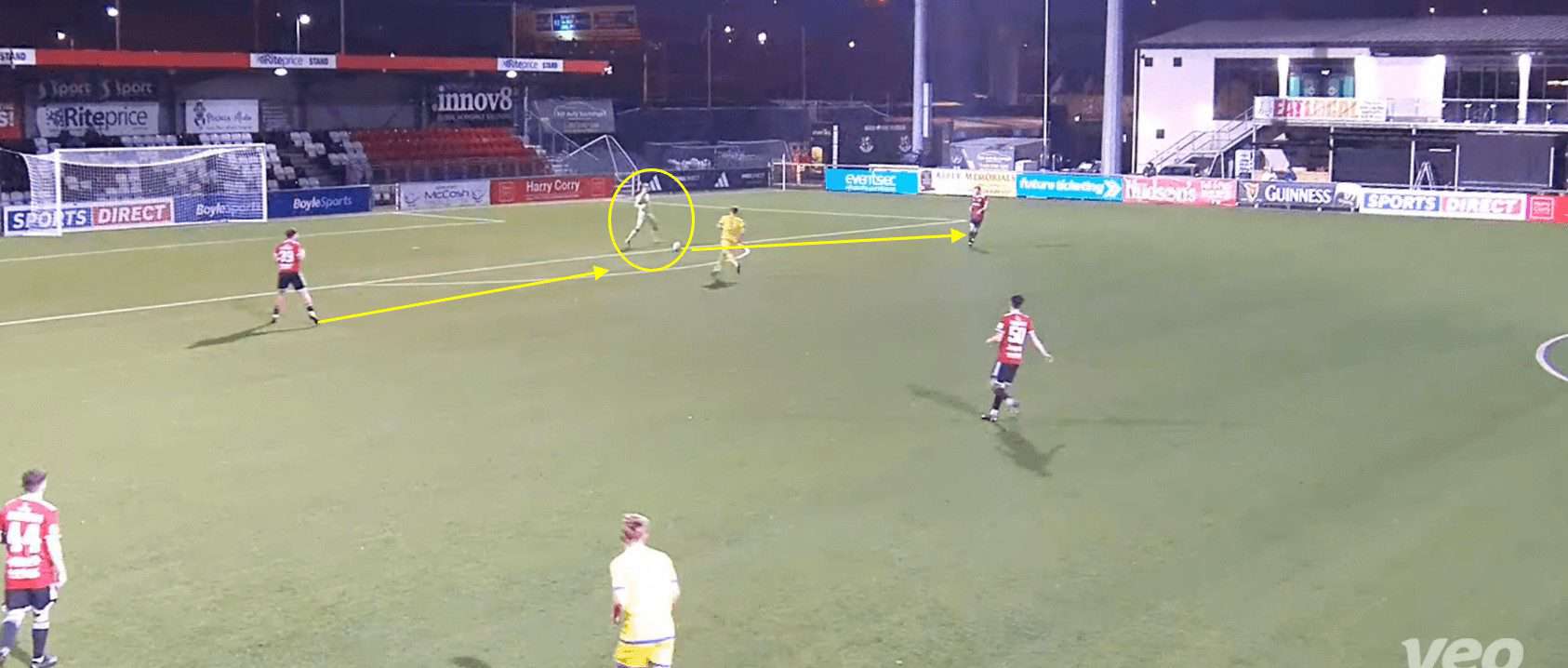
Kerr is not a goalkeeper who typically leaves his penalty area to participate in build-up play. However, he is often on hand as a passing outlet when Crusaders are under pressure from an opposition press and is confident with the ball at his feet to pick out a teammate despite being under pressure.
This is important as he makes himself available to receive the ball and elevate the pressure on his defenders. Kerr can play accurate and precise passes, helping the team navigate through the press and maintain possession. This skill is integral to avoiding turnovers in dangerous areas and establishing control over the tempo of the game.
Moreover, Kerr can distribute the ball accurately over long distances, adding a dimension of counterattacking potential to the team’s strategy. With precise long-range passes, the goalkeeper can quickly transition the team from defence to attack, catching opponents off guard and creating goal-scoring opportunities.
Conclusion
In this scout report, we have highlighted three of the brightest talents in Northern Irish football. Jack Hastings, James Bleakley and Ryan Kerr have all put in some impressive performances at youth level recently, and it won’t be long until we see them breaking into the first team at their respective clubs.
With Northern Irish football clubs investing in their youth systems and giving young players plenty of opportunities, there is an incredibly talented generation of players coming through. As a result, Northern Irish football will thrive domestically and potentially on the international stage.

