


After a disappointing start to the Belgian Pro League season, and with the club sitting in the relegation zone, OH Leuven parted company with their manager, Marc Brys, after just over three seasons in charge.
After a protracted search, Leuven finally found their man, appointing 50-year-old Spaniard Óscar García as their new manager.
The Spaniard has been out of a job since being sacked by Ligue 1 side Stade de Reims at the beginning of last season but has plenty of high-level managerial experience, making this somewhat of a coup by the Belgian side.
This tactical analysis will look at how the Spaniard’s tactics and style of play may take effect with Leuven. He is now tasked with clawing Leuven up the table and away from any potential threat of relegation.
Óscar García Style Of Play
Because the Spaniard came through Barcelona‘s famous La Masia academy and played for the club at senior level in his playing career, many would tend to think that the 50-year-old manager plays a very Barcelona-esque style of football.
However, this is not necessarily the case, with García opting for a more direct, vertical attacking approach during his recent spell in charge of Ligue 1 side Stade de Reims.
This is not to say the Spaniard will not look to progress the ball through phases of holding possession and attempting to dominate it; it is just not his preferred style.
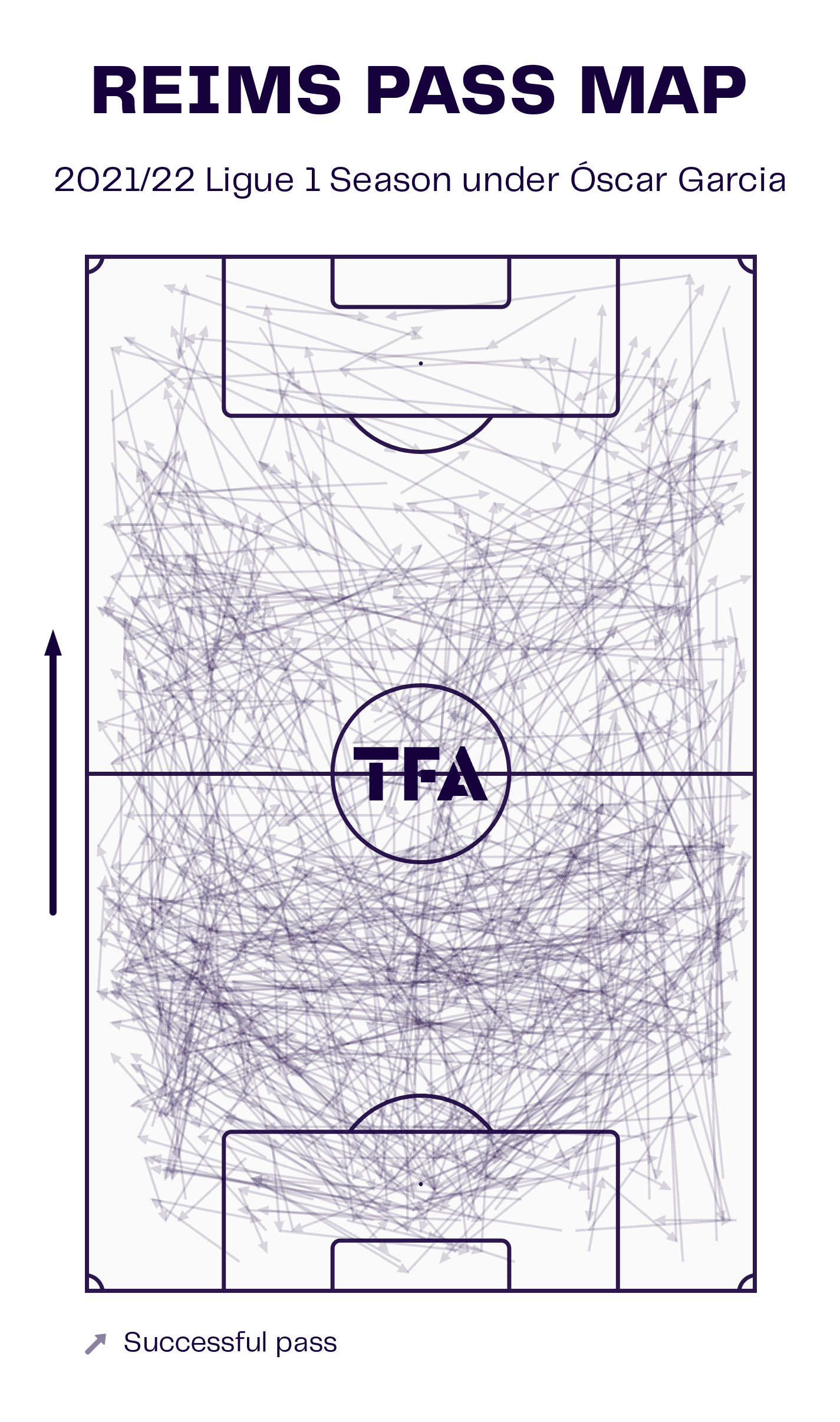
The data viz graphic above shows Stade de Reims’s pass map from the 2021/22 Ligue 1 season under García.
As the graphic shows, the majority of the French side’s possession-based football occurred in the defensive third of the pitch. Reims looked to quickly get the ball into the attacking third by, more often than not, playing directly from the goalkeeper off of goal kicks.
Reims finished the 2021/22 Ligue 1 season with one of the lowest, if not the lowest, passing statistics of any other side in the French top flight, highlighting this tendency for García’s side to prefer playing more direct.
Another thing to note is that Reims finished with one of the lowest ball possession totals in the French top flight that campaign as well.
In terms of a preferred formation, García has tended to choose a back three or five system in his recent managerial stops. He typically sets his side up in either a 3-4-3, 3-4-2-1, or 3-4-1-2, with any of these formations tending to transform into a 5-3-2 in defensive phases of play.
García’s sides also look to defend from the front, with the majority of these turnovers happening during counter-pressing moments.
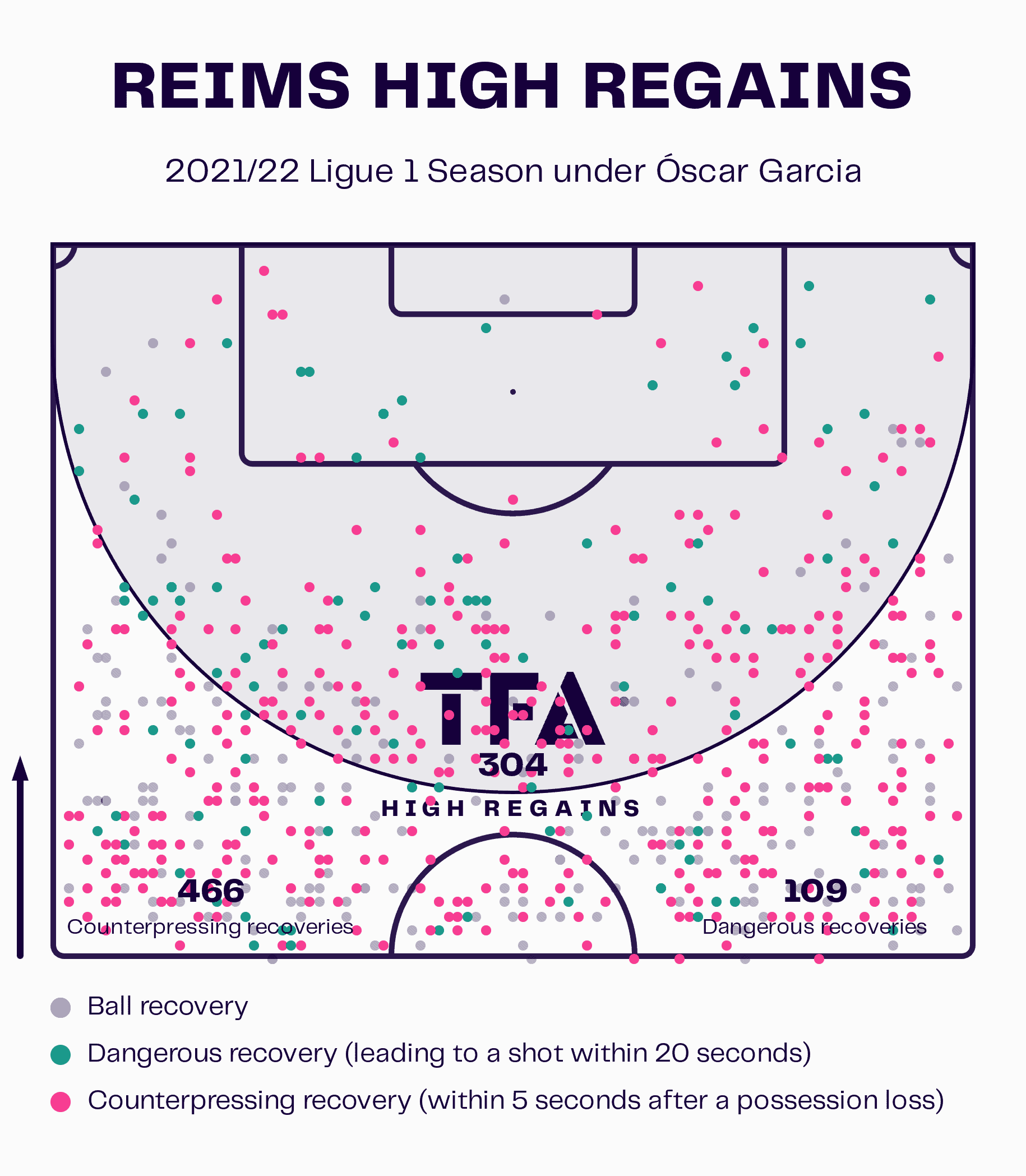
The data visualisation graphic above shows Stade de Reims’s high regains during the 2021/22 Ligue 1 season.
As we can see, García’s side finished that campaign with 466 counter-pressing recoveries, good enough to be in the division’s top half.
While the Spaniard will likely not look to counter-press at every moment he may get aggressive, García will often pressure opposition defenders into mistakes, which he will look for his side to capitalise on.
Lastly, Óscar García has a very distinctive approach to how he likes to manage his sides.
The 50-year-old Spaniard wants to field a competitive side but heavily emphasises using young players, especially players who have come through the club’s academy system.
With an average age of 24.8, Leuven’s squad ranks as one of the youngest squads in the Belgian Pro League; García’s goal will be to gel and grow with this young squad while also looking to be competitive now and in the future, with a slight emphasis on now with Leuven currently occupying the last relegation playoff spot in the Belgian Pro League.
This tactical analysis will now take a detailed look at the squad the former Stade de Reims boss inherits while analysing how they will fit into the tactical approach the Spanish manager is bringing to the Belgian side.
OH Leuven attack under Óscar García Tactics
As previously discussed, Óscar García’s attacking philosophy usually takes a more direct approach, even with Garcia’s Barcelona playing background.
This will be a slight change in Leuven’s attacking approach, as under Marc Brys last season, Leuven averaged just over 50% possession against their opponents.
However, this number was well under half when the Belgian side matched up with some of the bigger teams in the division.
Under García, there will likely be more emphasis on solidity and rigid possession, with goalkeeper distribution being something that García wants to be at the highest possible level.
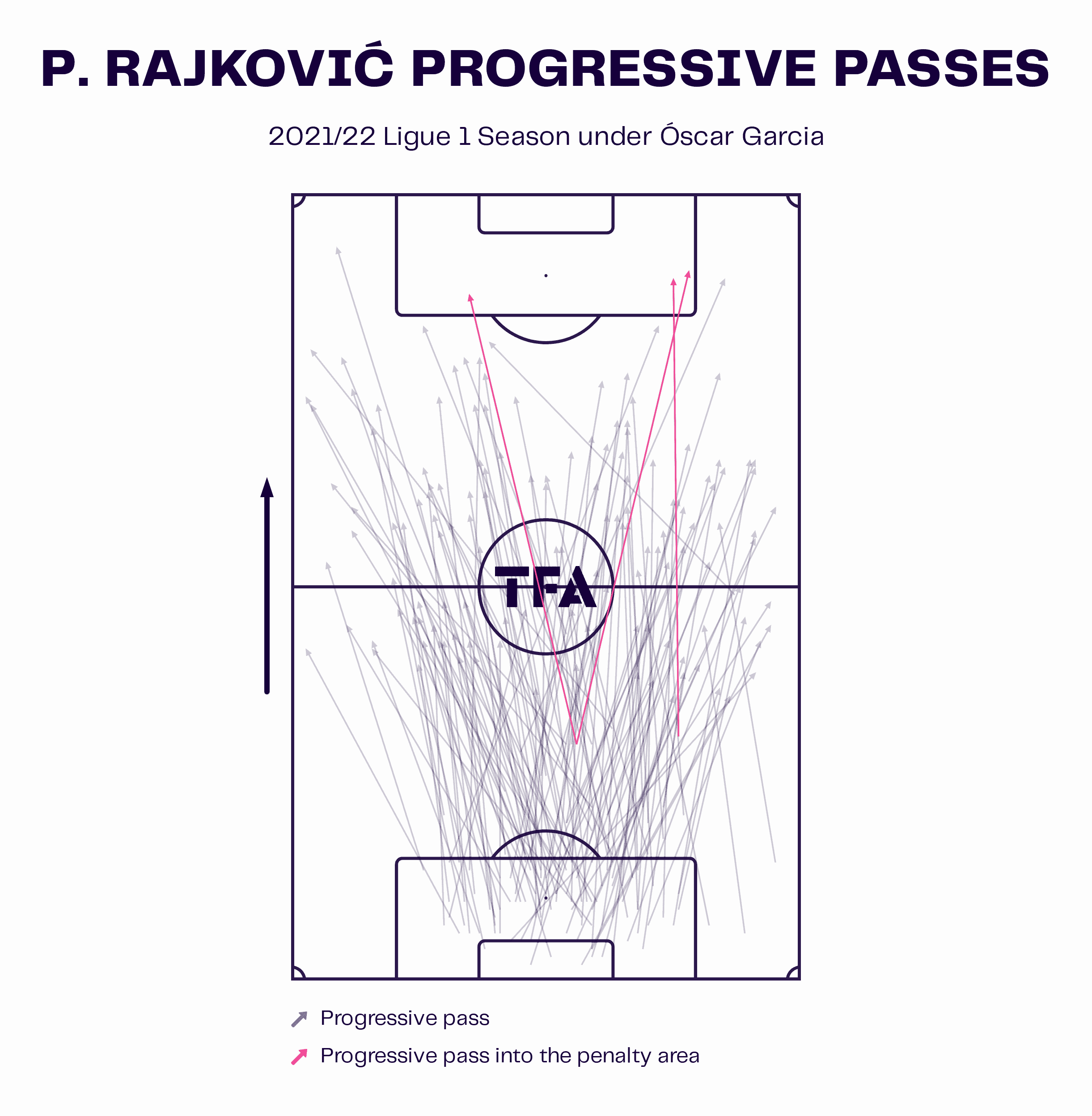
The data viz graphic above shows the progressive pass map of García’s goalkeeper for Reims at the time, Predrag Rajković.
As we can see from the image, the Serbian goalkeeper was often tasked with progressing the ball into the midfield areas, becoming vital in García’s more direct style of attacking.
Digging deeper into the statistical numbers for Rajković’s distribution under the Spaniard, the Serbian averaged 19.05 passes per 90 minutes in Ligue 1 during the 2021/22 season, with an 83.2% success rate.
The critical statistic to look at, however, is Rajković’s long passes.
The goalkeeper averages 7.04 long passes per 90 minutes and has a success rate of 58.4%.
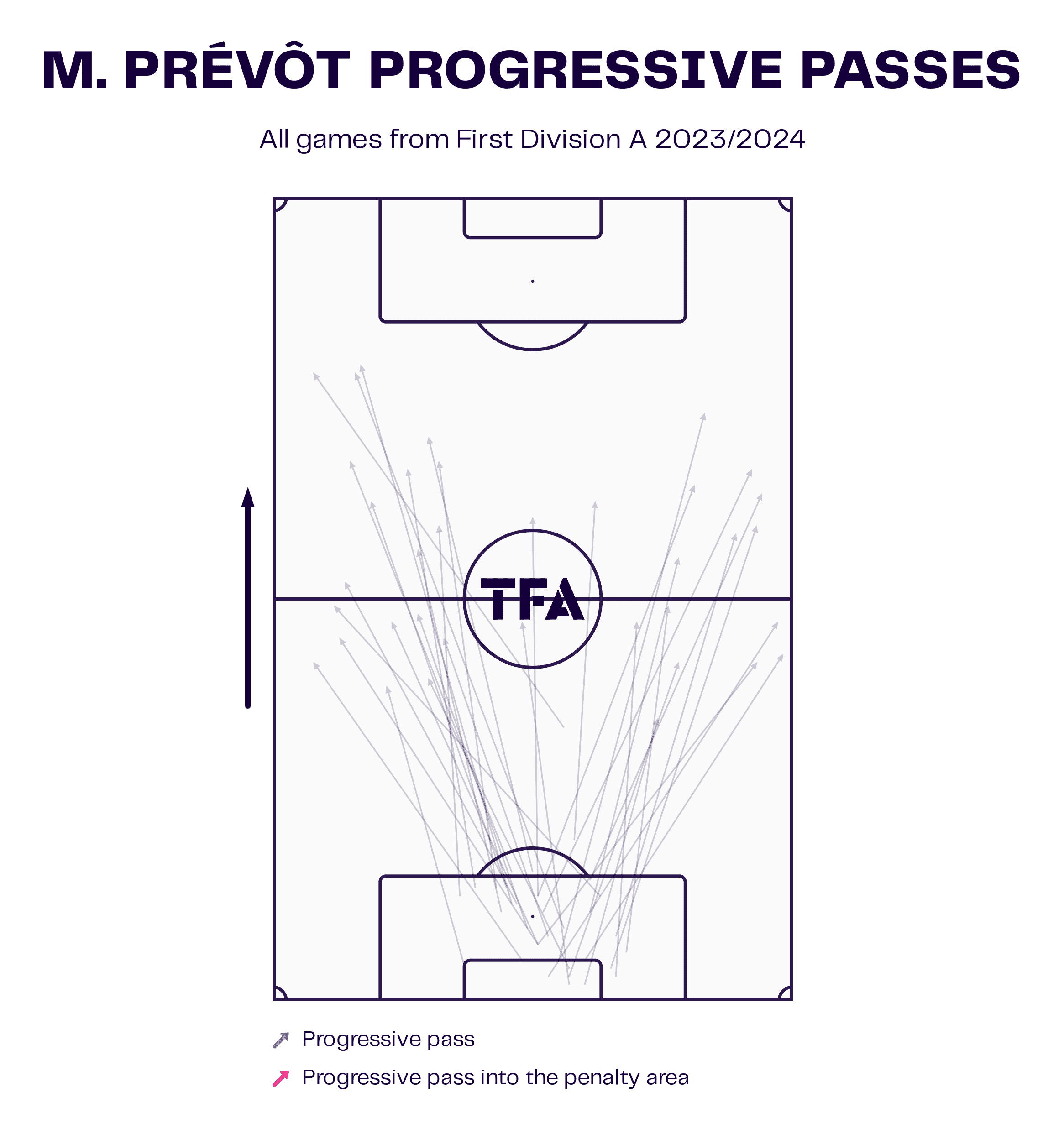
We will look at the current #1 for OH Leuven between the sticks, 26-year-old Frenchman Maxence Prévôt.
The goalkeeper was signed from French Ligue 2 side Sochaux, where he played for several seasons and was the starting goalkeeper.
When looking at the distribution numbers for Prévôt so far this season, they are very impressive and should be something that Óscar García looks to use to significant effect.
The data viz graphic above highlights the progressive passes from the 26-year-old this season, with him able to spray passes frequently to midfield.
Looking at the numbers, the Leuven goalkeeper has averaged 20.48 passes per 90 minutes and a success rate of 86.8%, which is highly respectable.
He also averages 5.93 long passes, with an accuracy of 60.6%.
These numbers are not far off those produced by Padrag Rajković during the 2021/22 Ligue 1 season, so it would not be surprising to see García use this ability once he takes charge of his first match.
We will now examine some examples of Prévôt‘s distribution from this season to get a clearer picture of how the Frenchman will be used.
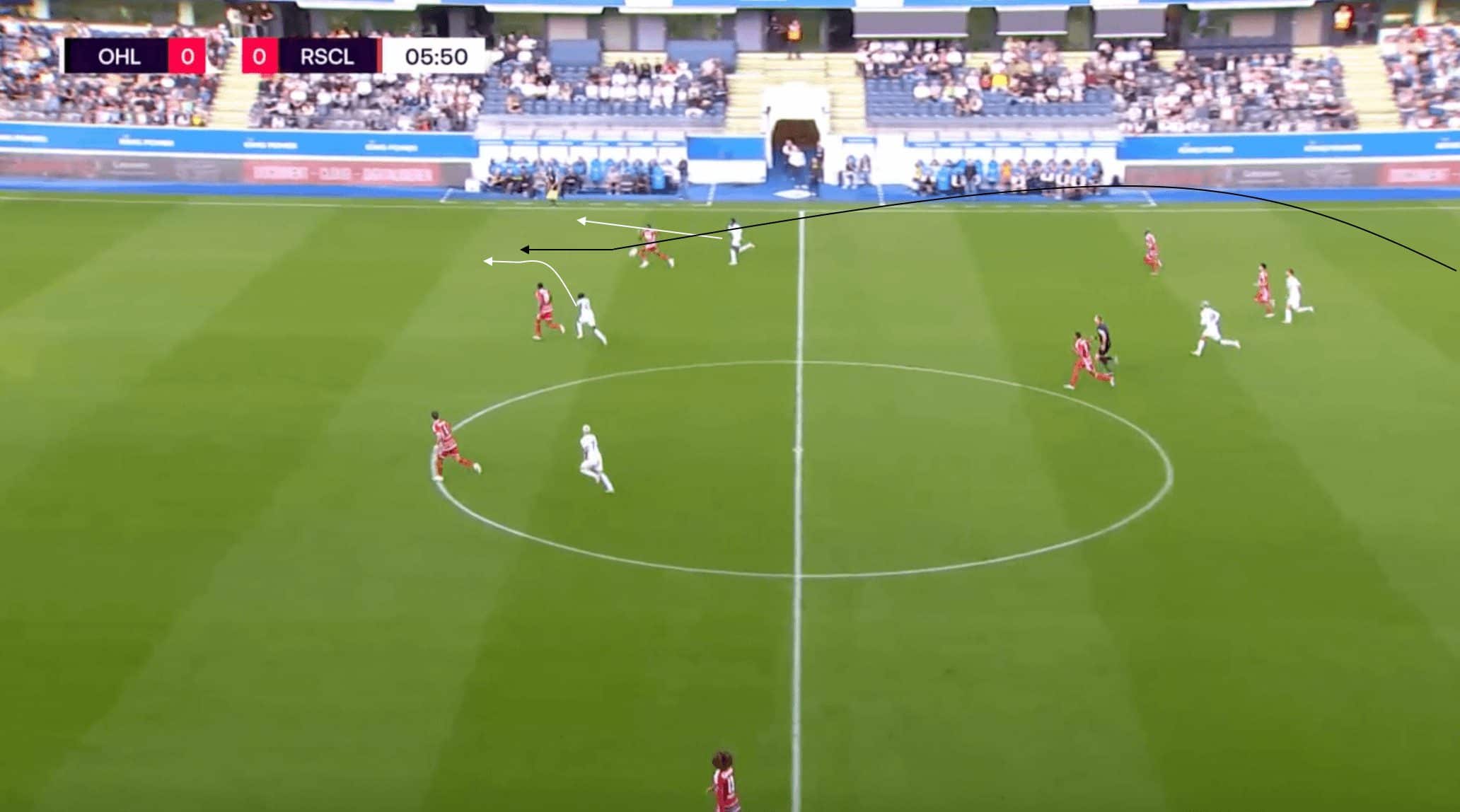
The image above shows an example of the range of distribution Maxence Prévôt displays and why he will be vital to Óscar García’s direct and vertical attacking approach.
In this phase of play from a recent match in the Belgian Pro League against Standard, the Frenchman receives the ball inside his own six-yard box from his central defender.
With the goalkeeper put under pressure rather quickly, he takes one touch before sending a ball past midfield and into the wide channel on Standard’s left-hand side.
The ball bounces and puts the fullback in an awkward position, with him facing his own goal.
This allows the two closest Leuven attackers to put pressure on the defender and win possession.
A back-to-front ball starts a dangerous attack as a result.
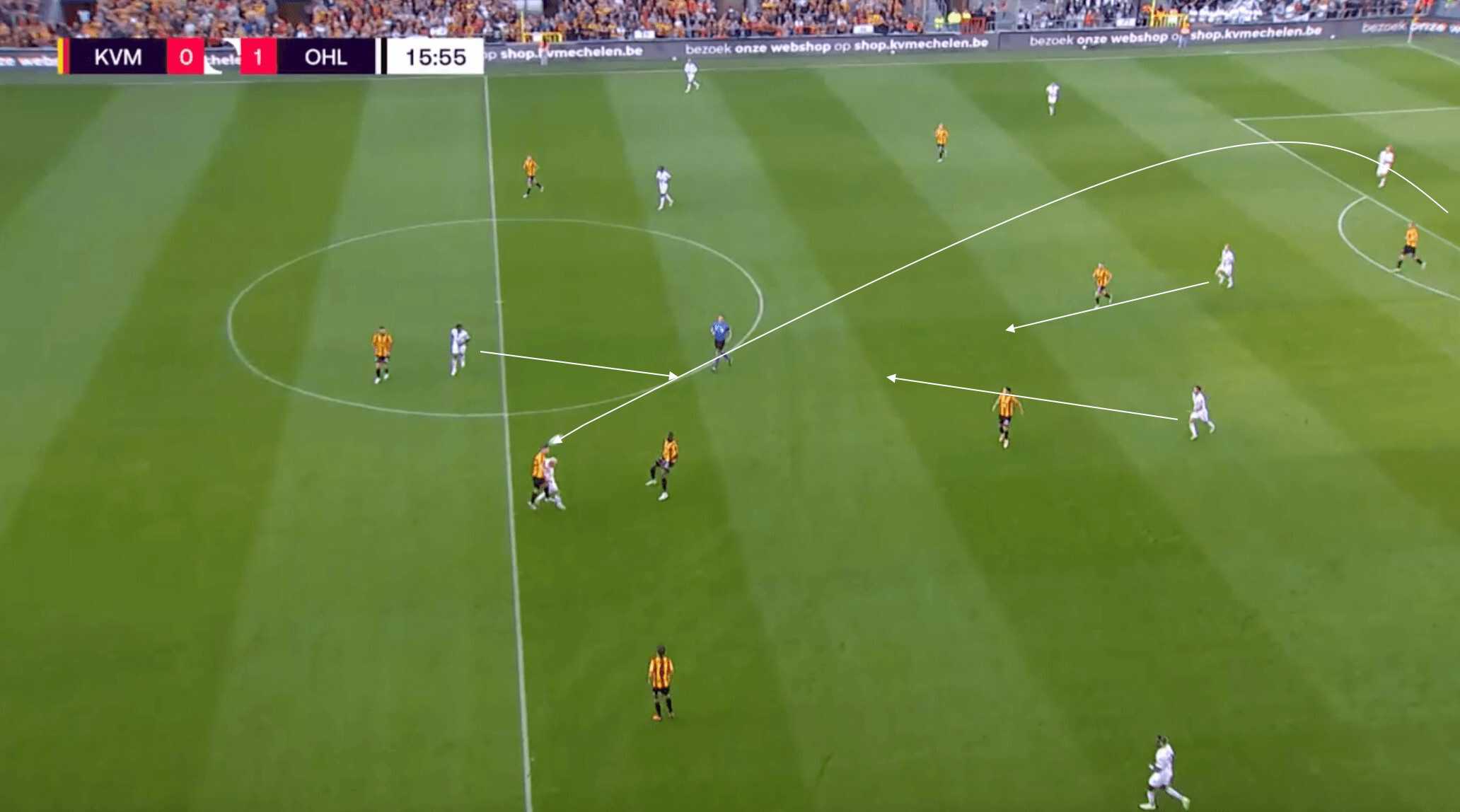
The image above shows another example of the distribution Maxence Prévôt displayed throughout this season’s early course for Leuven.
In this phase of play above against Mechelen, the ball is again circulated around the back before finding its way back to the French goalkeeper.
Furthermore, the 26-year-old takes a big touch before sending a long ball towards midfield.
In preparation for the second ball, the surrounding Leuven players positioned themselves to frame the area, looking to outnumber the Mechelen players to win possession.
This is something that García’s Reims side did quite often, with players crashing towards where the ball is predicted to be landing off a header to give themselves the advantage of winning the second ball.
This is what happens in this phase of play, with the first ball being beaten by the Mechelen defender.
However, the Leuven players crash into the area, win the second ball, and quickly set off on an attacking move.
This direct style of attacking from García should have no problem being implemented at Leuven, with a lot of the current squad equipped to play in this way.
Also, having a goalkeeper with the range of Maxence Prévôt is also a massive plus for Óscar García.
OH Leuven defence under Óscar García Coaching Style
When discussing how Leuven may potentially look under Óscar García coaching style from a defensive perspective, we will consider it more through the lens of pressing and defending from the front.
During his time at Reims, García’s side looked to counterpress quite often, as displayed earlier in this article by the graphic.
This is something that Leuven also have done quite a bit this season and in the past under Marc Brys.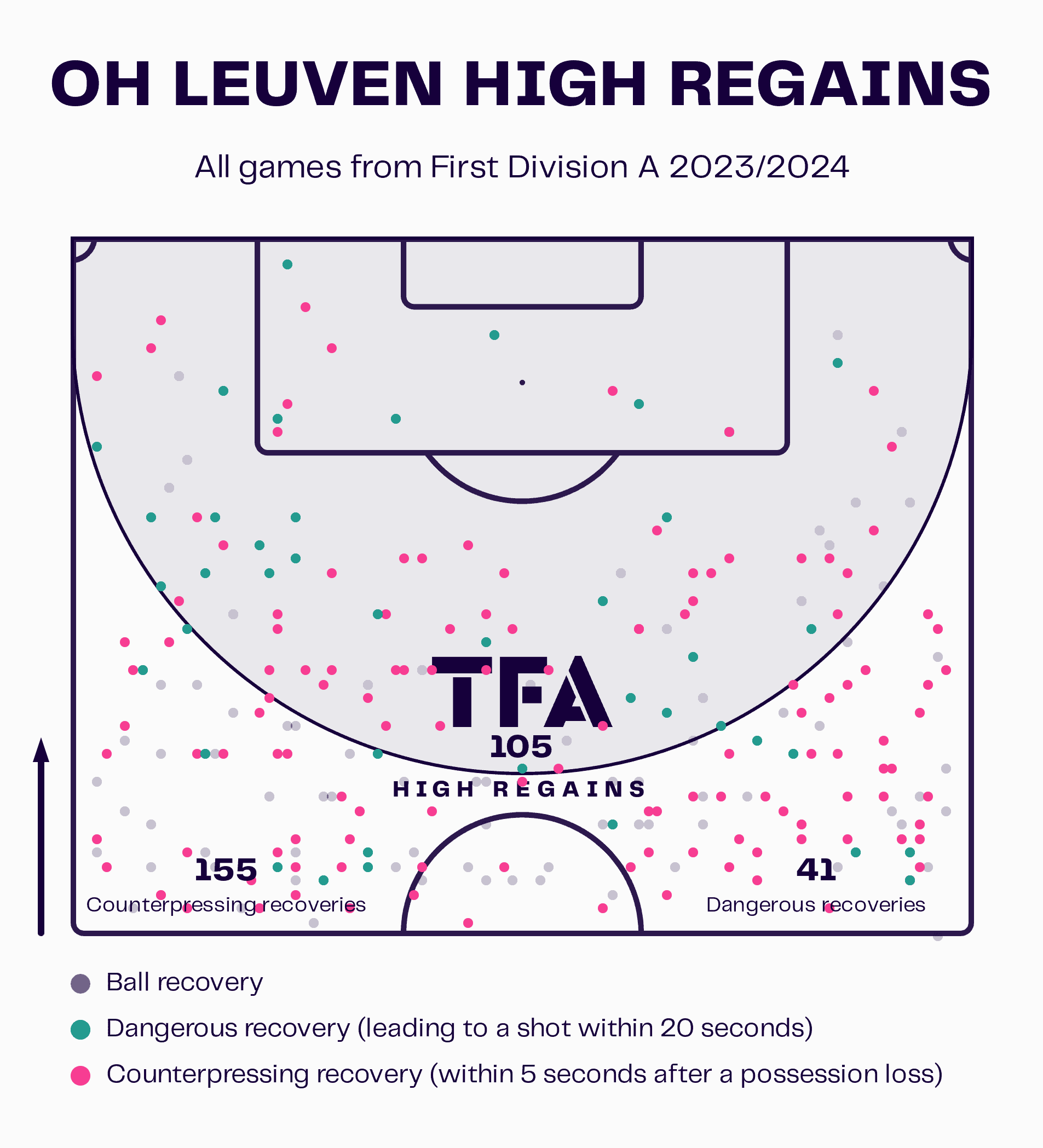
The data viz graphic above shows Leuven’s high regains up to this point in the current season.
As we can see, the Belgian side has 155 counter-pressing recoveries this season so far in Belgium, a relatively high number compared to the rest of the division.
This will be something that García will likely look to build upon, as one of the strengths of his Reims side was also based on counter-pressing, with García combining this with a solid and compact defensive shape.
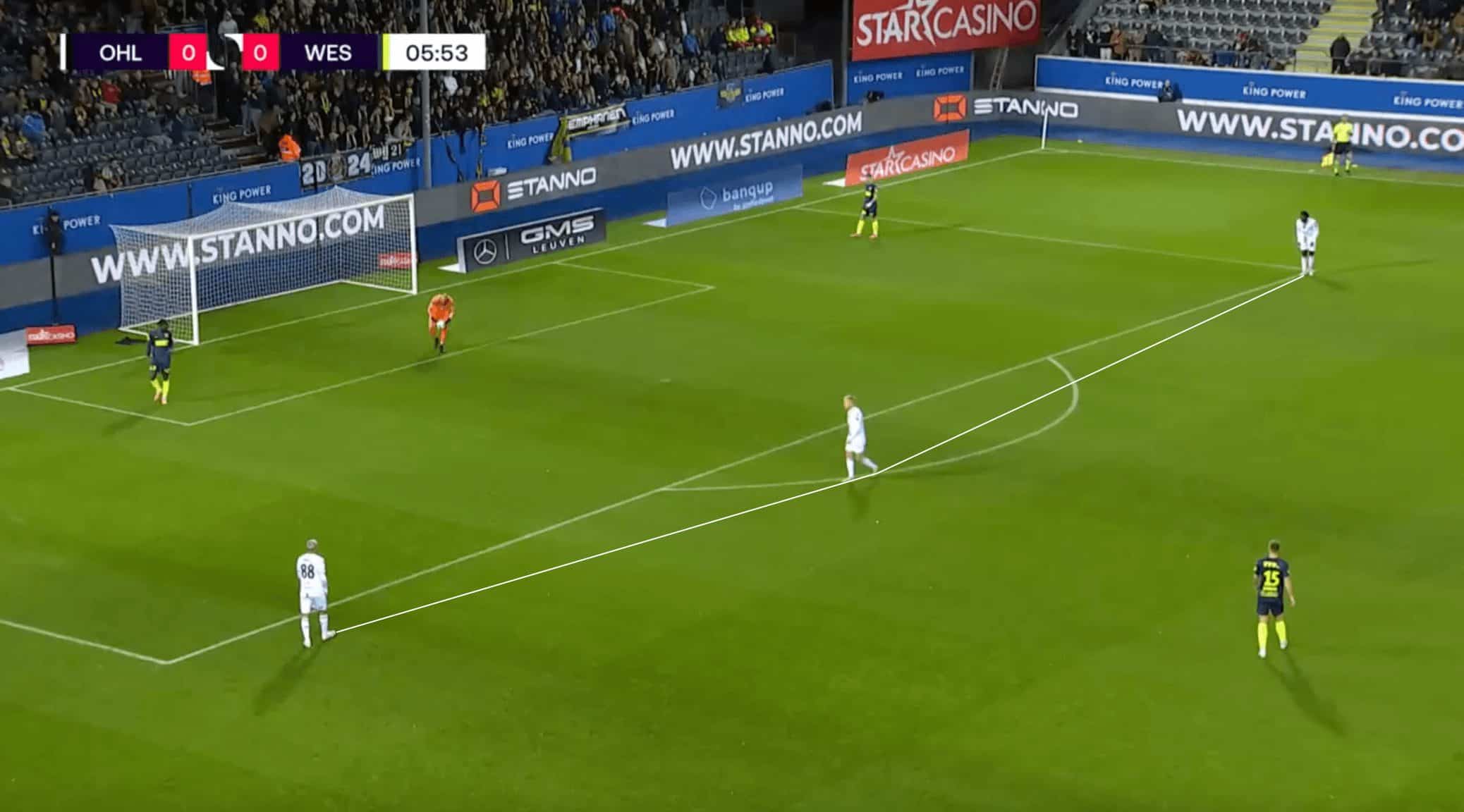
The image above shows an example of a defensive phase of Leuven from their last match in the Pro League against Westerlo, with new boss Óscar García in the stands to watch.
In this phase of play, the Belgian side’s three forwards in their 3-4-3 are positioned very high, occupying spaces just outside the penalty box.
This forces the opposition goalkeeper to play long, allowing Leuven to get players around the ball and press when the ball is in possession of the Westerlo player.
While this does not show a true counter-pressing moment, it shows the high line of confrontation that Leuven have looked to set up during recent matches.
While the whole purpose of this setup was to force Westerlo to play the ball long from their goalkeeper, it still demonstrates what this Leuven side is capable of from a counter-pressing and initial pressing perspective.

The image above shows another example of Leuven’s counter-pressing in the previous match against Westerlo.
In the above phase of play from that match, the ball is turned over after a poor pass aimed at the Leuven forwards.
With the Westerlo centre-back able to gather possession, he had time to find the midfielder, who drifted into the pocket of space to become a passing option between the Leuven lines.
However, Japanese midfielder Kento Misao notices this fairly quickly and quickly looks to close down the opposition midfielder.
Also, the Leuven attacking players around him all look to crash down on the midfielder’s location, with the ultimate goal of counter-pressing and regaining possession in an advanced area.
However, this does not occur, with Misao coming in too strong from behind and committing a foul.
As this section has been able to show, Óscar García is inheriting a side that has been able to counter-press rather often this season and also to relative success.
While it may take some time for the Spaniard and the players to gel, it would be unsurprising if Garcia turns Leuven into one of the better sides in Belgium from a defensive and pressing standpoint once the players have adjusted to his style of play.
Conclusion
As this tactical analysis and scout report has illustrated, the appointment of Óscar García could become somewhat of a coup from Leuven.
While the Belgian side currently sits in the final relegation place in the Belgian Pro League, they are only one point away from safety.
With the Spaniard’s appointment, the club’s hierarchy hopes that the 50-year-old will soon be able to guide them out of the relegation zone and well clear of any potential relegation danger.

